Search results
1000 results found for “transferrin”
Name
Description
Product #
Price
Quantity
Shipping Method
- View Data Sheet
Name :
CTGF Human, HEKDescription:
Connective Tissue Growth Factor Human Recombinant , HEK
CCN2, NOV2, HCS24, IGFBP8, MGC102839, CTGF.
Product # :
CYT-687Price :
Quantity :
Shipping Method :
Shipped with Ice Packs
More Info
- description
- source
- formulation
- purity
- More Info
Description
The CTGF Human Recombinant produced in HEK293 cells, is 36kDa protein containing a total of 329 amino acid residues (aa 27-349) including a C-terminal 6×His tag.
Source
HEK293 cells.
Formulation
CTGF filtered (0.2µm) solution in 0.1M Citrate buffer pH 4.7 and 20% (w/v) glycerol.
Purity
Greater than 90.0% as determined by SDS-PAGE.
More Info
-
Introduction
Connective Tissue Growth Factor belongs to the CCN family of proteins. The CCN family presently consists of six members in human also known as: Cyr61 (Cystein rich 61), CTGF (Connective Tissue Growth Factor), Nov (Nephroblastoma Overexpressed gene), WISP-1, 2 and 3 (Wnt-1 Induced Secreted Proteins). The CCN genes encode secreted proteins associated with the Extracellular Matrix (ECM) and cell membrane.
CCN proteins are matricellular proteins which are involved in the regulation of various cellular functions including: proliferation, differentiation, survival, adhesion and migration. They are expressed in derivatives of the three embryonic sheets and are implicated in the development of kidney, nervous system, muscle, bone marrow, cartilage and bone. During adulthood, they are implicated in wound healing, bone fracture repair, and pathologies such as: fibrosis, vascular ailments and tumorigenesis.
Full length secreted CCN proteins can show an antiproliferative activity, whereas truncated isoforms are likely to stimulate proliferation and behave as oncogenes.
The full length protein consists of four modules: Module I shares partial identity with the N-terminal part of the Insulin-like Growth Factor Binding Proteins (IGFBPs).
Module II includes a stretch of 70amino acid residues – which shares sequence identity with the Von Willebrand Factor Type C repeat (VWC).
Module III contains sequences sharing identity with the Thrombospondin type 1 repeat (TSP1) (WSXCSXXCG), which is thought to be implicated in the binding of sulfated glycoconjugates and to be important for cell adhesion.
Module IV, also designated CT, is encoded by exon5. It is the leasts conserved one of the four domains at the level of nucleotide sequence, but it appears to be critical for several of the biological functions attributed to the CCN proteins. Module IV resembles the CT domain of several extracellular protein including, Von Willebrand's factor and mucins. Sequence similarities to heparin-binding motifs are also found within this domain.
Proteolysis of the secreted full-length CCN proteins that has been reported in the case of CCN2 and CCN3 might result in the production of CCN-derived peptides with high affinity for ligands that full-length CNN proteins bind only poorly. Amino-truncated CCN2 isoforms were biologically active whereas no specific biological activity has been attributed to the truncated CCN3. Although the molecular processes underlying the production of these secreted isoforms is presently unknown, it is important to note that proteolysis occur at the same amino acid residues in both CCN2 and CCN3. An elevated expression of CCN2 has also been detected by Northern blotting in human invasive mammary ductal carcinomas, dermatofibromas, pyogenic granuloma, endothelial cells of angiolipomas and angioleiomyomas, and in pancreatic tumors. A study performed with chondrosarcomas representative of various histological grades established that CCN2 expression was closely correlated with increasing levels of malignancy.
In agreement with CCN2 playing a role in brain tumor angiogenesis, immunocytochemistry studies indicated that both glioblastoma tumor cells and proliferating endothelial cells stained positive for CCN2. In astrocytomas, CCN2 expression was particularly elevated in high grade tumors, with a marked effect of CCN2 on cell proliferation. Downregulation of CCN2 expression in these cells was associated with a growth arrest at the G1/S transition while over-expression of CCN2 induced a two-fold increase of the number of cells in the G1 phase. Gene profiling analysis allowed to identify a set of about 50 genes whose expression might account for the proliferative activity of CCN2 in these cells.
CCN2 was seen in a higher proportion of mononuclear cells of patients with acute lymphoblastic leukemia. -
Synonyms
CCN2, NOV2, HCS24, IGFBP8, MGC102839, CTGF.
-
Physical Appearance
Filtered colorless solution.
-
Stability
Store at 4°C if entire vial will be used within 2-4 weeks. Store, frozen at -20°C for longer periods of time. For long term storage it is recommended to add a carrier protein (0.1% HSA or BSA).Avoid multiple freeze-thaw cycles.
-
Amino Acid Sequence
QNCSGPCRCP DEPAPRCPAG VSLVLDGCGC CRVCAKQLGE LCTERDPCDP HKGLFCHFGS PANRKIGVCT AKDGAPCIFG GTVYRSGESF QSSCKYQCTC LDGAVGCMPL CSMDVRLPSP DCPFPRRVKL PGKCCEEWVC DEPKDQTVVG PALAAYRLED TFGPDPTMIR ANCLVQTTEW SACSKTCGMG ISTRVTNDNA SCRLEKQSRL CMVRPCEADL EENIKKGKKC IRTPKISKPI KFELSGCTSM KTYRAKFCGV CTDGRCCTPH RTTTLPVEFK CPDGEVMKKN MMFIKTCACH YNCPGDNDIF ESLYYRKMYG DMA HHHHHH.
-
Background
What is the molecular weight/Mw of CTGF Protein?
CTGF Protein has a total Mw of 36kDa.
What is the source or expression system of CTGF Protein?
HEK293 cells.
What is the Purity of CTGF Protein?
CTGF Protein is >90% pure as determined by SDS-PAGE.
What is the Biological Activity of CTGF Protein?
The biological functionality of CTGF Protein will be determined in the future.
What is the amino acid sequence of CTGF Protein?
QNCSGPCRCP DEPAPRCPAG VSLVLDGCGC CRVCAKQLGE LCTERDPCDP HKGLFCHFGS PANRKIGVCT AKDGAPCIFG GTVYRSGESF QSSCKYQCTC LDGAVGCMPL CSMDVRLPSP DCPFPRRVKL PGKCCEEWVC DEPKDQTVVG PALAAYRLED TFGPDPTMIR ANCLVQTTEW SACSKTCGMG ISTRVTNDNA SCRLEKQSRL CMVRPCEADL EENIKKGKKC IRTPKISKPI KFELSGCTSM KTYRAKFCGV CTDGRCCTPH RTTTLPVEFK CPDGEVMKKN MMFIKTCACH YNCPGDNDIF ESLYYRKMYG DMA HHHHHH.
What applications can CTGF Protein be used in?
CTGF Protein can probably be used in western blot, ELISA and Lateral Flow.
What is the endotoxin level for CTGF Protein?
The endotoxin level is minimal, CTGF Protein was purified using conventional chromatography techniques.
ProSpec's products are furnished for LABORATORY RESEARCH USE ONLY. The product may not be used as drugs, agricultural or pesticidal products, food additives or household chemicals.
- View Data Sheet
Name :
MIF Human His NDescription:
Macrophage Migration Inhibitory Factor Human, Recombinant His Tag N-Terminus
Phenylpyruvate tautomerase, Glycosylation-inhibiting factor, GIF, MMIF, MIF.
Product # :
CYT-431Price :
Quantity :
Shipping Method :
Shipped with Ice Packs
More Info
- description
- source
- formulation
- purity
- More Info
Description
MIF human Recombinant, fused to 40 a.a. His-tag at N-terminus, was cloned into an E. coli expression vector and was purified to apparent homogeneity by using conventional column chromatography techniques. Macrophage Inducing Factor Human Recombinant ( 1-115 a.a. ) is a single, non-glycosylated, polypeptide chain having a total amino acids of 155 and molecular mass of 17kDa.
Source
Escherichia Coli.
Formulation
1mg/ml solution containing PBS pH-7.4.
Purity
Greater than 95.0% as determined by:
(a) Analysis by RP-HPLC.
(b) Analysis by SDS-PAGE.More Info
-
Introduction
The cytokine Macrophage migration inhibitory factor (MIF) has been identified to be secreted by the pituitary gland and the monocyte/macrophage and to play an important role in endotoxic shock. MIF has the unique property of being released from macrophages and T cells in response to physiological concentrations of glucocorticoids. The secretion of MIF is tightly regulated and decreases at high, anti-inflammatory steroid concentration.
-
Synonyms
Phenylpyruvate tautomerase, Glycosylation-inhibiting factor, GIF, MMIF, MIF.
-
Physical Appearance
Sterile filtered colorless solution.
-
Stability
Liquid MIF although stable 4°C for 1 week, should be stored below -18°C. Please prevent freeze-thaw cycles.
-
Amino Acid Sequence
MRGSHHHHHHGMASMTGGQQMGRDLYDDDDKDRWGSMPMFIVNTNV PRASVPDGFL SELTQQLAQA TGKPPQYIAV HVVPDQLMAF GGSSEPCALC LHSIGKIGGA QNRSYSKLLC GLLAERLRIS PDRVYINYYD MNAANVGWNN STFA.
ProSpec's products are furnished for LABORATORY RESEARCH USE ONLY. The product may not be used as drugs, agricultural or pesticidal products, food additives or household chemicals.
- View Data Sheet
Name :
NTMT1 HumanDescription:
N-Terminal Xaa-Pro-Lys N-Methyltransferase 1 Human Recombinant
NTMT1, N-Terminal Xaa-Pro-Lys N-Methyltransferase 1, X-Pro-Lys N-Terminal Protein Methyltransferase 1A, Alpha N-Terminal Protein Methyltransferase 1A , Methyltransferase-Like Protein 11A , N-Terminal RCC1 Methyltransferase, METTL11A, C9orf32, NTM1A, NRMT, Chromosome 9 Open Reading Frame 32, Methyltransferase Like 11A, EC 2.1.1.244, AD-003, HOMT1A, NRMT1.
Product # :
ENZ-929Price :
Quantity :
Shipping Method :
Shipped with Ice Packs
More Info
- description
- source
- formulation
- purity
- More Info
Description
NTMT1 Human Recombinant produced in E.Coli is a single, non-glycosylated polypeptide chain containing 248 amino acids (1-223 a.a) and having a molecular mass of 28.1kDa. NTMT1 is fused to a 25 amino acid His-tag at N-terminus & purified by proprietary chromatographic techniques.
Source
Escherichia Coli.
Formulation
NTMT1 protein solution (0.5mg/ml) containing 20mM Tris-HCl buffer (pH 8.0), 0.15M NaCl and 10% glycerol.
Purity
Greater than 95.0% as determined by SDS-PAGE.
More Info
-
Introduction
N-terminal Xaa-Pro-Lys N-methyltrasferase1, also known as NTMT1 belongs to the methyltransferase superfamily. NTMT1 catalyzesthe transfer of the methyl group from the S-adenosyl-l-methionine to the protein ?-amine, resulting in the formation of S-adenosyl-l-homocysteine and ?-N-methylated proteins. NTMT1 is a remarkable potential anticancer targetsince it is overexpressed in gastrointestinal cancers in addition to his essential function in cell mitosis.
-
Synonyms
NTMT1, N-Terminal Xaa-Pro-Lys N-Methyltransferase 1, X-Pro-Lys N-Terminal Protein Methyltransferase 1A, Alpha N-Terminal Protein Methyltransferase 1A , Methyltransferase-Like Protein 11A , N-Terminal RCC1 Methyltransferase, METTL11A, C9orf32, NTM1A, NRMT, Chromosome 9 Open Reading Frame 32, Methyltransferase Like 11A, EC 2.1.1.244, AD-003, HOMT1A, NRMT1.
-
Physical Appearance
Sterile Filtered colorless solution.
-
Stability
Store at 4°C if entire vial will be used within 2-4 weeks. Store, frozen at -20°C for longer periods of time. For long term storage it is recommended to add a carrier protein (0.1% HSA or BSA).Avoid multiple freeze-thaw cycles.
-
Amino Acid Sequence
MGSSHHHHHH SSGLVPRGSH MGSEFMTSEV IEDEKQFYSK AKTYWKQIPP TVDGMLGGYG HISSIDINSS RKFLQRFLRE GPNKTGTSCA LDCGAGIGRI TKRLLLPLFR EVDMVDITED FLVQAKTYLG EEGKRVRNYF CCGLQDFTPE PDSYDVIWIQ WVIGHLTDQH LAEFLRRCKGSLRPNGIIVI KDNMAQEGVI LDDVDSSVCR DLDVVRRIIC SAGLSLLAEE RQENLPDEIY HVYSFALR.
ProSpec's products are furnished for LABORATORY RESEARCH USE ONLY. The product may not be used as drugs, agricultural or pesticidal products, food additives or household chemicals.
- View Data Sheet
Description:
Hepatocyte Growth Factor Human Recombinant, HEK
Scatter Factor (SF), Hepatopoietin (HPTA), HGF, HGFB, F-TCF.
Product # :
CYT-090Price :
Quantity :
Shipping Method :
Shipped at Room temp
More Info
- description
- source
- formulation
- purity
- biological activity
- More Info
Description
HGF Human Recombinant produced in HEK cells is a glycosylated disulfide-linked heterodimer, containing 697 a.a. (Gln-32 to Ser-728) having a total molecular weight of 80kDa. The HGF is purified by proprietary chromatographic techniques.
Source
HEK.
Formulation
The HGF was lyophilized from a solution (1mg/ml) containing 10mM Sodium phosphate, 150mM NaCl, 0.01% Tween 80 and 100mM L-Arginine, pH 6.5.
Purity
Greater than 90.0% as determined by SDS-PAGE.
Biological Activity
The activity was measured in a cell proliferation assay using 4MBr-5 rhesus monkey epithelial cells (ATCC CCL-208). The EC50 for this effect is typically 20-40ng/ml.
More Info
-
Introduction
Hepatocyte Growth Factor (HGF) is a multifunctional growth factor which regulates both cell growth and cell motility. It exerts a strong mitogenic effect on hepatocytes and primary epithelial cells. HGF synergizes with Interleukin-3 and GM-CSF to stimulate colony formation of hematopoietic progenitor cells in vitro and may, therefore, also modulate hematopoiesis.
-
Synonyms
Scatter Factor (SF), Hepatopoietin (HPTA), HGF, HGFB, F-TCF.
-
Physical Appearance
Sterile Filtered White lyophilized (freeze-dried) powder.
-
Stability
Lyophilized HGF although stable at room temperature for 3 weeks, should be stored desiccated below -18°C. Upon reconstitution HGF should be stored at 4°C between 2-7 days and for future use below -18°C.For long term storage it is recommended to add a carrier protein (0.1% HSA or BSA).Please prevent freeze-thaw cycles.
-
Solubility
It is recommended to reconstitute the lyophilized Hepatocyte Growth Factor in sterile 18MΩ-cm H2O not less than 100µg/ml, which can then be further diluted to other aqueous solutions.
-
Amino Acid Sequence
32-QRKRRNTIHE FKKSAKTTLI KIDPALKIKT KKVNTADQCA NRCTRNKGLP FTCKAFVFDK ARKQCLWFPF NSMSSGVKKE FGHEFDLYEN KDYIRNCIIG KGRSYKGTVS ITKSGIKCQP WSSMIPHEHS FLPSSYRGKD LQENYCRNPR GEEGGPWCFT SNPEVRYEVC DIPQCSEVEC MTCNGESYRG LMDHTESGKI CQRWDHQTPH RHKFLPERYP DKGFDDNYCR NPDGQPRPWC YTLDPHTRWE YCAIKTCADN TMNDTDVPLE TTECIQGQGE GYRGTVNTIW NGIPCQRWDS QYPHEHDMTP ENFKCKDLRE NYCRNPDGSE SPWCFTTDPN IRVGYCSQIP NCDMSHGQDC YRGNGKNYMG NLSQTRSGLT CSMWDKNMED LHRHIFWEPD ASKLNENYCR NPDDDAHGPW CYTGNPLIPW DYCPISRCEG DTTPTIVNLD HPVISCAKTK QLRVVNGIPT RTNIGWMVSL RYRNKHICGG SLIKESWVLT ARQCFPSRDL KDYEAWLGIH DVHGRGDEKC KQVLNVSQLV YGPEGSDLVL MKLARPAVLD DFVSTIDLPN YGCTIPEKTS CSVYGWGYTG LINYDGLLRV AHLYIMGNEK CSQHHRGKVT LNESEICAGA EKIGSGPCEG DYGGPLVCEQ HKMRMVLGVI VPGRGCAIPN RPGIFVRVAY YAKWIHKIIL TYKVPQS-728
-
Background
What is the molecular weight/Mw of HEPATOCYTE GROWTH FACTOR HUMAN,HEK Protein?
HEPATOCYTE GROWTH FACTOR HUMAN,HEK Protein has a total Mw of 80kDa.
What is the source or expression system of HEPATOCYTE GROWTH FACTOR HUMAN,HEK Protein?
HEK.
What is the Purity of HEPATOCYTE GROWTH FACTOR HUMAN,HEK Protein?
HEPATOCYTE GROWTH FACTOR HUMAN,HEK Protein is >90% pure as determined by SDS-PAGE.
What is the Biological Activity of HEPATOCYTE GROWTH FACTOR HUMAN,HEK Protein?
The activity was measured in a cell proliferation assay using 4MBr-5 rhesus monkey epithelial cells (ATCC CCL-208). The EC50 for this effect is typically 20-40ng/ml.
What is the amino acid sequence of HEPATOCYTE GROWTH FACTOR HUMAN,HEK Protein?
32-QRKRRNTIHE FKKSAKTTLI KIDPALKIKT KKVNTADQCA NRCTRNKGLP FTCKAFVFDK ARKQCLWFPF NSMSSGVKKE FGHEFDLYEN KDYIRNCIIG KGRSYKGTVS ITKSGIKCQP WSSMIPHEHS FLPSSYRGKD LQENYCRNPR GEEGGPWCFT SNPEVRYEVC DIPQCSEVEC MTCNGESYRG LMDHTESGKI CQRWDHQTPH RHKFLPERYP DKGFDDNYCR NPDGQPRPWC YTLDPHTRWE YCAIKTCADN TMNDTDVPLE TTECIQGQGE GYRGTVNTIW NGIPCQRWDS QYPHEHDMTP ENFKCKDLRE NYCRNPDGSE SPWCFTTDPN IRVGYCSQIP NCDMSHGQDC YRGNGKNYMG NLSQTRSGLT CSMWDKNMED LHRHIFWEPD ASKLNENYCR NPDDDAHGPW CYTGNPLIPW DYCPISRCEG DTTPTIVNLD HPVISCAKTK QLRVVNGIPT RTNIGWMVSL RYRNKHICGG SLIKESWVLT ARQCFPSRDL KDYEAWLGIH DVHGRGDEKC KQVLNVSQLV YGPEGSDLVL MKLARPAVLD DFVSTIDLPN YGCTIPEKTS CSVYGWGYTG LINYDGLLRV AHLYIMGNEK CSQHHRGKVT LNESEICAGA EKIGSGPCEG DYGGPLVCEQ HKMRMVLGVI VPGRGCAIPN RPGIFVRVAY YAKWIHKIIL TYKVPQS-728
What applications can HEPATOCYTE GROWTH FACTOR HUMAN,HEK Protein be used in?
HEPATOCYTE GROWTH FACTOR HUMAN,HEK Protein can probably be used in western blot, ELISA and Lateral Flow.
What is the endotoxin level for HEPATOCYTE GROWTH FACTOR HUMAN,HEK Protein?
The endotoxin level is minimal, HEPATOCYTE GROWTH FACTOR HUMAN,HEK Protein was purified using conventional chromatography techniques.
ProSpec's products are furnished for LABORATORY RESEARCH USE ONLY. The product may not be used as drugs, agricultural or pesticidal products, food additives or household chemicals.
- View Data Sheet
Name :
ARTN HumanDescription:
Artemin Human Recombinant
ART, ARTN , EVN, NBN.
Product # :
CYT-306Price :
Quantity :
Shipping Method :
Shipped at Room temp
More Info
- description
- source
- formulation
- purity
- biological activity
- More Info
Description
Artemin Human Recombinant produced in E.Coli is a disulfide-linked homodimer, non-glycosylated, polypeptide chain containing 2 x 113 amino acids and having a total molecular mass of 24.2 kDa. Artemin is purified by proprietary chromatographic techniques.
Source
Escherichia Coli.
Formulation
Artemin was lyophilized after extensive dialysis against 10mM sodium citrate pH-4.5 and 25mM sodium chloride.
Purity
Greater than 98.0% as determined by:
(a) Analysis by RP-HPLC.
(b) Analysis by SDS-PAGE.Biological Activity
The activity is determined by the dose-dependent proliferation of the SH-SY5Y cell line and is typically 4-8 ng/mL. The activity can also be determined by its ability to promote survival and neurite outgrowth.More Info
-
Introduction
The protein encoded by this gene is a member of the glial cell line-derived neurotophic factor (GDNF) family of ligands which are a group of ligands within the TGF-beta superfamily of signaling molecules. GDNFs are unique in having neurotrophic properties and have potential use for gene therapy in neurodegenrative disease. Artemin has been shown in culture to support the survival of a number of periferal neuron populations and at least one population of dopaminergic CNS neurons. Its role in the PNS and CNS is further substantiated by its expression pattern in the proximity of these neurons. This protein is a ligand for the RET receptor and uses GFR-alpha 3 as a coreceptor. Four alternatively spliced transcripts have been described, two of which encode the same protein.
-
Synonyms
ART, ARTN , EVN, NBN.
-
Physical Appearance
Sterile Filtered White lyophilized (freeze-dried) powder.
-
Stability
Lyophilized Artemin although stable at room temperature for 3 weeks, should be stored desiccated below -18°C. Upon reconstitution Artemin Human Recombinant should be stored at 4°C between 2-7 days and for future use below -18°C.For long term storage it is recommended to add a carrier protein (0.1% HSA or BSA).Please prevent freeze-thaw cycles.
-
Solubility
It is recommended to reconstitute the lyophilized Artemin in sterile 18MΩ-cm H2O not less than 100µg/ml, which can then be further diluted to other aqueous solutions.
-
Amino Acid Sequence
AGGPGSRARA AGARGCRLRS QLVPVRALGL GHRSDELVRF RFCSGSCRRA RSPHDLSLAS LLGAGALRPP PGSRPVSQPC CRPTRYEAVS FMDVNSTWRT VDRLSATACG CLG.
-
Background
Artemin Human Recombinant: Unraveling its Role in Neurobiology and Therapeutic Applications
Abstract:
Artemin, a member of the glial cell line-derived neurotrophic factor (GDNF) family, holds significant potential in neurobiology and therapeutic interventions. This research paper provides an overview of Artemin human recombinant, elucidating its molecular characteristics, signaling pathways, and therapeutic implications in neurological disorders. Understanding the multifaceted role of Artemin offers new avenues for targeted therapies. This article offers a concise analysis of Artemin, highlighting its impact on neurobiology and its therapeutic applications.
Introduction:
Neurological disorders represent a major challenge in healthcare, necessitating innovative therapeutic strategies. Artemin, a member of the GDNF family, has emerged as a promising molecule in neurobiology. This paper provides an overview of Artemin, shedding light on its structure, function, and therapeutic potential.
Artemin Signaling and Mechanisms:
Artemin binds to its receptor, Ret tyrosine kinase, and activates downstream signaling pathways, including the PI3K/AKT and MAPK pathways. These signaling cascades play crucial roles in neuronal survival, growth, and differentiation, highlighting the significance of Artemin in neurodevelopment and neuroprotection.
Artemin in Neurological Disorders:
Artemin has been implicated in various neurological disorders, including peripheral neuropathies and neurodegenerative diseases. Its neuroprotective properties and ability to enhance neuronal survival and regeneration make it a promising target for therapeutic interventions. Furthermore, Artemin may play a role in pain modulation and sensory neuron function.
Therapeutic Potential of Artemin Human Recombinant:
Artemin human recombinant offers promising prospects in the field of neurotherapeutics. Strategies aimed at modulating Artemin signaling or delivering exogenous Artemin hold potential for promoting neuronal survival, regeneration, and functional recovery. Artemin-based therapies could be developed for a range of neurological disorders, including peripheral neuropathies, Parkinson's disease, and spinal cord injuries.
Challenges and Future Directions:
While the therapeutic targeting of Artemin shows promise, several challenges lie ahead. Further research is needed to understand the precise mechanisms underlying Artemin's effects and its interactions with other signaling pathways. Additionally, the development of effective delivery methods and the identification of patient subgroups that may benefit from Artemin-based therapies are important considerations for clinical translation.
Conclusion:
Artemin human recombinant represents a promising avenue for therapeutic interventions in neurological disorders. Understanding the molecular mechanisms and functional implications of Artemin in neurobiology offers new opportunities for developing innovative treatments. Continued research in this field has the potential to improve the lives of individuals affected by neurological conditions and advance the field of neurotherapeutics.
What is the molecular weight/Mw of ARTN Protein?
ARTN Protein has a total Mw of 24.2kDa.
What is the source or expression system of ARTN Protein?
Escherichia Coli.
What is the Purity of ARTN Protein?
ARTN Protein is >98% pure as determined by SDS-PAGE.
What is the Biological Activity of ARTN Protein?
The activity is determined by the dose-dependent proliferation of the SH-SY5Y cell line and is typically 4-8 ng/mL. The activity can also be determined by its ability to promote survival and neurite outgrowth.
What is the amino acid sequence of ARTN Protein?
AGGPGSRARA AGARGCRLRS QLVPVRALGL GHRSDELVRF RFCSGSCRRA RSPHDLSLAS LLGAGALRPP PGSRPVSQPC CRPTRYEAVS FMDVNSTWRT VDRLSATACG CLG.
What applications can ARTN Protein be used in?
ARTN Protein can probably be used in western blot, ELISA and Lateral Flow.
What is the endotoxin level for ARTN Protein?
The endotoxin level is minimal, ARTN Protein was purified using conventional chromatography techniques.
ProSpec's products are furnished for LABORATORY RESEARCH USE ONLY. The product may not be used as drugs, agricultural or pesticidal products, food additives or household chemicals.
- View Data Sheet
Name :
TriptorelinDescription:
Triptorelin Acetate
Product # :
HOR-238Price :
Quantity :
Shipping Method :
Shipped at Room temp
More Info
- description
- formulation
- purity
- More Info
Description
Triptorelin C64H82N18O13, Pyr-His-Trp-Ser-Tyr-D-Trp-Leu-Arg-Pro-Gly-NH2 is a synthetic analogue of gonadorelin (GnRH). As a result of the substitution of the 6th amino acid residue in the native molecule, the agonistic effect is more pronounced and the plasma half-life prolonged.
Formulation
The protein (1 mg/ml) was lyophilized with no additives.
Purity
Greater than 98.0% as determined by:
(a) Analysis by RP-HPLC.
(b) Analysis by SDS-PAGE.More Info
-
Physical Appearance
Sterile Filtered White lyophilized (freeze-dried) powder.
-
Stability
Lyophilized Trp although stable at room temperature for 3 weeks, should be stored desiccated below -18°C. Upon reconstitution Trp should be stored at 4°C between 2-7 days and for future use below -18°C.For long term storage it is recommended to add a carrier protein (0.1% HSA or BSA).Please prevent freeze-thaw cycles.
-
Solubility
It is recommended to reconstitute the lyophilized Trp in sterile 18MΩ-cm H2O not less than 100 µg/ml, which can then be further diluted to other aqueous solutions.
-
Background
What is the Purity of TRIPTORELIN Protein?
TRIPTORELIN Protein is >98% pure as determined by SDS-PAGE.
What is the Biological Activity of TRIPTORELIN Protein?
The biological functionality of TRIPTORELIN Protein will be determined in the future.
What applications can TRIPTORELIN Protein be used in?
TRIPTORELIN Protein can probably be used in western blot, ELISA and Lateral Flow.
What is the endotoxin level for TRIPTORELIN Protein?
The endotoxin level is minimal, TRIPTORELIN Protein was purified using conventional chromatography techniques.
ProSpec's products are furnished for LABORATORY RESEARCH USE ONLY. The product may not be used as drugs, agricultural or pesticidal products, food additives or household chemicals.
- View Data Sheet
Name :
TRAIL HumanDescription:
TRAIL / APO2 Ligand Human Recombinant
Tumor necrosis factor ligand superfamily member 10, TNF-related apoptosis-inducing ligand, Protein TRAIL, Apo-2 ligand, Apo-2L, CD253 antigen, TL2, APO2L, TNFSF10.
Product # :
CYT-443Price :
Quantity :
Shipping Method :
Shipped at Room temp
More Info
- description
- source
- formulation
- purity
- biological activity
- More Info
Description
TRAIL/APO 2 Ligand Human Recombinant produced in E.Coli is a single, non-glycosylated polypeptide chain containing 168 amino acids (Met+Arg115-Gly281) and having a molecular mass of ~21kDa. The sTRAIL is purified by proprietary chromatographic techniques.
Source
Escherichia Coli.
Formulation
Lyophilized from a filtered (0.2µm) solution containing 20mM Tris-HCl pH 8.0 and 150mM NaCl.
Purity
Greater than 95.0% as determined by:
(a) Analysis by RP-HPLC.
(b) Analysis by SDS-PAGE.Biological Activity
The activity is determined by the cytolysis of Murine L929 cells in the presence of Actinomycin D, ED50 for this effect is less than 2ng/ml, corresponding to a specific activity of 5,000,000IU/mg.More Info
-
Introduction
TNF-related apoptosis-inducing ligand (TRAIL) is a ligand molecule which induces apoptosis. It is a type II transmembrane protein with homology to other members of the tumor necrosis factor family.
In humans, the gene that encodes for TRAIL is located at chromosome 3q26. TRAIL binds to the death receptors, DR4 and DR5. The process of apoptosis is caspase-8-dependent. This protein preferentially induces apoptosis in transformed and tumor cells, but does not appear to kill normal cells although it is expressed at a significant level in most normal tissues. -
Synonyms
Tumor necrosis factor ligand superfamily member 10, TNF-related apoptosis-inducing ligand, Protein TRAIL, Apo-2 ligand, Apo-2L, CD253 antigen, TL2, APO2L, TNFSF10.
-
Physical Appearance
Sterile Filtered White lyophilized (freeze-dried) powder.
-
Stability
Lyophilized APO 2 Ligand although stable at room temperature for 3 weeks, should be stored desiccated below -18°C. Upon reconstitution TRAIL should be stored at 4°C between 2-7 days and for future use below -18°C.For long term storage it is recommended to add a carrier protein (0.1% HSA or BSA).Please prevent freeze-thaw cycles.
-
Solubility
It is recommended to reconstitute the lyophilized TRAIL in sterile 18MΩ-cm H2O not less than 100µg/ml, which can then be further diluted to other aqueous solutions.
-
Amino Acid Sequence
MRERGPQRVA AHITGTRGRS NTLSSPNSKN EKALGRKINS WESSRSGHSF LSNLHLRNGE LVIHEKGFYY IYSQTYFRFQ EEIKENTKND KQMVQYIYKY TSYPDPILLM KSARNSCWSK DAEYGLYSIY QGGIFELKEN DRIFVSVTNE HLIDMDHEAS FFGAFLVG.
ProSpec's products are furnished for LABORATORY RESEARCH USE ONLY. The product may not be used as drugs, agricultural or pesticidal products, food additives or household chemicals.
- View Data Sheet
Name :
IL6ST HumanDescription:
Interleukin-6 Signal Transducer Human Recombinant
Interleukin 6 signal transducer, oncostatin M receptor, IL6ST, CD130, CDw130, GP130, GP130-RAPS, IL6R-beta
Product # :
CYT-1156Price :
Quantity :
Shipping Method :
Shipped with Ice Packs
More Info
- description
- source
- formulation
- purity
- More Info
Description
IL6ST Human produced in Sf9 Baculovirus cells is a single, glycosylated polypeptide chain containing 605 amino acids (23-619 a.a) and having a molecular mass of 68.9kDa.IL6ST is fused to an 8 amino acid His tag at C-terminus and purified by proprietary chromatographic techniques.
Source
Sf9, Baculovirus cells.
Formulation
The IL6ST solution (0.25mg/ml) contains 10% Glycerol and Phosphate-Buffered Saline (pH 7.4).
Purity
Greater than 95% as determined by SDS-PAGE.
More Info
-
Introduction
Interleukin-6 Signal Transducer or IL6ST is a receptor, part of the family of class 1 cytokine receptor. IL6ST binds to IL-6 through membrane-anchored or soluble IL-6R starts a connection between another complex of IL6ST and IL-6 , thus forming a homo-dimer and a signal transduction occurs.
-
Synonyms
Interleukin 6 signal transducer, oncostatin M receptor, IL6ST, CD130, CDw130, GP130, GP130-RAPS, IL6R-beta
-
Physical Appearance
Sterile Filtered colorless solution.
-
Stability
Store at 4°C if entire vial will be used within 2-4 weeks. Store, frozen at -20°C for longer periods of time. For long term storage it is recommended to add a carrier protein (0.1% HSA or BSA).Avoid multiple freeze-thaw cycles.
-
Amino Acid Sequence
ELLDPCGYIS PESPVVQLHS NFTAVCVLKE KCMDYFHVNA NYIVWKTNHF TIPKEQYTII NRTASSVTFT DIASLNIQLT CNILTFGQLE QNVYGITIIS GLPPEKPKNL SCIVNEGKKM RCEWDRGRET HLETNFTLKS EWATHKFADC KAKRDTPTSC TVDYSTVYFV NIEVWVEAEN ALGKVTSDHI NFDPVYKVKP NPPHNLSVIN SEELSSILKL TWTNPSIKSV IILKYNIQYR TKDASTWSQI PPEDTASTRS SFTVQDLKPF TEYVFRIRCM KEDGKGYWSD WSEEASGITY EDRPSKAPSF WYKIDPSHTQ GYRTVQLVWK TLPPFEANGK ILDYEVTLTR WKSHLQNYTV NATKLTVNLT NDRYVATLTV RNLVGKSDAA VLTIPACDFQ ATHPVMDLKA FPKDNMLWVE WTTPRESVKK YILEWCVLSD KAPCITDWQQ EDGTVHRTYL RGNLAESKCY LITVTPVYAD GPGSPESIKA YLKQAPPSKG PTVRTKKVGK NEAVLEWDQL PVDVQNGFIR NYTIFYRTII GNETAVNVDS SHTEYTLSSL TSDTLYMVRM AAYTDEGGKD GPEFTFTTPK FAQGEIELEH HHHHH
-
Background
Significance of Human Recombinant Interleukin-6 Signal Transducer: Insights and Implications
Abstract:
The Interleukin-6 (IL-6) signal transducer holds a pivotal role in the complex IL-6 signaling pathway, orchestrating crucial cellular responses. This paper delves into the significance of Human Recombinant IL-6 Signal Transducer in unraveling IL-6-mediated cellular communication and highlights its potential applications in research and therapeutic development. The review sheds light on the methodology of producing this transducer and its relevance in advancing our understanding of cytokine signaling.
Introduction:
IL-6, a pleiotropic cytokine, is known to exert its diverse effects through a complex signaling cascade, wherein the signal transducer plays a crucial role. The availability of Human Recombinant IL-6 Signal Transducer enables the investigation of its role in health and disease. This transducer is vital for transmitting IL-6 signals, influencing processes like immune response, inflammation, and cell differentiation.
IL-6 Signal Transduction Pathway:
The IL-6 signal transduction pathway involves binding of IL-6 to its receptor, leading to the recruitment of the signal transducer and subsequent activation of downstream signaling molecules such as JAK/STAT pathway. This orchestrated response modulates gene expression, thereby impacting cellular behavior.
Methods of Production:
Human Recombinant IL-6 Signal Transducer is produced by expressing the corresponding gene in a suitable expression system, often utilizing bacterial or mammalian cells. Proper post-translational modifications are necessary to ensure its biological activity and appropriate functioning within the signaling cascade.
Applications in Research:
Human Recombinant IL-6 Signal Transducer serves as a fundamental tool in elucidating IL-6-mediated signaling mechanisms. Its availability facilitates the exploration of how aberrant signaling contributes to diseases such as autoimmune disorders, inflammatory conditions, and certain cancers. The transducer's interaction with other signaling pathways is also of interest for comprehensive pathway analysis.
Therapeutic Implications:
Understanding the IL-6 signal transduction pathway has led to the development of targeted therapies for IL-6-related diseases. Modulation of this pathway presents potential opportunities for novel therapeutic interventions, thereby offering a new dimension in precision medicine.
Challenges and Future Directions:
While the availability of Human Recombinant IL-6 Signal Transducer has significantly advanced our knowledge, challenges remain in deciphering the intricate nuances of IL-6 signaling. Developing strategies to selectively intervene in this pathway without disturbing physiological homeostasis presents an ongoing challenge.
Conclusion:
The Human Recombinant IL-6 Signal Transducer serves as a cornerstone in unraveling the complexities of IL-6 signaling, shedding light on its roles in health and disease. Its applications span from fundamental research to therapeutic development, showcasing its potential to shape the future of precision medicine.
ProSpec's products are furnished for LABORATORY RESEARCH USE ONLY. The product may not be used as drugs, agricultural or pesticidal products, food additives or household chemicals.
- View Data Sheet
Name :
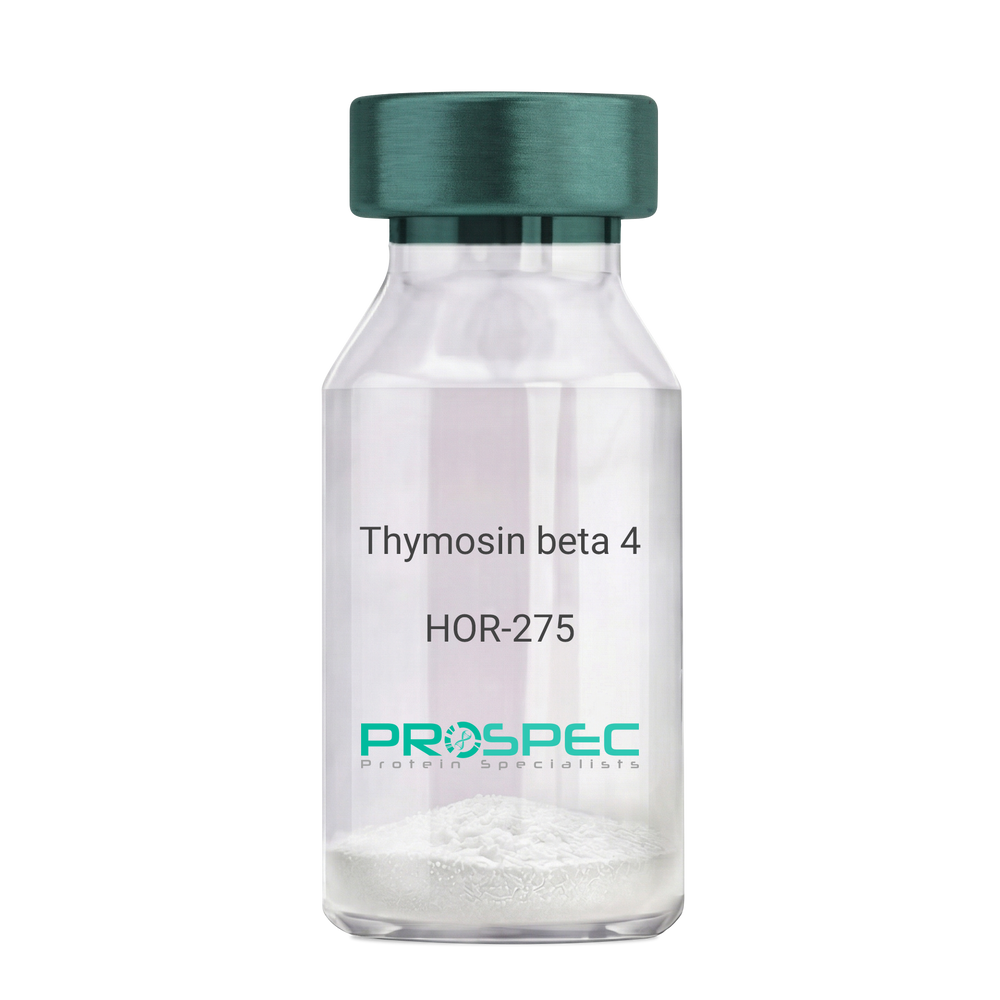
Thymosin beta 4Description:
Thymosin β4
Thymosin beta-4. TB500, TB-500
Product # :
HOR-275Price :
Quantity :
Shipping Method :
Shipped at Room temp
More Info
- description
- formulation
- purity
- More Info
Description
Thymosin b4 is a 43 amino acid peptide which is regarded as the main intracellular G-actin sequestering peptide. It has a molecular weight of 4963.55 Da, and its molecular formula is: C212H350N56O78S1. Extracellular Thymosin b4 may contribute to physiological processes such as angiogenesis, wound healing, and regulation of inflammation.
Formulation
The protein (1mg/ml) was lyophilized with no additives.
Purity
Greater than 98.0% as determined by RP-HPLC.
More Info
-
Introduction
Thymosin is a hormone secreted from the thymus. Its primary function is to stimulate the production of T cells, which are an important part of the immune system. Thymosin also assists in the development of B cells to plasma cells to produce antibodies. The predominant form of thymosin, thymosin b4, is a member of a highly conserved family of actin monomer-sequestering proteins. b-thymosins are the primary regulators of unpolymerized actin, and are essential for maintaining the small cytoplasmic pool of free G-actin monomers required for rapid filament elongation and allowing for the flux of monomers between the thymosin-bound pool and F-actin.
-
Synonyms
Thymosin beta-4. TB500, TB-500
-
Physical Appearance
Sterile Filtered White lyophilized (freeze-dried) powder.
-
Stability
Lyophilized Thymosin b4 although stable at room temperature for 3 weeks, should be stored desiccated below -18°C. Upon reconstitution T beta 4 should be stored at 4°C between 2-7 days and for future use below -18°C.For long term storage it is recommended to add a carrier protein (0.1% HSA or BSA).Please prevent freeze-thaw cycles.
-
Solubility
It is recommended to reconstitute the lyophilized Thymosin beta-4 in sterile 18MΩ-cm H2O not less than 100 µg/ml, which can then be further diluted to other aqueous solutions.
-
Amino Acid Sequence
Thymosin b4 has an a.a. sequence of Ac-Ser-Asp-Lys-Pro-Asp-Met-Ala-Glu-Ile-Glu-Lys-Phe-Asp-Lys-Ser-Lys-Leu-Lys-Lys-Thr-Glu-Thr-Gln-Glu-Lys-Asn-Pro-Leu-Pro-Ser-Lys-Glu-Thr-Ile-Glu-Gln-Glu-Lys-Gln-Ala-Gly-Glu-Ser-OH.
ProSpec's products are furnished for LABORATORY RESEARCH USE ONLY. The product may not be used as drugs, agricultural or pesticidal products, food additives or household chemicals.
- View Data Sheet
Name :
LCAT Human, HEKDescription:
Lecithin-Cholesterol Acyltransferase Human Recombinant, HEK
Phosphatidylcholine-sterol acyltransferase, Lecithin-cholesterol acyltransferase, Phospholipid-cholesterol acyltransferase, LCAT.
Product # :
ENZ-254Price :
Quantity :
Shipping Method :
Shipped at Room temp
More Info
- description
- source
- formulation
- purity
- More Info
Description
LCAT Human Recombinant produced in HEK is a single, glycosylated, polypeptide chain containing 429 amino acids (25-440) which includes a 13 amino acid Flag Tag fused at N-terminus and having a total molecular mass of 48.5 kDa. LCAT Human Recombinant is purified by proprietary chromatographic techniques.
Source
Human Embryonic Kidney 293 cells
Formulation
The LCAT protein was lyophilized from 0.4um filtered solution at a concentration of 0.5mg/ml containing 20mM Tris buffer, and 50mM NaCl, pH 7.5.
Purity
Greater than 95.0% as determined by SDS-PAGE.
More Info
-
Introduction
LCAT is an extracellular cholesterol esterifying enzyme, lecithin-cholesterol acyltransferase. The esterification of cholesterol is required for cholesterol transport. LCAT is a essential enzyme in the extracellular metabolism of plasma lipoproteins.
-
Synonyms
Phosphatidylcholine-sterol acyltransferase, Lecithin-cholesterol acyltransferase, Phospholipid-cholesterol acyltransferase, LCAT.
-
Physical Appearance
Filtered White lyophilized (freeze-dried) powder.
-
Stability
Lyophilized LCAT although stable at room temperature for 3 weeks, should be stored desiccated below -18°C. Upon reconstitution LCAT should be stored at 4°C between 2-7 days and for future use below -18°C.For long term storage it is recommended to add a carrier protein (0.1% HSA or BSA).Please prevent freeze-thaw cycles.
-
Solubility
Add deionized water to prepare a working stock solution of approximately 0.5 mg/mL and let the lyophilized pellet dissolve completely. LCAT HEK is not sterile! Please filter the product by an appropriate sterile filter before using it in the cell culture.
-
Amino Acid Sequence
HVDYKDDDDK PAGFWLLNVL FPPHTTPKAE LSNHTRPVIL VPGCLGNQLE AKLDKPDVVN WMCYRKTEDF FTIWLDLNMF LPLGVDCWID NTRVVYNRSS GLVSNAPGVQ IRVPGFGKTY SVEYLDSSKL AGYLHTLVQN LVNNGYVRDE TVRAAPYDWR LEPGQQEEYY RKLAGLVEEM HAAYGKPVFL IGHSLGCLHL LYFLLRQPQA WKDRFIDGFI SLGAPWGGSI KPMLVLASGD NQGIPIMSSI KLKEEQRITT TSPWMFPSRM AWPEDHVFIS TPSFNYTGRD FQRFFADLHF EEGWYMWLQS RDLLAGLPAP GVEVYCLYGV GLPTPRTYIY DHGFPYTDPV GVLYEDGDDT VATRSTELCG LWQGRQPQPV HLLPLHGIQH LNMVFSNLTL EHINAILLGA YRQGPPASPT ASPEPPPPE
ProSpec's products are furnished for LABORATORY RESEARCH USE ONLY. The product may not be used as drugs, agricultural or pesticidal products, food additives or household chemicals.
- View Data Sheet
Name :
Ag85ADescription:
Mycobacterium Tuberculosis major secretory protein Antigen 85A Recombinant
Ronectin-binding protein A, Mycolyl transferase 85A.
Product # :
PRO-1076Price :
Quantity :
Shipping Method :
Shipped with Ice Packs
More Info
- description
- source
- formulation
- purity
- More Info
Description
Recombinant Mycobacterium tuberculosis Ag85A (43-338 a.a) produced in Hi-5 cells is a single, glycosylated polypeptide chain having a molecular mass of 32.8kDa (305 a.a in total).Antigen 85A is fused to a 6 amino acid His tag at C-terminus and purified by conventional chromatographic techniques.
Source
Baculovirus
Formulation
The Ag85A solution (0.5mg/1ml) contains 20mM Tris-HCl buffer (pH 8.0) and 10% glycerol.
Purity
Greater than 95% as determined by SDS-PAGE.
More Info
-
Introduction
Antigen 85A is a member of the antigen 85 complex (Antigen 85A, B, C). The enzymes of the antigen 85 complex have mycolyltransferase activity and catalyze the synthesis of the very rich glycolipid of the mycobacterial cell wall, the cord factor (trehalose 6,6'-dimycolate, TDM). The cord factor is vital for the integrity of the mycobacterial cell wall and pathogenesis of the bacillus. TDM is synthesized from two molecules of trehalose-6'-monomycolate (TMM) by Antigen 85A.
-
Synonyms
Ronectin-binding protein A, Mycolyl transferase 85A.
-
Physical Appearance
Sterile Filtered colorless solution.
-
Stability
Store at 4°C if entire vial will be used within 2-4 weeks. Store, frozen at -20°C for longer periods of time. For long term storage it is recommended to add a carrier protein (0.1% HSA or BSA).Avoid multiple freeze-thaw cycles.
-
Amino Acid Sequence
ADPAFSRPGL PVEYLQVPSP SMGRDIKVQF QSGGANSPAL YLLDGLRAQD DFSGWDINTP AFEWYDQSGL SVVMPVGGQS SFYSDWYQPA CGKAGCQTYK WETFLTSELP GWLQANRHVK PTGSAVVGLS MAASSALTLA IYHPQQFVYA GAMSGLLDPS QAMGPTLIGL AMGDAGGYKA SDMWGPKEDP AWQRNDPLLN VGKLIANNTR VWVYCGNGKP SDLGGNNLPA KFLEGFVRTS NIKFQDAYNA GGGHNGVFDF PDSGTHSWEY WGAQLNAMKP DLQRALGATP NTGPAPQGAH HHHHH.
ProSpec's products are furnished for LABORATORY RESEARCH USE ONLY. The product may not be used as drugs, agricultural or pesticidal products, food additives or household chemicals.
- View Data Sheet
Name :
OLR1 Human, HEKDescription:
Oxidized Low Density Lipoprotein Receptor 1 Human Recombinant, HEK
Oxidized low density lipoprotein (lectin-like) receptor 1, CLEC8A, hLOX1, SCARE1, Lectin-type oxidized LDL receptor 1, Lectin-like oxidized LDL receptor 1, C-type lectin domain family 8 member A, LOXIN, SLOX1, ox LDL receptor 1, Oxidized low-density lipoprotein receptor 1 soluble form, scavenger receptor class E member 1, SR-E1.
Product # :
PRO-2293Price :
Quantity :
Shipping Method :
Shipped at Room temp
More Info
- description
- source
- formulation
- purity
- More Info
Description
OLR1 Human Recombinant produced in HEK cells is a single, glycosylated, polypeptide chain (Ser61-Gln273) containing a total of 221 amino acids, having a calculated molecular mass of 25.3kDa and fused to a 8 aa Flag tag at N-Terminus.
Source
HEK 293.
Formulation
OLR1 was filtered (0.4µm) and lyophilized in phosphate buffered saline pH 7.5.
Purity
Greater than 95.0% as determined by SDS-PAGE.
More Info
-
Introduction
OLR1 is a type II membrane protein which belongs to the C-type lectin family and performs as a cell-surface receptor for Ox-LDL. Ox-LDL has a part in early ather-osclerosis, which includes the transformation of monocyte-derived macro-phages to foam cells in atherosclerotic lesions. In addition, OLR1 protein triggers the activation of the NF?B signal transduction pathway.
-
Synonyms
Oxidized low density lipoprotein (lectin-like) receptor 1, CLEC8A, hLOX1, SCARE1, Lectin-type oxidized LDL receptor 1, Lectin-like oxidized LDL receptor 1, C-type lectin domain family 8 member A, LOXIN, SLOX1, ox LDL receptor 1, Oxidized low-density lipoprotein receptor 1 soluble form, scavenger receptor class E member 1, SR-E1.
-
Physical Appearance
Filtered White lyophilized (freeze-dried) powder.
-
Stability
Store lyophilized protein at -20°C. Aliquot the product after reconstitution to avoid repeated freezing/thawing cycles. Reconstituted protein can be stored at 4°C for a limited period of time; it does not show any change after two weeks at 4°C.
-
Solubility
It is recommended to add deionized water to prepare a working stock solution of approximately 0.5 mg/ml and let the lyophilized pellet dissolve completely. Filter sterilize your culture media/working solutions containing this non-sterile product before using in cell culture.
-
Amino Acid Sequence
DYKDDDDKSQ VSDLLTQEQA NLTHQKKKLE GQISARQQAE EASQESENEL KEMIETLARK LNEKSKEQME LHHQNLNLQE TLKRVANCSA PCPQDWIWHG ENCYLFSSGS FNWEKSQEKC LSLDAKLLKI NSTADLDFIQ QAISYSSFPF WMGLSRRNPS YPWLWEDGSP LMPHLFRVRG AVSQTYPSGT CAYIQRGAVY AENCILAAFS ICQKKANLRA Q.
ProSpec's products are furnished for LABORATORY RESEARCH USE ONLY. The product may not be used as drugs, agricultural or pesticidal products, food additives or household chemicals.
- View Data Sheet
Name :
C19ORF80 MouseDescription:
Chromosome 19 Open Reading Frame 80 Mouse Recombinant
Betatrophin, Angiopoietin-like protein 8, Lipasin, Refeeding-induced fat and liver protein, Gm6484, Angptl8, Rifl, EG624219.
Product # :
PRO-1576Price :
Quantity :
Shipping Method :
Shipped at Room temp
More Info
- description
- source
- formulation
- purity
- More Info
Description
C19ORF80 Mouse Recombinant produced in E.Coli is a single, non-glycosylated, polypeptide chain (a.a 16-198) containing 193 amino acids including a 10 a.a N-terminal His tag. The total molecular mass is 21.8kDa (calculated).
Source
Escherichia Coli.
Formulation
C19ORF80 filtered (0.4 µm) and lyophilized from 0.5mg/ml in 30mM acetate buffer, pH-4.
Purity
Greater than 95.0% as determined by SDS-PAGE.
More Info
-
Introduction
Chromosome 19 Open Reading Frame 80 (C19ORF80) is a significant new regulator of lipid metabolism which regulates serum triglyceride levels, possibly by promoting ANGPTL3 cleavage. C19ORF80 belongs to the ANGPTL protein family. C19ORF80 is a hormone which specifically promotes pancreatic beta cell proliferation and beta cell mass expansion, thus improving glucose tolerance. C19ORF80 is mainly expressed in the liver; it is also expressed in adipose tissues. C19ORF80 is expressed in response to food intake and stimulated by insulin.
-
Synonyms
Betatrophin, Angiopoietin-like protein 8, Lipasin, Refeeding-induced fat and liver protein, Gm6484, Angptl8, Rifl, EG624219.
-
Physical Appearance
Filtered White lyophilized (freeze-dried) powder.
-
Stability
Store lyophilized protein at -20°C. Aliquot the product after reconstitution to avoid repeated freezing/thawing cycles. Reconstituted protein can be stored at 4°C for a limited period of time; it does not show any change after two weeks at 4°C.
-
Solubility
It is recommended to add 0.1M Acetate buffer pH-4 to prepare a working stock solution of approximately 0.5mg/ml and let the lyophilized pellet dissolve completely. For conversion into higher pH value, we recommend intensive dilution by relevant buffer to a concentration of 10µg/ml. In higher concentrations the solubility of this antigen is limited. C19ORF80 is not sterile! Please filter the product by an appropriate sterile filter before using it in the cell culture.
-
Amino Acid Sequence
MKHHHHHHASVRPAPVAPLG GPEPAQYEEL TLLFHGALQL GQALNGVYRA TEARLTEAGH SLGLYDRALE FLGTEVRQGQ DATQELRTSL SEIQVEEDAL HLRAEATARS LGEVARAQQA LRDTVRRLQV QLRGAWLGQA HQEFETLKAR ADKQSHLLWA LTGHVQRQQR EMAEQQQWLR QIQQRLHTAA LPA.
ProSpec's products are furnished for LABORATORY RESEARCH USE ONLY. The product may not be used as drugs, agricultural or pesticidal products, food additives or household chemicals.
- View Data Sheet
Name :
TES HumanDescription:
Testis Derived Transcript Human Recombinant
TESS, TESS-2, Testin.
Product # :
PRO-549Price :
Quantity :
Shipping Method :
Shipped with Ice Packs
More Info
- description
- source
- formulation
- purity
- More Info
Description
TES Recombinant Human produced in E.Coli is a single, non-glycosylated polypeptide chain containing 441amino acids (1-421 a.a.) and having a molecular mass of 50.1 kDa. The TES protein is fused to 20 amino acid His-Tag at N-terminus and purified by proprietary chromatographic techniques.
Source
Escherichia Coli.
Formulation
TES 0.5mg/ml protein solution contains 20mM Tris pH-8, 1mM DTT, 0.1M NaCl & 20% glycerol.
Purity
Greater than 90.0% as determined by SDS-PAGE.
More Info
-
Introduction
TES also called Testin is a tumor suppressor protein which is involved in cell adhesion, cell spreading and in the restructuring of the actin cytoskeleton. TES protein localizes to cell-cell contacts and actin stress fibres, and interacts with a diversity of cytoskeletal proteins such as Zyxin, Mena, VASP, Talin and Actin. The ability of TES to associate with alpha-actinin, paxillin and Zyxin is dependent on the conformational form of the protein.
-
Synonyms
TESS, TESS-2, Testin.
-
Physical Appearance
Sterile filtered colorless solution.
-
Stability
Store at 4°C if entire vial will be used within 2-4 weeks. Store, frozen at -20°C for longer periods of time. For long term storage it is recommended to add a carrier protein (0.1% HSA or BSA).Avoid multiple freeze-thaw cycles.
-
Amino Acid Sequence
MGSSHHHHHH SSGLVPRGSH MDLENKVKKM GLGHEQGFGA PCLKCKEKCE GFELHFWRKI CRNCKCGQEE HDVLLSNEED RKVGKLFEDT KYTTLIAKLK SDGIPMYKRN VMILTNPVAA KKNVSINTVT YEWAPPVQNQ ALARQYMQML PKEKQPVAGS EGAQYRKKQL AKQLPAHDQD PSKCHELSPR EVKEMEQFVK KYKSEALGVG DVKLPCEMDA QGPKQMNIPG GDRSTPAAVG AMEDKSAEHK RTQYSCYCCK LSMKEGDPAI YAERAGYDKL WHPACFVCST CHELLVDMIY FWKNEKLYCG RHYCDSEKPR CAGCDELIFS NEYTQAENQN WHLKHFCCFD CDSILAGEIY VMVNDKPVCK PCYVKNHAVV CQGCHNAIDP EVQRVTYNNF SWHASTECFL CSCCSKCLIG QKFMPVEGMV FCSVECKKRM S.
ProSpec's products are furnished for LABORATORY RESEARCH USE ONLY. The product may not be used as drugs, agricultural or pesticidal products, food additives or household chemicals.
- View Data Sheet
Name :
Inhibin a HumanDescription:
Inhibin Alpha Human Recombinant
Product # :
HOR-303Price :
Quantity :
Shipping Method :
Shipped with Ice Packs
More Info
- description
- source
- formulation
- purity
- More Info
Description
Inhibin-Alpha Human Recombinant produced in E.Coli is a non-glycosylated, polypeptide chain containing 264 amino acids comprising of both A and B chains, having a molecular mass of 33.5 kDa.The Inhibin-Alpha is fused with an amino-terminal hexahistidine tag. The Inhibin-Alpha is purified by standard chromatographic techniques.
Source
Escherichia Coli.
Formulation
Inhibin-A alpha chain is supplied in 20mM Tris and 50% glycerol.
Purity
Greater than 95.0% as determined by SDS-PAGE analysis.
More Info
-
Introduction
Inhibins are dimeric peptide hormones produced by female ovarian granulose cells and male Sertoli cells as well as a variety of other tissues. Inhibins have two isoforms, A and B, with the same alpha subunit but different beta subunits. Inhibin A is a dimer of alpha and beta A subunits, inhibin B is a dimer of alpha and beta B subunits.
Inhibins are thought to inhibit the production of follicle-stimulating hormone (FSH) by the pituitary gland. In addition, Inhibins are also thought to play a role in the control of gametogenesis, and embryonic and fetal development. -
Physical Appearance
Sterile Filtered clear solution.
-
Stability
Store at 4°C if entire vial will be used within 2-4 weeks. Store, frozen at -20°C for longer periods of time.Please avoid freeze thaw cycles.
-
Amino Acid Sequence
Alpha chain:
STPLMSWPWSPSALRLLQRPPEEPAAHANCHRVALNISFQELGWERWIVYPPSFIFHYCHGGCGLHIP PNLSLPVPGAPPTPAQPYSLLPGAQPCCAALPGTMRPLHVRTTSDGGYSFKYETVPNLLTQHCACI.
Beta Chain:
GLECDGKVNICCKKQFFVSFKDIGWNDWIIAPSGYHANYCEGECPSHIAGTSGSSLSFHSTVINHYRMR
GHSPFANLKSCCVPTKLRPMSMLYYDDGQNIIKKDIQNMIVEECGCS.
ProSpec's products are furnished for LABORATORY RESEARCH USE ONLY. The product may not be used as drugs, agricultural or pesticidal products, food additives or household chemicals.
- View Data Sheet
Name :
KMT5A HumanDescription:
Lysine Methyltransferase 5A Human Recombinant
KMT5A, PR-Set7, SET07, SET8, SETD8, H4-K20-HMTase KMT5A.
Product # :
ENZ-1080Price :
Quantity :
Shipping Method :
Shipped with Ice Packs
More Info
- description
- source
- formulation
- purity
- More Info
Description
KMT5A produced in Sf9 Baculovirus cells is a single, glycosylated polypeptide chain containing 165 amino acids (195-352 a.a.) and having a molecular mass of 18.9kDa (Migrates at 18-28 kDa on SDS-PAGE under reducing conditions).KMT5A is expressed with a 7 amino acid His tag at C-Terminus and purified by proprietary chromatographic techniques.
Source
Sf9, Baculovirus cells.
Formulation
KMT5A protein solution (0.25mg/ml) contains 20mM Tris-HCl buffer (pH8.0), 5mM DTT, 0.2M NaCl, 1mM EDTA and 50% glycerol.
Purity
Greater than 85.0% as determined by SDS-PAGE.
More Info
-
Introduction
Lysine Methyltransferase 5A (KMT5A) is an enzyme which catalyzes both histones and non-histone proteins. KMT5A contributes to the maintenance of proper higher-order structure of DNA during mitosis. KMT5A takes part in cell-cycle-dependent transcriptional silencing and mitotic regulation in metazoans. KMT5A plays a role as a barrier to prevent cellular senescence through chromatinmediated regulation of senescence-associated metabolic remodeling. KMT5A mediates monomethylation of p53/TP53 at 'Lys-382', which leads to repress p53/TP53-target genes. The loss of KMT5A simultaneously stimulate nucleolar function and retinoblastoma protein-mediated mitochondrial metabolism.
-
Synonyms
KMT5A, PR-Set7, SET07, SET8, SETD8, H4-K20-HMTase KMT5A.
-
Physical Appearance
Sterile Filtered colorless solution.
-
Stability
Store at 4°C if entire vial will be used within 2-4 weeks. Store, frozen at -20°C for longer periods of time. For long term storage it is recommended to add a carrier protein (0.1% HSA or BSA). Avoid multiple freeze-thaw cycles.
-
Amino Acid Sequence
MKAELQSEER KRIDELIESG KEEGMKIDLI DGKGRGVIAT KQFSRGDFVV EYHGDLIEIT DAKKREALYA QDPSTGCYMY YFQYLSKTYC VDATRETNRL GRLINHSKCG NCQTKLHDID GVPHLILIAS RDIAAGEELL YDYGDRSKAS IEAHPWLKHH HHHHH.
ProSpec's products are furnished for LABORATORY RESEARCH USE ONLY. The product may not be used as drugs, agricultural or pesticidal products, food additives or household chemicals.
- View Data Sheet
Name :
TXN1, HisDescription:
Thioredoxin Recombinant, His Tag
Thioredoxin-1, Trx-1, trxA, fipA, tsnC, b3781, JW5856.
Product # :
PRO-784Price :
Quantity :
Shipping Method :
Shipped with Ice Packs
More Info
- description
- source
- formulation
- purity
- biological activity
- More Info
Description
Recombinant Thioredoxin produced in E.Coli is a single, non-glycosylated polypeptide chain containing 117 amino acids (2-109 a.a.) and having a molecular mass of 12.8kDa. TRX contains 9 amino acid His Tag N-terminus and is purified by proprietary chromatographic techniques.
Source
Escherichia Coli.
Formulation
The TRX His Tag protein solution (0.5mg/ml) contains 20mM Tris-HCl buffer (pH 8.0), 10% glycerol and 1mM DTT.
Purity
Greater than 95.0% as determined by SDS-PAGE.
Biological Activity
Specific activity is >70 A650/cm/min/mg, detected by measuring the increase of insulin precipitation in absorbance at 650 nm resulting from the reduction of insulin.
More Info
-
Introduction
Thioredoxins are small disulphide-containing redox proteins (within the conserved Cys-Gly-Pro-Cys active site) that have been found in all the kingdoms of living organisms. Thioredoxin contains a single disulfide active site and serves as a general protein disulphide oxidoreductase. Thioredoxins are involved in the first unique step in DNA synthesis. It interacts with a broad range of proteins by a redox mechanism based on reversible oxidation of two cysteine thiol groups to a disulphide, accompanied by the transfer of two electrons and two protons. The net result is the covalent interconversion of a disulphide and a dithiol. Trx also provides control over a number of transcription factors affecting cell proliferation and death through a mechanism referred to as redox regulation. It has been suggested that thioredoxin may catalyze the formation of correct disulfides during protein folding because of its ability to act as an efficient oxidoreductant. This could be especially useful in
-
Synonyms
Thioredoxin-1, Trx-1, trxA, fipA, tsnC, b3781, JW5856.
-
Physical Appearance
Sterile Filtered colorless solution.
-
Stability
Store at 4°C if entire vial will be used within 2-4 weeks. Store, frozen at -20°C for longer periods of time. For long term storage it is recommended to add a carrier protein (0.1% HSA or BSA).Avoid multiple freeze-thaw cycles.
-
Amino Acid Sequence
MHHHHHHMGS DKIIHLTDDS FDTDVLKADG AILVDFWAEW CGPCKMIAPI LDEIADEYQG KLTVAKLNID QNPGTAPKYG IRGIPTLLLF KNGEVAATKV GALSKGQLKE FLDANLAGS.
ProSpec's products are furnished for LABORATORY RESEARCH USE ONLY. The product may not be used as drugs, agricultural or pesticidal products, food additives or household chemicals.
- View Data Sheet
Name :
GPT Human, His ActiveDescription:
Glutamic-Pyruvate Transaminase, His Tag Active Human Recombinant
Glutamic-pyruvate transaminase (alanine aminotransferase), GPT1, ALT1, AAT1, Glutamic-alanine transaminase 1, EC 2.6.1.2.
Product # :
ENZ-1000Price :
Quantity :
Shipping Method :
Shipped with Ice Packs
More Info
- description
- source
- formulation
- purity
- biological activity
- More Info
Description
GPT Human Recombinant produced in E.coli is a single, non-glycosylated polypeptide chain containing 516 amino acids (1-496) and having a molecular mass of 56.8 kDa.GPT is fused to a 20 amino acid His-tag at N-terminus & purified by proprietary chromatographic techniques.
Source
E.coli.
Formulation
The GPT solution (0.5mg/ml) contains 20mM Tris-HCl buffer (pH 8.0), 2mM DTT and 20% glycerol.
Purity
Greater than 90% as determined by SDS-PAGE.
Biological Activity
Specific activity is > 100units/mg, and is defined as the amount of enzyme that cleaves 1umole of L-Alanine to L-Glutamate per minute at pH 7.5 at 37C.
More Info
-
Introduction
GPT catalyzes the reversible transamination between alanine and 2-oxoglutarate to create pyruvate and glutamate. GPT has a crucial part in the intermediary metabolism of glucose and amino acids. GPT is broadly used as an indicator of liver reliability or hepatocellular destruction in clinical tests.
-
Synonyms
Glutamic-pyruvate transaminase (alanine aminotransferase), GPT1, ALT1, AAT1, Glutamic-alanine transaminase 1, EC 2.6.1.2.
-
Physical Appearance
Sterile Filtered colorless solution.
-
Stability
Store at 4°C if entire vial will be used within 2-4 weeks. Store, frozen at -20°C for longer periods of time. For long term storage it is recommended to add a carrier protein (0.1% HSA or BSA).Avoid multiple freeze-thaw cycles.
-
Amino Acid Sequence
MGSSHHHHHH SSGLVPRGSH MASSTGDRSQ AVRHGLRAKV LTLDGMNPRV RRVEYAVRGP IVQRALELEQ ELRQGVKKPF TEVIRANIGD AQAMGQRPIT FLRQVLALCV NPDLLSSPNF PDDAKKRAER ILQACGGHSL GAYSVSSGIQ LIREDVARYI ERRDGGIPAD PNNVFLSTGA SDAIVTVLKL LVAGEGHTRT GVLIPIPQYP LYSATLAELG AVQVDYYLDE ERAWALDVAE LHRALGQARD HCRPRALCVI NPGNPTGQVQ TRECIEAVIR FAFEERLFLL ADEVYQDNVY AAGSQFHSFK KVLMEMGPPY AGQQELASFH STSKGYMGEC GFRGGYVEVV NMDAAVQQQM LKLMSVRLCP PVPGQALLDL VVSPPAPTDP SFAQFQAEKQ AVLAELAAKA KLTEQVFNEA PGISCNPVQG AMYSFPRVQL PPRAVERAQE LGLAPDMFFC LRLLEETGIC VVPGSGFGQR EGTYHFRMTI LPPLEKLRLL LEKLSRFHAK FTLEYS
ProSpec's products are furnished for LABORATORY RESEARCH USE ONLY. The product may not be used as drugs, agricultural or pesticidal products, food additives or household chemicals.
- View Data Sheet
Name :
MAT1A HumanDescription:
Methionine Adenosyltransferase I Alpha Human Recombinant
EC 2.5.1.6, MAT, MATA1, SAMS, SAMS1, Methionine adenosyltransferase 1, S-adenosylmethionine synthase isoform type-1, AdoMet synthase 1, MAT 1, Methionine adenosyltransferase I/III, MAT-I/III, MAT1A, AMS1.
Product # :
ENZ-493Price :
Quantity :
Shipping Method :
Shipped with Ice Packs
More Info
- description
- source
- formulation
- purity
- More Info
Description
MAT1A Human Recombinant produced in E.Coli is a single, non-glycosylated polypeptide chain containing 414 amino acids (1-395 a.a.) and having a molecular mass of 45.6 kDa. The MAT1A is fused to a 20 amino acid his tag at N-terminus and purified by conventional chromatography.
Source
Escherichia Coli.
Formulation
The MAT1A protein solution contains 20mM Tris-HCl pH-8, 1mM DTT, 100mM NaCl and 10% glycerol.
Purity
Greater than 95.0% as determined by SDS-PAGE.
More Info
-
Introduction
MAT1A catalyzes a two-step reaction that involves the transfer of the adenosyl moiety of ATP to methionine to form S-adenosylmethionine and tripolyphosphate, which is subsequently cleaved to PPi and Pi. S-adenosylmethionine is the source of methyl groups for most biological methylations. MAT1A is found as a homotetramer (MAT I) or a homodimer (MAT III) whereas a third form, MAT II (gamma), is encoded by the MAT2A gene. Mutations in MAT1A gene are associated with methionine adenosyltransferase deficiency. MAT1A expression also correlates with a differentiated phenotype, whereas liver cells expressing MAT2A present a dedifferentiated phenotype and lowered AdoMet synthesis. Likewise, NFκB and TNFα cause a switch from MAT1A to MAT2A expression in human hepatocellular carcinoma (HCC), which facilitates cancer cell growth.
-
Synonyms
EC 2.5.1.6, MAT, MATA1, SAMS, SAMS1, Methionine adenosyltransferase 1, S-adenosylmethionine synthase isoform type-1, AdoMet synthase 1, MAT 1, Methionine adenosyltransferase I/III, MAT-I/III, MAT1A, AMS1.
-
Physical Appearance
Sterile Filtered colorless solution.
-
Stability
Store at 4°C if entire vial will be used within 2-4 weeks. Store, frozen at -20°C for longer periods of time. For long term storage it is recommended to add a carrier protein (0.1% HSA or BSA).Avoid multiple freeze-thaw cycles.
-
Amino Acid Sequence
MGSSHHHHHS SGLVPRGSHM NGPVDGLCDH SLSEGVFMFT SESVGEGHPD KICDQISDAV LDAHLKQDPN AKVACETVCK TGMVLLCGEI TSMAMVDYQR VVRDTIKHIG YDDSAKGFDF KTCNVLVALE QQSPDIAQCV HLDRNEEDVG AGDQGLMFGY ATDETEECMP LTIILAHKLN ARMADLRRSG LLPWLRPDSK TQVTVQYMQD NGAVIPVRIH TIVISVQHNE DITLEEMRRA LKEQVIRAVV PAKYLDEDTV YHLQPSGRFV IGGPQGDAGV TGRKIIVDTY GGWGAHGGGA FSGKDYTKVD RSAAYAARWV AKSLVKAGLC RRVLVQVSYA IGVAEPLSIS IFTYGTSQKT ERELLDVVHK NFDLRPGVIV RDLDLKKPIY QKTACYGHFG RSEFPWEVPR KLVF.
ProSpec's products are furnished for LABORATORY RESEARCH USE ONLY. The product may not be used as drugs, agricultural or pesticidal products, food additives or household chemicals.
- View Data Sheet
Name :
HARS Human, Sf9Description:
Histidyl-tRNA Synthetase Human Recombinant, Sf9
Histidyl-tRNA synthetase, EC 6.1.1.21, Histidine-tRNA ligase, HisRS, HRS, FLJ20491, JO-1.
Product # :
ENZ-335Price :
Quantity :
Shipping Method :
Shipped with Ice Packs
More Info
- description
- source
- formulation
- purity
- More Info
Description
Histidyl-tRNA Synthetase Human Recombinant produced in baculovirus is a single, glycosylated, polypeptide chain having a molecular mass of 58.3 kDa.The Histidyl-tRNA Synthetase is fused to 6x His Tag and purified by proprietary chromatographic techniques.
Source
Sf9 Insect Cells.
Formulation
The protein solution contains 20mM HEPES, 250mM sodium chloride 0.1% and 20% Glycerol, (pH 7.5).
Purity
Greater than 90.0% as determined by SDS-PAGE.
More Info
-
Introduction
Aminoacyl-tRNA synthetases are a class of enzymes that charge tRNAs with their cognate amino acids. The protein encoded by this gene is a cytoplasmic enzyme which belongs to the class II family of aminoacyl-tRNA synthetases. The enzyme is responsible for the synthesis of histidyl-transfer RNA, which is essential for the incorporation of histidine into proteins. The gene is located in a head-to-head orientation with HARSL on chromosome five, where the homologous genes share a bidirectional promoter. The gene product is a frequent target of autoantibodies in the human autoimmune disease polymyositis/dermatomyositis.
-
Synonyms
Histidyl-tRNA synthetase, EC 6.1.1.21, Histidine-tRNA ligase, HisRS, HRS, FLJ20491, JO-1.
-
Physical Appearance
Sterile Filtered clear solution.
-
Stability
Histidyl-tRNA Synthetase although stable at 4°C for 3 weeks, should be stored below -18°C.Please prevent freeze-thaw cycles.
-
Applications
Western Blot: Strongly reactive with human anti Histidyl-tRNA Synthetase antisera.
-
Protein content
Protein quantitation was carried out by using 0.25 - 2.0 mg/ml Bradford assay vs. BSA.
ProSpec's products are furnished for LABORATORY RESEARCH USE ONLY. The product may not be used as drugs, agricultural or pesticidal products, food additives or household chemicals.
- View Data Sheet
Name :
HAVCR2 Human, Sf9Description:
Hepatitis A Virus Cellular Receptor 2 Human Recombinant, Sf9
Hepatitis A virus cellular receptor 2, HAVCR2, Hepatitis A virus cellular receptor 2, HAVcr-2, T-cell immunoglobulin and mucin domain-containing protein 3, TIMD-3, T-cell immunoglobulin mucin receptor 3, TIM-3, T-cell membrane protein 3, TIM3, TIMD3, KIM-3.
Product # :
HAV-221Price :
Quantity :
Shipping Method :
Shipped with Ice Packs
More Info
- description
- source
- formulation
- purity
- More Info
Description
Recombinant Human HAVCR2 produced in Sf9 Baculovirus cells is a single, glycosylated polypeptide chain containing 423 amino acids (aa 22-202) and having a molecular mass of 47.3kDa. (Molecular size on SDS-PAGE will appear at approximately 40-57kDa). HAVCR2 is fused to a 239 amino acid hIgG-His-tag at C-terminus & purified by proprietary chromatographic techniques.
Source
Sf9, Baculovirus cells.
Formulation
The HAVCR2 solution (0.5mg/ml) contains Phosphate Buffered Saline (pH 7.4) and 10% glycerol.
Purity
Greater than 85% as determined by SDS-PAGE.
More Info
-
Introduction
Hepatitis A Virus Cellular Receptor 2 (HAVCR2) is a member of the immunoglobulin superfamily. HACVR2 controls macrophage activation. HACVR2 inhibits T-helper type 1 lymphocyte (Th1)-mediated auto- and alloimmune responses and stimulates immunological tolerance.
-
Synonyms
Hepatitis A virus cellular receptor 2, HAVCR2, Hepatitis A virus cellular receptor 2, HAVcr-2, T-cell immunoglobulin and mucin domain-containing protein 3, TIMD-3, T-cell immunoglobulin mucin receptor 3, TIM-3, T-cell membrane protein 3, TIM3, TIMD3, KIM-3.
-
Physical Appearance
Sterile filtered colorless solution.
-
Stability
Store at 4°C if entire vial will be used within 2-4 weeks. Store, frozen at -20°C for longer periods of time. For long term storage it is recommended to add a carrier protein (0.1% HSA or BSA).Avoid multiple freeze-thaw cycles.
-
Amino Acid Sequence
ADLSEVEYRA EVGQNAYLPC FYTPAAPGNL VPVCWGKGAC PVFECGNVVL RTDERDVNYW TSRYWLNGDF RKGDVSLTIE NVTLADSGIY CCRIQIPGIM NDEKFNLKLV IKPAKVTPAP TRQRDFTAAF PRMLTTRGHG PAETQTLGSL PDINLTQIST LANELRDSRL ANDLRDSGAT IRIGLEPKSC DKTHTCPPCP APELLGGPSV FLFPPKPKDT LMISRTPEVT CVVVDVSHED PEVKFNWYVD GVEVHNAKTK PREEQYNSTY RVVSVLTVLH QDWLNGKEYK CKVSNKALPA PIEKTISKAK GQPREPQVYT LPPSRDELTK NQVSLTCLVK GFYPSDIAVE WESNGQPENN YKTTPPVLDS DGSFFLYSKL TVDKSRWQQG NVFSCSVMHE ALHNHYTQKS LSLSPGKHHH HHH.
ProSpec's products are furnished for LABORATORY RESEARCH USE ONLY. The product may not be used as drugs, agricultural or pesticidal products, food additives or household chemicals.
- View Data Sheet
Name :
TNF a Rat, HisDescription:
Tumor Necrosis Factor-alpha Rat Recombinant, His Tag
Tumor Necrosis Factor-alpha, TNF a His, Cachectin, TNF-alpha, Tumor necrosis factor ligand superfamily member 2, TNF-a, N-terminal fragment, NTF, Intracellular domain 1, Intracellular domain 2, ICD2, C-domain 1, C-domain 2, Tumor necrosis factor, soluble form, Tnfa, Tnfsf2, RATTNF, Tnfa.
Product # :
CYT-900Price :
Quantity :
Shipping Method :
Shipped with Ice Packs
More Info
- description
- source
- formulation
- purity
- More Info
Description
TNF a Rat Recombinant produced in E.Coli is a single, non-glycosylated polypeptide chain containing 181 amino acids (80-235a.a.) and having a molecular mass of 19.9kDa.TNF a is fused to a 25 amino acid His-tag at N-terminus & purified by proprietary chromatographic techniques.
Source
Escherichia Coli.
Formulation
TNF a protein solution (1mg/ml) containing Phosphate Buffer Saline (pH7.4), 10% glycerol and 1mM DTT.
Purity
Greater than 90.0% as determined by analysis by SDS-PAGE.
More Info
-
Introduction
Tumor necrosis factor is a cytokine involved in systemic inflammation and is a member of a group of cytokines that all stimulate the acute phase reaction. TNF is mainly secreted by macrophages.
TNF causes apoptotic cell death, cellular proliferation, differentiation, inflammation, tumorigenesis and viral replication, TNF is also involved in lipid metabolism, and coagulation. TNF's primary role is in the regulation of immune cells.
Dysregulation and, in particular, overproduction of TNF have been implicated in a variety of human diseases- autoimmune diseases, insulin resistance, and cancer. -
Synonyms
Tumor Necrosis Factor-alpha, TNF a His, Cachectin, TNF-alpha, Tumor necrosis factor ligand superfamily member 2, TNF-a, N-terminal fragment, NTF, Intracellular domain 1, Intracellular domain 2, ICD2, C-domain 1, C-domain 2, Tumor necrosis factor, soluble form, Tnfa, Tnfsf2, RATTNF, Tnfa.
-
Physical Appearance
Sterile Filtered clear solution.
-
Stability
Store at 4°C if entire vial will be used within 2-4 weeks. Store, frozen at -20°C for longer periods of time. For long term storage it is recommended to add a carrier protein (0.1% HSA or BSA).Avoid multiple freeze-thaw cycles.
-
Amino Acid Sequence
MGSSHHHHHH SSGLVPRGSH MGSHMLRSSS QNSSDKPVAH VVANHQAEEQ LEWLSQRANA LLANGMDLKD NQLVVPADGL YLIYSQVLFK GQGCPDYVLL THTVSRFAIS YQEKVSLLSA IKSPCPKDTP EGAELKPWYE PMYLGGVFQL EKGDLLSAEV NLPKYLDITE SGQVYFGVIA L.
ProSpec's products are furnished for LABORATORY RESEARCH USE ONLY. The product may not be used as drugs, agricultural or pesticidal products, food additives or household chemicals.
- View Data Sheet
Name :
AMT HumanDescription:
Aminomethyltransferase Human Recombinant
GCE, GCST, GCVT, NKH, Aminomethyltransferase, mitochondrial, Glycine cleavage system T protein, GCVT.
Product # :
ENZ-900Price :
Quantity :
Shipping Method :
Shipped with Ice Packs
More Info
- description
- source
- formulation
- purity
- More Info
Description
AMT Human Recombinant produced in E.Coli is a single, non-glycosylated polypeptide chain containing 398 amino acids (29-403 a.a) and having a molecular mass of 43.3kDa.AMT is fused to a 23 amino acid His-tag at N-terminus & purified by proprietary chromatographic techniques.
Source
Escherichia Coli.
Formulation
AMT protein solution (1mg/ml) in Phosphate Buffered Saline, 30% glycerol and 1mM DTT.
Purity
Greater than 95.0% as determined by SDS-PAGE.
More Info
-
Introduction
Aminomethyltransferase, mitochondrial isoform 1 (AMT) is a component of the glycine cleavage system termed T-protein. AMT reversibly catalyzes the degradation of the aminomethyl moiety of glycine attached to the lipoate cofactor of H-protein, leading to the production of ammonia, 5,10-methylenetetrahydrofolate, and dihydrolipoate-bearing H-protein in the presence of tetrahydrofolate.
-
Synonyms
GCE, GCST, GCVT, NKH, Aminomethyltransferase, mitochondrial, Glycine cleavage system T protein, GCVT.
-
Physical Appearance
Sterile Filtered colorless solution.
-
Stability
Store at 4°C if entire vial will be used within 2-4 weeks. Store, frozen at -20°C for longer periods of time. For long term storage it is recommended to add a carrier protein (0.1% HSA or BSA).Avoid multiple freeze-thaw cycles.
-
Amino Acid Sequence
MGSSHHHHHH SSGLVPRGSH MGSAQEVLRR TPLYDFHLAH GGKMVAFAGW SLPVQYRDSH TDSHLHTRQH CSLFDVSHML QTKILGSDRV KLMESLVVGD IAELRPNQGT LSLFTNEAGG ILDDLIVTNT SEGHLYVVSN AGCWEKDLAL MQDKVRELQN QGRDVGLEVL DNALLALQGP TAAQVLQAGV ADDLRKLPFM TSAVMEVFGV SGCRVTRCGY TGEDGVEISV PVAGAVHLAT AILKNPEVKL AGLAARDSLR LEAGLCLYGN DIDEHTTPVE GSLSWTLGKR RRAAMDFPGA KVIVPQLKGR VQRRRVGLMC EGAPMRAHSP ILNMEGTKIG TVTSGCPSPS LKKNVAMGYV PCEYSRPGTM LLVEVRRKQQ MAVVSKMPFV PTNYYTLK.
ProSpec's products are furnished for LABORATORY RESEARCH USE ONLY. The product may not be used as drugs, agricultural or pesticidal products, food additives or household chemicals.
- View Data Sheet
Name :
NAA10 HumanDescription:
N Alpha-Acetyltransferase 10, NatA Catalytic Subunit Human Recombinant
N-alpha-acetyltransferase 10, N-terminal acetyltransferase complex ARD1 subunit homolog A, NatA catalytic subunit, NAA10, ARD1, ARD1A, TE2, NATD, DXS707.
Product # :
ENZ-158Price :
Quantity :
Shipping Method :
Shipped with Ice Packs
More Info
- description
- source
- formulation
- purity
- More Info
Description
NAA10 Human Recombinant produced in E.Coli is a single, non-glycosylated polypeptide chain containing 255 amino acids (1-235 a.a.) and having a molecular mass of 28.6kDa (the molecular weight on SDS-PAGE will appear higher).NAA10 is fused to a 20 amino acid His-tag at N-terminus & purified by proprietary chromatographic techniques.
Source
Escherichia Coli.
Formulation
NAA10 protein solution (1mg/ml) containing 20mM Tris-HCl buffer (pH 8.0), 5mM DTT, 10% glycerol and 200mM NaCl.
Purity
Greater than 90.0% as determined by SDS-PAGE.
More Info
-
Introduction
NAA10 is a member of the acetyltransferase family. NAA10 interacts with NAA15, HIF-1 and with the ribosome. In its binding to HIF-1, NAA10 functions as a protein acetyltransferase by regulating its stability. In various cell lines, NAA10 is downregulated in response to hypoxia. NAA10 is expressed during the course of the development of the brain.
-
Synonyms
N-alpha-acetyltransferase 10, N-terminal acetyltransferase complex ARD1 subunit homolog A, NatA catalytic subunit, NAA10, ARD1, ARD1A, TE2, NATD, DXS707.
-
Physical Appearance
Sterile Filtered colorless solution.
-
Stability
Store at 4°C if entire vial will be used within 2-4 weeks. Store, frozen at -20°C for longer periods of time. For long term storage it is recommended to add a carrier protein (0.1% HSA or BSA).Avoid multiple freeze-thaw cycles.
-
Amino Acid Sequence
MGSSHHHHHH SSGLVPRGSH MNIRNARPED LMNMQHCNLL CLPENYQMKY YFYHGLSWPQ LSYIAEDENG KIVGYVLAKM EEDPDDVPHG HITSLAVKRS HRRLGLAQKL MDQASRAMIE NFNAKYVSLH VRKSNRAALH LYSNTLNFQI SEVEPKYYAD GEDAYAMKRD LTQMADELRR HLELKEKGRH VVLGAIENKV ESKGNSPPSS GEACREEKGL AAEDSGGDSK DLSEVSETTE STDVKDSSEA SDSAS.
ProSpec's products are furnished for LABORATORY RESEARCH USE ONLY. The product may not be used as drugs, agricultural or pesticidal products, food additives or household chemicals.