Skip to content

High-quality research proteins.

  • 1-800-805-6531

  • Mon - Sat 8.00-18.00, Sun - Closed

  • info@prospecbio.com

  • PO Box 6591 East Brunswick NJ 08816

  • Products
    • Cytokines
    • Growth factors
    • Chemokines
    • Cd antigens
    • Neurotrophins
    • Hormones
    • Enzymes
    • Viral antigens
    • Recombinant proteins
    • Natural proteins
    • Monoclonal antibodies
    • Polyclonal antibodies
    • Thermal Packaging
  • About
    • Company
    • Founder
    • Contribution
  • Customers
    • Eastern Asia
    • Eastern Europe
    • North America
    • South America
    • South East Asia
    • Southern Asia
    • Western Europe
  • Ordering
    • Ordering Method
    • Ordering - Credit Card
    • Ordering - PO
    • Shipping Fees
    • FAQs
  • Services
    • DNA Cloning
    • Protein Expression
    • Monoclonal Antibody
    • Fermentation
    • Technology License
  • Contact us
Log in

Country/region

  • USD $ | Albania
  • USD $ | Andorra
  • USD $ | Argentina
  • USD $ | Armenia
  • USD $ | Australia
  • USD $ | Austria
  • USD $ | Azerbaijan
  • USD $ | Belarus
  • USD $ | Belgium
  • USD $ | Bolivia
  • USD $ | Brazil
  • USD $ | Bulgaria
  • USD $ | Cambodia
  • USD $ | Canada
  • USD $ | Chile
  • USD $ | China
  • USD $ | Colombia
  • USD $ | Costa Rica
  • USD $ | Croatia
  • USD $ | Cyprus
  • USD $ | Czechia
  • USD $ | Denmark
  • USD $ | Estonia
  • USD $ | Finland
  • USD $ | France
  • USD $ | Georgia
  • USD $ | Germany
  • USD $ | Greece
  • USD $ | Hong Kong SAR
  • USD $ | Hungary
  • USD $ | Iceland
  • USD $ | India
  • USD $ | Ireland
  • USD $ | Israel
  • USD $ | Italy
  • USD $ | Japan
  • USD $ | Kazakhstan
  • USD $ | Latvia
  • USD $ | Liechtenstein
  • USD $ | Lithuania
  • USD $ | Madagascar
  • USD $ | Malta
  • USD $ | Mexico
  • USD $ | Moldova
  • USD $ | Monaco
  • USD $ | Netherlands
  • USD $ | New Zealand
  • USD $ | North Macedonia
  • USD $ | Norway
  • USD $ | Panama
  • USD $ | Paraguay
  • USD $ | Peru
  • USD $ | Philippines
  • USD $ | Poland
  • USD $ | Portugal
  • USD $ | Romania
  • USD $ | Singapore
  • USD $ | Slovakia
  • USD $ | Slovenia
  • USD $ | South Africa
  • USD $ | South Korea
  • USD $ | Spain
  • USD $ | Sri Lanka
  • USD $ | Sweden
  • USD $ | Switzerland
  • USD $ | Taiwan
  • USD $ | Thailand
  • USD $ | Türkiye
  • USD $ | Ukraine
  • USD $ | United Kingdom
  • USD $ | United States
  • USD $ | Uruguay
  • USD $ | Vatican City
  • USD $ | Venezuela
  • USD $ | Vietnam
  • Facebook
  • Instagram
logoProSpec - Recombinant Protein Manufacturer for academic and R&D industry
Become a distributor
Account Log in
Wishlist
Cart Cart(0)
  • Products
    +
    • Cytokines
    • Growth factors
    • Chemokines
    • Cd antigens
    • Neurotrophins
    • Hormones
    • Enzymes
    • Viral antigens
    • Recombinant proteins
    • Natural proteins
    • Monoclonal antibodies
    • Polyclonal antibodies
    • Thermal Packaging
  • About
    +
    • Company
    • Founder
    • Contribution
  • Customers
    +
    • Eastern Asia
    • Eastern Europe
    • North America
    • South America
    • South East Asia
    • Southern Asia
    • Western Europe
  • Ordering
    +
    • Ordering Method
    • Ordering - Credit Card
    • Ordering - PO
    • Shipping Fees
    • FAQs
  • Services
    +
    • DNA Cloning
    • Protein Expression
    • Monoclonal Antibody
    • Fermentation
    • Technology License
  • Contact us

Item added to your cart

View cart
View All
  • Cytokines
  • Growth factors
  • Chemokines
  • Cd antigens
  • Neurotrophins
  • Hormones
  • Enzymes
  • Viral antigens
  • Recombinant proteins
  • Natural proteins
  • Monoclonal antibodies
  • Polyclonal antibodies
  • Thermal Packaging
  • Tumor Necrosis Factor

    Tumor Necrosis Factor

    View All
  • 4-1BB

    4-1BB

    View All
  • Adiponectin

    Adiponectin

    View All
  • AIF1

    AIF1

    View All
  • Other Cytokines

    Other Cytokines

    View All
  • AITRL

    AITRL

    View All
  • Angiopoietin

    Angiopoietin

    View All
  • Apolipoprotein

    Apolipoprotein

    View All
  • B-Cell Activating Factor

    B-Cell Activating Factor

    View All
  • Beta Defensin

    Beta Defensin

    View All
  • Bone Morphogenetic Protein

    Bone Morphogenetic Protein

    View All
  • B type Natriuretic Peptide

    B type Natriuretic Peptide

    View All
  • BST

    BST

    View All
  • Betacellulin

    Betacellulin

    View All
  • Cardiotrophin

    Cardiotrophin

    View All
  • Activin

    Activin

    View All
  • Fibroblast Growth Factor

    Fibroblast Growth Factor

    View All
  • Other Growth Factors

    Other Growth Factors

    View All
  • CSF

    CSF

    View All
  • CTGF

    CTGF

    View All
  • IGFBP

    IGFBP

    View All
  • VEGF Protein

    VEGF Protein

    View All
  • EGF

    EGF

    View All
  • Epigen

    Epigen

    View All
  • Erythropoietin

    Erythropoietin

    View All
  • Insulin-Like Growth Factor

    Insulin-Like Growth Factor

    View All
  • Growth Hormone

    Growth Hormone

    View All
  • HDGF

    HDGF

    View All
  • Hepatocyte Growth Factor

    Hepatocyte Growth Factor

    View All
  • Insulin

    Insulin

    View All
  • BCA-1/ BLC (CXCL13)

    BCA-1/ BLC (CXCL13)

    View All
  • BRAK (CXCL14)

    BRAK (CXCL14)

    View All
  • C-10 (CCL6)

    C-10 (CCL6)

    View All
  • Other Chemokines

    Other Chemokines

    View All
  • MEC (CCL28)

    MEC (CCL28)

    View All
  • LD78-beta (CCL3L1)

    LD78-beta (CCL3L1)

    View All
  • CTACK (CCL27)

    CTACK (CCL27)

    View All
  • CXCL16

    CXCL16

    View All
  • CXCL17

    CXCL17

    View All
  • Platelet Factor-4 (CXCL4)

    Platelet Factor-4 (CXCL4)

    View All
  • ENA-78 (CXCL5)

    ENA-78 (CXCL5)

    View All
  • Eotaxin (CCL11,24,26)

    Eotaxin (CCL11,24,26)

    View All
  • Exodus-2 (CCL21)

    Exodus-2 (CCL21)

    View All
  • Fractalkine (CX3CL1)

    Fractalkine (CX3CL1)

    View All
  • CXCL6

    CXCL6

    View All
  • Other CD Antigens

    Other CD Antigens

    View All
  • CD14

    CD14

    View All
  • CD164

    CD164

    View All
  • CD1

    CD1

    View All
  • CD2

    CD2

    View All
  • CD200

    CD200

    View All
  • CD207

    CD207

    View All
  • CD226

    CD226

    View All
  • CD23

    CD23

    View All
  • CD244

    CD244

    View All
  • CD247

    CD247

    View All
  • CD27

    CD27

    View All
  • CD274

    CD274

    View All
  • CD300

    CD300

    View All
  • CD33

    CD33

    View All
  • Other Neurotrophins

    Other Neurotrophins

    View All
  • Beta-NGF

    Beta-NGF

    View All
  • BDNF

    BDNF

    View All
  • CDNF

    CDNF

    View All
  • CNTF

    CNTF

    View All
  • GDNF

    GDNF

    View All
  • Glia Maturation Factor

    Glia Maturation Factor

    View All
  • MANF

    MANF

    View All
  • Midkine

    Midkine

    View All
  • Neuroglobin

    Neuroglobin

    View All
  • Neurotrophic factors

    Neurotrophic factors

    View All
  • Neuregulin

    Neuregulin

    View All
  • Neuropilin

    Neuropilin

    View All
  • Pigment Epithelium-Derived Factor

    Pigment Epithelium-Derived Factor

    View All
  • Pleiotrophin

    Pleiotrophin

    View All
  • Peptide Hormones

    Peptide Hormones

    View All
  • Other Hormones

    Other Hormones

    View All
  • HCG

    HCG

    View All
  • Endothelin

    Endothelin

    View All
  • Exendin

    Exendin

    View All
  • FSH

    FSH

    View All
  • Glucagon

    Glucagon

    View All
  • GHRP

    GHRP

    View All
  • GLP

    GLP

    View All
  • Thyrostimulin

    Thyrostimulin

    View All
  • Inhibin A

    Inhibin A

    View All
  • LHRH

    LHRH

    View All
  • Melanotan

    Melanotan

    View All
  • Procalcitonin

    Procalcitonin

    View All
  • PTH

    PTH

    View All
  • Peroxiredoxin

    Peroxiredoxin

    View All
  • Peptidase

    Peptidase

    View All
  • Synthetase

    Synthetase

    View All
  • Transferase

    Transferase

    View All
  • Hydrolase

    Hydrolase

    View All
  • Dehydrogenase

    Dehydrogenase

    View All
  • ACE2

    ACE2

    View All
  • Esterase

    Esterase

    View All
  • Protein Kinases

    Protein Kinases

    View All
  • Other Enzymes

    Other Enzymes

    View All
  • Phosphatase

    Phosphatase

    View All
  • Deaminase

    Deaminase

    View All
  • Oxygenase

    Oxygenase

    View All
  • Adenylate Kinase

    Adenylate Kinase

    View All
  • Lyase

    Lyase

    View All
  • Chagas

    Chagas

    View All
  • SARS

    SARS

    View All
  • Influenza

    Influenza

    View All
  • ASFV

    ASFV

    View All
  • Astrovirus

    Astrovirus

    View All
  • Borrelia

    Borrelia

    View All
  • Helicobacter Pylori

    Helicobacter Pylori

    View All
  • Chikungunya

    Chikungunya

    View All
  • Chlamydia

    Chlamydia

    View All
  • Cytomegalo

    Cytomegalo

    View All
  • Dengue

    Dengue

    View All
  • EBV

    EBV

    View All
  • Ebola

    Ebola

    View All
  • Feline Leukemia Virus

    Feline Leukemia Virus

    View All
  • Hepatitis A

    Hepatitis A

    View All
  • Other

    Other

    View All
  • Actin

    Actin

    View All
  • ADAM

    ADAM

    View All
  • Complement Component

    Complement Component

    View All
  • Ag85

    Ag85

    View All
  • Eukaryotic Translation Initiation Factor

    Eukaryotic Translation Initiation Factor

    View All
  • Anterior Gradient Protein

    Anterior Gradient Protein

    View All
  • Heat Shock Protein

    Heat Shock Protein

    View All
  • Alpha-2-HS-Glycoprotein

    Alpha-2-HS-Glycoprotein

    View All
  • Hemoglobin

    Hemoglobin

    View All
  • Allergy

    Allergy

    View All
  • Anaplasma

    Anaplasma

    View All
  • Angiogenin

    Angiogenin

    View All
  • Ankyrin Repeat Domain

    Ankyrin Repeat Domain

    View All
  • Annexin

    Annexin

    View All
  • Other Natural Proteins

    Other Natural Proteins

    View All
  • Aprotinin

    Aprotinin

    View All
  • Transferrin

    Transferrin

    View All
  • Avidin

    Avidin

    View All
  • Anti Coagulation Factors

    Anti Coagulation Factors

    View All
  • Natural Albumin

    Natural Albumin

    View All
  • Natural Coagulation Factors

    Natural Coagulation Factors

    View All
  • Fibronectin

    Fibronectin

    View All
  • Thrombin

    Thrombin

    View All
  • Anti Human Enzyme

    Anti Human Enzyme

    View All
  • Other Monoclonal Antibodies

    Other Monoclonal Antibodies

    View All
  • Anti Human Cytokine

    Anti Human Cytokine

    View All
  • Anti Human Heat Shock Protein

    Anti Human Heat Shock Protein

    View All
  • Anti Mouse Lymphocyte

    Anti Mouse Lymphocyte

    View All
  • Anti Human Chemokine

    Anti Human Chemokine

    View All
  • Anti Human Lymphocyte

    Anti Human Lymphocyte

    View All
  • Anti Viral Monoclonal

    Anti Viral Monoclonal

    View All
  • Anti Mouse Cytokine

    Anti Mouse Cytokine

    View All
  • Anti-GST Monoclonal

    Anti-GST Monoclonal

    View All
  • Other Polyclonal Antibodies

    Other Polyclonal Antibodies

    View All
  • Anti Viral

    Anti Viral

    View All
  • Anti-GST Monoclonal

    Anti-GST Monoclonal

    View All
Back

Search results

1000 results found for “serine peptidase inhibitor”

Name

Description

Product #

Price

Quantity

Shipping Method

  • View Data Sheet

    Name :

    Histrelin

    Description:

    Histrelin

    Product # :

    HOR-244

    Price :

    Quantity :

    Shipping Method :

    Room Temp Icon

    Shipped at Room temp

    Add To Cart

    More Info

    • description
    • formulation
    • purity
    • More Info

    Description

    Histrelin has a molecular formula of C66H86N18O12, a.a. sequence of Pyr-His-Trp-Ser-Tyr-D-His(Bzl)-Leu-Arg-Pro-NHEt and having a Mw of 1323.32 Dalton.

    Formulation

    The Histrelin peptide was lyophilized with no additives.

    Purity

    Greater than 99.0% as determined by(a) Analysis by RP-HPLC.
    (b) Analysis by SDS-PAGE.

    More Info

    • Introduction

      Histrelin is a hormone similar to one normally released from the hypothalamus gland in the brain. Histrelin works by decreasing the amount of estrogen and testosterone in the blood. Suppressing estrogen can cause thinning of the bones or slowing of their growth. Histrelin acetate is a potent LHRH agonist which stimulates LH and FSH release and inhibits the actions of sex steroids on the male and female reproductive tracts. After a transient increase, continuous administration results in down regulation of LH and FSH levels followed by a suppression of ovarian and testicular steroid biosynthesis. Histrelin potency in vivo and in vitro is similar to that of the D-Trp6-containing analog. Especially because of its high water solubility and greater lipophilic character, it appears promising for clinical application.

    • Physical Appearance

      Sterile Filtered White lyophilized (freeze-dried) powder.

    • Stability

      Lyophilized Histrelin although stable at room temperature for 3 weeks, should be stored desiccated below -18°C. Upon reconstitution Histrelin should be stored at 4°C between 2-7 days and for future use below -18°C. For long term storage it is recommended to add a carrier protein (0.1% HSA or BSA).Please prevent freeze-thaw cycles.

    • Solubility

      It is recommended to reconstitute the lyophilized Histrelin in sterile 18MΩ-cm H2O not less than 100 µg/ml, which can then be further diluted to other aqueous solutions.

    ProSpec's products are furnished for LABORATORY RESEARCH USE ONLY. The product may not be used as drugs, agricultural or pesticidal products, food additives or household chemicals.

    Histrelin
  • View Data Sheet

    Name :

    TPSAB1 Human, Sf9

    Description:

    Tryptase Alpha/Beta 1 Human Recombinant, Sf9

    Tryptase alpha/beta-1, TPSAB1, TPS1, TPS2, TPSB1, Tryptase I, Tryptase alpha-1.

    Product # :

    ENZ-1062

    Price :

    Quantity :

    Shipping Method :

    Ice Icon

    Shipped with Ice Packs

    Add To Cart

    More Info

    • description
    • source
    • formulation
    • purity
    • More Info

    Description

    TPSAB1 produced in Sf9 Baculovirus cells is a single, glycosylated polypeptide chain (31-275 a.a.) and fused to a 6 aa His Tag at C-terminus containing a total of 251 amino acids and having a molecular mass of 28.2kDa.TPSAB1 shows multiple bands between 28-40kDa on SDS-PAGE, reducing conditions and purified by proprietary chromatographic techniques.

    Source

    Sf9, Baculovirus cells.

    Formulation

    TPSAB1 protein solution (0.5mg/ml) contains Phosphate Buffered Saline (pH 7.4) & 20% glycerol.

    Purity

    Greater than 90.0% as determined by SDS-PAGE.

    More Info

    • Introduction

      Tryptase alpha/beta-1 (TPSAB1) is a tryptase which is the key neutral protease present in mast cells and is discharged upon the coupled activation-degranulation response of this cell type. TPSAB1 is enzymatically active only as a heparin-stabilized tetramer, and is resistant to all known endogenous proteinase inhibitors. TPSAB1 is implicated as a mediator in the pathogenesis of asthma and other allergic and inflammatory disorders.

    • Synonyms

      Tryptase alpha/beta-1, TPSAB1, TPS1, TPS2, TPSB1, Tryptase I, Tryptase alpha-1.

    • Physical Appearance

      Sterile Filtered colorless solution.

    • Stability

      Store at 4°C if entire vial will be used within 2-4 weeks. Store, frozen at -20°C for longer periods of time. For long term storage it is recommended to add a carrier protein (0.1% HSA or BSA). Avoid multiple freeze-thaw cycles.

    • Amino Acid Sequence

      IVGGQEAPRS KWPWQVSLRV HGPYWMHFCG GSLIHPQWVL TAAHCVGPDV KDLAALRVQL REQHLYYQDQ LLPVSRIIVH PQFYTAQIGA DIALLELEEP VNVSSHVHTV TLPPASETFP PGMPCWVTGW GDVDNDERLP PPFPLKQVKV PIMENHICDA KYHLGAYTGD DVRIVRDDML CAGNTRRDSC QGDSGGPLVC KVNGTWLQAG VVSWGEGCAQ PNRPGIYTRV TYYLDWIHHY VPKKPHHHHH H.

    ProSpec's products are furnished for LABORATORY RESEARCH USE ONLY. The product may not be used as drugs, agricultural or pesticidal products, food additives or household chemicals.

    Tpsab1 Protein
  • View Data Sheet

    Name :

    PINK1 Human

    Description:

    PTEN Induced Putative Kinase 1 Human Recombinant

    PTEN induced putative kinase 1, PARK6, protein kinase BRPK, Parkinson disease (autosomal recessive) 6, serine/threonine-protein kinase PINK1 mitochondrial, EC 2.7.11.1.

    Product # :

    PKA-010

    Price :

    Quantity :

    Shipping Method :

    Ice Icon

    Shipped with Ice Packs

    Add To Cart

    More Info

    • description
    • source
    • formulation
    • purity
    • More Info

    Description

    PINK1 Human Recombinant produced in E.coli is a single, non-glycosylated polypeptide chain containing 353 amino acids (156-507) and having a molecular mass of 37.9 kDa.PINK1 is purified by proprietary chromatographic techniques.

    Source

    E.coli.

    Formulation

    The PINK1 solution (1mg/ml) contains 20mM Tris-HCl buffer (pH 8.0), 1M Urea and 5% glycerol.

    Purity

    Greater than 90% as determined by SDS-PAGE.

    More Info

    • Introduction

      PINK1 is a serine/threonine protein kinase which is found in the mitochondria. PINK1 shields cells from stress-induced mitochondrial dysfunction. Mutations results in one form of autosomal recessive early-onset Parkinson disease.

    • Synonyms

      PTEN induced putative kinase 1, PARK6, protein kinase BRPK, Parkinson disease (autosomal recessive) 6, serine/threonine-protein kinase PINK1 mitochondrial, EC 2.7.11.1.

    • Physical Appearance

      Sterile Filtered colorless solution.

    • Stability

      Store at 4°C if entire vial will be used within 2-4 weeks. Store, frozen at -20°C for longer periods of time. For long term storage it is recommended to add a carrier protein (0.1% HSA or BSA).Avoid multiple freeze-thaw cycles.

    • Amino Acid Sequence

      MYLIGQSIGK GCSAAVYEAT MPTLPQNLEV TKSTGLLPGR GPGTSAPGEG QERAPGAPAF PLAIKMMWNI SAGSSSEAIL NTMSQELVPA SRVALAGEYG AVTYRKSKRG PKQLAPHPNI IRVLRAFTSS VPLLPGALVD YPDVLPSRLH PEGLGHGRTL FLVMKNYPCT LRQYLCVNTP SPRLAAMMLL QLLEGVDHLV QQGIAHRDLK SDNILVELDP DGCPWLVIAD FGCCLADESI GLQLPFSSWY VDRGGNGCLM APEVSTARPG PRAVIDYSKA DAWAVGAIAY EIFGLVNPFY GQGKAHLESR SYQEAQLPAL PESVPPDVRQ LVRALLQREA SKRPSARVAA NVL.

    ProSpec's products are furnished for LABORATORY RESEARCH USE ONLY. The product may not be used as drugs, agricultural or pesticidal products, food additives or household chemicals.

    Pink1 Human
  • View Data Sheet

    Name :

    QPCT Human

    Description:

    Glutaminyl-Peptide Cyclotransferase Human Recombinant

    Glutaminyl-Peptide Cyclotransferase, Glutaminyl Cyclase, QC, Glutaminyl-TRNA Cyclotransferase, Glutamyl Cyclase, EC 2.3.2.5, SQC, EC, GCT, Glutaminyl-peptide cyclotransferase.

    Product # :

    ENZ-912

    Price :

    Quantity :

    Shipping Method :

    Ice Icon

    Shipped with Ice Packs

    Add To Cart

    More Info

    • description
    • source
    • formulation
    • purity
    • More Info

    Description

    QPCT produced in Sf9 Baculovirus cells is a single, glycosylated polypeptide chain containing 339 amino acids (29-361a.a.) and having a molecular mass of 38.7kDa (Molecular size on SDS-PAGE will appear at approximately 28-40kDa). QPCT is expressed with a 6 amino acid His tag at C-Terminus and purified by proprietary chromatographic techniques.

    Source

    Sf9, Baculovirus cells.

    Formulation

    QPCT protein solution (0.5mg/ml) contains Phosphate Buffered Saline (pH 7.4) and 10% glycerol.

    Purity

    Greater than 90.0% as determined by SDS-PAGE.

    More Info

    • Introduction

      Glutaminyl-Peptide Cyclotransferase, also known as QPCT is a member of the glutaminyl-peptide cyclotransferase family. QPCT is responsible for the biosynthesis of pyroglutamyl peptides. Furthermore, QPCT is partial against acidic and tryptophan residues adjacent to the N-terminal glutaminyl residue and a lack of importance of chain length following the second residue. QPCT catalyzes N-terminal pyroglutamate formation, also in vitro, it catalyzes pyroglutamate formation of N-terminally truncated form of APP amyloid-beta peptides [Glu-3]-beta-amyloid.

    • Synonyms

      Glutaminyl-Peptide Cyclotransferase, Glutaminyl Cyclase, QC, Glutaminyl-TRNA Cyclotransferase, Glutamyl Cyclase, EC 2.3.2.5, SQC, EC, GCT, Glutaminyl-peptide cyclotransferase.

    • Physical Appearance

      Sterile Filtered colorless solution.

    • Stability

      Store at 4°C if entire vial will be used within 2-4 weeks. Store, frozen at -20°C for longer periods of time. For long term storage it is recommended to add a carrier protein (0.1% HSA or BSA).Avoid multiple freeze-thaw cycles.

    • Amino Acid Sequence

      VSPSASAWPE EKNYHQPAIL NSSALRQIAE GTSISEMWQN DLQPLLIERY PGSPGSYAAR QHIMQRIQRL QADWVLEIDT FLSQTPYGYR SFSNIISTLN PTAKRHLVLA CHYDSKYFSH WNNRVFVGAT DSAVPCAMML ELARALDKKL LSLKTVSDSK PDLSLQLIFF DGEEAFLHWS PQDSLYGSRH LAAKMASTPH PPGARGTSQL HGMDLLVLLD LIGAPNPTFP NFFPNSARWF ERLQAIEHEL HELGLLKDHS LEGRYFQNYS YGGVIQDDHI PFLRRGVPVL HLIPSPFPEV WHTMDDNEEN LDESTIDNLN KILQVFVLEY LHLHHHHHH.

    ProSpec's products are furnished for LABORATORY RESEARCH USE ONLY. The product may not be used as drugs, agricultural or pesticidal products, food additives or household chemicals.

    Qpct Human
  • View Data Sheet

    Name :

    Vasoactive Intestinal Peptide

    Description:

    Vasoactive Intestinal Peptide

    Product # :

    HOR-043

    Price :

    Quantity :

    Shipping Method :

    Room Temp Icon

    Shipped at Room temp

    Add To Cart

    More Info

    • description
    • formulation
    • purity
    • More Info

    Description

    Vasoactive Intestinal Peptide Synthetic is a single, non-glycosylated polypeptide chain containing 28 amino acids, having a molecular mass of 3325 Dalton and a Molecular formula of C147H238N44O42S .

    Formulation

    The protein was lyophilized with no additives.

    Purity

    Greater than 97.0% as determined by analysis by RP-HPLC.

    More Info

    • Physical Appearance

      Sterile Filtered White lyophilized (freeze-dried) powder.

    • Stability

      Lyophilized Vasoactive Intestinal Peptide although stable at room temperature for 3 weeks, should be stored desiccated below -18°C. Upon reconstitution Vasoactive Intestinal Peptide should be stored at 4°C between 2-7 days and for future use below -18°C. For long term storage it is recommended to add a carrier protein (0.1% HSA or BSA). Please prevent freeze-thaw cycles.

    • Solubility

      It is recommended to reconstitute the lyophilized Vasoactive Intestinal Peptide in sterile 18MΩ-cm H2O not less than 100 µg/ml, which can then be further diluted to other aqueous solutions.

    • Amino Acid Sequence

      H-His-Ser-Asp-Ala-Val-Phe-Thr-Asp-Asn-Tyr-Thr-Arg-Leu-Arg-Lys-Gln-Met-Ala-Val-Lys-Lys-Tyr-Leu-Asn-Ser-Ile-Leu-Asn-NH2.

    • Background

      Vasoactive Intestinal Peptide (VIP), a prominent member of the glucagon-secretin peptide superfamily, plays a multifaceted role as a neuropeptide and neurotransmitter. This research paper aims to provide an extensive analysis of VIP, exploring its biochemical properties, diverse physiological functions, and potential therapeutic applications in various disease conditions.

      Vasoactive Intestinal Peptide (VIP), originally identified for its potent vasodilatory properties in the gastrointestinal system, has since been recognized for its wide-ranging physiological effects throughout the body. As a neuropeptide and neurotransmitter.

      VIP, a 28-amino acid peptide, exhibits a diverse range of biological activities due to its interactions with multiple G protein-coupled receptors (GPCRs) from the VIP/PACAP receptor family (Harmar et al., 2012). These receptors are expressed in various tissues and cells, enabling VIP to exert its pleiotropic effects.

      VIP is involved in the regulation of numerous physiological processes. It functions as a potent vasodilator, modulates smooth muscle activity in the gastrointestinal tract, and participates in neurotransmission in the central and peripheral nervous systems (Lelievre et al., 2008). Additionally, VIP has immunomodulatory properties, influencing immune cell functions and inflammatory responses (Delgado et al., 2004).

      VIP serves as a neurotransmitter in the central nervous system, where it contributes to various neuronal functions, including learning, memory, and sensory perception (Deng et al., 2015). Moreover, VIP has demonstrated neuroprotective effects in neurodegenerative disorders, making it a potential therapeutic target for neuroprotection and neuroregeneration (Delgado et al., 2002).

      VIP's diverse physiological functions offer potential therapeutic applications in various disease contexts. Research has explored its potential in the treatment of inflammatory diseases, neurodegenerative disorders, and gastrointestinal disorders (Delgado et al., 2013). Furthermore, VIP-based therapies are being investigated for their neuroprotective potential in brain injuries and stroke.

      As the research on VIP continues to progress, further investigation is warranted to uncover the precise mechanisms of action and potential clinical applications in medicine. VIP stands as a remarkable example of a neuropeptide with extensive physiological roles and therapeutic potential in various disease conditions.

      What is the molecular weight/Mw of VASOACTIVE INTESTINAL PEPTIDE Protein?
      VASOACTIVE INTESTINAL PEPTIDE Protein has a total Mw of 3.32kDa.

      What is the Purity of VASOACTIVE INTESTINAL PEPTIDE Protein?
      VASOACTIVE INTESTINAL PEPTIDE Protein is >97% pure as determined by SDS-PAGE.

      What is the Biological Activity of VASOACTIVE INTESTINAL PEPTIDE Protein?
      The biological functionality of VASOACTIVE INTESTINAL PEPTIDE Protein will be determined in the future.

      What is the amino acid sequence of VASOACTIVE INTESTINAL PEPTIDE Protein?
      H-His-Ser-Asp-Ala-Val-Phe-Thr-Asp-Asn-Tyr-Thr-Arg-Leu-Arg-Lys-Gln-Met-Ala-Val-Lys-Lys-Tyr-Leu-Asn-Ser-Ile-Leu-Asn-NH2.

      What applications can VASOACTIVE INTESTINAL PEPTIDE Protein be used in?
      VASOACTIVE INTESTINAL PEPTIDE Protein can probably be used in western blot, ELISA and Lateral Flow.

      What is the endotoxin level for VASOACTIVE INTESTINAL PEPTIDE Protein?
      The endotoxin level is minimal, VASOACTIVE INTESTINAL PEPTIDE Protein was purified using conventional chromatography techniques.

    ProSpec's products are furnished for LABORATORY RESEARCH USE ONLY. The product may not be used as drugs, agricultural or pesticidal products, food additives or household chemicals.

    Vasoactive Intestinal Peptide
  • View Data Sheet

    Name :

    Insulin Human

    Description:

    Insulin Human Recombinant

    Product # :

    CYT-270

    Price :

    Quantity :

    Shipping Method :

    Room Temp Icon

    Shipped at Room temp

    Add To Cart

    More Info

    • description
    • source
    • formulation
    • purity
    • biological activity
    • More Info

    Description

    Insulin Human Recombinant produced in E.Coli is a two chain, non-glycosylated polypeptide chain containing 51 amino acids and having a molecular mass of 5807 Dalton. Insulin is purified by proprietary chromatographic techniques.

    Source

    Escherichia Coli.

    Formulation

    The protein was lyophilized from a concentrated (1mg/ml) solution with no additives.

    Purity

    Greater than 98.0% as determined by RP-HPLC analysis.

    Biological Activity

    The Biological Activity was determined to be 28 units/mg.

    More Info

    • Introduction

      Insulin decreases blood glucose concentration. It increases cell permeability to monosaccharides, amino acids and fatty acids. It accelerates glycolysis, the pentose phosphate cycle, and glycogen synthesis in liver.

    • Physical Appearance

      Sterile Filtered White lyophilized (freeze-dried) powder.

    • Stability

      Lyophilized Insulin although stable at room temperature for 3 weeks, should be stored desiccated below -18°C. Upon reconstitution Insulin should be stored at 4°C between 2-7 days and for future use below -18°C.For long term storage it is recommended to add a carrier protein (0.1% HSA or BSA).Please prevent freeze-thaw cycles.

    • Solubility

      It is recommended to reconstitute the lyophilized Insulin in sterile 0.005N HCl not more than 1 mg/ml.

    ProSpec's products are furnished for LABORATORY RESEARCH USE ONLY. The product may not be used as drugs, agricultural or pesticidal products, food additives or household chemicals.

    Insulin Human
  • View Data Sheet

    Name :

    Vaspin Antibody

    Description:

    Vaspin, Mouse Anti Human

    Serpin A12 precursor, Visceral adipose-specific serpin, Visceral adipose tissue- derived serine protease inhibitor, Vaspin, OL-64, SERPINA12, Serine (or cysteine) proteinase inhibitor, clade A, antitrypsin, alpha-1 antiproteinase.

    Product # :

    ANT-366

    Price :

    Quantity :

    Shipping Method :

    Ice Icon

    Shipped with Ice Packs

    Add To Cart

    More Info

    • formulation
    • More Info

    Formulation

    1mg/ml containing PBS, pH-7.4, & 0.1% Sodium Azide.

    More Info

    • Introduction

      Vaspin (visceral adipose-specific SERPIN), a newly identified adipokine, which is a member of serine protease inhibitor family. Vaspin is also a unique insulin sensitizing adipocytokine in obesity. A recent publication indicates that induction of human vaspin mRNA expression in adipose tissue is regulated in a fat depot-specific manner and could be associated with parameters of obesity, insulin resistance, and glucose metabolism.

    • Synonyms

      Serpin A12 precursor, Visceral adipose-specific serpin, Visceral adipose tissue- derived serine protease inhibitor, Vaspin, OL-64, SERPINA12, Serine (or cysteine) proteinase inhibitor, clade A, antitrypsin, alpha-1 antiproteinase.

    • Immunogen

      Anti-human Vaspin mAb, is derived from hybridization of mouse SP2/O myeloma cells with spleen cells from BALB/c mice immunized with Recombinant human Vaspin amino acids 21-414 purified from E. coli.

    • Ig Subclass

      Mouse IgG1 heavy chain and κ light chain.

    • Clone

      P1C4AT.

    • Applications

      Vaspin antibody has been tested by ELISA and Western blot analysis to assure specificity and reactivity. Since application varies, however, each investigation should be titrated by the reagent to obtain optimal results. Recommended dilution range for Western blot analysis is 1:1,000 ~ 3,000. Recommended starting dilution is 1:2,000.

    • Type

      Mouse Anti Human Monoclonal.

    • Storage Procedures

      For periods up to 1 month store at 4°C, for longer periods of time, store at -20°C. Prevent freeze thaw cycles.

    • Purification Method

      Vaspin antibody was purified from mouse ascitic fluids by protein-G affinity chromatography.

    ProSpec's products are furnished for LABORATORY RESEARCH USE ONLY. The product may not be used as drugs, agricultural or pesticidal products, food additives or household chemicals.

    Vaspin Antibody
  • View Data Sheet

    Name :

    PRTN3 Human

    Description:

    Proteinase-3 Human

    AGP7, P29, PR-3, ACPA, C-ANCA, MBT, MBN, Leukocyte proteinase 3, Neutrophil proteinase 4, Wegener granulomatosis autoantigen, Azurophil granule protein 7, myeloblastin, Serine proteinase neutrophil.

    Product # :

    ENZ-075

    Price :

    Quantity :

    Shipping Method :

    Ice Icon

    Shipped with Ice Packs

    Add To Cart

    More Info

    • description
    • source
    • formulation
    • purity
    • More Info

    Description

    PRTN3 is a natural antigen having a molecular mass of 25kDa. PRTN3 is isolated from human peripheral blood leukocytes.

    Source

    Native.

    Formulation

    PRTN3 is supplied in 20mM Sodium Phosphate pH-6.2, 300mM NaCl, and 0.02% Lubrol.

    Purity

    Greater than 95% in the sum of different glycosylation isoforms according to following section as determined by SDS-PAGE and capillary electrophoresis.

    More Info

    • Introduction

      PRTN3 is a polymorphonuclear leukocyte serine protease which degrades elastin, fibronectin, laminin, vitronectin, and collagen types I, III, and IV (in vitro) and causes emphysema once managed by tracheal insufflation to hamsters.

    • Synonyms

      AGP7, P29, PR-3, ACPA, C-ANCA, MBT, MBN, Leukocyte proteinase 3, Neutrophil proteinase 4, Wegener granulomatosis autoantigen, Azurophil granule protein 7, myeloblastin, Serine proteinase neutrophil.

    • Stability

      Store at 4°C if entire vial will be used within 2-4 weeks. Store, frozen at -20°C for longer periods of time. Avoid multiple freeze-thaw cycles.

    • Immunological Functions

      1. Binds IgG-type human auto-antibodies. Auto-antibodies to PR3 recognize conformation-dependent epitopes. 2. Standard ELISA test (checker-board analysis of positive/negative samples), immunodot analysis with positive/negative samples.

    • coating concentration

      0.5-1.0 µg/ml (depending on the type of ELISA plate and coating buffer). Suitable for labeling of functional groups.

    • Applications

      Western blot with rabbit anti-PR3 antisera and mouse anti-PR3 monoclonal antibodies.

    ProSpec's products are furnished for LABORATORY RESEARCH USE ONLY. The product may not be used as drugs, agricultural or pesticidal products, food additives or household chemicals.

    Prtn3 Human
  • View Data Sheet

    Name :

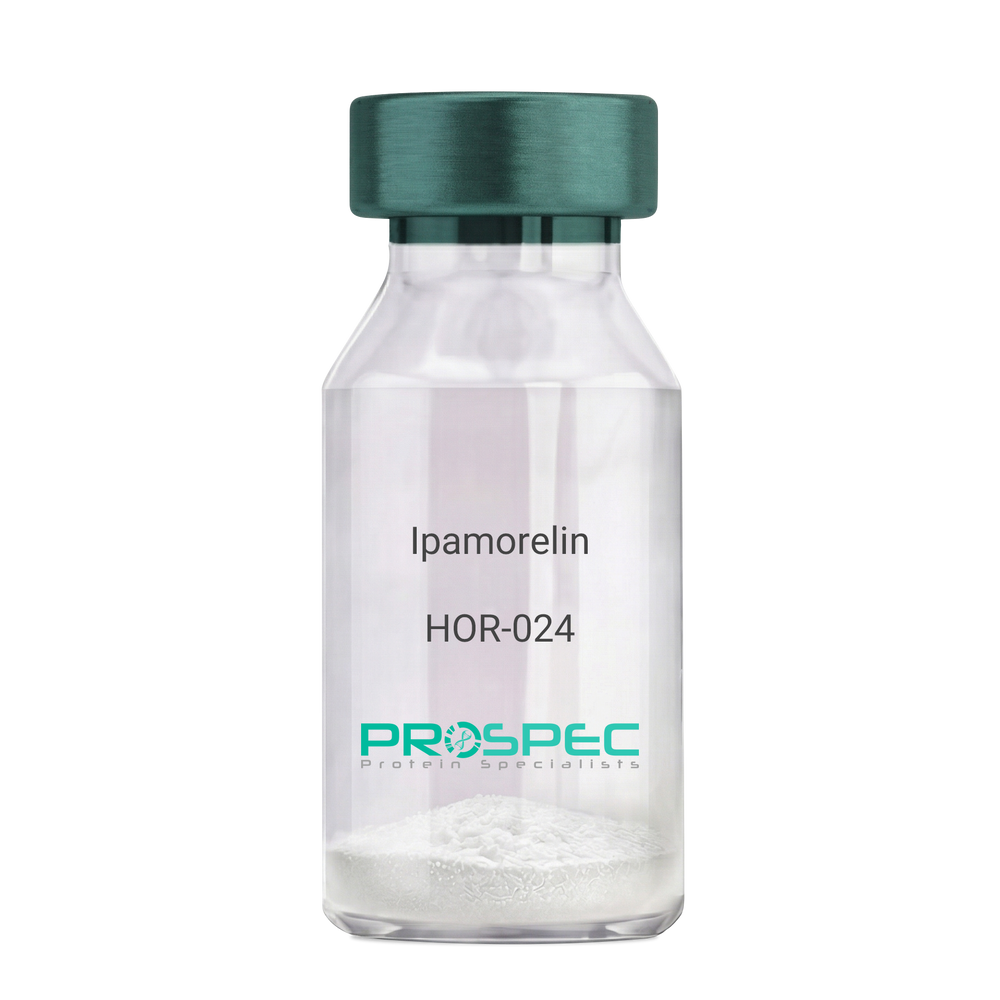
    Ipamorelin

    Description:

    Ipamorelin

    Ipamorelin

    Product # :

    HOR-024

    Price :

    Quantity :

    Shipping Method :

    Room Temp Icon

    Shipped at Room temp

    Add To Cart

    More Info

    • description
    • formulation
    • purity
    • More Info

    Description

    Ipamorelin Synthetic is a single, non-glycosylated polypeptide chain containing 4 amino acids, having a molecular mass of 711.85 Dalton and a Molecular formula of C38H49N9O5.

    Formulation

    The protein was lyophilized with no additives.

    Purity

    Greater than 97.0% as determined by analysis by RP-HPLC.

    More Info

    • Introduction

      Ipamorelin is a peptide selective agonist of the ghrelin/growth hormone secretagogue receptor and a growth hormone secretagogue. Ipamorelin is a pentapeptide that was derived from GHRP1. Ipamorelin significantly increases plasma growth hormone levels in both animals and humans. Like pralmorelin and GHRP-6, ipamorelin does not affect prolactin, FSH, LH or TSH levels. However, unlike GHRP2 and GHRP6, but as growth hormone-releasing hormone (GHRH), ipamorelin does not stimulate the secretion of adrenocorticotropic hormone (ACTH) or cortisol, and is highly selective for inducing the secretion only of GH.

    • Synonyms

      Ipamorelin

    • Physical Appearance

      Sterile Filtered White lyophilized (freeze-dried) powder.

    • Stability

      Lyophilized Ipamorelin although stable at room temperature for 3 weeks, should be stored desiccated below -18°C. Upon reconstitution Ipamorelin should be stored at 4°C between 2-7 days and for future use below -18°C. For long term storage it is recommended to add a carrier protein (0.1% HSA or BSA). Please prevent freeze-thaw cycles.

    • Solubility

      It is recommended to reconstitute the lyophilized Ipamorelin in sterile 18MΩ-cm H2O not less than 100 µg/ml, which can then be further diluted to other aqueous solutions.

    • Amino Acid Sequence

      Aib-His-D-2-Nal-D-Phe-Lys-NH2.

    ProSpec's products are furnished for LABORATORY RESEARCH USE ONLY. The product may not be used as drugs, agricultural or pesticidal products, food additives or household chemicals.

    Ipamorelin
  • View Data Sheet

    Name :

    IDE Human

    Description:

    Insulin-Degrading Enzyme Human Recombinant

    Insulin-Degrading Enzyme, Abeta-Degrading Protease, Insulin Protease, EC 3.4.24.56, Insulinase, INSULYSIN, Insulysin, EC 3.4.24, IDE.

    Product # :

    ENZ-813

    Price :

    Quantity :

    Shipping Method :

    Ice Icon

    Shipped with Ice Packs

    Add To Cart

    More Info

    • description
    • source
    • formulation
    • purity
    • More Info

    Description

    IDE Human Recombinant produced in E.Coli is a single, non-glycosylated, polypeptide chain (Met1-Leu1019) containing 1026 amino acids including a 7 aa His tag at C-terminus. The total calculated molecular mass is 119kDa.

    Source

    Escherichia Coli.

    Formulation

    IDE filtered (0.4µm) in 20mM Tris buffer, 50mM NaCl, pH 8.0 and 10% (w/v) glycerol.

    Purity

    Greater than 95.0% as determined by SDS-PAGE.

    More Info

    • Introduction

      Insulin-Degrading Enzyme (IDE) is a zinc metallopeptidase which degrades intracellular insulin, and thus terminates insulins activity, as well as playing a part in intercellular peptide signaling by degrading various peptides such as amylin, bradykinin, and kallidin. The preferential affinity of the IDE enzyme for insulin results in insulin-mediated inhibition of the degradation of additional peptides such as beta-amyloid. Deficiencies in IDE protein's function are linked with Alzheimer's disease and type 2 diabetes mellitus nevertheless mutations in the IDE gene have not been demonstrated to be causative for these diseases. Insulin-Degrading Enzyme localizes mainly to the cytoplasm however in some cell types it localizes to the extracellular space, cell membrane, peroxisome, and mitochondrion. In addition, IDE degrades amyloid formed by APP and IAPP. Furthermore, IDE plays a part in the degradation and clearance of naturally secreted amyloid beta-protein by neurons and microglia.

    • Synonyms

      Insulin-Degrading Enzyme, Abeta-Degrading Protease, Insulin Protease, EC 3.4.24.56, Insulinase, INSULYSIN, Insulysin, EC 3.4.24, IDE.

    • Physical Appearance

      Filtered colorless solution.

    • Stability

      Store at 4°C if entire vial will be used within 2-4 weeks. Store, frozen at -20°C for longer periods of time. For long term storage it is recommended to add a carrier protein (0.1% HSA or BSA).Avoid multiple freeze-thaw cycles.

    • Amino Acid Sequence

      MRYRLAWLLH PALPSTFRSV LGARLPPPER LCGFQKKTYS KMNNPAIKRI GNHITKSPED KREYRGLELA NGIKVLLISD PTTDKSSAAL DVHIGSLSDP PNIAGLSHFC EHMLFLGTKK YPKENEYSQF LSEHAGSSNA FTSGEHTNYY FDVSHEHLEG ALDRFAQFFL CPLFDESCKD REVNAVDSEH EKNVMNDAWR LFQLEKATGN PKHPFSKFGT GNKYTLETRP NQEGIDVRQE LLKFHSAYYS SNLMAVCVLG RESLDDLTNL VVKLFSEVEN KNVPLPEFPE HPFQEEHLKQ LYKIVPIKDI RNLYVTFPIP DLQKYYKSNP GHYLGHLIGH EGPGSLLSEL KSKGWVNTLV GGQKEGARGF MFFIINVDLT EEGLLHVEDI ILHMFQYIQK LRAEGPQEWV FQECKDLNAV AFRFKDKERP RGYTSKIAGI LHYYPLEEVL TAEYLLEEFR PDLIEMVLDK LRPENVRVAI VSKSFEGKTD RTEEWYGTQY KQEAIPDEVI KKWQNADLNG KFKLPTKNEF IPTNFEILPL EKEATPYPAL IKDTAMSKLW FKQDDKFFLP KACLNFEFFS PFAYVDPLHC NMAYLYLELL KDSLNEYAYA AELAGLSYDL QNTIYGMYLS VKGYNDKQPI LLKKIIEKMA TFEIDEKRFE IIKEAYMRSL NNFRAEQPHQ HAMYYLRLLM TEVAWTKDEL KEALDDVTLP RLKAFIPQLL SRLHIEALLH GNITKQAALG IMQMVEDTLI EHAHTKPLLP SQLVRYREVQ LPDRGWFVYQ QRNEVHNNCG IEIYYQTDMQ STSENMFLEL FCQIISEPCF NTLRTKEQLG YIVFSGPRRA NGIQGLRFII QSEKPPHYLE SRVEAFLITM EKSIEDMTEE AFQKHIQALA IRRLDKPKKL SAECAKYWGE IISQQYNFDR DNTEVAYLKT LTKEDIIKFY KEMLAVDAPR RHKVSVHVLA REMDSCPVVG EFPCQNDINL SQAPALPQPE VIQNMTEFKR GLPLFPLVKP HINFMAAKL E HHHHHH.

    ProSpec's products are furnished for LABORATORY RESEARCH USE ONLY. The product may not be used as drugs, agricultural or pesticidal products, food additives or household chemicals.

    Ide Human
  • View Data Sheet

    Name :

    GRXB E.Coli

    Description:

    Glutaredoxin-2 E.Coli Recombinant

    Glutaredoxin-2, Grx2, grxB, b1064, JW1051.

    Product # :

    ENZ-130

    Price :

    Quantity :

    Shipping Method :

    Ice Icon

    Shipped with Ice Packs

    Add To Cart

    More Info

    • description
    • source
    • formulation
    • purity
    • More Info

    Description

    GRXB produced in E.Coli is a single, non-glycosylated polypeptide chain containing 235 amino acids (1-215 a.a.) and having a molecular mass of 26.5kDa.GRXB is fused to a 20 amino acid His-tag at N-terminus & purified by proprietary chromatographic techniques.

    Source

    Escherichia Coli.

    Formulation

    GRXB protein solution (1mg/ml) 20mM Tris-HCl buffer (pH 8.0), 1mM DTT, 10% glycerol and 50mM NaCl.

    Purity

    Greater than 95% as determined by SDS-PAGE.

    More Info

    • Introduction

      Glutaredoxin-2 (GrxB) is amember of the glutaredoxin family. Glutaredoxins are small redox enzymes of approximately 100 amino-acid residues which use glutathione as a cofactor. Glutaredoxins are oxidized by substrates, and reduced non-enzymatically by glutathione. GrxB is involved in reducing some disulfides in a coupled system with glutathione reductase. GrxB doesn’t act as hydrogen donor for ribonucleotide reductase.

    • Synonyms

      Glutaredoxin-2, Grx2, grxB, b1064, JW1051.

    • Physical Appearance

      Sterile filtered colorless solution.

    • Stability

      Store at 4°C if entire vial will be used within 2-4 weeks.Store, frozen at -20°C for longer periods of time. For long term storage it is recommended to add a carrier protein (0.1% HSA or BSA).Avoid multiple freeze-thaw cycles.

    • Amino Acid Sequence

      MGSSHHHHHH SSGLVPRGSH MKLYIYDHCP YCLKARMIFG LKNIPVELHV LLNDDAETPT RMVGQKQVPI LQKDDSRYMP ESMDIVHYVD KLDGKPLLTG KRSPAIEEWL RKVNGYANKL LLPRFAKSAF DEFSTPAARK YFVDKKEASA GNFADLLAHS DGLIKNISDD LRALDKLIVK PNAVNGELSE DDIQLFPLLR NLTLVAGINW PSRVADYRDN MAKQTQINLL SSMAI.

    ProSpec's products are furnished for LABORATORY RESEARCH USE ONLY. The product may not be used as drugs, agricultural or pesticidal products, food additives or household chemicals.

    Grxb Ecoli
  • View Data Sheet

    Name :

    GMNN Human

    Description:

    Geminin Human Recombinant

    GMNN, Geminin, DNA Replication Inhibitor, Gem, RP3-369A17.3.

    Product # :

    PRO-579

    Price :

    Quantity :

    Shipping Method :

    Ice Icon

    Shipped with Ice Packs

    Add To Cart

    More Info

    • description
    • source
    • formulation
    • purity
    • More Info

    Description

    Geminin Human Recombinant fused to N-terminal His-Tag produced in E.Coli is a single, non-glycosylated polypeptide chain containing 245 amino acids and having a molecular mass of 27.7 kDa.

    Source

    Escherichia Coli.

    Formulation

    The protein solution contains 20mM Tris pH 8, 100mM NaCl and 10% glycerol.

    Purity

    Greater than 95.0% as determined by:
    (a) Analysis by RP-HPLC.
    (b) Analysis by SDS-PAGE.

    More Info

    • Introduction

      Geminin is a 25 kDa nuclear protein, which inhibits DNA replication and is degraded during the mitotic phase of the cell cycle. Geminin controls replication by binding to the licensing factor Cdt1, and is involved in neural differentiation. In addition, Geminin directly interacts with Six3 and Hox homeodomain proteins during embryogenesis and inhibits their functions. Geminin can also promote DNA replication. Geminin has 2 roles in 2 different stages of the cell cycle: Geminin is a negative regulator of DNA replication during the “S phase” of the cell cycle. Inhibition of Geminin during the “S phase” (by RNAi) results in an additional round of replication of portions of the genome. During the “M phase” of the cell cycle (mitosis) Geminin stabilizes the replication factor Cdt1 promoting DNA replication during the next cell cycle. Moreover, inhibition of Geminin during mitosis (by RNAi) causes destabilization of Cdt1 protein and impairment of DNA replication during the next cell cycle. Geminin thus guarantees that only one round of replication occurs during each cell cycle. It was discovered that Geminin is overexpressed in a number of malignancies and cancer cell lines. This maintains the concept that Geminin has also a positive role in DNA replication and cell cycle progression. Geminin accumulates through S, G2 and M phases of the cell cycle but is absent during the G1 phase. During the metaphase/anaphase transition of mitosis Geminin levels decrease.

    • Synonyms

      GMNN, Geminin, DNA Replication Inhibitor, Gem, RP3-369A17.3.

    • Physical Appearance

      Sterile Filtered colorless solution.

    • Stability

      Store at 4°C if entire vial will be used within 2-4 weeks. Store, frozen at -20°C for longer periods of time. For long term storage it is recommended to add a carrier protein (0.1% HSA or BSA).Avoid multiple freeze-thaw cycles.

    • Amino Acid Sequence

      MRGSHHHHHH GMASMTGGQQ MGRDLYDDDD KDRWGSMNPS MKQKQEEIKE NIKNSSVPRR TLKMIQPSAS GSLVGRENEL SAGLSKRKHR NDHLTSTTSS PGVIVPESSE NKNLGGVTQE SFDLMIKENP SSQYWKEVAE KRRKALYEAL KENEKLHKEI EQKDNEIARL KKENKELAEV AEHVQYMAEL IERLNGEPLD NFESLDNQEF DSEEETVEDS LVEDSEIGTC AEGTVSSSTD
      AKPCI.

    ProSpec's products are furnished for LABORATORY RESEARCH USE ONLY. The product may not be used as drugs, agricultural or pesticidal products, food additives or household chemicals.

    Geminin Human
  • View Data Sheet

    Name :

    METTL21A Human

    Description:

    Methyltransferase Like 21A Human Recombinant

    Protein N-lysine methyltransferase METTL21A, HSPA lysine methyltransferase, HSPA-KMT, Hepatocellular carcinoma-associated antigen 557b, Methyltransferase-like protein 21A, METTL21A, FAM119A, HCA557B, Methyltransferase Like 21A.

    Product # :

    ENZ-718

    Price :

    Quantity :

    Shipping Method :

    Ice Icon

    Shipped with Ice Packs

    Add To Cart

    More Info

    • description
    • source
    • formulation
    • purity
    • More Info

    Description

    METTL21A Human Recombinant produced in E. coli is a single polypeptide chain containing 149 amino acids (93-218) and having a molecular mass of 17 kDa.METTL21A is fused to a 23 amino acid His-tag at N-terminus & purified by proprietary chromatographic techniques.

    Source

    E.coli.

    Formulation

    The METTL21A solution (0.25mg/ml) contains 20mM Tris-HCl buffer (pH 8.0), 0.15M NaCl and 30% glycerol.

    Purity

    Greater than 85% as determined by SDS-PAGE.

    More Info

    • Introduction

      METTL21A, which is a part of the methyltransferase superfamily, is a Protein-lysine methyltransferase that in vitro methylates HSPA1, HSPA5 and HSPA8.

    • Synonyms

      Protein N-lysine methyltransferase METTL21A, HSPA lysine methyltransferase, HSPA-KMT, Hepatocellular carcinoma-associated antigen 557b, Methyltransferase-like protein 21A, METTL21A, FAM119A, HCA557B, Methyltransferase Like 21A.

    • Physical Appearance

      Sterile Filtered colorless solution.

    • Stability

      Store at 4°C if entire vial will be used within 2-4 weeks. Store, frozen at -20°C for longer periods of time. For long term storage it is recommended to add a carrier protein (0.1% HSA or BSA).Avoid multiple freeze-thaw cycles.

    • Amino Acid Sequence

      MGSSHHHHHH SSGLVPRGSH MGSTDRKVAL EFLKSNVQAN LPPHIQTKTV VKELTWGQNL GSFSPGEFDL ILGADIIYLE ETFTDLLQTL EHLCSNHSVI LLACRIRYER DNNFLAMLER QFTVRKVHYD PEKDVHIYEA QKRNQKEDL.

    ProSpec's products are furnished for LABORATORY RESEARCH USE ONLY. The product may not be used as drugs, agricultural or pesticidal products, food additives or household chemicals.

    Mettl21A Human
  • View Data Sheet

    Name :

    STYX Human (26-223)

    Description:

    Serine/Threonine/Tyrosine Interacting Protein (26-223 a.a.) Human Recombinant

    Serine/threonine/tyrosine-interacting protein.

    Product # :

    ENZ-590

    Price :

    Quantity :

    Shipping Method :

    Ice Icon

    Shipped with Ice Packs

    Add To Cart

    More Info

    • description
    • source
    • formulation
    • purity
    • More Info

    Description

    STYX Human Recombinant produced in E. coli is a single polypeptide chain containing 221 amino acids (26-223) and having a molecular mass of 25.0kDa.STYX is fused to a 23 amino acid His-tag at N-terminus & purified by proprietary chromatographic techniques.

    Source

    E.coli.

    Formulation

    The STYX solution (0.5mg/1ml) contains 20mM Tris-HCl buffer (pH 8.0), 0.15M NaCl, 1mM DTT and 40% glycerol.

    Purity

    Greater than 85% as determined by SDS-PAGE.

    More Info

    • Introduction

      STYX is a member of the protein-tyrosine phosphatase family. STYX has a Gly residue instead of a conserved Cys residue in the dsPTPase catalytic loop which renders it catalytically inactive as a phosphatase. Nevertheless, the binding pocket is adequately preserved to bind phosphorylated substrates, and possibly protect them from phosphatases. STYX takes part in spermiogenesis.

    • Synonyms

      Serine/threonine/tyrosine-interacting protein.

    • Physical Appearance

      Sterile Filtered colorless solution.

    • Stability

      Store at 4°C if entire vial will be used within 2-4 weeks. Store, frozen at -20°C for longer periods of time. For long term storage it is recommended to add a carrier protein (0.1% HSA or BSA).Avoid multiple freeze-thaw cycles.

    • Amino Acid Sequence

      MGSSHHHHHH SSGLVPRGSH SHMRREMQEI LPGLFLGPYS SAMKSKLPVL QKHGITHIIC IRQNIEANFI KPNFQQLFRY LVLDIADNPV ENIIRFFPMT KEFIDGSLQM GGKVLVHGNA GISRSAAFVI AYIMETFGMK YRDAFAYVQE RRFCINPNAG FVHQLQEYEA IYLAKLTIQM MSPLQIERSL SVHSGTTGSL KRTHEEEDDF GTMQVATAQN G

    ProSpec's products are furnished for LABORATORY RESEARCH USE ONLY. The product may not be used as drugs, agricultural or pesticidal products, food additives or household chemicals.

    Styx Human 26 223
  • View Data Sheet

    Name :

    TFPI2 Human

    Description:

    Tissue Factor Pathway Inhibitor 2 Human Recombinant

    Tissue Factor Pathway Inhibitor 2, Placental Protein 5, TFPI-2, PP5, Retinal Pigment Epithelium Cell Factor 1, REF1, TFPI2.

    Product # :

    PRO-860

    Price :

    Quantity :

    Shipping Method :

    Ice Icon

    Shipped with Ice Packs

    Add To Cart

    More Info

    • description
    • source
    • formulation
    • purity
    • More Info

    Description

    TFPI2 Human Recombinant produced in Sf9 Baculovirus cells is a single, glycosylated polypeptide chain containing 199 amino acids (23-213 a.a.) and having a molecular mass of 22.9kDa (Migrates at 18-40kDa on SDS-PAGE under reducing conditions).TFPI2 is expressed with an 8 amino acid His tag at C-Terminus and purified by proprietary chromatographic techniques.

    Source

    Sf9, Baculovirus cells.

    Formulation

    TFPI2 protein solution (0.5mg/ml) contains Phosphate Buffered Saline (pH 7.4) and 10% glycerol.

    Purity

    Greater than 95.0% as determined by SDS-PAGE.

    More Info

    • Introduction

      TFPI2 takes part in the regulation of plasmin-mediated matrix remodeling. Inhibits trypsin, plasmin, factor VIIa/tissue factor and weakly factor Xa. TFPI2 doesn’t have any influence on thrombin.

    • Synonyms

      Tissue Factor Pathway Inhibitor 2, Placental Protein 5, TFPI-2, PP5, Retinal Pigment Epithelium Cell Factor 1, REF1, TFPI2.

    • Physical Appearance

      Sterile filtered colorless solution.

    • Stability

      Store at 4°C if entire vial will be used within 2-4 weeks. Store, frozen at -20°C for longer periods of time. For long term storage it is recommended to add a carrier protein (0.1% HSA or BSA).Avoid multiple freeze-thaw cycles.

    • Amino Acid Sequence

      DAAQEPTGNN AEICLLPLDY GPCRALLLRY YYDRYTQSCR QFLYGGCEGN ANNFYTWEAC DDACWRIEKV PKVCRLQVSV DDQCEGSTEK YFFNLSSMTC EKFFSGGCHR NRIENRFPDE ATCMGFCAPK KIPSFCYSPK DEGLCSANVT RYYFNPRYRT CDAFTYTGCG GNDNNFVSRE DCKRACAKAL KLEHHHHHH.

    ProSpec's products are furnished for LABORATORY RESEARCH USE ONLY. The product may not be used as drugs, agricultural or pesticidal products, food additives or household chemicals.

    Tfpi2 Human
  • View Data Sheet

    Name :

    TIMP1 Human, HEK

    Description:

    Tissue Inhibitor of Metalloprotease 1 Human Recombinant, HEK

    Metalloproteinase inhibitor 1, Tissue inhibitor of metalloproteinases, TIMP-1, Erythroid-potentiating activity, EPA, TIMP1, CLGI, TIMP, EPO, HCI, FLJ90373.

    Product # :

    ENZ-508

    Price :

    Quantity :

    Shipping Method :

    Room Temp Icon

    Shipped at Room temp

    Add To Cart

    More Info

    • description
    • source
    • formulation
    • purity
    • biological activity
    • More Info

    Description

    TIMP1 Human Recombinant produced in HEK-293 cells is a secreted protein with the sequence of Human TIMP-1 (amino acids Cys24-Ala207) and fused to a polyhistidine tag at the C-terminus.

    Source

    HEK293 Cells.

    Formulation

    The TIMP1 protein was lyophilized after extensive dialysis against PBS.

    Purity

    Greater than 95.0% as determined by SDS-PAGE.

    Biological Activity

    The IC50 of 2.5-4 nM is measured by its ability to inhibit recombinant human MMP-2 cleavage of the colorimetric peptide substrate, Mca-PLGL-DpaAR-NH2.

    More Info

    • Introduction

      TIMP1 is a member of the TIMP family. TIMP1 is an inducible glycoprotein produced by various cell types. The TIMP1 glycoprotein is a natural inhibitor of the matrix metalloproteinases, which a group of peptidases involved in degradation of the extracellular matrix. TIMP1 binds in a reversible mode to MMPs, with regions in the N-terminal domain binding to the MMP substrate-binding site. On top of its inhibitory function against most of the known MMPs, TIMP1 is able to promote cell proliferation in a broad range of cell types, and may also have an anti-apoptotic role. Furthermore, TIMP1 has erthyroid-potentiating activity via translocation to the nucleus and also inhibits apoptosis in B-cells. The TIMP1 gene is situated within intron 6 of the synapsin I gene and is transcribed in the opposite direction. TIMP1 activity is dependent on the existence of disulfide bonds. TIMP1 transcription is extremely inducible in reaction to many cytokines and hormones. Increased TIMP1 levels are connecte

    • Synonyms

      Metalloproteinase inhibitor 1, Tissue inhibitor of metalloproteinases, TIMP-1, Erythroid-potentiating activity, EPA, TIMP1, CLGI, TIMP, EPO, HCI, FLJ90373.

    • Physical Appearance

      Sterile Filtered White lyophilized (freeze-dried) powder.

    • Stability

      Lyophilized TIMP1 although stable at room temperature for 3 weeks, should be stored desiccated below -18°C. Upon reconstitution TIMP1 should be stored at 4°C between 2-7 days and for future use below -18°C. For long term storage it is recommended to add a carrier protein (0.1% HSA or BSA). Please prevent freeze-thaw cycles.

    • Solubility

      It is recommended to reconstitute the lyophilized TIMP1 in sterile 18M-cm H2O not less than 100µg/ml, which can then be further diluted to other aqueous solutions.

    ProSpec's products are furnished for LABORATORY RESEARCH USE ONLY. The product may not be used as drugs, agricultural or pesticidal products, food additives or household chemicals.

    Timp1 Hek
  • View Data Sheet

    Name :

    AKR7A3 Human, His

    Description:

    Aldo-Keto Reductase Family 7 Member A3 Human Recombinant, His Tag

    AFAR2, Aflatoxin B1 aldehyde reductase member 3, AFB1 aldehyde reductase 2, AFB1-AR 2, AKR7A3.

    Product # :

    ENZ-484

    Price :

    Quantity :

    Shipping Method :

    Ice Icon

    Shipped with Ice Packs

    Add To Cart

    More Info

    • description
    • source
    • formulation
    • purity
    • biological activity
    • More Info

    Description

    AKR7A3 Human Recombinant fused to a 39 amino acids His Tag at N-terminal produced in E.Coli is a single, non-glycosylated, polypeptide chain containing 370 amino acids (1-331 a.a.) and having a molecular mass of 41.6 kDa. The AKR7A3 is fused to a 39 amino acid His tag at n-terminal and purified by proprietary chromatographic techniques.

    Source

    Escherichia Coli.

    Formulation

    The AKR7A3 solution contains 20mM Tris-HCl pH-8, 0.1M NaCl and 10% glycerol.

    Purity

    Greater than 95.0% as determined by SDS-PAGE.

    Biological Activity

    Specific activity: approximately < 0.1 units/mg.
    Enzymatic activity was confirmed by measuring the amount of enzyme catalyzing the oxidation of 1 micromole NADPH per minute at 25C. Specific activity was expressed as units/mg protein.

    More Info

    • Introduction

      AKR7A3, takes part in the detoxification of aldehydes and ketones. AKR7A3 reduces the dialdehyde protein-binding form of aflatoxin B1 (AFB1) to the non-binding AFB1 dialcohol. AKR7A3 participates in protection of liver against the toxic and carcinogenic effects of AFB1, a potent hepatocarcinogen.

    • Synonyms

      AFAR2, Aflatoxin B1 aldehyde reductase member 3, AFB1 aldehyde reductase 2, AFB1-AR 2, AKR7A3.

    • Physical Appearance

      Sterile Filtered clear colorless solution.

    • Stability

      Store at 4°C if entire vial will be used within 2-4 weeks. Store, frozen at -20°C for longer periods of time. For long term storage it is recommended to add a carrier protein (0.1% HSA or BSA).Avoid multiple freeze-thaw cycles.

    • Amino Acid Sequence

      MRGSHHHHHH GMASMTGGQQ MGRDLYDDDD KDRWGSELEM SRQLSRARPA TVLGAMEMGR RMDAPTSAAV TRAFLERGHT EIDTAFVYSE GQSETILGGL GLRLGGSDCR VKIDTKAIPL FGNSLKPDSL RFQLETSLKR LQCPRVDLFY LHMPDHSTPV EETLRACHQL HQEGKFVELG LSNYAAWEVA EICTLCKSNG WILPTVYQGM YNAITRQVET ELFPCLRHFG LRFYAFNPLA GGLLTGKYKY EDKDGKQPVG RFFGNTWAEM YRNRYWKEHH FEGIALVEKA LQAAYGASAP SMTSATLRWM YHHSQLQGAH GDAVILGMSS LEQLEQNLAA AEEGPLEPAV VDAFNQAWHL VAHECPNYFR.

    ProSpec's products are furnished for LABORATORY RESEARCH USE ONLY. The product may not be used as drugs, agricultural or pesticidal products, food additives or household chemicals.

    Akr7A3 Human
  • View Data Sheet

    Name :

    TPA (311-562) Human

    Description:

    Tissue Plasminogen Activator (311-562 a.a.) Human Recombinant

    Tissue-type plasminogen activator, EC 3.4.21.68, tPA, t-PA, t-plasminogen activator, TPA, T-PA, DKFZp686I03148, PLAT and tPA.

    Product # :

    ENZ-1023

    Price :

    Quantity :

    Shipping Method :

    Ice Icon

    Shipped with Ice Packs

    Add To Cart

    More Info

    • description
    • source
    • formulation
    • purity
    • More Info

    Description

    TPA Human Recombinant produced in Sf9 Baculovirus cells is a single, glycosylated polypeptide chain containing 261 amino acids (311-562 a.a.) and having a molecular mass of 29.2kDa (Migrates at 28-40kDa on SDS-PAGE under reducing conditions).TPA is expressed with a 6 amino acid His tag at C-Terminus and purified by proprietary chromatographic techniques.

    Source

    Sf9, Baculovirus cells.

    Formulation

    TPA protein solution (0.5mg/ml) contains 50mM MES (pH 5.0), 5mM CaCl2, 1mM DTT, 0.5M NaCl and 30% glycerol.

    Purity

    Greater than 95.0% as determined by SDS-PAGE.

    More Info

    • Introduction

      Tissue plasminogen activator (abbreviated PLAT or tPA) is a secreted serine proteasewhich converts the proenzymeplasminogento plasmin, a fibrinolyticenzyme. Plasminogen is synthesized as a single chain which is cleaved by PLAT into the two chain disulfide linked plasmin.
      This enzyme plays a role in cell migrationand tissue remodeling. Increased enzymatic activity causes hyperfibrinolysis, which manifests as excessive bleeding; decreased activity leads to hypofibrinolysiswhich can result in thrombosisor embolism.

    • Synonyms

      Tissue-type plasminogen activator, EC 3.4.21.68, tPA, t-PA, t-plasminogen activator, TPA, T-PA, DKFZp686I03148, PLAT and tPA.

    • Physical Appearance

      Sterile Filtered colorless solution.

    • Stability

      Store at 4°C if entire vial will be used within 2-4 weeks. Store, frozen at -20°C for longer periods of time. For long term storage it is recommended to add a carrier protein (0.1% HSA or BSA).Avoid multiple freeze-thaw cycles.

    • Amino Acid Sequence

      ADPIKGGLFA DIASHPWQAA IFAKHRRSPG ERFLCGGILI SSCWILSAAH CFQERFPPHH LTVILGRTYR VVPGEEEQKF EVEKYIVHKE FDDDTYDNDI ALLQLKSDSS RCAQESSVVR TVCLPPADLQ LPDWTECELS GYGKHEALSP FYSERLKEAH VRLYPSSRCT SQHLLNRTVT DNMLCAGDTR SGGPQANLHD ACQGDSGGPL VCLNDGRMTL VGIISWGLGC GQKDVPGVYT KVTNYLDWIR DNMRPHHHHH H.

    ProSpec's products are furnished for LABORATORY RESEARCH USE ONLY. The product may not be used as drugs, agricultural or pesticidal products, food additives or household chemicals.

    Tpa 311 562 Human
  • View Data Sheet

    Name :

    CES1 Human

    Description:

    Carboxylesterase 1 Human Recombinant

    Liver carboxylesterase 1 isoform a, CES1, ACAT, CE-1, CEH, CES2, hCE-1, HMSE, HMSE1, PCE-1, REH, SES1, TGH, Acyl-coenzyme A:cholesterol acyltransferase, Brain carboxylesterase hBr1.

    Product # :

    ENZ-1099

    Price :

    Quantity :

    Shipping Method :

    Ice Icon

    Shipped with Ice Packs

    Add To Cart

    More Info

    • description
    • source
    • formulation
    • purity
    • More Info

    Description

    CES1 Human produced in Sf9 Insect cells is a single, glycosylated polypeptide chain containing 559 amino acids (19-568 a.a.) and having a molecular mass of 61.7kDa (Molecular size on SDS-PAGE will appear at approximately 50-70kDa).CES1 is expressed with a 9 amino acid His tag at C-Terminus and purified by proprietary chromatographic techniques.

    Source

    Sf9, Baculovirus cells.

    Formulation

    CES1 protein solution (0.5mg/ml) contains 25mM Sodium Acetate (pH 4.0), 10% glycerol, 0.1M NaCl and 0.1mM PMSF.

    Purity

    Greater than 90.0% as determined by SDS-PAGE.

    More Info

    • Introduction

      CES1 is a part of the alpha/beta fold hydrolase familyand participates in the detoxification of xenobiotics and in the activation of ester and amide prodrugs. CES1hydrolyzes aromatic and aliphatic esters, although it has no catalytic activity toward amides or a fatty acyl-CoA ester. CES1hydrolyzes the methyl ester group of cocaine to form benzoylecgonine and catalyzes the transesterification of cocaine to form cocaethylene. CES1also plays a role in detoxification in the lung and protection of the central nervous system from ester or amide compounds.CES1 is found in most tissues, mainly in the liver.

    • Synonyms

      Liver carboxylesterase 1 isoform a, CES1, ACAT, CE-1, CEH, CES2, hCE-1, HMSE, HMSE1, PCE-1, REH, SES1, TGH, Acyl-coenzyme A:cholesterol acyltransferase, Brain carboxylesterase hBr1.

    • Physical Appearance

      Sterile Filtered colorless solution.

    • Stability

      Store at 4°C if entire vial will be used within 2-4 weeks. Store, frozen at -20°C for longer periods of time. For long term storage it is recommended to add a carrier protein (0.1% HSA or BSA).Avoid multiple freeze-thaw cycles.

    • Amino Acid Sequence

      ADLGHPSSPP VVDTVHGKVL GKFVSLEGFA QPVAIFLGIP FAKPPLGPLR FTPPQPAEPW
      SFVKNATSYP PMCTQDPKAG QLLSELFTNR KENIPLKLSE DCLYLNIYTP ADLTKKNRLP
      VMVWIHGGGL MVGAASTYDG LALAAHENVV VVTIQYRLGI WGFFSTGDEH SRGNWGHLDQ
      VAALRWVQDN IASFGGNPGS VTIFGESAGG ESVSVLVLSP LAKNLFHRAI SESGVALTSV
      LVKKGDVKPL AEQIAITAGC KTTTSAVMVH CLRQKTEEEL LETTLKMKFL SLDLQGDPRE
      SQPLLGTVID GMLLLKTPEE LQAERNFHTV PYMVGINKQE FGWLIPMQLM SYPLSEGQLD
      QKTAMSLLWK SYPLVCIAKE LIPEATEKYL GGTDDTVKKK DLFLDLIADV MFGVPSVIVA
      RNHRDAGAPT YMYEFQYRPS FSSDMKPKTV IGDHGDELFS VFGAPFLKEG ASEEEIRLSK
      MVMKFWANFA RNGNPNGEGL PHWPEYNQKE GYLQIGANTQ AAQKLKDKEV AFWTNLFAKK AVEKPPQTEH IELHHHHHH.

    ProSpec's products are furnished for LABORATORY RESEARCH USE ONLY. The product may not be used as drugs, agricultural or pesticidal products, food additives or household chemicals.

    Ces1 Human
  • View Data Sheet

    Name :

    PSMA6 Human

    Description:

    Proteasome Subunit Alpha Type 6 Human Recombinant

    Proteasome (prosome, macropain) subunit alpha type 6, PROS27, p27K, IOTA, Macropain iota chain, Multicatalytic endopeptidase complex iota chain, Proteasome iota chain, 27 kDa prosomal protein.

    Product # :

    ENZ-198

    Price :

    Quantity :

    Shipping Method :

    Ice Icon

    Shipped with Ice Packs

    Add To Cart

    More Info

    • description
    • source
    • formulation
    • purity
    • More Info

    Description

    PSMA6 Human Recombinant produced in E.Coli is a single, non-glycosylated polypeptide chain containing 270 amino acids (1-246 a.a.) and having a molecular mass of 29.9kDa.PSMA6 is fused to a 24 amino acid His-tag at N-terminus & purified by proprietary chromatographic techniques.

    Source

    Escherichia Coli.

    Formulation

    PSMA6 protein solution (0.25mg/ml) containing 20mM Tris-HCl buffer (pH8.0), 100mM NaCl, 1mM DTT and 40% glycerol.

    Purity

    Greater than 90.0% as determined by SDS-PAGE.

    More Info

    • Introduction

      PSMA6 belongs to the peptidase T1A family, which is a 20S core alpha subunit. The proteasome is a multicatalytic proteinase complex with an extremely organized ring-shaped 20S core structure. The core structure consists of 4 rings of 28 non-identical subunits; 2 rings consist of 7 alpha subunits and 2 rings consist of 7 beta subunits. PSMA6 is spread all over eukaryotic cells in large quantities and cleave peptides in an ATP/ubiquitin-dependent procedure in a non-lysosomal pathway.

    • Synonyms

      Proteasome (prosome, macropain) subunit alpha type 6, PROS27, p27K, IOTA, Macropain iota chain, Multicatalytic endopeptidase complex iota chain, Proteasome iota chain, 27 kDa prosomal protein.

    • Physical Appearance

      Sterile Filtered colorless solution.

    • Stability

      Store at 4°C if entire vial will be used within 2-4 weeks. Store, frozen at -20°C for longer periods of time. For long term storage it is recommended to add a carrier protein (0.1% HSA or BSA).Avoid multiple freeze-thaw cycles.

    • Amino Acid Sequence

      MGSSHHHHHH SSGLVPRGSH MGSHMSRGSS AGFDRHITIF SPEGRLYQVE YAFKAINQGG LTSVAVRGKD CAVIVTQKKV PDKLLDSSTVTHLFKITENI GCVMTGMTAD SRSQVQRARY EAANWKYKYG YEIPVDMLCK RIADISQVYT QNAEMRPLGC CMILIGIDEE QGPQVYKCDP AGYYCGFKAT AAGVKQTEST SFLEKKVKKK FDWTFEQTVE TAITCLSTVL SIDFKPSEIE VGVVTVENPK FRILTEAEID AHLVALAERD

    ProSpec's products are furnished for LABORATORY RESEARCH USE ONLY. The product may not be used as drugs, agricultural or pesticidal products, food additives or household chemicals.

    Psma6 Human
  • View Data Sheet

    Name :

    KLK11 Human, Sf9

    Description:

    Kallikrein-11, 4 Human Recombinant, Sf9

    Kallikrein-11 isoform 1, KLK11, PRSS20, TLSP.

    Product # :

    ENZ-1089

    Price :

    Quantity :

    Shipping Method :

    Ice Icon

    Shipped with Ice Packs

    Add To Cart

    More Info

    • description
    • source
    • formulation
    • purity
    • More Info

    Description

    KLK11 produced in Sf9 Insect cells is a single, glycosylated polypeptide chain containing 241 amino acids (19-250a.a.) and having a molecular mass of 26.7 kDa (Molecular size on SDS-PAGE will appear at approximately 28-40kDa).KLK11 is expressed with a 9 amino acid His tag at C-Terminus and purified by proprietary chromatographic techniques.

    Source

    Sf9, Insect cells.

    Formulation

    KLK11 protein solution ( 0.5mg/m ) contains 50mM Tris-HCl (pH 7.5), 0.1M NaCl, 2mM CaCl2 and 10% glycerol.

    Purity

    Greater than 90.0% as determined by SDS-PAGE.

    More Info

    • Introduction

      Kallikreins are a subgroup of serine proteases having various physiological functions. Numerous kallikreins are involved in carcinogenesis. Kallikrein-11 (KLK11) which is a multifunctional protease is 1 of the 15 kallikrein subfamily members found in a cluster on chromosome 19. KLK11 cleaves synthetic peptides after arginine but not lysine residues.

    • Synonyms

      Kallikrein-11 isoform 1, KLK11, PRSS20, TLSP.

    • Physical Appearance

      Sterile Filtered colorless solution.

    • Stability

      Store at 4°C if entire vial will be used within 2-4 weeks. Store, frozen at -20°C for longer periods of time. For long term storage it is recommended to add a carrier protein (0.1% HSA or BSA). Avoid multiple freeze-thaw cycles.

    • Amino Acid Sequence

      ADLETRIIKG FECKPHSQPW QAALFEKTRL LCGATLIAPR WLLTAAHCLK PRYIVHLGQH NLQKEEGCEQ TRTATESFPH PGFNNSLPNK DHRNDIMLVK MASPVSITWA VRPLTLSSRC VTAGTSCLIS GWGSTSSPQL RLPHTLRCAN ITIIEHQKCE NAYPGNITDT MVCASVQEGG KDSCQGDSGG PLVCNQSLQG IISWGQDPCA ITRKPGVYTK VCKYVDWIQE TMKNNHHHHH H.

    ProSpec's products are furnished for LABORATORY RESEARCH USE ONLY. The product may not be used as drugs, agricultural or pesticidal products, food additives or household chemicals.

    Kallikrein 11
  • View Data Sheet

    Name :

    CTSS Human

    Description:

    Cathepsin-S Human Recombinant

    Cathepsin S, MGC3886, CTSS, Cathepsin-S.

    Product # :

    ENZ-686

    Price :

    Quantity :

    Shipping Method :

    Ice Icon

    Shipped with Ice Packs

    Add To Cart

    More Info

    • description
    • source
    • formulation
    • purity
    • More Info

    Description

    CTSS Human Recombinant produced in E.coli is a single, non-glycosylated polypeptide chain containing 336 amino acids (17-331) and having a molecular mass of 38.1kDa. CTSS is fused to a 21 amino acid His-tag at N-terminus & purified by proprietary chromatographic techniques.

    Source

    Escherichia Coli.

    Formulation

    The CTSS solution (1mg/ml) contains 20mM Tris-HCl buffer (pH 8.0), 0.4M urea and 10% glycerol.

    Purity

    Greater than 85.0% as determined by SDS-PAGE.

    More Info

    • Introduction

      Cathepsin S (CTSS) belongs to the peptidase C1 family. CTSS is a lysosomal cysteine proteinase that participates in the degradation of antigenic proteins to peptides for presentation on MHC class II molecules. CTSS functions as an elastase over a broad pH range in alveolar macrophages.

    • Synonyms

      Cathepsin S, MGC3886, CTSS, Cathepsin-S.

    • Physical Appearance

      Sterile Filtered colorless solution.

    • Stability

      Store at 4°C if entire vial will be used within 2-4 weeks. Store, frozen at -20°C for longer periods of time. For long term storage it is recommended to add a carrier protein (0.1% HSA or BSA).Avoid multiple freeze-thaw cycles.

    • Amino Acid Sequence

      MGSSHHHHHH SSGLVPRGSH MQLHKDPTLD HHWHLWKKTY GKQYKEKNEE AVRRLIWEKN LKFVMLHNLE HSMGMHSYDL GMNHLGDMTS EEVMSLMSSL RVPSQWQRNI TYKSNPNWIL PDSVDWREKG CVTEVKYQGS CGACWAFSAV GALEAQLKLK TGKLVSLSAQ NLVDCSTEKY GNKGCNGGFM TTAFQYIIDN KGIDSDASYP YKAMDQKCQY DSKYRAATCS KYTELPYGRE DVLKEAVANK GPVSVGVDAR HPSFFLYRSG VYYEPSCTQN VNHGVLVVGY GDLNGKEYWL VKNSWGHNFG EEGYIRMARN KGNHCGIASF PSYPEI.

    ProSpec's products are furnished for LABORATORY RESEARCH USE ONLY. The product may not be used as drugs, agricultural or pesticidal products, food additives or household chemicals.

    Ctss Human
  • View Data Sheet

    Name :

    Hepatocyte Growth Factor (32-285) Human

    Description:

    Hepatoma-Derived Growth Factor (32-285 a.a) Human Recombinant

    Scatter Factor (SF), Hepatopoietin (HPTA), HGF, HGFB, F-TCF, DFNB39.

    Product # :

    CYT-294

    Price :

    Quantity :

    Shipping Method :

    Ice Icon

    Shipped with Ice Packs

    Add To Cart

    More Info

    • description
    • source
    • formulation
    • purity
    • More Info
    • SDS-PAGE

    Description

    HGF Human Recombinant produced in E.Coli is a single, non-glycosylated polypeptide chain containing 255 amino acids (32-285 a.a.) and having a molecular mass of 29.8kDa. HGF is purified by proprietary chromatographic techniques.

    Source

    Escherichia Coli.

    Formulation

    HGF protein solution (1mg/ml) contains 20mM Tris-HCl buffer (pH 8.0), 10% glycerol and 0.4M Urea.

    Purity

    Greater than 80% as determined by SDS-PAGE.

    SDS-PAGE

    Hepatocyte Growth Factor  (32-285) Human - Product image 1

    More Info

    • Introduction

      Hepatocyte Growth Factor (HGF) is a multifunctional growth factor which regulates both cell growth and cell motility. It exerts a strong mitogenic effect on hepatocytes and primary epithelial cells. HGF synergizes with Interleukin-3 and GM-CSF to stimulate colony formation of hematopoietic progenitor cells in vitro and may, therefore, also modulate hematopoiesis.

    • Synonyms

      Scatter Factor (SF), Hepatopoietin (HPTA), HGF, HGFB, F-TCF, DFNB39.

    • Physical Appearance

      Sterile filtered colorless solution.

    • Stability

      Store at 4°C if entire vial will be used within 2-4 weeks. Store, frozen at -20°C for longer periods of time. For long term storage it is recommended to add a carrier protein (0.1% HSA or BSA).Avoid multiple freeze-thaw cycles.

    • Amino Acid Sequence

      MQRKRRNTIH EFKKSAKTTL IKIDPALKIK TKKVNTADQC ANRCTRNKGL PFTCKAFVFD KARKQCLWFP FNSMSSGVKK EFGHEFDLYE NKDYIRNCII GKGRSYKGTV SITKSGIKCQ PWSSMIPHEH SYRGKDLQEN YCRNPRGEEG GPWCFTSNPE VRYEVCDIPQ CSEVECMTCN GESYRGLMDH TESGKICQRW DHQTPHRHKF LPERYPDKGF DDNYCRNPDG QPRPWCYTLD PHTRWEYCAI KTCET.

    • Background

      What is the molecular weight/Mw of HEPATOCYTE GROWTH FACTOR (32-285) HUMAN Protein?
      HEPATOCYTE GROWTH FACTOR (32-285) HUMAN Protein has a total Mw of 29.8kDa.

      What is the source or expression system of HEPATOCYTE GROWTH FACTOR (32-285) HUMAN Protein?
      Escherichia Coli.

      What is the Purity of HEPATOCYTE GROWTH FACTOR (32-285) HUMAN Protein?
      HEPATOCYTE GROWTH FACTOR (32-285) HUMAN Protein is >80% pure as determined by SDS-PAGE.

      What is the Biological Activity of HEPATOCYTE GROWTH FACTOR (32-285) HUMAN Protein?
      What is the molecular weight/Mw of HGF (32-285) HUMAN Protein? HGF (32-285) HUMAN Protein has a total Mw of 29.8kDa. What is the source or expression system of HGF (32-285) HUMAN Protein? Escherichia Coli. What is the Purity of HGF (32-285) HUMAN Protein? HGF (32-285) HUMAN Protein is >80% pure as determined by SDS-PAGE. What is the Biological Activity of HGF (32-285) HUMAN Protein? The biological functionality of HGF (32-285) HUMAN Protein will be determined in the future. What is the amino acid sequence of HGF (32-285) HUMAN Protein? MQRKRRNTIH EFKKSAKTTL IKIDPALKIK TKKVNTADQC ANRCTRNKGL PFTCKAFVFD KARKQCLWFP FNSMSSGVKK EFGHEFDLYE NKDYIRNCII GKGRSYKGTV SITKSGIKCQ PWSSMIPHEH SYRGKDLQEN YCRNPRGEEG GPWCFTSNPE VRYEVCDIPQ CSEVECMTCN GESYRGLMDH TESGKICQRW DHQTPHRHKF LPERYPDKGF DDNYCRNPDG QPRPWCYTLD PHTRWEYCAI KTCET. What applications can HGF (32-285) HUMAN Protein be used in? HGF (32-285) HUMAN Protein can probably be used in western blot, ELISA and Lateral Flow. What is the endotoxin level for HGF (32-285) HUMAN Protein? The endotoxin level is minimal, HGF (32-285) HUMAN Protein was purified using conventional chromatography techniques.


      What is the amino acid sequence of HEPATOCYTE GROWTH FACTOR (32-285) HUMAN Protein?
      MQRKRRNTIH EFKKSAKTTL IKIDPALKIK TKKVNTADQC ANRCTRNKGL PFTCKAFVFD KARKQCLWFP FNSMSSGVKK EFGHEFDLYE NKDYIRNCII GKGRSYKGTV SITKSGIKCQ PWSSMIPHEH SYRGKDLQEN YCRNPRGEEG GPWCFTSNPE VRYEVCDIPQ CSEVECMTCN GESYRGLMDH TESGKICQRW DHQTPHRHKF LPERYPDKGF DDNYCRNPDG QPRPWCYTLD PHTRWEYCAI KTCET.

      What applications can HEPATOCYTE GROWTH FACTOR (32-285) HUMAN Protein be used in?
      HEPATOCYTE GROWTH FACTOR (32-285) HUMAN Protein can probably be used in western blot, ELISA and Lateral Flow.

      What is the endotoxin level for HEPATOCYTE GROWTH FACTOR (32-285) HUMAN Protein?
      The endotoxin level is minimal, HEPATOCYTE GROWTH FACTOR (32-285) HUMAN Protein was purified using conventional chromatography techniques.


    ProSpec's products are furnished for LABORATORY RESEARCH USE ONLY. The product may not be used as drugs, agricultural or pesticidal products, food additives or household chemicals.

    Hgf 32 285 Human
  • View Data Sheet

    Name :

    SCRN1 Human

    Description:

    Secernin 1 Human Recombinant

    Secernin-1, SES1, KIAA0193, Secernin 1.

    Product # :

    PRO-2212

    Price :

    Quantity :

    Shipping Method :

    Ice Icon

    Shipped with Ice Packs

    Add To Cart

    More Info

    • description
    • source
    • formulation
    • purity
    • More Info

    Description

    SCRN1 Human Recombinant produced in E.Coli is a single, non-glycosylated polypeptide chain containing 437 amino acids (1-414 a.a) and having a molecular mass of 48.8kDa. SCRN1 is fused to a 23 amino acid His-tag at N-terminus & purified by proprietary chromatographic techniques.

    Source

    Escherichia Coli.

    Formulation

    SCRN1 protein solution (0.5mg/ml) containing Phosphate buffered saline (pH7.4) , 10% glycerol and 1mM DTT.

    Purity

    Greater than 90.0% as determined by SDS-PAGE.

    More Info

    • Introduction

      Secernin 1 (SCRN1) which is a member of the peptidase C69 family, regulates exocytosis in mast cells. SCRN1 increases both the level of secretion and the sensitivity of mast cells to stimulation with calcium.

    • Synonyms

      Secernin-1, SES1, KIAA0193, Secernin 1.

    • Physical Appearance

      Sterile Filtered colorless solution.

    • Stability

      Store at 4°C if entire vial will be used within 2-4 weeks. Store, frozen at -20°C for longer periods of time. For long term storage it is recommended to add a carrier protein (0.1% HSA or BSA). Avoid multiple freeze-thaw cycles.

    • Amino Acid Sequence

      GSSHHHHHH SSGLVPRGSH MGSMAAAPPS YCFVAFPPRA KDGLVVFGKN SARPRDEVQE VVYFSAADHE PESKVECTYI SIDQVPRTYA IMISRPAWLW GAEMGANEHG VCIANEAINT REPAAEIEAL LGMDLVRLGL ERGETAKEAL DVIVSLLEEH GQGGNYFEDA NSCHSFQSAY LIVDRDEAWV LETIGKYWAA EKVTEGVRCI CSQLSLTTKM DAEHPELRSY AQSQGWWTGE GEFNFSEVFS PVEDHLDCGA GKDSLEKQEE SITVQTMMNT LRDKASGVCI DSEFFLTTAS GVSVLPQNRS SPCIHYFTGT PDPSRSIFKP FIFVDDVKLV PKTQSPCFGD DDPAKKEPRF QEKPDRRHEL YKAHEWARAI IESDQEQGRK LRSTMLELEK QGLEAMEEIL TSSEPLDPAE VGDLFYDCVD TEIKFFK.

    ProSpec's products are furnished for LABORATORY RESEARCH USE ONLY. The product may not be used as drugs, agricultural or pesticidal products, food additives or household chemicals.

    Scrn1 Human
  • 1
  • …
  • 10
  • 11
  • 12
  • 13
  • 14
  • …
  • 42
Your browser does not support the video tag.

Products

  • Cytokines
  • Growth Factors
  • Chemokines
  • CD Antigens
  • Neurotrophins
  • Hormones
  • Enzymes
  • Viral Antigens
  • Recombinant Proteins
  • Natural Proteins
  • Monoclonal Antibodies
  • Polyclonal Antibodies
  • Thermal Packaging

About

  • Company
  • Founder
  • Contribution
  • Contact Us
  • My Account

Ordering

  • Ordering Method
  • Ordering - Credit Card
  • Ordering PO
  • Shipping Fees
  • FAQ's

Legal

  • Terms & Conditions
  • Privacy
  • Site Map
  • info@prospecbio.com
  • Facebook
  • Instagram
  • Linkedin Profile

© 2026 ProSpec-Tany TechnoGene Ltd. All Rights Reserved.

  • Choosing a selection results in a full page refresh.
  • Opens in a new window.