Search results
297 results found for “r-spondin”
Name
Description
Product #
Price
Quantity
Shipping Method
- View Data Sheet
Name :
SEPT3 HumanDescription:
Septin-3 Human Recombinant
Septin 3, SEP3, Neuronal-Specific Septin 3, Neuronal-Specific Septin-3, BK250D10.3, Neuronal-specific septin-3.
Product # :
PRO-2152Price :
Quantity :
Shipping Method :
Shipped with Ice Packs
More Info
- description
- source
- formulation
- purity
- More Info
Description
SEPT3 Human Recombinant produced in E.Coli is a single, non-glycosylated polypeptide chain containing 381 amino acids (1-358 a.a) and having a molecular mass of 43.1kDa. SEPT3 is fused to a 23 amino acid His-tag at N-terminus & purified by proprietary chromatographic techniques.
Source
Escherichia Coli.
Formulation
SEPT3 protein solution (1mg/ml) containing Phosphate buffered saline (pH7.4), 10% glycerol and 1mM DTT.
Purity
Greater than 95% as determined by SDS-PAGE.
More Info
-
Introduction
Septin-3, also known as SEPT3 is a member of the septin family of GTPases. Members of this family are essential for cytokinesis. Furthermore, expression is up regulated by retinoic acid in a human teratocarcinoma cell line. The exact role of SEPT3 has not been determined yet. In addition, among its related pathways are Bacterial invasion of epithelial cells.
-
Synonyms
Septin 3, SEP3, Neuronal-Specific Septin 3, Neuronal-Specific Septin-3, BK250D10.3, Neuronal-specific septin-3.
-
Physical Appearance
Sterile filtered colorless solution.
-
Stability
Store at 4°C if entire vial will be used within 2-4 weeks. Store, frozen at -20°C for longer periods of time. For long term storage it is recommended to add a carrier protein (0.1% HSA or BSA).Avoid multiple freeze-thaw cycles.
-
Amino Acid Sequence
MGSSHHHHHH SSGLVPRGSH MGSMSKGLPE TRTDAAMSEL VPEPRPKPAV PMKPMSINSN LLGYIGIDTI IEQMRKKTMK TGFDFNIMVV GQSGLGKSTL VNTLFKSQVS RKASSWNREE KIPKTVEIKA IGHVIEEGGV KMKLTVIDTP GFGDQINNEN CWEPIEKYIN EQYEKFLKEE VNIARKKRIP DTRVHCCLYF ISPTGHSLRP LDLEFMKHLS KVVNIIPVIA KADTMTLEEK SEFKQRVRKE LEVNGIEFYP QKEFDEDLED KTENDKIRQE SMPFAVVGSD KEYQVNGKRV LGRKTPWGII EVENLNHCEF ALLRDFVIRT HLQDLKEVTH NIHYETYRAK RLNDNGGLPP GEGLLGTVLP PVPATPCPTA E.
ProSpec's products are furnished for LABORATORY RESEARCH USE ONLY. The product may not be used as drugs, agricultural or pesticidal products, food additives or household chemicals.
- View Data Sheet
Name :
RARRES2 Human, HisDescription:
Retinoic Acid Receptor Responder 2 Human Recombinant, His Tag
Chemerin, TIG2, Tazarotene-induced gene 2 protein, Retinoic acid receptor responder protein 2, RAR-responsive protein TIG2, RARRES2, HP10433.
Product # :
PRO-1458Price :
Quantity :
Shipping Method :
Shipped with Ice Packs
More Info
- description
- source
- formulation
- purity
- More Info
Description
RARRES2 Human Recombinant produced in E.Coli is a single, non-glycosylated, polypeptide chain containing 158 amino acids (21-157a.a) and having a total molecular mass of 18 kDa. RARRES2 is fused to a 21 amino acid His-tag at N-terminus & purified by proprietary chromatographic techniques.
Source
Escherichia Coli.
Formulation
RARRES2 protein solution (1mg/ml) containing 20mM Tris-HCl buffer (pH 8.0), 0.4M Urea and 10% glycerol.
Purity
Greater than 85.0% as determined by SDS-PAGE.
More Info
-
Introduction
RARRES2 is a secreted chemotactic protein that initiates chemotaxis through the ChemR23 G protein-coupled seven-transmembrane domain ligand. RARRES2 is upregulated by the synthetic retinoid tazarotene and found in a vast variety of tissues. RARRES2 acts as an adipokine, and is truncated on both termini from the proprotein. RARRES2 is structurally related to the cathelicidin precursors, cystatin C and kininogens. RARRES2 promotes calcium mobilization and chemotaxis of immature dendritic cells and macrophages. RARRES2 is secreted as a precursor of little biological activity, which requires proteolytic cleavage of its COOH-terminal domain to be exchangeed into a potent and highly specific agonist of ChemR23. RARRES2 signals via its receptor, ChemR23 (CMKLR1), as a positive regulator of adipocyte differentiation and metabolic function. The Chemerin receptor acts as a coreceptor for SIV and some primary HIV-1 strains. The Chemerin receptor has another ligand, called tazarotene-induced gene.
-
Synonyms
Chemerin, TIG2, Tazarotene-induced gene 2 protein, Retinoic acid receptor responder protein 2, RAR-responsive protein TIG2, RARRES2, HP10433.
-
Physical Appearance
Sterile Filtered colorless solution.
-
Stability
Store at 4°C if entire vial will be used within 2-4 weeks. Store, frozen at -20°C for longer periods of time. For long term storage it is recommended to add a carrier protein (0.1% HSA or BSA).Avoid multiple freeze-thaw cycles.
-
Amino Acid Sequence
MGSSHHHHHH SSGLVPRGSH MELTEAQRRG LQVALEEFHK HPPVQWAFQE TSVESAVDTP FPAGIFVRLE FKLQQTSCRK RDWKKPECKV RPNGRKRKCL ACIKLGSEDK VLGRLVHCPI ETQVLREAEE HQETQCLRVQ RAGEDPHSFY FPGQFAFS.
ProSpec's products are furnished for LABORATORY RESEARCH USE ONLY. The product may not be used as drugs, agricultural or pesticidal products, food additives or household chemicals.
- View Data Sheet
Name :
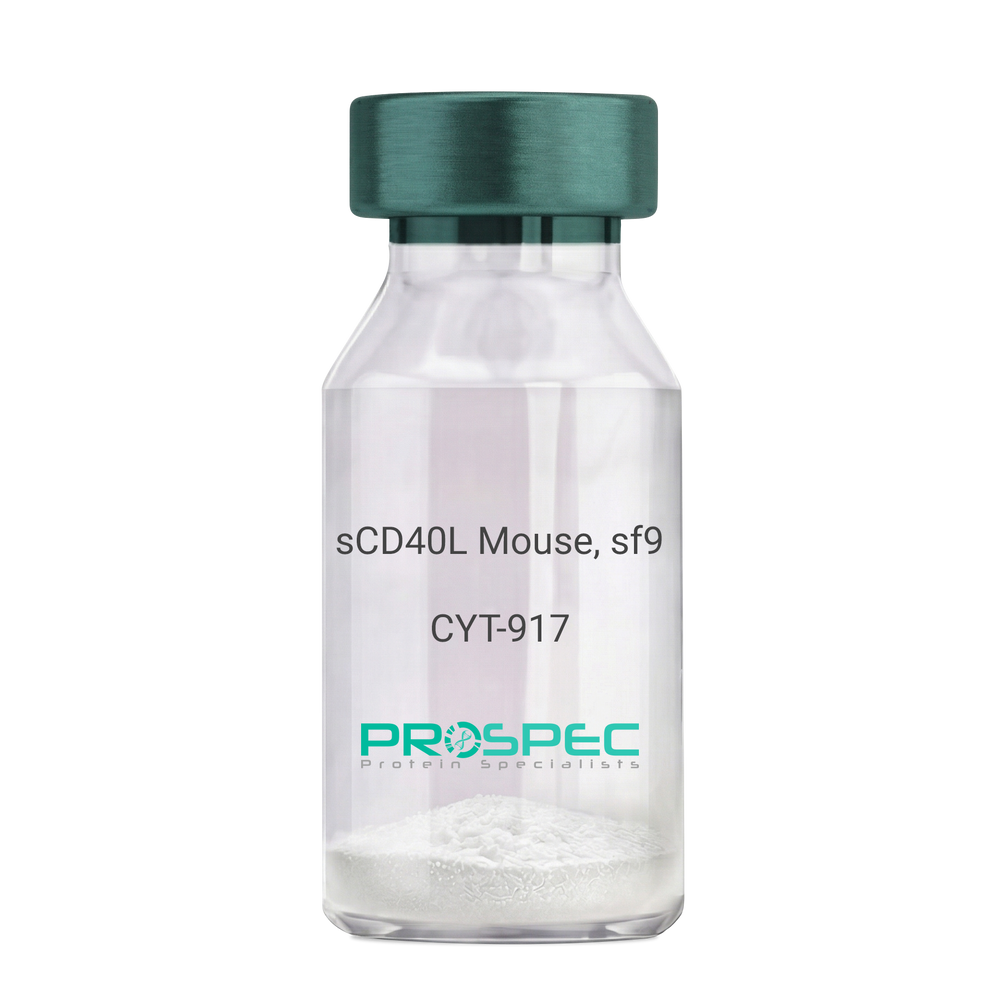
sCD40L Mouse, sf9Description:
soluble CD40 Ligand/TRAPMouse Recombinant, sf9
CD40 ligand, T-cell antigen Gp39, TNF-related activation protein, TRAP, Tumor necrosis factor ligand superfamily member 5, CD154, CD40lg, CD154, CD40-L, Cd40l, gp39, HIGM1, IGM, IMD3, Ly-62, Ly62, T-BAM, Tnfsf5.
Product # :
CYT-917Price :
Quantity :
Shipping Method :
Shipped with Ice Packs
More Info
- description
- source
- formulation
- purity
- More Info
Description
sCD40 Mouse Recombinant produced in Sf9 Baculovirus cells is a single, glycosylated polypeptide chain containing 155 amino acids (112-260 a.a.) and having a molecular mass of 17.2kDa (Migrates at 18-28kDa on SDS-PAGE under reducing conditions).sCD40 is expressed with a 6 amino acid His tag at C-Terminus and purified by proprietary chromatographic techniques.
Source
Sf9, Baculovirus cells.
Formulation
sCD40 protein solution (0.25mg/ml) contains Phosphate Buffered Saline (pH 7.4) and 10% glycerol.
Purity
Greater than 95.0% as determined by SDS-PAGE.
More Info
-
Introduction
CD40L or CD154 is a membrane glycoprotein and differentiation antigen expressed on the surface of T-cells. The CD40 ligand stimulates B-cell proliferation and secretion of all immunoglobulin isotypes in the presence of cytokines . CD40 ligand has been shown to induce cytokine production and tumoricidal activity in peripheral blood monocytes. It also costimulates proliferation of activated T-cells and this is accompanied by the production of IFN-gamma , TNF-alpha , and IL2.
-
Synonyms
CD40 ligand, T-cell antigen Gp39, TNF-related activation protein, TRAP, Tumor necrosis factor ligand superfamily member 5, CD154, CD40lg, CD154, CD40-L, Cd40l, gp39, HIGM1, IGM, IMD3, Ly-62, Ly62, T-BAM, Tnfsf5.
-
Physical Appearance
Sterile Filtered colorless solution.
-
Stability
Store at 4°C if entire vial will be used within 2-4 weeks. Store, frozen at -20°C for longer periods of time. For long term storage it is recommended to add a carrier protein (0.1% HSA or BSA). Avoid multiple freeze-thaw cycles.
-
Amino Acid Sequence
MQRGDEDPQI AAHVVSEANS NAASVLQWAK KGYYTMKSNL VMLENGKQLT VKREGLYYVY TQVTFCSNRE PSSQRPFIVG LWLKPSSGSE RILLKAANTH SSSQLCEQQS VHLGGVFELQ AGASVFVNVT EASQVIHRVG FSSFGLLKLH HHHHH.
ProSpec's products are furnished for LABORATORY RESEARCH USE ONLY. The product may not be used as drugs, agricultural or pesticidal products, food additives or household chemicals.
- View Data Sheet
Name :
FSCN1 AntibodyDescription:
Fascin Actin-Bundling Protein 1, Mouse Anti Human
Strongylocentrotus Purpuratus, actin-bundling protein, FAN1, HSN, SNL.
Product # :
ANT-582Price :
Quantity :
Shipping Method :
Shipped with Ice Packs
More Info
- formulation
- More Info
Formulation
1mg/ml containing PBS, pH-7.4, 10% Glycerol and 0.02% Sodium Azide.
More Info
-
Introduction
FSCN1 is an actin-bundling protein that is responsible for rigidity to filopodial bundles to efficiently push the membrane forward during cytoskeleton remodeling and cell migration. FSCN1 takes part in the gathering of actin filament bundles present in microspikes, membrane ruffles, and stress fibers. FSCN1 is absent from most normal epithelia though is upregulated in multiple forms of human carcinoma, where its expression associates clinically with a poor prognosis. FSCN1 expression is abundantly found in neurons, glial cells, and endothelial cells.
-
Synonyms
Strongylocentrotus Purpuratus, actin-bundling protein, FAN1, HSN, SNL.
-
Physical Appearance
Sterile filtered colorless solution.
-
Immunogen
Anti-human FSCN1 mAb, is derived from hybridization of mouse F0 myeloma cells with spleen cells from BALB/c mice immunized with a recombinant human FSCN1 protein 1-493 amino acids purified from E. coli.
-
Ig Subclass
Mouse IgG2b heavy chain and k light chain.
-
Clone
PAT13D2AT.
-
Applications
FSCN1 antibody has been tested by ELISA, Western blot analysis, ICC/IF and Flow cytometry to assure specificity and reactivity. Since application varies, however, each investigation should be titrated by the reagent to obtain optimal results.
-
Type
Mouse Anti Human Monoclonal.
-
Storage Procedures
For periods up to 1 month store at 4°C, for longer periods of time, store at -20°C. Prevent freeze thaw cycles.
-
Purification Method
FSCN1 antibody was purified from mouse ascitic fluids by protein-A affinity chromatography.
ProSpec's products are furnished for LABORATORY RESEARCH USE ONLY. The product may not be used as drugs, agricultural or pesticidal products, food additives or household chemicals.
- View Data Sheet
Name :
SDF 1a Human, HisDescription:
Stromal Cell-Derived Factor-1 alpha Human Recombinant, His Tag
SDF-1, CXCL12, Pre-B cell growth-stimulating factor, PBSF, hIRH, chemokine (C-X-C motif) ligand 12, SDF1, SDF1A, TPAR1, SCYB12, SDF-1a, TLSF-a.
Product # :
CHM-241Price :
Quantity :
Shipping Method :
Shipped at Room temp
More Info
- description
- source
- formulation
- purity
- More Info
Description
Stromal Cell-Derived Factor-1 alpha Human Recombinant produced in E.Coli is a non-glycosylated, Polypeptide chain containing 78 amino acids, having a molecular mass of 9.2 kDa. The SDF-1a is fused to 10 amino acids His-Tag at N-terminus and purified by proprietary chromatographic techniques.
Source
Escherichia Coli.
Formulation
The protein was filtered (0.4µm) and lyophilized from a concentrated (0.5mg/ml) solution containing 20mM Tris buffer pH-7.5 and 20mM sodium chloride.
Purity
Greater than 95.0% as determined SDS-PAGE.
More Info
-
Introduction
SDF-1 (stromal cell-derived factor-1) is small cytokine belonging to the chemokine family that is officially designated Chemokine (C-X-C motif) ligand 12 (CXCL12). It is produced in two forms, SDF-1?/CXCL12a and SDF-1?/CXCL12b, by alternate splicing of the same gene. Chemokines are characterized by the presence of four conserved cysteines, which form two disulfide bonds. The CXCL12 proteins belong to the group of CXC chemokines, whose initial pair of cysteines are separated by one intervening amino acid. CXCL12 is strongly chemotactic for lymphocytes and has been implicated as an important cell co-ordinator during development. During embryogenesis it directs the migration of hematopoietic cells from foetal liver to bone marrow. Mice which were knocked-out for CXCL12 gene were lethal before the birth or within just 1 hour of life. As another role, CXCL12a alters also the electrophysiology of neurons. CXCL12 was shown to be expressend in many tissues in mice (including brain, thymus, heart, lung, liver, kidney, spleen and bone marrow).
The receptor for this chemokine is CXCR4, which was previously called fusin. This CXCL12-CXCR4 interaction used to be considered exclusive (unlike for other chemokines and their receptors), but recently it was suggested that CXCL12 is also bound by CXCR7 receptor.
The gene for CXCL12 is located on human chromosome 10. In human and mouse both CXCL12 and CXCR4 show high identity of sequence: 99% and 90%, respectively. -
Synonyms
SDF-1, CXCL12, Pre-B cell growth-stimulating factor, PBSF, hIRH, chemokine (C-X-C motif) ligand 12, SDF1, SDF1A, TPAR1, SCYB12, SDF-1a, TLSF-a.
-
Physical Appearance
White lyophilized (freeze-dried) powder.
-
Stability
Lyophilized SDF1A although stable at room temperature for 3 weeks, should be stored desiccated below -18°C. Upon reconstitution CXCL12 should be stored at 4°C between 2-7 days and for future use below -18°C.For long term storage it is recommended to add a carrier protein (0.1% HSA or BSA).Please prevent freeze-thaw cycles.
-
Solubility
It is recommended to add deionized water to a working concentration approximately 0.5 mg/ml and let the lyophilized pellet dissolve completely. Product is not sterile! Please filter the product by appropriate sterile filter before using it in the cell culture.
-
Amino Acid Sequence
MKHHHHHHAS KPVSLSYRCP CRFFESHVAR ANVKHLKILN TPNCALQIVA RLKNNNRQVC IDPKLKWIQE YLEKALNK.
ProSpec's products are furnished for LABORATORY RESEARCH USE ONLY. The product may not be used as drugs, agricultural or pesticidal products, food additives or household chemicals.
- View Data Sheet
Name :
HSPA5 Human, Hi-5Description:
Heat shock 70kDa protein 5 Human Recombinant, Hi-5
78 kDa glucose-regulated protein, GRP-78, Endoplasmic reticulum lumenal Ca(2+)-binding protein grp78, Heat shock 70 kDa protein 5, Immunoglobulin heavy chain-binding protein, BiP, HSPA5, GRP78, MIF2, FLJ26106.
Product # :
HSP-037Price :
Quantity :
Shipping Method :
Shipped with Ice Packs
More Info
- description
- source
- formulation
- purity
- More Info
Description
HSPA5 produced in Hi-5 cells is a single, glycosylated polypeptide chain containing 640 amino acids (20-650 a.a.) and having a molecular mass of 71kDa. HSPA5 is fused to an 8 amino acid His Tag at C-Terminus and purified by proprietary chromatographic techniques.
Source
Hi-5 Cells.
Formulation
The HSPA5 protein solution (1mg/ml) 20mM Tris-HCl buffer (pH8.0), 10% glycerol, 2mM DTT and 200mM NaCl.
Purity
Greater than 90.0% as determined by SDS-PAGE.
More Info
-
Introduction
Binding immunoglobulin protein (BiP or HSPA5) is a member of the family of ~70kDa heat shock proteins (HSP 70). HSPA5 is a stress response protein which is induced by agents or conditions that adversely affect endoplasmic reticulum (ER) function. HSPA5 is crucial for the proper glycosylation, folding as well as for the maintenance of cell homeostasis and the prevention of apoptosis.
-
Synonyms
78 kDa glucose-regulated protein, GRP-78, Endoplasmic reticulum lumenal Ca(2+)-binding protein grp78, Heat shock 70 kDa protein 5, Immunoglobulin heavy chain-binding protein, BiP, HSPA5, GRP78, MIF2, FLJ26106.
-
Physical Appearance
Sterile filtered colorless solution.
-
Stability
Store at 4°C if entire vial will be used within 2-4 weeks. Store, frozen at -20°C for longer periods of time.For long term storage it is recommended to add a carrier protein (0.1% HSA or BSA).Avoid multiple freeze-thaw cycles.
-
Amino Acid Sequence
MEEDKKEDVG TVVGIDLGTT YSCVGVFKNG RVEIIANDQG NRITPSYVAF TPEGERLIGD AAKNQLTSNP ENTVFDAKRL IGRTWNDPSV QQDIKFLPFK VVEKKTKPYI QVDIGGGQTK TFAPEEISAM VLTKMKETAE AYLGKKVTHA VVTVPAYFND AQRQATKDAG TIAGLNVMRI INEPTAAAIA YGLDKREGEK NILVFDLGGG TFDVSLLTID NGVFEVVATN GDTHLGGEDF DQRVMEHFIK LYKKKTGKDV RKDNRAVQKL RREVEKAKRA LSSQHQARIE IESFYEGEDF SETLTRAKFE ELNMDLFRST MKPVQKVLED SDLKKSDIDE IVLVGGSTRI PKIQQLVKEF FNGKEPSRGI NPDEAVAYGA AVQAGVLSGD QDTGDLVLLD VCPLTLGIET VGGVMTKLIP RNTVVPTKKS QIFSTASDNQ PTVTIKVYEG ERPLTKDNHL LGTFDLTGIP PAPRGVPQIE VTFEIDVNGI LRVTAEDKGT GNKNKITITN DQNRLTPEEI ERMVNDAEKF AEEDKKLKER IDTRNELESY AYSLKNQIGD KEKLGGKLSS EDKETMEKAV EEKIEWLESH QDADIEDFKA KKKELEEIVQ PIISKLYGSA GPPPTGEEDT AELEHHHHHH.
ProSpec's products are furnished for LABORATORY RESEARCH USE ONLY. The product may not be used as drugs, agricultural or pesticidal products, food additives or household chemicals.
- View Data Sheet
Name :
BD 4 RatDescription:
BD 4 Rat
Beta-defensin 4, BD-4, BD-2, Defensin, beta 4, RBD-2, RBD-4, Defb4, Defb2, Defb3.
Product # :
CYT-066Price :
Quantity :
Shipping Method :
Shipped at Room temp
More Info
- description
- source
- formulation
- purity
- biological activity
- More Info
Description
BD-4 Rat Recombinant produced in E.coli is a single, non-glycosylated polypeptide chain containing 41 amino acids and having a molecular mass of 4.4kDa.The BD-4 is purified by proprietary chromatographic techniques.
Source
Escherichia Coli.
Formulation
BD-4 protein was lyophilized from a 0.2µm filtered concentrated solution in PBS, pH 7.4.
Purity
Greater than 97.0% as determined by SDS-PAGE.
Biological Activity
Measured by its antimicrobial activity against E. coli. The ED50 for this effect is typically 5-50µg/ml.More Info
-
Introduction
Defensins are cationic peptides with a large spectrum of antimicrobial activity that comprise an important arm of the innate immune system. The Alpha defensins are differentiated from the Beta-defensins by the pairing of their 3 disulfide bonds.
4 human Beta-defensins have been identified to date; BD-1, BD-2, BD-3 and BD-4.
Beta-defensins are expressed on some leukocytes and at epithelial surfaces.
In addition to their direct antimicrobial activities, they are chemoattractant towards immature dendritic cells and memory T cells. The beta-defensin proteins are expressed as the C-terminal portion of precursors and are released by proteolytic cleavage of a signal sequence and, in the case of BD-1 (36 a.a.), a propeptide region. Beta-defensins contain a six-cysteine motif that forms three intra-molecular disulfide bonds. Beta-Defensins are 3-5 kDa peptides ranging in size from 33-47 amino acid residues. -
Synonyms
Beta-defensin 4, BD-4, BD-2, Defensin, beta 4, RBD-2, RBD-4, Defb4, Defb2, Defb3.
-
Physical Appearance
Sterile Filtered White lyophilized (freeze-dried) powder.
-
Stability
Lyophilized BD-4 although stable at room temperature for 3 weeks, should be stored desiccated below -18°C. Upon reconstitution BD-4 should be stored at 4°C between 2-7 days and for future use below -18°C. For long term storage it is recommended to add a carrier protein (0.1% HSA or BSA). Please prevent freeze-thaw cycles.
-
Solubility
It is recommended to reconstitute the lyophilized BD-4 in sterile 18M-cm H2O not less than 100µg/ml, which can then be further diluted to other aqueous solutions.
-
Amino Acid Sequence
QSINNPITCL TKGGVCWGPC TGGFRQIGTC GLPRVRCCKK K.
-
Background
What is the molecular weight/Mw of BD4 Protein?
BD4 Protein has a total Mw of 4.4kDa.
What is the source or expression system of BD4 Protein?
Escherichia Coli.
What is the Purity of BD4 Protein?
BD4 Protein is >97% pure as determined by SDS-PAGE.
What is the Biological Activity of BD4 Protein?
Measured by its antimicrobial activity against E. coli. The ED50 for this effect is typically 5-50µg/ml.
What is the amino acid sequence of BD4 Protein?
QSINNPITCL TKGGVCWGPC TGGFRQIGTC GLPRVRCCKK K.
What applications can BD4 Protein be used in?
BD4 Protein can probably be used in western blot, ELISA and Lateral Flow.
What is the endotoxin level for BD4 Protein?
The endotoxin level is minimal, BD4 Protein was purified using conventional chromatography techniques.
ProSpec's products are furnished for LABORATORY RESEARCH USE ONLY. The product may not be used as drugs, agricultural or pesticidal products, food additives or household chemicals.
- View Data Sheet
Name :
RBP4 MouseDescription:
Retinol Binding Protein-4 Mouse Recombinant, BioActive
Retinol Binding Protein 4, RBP-4, RBP4, Plasma retinol-binding protein, PRBP, RBP.
Product # :
CYT-1158Price :
Quantity :
Shipping Method :
Shipped with Ice Packs
More Info
- description
- source
- formulation
- purity
- More Info
Description
RBP4 Mouse produced in Sf9 Baculovirus cells is a single, glycosylated polypeptide chain containing 191 amino acids (19-201 a.a) and having a molecular mass of 22.4kDa. RBP4 is fused to an 8 amino acid His tag at C-terminus and purified by proprietary chromatographic techniques.
Source
Sf9, Baculovirus cells.
Formulation
The RBP4 solution (0.5mg/ml) contains 10% Glycerol and Phosphate-Buffered Saline (pH 7.4).
Purity
Greater than 95% as determined by SDS-PAGE.
More Info
-
Introduction
Retinol Binding Protein-4 or RBP4, is the retinol currier protein in the plasma. RBP4 takes part on the conversion of retinol to the stable and soluble retinol complex in the plasma. RBP4 carries retinol from the liver tissue where its store to peripheral tissues. RBP-retinol complex has interactions with transthyretin in the plasma, thus prevents its loss by filtration in the kidney.
-
Synonyms
Retinol Binding Protein 4, RBP-4, RBP4, Plasma retinol-binding protein, PRBP, RBP.
-
Physical Appearance
Sterile Filtered colorless solution.
-
Stability
Store at 4°C if entire vial will be used within 2-4 weeks. Store, frozen at -20°C for longer periods of time. For long term storage it is recommended to add a carrier protein (0.1% HSA or BSA).Avoid multiple freeze-thaw cycles.
-
Amino Acid Sequence
ERDCRVSSFR VKENFDKARF SGLWYAIAKK DPEGLFLQDN IIAEFSVDEK GHMSATAKGR VRLLSNWEVC ADMVGTFTDT EDPAKFKMKY WGVASFLQRG NDDHWIIDTD YDTFALQYSC RLQNLDGTCA DSYSFVFSRD PNGLSPETRR LVRQRQEELC LERQYRWIEH NGYCQSRPSR NSLLEHHHHH H.
ProSpec's products are furnished for LABORATORY RESEARCH USE ONLY. The product may not be used as drugs, agricultural or pesticidal products, food additives or household chemicals.
- View Data Sheet
Name :
ANPEP MouseDescription:
Alanyl Aminopeptidase Membrane Mouse Recombinant
Anpep, AP-M, AP-N, Apn, Cd13, P150, mAPN, Alanyl aminopeptidase, Aminopeptidase M, Membrane protein p161, Microsomal aminopeptidase, CD13, Lap-1, Lap1, aminopeptidase N.
Product # :
ENZ-1134Price :
Quantity :
Shipping Method :
Shipped with Ice Packs
More Info
- description
- source
- formulation
- purity
- biological activity
- More Info
Description
ANPEP Mouse produced in Sf9 Insect cells is a single, glycosylated polypeptide chain containing 943 amino acids (33-966 a.a.) and having a molecular mass of 107.5 kDa. ANPEPis expressed with a 9 amino acid His tag at C-Terminus and purified by proprietary chromatographic techniques.
Source
Sf9, Baculovirus cells.
Formulation
ANPEP protein solution ( 0.5mg/ml ) contains PBS (pH 7.4) and 10% glycerol.
Purity
Greater than 95.0% as determined by SDS-PAGE.
Biological Activity
Specific activity is > 4,000pmol/min/ug, and is defined as the amount of enzyme that hydrolyze 1pmole of H-AlaAMC to Alanine and AMC per minute at pH7.5 at 25C.
More Info
-
Introduction
ANPEP or aminopeptidase N, is an enzyme, found in the small-intestinal and renal microvillar membrane and other plasma membranes. The enzyme has a critical part in the digestion of peptides after their hydrolysis by gastric and pancreatic proteases. ANPEP is also part ofthe processing of different peptides as well as peptide hormones, neuropeptides & chemokines. The protein takes part in angiogenesis, enhancing cholesterol crystallization &amino acid transport by formatting with SLC6A19 transport protein and regulating its activity.
-
Synonyms
Anpep, AP-M, AP-N, Apn, Cd13, P150, mAPN, Alanyl aminopeptidase, Aminopeptidase M, Membrane protein p161, Microsomal aminopeptidase, CD13, Lap-1, Lap1, aminopeptidase N.
-
Physical Appearance
Sterile Filtered colorless solution.
-
Stability
Store at 4°C if entire vial will be used within 2-4 weeks. Store, frozen at -20°C for longer periods of time. For long term storage it is recommended to add a carrier protein (0.1% HSA or BSA).Avoid multiple freeze-thaw cycles.
-
Amino Acid Sequence
ADPYAQEKNR NAENSATAPT LPGSTSATTA TTTPAVDESK PWNQYRLPKT LIPDSYRVIL RPYLTPNNQG LYIFQGNSTV RFTCNQTTDV IIIHSKKLNY TLKGNHRVVL RTLDGTPAPN IDKTELVERT EYLVVHLQGS LVEGRQYEMD SQFQGELADD LAGFYRSEYM EGDVKKVVAT TQMQAADARK SFPCFDEPAM KAMFNITLIY PNNLIALSNM LPKESKPYPE DPSCTMTEFH STPKMSTYLL AYIVSEFKNI SSVSANGVQI GIWARPSAID EGQGDYALNV TGPILNFFAQ HYNTSYPLPK SDQIALPDFN AGAMENWGLV TYRESSLVFD SQSSSISNKE RVVTVIAHEL AHQWFGNLVT VAWWNDLWLN EGFASYVEYL GADYAEPTWN LKDLMVLNDV YRVMAVDALA SSHPLSSPAD EIKTPDQIME LFDSITYSKG ASVIRMLSSF LTEDLFKKGL SSYLHTYQYS NTVYLDLWEH LQKAVNQQTA VQPPATVRTI MDRWILQMGF PVITVNTNTG EISQKHFLLD SKSNVTRPSE FNYIWIAPIP FLKSGQEDHY WLDVEKNQSA KFQTSSNEWI LLNINVTGYY LVNYDENNWK KLQNQLQTDL SVIPVINRAQ IIHDSFNLAS AKMIPITLAL DNTLFLVKEA EYMPWQAALS SLNYFTLMFD RSEVYGPMKR YLKKQVTPLF FYFQNRTNNW VNRPPTLMEQ YNEINAISTA CSSGLKECRD LVVELYSQWM KNPNNNTIHP NLRSTVYCNA IAFGGEEEWN FAWEQFRNAT LVNEADKLRS ALACSKDVWI LNRYLSYTLN PDYIRKQDTT STIISIASNV AGHPLVWDFV RSNWKKLFEN YGGGSFSFAN LIQGVTRRFS SEFELQQLEQ FKADNSATGF GTGTRALEQA LEKTRANIDW VKENKDAVFK WFTENSSHHH HHH
ProSpec's products are furnished for LABORATORY RESEARCH USE ONLY. The product may not be used as drugs, agricultural or pesticidal products, food additives or household chemicals.
- View Data Sheet
Name :
CAPNS1 AntibodyDescription:
Calpain, Small Subunit 1, Mouse Anti Human
Calpain Small Subunit 1, CAPN4, Calcium-Activated Neutral Proteinase Small Subunit, Calcium-Dependent Protease Small Subunit 1, Calpain Regulatory Subunit, CANP Small Subunit, CDPS, CSS1, Calcium-Dependent Protease Small Subunit, Calcium-Dependent Protease Small Subunit, Calpain 4 Small Subunit (30K), Calpain Small Polypeptide, Calpain Small Subunit 1, CALPAIN4, CANPS, CAPNS, CANP, CAPNS1.
Product # :
ANT-587Price :
Quantity :
Shipping Method :
Shipped with Ice Packs
More Info
- formulation
- More Info
Formulation
1mg/ml containing PBS, pH-7.4, 10% Glycerol and 0.02% Sodium Azide.
More Info
-
Introduction
Calpain, Small Subunit 1 (CAPNS1) belongs to the calpain small subunit family. Calpains are a ubiquitous, well-conserved family of calcium-dependent, cysteine proteases, widely distributed in mammalian cells. Calpain families are implicated in neurodegenerative processes, considering that their activation can be triggered by calcium influx and oxidative stress. Calpains function as heterodimers, comprising a specific large catalytic subunit (calpain 1 subunit in Calpain I, and calpain 2 subunit in Calpain II), and a common small regulatory subunit encoded by the CAPNS1 gene. The CAPNS1 protein is vital for the stability and function of both calpain heterodimers, whose proteolytic activities influence numerous cellular functions including apoptosis, proliferation, migration, adhesion, and autophagy.
-
Synonyms
Calpain Small Subunit 1, CAPN4, Calcium-Activated Neutral Proteinase Small Subunit, Calcium-Dependent Protease Small Subunit 1, Calpain Regulatory Subunit, CANP Small Subunit, CDPS, CSS1, Calcium-Dependent Protease Small Subunit, Calcium-Dependent Protease Small Subunit, Calpain 4 Small Subunit (30K), Calpain Small Polypeptide, Calpain Small Subunit 1, CALPAIN4, CANPS, CAPNS, CANP, CAPNS1.
-
Physical Appearance
Sterile filtered colorless solution.
-
Immunogen
Anti-human CAPNS1 mAb, is derived from hybridization of mouse F0 myeloma cells with spleen cells from BALB/c mice immunized with a recombinant human CAPNS1 protein 84-268 amino acids purified from E. coli.
-
Ig Subclass
Mouse IgG1 heavy chain and k light chain.
-
Clone
PAT1D11AT.
-
Applications
CAPNS1 antibody has been tested by ELISA, Western blot analysis, ICC/IF and Flow cytometry to assure specificity and reactivity. Since application varies, however, each investigation should be titrated by the reagent to obtain optimal results.
-
Type
Mouse Anti Human Monoclonal.
-
Storage Procedures
For periods up to 1 month store at 4°C, for longer periods of time, store at -20°C. Prevent freeze thaw cycles.
-
Purification Method
CAPNS1 antibody was purified from mouse ascitic fluids by protein-A affinity chromatography.
ProSpec's products are furnished for LABORATORY RESEARCH USE ONLY. The product may not be used as drugs, agricultural or pesticidal products, food additives or household chemicals.
- View Data Sheet
Description:
Placental Lactogen Human Recombinant, Sf9
Chorionic Somatomammotropin Hormone 1, CSH1, Choriomammotropin, Lactogen, CSH2, PL, CSA, CSMT, FLJ75407
Product # :
CYT-1164Price :
Quantity :
Shipping Method :
Shipped with Ice Packs
More Info
- description
- source
- formulation
- purity
- biological activity
- More Info
Description
Placental Lactogen Human produced in Sf9 Baculovirus cells is a single, glycosylated polypeptide chain containing 197 amino acids (27-217 aa) and having a molecular mass of 23.1kDa.Placental Lactogen is fused to a 6 amino acid His tag at C-terminus and purified by proprietary chromatographic techniques.
Source
Sf9, Baculovirus cells.
Formulation
The Placental Lactogen solution (0.25mg/ml) contains 30% Glycerol and Phosphate-Buffered Saline (pH 7.4).
Purity
Greater than 90.0% as determined by SDS-PAGE.
Biological Activity
Determined by cell proliferation assay using Nb2-11 Rat lymphoma cells. ED50 range for this effect is ≤ 0.8 ng/ml.
More Info
-
Introduction
Placental Lactogen is a polypeptide hormone that is produced by the Syncytiotrophoblasts of the Placenta.Placental Lactogen has both GH and Prolactin activities on growth, lactation, and luteal steroid production. In women, placental lactogen secretion begins soon after implantation and increases to 1 g or more a day in late pregnancy. Placental Lactogen Bovine is also capable of activating human and other heterologous GH receptors.
-
Synonyms
Chorionic Somatomammotropin Hormone 1, CSH1, Choriomammotropin, Lactogen, CSH2, PL, CSA, CSMT, FLJ75407
-
Physical Appearance
Sterile Filtered colorless solution.
-
Stability
Store at 4°C if entire vial will be used within 2-4 weeks. Store, frozen at -20°C for longer periods of time. For long term storage it is recommended to add a carrier protein (0.1% HSA or BSA).Avoid multiple freeze-thaw cycles.
-
Amino Acid Sequence
VQTVPLSRLF DHAMLQAHRA HQLAIDTYQE FEETYIPKDQ KYSFLHDSQT SFCFSDSIPT PSNMEETQQK SNLELLRISL LLIESWLEPV RFLRSMFANN LVYDTSDSDD YHLLKDLEEG IQTLMGRLED GSRRTGQILK QTYSKFDTNS HNHDALLKNY GLLYCFRKDM DKVETFLRMV QCRSVEGSCG FHHHHHH
ProSpec's products are furnished for LABORATORY RESEARCH USE ONLY. The product may not be used as drugs, agricultural or pesticidal products, food additives or household chemicals.
- View Data Sheet
Name :
STBD1 HumanDescription:
Starch Binding Domain 1 Human Recombinant
Starch Binding Domain 1, Genethonin 1, GENEX3414, Starch-Binding Domain-Containing Protein 1.
Product # :
PRO-1545Price :
Quantity :
Shipping Method :
Shipped with Ice Packs
More Info
- description
- source
- formulation
- purity
- More Info
Description
STBD1 Human Recombinant produced in E.coli is a single, non-glycosylated polypeptide chain containing 358 amino acids (24-358) and having a molecular mass of 39.1kDa.STBD1 is fused to a 23 amino acid His-tag at N-terminus & purified by proprietary chromatographic techniques.
Source
Escherichia Coli.
Formulation
The STBD1 solution (0.5mg/ml) contains 20mM Tris-HCl buffer (pH 8.0), 0.15M NaCl, 1mM DTT and 10% glycerol.
Purity
Greater than 90% as determined by SDS-PAGE.
More Info
-
Introduction
STBD1 has one carbohydrate binding type-20 (CBM20) domain and has the ability to bind to carbohydrates. STBD1 is highly expressed in cardiac and skeletal muscles.
-
Synonyms
Starch Binding Domain 1, Genethonin 1, GENEX3414, Starch-Binding Domain-Containing Protein 1.
-
Physical Appearance
Sterile Filtered clear solution.
-
Stability
Store at 4°C if entire vial will be used within 2-4 weeks. Store, frozen at -20°C for longer periods of time. For long term storage it is recommended to add a carrier protein (0.1% HSA or BSA).Avoid multiple freeze-thaw cycles.
-
Amino Acid Sequence
MGSSHHHHHH SSGLVPRGSH MGSRGGPGDT GKDGDAEQEK DAPLGGAAIP GGHQSGSSGL SPGPSGQELV TKPEHLQESN GHLISKTKDL GKLQAASWRL QNPSREVCDN SREHVPSGQF PDTEAPATSE TSNSRSYSEV SRNESLESPM GEWGFQKGQE ISAKAATCFA EKLPSSNLLK NRAKEEMSLS DLNSQDRVDH EEWEMVPRHS SWGDVGVGGS LKAPVLNLNQ GMDNGRSTLV EARGQQVHGK MERVAVMPAG SQQVSVRFQV HYVTSTDVQF IAVTGDHECL GRWNTYIPLH YNKDGFWSHS IFLPADTVVE WKFVLVENGG VTRWEECSNR FLETGHEDKV VHAWWGIH
ProSpec's products are furnished for LABORATORY RESEARCH USE ONLY. The product may not be used as drugs, agricultural or pesticidal products, food additives or household chemicals.
- View Data Sheet
Name :
PSPN HumanDescription:
Persephin Human Recombinant
Persephin, PSP, PSPN.
Product # :
CYT-801Price :
Quantity :
Shipping Method :
Shipped at Room temp
More Info
- description
- source
- formulation
- purity
- biological activity
- More Info
Description
PSPN Human Recombinant produced in E.Coli is a disulfide-linked homodimer containing 2x96 amino acids and having a molecular mass of 20.5kDa. The PSPN is purified by proprietary chromatographic techniques.
Source
Escherichia Coli.
Formulation
Lyophilized from a 0.2µm filtered concentrated solution in PBS, pH 7.4.
Purity
Greater than 95.0% as determined by:
(a) Analysis by RP-HPLC.
(b) Analysis by SDS-PAGE.Biological Activity
Fully biologically active when compared to standard. The ED50 as determined by a cell proliferation assay using human TT medullary thyroid cancer cells is less than 10ng/ml, corresponding to a specific activity of > 1.0 × 100,000 IU/mg.More Info
-
Introduction
Persephin is a member of the GDNF ligand subfamily of the TGF-beta superfamily. PSPN encourages the existence and growth of key dopaminergic and motor neurons, as well as taking part in kidney development. Nonetheless, persephin does not support existence of peripheral neurons.
-
Synonyms
Persephin, PSP, PSPN.
-
Physical Appearance
Sterile Filtered White lyophilized (freeze-dried) powder.
-
Stability
Lyophilized PSPN although stable at room temperature for 3 weeks, should be stored desiccated below -18°C. Upon reconstitution PSPN should be stored at 4°C between 2-7 days and for future use below -18°C. For long term storage it is recommended to add a carrier protein (0.1% HSA or BSA). Please prevent freeze-thaw cycles.
-
Solubility
It is recommended to reconstitute the lyophilized PSPN in 4mM HCl not less than 100µg/ml, which can then be further diluted to other aqueous solutions.
-
Amino Acid Sequence
ALSGPCQLWS LTLSVAELGL GYASEEKVIF RYCAGSCPRG ARTQHGLALA RLQGQGRAHG GPCCRPTRYT DVAFLDDRHR WQRLPQLSAA ACGCGG.
ProSpec's products are furnished for LABORATORY RESEARCH USE ONLY. The product may not be used as drugs, agricultural or pesticidal products, food additives or household chemicals.
- View Data Sheet
Name :
SPARCL1 MouseDescription:
SPARC Like 1 Mouse Recombinant
Sparcl1, Ecm2, hevin, mast9, Sc1, SPARC-like protein 1, Extracellular matrix protein 2, Matrix glycoprotein Sc1.
Product # :
PRO-2617Price :
Quantity :
Shipping Method :
Shipped with Ice Packs
More Info
- description
- source
- formulation
- purity
- More Info
Description
SPARCL1 Mouse Recombinant produced in Sf9 Baculovirus cells is a single, glycosylated polypeptide chain containing 642 amino acids (17-650 a.a) and having a molecular mass of 71.7kDa.SPARCL1 is fused to an 8 amino acid His-tag at C-terminus & purified by proprietary chromatographic techniques.
Source
Sf9, Baculovirus cells.
Formulation
SPARCL1 protein solution (0.25mg/ml) containing Phosphate Buffered Saline (pH 7.4) and 10% glycerol.
Purity
Greater than 90.0% as determined by SDS-PAGE.
More Info
-
Introduction
SPARC-like protein 1 or SPARC1 is an anti-adhesive protein with a similarity to the SPARC protein’s structure. SPARC1 is highly expressed in several tissues such as brain, lungs, kidney, heart, although it is not found in the liver tissue. The protein inhibits spreading or adhesion of many substrates and is considered to lead to antiadhesive signaling that stops neuronal migration, that occurs during development or as a trauma response, consistent with production by glial and neuronal cells.
-
Synonyms
Sparcl1, Ecm2, hevin, mast9, Sc1, SPARC-like protein 1, Extracellular matrix protein 2, Matrix glycoprotein Sc1.
-
Physical Appearance
Sterile Filtered colorless solution.
-
Stability
Store at 4°C if entire vial will be used within 2-4 weeks. Store, frozen at -20°C for longer periods of time. For long term storage it is recommended to add a carrier protein (0.1% HSA or BSA).Avoid multiple freeze-thaw cycles.
-
Amino Acid Sequence
IPTSTRFLSD HSNPTTATLV TPEDATVPIA GVEATADIEN HPSDKAEKPS ALNSEEETHE
QSTEQDKTYS FEVDLKDEED GDGDLSVDPT EGTLTLDLQE GTSEPQQKSL PENGDFPATV
STSYVDPNQR ANITKGKESQ EQPVSDSHQQ PNESSKQTQD LKAEESQTQD PDIPNEEEEE
EEDEEEEEEE EPEDIGAPSD NQEEGKEPLE EQPTSKWEGN REQSDDTLEE SSQPTQISKT
EKHQSEQGNQ GQESDSEAEG EDKAAGSKEH IPHTEQQDQE GKAGLEAIGN QKDTDEKAVS
TEPTDAAVVP RSHGGAGDNG GGDDSKHGAG DDYFIPSQEF LEAERMHSLS YYLKYGGGEE
TTTGESENRR EAADNQEAKK AESSPNAEPS DEGNSREHSA GSCTNFQCKR GHICKTDPQG
KPHCVCQDPE TCPPAKILDQ ACGTDNQTYA SSCHLFATKC RLEGTKKGHQ LQLDYFGACK
SIPACTDFEV AQFPLRMRDW LKNILMQLYE PNPKHGGYLN EKQRSKVKKI YLDEKRLLAG
HPIELLLRD FKKNYHMYVY PVHWQFNELD QHPADRILTH SELAPLRASL VPMEHCITRF
FEECDPNKDK HITLKEWGHC FGIKEEDIDE NLLFLEHHHH HH
ProSpec's products are furnished for LABORATORY RESEARCH USE ONLY. The product may not be used as drugs, agricultural or pesticidal products, food additives or household chemicals.
- View Data Sheet
Name :
Erythropoietin HumanDescription:
Erythropoietin Receptor Human Recombinant
Erythropoietin Receptor, EPO-R, EPOR. Normal 0 false false false EN-US X-NONE HE MicrosoftInternetExplorer4-->
Product # :
CYT-929Price :
Quantity :
Shipping Method :
Shipped with Ice Packs
More Info
- description
- source
- formulation
- purity
- More Info
- sds-page
Description
EPOR Human Recombinant produced in Sf9 Baculovirus cells is a single, glycosylated polypeptide chain containing 232 amino acids (25-250 a.a) and having a molecular mass of 25.6kDa. (Migrates at 28-40kDa on SDS-PAGE under reducing conditions). EPOR is fused to an 6 amino acid His-tag at C-terminus & purified by proprietary chromatographic techniques.
Source
Sf9, Baculovirus cells.
Formulation
EPOR protein solution (0.5mg/ml) containing Phosphate Buffered Saline (pH 7.4) and 10% glycerol.
Purity
Greater than 95.0% as determined by SDS-PAGE.
sds-page
More Info
-
Introduction
Erythropoietin receptor, also known as EPOR arbitrates erythropoietin-induced erythroblast proliferation as well as differentiation. During EPO binding, EPOR activates Jak2 tyrosine kinase which activates various intracellular pathways including: Ras/MAP kinase, phosphatidylinositol 3-kinase and STAT transcription factors. Furthermore, stimulated EPOR has a function in erythroid cell survival. Mutations in EPOR may possibly produce erythroleukemia and familial erythrocytosis. In addition, dysregulation of EPOR can affect on the growth of selected tumors.
-
Synonyms
Erythropoietin Receptor, EPO-R, EPOR.
-
Physical Appearance
Sterile Filtered clear solution.
-
Stability
Store at 4°C if entire vial will be used within 2-4 weeks. Store, frozen at -20°C for longer periods of time. For long term storage it is recommended to add a carrier protein (0.1% HSA or BSA).Avoid multiple freeze-thaw cycles.
-
Amino Acid Sequence
APPPNLPDPK FESKAALLAA RGPEELLCFT ERLEDLVCFW EEAASAGVGP GNYSFSYQLE DEPWKLCRLH QAPTARGAVR FWCSLPTADT SSFVPLELRV TAASGAPRYH RVIHINEVVL LDAPVGLVAR LADESGHVVL RWLPPPETPM TSHIRYEVDV SAGNGAGSVQ RVEILEGRTE CVLSNLRGRT RYTFAVRARM AEPSFGGFWS AWSEPVSLLT PSDLDPHHHH HH.
-
Background
What is the molecular weight/Mw of ERYTHROPOIETIN Protein?
ERYTHROPOIETIN Protein has a total Mw of 25.6kDa.
What is the source or expression system of ERYTHROPOIETIN Protein?
Sf9, Baculovirus cells.
What is the Purity of ERYTHROPOIETIN Protein?
ERYTHROPOIETIN Protein is >95% pure as determined by SDS-PAGE.
What is the Biological Activity of ERYTHROPOIETIN Protein?
The biological functionality of ERYTHROPOIETIN Protein will be determined in the future.
What is the amino acid sequence of ERYTHROPOIETIN Protein?
APPPNLPDPK FESKAALLAA RGPEELLCFT ERLEDLVCFW EEAASAGVGP GNYSFSYQLE DEPWKLCRLH QAPTARGAVR FWCSLPTADT SSFVPLELRV TAASGAPRYH RVIHINEVVL LDAPVGLVAR LADESGHVVL RWLPPPETPM TSHIRYEVDV SAGNGAGSVQ RVEILEGRTE CVLSNLRGRT RYTFAVRARM AEPSFGGFWS AWSEPVSLLT PSDLDPHHHH HH.
What applications can ERYTHROPOIETIN Protein be used in?
ERYTHROPOIETIN Protein can probably be used in western blot, ELISA and Lateral Flow.
What is the endotoxin level for ERYTHROPOIETIN Protein?
The endotoxin level is minimal, ERYTHROPOIETIN Protein was purified using conventional chromatography techniques.
ProSpec's products are furnished for LABORATORY RESEARCH USE ONLY. The product may not be used as drugs, agricultural or pesticidal products, food additives or household chemicals.
- View Data Sheet
Name :
Activin B Human ActiveDescription:
Activin-B Human Recombinant, Active
Inhibin beta B (activin AB beta polypeptide), Inhibin, beta-2, Activin beta-B chain, MGC157939.
Product # :
CYT-057Price :
Quantity :
Shipping Method :
Shipped at Room temp
More Info
- description
- source
- formulation
- purity
- biological activity
- More Info
Description
Activin B human Recombinant produced in Nicotiana benthamiana plant is a beta-B single chain (aa 293-406) containing 123 amino acids (molecular formula C615H910N178O177S12). Activin B is fused to a 10-His-tag at the N-terminal having the total molecular mass of 14kDa and purified by standard chromatographic techniques.
Source
Nicotiana benthamiana plant
Formulation
Lyophilized from 1mg/ml solution in 0.05M Tris-HCl buffer pH 7.4.
Purity
Greater than 97.0% as determined by Analysis by SDS-PAGE.
Biological Activity
The biological activity of Activin B is measured by its ability to inhibit mouse plasmacytoma cell line (MPC-11) cells proliferation. EC50 <5ng/ml is required to stimulate a half-maximal response at cytokine saturation. Note: Since applications vary, each investigator should titrate the reagent to obtain optimal results.More Info
-
Synonyms
Inhibin beta B (activin AB beta polypeptide), Inhibin, beta-2, Activin beta-B chain, MGC157939.
-
Physical Appearance
Sterile Filtered White lyophilized (freeze-dried) powder.
-
Stability
Lyophilized Activin B although stable at room temperature for 3 weeks, should be stored desiccated below -18°C. Upon reconstitution Activin B should be stored at 4°C between 2-7 days and for future use below -18°C. For long term storage it is recommended to add a carrier protein (0.1% HSA or BSA). Please prevent freeze-thaw cycles.
-
Solubility
It is recommended to reconstitute the lyophilized Activin B in sterile 18M-cm H2O not less than 100µg/ml, which can then be further diluted to other aqueous solutions.
-
Amino Acid Sequence
HHHHHHHHHH GLECDGRTNL CCRQQFFIDF RLIGWNDWII APTGYYGNYC EGSCPAYLAG VPGSASSFHT AVVNQYRMRG LNPGTVNSCC IPTKLSTMSM LYFDDEYNIV KRDVPNMIVE ECG.
-
Background
An Investigation into the Functional Roles and Therapeutic Potential of Activin-B Human Recombinant, Active
1. Abstract
Activin-B Human Recombinant, Active, also referred to as beta-2, Activin beta-B chain, or MGC157939, is a crucial component of the Transforming Growth Factor-beta (TGF-beta) superfamily. The multifaceted nature of this protein implicates it in numerous physiological processes. This paper delves into the bioactivity of Activin-B, exploring its role in cellular proliferation, differentiation, apoptosis, and its potential for therapeutic applications, especially in the realms of regenerative medicine, reproductive health, and cancer therapy.
2. Introduction
The TGF-beta superfamily, of which Activin-B is a member, is renowned for its far-reaching implications in cell and developmental biology. This superfamily boasts members that control cell growth, differentiation, and apoptosis, thus playing vital roles in organogenesis, bone growth, and reproductive functions. This research paper aims to shed light on the characteristics and potential therapeutic applications of Activin-B.
3. Structure and Synthesis of Activin-B
Activin-B is a dimeric protein, composed of two identical beta-B chains. This homodimer undergoes multiple stages of synthesis, starting as a precursor protein, which then experiences proteolytic processing to eventually form the mature peptide. It is this coordinated activity of various enzymes and molecular chaperones that ensure the accurate biosynthesis of Activin-B.
4. Biological Functions of Activin-B
Activin-B's roles extend from embryogenesis and organogenesis to the modulation of reproductive functions. Its influence over cellular proliferation, differentiation, and apoptosis has significant repercussions in physiological and pathological scenarios. Its regulatory functions also encompass immunomodulation and wound healing, underpinning its extensive biological reach.
5. Activin-B in Regenerative Medicine
Regenerative medicine's primary focus is the repair and regeneration of tissues, and it is here that the potential of Activin-B shines. The protein's capacity to regulate cellular processes positions it as a possible agent in tissue repair, making it an intriguing research topic for therapeutic applications in regenerative medicine.
6. Activin-B and Reproductive Health
Activin-B’s role in reproductive health is undeniable, having been implicated in follicular development, ovulation, and pregnancy maintenance. Its potent influence on reproductive functions indicates the possibility of its use in the treatment of reproductive disorders, providing a potential pathway for further therapeutic development.
7. Activin-B in Cancer
Recent research has connected the deregulation of Activin-B to various types of cancer. Deciphering the mechanisms through which Activin-B affects cancer cell proliferation and survival could open up new avenues for targeted cancer therapy. This critical linkage emphasizes the need for comprehensive studies on Activin-B's role in oncogenesis.
8. Conclusion and Future Perspectives
Our understanding of Activin-B's biological functions has grown immensely, but many mysteries remain. The continued exploration of the molecular mechanisms through which Activin-B operates will undoubtedly yield more insights into its potential therapeutic uses, guiding the development of new treatments for a myriad of diseases.
What is the molecular weight / Mw of Activin B Protein?
Activin A Protein has a total Mw of 14 kDa.What is the source or expression system of Activin B Protein?
Nicotinia
What is the Purity of Activin B Protein?
Activin B Protein is >97% pure as determined by SDS-PAGE.
What is the Biological Activity of Activin B Protein?
The biological activity of Activin B is measured by its ability to inhibit mouse plasmacytoma cell line (MPC-11) cells proliferation. EC50 <5ng/ml is required to stimulate a half-maximal response at cytokine saturation. Note: Since applications vary, each investigator should titrate the reagent to obtain optimal results.
What is the endotoxin level for Activin B Protein?
The endotoxin level is minimal, ACTIVIN B Protein was purified using conventional chromatography techniques.
What is the amino acid sequence of ACTIVIN B Protein?
HHHHHHHHHH GLECDGRTNL CCRQQFFIDF RLIGWNDWII APTGYYGNYC EGSCPAYLAG VPGSASSFHT AVVNQYRMRG LNPGTVNSCC IPTKLSTMSM LYFDDEYNIV KRDVPNMIVE ECG
What applications can ACTIVIN B Protein be used in?
ACTIVIN A Protein can probably be used in western blot, ELISA and Lateral Flow.
ProSpec's products are furnished for LABORATORY RESEARCH USE ONLY. The product may not be used as drugs, agricultural or pesticidal products, food additives or household chemicals.
- View Data Sheet
Name :
Omentin HumanDescription:
Omentin Human Recombinant
Intelectin-1, HL1, LFR, HL-1, INTL, ITLN, hIntL.
Product # :
CYT-301Price :
Quantity :
Shipping Method :
Shipped at Room temp
More Info
- description
- source
- formulation
- purity
- More Info
Description
Omentin Human Recombinant is produced in E.Coli by recombinant DNA technology is a single, polypeptide chain containing 313 amino acids and having a molecular mass of 35 kDa. Intelectin is purified by proprietary chromatographic techniques.
Source
E.Coli.
Formulation
Each mg of lyophilized powder contains 10mM NaP, pH-7.5 and 5:1 mannitol to protein.
Purity
Greater than 95.0% as determined by SDS-PAGE.
More Info
-
Introduction
Omentin is a recently recognized gene highly localized to the mental tissue (visceral adipose tissue). Omentin is present in the stromal vascular cells in the adipose tissue rather than in the adipocytes. Omentin is predominantly expressed in the visceral adipose tissue than the subcutaneous tissue, with the omentin mRNA being 150 times higher in the visceral adipose tissue. Omentin has also been detected in human blood using western blot analysis, and seems to increase INSstimulated glucose uptake in 3T3-L1 adipocytes in mice. Omentin seems to increase Akt phosphorylation irrespective of INS presence. Its role in glucose metabolism and obesity remains to be described; an INS-sensitizing action is possible.Differences in Omentin expression has been noted in adipose tissue from normals and patients with inflammatory bowel disease although its significance is unknown.
-
Synonyms
Intelectin-1, HL1, LFR, HL-1, INTL, ITLN, hIntL.
-
Physical Appearance
Sterile Filtered White lyophilized (freeze-dried) powder.
-
Stability
Lyophilized Intelectin although stable at room temperature for 3 weeks, should be stored desiccated below -18°C. Upon reconstitution Intelectin should be stored at 4°C between 2-7 days and for future use below -18°C.For long term storage it is recommended to add a carrier protein (0.1% HSA or BSA).Please prevent freeze-thaw cycles.
-
Solubility
It is recommended to reconstitute the lyophilized Omentin in sterile 18MΩ-cm H2O not less than 100µg/ml, which can then be further diluted to other aqueous solutions.
-
Amino Acid Sequence
MNQLSFLLFL IATTRGWSTD EANTYFKEWTCSSSPSLPRS CKEIKDECPS AFDGLYFLRT ENGVIYQTFC DMTSGGGGWT LVASVHENDM RGKCTVGDRW SSQQGSKADY PEGDGNWANY NTFGSAEAAT SDDYKNPGYY DIQAKDLGIW HVPNKSPMQH WRNSSLLRYR TDTGFLQTLG HNLFGIYQKY PVKYGEGKCW TDNGPVIPVV YDFGDAQKTA SYYSPYGQRE FNNERAANAL CAGMRVTGCN TEHHCIGGGG YFPEASPQQC GDFSGFDWSG YGTHVGYSSS REITEAAVLLFYR.
ProSpec's products are furnished for LABORATORY RESEARCH USE ONLY. The product may not be used as drugs, agricultural or pesticidal products, food additives or household chemicals.
- View Data Sheet
Name :
OSM MouseDescription:
Oncostatin-M Mouse Recombinant
Oncostatin-M, OSM, OncoM.
Product # :
CYT-168Price :
Quantity :
Shipping Method :
Shipped at Room temp
More Info
- description
- source
- formulation
- purity
- biological activity
- More Info
Description
OSM Mouse Recombinant produced in E.coli is a single, non-glycosylated polypeptide chain containing 181 amino acids and having a molecular mass of 20.4kDa.The OSM is purified by proprietary chromatographic techniques.
Source
Escherichia Coli.
Formulation
OSM protein was lyophilized from a 0.2µm filtered concentrated solution in 1xPBS, pH 7.4.
Purity
Greater than 95.0% as determined by:
(a) Analysis by RP-HPLC.
(b) Analysis by SDS-PAGE.Biological Activity
The ED50 as determined by the dose-dependent stimulation of the proliferation of NIH-3T3 mouse embryonic fibroblast cells is < 1 ng/ml, corresponding to a specific activity of > 1.0×10⁶ units/mg.More Info
-
Introduction
Oncostatin M is a member of a cytokine family that includes leukemia-inhibitory factor, granulocyte colony-stimulating factor, and interleukin 6. This gene encodes a growth regulator which inhibits the proliferation of a number of tumor cell lines. It regulates cytokine production, including IL-6, G-CSF and GM-CSF from endothelial cells.
-
Synonyms
Oncostatin-M, OSM, OncoM.
-
Physical Appearance
Sterile Filtered White lyophilized (freeze-dried) powder.
-
Stability
Lyophilized Oncostatin M although stable at room temperature for 3 weeks, should be stored desiccated below -18°C. Upon reconstitution Oncostatin should be stored at 4°C between 2-7 days and for future use below -18°C.For long term storage it is recommended to add a carrier protein (0.1% HSA or BSA).Please prevent freeze-thaw cycles.
-
Solubility
It is recommended to reconstitute the lyophilized Oncostatin M in sterile 18MΩ-cm H2O not less than 100µg/ml, which can then be further diluted to other aqueous solutions.
-
Amino Acid Sequence
NRGCSNSSSQ LLSQLQNQAN LTGNTESLLE PYIRLQNLNT PDLRAACTQH SVAFPSEDTL RQLSKPHFLS TVYTTLDRVL YQLDALRQKF LKTPAFPKLD SARHNILGIR NNVFCMARLL NHSLEIPEPT QTDSGASRST TTPDVFNTKI GSCGFLWGYH RFMGSVGRVF REWDDGSTRS R.
ProSpec's products are furnished for LABORATORY RESEARCH USE ONLY. The product may not be used as drugs, agricultural or pesticidal products, food additives or household chemicals.
- View Data Sheet
Name :
LAIR1 MouseDescription:
Leukocyte-Associated Ig-Like Receptor 1 Mouse Recombinant
Leukocyte-associated immunoglobulin-like receptor 1, LAIR-1, mLAIR1, CD305, LAIR1.
Product # :
PRO-2356Price :
Quantity :
Shipping Method :
Shipped with Ice Packs
More Info
- description
- source
- formulation
- purity
- More Info
Description
LAIR1 Mouse Recombinant produced in Sf9 Baculovirus cells is a single, glycosylated polypeptide chain containing 132 amino acids (22-144 aa) and having a molecular mass of 15kDa (Migrates at 18-28kDa on SDS-PAGE under reducing conditions).LAIR1 is expressed with a 6 amino acid His tag at C-Terminus and purified by proprietary chromatographic techniques.
Source
Sf9, Baculovirus cells.
Formulation
LAIR1 protein solution (0.5mg/ml) contains Phosphate buffered saline (pH7.4) and 10% glycerol.
Purity
Greater than 90.0% as determined by SDS-PAGE.
More Info
-
Introduction
LAIR1 is a glycoprotein expressed on the surface of the majority of human peripheral blood mononuclear leukocytes including T cells, B cells, NK cells, macrophages and dendritic cells. LAIR-1 functions as an inhibitory receptor in NK cells, T cells and B cells. Inhibitory receptors control the immune response to prevent lysis of cells recognized as self. Lair1 consists of a leader sequence, extracellular domain, transmembrane domain, cytoplasmic region.LAIR1 is a member of both the immunoglobulin superfamily and the leukocyte-associated inhibitory receptor family. LAIR1 maps to a region of 19q13.4 labeled the leukocyte receptor cluster, which contains at least 29 genes encoding leukocyte-expressed receptors of the immunoglobulin superfamily.
-
Synonyms
Leukocyte-associated immunoglobulin-like receptor 1, LAIR-1, mLAIR1, CD305, LAIR1.
-
Physical Appearance
Sterile filtered colorless solution.
-
Stability
Store at 4°C if entire vial will be used within 2-4 weeks. Store, frozen at -20°C for longer periods of time. For long term storage it is recommended to add a carrier protein (0.1% HSA or BSA).Avoid multiple freeze-thaw cycles.
-
Amino Acid Sequence
ADPQEGSLPD ITIFPNSSLM ISQGTFVTVV CSYSDKHDLY NMVRLEKDGS TFMEKSTEPY KTEDEFEIGP VNETITGHYS CIYSKGITWS ERSKTLELKV IKENVIQTPA PGPTSDTSWL KTYSIYHHHH HH
ProSpec's products are furnished for LABORATORY RESEARCH USE ONLY. The product may not be used as drugs, agricultural or pesticidal products, food additives or household chemicals.
- View Data Sheet
Name :
HSBP 1 HumanDescription:
Heat Shock Factor Binding Protein - 1 Human Recombinant
NPC-A-13, HSBP1, Heat shock factor-binding protein 1, Nasopharyngeal carcinoma-associated antigen 13, HSF1BP, DKFZp686D1664, DKFZp686O24200.
Product # :
HSP-001Price :
Quantity :
Shipping Method :
Shipped with Ice Packs
More Info
- description
- source
- formulation
- purity
- More Info
Description
Recombinant Human HSBP1 produced in E.Coli is a single,non-glycosylated polypeptide chain containing 76 amino acids and having a molecular mass of 8.5 kDa.
Source
Escherichia Coli.
Formulation
The HSBP1 protein (1mg/ml) solution contains 20mM Tris-HCl buffer pH-7.5, 50mM NaCl, 1mM EDTA and 20% Glycerol.
Purity
Greater than 95.0% as determined by SDS-PAGE.
More Info
-
Introduction
The heat-shock response is elicited by exposure of cells to thermal and chemical stress and through the activation of HSFs (heat shock factors) results in the elevated expression of heat-shock induced genes. Heat shock factor binding protein-1 (HSBP1), is a 76-amino-acid protein that binds to heat shock factor 1(HSF1), which is a transcription factor involved in the HS response. During HS response, HSF1 undergoes conformational transition from an inert non-DNA-binding monomer to active functional trimers. HSBP1 is nuclear-localized and interacts with the active trimeric state of HSF1 to negatively regulate HSF1 DNA-binding activity. Overexpression of HSBP1 in mammalian cells represses the transactivation activity of HSF1. When overexpressed in C.elegans HSBP1 has severe effects on survival of the animals after thermal and chemical stress consistent with a role of HSBP1 as a negative regulator of heat shock response.
-
Synonyms
NPC-A-13, HSBP1, Heat shock factor-binding protein 1, Nasopharyngeal carcinoma-associated antigen 13, HSF1BP, DKFZp686D1664, DKFZp686O24200.
-
Physical Appearance
Sterile filtered colorless solution.
-
Stability
Store at 4°C if entire vial will be used within 2-4 weeks. Store, frozen at -20°C for longer periods of time. For long term storage it is recommended to add a carrier protein (0.1% HSA or BSA).Avoid multiple freeze-thaw cycles.
-
Amino Acid Sequence
MAETDPKTVQ DLTSVVQTLL QQMQDKFQTM SDQIIGRIDD MSSRIDDLEK NIADLMTQAG VEELESENKI PATQKS.
ProSpec's products are furnished for LABORATORY RESEARCH USE ONLY. The product may not be used as drugs, agricultural or pesticidal products, food additives or household chemicals.
- View Data Sheet
Name :
IL 1RA RatDescription:
Interleukin-1 Receptor Antagonist Rat Recombinant
IRAP, IL1F3, IL1RA, IL-1ra3, ICIL-1RA, IL1RN, IL1 inhibitor, IL-1ra, MGC10430.
Product # :
CYT-152Price :
Quantity :
Shipping Method :
Shipped at Room temp
More Info
- description
- source
- formulation
- purity
- biological activity
- More Info
Description
IL 1RA Rat Recombinant produced in E.Coli is a single, non-glycosylated, polypeptide chain containing 152 amino acids and having a molecular mass of 17.5kDa.The IL 1RA Rat is purified by proprietary chromatographic techniques.
Source
Escherichia Coli.
Formulation
Lyophilized from a 0.2µm filtered concentrated solution in PBS, pH 7.4.
Purity
Greater than 95.0% as determined by SDS-PAGE.
Biological Activity
Fully biologically active when compared to standard. Measured by its ability to inhibit IL1a-dependent proliferation in D10.G4.1 mouse helper T cells. The ED50 for this effect is typically 30-150ng/ml (corresponding to a specific activity of 6,667-33,334units/mg ) in the presence of 50pg/ml of rrIL1a.More Info
-
Introduction
Interleukin-1 ra is a member of the interleukin 1 cytokine family. This protein inhibits the activities of interleukin 1, alpha (IL1A) and interleukin 1, beta (IL1B), and modulates a variety of interleukin 1 related immune and inflammatory responses. This gene and five other closely related cytokine genes form a gene cluster spanning approximately 400 kb on chromosome 2. A polymorphism of this gene is reported to be associated with increased risk of osteoporotic fractures and gastric cancer. Four alternatively spliced transcript variants encoding distinct isoforms have been reported.
-
Synonyms
IRAP, IL1F3, IL1RA, IL-1ra3, ICIL-1RA, IL1RN, IL1 inhibitor, IL-1ra, MGC10430.
-
Physical Appearance
Sterile Filtered White lyophilized (freeze-dried) powder.
-
Stability
Lyophilized IL 1RA although stable at room temperature for 3 weeks, should be stored desiccated below -18°C. Upon reconstitution IL 1RA should be stored at 4°C between 2-7 days and for future use below -18°C.Please prevent freeze-thaw cycles.
-
Solubility
It is recommended to reconstitute the lyophilized IL 1RA in sterile 18MΩ-cm H2O not less than 100µg/ml, which can then be further diluted to other aqueous solutions.
-
Amino Acid Sequence
HPAGKRPCKM QAFRIWDTNQ KTFYLRNNQL IAGYLQGPNT KLEEKIDMVP IDFRNVFLGI HGGKLCLSCV KSGDDTKLQL EEVNITDLNK NKEEDKRFTF IRSETGPTTS FESLACPGWF LCTTLEADHP VSLTNTPKEP CTVTKFYFQE DQ
ProSpec's products are furnished for LABORATORY RESEARCH USE ONLY. The product may not be used as drugs, agricultural or pesticidal products, food additives or household chemicals.
- View Data Sheet
Name :
HIV-1 TAT Clade-BDescription:
HIV-1 TAT Clade-B Recombinant
Product # :
HIV-129Price :
Quantity :
Shipping Method :
Shipped at Room temp
More Info
- description
- source
- formulation
- purity
- More Info
Description
HIV-1 TAT Recombinant- produced in E.coli is a single, non-glycosylated, polypeptide chain containing 86 amino acids encoded by two exons and having a molecular mass of 14kDa.
Source
Escherichia Coli.
Formulation
Lyophilized with 0.1% glycerol.
Purity
Greater than 90.0% as determined by SDS-PAGE.
More Info
-
Introduction
Human immunodeficiency virus type-1 (HIV-1) regulatory Tat protein plays an essential role in viral replication (Jones KA, 1994) and infectivity (Arya SK, 1985; Fisher AG, 1986). In addition, during acute infection, Tat is released extracellularly by infected cells (Chang HC, 1997; Ensoli B, 1990) and is taken up by neighboring cells where it transactivates viral replication (Ensoli B, 1993) and increases virus infectivity.
HIV-1 Tat activates transcription of HIV-1 viral genes by inducing phosphorylation of the C-terminal domain (CTD) of RNA polymerase II (RNAPII). Tat can also disturb cellular metabolism by inhibiting proliferation of antigen-specific T lymphocytes and by inducing cellular apoptosis. Tat-induced apoptosis of T-cells is attributed, in part, to the distortion of microtubules polymerization. LIS1 is a microtubule-associated protein that facilitates microtubule polymerization. -
Physical Appearance
Sterile Filtered and lyophilized, though might appear as a solution as a result of the glycerol content.
-
Stability
Lyophilized HIV-1 TAT although stable at room temperature for 1 week, should be stored desiccated below -18°C. Upon reconstitution HIV-1 TAT should be stored at 4°C between 2-7 days and for future use below -18°C.For long-term storage it is recommended to add a carrier protein (0.1% HSA or BSA).Please prevent freeze-thaw cycles.
-
Solubility
It is recommended to reconstitute the lyophilized HIV-1 TAT in sterile 18MΩ-cm H2O not less than 100µg/ml, which can then be further diluted to other aqueous solutions.
-
Amino Acid Sequence
MEPVDPRLEP WKHPGSQPKT ACTNCYCKKC CFHCQVCFIT KALGISYGRK KRRQRRRPPQ GSQTHQVSLS KQPTSQSRGD PTGPKE.
-
Specificity
Immunoreactive with all sera of HIV-1 infected individuals.
ProSpec's products are furnished for LABORATORY RESEARCH USE ONLY. The product may not be used as drugs, agricultural or pesticidal products, food additives or household chemicals.
- View Data Sheet
Name :
PNPLA2 AntibodyDescription:
Patatin-like phospholipase domain-containing protein 2, Mouse Anti Human
Patatin-like phospholipase domain-containing protein 2, Adipose triglyceride lipase, Desnutrin Transport-secretion protein 2, TTS2.2, Calcium-independent phospholipase A2, IPLA2-zeta Pigment epithelium-derived factor, TTS2, PNPLA2, ATGL, PEDF-R, FP17548, TTS-2.2, DKFZp667M109, 1110001C14Rik.
Product # :
ANT-684Price :
Quantity :
Shipping Method :
Shipped with Ice Packs
More Info
- formulation
- More Info
Formulation
1mg/ml containing PBS, pH-7.4, 10% Glycerol and 0.02% Sodium Azide.
More Info
-
Introduction
PNPLA2 is an enzyme which catalyzes the first step in the hydrolysis of triglycerides in adipose tissue. Mutations in the PNPLA2 gene are linked to neutral lipid storage disease with myopathy.
-
Synonyms
Patatin-like phospholipase domain-containing protein 2, Adipose triglyceride lipase, Desnutrin Transport-secretion protein 2, TTS2.2, Calcium-independent phospholipase A2, IPLA2-zeta Pigment epithelium-derived factor, TTS2, PNPLA2, ATGL, PEDF-R, FP17548, TTS-2.2, DKFZp667M109, 1110001C14Rik.
-
Physical Appearance
Sterile filtered colorless solution.
-
Immunogen
Anti-human PNPLA2 mAb, is derived from hybridization of mouse F0 myeloma cells with spleen cells from BALB/c mice immunized with a recombinant human PNPLA2 protein 30-504 amino acids purified from E. coli.
-
Ig Subclass
Mouse IgG2b heavy chain and k light chain.
-
Clone
PAT18E6AT.
-
Applications
PNPLA2 antibody has been tested by ELISA, Western blot analysis, Flow cytometry and ICC/IF to assure specificity and reactivity. Since application varies, however, each investigation should be titrated by the reagent to obtain optimal results.
-
Type
Mouse Anti Human Monoclonal.
-
Storage Procedures
For periods up to 1 month store at 4°C, for longer periods of time, store at -20°C. Prevent freeze thaw cycles.
-
Purification Method
PNPLA2 antibody was purified from mouse ascitic fluids by protein-A affinity chromatography.
ProSpec's products are furnished for LABORATORY RESEARCH USE ONLY. The product may not be used as drugs, agricultural or pesticidal products, food additives or household chemicals.
- View Data Sheet
Name :
TNFRSF10C HumanDescription:
TRAIL Receptor-3 Human Recombinant
Tumor Necrosis Factor Receptor Superfamily, Member 10c, Decoy Without An , Intracellular Domain, TRAILR3, DCR1, TRID, TNF-Related Apoptosis-Inducing Ligand Receptor, Antagonist Decoy Receptor For TRAIL/Apo-2L, Decoy TRAIL Receptor Without Death Domain, Lymphocyte Inhibitor Of TRAIL, Decoy Receptor,TRAIL-R, LIT,Tumor Necrosis Factor Receptor Superfamily Member 10C, TRAIL Receptor Without an Intracellular Domain, Cytotoxic TRAIL Receptor, TRAIL Receptor, CD263 Antigen, DCR1-TNFR, CD263.
Product # :
CYT-889Price :
Quantity :
Shipping Method :
Shipped with Ice Packs
More Info
- description
- source
- formulation
- purity
- More Info
Description
TNFRSF10C Human Recombinant produced in E. coli is a single, non-glycosylated polypeptide chain containing 234 amino acids (26-236 a.a) and having a molecular mass of 24.6 kDa.TNFRSF10C is fused to a 23 amino acid His-tag at N-terminus & purified by proprietary chromatographic techniques.
Source
Escherichia Coli.
Formulation
TNFRSF10C protein solution (1mg/ml) containing Phosphate buffered saline (pH7.4) and 10% glycerol.
Purity
Greater than 90.0% as determined by SDS-PAGE.
More Info
-
Introduction
TRAIL Receptor-3, also known as TNFRSF10C belongs to theTNF-receptor super family. TNFRSF10C contains an extracellular TRAIL-binding domain as well as a transmembranedomain, however no cytoplasmic death domain. Furthermore, TNFRSF10C is not capable of inducing apoptosis, and is considered toact as an antagonistic receptor which protects cells from TRAIL-induced apoptosis.
-
Synonyms
Tumor Necrosis Factor Receptor Superfamily, Member 10c, Decoy Without An , Intracellular Domain, TRAILR3, DCR1, TRID, TNF-Related Apoptosis-Inducing Ligand Receptor, Antagonist Decoy Receptor For TRAIL/Apo-2L, Decoy TRAIL Receptor Without Death Domain, Lymphocyte Inhibitor Of TRAIL, Decoy Receptor,TRAIL-R, LIT,Tumor Necrosis Factor Receptor Superfamily Member 10C, TRAIL Receptor Without an Intracellular Domain, Cytotoxic TRAIL Receptor, TRAIL Receptor, CD263 Antigen, DCR1-TNFR, CD263.
-
Physical Appearance
Sterile Filtered clear solution.
-
Stability
Store at 4°C if entire vial will be used within 2-4 weeks. Store, frozen at -20°C for longer periods of time.For long term storage it is recommended to add a carrier protein (0.1% HSA or BSA).Please avoid freeze thaw cycles.
-
Amino Acid Sequence
MGSSHHHHHH SSGLVPRGSH MGSATTARQE EVPQQTVAPQ QQRHSFKGEE CPAGSHRSEH TGACNPCTEG VDYTNASNNE PSCFPCTVCK SDQKHKSSCT MTRDTVCQCK EGTFRNENSP EMCRKCSRCP SGEVQVSNCT SWDDIQCVEE FGANATVETP AAEETMNTSP GTPAPAAEET MNTSPGTPAP AAEETMTTSP GTPAPAAEET MTTSPGTPAP AAEETMTTSP GTPA.
ProSpec's products are furnished for LABORATORY RESEARCH USE ONLY. The product may not be used as drugs, agricultural or pesticidal products, food additives or household chemicals.