Skip to content

High-quality research proteins.

  • 1-800-805-6531

  • Mon - Sat 8.00-18.00, Sun - Closed

  • info@prospecbio.com

  • PO Box 6591 East Brunswick NJ 08816

  • Products
    • Cytokines
    • Growth factors
    • Chemokines
    • Cd antigens
    • Neurotrophins
    • Hormones
    • Enzymes
    • Viral antigens
    • Recombinant proteins
    • Natural proteins
    • Monoclonal antibodies
    • Polyclonal antibodies
    • Thermal Packaging
  • About
    • Company
    • Founder
    • Contribution
  • Customers
    • Eastern Asia
    • Eastern Europe
    • North America
    • South America
    • South East Asia
    • Southern Asia
    • Western Europe
  • Ordering
    • Ordering Method
    • Ordering - Credit Card
    • Ordering - PO
    • Shipping Fees
    • FAQs
  • Services
    • DNA Cloning
    • Protein Expression
    • Monoclonal Antibody
    • Fermentation
    • Technology License
  • Contact us
Log in

Country/region

  • USD $ | Albania
  • USD $ | Andorra
  • USD $ | Argentina
  • USD $ | Armenia
  • USD $ | Australia
  • USD $ | Austria
  • USD $ | Azerbaijan
  • USD $ | Belarus
  • USD $ | Belgium
  • USD $ | Bolivia
  • USD $ | Brazil
  • USD $ | Bulgaria
  • USD $ | Cambodia
  • USD $ | Canada
  • USD $ | Chile
  • USD $ | China
  • USD $ | Colombia
  • USD $ | Costa Rica
  • USD $ | Croatia
  • USD $ | Cyprus
  • USD $ | Czechia
  • USD $ | Denmark
  • USD $ | Estonia
  • USD $ | Finland
  • USD $ | France
  • USD $ | Georgia
  • USD $ | Germany
  • USD $ | Greece
  • USD $ | Hong Kong SAR
  • USD $ | Hungary
  • USD $ | Iceland
  • USD $ | India
  • USD $ | Ireland
  • USD $ | Israel
  • USD $ | Italy
  • USD $ | Japan
  • USD $ | Kazakhstan
  • USD $ | Latvia
  • USD $ | Liechtenstein
  • USD $ | Lithuania
  • USD $ | Madagascar
  • USD $ | Malta
  • USD $ | Mexico
  • USD $ | Moldova
  • USD $ | Monaco
  • USD $ | Netherlands
  • USD $ | New Zealand
  • USD $ | North Macedonia
  • USD $ | Norway
  • USD $ | Panama
  • USD $ | Paraguay
  • USD $ | Peru
  • USD $ | Philippines
  • USD $ | Poland
  • USD $ | Portugal
  • USD $ | Romania
  • USD $ | Singapore
  • USD $ | Slovakia
  • USD $ | Slovenia
  • USD $ | South Africa
  • USD $ | South Korea
  • USD $ | Spain
  • USD $ | Sri Lanka
  • USD $ | Sweden
  • USD $ | Switzerland
  • USD $ | Taiwan
  • USD $ | Thailand
  • USD $ | Türkiye
  • USD $ | Ukraine
  • USD $ | United Kingdom
  • USD $ | United States
  • USD $ | Uruguay
  • USD $ | Vatican City
  • USD $ | Venezuela
  • USD $ | Vietnam
  • Facebook
  • Instagram
logoProSpec - Recombinant Protein Manufacturer for academic and R&D industry
Become a distributor
Account Log in
Wishlist
Cart Cart(0)
  • Products
    +
    • Cytokines
    • Growth factors
    • Chemokines
    • Cd antigens
    • Neurotrophins
    • Hormones
    • Enzymes
    • Viral antigens
    • Recombinant proteins
    • Natural proteins
    • Monoclonal antibodies
    • Polyclonal antibodies
    • Thermal Packaging
  • About
    +
    • Company
    • Founder
    • Contribution
  • Customers
    +
    • Eastern Asia
    • Eastern Europe
    • North America
    • South America
    • South East Asia
    • Southern Asia
    • Western Europe
  • Ordering
    +
    • Ordering Method
    • Ordering - Credit Card
    • Ordering - PO
    • Shipping Fees
    • FAQs
  • Services
    +
    • DNA Cloning
    • Protein Expression
    • Monoclonal Antibody
    • Fermentation
    • Technology License
  • Contact us

Item added to your cart

View cart
View All
  • Cytokines
  • Growth factors
  • Chemokines
  • Cd antigens
  • Neurotrophins
  • Hormones
  • Enzymes
  • Viral antigens
  • Recombinant proteins
  • Natural proteins
  • Monoclonal antibodies
  • Polyclonal antibodies
  • Thermal Packaging
  • Tumor Necrosis Factor

    Tumor Necrosis Factor

    View All
  • 4-1BB

    4-1BB

    View All
  • Adiponectin

    Adiponectin

    View All
  • AIF1

    AIF1

    View All
  • Other Cytokines

    Other Cytokines

    View All
  • AITRL

    AITRL

    View All
  • Angiopoietin

    Angiopoietin

    View All
  • Apolipoprotein

    Apolipoprotein

    View All
  • B-Cell Activating Factor

    B-Cell Activating Factor

    View All
  • Beta Defensin

    Beta Defensin

    View All
  • Bone Morphogenetic Protein

    Bone Morphogenetic Protein

    View All
  • B type Natriuretic Peptide

    B type Natriuretic Peptide

    View All
  • BST

    BST

    View All
  • Betacellulin

    Betacellulin

    View All
  • Cardiotrophin

    Cardiotrophin

    View All
  • Activin

    Activin

    View All
  • Fibroblast Growth Factor

    Fibroblast Growth Factor

    View All
  • Other Growth Factors

    Other Growth Factors

    View All
  • CSF

    CSF

    View All
  • CTGF

    CTGF

    View All
  • IGFBP

    IGFBP

    View All
  • VEGF Protein

    VEGF Protein

    View All
  • EGF

    EGF

    View All
  • Epigen

    Epigen

    View All
  • Erythropoietin

    Erythropoietin

    View All
  • Insulin-Like Growth Factor

    Insulin-Like Growth Factor

    View All
  • Growth Hormone

    Growth Hormone

    View All
  • HDGF

    HDGF

    View All
  • Hepatocyte Growth Factor

    Hepatocyte Growth Factor

    View All
  • Insulin

    Insulin

    View All
  • BCA-1/ BLC (CXCL13)

    BCA-1/ BLC (CXCL13)

    View All
  • BRAK (CXCL14)

    BRAK (CXCL14)

    View All
  • C-10 (CCL6)

    C-10 (CCL6)

    View All
  • Other Chemokines

    Other Chemokines

    View All
  • MEC (CCL28)

    MEC (CCL28)

    View All
  • LD78-beta (CCL3L1)

    LD78-beta (CCL3L1)

    View All
  • CTACK (CCL27)

    CTACK (CCL27)

    View All
  • CXCL16

    CXCL16

    View All
  • CXCL17

    CXCL17

    View All
  • Platelet Factor-4 (CXCL4)

    Platelet Factor-4 (CXCL4)

    View All
  • ENA-78 (CXCL5)

    ENA-78 (CXCL5)

    View All
  • Eotaxin (CCL11,24,26)

    Eotaxin (CCL11,24,26)

    View All
  • Exodus-2 (CCL21)

    Exodus-2 (CCL21)

    View All
  • Fractalkine (CX3CL1)

    Fractalkine (CX3CL1)

    View All
  • CXCL6

    CXCL6

    View All
  • Other CD Antigens

    Other CD Antigens

    View All
  • CD14

    CD14

    View All
  • CD164

    CD164

    View All
  • CD1

    CD1

    View All
  • CD2

    CD2

    View All
  • CD200

    CD200

    View All
  • CD207

    CD207

    View All
  • CD226

    CD226

    View All
  • CD23

    CD23

    View All
  • CD244

    CD244

    View All
  • CD247

    CD247

    View All
  • CD27

    CD27

    View All
  • CD274

    CD274

    View All
  • CD300

    CD300

    View All
  • CD33

    CD33

    View All
  • Other Neurotrophins

    Other Neurotrophins

    View All
  • Beta-NGF

    Beta-NGF

    View All
  • BDNF

    BDNF

    View All
  • CDNF

    CDNF

    View All
  • CNTF

    CNTF

    View All
  • GDNF

    GDNF

    View All
  • Glia Maturation Factor

    Glia Maturation Factor

    View All
  • MANF

    MANF

    View All
  • Midkine

    Midkine

    View All
  • Neuroglobin

    Neuroglobin

    View All
  • Neurotrophic factors

    Neurotrophic factors

    View All
  • Neuregulin

    Neuregulin

    View All
  • Neuropilin

    Neuropilin

    View All
  • Pigment Epithelium-Derived Factor

    Pigment Epithelium-Derived Factor

    View All
  • Pleiotrophin

    Pleiotrophin

    View All
  • Peptide Hormones

    Peptide Hormones

    View All
  • Other Hormones

    Other Hormones

    View All
  • HCG

    HCG

    View All
  • Endothelin

    Endothelin

    View All
  • Exendin

    Exendin

    View All
  • FSH

    FSH

    View All
  • Glucagon

    Glucagon

    View All
  • GHRP

    GHRP

    View All
  • GLP

    GLP

    View All
  • Thyrostimulin

    Thyrostimulin

    View All
  • Inhibin A

    Inhibin A

    View All
  • LHRH

    LHRH

    View All
  • Melanotan

    Melanotan

    View All
  • Procalcitonin

    Procalcitonin

    View All
  • PTH

    PTH

    View All
  • Peroxiredoxin

    Peroxiredoxin

    View All
  • Peptidase

    Peptidase

    View All
  • Synthetase

    Synthetase

    View All
  • Transferase

    Transferase

    View All
  • Hydrolase

    Hydrolase

    View All
  • Dehydrogenase

    Dehydrogenase

    View All
  • ACE2

    ACE2

    View All
  • Esterase

    Esterase

    View All
  • Protein Kinases

    Protein Kinases

    View All
  • Other Enzymes

    Other Enzymes

    View All
  • Phosphatase

    Phosphatase

    View All
  • Deaminase

    Deaminase

    View All
  • Oxygenase

    Oxygenase

    View All
  • Adenylate Kinase

    Adenylate Kinase

    View All
  • Lyase

    Lyase

    View All
  • Chagas

    Chagas

    View All
  • SARS

    SARS

    View All
  • Influenza

    Influenza

    View All
  • ASFV

    ASFV

    View All
  • Astrovirus

    Astrovirus

    View All
  • Borrelia

    Borrelia

    View All
  • Helicobacter Pylori

    Helicobacter Pylori

    View All
  • Chikungunya

    Chikungunya

    View All
  • Chlamydia

    Chlamydia

    View All
  • Cytomegalo

    Cytomegalo

    View All
  • Dengue

    Dengue

    View All
  • EBV

    EBV

    View All
  • Ebola

    Ebola

    View All
  • Feline Leukemia Virus

    Feline Leukemia Virus

    View All
  • Hepatitis A

    Hepatitis A

    View All
  • Other

    Other

    View All
  • Actin

    Actin

    View All
  • ADAM

    ADAM

    View All
  • Complement Component

    Complement Component

    View All
  • Ag85

    Ag85

    View All
  • Eukaryotic Translation Initiation Factor

    Eukaryotic Translation Initiation Factor

    View All
  • Anterior Gradient Protein

    Anterior Gradient Protein

    View All
  • Heat Shock Protein

    Heat Shock Protein

    View All
  • Alpha-2-HS-Glycoprotein

    Alpha-2-HS-Glycoprotein

    View All
  • Hemoglobin

    Hemoglobin

    View All
  • Allergy

    Allergy

    View All
  • Anaplasma

    Anaplasma

    View All
  • Angiogenin

    Angiogenin

    View All
  • Ankyrin Repeat Domain

    Ankyrin Repeat Domain

    View All
  • Annexin

    Annexin

    View All
  • Other Natural Proteins

    Other Natural Proteins

    View All
  • Aprotinin

    Aprotinin

    View All
  • Transferrin

    Transferrin

    View All
  • Avidin

    Avidin

    View All
  • Anti Coagulation Factors

    Anti Coagulation Factors

    View All
  • Natural Albumin

    Natural Albumin

    View All
  • Natural Coagulation Factors

    Natural Coagulation Factors

    View All
  • Fibronectin

    Fibronectin

    View All
  • Thrombin

    Thrombin

    View All
  • Anti Human Enzyme

    Anti Human Enzyme

    View All
  • Other Monoclonal Antibodies

    Other Monoclonal Antibodies

    View All
  • Anti Human Cytokine

    Anti Human Cytokine

    View All
  • Anti Human Heat Shock Protein

    Anti Human Heat Shock Protein

    View All
  • Anti Mouse Lymphocyte

    Anti Mouse Lymphocyte

    View All
  • Anti Human Chemokine

    Anti Human Chemokine

    View All
  • Anti Human Lymphocyte

    Anti Human Lymphocyte

    View All
  • Anti Viral Monoclonal

    Anti Viral Monoclonal

    View All
  • Anti Mouse Cytokine

    Anti Mouse Cytokine

    View All
  • Anti-GST Monoclonal

    Anti-GST Monoclonal

    View All
  • Other Polyclonal Antibodies

    Other Polyclonal Antibodies

    View All
  • Anti Viral

    Anti Viral

    View All
  • Anti-GST Monoclonal

    Anti-GST Monoclonal

    View All
Back

Search results

1000 results found for “placental growth factor”

Name

Description

Product #

Price

Quantity

Shipping Method

  • View Data Sheet

    Name :

    GM-CSF Human, His

    Description:

    Granulocyte Macrophage-Colony Stimulating Factor Human Recombinant, His Tag

    CSF-2, MGI-1GM, GM-CSF, Pluripoietin-alpha, Molgramostin, Sargramostim, MGC131935, MGC138897.

    Product # :

    CYT-477

    Price :

    Quantity :

    Shipping Method :

    Ice Icon

    Shipped with Ice Packs

    Add To Cart

    More Info

    • description
    • source
    • formulation
    • purity
    • More Info

    Description

    GMCSF Recombinant produced in E.Coli is a single, non-glycosylated, polypeptide chain containing 127 amino acids fragment (18-144) and having a molecular mass of 18.98kDa with an amino-terminal hexahistidine tag. GM-CSF Human Recombinant His is purified by proprietary chromatographic techniques.

    Source

    Escherichia Coli.

    Formulation

    Granulocyte Macrophage Colony Stimulating Factor-His is supplied in 20mM Tris HCl (pH 8) and 50% glycerol.

    Purity

    Greater than 95.0% as determined by:
    (a) Analysis by RP-HPLC.
    (b) Analysis by SDS-PAGE.

    More Info

    • Introduction

      GMCSF is a cytokine that controls the production, differentiation, and function of granulocytes and macrophages. The active form of the protein is found extracellularly as a homodimer. This gene has been localized to a cluster of related genes at chromosome region 5q31, which is known to be associated with interstitial deletions in the 5q- syndrome and acute myelogenous leukemia. Other genes in the cluster include those encoding interleukins 4, 5, and 13.
      GM-CSF stimulates the growth and differentiation of hematopoietic precursor cells from various lineages, including granulocytes, macrophages, eosinophils and erythrocytes. Granulocyte Macrophage Colony Stimulating Factor is a potent species-specific growth factor produced by a variety of cell types including T cells, B cells, macrophages, mast cells and endothelial cells. GM-CSF is produced in response to cytokine or immune stimulation and has been shown to stimulate the proliferation, maturation and function of hematopoietic cells.

    • Synonyms

      CSF-2, MGI-1GM, GM-CSF, Pluripoietin-alpha, Molgramostin, Sargramostim, MGC131935, MGC138897.

    • Physical Appearance

      Sterile Filtered clear solution.

    • Stability

      Store at 4°C if entire vial will be used within 2-4 weeks. Store, frozen at -20°C for longer periods of time. Please avoid freeze thaw cycles.

    • Background

      What is the molecular weight/Mw of GM-CSF HUMAN, HIS Protein?
      GM-CSF HUMAN, HIS Protein has a total Mw of 18.98kDa.

      What is the source or expression system of GM-CSF HUMAN, HIS Protein?
      Escherichia Coli.

      What is the Purity of GM-CSF HUMAN, HIS Protein?
      GM-CSF HUMAN, HIS Protein is >95% pure as determined by SDS-PAGE.

      What is the Biological Activity of GM-CSF HUMAN, HIS Protein?
      The biological functionality of GM-CSF HUMAN, HIS Protein will be determined in the future.

      What is the amino acid sequence of GM-CSF HUMAN, HIS Protein?
      GM-CSF HUMAN, HIS Protein is composed from 127 amino acids.

      What applications can GM-CSF HUMAN, HIS Protein be used in?
      GM-CSF HUMAN, HIS Protein can probably be used in western blot, ELISA and Lateral Flow.

      What is the endotoxin level for GM-CSF HUMAN, HIS Protein?
      The endotoxin level is minimal, GM-CSF HUMAN, HIS Protein was purified using conventional chromatography techniques.


    ProSpec's products are furnished for LABORATORY RESEARCH USE ONLY. The product may not be used as drugs, agricultural or pesticidal products, food additives or household chemicals.

    Gm Csf Human His
  • View Data Sheet

    Name :

    M CSF Rat

    Description:

    Macrophage-Colony Stimulating Factor Rat Recombinant

    Macrophage colony-stimulating factor 1, CSF-1, MCSF, Csf1, Csfm.

    Product # :

    CYT-856

    Price :

    Quantity :

    Shipping Method :

    Room Temp Icon

    Shipped at Room temp

    Add To Cart

    More Info

    • description
    • source
    • formulation
    • purity
    • biological activity
    • More Info

    Description

    Macrophage Colony Stimulating Factor Rat Recombinant produced in E.coli is a non-glycosylated homodimer, containing 2 x 155 amino acids and having a total molecular mass of 36.2 kDa.MCSF is purified by proprietary chromatographic techniques.

    Source

    Escherichia Coli.

    Formulation

    Lyophilized from a sterile filtered aqueous solution containing 10mM Na3PO4, pH 7.5.

    Purity

    Greater than 95.0% as determined by SDS-PAGE.

    Biological Activity

    The activity as determined by dose-dependent induction of M-NFS-60 cell proliferation is 1.65 ng/ml. This corresponds to an expected specific activity of 6.1x10⁵ units/mg.

    More Info

    • Introduction

      Granulocyte/Macrophage Colony-Stimulating Factors are cytokines that act in hematopoiesis by controlling the production, differentiation, and function of 2 related white cell populations of the blood, the granulocytes and the monocytes-macrophages. MCSF induces cells of the monocyte/macrophage lineage. MCSF plays a role in immunological defenses, bone metabolism, lipoproteins clearance, fertility and pregnancy.

    • Synonyms

      Macrophage colony-stimulating factor 1, CSF-1, MCSF, Csf1, Csfm.

    • Physical Appearance

      Sterile Filtered White lyophilized (freeze-dried) powder.

    • Stability

      Lyophilized MCSF although stable at room temperature for 3 weeks, should be stored desiccated below -18°C. Upon reconstitution MCSF should be stored at 4°C between 2-7 days and for future use below -18°C.For long term storage it is recommended to add a carrier protein (0.1% HSA or BSA).Please prevent freeze-thaw cycles.

    • Solubility

      It is recommended to reconstitute the lyophilized MCSF in sterile 18M-cm H2O not less than 100µg/ml, which can then be further diluted to other aqueous solutions.

    • Amino Acid Sequence

      MEVSEHCSHM IGNGHLQILQ QLIDSQMETA CLIEYKFVDQ EQLDDPVCYL KKAFVLVQVI IEETMRFKDN TPNANATERL QELSMKLNSC FIKDYKEQNE ACVQTYKESP LRLLEKIKNF FNETKNFLEK DWNIFSKNCN DSLAKCSSRD VVTKP.

    ProSpec's products are furnished for LABORATORY RESEARCH USE ONLY. The product may not be used as drugs, agricultural or pesticidal products, food additives or household chemicals.

    Mcsf Rat
  • View Data Sheet

    Name :

    RANK Human

    Description:

    RANK Human Recombinant

    TNFRSF11A, ODFR, RANK, Tumor Necrosis Factor Receptor Superfamily, Member 11a, Activator Of NFKB, Receptor Activator Of Nuclear Factor-Kappa B, CD265 Antigen, LOH18CR1, TRANCER, CD265

    Product # :

    CYT-734

    Price :

    Quantity :

    Shipping Method :

    Room Temp Icon

    Shipped at Room temp

    Add To Cart

    More Info

    • description
    • source
    • formulation
    • purity
    • biological activity
    • More Info

    Description

    RANK Human Recombinant produced in E.Coli is a single, non-glycosylated polypeptide chain containing 174 amino acids and having a molecular mass of 19.1kDa. The RANK is purified by proprietary chromatographic techniques.

    Source

    Escherichia Coli.

    Formulation

    Lyophilized from a 0.2 µm filtered concentrated solution in 20mM Tris-HCl, pH 8.0 and 150mM NaCl.

    Purity

    Greater than 98.0% as determined by:
    (a) Analysis by RP-HPLC.
    (b) Analysis by SDS-PAGE.

    Biological Activity

    The ED50 as determined by its ability to inhibit sRANK Ligand induced nuclear factor kappa B (NFkappaB) in RAW 264.7 cells is less than 50 ng/ml, corresponding to a specific activity of
    > 2.0 × 10⁴ IU/mg in the presence of 15 ng/ml of recombinant sRANK Ligand.

    More Info

    • Introduction

      sRANK Receptor is a part of of the TNF superfamily of ligands and receptors which participates in the regulation of specific immunity and bone turnover. sRANK Receptor was originally acknowledged as a dendritic-cell-membrane protein, which by interacting with RANKL augments the capacity of dendritic cells to stimulate naive T cell proliferation and to endorse the survival of RANK and T cells. The full length human RANK cDNA encodes a type I transmembrane protein of 616 amino acids with a predicted 183 amino acid extracellular domain and a 383 amino acid cytoplasmic domain. sRANK Receptor is also expressed in a various tissues including skeletal muscle, thymus, liver, colon, small intestine and adrenal gland.

    • Synonyms

      TNFRSF11A, ODFR, RANK, Tumor Necrosis Factor Receptor Superfamily, Member 11a, Activator Of NFKB, Receptor Activator Of Nuclear Factor-Kappa B, CD265 Antigen, LOH18CR1, TRANCER, CD265

    • Physical Appearance

      Sterile Filtered White lyophilized (freeze-dried) powder.

    • Stability

      Lyophilized RANK although stable at room temperature for 3 weeks, should be stored desiccated below -18°C. Upon reconstitution sRANK Receptor should be stored at 4°C between 2-7 days and for future use below -18°C. For long term storage it is recommended to add a carrier protein (0.1% HSA or BSA).Please prevent freeze-thaw cycles.

    • Solubility

      It is recommended to reconstitute the lyophilized RANK in sterile 18M-cm H2O not less than 100µg/ml, which can then be further diluted to other aqueous solutions.

    • Amino Acid Sequence

      QIAPPCTSEK HYEHLGRCCN KCEPGKYMSS KCTTTSDSVC LPCGPDEYLD SWNEEDKCLL HKVCDTGKAL VAVVAGNSTT PRRCACTAGY HWSQDCECCR RNTECAPGLG AQHPLQLNKD TVCKPCLAGY FSDAFSSTDK CRPWTNCTFL GKRVEHHGTE KSDAVCSSSL PARK.

    ProSpec's products are furnished for LABORATORY RESEARCH USE ONLY. The product may not be used as drugs, agricultural or pesticidal products, food additives or household chemicals.

    Tnfrsf11A Human
  • View Data Sheet

    Name :

    Pleiotrophin Human, His

    Description:

    Pleiotrophin Human Recombinant, His Tag

    PTN, Heparin Affin Regulatory Protein, HARP, Heparin-binding growth factor-8, HBGF-8, Osteoblast-Specific Factor-1, OSF-1, Heparin-binding growth-associated molecule, HB-GAM, HBNF-1 Heparin-binding brain mitogen, Heparin-binding neurite outgrowth-promoting factor 1, HBBM, NEGF1.

    Product # :

    CYT-451

    Price :

    Quantity :

    Shipping Method :

    Room Temp Icon

    Shipped at Room temp

    Add To Cart

    More Info

    • description
    • source
    • formulation
    • purity
    • More Info

    Description

    Pleiotrophin Human Recombinant contains His-Tagged Fusion Protein, produced in E. coli, its molecular weight is 17.3 kDa protein containing 136 amino acid residues of the OSF-1 human and 16 additional amino acid residues - HisTag, thrombin cleavage site (underlined).

    Source

    Escherichia Coli.

    Formulation

    Filtered and lyophilized from 0.5 mg/ml in 0.1M phosphate buffer and 0.1M NaCl, pH 7.2.

    Purity

    Greater than 95% as determined by SDS-PAGE.

    More Info

    • Introduction

      Pleiotrophin (Osteoblast-Specific Factor-1, OSF-1) contains 136 amino acid residues. The sequence is very rich in cationic amino acids (24% of the residues); lysine cluster sequences are found in the N-terminal and C-terminal ends of the structure.
      The OSF-1 gene was shown by Northern blotting analysis to be expressed in mouse calvarial osteoblast-enriched cells and in mouse brain tissues, but not in thymus, spleen, kidney, liver, lung, testis or heart. Pleiotrophin has the ability to promote adhesion, migration, expansion, and differentiation of human osteoprogenitor cells. In addition to certain types of cancer, the embryonic growth and differentiation factor pleiotrophin is found also in adults in inflammatory diseases. In osteoarthritis, pleiotrophin is especially expressed in early stages, and its concentrations in the synovial fluid could serve as a marker for the progress of the disease. Pleitrophin might be involved in cartilage repair in osteoarthritis, in particular, in earlier stages.

    • Synonyms

      PTN, Heparin Affin Regulatory Protein, HARP, Heparin-binding growth factor-8, HBGF-8, Osteoblast-Specific Factor-1, OSF-1, Heparin-binding growth-associated molecule, HB-GAM, HBNF-1 Heparin-binding brain mitogen, Heparin-binding neurite outgrowth-promoting factor 1, HBBM, NEGF1.

    • Physical Appearance

      Filtered White lyophilized (freeze-dried) powder.

    • Stability

      Store lyophilized protein at -20°C. Aliquot the product after reconstitution to avoid repeated freezing/thawing cycles. Reconstituted protein can be stored at 4°C for a limited period of time; it does not show any change after two weeks at 4°C.

    • Solubility

      Add PBS pH 7.2 and let the lyophilized pellet dissolve completely.

    • Amino Acid Sequence

      MKHHHHHHHM LVPRGSGKKE KPEKKVKKSD CGEWQWSVCV PTSGDCGLGT REGTRTGAEC KQTMKTQRCK IPCNWKKQFG AECKYQFQAW GECDLNTALK TRTGSLKRAL HNAECQKTVT ISKPCGKLTK PKPQAESKKK KKEGKKQEKM LD.

    ProSpec's products are furnished for LABORATORY RESEARCH USE ONLY. The product may not be used as drugs, agricultural or pesticidal products, food additives or household chemicals.

    Pleiotrophin Human
  • View Data Sheet

    Name :

    Periostin Human, HEK

    Description:

    Periostin Human Recombinant, HEK

    OSF-2, Periostin, Osteoblast Specific Factor 2, PN OSF-2, PDLPOSTN, POSTN, MGC119510, MGC119511, PN, RP11-412K4.1.

    Product # :

    CYT-835

    Price :

    Quantity :

    Shipping Method :

    Room Temp Icon

    Shipped at Room temp

    Add To Cart

    More Info

    • description
    • source
    • formulation
    • purity
    • More Info

    Description

    Periostin Human Recombinant produced in HEK cells is a single, glycosylated, polypeptide chain (Asn22-Gln836) containing a total of 821 amino acids, having a calculated molecular mass of 91.8kDa and fused to a 6 aa His tag at C-Terminus.

    Source

    HEK 293.

    Formulation

    Periostin was filtered (0.4 µm) and lyophilized from 0.5mg/ml solution in phosphate buffered saline and 5% trehalose.

    Purity

    Greater than 38.0% as determined by SDS-PAGE.

    More Info

    • Introduction

      Periostin is a disulfide linked 90 kDa, 811 amino acid protein originally isolated as a osteoblast-specific factor that functions as a cell adhesion molecule for preosteoblasts and is thought to be involved in osteoblast recruitment, attachment and spreading. Additionally, periostin expression has previously been shown to be significantly increased by both transforming growth factor beta-1(TGFbeta1) and bone morphogenetic protein (BMP-2). OSF-2 has a typical signal sequence, followed by a cysteine-rich domain, a fourfold repeated domain and a C-terminal domain. The fourfold repeated domain of OSF-2 shows homology with the insect protein fasciclin
      Periostin mRNA is expressed in the developing mouse embryonic and fetal heart, and that it is localized to the endocardial cushions that ultimately divide the primitive heart tube into a four-chambered heart.

    • Synonyms

      OSF-2, Periostin, Osteoblast Specific Factor 2, PN OSF-2, PDLPOSTN, POSTN, MGC119510, MGC119511, PN, RP11-412K4.1.

    • Physical Appearance

      Filtered White lyophilized (freeze-dried) powder.

    • Stability

      Store lyophilized protein at -20°C. Aliquot the product after reconstitution to avoid repeated freezing/thawing cycles. Reconstituted protein can be stored at 4°C for a limited period of time.

    • Solubility

      It is recommended to add deionized water to prepare a working stock solution of approximately 0.5 mg/ml and let the lyophilized pellet dissolve completely. Periostin is not sterile! Please filter the product by an appropriate sterile filter before using it in the cell culture.

    • Amino Acid Sequence

      NNHYDKILAH SRIRGRDQGP NVCALQQILG TKKKYFSTCK NWYKKSICGQ KTTVLYECCP GYMRMEGMKG CPAVLPIDHV YGTLGIVGAT TTQRYSDASK LREEIEGKGS FTYFAPSNEA WDNLDSDIRR GLESNVNVEL LNALHSHMIN KRMLTKDLKN GMIIPSMYNN LGLFINHYPN GVVTVNCARI IHGNQIATNG VVHVIDRVLT QIGTSIQDFI EAEDDLSSFR AAAITSDILE ALGRDGHFTL FAPTNEAFEK LPRGVLERIM GDKVASEALM KYHILNTLQC SESIMGGAVF ETLEGNTIEI GCDGDSITVN GIKMVNKKDI VTNNGVIHLI DQVLIPDSAK QVIELAGKQQ TTFTDLVAQL GLASALRPDG EYTLLAPVNN AFSDDTLSMD QRLLKLILQN HILKVKVGLN ELYNGQILET IGGKQLRVFV YRTAVCIENS CMEKGSKQGR NGAIHIFREI IKPAEKSLHE KLKQDKRFST FLSLLEAADL KELLTQPGDW TLFVPTNDAF KGMTSEEKEI LIRDKNALQN IILYHLTPGV FIGKGFEPGV TNILKTTQGS KIFLKEVNDT LLVNELKSKE SDIMTTNGVI HVVDKLLYPA DTPVGNDQLL EILNKLIKYI QIKFVRGSTF KEIPVTVYTT KIITKVVEPK IKVIEGSLQP IIKTEGPTLT KVKIEGEPEF RLIKEGETIT EVIHGEPIIK KYTKIIDGVP VEITEKETRE ERIITGPEIK YTRISTGGGE TEETLKKLLQ EEVTKVTKFI EGGDGHLFED EEIKRLLQGD TPVRKLQANK KVQGSRRRLR EGRSQHHHHH H.

    ProSpec's products are furnished for LABORATORY RESEARCH USE ONLY. The product may not be used as drugs, agricultural or pesticidal products, food additives or household chemicals.

    Periostin Human Hek
  • View Data Sheet

    Name :

    pro-IGF2 Human

    Description:

    Pro-Insulin Like Growth Factor-2 Human Recombinant

    Pro-Insulin Like Growth Factor-2, pro-IGF2.

    Product # :

    CYT-110

    Price :

    Quantity :

    Shipping Method :

    Room Temp Icon

    Shipped at Room temp

    Add To Cart

    More Info

    • description
    • source
    • formulation
    • purity
    • biological activity
    • More Info

    Description

    Pro-IGF2 Human Recombinant produced in HEK cells is a glycosylated monomer, contains 157 a.a. (24-180) having a total molecular weight of 25kDa.The Pro-IGF2 contains a C-terminal propeptide (E peptide) Arg92 to Lys180 and is purified by proprietary chromatographic techniques.

    Source

    HEK.

    Formulation

    The Pro-IGF2 was lyophilized in 50mM Sodium Acetate pH 4.5 and 350mM NaCl.

    Purity

    Greater than 90% as obsereved by SDS-PAGE.

    Biological Activity

    The specific activity was determined by the dose-dependent stimulation of the proliferation of MCF-7 cells (human breast cancer cell line) and is typically 2-8ng/ml.

    More Info

    • Introduction

      IGF-2 is a member of the insulin family of polypeptide growth factors that is involved in development and growth. It is an imprinted gene and is expressed only from the paternally inherited allele. It is a candidate gene for eating disorders. There is a read-through, INS-IGF2, which aligns to this gene at the 3' region and to the upstream INS gene at the 5' region. Two alternatively spliced transcript variants encoding the same protein have been found for this gene.

    • Synonyms

      Pro-Insulin Like Growth Factor-2, pro-IGF2.

    • Physical Appearance

      Sterile Filtered White lyophilized (freeze-dried) powder.

    • Stability

      Lyophilized Pro-IGF2 although stable at room temperature for 3 weeks, should be stored desiccated below -18°C. Upon reconstitution Pro-IGF2 should be stored at 4°C between 2-7 days and for future use below -18°C.For long term storage it is recommended to add a carrier protein (0.1% HSA or BSA).Please prevent freeze-thaw cycles.

    • Solubility

      It is recommended to reconstitute the lyophilized Pro-IGF2 in sterile PBS containing 0.1% endotoxin-free recombinant HSA.

    ProSpec's products are furnished for LABORATORY RESEARCH USE ONLY. The product may not be used as drugs, agricultural or pesticidal products, food additives or household chemicals.

    Pro Igf2 Human
  • View Data Sheet

    Name :

    FLT1 Human

    Description:

    Vascular Endothelial Growth Factor Receptor-1 Human Recombinant

    FLT-1, FLT1, Tyrosine-protein kinase receptor FLT, Flt-1, Tyrosine-protein kinase FRT, Fms-like tyrosine kinase 1, VEGFR-1.

    Product # :

    PKA-240

    Price :

    Quantity :

    Shipping Method :

    Room Temp Icon

    Shipped at Room temp

    Add To Cart

    More Info

    • description
    • source
    • formulation
    • purity
    • biological activity
    • More Info

    Description

    Soluble FLT1 Human Recombinant produced in baculovirus is monomeric, glycosylated, polypeptide containing 687 amino acids and having a molecular mass of 96 kDa. The soluble receptor protein contains only the first 6 extracellular domains, which contain all the information necessary for binding of VEGF.The FLT1 is purified by proprietary chromatographic techniques.

    Source

    Insect Cells.

    Formulation

    FLT1 was lyophilized from a concentrated (1mg/ml) sterile solution containing 1xPBS.

    Purity

    Greater than 90.0% as determined by:
    (a) Analysis by RP-HPLC.
    (b) Analysis by SDS-PAGE.

    Biological Activity

    The activity of FLT1 was determined by its ability to inhibit the VEGF (165)-induced proliferation of HUVECs.

    More Info

    • Introduction

      Endothelial cells express three different vascular endothelial growth factor (VEGF) receptors, belonging to the family of receptor tyrosine kinases (RTKs). They are named VEGFR-1 (Flt-1), VEGFR-2 (KDR/Flk-1), VEGFR-3 (Flt-4). Their expression is almost exclusively restricted to endothelial cells, but VEGFR-1 can also be found on monocytes, dendritic cells and on trophoblast cells. The flt-1 gene was first described in 1990. The receptor contains seven immunoglobulin-like extracellular domains, a single transmembrane region and an intracellular splited tyrosine kinase domain. Compared to VEGFR-2 the Flt-1 receptor has a higher affinity for VEGF but a weaker signaling activity. VEGFR-1 thus leads not to proliferation of endothelial cells, but mediates signals for differentiation. Interestingly a naturally occuring soluble variant of VEGFR-1 (sVEGFR-1) was found in HUVE supernatants in 1996, which is generated by alternative splicing of the flt-1 mRNA. The biological functions of sVEGFR-1 still are not clear, but it seems to be an endogenous regulator of angiogenesis, binding VEGF with the same affinity as the full-length receptor.

    • Synonyms

      FLT-1, FLT1, Tyrosine-protein kinase receptor FLT, Flt-1, Tyrosine-protein kinase FRT, Fms-like tyrosine kinase 1, VEGFR-1.

    • Physical Appearance

      Sterile Filtered White lyophilized (freeze-dried) powder.

    • Stability

      Lyophilized FLT-1 although stable at room temperature for 3 weeks, should be stored desiccated below -18°C. Upon reconstitution FLT1 should be stored at 4°C between 2-7 days and for future use below -18°C. For long term storage it is recommended to add a carrier protein (0.1% HSA or BSA).Please prevent freeze-thaw cycles.

    • Solubility

      It is recommended to reconstitute the lyophilized FLT1 in sterile water not less than 100µg/ml, which can then be further diluted to other aqueous solutions.

    • Amino Acid Sequence

      SKLK DPELSLKGTQ HIMQAGQTLH LQCRGEAAHK WSLPEMVSKE SERLSITKSA CGRNGKQFCS TLTLNTAQAN HTGFYSCKYL AVPTSKKKET ESAIYIFISD TGRPFVEMYS EIPEIIHMTE GRELVIPCRV TSPNITVTLK KFPLDTLIPD GKRIIWDSRK GFIISNATYK EIGLLTCEAT VNGHLYKTNY LTHRQTNTII DVQISTPRPV KLLRGHTLVL NCTATTPLNT RVQMTWSYPD EKNKRASVRR RIDQSNSHAN IFYSVLTIDK MQNKDKGLYT CRVRSGPSFK SVNTSVHIYD KAFITVKHRK QQVLETVAGK RSYRLSMKVK AFPSPEVVWL KDGLPATEKS ARYLTRGYSL IIKDVTEEDA GNYTILLSIK QSNVFKNLTA TLIVNVKPQI YEKAVSSFPD PALYPLGSRQ ILTCTAYGIP QPTIKWFWHP CNHNHSEARC DFCSNNEESF ILDADSNMGN RIESITQRMA IIEGKNKMAS TLVVADSRIS GIYICIASNK VGTVGRNISF YITDVPNGFH VNLEKMPTEG EDLKLSCTVN KFLYRDVTWI LLRTVNNRTM HYSISKQKMA ITKEHSITLN LTIMNVSLQD SGTYACRARN VYTGEEILQK KEITIRGEHC NKKAVFSRIS KFKSTRNDCT TQSNVKH

    ProSpec's products are furnished for LABORATORY RESEARCH USE ONLY. The product may not be used as drugs, agricultural or pesticidal products, food additives or household chemicals.

    Flt1 Human
  • View Data Sheet

    Name :

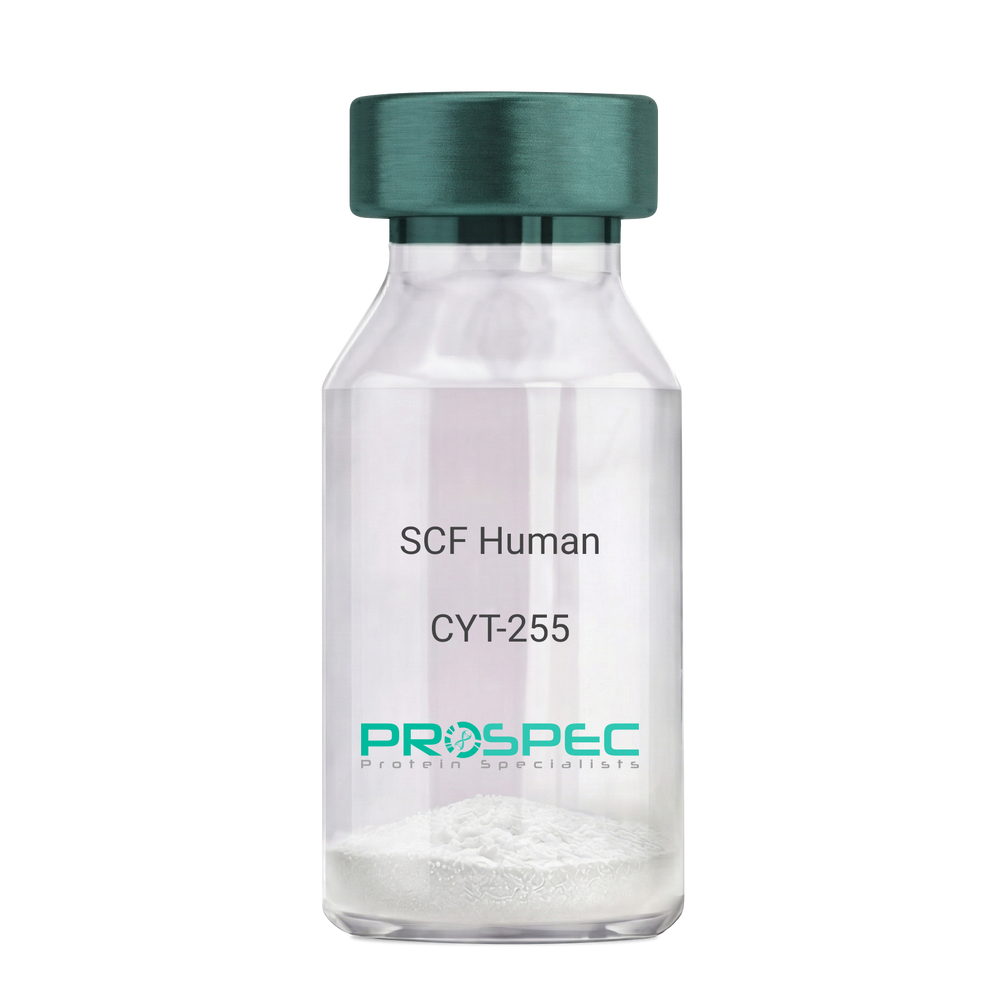
    SCF Human

    Description:

    Stem Cell Factor Human Recombinant

    Kit ligand Precursor, C-kit ligand, SCF, Mast cell growth factor, MGF, SF, KL-1, Kitl, DKFZp686F2250.

    Product # :

    CYT-255

    Price :

    Quantity :

    Shipping Method :

    Room Temp Icon

    Shipped at Room temp

    Add To Cart

    More Info

    • description
    • source
    • formulation
    • purity
    • biological activity
    • More Info

    Description

    Stem Cell Factor Human Recombinant produced in E.Coli is a single, non-glycosylated polypeptide chain containing 165 amino acids and having a molecular mass of 18409 Dalton. The SCF is purified by proprietary chromatographic techniques.

    Source

    Escherichia Coli.

    Formulation

    Lyophilized from a concentrated (1mg/ml) solution in water containing 0.02% NaHCO3.

    Purity

    Greater than 98.0% as determined by:
    (a) Analysis by SEC-HPLC.
    (b) Analysis by SDS-PAGE.

    Biological Activity

    The ED50 as determined by the dose-dependant stimulation of Human TF-1 cells is < 2 ng/ml, corresponding to a Specific Activity of 500,000 IU/mg.

    More Info

    • Introduction

      Stem cell factor / KIT ligand (SCF) is a cytokine which binds CD117(c-Kit). SCF is also known as "steel factor" or "c-kit ligand". SCF exists in two forms, cell surface bound SCF and soluble (or free) SCF. Soluble SCF is produced by the cleavage of surface bound SCF by metalloproteases. SCF is a growth factor important for the survival, proliferation, and differentiation of hematopoietic stem cells and other hematopoietic progenitor cells. One of its roles is to change the BFU-E (burst-forming unit-erythroid) cells, which are the earliest erythrocyte precursors in the erythrocytic series, into the CFU-E (colony-forming unit-erythroid).

    • Synonyms

      Kit ligand Precursor, C-kit ligand, SCF, Mast cell growth factor, MGF, SF, KL-1, Kitl, DKFZp686F2250.

    • Physical Appearance

      Sterile Filtered White lyophilized (freeze-dried) powder.

    • Stability

      Lyophilized KIT ligand although stable at room temperature for 3 weeks, should be stored desiccated below -18°C. Upon reconstitution SCF should be stored at 4°C between 2-7 days and for future use below -18°C.For long term storage it is recommended to add a carrier protein (0.1% HSA or BSA).Please prevent freeze-thaw cycles.

    • Solubility

      It is recommended to reconstitute the lyophilized Stem Cell Factor in sterile 18MΩ-cm H2O not less than 100µg/ml, which can then be further diluted to other aqueous solutions.

    • Amino Acid Sequence

      The sequence of the first five N-terminal amino acids was determined and was found to be Met-Glu-Gly-Ile-Cys.

    • Protein content

      Protein quantitation was carried out by two independent methods1. UV spectroscopy at 280 nm using the absorbency value of 0.52 as the extinction coefficient for a 0.1% (1mg/ml) solution. This value is calculated by the PC GENE computer analysis program of protein sequences (IntelliGenetics). 2. Analysis by RP-HPLC, using a standard solution of Stem Cell Factor as a Reference Standard.

    ProSpec's products are furnished for LABORATORY RESEARCH USE ONLY. The product may not be used as drugs, agricultural or pesticidal products, food additives or household chemicals.

    Scf Human
  • View Data Sheet

    Name :

    SCF Human, Sf9

    Description:

    Stem Cell Factor Human Recombinant, Sf9

    Kit ligand Precursor, C-kit ligand, SCF, Mast cell growth factor, MGF, SF, KL-1, Kitl, DKFZp686F2250.

    Product # :

    CYT-421

    Price :

    Quantity :

    Shipping Method :

    Room Temp Icon

    Shipped at Room temp

    Add To Cart

    More Info

    • description
    • source
    • formulation
    • purity
    • biological activity
    • More Info

    Description

    Stem Cell Factor Human Recombinant produced in insect cells is a single, glycosylated polypeptide chain containing 165 amino acids and having a molecular mass of 18409 Dalton. The SCF is fused to a C-terminal His-tag (6xHis) and purified by proprietary chromatographic techniques.

    Source

    Sf9, Insect Cells.

    Formulation

    The protein is supplied in 1xPBS, pH 7.4.

    Purity

    Greater than 98.0% as determined by analysis by SDS-PAGE.

    Biological Activity

    The ED50 as determined by the dose-dependent stimulation of Human TF-1 cells is typically 1-5 ng/ml.

    More Info

    • Introduction

      Stem cell factor / KIT ligand (SCF) is a cytokine which binds CD117(c-Kit). SCF is also known as "steel factor" or "c-kit ligand". SCF exists in two forms, cell surface bound SCF and soluble (or free) SCF. Soluble SCF is produced by the cleavage of surface bound SCF by metalloproteases.
      SCF is a growth factor important for the survival, proliferation, and differentiation of hematopoietic stem cells and other hematopoietic progenitor cells. One of its roles is to change the BFU-E (burst-forming unit-erythroid) cells, which are the earliest erythrocyte precursors in the erythrocytic series, into the CFU-E (colony-forming unit-erythroid).

    • Synonyms

      Kit ligand Precursor, C-kit ligand, SCF, Mast cell growth factor, MGF, SF, KL-1, Kitl, DKFZp686F2250.

    • Physical Appearance

      Sterile Filtered White lyophilized (freeze-dried) powder.

    • Stability

      Lyophilized KIT ligand although stable at room temperature for 3 weeks, should be stored desiccated below -18°C. Upon reconstitution SCF should be stored at 4°C between 2-7 days and for future use below -18°C. For long term storage it is recommended to add a carrier protein (0.1% HSA or BSA).Please prevent freeze-thaw cycles.

    • Solubility

      It is recommended to reconstitute the lyophilized Stem Cell Factor in 10mM acetic acid not less than 100µg/ml, which can then be further diluted to other aqueous solutions.

    • Protein content

      Protein quantitation was carried out by two independent methods:1. UV spectroscopy at 280 nm using the absorbency value of 0.52 as the extinction coefficient for a 0.1% (1mg/ml) solution. This value is calculated by the PC GENE computer analysis program of protein sequences (IntelliGenetics). 2. Analysis by RP-HPLC, using a standard solution of Stem Cell Factor as a Reference Standard.

    ProSpec's products are furnished for LABORATORY RESEARCH USE ONLY. The product may not be used as drugs, agricultural or pesticidal products, food additives or household chemicals.

    Scf Human Sf9
  • View Data Sheet

    Name :

    Prolactin Mouse

    Description:

    Prolactin Mouse Recombinant

    Mammotropin, Luterotropic hormone, Lutetropin, PRL.

    Product # :

    CYT-321

    Price :

    Quantity :

    Shipping Method :

    Room Temp Icon

    Shipped at Room temp

    Add To Cart

    More Info

    • description
    • source
    • formulation
    • purity
    • biological activity
    • More Info

    Description

    Prolactin Mouse Recombinant produced in E.Coli is a single, non-glycosylated polypeptide chain containing 198 amino acids and having a molecular mass of 22.5 kDa. The Prolactin is purified by proprietary chromatographic techniques.

    Source

    Escherichia Coli.

    Formulation

    The protein was lyophilized from a concentrated (1mg/ml) solution with 10mM sodium Phosphate buffer pH=8 and 50mM Nacl.

    Purity

    Greater than 95.0% as determined by:
    (a) Analysis by RP-HPLC.
    (b) Analysis by SDS-PAGE.

    Biological Activity

    The sequence of the first five N-terminal amino acids was determined and was found to be Ala-Leu-Pro-Ile-Cys-Ser.

    More Info

    • Introduction

      Prolactin is a neuroendocrine hormone synthesized primarily by the pituitary gland but also a variety of other cell types including the placenta, brain and uterus. Its primary function is to promote and maintain lactation but has also been shown to have a role in breast cancer development, regulation of reproductive function and immunoregulation.

    • Synonyms

      Mammotropin, Luterotropic hormone, Lutetropin, PRL.

    • Physical Appearance

      Sterile Filtered White lyophilized (freeze-dried) powder.

    • Stability

      Lyophilized Prolactin although stable at room temperature for 3 weeks, should be stored desiccated below -18°C. Upon reconstitution Prolactin should be stored at 4°C between 2-7 days and for future use below -18°C.For long term storage it is recommended to add a carrier protein (0.1% HSA or BSA).Please prevent freeze-thaw cycles.

    • Solubility

      It is recommended to reconstitute the lyophilized Prolactin in sterile 18MΩ-cm H2O not less than 100µg/ml, which can then be further diluted to other aqueous solutions.

    • Amino Acid Sequence

      The sequence of the first five N-terminal amino acids was determined and was found to be Met-Leu-Pro-Ile-Cys.

    ProSpec's products are furnished for LABORATORY RESEARCH USE ONLY. The product may not be used as drugs, agricultural or pesticidal products, food additives or household chemicals.

    Prolactin Mouse
  • View Data Sheet

    Name :

    IGF1 Rat

    Description:

    IGF-1 Rat Recombinant

    Somatomedin C, IGF-I, IGFIA, IGF1.

    Product # :

    CYT-289

    Price :

    Quantity :

    Shipping Method :

    Room Temp Icon

    Shipped at Room temp

    Add To Cart

    More Info

    • description
    • source
    • formulation
    • purity
    • biological activity
    • More Info

    Description

    IGF-1 Rat Recombinant produced in E.Coli is a single, non-glycosylated, polypeptide chain containing 70 amino acids and having a molecular mass of 7.7kDa. IGF-I is purified by proprietary chromatographic techniques.

    Source

    Escherichia Coli.

    Formulation

    The protein was lyophilized with a 0.2µm filtered concentrated solution in 20mM PBS, pH 7.0.

    Purity

    Greater than 98.0% as determined by SDS-PAGE.

    Biological Activity

    The ED50 as determined by a cell proliferation assay using FDC-P1 cells is less than 2.0ng/ml, corresponding to a specific activity of >500,000units/mg.

    More Info

    • Introduction

      The somatomedins, or IGFs, comprise a family of peptides that play important roles in mammalian growth and development. IGF1 mediates many of the growth-promoting effects of GH. Early studies showed that GH did not directly stimulate the incorporation of sulfate into cartilage, but rather acted through a serum factor, termed 'sulfation factor,' which later became known as 'somatomedin' (Daughaday et al., 1972). Three main somatomedins have been characterized: somatomedin C (IGF1), somatomedin A (IGF2; MIM 147470), and somatomedin B (MIM 193190) (Rotwein, 1986; Rosenfeld, 2003).

    • Synonyms

      Somatomedin C, IGF-I, IGFIA, IGF1.

    • Physical Appearance

      Sterile Filtered White lyophilized (freeze-dried) powder.

    • Stability

      Lyophilized IGF-1 although stable at room temperature for 3 weeks, should be stored desiccated below -18°C. Upon reconstitution IGFI should be stored at 4°C between 2-7 days and for future use below -18°C.For long term storage it is recommended to add a carrier protein (0.1% HSA or BSA).Please prevent freeze-thaw cycles.

    • Solubility

      It is recommended to reconstitute the lyophilized IGF1 in sterile 18MΩ-cm H2O not less than 100µg/ml, which can then be further diluted to other aqueous solutions.

    • Amino Acid Sequence

      GPETLCGAEL VDALQFVCGP RGFYFNKPTG YGSSIRRAPQ TGIVDECCFR SCDLRRLEMY CAPLKPTKSA.

    ProSpec's products are furnished for LABORATORY RESEARCH USE ONLY. The product may not be used as drugs, agricultural or pesticidal products, food additives or household chemicals.

    Igf 1 Rat
  • View Data Sheet

    Name :

    Prolactin Rat

    Description:

    Prolactin Rat Recombinant

    Mammotropin, Luterotropic hormone, Lutetropin, PRL.

    Product # :

    CYT-322

    Price :

    Quantity :

    Shipping Method :

    Room Temp Icon

    Shipped at Room temp

    Add To Cart

    More Info

    • description
    • source
    • formulation
    • purity
    • biological activity
    • More Info

    Description

    Prolactin Rat Recombinant produced in E.Coli is a single, non-glycosylated polypeptide chain containing 198 amino acids and having a molecular mass of 22.6 kDa. The Prolactin is purified by proprietary chromatographic techniques.

    Source

    Escherichia Coli.

    Formulation

    The protein was lyophilized from a concentrated (1mg/ml) solution with 10mM sodium Phosphate buffer pH=8 and 50mM Nacl.

    Purity

    Greater than 95.0% as determined by:
    (a) Analysis by SEC-HPLC.
    (b) Analysis by SDS-PAGE.

    Biological Activity

    The ED50 as determined by the dose-dependant stimulation of the proliferation of rat lymphoma, Nb2-11 was found to be < 0.065 ng/ml corresponding to a specific activity of 15,400,000 Units/mg.

    More Info

    • Introduction

      Prolactin is a neuroendocrine hormone synthesized primarily by the pituitary gland but also a variety of other cell types including the placenta, brain and uterus. Its primary function is to promote and maintain lactation but has also been shown to have a role in breast cancer development, regulation of reproductive function and immunoregulation.

    • Synonyms

      Mammotropin, Luterotropic hormone, Lutetropin, PRL.

    • Physical Appearance

      Sterile Filtered White lyophilized (freeze-dried) powder.

    • Stability

      Lyophilized Prolactin although stable at room temperature for 3 weeks, should be stored desiccated below -18°C. Upon reconstitution Prolactin should be stored at 4°C between 2-7 days and for future use below -18°C.For long term storage it is recommended to add a carrier protein (0.1% HSA or BSA).Please prevent freeze-thaw cycles.

    • Solubility

      It is recommended to reconstitute the lyophilized Prolactin in sterile 18MΩ-cm H2O not less than 100µg/ml, which can then be further diluted to other aqueous solutions.

    • Amino Acid Sequence

      The sequence of the first five N-terminal amino acids was determined and was found to be Met-Leu-Pro-Val-Cys.

    ProSpec's products are furnished for LABORATORY RESEARCH USE ONLY. The product may not be used as drugs, agricultural or pesticidal products, food additives or household chemicals.

    Prolactin Rat
  • View Data Sheet

    Name :

    IGF1 Human, A70T

    Description:

    Insulin Like Growth Factor-1, Mutant A70T Human Recombinant

    Somatomedin C, IGF-I, IGFI, IGF1, IGF-IA, Mechano growth factor, MGF.

    Product # :

    CYT-1091

    Price :

    Quantity :

    Shipping Method :

    Room Temp Icon

    Shipped at Room temp

    Add To Cart

    More Info

    • description
    • source
    • formulation
    • purity
    • More Info

    Description

    IGF1 A70T Human Recombinant produced in E.Coli is a single, non-glycosylated polypeptide chain containing 70 amino acids and having a molecular mass of Approximately 7.7kDa. The IGF1 A70T is purified by proprietary chromatographic techniques.

    Source

    Escherichia Coli.

    Formulation

    IGF1 A70T Lyophilized from a 0.2 µm filtered concentrated solution in 20 mM PB and 150 mM NaCl, pH 6.0.

    Purity

    Greater than 95.0% as determined by SDS-PAGE.

    More Info

    • Introduction

      The somatomedins, or insulin-like growth factors (IGFs), comprise a family of peptides that takes part in mammalian growth and development. IGF1 mediates various growth-promoting effects of growth hormone (GH; MIM 139250). Early studies showed that growth hormone did not directly stimulate the incorporation of sulfate into cartilage, but rather acted through a serum factor, termed 'sulfation factor,' which later became known as 'somatomedin' (Daughaday et al., 1972). 3 main somatomedins have been characterized: somatomedin C (IGF1), somatomedin A (IGF2; MIM 147470), and somatomedin B (MIM 193190) (Rotwein, 1986; Rosenfeld, 2003).

    • Synonyms

      Somatomedin C, IGF-I, IGFI, IGF1, IGF-IA, Mechano growth factor, MGF.

    • Physical Appearance

      Sterile Filtered White lyophilized (freeze-dried) powder.

    • Stability

      Store at 4°C if entire vial will be used within 2-4 weeks. Store, frozen at -20°C for longer periods of time. For long term storage it is recommended to add a carrier protein (0.1% HSA or BSA). Avoid multiple freeze-thaw cycles.

    • Solubility

      It is recommended to reconstitute the lyophilized IGF1 A70T in sterile 18MΩ-cm H2O not less than 100µg/ml, which can then be further diluted to other aqueous solutions.

    • Amino Acid Sequence

      GPETLCGAEL VDALQFVCGD RGFYFNKPTG YGSSSRRAPQ TGIVDECCFR SCDLRRLEMY CAPLKPAKST.

    ProSpec's products are furnished for LABORATORY RESEARCH USE ONLY. The product may not be used as drugs, agricultural or pesticidal products, food additives or household chemicals.

    Igf1 A70T
  • View Data Sheet

    Name :

    IGFBP6 (28-240) Human

    Description:

    Insulin Like Growth Factor Binding Protein-6 (28-240 a.a.) Human Recombinant

    Insulin-like growth factor-binding protein 6, IBP-6, IGF-binding protein 6, IGFBP-6, IGFBP6, IBP6.

    Product # :

    CYT-786

    Price :

    Quantity :

    Shipping Method :

    Ice Icon

    Shipped with Ice Packs

    Add To Cart

    More Info

    • description
    • source
    • formulation
    • purity
    • More Info

    Description

    IGFBP6 Human Recombinant produced in E. coli is a single polypeptide chain containing 236 amino acids (28-240) and having a molecular mass of 25.0kDa (Molecular size on SDS-PAGE will appear higher).IGFBP6 is fused to a 23 amino acid His-tag at N-terminus & purified by proprietary chromatographic techniques.

    Source

    E.coli.

    Formulation

    The IGFBP6 solution (0.5mg/ml) contains 20mM Tris-HCl buffer (pH 8.0), 0.15M NaCl, 20% glycerol and 1mM DTT.

    Purity

    Greater than 85% as determined by SDS-PAGE.

    More Info

    • Introduction

      IGFBP6 plays a role in lipoprotein assembly and dietary cholesterol absorption. in addition to its acyltransferase activity, it may act as a ligase. may provide cholesteryl esters for lipoprotein secretion from hepatocytes and intestinal mucosa.

    • Synonyms

      Insulin-like growth factor-binding protein 6, IBP-6, IGF-binding protein 6, IGFBP-6, IGFBP6, IBP6.

    • Physical Appearance

      Sterile Filtered colorless solution.

    • Stability

      Store at 4°C if entire vial will be used within 2-4 weeks. Store, frozen at -20°C for longer periods of time. For long term storage it is recommended to add a carrier protein (0.1% HSA or BSA).Avoid multiple freeze-thaw cycles.

    • Amino Acid Sequence

      MGSSHHHHHH SSGLVPRGSH MGSRCPGCGQ GVQAGCPGGC VEEEDGGSPA EGCAEAEGCL RREGQECGVY TPNCAPGLQC HPPKDDEAPL RALLLGRGRC LPARAPAVAE ENPKESKPQA GTARPQDVNR RDQQRNPGTS TTPSQPNSAG VQDTEMGPCR RHLDSVLQQL QTEVYRGAQT LYVPNCDHRG FYRKRQCRSS QGQRRGPCWC VDRMGKSLPG SPDGNGSSSC PTGSSG.

    ProSpec's products are furnished for LABORATORY RESEARCH USE ONLY. The product may not be used as drugs, agricultural or pesticidal products, food additives or household chemicals.

    Igfbp6 28 240 Human
  • View Data Sheet

    Name :

    Prolactin Ovine Antagonist, Mutant

    Description:

    Prolactin Antagonist Ovine Recombinant, Mutant

    Mammotropin, Luteotropic hormone, Luteotropin, PRL, Prolactin.

    Product # :

    CYT-705

    Price :

    Quantity :

    Shipping Method :

    Room Temp Icon

    Shipped at Room temp

    Add To Cart

    More Info

    • description
    • source
    • formulation
    • purity
    • biological activity
    • More Info

    Description

    Prolactin Ovine Antagonist Recombinant produced in E.Coli is a single, non-glycosylated polypeptide chain containing 199 amino acids and an additional Ala at N-terminus and having a molecular mass of 23kDa. The mutant R129G is DES 9 amino acids truncated form from its N-terminus which has higher inhibitory activity. Ovine Prolactin Antagonist is purified by proprietary chromatographic techniques.

    Source

    Escherichia Coli.

    Formulation

    Ovine Prolactin was lyophilized from a concentrated (1mg/ml) solution with 0.02%-0.03% NaHCO3.

    Purity

    Greater than 99.0% as determined by Gel Filtration & SDS-PAGE.

    Biological Activity

    Ovine Prolactin Antagonist mutant form is devoid of agonistic activity and capable of inhibiting biological activity of oPRL or other lactogenic hormones as evidenced by proliferation assay of Nb2 or other cells. The truncated form is more potent inhibitor.

    More Info

    • Introduction

      Prolactin is a lactogenic hormone secreted by the adenohypophysis .Besides its major action on lactation, in some species prolactin exerts effects on reproduction, maternal behavior, fat metabolism, immunomodulation and osmoregulation.Prolactin has been shown also to have cytokine-like activities and to have important immunoregulatory activities. It contributes to the development of lymphoid tissues and the maintenance of physiological immune function and also modulates a variety of T-cell immune responses. Prolactin has been reported to activate cellular proliferation in nonreproductive tissue, such as liver, spleen, and thymus. It induces significant proliferation in aortic smooth muscle cells and also enhances proliferation of these cells induced by PDGF . Prolactin also appears to be directly mitogenic for pancreatic beta cells. Prolactin is also mitogenic for cultured astrocytes.

    • Synonyms

      Mammotropin, Luteotropic hormone, Luteotropin, PRL, Prolactin.

    • Physical Appearance

      Sterile Filtered White lyophilized (freeze-dried) powder.

    • Stability

      Lyophilized Ovine Prolactin Antagonist although stable at room temperature for 3 weeks, should be stored desiccated below -18°C. Upon reconstitution Ovine Prolactin Antagonist should be stored at 4°C between 2-7 days and for future use below -18°C. For long term storage it is recommended to add a carrier protein (0.1% HSA or BSA). Please prevent freeze-thaw cycles.

    • Solubility

      It is recommended to reconstitute the lyophilized Ovine Prolactin Antagonist in sterile 18MΩ-cm H2O not less than 100µg/ml, which can then be further diluted to other aqueous solutions.

    • Amino Acid Sequence

      The sequence of the first five N-terminal amino acids was determined and was found to be Ala-Thr-Pro-Val-Cys-Pro.

    ProSpec's products are furnished for LABORATORY RESEARCH USE ONLY. The product may not be used as drugs, agricultural or pesticidal products, food additives or household chemicals.

    Prolactin Antagonist Ovine Mutant
  • View Data Sheet

    Name :

    GM-CSF Monkey

    Description:

    Granulocyte Macrophage-Colony Stimulating Factor Rhesus Macaque Recombinant

    CSF-2, MGI-1GM, GM-CSF, Pluripoietin-alpha, MGC131935, MGC138897.

    Product # :

    CYT-720

    Price :

    Quantity :

    Shipping Method :

    Room Temp Icon

    Shipped at Room temp

    Add To Cart

    More Info

    • description
    • source
    • formulation
    • purity
    • biological activity
    • More Info

    Description

    Granulocyte Macrophage Colony Stimulating Factor Monkey Recombinant produced in E.Coli is a single, non-glycosylated, polypeptide chain containing 127 amino acids and having a molecular mass of 14.4 kDa.GM-CSF is purified by proprietary chromatographic techniques.

    Source

    Escherichia Coli.

    Formulation

    GM-CSF was lyophilized from a concentrated (1mg/ml) solution containing 1x PBS pH 7.4.

    Purity

    Greater than 98.0% as determined by SDS-PAGE and RP-HPLC.

    Biological Activity

    The ED50 as determined by a cell proliferation assay using human TF-1 cells is less than 0.1ng/ml, corresponding to a specific activity of > 10,000,000 IU/mg.

    More Info

    • Introduction

      GMCSF is a cytokine that controls the production, differentiation, and function of granulocytes and macrophages. The active form of the protein is found extracellularly as a homodimer. This gene has been localized to a cluster of related genes at chromosome region 5q31, which is known to be associated with interstitial deletions in the 5q- syndrome and acute myelogenous leukemia. Other genes in the cluster include those encoding interleukins 4, 5, and 13. GM-CSF stimulates the growth and differentiation of hematopoietic precursor cells from various lineages, including granulocytes, macrophages, eosinophils and erythrocytes.

    • Synonyms

      CSF-2, MGI-1GM, GM-CSF, Pluripoietin-alpha, MGC131935, MGC138897.

    • Physical Appearance

      Sterile Filtered White lyophilized (freeze-dried) powder.

    • Stability

      Lyophilized GMCSF although stable at room temperature for 3 weeks, should be stored desiccated below -18°C. Upon reconstitution GMCSF should be stored at 4°C between 2-7 days and for future use below -18°C. For long term storage it is recommended to add a carrier protein (0.1% HSA or BSA). Please prevent freeze-thaw cycles.

    • Solubility

      It is recommended to reconstitute the lyophilized GMCSF in sterile 18MΩ-cm H2O not less than 100µg/ml, which can then be further diluted to other aqueous solutions.

    • Amino Acid Sequence

      APARSPSPGT QPWEHVNAIQ EARRLLNLSR DTAAEMNKTV EVVSEMFDLQ EPSCLQTRLE LYKQGLQGSL TKLKGPLTMM ASHYKQHCPP TPETSCATQI ITFQSFKENL KDFLLVIPFD CWEPVQE.

    ProSpec's products are furnished for LABORATORY RESEARCH USE ONLY. The product may not be used as drugs, agricultural or pesticidal products, food additives or household chemicals.

    Gm Csf Monkey
  • View Data Sheet

    Name :

    SCF Canine

    Description:

    Stem Cell Factor Canine Recombinant

    Kit ligand Precursor, C-kit ligand, SCF, Mast cell growth factor, MGF, SF, KL-1, Kitl, DKFZp686F2250.

    Product # :

    CYT-194

    Price :

    Quantity :

    Shipping Method :

    Room Temp Icon

    Shipped at Room temp

    Add To Cart

    More Info

    • description
    • source
    • formulation
    • purity
    • biological activity
    • More Info

    Description

    Stem Cell Factor Canine Recombinant produced in E.Coli is a single, non-glycosylated polypeptide chain containing 165 amino acids and having a molecular mass of 18.4kDa Dalton. The SCF is purified by proprietary chromatographic techniques.

    Source

    Escherichia Coli.

    Formulation

    Lyophilized from a 0.2µm filtered concentrated solution in PBS, pH 7.4.

    Purity

    Greater than 97.0% as determined by HPLC and SDS-PAGE.

    Biological Activity

    Fully biologically active when compared to standard. The ED50 as calculated by the dose-dependent stimulation of the proliferation of human TF-1 cells is less than 2.0ng/ml, corresponding to a specific activity of 5,000,000IU/mg.

    More Info

    • Introduction

      Stem cell factor / KIT ligand (SCF) is a cytokine which binds CD117(c-Kit). SCF is also known as "steel factor" or "c-kit ligand". SCF exists in two forms, cell surface bound SCF and soluble (or free) SCF. Soluble SCF is produced by the cleavage of surface bound SCF by metalloproteases. SCF is a growth factor important for the survival, proliferation, and differentiation of hematopoietic stem cells and other hematopoietic progenitor cells. One of its roles is to change the BFU-E (burst-forming unit-erythroid) cells, which are the earliest erythrocyte precursors in the erythrocytic series, into the CFU-E (colony-forming unit-erythroid).

    • Synonyms

      Kit ligand Precursor, C-kit ligand, SCF, Mast cell growth factor, MGF, SF, KL-1, Kitl, DKFZp686F2250.

    • Physical Appearance

      Sterile Filtered White lyophilized (freeze-dried) powder.

    • Stability

      Lyophilized SCF although stable at room temperature for 3 weeks, should be stored desiccated below -18°C. Upon reconstitution SCF should be stored at 4°C between 2-7 days and for future use below -18°C.For long term storage it is recommended to add a carrier protein (0.1% HSA or BSA).Please prevent freeze-thaw cycles.

    • Solubility

      It is recommended to reconstitute the lyophilized Stem Cell Factor in sterile 18MΩ-cm H2O not less than 100µg/ml, which can then be further diluted to other aqueous solutions.

    • Amino Acid Sequence

      KGICGKRVTD DVKDVTKLVA NLPKDYKIAL KYVPGMDVLP SHCWISVMVE QLSVSLTDLL DKFSNISEGL SNYSIIDKLV KIVDDLVECT EGYSFENVKK APKSPELRLF TPEEFFRIFN RSIDAFKDLE TVASKSSECV VSSTLSPDKD SRVSVTKPFM LPPVA

    ProSpec's products are furnished for LABORATORY RESEARCH USE ONLY. The product may not be used as drugs, agricultural or pesticidal products, food additives or household chemicals.

    Scf K9
  • View Data Sheet

    Name :

    FGFR1 Human, (22-285)

    Description:

    Fibroblast Growth Factor Receptor-1 Human Recombinant, (22-285 a.a.)

    FGFR-1, bFGF-R, C-FGR, CD331, fms-related tyrosine kinase 2, Pfeiffer syndrome, CEK, FLG, FLT2, KAL2, BFGFR, FGFBR, HBGFR, FGFR1/FGFR1OP2 FUSION GENE, FGFR1/ZNF198 FUSION GENE, FLG FGFR1/BCR FUSION GENE, FLG protein, FMS-LIKE GENE, N-sam tyrosine kinase, basic fibroblast growth factor receptor 1.

    Product # :

    PKA-114

    Price :

    Quantity :

    Shipping Method :

    Ice Icon

    Shipped with Ice Packs

    Add To Cart

    More Info

    • description
    • source
    • formulation
    • purity
    • More Info

    Description

    FGFR1 Human Recombinant produced in Sf9 Baculovirus cells is a single, glycosylated polypeptide chain containing 272 amino acids (22-285) and having a molecular mass of 30.4kDa. (Molecular size on SDS-PAGE will appear at approximately 40-57kDa). FGFR1 is fused to a 8 amino acid His-tag at C-terminus & purified by proprietary chromatographic techniques.

    Source

    Sf9, Baculovirus cells.

    Formulation

    The FGFR1 solution (0.25mg/1ml) contains phosphate buffered Saline (pH7.4), and 10% glycerol.

    Purity

    Greater than 90.0% as determined by SDS-PAGE.

    More Info

    • Introduction

      Fibroblast Growth Factors (FGFs) comprise a family of at least 18 structurally related proteins that are involved in a multitude of physiological and pathological cellular processes, including cell growth, differentiation, angiogenesis, wound healing and tumorigenesis. The biological activities of the FGFs are mediated by a family of type I transmembrane tyrosine kinases which undergo dimerization and autophosphorylation after ligand binding. Multiple forms of FGFR-1 to -3 are generated by alternative splicing of the mRNAs. A frequent splicing event involving FGFR-1 and -2 results in receptors containing all three Ig domains, referred to as the alpha isoform, or only IgII and IgIII, referred to as the ? isoform. Only the alpha isoform has been identified for FGFR-3 and FGFR-4. Additional splicing events for FGFR-1 to -3, involving the C-terminal half of the IgIII domain encoded by two mutually exclusive alternative exons, generate FGF receptors with alternative IgIII domains (IIIb and IIIc). An IIIa isoform which is a secreted FGF binding protein containing only the N-terminal half of the IgIII domain plus some intron sequences has also been reported for FGFR-1. Mutations in FGFR-1 to -3 have been found in patients with birth defects involving craniosynostosis.

    • Synonyms

      FGFR-1, bFGF-R, C-FGR, CD331, fms-related tyrosine kinase 2, Pfeiffer syndrome, CEK, FLG, FLT2, KAL2, BFGFR, FGFBR, HBGFR, FGFR1/FGFR1OP2 FUSION GENE, FGFR1/ZNF198 FUSION GENE, FLG FGFR1/BCR FUSION GENE, FLG protein, FMS-LIKE GENE, N-sam tyrosine kinase, basic fibroblast growth factor receptor 1.

    • Physical Appearance

      Sterile Filtered colorless solution.

    • Stability

      Store at 4°C if entire vial will be used within 2-4 weeks.Store, frozen at -20°C for longer periods of time. For long term storage it is recommended to add a carrier protein (0.1% HSA or BSA).Avoid multiple freeze-thaw cycles.

    • Amino Acid Sequence

      RPSPTLPEQD ALPSSEDDDD DDDSSSEEKE TDNTKPNPVA PYWTSPEKME KKLHAVPAAK TVKFKCPSSG TPNPTLRWLK NGKEFKPDHRIGGYKVRYAT WSIIMDSVVP SDKGNYTCIV ENEYGSINHT YQLDVVERSP HRPILQAGLP ANKTVALGSN VEFMCKVYSD PQPHIQWLKH IEVNGSKIGP DNLPYVQILK TAGVNTTDKE MEVLHLRNVS FEDAGEYTCL AGNSIGLSHH SAWLTVLEAL EERPAVMTSP LYLELEHHHH HH.

    ProSpec's products are furnished for LABORATORY RESEARCH USE ONLY. The product may not be used as drugs, agricultural or pesticidal products, food additives or household chemicals.

    Fgfr1 Protein
  • View Data Sheet

    Name :

    VEGF Rat, His

    Description:

    Vascular Endothelial Growth Factor Rat Recombinant, His Tag

    VEGF-A, Vascular permeability factor, VPF, VEGF.

    Product # :

    CYT-854

    Price :

    Quantity :

    Shipping Method :

    Ice Icon

    Shipped with Ice Packs

    Add To Cart

    More Info

    • description
    • source
    • formulation
    • purity
    • More Info

    Description

    VEGF Rat Recombinant produced in E.Coli is a single, non-glycosylated polypeptide chain containing 145 amino acids (206-325 a.a) and having a molecular mass of 16.7kDa.VEGF is fused to a 25 amino acid His-tag at N-terminus & purified by proprietary chromatographic techniques.

    Source

    Escherichia Coli.

    Formulation

    VEGF protein solution (0.25mg/ml) containing Phosphate buffered saline (pH7.4) and 50% glycerol.

    Purity

    Greater than 90.0% as determined by SDS-PAGE.

    More Info

    • Introduction

      Vascular endothelial growth factor is an important signaling protein involved in both vasculogenesis and angiogenesis. As its name implies, VEGF activity has been mostly studied on cells of the vascular endothelium, although it does have effects on a number of other cell types (e.g. stimulation monocyte/ macrophagemigration, neurons, cancer cells, kidney epithelial cells ).VEGF mediates increased vascular permeability, induces angiogenesis, vasculogenesis and endothelial cell growth, promotes cell migration, and inhibits apoptosis. In vitro, VEGF has been shown to stimulate endothelial cell mitogenesisand cell migration. VEGF is also a vasodilator and increases microvascular permeability and was originally referred to as vascular permeability factor.Elevated levels of this protein are linked to POEMS syndrome, also known as Crow-Fukase syndrome. Mutations in this gene have been associated with proliferative and nonproliferative diabetic retinopathy.

    • Synonyms

      VEGF-A, Vascular permeability factor, VPF, VEGF.

    • Physical Appearance

      Sterile filtered colorless solution.

    • Stability

      Store at 4°C if entire vial will be used within 2-4 weeks. Store, frozen at -20°C for longer periods of time. For long term storage it is recommended to add a carrier protein (0.1% HSA or BSA). Avoid multiple freeze-thaw cycles.

    • Amino Acid Sequence

      MGSSHHHHHH SSGLVPRGSH MGSHMAPTTE GEQKAHEVVK FMDVYQRSYC RPIETLVDIF QEYPDEIEYI FKPSCVPLMR CAGCCNDEAL ECVPTSESNV TMQIMRIKPH QSQHIGEMSF LQHSRCECRP KKDRTKPEKC DKPRR

    ProSpec's products are furnished for LABORATORY RESEARCH USE ONLY. The product may not be used as drugs, agricultural or pesticidal products, food additives or household chemicals.

    Vegf Rat His
  • View Data Sheet

    Name :

    IGF1 Human, A67T

    Description:

    Insulin Like Growth Factor-1, Mutant A67T Human Recombinant

    Somatomedin C, IGF-I, IGFI, IGF1, IGF-IA, Mechano growth factor, MGF.

    Product # :

    CYT-1089

    Price :

    Quantity :

    Shipping Method :

    Room Temp Icon

    Shipped at Room temp

    Add To Cart

    More Info

    • description
    • source
    • formulation
    • purity
    • More Info

    Description

    IGF1 A67T Human Recombinant produced in E.Coli is a single, non-glycosylated polypeptide chain containing 70 amino acids and having a molecular mass of Approximately 7.7 kDa. The IGF1 A67T is purified by proprietary chromatographic techniques.

    Source

    Escherichia Coli.

    Formulation

    IGF1 A67T Lyophilized from a 0.2 µm filtered concentrated solution in 20 mM PB and 150 mM NaCl, pH 6.0.

    Purity

    Greater than 95.0% as determined by SDS-PAGE.

    More Info

    • Introduction

      The somatomedins, or insulin-like growth factors (IGFs), comprise a family of peptides that takes part in mammalian growth and development. IGF1 mediates various growth-promoting effects of growth hormone (GH; MIM 139250). Early studies showed that growth hormone did not directly stimulate the incorporation of sulfate into cartilage, but rather acted through a serum factor, termed 'sulfation factor,' which later became known as 'somatomedin' (Daughaday et al., 1972). 3 main somatomedins have been characterized: somatomedin C (IGF1), somatomedin A (IGF2; MIM 147470), and somatomedin B (MIM 193190) (Rotwein, 1986; Rosenfeld, 2003).

    • Synonyms

      Somatomedin C, IGF-I, IGFI, IGF1, IGF-IA, Mechano growth factor, MGF.

    • Physical Appearance

      Sterile Filtered White lyophilized (freeze-dried) powder.

    • Stability

      Store at 4°C if entire vial will be used within 2-4 weeks. Store, frozen at -20°C for longer periods of time. For long term storage it is recommended to add a carrier protein (0.1% HSA or BSA). Avoid multiple freeze-thaw cycles.

    • Solubility

      It is recommended to reconstitute the lyophilized IGF1 A67T in sterile 18MΩ-cm H2O not less than 100µg/ml, which can then be further diluted to other aqueous solutions.

    • Amino Acid Sequence

      GPETLCGAEL VDALQFVCGD RGFYFNKPTG YGSSSRRAPQ TGIVDECCFR SCDLRRLEMY CAPLKPTKSA.

    ProSpec's products are furnished for LABORATORY RESEARCH USE ONLY. The product may not be used as drugs, agricultural or pesticidal products, food additives or household chemicals.

    Igf1 A67T
  • View Data Sheet

    Name :

    TGFBRAP1 Human

    Description:

    Transforming Growth Factor Beta Receptor Associated Protein 1 Human Recombinant

    TRAP-1, TRAP1, Transforming growth factor-beta receptor-associated protein 1, TGF-beta receptor-associated protein 1.

    Product # :

    PRO-1890

    Price :

    Quantity :

    Shipping Method :

    Ice Icon

    Shipped with Ice Packs

    Add To Cart

    More Info

    • description
    • source
    • formulation
    • purity
    • More Info

    Description

    TGFBRAP1 Human Recombinant produced in E.Coli is a single, non-glycosylated polypeptide chain containing 296 amino acids (601-860 a.a) and having a molecular mass of 33kDa.TGFBRAP1 is fused to a 36 amino acid His-tag at N-terminus & purified by proprietary chromatographic techniques.

    Source

    Escherichia Coli.

    Formulation

    TGFBRAP1 protein solution (0.5mg/ml) containing 20mM Tris-HCl buffer (pH 8.0), 0.4M Urea and 10% glycerol.

    Purity

    Greater than 80% as determined by SDS-PAGE.

    More Info

    • Introduction

      TGF-beta receptor-associated protein 1 also known as TGFBRAP1 takes part in the TGF-beta/activin signaling pathway. TGFBRAP1 is related with inactive heteromeric TGF-beta and activin receptor complexes, mainly through the type II receptor, and is released upon activation of signaling. TGFBRAP1recruits SMAD4 to the vicinity of the receptor complex and smoothes the progress of its interaction with receptor-regulated Smads, such as SMAD2.

    • Synonyms

      TRAP-1, TRAP1, Transforming growth factor-beta receptor-associated protein 1, TGF-beta receptor-associated protein 1.

    • Physical Appearance

      Sterile Filtered clear solution.

    • Stability

      Store at 4°C if entire vial will be used within 2-4 weeks. Store, frozen at -20°C for longer periods of time.For long term storage it is recommended to add a carrier protein (0.1% HSA or BSA).Please avoid freeze thaw cycles.

    • Amino Acid Sequence

      MRGSHHHHHH GMASMTGGQQ MGRDLYDDDD KDRWGSKRLQ KEEYHTHLAV LYLEEVLLQR ASASGKGAEA TETQAKLRRL LQKSDLYRVH FLLERLQGAG LPMESAILHG KLGEHEKALH ILVHELQDFA AAEDYCLWCS EGRDPPHRQQ LFHTLLAIYL HAGPTAHELA VAAVDLLNRH ATEFDAAQVL QMLPDTWSVQ LLCPFLMGAM RDSIHARRTM QVALGLARSE NLIYTYDKMK LKGSSIQLSD KKLCQICQNP FCEPVFVRYP NGGLVHTHCA ASRHTNPSSS SPGTRT

    ProSpec's products are furnished for LABORATORY RESEARCH USE ONLY. The product may not be used as drugs, agricultural or pesticidal products, food additives or household chemicals.

    Tgfbrap1 Human
  • View Data Sheet

    Name :

    GDF3 Human

    Description:

    Growth Differentiation Factor-3 Human Recombinant

    Growth Differentiation Factor 3, Growth/Differentiation Factor 3 , MCOPCB6, MCOP7, GDF-3, KFS3.

    Product # :

    CYT-694

    Price :

    Quantity :

    Shipping Method :

    Room Temp Icon

    Shipped at Room temp

    Add To Cart

    More Info

    • description
    • source
    • formulation
    • purity
    • More Info

    Description

    GDF3 Human Recombinant produced in E.Coli is a single, non-glycosylated, polypeptide chain containing 124 amino acids and having a total molecular mass of 14.15 kDa.GDF3 is fused to a 10 amino acid His Tag at N-terminus and purified by proprietary chromatographic techniques.

    Source

    Escherichia Coli.

    Formulation

    The protein was lyophilized from a concentrated solution (0.5mg/ml) containing 30mM Acetate buffer pH-4.

    Purity

    Greater than 90.0% as determined by SDS-PAGE.

    More Info

    • Introduction

      GDF3 is a member of the TGF-beta superfamily though it does not show similarity pattern of conserved cysteine residues. GDF3 is linked to Vg-1 and human BMP-4. GDF3 transcripts are identified mainly in adult bone marrow, spleen, thymus, and adipose tissue. GDF3 expression is upregulated strongly in high-fat-fed C57Bl/6J FABP4/aP2 null mice, which develop obesity but not the related hyperglycemia or hyperinsulinemia characteristic of type II diabetes. GDF3 expression therefore bonds fatty acid metabolism in adipocytes and the expression of a differentiation regulator belonging to the bone morphogenetic proteins.

    • Synonyms

      Growth Differentiation Factor 3, Growth/Differentiation Factor 3 , MCOPCB6, MCOP7, GDF-3, KFS3.

    • Physical Appearance

      Filtered White lyophilized (freeze-dried) powder.

    • Stability

      Lyophilized GDF3 although stable at room temperature for 3 weeks, should be stored desiccated below -18°C. Upon reconstitution GDF3 should be stored at 4°C between 2-7 days and for future use below -18°C.For long term storage it is recommended to add a carrier protein (0.1% HSA or BSA).Please prevent freeze-thaw cycles.

    • Solubility

      It is recommended to reconstitute the lyophilized GDF3 in sterile 100mM Acetate buffer pH-4 at a concentration of 0.5mg/ml. For the dilution into higher pH values, it is recommended to dilute the protein to a concentration of 10μg/ml. Please note that in higher concentrations the solubility of GDF3 is limited. The protein is not sterile! Please sterile filter before using it in the cell culture.

    • Amino Acid Sequence

      MKHHHHHHAS AAIPVPKLSC KNLCHRHQLF INFRDLGWHK WIIAPKGFMA NYCHGECPFS LTISLNSSNY AFMQALMHAV DPEIPQAVCI PTKLSPISML YQDNNDNVIL RHYEDMVVDECGCG.

    • Background

      What is the molecular weight/Mw of GDF3 HUMAN Protein?
      GDF3 HUMAN Protein has a total Mw of 14.15XkDa.

      What is the source or expression system of GDF3 HUMAN Protein?
      Escherichia Coli.

      What is the Purity of GDF3 HUMAN Protein?
      GDF3 HUMAN Protein is >90% pure as determined by SDS-PAGE.

      What is the Biological Activity of GDF3 HUMAN Protein?
      The biological functionality of GDF3 HUMAN Protein will be determined in the future.

      What is the amino acid sequence of GDF3 HUMAN Protein?
      MKHHHHHHAS AAIPVPKLSC KNLCHRHQLF INFRDLGWHK WIIAPKGFMA NYCHGECPFS LTISLNSSNY AFMQALMHAV DPEIPQAVCI PTKLSPISML YQDNNDNVIL RHYEDMVVDECGCG.

      What applications can GDF3 HUMAN Protein be used in?
      GDF3 HUMAN Protein can probably be used in western blot, ELISA and Lateral Flow.

      What is the endotoxin level for GDF3 HUMAN Protein?
      The endotoxin level is minimal, GDF3 HUMAN Protein was purified using conventional chromatography techniques.

    ProSpec's products are furnished for LABORATORY RESEARCH USE ONLY. The product may not be used as drugs, agricultural or pesticidal products, food additives or household chemicals.

    Gdf3 Human
  • View Data Sheet

    Name :

    TGFBI Human, 182 a.a.

    Description:

    Transforming Growth Factor Beta-Induced (182 a.a.) Human Recombinant

    Transforming growth factor-beta-induced protein ig-h3, Beta ig-h3, Kerato-epithelin, RGD-containing collagen-associated protein, RGD-CAP, TGFBI, BIGH3, CSD, CDB1, CDG2, CSD1, CSD2, CSD3, EBMD, LCD1, CDGG1.

    Product # :

    PRO-672

    Price :

    Quantity :

    Shipping Method :

    Ice Icon

    Shipped with Ice Packs

    Add To Cart

    More Info

    • description
    • source
    • formulation
    • purity
    • More Info

    Description

    TGFBI Recombinant Human produced in e.Coli is a single, non-glycosylated, polypeptide containing 182 amino acids (502-683) and having a molecular mass of 19.9 kDa (Molecular weight on SDS-PAGE will appear higher). The TGFBI recombinant Human protein is purified by proprietary chromatographic techniques.

    Source

    Escherichia Coli.

    Formulation

    The TGFBI 182 a.a. recombinant Human is formulated in 20mM Tris-HCl pH-8, 1mM EDTA, 0.1mM PMSF and 20% glycerol.

    Purity

    Greater than 95.0% as determined by SDS-PAGE.

    More Info

    • Introduction

      TGFBI is an extracellular matrix protein induced by transforming growth factor (TGF)-beta 1. TGFBI protein is involved in cell growth, cell differentiation, wound healing and cell adhesion. In addition, some missense mutations of TGFBI were identified in families affected with human autosomal dominant corneal dystrophies. TGFBI gene encodes for a 683 amino-acid protein containing an RGD motif and four internal repeated domains which have highly conserved sequences founded in several species (Fasciclin domain).

    • Synonyms

      Transforming growth factor-beta-induced protein ig-h3, Beta ig-h3, Kerato-epithelin, RGD-containing collagen-associated protein, RGD-CAP, TGFBI, BIGH3, CSD, CDB1, CDG2, CSD1, CSD2, CSD3, EBMD, LCD1, CDGG1.

    • Physical Appearance

      Sterile filtered liquid formulation.

    • Stability

      Store at 4°C if entire vial will be used within 2-4 weeks. Store, frozen at -20°C for longer periods of time. For long term storage it is recommended to add a carrier protein (0.1% HSA or BSA).Avoid multiple freeze-thaw cycles.

    • Amino Acid Sequence

      MGTVMDVLKG DNRFSMLVAA IQSAGLTETL NREGVYTVFA PTNEAFRALP PRERSRLLGD AKELANILKY HIGDEILVSG GIGALVRLKS LQGDKLEVSL KNNVVSVNKE PVAEPDIMAT NGVVHVITNV LQPPANRPQE RGDELADSAL EIFKQASAFS RASQRSVRLA PVYQKLLERM KH.

    ProSpec's products are furnished for LABORATORY RESEARCH USE ONLY. The product may not be used as drugs, agricultural or pesticidal products, food additives or household chemicals.

    Tgfbi Human 182 Aa
  • View Data Sheet

    Name :

    IGF1 Mouse

    Description:

    Insulin-Like Growth Factor 1 Mouse Recombinant

    Somatomedin C, IGF-I, IGFIA, IGF1.

    Product # :

    CYT-229

    Price :

    Quantity :

    Shipping Method :

    Room Temp Icon

    Shipped at Room temp

    Add To Cart

    More Info

    • description
    • source
    • formulation
    • purity
    • biological activity
    • More Info

    Description

    Insulin-Like Growth Factor I mouse Recombinant produced in E.Coli is a single, non-glycosylated, polypeptide chain containing 70 amino acids and having a molecular mass of 7600 Dalton. IGF-I is purified by proprietary chromatographic techniques.

    Source

    Escherichia Coli.

    Formulation

    The protein was lyophilized with no additives.

    Purity

    Greater than 98.0% as determined by(a) Analysis by RP-HPLC.
    (b) Analysis by SDS-PAGE.

    Biological Activity

    The ED50, calculated by the dose-dependant proliferation of murine BALB\C 3T3 cells (measured by 3H-thymidine uptake) is < 1.0 ng/ml, corresponding to a specific activity of 1MU/mg.

    More Info

    • Introduction

      The somatomedins, or insulin-like growth factors (IGFs), comprise a family of peptides that play important roles in mammalian growth and development. IGF1 mediates many of the growth-promoting effects of growth hormone (GH; MIM 139250). Early studies showed that growth hormone did not directly stimulate the incorporation of sulfate into cartilage, but rather acted through a serum factor, termed 'sulfation factor,' which later became known as 'somatomedin' (Daughaday et al., 1972). Three main somatomedins have been characterized: somatomedin C (IGF1), somatomedin A (IGF2; MIM 147470), and somatomedin B (MIM 193190) (Rotwein, 1986; Rosenfeld, 2003).

    • Synonyms

      Somatomedin C, IGF-I, IGFIA, IGF1.

    • Physical Appearance

      Sterile Filtered White lyophilized (freeze-dried) powder.

    • Stability

      Lyophilized IGFI although stable at room temperature for 3 weeks, should be stored desiccated below -18°C. Upon reconstitution IGF-1 should be stored at 4°C between 2-7 days and for future use below -18°C.For long term storage it is recommended to add a carrier protein (0.1% HSA or BSA).Please prevent freeze-thaw cycles.

    • Solubility

      It is recommended to reconstitute the lyophilized IGF1 in sterile 18MΩ-cm H2O not less than 100µg/ml, which can then be further diluted to other aqueous solutions.

    • Amino Acid Sequence

      The sequence of the first five N-terminal amino acids was determined and was found to be Gly-Pro-Glu-Thr-Leu.

    • Protein content

      Protein quantitation was carried out by two independent methods1. UV spectroscopy at 280 nm using the absorbency value of 0.47 as the extinction coefficient for a 0.1% (1mg/ml) solution. This value is calculated by the PC GENE computer analysis program of protein sequences (IntelliGenetics). 2. Analysis by RP-HPLC, using a calibrated solution of IGF-I as a Reference Standard.

    ProSpec's products are furnished for LABORATORY RESEARCH USE ONLY. The product may not be used as drugs, agricultural or pesticidal products, food additives or household chemicals.

    Igf 1 Mouse
  • 1
  • …
  • 10
  • 11
  • 12
  • 13
  • 14
  • …
  • 42
Your browser does not support the video tag.

Products

  • Cytokines
  • Growth Factors
  • Chemokines
  • CD Antigens
  • Neurotrophins
  • Hormones
  • Enzymes
  • Viral Antigens
  • Recombinant Proteins
  • Natural Proteins
  • Monoclonal Antibodies
  • Polyclonal Antibodies
  • Thermal Packaging

About

  • Company
  • Founder
  • Contribution
  • Contact Us
  • My Account

Ordering

  • Ordering Method
  • Ordering - Credit Card
  • Ordering PO
  • Shipping Fees
  • FAQ's

Legal

  • Terms & Conditions
  • Privacy
  • Site Map
  • info@prospecbio.com
  • Facebook
  • Instagram
  • Linkedin Profile

© 2026 ProSpec-Tany TechnoGene Ltd. All Rights Reserved.

  • Choosing a selection results in a full page refresh.
  • Opens in a new window.