Search results
1000 results found for “pim oncogene”
Name
Description
Product #
Price
Quantity
Shipping Method
- View Data Sheet
Name :
FIMC E.ColiDescription:
Chaperone Protein fimC E.Coli Recombinant
Chaperone protein fimC, fimC, b4316, JW4279.
Product # :
PRO-120Price :
Quantity :
Shipping Method :
Shipped with Ice Packs
More Info
- description
- source
- formulation
- purity
- More Info
Description
FIMC E.Coli Recombinant fused with a 21 amino acid His tag at N-terminus produced in E.Coli is a single, non-glycosylated, polypeptide chain containing 226 amino acids (37-241 a.a.) and having a molecular mass of 25kDa. The FIMC is purified by proprietary chromatographic techniques.
Source
Escherichia Coli.
Formulation
The FIMC solution (1 mg/ml) contains 20mM Tris-HCl buffer (pH 8.0), 10% glycerol and 1mM DTT.
Purity
Greater than 95.0% as determined by SDS-PAGE.
More Info
-
Introduction
The 23kDa two-domain periplasmic chaperone FIMC from E.coli is vital for the assembly of type-1 pili, which are filamentous, very oligomeric protein complexes anchored to the outer bacterial membrane that mediate adhesion of pathogenic E. coli strains to host cell surfaces and persist in macrophages.
-
Synonyms
Chaperone protein fimC, fimC, b4316, JW4279.
-
Physical Appearance
Sterile Filtered colorless solution.
-
Stability
Store at 4°C if entire vial will be used within 2-4 weeks. Store, frozen at -20°C for longer periods of time. For long term storage it is recommended to add a carrier protein (0.1% HSA or BSA).Avoid multiple freeze-thaw cycles.
-
Amino Acid Sequence
MGSSHHHHHH SSGLVPRGSH MGVALGATRV IYPAGQKQEQ LAVTNNDENS TYLIQSWVEN ADGVKDGRFI VTPPLFAMKG KKENTLRILD ATNNQLPQDR ESLFWMNVKA IPSMDKSKLT ENTLQLAIIS RIKLYYRPAK LALPPDQAAE KLRFRRSANS LTLINPTPYY LTVTELNAGT RVLENALVPP MGESTVKLPS DAGSNITYRT INDYGALTPK MTGVME.
ProSpec's products are furnished for LABORATORY RESEARCH USE ONLY. The product may not be used as drugs, agricultural or pesticidal products, food additives or household chemicals.
- View Data Sheet
Name :
PINK1 HumanDescription:
PTEN Induced Putative Kinase 1 Human Recombinant
PTEN induced putative kinase 1, PARK6, protein kinase BRPK, Parkinson disease (autosomal recessive) 6, serine/threonine-protein kinase PINK1 mitochondrial, EC 2.7.11.1.
Product # :
PKA-010Price :
Quantity :
Shipping Method :
Shipped with Ice Packs
More Info
- description
- source
- formulation
- purity
- More Info
Description
PINK1 Human Recombinant produced in E.coli is a single, non-glycosylated polypeptide chain containing 353 amino acids (156-507) and having a molecular mass of 37.9 kDa.PINK1 is purified by proprietary chromatographic techniques.
Source
E.coli.
Formulation
The PINK1 solution (1mg/ml) contains 20mM Tris-HCl buffer (pH 8.0), 1M Urea and 5% glycerol.
Purity
Greater than 90% as determined by SDS-PAGE.
More Info
-
Introduction
PINK1 is a serine/threonine protein kinase which is found in the mitochondria. PINK1 shields cells from stress-induced mitochondrial dysfunction. Mutations results in one form of autosomal recessive early-onset Parkinson disease.
-
Synonyms
PTEN induced putative kinase 1, PARK6, protein kinase BRPK, Parkinson disease (autosomal recessive) 6, serine/threonine-protein kinase PINK1 mitochondrial, EC 2.7.11.1.
-
Physical Appearance
Sterile Filtered colorless solution.
-
Stability
Store at 4°C if entire vial will be used within 2-4 weeks. Store, frozen at -20°C for longer periods of time. For long term storage it is recommended to add a carrier protein (0.1% HSA or BSA).Avoid multiple freeze-thaw cycles.
-
Amino Acid Sequence
MYLIGQSIGK GCSAAVYEAT MPTLPQNLEV TKSTGLLPGR GPGTSAPGEG QERAPGAPAF PLAIKMMWNI SAGSSSEAIL NTMSQELVPA SRVALAGEYG AVTYRKSKRG PKQLAPHPNI IRVLRAFTSS VPLLPGALVD YPDVLPSRLH PEGLGHGRTL FLVMKNYPCT LRQYLCVNTP SPRLAAMMLL QLLEGVDHLV QQGIAHRDLK SDNILVELDP DGCPWLVIAD FGCCLADESI GLQLPFSSWY VDRGGNGCLM APEVSTARPG PRAVIDYSKA DAWAVGAIAY EIFGLVNPFY GQGKAHLESR SYQEAQLPAL PESVPPDVRQ LVRALLQREA SKRPSARVAA NVL.
ProSpec's products are furnished for LABORATORY RESEARCH USE ONLY. The product may not be used as drugs, agricultural or pesticidal products, food additives or household chemicals.
- View Data Sheet
Name :
PMP2 HumanDescription:
Peripheral Myelin Protein-2 Human Recombinant
P2, MP2, FABP8, M-FABP, Myelin P2 protein, PMP2, Peripheral Myelin Protein-2.
Product # :
PRO-651Price :
Quantity :
Shipping Method :
Shipped with Ice Packs
More Info
- description
- source
- formulation
- purity
- More Info
Description
PMP2 Human Recombinant produced in E.Coli is a single, non-glycosylated polypeptide chain containing 132 amino acids and having a molecular mass of 14.9 kDa.
Source
Escherichia Coli.
Formulation
The PMP2 protein solution contains 20mM Tris pH-7.5, 2mM EDTA, 1mM DTT and 10% glycerol.
Purity
Greater than 95.0% as determined by:
(a) Analysis by RP-HPLC.
(b) Analysis by SDS-PAGE.More Info
-
Introduction
PMP2 is a small protein found in peripheral nerve myelin and spinal cord myelin, belongs to a family of fatty acid binding proteins. PMP2 partly decreases the inhibitory effect of T suppressors in the culture of immune lymph node cells. PMP2 protein is a lipid transport protein in schwann cells.
-
Synonyms
P2, MP2, FABP8, M-FABP, Myelin P2 protein, PMP2, Peripheral Myelin Protein-2.
-
Physical Appearance
Sterile Filtered colorless solution.
-
Stability
Store at 4°C if entire vial will be used within 2-4 weeks.Store, frozen at -20°C for longer periods of time. For long term storage it is recommended to add a carrier protein (0.1% HSA or BSA).Avoid multiple freeze-thaw cycles.
-
Amino Acid Sequence
MSNKFLGTWK LVSSENFDDY MKALGVGLAT RKLGNLAKPT VIISKKGDII TIRTESTFKN EISFKLGQE FEETTADNRK TKSIVTLQRG SLNQVQRWDG KETTIKRKLV NGKMVAECKM KGVVCTRIYE KV.
ProSpec's products are furnished for LABORATORY RESEARCH USE ONLY. The product may not be used as drugs, agricultural or pesticidal products, food additives or household chemicals.
- View Data Sheet
Name :
GOPC HumanDescription:
Golgi-Associated PDZ and Coiled-Coil Motif Containing Human Recombinant
CAL, dJ94G16.2, FIG, GOPC1, PIST, Golgi-associated PDZ and coiled-coil motif-containing protein, PDZ protein interacting specifically with TC10, CFTR-associated ligand, Fused in glioblastoma, GOPC.
Product # :
PRO-793Price :
Quantity :
Shipping Method :
Shipped with Ice Packs
More Info
- description
- source
- formulation
- purity
- More Info
Description
GOPC Human Recombinant produced in E.Coli is a single, non-glycosylated polypeptide chain containing 198 amino acids (278-454 a.a.) and having a molecular mass of 21.5 kDa. The GOPC is fused to a 20 amino acid His Tag and purified by conventional chromatography.
Source
Escherichia Coli.
Formulation
The GOPC protein solution contains 20mM Tris-HCl pH-8, 1mM DTT and 10% glycerol.
Purity
Greater than 90.0% as determined by SDS-PAGE.
More Info
-
Introduction
GOPC is a PDZ domain-containing Golgi protein which binds the extreme C terminus of proteins in a sequence-specific manner. GOPC participates in intracellular protein trafficking and degradation. GOPC regulates CFTR chloride currents and acid-induced ACCN3 currents by modulating cell surface expression of both channels. GOPC regulates the intracellular trafficking of the ADR1B receptor. GOPC takes part in autophagy. GOPC over expression results in CFTR intracellular retention and degradation in the lysosomes.
-
Synonyms
CAL, dJ94G16.2, FIG, GOPC1, PIST, Golgi-associated PDZ and coiled-coil motif-containing protein, PDZ protein interacting specifically with TC10, CFTR-associated ligand, Fused in glioblastoma, GOPC.
-
Physical Appearance
Sterile Filtered colorless solution.
-
Stability
Store at 4°C if entire vial will be used within 2-4 weeks. Store, frozen at -20°C for longer periods of time. For long term storage it is recommended to add a carrier protein (0.1% HSA or BSA).Avoid multiple freeze-thaw cycles.
-
Amino Acid Sequence
MGSSHHHHHH SSGLVPRGSH MIRKVLLLKE DHEGLGISIT GGKEHGVPIL ISEIHPGQPA DRCGGLHVGD AILAVNGVNL RDTKHKEAVT ILSQQRGEIE FEVVYVAPEV DSDDENVEYE DESGHRYRLY LDELEGGGNP GASCKDTSGE IKVLQGFNKK AVTDTHENGD LGTASETPLD DGASKLDDLH TLYHKKSY.
ProSpec's products are furnished for LABORATORY RESEARCH USE ONLY. The product may not be used as drugs, agricultural or pesticidal products, food additives or household chemicals.
- View Data Sheet
Name :
EGFR Antibody (PAT2H8AT)Description:
Epidermal Growth Factor Receptor Clone PAT2H8AT, Mouse Anti Human
ERBB, ERBB1, Epidermal growth factor receptor, HER1, PIG61, epidermal growth factor receptor, Urogastrone, Proto-oncogene c-ErbB-1, Oncogene ERBB, Cell proliferation inducing protein 61, Cell growth inhibiting protein 40, Avian erythroblastic leukemia viral (verbb) oncogene homolog.
Product # :
ANT-751Price :
Quantity :
Shipping Method :
Shipped with Ice Packs
More Info
- formulation
- More Info
Formulation
1mg/ml containing PBS, pH-7.4, 10% Glycerol and 0.02% Sodium Azide.
More Info
-
Introduction
Epidermal growth factor receptor or EGFR or Erb-1 is a membranal protein that acts as a receptor for the extracellular EGF proteins family. This protein is a part of a family of receptors called ErbB family which are all tyrosine kinases receptors. Mutations in the gene of this receptors can cause cancer.
-
Synonyms
ERBB, ERBB1, Epidermal growth factor receptor, HER1, PIG61, epidermal growth factor receptor, Urogastrone, Proto-oncogene c-ErbB-1, Oncogene ERBB, Cell proliferation inducing protein 61, Cell growth inhibiting protein 40, Avian erythroblastic leukemia viral (verbb) oncogene homolog.
-
Physical Appearance
Sterile filtered colorless solution.
-
Immunogen
Anti-human EGFR mAb, is derived from hybridization of mouse F0 myeloma cells with spleen cells from BALB/c mice immunized with recombinant human EGFR amino acids 424-605 purified from E. coli.
-
Ig Subclass
Mouse IgG2b heavy chain and κ light chain.
-
Clone
PAT2H8AT.
-
Applications
EGFR antibody has been tested by ELISA, Western blot analysis and ICC/IF to assure specificity and reactivity. Since application varies, however, each investigation should be titrated by the reagent to obtain optimal results.
-
Type
Mouse Anti Human Monoclonal.
-
Storage Procedures
For periods up to 1 month store at 4°C, for longer periods of time, store at -20°C. Prevent freeze thaw cycles.
-
Purification Method
EGFR antibody was purified from mouse ascitic fluids by protein-G affinity chromatography.
ProSpec's products are furnished for LABORATORY RESEARCH USE ONLY. The product may not be used as drugs, agricultural or pesticidal products, food additives or household chemicals.
- View Data Sheet
Name :
BMP 7 HumanDescription:
Bone Morphogenetic Protein-7 Human Recombinant
Osteogenic Protein 1, BMP-7.
Product # :
CYT-333Price :
Quantity :
Shipping Method :
Shipped at Room temp
More Info
- description
- source
- formulation
- purity
- More Info
Description
Bone Morphogenetic Protein-7 Human Recombinant produced in E.Coli is a monomeric, non-glycosylated, polypeptide chain containing 139 amino acids and having a molecular mass of 15679.97 Dalton. The BMP-7 is purified by proprietary chromatographic techniques.
Source
Escherichia Coli.
Formulation
BMP-7 was lyophilized from a concentrated (1mg/ml) sterile solution containing 10mM sodium citrate pH=3.5.
Purity
Greater than 95.0% as determined by:
(a) Analysis by RP-HPLC.
(b) Analysis by SDS-PAGE.More Info
-
Introduction
The bone morphogenetic proteins (BMPs) are a family of secreted signaling molecules that can induce ectopic bone growth. Many BMPs are part of the transforming growth factor-beta (TGFB) superfamily. BMPs were originally identified by an ability of demineralized bone extract to induce endochondral osteogenesis in vivo in an extraskeletal site. Based on its expression early in embryogenesis, the BMP encoded by this gene has a proposed role in early development. In addition, the fact that this BMP is closely related to BMP5 and BMP7 has lead to speculation of possible bone inductive activity.
-
Synonyms
Osteogenic Protein 1, BMP-7.
-
Physical Appearance
Sterile Filtered White lyophilized (freeze-dried) powder.
-
Stability
Lyophilized BMP-7 although stable at room temperature for 3 weeks, should be stored desiccated below -18°C. Upon reconstitution BMP 7 Human should be stored at 4°C between 2-7 days and for future use below -18°C.For long term storage it is recommended to add a carrier protein (0.1% HSA or BSA).Please prevent freeze-thaw cycles.
-
Solubility
It is recommended to briefly centrifuge the vial prior to opening to bring the contents to the bottom. Reconstitute in 20mM-100mM acetic acid at a concentration of 0.1-0.5mg per ml. Stock solutions should be apportioned into working aliquots and stored at <-20°C. Further dilutions should be made in appropriate buffered solutions.
-
Amino Acid Sequence
The sequence of the first five N-terminal amino acids was determined and was found to be Ser-Thr-Gly-Ser-Lys.
-
Background
Bone Morphogenetic Protein-7 Human Recombinant: A Comprehensive Review
Abstract:
Bone Morphogenetic Protein-7 (BMP-7) is a crucial member of the transforming growth factor-beta (TGF-β) superfamily with diverse roles in development, tissue repair, and regeneration.
This research paper provides a comprehensive review of BMP-7 Human Recombinant, focusing on its structure, signaling pathways, and diverse functions. Additionally, the paper explores the therapeutic potential of BMP-7 modulation.
Introduction:
BMP-7 is a multifunctional growth factor that plays a significant role in skeletal development and tissue homeostasis. This paper aims to provide an extensive review of BMP-7 Human Recombinant, highlighting its importance in various biological processes and its potential therapeutic applications.
Structure and Function of BMP-7:
BMP-7 is a disulfide-linked homodimeric protein composed of two subunits. It binds to specific cell surface receptors, activating downstream signaling pathways, including the Smad pathway and non-Smad signaling cascades. These pathways regulate cellular processes such as proliferation, differentiation, and apoptosis.
Skeletal Development and Regeneration:
BMP-7 is a key regulator of bone formation and remodeling. It promotes osteoblast differentiation and bone mineralization, contributing to skeletal development and repair. BMP-7 also plays a role in cartilage formation and chondrogenesis.
Tissue Repair and Regeneration:
Beyond its skeletal functions, BMP-7 is involved in tissue repair and regeneration in various organs, including the kidney, liver, and heart. It promotes the regeneration of damaged tissues by stimulating cell proliferation, angiogenesis, and extracellular matrix remodeling.
Therapeutic Potential:
Due to its regenerative and reparative properties, BMP-7 has attracted significant attention as a potential therapeutic agent. It has been investigated for its applications in bone regeneration, cartilage repair, and the treatment of kidney and liver diseases. Clinical trials exploring the therapeutic efficacy of BMP-7 are ongoing.
Challenges and Future Perspectives:
Despite the promising therapeutic potential of BMP-7, challenges remain, including optimizing its delivery systems, understanding its dosage and duration of treatment, and managing potential side effects. Future research should focus on unraveling the intricate mechanisms of BMP-7 signaling, developing targeted therapies, and enhancing its clinical applications.
What is the molecular weight/Mw of BMP7 Protein?
BMP7 Protein has a total Mw of 15kDa.
What is the source or expression system of BMP7 Protein?
Escherichia Coli.
What is the Purity of BMP7 Protein?
BMP7 Protein is >95% pure as determined by SDS-PAGE.
What is the Biological Activity of BMP7 Protein?
The biological functionality of BMP7 Protein will be determined in the future.
What is the amino acid sequence of BMP7 Protein?
BMP7 Protein is composed from 139 amino acids.
What applications can BMP7 Protein be used in?
BMP7 Protein can probably be used in western blot, ELISA and Lateral Flow.
What is the endotoxin level for BMP7 Protein?
The endotoxin level is minimal, BMP7 Protein was purified using conventional chromatography techniques.
ProSpec's products are furnished for LABORATORY RESEARCH USE ONLY. The product may not be used as drugs, agricultural or pesticidal products, food additives or household chemicals.
- View Data Sheet
Name :
PDPN HumanDescription:
Podoplanin Human Recombinant
Podoplanin, Glycoprotein 36, PA2.26 antigen, T1A, GP36, GP40, Gp38, OTS8, T1A2, HT1A-1, PA2.26, T1-alpha, PDPN.
Product # :
PRO-626Price :
Quantity :
Shipping Method :
Shipped with Ice Packs
More Info
- description
- source
- formulation
- purity
- More Info
Description
PDPN Human Recombinant produced in E.Coli is a single, non-glycosylated polypeptide chain containing 130 amino acids (99-207 a.a) and having a molecular mass of 13.4kDa. PDPN is fused to a 21 amino acid His-tag at N-terminus & purified by proprietary chromatographic techniques.
Source
Escherichia Coli.
Formulation
The protein solution contains 20mM Tris-HCl pH7.5 & 0.1M NaCl.
Purity
Greater than 95.0% as determined by SDS-PAGE.
More Info
-
Introduction
Podoplanin is a small mucin-like type-1 transmembrane protein, typically expressed in various specialized cell types throughout the body. Podoplanin is a type-I integral membrane glycoprotein with diverse distribution in human tissues. PDPN physiological function is related to its mucin-type character. The homologous protein in other species has been described as a differentiation antigen and influenza-virus receptor.
PDPN is expressed in lymphatic progenitor cells and afterwards during mouse development in lymphatic endothelial cells. Podoplanin is a specific marker for lymph vessel endothelial cells. Over-expression of podoplanin significantly elevates endothelial cell adhesion, migration, and tube formation. Inhibition of Podoplanin expression decreases cell adhesion in human dermal lymphatic endothelial cells. Podoplanin is used as a specific marker for lymphatic endothelium in histopathology.
Podoplanin expression is increased in nearly all human colon, rectum, and small intestine tumors. AGGRUS may serve as a diagnostic marker that distinguishes seminomas, the majority of which over express the protein, from embryonal carcinoma in testicular germ cell tumors. -
Synonyms
Podoplanin, Glycoprotein 36, PA2.26 antigen, T1A, GP36, GP40, Gp38, OTS8, T1A2, HT1A-1, PA2.26, T1-alpha, PDPN.
-
Physical Appearance
Sterile Filtered colorless solution.
-
Stability
Store at 4°C if entire vial will be used within 2-4 weeks. Store, frozen at -20°C for longer periods of time. For long term storage it is recommended to add a carrier protein (0.1% HSA or BSA).Avoid multiple freeze-thaw cycles.
-
Amino Acid Sequence
MGSSHHHHHH SSGLVPRGSH MASTGQPEDD TETTGLEGGV AMPGAEDDVV TPGTSEDRYK SGLTTLVATS VNSVTGIRIE DLPTSESTVH AQEQSPSATA SNVATSHSTE KVDGDTQTTV EKDGLSTVTL.
ProSpec's products are furnished for LABORATORY RESEARCH USE ONLY. The product may not be used as drugs, agricultural or pesticidal products, food additives or household chemicals.
- View Data Sheet
Name :
TEK Mouse FcDescription:
TEK Tyrosine Kinase Endothelial Fc Chimera Mouse Recombinant
Angiopoietin-1 receptor precursor, Tyrosine-protein kinase receptor TIE-2, hTIE2, Tyrosine-protein kinase receptor TEK, p140 TEK, Tunica interna endothelial cell kinase, CD202b, VMCM, VMCM1, TIE2.
Product # :
PKA-249Price :
Quantity :
Shipping Method :
Shipped at Room temp
More Info
- description
- source
- formulation
- purity
- More Info
Description
Soluble TEK Mouse Recombinant fused with the Fc part of human IgG1 produced in CHO is a glycosylated disulfide-linked homodimer, polypeptide containing amino acids 119-740 amino acids and having a total molecular mass of 280 kDa. Mouse TIE-2/Fc monomer has a calculated molecular mass of approximately 105 kDa. As a result of glycosylation, the recombinant protein migrates as an approximately 140 kDa protein in SDS-PAGE under reducing conditions.The TEK Fc Chimera is purified by proprietary chromatographic techniques.
Source
CHO Cells.
Formulation
TEK Fc Chimera was lyophilized from a concentrated (1 mg/ml) sterile solution containing 1xPBS.
Purity
Greater than 90.0% as determined by SDS-PAGE.
More Info
-
Introduction
TIE-1 (tyrosine kinase with Ig and EGF homology domains 1) and TIE-2/Tek comprise a receptor tyrosine kinase (RTK) subfamily with unique structural characteristics: two immunoglobulin-like domains flanking three epidermal growth factor (EGF)-like domains and followed by three fibronectin type III-like repeats in the extracellular region and a split tyrosine kinase domain in the cytoplasmic region. These receptors are expressed primarily on endothelial and hematopoietic progenitor cells and play critical roles in angiogenesis, vasculogenesis and hematopoiesis. Human TIE-1 cDNA encodes a 1122 amino acid (aa) residue precursor protein with an 18 residue putative signal peptide, a 726 residue extracellular domain and a 353 residue cytoplasmic domain. Two ligands, angiopoietin-1 (Ang1) and angiopoietin-2 (Ang2), which bind TIE-2 with high-affinity have been identified. Ang2 has been reported to act as an antagonist for Ang1. Mice engineered to overexpress Ang2 or to lack Ang1 or Tie-1 display similar angiogenic defects.
-
Synonyms
Angiopoietin-1 receptor precursor, Tyrosine-protein kinase receptor TIE-2, hTIE2, Tyrosine-protein kinase receptor TEK, p140 TEK, Tunica interna endothelial cell kinase, CD202b, VMCM, VMCM1, TIE2.
-
Physical Appearance
Sterile Filtered White lyophilized (freeze-dried) powder.
-
Stability
Lyophilized sTIE-2 although stable at room temperature for 3 weeks, should be stored desiccated below -18°C. Upon reconstitution TEK should be stored at 4°C between 2-7 days and for future use below -18°C.For long term storage it is recommended to add a carrier protein (0.1% HSA or BSA).Please prevent freeze-thaw cycles.
-
Solubility
It is recommended to reconstitute the lyophilized TIE-2 Fc Chimera in sterile water not less than 100µg/ml, which can then be further diluted to other aqueous solutions.
ProSpec's products are furnished for LABORATORY RESEARCH USE ONLY. The product may not be used as drugs, agricultural or pesticidal products, food additives or household chemicals.
- View Data Sheet
Name :
PIN1 HumanDescription:
Peptidyl-Prolyl Cis/Trans Isomerase NIMA-Interacting 1 Human Recombinant
Peptidyl-prolyl cis-trans isomerase NIMA-interacting 1, EC 5.2.1.8, Rotamase Pin1, PPIase Pin1, DOD, UBL5, PIN1, PPIase.
Product # :
ENZ-331Price :
Quantity :
Shipping Method :
Shipped with Ice Packs
More Info
- description
- source
- formulation
- purity
- biological activity
- More Info
Description
PPIase Human Recombinant produced in E.Coli is a single, non-glycosylated polypeptide chain containing 163 amino acids & having a molecular mass of 18.2 kDa. The PIN1 is purified by proprietary chromatographic techniques.
Source
Escherichia Coli.
Formulation
The PIN1 protein solution (1 mg/ml) containing 20mM Tris-HCl buffer (pH7.5) 0.1M NaCl, 5mM DTT & 20% Glycerol.
Purity
Greater than 95.0% as determined by SDS-PAGE.
Biological Activity
Specific activity is > 330 nmoles/min/mg, and is defined as the amount of enzyme that cleaves 1umole of suc-AAFP-pNA per minute at 25C in Tris-HCl pH8.0 using chymotrypsin.More Info
-
Introduction
Human Pin 1 is a peptidyl-prolyl cis/trans isomerase (PPIase) that interacts with NIMA and essential for cell cycle regulation Pin1 is nuclear PPIase containing a WW protein interaction domain, and is structurally and functionally related to Ess1/Ptf1, an essential protein in budding yeast. PPIase activity is necessary for Ess1/Pin1 function in yeast. Pin1 is thus an essential PPIase that regulates mitosis presumably by interacting with NIMA and attenuating its mitosis-promoting activity. Substrates of Pin1 include the mitotic regulators (Cdc25 phosphatase and NIMA, PLK I, Wee, and Myt1 kinases), several transcription factors like b-Catenin, c-Jun, and the tumor suppressor protein p53, and some specific proteins like the RNA Pol II, the cytoskeleton protein tau, and the G1/S protein Cyclin D1.
-
Synonyms
Peptidyl-prolyl cis-trans isomerase NIMA-interacting 1, EC 5.2.1.8, Rotamase Pin1, PPIase Pin1, DOD, UBL5, PIN1, PPIase.
-
Physical Appearance
Sterile filtered colorless solution.
-
Stability
Store at 4°C if entire vial will be used within 2-4 weeks. Store, frozen at -20°C for longer periods of time. For long term storage it is recommended to add a carrier protein (0.1% HSA or BSA).Avoid multiple freeze-thaw cycles.
-
Amino Acid Sequence
MADEEKLPPG WEKRMSRSSG RVYYFNHITN ASQWERPSGN SSSGGKNGQG EPARVRCSHL LVKHSQSRRP SSWRQEKITR TKEEALELIN GYIQKIKSGE EDFESLASQF SDCSSAKARG DLGAFSRGQM QKPFEDASFA LRTGEMSGPV FTDSGIHIIL RTE.
ProSpec's products are furnished for LABORATORY RESEARCH USE ONLY. The product may not be used as drugs, agricultural or pesticidal products, food additives or household chemicals.
- View Data Sheet
Name :
TIMP2 Human, HisDescription:
Tissue Inhibitor of Metalloprotease 2 Human Recombinant, His Tag
TIMP metallopeptidase inhibitor 2, metalloproteinase inhibitor 2, Tissue inhibitor of metalloproteinases 2, TIMP-2, CSC-21K.
Product # :
ENZ-646Price :
Quantity :
Shipping Method :
Shipped with Ice Packs
More Info
- description
- source
- formulation
- purity
- More Info
Description
TIMP2 Human Recombinant produced in E. coli is a single polypeptide chain containing 232 amino acids (27-220) and having a molecular mass of 26.1 kDa.TIMP2 is fused to a 38 amino acid His-tag at N-terminus & purified by proprietary chromatographic techniques.
Source
E.coli.
Formulation
The TIMP2 solution (0.5mg/1ml) contains 20mM Tris-HCl buffer (pH 8.0), 0.15M NaCl, 1mM DTT and 10% glycerol.
Purity
Greater than 85% as determined by SDS-PAGE.
More Info
-
Introduction
TIMP2 belongs to the TIMP gene family. The proteins encoded by this gene family are natural inhibitors of the matrix metalloproteinases, a group of peptidases that take part in degradation of the extracellular matrix. Besides having an inhibitory role against metalloproteinases, the encoded protein has a exclusive part among TIMP family members in its capability to directly suppress the proliferation of endothelial cells. Consequently, the encoded protein is crucial to the conservation of tissue homeostasis by suppressing the production of quiescent tissues as an answer to angiogenic factors, and by inhibiting protease activity in tissues undergoing renovation of the extracellular matrix.
-
Synonyms
TIMP metallopeptidase inhibitor 2, metalloproteinase inhibitor 2, Tissue inhibitor of metalloproteinases 2, TIMP-2, CSC-21K.
-
Physical Appearance
Sterile Filtered colorless solution.
-
Stability
Store at 4°C if entire vial will be used within 2-4 weeks. Store, frozen at -20°C for longer periods of time. For long term storage it is recommended to add a carrier protein (0.1% HSA or BSA).Avoid multiple freeze-thaw cycles.
-
Amino Acid Sequence
MRGSHHHHHH GMASMTGGQQ MGRDLYDDDD KDRWGSHM CS CSPVHPQQAF CNADVVIRAK AVSEKEVDSG NDIYGNPIKR IQYEIKQIKM FKGPEKDIEF IYTAPSSAVC GVSLDVGGKK EYLIAGKAEG DGKMHITLCD FIVPWDTLST TQKKSLNHRY QMGCECKITR CPMIPCYISS PDECLWMDWV TEKNINGHQA KFFACIKRSD GSCAWYRGAA PPKQEFLDIE DP
ProSpec's products are furnished for LABORATORY RESEARCH USE ONLY. The product may not be used as drugs, agricultural or pesticidal products, food additives or household chemicals.
- View Data Sheet
Name :
ICAM1 MouseDescription:
Intercellular Adhesion Molecule-1 Mouse Recombinant
Intercellular adhesion molecule 1, ICAM-1, Major group rhinovirus receptor, CD54 antigen, ICAM1, BB2, CD54, P3.58
Product # :
PRO-2636Price :
Quantity :
Shipping Method :
Shipped with Ice Packs
More Info
- description
- source
- formulation
- purity
- biological activity
- More Info
Description
ICAM1 Mouse Recombinant produced in Sf9 Baculovirus cells is a single, glycosylated polypeptide chain containing 466 amino acids (28-485 a.a) and having a molecular mass of 51.2kDa.ICAM1 is fused to an 8 amino acid His-tag at C-terminus & purified by proprietary chromatographic techniques.
Source
Sf9, Baculovirus cells.
Formulation
The ICAM1 solution (0.5mg/1ml) contains Phosphate-Buffered Saline (pH 7.4) and 10% glycerol.
Purity
Greater than 95.0% as determined by SDS-PAGE.
Biological Activity
The Biological Activity is measured by the ability of the immobilized protein to support the adhesion of HSB2 human peripheral blood acute lymphoblastic leukemia cells. ICAM-1/CD54 coated plates 5ug/ml when cells are added to. This effect is more to 60%.More Info
-
Introduction
Intercellular adhesion molecule 1 or ICAM1 is a protein, part of the ICAM family of proteins. ICAM1 acts as ligand for integrin alpha-L/beta-2 which is a leukocyte adhesion peptide. Amid migration of leukocytes ICAM1 promotes endothelial apical assembly cups via activation of ARHGEF26/SGEF & RHOG.
-
Synonyms
Intercellular adhesion molecule 1, ICAM-1, Major group rhinovirus receptor, CD54 antigen, ICAM1, BB2, CD54, P3.58
-
Physical Appearance
Sterile Filtered colorless solution.
-
Stability
Store at 4°C if entire vial will be used within 2-4 weeks. Store, frozen at -20°C for longer periods of time. For long term storage it is recommended to add a carrier protein (0.1% HSA or BSA).Avoid multiple freeze-thaw cycles.
-
Amino Acid Sequence
QVSIHPREAF LPQGGSVQVN CSSSCKEDLS LGLETQWLKD ELESGPNWKL FELSEIGEDS SPLCFENCGT VQSSASATIT VYSFPESVEL RPLPAWQQVG KDLTLRCHVD GGAPRTQLSA VLLRGEEILS RQPVGGHPKD PKEITFTVLA SRGDHGANFS CRTELDLRPQ GLALFSNVSE ARSLRTFDLP ATIPKLDTPD LLEVGTQQKL FCSLEGLFPA SEARIYLELG GQMPTQESTN SSDSVSATAL VEVTEEFDRT LPLRCVLELA DQILETQRTL TVYNFSAPVL TLSQLEVSEG SQVTVKCEAH SGSKVVLLSG VEPRPPTPQV QFTLNASSED HKRSFFCSAA LEVAGKFLFK NQTLELHVLY GPRLDETDCL GNWTWQEGSQ QTLKCQAWGN PSPKMTCRRK ADGALLPIGV VKSVKQEMNG TYVCHAFSSH GNVTRNVYLT VLYHSQNNVE HHHHHH
ProSpec's products are furnished for LABORATORY RESEARCH USE ONLY. The product may not be used as drugs, agricultural or pesticidal products, food additives or household chemicals.
- View Data Sheet
Name :
IFNAR1 MouseDescription:
Interferon Alpha And Beta Receptor Mouse Recombinant
IFN-R-1, IFN-alpha/beta receptor 1, Type I interferon receptor 1, Ifar, Ifnar, Infar CD118 and Ifnar1.
Product # :
CYT-994Price :
Quantity :
Shipping Method :
Shipped with Ice Packs
More Info
- description
- source
- formulation
- purity
- More Info
- SDS-PAGE
Description
IFNAR1 Mouse Recombinant produced in Sf9 Baculovirus cells is a single, glycosylated polypeptide chain containing 411 amino acids (27-429a.a) and having a molecular mass of 46.8kDa (Molecular size on SDS-PAGE will appear at approximately 40-57kDa).IFNAR1 is fused to an 6 amino acid His-tag at C-terminus & purified by proprietary chromatographic techniques.
Source
Sf9, Baculovirus cells.
Formulation
IFNAR1 protein solution (0.5mg/ml) contains Phosphate buffered saline (pH7.4) and 10% glycerol.
Purity
Greater than 90.0% as determined by SDS-PAGE.
SDS-PAGE
More Info
-
Introduction
Interferon Alpha And Beta Receptor, also known IFNAR1, belongs to the class II cytokine receptor family. IFNAR1 protein forms one of the two chains of a receptor for interferons alpha as well as beta. IFNAR1 binds and activates the receptor which stimulates Janus protein kinases, which in turn phosphorylate some proteins, including STAT1 & STAT2. Furthermore, IFNAR1 also functions as an antiviral factor.
-
Synonyms
IFN-R-1, IFN-alpha/beta receptor 1, Type I interferon receptor 1, Ifar, Ifnar, Infar CD118 and Ifnar1.
-
Physical Appearance
Sterile filtered colorless solution.
-
Stability
Store at 4°C if entire vial will be used within 2-4 weeks. Store, frozen at -20°C for longer periods of time. For long term storage it is recommended to add a carrier protein (0.1% HSA or BSA).Avoid multiple freeze-thaw cycles.
-
Amino Acid Sequence
ENLKPPENID VYIIDDNYTL KWSSHGESMG SVTFSAEYRT KDEAKWLKVP ECQHTTTTKC EFSLLDTNVY IKTQFRVRAE EGNSTSSWNE VDPFIPFYTA HMSPPEVRLE AEDKAILVHI SPPGQDGNMW ALEKPSFSYT IRIWQKSSSD KKTINSTYYV EKIPELLPET TYCLEVKAIH PSLKKHSNYS TVQCISTTVA NKMPVPGNLQ VDAQGKSYVL KWDYIASADV LFRAQWLPGY SKSSSGSRSD KWKPIPTCAN VQTTHCVFSQ DTVYTGTFFL HVQASEGNHT SFWSEEKFID SQKHILPPPP VITVTAMSDT LLVYVNCQDS TCDGLNYEII FWENTSNTKI SMEKDGPEFT LKNLQPLTVY CVQARVLFRA LLNKTSNFSE KLCEKTRPGS FSTLEHHHHH H
-
Background
What is the molecular weight/Mw of IFNAR1 MOUSE Protein?
IFNAR1 MOUSE Protein has a total Mw of 46.8kDa.
What is the source or expression system of IFNAR1 MOUSE Protein?
Sf9, Baculovirus cells.
What is the Purity of IFNAR1 MOUSE Protein?
IFNAR1 MOUSE Protein is >90% pure as determined by SDS-PAGE.
What is the Biological Activity of IFNAR1 MOUSE Protein?
The biological functionality of IFNAR1 MOUSE Protein will be determined in the future.
What is the amino acid sequence of IFNAR1 MOUSE Protein?
ENLKPPENID VYIIDDNYTL KWSSHGESMG SVTFSAEYRT KDEAKWLKVP ECQHTTTTKC EFSLLDTNVY IKTQFRVRAE EGNSTSSWNE VDPFIPFYTA HMSPPEVRLE AEDKAILVHI SPPGQDGNMW ALEKPSFSYT IRIWQKSSSD KKTINSTYYV EKIPELLPET TYCLEVKAIH PSLKKHSNYS TVQCISTTVA NKMPVPGNLQ VDAQGKSYVL KWDYIASADV LFRAQWLPGY SKSSSGSRSD KWKPIPTCAN VQTTHCVFSQ DTVYTGTFFL HVQASEGNHT SFWSEEKFID SQKHILPPPP VITVTAMSDT LLVYVNCQDS TCDGLNYEII FWENTSNTKI SMEKDGPEFT LKNLQPLTVY CVQARVLFRA LLNKTSNFSE KLCEKTRPGS FSTLEHHHHH H
What applications can IFNAR1 MOUSE Protein be used in?
IFNAR1 MOUSE Protein can probably be used in western blot, ELISA and Lateral Flow.
What is the endotoxin level for IFNAR1 MOUSE Protein?
The endotoxin level is minimal, IFNAR1 MOUSE Protein was purified using conventional chromatography techniques.
ProSpec's products are furnished for LABORATORY RESEARCH USE ONLY. The product may not be used as drugs, agricultural or pesticidal products, food additives or household chemicals.
- View Data Sheet
Name :
OSM HumanDescription:
Oncostatin-M Human Recombinant
OSM, MGC20461.
Product # :
CYT-231Price :
Quantity :
Shipping Method :
Shipped at Room temp
More Info
- description
- source
- formulation
- purity
- biological activity
- More Info
Description
Oncostatin-M Human Recombinant produced in E.Coli is a single, non-glycosylated polypeptide chain containing 227 amino acids and having a molecular mass of 26kDa. The OSM is purified by proprietary chromatographic techniques.
Source
Escherichia Coli.
Formulation
Lyophilized from a concentrated (1mg/ml) solution containing PBS pH-7.4.
Purity
Greater than 95.0% as determined by
(a) Analysis by RP-HPLC.
(b) Analysis by SDS-PAGE.Biological Activity
The ED50 as determined by the dose-dependant stimulation of Human TF-1 cells is < 2 ng/ml, corresponding to a Specific Activity of 500,000IU/mg.More Info
-
Introduction
Oncostatin M is a member of a cytokine family that includes leukemia-inhibitory factor, granulocyte colony-stimulating factor, and interleukin 6. This gene encodes a growth regulator which inhibits the proliferation of a number of tumor cell lines. It regulates cytokine production, including IL-6, G-CSF and GM-CSF from endothelial cells.
-
Synonyms
OSM, MGC20461.
-
Physical Appearance
Sterile Filtered White lyophilized (freeze-dried) powder.
-
Stability
Lyophilized Oncostatin M although stable at room temperature for 3 weeks, should be stored desiccated below -18°C. Upon reconstitution Oncostatin should be stored at 4°C between 2-7 days and for future use below -18°C.For long term storage it is recommended to add a carrier protein (0.1% HSA or BSA).Please prevent freeze-thaw cycles.
-
Solubility
It is recommended to reconstitute the lyophilized Oncostatin M in sterile 18MΩ-cm H2O not less than 100µg/ml, which can then be further diluted to other aqueous solutions.
-
Amino Acid Sequence
AAIGSCSKEY RVLLGQLQKQ TDLMQDTSRL LDPYIRIQGL DVPKLREHCR
ERPGAFPSEE TLRGLGRRGF LQTLNATLGC VLHRLADLEQ RLPKAQDLER
SGLNIEDLEK LQMARPNILG LRNNIYCMAQ LLDNSDTAEP TKAGRGASQP
PTPTPASDAF QRKLEGCRFL HGYHRFMHSV GRVFSKWGES PNRSRRHSPH
QALRKGVRRT RPSRKGKRLM TRGQLPR. -
Protein content
Protein quantitation was carried out by two independent methods1. UV spectroscopy at 280 nm using the absorbency value of 0.45 as the extinction coefficient for a 0.1% (1mg/ml) solution. This value is calculated by the PC GENE computer analysis program of protein sequences (IntelliGenetics). 2. Analysis by RP-HPLC, using standard solution of Oncostatin as Reference.
ProSpec's products are furnished for LABORATORY RESEARCH USE ONLY. The product may not be used as drugs, agricultural or pesticidal products, food additives or household chemicals.
- View Data Sheet
Name :
CCM2 HumanDescription:
Cerebral Cavernous Malformation 2 Human Recombinant
Cerebral Cavernous Malformation 2, C7orf22, malcavernin, Cerebral Cavernous Malformations 2 Protein, Chromosome 7 Open Reading Frame 22, OSM, MGC4067.
Product # :
PRO-1825Price :
Quantity :
Shipping Method :
Shipped with Ice Packs
More Info
- description
- source
- formulation
- purity
- More Info
Description
CCM2 Human Recombinant produced in E.Coli is a single, non-glycosylated polypeptide chain containing 311 amino acids (66-353 a.a) and having a molecular mass of 34.3kDa.CCM2 is fused to a 23 amino acid His-tag at N-terminus & purified by proprietary chromatographic techniques.
Source
Escherichia Coli.
Formulation
CCM2 protein solution (0.5mg/ml) containing 20mM Tris-HCl buffer (pH8.0), 20% glycerol and 1mM DTT.
Purity
Greater than 90.0% as determined by SDS-PAGE.
More Info
-
Introduction
Cerebral Cavernous Malformation 2, also known as CCM2 is a piece of the CCM signaling pathway which is a vital regulator of heart and vessel formation as well as integrity. CCM2 performs through the stabilization of endothelial cell junctions. In addition, CCM2 functions as a scaffold protein for MAP2K3-MAP3K3 signaling. CCM2 plays a key role in the modulation of MAP3K3-dependent p38 activation induced by hyperosmotic shock. Mutations in CCM2 result in cerebral cavernous malformations. Multiple transcript variants encoding dissimilar isoforms have been discovered for CCM2.
-
Synonyms
Cerebral Cavernous Malformation 2, C7orf22, malcavernin, Cerebral Cavernous Malformations 2 Protein, Chromosome 7 Open Reading Frame 22, OSM, MGC4067.
-
Physical Appearance
Sterile Filtered clear solution.
-
Stability
Store at 4°C if entire vial will be used within 2-4 weeks. Store, frozen at -20°C for longer periods of time.For long term storage it is recommended to add a carrier protein (0.1% HSA or BSA).Please avoid freeze thaw cycles.
-
Amino Acid Sequence
MGSSHHHHHH SSGLVPRGSH MGSEVKYLGQ LTSIPGYLNP SSRTEILHFI DNAKRAHQLP GHLTQEHDAV LSLSAYNVKL AWRDGEDIIL RVPIHDIAAV SYVRDDAAHL VVLKTDDSST KVDIKETYEV EASTFCFPES VDVGGASPHS KTISESELSA SATELLQDYM LTLRTKLSSQ EIQQFAALLH EYRNGASIHE FCINLRQLYG DSRKFLLLGL RPFIPEKDSQ HFENFLETIG VKDGRGIITD SFGRHRRALS TTSSSTTNGN RATGSSDDRS APSEGDEWDR MISDISSDIE ALGCSMDQDS A
ProSpec's products are furnished for LABORATORY RESEARCH USE ONLY. The product may not be used as drugs, agricultural or pesticidal products, food additives or household chemicals.
- View Data Sheet
Name :
GIP HumanDescription:
Gastric Inhibitory Polypeptide Human Recombinant
Gastric inhibitory polypeptide, GIP, Incretin hormone.
Product # :
PRO-1438Price :
Quantity :
Shipping Method :
Shipped with Ice Packs
More Info
- description
- source
- formulation
- purity
- More Info
Description
GIP Human Recombinant produced in E. coli is a single polypeptide chain containing 155 amino acids (22-153) and having a molecular mass of 17.3kDa. GIP is fused to a 23 amino acid His-tag at N-terminus & purified by proprietary chromatographic techniques.
Source
E.coli.
Formulation
The GIP solution (0.25mg/ml) contains 20mM Tris-HCl buffer (pH8.0), 50% glycerol 0.1M NaCl and 2mM DTT.
Purity
Greater than 90% as determined by SDS-PAGE.
More Info
-
Introduction
Gastric Inhibitory Polypeptide (GIP) which is a significant hormone of the enteroinsular axis has a functional profile of possible therapeutic value for type 2 diabetes. GIP is an important incretin hormone released into the circulation from endocrine K-cells of the duodenum and jejunum after ingestion of food1. GIP was evaluated for his ability to elevate cellular cAMP production. GIP promotes plasma triglyceride clearance in response to oral fat loading.
-
Synonyms
Gastric inhibitory polypeptide, GIP, Incretin hormone.
-
Physical Appearance
Sterile Filtered colorless solution.
-
Stability
Store at 4°C if entire vial will be used within 2-4 weeks. Store, frozen at -20°C for longer periods of time. For long term storage it is recommended to add a carrier protein (0.1% HSA or BSA).Avoid multiple freeze-thaw cycles.
-
Amino Acid Sequence
MGSSHHHHHH SSGLVPRGSH MGSEKKEGHF SALPSLPVGS HAKVSSPQPR GPRYAEGTFI SDYSIAMDKI HQQDFVNWLL AQKGKKNDWK HNITQREARA LELAGQANRK EEEAVEPQSS PAKNPSDEDL LRDLLIQELL ACLLDQTNLC RLRSR.
ProSpec's products are furnished for LABORATORY RESEARCH USE ONLY. The product may not be used as drugs, agricultural or pesticidal products, food additives or household chemicals.
- View Data Sheet
Name :
PSME2 HumanDescription:
Proteasome Activator Subunit 2 Human Recombinant
Proteasome (prosome, macropain) activator subunit 2 (PA28 beta), PA28beta, Activator of multicatalytic protease subunit 2, Proteasome activator 28 subunit beta, 11S regulator complex subunit beta, PA28B, REG-beta, cell migration-inducing protein 22, MCP activator 31-kD subunit, proteasome activator complex subunit 2, Proteasome activator hPA28 subunit beta.
Product # :
PRO-975Price :
Quantity :
Shipping Method :
Shipped with Ice Packs
More Info
- description
- source
- formulation
- purity
- More Info
Description
PSME2 Human Recombinant produced in E.coli is a single, non-glycosylated polypeptide chain containing 259 amino acids (1-239) and having a molecular mass of 29.5 kDa.PSME2 is fused to a 20 amino acid His-tag at N-terminus & purified by proprietary chromatographic techniques.
Source
E.coli.
Formulation
The PSME2 solution (1mg/ml) contains 20mM Tris-HCl buffer (pH 8.0), 0.1M NaCl, 1mM DTT, 0.1mM PMSF and 20% glycerol.
Purity
Greater than 95% as determined by SDS-PAGE.
More Info
-
Introduction
PSME2 is an IFN-gamma inducible proteasome activator essential for production of several key histocompatibility (MHC) class I antigens. Downregulation of PSME2 causes unusual proteasome activation and is connected to the development of intimal hyperplasia (IH) in animal models.
-
Synonyms
Proteasome (prosome, macropain) activator subunit 2 (PA28 beta), PA28beta, Activator of multicatalytic protease subunit 2, Proteasome activator 28 subunit beta, 11S regulator complex subunit beta, PA28B, REG-beta, cell migration-inducing protein 22, MCP activator 31-kD subunit, proteasome activator complex subunit 2, Proteasome activator hPA28 subunit beta.
-
Physical Appearance
Sterile Filtered colorless solution.
-
Stability
Store at 4°C if entire vial will be used within 2-4 weeks. Store, frozen at -20°C for longer periods of time. For long term storage it is recommended to add a carrier protein (0.1% HSA or BSA).Avoid multiple freeze-thaw cycles.
-
Amino Acid Sequence
MGSSHHHHHH SSGLVPRGSH MAKPCGVRLS GEARKQVEVF RQNLFQEAEE FLYRFLPQKI IYLNQLLQED SLNVADLTSL RAPLDIPIPD PPPKDDEMET DKQEKKEVPK CGFLPGNEKV LSLLALVKPE VWTLKEKCIL VITWIQHLIP KIEDGNDFGV AIQEKVLERV NAVKTKVEAF QTTISKYFSE RGDAVAKASK ETHVMDYRAL VHERDEAAYG ELRAMVLDLR AFYAELYHII SSNLEKIVNP KGEEKPSMY
ProSpec's products are furnished for LABORATORY RESEARCH USE ONLY. The product may not be used as drugs, agricultural or pesticidal products, food additives or household chemicals.
- View Data Sheet
Name :
MICB HumanDescription:
MHC Class-I chain related gene B Human Recombinant
MHC class I polypeptide-related sequence B, MIC-B, MICB, PERB11.2.
Product # :
PRO-368Price :
Quantity :
Shipping Method :
Shipped at Room temp
More Info
- description
- source
- formulation
- purity
- biological activity
- More Info
Description
MICB Human Recombinant produced in E.Coli is a single, non-glycosylated polypeptide chain containing 326 amino acids and having a molecular mass of 37kDa. The sequence contains the extracellular domain of the mature human MICB (amino acid residues Ala23 – Tyr312). The MICB is purified by proprietary chromatographic techniques.
Source
Escherichia Coli.
Formulation
Lyophilized from a concentrated (1mg/ml) solution containing no additives.
Purity
Greater than 95.0% as determined by(a) Analysis by RP-HPLC.
(b) Analysis by SDS-PAGE.Biological Activity
Measured by its ability to bind MICB antibody in ELISA.More Info
-
Introduction
MICB (MHC class I chain-related gene B) is a transmembrane glycoprotein that functions as a ligand for human NKG2D type II receptor. A closely related protein, MICA, shares 85% amino acid identity with MICB. These 2 proteins are distantly related to the MHC class I proteins. MICA and MICB (MICA/B) possess three extracellular immunoglobulin-like domains, but have no capacity to bind peptide or interact with ?2-microglobulin. The genes encoding MICA/B are found within the major histocompatibility complex on human chromosome 6. The MICB locus is polymorphic with more than 15 recognized human alleles. MICA/B are minimally expressed on normal cells, but are frequently expressed on epithelial tumors and can be induced by bacterial and viral infections. MICA/B are ligands for NKG2D, an activating receptor expressed on NK cells, NKT cells, ?? T cells, and CD8+ ?? T cells. Recognition of MICA/B by NKG2D results in the activation of cytolytic activity and/or cytokine production by these effector cells. MICA/B recognition is involved in tumor surveillance, viral infections, and autoimmune diseases. The release of soluble forms of MICA/B from tumors down-regulates NKG2D surface expression on effector cells resulting in the impairment of anti-tumor immune response.
-
Synonyms
MHC class I polypeptide-related sequence B, MIC-B, MICB, PERB11.2.
-
Physical Appearance
Sterile Filtered White lyophilized (freeze-dried) powder.
-
Stability
Lyophilized MICB although stable at room temperature for 3 weeks, should be stored desiccated below -18°C. Upon reconstitution MICB should be stored at 4°C between 2-7 days and for future use below -18°C.For long term storage it is recommended to add a carrier protein (0.1% HSA or BSA).Please prevent freeze-thaw cycles.
-
Solubility
It is recommended to reconstitute the lyophilized MICB in sterile 18MΩ-cm H2O not less than 100µg/ml, which can then be further diluted to other aqueous solutions.
ProSpec's products are furnished for LABORATORY RESEARCH USE ONLY. The product may not be used as drugs, agricultural or pesticidal products, food additives or household chemicals.
- View Data Sheet
Name :
OTOR HumanDescription:
Otoraplin Human Recombinant
Otoraplin, Fibrocyte-derived protein, Melanoma inhibitory activity-like protein, OTOR, MIAL, FDP, MIAL1, MGC126737, MGC126739.
Product # :
CYT-582Price :
Quantity :
Shipping Method :
Shipped at Room temp
More Info
- description
- source
- formulation
- purity
- More Info
Description
Otoraplin Human Recombinant produced in E.Coli is a single, non-glycosylated, polypeptide chain containing 111 amino acids and having a molecular mass of 12.7 kDa.The OTOR is purified by proprietary chromatographic techniques.
Source
Escherichia Coli.
Formulation
The OTOR protein was lyophilized from a concentrated (1mg/ml) solution containing 20mM PBS pH-7.4 and 130mM NaCl.
Purity
Greater than 98.0% as determined by(a) Analysis by RP-HPLC.
(b) Analysis by SDS-PAGE.More Info
-
Introduction
OTOR proteins is also known as fibrocyte-derived protein (Fdp) and Melanoma inhibitory activity-like (MIAL). Otoraplin is a member of the melanoma-inhibiting activity gene family. Otoraplin is a secreted 16 kDa globular protein that is expressed in the inner ear by periotic mesenchyme and developing and mature fibrocytes. OTOR is highly homologous to MIA/cartilage-derived retinoic acid-sensitive protein (CD-RAP), which is a cartilage-specific protein that is also expressed in malignant melanoma cells. The 111 amino acid mature human otoraplin contains 1 SH3 domain (46 – 107 amino acids) and a Tyr at position 50 that is reportedly sulfated. Otoraplin takes pasrt in the initiation of periotic mesenchyme chondrogenesis.
Otoraplin is secreted through the Golgi apparatus and plays a role in cartilage development and maintenance. A frequent polymorphism in the translation start codon of OTOR can abolish translation and may be associated with forms of deafness. -
Synonyms
Otoraplin, Fibrocyte-derived protein, Melanoma inhibitory activity-like protein, OTOR, MIAL, FDP, MIAL1, MGC126737, MGC126739.
-
Physical Appearance
Sterile Filtered White lyophilized (freeze-dried) powder.
-
Stability
Lyophilized OTOR Recombinant although stable at room temperature for 3 weeks, should be stored desiccated below -18°C. Upon reconstitution OTOR should be stored at 4°C between 2-7 days and for future use below -18°C.For long term storage it is recommended to add a carrier protein (0.1% HSA or BSA).Please prevent freeze-thaw cycles.
-
Solubility
It is recommended to reconstitute the lyophilized Otoraplin in sterile 18MΩ-cm H2O not less than 100µg/ml, which can then be further diluted to other aqueous solutions.
-
Amino Acid Sequence
VHGIFMDRLASKKLCADDECVYTISLASAQEDYNAPDCRFINVKKGQQIYVYS
KLVKENGAGEFWAGSVYGDGQDEMGVVGYFPRNLVKEQRVYQEATKEVPTT
DIDFFCE.
ProSpec's products are furnished for LABORATORY RESEARCH USE ONLY. The product may not be used as drugs, agricultural or pesticidal products, food additives or household chemicals.
- View Data Sheet
Name :
PA2G4 HumanDescription:
Proliferation-associated protein 2G4 Human Recombinant
Proliferation-associated protein 2G4, Cell cycle protein p38-2G4 homolog, hG4-1, ErbB3-binding protein 1, PA2G4, EBP1, p38-2G4.
Product # :
PRO-782Price :
Quantity :
Shipping Method :
Shipped with Ice Packs
More Info
- description
- source
- formulation
- purity
- More Info
Description
PA2G4 produced in E.Coli is a single, non-glycosylated polypeptide chain containing 402 amino acids (1-394 a.a.) and having a molecular mass of 44.8kDa. PA2G4 is fused to 8 amino acids His Tag at C-terminus and purified by proprietary chromatographic techniques.
Source
Escherichia Coli.
Formulation
The PA2G4 protein solution contains 20mM Tris-HCl buffer (pH8.0) and 10% glycerol.
Purity
Greater than 95.0% as determined by SDS-PAGE.
More Info
-
Introduction
PA2G4 belongs to the peptidase M24C family and functions as an RNA-binding protein involved in cellular proliferation and differentiation processes. PA2G4 is a component of pre-ribosomal ribonucleoprotein complexes, participating in ribosome assembly and regulating the later steps of rRNA processing. Also, PA2G4 interacts with ErbB-3 and may function as a modulator of the ErbB-3 mediated signal transduction pathway by regulating the effects of Neuregulin-1. Furthermore, PA2G4 is a transcriptional co-repressor of androgen receptor-regulated genes and other cell cycle regulatory genes through its interactions with histone deacetylases. PA2G4 is implicated in growth inhibition and the induction of differentiation of human cancer cells. In addition, PA2G4 mediates cap-independent translation of specific viral IRESs (internal ribosomal entry site). PA2G4 associates with 28S, 18S and 5.8S mature rRNAs, several rRNA precursors and probably U3 small nucleolar RNA.
-
Synonyms
Proliferation-associated protein 2G4, Cell cycle protein p38-2G4 homolog, hG4-1, ErbB3-binding protein 1, PA2G4, EBP1, p38-2G4.
-
Physical Appearance
Sterile filtered colorless solution.
-
Stability
Store at 4°C if entire vial will be used within 2-4 weeks. Store, frozen at -20°C for longer periods of time. For long term storage it is recommended to add a carrier protein (0.1% HSA or BSA). Avoid multiple freeze-thaw cycles.
-
Amino Acid Sequence
MSGEDEQQEQ TIAEDLVVTK YKMGGDIANR VLRSLVEASS SGVSVLSLCE KGDAMIMEET GKIFKKEKEM KKGIAFPTSI SVNNCVCHFS PLKSDQDYIL KEGDLVKIDL GVHVDGFIAN VAHTFVVDVA QGTQVTGRKA DVIKAAHLCA EAALRLVKPG NQNTQVTEAW NKVAHSFNCT PIEGMLSHQL KQHVIDGEKT IIQNPTDQQK KDHEKAEFEV HEVYAVDVLV SSGEGKAKDA GQRTTIYKRD PSKQYGLKMK TSRAFFSEVE RRFDAMPFTL RAFEDEKKAR MGVVECAKHE LLQPFNVLYE KEGEFVAQFK FTVLLMPNGP MRITSGPFEP DLYKSEMEVQ DAELKALLQS SASRKTQKKK KKKASKTAEN ATSGETLEEN EAGDLEHHHH HH.
ProSpec's products are furnished for LABORATORY RESEARCH USE ONLY. The product may not be used as drugs, agricultural or pesticidal products, food additives or household chemicals.
- View Data Sheet
Name :
FAIM HumanDescription:
Fas Apoptotic Inhibitory Molecule Human Recombinant
FAIM1, Fas Apoptotic Inhibitory Molecule, FAIM2, LFG, NMP35, Fas Apoptotic Inhibitory Molecule 1, FAIM.
Product # :
PRO-1742Price :
Quantity :
Shipping Method :
Shipped with Ice Packs
More Info
- description
- source
- formulation
- purity
- More Info
Description
FAIM Human Recombinant produced in E.Coli is a single, non-glycosylated polypeptide chain containing 236 amino acids (1-213aa) and having a molecular mass of 26.4kDa.FAIM is fused to a 23 amino acid His-tag at N-terminus & purified by proprietary chromatographic techniques.
Source
Escherichia Coli.
Formulation
FAIM protein solution (0.5 mg /ml) containing 20mM Tris-HCl buffer (pH 8.0), 0.4M UREA and 10% glycerol.
Purity
Greater than 85% as determined by SDS-PAGE.
More Info
-
Introduction
Fas apoptotic inhibitory molecule, also known as FAIM function as an inducible effector molecule which mediates Fas resistance produced by surface Ig engagement in B cells. In addition FAIM protects against death receptor-triggered apoptosis and regulates B-cell signaling and differentiation. Among the diseases associated with FAIM are hemorrhagic thrombocythemia, and food allergy.
-
Synonyms
FAIM1, Fas Apoptotic Inhibitory Molecule, FAIM2, LFG, NMP35, Fas Apoptotic Inhibitory Molecule 1, FAIM.
-
Physical Appearance
Sterile Filtered clear solution.
-
Stability
Store at 4°C if entire vial will be used within 2-4 weeks. Store, frozen at -20°C for longer periods of time.For long term storage it is recommended to add a carrier protein (0.1% HSA or BSA).Please avoid freeze thaw cycles.
-
Amino Acid Sequence
MGSSHHHHHH SSGLVPRGSH MGSMLLPFIR TLPLLCYNHL LVSPDSATLS PPYSLEKMTD LVAVWDVALS DGVHKIEFEH GTTSGKRVVY VDGKEEIRKE WMFKLVGKET FYVGAAKTKA TINIDAISGF AYEYTLEING KSLKKYMEDR SKTTNTWVLH MDGENFRIVL EKDAMDVWCN GKKLETAGEF VDDGTETHFS IGNHDCYIKA VSSGKRKEGI IHTLIVDNRE IPEIAS.
ProSpec's products are furnished for LABORATORY RESEARCH USE ONLY. The product may not be used as drugs, agricultural or pesticidal products, food additives or household chemicals.
- View Data Sheet
Name :
CAMLG HumanDescription:
Calcium Modulating Ligand Human Recombinant
Calcium Modulating Ligand, Calcium-Modulating Cyclophilin Ligand, Calcium-Signal Modulating Cyclophilin Ligand, Cyclophilin B-Binding Protein, CAML.
Product # :
PRO-1612Price :
Quantity :
Shipping Method :
Shipped with Ice Packs
More Info
- description
- source
- formulation
- purity
- More Info
Description
CAMLG Human Recombinant produced in E.coli is a single, non-glycosylated polypeptide chain containing 212 amino acids (1-189) and having a molecular mass of 23.2kDa.CAMLG is fused to a 23 amino acid His-tag at N-terminus & purified by proprietary chromatographic techniques.
Source
Escherichia Coli.
Formulation
The CAMLG solution contains 20mM Tris-HCl buffer (pH 8.0), 0.15M NaCl and 10% glycerol.
Purity
Greater than 85% as determined by SDS-PAGE.
More Info
-
Introduction
CAMLG binds to cyclophilin B and operates downstream of the TCR and upstream of calcineurin by causing an influx of calcium. CAMLG is an essential membrane protein that takes part in the calcium signal transduction pathway, connecting cyclophilin B to calcium signaling.
-
Synonyms
Calcium Modulating Ligand, Calcium-Modulating Cyclophilin Ligand, Calcium-Signal Modulating Cyclophilin Ligand, Cyclophilin B-Binding Protein, CAML.
-
Physical Appearance
Sterile filtered colorless solution.
-
Stability
Store at 4°C if entire vial will be used within 2-4 weeks. Store, frozen at -20°C for longer periods of time. For long term storage it is recommended to add a carrier protein (0.1% HSA or BSA).Avoid multiple freeze-thaw cycles.
-
Amino Acid Sequence
MGSSHHHHHH SSGLVPRGSH MGSMESMAVA TDGGERPGVP AGSGLSASQR RAELRRRKLL MNSEQRINRI MGFHRPGSGA EEESQTKSKQ QDSDKLNSLS VPSVSKRVVL GDSVSTGTTD QQGGVAEVKG TQLGDKLDSF IKPPECSSDV NLELRQRNRG DLTADSVQRG SRHGLEQYLS RFEEAMKLRK QLISEKPSQE DGNTTEEFDS FR
ProSpec's products are furnished for LABORATORY RESEARCH USE ONLY. The product may not be used as drugs, agricultural or pesticidal products, food additives or household chemicals.
- View Data Sheet
Name :
CXCL3 Mouse, HisDescription:
GRO-Gamma Mouse Recombinant (CXCL3), His Tag
C-X-C motif chemokine 3, Dendritic cell inflammatory protein 1, Cxcl3, Dcip1, Gm1960, GRO-g.
Product # :
CHM-283Price :
Quantity :
Shipping Method :
Shipped with Ice Packs
More Info
- description
- source
- formulation
- purity
- More Info
Description
GRO-g Mouse Recombinant produced in E.Coli is a single, non-glycosylated polypeptide chain containing 98 amino acids (28-100 a.a.) and having a molecular mass of 10.6kDa.CXCL3 is fused to a 25 amino acid His-tag at N-terminus & purified by proprietary chromatographic techniques.
Source
Escherichia Coli.
Formulation
GRO-gamma protein solution (0.25mg/ml) containing 20mM Tris-HCl buffer (pH8.0), 50% glycerol, 0.15M NaCl and 5mM DTT.
Purity
Greater than 90.0% as determined by SDS-PAGE.
More Info
-
Introduction
Chemokine (C-X-C motif) ligand 3 (CXCL3) is a small cytokine belonging to the CXC chemokine family that is also known as GRO3 oncogene (GRO3), GRO protein gamma (GROg) and macrophage inflammatory protein-2-beta (MIP2b). CXCL3 controls migration and adhesion of monocytes and mediates it effects on its target cell by interacting with a cell surface chemokine receptor called CXCR2. The gene for CXCL3 is located on chromosome 4 in a cluster of other CXC chemokines.
-
Synonyms
C-X-C motif chemokine 3, Dendritic cell inflammatory protein 1, Cxcl3, Dcip1, Gm1960, GRO-g.
-
Physical Appearance
Sterile Filtered colorless solution.
-
Stability
Store at 4°C if entire vial will be used within 2-4 weeks.Store, frozen at -20°C for longer periods of time. For long term storage it is recommended to add a carrier protein (0.1% HSA or BSA).Avoid multiple freeze-thaw cycles.
-
Amino Acid Sequence
MGSSHHHHHH SSGLVPRGSH MGSHMAVVAS ELRCQCLNTL PRVDFETIQS LTVTPPGPHC TQTEVIATLK DGQEVCLNPQ GPRLQIIIKK ILKSGKSS.
-
Background
What is the molecular weight/Mw of CXCL3 MOUSE, HIS Protein?
CXCL3 MOUSE, HIS Protein has a total Mw of 10.6kDa.
What is the source or expression system of CXCL3 MOUSE, HIS Protein?
Escherichia Coli.
What is the Purity of CXCL3 MOUSE, HIS Protein?
CXCL3 MOUSE, HIS Protein is >90% pure as determined by SDS-PAGE.
What is the Biological Activity of CXCL3 MOUSE, HIS Protein?
The biological functionality of CXCL3 MOUSE, HIS Protein will be determined in the future.
What is the amino acid sequence of CXCL3 MOUSE, HIS Protein?
MGSSHHHHHH SSGLVPRGSH MGSHMAVVAS ELRCQCLNTL PRVDFETIQS LTVTPPGPHC TQTEVIATLK DGQEVCLNPQ GPRLQIIIKK ILKSGKSS.
What applications can CXCL3 MOUSE, HIS Protein be used in?
CXCL3 MOUSE, HIS Protein can probably be used in western blot, ELISA and Lateral Flow.
What is the endotoxin level for CXCL3 MOUSE, HIS Protein?
The endotoxin level is minimal, CXCL3 MOUSE, HIS Protein was purified using conventional chromatography techniques.
ProSpec's products are furnished for LABORATORY RESEARCH USE ONLY. The product may not be used as drugs, agricultural or pesticidal products, food additives or household chemicals.
- View Data Sheet
Name :
TNIP1 HumanDescription:
TNFAIP3 Interacting Protein 1 Human Recombinant
TNFAIP3-interacting protein 1, HIV-1 Nef-interacting protein, Nef-associated factor 1, Naf1, Nip40-1, Virion-associated nuclear shuttling protein, VAN, hVAN, TNIP1, KIAA0113, NAF1, ABIN-1.
Product # :
PRO-005Price :
Quantity :
Shipping Method :
Shipped with Ice Packs
More Info
- description
- source
- formulation
- purity
- More Info
Description
TNIP1 Human Recombinant fused with a 20 amino acid His tag at N-terminus produced in E.Coli is a single, non-glycosylated, polypeptide chain containing 458 amino acids (94-530 a.a.) and having a molecular mass of 51.8kDa. The TNIP1 is purified by proprietary chromatographic techniques.
Source
Escherichia Coli.
Formulation
The TNIP1 solution (0.25 mg/ml) contains 20mM Tris-HCl buffer (pH7.5), 20% glycerol, 5mM DTT and 200mM NaCl.
Purity
Greater than 75.0% as determined by SDS-PAGE.
More Info
-
Introduction
TNFAIP3-interacting protein 1 (TNIP1) interacts with zinc finger protein A20/TNFAIP3 and inhibits TNF-induced NF-kappa-B-dependent gene expression by interfering with a RIP- or TRAF2-mediated transactivation signal. Furthermore, TNIP1 interacts with HIV-1 matrix protein and is packaged into virions and its overexpression can inhibit viral replication. TNIP1 can regulate matrix nuclear localization, both nuclear import of Preintegration complex (PIC) and export of GAG polyprotein and viral genomic RNA during virion production.
-
Synonyms
TNFAIP3-interacting protein 1, HIV-1 Nef-interacting protein, Nef-associated factor 1, Naf1, Nip40-1, Virion-associated nuclear shuttling protein, VAN, hVAN, TNIP1, KIAA0113, NAF1, ABIN-1.
-
Physical Appearance
Sterile Filtered colorless solution.
-
Stability
Store at 4°C if entire vial will be used within 2-4 weeks. Store, frozen at -20°C for longer periods of time. For long term storage it is recommended to add a carrier protein (0.1% HSA or BSA).Avoid multiple freeze-thaw cycles.
-
Amino Acid Sequence
MGSSHHHHHH SSGLVPRGSH MSNVTASPTA PACPSDKPAP VQKPPSSGTS SEFEVVTPEE QNSPESSSHA NAMALGPLPR EDGNLMLHLQ RLETTLSVCA EEPDHGQLFT HLGRMALEFN RLASKVHKNE QRTSILQTLC EQLRKENEAL KAKLDKGLEQ RDQAAERLRE ENLELKKLLM SNGNKEGASG RPGSPKMEGT GKKAVAGQQQ ASVTAGKVPE VVALGAAEKK VKMLEQQRSE LLEVNKQWDQ HFRSMKQQYE QKITELRQKL ADLQKQVTDL EAEREQKQRD FDRKLLLAKS KIEMEETDKE QLTAEAKELR QKVKYLQDQL SPLTRQREYQ EKEIQRLNKA LEEALSIQTP PSSPPTAFGS PEGAGALLRK QELVTQNELL KQQVKIFEED FQRERSDRER MNEEKEELKK QVEKLQAQVT LSNAQLKAFK DEEKAREALR QQKRKAKA.
ProSpec's products are furnished for LABORATORY RESEARCH USE ONLY. The product may not be used as drugs, agricultural or pesticidal products, food additives or household chemicals.
- View Data Sheet
Name :
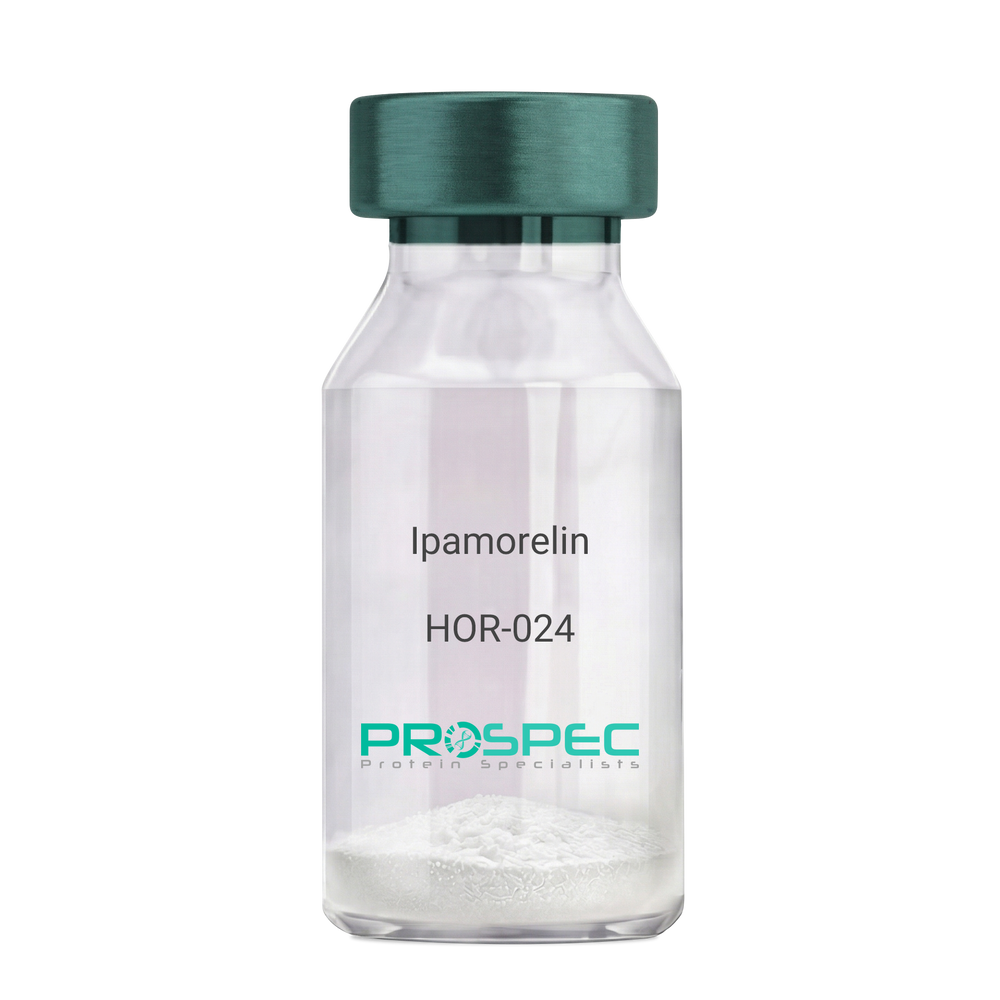
IpamorelinDescription:
Ipamorelin
Ipamorelin
Product # :
HOR-024Price :
Quantity :
Shipping Method :
Shipped at Room temp
More Info
- description
- formulation
- purity
- More Info
Description
Ipamorelin Synthetic is a single, non-glycosylated polypeptide chain containing 4 amino acids, having a molecular mass of 711.85 Dalton and a Molecular formula of C38H49N9O5.
Formulation
The protein was lyophilized with no additives.
Purity
Greater than 97.0% as determined by analysis by RP-HPLC.
More Info
-
Introduction
Ipamorelin is a peptide selective agonist of the ghrelin/growth hormone secretagogue receptor and a growth hormone secretagogue. Ipamorelin is a pentapeptide that was derived from GHRP1. Ipamorelin significantly increases plasma growth hormone levels in both animals and humans. Like pralmorelin and GHRP-6, ipamorelin does not affect prolactin, FSH, LH or TSH levels. However, unlike GHRP2 and GHRP6, but as growth hormone-releasing hormone (GHRH), ipamorelin does not stimulate the secretion of adrenocorticotropic hormone (ACTH) or cortisol, and is highly selective for inducing the secretion only of GH.
-
Synonyms
Ipamorelin
-
Physical Appearance
Sterile Filtered White lyophilized (freeze-dried) powder.
-
Stability
Lyophilized Ipamorelin although stable at room temperature for 3 weeks, should be stored desiccated below -18°C. Upon reconstitution Ipamorelin should be stored at 4°C between 2-7 days and for future use below -18°C. For long term storage it is recommended to add a carrier protein (0.1% HSA or BSA). Please prevent freeze-thaw cycles.
-
Solubility
It is recommended to reconstitute the lyophilized Ipamorelin in sterile 18MΩ-cm H2O not less than 100 µg/ml, which can then be further diluted to other aqueous solutions.
-
Amino Acid Sequence
Aib-His-D-2-Nal-D-Phe-Lys-NH2.
ProSpec's products are furnished for LABORATORY RESEARCH USE ONLY. The product may not be used as drugs, agricultural or pesticidal products, food additives or household chemicals.