Search results
1000 results found for “activating transcription factor”
Name
Description
Product #
Price
Quantity
Shipping Method
- View Data Sheet
Name :
MORF4L2 HumanDescription:
Mortality Factor 4 Like 2 Human Recombinant
Mortality factor 4-like protein 2, MORF-related gene X protein, Protein MSL3-2, Transcription factor-like protein MRGX, MORF4L2, KIAA0026, MRGX, MORFL2.
Product # :
PRO-475Price :
Quantity :
Shipping Method :
Shipped with Ice Packs
More Info
- description
- source
- formulation
- purity
- More Info
- Citations
Description
MORF4L2 produced in E.Coli is a single, non-glycosylated polypeptide chain containing 308 amino acids (1-288 a.a.) and having a molecular mass of 34.4kDa (Molecular weight on SDS-PAGE will appear higher).MORF4L2 is fused to a 20 amino acid His-tag at N-terminus & purified by proprietary chromatographic techniques.
Source
Escherichia Coli.
Formulation
The MORF4L2 solution (0.5 mg/ml) contains 20mM Tris-HCl buffer (pH8.0), 20% glycerol and 1mM DTT.
Purity
Greater than 85.0% as determined by SDS-PAGE.
Citations
More Info
-
Introduction
MORF4L2 belongs to the mortality factor (MORF) family of transcriptional regulator which is involved in cell growth, regulation and senescence. MORF4L2 localizes to the nucleus, and it has a protein kinase C phosphorylation site as well as a tyrosine phosphorylation site. MORF4L2 interacts with the Rb tumor suppressor through its helix-loop-helix and leucine zipper regions. Furthermore, MORF4L2 has histone deacetylase activity and can either repress or promote the activity of the B-Myb promoter depending on the tissue.
-
Synonyms
Mortality factor 4-like protein 2, MORF-related gene X protein, Protein MSL3-2, Transcription factor-like protein MRGX, MORF4L2, KIAA0026, MRGX, MORFL2.
-
Physical Appearance
Sterile Filtered colorless solution.
-
Stability
Store at 4°C if entire vial will be used within 2-4 weeks. Store, frozen at -20°C for longer periods of time. For long term storage it is recommended to add a carrier protein (0.1% HSA or BSA).Avoid multiple freeze-thaw cycles.
-
Amino Acid Sequence
MGSSHHHHHH SSGLVPRGSH MSSRKQGSQP RGQQSAEEEN FKKPTRSNMQ RSKMRGASSG KKTAGPQQKN LEPALPGRWG GRSAENPPSG SVRKTRKNKQ KTPGNGDGGS TSEAPQPPRK KRARADPTVE SEEAFKNRME VKVKIPEELK PWLVEDWDLV TRQKQLFQLP AKKNVDAILE EYANCKKSQG NVDNKEYAVN EVVAGIKEYF NVMLGTQLLY KFERPQYAEI LLAHPDAPMS QVYGAPHLLR LFVRIGAMLA YTPLDEKSLA LLLGYLHDFL KYLAKNSASL FTASDYKVAS AEYHRKAL.
ProSpec's products are furnished for LABORATORY RESEARCH USE ONLY. The product may not be used as drugs, agricultural or pesticidal products, food additives or household chemicals.
- View Data Sheet
Name :
PRDX2 MouseDescription:
Eukaryotic Translation Initiation Factor 4E Mouse Recombinant
PRDX2, Peroxiredoxin-2 (EC:1.11.1.15), TSA, Thioredoxin peroxidase 1, Thioredoxin-dependent peroxide reductase 1, Thiol-specific antioxidant protein, Prdx2, Tdpx1, Tpx.
Product # :
ENZ-1061Price :
Quantity :
Shipping Method :
Shipped with Ice Packs
More Info
- description
- source
- formulation
- purity
- biological activity
- More Info
- Citations
Description
PRDX2 Mouse Recombinant produced in E.Coli is a single, non-glycosylated polypeptide chain containing 222 amino acids (1-198 a.a) and having a molecular mass of 24.3kDa. PRDX2 is fused to a 24 amino acid His-tag at N-terminus & purified by proprietary chromatographic techniques.
Source
Escherichia Coli.
Formulation
PRDX2 protein solution (1mg/ml) containing 20mM Tris-HCl buffer (pH8.0) and 10% Glycerol 1mM DTT.
Purity
Greater than 90.0% as determined by SDS-PAGE.
Biological Activity
Specific activity is > 700 pmol/min/ug, Activity is defined as the amount of hydroperoxide that 1ug of enzyme can reduce at 25C for minute.
Citations
More Info
-
Introduction
PRDX2 is part of the peroxiredoxin family of antioxidant enzymes, which reduce hydrogen peroxide and alkyl hydroperoxides. PRDX2 takes part as an antioxidant protective role in cells, and contributes to the antiviral activity of CD8(+) T-cells. PRDX2 has proliferative effect in cancer development or progression.
If PRDX2 protection is insufficient against peroxidases, the DNA damage results in neurological disease such as Alzheimer's or DNA damage leading to cancer. -
Synonyms
PRDX2, Peroxiredoxin-2 (EC:1.11.1.15), TSA, Thioredoxin peroxidase 1, Thioredoxin-dependent peroxide reductase 1, Thiol-specific antioxidant protein, Prdx2, Tdpx1, Tpx.
-
Physical Appearance
Sterile Filtered clear solution.
-
Stability
Store at 4°C if entire vial will be used within 2-4 weeks. Store, frozen at -20°C for longer periods of time. For long term storage it is recommended to add a carrier protein (0.1% HSA or BSA).Avoid multiple freeze-thaw cycles.
-
Amino Acid Sequence
MGSSHHHHHH SSGLVPRGSH MGSHMASGNA QIGKSAPDFT ATAVVDGAFK EIKLSDYRGK YVVLFFYPLD FTFVCPTEII AFSDHAEDFR KLGCEVLGVS VDSQFTHLAW INTPRKEGGL GPLNIPLLAD VTKSLSQNYG VLKNDEGIAY RGLFIIDAKG VLRQITVNDL PVGRSVDEAL RLVQAFQYTD EHGEVCPAGW KPGSDTIKPN VDDSKEYFSK HN
ProSpec's products are furnished for LABORATORY RESEARCH USE ONLY. The product may not be used as drugs, agricultural or pesticidal products, food additives or household chemicals.
- View Data Sheet
Name :
AGO2 (1-200) HumanDescription:
Argonaute 2 (1-200 a.a.) Human Recombinant
Protein argonaute-2, Argonaute2, hAgo2, Argonaute RISC catalytic component 2, Eukaryotic translation initiation factor 2C 2, eIF-2C 2, eIF2C 2, PAZ Piwi domain protein, PPD, AGO2, EIF2C2, Protein slicer.
Product # :
PRO-2578Price :
Quantity :
Shipping Method :
Shipped at Room temp
More Info
- description
- source
- formulation
- purity
- More Info
- Citations
Description
AGO2 (1-200) Human Recombinant is a single, non-glycosylated, polypeptide chain containing 210 amino acids (1-200 a.a) and having a molecular mass of 23.7kDa (calculated). AGO2 (1-200) is fused to a 10 a.a His tag at N-terminal.
Source
Escherichia Coli.
Formulation
AGO2 (1-200) filtered (0.4 µm) and lyophilized from 0.5mg/ml in 50mM acetate buffer, pH 4.
Purity
Greater than 90.0% as determined by SDS-PAGE.
Citations
More Info
-
Introduction
The Argonaute protein is part of the RISC or RNA-induced silencing complex, as so, the protein has a key part in the slicing processes of RNA. The RNA interference (RNAi) is being held by RISC. Small non-coding RNA fragments bond to the Argonaute proteins, through base pairing, eventually leads to the cleavage of messenger RNA or translation suppression.
-
Synonyms
Protein argonaute-2, Argonaute2, hAgo2, Argonaute RISC catalytic component 2, Eukaryotic translation initiation factor 2C 2, eIF-2C 2, eIF2C 2, PAZ Piwi domain protein, PPD, AGO2, EIF2C2, Protein slicer.
-
Physical Appearance
Filtered White lyophilized (freeze-dried) powder.
-
Stability
Store lyophilized protein at -20°C. Aliquot the product after reconstitution to avoid repeated freezing/thawing cycles. Reconstituted protein can be stored at 4°C for a limited period of time; it does not show any change after two weeks at 4°C.
-
Solubility
It is recommended to add 0.1M acetate buffer, pH 4 to prepare a working stock solution of approximately 0.5mg/ml and let the lyophilized pellet dissolve completely. AGO2 (1-200) is not sterile! Please filter the product by an appropriate sterile filter before using it in the cell culture.
-
Amino Acid Sequence
MKHHHHHHAS MYSGAGPALA PPAPPPPIQG YAFKPPPRPD FGTSGRTIKL QANFFEMDIP KIDIYHYELD IKPEKCPRRV NREIVEHMVQ HFKTQIFGDR KPVFDGRKNL YTAMPLPIGR DKVELEVTLP GEGKDRIFKV SIKWVSCVSL QALHDALSGR LPSVPFETIQ ALDVVMRHLP SMRYTPVGRS FFTASEGCSN PLGGGREVW.
ProSpec's products are furnished for LABORATORY RESEARCH USE ONLY. The product may not be used as drugs, agricultural or pesticidal products, food additives or household chemicals.
- View Data Sheet
Name :
CDNF MouseDescription:
Cerebral Dopamine Neurotrophic Factor Mouse Recombinant
Cerebral dopamine neurotrophic factor, ARMET-like protein 1, Conserved dopamine neurotrophic factor, Cdnf, Armetl1, 9330140G23.
Product # :
CYT-729Price :
Quantity :
Shipping Method :
Shipped at Room temp
More Info
- description
- source
- formulation
- purity
- biological activity
- More Info
- Citations
Description
CDNF Mouse Recombinant produced in E.coli is a single, non-glycosylated polypeptide chain containing 163 amino acids and having a molecular mass of 18.5kDa.The CDNF is purified by proprietary chromatographic techniques.
Source
Escherichia Coli.
Formulation
CDNF protein was lyophilized from a 0.2µm filtered concentrated solution in 1xPBS, pH 7.4.
Purity
Greater than 97.0% as determined by:
(a) Analysis by RP-HPLC.
(b) Analysis by SDS-PAGE.Biological Activity
CDNF Mouse is able to enhance neurite outgrowth of E16-E18 rat embryonic cortical neurons when immobilized at 5-30 µg/mL on a nitrocellulose-coated microplate.Citations
More Info
-
Introduction
CDNF is a member of the ARMET family and acts as a trophic factor for dopamine neurons. CDNF inhibits the 6-hydroxydopamine (6-OHDA)-induced degeneration of dopaminergic neurons. When CDNF controlled after 6-OHDA-lesioning, it reestablishes the dopaminergic function and inhibits the degeneration of dopaminergic neurons in substantia nigra. CDNF is universally expressed in neuronal and non-neuronal tissues. The highest levels in the brain are found in the optic nerve and corpus callosum.
-
Synonyms
Cerebral dopamine neurotrophic factor, ARMET-like protein 1, Conserved dopamine neurotrophic factor, Cdnf, Armetl1, 9330140G23.
-
Physical Appearance
Sterile Filtered White lyophilized (freeze-dried) powder.
-
Stability
Lyophilized CDNF although stable at room temperature for 3 weeks, should be stored desiccated below -18°C. Upon reconstitution CDNF should be stored at 4°C between 2-7 days and for future use below -18°C. For long term storage it is recommended to add a carrier protein (0.1% HSA or BSA). Please prevent freeze-thaw cycles.
-
Solubility
It is recommended to reconstitute the lyophilized CDNF in sterile 18M-cm H2O not less than 100µg/ml, which can then be further diluted to other aqueous solutions.
-
Amino Acid Sequence
QGLEAGVGPR ADCEVCKEFL DRFYNSLLSR GIDFSADTIE KELLNFCSDA KGKENRLCYY LGATTDAATK ILGEVTRPMS VHIPAVKICE KLKKMDSQIC ELKYGKKLDL ASVDLWKMRV AELKQILQRW GEECRACAEK SDYVNLIREL APKYVEIYPQ TEL.
-
Background
What is the molecular weight/Mw of CDNF Protein?
CDNF Protein has a total Mw of 18.5kDa.
What is the source or expression system of CDNF Protein?
Escherichia Coli.
What is the Purity of CDNF Protein?
CDNF Protein is >97% pure as determined by SDS-PAGE.
What is the Biological Activity of CDNF Protein?
CDNF Mouse is able to enhance neurite outgrowth of E16-E18 rat embryonic cortical neurons when immobilized at 5-30 µg/mL on a nitrocellulose-coated microplate.
What is the amino acid sequence of CDNF Protein?
QGLEAGVGPR ADCEVCKEFL DRFYNSLLSR GIDFSADTIE KELLNFCSDA KGKENRLCYY LGATTDAATK ILGEVTRPMS VHIPAVKICE KLKKMDSQIC ELKYGKKLDL ASVDLWKMRV AELKQILQRW GEECRACAEK SDYVNLIREL APKYVEIYPQ TEL.
What applications can CDNF Protein be used in?
CDNF Protein can probably be used in western blot, ELISA and Lateral Flow.
What is the endotoxin level for CDNF Protein?
The endotoxin level is minimal, CDNF Protein was purified using conventional chromatography techniques.
ProSpec's products are furnished for LABORATORY RESEARCH USE ONLY. The product may not be used as drugs, agricultural or pesticidal products, food additives or household chemicals.
- View Data Sheet
Name :
TNFR MouseDescription:
Tumor Necrosis Factor Receptor Mouse Recombinant
Tumor necrosis factor receptor superfamily member 1A, Tumor necrosis factor receptor 1, TNF-R1, Tumor necrosis factor receptor type I, TNF-RI, TNFR-I, p55, p60, CD120a, Tnfrsf1a, Tnfr-1, Tnfr1, FPF, TNF-R, TNFAR, TNFRI, p55-R, TNFR60, Tnfr-2, TNF-R-I, TNF-R55, TNFRp55, TNF-alphaR1, TNFalpha-R1.
Product # :
CYT-774Price :
Quantity :
Shipping Method :
Shipped at Room temp
More Info
- description
- source
- formulation
- purity
- biological activity
- More Info
- Citations
Description
TNFR Mouse Recombinant produced in E.coli is a single, non-glycosylated polypeptide chain containing 191 amino acids and having a molecular mass of 21.1kDa.The TNFR is purified by proprietary chromatographic techniques.
Source
Escherichia Coli.
Formulation
TNFR protein was lyophilized from a 0.2µm filtered concentrated solution in PBS, pH 7.4.
Purity
Greater than 97.0% as determined by SDS-PAGE.
Biological Activity
The ED50 as determined by its ability to inhibit the TNF-α mediated cytotoxicity in the L-929 cells is less than 1.0 µg/ml, corresponding to a specific activity of > 1000 IU/mg in the presence of 0.1 ng/mL of rMuTNF-a.Citations
More Info
-
Introduction
TNFR1 belongs to the TNF-receptor superfamily. TNFR1 is a receptor for TNFSF2/TNF-alpha and homotrimeric TNFSF1/lymphotoxin-alpha.
There are 2 types of soluble TNF receptors: sTNFR-I and sTNFR-II, which act to neutralize the biological activities of TNF alpha and TNF beta. The levels of these soluble receptors seem to increase as a result of shedding of the extracellular domains of the membrane bound receptors. TNF-a, TNFR1 and TNFR2 have roles in cellular differentiation. TNFR1 and TNFR2 function in cell type-specific renal injury.
TNFR1 is capable of signaling both cell survival and apoptosis. TNFR1-induced apoptosis requires 2 sequential signaling complexes. TNFR1 is capable of activating NF-kappaB, mediate apoptosis, and function as a regulator of inflammation. Oxidative stress promotes TNFR1 and TNFR2 self-interaction, ligand-independent and enhanced ligand-dependent TNF signaling. TNFR1 contributes to the induction of non-cytocidal TNF effects including anti-viral state and activation of the acid sphingomyelinase. Human TNFR1 has a major region which controls cell surface expression. High levels of soluble TNF receptors are found in the amniotic fluid of pregnant women.
Germline mutations of the extracellular domains of TNFR1 are linked to the autosomal dominant periodic fever syndrome. The impaired receptor clearance is believed to be a mechanism of the disease. Familial hibernian fever (FHF) is caused by defects in TNFRSF1A gene. -
Synonyms
Tumor necrosis factor receptor superfamily member 1A, Tumor necrosis factor receptor 1, TNF-R1, Tumor necrosis factor receptor type I, TNF-RI, TNFR-I, p55, p60, CD120a, Tnfrsf1a, Tnfr-1, Tnfr1, FPF, TNF-R, TNFAR, TNFRI, p55-R, TNFR60, Tnfr-2, TNF-R-I, TNF-R55, TNFRp55, TNF-alphaR1, TNFalpha-R1.
-
Physical Appearance
Sterile Filtered White lyophilized (freeze-dried) powder.
-
Stability
Lyophilized TNFR although stable at room temperature for 3 weeks, should be stored desiccated below -18C. Upon reconstitution TNFR should be stored at 4C between 2-7 days and for future use below -18C. For long term storage it is recommended to add a carrier protein (0.1% HSA or BSA). Please prevent freeze-thaw cycles.
-
Solubility
It is recommended to reconstitute the lyophilized TNFR in sterile 18M-cm H2O not less than 100µg/ml, which can then be further diluted to other aqueous solutions.
-
Amino Acid Sequence
IHPSGVTGLV PSLGDREKRD SLCPQGKYVH SKNNSICCTK CHKGTYLVSD CPSPGRDTVC RECEKGTFTA SQNYLRQCLS CKTCRKEMSQ VEISPCQADK DTVCGCKENQ FQRYLSETHF QCVDCSPCFN GTVTIPCKET QNTVCNCHAG FFLRESECVP CSHCKKNEEC MKLCLPPPLA NVTNPQDSGT A.
ProSpec's products are furnished for LABORATORY RESEARCH USE ONLY. The product may not be used as drugs, agricultural or pesticidal products, food additives or household chemicals.
- View Data Sheet
Name :
MAPK1 Human, ActiveDescription:
Mitogen-Activated Protein Kinase 1 Human Recombinant, Active
Mitogen-activated protein kinase 1, EC 2.7.11.24, Extracellular signal-regulated kinase 2, ERK-2, Mitogen-activated protein kinase 2, MAP kinase 2, MAPK 2, p42-MAPK, ERT1, ERK, p38, p40, p41, ERK2, MAPK2, PRKM1, PRKM2, P42MAPK, p41mapk.
Product # :
PKA-214Price :
Quantity :
Shipping Method :
Shipped with Ice Packs
More Info
- description
- source
- formulation
- purity
- More Info
- Citations
Description
MAPK1 Human Recombinant is a non-glycosylated full length chain containing amino acids Met1-Ser360 and having a calculated molecular mass of 41,762 Dalton. MAPK1 is purified by proprietary chromatographic techniques.
Source
Escherichia Coli.
Formulation
MAPK1 protein solution is supplied in 50mM HEPES pH 7.5, 100mM NaCl, 5mM DTT and 20% glycerol.
Purity
The purity is greater than 95%.
Citations
More Info
-
Introduction
Mitogen-activated protein kinase 1 (MAPK1) is also known as "extracellular signal-regulated kinase 2" (ERK2). Two similar (85% sequence identity) protein kinases were originally called ERK1 and ERK2. They were found during a search for protein kinases that are rapidly phosphorylated after activation of cell surface tyrosine kinasessuch as the epidermal growth factor receptor. Phosphorylation of ERKs leads to the activation of their kinase activity.
The molecular events linking cell surface receptors to activation of ERKs are complex. It was found that RasGTP-binding proteins are involved in the activation of ERKs. Another protein kinase, Raf-1, was shown to phosphorylate a "MAPK kinase", thus qualifying as a "MAPK kinase kinase". The MAPK kinase was named "MAPK/ERK kinase" (MEK).
Receptor-linked tyrosine kinases, Ras, Raf, MEK and MAPK could be fitted into a signaling cascade linking an extracellular signal to MAPK activation.
Transgenic gene knockoutmice lacking MAPK1 have major defects in early development. -
Synonyms
Mitogen-activated protein kinase 1, EC 2.7.11.24, Extracellular signal-regulated kinase 2, ERK-2, Mitogen-activated protein kinase 2, MAP kinase 2, MAPK 2, p42-MAPK, ERT1, ERK, p38, p40, p41, ERK2, MAPK2, PRKM1, PRKM2, P42MAPK, p41mapk.
-
Physical Appearance
Sterile Filtered clear solution.
-
Stability
Store vial at -20°C to -80°C.Avoid multiple freeze-thaw cycles.
-
Amino Acid Sequence
maaaaaagag pemvrgqvfd vgprytnlsy igegaygmvc saydnvnkvr vaikkispfe hqtycqrtlr eikillrfrh eniigindii raptieqmkd vyivqdlmet dlykllktqh lsndhicyfl yqilrglkyi hsanvlhrdl kpsnlllntt cdlkicdfgl arvadpdhdh tgflteyvat rwyrapeiml nskgytksid iwsvgcilae mlsnrpifpg khyldqlnhi lgilgspsqe dlnciinlka rnyllslphk nkvpwnrlfp nadskaldll dkmltfnphk rieveqalah pyleqyydps depiaeapfk fdmelddlpk eklkelifee tarfqpgyrs.
-
Specific Activity
386 pmol/µgxmin ATP-KM: 1.7µM
ProSpec's products are furnished for LABORATORY RESEARCH USE ONLY. The product may not be used as drugs, agricultural or pesticidal products, food additives or household chemicals.
- View Data Sheet
Name :
TNFRSF12A Human, sf9Description:
TNF Ligand Receptor Superfamily Member 12A Human Recombinant, Sf9
Tumor necrosis factor receptor superfamily member 12A, FN14, CD266 antigen, TweakR, tweak-receptor, Fibroblast growth factor-inducible immediate-early response protein 14, FGF-inducible 14, type I transmembrane protein Fn14.
Product # :
CYT-1021Price :
Quantity :
Shipping Method :
Shipped with Ice Packs
More Info
- description
- source
- formulation
- purity
- More Info
- Citations
Description
TNFRSF12A Human Recombinant produced in Sf9 Baculovirus cells is a single, glycosylated polypeptide chain containing 292 amino acids (28-80a.a.) and having a molecular mass of 32.6kDa (Molecular size on SDS-PAGE will appear at approximately 28-40kDa). TNFRSF12A is expressed with a 239 amino acids hIgG- His tag at C-Terminus and purified by proprietary chromatographic techniques.
Source
Sf9, Baculovirus cells.
Formulation
TNFRSF12A protein solution (1mg/ml) contains Phosphate Buffered Saline (pH 7.4), 1mM DTT and 20% glycerol.
Purity
Greater than 90% as determined by SDS-PAGE.
Citations
More Info
-
Introduction
The gene for TNFRSF12A was initially recognized as a fibroblast growth factor inducible immediate early response gene Fn14 in mouse NIH 3T3 fibroblasts. Human TNFRSF12A cDNA encodes a 129 amino acid residue type I transmembrane protein with a 27 aa signal peptide, a 53 aa extracellular domain, a 21 aa transmembrane domain and a 28 aa cytoplasmic domain. Human and mouse TNFRSF12A hold 82% aa sequence identity. TNFRSF12 is the tiniest member of the TNF receptor superfamily and has only one cysteine rich region in its extracellular domain. The TNFRSF12A cytoplasmic domain holds one TRAF binding motif which binds TRAFs 1, 2, and 3. TNFRSF12A binds its ligand TWEAK/TNFSF12A with high affinity to initiate a signal transduction cascade which subject to the cell type, causes different cellular responses such as cell death, cell proliferation, and angiogenesis.
-
Synonyms
Tumor necrosis factor receptor superfamily member 12A, FN14, CD266 antigen, TweakR, tweak-receptor, Fibroblast growth factor-inducible immediate-early response protein 14, FGF-inducible 14, type I transmembrane protein Fn14.
-
Physical Appearance
Sterile Filtered colorless solution.
-
Stability
Store at 4°C if entire vial will be used within 2-4 weeks. Store, frozen at -20°C for longer periods of time. For long term storage it is recommended to add a carrier protein (0.1% HSA or BSA).Avoid multiple freeze-thaw cycles.
-
Amino Acid Sequence
EQAPGTAPCS RGSSWSADLD KCMDCASCRA RPHSDFCLGC AAAPPAPFRL LWPLEPKSCD KTHTCPPCPA PELLGGPSVF LFPPKPKDTL MISRTPEVTC VVVDVSHEDP EVKFNWYVDG VEVHNAKTKP REEQYNSTYR VVSVLTVLHQ DWLNGKEYKC KVSNKALPAP IEKTISKAKG QPREPQVYTL PPSRDELTKN QVSLTCLVKG FYPSDIAVEW ESNGQPENNY KTTPPVLDSD GSFFLYSKLT VDKSRWQQGN VFSCSVMHEA LHNHYTQKSL SLSPGKHHHH HH.
ProSpec's products are furnished for LABORATORY RESEARCH USE ONLY. The product may not be used as drugs, agricultural or pesticidal products, food additives or household chemicals.
- View Data Sheet
Name :
MCSF Mouse, Sf9Description:
Macrophage Colony Stimulating Factor Mouse Recombinant, Sf9
M-Csf, Macrophage colony-stimulating factor 1, CSF-1, MCSF, Csf1, C87615, MCSF, op, Processedmacrophage colony-stimulating factor 1.
Product # :
CYT-1141Price :
Quantity :
Shipping Method :
Shipped with Ice Packs
More Info
- description
- source
- formulation
- purity
- biological activity
- More Info
- Citations
Description
MCSF Mouse produced in Sf9 Baculovirus cells is a single, glycosylated polypeptide chain containing 164 amino acids (33-187 aa) and having a molecular mass of 19.1 kDa.MCSF is fused to a 6 amino acid His tag at C-terminus and purified by proprietary chromatographic techniques.
Source
Sf9, Baculovirus cells.
Formulation
The MCSF solution (1mg/ml) contains 10% Glycerol and Phosphate-Buffered Saline (pH 7.4).
Purity
Greater than 90.0% as determined by SDS-PAGE.
Biological Activity
Determined by cell proliferation assay using M-NFS-60 mouse myelogenous leukemia lymphoblast cells. ED50 range for this effect is ≤ 4ng/ml.
Citations
More Info
-
Introduction
Macrophage Colony Stimulating Factor (M CSF) or colony stimulating factor 1, is a cytokine, that promoted differentiation in hematopoietic stem cells to macrophages. Another role of M CSF is to bind to its receptor (colony stimulating factor 1 receptor) and to take part in placenta growth and development.
-
Synonyms
M-Csf, Macrophage colony-stimulating factor 1, CSF-1, MCSF, Csf1, C87615, MCSF, op, Processedmacrophage colony-stimulating factor 1.
-
Physical Appearance
Sterile Filtered colorless solution.
-
Stability
Store at 4°C if entire vial will be used within 2-4 weeks. Store, frozen at -20°C for longer periods of time. For long term storage it is recommended to add a carrier protein (0.1% HSA or BSA).Avoid multiple freeze-thaw cycles.
-
Amino Acid Sequence
ADPKEVSEHC SHMIGNGHLK VLQQLIDSQM ETSCQIAFEF VDQEQLDDPV CYLKKAFFLV
QDIIDETMRF KDNTPNANAT ERLQELSNNL NSCFTKDYEE QNKACVRTFH ETPLQLLEKI
KNFFNETKNL LEKDWNIFTK NCNNSFAKCS SRDVVTKPHH HHHH
ProSpec's products are furnished for LABORATORY RESEARCH USE ONLY. The product may not be used as drugs, agricultural or pesticidal products, food additives or household chemicals.
- View Data Sheet
Name :
PLGF 2 Human, Sf9Description:
Recombinant Human Placental Growth Factor-2, Sf9
PIGF, PGF, PlGF-2, PLGF-2.
Product # :
CYT-420Price :
Quantity :
Shipping Method :
Shipped at Room temp
More Info
- description
- source
- formulation
- purity
- biological activity
- More Info
- Citations
Description
Placenta Growth Factor-2 Human Recombinant produced in insect cells is a homodimer, glycosylated polypeptide chain containing 2 x 152 amino acids and having a total molecular mass of 44 kDa. The PLGF-2 is purified by proprietary chromatographic techniques.
Source
Insect Cells.
Formulation
Lyophilized from a concentrated (1mg/ml) solution containing BSA.
Purity
Greater than 80.0% as determined by:
(a) Analysis by RP-HPLC.
(b) Analysis by SDS-PAGE.Biological Activity
PlGF-2 human Recombinant can bind to immobilized rh-sFlt-1 (100ng/well) with a linear range at 0.3–10ng/ml.Citations
More Info
-
Introduction
PLGF is a growth factor active in angiogenesis, and endothelial cell growth, stimulating their proliferation and migration. It binds to receptor vegfr-1/flt1.
PLGF-2 binds neuropilin-1 and 2 in a dependent manner. -
Synonyms
PIGF, PGF, PlGF-2, PLGF-2.
-
Physical Appearance
Sterile Filtered White lyophilized (freeze-dried) powder.
-
Stability
Lyophilized Placenta Growth Factor-2 although stable at room temperature for 3 weeks, should be stored desiccated below -18°C. Upon reconstitution PLGF2 should be stored at 4°C between 2-7 days and for future use below -18°C.Please prevent freeze-thaw cycles.
-
Solubility
It is recommended to reconstitute the lyophilized Placenta Growth Factor 2 in sterile 20mM acetic acid not less than 100µg/ml, which can then be further diluted to other aqueous solutions.
ProSpec's products are furnished for LABORATORY RESEARCH USE ONLY. The product may not be used as drugs, agricultural or pesticidal products, food additives or household chemicals.
- View Data Sheet
Name :
ARSA Mouse, ActiveDescription:
Arylsulfatase A Mouse Recombinant, Active
Arylsulfatase A, Arsa, As-2, AS-A, As2, ASA, AW212749, TISP73.
Product # :
ENZ-1088Price :
Quantity :
Shipping Method :
Shipped with Ice Packs
More Info
- description
- source
- formulation
- purity
- More Info
- Citations
Description
ARSA Mouse Recombinant produced in Sf9 is a single, glycosylated polypeptide chain containing 498 amino acids (18-506) and having a molecular mass of 53.2kDa (Molecular size on SDS-PAGE will appear at approximately 50-70kDa).ARSA Mouse is fused to an 9 amino acid His-Tag at C-terminus and purified by proprietary chromatographic techniques.
Source
Sf9, Baculovirus cells.
Formulation
ARSA protein solution (0.5mg/ml) containing Phosphate Buffered Saline (pH 7.4) and 10% glycerol.
Purity
Greater than 95% as determined by SDS-PAGE.
Citations
More Info
-
Introduction
Arylsulfatase A (ARSA) hydrolyzes cerebrosidesulfate to cerebroside and sulfate. ARSA is inhibited by phosphate. The phosphate develops a covalent bond with the active site 3-oxoalanine. ARSA gene defects cause metachromatic leucodystrophy (MLD), a progressive demyelination disease which results in various neurological symptoms and ultimately death.
-
Synonyms
Arylsulfatase A, Arsa, As-2, AS-A, As2, ASA, AW212749, TISP73.
-
Physical Appearance
Sterile Filtered clear solution.
-
Stability
Store at 4°C if entire vial will be used within 2-4 weeks. Store, frozen at -20°C for longer periods of time. For long term storage it is recommended to add a carrier protein (0.1% HSA or BSA).Avoid multiple freeze-thaw cycles.
-
Amino Acid Sequence
ADPSPPNILL IFADDLGYGD LGSYGHPSST TPNLDQLAEG GLRFTDFYVP VSLCTPSRAA LLTGRLPVRSGMYPGVLGPS SQGGLPLEEVTLAEVLAARG YLTGMAGKWH LGVGPEGAFL PPHQGFHRFL GIPYSHDQGP CQNLTCFPPD IPCKGGCDQG LVPIPLLANL TVEAQPPWLPGLEARYVSFS RDLMADAQRQ GRPFFLYYAS HHTHYPQFSG QSFTKRSGRG PFGDSLMELD GAVGALMTTV GDLGLLEETL VIFTADNGPELMRMSNGGCSGLLRCGKGTT FEGGVREPAL VYWPGHITPG VTHELASSLD LLPTLAALTG APLPNVTLDG VDISPLLLGT GKSPRKSVFFYPPYPDEIHG VFAVRNGKYK AHFFTQGSAH SDTTSDPACH AANRLTAHEP PLLYDLSQDP GENYNVLESI EGVSPEALQA LKHIQLLKAQYDAAMTFGPS QIAKGEDPAL QICCQPSCTP HPVCCHCPGS QSHHHHHH.
ProSpec's products are furnished for LABORATORY RESEARCH USE ONLY. The product may not be used as drugs, agricultural or pesticidal products, food additives or household chemicals.
- View Data Sheet
Name :
HIF1A Human (85 a.a.)Description:
Hypoxia-Inducible Factor-1 Alpha (85 a.a.) Human Recombinant
Hypoxia-inducible factor 1 alpha, HIF-1 alpha, HIF1 alpha, ARNT-interacting protein, Member of PAS protein 1, Basic-helix-loop-helix-PAS protein MOP1, HIF1A, MOP1, HIF1, PASD8, HIF-1A.
Product # :
PRO-258Price :
Quantity :
Shipping Method :
Shipped with Ice Packs
More Info
- description
- source
- formulation
- purity
- More Info
- Citations
Description
HIF1A Recombinant Human produced in E.Coli is a single, non-glycosylated polypeptide chain containing 105 amino acids (1-85 a.a.) and having a molecular mass of 11.8 kDa. The HIF1A is fused to 20 amino acid His-Tag at N-terminus and purified by proprietary chromatographic techniques.
Source
Escherichia Coli.
Formulation
HIF1A Human (0.25mg/ml) solution containing 20mM Tris buffer(pH 8.0), 20% glycerol, 1mM DTT, 0.2M NaCl and 1mM EDTA.
Purity
Greater than 80.0% as determined by SDS-PAGE.
Citations
More Info
-
Introduction
HIF1A has a role as a master transcriptional monitor of the adaptive response to hypoxia. Under hypoxic conditions HIF1A activates the transcription of over 40 genes, including, erythropoietin, glucose transporters, glycolytic enzymes, vascular endothelial growth factor, and genes whose protein products increase oxygen release or facilitate metabolic adaptation to hypoxia. HIF1A functions as an essential role in embryonic vascularization, tumor angiogenesis and pathophysiology of ischemic disease.
-
Synonyms
Hypoxia-inducible factor 1 alpha, HIF-1 alpha, HIF1 alpha, ARNT-interacting protein, Member of PAS protein 1, Basic-helix-loop-helix-PAS protein MOP1, HIF1A, MOP1, HIF1, PASD8, HIF-1A.
-
Physical Appearance
Sterile filtered colorless solution.
-
Stability
Store at 4°C if entire vial will be used within 2-4 weeks. Store, frozen at -20°C for longer periods of time. For long term storage it is recommended to add a carrier protein (0.1% HSA or BSA).Avoid multiple freeze-thaw cycles.
-
Amino Acid Sequence
MGSSHHHHHH SSGLVPRGSH MEGAGGANDK KKISSERRKE KSRDAARSRR SKESEVFYEL AHQLPLPHNV SSHLDKASVM RLTISYLRVR KLLDAGDLDI EDDMK.
ProSpec's products are furnished for LABORATORY RESEARCH USE ONLY. The product may not be used as drugs, agricultural or pesticidal products, food additives or household chemicals.
- View Data Sheet
Name :
OPG HumanDescription:
Osteoprotegerin Human Recombinant
TNFRSF11B, OPG, OCIF, Osteoclastogenesis inhibitory factor, Osteoprotegerin, TR1, MGC29565.
Product # :
CYT-177Price :
Quantity :
Shipping Method :
Shipped at Room temp
More Info
- description
- source
- formulation
- purity
- biological activity
- More Info
- Citations
Description
Recombinant Human Osteoprotegerin produced in E.coli cells is a single, non-glycosylated, polypeptide chain containing 174 amino acids and having a molecular mass of 20kDa. The OPG is purified by proprietary chromatographic techniques.
Source
Escherichia Coli.
Formulation
The OPG was lyophilized from a 0.2µm filtered concentrated (0.5mg/ml) solution in PBS, pH 7.4.
Purity
Greater than 95.0% as determined by:
(a) Analysis by RP-HPLC.
(b) Analysis by SDS-PAGE.Biological Activity
The activity is determined by its ability to neutralize the stimulation of U937 cells treated with 10ng/ml of soluble RANKL corresponding to a specific activity of 100,000IU/mg.Citations
More Info
-
Introduction
Osteoprotegerin acts as decoy receptor for rankl and thereby neutralizes its function in osteoclastogenesis. OPG inhibits the activation of osteoclasts and promotes osteoclast apoptosis in vitro. Bone homeostasis seems to depend on the local rankl/opg ratio. Osteoprotegerin may also play a role in preventing arterial calcification. May act as decoy receptor for trail and protect against apoptosis. Trail binding blocks the inhibition of osteoclastogenesis.
-
Synonyms
TNFRSF11B, OPG, OCIF, Osteoclastogenesis inhibitory factor, Osteoprotegerin, TR1, MGC29565.
-
Physical Appearance
Sterile Filtered White lyophilized (freeze-dried) powder.
-
Stability
Lyophilized Osteoprotegerin although stable at room temperature for 3 weeks, should be stored desiccated below -18°C. Upon reconstitution OCIF should be stored at 4°C between 2-7 days and for future use below -18°C. For long term storage it is recommended to add a carrier protein (0.1% HSA or BSA).Please prevent freeze-thaw cycles.
-
Solubility
It is recommended to reconstitute the lyophilized Osteoprotegerin in sterile 18MΩ-cm H2O not less than 100µg/ml, which can then be further diluted to other aqueous solutions.
-
Amino Acid Sequence
METFPPKYLH YDEETSHQLL CDKCPPGTYL KQHCTAKWKT VCAPCPDHYY TDSWHTSDEC LYCSPVCKEL QYVKQECNRT HNRVCECKEG RYLEIEFCLK HRSCPPGFGV VQAGTPERNT VCKRCPDGFF SNETSSKAPC RKHTNCSVFG LLLTQKGNAT HDNICSGNSE STQK.
ProSpec's products are furnished for LABORATORY RESEARCH USE ONLY. The product may not be used as drugs, agricultural or pesticidal products, food additives or household chemicals.
- View Data Sheet
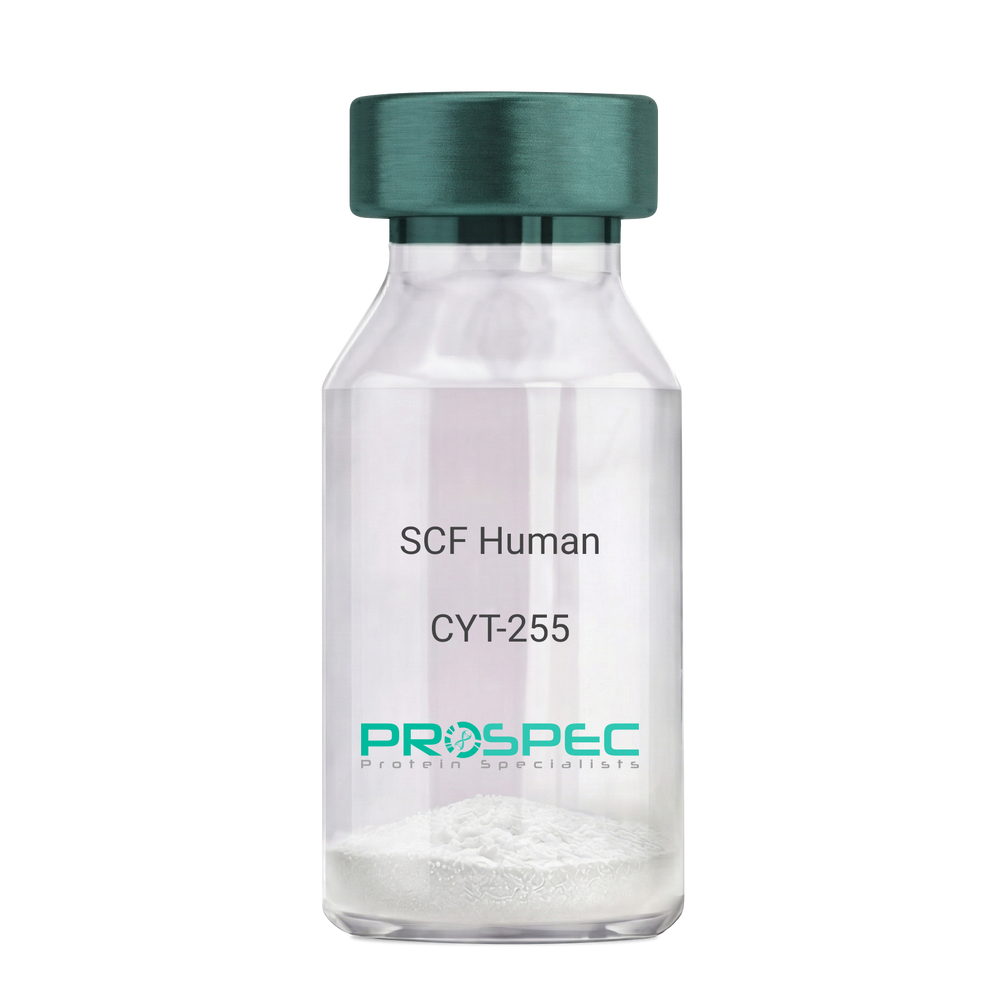
Name :
SCF HumanDescription:
Stem Cell Factor Human Recombinant
Kit ligand Precursor, C-kit ligand, SCF, Mast cell growth factor, MGF, SF, KL-1, Kitl, DKFZp686F2250.
Product # :
CYT-255Price :
Quantity :
Shipping Method :
Shipped at Room temp
More Info
- description
- source
- formulation
- purity
- biological activity
- More Info
- Citations
Description
Stem Cell Factor Human Recombinant produced in E.Coli is a single, non-glycosylated polypeptide chain containing 165 amino acids and having a molecular mass of 18409 Dalton. The SCF is purified by proprietary chromatographic techniques.
Source
Escherichia Coli.
Formulation
Lyophilized from a concentrated (1mg/ml) solution in water containing 0.02% NaHCO3.
Purity
Greater than 98.0% as determined by:
(a) Analysis by SEC-HPLC.
(b) Analysis by SDS-PAGE.Biological Activity
The ED50 as determined by the dose-dependant stimulation of Human TF-1 cells is < 2 ng/ml, corresponding to a Specific Activity of 500,000 IU/mg.Citations
More Info
-
Introduction
Stem cell factor / KIT ligand (SCF) is a cytokine which binds CD117(c-Kit). SCF is also known as "steel factor" or "c-kit ligand". SCF exists in two forms, cell surface bound SCF and soluble (or free) SCF. Soluble SCF is produced by the cleavage of surface bound SCF by metalloproteases. SCF is a growth factor important for the survival, proliferation, and differentiation of hematopoietic stem cells and other hematopoietic progenitor cells. One of its roles is to change the BFU-E (burst-forming unit-erythroid) cells, which are the earliest erythrocyte precursors in the erythrocytic series, into the CFU-E (colony-forming unit-erythroid).
-
Synonyms
Kit ligand Precursor, C-kit ligand, SCF, Mast cell growth factor, MGF, SF, KL-1, Kitl, DKFZp686F2250.
-
Physical Appearance
Sterile Filtered White lyophilized (freeze-dried) powder.
-
Stability
Lyophilized KIT ligand although stable at room temperature for 3 weeks, should be stored desiccated below -18°C. Upon reconstitution SCF should be stored at 4°C between 2-7 days and for future use below -18°C.For long term storage it is recommended to add a carrier protein (0.1% HSA or BSA).Please prevent freeze-thaw cycles.
-
Solubility
It is recommended to reconstitute the lyophilized Stem Cell Factor in sterile 18MΩ-cm H2O not less than 100µg/ml, which can then be further diluted to other aqueous solutions.
-
Amino Acid Sequence
The sequence of the first five N-terminal amino acids was determined and was found to be Met-Glu-Gly-Ile-Cys.
-
Protein content
Protein quantitation was carried out by two independent methods1. UV spectroscopy at 280 nm using the absorbency value of 0.52 as the extinction coefficient for a 0.1% (1mg/ml) solution. This value is calculated by the PC GENE computer analysis program of protein sequences (IntelliGenetics). 2. Analysis by RP-HPLC, using a standard solution of Stem Cell Factor as a Reference Standard.
ProSpec's products are furnished for LABORATORY RESEARCH USE ONLY. The product may not be used as drugs, agricultural or pesticidal products, food additives or household chemicals.
- View Data Sheet
Name :
YWHAQ AntibodyDescription:
Tyr-3/Trp- 5 Monooxygenase Activation Protein Theta, Mouse Anti Human
14-3-3 theta, 14-3-3 tau, 14-3-3 T-cell, HS1, YWHAQ, 1C5, 14-3-3 Tau, Tyr-3/Trp- 5 Monooxygenase Activation Protein Theta.
Product # :
ANT-387Price :
Quantity :
Shipping Method :
Shipped with Ice Packs
More Info
- formulation
- More Info
- Citations
Formulation
1mg/ml containing PBS, pH-7.4, 10% glycerol & 0.02% Sodium Azide.
Citations
More Info
-
Introduction
The 14-3-3 family of proteins plays a key regulatory role in signal transduction, checkpoint control, apoptotic and nutrient-sensing pathways. 14-3-3 proteins are highly conserved and ubiquitously expressed. There are at least seven isoforms, β, γ, ε, σ, ζ, τ and η that have been identified in mammals. The 14-3-3 tau, a subtype of the 14-3-3 family of proteins, was found in T Cells, brain and testes. This 14-3-3 tau is upregulated in patients with amyotrophic lateral sclerosis.
-
Synonyms
14-3-3 theta, 14-3-3 tau, 14-3-3 T-cell, HS1, YWHAQ, 1C5, 14-3-3 Tau, Tyr-3/Trp- 5 Monooxygenase Activation Protein Theta.
-
Immunogen
Anti-human YWHAQ mAb is derived from hybridization of mouse F0 myeloma cells with spleen cells from BALB/c mice immunized with recombinant human YWHAQ amino acids 1-245 purified from E. coli.
-
Ig Subclass
Mouse IgG1 heavy chain and κ light chain.
-
Clone
PAT1A1AT.
-
Applications
YWHAQ antibody has been tested by ELISA and Western blot analysis to assure specificity and reactivity. Since application varies, however, each investigation should be titrated by the reagent to obtain optimal results. Recommended dilution range for Western blot analysis is 1:1000 ~ 2000. Recommended starting dilution is 1:1000.
-
Type
Mouse Anti Human Monoclonal.
-
Storage Procedures
For periods up to 1 month store at 4°C, for longer periods of time, store at -20°C. Prevent freeze thaw cycles.
-
Purification Method
YWHAQ antibody was purified from mouse ascitic fluids by protein-G affinity chromatography.
ProSpec's products are furnished for LABORATORY RESEARCH USE ONLY. The product may not be used as drugs, agricultural or pesticidal products, food additives or household chemicals.
- View Data Sheet
Name :
EIF4E HumanDescription:
Eukaryotic Translation Initiation Factor 4E Human Recombinant
CBP, EIF4E1, EIF4EL1, EIF4F.
Product # :
PRO-530Price :
Quantity :
Shipping Method :
Shipped with Ice Packs
More Info
- description
- source
- formulation
- purity
- More Info
- Citations
Description
EIF4E Human Recombinant produced in E.Coli is a single, non-glycosylated polypeptide chain containing 237 amino acids (1-217 a.a.) and having a molecular weight of 27.2kDa. The EIF4E is fused to a 20 aa His-Tag at N-terminus and purified by proprietary chromatographic techniques.
Source
Escherichia Coli.
Formulation
The EIF4E 0.5mg/ml protein solution contains 20mM Tris-HCl, pH-8, and 10% glycerol.
Purity
Greater than 85.0% as determined by SDS-PAGE.
Citations
More Info
-
Introduction
EIF4E is part of the eukaryotic initiation factor 4 families, controls translation of maternal mRNAs in early embryos before the onset of zygotic transcription. EIF4E identifies and binds to the 7 methyl GTP cap structure of eukaryotic mRNAs, thus modulates the initiation of translation. EIF4E enables ribosome binding by inducing the unwinding of the mRNAs secondary structures.
-
Synonyms
CBP, EIF4E1, EIF4EL1, EIF4F.
-
Physical Appearance
Sterile filtered colorless solution.
-
Stability
Store at 4°C if entire vial will be used within 2-4 weeks. Store, frozen at -20°C for longer periods of time. For long term storage it is recommended to add a carrier protein (0.1% HSA or BSA). Avoid multiple freeze-thaw cycles.
-
Amino Acid Sequence
MGSSHHHHHH SSGLVPRGSH MATVEPETTP TPNPPTTEEE KTESNQEVAN PEHYIKHPLQ NRWALWFFKN DKSKTWQANL RLISKFDTVE
DFWALYNHIQ LSSNLMPGCD YSLFKDGIEP MWEDEKNKRG GRWLITLNKQ QRRSDLDRFW LETLLCLIGE SFDDYSDDVC GAVVNVRAKG
DKIAIWTTEC ENREAVTHIG RVYKERLGLP PKIVIGYQSH ADTATKSGST TKNRFVV.
ProSpec's products are furnished for LABORATORY RESEARCH USE ONLY. The product may not be used as drugs, agricultural or pesticidal products, food additives or household chemicals.
- View Data Sheet
Name :
CNTFR Human, Sf9Description:
Ciliary Neurotrophic Factor Receptor Human Recombinant, Sf9
Ciliary Neurotrophic Factor Receptor, CNTF Receptor Subunit Alpha, CNTFR-Alpha, Ciliary Neurotrophic Factor Receptor Subunit Alpha.
Product # :
CYT-1087Price :
Quantity :
Shipping Method :
Shipped with Ice Packs
More Info
- description
- source
- formulation
- purity
- More Info
- Citations
Description
CTNFR produced in Sf9 Baculovirus cells is a single, glycosylated polypeptide chain containing 329 amino acids (23-342a.a.) and having a molecular mass of 36.9kDa. (Molecular size on SDS-PAGE will appear at approximately 40-57kDa).CTNFR is expressed with a 9 amino acid His tag at C-Terminus and purified by proprietary chromatographic techniques.
Source
Sf9, Baculovirus cells.
Formulation
CTNFR protein solution (1mg/ml) contains 10% glycerol & Phosphate Buffered Saline (pH 7.4).
Purity
Greater than 95.0% as determined by SDS-PAGE.
Citations
More Info
-
Introduction
Ciliary Neurotrophic Factor Receptor (CNTFR) is a member of the type I cytokine receptor family and binds to CNTF. The alpha subunit provides the receptor specificity. Sole nucleotide polymorphisms in CNTFR has been associated with variations in muscle strength, in addition to early onset of eating disorders.
-
Synonyms
Ciliary Neurotrophic Factor Receptor, CNTF Receptor Subunit Alpha, CNTFR-Alpha, Ciliary Neurotrophic Factor Receptor Subunit Alpha.
-
Physical Appearance
Sterile Filtered colorless clear solution.
-
Stability
Store at 4°C if entire vial will be used within 2-4 weeks. Store, frozen at -20°C for longer periods of time. For long term storage it is recommended to add a carrier protein (0.1% HSA or BSA).Avoid multiple freeze-thaw cycles.
-
Amino Acid Sequence
ADPQRHSPQE APHVQYERLG SDVTLPCGTA NWDAAVTWRV NGTDLAPDLL NGSQLVLHGL ELGHSGLYAC FHRDSWHLRH QVLLHVGLPPREPVLSCRSN TYPKGFYCSW HLPTPTYIPN TFNVTVLHGS KIMVCEKDPA LKNRCHIRYM HLFSTIKYKV SISVSNALGH NATAITFDEF TIVKPDPPEN VVARPVPSNP RRLEVTWQTP STWPDPESFP LKFFLRYRPL ILDQWQHVEL SDGTAHTITD AYAGKEYIIQ VAAKDNEIGTWSDWSVAAHA TPWTEEPRHL TTEAQAAETT TSTTSSLAPP PTTKICDPGE LGSHHHHHH.
-
Background
What is the molecular weight/Mw of CNTFR Protein?
CNTFR Protein has a total Mw of 36.9kDa.
What is the source or expression system of CNTFR Protein?
Sf9, Baculovirus cells.
What is the Purity of CNTFR Protein?
CNTFR Protein is >95% pure as determined by SDS-PAGE.
What is the Biological Activity of CNTFR Protein?
The biological functionality of CNTFR Protein will be determined in the future.
What is the amino acid sequence of CNTFR Protein?
ADPQRHSPQE APHVQYERLG SDVTLPCGTA NWDAAVTWRV NGTDLAPDLL NGSQLVLHGL ELGHSGLYAC FHRDSWHLRH QVLLHVGLPPREPVLSCRSN TYPKGFYCSW HLPTPTYIPN TFNVTVLHGS KIMVCEKDPA LKNRCHIRYM HLFSTIKYKV SISVSNALGH NATAITFDEF TIVKPDPPEN VVARPVPSNP RRLEVTWQTP STWPDPESFP LKFFLRYRPL ILDQWQHVEL SDGTAHTITD AYAGKEYIIQ VAAKDNEIGTWSDWSVAAHA TPWTEEPRHL TTEAQAAETT TSTTSSLAPP PTTKICDPGE LGSHHHHHH.
What applications can CNTFR Protein be used in?
CNTFR Protein can probably be used in western blot, ELISA and Lateral Flow.
What is the endotoxin level for CNTFR Protein?
The endotoxin level is minimal, CNTFR Protein was purified using conventional chromatography techniques.
ProSpec's products are furnished for LABORATORY RESEARCH USE ONLY. The product may not be used as drugs, agricultural or pesticidal products, food additives or household chemicals.
- View Data Sheet
Name :
TNFR Human, HisDescription:
Tumor Necrosis Factor Receptor Type Human Recombinant, His Tag
Tumor necrosis factor receptor superfamily member 1A, Tumor necrosis factor receptor 1, Tumor necrosis factor receptor type I, TNF-R1, TNF-RI, TNFR-I, p60, p55, CD120a, TNFRSF1A, TNFAR, TNFR1, FPF, TBP1, TNF-R, p55-R, TNFR55, TNFR60, TNF-R-I, TNF-R55, MGC19588.
Product # :
CYT-673Price :
Quantity :
Shipping Method :
Shipped with Ice Packs
More Info
- description
- source
- formulation
- purity
- More Info
- Citations
Description
TNFR Human Recombinant produced in E.Coli is a single, non-glycosylated, Polypeptide chain containing 161 amino acids fragment (41-201) having a molecular weight of 22.68kDa and fused with a 4.5kDa amino-terminal hexahistidine tag. The TNFR His Tag is purified by proprietary chromatographic techniques.
Source
Escherichia Coli.
Formulation
TNFR His Tag protein is supplied in 1xPBS, 50% glycerol.
Purity
Greater than 95.0% as determined by SDS-PAGE.
Citations
More Info
-
Introduction
TNFR1 belongs to the TNF-receptor superfamily. TNFR1 is a receptor for TNFSF2/TNF-alpha and homotrimeric TNFSF1/lymphotoxin-alpha.
There are 2 types of soluble TNF receptors: sTNFR-I and sTNFR-II, which act to neutralize the biological activities of TNF alpha and TNF beta. The levels of these soluble receptors seem to increase as a result of shedding of the extracellular domains of the membrane bound receptors. TNF-a, TNFR1 and TNFR2 have roles in cellular differentiation. TNFR1 and TNFR2 function in cell type-specific renal injury.
TNFR1 is capable of signaling both cell survival and apoptosis. TNFR1-induced apoptosis requires 2 sequential signaling complexes. TNFR1 is capable of activating NF-kappaB, mediate apoptosis, and function as a regulator of inflammation. Oxidative stress promotes TNFR1 and TNFR2 self-interaction, ligand-independent and enhanced ligand-dependent TNF signaling. TNFR1 contributes to the induction of non-cytocidal TNF effects including anti-viral state and activation of the acid sphingomyelinase. Human TNFR1 has a major region which controls cell surface expression. High levels of soluble TNF receptors are found in the amniotic fluid of pregnant women.
Germline mutations of the extracellular domains of TNFR1 are linked to the autosomal dominant periodic fever syndrome. The impaired receptor clearance is believed to be a mechanism of the disease. Familial hibernian fever (FHF) is caused by defects in TNFRSF1A gene. -
Synonyms
Tumor necrosis factor receptor superfamily member 1A, Tumor necrosis factor receptor 1, Tumor necrosis factor receptor type I, TNF-R1, TNF-RI, TNFR-I, p60, p55, CD120a, TNFRSF1A, TNFAR, TNFR1, FPF, TBP1, TNF-R, p55-R, TNFR55, TNFR60, TNF-R-I, TNF-R55, MGC19588.
-
Physical Appearance
Sterile Filtered clear solution.
-
Stability
Store at 4°C if entire vial will be used within 2-4 weeks. Store, frozen at -20°C for longer periods of time. Please avoid freeze thaw cycles.
-
Amino Acid Sequence
DSVCPQGKYIHPQNNSICCTKCHKGTYLYNDCPGPGQ
DTDCRECESGSFTASENHLRHCLSCSKCRKEMGQVE
ISSCTVDRDTVCGCRKNQYRHYWSENLFQCFNCSLCL
NGTVHLSCQEKQNTVCTCHAGFFLRENECVSCSNCKK
SLECTKLCLPQIEN.
ProSpec's products are furnished for LABORATORY RESEARCH USE ONLY. The product may not be used as drugs, agricultural or pesticidal products, food additives or household chemicals.
- View Data Sheet
Name :
CNTF RatDescription:
Ciliary Neurotrophic Factor Rat Recombinant
HCNTF, CNTF, Ciliary Neurotrophic Factor.
Product # :
CYT-654Price :
Quantity :
Shipping Method :
Shipped at Room temp
More Info
- description
- source
- formulation
- purity
- biological activity
- More Info
- Citations
Description
CNTF Recombinant Rat produced in E.Coli is a single, non-glycosylated polypeptide chain containing 200 amino acids and having a molecular mass of 22834 Dalton. The CNTF is purified by proprietary chromatographic techniques.
Source
Escherichia Coli.
Formulation
Lyophilized from a concentrated (1mg/ml) solution in water containing 0.025% NaHCO3.
Purity
Greater than 99.0% as determined by:
(a) Analysis by Gel Filtration.
(b) Analysis by SDS-PAGE.Biological Activity
Fully biologically active by its ability to phosphorylate STAT3 in several cells lines.Citations
More Info
-
Introduction
CNTF is a polypeptide hormone whose actions appear to be restricted to the nervous system where it promotes neurotransmitter synthesis and neurite outgrowth in certain neuronal populations. The protein is a potent survival factor for neurons and oligodendrocytes and may be relevant in reducing tissue destruction during inflammatory attacks. A mutation in this gene, which results in aberrant splicing, leads to ciliary neurotrophic factor deficiency, but this phenotype is not causally related to neurologic disease. In addition to the predominant monocistronic transcript originating from this locus, the gene is also co-transcribed with the upstream ZFP91 gene. Co-transcription from the two loci results in a transcript that contains a complete coding region for the zinc finger protein but lacks a complete coding region for ciliary neurotrophic factor.
CNTF is a survival factor for various neuronal cell types. Seems to prevent the degeneration of motor axons after axotomy. -
Synonyms
HCNTF, CNTF, Ciliary Neurotrophic Factor.
-
Physical Appearance
Sterile Filtered White lyophilized (freeze-dried) powder.
-
Stability
Lyophilized CNTF although stable at room temperature for 3 weeks, should be stored desiccated below -18°C. Upon reconstitution CNTF should be stored at 4°C between 2-7 days and for future use below -18°C.Please prevent freeze-thaw cycles.
-
Solubility
It is recommended to reconstitute the lyophilized CNTF in sterile water or 0.4% NaHCO3 adjusted to pH 8-9, not less than 100µg/ml, which can then be further diluted to other aqueous solutions, preferably in presence of carrier protein.
-
Amino Acid Sequence
AFAEQTPLTL HRRDLSSRSIWLARKIRSDLTALMESYVKHQGLNKNI
NLDSVDGVPVASTDRWSEMTEAERLQENLQAYRTFQGMLTKLLEDQRV
HFTPTEGDFHQAIHTLMLQVSAFAYQLEELMVLLEQKIPENEADGMPA
TVGDGGLFEKKLWGLKVLQELSQWTVRSIHDLRVISSHQMGISALESH
YGAKDKQM. -
Background
What is the molecular weight/Mw of CNTF Protein?
CNTF Protein has a total Mw of 22kDa.
What is the source or expression system of CNTF Protein?
Escherichia Coli.
What is the Purity of CNTF Protein?
CNTF Protein is >99% pure as determined by SDS-PAGE.
What is the Biological Activity of CNTF Protein?
Fully biologically active by its ability to phosphorylate STAT3 in several cells lines.
What is the amino acid sequence of CNTF Protein?
AFAEQTPLTL HRRDLSSRSIWLARKIRSDLTALMESYVKHQGLNKNI
NLDSVDGVPVASTDRWSEMTEAERLQENLQAYRTFQGMLTKLLEDQRV
HFTPTEGDFHQAIHTLMLQVSAFAYQLEELMVLLEQKIPENEADGMPA
TVGDGGLFEKKLWGLKVLQELSQWTVRSIHDLRVISSHQMGISALESH YGAKDKQM.
What applications can CNTF Protein be used in?
CNTF Protein can probably be used in western blot, ELISA and Lateral Flow.
What is the endotoxin level for CNTF Protein?
The endotoxin level is minimal, CNTF Protein was purified using conventional chromatography techniques.
ProSpec's products are furnished for LABORATORY RESEARCH USE ONLY. The product may not be used as drugs, agricultural or pesticidal products, food additives or household chemicals.
- View Data Sheet
Name :
BDNF Human, CHODescription:
Brain-Derived Neurotrophic Factor Human Recombinant, CHO
Brain-Derived Neurotrophic Factor, BDNF, MGC34632.
Product # :
CYT-1262Price :
Quantity :
Shipping Method :
Shipped at Room temp
More Info
- description
- source
- formulation
- purity
- biological activity
- More Info
- sds-page
- Citations
Description
Brain-derived Neurotrophic Factor Human Recombinant produced in CHO is a homodimer, polypeptide chain containing 2 x 119 amino acids and having a total molecular mass of 27kDa. BDNF Human Recombinant is purified by proprietary chromatographic techniques.
Source
CHO Cells
Formulation
The protein was lyophilized with 5% trehalose and 1x PBS
Purity
Greater than 97.0% as determined by SDS-PAGE and SEC-HPLC analyses.
Biological Activity
BDNF CHO activity is determined by its ability to bind recombinant human TrkB Fc Chimera in a functional ELISA assay.sds-page
Citations
More Info
-
Introduction
BDNF is crucial for the signal survival eukaryotes. BDNF is responsible for the development, repair, adaptation and proper functionality of the nervous system.
BDNF major roles include Neuron survival and development, synaptic flexibility, stress adaptation, Repair and recovery post injury/disease and Pain signaling.
-
Synonyms
Brain-Derived Neurotrophic Factor, BDNF, MGC34632.
-
Physical Appearance
Sterile Filtered White lyophilized (freeze-dried) powder.
-
Stability
Lyophilized BDNF although stable at room temperature for 3 weeks, should be stored desiccated below -18°C. Upon reconstitution BDNF should be stored at 4°C between 2-7 days and for future use below -18°C.For long term storage it is recommended to add a carrier protein (0.1% HSA or BSA).Please prevent freeze-thaw cycles.
-
Solubility
It is recommended to reconstitute the lyophilized BDNF in sterile 18M-cm H2O not less than 100µg/ml, which can then be further diluted to other aqueous solutions.
-
Amino Acid Sequence
HSDPARRGE LSVCDSISEW VTAADKKTAV DMSGGTVTVL EKVPVSKGQL KQYFYETKCN PMGYTKEGCR GIDKRHWNSQ CRTTQSYVRA LTMDSKKRIG WRFIRIDTSC VCTLTIKRGR.
-
Background
Final Thoughts
Although more research is needed on the safety and effectiveness of BDNF human recombinant, trials suggest that this laboratory-produced protein may be effective in managing and treating several neurological and psychiatric disorders. It's important for experts to stay up to date on the latest developments and research to learn more about potential risks and benefits.
What is the molecular weight/Mw of BDNF Protein?
BDNF Protein has a total Mw of 27kDa.
What is the source or expression system of BDNF Protein?
CHO Cells
What is the Purity of BDNF Protein?
BDNF Protein is >97% pure as determined by SDS-PAGE.
What is the Biological Activity of BDNF Protein?
BDNF CHO activity is determined by its ability to bind recombinant human TrkB Fc Chimera in a functional ELISA assay.
What is the amino acid sequence of BDNF Protein?
HSDPARRGE LSVCDSISEW VTAADKKTAV DMSGGTVTVL EKVPVSKGQL KQYFYETKCN PMGYTKEGCR GIDKRHWNSQ CRTTQSYVRA LTMDSKKRIG WRFIRIDTSC VCTLTIKRGR.
What applications can BDNF Protein be used in?
BDNF Protein can probably be used in western blot, ELISA and Lateral Flow.
What is the endotoxin level for BDNF Protein?
The endotoxin level is minimal, BDNF Protein was purified using conventional chromatography techniques.
-
References
Title:Generation of Neurons with Improved Cell Survival and Phenotype Maintenance Using a Degradation-Resistant Nurr1 Mutant†‡
Publication:Article first published online: 11 JUN 2009 DOI: 10.1002/stem.146 Copyright © 2009 AlphaMed Press.
Link:BDNF prospec publication
ProSpec's products are furnished for LABORATORY RESEARCH USE ONLY. The product may not be used as drugs, agricultural or pesticidal products, food additives or household chemicals.
- View Data Sheet
Name :
AITR HumanDescription:
AITR Human Recombinant
TNFRSF18, AITR, CD357, GITR, GITR-D, Tumor necrosis factor receptor superfamily member 18, Activation-inducible TNFR family receptor, Glucocorticoid-induced TNFR-related protein, CD357, UNQ319/PRO364.
Product # :
CYT-925Price :
Quantity :
Shipping Method :
Shipped with Ice Packs
More Info
- description
- source
- formulation
- purity
- More Info
- sds-page
- Citations
Description
AITR Human Recombinant produced in Sf9 Baculovirus is a single, glycosylated polypeptide chain containing 145 amino acids (26-162a.a.) and having a molecular mass of 15.6kDa (Migrates at 18-28kDa on SDS-PAGE under reducing conditions).AITR is fused to an 8 amino acid His-tag at C-terminus & purified by proprietary chromatographic techniques.
Source
Escherichia Coli.
Formulation
AITR protein solution (0.5mg/ml) containing Phosphate Buffered Saline (pH 7.4) and 10% glycerol.
Purity
Greater than 95.0% as determined by SDS-PAGE.
sds-page
Citations
More Info
-
Synonyms
TNFRSF18, AITR, CD357, GITR, GITR-D, Tumor necrosis factor receptor superfamily member 18, Activation-inducible TNFR family receptor, Glucocorticoid-induced TNFR-related protein, CD357, UNQ319/PRO364.
-
Physical Appearance
Sterile filtered colorless solution.
-
Stability
Store at 4°C if entire vial will be used within 2-4 weeks. Store, frozen at -20°C for longer periods of time. For long term storage it is recommended to add a carrier protein (0.1% HSA or BSA).Avoid multiple freeze-thaw cycles.
-
Amino Acid Sequence
QRPTGGPGCG PGRLLLGTGT DARCCRVHTT RCCRDYPGEE CCSEWDCMCV QPEFHCGDPC CTTCRHHPCP PGQGVQSQGK FSFGFQCIDC ASGTFSGGHE GHCKPWTDCT QFGFLTVFPG NKTHNAVCVP GSPPAEPLEH HHHHH.
-
Background
AITR Human Recombinant: Unveiling its Role in Immune Regulation and Therapeutic Potential
1. Abstract
This research paper aims to provide a comprehensive exploration of the AITR Human Recombinant, a crucial receptor involved in immune regulation. By examining its structure, signaling pathways, biological functions, and implications in disease, we unravel the potential therapeutic applications of AITR in immune-related disorders.
2. Introduction
AITR, also known as TNFRSF18, is a receptor protein that plays a vital role in immune regulation. With its involvement in T-cell responses and immune tolerance, AITR has emerged as an intriguing target for therapeutic interventions in various immune-mediated conditions.
3. Structure and Signaling of AITR
AITR is a transmembrane receptor protein belonging to the tumor necrosis factor receptor superfamily. Its extracellular domain interacts with its ligand, glucocorticoid-induced TNFR-related protein (GITR) ligand, leading to downstream signaling events that modulate immune cell function.
4. Biological Functions of AITR
AITR activation influences T-cell responses by regulating T-cell activation, proliferation, and cytokine production. Additionally, AITR signaling can modulate the balance between effector and regulatory T-cell populations, thereby playing a role in immune tolerance and immune homeostasis.
5. AITR in Disease Pathology
AITR dysregulation has been associated with various immune-related disorders, including autoimmune diseases, cancer, and transplant rejection. Understanding the role of AITR in these pathologies may provide insights into potential therapeutic strategies targeting AITR signaling.
6. Therapeutic Potential of AITR
The unique role of AITR in immune regulation makes it an appealing target for therapeutic interventions. Modulation of AITR signaling holds promise for manipulating immune responses in the context of autoimmune diseases, cancer immunotherapy, and transplantation.
7. Conclusion and Future Perspectives
While our understanding of AITR and its functions has advanced significantly, further research is warranted to unravel its complex signaling pathways and therapeutic potential. Continued investigations into AITR biology will enhance our ability to develop targeted therapies for immune-related disorders.
What is the molecular weight/Mw of AITR Protein?
AITR Protein has a total Mw of 15.6kDa.
What is the source or expression system of AITR Protein?
Escherichia Coli.
What is the Purity of AITR Protein?
AITR Protein is >95% pure as determined by SDS-PAGE.
What is the Biological Activity of AITR Protein?
The biological functionality of AITR Protein will be determined in the future.
What is the amino acid sequence of AITR Protein?
QRPTGGPGCG PGRLLLGTGT DARCCRVHTT RCCRDYPGEE CCSEWDCMCV QPEFHCGDPC CTTCRHHPCP PGQGVQSQGK FSFGFQCIDC ASGTFSGGHE GHCKPWTDCT QFGFLTVFPG NKTHNAVCVP GSPPAEPLEH HHHHH.
What applications can AITR Protein be used in?
AITR Protein can probably be used in western blot, ELISA and Lateral Flow.
What is the endotoxin level for AITR Protein?
The endotoxin level is minimal, AITR Protein was purified using conventional chromatography techniques.
ProSpec's products are furnished for LABORATORY RESEARCH USE ONLY. The product may not be used as drugs, agricultural or pesticidal products, food additives or household chemicals.
- View Data Sheet
Name :
ASF1B HumanDescription:
ASF1 Anti-Silencing Function 1 Homolog B Human Recombinant
Histone chaperone ASF1B, Anti-silencing function protein 1 homolog B, hAsf1, hAsf1b, CCG1-interacting factor A-II, CIA-II, hCIA-II, ASF1B.
Product # :
PRO-1163Price :
Quantity :
Shipping Method :
Shipped with Ice Packs
More Info
- description
- source
- formulation
- purity
- More Info
- Citations
Description
ASF1B Human Recombinant produced in E.Coli is a single, non-glycosylated polypeptide chain containing 210 amino acids (1-202 a.a) and having a molecular mass of 23.4kDa.ASF1B is fused to an 8 amino acid His-tag at C-terminus & purified by proprietary chromatographic techniques.
Source
Escherichia Coli.
Formulation
ASF1B protein solution (1mg/ml) containing 20mM Tris-HCl buffer (pH8.0), 10% glycerol, 0.15M NaCl and 1mM DTT.
Purity
Greater than 85% as determined by SDS-PAGE.
Citations
More Info
-
Introduction
ASF1 Anti-Silencing Function 1 Homolog B (ASF1B) belongs to the H3/H4 family of histone chaperone proteins and is similar to the anti-silencing function-1 protein in yeast. ASF1B is the substrate of the tousled-like kinase family of cell cycle-regulated kinases, and may have a crucial role in modulating the nucleosome structure of chromatin by guaranteeing a regular supply of histones at sites of nucleosome assembly. ASF1B cooperates with CAF-1 (chromatin assembly factor 1) to stimulate replication-dependent chromatin assembly. ASF1B is highly expressed in the testis and at lower levels in colon, small intestine and thymus. ASF1B is necessary for spermatogenesis.
-
Synonyms
Histone chaperone ASF1B, Anti-silencing function protein 1 homolog B, hAsf1, hAsf1b, CCG1-interacting factor A-II, CIA-II, hCIA-II, ASF1B.
-
Physical Appearance
Sterile filtered colorless solution.
-
Stability
Store at 4°C if entire vial will be used within 2-4 weeks. Store, frozen at -20°C for longer periods of time. For long term storage it is recommended to add a carrier protein (0.1% HSA or BSA).Avoid multiple freeze-thaw cycles.
-
Amino Acid Sequence
MAKVSVLNVA VLENPSPFHS PFRFEISFEC SEALADDLEW KIIYVGSAES EEFDQILDSV LVGPVPAGRH MFVFQADAPN PSLIPETDAV GVTVVLITCT YHGQEFIRVG YYVNNEYLNP ELRENPPMKP DFSQLQRNIL ASNPRVTRFH INWDNNMDRL EAIETQDPSL GCGLPLNCTP
IKGLGLPGCI PGLLPENSMD CILEHHHHHH.
ProSpec's products are furnished for LABORATORY RESEARCH USE ONLY. The product may not be used as drugs, agricultural or pesticidal products, food additives or household chemicals.
- View Data Sheet
Name :
SPP1 Human, ActiveDescription:
Osteopontin Human Recombinant, BioActive
OPN, SPP-1, BNSP, BSPI, ETA-1, Bone sialoprotein 1, BSP I.Early T lymphocyte activation 1, ETA 1, ETA1, MGC110940, Nephropontin, Secreted phosphoprotein 1, SPP 1, SPP1, urinary stone protein, uropontin.
Product # :
CYT-1166Price :
Quantity :
Shipping Method :
Shipped with Ice Packs
More Info
- description
- source
- formulation
- purity
- biological activity
- More Info
- Citations
Description
SPP1 Human Recombinant produced in E.Coli is a single, non-glycosylated polypeptide chain containing 321 amino acids (17-314 a.a.) and having a molecular mass of 36.2kDa. SPP1 is fused to a 23 amino acid His tag at N-Terminus and purified by proprietary chromatographic techniques.
Source
Escherichia Coli.
Formulation
The SPP1 solution (1mg/ml) contains 20mM Tris-HCl buffer (pH 7.5), 1mM DTT, 10% glycerol and 2mM EDTA.
Purity
Greater than 90.0% as determined by SDS-PAGE.
Biological Activity
Measured by the ability of the immobilized protein to support the adhesion of HEK293 human embryonic kidney cells. When cells are added to OPN coated plates 10ug/ml. This effect is more to 40%.
Citations
More Info
-
Introduction
Osteopontin is a glycoprotein that was primarilyfound in osteoblasts and takes part in bone remodeling, immune functions in fibroblasts, macrophages, & lymphocytes during inflammation and wound healing. SPP1 highlybinds to hydroxyapatite. SPP1 forms an integral part of the mineralized matrix. SPP1 is vital to cell-matrix interaction.
Secreted Phosphoprotein-1 protects against cardiac ischemia-reperfusion injury through late preconditioning. Expression of Ostepontin and CD44 in hepatocellular carcinoma is linked to advanced tumor stage &leads to prognosis information. SPP1 is the most over-expressed gene in intrahepatic cholangiocarcinoma. Secreted Phosphoprotein-1 overexpression is related with interstitial lung diseases. -
Synonyms
OPN, SPP-1, BNSP, BSPI, ETA-1, Bone sialoprotein 1, BSP I.Early T lymphocyte activation 1, ETA 1, ETA1, MGC110940, Nephropontin, Secreted phosphoprotein 1, SPP 1, SPP1, urinary stone protein, uropontin.
-
Physical Appearance
Sterile Filtered clear colorless solution.
-
Stability
Store at 4°C if entire vial will be used within 2-4 weeks. Store, frozen at -20°C for longer periods of time. For long term storage it is recommended to add a carrier protein (0.1% HSA or BSA).Avoid multiple freeze-thaw cycles.
-
Amino Acid Sequence
MGSSHHHHHH SSGLVPRGSH RSMIPVKQAD SGSSEEKQLY NKYPDAVATW LNPDPSQKQN LLAPQNAVSS EETNDFKQET LPSKSNESHD HMDDMDDEDD DDHVDSQDSI DSNDSDDVDD TDDSHQSDES HHSDESDELV TDFPTDLPAT EVFTPVVPTV DTYDGRGDSV VYGLRSKSKK FRRPDIQYPD ATDEDITSHM ESEELNGAYK AIPVAQDLNA PSDWDSRGKD SYETSQLDDQ SAETHSHKQS RLYKRKANDE SNEHSDVIDS QELSKVSREF HSHEFHSHED MLVVDPKSKE EDKHLKFRIS HELDSASSEV N.
ProSpec's products are furnished for LABORATORY RESEARCH USE ONLY. The product may not be used as drugs, agricultural or pesticidal products, food additives or household chemicals.
- View Data Sheet
Name :
TIFA HumanDescription:
TRAF-Interacting Protein with Forkhead-Associated Domain Human Recombinant
TRAF-interacting protein with FHA domain-containing protein A, Putative MAPK-activating protein PM14, Putative NF-kappa-B-activating protein 20, TRAF2-binding protein, TIFA, T2BP, T6BP, TIFAA.
Product # :
PRO-1041Price :
Quantity :
Shipping Method :
Shipped with Ice Packs
More Info
- description
- source
- formulation
- purity
- More Info
- Citations
Description
TIFA Human Recombinant produced in E.Coli is a single, non-glycosylated polypeptide chain containing 208 amino acids (1-184 a.a.) and having a molecular mass of 24kDa.TIFA is fused to a 24 amino acid His-tag at N-terminus & purified by proprietary chromatographic techniques.
Source
Escherichia Coli.
Formulation
TIFA protein solution (0.5mg/ml) containing 20mM Tris-HCl buffer (pH8.0), 20% glycerol and 1mM DTT.
Purity
Greater than 90.0% as determined by SDS-PAGE.
Citations
More Info
-
Introduction
TRAF-interacting protein with FHA domain-containing protein A (TIFA) is an adapter protein that mediates the IRAK1 and TRAF6 interaction following IL-1 stimulation, triggering the downstream activation of NF-kappa-B and AP-1 pathways. The TIFA protein stimulates the oligomerization and polyubiquitination of TRAF6, leading to the activation of TAK1 and IKK through a proteasome-independent mechanism.
-
Synonyms
TRAF-interacting protein with FHA domain-containing protein A, Putative MAPK-activating protein PM14, Putative NF-kappa-B-activating protein 20, TRAF2-binding protein, TIFA, T2BP, T6BP, TIFAA.
-
Physical Appearance
Sterile Filtered clear solution.
-
Stability
Store at 4°C if entire vial will be used within 2-4 weeks. Store, frozen at -20°C for longer periods of time. For long term storage it is recommended to add a carrier protein (0.1% HSA or BSA).Avoid multiple freeze-thaw cycles.
-
Amino Acid Sequence
MGSSHHHHHH SSGLVPRGSH MGSHMTSFED ADTEETVTCL QMTVYHPGQL QCGIFQSISF NREKLPSSEV VKFGRNSNIC HYTFQDKQVS RVQFSLQLFK KFNSSVLSFE IKNMSKKTNL IVDSRELGYL NKMDLPYRCM VRFGEYQFLM EKEDGESLEF FETQFILSPR SLLQENNWPP HRPIPEYGTY SLCSSQSSSP TEMDENES.
ProSpec's products are furnished for LABORATORY RESEARCH USE ONLY. The product may not be used as drugs, agricultural or pesticidal products, food additives or household chemicals.
- View Data Sheet
Name :
EGFR Human Sf9, ActiveDescription:
Epidermal Growth Factor Receptor Human Recombinant Sf9, Active
Epidermal growth factor receptor, EC 2.7.10.1, Receptor tyrosine-protein kinase ErbB-1, ERBB, mENA, ERBB1, EGFR.
Product # :
PKA-335Price :
Quantity :
Shipping Method :
Shipped with Ice Packs
More Info
- description
- source
- formulation
- biological activity
- More Info
- Citations
Description
EGFR Human Recombinant encoding a.a. 672-1210 expressed in Baculovirus infected Sf9 cells, fused with a GST-tag at N-terminus with thrombin cleavage sites, having a molecular weight of 89,171 Dalton.EGFR is purified by proprietary chromatographic techniques.
Source
Baculovirus infected Sf9 cells.
Formulation
EGFR in 50mM HEPES pH 7.5, 100mM NaCl, 5mM DTT, 15mM reduced glutathione and 20% glycerol.
Biological Activity
Determination of Km value by Filter binding assay MAFC membrane.
Citations
More Info
-
Introduction
The epidermal growth factor receptor (EGF R) subfamily of receptor tyrosine kinases comprises four members: EGF R (also known as HER1, ErbB1 or ErbB), ErbB2 (Neu, HER-2), ErbB3 (HER-3), and ErbB4 (HER-4). All family members are type I transmembrane glycoprotein that has an extracellular domain which contains two cysteine-rich domains separated by a spacer region that is involved in ligand-binding, and a cytoplasmic domain which has a membrane-proximal tyrosine kinase domain and a C-terminal tail with multiple tyrosine autophosphorylation sites. The human EGF R gene encodes a 1210 amino acid (aa) residue precursor with a 24 aa putative signal peptide, a 621 aa extracellular domain, a 23 aa transmembrane domain, and a 542 aa cytoplasmic domain. EGF R has been shown to bind a subset of the EGF family ligands, including EGF, amphiregulin, TGF-a , betacellulin, epiregulin, heparin-binding EGF and neuregulin-2 in the absence of a co-receptor. Ligand binding induces EGF R homodimerization as well as heterdimerization with ErbB2, resulting in kinase activation, tyrosine phosphorylation and cell signaling. EGF R can also be recruited to form heterodimers with the ligand-activated ErbB3 or ErbB4. EGF R signaling has been shown to regulate multiple biological functions including cell proliferation, differentiation, motility and apoptosis. In addition, EGF R signaling has also been shown to play a role in carcinogenesis.
-
Synonyms
Epidermal growth factor receptor, EC 2.7.10.1, Receptor tyrosine-protein kinase ErbB-1, ERBB, mENA, ERBB1, EGFR.
-
Physical Appearance
Sterile filtered liquid.
-
Stability
Store vial at -20°C to -80°C. When stored at the recommended temperature, this protein is stable for 12 months. Please avoid freeze-thaw cycles.
-
Specific Activity
30 pmol/µgxmin.
ProSpec's products are furnished for LABORATORY RESEARCH USE ONLY. The product may not be used as drugs, agricultural or pesticidal products, food additives or household chemicals.