Search results
652 results found for “superoxide dismutase”
Name
Description
Product #
Price
Quantity
Shipping Method
- View Data Sheet
Name :
GAPDH Mouse, ActiveDescription:
GAPDH Mouse Recombinant, Active
Glyceraldehyde-3-phosphate dehydrogenase, GAPDH, Peptidyl-cysteine S-nitrosylase GAPDH, Gapdh, Gapd, Glyceraldehyde-3-phosphate dehydrogenase isoform 2, G3PD, GAPD, HEL-S-162eP.
Product # :
ENZ-986Price :
Quantity :
Shipping Method :
Shipped with Ice Packs
More Info
- description
- source
- formulation
- purity
- biological activity
- More Info
Description
GAPDH Mouse Recombinant produced in E.Coli is a single, non-glycosylated polypeptide chain containing 356 amino acids (1-333a.a.) and having a molecular mass of 38.2kDa.GAPDH is fused to a 23 amino acid His-tag at N-terminus & purified by proprietary chromatographic techniques.
Source
E.coli.
Formulation
GAPDH protein solution (0.25mg/ml) containing Phosphate buffered saline (pH7.4), 20% glycerol and 1mM DTT.
Purity
Greater than 95% as determined by SDS-PAGE.
Biological Activity
Specific activity is > 40 units/mg, and is defined as the amount of enzyme that convert 1.0 umole of glyceraldehyde-3-phosphate to 1,3-Bisphosphoglycerate per minute at pH 8.5 at 37C.More Info
-
Introduction
GAPDH is a catalytic enzyme normally known to play a role in glycolysis. GAPDH exists as a tetramer composed of 36-kDa subunits and has a range of intracellular functions. GAPDH catalyzes the reversible reduction of 1,3-bisphosphoglycerate to glyceraldehyde 3-phosphophate in the presence of NADPH. Besides functioning as a glycolytic enzyme in cytoplasm, GAPDH has function in intracellular processes such as membrane fusion, microtubule bundling, phosphotransferase activity, nuclear RNA export, DNA replication and DNA repair. GAPDH catalyzes a vital energy-yielding step in carbohydrate metabolism, the reversible oxidative phosphorylation of glyceraldehyde-3-phosphate in the presence of inorganic phosphate and nicotinamide adenine dinucleotide (NAD). The enzyme exists as a tetramer of identical chains.
-
Synonyms
Glyceraldehyde-3-phosphate dehydrogenase, GAPDH, Peptidyl-cysteine S-nitrosylase GAPDH, Gapdh, Gapd, Glyceraldehyde-3-phosphate dehydrogenase isoform 2, G3PD, GAPD, HEL-S-162eP.
-
Physical Appearance
Sterile Filtered colorless solution.
-
Stability
Store at 4°C if entire vial will be used within 2-4 weeks. Store, frozen at -20°C for longer periods of time. For long term storage it is recommended to add a carrier protein (0.1% HSA or BSA).Avoid multiple freeze-thaw cycles.
-
Amino Acid Sequence
MGSSHHHHHH SSGLVPRGSH MGSMVKVGVN GFGRIGRLVT RAAICSGKVE IVAINDPFID LNYMVYMFQY DSTHGKFNGT VKAENGKLVI NGKPITIFQE RDPTNIKWGE AGAEYVVEST GVFTTMEKAG AHLKGGAKRV IISAPSADAP MFVMGVNHEK YDNSLKIVSN ASCTTNCLAP LAKVIHDNFG IVEGLMTTVH AITATQKTVD GPSGKLWRDG RGAAQNIIPA STGAAKAVGK VIPELNGKLT GMAFRVPTPN VSVVDLTCRL EKPAKYDDIK KVVKQASEGP LKGILGYTED QVVSCDFNSN SHSSTFDAGA GIALNDNFVK LISWYDNEYG YSNRVVDLMA YMASKE.
ProSpec's products are furnished for LABORATORY RESEARCH USE ONLY. The product may not be used as drugs, agricultural or pesticidal products, food additives or household chemicals.
- View Data Sheet
Name :
IDH1Description:
Isocitrate Dehydrogenase-1 Yeast Recombinant
Isocitrate dehydrogenase [NADP] cytoplasmic, EC 1.1.1.42, Cytosolic NADP-isocitrate dehydrogenase, Oxalosuccinate decarboxylase, IDH, NADP(+)-specific ICDH, IDP, PICD.
Product # :
ENZ-289Price :
Quantity :
Shipping Method :
Shipped with Ice Packs
More Info
- description
- source
- formulation
- purity
- biological activity
- More Info
Description
Recombinant Saccharomyces Cerevisiae ICDH (NADP) derived from yeast host cells by using over-expression system, is full length same as designated ICD1 from Saccharomyces Cerevisiae. The N-terminal amino acid Phenylalanine residue next to Met is substituted with Alanine for overexpression. The ICDH is purified by proprietary chromatographic techniques.
Source
Yeast cells.
Formulation
One ml of solution contains 0.075 mol/l KPO4, 50% Glycerol, pH 7.1.
Purity
Greater than 90% as determined by SDS-PAGE.
Biological Activity
The specific activity was found to be 115 U/mg.More Info
-
Introduction
Isocitrate Dehydrogenase is an enzyme of the oxidoreductase class that catalyzes the conversion of isocitrate and NAD+ to yield 2-ketoglutarate, carbon dioxide, and NADH. It occurs in cell mitochondria. The enzyme requires Mg2+, Mn2+; it is activated by ADP, citrate, and Ca2+, and inhibited by NADH, NADPH, and ATP. The reaction is the key rate-limiting step of the citric acid (tricarboxylic) cycle.
-
Synonyms
Isocitrate dehydrogenase [NADP] cytoplasmic, EC 1.1.1.42, Cytosolic NADP-isocitrate dehydrogenase, Oxalosuccinate decarboxylase, IDH, NADP(+)-specific ICDH, IDP, PICD.
-
Physical Appearance
Sterile Filtered clear solution.
-
Stability
Store at 4°C if entire vial will be used within 2-4 weeks. Store, frozen at -20°C for longer periods of time. For long term storage it is recommended to add a carrier protein (0.1% HSA or BSA).Avoid multiple freeze-thaw cycles.
-
Unit Definition
One unit is defined as 1 µmol of NAD+ production per minute under the assay conditions (25°C, pH 7.5).
ProSpec's products are furnished for LABORATORY RESEARCH USE ONLY. The product may not be used as drugs, agricultural or pesticidal products, food additives or household chemicals.
- View Data Sheet
Name :
ALDH2 MouseDescription:
Aldehyde Dehydrogenase 2 Mouse Recombinant
Aldehyde dehydrogenase, mitochondrial, AHD-M1, ALDH class 2, ALDH-E2, ALDHI.
Product # :
ENZ-879Price :
Quantity :
Shipping Method :
Shipped with Ice Packs
More Info
- description
- source
- formulation
- purity
- More Info
Description
ALDH2 Mouse Recombinant produced in E.Coli is a single, non-glycosylated polypeptide chain containing 523 amino acids (20-519 a.a) and having a molecular mass of 56.8kDa. ALDH2 is fused to a 23 amino acid His-tag at N-terminus & purified by proprietary chromatographic techniques.
Source
Escherichia Coli.
Formulation
ALDH2 protein e solution (0.5mg/ml) containing Phosphate buffered salin(pH7.4), 20% glycerol and 1mM DTT.
Purity
Greater than 85% as determined by SDS-PAGE.
More Info
-
Introduction
ALDH2 is part of the aldehyde dehydrogenase family of proteins which catalyze the chemical transformation from acetaldehyde to acetic acid. ALDH2 is the second enzyme of the major oxidative pathway of alcohol metabolism. ALDH2 has 2 major liver isoforms: cytosolic and mitochondrial, which differ by their electrophoretic mobilities, kinetic properties, and subcellular localizations. Nearly all Caucasians have 2 major isozymes, whereas roughly 50% of Orientals have only the cytosolic isozyme, omitting the mitochondrial isozyme. The extremely higher rate of acute alcohol intoxication with Orientals compared to Caucasians is due to the fact of the absence of mitochondrial isozyme. ALDH2 has a low Km for acetaldehydes, and is localized in mitochondrial matrix.
-
Synonyms
Aldehyde dehydrogenase, mitochondrial, AHD-M1, ALDH class 2, ALDH-E2, ALDHI.
-
Physical Appearance
Sterile Filtered clear solution.
-
Stability
Store at 4°C if entire vial will be used within 2-4 weeks. Store, frozen at -20°C for longer periods of time. For long term storage it is recommended to add a carrier protein (0.1% HSA or BSA).Avoid multiple freeze-thaw cycles.
-
Amino Acid Sequence
MGSSHHHHHH SSGLVPRGSH MGSSAAATSA VPAPNHQPEV FCNQIFINNE WHDAVSRKTF PTVNPSTGEV ICQVAEGNKE DVDKAVKAAR AAFQLGSPWR RMDASDRGRL LYRLADLIER DRTYLAALET LDNGKPYVIS YLVDLDMVLK CLRYYAGWAD KYHGKTIPID GDFFSYTRHE PVGVCGQIIP WNFPLLMQAW KLGPALATGN VVVMKVAEQT PLTALYVANL IKEAGFPPGV VNIVPGFGPT AGAAIASHEG VDKVAFTGST EVGHLIQVAA GSSNLKRVTL ELGGKSPNII MSDADMDWAV EQAHFALFFN QGQCCCAGSR TFVQENVYDE FVERSVARAK SRVVGNPFDS RTEQGPQVDE TQFKKILGYI KSGQQEGAKL LCGGGAAADR GYFIQPTVFG DVKDGMTIAK EEIFGPVMQI LKFKTIEEVV GRANDSKYGL AAAVFTKDLD KANYLSQALQ AGTVWINCYD VFGAQSPFGG YKMSGSGREL GEYGLQAYTE VKTVTVKVPQ KNS.
ProSpec's products are furnished for LABORATORY RESEARCH USE ONLY. The product may not be used as drugs, agricultural or pesticidal products, food additives or household chemicals.
- View Data Sheet
Name :
HSD17B8 HumanDescription:
Hydroxysteroid (17-beta) Dehydrogenase 8 Human Recombinant
E2 17-beta-dehydrogenase 8, 17-beta-hydroxysteroid dehydrogenase 8, 17-beta-HSD 8, 3-oxoacyl-[acyl-carrier-protein] reductase, Protein Ke6, Ke-6, Really interesting new gene 2 protein, Testosterone 17-beta-dehydrogenase 8, HSD17B8, FABGL, HKE6, RING2, KE6, FABG, H2-KE6, SDR30C1, D6S2245E, dJ1033B10.9.
Product # :
ENZ-108Price :
Quantity :
Shipping Method :
Shipped with Ice Packs
More Info
- description
- source
- formulation
- purity
- More Info
Description
HSD17B8 Human Recombinant produced in E.Coli is a single, non-glycosylated polypeptide chain containing 281 amino acids (1-261 a.a.) and having a molecular mass of 29.1kDa.HSD17B8 is fused to a 20 amino acid His-tag at N-terminus & purified by proprietary chromatographic techniques.
Source
Escherichia Coli.
Formulation
HSD17B8 solution (0.5mg/ml) containing 20mM Tris-HCl buffer (pH8.0), 40% glycerol and 150mM NaCl.
Purity
Greater than 95.0% as determined by SDS-PAGE.
More Info
-
Introduction
E2 17-beta-dehydrogenase 8 (HSD17B8) is a member of the short-chain dehydrogenases/reductases (SDR) family. In mice, the HSD17B8 protein is a 17-beta-hydroxysteroid dehydrogenase which can regulate the concentration of biologically active estrogens and androgens. HSD17B8 is preferentially an oxidative enzyme and inactivates E2, testosterone, and DHT. However, the HSD17B8 enzyme has some reductive activity and can synthesize E2 from E1. HSD17B8 may have a role in biosynthesis of fatty acids in mitochondria.
-
Synonyms
E2 17-beta-dehydrogenase 8, 17-beta-hydroxysteroid dehydrogenase 8, 17-beta-HSD 8, 3-oxoacyl-[acyl-carrier-protein] reductase, Protein Ke6, Ke-6, Really interesting new gene 2 protein, Testosterone 17-beta-dehydrogenase 8, HSD17B8, FABGL, HKE6, RING2, KE6, FABG, H2-KE6, SDR30C1, D6S2245E, dJ1033B10.9.
-
Physical Appearance
Sterile filtered colorless solution.
-
Stability
Store at 4°C if entire vial will be used within 2-4 weeks. Store, frozen at -20°C for longer periods of time. For long term storage it is recommended to add a carrier protein (0.1% HSA or BSA).Avoid multiple freeze-thaw cycles.
-
Amino Acid Sequence
MGSSHHHHHH SSGLVPRGSH MASQLQNRLR SALALVTGAG SGIGRAVSVR LAGEGATVAA CDLDRAAAQE TVRLLGGPGS KEGPPRGNHA AFQADVSEAR AARCLLEQVQ ACFSRPPSVV VSCAGITQDE FLLHMSEDDW DKVIAVNLKG TFLVTQAAAQ ALVSNGCRGS IINISSIVGK VGNVGQTNYA ASKAGVIGLT QTAARELGRH GIRCNSVLPG FIATPMTQKV PQKVVDKITE MIPMGHLGDP EDVADVVAFL ASEDSGYITG TSVEVTGGLF M.
ProSpec's products are furnished for LABORATORY RESEARCH USE ONLY. The product may not be used as drugs, agricultural or pesticidal products, food additives or household chemicals.
- View Data Sheet
Name :
PCBD1 HumanDescription:
Pterin-4-Alpha-Carbinolamine Dehydratase Human Recombinant
DCOH, PCBD, PCD, PHS.
Product # :
ENZ-552Price :
Quantity :
Shipping Method :
Shipped with Ice Packs
More Info
- description
- source
- formulation
- purity
- More Info
Description
PCBD1 produced in E.Coli is a single, non-glycosylated polypeptide chain containing 124 amino acids (1-104 a.a.) and having a molecular mass of 14.1kDa.PCBD1 is fused to a 20 amino acid His-tag at N-terminus & purified by proprietary chromatographic techniques.
Source
Escherichia Coli.
Formulation
The PCBD1 protein solution (1mg/ml) contains 20mM Tris-HCl buffer (pH-8), 1mM DTT, and 10% glycerol.
Purity
Greater than 95.0% as determined by SDS-PAGE.
More Info
-
Introduction
PCBD1 enzyme takes part in phenylalanine hydroxylation. PCBD1 deficiency results in hyperphenylalaninemia. PCBD1 enzyme controls the homodimerization of HNF1. PCBD1 takes part in tetrahydrobiopterin biosynthesis. PCBD1 prevents the formation of 7-pterins and accelerate the formation of quinonoid-BH2. PCBD1 is a coactivator for HNF1A-dependent transcription.
-
Synonyms
DCOH, PCBD, PCD, PHS.
-
Physical Appearance
Sterile filtered colorless solution.
-
Stability
Store at 4°C if entire vial will be used within 2-4 weeks. Store, frozen at -20°C for longer periods of time. For long term storage it is recommended to add a carrier protein (0.1% HSA or BSA).Avoid multiple freeze-thaw cycles.
-
Amino Acid Sequence
MGSSHHHHHH SSGLVPRGSH MAGKAHRLSA EERDQLLPNL RAVGWNELEG RDAIFKQFHF KDFNRAFGFM TRVALQAEKL DHHPEWFNVY
NKVHITLSTH ECAGLSERDI NLASFIEQVA VSMT.
ProSpec's products are furnished for LABORATORY RESEARCH USE ONLY. The product may not be used as drugs, agricultural or pesticidal products, food additives or household chemicals.
- View Data Sheet
Name :
TSTA3 HumanDescription:
Tissue Specific Transplantation Antigen P35B Human Recombinant
FX, P35B, SDR4E1, GDP-L-fucose synthase, Protein FX .
Product # :
ENZ-259Price :
Quantity :
Shipping Method :
Shipped with Ice Packs
More Info
- description
- source
- formulation
- purity
- More Info
Description
TSTA3 Recombinant Human produced in E.Coli is a single, non-glycosylated polypeptide chain containing 341 amino acids (1-321 a.a.) and having a molecular mass of 38 kDa. The TSTA3 is fused to 20 amino acid His-Tag at N-terminus and purified by proprietary chromatographic techniques.
Source
Escherichia Coli.
Formulation
0.5mg/ml solution containing 20mM Tris pH-8, 2mM DTT, 50mM NaCl & 10% glycerol.
Purity
Greater than 90.0% as determined by SDS-PAGE.
More Info
-
Introduction
TSTA3 is a NADP(H)-binding protein. TSTA3 catalyzes the two-step epimerase and the reductase reactions in GDP-D-mannose metabolism, converting GDP-4-keto-6-D-deoxymannose to GDP-L-fucose. GDP-L-fucose is the substrate of numerous fucosyltransferases that take part in the expression of several glycoconjugates, including blood group ABH antigens and developmental adhesion antigens.
Mutations in TSTA3 result in leukocyte adhesion deficiency, type II. -
Synonyms
FX, P35B, SDR4E1, GDP-L-fucose synthase, Protein FX .
-
Physical Appearance
Sterile filtered colorless solution.
-
Stability
Store at 4°C if entire vial will be used within 2-4 weeks. Store, frozen at -20°C for longer periods of time. For long term storage it is recommended to add a carrier protein (0.1% HSA or BSA). Avoid multiple freeze-thaw cycles.
-
Amino Acid Sequence
MGSSHHHHHH SSGLVPRGSH MGEPQGSMRI LVTGGSGLVG KAIQKVVADG AGLPGEDWVF VSSKDADLTD TAQTRALFEK VQPTHVIHLA AMVGGLFRNI KYNLDFWRKN VHMNDNVLHS AFEVGARKVV SCLSTCIFPD KTTYPIDETM IHNGPPHNSN FGYSYAKRMI DVQNRAYFQQ YGCTFTAVIP TNVFGPHDNF NIEDGHVLPG LIHKVHLAKS SGSALTVWGT GNPRRQFIYS LDLAQLFIWV LREYNEVEPI ILSVGEEDEV SIKEAAEAVV EAMDFHGEVT FDTTKSDGQF KKTASNSKLR TYLPDFRFTP FKQAVKETCA WFTDNYEQAR K.
ProSpec's products are furnished for LABORATORY RESEARCH USE ONLY. The product may not be used as drugs, agricultural or pesticidal products, food additives or household chemicals.
- View Data Sheet
Name :
ACADL HumanDescription:
Acyl-CoA Dehydrogenase, Long Chain, Human Recombinant
Acyl-CoA dehydrogenase long chain, Acyl-Coenzyme A dehydrogenase long chain, LCAD, ong-chain specific acyl-CoA dehydrogenase mitochondrial, ACAD4, EC 1.3.99.13.
Product # :
ENZ-190Price :
Quantity :
Shipping Method :
Shipped with Ice Packs
More Info
- description
- source
- formulation
- purity
- More Info
Description
ACADL Human Recombinant produced in E.coli is a single, non-glycosylated polypeptide chain containing 421 amino acids (31-430) and having a molecular mass of 46.7 kDa.ACADL is fused to a 21 amino acid His-tag at N-terminus & purified by proprietary chromatographic techniques.
Source
E.coli.
Formulation
The ACADL solution (1mg/ml) contains 20mM Tris-HCl buffer (pH 8.0), 0.15M NaCl, 1mM DTT and 10% glycerol.
Purity
Greater than 85% as determined by SDS-PAGE.
More Info
-
Introduction
ACADL is a homotetramer belonging to the acyl-CoA dehydrogenase family. ACADL takes part in the catabolism of fatty acids and amino acids and is a key source of energy for the heart and skeletal muscle. Mutation in the ACADL gene results in non-ketotic hypoglycemia and hypotonia (muscle weakness).
-
Synonyms
Acyl-CoA dehydrogenase long chain, Acyl-Coenzyme A dehydrogenase long chain, LCAD, ong-chain specific acyl-CoA dehydrogenase mitochondrial, ACAD4, EC 1.3.99.13.
-
Physical Appearance
Sterile Filtered colorless solution.
-
Stability
Store at 4°C if entire vial will be used within 2-4 weeks. Store, frozen at -20°C for longer periods of time. For long term storage it is recommended to add a carrier protein (0.1% HSA or BSA).Avoid multiple freeze-thaw cycles.
-
Amino Acid Sequence
MGSSHHHHHH SSGLVPRGSH MGGEERLETP SAKKLTDIGI RRIFSPEHDI FRKSVRKFFQ EEVIPHHSEW EKAGEVSREV WEKAGKQGLL GVNIAEHLGG IGGDLYSAAI VWEEQAYSNC SGPGFSIHSG IVMSYITNHG SEEQIKHFIP QMTAGKCIGA IAMTEPGAGS DLQGIKTNAK KDGSDWILNG SKVFISNGSL SDVVIVVAVT NHEAPSPAHG ISLFLVENGM KGFIKGRKLH KMGLKAQDTA ELFFEDIRLP ASALLGEENK GFYYIMKELP QERLLIADVA ISASEFMFEE TRNYVKQRKA FGKTVAHLQT VQHKLAELKT HICVTRAFVD NCLQLHEAKR LDSATACMAK YWASELQNSV AYDCVQLHGG WGYMWEYPIA KAYVDARVQP IYGGTNEIMK ELIAREIVFD K
ProSpec's products are furnished for LABORATORY RESEARCH USE ONLY. The product may not be used as drugs, agricultural or pesticidal products, food additives or household chemicals.
- View Data Sheet
Name :
ACADVL HumanDescription:
Acyl-CoA Dehydrogenase, Very Long Chain Human Recombinant
ACAD6, LCACD, VLCAD.
Product # :
ENZ-250Price :
Quantity :
Shipping Method :
Shipped with Ice Packs
More Info
- description
- source
- formulation
- purity
- More Info
Description
ACADVL Human Recombinant produced in E.Coli is a non-glycosylated, polypeptide chain containing 636 amino acids (41-655 a.a.) and having a molecular mass of 68.5 kda. ACADVL contains 21 amino acid His-Tag at the N-terminus and is purified by proprietary chromatographic techniques.
Source
Escherichia Coli.
Formulation
The 0.5mg/ml protein solution contains 20mM Tris-HCl buffer pH-8, 1mM DTT, 1mM EDTA, 10% glycerol and 100mM NaCl.
Purity
Greater than 90.0% as determined by SDS-PAGE.
More Info
-
Introduction
ACADVL is an inner mitochondrial membrane enzyme that is part of the family of acyl-CoA dehydrogenases. ACADVL protein participates in lipid metabolism and has catalytic activity toward esters of long chain and very long chain fatty acids such as palmitoyl-CoA and stearoyl-CoA, and is involved in the first step of the fatty acid β-oxidation pathway. ACADVL deficiency in reduces myocardial fatty acid beta-oxidation and is related with cardiomyopathy.
-
Synonyms
ACAD6, LCACD, VLCAD.
-
Physical Appearance
Sterile Filtered clear solution.
-
Stability
Store ACADVL at 4°C if entire vial will be used within 2-4 weeks. Store, frozen at -20°C for longer periods of time. For long term storage it is recommended to add a carrier protein (0.1% HSA or BSA). Avoid multiple freeze-thaw cycles.
-
Amino Acid Sequence
MGSSHHHHHH SSGLVPRGSH MAGGAAQLAL DKSDSHPSDA LTRKKPAKAE SKSFAVGMFK GQLTTDQVFP YPSVLNEEQT QFLKELVEPV SRFFEEVNDP AKNDALEMVE ETTWQGLKEL GAFGLQVPSE LGGVGLCNTQ YARLVEIVGM HDLGVGITLG AHQSIGFKGI LLFGTKAQKE KYLPKLASGE TVAAFCLTEP SSGSDAASIR TSAVPSPCGK YYTLNGSKLW ISNGGLADIF TVFAKTPVTD PATGAVKEKI TAFVVERGFG GITHGPPEKK MGIKASNTAE VFFDGVRVPS ENVLGEVGSG FKVAMHILNN GRFGMAAALA GTMRGIIAKA VDHATNRTQF GEKIHNFGLI QEKLARMVML QYVTESMAYM VSANMDQGAT DFQIEAAISK IFGSEAAWKV TDECIQIMGG MGFMKEPGVE RVLRDLRIFR IFEGTNDILR LFVALQGCMD KGKELSGLGS ALKNPFGNAG LLLGEAGKQL RRRAGLGSGL SLSGLVHPEL SRSGELAVRA LEQFATVVEA KLIKHKKGIV NEQFLLQRLA DGAIDLYAMV VVLSRASRSL SEGHPTAQHE KMLCDTWCIE AAARIREGMA ALQSDPWQQE LYRNFKSISK ALVERGGVVT SNPLGF.
ProSpec's products are furnished for LABORATORY RESEARCH USE ONLY. The product may not be used as drugs, agricultural or pesticidal products, food additives or household chemicals.
- View Data Sheet
Name :
ADH1C Human, sf9Description:
Alcohol Dehydrogenase 1C, Human Recombinant, sf9
ADH1, ADH1C, ADH3, Alcohol dehydrogenase 1C, Alcohol dehydrogenase subunit gamma.
Product # :
ENZ-1010Price :
Quantity :
Shipping Method :
Shipped with Ice Packs
More Info
- description
- source
- formulation
- purity
- More Info
Description
ADH1C Human Recombinant produced in Sf9 Baculovirus cells is a single, glycosylated polypeptide chain containing 381 amino acids (1-375) and having a molecular mass of 40.6kDa. ADH1C is fused to a 6 amino acid IgG His-Tag at C-terminus and purified by proprietary chromatographic techniques.
Source
Sf9, Baculovirus cells.
Formulation
ADH1C protein solution (1mg/ml) containing Phosphate Buffered Saline (pH 7.4) and 10% glycerol.
Purity
Greater than 95.0% as determined by analysis by SDS-PAGE.
More Info
-
Introduction
ADH1C is a member of the zinc-containing alcohol dehydrogenase family which metabolizes a large assortment of substrates, such as ethanol, retinol, other aliphatic alcohols, hydroxysteroids, and lipid peroxidation products. ADH1 is a monomorphic and a key factor in fetal and infant livers, becoming less active in gestation and only weakly active during adulthood.
-
Synonyms
ADH1, ADH1C, ADH3, Alcohol dehydrogenase 1C, Alcohol dehydrogenase subunit gamma.
-
Physical Appearance
Sterile Filtered clear solution.
-
Stability
Store at 4°C if entire vial will be used within 2-4 weeks. Store, frozen at -20°C for longer periods of time. For long term storage it is recommended to add a carrier protein (0.1% HSA or BSA).Avoid multiple freeze-thaw cycles.
-
Amino Acid Sequence
MSTAGKVIKC KAAVLWELKK PFSIEEVEVA PPKAHEVRIK MVAAGICRSD EHVVSGNLVT PLPVILGHEA AGIVESVGEG VTTVKPGDKV IPLFTPQCGK CRICKNPESN YCLKNDLGNP RGTLQDGTRR FTCSGKPIHH FVGVSTFSQY TVVDENAVAK IDAASPLEKV CLIGCGFSTG YGSAVKVAKV TPGSTCAVFG LGGVGLSVVM GCKAAGAARI IAVDINKDKF AKAKELGATE CINPQDYKKP IQEVLKEMTD GGVDFSFEVI GRLDTMMASL LCCHEACGTS VIVGVPPDSQ NLSINPMLLL TGRTWKGAIF GGFKSKESVP KLVADFMAKK FSLDALITNI LPFEKINEGF DLLRSGKSIR
TVLTFHHHHH H.
ProSpec's products are furnished for LABORATORY RESEARCH USE ONLY. The product may not be used as drugs, agricultural or pesticidal products, food additives or household chemicals.
- View Data Sheet
Name :
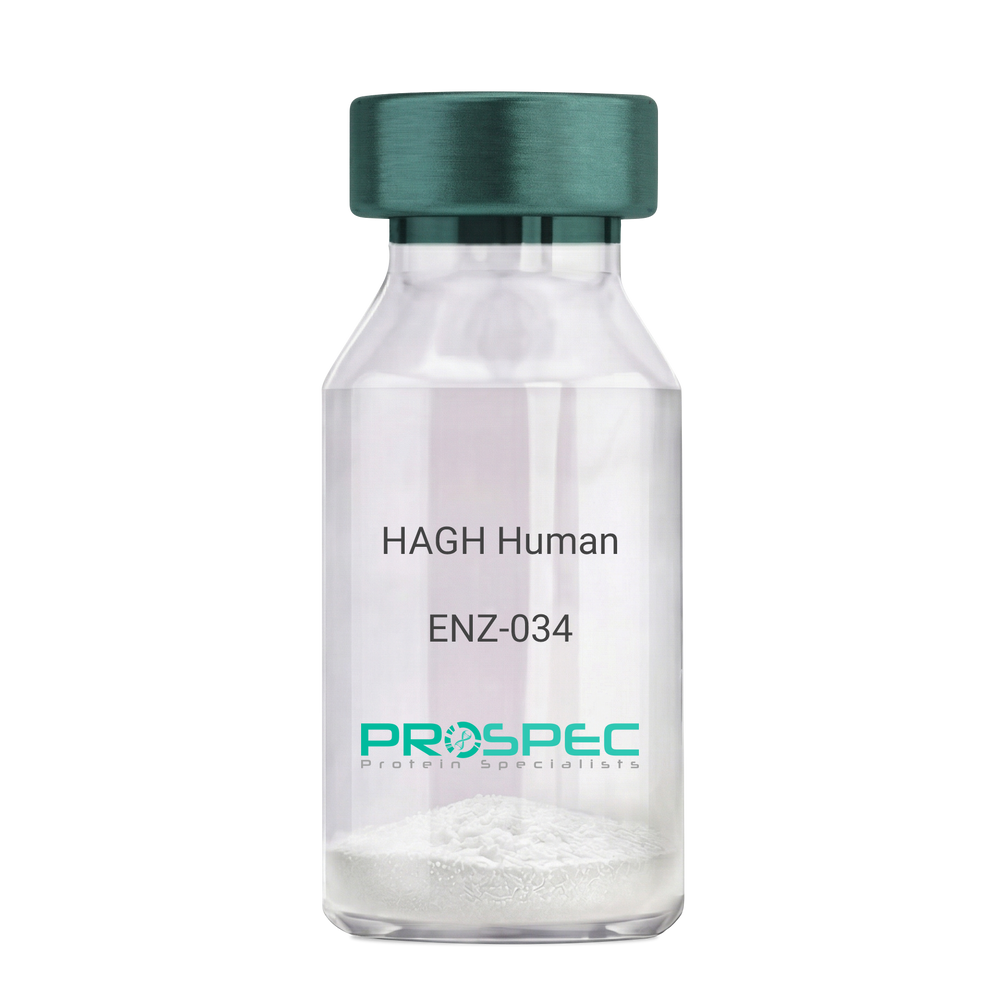
HAGH HumanDescription:
Hydroxyacylglutathione Hydrolase Human Recombinant
GLX2, Glyoxalase II, GLO2, Hydroxyacyl Glutathione Hydrolase, HAGH1, GLXII, Hydroxyacylglutathione Hydrolase, hydroxyacylglutathione hydroxylase.
Product # :
ENZ-034Price :
Quantity :
Shipping Method :
Shipped with Ice Packs
More Info
- description
- source
- formulation
- purity
- More Info
Description
HAGH produced in E.Coli is a single, non-glycosylated polypeptide chain containing 284 amino acids (1-260a.a.) and having a molecular mass of 31.4kDa.HAGH is fused to a 24 amino acid His-tag at N-terminus & purified by proprietary chromatographic techniques.
Source
Escherichia Coli.
Formulation
The HAGH protein solution (0.5mg/1ml) is formulated in 20mM Tris-HCl Buffer (pH 8.5) and 10% Glycerol.
Purity
Greater than 95% as determined by SDS-PAGE.
More Info
-
Introduction
HAGH is a part of the glyoxalase family and a thiolesterase which hydrolyses S-lactoyl-glutathione to reduced glutathione and D-lactate. HAGH protein is a detoxifying enzyme of glycolysis byproduct methylglyoxal and a target of p63 and p73 and serves as a pro-survival factor of the p53 family. HAGH appears only as a monomer and binds two zinc ions per subunit.
-
Synonyms
GLX2, Glyoxalase II, GLO2, Hydroxyacyl Glutathione Hydrolase, HAGH1, GLXII, Hydroxyacylglutathione Hydrolase, hydroxyacylglutathione hydroxylase.
-
Physical Appearance
Sterile Filtered clear solution.
-
Stability
Store at 4°C if entire vial will be used within 2-4 weeks. Store, frozen at -20°C for longer periods of time.For long term storage it is recommended to add a carrier protein (0.1% HSA or BSA).Please avoid freeze thaw cycles.
-
Amino Acid Sequence
MGSSHHHHHH SSGLVPRGSH MGSHMKVEVL PALTDNYMYL VIDDETKEAA IVDPVQPQKV VDAARKHGVK LTTVLTTHHH WDHAGGNEKL VKLESGLKVY GGDDRIGALT HKITHLSTLQ VGSLNVKCLA TPCHTSGHIC YFVSKPGGSE PPAVFTGDTL FVAGCGKFYE GTADEMCKAL LEVLGRLPPD TRVYCGHEYT INNLKFARHV EPGNAAIREK LAWAKEKYSI GEPTVPSTLA EEFTYNPFMR VREKTVQQHA GETDPVTTMR AVRREKDQFK MPRD.
ProSpec's products are furnished for LABORATORY RESEARCH USE ONLY. The product may not be used as drugs, agricultural or pesticidal products, food additives or household chemicals.
- View Data Sheet
Name :
GST, 218 a.a.Description:
Glutathione S-Transferase, 218 a.a. Recombinant
Glutathione S-Transferase, GST, Glutathione S-transferase class-mu 28 kDa isozyme, GST 28, EC 2.5.1.18, Sj28GST, Sj28 antigen, Sj26 antigen.
Product # :
ENZ-1079Price :
Quantity :
Shipping Method :
Shipped with Ice Packs
More Info
- description
- source
- formulation
- purity
- biological activity
- More Info
Description
GST Recombinant produced in E.Coli is a single, non-glycosylated polypeptide chain containing 218 amino acids (1-218 a.a) and having a molecular mass of 25.4kDa
Source
Escherichia Coli.
Formulation
GST protein solution (1mg/ml) containing PBS and 10% glycerol.
Purity
Greater than 90.0% as determined by SDS-PAGE.
Biological Activity
The Specific activity is > 30 units/mg, and is defined as the amount of enzyme that conjugate 1.0 umole of 1-chloro-2,4-dinitrobenzene (CDNB) with reduced glutathione per minute at pH 6.5 at 25C.
More Info
-
Introduction
Antioxidant enzyme Glutathione S- Transferase (GST) is thought to do the primary cellular defense mechanism against reactive oxygen species. GST reduces lipid hydroperoxides through its Se-independent glutathione peroxidase activity. The enzyme also detoxifies lipid peroxidation end products such as 4-hydroxynonenal (4-HNE).
The soluble GST is a 26 kDa protein which occurs as a dimer in all aerobic organisms. Each monomer has two domains, one that binds GSH and is an /-structure similar to thioredoxin and the other, all helical, that binds the hydrophobic substrate. The GST -fusion protein expression system is a widely used recombinant protein expression system that allows a peptide or a regulatory protein domain to be expressed as a fusion to the C-terminus of Schistosoma japonicum GST. Fusion proteins also possess GST -enzymatic activity and can undergo dimerization similar to in vivo. The fusion protein can be purified via GST -affinity column chromatography. In most cases, the desired peptides or domains are removed from GST by applying a specific protease that recognizes and cleaves the linker between the protein domain and GST. The technique has been widely used to generate different kinds of proteins for crystallization, molecular immunology studies, the production of vaccines and studies involving protein-protein and protein-DNA interactions. -
Synonyms
Glutathione S-Transferase, GST, Glutathione S-transferase class-mu 28 kDa isozyme, GST 28, EC 2.5.1.18, Sj28GST, Sj28 antigen, Sj26 antigen.
-
Physical Appearance
Sterile Filtered clear solution.
-
Stability
Store at 4°C if entire vial will be used within 2-4 weeks. Store, frozen at -20°C for longer periods of time. For long term storage it is recommended to add a carrier protein (0.1% HSA or BSA).Avoid multiple freeze-thaw cycles.
-
Amino Acid Sequence
MSPILGYWKI KGLVQPTRLL LEYLEEKYEE HLYERDEGDK WRNKKFELGL EFPNLPYYID GDVKLTQSMA IIRYIADKHN MLGGCPKERA EISMLEGAVL DIRYGVSRIA YSKDFETLKV DFLSKLPEML KMFEDRLCHK TYLNGDHVTH PDFMLYDALD VVLYMDPMCL DAFPKLVCFK KRIEAIPQID KYLKSSKYIA WPLQGWQATF GGGDHPPK.
ProSpec's products are furnished for LABORATORY RESEARCH USE ONLY. The product may not be used as drugs, agricultural or pesticidal products, food additives or household chemicals.
- View Data Sheet
Name :
AKR1B1 HumanDescription:
Aldose Reductase Human Recombinant
Aldehyde Reductase, EC 1.1.1.21, ALR2, ALDR1, MGC1804, Aldo-keto reductase family1 member B1, Aldose Reductase, AKR1B1, AR, ADR.
Product # :
ENZ-390Price :
Quantity :
Shipping Method :
Shipped with Ice Packs
More Info
- description
- source
- formulation
- purity
- biological activity
- More Info
Description
AKR1B1 Human Recombinant amino produced in E.Coli is a single, non-glycosylated polypeptide chain containing 316 amino acids having a molecular mass of 35.8 kDa.The AKR1B1 is purified by proprietary chromatographic techniques.
Source
Escherichia Coli.
Formulation
The 1mg/ml protein solution contains 20mM Tris-HCl buffer pH 8, 10% glycerol, and 1mM DTT.
Purity
Greater than 95.0% as determined by SDS-PAGE.
Biological Activity
Specific activity is > 800pmol/min/ug, and is defined as the amount of enzyme that catalyze the reduction of 1.0 pmole DL-glyceraldehyde in the presence of NADPH per minute at pH7.0 at 37°C.More Info
-
Introduction
AKR1B1 is part of the aldo/keto reductase superfamily, which consists of more than 40 known enzymes and proteins. AKR1B1 catalyzes the reduction several aldehydes, including the aldehyde form of glucose, and thus involved in the development of diabetic complications by catalyzing the reduction of glucose to sorbitol. AKR1B1 catalyzes the NADPH-dependent reduction of a wide variety of carbonyl-containing compounds to their corresponding alcohols. Transgenic mice over expressing human aldose reductase show that AKR1B1 is a key player in ischemic injury and impairment of functional and metabolic recovery after ischemia. Aldose Reductase is an obligatory mediator of TNF-alpha signaling leading to an increase in the expression of adhesion molecules and increased binding of monocytes to the endothelium. AKR1B1 is a critical regulator of TNF-alpha-induced apoptotic signaling in endothelial cells.
-
Synonyms
Aldehyde Reductase, EC 1.1.1.21, ALR2, ALDR1, MGC1804, Aldo-keto reductase family1 member B1, Aldose Reductase, AKR1B1, AR, ADR.
-
Physical Appearance
Sterile filtered colorless solution.
-
Stability
Store at 4°C if entire vial will be used within 2-4 weeks. Store, frozen at -20°C for longer periods of time. For long term storage it is recommended to add a carrier protein (0.1% HSA or BSA).Avoid multiple freeze-thaw cycles.
-
Amino Acid Sequence
MASRLLLNNG AKMPILGLGT WKSPPGQVTE AVKVAIDVGY RHIDCAHVYQ NENEVGVAIQ EKLREQVVKR EELFIVSKLW CTYHEKGLVK GACQKTLSDL KLDYLDLYLI HWPTGFKPGK EFFPLDESGN VVPSDTNILD TWAAMEELVD EGLVKAIGIS NFNHLQVEMI LNKPGLKYKP AVNQIECHPY LTQEKLIQYC QSKGIVVTAY SPLGSPDRPW AKPEDPSLLE DPRIKAIAAK HNKTTAQVLI RFPMQRNLVV IPKSVTPERI AENFKVFDFE LSSQDMTTLL SYNRNWRVCA LLSCTSHKDY PFHEEF.
ProSpec's products are furnished for LABORATORY RESEARCH USE ONLY. The product may not be used as drugs, agricultural or pesticidal products, food additives or household chemicals.
- View Data Sheet
Name :
DCXR HumanDescription:
Dicarbonyl/L-Xylulose Reductase Human Recombinant
DCR, HCR2, HCRII, KIDCR, P34H, SDR20C1, Dicarbonyl/L-Xylulose Reductase, EC=1.1.1.10, Carbonyl reductase II, Kidney dicarbonyl reductase, Sperm surface protein P34H.
Product # :
ENZ-540Price :
Quantity :
Shipping Method :
Shipped with Ice Packs
More Info
- description
- source
- formulation
- purity
- More Info
Description
DCXR Recombinant Human produced in E.Coli is a single, non-glycosylated polypeptide chain containing 264 amino acids (1-244 a.a.) and having a molecular mass of 28 kDa. The DCXR is fused to a 20 amino acids His-Tag at N-terminus and purified by proprietary chromatographic techniques.
Source
Escherichia Coli.
Formulation
DCXR Human solution containing 20mM Tris-HCl pH-8, 1mM DTT, 50mM NaCl & 20% glycerol.
Purity
Greater than 95.0% as determined by SDS-PAGE.
More Info
-
Introduction
DCXR catalyzes the NADPH-dependent reduction of numerous pentoses, tetroses, trioses, alpha-dicarbonyl molecules and L-xylulose. DCXR takes part in the uronate cycle of glucose metabolism. DCXR participates in the water absorption and cellular osmoregulation in the proximal renal tubules by producing xylitol, an osmolyte, thus preventing osmolytic stress from occurring in the renal tubules.
-
Synonyms
DCR, HCR2, HCRII, KIDCR, P34H, SDR20C1, Dicarbonyl/L-Xylulose Reductase, EC=1.1.1.10, Carbonyl reductase II, Kidney dicarbonyl reductase, Sperm surface protein P34H.
-
Physical Appearance
Sterile filtered colorless solution.
-
Stability
Store at 4°C if entire vial will be used within 2-4 weeks. Store, frozen at -20°C for longer periods of time. For long term storage it is recommended to add a carrier protein (0.1% HSA or BSA).Avoid multiple freeze-thaw cycles.
-
Amino Acid Sequence
MGSSHHHHHH SSGLVPRGSH MELFLAGRRV LVTGAGKGIG RGTVQALHAT GARVVAVSRT QADLDSLVRE CPGIEPVCVD LGDWEATERA LGSVGPVDLL VNNAAVALLQ PFLEVTKEAF DRSFEVNLRA VIQVSQIVAR GLIARGVPGA IVNVSSQCSQ RAVTNHSVYC STKGALDMLT KVMALELGPH KIRVNAVNPT VVMTSMGQAT WSDPHKAKTM LNRIPLGKFA EVEHVVNAIL FLLSDRSGMT TGSTLPVEGG FWAC.
ProSpec's products are furnished for LABORATORY RESEARCH USE ONLY. The product may not be used as drugs, agricultural or pesticidal products, food additives or household chemicals.
- View Data Sheet
Name :
ALDOC MouseDescription:
Aldolase C Fructose-Bisphosphate Mouse Recombinant
Aldolase 3, Brain-type aldolase, Scrapie-responsive protein 2, Zebrin II, Aldo3, Scrg2, Fructose-bisphosphate aldolase C, ALDOC.
Product # :
ENZ-868Price :
Quantity :
Shipping Method :
Shipped with Ice Packs
More Info
- description
- source
- formulation
- purity
- More Info
Description
ALDOC Mouse Recombinant produced in E.Coli is a single, non-glycosylated polypeptide chain containing 387 amino acids (1-363 a.a) and having a molecular mass of 41.9kDa.ALDOC is fused to a 24 amino acid His-tag at N-terminus & purified by proprietary chromatographic techniques.
Source
Escherichia Coli.
Formulation
The ALDOC solution (1mg/ml) containing Phosphate buffered saline (pH7.4), 20% glycerol and 1mM DTT.
Purity
Greater than 95.0% as determined by SDS-PAGE.
More Info
-
Introduction
Aldolase C Fructose-Bisphosphate (ALDOC) belongs to the class I fructose-bisphosphate aldolase family. ALDOC is a glycolytic enzyme which catalyzes the reversible aldol cleavage of fructose-1,6-biphosphate and fructose 1-phosphate to dihydroxyacetone phosphate and either glyceraldehyde-3-phosphate or glyceraldehydes respectively. ALDOC is expressed exclusively in the hippocampus and Purkinje cells of the brain.
-
Synonyms
Aldolase 3, Brain-type aldolase, Scrapie-responsive protein 2, Zebrin II, Aldo3, Scrg2, Fructose-bisphosphate aldolase C, ALDOC.
-
Physical Appearance
Sterile Filtered clear colorless solution.
-
Stability
Store at 4°C if entire vial will be used within 2-4 weeks.Store, frozen at -20°C for longer periods of time. For long term storage it is recommended to add a carrier protein (0.1% HSA or BSA).Avoid multiple freeze-thaw cycles.
-
Amino Acid Sequence
MGSSHHHHHH SSGLVPRGSH MGSHMPHSYP ALSAEQKKEL SDIALRIVTP GKGILAADES VGSMAKRLSQ IGVENTEENR RLYRQVLFSA DDRVKKCIGG VIFFHETLYQ KDDNGVPFVR TIQDKGILVG IKVDKGVVPL AGTDGETTTQ GLDGLLERCA QYKKDGADFA KWRCVLKISD RTPSALAILE NANVLARYAS ICQQNGIVPI VEPEILPDGD HDLKRCQYVT EKVLAAVYKA LSDHHVYLEG TLLKPNMVTP GHACPIKYSP EEIAMATVTA LRRTVPPAVP GVTFLSGGQS EEEASLNLNA INRCPLPRPW ALTFSYGRAL QASALNAWRG QRDNAGAATE EFIKRAEMNG LAAQGRYEGS GDGGAAAQSL YIANHAY
ProSpec's products are furnished for LABORATORY RESEARCH USE ONLY. The product may not be used as drugs, agricultural or pesticidal products, food additives or household chemicals.
- View Data Sheet
Name :
NDUFB4 HumanDescription:
NADH Dehydrogenase 1 Beta Subcomplex 4 Human Recombinant
B15, CI-B15, Complex I-B15, NADH dehydrogenase [ubiquinone] 1 beta subcomplex subunit 4, NADH-ubiquinone oxidoreductase B15 subunit.
Product # :
ENZ-699Price :
Quantity :
Shipping Method :
Shipped with Ice Packs
More Info
- description
- source
- formulation
- purity
- More Info
Description
NDUFB4 Human Recombinant produced in E.coli is a single, non-glycosylated polypeptide chain containing 110 amino acids (1-87) and having a molecular mass of 12.6kDa.NDUFB4 is fused to a 23 amino acid His-tag at N-terminus & purified by proprietary chromatographic techniques.
Source
E.Coli
Formulation
The NDUFB4 solution (1mg/ml) contains 20mM Tris-HCl buffer, (pH 8.0), 0.4M Urea And 10% glycerol.
Purity
Greater than 90% as determined by SDS-PAGE.
More Info
-
Introduction
NADH Dehydrogenase 1 Beta Subcomplex 4 (NDUFB4) is a member of the complex I NDUFB4 subunit family. NDUFB4 is a non-catalytic subunit of the multisubunit NADH:ubiquinone oxidoreductase, which is the first enzyme complex in the mitochondrial electron transport chain (complex I). Mammalian complex I is comprised of 45 different subunits and transfers electrons from NADH to ubiquinone.
-
Synonyms
B15, CI-B15, Complex I-B15, NADH dehydrogenase [ubiquinone] 1 beta subcomplex subunit 4, NADH-ubiquinone oxidoreductase B15 subunit.
-
Physical Appearance
Sterile Filtered colorless solution.
-
Stability
Store at 4°C if entire vial will be used within 2-4 weeks. Store, frozen at -20°C for longer periods of time. For long term storage it is recommended to add a carrier protein (0.1% HSA or BSA).Avoid multiple freeze-thaw cycles.
-
Amino Acid Sequence
MGSSHHHHHH SSGLVPRGSH MGSMSFPKYK PSSLRTLPET LDPAEYNISP ETRRAQAERL AIRAQLKREY LLQYNDPNRR GLIENPALLR WAYARTINVY PNFRPTPKNS.
ProSpec's products are furnished for LABORATORY RESEARCH USE ONLY. The product may not be used as drugs, agricultural or pesticidal products, food additives or household chemicals.
- View Data Sheet
Name :
DPP4 HumanDescription:
Dipeptidyl-Peptidase 4 Human Recombinant
CD26, ADABP, ADCP2, DPPIV, TP103, DPP4, Dipeptidyl peptidase 4, Dipeptidyl peptidase IV, DPP IV, T-cell activation antigen CD26, Adenosine deaminase complexing protein 2, CD26 antigen.
Product # :
ENZ-375Price :
Quantity :
Shipping Method :
Shipped with Ice Packs
More Info
- description
- source
- formulation
- purity
- biological activity
- More Info
Description
DPPIV Human Recombinant produced in Insect cells is a single, glycosylated polypeptide chain containing 737 amino acids (39-766) and having a molecular mass of 85.4kDa.DPPIV is fused to a 6 His Tag at C-terminus and purified using conventional chromatography techniques.
Source
Insect cells.
Formulation
DPP4 is formulated in 20mM Tris-HCl buffer pH-8, 100mM NaCl, 1mM EDTA and 10% glycerol.
Purity
Greater than 95.0% as determined by Analysis by SDS-PAGE.
Biological Activity
>200 Units/mg.More Info
-
Introduction
DPP4 also called adenosine deaminase complexing protein-2, and T-cell activation antigen CD26 is a serine exopeptidase and complex enzyme that is expressed on the surface of most cell types. DPPIV is an intrinsic membrane glycoprotein and a serine exopeptidase that cleaves X-proline dipeptides from the N-terminus of polypeptides. DPP4 plays a role in t-cell activation. DPP4 is associated with intracellular signal transduction, apoptosis and involved in tumor biology. There are at least 63 substrates which can bind specifically to DPP4 enzyme including growth factors, chemokines, neuro peptides. Furthermore, DPP4 plays a major role in glucose metabolism by cleaving incretins such as glucose-dependent insulinotropic polypeptide (GIP) and GLP-1.
-
Synonyms
CD26, ADABP, ADCP2, DPPIV, TP103, DPP4, Dipeptidyl peptidase 4, Dipeptidyl peptidase IV, DPP IV, T-cell activation antigen CD26, Adenosine deaminase complexing protein 2, CD26 antigen.
-
Physical Appearance
Sterile Filtered colorless solution.
-
Stability
Store at 4°C if entire vial will be used within 2-4 weeks. Store, frozen at -20°C for longer periods of time. For long term storage it is recommended to add a carrier protein (0.1% HSA or BSA).Avoid multiple freeze-thaw cycles.
-
Amino Acid Sequence
ADPSRKTYTL TDYLKNTYRL KLYSLRWISD HEYLYKQENN ILVFNAEYGN SSVFLENSTF DEFGHSINDY SISPDGQFIL LEYNYVKQWR HSYTASYDIY DLNKRQLITE ERIPNNTQWV TWSPVGHKLA YVWNNDIYVK IEPNLPSYRI TWTGKEDIIY NGITDWVYEE EVFSAYSALW WSPNGTFLAY AQFNDTEVPL IEYSFYSDES LQYPKTVRVP YPKAGAVNPT VKFFVVNTDS LSSVTNATSI QITAPASMLI GDHYLCDVTW ATQERISLQW LRRIQNYSVM DICDYDESSG RWNCLVARQH IEMSTTGWVG RFRPSEPHFT LDGNSFYKII SNEEGYRHIC YFQIDKKDCT FITKGTWEVI GIEALTSDYL YYISNEYKGM PGGRNLYKIQ LSDYTKVTCL SCELNPERCQ YYSVSFSKEA KYYQLRCSGP GLPLYTLHSS VNDKGLRVLE DNSALDKMLQ NVQMPSKKLD FIILNETKFW YQMILPPHFD KSKKYPLLLD VYAGPCSQKA DTVFRLNWAT YLASTENIIV ASFDGRGSGY QGDKIMHAIN RRLGTFEVED QIEAARQFSK MGFVDNKRIA IWGWSYGGYV TSMVLGSGSG VFKCGIAVAP VSRWEYYDSV YTERYMGLPT PEDNLDHYRN STVMSRAENF KQVEYLLIHG TADDNVHFQQ SAQISKALVD VGVDFQAMWY TDEDHGIASS TAHQHIYTHM SHFIKQCFSL PHHHHHH.
-
Unit Definition
One unit will hydrolyze 1 umole of p-nitroaniline per minute at pH8.0 at 37°C using 1mM of Gly-Pro p-nitroanilde as a substrate.
ProSpec's products are furnished for LABORATORY RESEARCH USE ONLY. The product may not be used as drugs, agricultural or pesticidal products, food additives or household chemicals.
- View Data Sheet
Name :
SULT2B1 HumanDescription:
Sulfotransferase Family, Cytosolic, 2B, Member 1 Human Recombinant
SULT2B1, HSST2, EC 2.8.2.2, Sulfotransferase 2B1, Hydroxysteroid sulfotransferase 2, ST2B1, Sulfotransferase family cytosolic 2B member 1.
Product # :
ENZ-512Price :
Quantity :
Shipping Method :
Shipped with Ice Packs
More Info
- description
- source
- formulation
- purity
- More Info
Description
SULT2B1 Human Recombinant produced in E.Coli is a single, non-glycosylated, polypeptide chain containing 365 amino acids (1-365 a.a.) and having a molecular mass of 41.3 kDa. SULT2B1 protein is purified by standard chromatography.
Source
Escherichia Coli.
Formulation
SULT2B1 Human solution containing 20mM Tris-HCl pH-7.5, & 10% glycerol.
Purity
Greater than 85% as determined by SDS-PAGE.
More Info
-
Introduction
SULT2B1 catalyzes the sulfate conjugation of numerous hormones, neurotransmitters, drugs and xenobiotic compounds. Sulfonation enhances the water solubility of molecules, and therefore their renal excretion, however it can also result in bioactivation to form active metabolites. SULT2B1b is localized in the cytosol and nuclei of human cells. SULT2B1b is selective for the sulfation of 3beta-hydroxysteroids such as dehydroepiandrosterone and pregnenolone, and participates in cholesterol sulfation in human skin.
-
Synonyms
SULT2B1, HSST2, EC 2.8.2.2, Sulfotransferase 2B1, Hydroxysteroid sulfotransferase 2, ST2B1, Sulfotransferase family cytosolic 2B member 1.
-
Physical Appearance
Sterile filtered colorless solution.
-
Stability
Store at 4°C if entire vial will be used within 2-4 weeks. Store, frozen at -20°C for longer periods of time. For long term storage it is recommended to add a carrier protein (0.1% HSA or BSA). Avoid multiple freeze-thaw cycles.
-
Amino Acid Sequence
MDGPAEPQIP GLWDTYEDDI SEISQKLPGE YFRYKGVPFP VGLYSLESIS LAENTQDVRD DDIFIITYPK SGTTWMIEII CLILKEGDPS WIRSVPIWER APWCETIVGA FSLPDQYSPR LMSSHLPIQI FTKAFFSSKA KVIYMGRNPR DVVVSLYHYS KIAGQLKDPG TPDQFLRDFL KGEVQFGSWF DHIKGWLRMK GKDNFLFITY EELQQDLQGS VERICGFLGR PLGKEALGSV VAHSTFSAMK ANTMSNYTLL PPSLLDHRRG AFLRKGVCGD WKNHFTVAQS EAFDRAYRKQ MRGMPTFPWD EDPEEDGSPD PEPSPEPEPK PSLEPNTSLE REPRPNSSPS PSPGQASETP HPRPS.
ProSpec's products are furnished for LABORATORY RESEARCH USE ONLY. The product may not be used as drugs, agricultural or pesticidal products, food additives or household chemicals.
- View Data Sheet
Name :
SUMO2 HumanDescription:
Small Ubiquitin-Related Modifier 2 Human Recombinant
Small ubiquitin-related modifier 2, SUMO-2, Ubiquitin-like protein SMT3B, SMT3 homolog 2, Sentrin-2, HSMT3, SUMO-3, SUMO2, SMT3B, SMT3H2, MGC117191.
Product # :
PRO-586Price :
Quantity :
Shipping Method :
Shipped with Ice Packs
More Info
- description
- source
- formulation
- purity
- More Info
Description
SUMO2 Human Recombinant produced in E.Coli is a single, non-glycosylated polypeptide chain containing 93 amino acids and having a molecular mass of 10.6 kDa.The SUMO-2 is purified by proprietary chromatographic techniques.
Source
Escherichia Coli.
Formulation
The SUMO2 (1mg/ml) containing 20mM Tris-HCl buffer (pH 8.0).
Purity
Greater than 90.0% as determined by SDS-PAGE.
More Info
-
Introduction
Small Ubiquitin-like Modifiers (SUMOs) are a family of small, related proteins that can be enzymatically attached to a target protein by a post-translational modification process termed sumoylation. Unlike ubiquitination, which targets proteins for degradation, sumoylation participates in a number of cellular processes, such as nuclear transport, transcriptional regulation, apoptosis, and protein stability. All SUMO proteins share the conserved ubiquitin domain and the C-terminal diglycine cleavage/attachment site. Human SUMO2, also known as Sentrin2 and SMT3B is synthesized as a 95 amino acid (aa), 11 kDa propeptide that contains a two aa C-terminal prosegment, and an 18 aa N-terminal protein interacting region (aa 33 -50). Following prosegment cleavage, the C-terminal glycine is enzymatically attached to a lysine on a target protein. Human SUMO2 shares 100% sequence identity to SUMO-2 from mouse. SUMO2 also has very high sequence homology to SUMO3 and SUMO4, 86 % and 85%, respectively. SUMO2 shares only 44% sequence identity to SUMO1.
-
Synonyms
Small ubiquitin-related modifier 2, SUMO-2, Ubiquitin-like protein SMT3B, SMT3 homolog 2, Sentrin-2, HSMT3, SUMO-3, SUMO2, SMT3B, SMT3H2, MGC117191.
-
Physical Appearance
Sterile filtered colorless solution.
-
Stability
Can be stored at +4C for 1 week. For long term storage , below -20C.Please prevent freeze-thaw cycles.
-
Amino Acid Sequence
MADEKPKEGVKTENNDHINLKVAGQDGSVVQFKIKRHTPLSKLMKAYC
ERQGLSMRQIRFRFDGQPINETDTPAQLEMEDEDTIDVFQQQTGG.
ProSpec's products are furnished for LABORATORY RESEARCH USE ONLY. The product may not be used as drugs, agricultural or pesticidal products, food additives or household chemicals.
- View Data Sheet
Name :
PDE6D HumanDescription:
Phosphodiesterase 6D cGMP-Specific Rod Delta Human Recombinant
Retinal rod rhodopsin-sensitive cGMP 3',5'-cyclic phosphodiesterase subunit delta, Phosphodiesterase 6D cGMP-Specific Rod Delta, GMP-PDE delta, Protein p17, PDE6D, PDED.
Product # :
ENZ-483Price :
Quantity :
Shipping Method :
Shipped with Ice Packs
More Info
- description
- source
- formulation
- purity
- More Info
Description
PDE6D produced in E.Coli is a single, non-glycosylated polypeptide chain containing 158 amino acids (1-150 a.a.) and having a molecular mass of 18.4kDa. PDE6D is fused to an 8 amino acids His Tag at C-terminus and purified by proprietary chromatographic techniques.
Source
Escherichia Coli.
Formulation
The PDE6D protein solution contains 20mM Tris-HCl buffer (pH8.0), 10% glycerol, 1mM DTT and 100mM NaCl.
Purity
Greater than 90.0% as determined by SDS-PAGE.
More Info
-
Introduction
Human PDE6D was initially identified as a fourth subunit of rod-specific cGMP phosphodiesterase, PDE6. PDE6D is an Oligomer composed of two catalytic chains (alpha and beta), an inhibitory chain (gamma) and the delta chain. PDE6D interacts with RPGR, ARL2 and ARL3. The catalytically active PDE6 is a heterodimer (αβ) that is controlled by two inhibitory γ subunits. Since PDE6D does not change the catalytic properties of PDEαβ, its function is still unanswered. PDE6D is expressed specifically in the retina.
-
Synonyms
Retinal rod rhodopsin-sensitive cGMP 3',5'-cyclic phosphodiesterase subunit delta, Phosphodiesterase 6D cGMP-Specific Rod Delta, GMP-PDE delta, Protein p17, PDE6D, PDED.
-
Physical Appearance
Sterile filtered colorless solution.
-
Stability
Store at 4°C if entire vial will be used within 2-4 weeks. Store, frozen at -20°C for longer periods of time. For long term storage it is recommended to add a carrier protein (0.1% HSA or BSA). Avoid multiple freeze-thaw cycles.
-
Amino Acid Sequence
MSAKDERARE ILRGFKLNWM NLRDAETGKI LWQGTEDLSV PGVEHEARVP KKILKCKAVS RELNFSSTEQ MEKFRLEQKV YFKGQCLEEW FFEFGFVIPN STNTWQSLIE AAPESQMMPA SVLTGNVIIE TKFFDDDLLV STSRVRLFYV GSHHHHHH.
ProSpec's products are furnished for LABORATORY RESEARCH USE ONLY. The product may not be used as drugs, agricultural or pesticidal products, food additives or household chemicals.
- View Data Sheet
Name :
PSMA3 HumanDescription:
Proteasome Subunit Alpha Type 3 Human Recombinant
proteasome (prosome, macropain) subunit alpha type-3, HC8, Macropain subunit C8, Multicatalytic endopeptidase complex subunit C8, Proteasome component C8, PSC3, PSC8, EC 3.4.25.1.
Product # :
ENZ-196Price :
Quantity :
Shipping Method :
Shipped with Ice Packs
More Info
- description
- source
- formulation
- purity
- More Info
Description
PSMA3 Human Recombinant produced in E.coli is a single, non-glycosylated polypeptide chain containing 275 amino acids (1-255) and having a molecular mass of 30.6 kDa.PSMA3 is fused to a 20 amino acid His-tag at N-terminus & purified by proprietary chromatographic techniques.
Source
E.coli.
Formulation
The PSMA3 solution (1mg/ml) contains 20mM Tris-HCl buffer (pH 8.0), 0.15M NaCl, 1mM DTT and 10% glycerol.
Purity
Greater than 95% as determined by SDS-PAGE.
More Info
-
Introduction
The proteasome is a multicatalytic proteinase complex which holds an extremely organized 20S core structure shaped like a ring. The central structure is assembled from 4 rings of 28 non-identical subunits; 2 rings are composed of 7 alpha subunits and 2 rings are composed of 7 beta subunits. There is a high concentration of proteasomes all over the eukaryotic cells and their job is to cleave peptides in an ATP/ubiquitin-dependent procedure in a non-lysosomal pathway. PSMA3 encodes several of the peptidase T1A family which is a 20S core alpha subunit. Two alternative transcripts encoding diverse isoforms were recognized.
-
Synonyms
proteasome (prosome, macropain) subunit alpha type-3, HC8, Macropain subunit C8, Multicatalytic endopeptidase complex subunit C8, Proteasome component C8, PSC3, PSC8, EC 3.4.25.1.
-
Physical Appearance
Sterile Filtered colorless solution.
-
Stability
Store at 4°C if entire vial will be used within 2-4 weeks. Store, frozen at -20°C for longer periods of time. For long term storage it is recommended to add a carrier protein (0.1% HSA or BSA).Avoid multiple freeze-thaw cycles.
-
Amino Acid Sequence
MGSSHHHHHH SSGLVPRGSH MSSIGTGYDL SASTFSPDGR VFQVEYAMKA VENSSTAIGI RCKDGVVFGV EKLVLSKLYE EGSNKRLFNV DRHVGMAVAG LLADARSLAD IAREEASNFR SNFGYNIPLK HLADRVAMYV HAYTLYSAVR PFGCSFMLGS YSVNDGAQLY MIDPSGVSYG YWGCAIGKAR QAAKTEIEKL QMKEMTCRDI VKEVAKIIYI VHDEVKDKAF ELELSWVGEL TNGRHEIVPK DIREEAEKYA KESLKEEDES DDDNM
ProSpec's products are furnished for LABORATORY RESEARCH USE ONLY. The product may not be used as drugs, agricultural or pesticidal products, food additives or household chemicals.
- View Data Sheet
Name :
MDH1 HumanDescription:
Malate Dehydrogenase 1 Human Recombinant
MDH-s, MDHA, MOR2.
Product # :
ENZ-256Price :
Quantity :
Shipping Method :
Shipped with Ice Packs
More Info
- description
- source
- formulation
- purity
- biological activity
- More Info
Description
MDH1 Human Recombinant produced in E.Coli is a single, non-glycosylated polypeptide chain containing 342 amino acids (1-334 a.a.) and having a molecular mass of 37.4 kDa. The MDH1 is fused to an 8 amino acid His tag at C-terminus and purified by conventional chromatography.
Source
Escherichia Coli.
Formulation
The MDH1 1mg/ml protein solution contains 20mM Tris-HCl pH-8, and 10% glycerol.
Purity
Greater than 95.0% as determined by SDS-PAGE.
Biological Activity
Specific activity is > 250 units/mg, and is defined as the amount of enzyme that cleaves 1umole of oxalacetate and beta-NADH to L-malate and beta-NAD per minute at pH8.0 at 25°C.
More Info
-
Introduction
MDH1 catalyzes the reversible oxidation of malate to oxaloacetate, using the NAD/NADH cofactor system in the citric acid cycle. MDH1 is abundantly found in the cytoplasm and is involved in the malate-aspartate shuttle that functions in the metabolic coordination between cytosol and mitochondria. MDH1 regulates p53-dependent cell-cycle arrest and apoptosis in response to glucose deprivation.
-
Synonyms
MDH-s, MDHA, MOR2.
-
Physical Appearance
Sterile Filtered colorless solution.
-
Stability
Store at 4°C if entire vial will be used within 2-4 weeks. Store, frozen at -20°C for longer periods of time. For long term storage it is recommended to add a carrier protein (0.1% HSA or BSA). Please prevent freeze-thaw cycles.
-
Amino Acid Sequence
MSEPIRVLVT GAAGQIAYSL LYSIGNGSVF GKDQPIILVL LDITPMMGVL DGVLMELQDC ALPLLKDVIA TDKEDVAFKD LDVAILVGSM PRREGMERKD LLKANVKIFK SQGAALDKYA KKSVKVIVVG NPANTNCLTA SKSAPSIPKE NFSCLTRLDH NRAKAQIALK LGVTANDVKN VIIWGNHSST QYPDVNHAKV KLQGKEVGVY EALKDDSWLK GEFVTTVQQR GAAVIKARKL SSAMSAAKAI CDHVRDIWFG TPEGEFVSMG VISDGNSYGV PDDLLYSFPV VIKNKTWKFV EGLPINDFSR EKMDLTAKEL TEEKESAFEF LSSALEHHHH HH.
ProSpec's products are furnished for LABORATORY RESEARCH USE ONLY. The product may not be used as drugs, agricultural or pesticidal products, food additives or household chemicals.
- View Data Sheet
Name :
SDF 1a Human, HisDescription:
Stromal Cell-Derived Factor-1 alpha Human Recombinant, His Tag
SDF-1, CXCL12, Pre-B cell growth-stimulating factor, PBSF, hIRH, chemokine (C-X-C motif) ligand 12, SDF1, SDF1A, TPAR1, SCYB12, SDF-1a, TLSF-a.
Product # :
CHM-241Price :
Quantity :
Shipping Method :
Shipped at Room temp
More Info
- description
- source
- formulation
- purity
- More Info
Description
Stromal Cell-Derived Factor-1 alpha Human Recombinant produced in E.Coli is a non-glycosylated, Polypeptide chain containing 78 amino acids, having a molecular mass of 9.2 kDa. The SDF-1a is fused to 10 amino acids His-Tag at N-terminus and purified by proprietary chromatographic techniques.
Source
Escherichia Coli.
Formulation
The protein was filtered (0.4µm) and lyophilized from a concentrated (0.5mg/ml) solution containing 20mM Tris buffer pH-7.5 and 20mM sodium chloride.
Purity
Greater than 95.0% as determined SDS-PAGE.
More Info
-
Introduction
SDF-1 (stromal cell-derived factor-1) is small cytokine belonging to the chemokine family that is officially designated Chemokine (C-X-C motif) ligand 12 (CXCL12). It is produced in two forms, SDF-1?/CXCL12a and SDF-1?/CXCL12b, by alternate splicing of the same gene. Chemokines are characterized by the presence of four conserved cysteines, which form two disulfide bonds. The CXCL12 proteins belong to the group of CXC chemokines, whose initial pair of cysteines are separated by one intervening amino acid. CXCL12 is strongly chemotactic for lymphocytes and has been implicated as an important cell co-ordinator during development. During embryogenesis it directs the migration of hematopoietic cells from foetal liver to bone marrow. Mice which were knocked-out for CXCL12 gene were lethal before the birth or within just 1 hour of life. As another role, CXCL12a alters also the electrophysiology of neurons. CXCL12 was shown to be expressend in many tissues in mice (including brain, thymus, heart, lung, liver, kidney, spleen and bone marrow).
The receptor for this chemokine is CXCR4, which was previously called fusin. This CXCL12-CXCR4 interaction used to be considered exclusive (unlike for other chemokines and their receptors), but recently it was suggested that CXCL12 is also bound by CXCR7 receptor.
The gene for CXCL12 is located on human chromosome 10. In human and mouse both CXCL12 and CXCR4 show high identity of sequence: 99% and 90%, respectively. -
Synonyms
SDF-1, CXCL12, Pre-B cell growth-stimulating factor, PBSF, hIRH, chemokine (C-X-C motif) ligand 12, SDF1, SDF1A, TPAR1, SCYB12, SDF-1a, TLSF-a.
-
Physical Appearance
White lyophilized (freeze-dried) powder.
-
Stability
Lyophilized SDF1A although stable at room temperature for 3 weeks, should be stored desiccated below -18°C. Upon reconstitution CXCL12 should be stored at 4°C between 2-7 days and for future use below -18°C.For long term storage it is recommended to add a carrier protein (0.1% HSA or BSA).Please prevent freeze-thaw cycles.
-
Solubility
It is recommended to add deionized water to a working concentration approximately 0.5 mg/ml and let the lyophilized pellet dissolve completely. Product is not sterile! Please filter the product by appropriate sterile filter before using it in the cell culture.
-
Amino Acid Sequence
MKHHHHHHAS KPVSLSYRCP CRFFESHVAR ANVKHLKILN TPNCALQIVA RLKNNNRQVC IDPKLKWIQE YLEKALNK.
ProSpec's products are furnished for LABORATORY RESEARCH USE ONLY. The product may not be used as drugs, agricultural or pesticidal products, food additives or household chemicals.
- View Data Sheet
Name :
NSDHL HumanDescription:
NAD (P) Dependent Steroid Dehydrogenase-Like Human Recombinant
H105E3, SDR31E1, XAP104, Sterol-4-alpha-carboxylate 3-dehydrogenase, decarboxylating, Protein H105e3, NSDHL.
Product # :
PRO-1800Price :
Quantity :
Shipping Method :
Shipped with Ice Packs
More Info
- description
- source
- formulation
- purity
- More Info
Description
NSDHL Human Recombinant produced in E. coli is a single polypeptide chain containing 320 amino acids (1-297) and having a molecular mass of 35.5kDa. NSDHL is fused to a 23 amino acid His-tag at N-terminus & purified by proprietary chromatographic techniques.
Source
Escherichia Coli.
Formulation
The NSDHL solution (0.25mg/ml) contains 20mM Tris-HCl buffer (pH8.0), 10% glycerol and 0.1M NaCl.
Purity
Greater than 80% as determined by SDS-PAGE.
More Info
-
Introduction
NAD (P) Dependent Steroid Dehydrogenase-Like (NSDHL) takes part in synthesis of cholesterol. NSDHL is involved in one of a few steps which convert lanosterol to cholesterol by removing a carbon atom and three hydrogen atoms (a methyl group). NSDHL is also a vital element of cell membranes and myelin, the fatty covering that insulates nerve cells.
-
Synonyms
H105E3, SDR31E1, XAP104, Sterol-4-alpha-carboxylate 3-dehydrogenase, decarboxylating, Protein H105e3, NSDHL.
-
Physical Appearance
Sterile Filtered clear solution.
-
Stability
Store at 4°C if entire vial will be used within 2-4 weeks. Store frozen at -20°C for longer periods of time. For long term storage it is recommended to add a carrier protein (0.1% HSA or BSA).Avoid multiple freeze-thaw cycles.
-
Amino Acid Sequence
MGSSHHHHHH SSGLVPRGSH MGSMEPAVSE PMRDQVARTH LTEDTPKVNA DIEKVNQNQA KRCTVIGGSG FLGQHMVEQL LARGYAVNVF DIQQGFDNPQ VRFFLGDLCS RQDLYPALKG VNTVFHCASP PPSSNNKELF YRVNYIGTKN VIETCKEAGV QKLILTSSAS VIFEGVDIKN GTEDLPYAMK PIDYYTETKI LQERAVLGAN DPEKNFLTTA IRPHGIFGPR DPQLVPILIE AARNGKMKFV IGNGKNLVDF TFVENVVHGH ILAAEQLSRD STLGGKAFHI TNDEPIPFWT FLSRILTGLN YEAPKYHIPY.
ProSpec's products are furnished for LABORATORY RESEARCH USE ONLY. The product may not be used as drugs, agricultural or pesticidal products, food additives or household chemicals.
- View Data Sheet
Name :
BDH1 HumanDescription:
3-Hydroxybutyrate Dehydrogenase, Type 1 Human Recombinant
D-beta-hydroxybutyrate dehydrogenase, mitochondrial, BDH, 3-hydroxybutyrate dehydrogenase, BDH1, SDR9C1.
Product # :
ENZ-215Price :
Quantity :
Shipping Method :
Shipped with Ice Packs
More Info
- description
- source
- formulation
- purity
- More Info
Description
BDH1 Human Recombinant produced in E.coli is a single, non-glycosylated polypeptide chain containing 318 amino acids (47-343) and having a molecular mass of 35.3kDa.BDH1 is fused to a 21 amino acid His-tag at N-terminus & purified by proprietary chromatographic techniques.
Source
E.coli.
Formulation
The BDH1 solution (0.25mg/ml) contains 20mM Tris-HCl buffer (pH8.0), 30% glycerol, 0.2M NaCl, 2mM DTT and 0.1mM PMSF.
Purity
Greater than 85% as determined by SDS-PAGE.
More Info
-
Introduction
BDH1 belongs to the short-chain dehydrogenase/reductase gene family. BDH1 forms a homotetrameric lipid-requiring enzyme of the mitochondrial membrane and has a specific necessity for phosphatidylcholine for optimal enzymatic activity. BDH1 catalyzes the interconversion of acetoacetate and (R)-3-hydroxybutyrate, the 2 main ketone bodies formed during fatty acid catabolism.
-
Synonyms
D-beta-hydroxybutyrate dehydrogenase, mitochondrial, BDH, 3-hydroxybutyrate dehydrogenase, BDH1, SDR9C1.
-
Physical Appearance
Sterile Filtered colorless solution.
-
Stability
Store at 4°C if entire vial will be used within 2-4 weeks. Store, frozen at -20°C for longer periods of time. For long term storage it is recommended to add a carrier protein (0.1% HSA or BSA).Avoid multiple freeze-thaw cycles.
-
Amino Acid Sequence
MGSSHHHHHH SSGLVPRGSH MASAAEPVGS KAVLVTGCDS GFGFSLAKHL HSKGFLVFAG CLMKDKGHDG VKELDSLNSD RLRTVQLNVC SSEEVEKVVE IVRSSLKDPE KGMWGLVNNA GISTFGEVEF TSLETYKQVA EVNLWGTVRM TKSFLPLIRR AKGRVVNISS MLGRMANPAR SPYCITKFGV EAFSDCLRYE MYPLGVKVSV VEPGNFIAAT SLYSPESIQA IAKKMWEELP EVVRKDYGKK YFDEKIAKME TYCSSGSTDT SPVIDAVTHA LTATTPYTRY HPMDYYWWLR MQIMTHLPGA ISDMIYIR.
ProSpec's products are furnished for LABORATORY RESEARCH USE ONLY. The product may not be used as drugs, agricultural or pesticidal products, food additives or household chemicals.