Skip to content

High-quality research proteins.

  • 1-800-805-6531

  • Mon - Sat 8.00-18.00, Sun - Closed

  • info@prospecbio.com

  • PO Box 6591 East Brunswick NJ 08816

  • Products
    • Cytokines
    • Growth factors
    • Chemokines
    • Cd antigens
    • Neurotrophins
    • Hormones
    • Enzymes
    • Viral antigens
    • Recombinant proteins
    • Natural proteins
    • Monoclonal antibodies
    • Polyclonal antibodies
    • Thermal Packaging
  • About
    • Company
    • Founder
    • Contribution
  • Customers
    • Eastern Asia
    • Eastern Europe
    • North America
    • South America
    • South East Asia
    • Southern Asia
    • Western Europe
  • Ordering
    • Ordering Method
    • Ordering - Credit Card
    • Ordering - PO
    • Shipping Fees
    • FAQs
  • Services
    • DNA Cloning
    • Protein Expression
    • Monoclonal Antibody
    • Fermentation
    • Technology License
  • Contact us
Log in

Country/region

  • USD $ | Albania
  • USD $ | Andorra
  • USD $ | Argentina
  • USD $ | Armenia
  • USD $ | Australia
  • USD $ | Austria
  • USD $ | Azerbaijan
  • USD $ | Belarus
  • USD $ | Belgium
  • USD $ | Bolivia
  • USD $ | Brazil
  • USD $ | Bulgaria
  • USD $ | Cambodia
  • USD $ | Canada
  • USD $ | Chile
  • USD $ | China
  • USD $ | Colombia
  • USD $ | Costa Rica
  • USD $ | Croatia
  • USD $ | Cyprus
  • USD $ | Czechia
  • USD $ | Denmark
  • USD $ | Estonia
  • USD $ | Finland
  • USD $ | France
  • USD $ | Georgia
  • USD $ | Germany
  • USD $ | Greece
  • USD $ | Hong Kong SAR
  • USD $ | Hungary
  • USD $ | Iceland
  • USD $ | India
  • USD $ | Ireland
  • USD $ | Israel
  • USD $ | Italy
  • USD $ | Japan
  • USD $ | Kazakhstan
  • USD $ | Latvia
  • USD $ | Liechtenstein
  • USD $ | Lithuania
  • USD $ | Madagascar
  • USD $ | Malta
  • USD $ | Mexico
  • USD $ | Moldova
  • USD $ | Monaco
  • USD $ | Netherlands
  • USD $ | New Zealand
  • USD $ | North Macedonia
  • USD $ | Norway
  • USD $ | Panama
  • USD $ | Paraguay
  • USD $ | Peru
  • USD $ | Philippines
  • USD $ | Poland
  • USD $ | Portugal
  • USD $ | Romania
  • USD $ | Singapore
  • USD $ | Slovakia
  • USD $ | Slovenia
  • USD $ | South Africa
  • USD $ | South Korea
  • USD $ | Spain
  • USD $ | Sri Lanka
  • USD $ | Sweden
  • USD $ | Switzerland
  • USD $ | Taiwan
  • USD $ | Thailand
  • USD $ | Türkiye
  • USD $ | Ukraine
  • USD $ | United Kingdom
  • USD $ | United States
  • USD $ | Uruguay
  • USD $ | Vatican City
  • USD $ | Venezuela
  • USD $ | Vietnam
  • Facebook
  • Instagram
logoProSpec - Recombinant Protein Manufacturer for academic and R&D industry
Become a distributor
Account Log in
Wishlist
Cart Cart(0)
  • Products
    +
    • Cytokines
    • Growth factors
    • Chemokines
    • Cd antigens
    • Neurotrophins
    • Hormones
    • Enzymes
    • Viral antigens
    • Recombinant proteins
    • Natural proteins
    • Monoclonal antibodies
    • Polyclonal antibodies
    • Thermal Packaging
  • About
    +
    • Company
    • Founder
    • Contribution
  • Customers
    +
    • Eastern Asia
    • Eastern Europe
    • North America
    • South America
    • South East Asia
    • Southern Asia
    • Western Europe
  • Ordering
    +
    • Ordering Method
    • Ordering - Credit Card
    • Ordering - PO
    • Shipping Fees
    • FAQs
  • Services
    +
    • DNA Cloning
    • Protein Expression
    • Monoclonal Antibody
    • Fermentation
    • Technology License
  • Contact us

Item added to your cart

View cart
View All
  • Cytokines
  • Growth factors
  • Chemokines
  • Cd antigens
  • Neurotrophins
  • Hormones
  • Enzymes
  • Viral antigens
  • Recombinant proteins
  • Natural proteins
  • Monoclonal antibodies
  • Polyclonal antibodies
  • Thermal Packaging
  • Tumor Necrosis Factor

    Tumor Necrosis Factor

    View All
  • 4-1BB

    4-1BB

    View All
  • Adiponectin

    Adiponectin

    View All
  • AIF1

    AIF1

    View All
  • Other Cytokines

    Other Cytokines

    View All
  • AITRL

    AITRL

    View All
  • Angiopoietin

    Angiopoietin

    View All
  • Apolipoprotein

    Apolipoprotein

    View All
  • B-Cell Activating Factor

    B-Cell Activating Factor

    View All
  • Beta Defensin

    Beta Defensin

    View All
  • Bone Morphogenetic Protein

    Bone Morphogenetic Protein

    View All
  • B type Natriuretic Peptide

    B type Natriuretic Peptide

    View All
  • BST

    BST

    View All
  • Betacellulin

    Betacellulin

    View All
  • Cardiotrophin

    Cardiotrophin

    View All
  • Activin

    Activin

    View All
  • Fibroblast Growth Factor

    Fibroblast Growth Factor

    View All
  • Other Growth Factors

    Other Growth Factors

    View All
  • CSF

    CSF

    View All
  • CTGF

    CTGF

    View All
  • IGFBP

    IGFBP

    View All
  • VEGF Protein

    VEGF Protein

    View All
  • EGF

    EGF

    View All
  • Epigen

    Epigen

    View All
  • Erythropoietin

    Erythropoietin

    View All
  • Insulin-Like Growth Factor

    Insulin-Like Growth Factor

    View All
  • Growth Hormone

    Growth Hormone

    View All
  • HDGF

    HDGF

    View All
  • Hepatocyte Growth Factor

    Hepatocyte Growth Factor

    View All
  • Insulin

    Insulin

    View All
  • BCA-1/ BLC (CXCL13)

    BCA-1/ BLC (CXCL13)

    View All
  • BRAK (CXCL14)

    BRAK (CXCL14)

    View All
  • C-10 (CCL6)

    C-10 (CCL6)

    View All
  • Other Chemokines

    Other Chemokines

    View All
  • MEC (CCL28)

    MEC (CCL28)

    View All
  • LD78-beta (CCL3L1)

    LD78-beta (CCL3L1)

    View All
  • CTACK (CCL27)

    CTACK (CCL27)

    View All
  • CXCL16

    CXCL16

    View All
  • CXCL17

    CXCL17

    View All
  • Platelet Factor-4 (CXCL4)

    Platelet Factor-4 (CXCL4)

    View All
  • ENA-78 (CXCL5)

    ENA-78 (CXCL5)

    View All
  • Eotaxin (CCL11,24,26)

    Eotaxin (CCL11,24,26)

    View All
  • Exodus-2 (CCL21)

    Exodus-2 (CCL21)

    View All
  • Fractalkine (CX3CL1)

    Fractalkine (CX3CL1)

    View All
  • CXCL6

    CXCL6

    View All
  • Other CD Antigens

    Other CD Antigens

    View All
  • CD14

    CD14

    View All
  • CD164

    CD164

    View All
  • CD1

    CD1

    View All
  • CD2

    CD2

    View All
  • CD200

    CD200

    View All
  • CD207

    CD207

    View All
  • CD226

    CD226

    View All
  • CD23

    CD23

    View All
  • CD244

    CD244

    View All
  • CD247

    CD247

    View All
  • CD27

    CD27

    View All
  • CD274

    CD274

    View All
  • CD300

    CD300

    View All
  • CD33

    CD33

    View All
  • Other Neurotrophins

    Other Neurotrophins

    View All
  • Beta-NGF

    Beta-NGF

    View All
  • BDNF

    BDNF

    View All
  • CDNF

    CDNF

    View All
  • CNTF

    CNTF

    View All
  • GDNF

    GDNF

    View All
  • Glia Maturation Factor

    Glia Maturation Factor

    View All
  • MANF

    MANF

    View All
  • Midkine

    Midkine

    View All
  • Neuroglobin

    Neuroglobin

    View All
  • Neurotrophic factors

    Neurotrophic factors

    View All
  • Neuregulin

    Neuregulin

    View All
  • Neuropilin

    Neuropilin

    View All
  • Pigment Epithelium-Derived Factor

    Pigment Epithelium-Derived Factor

    View All
  • Pleiotrophin

    Pleiotrophin

    View All
  • Peptide Hormones

    Peptide Hormones

    View All
  • Other Hormones

    Other Hormones

    View All
  • HCG

    HCG

    View All
  • Endothelin

    Endothelin

    View All
  • Exendin

    Exendin

    View All
  • FSH

    FSH

    View All
  • Glucagon

    Glucagon

    View All
  • GHRP

    GHRP

    View All
  • GLP

    GLP

    View All
  • Thyrostimulin

    Thyrostimulin

    View All
  • Inhibin A

    Inhibin A

    View All
  • LHRH

    LHRH

    View All
  • Melanotan

    Melanotan

    View All
  • Procalcitonin

    Procalcitonin

    View All
  • PTH

    PTH

    View All
  • Peroxiredoxin

    Peroxiredoxin

    View All
  • Peptidase

    Peptidase

    View All
  • Synthetase

    Synthetase

    View All
  • Transferase

    Transferase

    View All
  • Hydrolase

    Hydrolase

    View All
  • Dehydrogenase

    Dehydrogenase

    View All
  • ACE2

    ACE2

    View All
  • Esterase

    Esterase

    View All
  • Protein Kinases

    Protein Kinases

    View All
  • Other Enzymes

    Other Enzymes

    View All
  • Phosphatase

    Phosphatase

    View All
  • Deaminase

    Deaminase

    View All
  • Oxygenase

    Oxygenase

    View All
  • Adenylate Kinase

    Adenylate Kinase

    View All
  • Lyase

    Lyase

    View All
  • Chagas

    Chagas

    View All
  • SARS

    SARS

    View All
  • Influenza

    Influenza

    View All
  • ASFV

    ASFV

    View All
  • Astrovirus

    Astrovirus

    View All
  • Borrelia

    Borrelia

    View All
  • Helicobacter Pylori

    Helicobacter Pylori

    View All
  • Chikungunya

    Chikungunya

    View All
  • Chlamydia

    Chlamydia

    View All
  • Cytomegalo

    Cytomegalo

    View All
  • Dengue

    Dengue

    View All
  • EBV

    EBV

    View All
  • Ebola

    Ebola

    View All
  • Feline Leukemia Virus

    Feline Leukemia Virus

    View All
  • Hepatitis A

    Hepatitis A

    View All
  • Other

    Other

    View All
  • Actin

    Actin

    View All
  • ADAM

    ADAM

    View All
  • Complement Component

    Complement Component

    View All
  • Ag85

    Ag85

    View All
  • Eukaryotic Translation Initiation Factor

    Eukaryotic Translation Initiation Factor

    View All
  • Anterior Gradient Protein

    Anterior Gradient Protein

    View All
  • Heat Shock Protein

    Heat Shock Protein

    View All
  • Alpha-2-HS-Glycoprotein

    Alpha-2-HS-Glycoprotein

    View All
  • Hemoglobin

    Hemoglobin

    View All
  • Allergy

    Allergy

    View All
  • Anaplasma

    Anaplasma

    View All
  • Angiogenin

    Angiogenin

    View All
  • Ankyrin Repeat Domain

    Ankyrin Repeat Domain

    View All
  • Annexin

    Annexin

    View All
  • Other Natural Proteins

    Other Natural Proteins

    View All
  • Aprotinin

    Aprotinin

    View All
  • Transferrin

    Transferrin

    View All
  • Avidin

    Avidin

    View All
  • Anti Coagulation Factors

    Anti Coagulation Factors

    View All
  • Natural Albumin

    Natural Albumin

    View All
  • Natural Coagulation Factors

    Natural Coagulation Factors

    View All
  • Fibronectin

    Fibronectin

    View All
  • Thrombin

    Thrombin

    View All
  • Anti Human Enzyme

    Anti Human Enzyme

    View All
  • Other Monoclonal Antibodies

    Other Monoclonal Antibodies

    View All
  • Anti Human Cytokine

    Anti Human Cytokine

    View All
  • Anti Human Heat Shock Protein

    Anti Human Heat Shock Protein

    View All
  • Anti Mouse Lymphocyte

    Anti Mouse Lymphocyte

    View All
  • Anti Human Chemokine

    Anti Human Chemokine

    View All
  • Anti Human Lymphocyte

    Anti Human Lymphocyte

    View All
  • Anti Viral Monoclonal

    Anti Viral Monoclonal

    View All
  • Anti Mouse Cytokine

    Anti Mouse Cytokine

    View All
  • Anti-GST Monoclonal

    Anti-GST Monoclonal

    View All
  • Other Polyclonal Antibodies

    Other Polyclonal Antibodies

    View All
  • Anti Viral

    Anti Viral

    View All
  • Anti-GST Monoclonal

    Anti-GST Monoclonal

    View All
Back

Search results

1000 results found for “profilin”

Name

Description

Product #

Price

Quantity

Shipping Method

  • View Data Sheet

    Name :

    CCL18 Human, His

    Description:

    Macrophage Inflammatory protein-4 (CCL18) Human Recombinant, His-Tag

    Small inducible cytokine A18, CCL18, Macrophage inflammatory protein 4, MIP-4, Pulmonary and activation-regulated chemokine, CC chemokine PARC, Alternative macrophage activation-associated CC chemokine 1, AMAC-1, Dendritic cell chemokine 1, DC-CK1, chemokine (C-C motif) ligand 18, CKb7, PARC, AMAC1, DCCK1, SCYA18.

    Product # :

    CHM-339

    Price :

    Quantity :

    Shipping Method :

    Ice Icon

    Shipped with Ice Packs

    Add To Cart

    More Info

    • description
    • source
    • formulation
    • purity
    • More Info

    Description

    MIP-4 Human Recombinant fused with a 25 amino acid His tag at N-terminus produced in E.Coli is a single, non-glycosylated, polypeptide chain containing 93 amino acids (22-89 a.a.) and having a molecular mass of 10.4kDa. The MIP-4 is purified by proprietary chromatographic techniques.

    Source

    Escherichia Coli.

    Formulation

    The MIP-4 solution (0.25 mg/ml) contains 10mM Sodium Citrate pH3.5 and 10% Glycerol.

    Purity

    Greater than 95.0% as determined by SDS-PAGE.

    More Info

    • Introduction

      Chemokine (C-C motif) ligand 18 (CCL18) is a small cytokine belonging to the CC chemokine family that was previously called PARC (pulmonary and activation-regulated chemokine). CCL18 is approximately 60% identical in amino acid sequence to CCL3. It is expressed at high levels in lung and at lower levels in certain lymphoid tissues, such as the lymph nodes, and is chemotactic for activated T cells and non activated lymphocytes. The gene for human CCL18 contains three exons and is located on chromosome 17.

    • Synonyms

      Small inducible cytokine A18, CCL18, Macrophage inflammatory protein 4, MIP-4, Pulmonary and activation-regulated chemokine, CC chemokine PARC, Alternative macrophage activation-associated CC chemokine 1, AMAC-1, Dendritic cell chemokine 1, DC-CK1, chemokine (C-C motif) ligand 18, CKb7, PARC, AMAC1, DCCK1, SCYA18.

    • Physical Appearance

      Sterile Filtered colorless solution.

    • Stability

      Store at 4°C if entire vial will be used within 2-4 weeks. Store, frozen at -20°C for longer periods of time. For long term storage it is recommended to add a carrier protein (0.1% HSA or BSA).Avoid multiple freeze-thaw cycles.

    • Amino Acid Sequence

      MGSSHHHHHH SSGLVPRGSH MGSHMQVGTN KELCCLVYTS WQIPQKFIVD YSETSPQCPK PGVILLTKRG RQICADPNKK WVQKYISDLK LNA.

    • Background

      What is the molecular weight/Mw of CCL18 HUMAN, HIS Protein?
      CCL18 HUMAN, HIS Protein has a total Mw of 10.4kDa.

      What is the source or expression system of CCL18 HUMAN, HIS Protein?
      Escherichia Coli.

      What is the Purity of CCL18 HUMAN, HIS Protein?
      CCL18 HUMAN, HIS Protein is > 95% pure as determined by SDS-PAGE.

      What is the Biological Activity of CCL18 HUMAN, HIS Protein?
      The biological functionality of CCL18 HUMAN, HIS Protein will be determined in the future.

      What is the amino acid sequence of CCL18 HUMAN, HIS Protein?
      MGSSHHHHHH SSGLVPRGSH MGSHMQVGTN KELCCLVYTS WQIPQKFIVD YSETSPQCPK PGVILLTKRG RQICADPNKK WVQKYISDLK LNA.

      What applications can CCL18 HUMAN, HIS Protein be used in?
      CCL18 HUMAN, HIS Protein can probably be used in western blot, ELISA and Lateral Flow.

      What is the endotoxin level for CCL18 HUMAN, HIS Protein?
      The endotoxin level is minimal, CCL18 HUMAN, HIS Protein was purified using conventional chromatography techniques.


    ProSpec's products are furnished for LABORATORY RESEARCH USE ONLY. The product may not be used as drugs, agricultural or pesticidal products, food additives or household chemicals.

    Mip 4 Human His
  • View Data Sheet

    Name :

    PROCR Human, Sf9

    Description:

    Protein-c Receptor Human Recombinant, Sf9

    Protein C Receptor, CD201, APC Receptor, EPCR, Centrocyclin, CCD41, CCCA.

    Product # :

    PRO-2438

    Price :

    Quantity :

    Shipping Method :

    Ice Icon

    Shipped with Ice Packs

    Add To Cart

    More Info

    • description
    • source
    • formulation
    • purity
    • More Info

    Description

    PROCR Human Recombinant produced in Sf9 Baculovirus cells is a single, glycosylated polypeptide chain containing 435 amino acids (18-210a.a.) and having a molecular mass of 49.3kDa (Molecular size on SDS-PAGE will appear at approximately 40-57kDa). PROCR is expressed with a 242 amino acids hIgG-His tag at C-Terminus and purified by proprietary chromatographic techniques.

    Source

    Sf9, Baculovirus cells.

    Formulation

    PROCR protein solution (0.5mg/ml) contains Phosphate Buffered Saline (pH 7.4) and 10% glycerol.

    Purity

    Greater than 95.0% as determined by SDS-PAGE.

    More Info

    • Introduction

      Protein-c Receptor (PROCR) is a receptor for activated protein C, a serine protease activated by and involved in the blood coagulation pathway. The PROCR protein is an N-glycosylated type I membrane protein which enhances the activation of protein C. PROCR gene mutations are linked with venous thromboembolism and myocardial infarction, as well as with late fetal loss during pregnancy. In addition, PROCR may have a role in malarial infection and has been linked with cancer.

    • Synonyms

      Protein C Receptor, CD201, APC Receptor, EPCR, Centrocyclin, CCD41, CCCA.

    • Physical Appearance

      Sterile Filtered colorless solution.

    • Stability

      Store at 4°C if entire vial will be used within 2-4 weeks. Store, frozen at -20°C for longer periods of time. For long term storage it is recommended to add a carrier protein (0.1% HSA or BSA).Avoid multiple freeze-thaw cycles.

    • Amino Acid Sequence

      ADPSQDASDG LQRLHMLQIS YFRDPYHVWY QGNASLGGHL THVLEGPDTN TTIIQLQPLQ EPESWARTQS GLQSYLLQFH GLVRLVHQER TLAFPLTIRC FLGCELPPEG SRAHVFFEVA VNGSSFVSFR PERALWQADT QVTSGVVTFT LQQLNAYNRT RYELREFLED TCVQYVQKHI SAENTKGSQT SRSYTSLEPK SCDKTHTCPP CPAPELLGGP SVFLFPPKPK DTLMISRTPE VTCVVVDVSH EDPEVKFNWY VDGVEVHNAK TKPREEQYNS TYRVVSVLTV LHQDWLNGKE YKCKVSNKAL PAPIEKTISK AKGQPREPQV YTLPPSRDEL TKNQVSLTCL VKGFYPSDIA VEWESNGQPE NNYKTTPPVL DSDGSFFLYS KLTVDKSRWQ QGNVFSCSVM HEALHNHYTQ KSLSLSPGKH HHHHH.

    ProSpec's products are furnished for LABORATORY RESEARCH USE ONLY. The product may not be used as drugs, agricultural or pesticidal products, food additives or household chemicals.

    Procr Protein
  • View Data Sheet

    Name :

    Resistin Human, Antagonist

    Description:

    Resistin Antagonist Human Recombinant

    Cysteine-rich secreted protein FIZZ3, Adipose tissue-specific secretory factor, ADSF, C/EBP-epsilon-regulated myeloid-specific secreted cysteine-rich protein, Cysteine-rich secreted protein A12-alpha-like 2, RSTN, XCP1, RETN1, MGC126603, MGC126609.

    Product # :

    CYT-1255

    Price :

    Quantity :

    Shipping Method :

    Room Temp Icon

    Shipped at Room temp

    Add To Cart

    More Info

    • description
    • source
    • formulation
    • purity
    • biological activity
    • More Info

    Description

    Resistin Human antagonist is a monomeric C7A mutant that does not form covalent dimers. Resistin Human antagonist is purified by proprietary chromatographic techniques.

    Source

    Escherichia coli.

    Formulation

    Resistin was lyophilized from a concentrated (1mg/ml) solution with 0.03% NaHCO3.

    Purity

    Greater than 98.0% as determined by:

    (a) Analysis by Gel Filtration.

    (b) Analysis by SDS-PAGE.

    (c) Analysis by RP-HPLC.

    Biological Activity

    The biological activity was evidenced by resistin antagonist activity to inhibit resistin-induced Akt phosphorylation in two cell lines. It also reduced the weight (mainly the visceral fat) and normalized GTT and ITT inHFD-fed mice.

    More Info

    • Synonyms

      Cysteine-rich secreted protein FIZZ3, Adipose tissue-specific secretory factor, ADSF, C/EBP-epsilon-regulated myeloid-specific secreted cysteine-rich protein, Cysteine-rich secreted protein A12-alpha-like 2, RSTN, XCP1, RETN1, MGC126603, MGC126609.

    • Physical Appearance

      Sterile Filtered White lyophilized (freeze-dried) powder.

    • Stability

      Lyophilized Resistin although stable at room temperature for 3 weeks, should be stored desiccated below -18°C. Upon reconstitution Resistin Mouse should be stored at 4°C between 2-7 days and for future use below -18°C. For long term storage it is recommended to add a carrier protein (0.1% HSA or BSA). Please prevent freeze-thaw cycles.

    • Solubility

      It is recommended to reconstitute the lyophilized Resistin in sterile 18MΩ-cm H2O at a concentration of 100µg/ml, which can then be further diluted to other aqueous solutions.

    • Amino Acid Sequence

      The sequence of the first seven N-terminal amino acids was determined and was found to be Ala-Ser-Ser-Lys-Thr-Leu-Ala.

    • Background

      Resistin, also known as adipose tissue-specific secretory factor (ADSF) is a cysteine-rich peptide derived from adipose tissue. Resistin takes part in the inflammatory response, glucose metabolism, and angiogenesis. Resistin blocks insulin stimulated uptake of glucose by adipocytes and promote glucose release by hepatocytes. As such,Resistin considered to participate in diet‑induced insulin-sensitivity. Resistin causes high levels of low-density lipoprotein (LDL), increasing the risk of heart disease.

    ProSpec's products are furnished for LABORATORY RESEARCH USE ONLY. The product may not be used as drugs, agricultural or pesticidal products, food additives or household chemicals.

    Resistin Antagonist
  • View Data Sheet

    Name :

    Hirudin

    Description:

    Hirudin Recombinant

    Product # :

    PRO-362

    Price :

    Quantity :

    Shipping Method :

    Room Temp Icon

    Shipped at Room temp

    Add To Cart

    More Info

    • description
    • source
    • formulation
    • purity
    • biological activity
    • More Info

    Description

    Recombinant Hirudin is derived from yeast and the polypeptide chain contains 65 amino acids and its Mw is 6979.5 Dalton which is identical to natural Hirudin except for the substitution of leucine for isoleucine at the N-terminal end of the molecule and the absence of a sulfate group on the tyrosine at position 63.The Recombinant Hirudin is purified by proprietary chromatographic techniques.

    Source

    Pichia Pastoris.

    Formulation

    Each mg of protein was lyophilized from a sterile solution containing 20mM PBS pH-7 and 2% mannitol.

    Purity

    Greater than 98.0% as determined by:
    (a) Analysis by RP-HPLC.
    (b) Analysis by SDS-PAGE.

    Biological Activity

    The specific activity was found to be >14,000ATU/mg.

    More Info

    • Introduction

      Recombinant Hirudin is a potent thrombin inhibitor originally derived from the medicinal leech. Hirudin acts directly on thrombin rather than through other clotting factors. The mechanism of Hirudin-thrombin appears to be unique. The conversion of fibrinogen into fibrin by the serine protease enzyme thrombin is a major event in the final stages of blood coagulation. In the final stages of coagulation prothrombinase converts prothrombin into thrombin. Fibrin is subsequently cross linked by factor XIII to form a blood clot. The primary inhibitor of thrombin in normal blood circulation is antithrombin III. The anticoagulatant activity of hirudin is derived from its ability to inhibit the pro-coagulant activity of thrombin (similar to antithrombin III activity). Hirudin is the strongest natural inhibitor of thrombin. Hirudin binds to and inhibits only the activity of thrombin forms with a specific activity on fibrinogen contrasting to antithrombin III activity. Therefore, hirudin has a thrombolytic activity since it prevents or dissolves the formation of clots and thrombi. Hirudin also has therapeutic significance in blood coagulation disorders, in the treatment of skin hematomas and of superficial varicose veins. Hirudin does not hinder with the biological activity of other serum proteins and can also act on complexed thrombin, thus having an advantage over more common anticoagulants and thrombolytics. It is complicated to extract large quantities of hirudin from natural sources; therefore a method for producing and purifying hirudin using recombinant biotechnology has been developed.

    • Physical Appearance

      Sterile Filtered White lyophilized (freeze-dried) powder.

    • Stability

      Lyophilized Hirudin although stable at room temperature for 3 weeks, should be stored desiccated below -18°C. Upon reconstitution Hirudin should be stored at 4°C between 2-7 days and for future use below -18°C.For long term storage it is recommended to add a carrier protein (0.1% HSA or BSA).Please prevent freeze-thaw cycles.

    • Solubility

      It is recommended to reconstitute the lyophilized Hirudin in sterile 18MΩ-cm H2O not less than 100µg/ml, which can then be further diluted to other aqueous solutions.

    ProSpec's products are furnished for LABORATORY RESEARCH USE ONLY. The product may not be used as drugs, agricultural or pesticidal products, food additives or household chemicals.

    Hirudin
  • View Data Sheet

    Name :

    AFAP1 Human

    Description:

    Actin Filament Associated Protein 1 Human Recombinant

    Actin filament-associated protein 1, 110 kDa actin filament-associated protein, AFAP-110, AFAP1, AFAP, Actin Filament Associated Protein 1.

    Product # :

    PRO-1972

    Price :

    Quantity :

    Shipping Method :

    Ice Icon

    Shipped with Ice Packs

    Add To Cart

    More Info

    • description
    • source
    • formulation
    • purity
    • More Info

    Description

    AFAP1 Human Recombinant produced in E. coli is a single polypeptide chain containing 360 amino acids (250-588) and having a molecular mass of 39.2 kDa.AFAP1 is fused to a 21 amino acid His-tag at N-terminus & purified by proprietary chromatographic techniques.

    Source

    E.coli.

    Formulation

    The AFAP1 solution (0.5mg/1ml) contains 20mM Tris-HCl buffer (pH 8.0), 10% glycerol and 0.4M Urea.

    Purity

    Greater than 80% as determined by SDS-PAGE.

    More Info

    • Introduction

      Actin Filament Associated Protein 1 (AFAP1) is a Src binding partner. AFAP1 is a possible modulator of actin filament integrity in response to cellular signals, and is also playing a role as an adaptor protein by connecting Src family members to actin filaments. AFAP1 takes partin the development and progression of prostate adenocarcinoma by regulating cell-matrix adhesions and migration in the cancer cells.

    • Synonyms

      Actin filament-associated protein 1, 110 kDa actin filament-associated protein, AFAP-110, AFAP1, AFAP, Actin Filament Associated Protein 1.

    • Physical Appearance

      Sterile Filtered colorless solution.

    • Stability

      Store at 4°C if entire vial will be used within 2-4 weeks. Store, frozen at -20°C for longer periods of time. For long term storage it is recommended to add a carrier protein (0.1% HSA or BSA).Avoid multiple freeze-thaw cycles.

    • Amino Acid Sequence

      MGSSHHHHHH SSGLVPRGSH MGCSGPVDSE CPPPPSSPVH KAELEKKLSS ERPSSDGEGV VENGITTCNG KEQVKRKKSS KSEAKGTVSK VTGKKITKII SLGKKKPSTD EQTSSAEEDV PTCGYLNVLS NSRWRERWCR VKDNKLIFHK DRTDLKTHIV SIPLRGCEVI PGLDCKHPLT FRLLRNGQEV AVLEASSSED MGRWIGILLA ETGSSTDPEA LHYDYIDVEM SASVIQTAKQ TFCFMNRRVI SANPYLGGTS NGYAHPSGTA LHYDDVPCIN GSLRGKKPPV ASNGVTGKGK TLSSQPKKAD PAAVVKRTGS NAAQYKYGKN RVEADAKRLQ TKEEELLKRK EALRNRLAQL.

    ProSpec's products are furnished for LABORATORY RESEARCH USE ONLY. The product may not be used as drugs, agricultural or pesticidal products, food additives or household chemicals.

    Afap1 Human
  • View Data Sheet

    Name :

    SERPINI1 Human, His

    Description:

    Serpin Peptidase Inhibitor, Clade I Member 1 Human Recombinant, His Tag

    Neuroserpin, Peptidase inhibitor 12, PI-12, Serpin I1, SERPINI1, PI12.

    Product # :

    PRO-1595

    Price :

    Quantity :

    Shipping Method :

    Room Temp Icon

    Shipped at Room temp

    Add To Cart

    More Info

    • description
    • source
    • formulation
    • purity
    • More Info

    Description

    SERPINI1 Human Recombinant produced in E.Coli is a single, non-glycosylated, polypeptide chain (a.a 17-410) containing 404 amino acids and including a 10 a.a N-terminal His tag. The total molecular mass is 45.9kDa (calculated).

    Source

    Escherichia Coli.

    Formulation

    Filtered (0.4 µm) and lyophilized from 0.5mg/ml in 0.025M phosphate buffer and 0.035M NaCl, pH 7.4.

    Purity

    Greater than 95.0% as determined by SDS-PAGE.

    More Info

    • Introduction

      SERPINI1 (Neuroserpin) is an inhibitory serpin which is expressed primarily in the central nervous system. Even though the physiological target of SERPINI1 is still vague, amassed evidence suggest that SERPINI1 has an imperative role in controlling proteolytic degradation of extracellular matrix (ECM) during synaptogenesis and the subsequent development of neuronal plasticity. The neuroprotective role of SERPINI1 has been demonstrated in transgenic mice lacking SERPINI1 expression. The deficiency of SERPINI1 in these mice is linked with motor neuron disease characterized by axonal degradation. In humans, defects in SERPINI1, caused by point mutations in the neuroserpin gene, trigger a hereditary disorder known as the familial encephalopathy with neuroserpin inclusion bodies (FENIB).

    • Synonyms

      Neuroserpin, Peptidase inhibitor 12, PI-12, Serpin I1, SERPINI1, PI12.

    • Physical Appearance

      Filtered White lyophilized (freeze-dried) powder.

    • Stability

      Store lyophilized protein at -20°C. Aliquot the product after reconstitution to avoid repeated freezing/thawing cycles. Reconstituted protein can be stored at 4°C for a limited period of time; it does not show any change after two weeks at 4°C.

    • Solubility

      It is recommended to add deionized water to prepare a working stock solution of approximately 0.5mg/ml and let the lyophilized pellet dissolve completely. SERPINI1 is not sterile! Please filter the product by an appropriate sterile filter before using it in the cell culture.

    • Amino Acid Sequence

      MKHHHHHHASTGATFPEEAI ADLSVNMYNR LRATGEDENI LFSPLSIALA MGMMELGAQG STQKEIRHSM GYDSLKNGEE FSFLKEFSNM VTAKESQYVM KIANSLFVQN GFHVNEEFLQ MMKKYFNAAV NHVDFSQNVA VANYINKWVE NNTNNLVKDL VSPRDFDAAT YLALINAVYF KGNWKSQFRP ENTRTFSFTK DDESEVQIPM MYQQGEFYYG EFSDGSNEAG GIYQVLEIPY EGDEISMMLV LSRQEVPLAT LEPLVKAQLV EEWANSVKKQ KVEVYLPRFT VEQEIDLKDV LKALGITEIF IKDANLTGLS DNKEIFLSKA IHKSFLEVNE EGSEAAAVSG MIAISRMAVL YPQVIVDHPF FFLIRNRRTG TILFMGRVMH PETMNTSGHD FEEL.

    ProSpec's products are furnished for LABORATORY RESEARCH USE ONLY. The product may not be used as drugs, agricultural or pesticidal products, food additives or household chemicals.

    Serpini1 Human His
  • View Data Sheet

    Name :

    L-Selectin Human, Sf9

    Description:

    L-Selectin Human Recombinant, Sf9

    Selectin L, Leukocyte-Endothelial Cell Adhesion Molecule 1, CD62 Antigen-Like Family Member L, Leukocyte Surface Antigen Leu-8, Lymphocyte Adhesion Molecule 1, Lymph Node Homing Receptor, Gp90-MEL, LECAM1, LYAM1, LNHR, TQ1, Leukocyte Adhesion Molecule, Pln Homing Receptor, CD62L Antigen, L-Selectin, CD62L, PLNHR, LAM-1, LAM1, LEU8, LSEL, L-selectin.

    Product # :

    PRO-2487

    Price :

    Quantity :

    Shipping Method :

    Ice Icon

    Shipped with Ice Packs

    Add To Cart

    More Info

    • description
    • source
    • formulation
    • purity
    • More Info

    Description

    L-Selectin produced in Sf9 Baculovirus cells is a single, glycosylated polypeptide chain containing 303 amino acids (52-345a.a.) and having a molecular mass of 34.1kDa. (Molecular size on SDS-PAGE will appear at approximately 40-57kDa).L-Selectin is expressed with a 6 amino acid His tag at C-Terminus and purified by proprietary chromatographic techniques.

    Source

    Sf9, Baculovirus cells.

    Formulation

    L-Selectin protein solution (0.25mg/ml) contains Phosphate Buffered Saline (pH 7.4) and 10% glycerol.

    Purity

    Greater than 90% as determined by SDS-PAGE.

    More Info

    • Introduction

      L-Selectin belongs to a family of divalent cation-dependent carbohydrate-binding glycoproteins or adhesion molecules. The L-Selectin molecule is composed of various domains: one homologous to lectins, one to epidermal growth factor, and two to the consensus repeat units found in C3/C4 binding proteins.
      L-selectin is expressed constitutively on lymphocytes, monocytes and granulocytes and interacts specifically with carbohydrate groups on activated endothelial cells. L-Selectin may be shed by proteolytic cleavage and circulating levels in biological fluids may be used as an indicator of various pathological conditions. L-Selectin is cleaved by ADAM17.
      L-selectin works as a "homing receptor" for leukocytes to enter secondary lymphoid tissues via the high endothelial venules. Ligands present on endothelial cells will attach to leukocytes expressing L-selectin, which causes the leukocytes to become localized at that juncture. The receptor is also located on the cell surfaces of "naive" T cells, which have not yet encountered their particular antigen. This surface expression is lost following the cells activation.

    • Synonyms

      Selectin L, Leukocyte-Endothelial Cell Adhesion Molecule 1, CD62 Antigen-Like Family Member L, Leukocyte Surface Antigen Leu-8, Lymphocyte Adhesion Molecule 1, Lymph Node Homing Receptor, Gp90-MEL, LECAM1, LYAM1, LNHR, TQ1, Leukocyte Adhesion Molecule, Pln Homing Receptor, CD62L Antigen, L-Selectin, CD62L, PLNHR, LAM-1, LAM1, LEU8, LSEL, L-selectin.

    • Physical Appearance

      Sterile Filtered clear solution.

    • Stability

      Store at 4°C if entire vial will be used within 2-4 weeks. Store, frozen at -20°C for longer periods of time. For long term storage it is recommended to add a carrier protein (0.1% HSA or BSA).Avoid multiple freeze-thaw cycles.

    • Amino Acid Sequence

      ADPWTYHYSE KPMNWQRARR FCRDNYTDLV AIQNKAEIEY LEKTLPFSRS YYWIGIRKIG GIWTWVGTNK SLTEEAENWG DGEPNNKKNK EDCVEIYIKR NKDAGKWNDD ACHKLKAALC YTASCQPWSC SGHGECVEII NNYTCNCDVG YYGPQCQFVI QCEPLEAPEL GTMDCTHPLG NFSFSSQCAF SCSEGTNLTG IEETTCGPFG NWSSPEPTCQ VIQCEPLSAP DLGIMNCSHP LASFSFTSAC TFICSEGTEL IGKKKTICES SGIWSNPSPI CQKLDKSFSM IKEGDYNHHH HHH.

    ProSpec's products are furnished for LABORATORY RESEARCH USE ONLY. The product may not be used as drugs, agricultural or pesticidal products, food additives or household chemicals.

    L Selectin
  • View Data Sheet

    Name :

    LGALS8 Human, His

    Description:

    Galectin-8 Human Recombinant, His Tag

    Gal-8, PCTA1, Po66-CBP, Prostate carcinoma tumor antigen 1.

    Product # :

    CYT-727

    Price :

    Quantity :

    Shipping Method :

    Ice Icon

    Shipped with Ice Packs

    Add To Cart

    More Info

    • description
    • source
    • formulation
    • purity
    • biological activity
    • More Info
    • SDS-PAGE

    Description

    LGALS8 Human Recombinant produced in E.Coli is a single, non-glycosylated, polypeptide chain containing 337 amino acids (1-317 a.a.) and having a molecular mass of 37.9 kDa. The LGALS8 is fused to a 20 amino acid His-Tag at N-terminus and purified by proprietary chromatographic techniques.

    Source

    Escherichia Coli.

    Formulation

    The Galectin-8 His tag 0.5mg/ml protein solution contains 20mM Tris-HCl pH-8, 0.1M NaCl, 10% glycerol & 1mM DTT.

    Purity

    Greater than 90.0% as determined by SDS-PAGE.

    Biological Activity

    The ED50 for this effect is 5–10ug/ml. Measured by its ability to agglutinate human red blood cells corresponding to a specific activity of 100-200IU/mg.

    SDS-PAGE

    LGALS8 Human, His-SDS-PAGE - Product image 1

    More Info

    • Introduction

      LGALS8 is a prostate-specific antigen that is solely overexpressed in malignant tumors and thus is a supplementary specific identifier of malignancies. LGALS8 is part of the galectin gene family which facilitates both cell-cell and cell matrix interactions in a method parallel to the selectin subgroup of C-type lectins.

    • Synonyms

      Gal-8, PCTA1, Po66-CBP, Prostate carcinoma tumor antigen 1.

    • Physical Appearance

      Sterile Filtered colorless solution.

    • Stability

      Store at 4°C if entire vial will be used within 2-4 weeks. Store, frozen at -20°C for longer periods of time. For long term storage it is recommended to add a carrier protein (0.1% HSA or BSA).Avoid multiple freeze-thaw cycles.

    • Amino Acid Sequence

      MGSSHHHHHH SSGLVPRGSH MMLSLNNLQN IIYNPVIPFV GTIPDQLDPG TLIVIRGHVP SDADRFQVDL QNGSSMKPRA DVAFHFNPRF
      KRAGCIVCNT LINEKWGREE ITYDTPFKRE KSFEIVIMVL KDKFQVAVNG KHTLLYGHRI GPEKIDTLGI YGKVNIHSIG FSFSSDLQST
      QASSLELTEI SRENVPKSGT PQLRLPFAAR LNTPMGPGRT VVVKGEVNAN AKSFNVDLLA GKSKDIALHL NPRLNIKAFV RNSFLQESWG
      EEERNITSFP FSPGMYFEMI IYCDVREFKV AVNGVHSLEY KHRFKELSSI DTLEINGDIH LLEVRSW.

    • Background

      What is the molecular weight/Mw of LGALS8 HUMAN, HIS Protein?
      LGALS8 HUMAN, HIS Protein has a total Mw of 37.9kDa.

      What is the source or expression system of LGALS8 HUMAN, HIS Protein?
      Escherichia Coli.

      What is the Purity of LGALS8 HUMAN, HIS Protein?
      LGALS8 HUMAN, HIS Protein is >90% pure as determined by SDS-PAGE.

      What is the Biological Activity of LGALS8 HUMAN, HIS Protein?
      The ED50 for this effect is 5–10ug/ml. Measured by its ability to agglutinate human red blood cells corresponding to a specific activity of 100-200IU/mg.What is the amino acid
      sequence of LGALS8 HUMAN, HIS Protein?
      MGSSHHHHHH SSGLVPRGSH MMLSLNNLQN IIYNPVIPFV GTIPDQLDPG TLIVIRGHVP SDADRFQVDL QNGSSMKPRA DVAFHFNPRF
      KRAGCIVCNT LINEKWGREE ITYDTPFKRE KSFEIVIMVL KDKFQVAVNG KHTLLYGHRI GPEKIDTLGI YGKVNIHSIG FSFSSDLQST
      QASSLELTEI SRENVPKSGT PQLRLPFAAR LNTPMGPGRT VVVKGEVNAN AKSFNVDLLA GKSKDIALHL NPRLNIKAFV RNSFLQESWG
      EEERNITSFP FSPGMYFEMI IYCDVREFKV AVNGVHSLEY KHRFKELSSI DTLEINGDIH LLEVRSW.

      What applications can LGALS8 HUMAN, HIS Protein be used in?
      LGALS8 HUMAN, HIS Protein can probably be used in western blot, ELISA and Lateral Flow.

      What is the endotoxin level for LGALS8 HUMAN, HIS Protein?
      The endotoxin level is minimal, LGALS8 HUMAN, HIS Protein was purified using conventional chromatography techniques.


    ProSpec's products are furnished for LABORATORY RESEARCH USE ONLY. The product may not be used as drugs, agricultural or pesticidal products, food additives or household chemicals.

    Lgals8 Human His
  • View Data Sheet

    Name :

    RSPO3 Human

    Description:

    R-Spondin-3 Human Recombinant

    R-spondin-3, Protein with TSP type-1 repeat, hPWTSR, Roof plate-specific spondin-3, hRspo3, Thrombospondin type-1 domain-containing protein 2, RSPO3, PWTSR, THSD2, THSD2, CRISTIN1.

    Product # :

    PRO-1646

    Price :

    Quantity :

    Shipping Method :

    Room Temp Icon

    Shipped at Room temp

    Add To Cart

    More Info

    • description
    • source
    • formulation
    • purity
    • More Info

    Description

    Recombinant Human R-Spondin-3 produced in HEK293 cells is a polypeptide chain starting at amino acid Gln at position 22 to amino acid Val at position 201, fused to an FC, 6 x His-tag at C-terminus, containing a total of 498 amino acids and having a Mw of 47.9 kDa. The protein migrates at 61kDa on SDS-PAGE. RSPO3 is a truncated protein that lacks amino acid Gln at position 201 to amino acid H at position 272 and purified by proprietary chromatographic techniques.

    Source

    HEK293 cells.

    Formulation

    RSPO3 was lyophilized from a 0.2µm filtered solution in 20mM PB, and 150mM NaCl pH-7.2.

    Purity

    Greater than 95% as determined by SDS PAGE.

    More Info

    • Introduction

      R-spondin-3 (RSPO3) belongs to the thrombospondin type 1 repeat supergene family. RSPO3 is a secreted protein which is widely expressed in many tissues. RSPO3 contains 2 Furin-like repeats which have been found in various eukaryotic proteins involved in the mechanism of signal transduction by receptor tyrosine kinases, and one TSP type-1 domain. RSPO3 acts as an activator of the beta-catenin signaling cascade, initiating TCF-dependent gene activation.

    • Synonyms

      R-spondin-3, Protein with TSP type-1 repeat, hPWTSR, Roof plate-specific spondin-3, hRspo3, Thrombospondin type-1 domain-containing protein 2, RSPO3, PWTSR, THSD2, THSD2, CRISTIN1.

    • Physical Appearance

      Sterile Filtered White lyophilized (freeze-dried) powder.

    • Stability

      Lyophilized RSPO3 although stable at room temperature for 3 weeks, should be stored desiccated below -18°C. Upon reconstitution RSPO3 should be stored at 4°C between 2-7 days and for future use below -18°C.Please prevent freeze-thaw cycles.

    • Solubility

      It is recommended to quick spin followed by reconstitution of RSPO3 in PBS to a concentration no less than 100 µg/ml, which can then be further diluted to other aqueous solutions.

    • Amino Acid Sequence

      QNASRGRRQR RMHPNVSQGC QGGCATCSDY NGCLSCKPRL FFALERIGMK QIGVCLSSCP SGYYGTRYPD INKCTKCKAD CDTCFNKNFC TKCKSGFYLH LGKCLDNCPE GLEANNHTME CVSIVHCEVS EWNPWSPCTK KGKTCGFKRG TETRVREIIQ HPSAKGNLCP PTNETRKCTV DDIEGRMDEP KSCDKTHTCP PCPAPELLGG PSVFLFPPKP KDTLMISRTP EVTCVVVDVS HEDPEVKFNW YVDGVEVHNA KTKPREEQYN STYRVVSVLT VLHQDWLNGK EYKCKVSNKA LPAPIEKTIS KAKGQPREPQ VYTLPPSREE MTKNQVSLTC LVKGFYPSDI AVEWESNGQP ENNYKTTPPV LDSDGSFFLY SKLTVDKSRW QQGNVFSCSV MHEALHNHYT QKSLSLSPGK HHHHHH.

    ProSpec's products are furnished for LABORATORY RESEARCH USE ONLY. The product may not be used as drugs, agricultural or pesticidal products, food additives or household chemicals.

    Rspo3 Human
  • View Data Sheet

    Name :

    CRYAB Human, His

    Description:

    Crystallin Alpha B Human Recombinant, His Tag

    CRYA2, CTPP2, HSPB5, Crystallin Alpha B, CRYAB.

    Product # :

    HSP-088

    Price :

    Quantity :

    Shipping Method :

    Ice Icon

    Shipped with Ice Packs

    Add To Cart

    More Info

    • description
    • source
    • formulation
    • purity
    • More Info

    Description

    CRYAB Human Recombinant produced in E.coli is a single, non-glycosylated polypeptide chain containing 183 amino acids (1-175) and having a molecular mass of 21.2kDa. CRYAB is fused to an 8 a.a his-Tag at C-terminus and is purified by proprietary chromatographic techniques.

    Source

    Escherichia Coli.

    Formulation

    The CRYAB solution (1mg/ml) contains 10% glycerol & Phosphate-Buffered Saline (pH 7.4).

    Purity

    Greater than 90% as determined by SDS-PAGE.

    More Info

    • Synonyms

      CRYA2, CTPP2, HSPB5, Crystallin Alpha B, CRYAB.

    • Physical Appearance

      Sterile filtered colorless solution.

    • Stability

      Store at 4°C if entire vial will be used within 2-4 weeks. Store, frozen at -20°C for longer periods of time. For long term storage it is recommended to add a carrier protein (0.1% HSA or BSA). Avoid multiple freeze-thaw cycles.

    • Amino Acid Sequence

      MDIAIHHPWI RRPFFPFHSP SRLFDQFFGE HLLESDLFPT STSLSPFYLR PPSFLRAPSW FDTGLSEMRL EKDRFSVNLD VKHFSPEELK VKVLGDVIEV HGKHEERQDE HGFISREFHR KYRIPADVDP LTITSSLSSD GVLTVNGPRK QVSGPERTIP ITREEKPAVT AAPKKLEHHH HHH.

    • Background

      Alpha-B crystallin (CRYAB), a small heat shock protein, stands as a multifaceted molecular chaperone integral to cellular homeostasis and stress response. In its human recombinant form, CRYAB becomes a focal point in biomedical research, offering a controlled platform to explore its structural intricacies, cellular functions, and potential therapeutic applications. This research embarks on a comprehensive journey to unveil the diverse roles of CRYAB Human Recombinant, shedding light on its structural attributes, cellular interactions, and its implications in health and disease. By delving into the properties of CRYAB, scientists aim to deepen our understanding of cellular proteostasis and explore novel avenues in the treatment of protein misfolding disorders.

      Structural Insights into CRYAB Human Recombinant:

      CRYAB, forming oligomeric complexes, possesses a dynamic structural configuration crucial for its chaperone function. The human recombinant form, designed for controlled study, provides a unique window into the three-dimensional intricacies of CRYAB. Understanding its structure is fundamental for deciphering how CRYAB engages with client proteins, preventing their aggregation and maintaining cellular proteostasis.

      Cellular Functions in Proteostasis:

      As a molecular chaperone, CRYAB plays a pivotal role in preserving cellular proteostasis by preventing the aggregation of misfolded proteins. Beyond its chaperone function, CRYAB is implicated in diverse cellular processes, including modulation of apoptosis, regulation of cytoskeletal dynamics, and participation in cell signaling pathways. Elucidating the multifaceted functions of CRYAB Human Recombinant provides insights into its roles in health and disease.

      Implications in Neurodegenerative Disorders:

      CRYAB has garnered attention in the context of neurodegenerative disorders, where protein misfolding and aggregation are central pathological features. Studies involving CRYAB Human Recombinant have revealed its neuroprotective properties, suggesting its potential as a therapeutic target for conditions like Alzheimer's and Parkinson's diseases. Understanding the mechanisms by which CRYAB mitigates protein aggregation in neuronal cells holds promise for developing targeted interventions.

      CRYAB in Cardiovascular Health:

      The chaperone function of CRYAB extends to the cardiovascular system, where it safeguards against protein aggregation in cardiomyocytes. CRYAB Human Recombinant studies have illuminated its protective role in cardiac tissues, positioning it as a potential therapeutic avenue for heart diseases characterized by protein misfolding.

      Challenges and Future Directions:

      While the potential of CRYAB Human Recombinant in therapeutics is evident, challenges persist. Fine-tuning its applications, understanding its interactions with diverse client proteins, and exploring the intricacies of its roles in different cellular contexts are critical for translational success. Additionally, deciphering the specific mechanisms by which CRYAB contributes to the alleviation of protein misfolding disorders remains an active area of investigation.

      CRYAB Human Recombinant emerges as a linchpin in the cellular orchestra, orchestrating a symphony of functions vital for proteostasis. Its structural insights, diverse cellular functions, and therapeutic implications position it at the forefront of biomedical research. As researchers continue to unravel the molecular nuances of CRYAB, they not only deepen our understanding of cellular proteostasis but also pave the way for innovative treatments in neurodegenerative and cardiovascular disorders, shaping the future of precision medicine and protein folding therapeutics.

    ProSpec's products are furnished for LABORATORY RESEARCH USE ONLY. The product may not be used as drugs, agricultural or pesticidal products, food additives or household chemicals.

    Cryab Human His
  • View Data Sheet

    Name :

    MIEN1 Human

    Description:

    Migration And Invasion Enhancer 1 Human Recombinant

    C17orf37, C35, ORB3, RDX12, XTP4, HBV X-transactivated gene 4 protein, HBV XAg-transactivated protein 4, Protein C35, Migration and invasion enhancer 1.

    Product # :

    PRO-1657

    Price :

    Quantity :

    Shipping Method :

    Ice Icon

    Shipped with Ice Packs

    Add To Cart

    More Info

    • description
    • source
    • formulation
    • purity
    • More Info

    Description

    MIEN1 Human Recombinant produced in E.Coli is a single, non-glycosylated polypeptide chain containing 135 amino acids (1-112 a.a.) and having a molecular mass of 14.5kDa.MIEN1 is fused to a 23 amino acid His-tag at N-terminus & purified by proprietary chromatographic techniques.

    Source

    Escherichia Coli.

    Formulation

    MIEN1 protein solution (0.5mg/ml) contains 20mM Tris-HCl buffer (pH 8.0), 0.15M NaCl, 10% glycerol and 1mM DTT.

    Purity

    Greater than 95.0% as determined by SDS-PAGE.

    More Info

    • Introduction

      Migration And Invasion Enhancer 1 (MIEN1) is a member of the SelWTH family. MIEN1 enhances cell migration by stimulating filopodia formation at the leading edge of migrating cells and takes parts in regulation of apoptosis, probably via control of CASP3. MIEN1 participates in a redox-related process as well.

    • Synonyms

      C17orf37, C35, ORB3, RDX12, XTP4, HBV X-transactivated gene 4 protein, HBV XAg-transactivated protein 4, Protein C35, Migration and invasion enhancer 1.

    • Physical Appearance

      Sterile Filtered clear solution.

    • Stability

      Store at 4°C if entire vial will be used within 2-4 weeks. Store, frozen at -20°C for longer periods of time. For long term storage it is recommended to add a carrier protein (0.1% HSA or BSA).Avoid multiple freeze-thaw cycles.

    • Amino Acid Sequence

      MGSSHHHHHH SSGLVPRGSH MGSMSGEPGQ TSVAPPPEEV EPGSGVRIVV EYCEPCGFEA TYLELASAVK EQYPGIEIES RLGGTGAFEI EINGQLVFSK LENGGFPYEK DLIEAIRRAS NGETLEKITN SRPPC.

    ProSpec's products are furnished for LABORATORY RESEARCH USE ONLY. The product may not be used as drugs, agricultural or pesticidal products, food additives or household chemicals.

    Mien1 Human
  • View Data Sheet

    Name :

    ARPC3 Human

    Description:

    Actin Related Protein 2/3 Complex, Subunit 3 Human Recombinant

    ARC21, p21-Arc, Actin-related protein 2/3 complex subunit 3, Arp2/3 complex 21 kDa subunit, ARPC3.

    Product # :

    PRO-1413

    Price :

    Quantity :

    Shipping Method :

    Ice Icon

    Shipped with Ice Packs

    Add To Cart

    More Info

    • description
    • source
    • formulation
    • purity
    • More Info

    Description

    ARPC3 Human Recombinant produced in E.Coli is a single, non-glycosylated polypeptide chain containing 201 amino acids (1-178 a.a) and having a molecular mass of 22.9kDa. ARPC3 is fused to a 23 amino acid His-tag at N-terminus & purified by proprietary chromatographic techniques.

    Source

    E.coli.

    Formulation

    ARPC3 protein solution (0.5mg/ml) containing 20mM Tris-HCl buffer (pH 8.0), 0.15M NaCl, 30% glycerol and 1mM DTT.

    Purity

    Greater than 95% as determined by SDS-PAGE.

    More Info

    • Introduction

      Actin-related protein 2/3 complex subunit 3 (ARPC3) which Belongs to the ARPC3 family is one of 7 subunits of the human Arp2/3 protein complex. The Arp2/3 complex is involved in regulation of actin polymerization and together with an activating nucleation-promoting factor (NPF) mediates the formation of branched actin networks. ARPC3 which is localized to the cytoplasm and cytoskeleton, interacts with p20-ARC and takes part in the structural integrity of the protein complex.

    • Synonyms

      ARC21, p21-Arc, Actin-related protein 2/3 complex subunit 3, Arp2/3 complex 21 kDa subunit, ARPC3.

    • Physical Appearance

      Sterile Filtered colorless solution.

    • Stability

      Store at 4°C if entire vial will be used within 2-4 weeks. Store, frozen at -20°C for longer periods of time. For long term storage it is recommended to add a carrier protein (0.1% HSA or BSA).Avoid multiple freeze-thaw cycles.

    • Amino Acid Sequence

      MGSSHHHHHH SSGLVPRGSH MGSMPAYHSS LMDPDTKLIG NMALLPIRSQ FKGPAPRETK DTDIVDEAIY YFKANVFFKN YEIKNEADRT LIYITLYISE CLKKLQKCNS KSQGEKEMYT LGITNFPIPG EPGFPLNAIY AKPANKQEDE VMRAYLQQLR QETGLRLCEK VFDPQNDKPS KWWTCFVKRQ FMNKSLSGPG Q.

    ProSpec's products are furnished for LABORATORY RESEARCH USE ONLY. The product may not be used as drugs, agricultural or pesticidal products, food additives or household chemicals.

    Arpc3 Human
  • View Data Sheet

    Name :

    EG VEGF Human

    Description:

    Endocrine Gland Vascular Endothelial Growth Factor Human Recombinant

    PK1, PRK1, Prokineticin 1, EG-VEGF.

    Product # :

    CYT-338

    Price :

    Quantity :

    Shipping Method :

    Room Temp Icon

    Shipped at Room temp

    Add To Cart

    More Info

    • description
    • source
    • formulation
    • purity
    • biological activity
    • More Info

    Description

    EG-VEGF Human Recombinant produced in E.Coli is a single, non-glycosylated, polypeptide chain containing 86 amino acids and having a molecular mass of 9.7kDa. The EG-VEGF is purified by proprietary chromatographic techniques.

    Source

    Escherichia Coli.

    Formulation

    The protein was lyophilized from a concentrated (1mg/ml) solution containing 0.1% Trifluoroacetic Acid (TFA).

    Purity

    Greater than 95.0% as determined by SDS-PAGE.

    Biological Activity

    The activity as determined by the dose-dependent proliferation of MIA PaCa-2 cells is typically 1-4 μg/ml.

    More Info

    • Introduction

      Endocrine gland-derived vascular endothelial growth factor (EG-VEGF) induces proliferation, migration, and fenestration in capillary endothelial cells derived from endocrine glands. Its expression is induced by hypoxia and is restricted to the steroidogenic glands (ovary, testis, adrenal, and placenta). Its expression is often complementary to the expression of VEGF (MIM 192240), suggesting that these molecules function in a coordinated manner. EG-VEGF potently contracts gastrointestinal (gi) smooth muscle. Induces proliferation, migration and fenestration (the formation of membrane discontinuities) in capillary endothelial cells derived from endocrine glands. Has little or no effect on a variety of other endothelial and non-endothelial cell types.

    • Synonyms

      PK1, PRK1, Prokineticin 1, EG-VEGF.

    • Physical Appearance

      Sterile Filtered White lyophilized (freeze-dried) powder.

    • Stability

      Lyophilized EG-VEGF Human Recombinant although stable at room temperature for 3 weeks, should be stored desiccated below -18°C. Upon reconstitution EG-VEGF should be stored at 4°C between 2-7 days and for future use below -18°C.Please prevent freeze-thaw cycles.

    • Solubility

      It is recommended to reconstitute the lyophilized Endocrine Gland Vascular Endothelial Growth Factor in sterile 18MΩ-cm H2O not less than 100µg/ml, which can then be further diluted to other aqueous solutions.

    • Amino Acid Sequence

      AVITGACERD VQCGAGTCCA ISLWLRGLRM CTPLGREGEE CHPGSHKVPF FRKRKHHTCP CLPNLLCSRF PDGRYRCSMD LKNINF.

    • Background

      Title: Endocrine Gland Vascular Endothelial Growth Factor Human Recombinant: Insights into its Role in Endocrine Disorders and Therapeutic Applications

      Abstract:


      Endocrine Gland Vascular Endothelial Growth Factor (EG-VEGF) is a unique angiogenic factor that plays a crucial role in the development and function of endocrine glands. This research paper provides a comprehensive analysis of human recombinant EG-VEGF, focusing on its production, characterization, and potential applications in endocrine disorders. The paper highlights the significance of EG-VEGF in endocrine gland angiogenesis and explores its role in the pathogenesis of endocrine-related diseases. Furthermore, it discusses ongoing research and clinical trials investigating the therapeutic potential of recombinant EG-VEGF in endocrine disorders and related conditions. The information presented in this paper aims to enhance our understanding of human recombinant EG-VEGF and its utility as a research tool and a potential therapeutic agent.

      Introduction:


      Endocrine Gland Vascular Endothelial Growth Factor (EG-VEGF) is a growth factor specifically expressed in endocrine tissues. Human recombinant EG-VEGF, produced through genetic engineering techniques, offers a valuable tool for studying its angiogenic properties and exploring its potential therapeutic applications in endocrine disorders.

      Production and Characterization:


      Recombinant EG-VEGF is typically generated using mammalian cell expression systems. The protein is then purified and characterized to ensure its structural integrity and functional activity. Rigorous quality control measures are implemented to confirm the specificity and potency of the recombinant EG-VEGF.

      Role in Endocrine Disorders:


      EG-VEGF is involved in the regulation of endocrine gland angiogenesis, which is critical for their development, hormone secretion, and overall function. Dysregulation of EG-VEGF signaling has been implicated in various endocrine disorders, including preeclampsia, gestational trophoblastic diseases, and adrenal disorders. Recombinant EG-VEGF serves as a valuable tool for investigating the mechanisms underlying EG-VEGF-mediated angiogenesis and its potential implications in endocrine-related diseases.

      Therapeutic Implications:


      Manipulation of angiogenesis holds promise as a therapeutic approach in various endocrine disorders. Recombinant EG-VEGF offers potential therapeutic applications in promoting neovascularization and restoring endocrine gland function. Ongoing research and clinical trials are investigating the therapeutic potential of recombinant EG-VEGF in conditions such as hypopituitarism, ovarian disorders, and other endocrine-related pathologies.

      Conclusion:


      Human recombinant EG-VEGF represents a valuable research tool and a potential therapeutic agent. Its production, characterization, and applications in endocrine disorders contribute to our understanding of endocrine gland angiogenesis and the development of targeted therapeutic interventions. Continued research and clinical trials exploring the therapeutic potential of recombinant EG-VEGF offer promising avenues for improving outcomes in endocrine disorders and related conditions.

      What is the molecular weight/Mw of EG-VEGF Protein?
      EG-VEGF Protein has a total Mw of 9.7kDa.

      What is the source or expression system of EG-VEGF Protein?
      Escherichia Coli.

      What is the Purity of EG-VEGF Protein?
      EG-VEGF Protein is >95% pure as determined by SDS-PAGE.

      What is the Biological Activity of EG-VEGF Protein?
      The activity as determined by the dose-dependent proliferation of MIA PaCa-2 cells is typically 1-4 μg/ml.

      What is the amino acid sequence of EG-VEGF Protein?
      AVITGACERD VQCGAGTCCA ISLWLRGLRM CTPLGREGEE CHPGSHKVPF FRKRKHHTCP CLPNLLCSRF PDGRYRCSMD LKNINF.

      What applications can EG-VEGF Protein be used in?
      EG-VEGF Protein can probably be used in western blot, ELISA and Lateral Flow.

      What is the endotoxin level for EG-VEGF Protein?
      The endotoxin level is minimal, EG-VEGF Protein was purified using conventional chromatography techniques.

    ProSpec's products are furnished for LABORATORY RESEARCH USE ONLY. The product may not be used as drugs, agricultural or pesticidal products, food additives or household chemicals.

    Eg Vegf Human
  • View Data Sheet

    Name :

    Elcatonin

    Description:

    Elcatonin

    Product # :

    HOR-302

    Price :

    Quantity :

    Shipping Method :

    Room Temp Icon

    Shipped at Room temp

    Add To Cart

    More Info

    • description
    • formulation
    • purity
    • biological activity
    • More Info

    Description

    Elcatonin Synthetic is a single, non-glycosylated polypeptide chain containing 31 amino acids, having a molecular mass of 3363.2 Dalton and a Molecular formula of C148H244N42O47.

    Formulation

    The protein was lyophilized with no additives.

    Purity

    Greater than 93.3% as determined by:
    (a) Analysis by RP-HPLC.
    (b) Analysis by SDS-PAGE.

    Biological Activity

    Biological Activity (based on net peptide) was found to be 6695.2 IU/mg.

    More Info

    • Introduction

      Elcatonin is a Calcitonin derivative which is transformed from eel´s calcitonin by changing the S-S bond into the stable C-N bond. It inhibits the absorption and autolysis of bones, thus leads to blood calcium descending. In addition, it inhibits the bone salts dissolving and transferring and promotes the excretion of calcium and phosphorus in urine. Meanwhile, it inhibits renal tubules reabsorbing calcium, phosphorus and sodium and keeps blood calcium at normal level. It is mainly used for remitting or eliminating the pain caused by Osteoporosis.

    • Physical Appearance

      Sterile Filtered White lyophilized (freeze-dried) powder.

    • Stability

      Lyophilized Elcatonin although stable at room temperature for 3 weeks, should be stored desiccated below -18°C. Upon reconstitution Elcatonin should be stored at 4°C between 2-7 days and for future use below -18°C. For long term storage it is recommended to add a carrier protein (0.1% HSA or BSA).Please prevent freeze-thaw cycles.

    • Solubility

      It is recommended to reconstitute the lyophilized Elcatonin in sterile 18MΩ-cm H2O not less than 100 µg/ml, which can then be further diluted to other aqueous solutions.

    • Amino Acid Sequence

      Ser-Asn-Leu-Ser-Thr-Asu-Val-Leu-Gly-Lys-Leu-Ser-Gln-Glu-Leu-His-Lys-Leu-Gln-Thr-Tyr-Pro-Arg-Thr-Asn-Val-Gly-Ala-Gly-Thr-Pro-NH2.

    ProSpec's products are furnished for LABORATORY RESEARCH USE ONLY. The product may not be used as drugs, agricultural or pesticidal products, food additives or household chemicals.

    Elcatonin
  • View Data Sheet

    Name :

    MED20 Human

    Description:

    Mediator Complex Subunit 20 Human Recombinant

    Mediator of RNA polymerase II transcription subunit 20, Mediator complex subunit 20, TRF-proximal protein homolog, hTRFP, MED20, TRFP, PRO0213.

    Product # :

    PRO-1204

    Price :

    Quantity :

    Shipping Method :

    Ice Icon

    Shipped with Ice Packs

    Add To Cart

    More Info

    • description
    • source
    • formulation
    • purity
    • More Info

    Description

    MED20 Human Recombinant produced in E.Coli is a single, non-glycosylated polypeptide chain containing 235 amino acids (1-212 a.a.) and having a molecular mass of 25.6kDa.MED20 is fused to a 23 amino acid His-tag at N-terminus & purified by proprietary chromatographic techniques.

    Source

    E.coli.

    Formulation

    MED20 protein solution (0.25mg/ml) containing 20mM Tris-HCl buffer (pH 8.5), 0.2M NaCl, 50% glycerol and 1mM DTT.

    Purity

    Greater than 90% as determined by SDS-PAGE.

    More Info

    • Introduction

      Mediator Complex Subunit 20 (MED20) is a subunit of the Mediator complex, which is a multiprotein coactivator of RNA transcription that interacts with DNA-bound transcriptional activators, RNA polymerase II, and general initiation factors. The Mediator functions as a link to transmit information from gene-specific regulatory proteins to the basal RNA polymerase II transcription apparatus. Mediator is recruited to promoters by direct interactions with regulatory proteins and functions as a scaffold for the compilation of a functional preinitiation complex with RNA polymerase II and the general transcription factors.

    • Synonyms

      Mediator of RNA polymerase II transcription subunit 20, Mediator complex subunit 20, TRF-proximal protein homolog, hTRFP, MED20, TRFP, PRO0213.

    • Physical Appearance

      Sterile Filtered colorless solution.

    • Stability

      Store at 4°C if entire vial will be used within 2-4 weeks. Store, frozen at -20°C for longer periods of time. For long term storage it is recommended to add a carrier protein (0.1% HSA or BSA).Avoid multiple freeze-thaw cycles.

    • Amino Acid Sequence

      MGSSHHHHHH SSGLVPRGSH MGSMGVTCVS QMPVAEGKSV QQTVELLTRK LEMLGAEKQG TFCVDCETYH TAASTLGSQG QTGKLMYVMH NSEYPLSCFA LFENGPCLIA DTNFDVLMVK LKGFFQSAKA SKIETRGTRY QYCDFLVKVG TVTMGPSARG ISVEVEYGPC VVASDCWSLL LEFLQSFLGS HTPGAPAVFG NRHDAVYGPA DTMVQYMELF NKIRKQQQVP VAGIR.

    ProSpec's products are furnished for LABORATORY RESEARCH USE ONLY. The product may not be used as drugs, agricultural or pesticidal products, food additives or household chemicals.

    Med20 Human
  • View Data Sheet

    Name :

    ZNF689 Human

    Description:

    Zinc Finger Protein 689 Human Recombinant

    Zinc Finger Protein 689, Transcription-Involved Protein Upregulated in HCC 1, TIPUH1.

    Product # :

    PRO-1737

    Price :

    Quantity :

    Shipping Method :

    Ice Icon

    Shipped with Ice Packs

    Add To Cart

    More Info

    • description
    • source
    • formulation
    • purity
    • More Info

    Description

    ZNF689 Human Recombinant produced in E. coli is a single, non-glycosylated polypeptide chain containing 523 amino acids (1-500a.a) and having a molecular mass of 59.3kDa.ZNF689 is fused to a 23 amino acid His-tag at N-terminus & purified by proprietary chromatographic techniques.

    Source

    Escherichia Coli.

    Formulation

    ZNF689 protein solution (1.0mg/ml) containing 20mM Tris-HCl buffer (pH 8.0), 10% glycerol and 0.4M Urea.

    Purity

    Greater than 85.0% as determined by SDS-PAGE.

    More Info

    • Introduction

      Zinc Finger Protein 689 (ZNF689) is a member of the krueppel C2H2-type zinc-finger protein family. The ZNF689 protein contains 12 C2H2-type zinc fingers and 1 KRAB domain. ZNF689 may be involved in transcriptional regulation.

    • Synonyms

      Zinc Finger Protein 689, Transcription-Involved Protein Upregulated in HCC 1, TIPUH1.

    • Physical Appearance

      Sterile filtered colorless solution.

    • Stability

      Store at 4°C if entire vial will be used within 2-4 weeks.Store, frozen at -20°C for longer periods of time. For long term storage it is recommended to add a carrier protein (0.1% HSA or BSA).Avoid multiple freeze-thaw cycles.

    • Amino Acid Sequence

      MGSSHHHHHH SSGLVPRGSH MGSMAPPSAP LPAQGPGKAR PSRKRGRRPR ALKFVDVAVY FSPEEWGCLR PAQRALYRDV MRETYGHLGA LGCAGPKPAL ISWLERNTDD WEPAALDPQE YPRGLTVQRK SRTRKKNGEK EVFPPKEAPR KGKRGRRPSK PRLIPRQTSG GPICPDCGCT FPDHQALESH KCAQNLKKPY PCPDCGRRFS YPSLLVSHRR AHSGECPYVC DQCGKRFSQR KNLSQHQVIH TGEKPYHCPD CGRCFRRSRS LANHRTTHTG EKPHQCPSCG RRFAYPSLLA IHQRTHTGEK PYTCLECNRR FRQRTALVIH QRIHTGEKPY PCPDCERRFS SSSRLVSHRR VHSGERPYAC EHCEARFSQR STLLQHQLLH TGEKPYPCPD CGRAFRRSGS LAIHRSTHTE EKLHACDDCG RRFAYPSLLA SHRRVHSGER PYACDLCSKR FAQWSHLAQH QLLHTGEKPF PCLECGRCFR QRWSLAVHKC SPKAPNCSPR SAIGGSSQRG NAH.

    ProSpec's products are furnished for LABORATORY RESEARCH USE ONLY. The product may not be used as drugs, agricultural or pesticidal products, food additives or household chemicals.

    Znf689 Human
  • View Data Sheet

    Name :

    HTF Human

    Description:

    Holo Transferrin Human

    Serotransferrin, Transferrin, Siderophilin, Beta-1-metal-binding globulin, TF, PRO1557, PRO2086, DKFZp781D0156, Holo Transferrin, HTF.

    Product # :

    PRO-315

    Price :

    Quantity :

    Shipping Method :

    Room Temp Icon

    Shipped at Room temp

    Add To Cart

    More Info

    • description
    • source
    • formulation
    • purity
    • More Info

    Description

    Human Holo Transferrin is a glycoprotein of approximately 77 kDa.

    Source

    Human serum.

    Formulation

    The protein (10mg/ml) was lyophilized from 20mM NH4HC03 solution.
    May contain traces of buffer salts.

    Purity

    Greater than 98.0% as determined by coomassie blue stained SDS-PAGE and Cellulose Acetate electrophoresis.

    More Info

    • Introduction

      Transferrin is the iron-transport protein of vertebrate serum and donates iron to cells through interaction with a specific membrane receptor, CD71. Transferrin appears to be indispensable for most cells growing in tissue culture.
      It is referred to frequently as a growth factor because, in analogy to other growth factor-receptor interactions, proliferating cells express high numbers of transferrin receptors, and the binding of transferrin to their receptors is needed for cells to initiate and maintain their DNA synthesis. Apart from its role as an iron transport protein transferrin acts as a cytokine and has functions that may not be related to its iron-carrying capacity.
      Human Transferrin is a crucial component for the cultivation of mammalian cells in-vitro. Human Transferrin is Critical for long-term cells growth in-vitro. Human Transferrin is used as detoxificant in media by binding contaminating metal ions. Human Transferrin is often used as a nutrient in fermentation media for recombinant protein and biopharmaceutical production. Additional common uses of Human Transferrin areMolecular weight, Affinity purification of anti-human transferrin antibodies and also as receptor mediated transfection of molecules such as DNA, into cells.

    • Synonyms

      Serotransferrin, Transferrin, Siderophilin, Beta-1-metal-binding globulin, TF, PRO1557, PRO2086, DKFZp781D0156, Holo Transferrin, HTF.

    • Physical Appearance

      Sterile Filtered Pink lyophilized (freeze-dried) powder.

    • Stability

      Store the lyophilized Holo Transferrin between 2-8°C, do not freeze. Upon reconstitution Apo Transferrin should be stored at 4°C between 2-7 days and for future use below -18°C.Please prevent freeze-thaw cycles.

    • Solubility

      It is recommended to reconstitute the lyophilized Holo Transferrin in sterile 18MΩ-cm H2O not less than 100µg/ml, which can then be further diluted to other aqueous solutions.

    • Human Virus Test

      FDA approved Plasma from each donor has been tested and found negative for antibodies to HIV-1 & 2, HCV, HBsAG, HBc, HBV, HAV, HIV and Syphilis.

    • Iron Content

      The Iron content was estimated by ICP and was found to be 1232 ppm.

    ProSpec's products are furnished for LABORATORY RESEARCH USE ONLY. The product may not be used as drugs, agricultural or pesticidal products, food additives or household chemicals.

    Holo Transferrin Human
  • View Data Sheet

    Name :

    LIN28 Human

    Description:

    LIN28 Human Recombinant

    CSDD1, FLJ12457, LIN-28, LIN28A, Protein lin-28 homolog A, ZCCHC1, Zinc finger CCHC domain-containing protein 1, Lin-28A, LIN28.

    Product # :

    PRO-743

    Price :

    Quantity :

    Shipping Method :

    Ice Icon

    Shipped with Ice Packs

    Add To Cart

    More Info

    • description
    • source
    • formulation
    • purity
    • More Info

    Description

    Recombinant Human LIN28 produced in E.Coli is a single, non-glycosylated polypeptide chain containing 191 amino acids (42-209) and having a molecular mass of 21.1 kDa.LIN28 is expressed with a 23 amino acid His tag fused at N-Terminus and purified by proprietary chromatographic techniques.

    Source

    Escherichia Coli.

    Formulation

    The LIN28 protein solution (0.5mg/ml) contains 20mM Tris-HCl, pH-8, 10% glycerol, 0.1mM PMSF and 0.1M NaCl.

    Purity

    Greater than 85.0% as determined by SDS-PAGE

    More Info

    • Introduction

      LIN28 plays an important role as a 'translational enhancer', leading specific mRNAs to polysomes and therefore increasing the competence of protein synthesis. LIN28 is a marker of undifferentiated human embryonic stem cells and it enhances the efficiency of the formation of induced pluripotent stem (iPS) cells from human fibroblasts. LIN28 binds to the let-7 pre-miRNA and blocks production of the mature let-7 microRNA in mouse embryonic stem cells. Overexpression of LIN28 is associated with human germ-cell tumors.

    • Synonyms

      CSDD1, FLJ12457, LIN-28, LIN28A, Protein lin-28 homolog A, ZCCHC1, Zinc finger CCHC domain-containing protein 1, Lin-28A, LIN28.

    • Physical Appearance

      Sterile filtered colorless solution.

    • Stability

      Store at 4°C if entire vial will be used within 2-4 weeks. Store, frozen at -20°C for longer periods of time. For long term storage it is recommended to add a carrier protein (0.1% HSA or BSA). Avoid multiple freeze-thaw cycles.

    • Amino Acid Sequence

      MGSSHHHHHH SSGLVPRGSHRSMGICKWFN VRMGFGFLSM TARAGVALDP PVDVFVHQSK LHMEGFRSLK EGEAVEFTFK KSAKGLESIR VTGPGGVFCI GSERRPKGKS MQKRRSKGDR CYNCGGLDHH AKECKLPPQP KKCHFCQSIS HMVASCPLKA QQGPSAQGKP TYFREEEEEI HSPTLLPEAQ N.

    ProSpec's products are furnished for LABORATORY RESEARCH USE ONLY. The product may not be used as drugs, agricultural or pesticidal products, food additives or household chemicals.

    Lin28 Human
  • View Data Sheet

    Name :

    PCSK1N Human

    Description:

    Proprotein Convertase Subtilisin/Kexin Type 1 Inhibitor Human Recombinant

    ProSAAS precursor, Proprotein convertase subtilisin/kexin type 1 inhibitor, PROSAAS; SAAS, PCSK1N.

    Product # :

    PRO-1819

    Price :

    Quantity :

    Shipping Method :

    Ice Icon

    Shipped with Ice Packs

    Add To Cart

    More Info

    • description
    • source
    • formulation
    • purity
    • More Info

    Description

    PCSK1N Human Recombinant produced in E.coli is a single, non-glycosylated polypeptide chain containing 251 amino acids (34-260) and having a molecular mass of 26.6 kDa.PCSK1N is fused to a 23 amino acid His-Tag at N-terminus and purified by proprietary chromatographic techniques.

    Source

    Escherichia Coli.

    Formulation

    The PCSK1N solution (0.25mg/ml) contains 20mM Tris-HCl buffer (pH 8.0), 10% glycerol and 0.4M Urea.

    Purity

    Greater than 85.0% as determined by SDS-PAGE.

    More Info

    • Introduction

      Proprotein Convertase Subtilisin/Kexin Type 1 Inhibitor (PCSK1N) takes part in the control of the neuroendocrine secretory pathway. PCSK1N inhibits prohormone convertase 1, which regulates the proteolytic cleavage of neuroendocrine peptide precursors. PCSK1Nslows down convertase-mediated processing of proopiomelanocortin and proenkephalin and also monitors the intracellular timing of PCSK1.

    • Synonyms

      ProSAAS precursor, Proprotein convertase subtilisin/kexin type 1 inhibitor, PROSAAS; SAAS, PCSK1N.

    • Physical Appearance

      Sterile Filtered colorless solution.

    • Stability

      Store at 4°C if entire vial will be used within 2-4 weeks. Store, frozen at -20°C for longer periods of time. For long term storage it is recommended to add a carrier protein (0.1% HSA or BSA).Avoid multiple freeze-thaw cycles.

    • Amino Acid Sequence

      MGSSHHHHHH SSGLVPRGSH MGSMARPVKE PRGLSAASPP LAETGAPRRF RRSVPRGEAA GAVQELARAL AHLLEAERQE RARAEAQEAE DQQARVLAQL LRVWGAPRNS DPALGLDDDP DAPAAQLARA LLRARLDPAA LAAQLVPAPV PAAALRPRPP VYDDGPAGPD AEEAGDETPD VDPELLRYLL GRILAGSADS EGVAAPRRLR RAADHDVGSE LPPEGVLGAL LRVKRLETPA PQVPARRLLP P.

    ProSpec's products are furnished for LABORATORY RESEARCH USE ONLY. The product may not be used as drugs, agricultural or pesticidal products, food additives or household chemicals.

    Pcsk1N Human
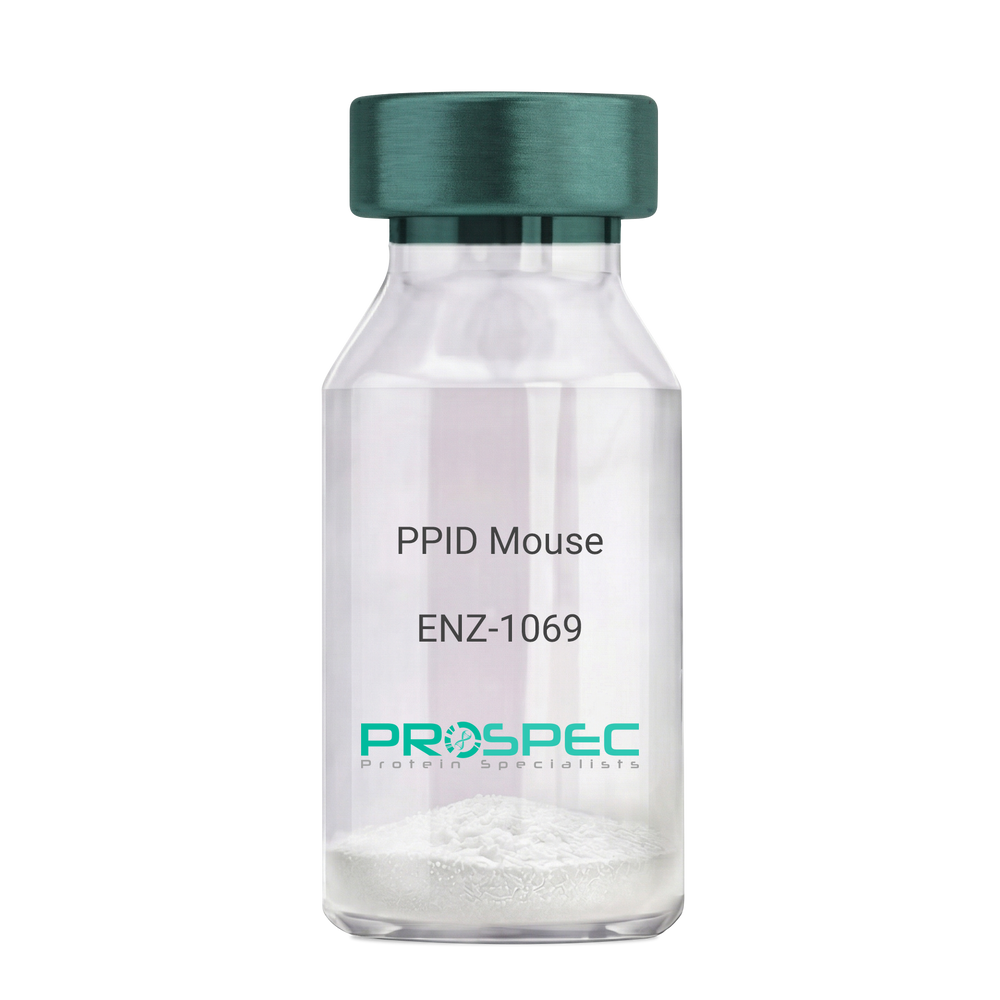
  • View Data Sheet

    Name :

    PPID Mouse

    Description:

    Peptidylprolyl Isomerase D Mouse Recombinant

    Peptidyl-prolyl cis-trans isomerase D, PPIase D, 40 kDa peptidyl-prolyl cis-trans isomerase, Cyclophilin-40, CYP-40, Cyclophilin-related protein, CYP40, CYPD, PPID, Peptidylprolyl Isomerase D.

    Product # :

    ENZ-1069

    Price :

    Quantity :

    Shipping Method :

    Ice Icon

    Shipped with Ice Packs

    Add To Cart

    More Info

    • description
    • source
    • formulation
    • purity
    • biological activity
    • More Info

    Description

    PPID Mouse Recombinant produced in E.Coli is a single, non-glycosylated polypeptide chain containing 395 amino acids (1-370a.a.) and having a molecular mass of 43.4kDa. PPID is fused to a 25 amino acid His-tag at N-terminus & purified by proprietary chromatographic techniques.

    Source

    Escherichia Coli.

    Formulation

    PPID protein solution (1mg/ml) containing 20mM Tris-Hcl buffer (pH8.0), 10% glycerol and 1mM DTT.

    Purity

    Greater than 90.0% as determined by SDS-PAGE.

    Biological Activity

    Specific activity is > 700nmol/min/mg, and is defined as the amount of enzyme that cleaves 1umole of suc-AAFP-PNA per minute at 37°C in Tris–HCl pH 8.0 using chymotrypsin.

    More Info

    • Introduction

      Cyclophilin-D is a member of the peptidyl-prolyl cis-trans isomerase (PPIase) family. PPIases catalyze the cis-trans isomerization of proline imidic peptide bonds in oligopeptides and speeds up the protein folding. Cyclophilin-D possess PPIase activity and binds to the immunosuppressant cyclosporin-A. Cyclophilin-D is very well known that its overexpression suppresses the apoptosis in cancer cell. Cyclophilin-D suppresses apoptotic cell death by the use of mitochondrial hexokinase-2 dependent mechanism in cancer cells.

    • Synonyms

      Peptidyl-prolyl cis-trans isomerase D, PPIase D, 40 kDa peptidyl-prolyl cis-trans isomerase, Cyclophilin-40, CYP-40, Cyclophilin-related protein, CYP40, CYPD, PPID, Peptidylprolyl Isomerase D.

    • Physical Appearance

      Sterile Filtered colorless solution.

    • Stability

      Store at 4°C if entire vial will be used within 2-4 weeks. Store, frozen at -20°C for longer periods of time. For long term storage it is recommended to add a carrier protein (0.1% HSA or BSA). Please prevent freeze-thaw cycles.

    • Amino Acid Sequence

      MGSSHHHHHH SSGLVPRGSH MGSEFMSHAS PAAKPSNSKN PRVFFDVDIG GERVGRIVLE LFADIVPKTA ENFRALCTGE KGTGSTTGKP LHFKGCPFHR IIKKFMIQGG DFSNQNGTGG ESIYGEKFED ENFHYKHDRE GLLSMANAGP NTNGSQFFIT TVPTPHLDGK HVVFGQVIKG LGVARTLENV EVNGEKPAKL CVIAECGELK EGDDWGIFPK DGSGDSHPDF PEDADIDLKD VDKILLISED LKNIGNTFFK SQNWEMAIKK YAKVLRYVDS SKAVIEKADR SRLQPIALSC VLNIGACKLK MSNWQGAIDS CLEALEMDPS NTKALYRKAQ GWQGLKEYDQ ALADLKKAQE IAPGDKAIQA ELLKVKQMIK AQKDKEKAVY AKMFA.

    ProSpec's products are furnished for LABORATORY RESEARCH USE ONLY. The product may not be used as drugs, agricultural or pesticidal products, food additives or household chemicals.

    Ppid Mouse
  • View Data Sheet

    Name :

    Leptin Human, PEG

    Description:

    Leptin Human Recombinant, PEG

    OB Protein, Obesity Protein, OBS, Obesity factor.

    Product # :

    CYT-1108

    Price :

    Quantity :

    Shipping Method :

    Room Temp Icon

    Shipped at Room temp

    Add To Cart

    More Info

    • description
    • source
    • formulation
    • purity
    • biological activity
    • More Info

    Description

    Pegylated Leptin Human Recombinant produced in E.Coli is a single non-glycosilated polypeptide chain containing 146 amino acids, an additional Ala at N-terminus and one molecule of PEG 20 kDa at its N-terminus acids and having a molecular weight of 35.6kDa. However due to enlarged hydrodymanic volume it runs on the SDS-PAGE as 48 kDa protein and in gel-filtration on Superdex 200 as over 100 kDa protein. Pegylated Leptin Human Recombinant was purified by proprietary chromatographic techniques.

    Source

    Escherichia Coli.

    Formulation

    Lyophilized from a concentrated (1mg/ml) solution with 0.0045mM NaHCO3.

    Purity

    Greater than 98.0% as determined by:
    (a) Gel filtration analysis.
    (b) Analysis by SDS-PAGE.

    Biological Activity

    Biological Activity is < than 0.1% as determined by inducing proliferation of BAF/3 cells stably transfected with the long form of human leptin receptor. It’s in vitro activity is 5-7 fold lower than the non-pegylated recombinant human leptin but in vivo it has profound weight reducing effect, resulting mainly from reduced food intake.

    More Info

    • Introduction

      Leptin takes an important part in the regulation of energy balance and body weight control.After entering the circulation, Leptin binds LEPRwhich results in the activation of several major signalling pathways. In the hypothalamus Leptin acts as an appetite-regulating factor that induces a decrease in food intake and an increase in energy consumption and also regulates bone mass and secretion of hypothalamo-pituitary-adrenal hormones. In the periphery, increases basal metabolism, regulates pancreatic beta-cell function and insulin secretion and affects innate and adaptive immunity.

    • Synonyms

      OB Protein, Obesity Protein, OBS, Obesity factor.

    • Physical Appearance

      Sterile Filtered White lyophilized (freeze-dried) powder.

    • Stability

      Lyophilized Pegylated leptin although stable at room temperature for 3 weeks, should be stored desiccated below -18°C. Upon reconstitution leptin N82K should be stored at 4°C between 2-7 days and for future use below -18°C. For long term storage it is recommended to add a carrier protein (0.1% HSA or BSA). Please prevent freeze-thaw cycles.

    • Solubility

      It is recommended to reconstitute the lyophilized Pegylated leptin in sterile water or 0.4% NaHCO3 adjusted to pH 8-9, not less than 100µg/ml, which can then be further diluted to other aqueous solutions.

    • Protein content

      Protein quantitation was carried out by UV spectroscopy at 280 nm using the absorbency value of 0.87 as the extinction coefficient for a 0.1% (1mg/ml) solution at pH 8.0. This value is calculated by the PC GENE computer analysis program of protein sequences (IntelliGenetics).

    ProSpec's products are furnished for LABORATORY RESEARCH USE ONLY. The product may not be used as drugs, agricultural or pesticidal products, food additives or household chemicals.

    Leptin Mutant
  • View Data Sheet

    Name :

    KLK3 Human, Native

    Description:

    Kallikrein-3 Human

    Prostate-specific antigen, PSA, Gamma-seminoprotein, Seminin, Kallikrein-3, P-30 antigen, Semenogelase, KLK3, APS, hK3, KLK2A1

    Product # :

    ENZ-1172

    Price :

    Quantity :

    Shipping Method :

    Ice Icon

    Shipped with Ice Packs

    Add To Cart

    More Info

    • description
    • source
    • formulation
    • purity
    • More Info

    Description

    Human Kallikrein-3 produced in Human seminal fluid having a molecular mass of approximately 30kD.

    Source

    Human seminal fluid.

    Formulation

    The protein solution (0.2 µm filtered) is in 0.09% NaN3, 0.05M phosphate buffer, 150mM NaCl, pH 7.5.

    Purity

    Greater than 96.0%.

    More Info

    • Introduction

      Kallikrein-3 (KLK3) is a part of the kallikrein-related peptidase family. Kallikreins are a subgroup of serine proteases having various physiological functions. Numerous kallikreins take part in carcinogenesis and some may be prospective cancer and other disease biomarkers. Kallikrein-3 is 1 of the 15 kallikrein subfamily members located in a cluster on chromosome 19 and is a protease present in seminal plasma. KLK3 hydrolyzes semenogelin-1 consequently leading to the liquefaction of the seminal coagulum. KLK3 acts normally in the liquefaction of seminal coagulum, probably by hydrolysis of the high molecular mass seminal vesicle protein. Serum level of the KLK3 protein, called PSA in the clinical setting, is beneficial in the diagnosis and monitoring of prostatic carcinoma.

    • Synonyms

      Prostate-specific antigen, PSA, Gamma-seminoprotein, Seminin, Kallikrein-3, P-30 antigen, Semenogelase, KLK3, APS, hK3, KLK2A1

    • Physical Appearance

      Sterile Filtered clear solution.

    • Stability

      Human Kallikrein-3 should be stored at 2-8°C. Do not freeze!

    • Human Virus Test

      Starting material donor has been tested and certified negative for antibodies to HIV-1, HIV-2, HCV, HBSAG, Syphilis and HIV/HBV/HCV (PCR).

    ProSpec's products are furnished for LABORATORY RESEARCH USE ONLY. The product may not be used as drugs, agricultural or pesticidal products, food additives or household chemicals.

    Prostate Specific Antigen
  • View Data Sheet

    Name :

    CTF1 Human

    Description:

    Cardiotrophin-1 Human Recombinant

    CTF1, CT1, CT-1, Cardiophin 1, Cardiotrophin-1.

    Product # :

    CYT-944

    Price :

    Quantity :

    Shipping Method :

    Room Temp Icon

    Shipped at Room temp

    Add To Cart

    More Info

    • description
    • source
    • formulation
    • purity
    • biological activity
    • More Info

    Description

    Cardiotrophin-1 Human Recombinant produced in E.coli is a single, non-glycosylated, polypeptide chain containing 201 amino acids and having a molecular mass of 21.2kDa.The CTF1 is purified by proprietary chromatographic techniques.

    Source

    Escherichia Coli.

    Formulation

    CTF-1 protein was lyophilized from a 0.2µm filtered concentrated solution in 30% Acetonitrile and 0.1% TFA.

    Purity

    Greater than 95.0% as determined by:
    (a) Analysis by RP-HPLC.
    (b) Analysis by SDS-PAGE.

    Biological Activity

    The ED50 as determined by a cell proliferation assay using human TF-1 cells is less than 1.0 ng/ml, corresponding to a specific activity of > 1.0×10⁶ IU/mg.

    More Info

    • Introduction

      Cardiotrophin 1 (CT-1) is a 201 amino acid member of the interleukin-6 superfamily. It was identified by its ability to induce hypertrophic response in cardiac myocytes. CT-1 mRNA levels were found both in cardiac myocytes and in cardiac nonmyocytes. CT 1 was also detected in abundance in normal adult human lung and was expressed in both fetal and adult airway smooth muscle cells. CT 1 activates gp130 dependent signaling and stimulates the Janus kinase/signal transducers and activators of transcription (JAK/STAT) pathway to transduce hypertrophic and cytoprotective signals in cardiac myocytes.
      CT 1 has also a neurotrophic function. CTF1 deficiency causes increased motoneuron cell death in spinal cord and brainstem nuclei of mice during a period between embryonic day 14 and the first postnatal week. Moreover, CT-1 is a hepatocyte survival factor that efficiently reduces hepatocellular damage in animal models of acute liver injury. Cardiotrophin 1 expression is augmented after hypoxic stimulation and it can protect cardiac cells when added either prior to simulated ischaemia or at the time of reoxygenation following simulated ischaemia. Cardiotrophin 1 can induce expression of the protective heat shock proteins (hsps) in cardiac cells.
      Cardiotrophin-1 increased ventricular expression of ANP, brain natriuretic peptide (BNP) and angiotensinogen mRNA.
      Cardiophin 1 levels were significantly elevated in patients with heart failure, patients with dilatative cardiomyopathy, moderate/severe mitral regurgitation, stable and unstable angina and after acute myocardial infarction.

    • Synonyms

      CTF1, CT1, CT-1, Cardiophin 1, Cardiotrophin-1.

    • Physical Appearance

      Sterile Filtered White lyophilized (freeze-dried) powder.

    • Stability

      Lyophilized CTF1 although stable at room temperature for 3 weeks, should be stored desiccated below -18°C. Upon reconstitution CTF-1 should be stored at 4°C between 2-7 days and for future use below -18°C. For long term storage it is recommended to add a carrier protein (0.1% HSA or BSA). Please prevent freeze-thaw cycles.

    • Solubility

      It is recommended to reconstitute the lyophilized CTF1 in sterile 4mM HCl not less than 100µg/ml, which can then be further diluted to other aqueous solutions.

    • Amino Acid Sequence

      MSRREGSLED PQTDSSVSLL PHLEAKIRQT HSLAHLLTKY AEQLLQEYVQ LQGDPFGLPS FSPPRLPVAG LSAPAPSHAG LPVHERLRLD AAALAALPPL LDAVCRRQAE LNPRAPRLLR RLEDAARQAR ALGAAVEALL AALGAANRGP RAEPPAATAS AASATGVFPA KVLGLRVCGL YREWLSRTEG DLGQLLPGGS A.

    • Background

      Title: Cardiotrophin-1 Human Recombinant: A Potential Therapeutic Target for Cardiovascular Diseases

      Abstract:


      Cardiotrophin-1 (CT-1) is a cytokine that plays a crucial role in cardiac development and homeostasis. This research paper provides a comprehensive analysis of human recombinant CT-1, focusing on its production, characterization, and potential therapeutic implications in cardiovascular diseases. The paper discusses the significance of CT-1 in cardiac cell survival, hypertrophy, and regeneration. Furthermore, it elucidates the ongoing research and clinical trials exploring the therapeutic potential of recombinant CT-1 in cardiovascular disorders. The information presented in this paper aims to enhance the understanding of human recombinant CT-1 and its utility as a research tool and a potential therapeutic agent for cardiovascular diseases.

      Introduction:


      Cardiotrophin-1 (CT-1) is a member of the interleukin-6 cytokine family, primarily produced by cardiac cells. It exerts its effects by binding to the CT-1 receptor complex, leading to the activation of various signaling pathways. Human recombinant CT-1, produced through genetic engineering techniques, provides researchers with a valuable tool to explore its biological functions and therapeutic potential.

      Production and Characterization:


      Recombinant CT-1 is typically produced using expression systems such as mammalian cells or bacteria. The protein is then purified and characterized to ensure its structural integrity and functional activity. Quality control measures are implemented to confirm the specificity and bioactivity of the recombinant CT-1.

      Role in Cardiovascular Physiology:


      CT-1 plays a critical role in cardiac cell survival, hypertrophy, and regeneration. It promotes cardiomyocyte growth and survival, contributing to the adaptation of the heart to stress and injury. CT-1 also exhibits angiogenic properties, stimulating the formation of new blood vessels in the heart. These functions make recombinant CT-1 an important tool for studying cardiac physiology and exploring potential therapeutic interventions.

      Therapeutic Implications:


      The dysregulation of CT-1 signaling has been implicated in various cardiovascular diseases, including heart failure, myocardial infarction, and cardiac hypertrophy. Recombinant CT-1 holds promise as a potential therapeutic agent for these conditions. Clinical trials are underway to evaluate the safety and efficacy of CT-1-based therapies, including recombinant CT-1 administration and gene therapy approaches.

      Conclusion:


      Human recombinant CT-1 is a valuable research tool and a potential therapeutic target for cardiovascular diseases. Its production, characterization, and applications in cardiac cell signaling contribute to our understanding of cardiovascular physiology and the development of novel treatments. Continued research and clinical trials exploring the therapeutic potential of recombinant CT-1 hold promise for improving outcomes in patients with cardiovascular disorders.

      What is the molecular weight/Mw of CTF1 Protein?
      CTF1 Protein has a total Mw of 21.2kDa.

      What is the source or expression system of CTF1 Protein?
      Escherichia Coli.

      What is the Purity of CTF1 Protein?
      CTF1 Protein is >95% pure as determined by SDS-PAGE.

      What is the Biological Activity of CTF1 Protein?
      The ED50 as determined by a cell proliferation assay using human TF-1 cells is less than 1.0 ng/ml, corresponding to a specific activity of > 1.0×10⁶ IU/mg.

      What is the amino acid sequence of CTF1 Protein?
      MSRREGSLED PQTDSSVSLL PHLEAKIRQT HSLAHLLTKY AEQLLQEYVQ LQGDPFGLPS FSPPRLPVAG LSAPAPSHAG LPVHERLRLD AAALAALPPL LDAVCRRQAE LNPRAPRLLR RLEDAARQAR ALGAAVEALL AALGAANRGP RAEPPAATAS AASATGVFPA KVLGLRVCGL YREWLSRTEG DLGQLLPGGS A.

      What applications can CTF1 Protein be used in?
      CTF1 Protein can probably be used in western blot, ELISA and Lateral Flow.

      What is the endotoxin level for CTF1 Protein?
      The endotoxin level is minimal, CTF1 Protein was purified using conventional chromatography techniques.

    ProSpec's products are furnished for LABORATORY RESEARCH USE ONLY. The product may not be used as drugs, agricultural or pesticidal products, food additives or household chemicals.

    Ctf1 Human
  • View Data Sheet

    Name :

    Adiponectin Protein

    Description:

    Adiponectin Human Recombinant

    Acrp30, AdipoQ, GBP-28, APM-1, ACDC.

    Product # :

    CYT-280

    Price :

    Quantity :

    Shipping Method :

    Ice Icon

    Shipped with Ice Packs

    Add To Cart

    More Info

    • description
    • source
    • formulation
    • purity
    • More Info
    • sds-page

    Description

    The Adiponectin Human recombinant protein is a single, non-glycosilated polypeptide chain produced in E. coli, having a molecular weight of 25.1 kDa and containing 231 amino acids (15-244).

    Source

    Escherichia Coli.

    Formulation

    Acrp30 protein solution contains Phosphate buffered saline pH 7.4 and 1mM DTT.

    Purity

    Acrp30 purity is greater than 90% as determined by SDS-PAGE.

    sds-page

    Adiponectin-sds-page - Product image 1

    More Info

    • Introduction

      The adipose tissue exclusively expresses and secretes Adiponectin (Acrp30). Acrp30 is involved in various physiological processes such as energy homeostasis, insulin sensitivity, hormonal processes, fatty acid metabolism and obesity.
      Adiponectin circulates in the plasma. Decreased levels of Adiponectin are associated with insulin resistance and hyperinsulinemia, as seen in people with obesity insulin resistance, and diabetes type 2, whose plasma levels of adiponectin are reduced.
      The modular structure of Acrp30 is comprised of N-terminal collagenous domain followed by a C-terminal globular domain.
      Acrp30 also acts as a significant negative regulator in hematopoiesis and immune systems; it may be involved in ending inflammatory responses through its inhibitory functions. Adiponectin inhibits endothelial NF-kappa-b signaling through a cAMP-dependent pathway, it also inhibits TNF-alpha- induced expression of endothelial adhesion molecules.

    • Synonyms

      Acrp30, AdipoQ, GBP-28, APM-1, ACDC.

    • Physical Appearance

      Sterile Filtered clear solution.

    • Stability

      Store at 4°C if entire vial will be used within 2-4 weeks. Store, frozen at -20°C for longer periods of time. For long term storage it is recommended to add a carrier protein (0.1% HSA or BSA).Avoid multiple freeze-thaw cycles.

    • Amino Acid Sequence

      MGHDQETTTQGPGVLLPLPKGACTGWMAGIPGHPGHNGAPGRDGRDGTPGE
      KGEKGDPGLIGPKGDIGETGVPGAEGPRGFPGIQGRKGEPGEGAYVYRSAFSV
      GLETYVTIPNMPIRFTKIFYNQQNHYDGSTGKFHCNIPGLYYFAYHITVYMKD
      VKVSLFKKDKAMLFTYDQYQENNVDQASGSVLLHLEVGDQVWLQVYGEGE
      RNGLYADNDNDSTFTGFLLYHDTN.

    • Background

      Adiponectin Human Recombinant: Unraveling its Potential in Therapeutic Applications

      1. Abstract

      This paper aims to deliver an extensive exploration into Adiponectin Human Recombinant, a vital adipokine implicated in a multitude of metabolic processes. By delving into the structure, biological roles, and signaling pathways of adiponectin, we elucidate its contribution to pathophysiological conditions. Moreover, we examine the potential therapeutic application of adiponectin in metabolic and cardiovascular diseases.

      2. Introduction

      Adiponectin, a protein predominantly secreted by adipose tissue, plays an integral part in regulating metabolic processes such as glucose regulation and fatty acid oxidation. Understanding the intricacies of adiponectin's actions could pave the way for innovative therapeutic interventions in diseases like obesity, diabetes, and cardiovascular disease.

      3. Structure and Signaling of Adiponectin

      Adiponectin is a 30kDa protein consisting of a collagen-like domain and a C-terminal globular domain. It signals through adiponectin receptors AdipoR1 and AdipoR2, which then activate several intracellular signaling pathways, including AMP-activated protein kinase (AMPK) and peroxisome proliferator-activated receptor-alpha (PPAR-α), regulating various metabolic processes.

      4. Biological Functions of Adiponectin

      Adiponectin has been shown to enhance insulin sensitivity, stimulate fatty acid oxidation, and exert anti-inflammatory effects. Additionally, it is involved in regulating energy homeostasis and has been linked to the regulation of food intake and body weight.

      5. Adiponectin in Disease Pathology

      Reduced levels of adiponectin have been associated with obesity, insulin resistance, type 2 diabetes, and cardiovascular disease. Moreover, adiponectin deficiency has been observed in metabolic syndrome, emphasizing the adipokine's crucial role in metabolic health.

      6. Therapeutic Potential of Adiponectin

      Given adiponectin's role in metabolic regulation, its potential as a therapeutic target is of considerable interest. Approaches to increase circulating adiponectin levels or enhance adiponectin signaling could offer potential therapeutic strategies for managing metabolic diseases and cardiovascular conditions.

      7. Conclusion and Future Perspectives

      While our understanding of adiponectin and its role in health and disease has greatly advanced in recent years, there is still much to uncover. Further research on the precise molecular mechanisms of adiponectin could pave the way for novel therapeutic approaches.

      What is the molecular weight / Mw of ADIPONECTIN Protein?
      ADIPONECTIN Protein has a total Mw of 25.1kDa.
      What is the source or expression system of ADIPONECTIN Protein?
      Escherichia Coli.

      What is the Purity of ADIPONECTIN Protein?
      ADIPONECTIN Protein is >90% pure as determined by SDS-PAGE.

      What is the Biological Activity of ADIPONECTIN Protein?
      The biological functionality of ADIPONECTIN Protein will be determined in the future.

      What is the amino acid sequence of ADIPONECTIN Protein?
      MGHDQETTTQGPGVLLPLPKGACTGWMAGIPGHPGHNGAPGRDGRDGTPGE
      KGEKGDPGLIGPKGDIGETGVPGAEGPRGFPGIQGRKGEPGEGAYVYRSAFSV
      GLETYVTIPNMPIRFTKIFYNQQNHYDGSTGKFHCNIPGLYYFAYHITVYMKD
      VKVSLFKKDKAMLFTYDQYQENNVDQASGSVLLHLEVGDQVWLQVYGEGE
      RNGLYADNDNDSTFTGFLLYHDTN..

      What applications can ADIPONECTIN Protein be used in?
      ADIPONECTIN Protein can probably be used in western blot, ELISA and Lateral Flow.

      What is the endotoxin level for ADIPONECTIN Protein?
      The endotoxin level is minimal, ADIPONECTIN Protein was purified using conventional chromatography techniques

    ProSpec's products are furnished for LABORATORY RESEARCH USE ONLY. The product may not be used as drugs, agricultural or pesticidal products, food additives or household chemicals.

    Adiponectin Human
  • 1
  • …
  • 9
  • 10
  • 11
  • 12
  • 13
  • …
  • 42
Your browser does not support the video tag.

Products

  • Cytokines
  • Growth Factors
  • Chemokines
  • CD Antigens
  • Neurotrophins
  • Hormones
  • Enzymes
  • Viral Antigens
  • Recombinant Proteins
  • Natural Proteins
  • Monoclonal Antibodies
  • Polyclonal Antibodies
  • Thermal Packaging

About

  • Company
  • Founder
  • Contribution
  • Contact Us
  • My Account

Ordering

  • Ordering Method
  • Ordering - Credit Card
  • Ordering PO
  • Shipping Fees
  • FAQ's

Legal

  • Terms & Conditions
  • Privacy
  • Site Map
  • info@prospecbio.com
  • Facebook
  • Instagram
  • Linkedin Profile

© 2026 ProSpec-Tany TechnoGene Ltd. All Rights Reserved.

  • Choosing a selection results in a full page refresh.
  • Opens in a new window.