Skip to content

High-quality research proteins.

  • 1-800-805-6531

  • Mon - Sat 8.00-18.00, Sun - Closed

  • info@prospecbio.com

  • PO Box 6591 East Brunswick NJ 08816

  • Products
    • Cytokines
    • Growth factors
    • Chemokines
    • Cd antigens
    • Neurotrophins
    • Hormones
    • Enzymes
    • Viral antigens
    • Recombinant proteins
    • Natural proteins
    • Monoclonal antibodies
    • Polyclonal antibodies
    • Thermal Packaging
  • About
    • Company
    • Founder
    • Contribution
  • Customers
    • Eastern Asia
    • Eastern Europe
    • North America
    • South America
    • South East Asia
    • Southern Asia
    • Western Europe
  • Ordering
    • Ordering Method
    • Ordering - Credit Card
    • Ordering - PO
    • Shipping Fees
    • FAQs
  • Services
    • DNA Cloning
    • Protein Expression
    • Monoclonal Antibody
    • Fermentation
    • Technology License
  • Contact us
Log in

Country/region

  • USD $ | Albania
  • USD $ | Andorra
  • USD $ | Argentina
  • USD $ | Armenia
  • USD $ | Australia
  • USD $ | Austria
  • USD $ | Azerbaijan
  • USD $ | Belarus
  • USD $ | Belgium
  • USD $ | Bolivia
  • USD $ | Brazil
  • USD $ | Bulgaria
  • USD $ | Cambodia
  • USD $ | Canada
  • USD $ | Chile
  • USD $ | China
  • USD $ | Colombia
  • USD $ | Costa Rica
  • USD $ | Croatia
  • USD $ | Cyprus
  • USD $ | Czechia
  • USD $ | Denmark
  • USD $ | Estonia
  • USD $ | Finland
  • USD $ | France
  • USD $ | Georgia
  • USD $ | Germany
  • USD $ | Greece
  • USD $ | Hong Kong SAR
  • USD $ | Hungary
  • USD $ | Iceland
  • USD $ | India
  • USD $ | Ireland
  • USD $ | Israel
  • USD $ | Italy
  • USD $ | Japan
  • USD $ | Kazakhstan
  • USD $ | Latvia
  • USD $ | Liechtenstein
  • USD $ | Lithuania
  • USD $ | Madagascar
  • USD $ | Malta
  • USD $ | Mexico
  • USD $ | Moldova
  • USD $ | Monaco
  • USD $ | Netherlands
  • USD $ | New Zealand
  • USD $ | North Macedonia
  • USD $ | Norway
  • USD $ | Panama
  • USD $ | Paraguay
  • USD $ | Peru
  • USD $ | Philippines
  • USD $ | Poland
  • USD $ | Portugal
  • USD $ | Romania
  • USD $ | Singapore
  • USD $ | Slovakia
  • USD $ | Slovenia
  • USD $ | South Africa
  • USD $ | South Korea
  • USD $ | Spain
  • USD $ | Sri Lanka
  • USD $ | Sweden
  • USD $ | Switzerland
  • USD $ | Taiwan
  • USD $ | Thailand
  • USD $ | Türkiye
  • USD $ | Ukraine
  • USD $ | United Kingdom
  • USD $ | United States
  • USD $ | Uruguay
  • USD $ | Vatican City
  • USD $ | Venezuela
  • USD $ | Vietnam
  • Facebook
  • Instagram
logoProSpec - Recombinant Protein Manufacturer for academic and R&D industry
Become a distributor
Account Log in
Wishlist
Cart Cart(0)
  • Products
    +
    • Cytokines
    • Growth factors
    • Chemokines
    • Cd antigens
    • Neurotrophins
    • Hormones
    • Enzymes
    • Viral antigens
    • Recombinant proteins
    • Natural proteins
    • Monoclonal antibodies
    • Polyclonal antibodies
    • Thermal Packaging
  • About
    +
    • Company
    • Founder
    • Contribution
  • Customers
    +
    • Eastern Asia
    • Eastern Europe
    • North America
    • South America
    • South East Asia
    • Southern Asia
    • Western Europe
  • Ordering
    +
    • Ordering Method
    • Ordering - Credit Card
    • Ordering - PO
    • Shipping Fees
    • FAQs
  • Services
    +
    • DNA Cloning
    • Protein Expression
    • Monoclonal Antibody
    • Fermentation
    • Technology License
  • Contact us

Item added to your cart

View cart
View All
  • Cytokines
  • Growth factors
  • Chemokines
  • Cd antigens
  • Neurotrophins
  • Hormones
  • Enzymes
  • Viral antigens
  • Recombinant proteins
  • Natural proteins
  • Monoclonal antibodies
  • Polyclonal antibodies
  • Thermal Packaging
  • Tumor Necrosis Factor

    Tumor Necrosis Factor

    View All
  • 4-1BB

    4-1BB

    View All
  • Adiponectin

    Adiponectin

    View All
  • AIF1

    AIF1

    View All
  • Other Cytokines

    Other Cytokines

    View All
  • AITRL

    AITRL

    View All
  • Angiopoietin

    Angiopoietin

    View All
  • Apolipoprotein

    Apolipoprotein

    View All
  • B-Cell Activating Factor

    B-Cell Activating Factor

    View All
  • Beta Defensin

    Beta Defensin

    View All
  • Bone Morphogenetic Protein

    Bone Morphogenetic Protein

    View All
  • B type Natriuretic Peptide

    B type Natriuretic Peptide

    View All
  • BST

    BST

    View All
  • Betacellulin

    Betacellulin

    View All
  • Cardiotrophin

    Cardiotrophin

    View All
  • Activin

    Activin

    View All
  • Fibroblast Growth Factor

    Fibroblast Growth Factor

    View All
  • Other Growth Factors

    Other Growth Factors

    View All
  • CSF

    CSF

    View All
  • CTGF

    CTGF

    View All
  • IGFBP

    IGFBP

    View All
  • VEGF Protein

    VEGF Protein

    View All
  • EGF

    EGF

    View All
  • Epigen

    Epigen

    View All
  • Erythropoietin

    Erythropoietin

    View All
  • Insulin-Like Growth Factor

    Insulin-Like Growth Factor

    View All
  • Growth Hormone

    Growth Hormone

    View All
  • HDGF

    HDGF

    View All
  • Hepatocyte Growth Factor

    Hepatocyte Growth Factor

    View All
  • Insulin

    Insulin

    View All
  • BCA-1/ BLC (CXCL13)

    BCA-1/ BLC (CXCL13)

    View All
  • BRAK (CXCL14)

    BRAK (CXCL14)

    View All
  • C-10 (CCL6)

    C-10 (CCL6)

    View All
  • Other Chemokines

    Other Chemokines

    View All
  • MEC (CCL28)

    MEC (CCL28)

    View All
  • LD78-beta (CCL3L1)

    LD78-beta (CCL3L1)

    View All
  • CTACK (CCL27)

    CTACK (CCL27)

    View All
  • CXCL16

    CXCL16

    View All
  • CXCL17

    CXCL17

    View All
  • Platelet Factor-4 (CXCL4)

    Platelet Factor-4 (CXCL4)

    View All
  • ENA-78 (CXCL5)

    ENA-78 (CXCL5)

    View All
  • Eotaxin (CCL11,24,26)

    Eotaxin (CCL11,24,26)

    View All
  • Exodus-2 (CCL21)

    Exodus-2 (CCL21)

    View All
  • Fractalkine (CX3CL1)

    Fractalkine (CX3CL1)

    View All
  • CXCL6

    CXCL6

    View All
  • Other CD Antigens

    Other CD Antigens

    View All
  • CD14

    CD14

    View All
  • CD164

    CD164

    View All
  • CD1

    CD1

    View All
  • CD2

    CD2

    View All
  • CD200

    CD200

    View All
  • CD207

    CD207

    View All
  • CD226

    CD226

    View All
  • CD23

    CD23

    View All
  • CD244

    CD244

    View All
  • CD247

    CD247

    View All
  • CD27

    CD27

    View All
  • CD274

    CD274

    View All
  • CD300

    CD300

    View All
  • CD33

    CD33

    View All
  • Other Neurotrophins

    Other Neurotrophins

    View All
  • Beta-NGF

    Beta-NGF

    View All
  • BDNF

    BDNF

    View All
  • CDNF

    CDNF

    View All
  • CNTF

    CNTF

    View All
  • GDNF

    GDNF

    View All
  • Glia Maturation Factor

    Glia Maturation Factor

    View All
  • MANF

    MANF

    View All
  • Midkine

    Midkine

    View All
  • Neuroglobin

    Neuroglobin

    View All
  • Neurotrophic factors

    Neurotrophic factors

    View All
  • Neuregulin

    Neuregulin

    View All
  • Neuropilin

    Neuropilin

    View All
  • Pigment Epithelium-Derived Factor

    Pigment Epithelium-Derived Factor

    View All
  • Pleiotrophin

    Pleiotrophin

    View All
  • Peptide Hormones

    Peptide Hormones

    View All
  • Other Hormones

    Other Hormones

    View All
  • HCG

    HCG

    View All
  • Endothelin

    Endothelin

    View All
  • Exendin

    Exendin

    View All
  • FSH

    FSH

    View All
  • Glucagon

    Glucagon

    View All
  • GHRP

    GHRP

    View All
  • GLP

    GLP

    View All
  • Thyrostimulin

    Thyrostimulin

    View All
  • Inhibin A

    Inhibin A

    View All
  • LHRH

    LHRH

    View All
  • Melanotan

    Melanotan

    View All
  • Procalcitonin

    Procalcitonin

    View All
  • PTH

    PTH

    View All
  • Peroxiredoxin

    Peroxiredoxin

    View All
  • Peptidase

    Peptidase

    View All
  • Synthetase

    Synthetase

    View All
  • Transferase

    Transferase

    View All
  • Hydrolase

    Hydrolase

    View All
  • Dehydrogenase

    Dehydrogenase

    View All
  • ACE2

    ACE2

    View All
  • Esterase

    Esterase

    View All
  • Protein Kinases

    Protein Kinases

    View All
  • Other Enzymes

    Other Enzymes

    View All
  • Phosphatase

    Phosphatase

    View All
  • Deaminase

    Deaminase

    View All
  • Oxygenase

    Oxygenase

    View All
  • Adenylate Kinase

    Adenylate Kinase

    View All
  • Lyase

    Lyase

    View All
  • Chagas

    Chagas

    View All
  • SARS

    SARS

    View All
  • Influenza

    Influenza

    View All
  • ASFV

    ASFV

    View All
  • Astrovirus

    Astrovirus

    View All
  • Borrelia

    Borrelia

    View All
  • Helicobacter Pylori

    Helicobacter Pylori

    View All
  • Chikungunya

    Chikungunya

    View All
  • Chlamydia

    Chlamydia

    View All
  • Cytomegalo

    Cytomegalo

    View All
  • Dengue

    Dengue

    View All
  • EBV

    EBV

    View All
  • Ebola

    Ebola

    View All
  • Feline Leukemia Virus

    Feline Leukemia Virus

    View All
  • Hepatitis A

    Hepatitis A

    View All
  • Other

    Other

    View All
  • Actin

    Actin

    View All
  • ADAM

    ADAM

    View All
  • Complement Component

    Complement Component

    View All
  • Ag85

    Ag85

    View All
  • Eukaryotic Translation Initiation Factor

    Eukaryotic Translation Initiation Factor

    View All
  • Anterior Gradient Protein

    Anterior Gradient Protein

    View All
  • Heat Shock Protein

    Heat Shock Protein

    View All
  • Alpha-2-HS-Glycoprotein

    Alpha-2-HS-Glycoprotein

    View All
  • Hemoglobin

    Hemoglobin

    View All
  • Allergy

    Allergy

    View All
  • Anaplasma

    Anaplasma

    View All
  • Angiogenin

    Angiogenin

    View All
  • Ankyrin Repeat Domain

    Ankyrin Repeat Domain

    View All
  • Annexin

    Annexin

    View All
  • Other Natural Proteins

    Other Natural Proteins

    View All
  • Aprotinin

    Aprotinin

    View All
  • Transferrin

    Transferrin

    View All
  • Avidin

    Avidin

    View All
  • Anti Coagulation Factors

    Anti Coagulation Factors

    View All
  • Natural Albumin

    Natural Albumin

    View All
  • Natural Coagulation Factors

    Natural Coagulation Factors

    View All
  • Fibronectin

    Fibronectin

    View All
  • Thrombin

    Thrombin

    View All
  • Anti Human Enzyme

    Anti Human Enzyme

    View All
  • Other Monoclonal Antibodies

    Other Monoclonal Antibodies

    View All
  • Anti Human Cytokine

    Anti Human Cytokine

    View All
  • Anti Human Heat Shock Protein

    Anti Human Heat Shock Protein

    View All
  • Anti Mouse Lymphocyte

    Anti Mouse Lymphocyte

    View All
  • Anti Human Chemokine

    Anti Human Chemokine

    View All
  • Anti Human Lymphocyte

    Anti Human Lymphocyte

    View All
  • Anti Viral Monoclonal

    Anti Viral Monoclonal

    View All
  • Anti Mouse Cytokine

    Anti Mouse Cytokine

    View All
  • Anti-GST Monoclonal

    Anti-GST Monoclonal

    View All
  • Other Polyclonal Antibodies

    Other Polyclonal Antibodies

    View All
  • Anti Viral

    Anti Viral

    View All
  • Anti-GST Monoclonal

    Anti-GST Monoclonal

    View All
Back

Search results

1000 results found for “macrophage migration inhibitory factor”

Name

Description

Product #

Price

Quantity

Shipping Method

  • View Data Sheet

    Name :

    TFF3 Human

    Description:

    Trefoil Factor-3 Human Recombinant

    TFF-3, ITF, TFI, HITF, hP1.B, TFF3, Trefoil factor 3, Intestinal trefoil factor.

    Product # :

    CYT-005

    Price :

    Quantity :

    Shipping Method :

    Room Temp Icon

    Shipped at Room temp

    Add To Cart

    More Info

    • description
    • source
    • formulation
    • purity
    • biological activity
    • More Info

    Description

    TFF-3 Human Recombinant produced in E.Coli is a homodimeric, non-glycosylated, polypeptide chain containing 2 x 59 amino acid chains which includes a 40 amino acid trefoil motif containing 3 conserved interamolecular disulfide bonds and having a total molecular mass of 13.2kDa. TFF-3 Human Recombinant is purified by proprietary chromatographic techniques.

    Source

    Escherichia Coli.

    Formulation

    Lyophilized from a 0.2µm filtered concentrated solution in PBS, pH 7.4.

    Purity

    Greater than 97.0% as determined by RP-HPLC and SDS-PAGE analysis.

    Biological Activity

    The ED50 as determined by a chemotaxis bioassay using human MCF-7 cells is less than 10µg/ml, corresponding to a specific activity of > 100IU/mg.

    More Info

    • Introduction

      Proteins of the TFF family are characterized by obtaining a minimum of 1 copy of the trefoil motif, a 40-amino acid domain that contains 3 conserved disulfides. Trefoil Factors are stable secretory proteins expressed in gastrointestinal mucosa which protect the mucosa from insults, stabilize the mucus layer and affect healing of the epithelium.TFF2 inhibits gastric acid motility & secretion. TFF2 stabilizes glycoproteins in the mucus gel through interactions with carbohydrate side chains. TFF3 induces ciliogenesis and promotes airway epithelial ciliated cell differentiation, relatively through an epidermal growth factor receptor-dependent pathway. TFF3 overexpression is crucial for progression in mouse and human hepatocellular carcinogenesis. TFF-3 is normally expressed in hepatocellular carcinoma and its expression associates with tumor grade.

    • Synonyms

      TFF-3, ITF, TFI, HITF, hP1.B, TFF3, Trefoil factor 3, Intestinal trefoil factor.

    • Physical Appearance

      Sterile Filtered White lyophilized (freeze-dried) powder.

    • Stability

      Lyophilized TFF3 although stable at room temperature for 3 weeks, should be stored desiccated below -18°C. Upon reconstitution TFF3 should be stored at 4°C between 2-7 days and for future use below -18°C.For long term storage it is recommended to add a carrier protein (0.1% HSA or BSA).Please prevent freeze-thaw cycles.

    • Solubility

      It is recommended to reconstitute the lyophilized TFF3 in sterile 18M-cm H2O not less than 100µg/ml, which can then be further diluted to other aqueous solutions.

    • Amino Acid Sequence

      EEYVGLSANQ CAVPAKDRVD CGYPHVTPKE CNNRGCCFDS RIPGVPWCFK PLQEAECTF.

    ProSpec's products are furnished for LABORATORY RESEARCH USE ONLY. The product may not be used as drugs, agricultural or pesticidal products, food additives or household chemicals.

    Tff3 Human
  • View Data Sheet

    Name :

    EIF3K (50-94) Human

    Description:

    Eukaryotic Translation Initiation Factor 3K (50-94 a.a.) Human Recombinant

    PLAC-24, eIF3k, eIF-3 p25, eIF-3 p28, EIF3S12.

    Product # :

    PRO-2833

    Price :

    Quantity :

    Shipping Method :

    Room Temp Icon

    Shipped at Room temp

    Add To Cart

    More Info

    • description
    • source
    • formulation
    • purity
    • More Info

    Description

    The EIF3KHuman is created as a recombinant protein with a 4kda N-terminal fusion of His Tag. The EIF3KHis-Tagged Fusion Protein, produced in E. coli, is a 10kDa protein containing 45 amino acid residues of the EIF3KHuman, 50-94 amino acids.

    Source

    Escherichia Coli.

    Formulation

    Each mg was lyophilized with 1xPBS, 0.4% SDS and 4mM DTT.

    Purity

    Greater than 90% as determined by SDS-PAGE.

    More Info

    • Synonyms

      PLAC-24, eIF3k, eIF-3 p25, eIF-3 p28, EIF3S12.

    • Physical Appearance

      Filtered White lyophilized (freeze-dried) powder.

    • Stability

      Store lyophilized EIF3Kat -20°C. Aliquot the product after reconstitution to avoid repeated freezing/thawing cycles. Reconstituted protein can be stored at 4°C for a limited period of time; it does not show any change after two weeks at 4°C.

    • Solubility

      It is recommended to add deionized water to prepare a working stock solution of approximately 0.5mg/ml and let the lyophilized pellet dissolve completely. Product is not sterile! Please filter the product by an appropriate sterile filter before using it on cell culture.

    • Background

      Eukaryotic Translation Initiation Factor 3K (EIF3K) is a part of the eIF3 subunit K family. EIF3K is the smallest subunit of eIF3 and it interacts with a few other subunits of the 40S ribosomal subunit and eIF3. EIF3K is found both in nucleus and cytoplasm and colocalized with cyclin D3, a regulatory subunit of cyclin-dependent kinase 4. EIF3K is conserved among high eukaryotes, including mammals, plants and insects and is expressed in human tissues.

    ProSpec's products are furnished for LABORATORY RESEARCH USE ONLY. The product may not be used as drugs, agricultural or pesticidal products, food additives or household chemicals.

    Eif3K Protein
  • View Data Sheet

    Name :

    TNFRSF10D Human

    Description:

    TRAIL Receptor-4 Human Recombinant

    Tumor necrosis factor receptor superfamily member 10D, CD264, DCR2, TRAIL-R4, TRAILR4, TRUNDD, Decoy receptor 2, TNF-related apoptosis-inducing ligand receptor 4, TRAIL receptor 4, TRAIL receptor with a truncated death domain.          

    Product # :

    CYT-1045

    Price :

    Quantity :

    Shipping Method :

    Ice Icon

    Shipped with Ice Packs

    Add To Cart

    More Info

    • description
    • source
    • formulation
    • purity
    • biological activity
    • More Info

    Description

    TNFRSF10D produced in Sf9 Baculovirus cells is a single, glycosylated polypeptide chain containing 395 amino acids (56-211a.a.) and having a molecular mass of 73.8kDa. (Molecular size on SDS-PAGE will appear at approximately 40-57kDa).TNFRSF10D is expressed with a 239 amino acid hIgG-His tag at C-Terminus and purified by proprietary chromatographic techniques.

    Source

    Sf9, Baculovirus cells.

    Formulation

    TNFRSF10D protein solution (0.5mg/ml) contains phosphate buffered saline (pH7.4) and 10% glycerol.

    Purity

    Greater than 90.0% as determined by SDS-PAGE.

    Biological Activity

    Measured in a neutralizing assay using Jurkat human T lymphocyte. The ED50 for this effect is less or equal to 10 ng/ml in the presence of 2ng/ml TRAIL.


    More Info

    • Introduction

      TRAIL Receptor-4 Human Recombinant or TNFRSF10D, is part of the TNF-receptor superfamily. TNFRSF10D has atruncated cytoplasmic death domai , an extracellular TRAIL-binding domain and a transmembrane domain. The protein can prevent from TRAIL-mediated apoptosis on cells with TRAIL R1 and/or TRAIL R2.

    • Synonyms

      Tumor necrosis factor receptor superfamily member 10D, CD264, DCR2, TRAIL-R4, TRAILR4, TRUNDD, Decoy receptor 2, TNF-related apoptosis-inducing ligand receptor 4, TRAIL receptor 4, TRAIL receptor with a truncated death domain.

    • Physical Appearance

      Sterile Filtered colorless solution.

    • Stability

      Store at 4°C if entire vial will be used within 2-4 weeks. Store, frozen at -20°C for longer periods of time. For long term storage it is recommended to add a carrier protein (0.1% HSA or BSA). Avoid multiple freeze-thaw cycles.

    • Amino Acid Sequence

      ATIPRQDEVP QQTVAPQQQR RSLKEEECPA GSHRSEYTGA CNPCTEGVDY TIASNNLPSC LLCTVCKSGQ TNKSSCTTTR DTVCQCEKGS FQDKNSPEMC RTCRTGCPRG MVKVSNCTPR SDIKCKNESA ASSTGKTPAA EETVTTILGM LASPYHVEPK SCDKTHTCPP CPAPELLGGP
      SVFLFPPKPK DTLMISRTPE VTCVVVDVSH EDPEVKFNWY VDGVEVHNAK TKPREEQYNS TYRVVSVLTV LHQDWLNGKE YKCKVSNKAL PAPIEKTISK AKGQPREPQV YTLPPSRDEL TKNQVSLTCL VKGFYPSDIA VEWESNGQPE NNYKTTPPVL DSDGSFFLYS KLTVDKSRWQ
      QGNVFSCSVM HEALHNHYTQ KSLSLSPGKH HHHHH.

    ProSpec's products are furnished for LABORATORY RESEARCH USE ONLY. The product may not be used as drugs, agricultural or pesticidal products, food additives or household chemicals.

    Tnfrsf10D
  • View Data Sheet

    Name :

    TNFR (22-211) Human

    Description:

    Tumor Necrosis Factor Receptor (22-211 a.a.) Human Recombinant

    CD120a, FPF, MS5, p55, p55-R, p60, TBP1, TNF-R, TNF-R-I, TNF-R55, TNFAR, TNFR1, TNFR1-d2,TNFR55, TNFR60, Tumor necrosis factor receptor superfamily member 1A, Tumor necrosis factor receptor superfamily member 1A.

    Product # :

    CYT-851

    Price :

    Quantity :

    Shipping Method :

    Ice Icon

    Shipped with Ice Packs

    Add To Cart

    More Info

    • description
    • source
    • formulation
    • purity
    • More Info

    Description

    TNFR Human Recombinant produced in E.Coli is a single, non-glycosylated polypeptide chain containing 213 amino acids (22-211 a.a) and having a molecular mass of 23.6kDa.TNFR is fused to a 23 amino acid His-tag at N-terminus & purified by proprietary chromatographic techniques.

    Source

    Escherichia Coli.

    Formulation

    TNFR protein solution (1mg/ml) containing 20mM Tirs-HCl (pH8.0) and 10% glycerol.

    Purity

    Greater than 85% as determined by SDS-PAGE.

    More Info

    • Introduction

      TNFR1 belongs to the TNF-receptor superfamily. TNFR1 is a receptor for TNFSF2/TNF-alpha and homotrimeric TNFSF1/lymphotoxin-alpha.
      There are 2 types of soluble TNF receptors: sTNFR-I and sTNFR-II, which act to neutralize the biological activities of TNF alpha and TNF beta. The levels of these soluble receptors seem to increase as a result of shedding of the extracellular domains of the membrane bound receptors. TNF-a, TNFR1 and TNFR2 have roles in cellular differentiation. TNFR1 and TNFR2 function in cell type-specific renal injury.
      TNFR1 is capable of signaling both cell survival and apoptosis. TNFR1-induced apoptosis requires 2 sequential signaling complexes. TNFR1 is capable of activating NF-kappaB, mediate apoptosis, and function as a regulator of inflammation. Oxidative stress promotes TNFR1 and TNFR2 self-interaction, ligand-independent and enhanced ligand-dependent TNF signaling. TNFR1 contributes to the induction of non-cytocidal TNF effects including anti-viral state and activation of the acid sphingomyelinase. Human TNFR1 has a major region which controls cell surface expression. High levels of soluble TNF receptors are found in the amniotic fluid of pregnant women.
      Germline mutations of the extracellular domains of TNFR1 are linked to the autosomal dominant periodic fever syndrome. The impaired receptor clearance is believed to be a mechanism of the disease. Familial hibernian fever (FHF) is caused by defects in TNFRSF1A gene.

    • Synonyms

      CD120a, FPF, MS5, p55, p55-R, p60, TBP1, TNF-R, TNF-R-I, TNF-R55, TNFAR, TNFR1, TNFR1-d2,TNFR55, TNFR60, Tumor necrosis factor receptor superfamily member 1A, Tumor necrosis factor receptor superfamily member 1A.

    • Physical Appearance

      Sterile filtered colorless solution.

    • Stability

      Store at 4°C if entire vial will be used within 2-4 weeks. Store, frozen at -20°C for longer periods of time. For long term storage it is recommended to add a carrier protein (0.1% HSA or BSA).Avoid multiple freeze-thaw cycles.

    • Amino Acid Sequence

      MGSSHHHHHH SSGLVPRGSH MGSIYPSGVI GLVPHLGDRE KRDSVCPQGK YIHPQNNSIC CTKCHKGTYL YNDCPGPGQD TDCRECESGS FTASENHLRH CLSCSKCRKE MGQVEISSCT VDRDTVCGCR KNQYRHYWSE NLFQCFNCSL CLNGTVHLSC QEKQNTVCTC HAGFFLRENE CVSCSNCKKS LECTKLCLPQ IENVKGTEDS GTT.

    ProSpec's products are furnished for LABORATORY RESEARCH USE ONLY. The product may not be used as drugs, agricultural or pesticidal products, food additives or household chemicals.

    Tnfr 22 211 Human
  • View Data Sheet

    Name :

    G CSF Antibody, Biotin

    Description:

    Granulocyte Colony Stimulating Factor, Mouse Anti-Human, Biotin

    CSF-3, MGI-1G, GM-CSF beta, Pluripoietin, Filgrastim, Lenograstim, G-CSF, MGC45931, GCSF.

    Product # :

    ANT-240

    Price :

    Quantity :

    Shipping Method :

    Room Temp Icon

    Shipped at Room temp

    Add To Cart

    More Info

    • formulation
    • More Info

    Formulation

    1 mg/ml in PBS (after reconstitution).

    More Info

    • Introduction

      GCSF is a cytokine that controls the production, differentiation, and function of granulocytes. The active protein is found extracellularly. Three transcript variants encoding three different isoforms have been found for this gene.
      Granulocyte/macrophage colony-stimulating factors are cytokines that act in hematopoiesis by controlling the production, differentiation, and function of 2 related white cell populations of the blood, the granulocytes and the monocytes-macrophages. This csf induces granulocytes.

    • Synonyms

      CSF-3, MGI-1G, GM-CSF beta, Pluripoietin, Filgrastim, Lenograstim, G-CSF, MGC45931, GCSF.

    • Solubility

      Reconstitute with sterile H20. Mix gently, wash the sides of the vial and wait 30-60 seconds before use.

    • Immunogen

      r.Human G-CSF.

    • Ig Subclass

      Mouse IgG.

    • Clone

      NYRhGCSF.

    • Applications

      Direct ELISA, Western Blot, Intra-cellular staining.

    • Titer

      For intra-cellular staining use 10µl per 1,000,000 cells.

    • Shipping Conditions

      Antibody is shipped lyophilized at ambient temperature.

    • Type

      Mouse Anti Human Monoclonal.

    • Storage Procedures

      In lyophilized form, for long periods, store at 4°C in a dry environment. After reconstitution, if not intended for use within a month, aliquot and store at -20°C.

    • Purification Method

      Protein A.

    ProSpec's products are furnished for LABORATORY RESEARCH USE ONLY. The product may not be used as drugs, agricultural or pesticidal products, food additives or household chemicals.

    G Csf Antibody Biotin
  • View Data Sheet

    Name :

    TGF b Antibody

    Description:

    Transforming Growth Factor-beta, Mouse-Anti Human

    Transforming Growth Factor-beta3, TGFB3, ARVD, FLJ16571, TGF-beta3.

    Product # :

    ANT-168

    Price :

    Quantity :

    Shipping Method :

    Room Temp Icon

    Shipped at Room temp

    Add To Cart

    More Info

    • formulation
    • More Info

    Formulation

    1mg/ml in PBS (after reconstitution).

    More Info

    • Introduction

      Transforming growth factor betas (TGFBetas) mediate many cell-cell interactions that occur during embryonic development. Three TGFBetas have been identified in mammals. TGFBeta1, TGFBeta2 and TGFBeta3 are each synthesized as precursor proteins that are very similar in that each is cleaved to yield a 112 amino acid polypeptide that remains associated with the latent portion of the molecule. This antibody reacts with the precursor and mature form of TGFBeta2 and to a lesser extent TGFBeta3, but does not cross react with TGFBeta1.

    • Synonyms

      Transforming Growth Factor-beta3, TGFB3, ARVD, FLJ16571, TGF-beta3.

    • Solubility

      Reconstitute with 0.5ml H20. Mix gently, wash the sides of the vial and wait 30-60 seconds before use.

    • Immunogen

      r.Human TGF-b.

    • Ig Subclass

      Mouse IgG1.

    • Clone

      hTGF-b.

    • Note

      This antibody will bind very well to protein A in a buffer (PBS) containing high salt concentration (3M Nacl).

    • Titer

      In direct ELISA, using alkaline phosphatase goat anti-mouse Ig (Jackson ImmunoResearch Laboratories) 1:10,000 dilution will yield 0.7 O.D within 10 minutes.

    • Shipping Conditions

      Antibody is shipped lyophilized at ambient temperature.

    • Type

      Mouse Anti Human Monoclonal.

    • Storage Procedures

      Lyophilized: store at 4oC. After reconstitution, if not intended for use within a month, aliquot and store at -20oC.

    • Purification Method

      Ion exchange column.

    ProSpec's products are furnished for LABORATORY RESEARCH USE ONLY. The product may not be used as drugs, agricultural or pesticidal products, food additives or household chemicals.

    Tgf Beta 3 Antibody
  • View Data Sheet

    Name :

    Myostatin Propeptide Human, HEK

    Description:

    Myostatin Propeptide Human Recombinant, HEK

    GDF-8, MSTN, Growth Differentiation Factor 8, MSTN Muscle Hypertrophy.

    Product # :

    CYT-936

    Price :

    Quantity :

    Shipping Method :

    Ice Icon

    Shipped with Ice Packs

    Add To Cart

    More Info

    • description
    • source
    • formulation
    • purity
    • More Info

    Description

    Myostatin Propetide Human Recombinant produced in HEK cells is a single, glycosylated, polypeptide chain (Asn24-Arg266) containing a total of 253 amino acids, having a calculated molecular mass of 29.1kDa. Myostatin Propetide is fused to a 10 aa C-terminal His tag.

    Source

    HEK 293.

    Formulation

    Myostatin Propetide solution at a concentration of 0.25mg/ml in phosphate buffered saline (PBS) pH 8.0 and 20% (w/v) glycerol.

    Purity

    Greater than 80.0% as determined by SDS-PAGE.

    More Info

    • Introduction

      GDF8 is a member of the bone morphogenetic protein (BMP) family and the TGF-beta superfamily. This group of proteins is characterized by a polybasic proteolytic processing site which is cleaved to produce a mature protein containing seven conserved cysteine residues. The members of this family are regulators of cell growth and differentiation in both embryonic and adult tissues. This gene is thought to encode a secreted protein which negatively regulates skeletal muscle growth.

    • Synonyms

      GDF-8, MSTN, Growth Differentiation Factor 8, MSTN Muscle Hypertrophy.

    • Physical Appearance

      Filtered colorless solution.

    • Stability

      Store at 4°C if entire vial will be used within 2-4 weeks. Store, frozen at -20°C for longer periods of time. For long term storage it is recommended to add a carrier protein (0.1% HSA or BSA).Avoid multiple freeze-thaw cycles.

    • Amino Acid Sequence

      NENSEQKENV EKEGLCNACT WRQNTKSSRI EAIKIQILSK LRLETAPNIS KDVIRQLLPK APPLRELIDQ YDVQRDDSSD GSLEDDDYHA TTETIITMPT ESDFLMQVDG KPKCCFFKFS SKIQYNKVVK AQLWIYLRPV ETPTTVFVQI LRLIKPMKDG TRYTGIRSLK LDMNPGTGIW QSIDVKTVLQ NWLKQPESNL GIEIKALDEN GHDLAVTFPG PGEDGLNPFL EVKVTDTPKR SRR HHHHHHH HHH.

    ProSpec's products are furnished for LABORATORY RESEARCH USE ONLY. The product may not be used as drugs, agricultural or pesticidal products, food additives or household chemicals.

    Myostatin Propeptide Human Hek
  • View Data Sheet

    Name :

    MMP9 Human, Sf9

    Description:

    Matrix Metalloproteinase-9 Human Recombinant, Sf9

    Matrix metalloproteinase-9, MMP-9, 92 kDa gelatinase, Gelatinase B, GELB, MMP9, CLG4B.

    Product # :

    ENZ-1091

    Price :

    Quantity :

    Shipping Method :

    Ice Icon

    Shipped with Ice Packs

    Add To Cart

    More Info

    • description
    • source
    • formulation
    • purity
    • More Info

    Description

    MMP9 produced in Sf9 Insect cells is a single, glycosylated polypeptide chain containing 694 amino acids (20-707a.a.) and having a molecular mass of 77.1 kDa (Molecular size on SDS-PAGE will appear at approximately 70-100kDa). MMP9 is expressed with a 6 amino acid His tag at C-Terminus and purified by proprietary chromatographic techniques.

    Source

    Sf9, Baculovirus cells.

    Formulation

    MMP9 protein solution ( 0.5mg/ml) contains Phosphate Buffered Saline (pH 7.4) and 10% glycerol.

    Purity

    Greater than 90% as determined by SDS-PAGE.

    More Info

    • Introduction

      MMP9 is part of the matrix metalloproteinase family. MMP enzymes take part in the dismantle of extracellular matrix in different physiological pathways, for instance wound healing, bone development, reproduction etc. the enzyme is also involved in pathological pathways: metastasis, arthritis and intracerebral hemorrhage.

    • Synonyms

      Matrix metalloproteinase-9, MMP-9, 92 kDa gelatinase, Gelatinase B, GELB, MMP9, CLG4B.

    • Physical Appearance

      Sterile Filtered colorless solution.

    • Stability

      Store at 4°C if entire vial will be used within 2-4 weeks. Store, frozen at -20°C for longer periods of time. For long term storage it is recommended to add a carrier protein (0.1% HSA or BSA).Avoid multiple freeze-thaw cycles.

    • Amino Acid Sequence

      APRQRQSTLV LFPGDLRTNL TDRQLAEEYL YRYGYTRVAE MRGESKSLGP ALLLLQKQLS LPETGELDSA TLKAMRTPRC GVPDLGRFQTFEGDLKWHHH NITYWIQNYS EDLPRAVIDD AFARAFALWS AVTPLTFTRV YSRDADIVIQ FGVAEHGDGY PFDGKDGLLA HAFPPGPGIQ GDAHFDDDEL WSLGKGVVVP TRFGNADGAA CHFPFIFEGR SYSACTTDGR SDGLPWCSTT ANYDTDDRFG FCPSERLYTQ DGNADGKPCQ FPFIFQGQSY SACTTDGRSD GYRWCATTAN YDRDKLFGFC PTRADSTVMG GNSAGELCVF PFTFLGKEYS TCTSEGRGDG RLWCATTSNF DSDKKWGFCP DQGYSLFLVA AHEFGHALGL DHSSVPEALM YPMYRFTEGP PLHKDDVNGI RHLYGPRPEP EPRPPTTTTP QPTAPPTVCP TGPPTVHPSE RPTAGPTGPP SAGPTGPPTA GPSTATTVPL SPVDDACNVN IFDAIAEIGN QLYLFKDGKY WRFSEGRGSR PQGPFLIADK WPALPRKLDS VFEERLSKKL FFFSGRQVWV YTGASVLGPR RLDKLGLGAD VAQVTGALRS GRGKMLLFSG RRLWRFDVKA QMVDPRSASE VDRMFPGVPL DTHDVFQYRE KAYFCQDRFY WRVSSRSELN QVDQVGYVTY DILQCPEDHH HHHH.

    ProSpec's products are furnished for LABORATORY RESEARCH USE ONLY. The product may not be used as drugs, agricultural or pesticidal products, food additives or household chemicals.

    Mmp9 Enzyme
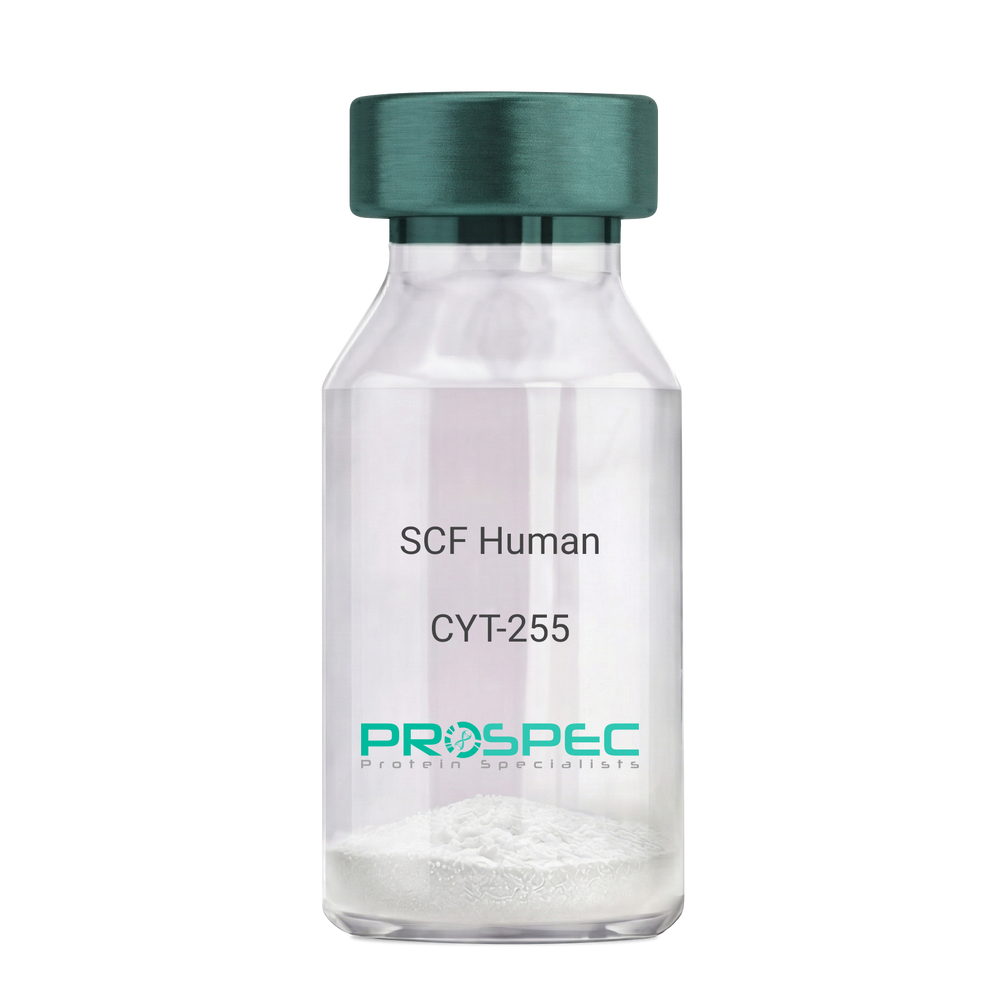
  • View Data Sheet

    Name :

    SCF Human

    Description:

    Stem Cell Factor Human Recombinant

    Kit ligand Precursor, C-kit ligand, SCF, Mast cell growth factor, MGF, SF, KL-1, Kitl, DKFZp686F2250.

    Product # :

    CYT-255

    Price :

    Quantity :

    Shipping Method :

    Room Temp Icon

    Shipped at Room temp

    Add To Cart

    More Info

    • description
    • source
    • formulation
    • purity
    • biological activity
    • More Info

    Description

    Stem Cell Factor Human Recombinant produced in E.Coli is a single, non-glycosylated polypeptide chain containing 165 amino acids and having a molecular mass of 18409 Dalton. The SCF is purified by proprietary chromatographic techniques.

    Source

    Escherichia Coli.

    Formulation

    Lyophilized from a concentrated (1mg/ml) solution in water containing 0.02% NaHCO3.

    Purity

    Greater than 98.0% as determined by:
    (a) Analysis by SEC-HPLC.
    (b) Analysis by SDS-PAGE.

    Biological Activity

    The ED50 as determined by the dose-dependant stimulation of Human TF-1 cells is < 2 ng/ml, corresponding to a Specific Activity of 500,000 IU/mg.

    More Info

    • Introduction

      Stem cell factor / KIT ligand (SCF) is a cytokine which binds CD117(c-Kit). SCF is also known as "steel factor" or "c-kit ligand". SCF exists in two forms, cell surface bound SCF and soluble (or free) SCF. Soluble SCF is produced by the cleavage of surface bound SCF by metalloproteases. SCF is a growth factor important for the survival, proliferation, and differentiation of hematopoietic stem cells and other hematopoietic progenitor cells. One of its roles is to change the BFU-E (burst-forming unit-erythroid) cells, which are the earliest erythrocyte precursors in the erythrocytic series, into the CFU-E (colony-forming unit-erythroid).

    • Synonyms

      Kit ligand Precursor, C-kit ligand, SCF, Mast cell growth factor, MGF, SF, KL-1, Kitl, DKFZp686F2250.

    • Physical Appearance

      Sterile Filtered White lyophilized (freeze-dried) powder.

    • Stability

      Lyophilized KIT ligand although stable at room temperature for 3 weeks, should be stored desiccated below -18°C. Upon reconstitution SCF should be stored at 4°C between 2-7 days and for future use below -18°C.For long term storage it is recommended to add a carrier protein (0.1% HSA or BSA).Please prevent freeze-thaw cycles.

    • Solubility

      It is recommended to reconstitute the lyophilized Stem Cell Factor in sterile 18MΩ-cm H2O not less than 100µg/ml, which can then be further diluted to other aqueous solutions.

    • Amino Acid Sequence

      The sequence of the first five N-terminal amino acids was determined and was found to be Met-Glu-Gly-Ile-Cys.

    • Protein content

      Protein quantitation was carried out by two independent methods1. UV spectroscopy at 280 nm using the absorbency value of 0.52 as the extinction coefficient for a 0.1% (1mg/ml) solution. This value is calculated by the PC GENE computer analysis program of protein sequences (IntelliGenetics). 2. Analysis by RP-HPLC, using a standard solution of Stem Cell Factor as a Reference Standard.

    ProSpec's products are furnished for LABORATORY RESEARCH USE ONLY. The product may not be used as drugs, agricultural or pesticidal products, food additives or household chemicals.

    Scf Human
  • View Data Sheet

    Name :

    NAP 2 Antibody

    Description:

    Natural anti-proliferative protein, Mouse-Anti Human

    Platelet basic protein, PBP, Small inducible cytokine B7, CXCL7, Leukocyte-derived growth factor, LDGF, Macrophage-derived growth factor, MDGF, pro-platelet basic protein (chemokine (C-X-C motif) ligand 7), TC1, TC2, TGB, TGB1, B-TG1, CTAP3, NAP-2, SCYB7, THBGB, LA-PF4, THBGB1, Beta-TG, CTAPIII, CTAP-III.

    Product # :

    ANT-170

    Price :

    Quantity :

    Shipping Method :

    Room Temp Icon

    Shipped at Room temp

    Add To Cart

    More Info

    • formulation
    • More Info

    Formulation

    1mg/ml in PBS (after reconstitution).

    More Info

    • Introduction

      Chemokine (C-X-C motif) ligand (CXCL7) is a small cytokine belonging to the CXC chemokine family. It is a protein that is released in large amounts from platelets following their activation. It stimulates various processes including mitogenesis, synthesis of extracellular matrix, glucose metabolism and synthesis of plasminogen activator.

    • Synonyms

      Platelet basic protein, PBP, Small inducible cytokine B7, CXCL7, Leukocyte-derived growth factor, LDGF, Macrophage-derived growth factor, MDGF, pro-platelet basic protein (chemokine (C-X-C motif) ligand 7), TC1, TC2, TGB, TGB1, B-TG1, CTAP3, NAP-2, SCYB7, THBGB, LA-PF4, THBGB1, Beta-TG, CTAPIII, CTAP-III.

    • Solubility

      Reconstitute with sterile H20. Mix gently, wash the sides of the vial and wait 30-60 seconds before use.

    • Immunogen

      r.Human NAP-2.

    • Ig Subclass

      Mouse IgG1.

    • Clone

      NYRhNAP-2.

    • Applications

      Direct ELISA, Western Blot, Immuneprecipitation.

    • Note

      This antibody will bind very well to protein A in a buffer (PBS) containing high salt concentration (3M Nacl).

    • Titer

      In direct ELISA, using alkaline phosphatase goat anti-mouse Ig (Jackson Laboratories) 1:10,000 dilution will yield 0.5 O.D within 10 minutes.

    • Shipping Conditions

      Antibody is shipped lyophilized at ambient temperature.

    • Type

      Mouse Anti Human Monoclonal.

    • Storage Procedures

      In lyophilized form, for long periods, store at 4oC in a dry environment. After reconstitution, if not intended for use within a month, aliquot and store at -20oC.

    • Purification Method

      ion exchange.

    ProSpec's products are furnished for LABORATORY RESEARCH USE ONLY. The product may not be used as drugs, agricultural or pesticidal products, food additives or household chemicals.

    Nap2 Antibody
  • View Data Sheet

    Name :

    NFKBIA Human

    Description:

    NF-kappa-B Inhibitor Alpha Human Recombinant

    Nuclear factor of kappa light polypeptide gene enhancer in B-cells inhibitor alpha, nuclear factor of kappa light chain gene enhancer in B-cells, IKBA, I-kappa-B-alpha, IkappaBalpha, ikB-alpha, NFKBI, MAD-3, Major histocompatibility complex enhancer-binding protein MAD3, NF-kappa-B inhibitor alpha.

    Product # :

    PRO-960

    Price :

    Quantity :

    Shipping Method :

    Ice Icon

    Shipped with Ice Packs

    Add To Cart

    More Info

    • description
    • source
    • formulation
    • purity
    • More Info

    Description

    NFKBIA Human Recombinant produced in E.coli is a single, non-glycosylated polypeptide chain containing 337 amino acids (1-317) and having a molecular mass of 37.7 kDa.NFKBIA is fused to a 20 amino acid His-tag at N-terminus & purified by proprietary chromatographic techniques.

    Source

    E.coli.

    Formulation

    The NFKBIA solution (0.5mg/ml) contains 20mM Tris-HCl buffer (pH 8.0), 1mM DTT, 0.1M NaCl and 20% glycerol.

    Purity

    Greater than 90% as determined by SDS-PAGE.

    More Info

    • Introduction

      NFKBIA belongs to the I-kappa-B family of proteins which is separated into four groups (IkB-a, IkB-b, IkB-g, IkB-e). NFKBIA inhibits the NFkB complex by binding and impounding it in the cytoplasm. When stimulated, NFKBIA is phosphorylated on serine residues targeting it for degradation by the ubiquitin pathway.

    • Synonyms

      Nuclear factor of kappa light polypeptide gene enhancer in B-cells inhibitor alpha, nuclear factor of kappa light chain gene enhancer in B-cells, IKBA, I-kappa-B-alpha, IkappaBalpha, ikB-alpha, NFKBI, MAD-3, Major histocompatibility complex enhancer-binding protein MAD3, NF-kappa-B inhibitor alpha.

    • Physical Appearance

      Sterile Filtered colorless solution.

    • Stability

      Store at 4°C if entire vial will be used within 2-4 weeks. Store, frozen at -20°C for longer periods of time. For long term storage it is recommended to add a carrier protein (0.1% HSA or BSA).Avoid multiple freeze-thaw cycles.

    • Amino Acid Sequence

      MGSSHHHHHH SSGLVPRGSH MFQAAERPQE WAMEGPRDGL KKERLLDDRH DSGLDSMKDE EYEQMVKELQ EIRLEPQEVP RGSEPWKQQL TEDGDSFLHL AIIHEEKALT MEVIRQVKGD LAFLNFQNNL QQTPLHLAVI TNQPEIAEAL LGAGCDPELR DFRGNTPLHL ACEQGCLASV GVLTQSCTTP HLHSILKATN YNGHTCLHLA SIHGYLGIVE LLVSLGADVN AQEPCNGRTA LHLAVDLQNP DLVSLLLKCG ADVNRVTYQG YSPYQLTWGR PSTRIQQQLG QLTLENLQML PESEDEESYD TESEFTEFTE DELPYDDCVF GGQRLTL

    ProSpec's products are furnished for LABORATORY RESEARCH USE ONLY. The product may not be used as drugs, agricultural or pesticidal products, food additives or household chemicals.

    Nfkbia Human
  • View Data Sheet

    Name :

    TNFA Bovine

    Description:

    Tumor Necrosis Factor-alpha Bovine Recombinant

    TNF-alpha, Tumor necrosis factor ligand superfamily member 2, TNF-a, Cachectin, DIF, TNFA, TNFSF2.

    Product # :

    CYT-1104

    Price :

    Quantity :

    Shipping Method :

    Ice Icon

    Shipped with Ice Packs

    Add To Cart

    More Info

    • description
    • source
    • formulation
    • purity
    • biological activity
    • More Info

    Description

    TNFA Bovine produced in E.Coli is a single, non-glycosylated polypeptide chain containing 158 amino acids (78-234 a.a.) and having a molecular mass of 17.5kDa. TNFA is purified by proprietary chromatographic techniques.

    Source

    Escherichia Coli.

    Formulation

    The TNFA (1mg/ml) contains Phosphate buffer saline(pH7.4) and 10% glycerol.

    Purity

    Greater than 90.0% as determined by SDS-PAGE.

    Biological Activity

    The ED50 Is < 15 ng/ml and is measured in a cytotoxicity assay using L929 mouse fibrosarcoma cells in the presence of the metabolic inhibitor actinomycin D.

    More Info

    • Introduction

      Tumor necrosis factor is a member of a group of cytokines that all stimulate the acute phase reaction. TNF is involved in systemic inflammationand secreted mainly by macrophages.
      TNF causes apoptotic cell death, cellular proliferation, differentiation, inflammation, tumorigenesis and viral replication, TNF is also involved in lipid metabolism, and coagulation. TNF's primary role is in the regulation of immune cells.
      Dysregulation and, in particular, overproduction of TNF have been implicated in a variety of human diseases- autoimmune diseases, insulin resistance, and cancer.

    • Synonyms

      TNF-alpha, Tumor necrosis factor ligand superfamily member 2, TNF-a, Cachectin, DIF, TNFA, TNFSF2.

    • Physical Appearance

      Sterile filtered colorless solution.

    • Stability

      Store at 4°C if entire vial will be used within 2-4 weeks. Store, frozen at -20°C for longer periods of time. For long term storage it is recommended to add a carrier protein (0.1% HSA or BSA).Avoid multiple freeze-thaw cycles.

    • Amino Acid Sequence

      MLRSSSQASS NKPVAHVVAD INSPGQLRWW DSYANALMAN GVKLEDNQLV VPADGLYLIY SQVLFRGQGC PSTPLFLTHT ISRIAVSYQT KVNILSAIKS PCHRETPEWA EAKPWYEPIY QGGVFQLEKG DRLSAEINLP DYLDYAESGQ VYFGIIAL.

    ProSpec's products are furnished for LABORATORY RESEARCH USE ONLY. The product may not be used as drugs, agricultural or pesticidal products, food additives or household chemicals.

    Tnfa Bovine
  • View Data Sheet

    Name :

    MIEN1 Human

    Description:

    Migration And Invasion Enhancer 1 Human Recombinant

    C17orf37, C35, ORB3, RDX12, XTP4, HBV X-transactivated gene 4 protein, HBV XAg-transactivated protein 4, Protein C35, Migration and invasion enhancer 1.

    Product # :

    PRO-1657

    Price :

    Quantity :

    Shipping Method :

    Ice Icon

    Shipped with Ice Packs

    Add To Cart

    More Info

    • description
    • source
    • formulation
    • purity
    • More Info

    Description

    MIEN1 Human Recombinant produced in E.Coli is a single, non-glycosylated polypeptide chain containing 135 amino acids (1-112 a.a.) and having a molecular mass of 14.5kDa.MIEN1 is fused to a 23 amino acid His-tag at N-terminus & purified by proprietary chromatographic techniques.

    Source

    Escherichia Coli.

    Formulation

    MIEN1 protein solution (0.5mg/ml) contains 20mM Tris-HCl buffer (pH 8.0), 0.15M NaCl, 10% glycerol and 1mM DTT.

    Purity

    Greater than 95.0% as determined by SDS-PAGE.

    More Info

    • Introduction

      Migration And Invasion Enhancer 1 (MIEN1) is a member of the SelWTH family. MIEN1 enhances cell migration by stimulating filopodia formation at the leading edge of migrating cells and takes parts in regulation of apoptosis, probably via control of CASP3. MIEN1 participates in a redox-related process as well.

    • Synonyms

      C17orf37, C35, ORB3, RDX12, XTP4, HBV X-transactivated gene 4 protein, HBV XAg-transactivated protein 4, Protein C35, Migration and invasion enhancer 1.

    • Physical Appearance

      Sterile Filtered clear solution.

    • Stability

      Store at 4°C if entire vial will be used within 2-4 weeks. Store, frozen at -20°C for longer periods of time. For long term storage it is recommended to add a carrier protein (0.1% HSA or BSA).Avoid multiple freeze-thaw cycles.

    • Amino Acid Sequence

      MGSSHHHHHH SSGLVPRGSH MGSMSGEPGQ TSVAPPPEEV EPGSGVRIVV EYCEPCGFEA TYLELASAVK EQYPGIEIES RLGGTGAFEI EINGQLVFSK LENGGFPYEK DLIEAIRRAS NGETLEKITN SRPPC.

    ProSpec's products are furnished for LABORATORY RESEARCH USE ONLY. The product may not be used as drugs, agricultural or pesticidal products, food additives or household chemicals.

    Mien1 Human
  • View Data Sheet

    Name :

    MMP 3 Human, HEK

    Description:

    Matrix Metalloproteinase-3 Human Recombinant, HEK

    Stromelysin-1, EC 3.4.24.17, Matrix metalloproteinase-3, MMP-3, Transin-1, SL-1, STMY, STR1, STMY1, MGC126102, MGC126103, MGC126104.

    Product # :

    ENZ-284

    Price :

    Quantity :

    Shipping Method :

    Ice Icon

    Shipped with Ice Packs

    Add To Cart

    More Info

    • description
    • source
    • formulation
    • purity
    • biological activity
    • More Info
    • sds-page

    Description

    MMP-3 Human Recombinant produced in HEK293 cells is a proform of the Human MMP3 [Tyr18-Cys477 (Lys45Glu)] and fused with a ployhistide tag at the C-terminus, having an Mw of 52kDa. MMP-3 is purified by proprietary chromatographic techniques.

    Source

    HEK293 cells.

    Formulation

    The MMP-3 is supplied as a 0.2µm filtered solution in 20mM Tris-HCl, 150mM NaCl and 0.05% Brij35, pH 7.5.

    Purity

    Greater than 95% as determined by SDS-PAGE.

    Biological Activity

    The activity was measured by its ability to cleave the fluorogenic peptide substrate, Mca-RPKPVE-Nval-WRK(Dnp)-NH2. The specific activity is > 150 pmoles/min/µg.
    Recombinant Human MMP-3 protein pro form needs to be activated with Chymotrypsin.
    Activation Protocol:
    1. Dilute MMP3 to 20µg/ml in the Assay Buffer: 50mM Tris, 10mM CaCl2, 150mM NaCl, 0.05% (w/v) and Brij 35, pH 7.5.
    2. Activate MMP3 by adding Chymotrypsin(Sigma, Catalog#C­3142,1mg/ml stock in 1mM HCl) to a final concentration of 5ug/ml.
    3. Incubate at 37°C for 30 minutes.
    4. Stop activation with 2mM PMSF. Pre-warm the PMSF to 37°C prior to adding to sample.

    sds-page

    mmp-3 human hek sds-page - Product image 1

    More Info

    • Introduction

      MMP-3 enzyme is also known as Stromelysin-1or as Transin-1 which hydrolyzes natural collagen at physiological pH and temperature. It dissolves the intervertebral nucleus pulposus and annulus fibrosus of Herniated Lumbar Intervertebral Disk . MMP-3 hydrolyzes components of the extracellular matrix like proteoglycan, laminin, fibronectin, gelatin and collagen types III, IV and IX. It also activates pro-MMP-9 and pro-MMP-8 and superactivates plasmin activated MMP-1. MMP-3 is secreted as a latent proenzyme and is activated by a variety of proteinases, e.g. plasmin, trypsin, chymotrypsin, cathepsin G or human neutrophil elastase. MMP-3 was found to be capable of activating the precursor of IL1-beta.

    • Synonyms

      Stromelysin-1, EC 3.4.24.17, Matrix metalloproteinase-3, MMP-3, Transin-1, SL-1, STMY, STR1, STMY1, MGC126102, MGC126103, MGC126104.

    • Physical Appearance

      Sterile Filtered colorless solution.

    • Stability

      Store at 4°C if entire vial will be used within 2-4 weeks. Store, frozen at -20°C for longer periods of time.Avoid multiple freeze-thaw cycles.

    ProSpec's products are furnished for LABORATORY RESEARCH USE ONLY. The product may not be used as drugs, agricultural or pesticidal products, food additives or household chemicals.

    Mmp3 Human
  • View Data Sheet

    Name :

    MOG

    Description:

    Myelin Oligodendrocyte Glycoprotein

    Myelin Oligodendrocyte Glycoprotein, MOG.

    Product # :

    PRO-371

    Price :

    Quantity :

    Shipping Method :

    Room Temp Icon

    Shipped at Room temp

    Add To Cart

    More Info

    • description
    • formulation
    • purity
    • More Info

    Description

    Myelin Oligodendrocyte Glycoprotein is a single, non-glycosylated polypeptide chain containing 21 amino acids and having a molecular mass of 2581 Dalton, the molecular formula: C118H177N35O29S.

    Formulation

    The protein was lyophilized with no additives.

    Purity

    Greater than 98.0% as determined by RP-HPLC.

    More Info

    • Introduction

      MOG is a transmembrane protein expressed on the surface of oligodendrocyte cell and on the outermost surface of myelin sheaths. MOG comprises about 0.1% of total CNS myelin protein. The MOG gene is a member of the immunoglobulin gene superfamily and is found within the MHC. The MOG gene is found on chromosome 6p21.3-p22. Myelin Oligodendrocyte Glycoprotein is a glycoprotein thought to be significant in the process of myelinization of nerves in the central nervous system (CNS). MOG peptide (35-55) is highly encephalitogenic and can induce strong T and B cell responses. A single injection of this peptide produces a relapsing- remitting neurologic disease with extensive plaque-like demyelination. Because of the clinical, histophathologic, and immunologic similarities with multiple sclerosis (MS), the MOG induced demyelinating encephalomyelitis may serve as a model for investigating MS.

    • Synonyms

      Myelin Oligodendrocyte Glycoprotein, MOG.

    • Physical Appearance

      Sterile Filtered White lyophilized (freeze-dried) powder.

    • Stability

      Lyophilized MOG although stable at room temperature for 3 weeks, should be stored desiccated below -18°C. Upon reconstitution MOG should be stored at 4°C between 2-7 days and for future use below -18°C.For long term storage it is recommended to add a carrier protein (0.1% HSA or BSA).Please prevent freeze-thaw cycles.

    • Solubility

      It is recommended to reconstitute the lyophilized MOG in sterile 18MΩ-cm H2O not less than 100µg/ml, which can then be further diluted to other aqueous solutions.

    • Amino Acid Sequence

      H-Met-Glu-Val-Gly-Trp-Tyr-Arg-Ser-Pro-Phe-Ser-Arg-Val-Val-His-Leu-Tyr-Arg-Asn-Gly-Lys-OH.

    ProSpec's products are furnished for LABORATORY RESEARCH USE ONLY. The product may not be used as drugs, agricultural or pesticidal products, food additives or household chemicals.

    Mog
  • View Data Sheet

    Name :

    HDGF2 Human

    Description:

    Hepatoma-Derived Growth Factor-2 Human Recombinant

    Hepatoma-derived growth factor-related protein 3, HRP-3, Hepatoma-derived growth factor 2, HDGF-2, HDGFRP3, HDGF2, CGI-142.

    Product # :

    CYT-132

    Price :

    Quantity :

    Shipping Method :

    Ice Icon

    Shipped with Ice Packs

    Add To Cart

    More Info

    • description
    • source
    • formulation
    • purity
    • More Info
    • SDS-PAGE

    Description

    HDGF2 Human Recombinant produced in E.Coli is a single, non-glycosylated polypeptide chain containing 227 amino acids (1-203 a.a.) and having a molecular mass of 25.1kDa (Molecular weight on SDS-PAGE will appear higher). HDGF2 is fused to a 24 amino acid His-tag at N-terminus & purified by proprietary chromatographic techniques.

    Source

    Escherichia Coli.

    Formulation

    HDGF2 protein solution (0.5mg/ml) containing 20mM Tris-HCl buffer (pH 8.0), 1mM DTT, 10% glycerol and 0.1M NaCl.

    Purity

    Greater than 90% as determined by SDS-PAGE.

    SDS-PAGE

    HDGF2 Human - Product image 1

    More Info

    • Introduction

      Hepatoma-derived growth factor, related protein 3 (HDGFRP3/HDGF2) is the original member of a family of polypeptides labeled HDGF related proteins (HRPs). The HDGF2 protein augments DNA synthesis and may play a part in cell proliferation. HDGF2 is expressed primarily in the testis and the brain, to an intermediate extent in the heart, and to a slight extent in the ovaries, kidneys, spleen, and liver in humans.

    • Synonyms

      Hepatoma-derived growth factor-related protein 3, HRP-3, Hepatoma-derived growth factor 2, HDGF-2, HDGFRP3, HDGF2, CGI-142.

    • Physical Appearance

      Sterile Filtered clear solution.

    • Stability

      Store at 4°C if entire vial will be used within 2-4 weeks. Store, frozen at -20°C for longer periods of time. For long term storage it is recommended to add a carrier protein (0.1% HSA or BSA).Avoid multiple freeze-thaw cycles.

    • Amino Acid Sequence

      MGSSHHHHHH SSGLVPRGSH MGSHMARPRP REYKAGDLVF AKMKGYPHWP ARIDELPEGA VKPPANKYPI FFFGTHETAF LGPKDLFPYK EYKDKFGKSN KRKGFNEGLW EIENNPGVKF TGYQAIQQQS SSETEGEGGN TADASSEEEG DRVEEDGKGK RKNEKAGSKR KKSYTSKKSS
      KQSRKSPGDE DDKDCKEEEN KSSSEGGDAG NDTRNTTSDL QKTSEGT.

    • Background

      What is the molecular weight/Mw of HDGF2 HUMAN Protein?
      HDGF2 HUMAN Protein has a total Mw of 25.1kDa.

      What is the source or expression system of HDGF2 HUMAN Protein?
      Escherichia Coli.

      What is the Purity of HDGF2 HUMAN Protein?
      HDGF2 HUMAN Protein is >90% pure as determined by SDS-PAGE.

      What is the Biological Activity of HDGF2 HUMAN Protein?
      The biological functionality of HDGF2 HUMAN Protein will be determined in the future.

      What is the amino acid sequence of HDGF2 HUMAN Protein?
      MGSSHHHHHH SSGLVPRGSH MGSHMARPRP REYKAGDLVF AKMKGYPHWP ARIDELPEGA VKPPANKYPI FFFGTHETAF LGPKDLFPYK EYKDKFGKSN KRKGFNEGLW EIENNPGVKF TGYQAIQQQS SSETEGEGGN TADASSEEEG DRVEEDGKGK RKNEKAGSKR KKSYTSKKSS
      KQSRKSPGDE DDKDCKEEEN KSSSEGGDAG NDTRNTTSDL QKTSEGT.

      What applications can HDGF2 HUMAN Protein be used in?
      HDGF2 HUMAN Protein can probably be used in western blot, ELISA and Lateral Flow.

      What is the endotoxin level for HDGF2 HUMAN Protein?
      The endotoxin level is minimal, HDGF2 HUMAN Protein was purified using conventional chromatography techniques.

    ProSpec's products are furnished for LABORATORY RESEARCH USE ONLY. The product may not be used as drugs, agricultural or pesticidal products, food additives or household chemicals.

    Hdgf2 Human
  • View Data Sheet

    Name :

    SDF 1a Rat

    Description:

    Stromal Cell-Derived Factor-1 alpha Rat Recombinant (CXCL12)

    SDF-1, CXCL12, Pre-B cell growth-stimulating factor, PBSF, hIRH, chemokine (C-X-C motif) ligand 12, SDF1, SDF1A, TPAR1, SCYB12, SDF-1a, TLSF-a, 12-O-tetradecanoylphorbol 13-acetate repressed protein 1, Thymic lymphoma cell-stimulating factor, TLSF.

    Product # :

    CHM-354

    Price :

    Quantity :

    Shipping Method :

    Room Temp Icon

    Shipped at Room temp

    Add To Cart

    More Info

    • description
    • source
    • formulation
    • purity
    • biological activity
    • More Info

    Description

    Stromal Cell-Derived Factor-1 alpha Rat Recombinant produced in E.Coli is a non-glycosylated, Polypeptide chain containing 68 amino acids and having a molecular mass of 7.9 kDa. The SDF-1a is purified by proprietary chromatographic techniques.

    Source

    Escherichia Coli.

    Formulation

    The CXCL12 protein was lyophilized from a concentrated (1 mg/ml) sterile solution containing 20mM Phosphate buffer pH-7.4 and 150mM NaCl.

    Purity

    Greater than 97.0% as determined by:
    (a) Analysis by RP-HPLC.
    (b) Analysis by SDS-PAGE.

    Biological Activity

    The specific activity as determined by its ability to chemoattract human peripheral blood monocytes at 50-100ng/ml corresponding to a Specific Activity of 10,000-20,000IU/mg.

    More Info

    • Introduction

      SDF-1 (stromal cell-derived factor-1) is small cytokine belonging to the chemokine family that is officially designated Chemokine (C-X-C motif) ligand 12 (CXCL12). It is produced in two forms, SDF-1?/CXCL12a and SDF-1?/CXCL12b, by alternate splicing of the same gene. Chemokines are characterized by the presence of four conserved cysteines, which form two disulfide bonds. The CXCL12 proteins belong to the group of CXC chemokines, whose initial pair of cysteines are separated by one intervening amino acid. CXCL12 is strongly chemotactic for lymphocytes and has been implicated as an important cell co-ordinator during development. During embryogenesis it directs the migration of hematopoietic cells from foetal liver to bone marrow. Mice which were knocked-out for CXCL12 gene were lethal before the birth or within just 1 hour of life. As another role, CXCL12a alters also the electrophysiology of neurons. CXCL12 was shown to be expressend in many tissues in mice (including brain, thymus, heart, lung, liver, kidney, spleen and bone marrow).
      The receptor for this chemokine is CXCR4, which was previously called fusin. This CXCL12-CXCR4 interaction used to be considered exclusive (unlike for other chemokines and their receptors), but recently it was suggested that CXCL12 is also bound by CXCR7 receptor.
      The gene for CXCL12 is located on human chromosome 10. In human and mouse both CXCL12 and CXCR4 show high identity of sequence: 99% and 90%, respectively.

    • Synonyms

      SDF-1, CXCL12, Pre-B cell growth-stimulating factor, PBSF, hIRH, chemokine (C-X-C motif) ligand 12, SDF1, SDF1A, TPAR1, SCYB12, SDF-1a, TLSF-a, 12-O-tetradecanoylphorbol 13-acetate repressed protein 1, Thymic lymphoma cell-stimulating factor, TLSF.

    • Physical Appearance

      Sterile Filtered White lyophilized (freeze-dried) powder.

    • Stability

      Lyophilized SDF-1a although stable at room temperature for 3 weeks, should be stored desiccated below -18°C. Upon reconstitution CXCL12 should be stored at 4°C between 2-7 days and for future use below -18°C.For long term storage it is recommended to add a carrier protein (0.1% HSA or BSA).Please prevent freeze-thaw cycles.

    • Solubility

      It is recommended to reconstitute the lyophilized SDF-1a in sterile 18MΩ-cm H2O not less than 100µg/ml, which can then be further diluted to other aqueous solutions.

    • Amino Acid Sequence

      KPVSLSYRCP CRFFESHVAR ANVKHLKILN TPNCALQIVA RLKSNNRQVC IDPKLKWIQE YLDKALNK.

    ProSpec's products are furnished for LABORATORY RESEARCH USE ONLY. The product may not be used as drugs, agricultural or pesticidal products, food additives or household chemicals.

    Cxcl12 Rat
  • View Data Sheet

    Name :

    TACI Human, Sf9

    Description:

    Tumor Necrosis Factor Receptor 13B Human Recombinant, Sf9

    Tumor Necrosis Factor Receptor Superfamily Member 13B, Tumor Necrosis Factor Receptor Superfamily, Member 13B, Transmembrane Activator And CAML Interactor ,TACI , Tumor Necrosis Factor Receptor 13B, CD267 Antigen, TNFRSF14B, CD267, CVID2, IGAD2, CVID, RYZN.

    Product # :

    CYT-982

    Price :

    Quantity :

    Shipping Method :

    Ice Icon

    Shipped with Ice Packs

    Add To Cart

    More Info

    • description
    • source
    • formulation
    • purity
    • More Info

    Description

    TACI produced in Sf9 Insect cells is a single, glycosylated polypeptide chain containing 407 amino acids (1-165a.a.) and having a molecular mass of 45.8kDa (Molecular size on SDS-PAGE will appear at approximately 25-50kDa). TACI is expressed with a 242 amino acid hIgG-His tag at C-Terminus and purified by proprietary chromatographic techniques.

    Source

    Sf9, Insect cells.

    Formulation

    TACI a protein solution (0.25mg/ml) contains Phosphate Buffered Saline (pH 7.4), 30% glycerol and 1mM DTT.

    Purity

    Greater than 90.0% as determined by SDS-PAGE.

    More Info

    • Introduction

      TNFRSF13B (TACI) is a transmembrane receptor protein found predominantly on the surface of B cells (a significant part of the immune system). TACI was at first discovered owing to its ability to interact with calcium-modulator and cyclophilin ligand (CAML). Later on, it was found that TACI plays a key role in humoral immunity by interacting with two members of the TNF family. Also, TACI controls T cell-independent B cell antibody responses, isotype switching, and B cell homeostasis.

    • Synonyms

      Tumor Necrosis Factor Receptor Superfamily Member 13B, Tumor Necrosis Factor Receptor Superfamily, Member 13B, Transmembrane Activator And CAML Interactor ,TACI , Tumor Necrosis Factor Receptor 13B, CD267 Antigen, TNFRSF14B, CD267, CVID2, IGAD2, CVID, RYZN.

    • Physical Appearance

      Sterile filtered colorless solution.

    • Stability

      Store at 4°C if entire vial will be used within 2-4 weeks.Store, frozen at -20°C for longer periods of time. For long term storage it is recommended to add a carrier protein (0.1% HSA or BSA).Avoid multiple freeze-thaw cycles.

    • Amino Acid Sequence

      ADLMSGLGRS RRGGRSRVDQ EERFPQGLWT GVAMRSCPEE QYWDPLLGTC MSCKTICNHQ SQRTCAAFCR SLSCRKEQGK FYDHLLRDCI SCASICGQHP KQCAYFCENK LRSPVNLPPE LRRQRSGEVE NNSDNSGRYQ GLEHRGSEAS PALPGLKLSA DQVALVYSLE PKSCDKTHTC PPCPAPELLG GPSVFLFPPK PKDTLMISRT PEVTCVVVDV SHEDPEVKFN WYVDGVEVHN AKTKPREEQY NSTYRVVSVL TVLHQDWLNG KEYKCKVSNK ALPAPIEKTI SKAKGQPREP QVYTLPPSRD ELTKNQVSLT CLVKGFYPSD IAVEWESNGQ PENNYKTTPP VLDSDGSFFL YSKLTVDKSR WQQGNVFSCS VMHEALHNHY TQKSLSLSPG KHHHHHH.

    ProSpec's products are furnished for LABORATORY RESEARCH USE ONLY. The product may not be used as drugs, agricultural or pesticidal products, food additives or household chemicals.

    Taci Human Sf9
  • View Data Sheet

    Name :

    MMP9 Human, HEK

    Description:

    Matrix Metalloproteinase-9 Human Recombinant, HEK

    Matrix metalloproteinase-9, MMP-9, 92 kDa gelatinase, Gelatinase B, GELB, MMP9, CLG4B.

    Product # :

    ENZ-1084

    Price :

    Quantity :

    Shipping Method :

    Room Temp Icon

    Shipped at Room temp

    Add To Cart

    More Info

    • description
    • source
    • formulation
    • purity
    • More Info

    Description

    MMP9 Human Recombinant is a single, glycosylated polypeptide chain containing 694 amino acids (20-707a.a) and having a molecular mass of 77.2kDa (calculated). MMP9 is fused to a 6 a.a His tag at C-terminal.

    Source

    HEK293 Cells.

    Formulation

    MMP9 filtered (0.4 µm) and lyophilized from 0.5mg/ml solution in PBS, pH7.5 and 5% (w/v) Threalose.

    Purity

    Greater than 95.0% as determined by SDS-PAGE.

    More Info

    • Introduction

      Matrix metalloproteinases are a family of zinc and calcium-dependent endopeptidases that break down extracellular matrix proteins. The MMP9 is secreted as a 92kDa zymogen. Cleavage of ProMMP-9 results in the active enzyme, having a molecular weight of approximately 82kDa. MMP9 is composed of the following domains: a gelatin-binding domain consisting of three fibronectin type II units, a catalytic domain containing the zinc-binding site, a proline-rich type V collagen-homologous domain and a hemopexin-like domain. MMP9 is produced by the several cell types: monocytes, macrophages, neutrophils, keratinocytes, fibroblasts, osteoclasts and endothelial cells. MMP9 is involved in inflammatory responses, tissue remodeling, wound healing, tumor growth and metastasis. MMP9 may also play an important part in local proteolysis of the extracellular matrix and in leukocyte migration, as well as in bone osteoclastic resorption. MMP9 cleaves type IV and type V collagens into large C-terminal three quarter fragments and shorter N-terminal one quarter fragments. MMP9 can also degrade fibronectin but not laminin or Pz-peptide.
      MMP9 defects may be a cause of susceptibility to intervertebral disc disease (IDD), also known as lumbar disk herniation (LDH).

    • Synonyms

      Matrix metalloproteinase-9, MMP-9, 92 kDa gelatinase, Gelatinase B, GELB, MMP9, CLG4B.

    • Physical Appearance

      Filtered White lyophilized (freeze-dried) powder.

    • Stability

      Store lyophilized protein at -20°C. Aliquot the product after reconstitution to avoid repeated freezing/thawing cycles. Reconstituted protein can be stored at 4°C for a limited period of time; it does not show any change after two weeks at 4°C.

    • Solubility

      It is recommended to add deionized water to prepare a working stock solution of approximately 0.5mg/ml and let the lyophilized pellet dissolve completely.

    • Amino Acid Sequence

      APRQRQSTLVLFPGDLRTNLTDRQLAEEYLYRYGYTRVAEMRGESKSLGPALLLLQKQLSLPET

      GELDSATLKAMRTPRCGVPDLGRFQTFEGDLKWHHHNITYWIQNYSEDLPRAVIDDAFARAF

      ALWSAVTPLTFTRVYSRDADIVIQFGVAEHGDGYPFDGKDGLLAHAFPPGPGIQGDAHFDDD

      ELWSLGKGVVVPTRFGNADGAACHFPFIFEGRSYSACTTDGRSDGLPWCSTTANYDTDDRFG

      FCPSERLYTRDGNADGKPCQFPFIFQGQSYSACTTDGRSDGYRWCATTANYDRDKLFGFCPTR

      ADSTVMGGNSAGELCVFPFTFLGKEYSTCTSEGRGDGRLWCATTSNFDSDKKWGFCPDQ

      GYSLFLVAAHEFGHALGLDHSSVPEALMYPMYRFTEGPPLHKDDVNGIRHLYGPRPEPEPRPPTTTT

      PQPTAPPTVCPTGPPTVHPSERPTAGPTGPPSAGPTGPPTAGPSTATTVPLSPVDDACNVNIFDAIAE

      IGNQLYLFKDGKYWRFSEGRGSRPQGPFLIADKWPALPRKLDSVFEERLSKKLFFFSGRQVWVYTGAS

      VLGPRRLDKLGLGADVAQVTGALRSGRGKMLLFSGRRLWRFDVKAQMVDPRSASEVDRMFPGVPLD

      THDVFQYREKAYFCQDRFYWRVSSRSELNQVDQVGYVTYDILQCPEDHHHHHH.

    ProSpec's products are furnished for LABORATORY RESEARCH USE ONLY. The product may not be used as drugs, agricultural or pesticidal products, food additives or household chemicals.

    Mmp9 Protein
  • View Data Sheet

    Name :

    NFKBID Human

    Description:

    NF-kappa-B Inhibitor Delta Human Recombinant

    NF-kappa-B inhibitor delta, I-kappa-B-delta, IkB-delta, IkappaBdelta, IkappaBNS, T-cell activation NFKB-like protein, TA-NFKBH, NFKBID, IKBNS.

    Product # :

    PRO-1684

    Price :

    Quantity :

    Shipping Method :

    Ice Icon

    Shipped with Ice Packs

    Add To Cart

    More Info

    • description
    • source
    • formulation
    • purity
    • More Info

    Description

    NFKBID Human Recombinant produced in E.coli is a single, non-glycosylated polypeptide chain containing 336 amino acids (1-313) and having a molecular mass of 35.9 kDa.NFKBID is fused to a 23 amino acid His-tag at N-terminus & purified by proprietary chromatographic techniques.

    Source

    Escherichia Coli.

    Formulation

    The NFKBID solution (0.5mg/ml) contains 20mM Tris-HCl buffer (pH 8.0), 0.15M NaCl, 10% glycerol and 1mM DTT.

    Purity

    Greater than 95.0% as determined by SDS-PAGE.

    More Info

    • Introduction

      NFKBID belongs to the IkB family of proteins which contains four groups (IkB-alpha, IkB-beta, IkB-gamma, IkB-epsilon). NFKBID takes part in regulating inflammatory responses and cytokine, IL-2 and IL-6 expression through NFkB activity. NFKBID has 3 known alternative spliced isoforms, and is associated with RelB, NF?B p50 and NFkB p65 in nucleus. NFKBID is involeved in thymocyte selection in response to TCR induction.

    • Synonyms

      NF-kappa-B inhibitor delta, I-kappa-B-delta, IkB-delta, IkappaBdelta, IkappaBNS, T-cell activation NFKB-like protein, TA-NFKBH, NFKBID, IKBNS.

    • Physical Appearance

      Sterile Filtered colorless solution.

    • Stability

      Store at 4°C if entire vial will be used within 2-4 weeks. Store, frozen at -20°C for longer periods of time. For long term storage it is recommended to add a carrier protein (0.1% HSA or BSA).Avoid multiple freeze-thaw cycles.

    • Amino Acid Sequence

      MGSSHHHHHH SSGLVPRGSH MGSMEAGPWR VSAPPSGPPQ FPAVVPGPSL EVARAHMLAL GPQQLLAQDE EGDTLLHLFA ARGLRWAAYA AAEVLQVYRR LDIREHKGKT PLLVAAAANQ PLIVEDLLNL GAEPNAADHQ GRSVLHVAAT YGLPGVLLAV LNSGVQVDLE ARDFEGLTPL HTAILALNVA MRPSDLCPRV LSTQARDRLD CVHMLLQMGA NHTSQEIKSN KTVLHLAVQA ANPTLVQLLL ELPRGDLRTF VNMKAHGNTA LHMAAALPPG PAQEAIVRHL LAAGADPTLR NLENEQPVHL LRPGPGPEGL RQLLKRSRVA PPGLSS.

    ProSpec's products are furnished for LABORATORY RESEARCH USE ONLY. The product may not be used as drugs, agricultural or pesticidal products, food additives or household chemicals.

    Nfkbid Human
  • View Data Sheet

    Name :

    PEDF PAT13D9AT Antibody

    Description:

    Mouse Anti Human Pigment Epithelium-Derived Factor Clone PAT13D9AT

    Pigment epithelium-derived factor,PEDF, Serpin-F1, SerpinF1, EPC-1, EPC1, PIG35.

    Product # :

    ANT-714

    Price :

    Quantity :

    Shipping Method :

    Ice Icon

    Shipped with Ice Packs

    Add To Cart

    More Info

    • formulation
    • More Info

    Formulation

    1mg/ml containing PBS, pH-7.4, 10% Glycerol and 0.02% Sodium Azide.

    More Info

    • Introduction

      PEDF is a noninhibitory serpin with neurotrophic, anti-angiogenic, and anti-tumorigenic properties. PEDF is a 50,000 dalton glycoprotein created and secreted in many tissues all the way through the body. A key component of the anti-angiogenic action of PEDF is the induction of apoptosis in proliferating endothelial cells. Additionally, PEDF is capable to inhibit the activity of angiogenic factors such as VEGF and FGF-2. The neuro-protective effects of PEDF are achieved through suppression of neuronal apoptosis induced by peroxide, glutamate, or other neurotoxins. The recognition of a lipase-linked cell membrane receptor for PEDF (PEDF-R) that binds to PEDF with high affinity should facilitate further elucidation of the underlying mechanisms of this pluripotent serpin. To date, PEDF-R is the only signaling receptor known to be used by a serpin family member. The unique range of PEDF activities associate it as a potential therapeutic agent for the treatment of vasculature related neurodegenerative diseases such as age-related macular degeneration (AMD) and proliferative diabetic retinopathy (PDR). PEDF in addition has the potential to be functional in the treatment of various angiogenesis-related diseases including a number of cancers.

    • Synonyms

      Pigment epithelium-derived factor,PEDF, Serpin-F1, SerpinF1, EPC-1, EPC1, PIG35.

    • Physical Appearance

      Sterile filtered colorless solution.

    • Immunogen

      Anti-human PEDF mAb, is derived from hybridization of mouse F0 myeloma cells with spleen cells from BALB/c mice immunized with a recombinant human PEDF protein 20-418 amino acids purified from E. coli.

    • Ig Subclass

      Mouse IgG1 heavy chain and κ light chain.

    • Clone

      PAT13D9AT.

    • Applications

      PEDF antibody has been tested by ELISA, Western blot analysis and ICC/IF to assure specificity and reactivity. Since application varies, however, each investigation should be titrated by the reagent to obtain optimal results.

    • Type

      Mouse Anti Human Monoclonal.

    • Storage Procedures

      For periods up to 1 month store at 4°C, for longer periods of time, store at -20°C. Prevent freeze thaw cycles.

    • Purification Method

      PEDF antibody was purified by protein-A affinity chromatography.

    ProSpec's products are furnished for LABORATORY RESEARCH USE ONLY. The product may not be used as drugs, agricultural or pesticidal products, food additives or household chemicals.

    Pedf Pat13D9At Antibody
  • View Data Sheet

    Name :

    CXCL9 Mouse

    Description:

    MIG Mouse Recombinant (CXCL9)

    Small inducible cytokine B9, CXCL9, MIG, chemokine (C-X-C motif) ligand 9, CMK, Humig, SCYB9, crg-10, M119.

    Product # :

    CHM-337

    Price :

    Quantity :

    Shipping Method :

    Room Temp Icon

    Shipped at Room temp

    Add To Cart

    More Info

    • description
    • source
    • formulation
    • purity
    • biological activity
    • More Info

    Description

    MIG (CXCK9) Mouse Recombinant produced in E.Coli is a single, non-glycosylated, polypeptide chain containing 105 amino acids and having a molecular mass of 12208 Dalton. The MIG is purified by proprietary chromatographic techniques.

    Source

    Escherichia Coli.

    Formulation

    Filtered (0.2µm) and lyophilized from a concentrated (0.5mg/ml) solution in 20mM PB, pH7.4 and 100mM NaCl.

    Purity

    Greater than 97.0% as determined by:
    (a) Analysis by RP-HPLC.
    (b) Analysis by SDS-PAGE.

    Biological Activity

    The Activity is calculated by the ability to chemoattract Human lymphocytes using a concentration of 0.1-1 ng/ml.

    More Info

    • Introduction

      Chemokine (C-X-C motif) ligand 9 (CXCL9) is a small cytokine belonging to the CXC chemokine family that is also known as Monokine induced by MIG. CXCL9 is a T-cell chemoattractant. It is closely related to two other CXC chemokines called CXCL10 and CXCL11, whose genes are located near the gene for CXCL9 on human chromosome 4. CXCL9, CXCL10 and CXCL11 all elicit their chemotactic functions by interacting with the chemokine receptor CXCR3.

    • Synonyms

      Small inducible cytokine B9, CXCL9, MIG, chemokine (C-X-C motif) ligand 9, CMK, Humig, SCYB9, crg-10, M119.

    • Physical Appearance

      Sterile Filtered White lyophilized (freeze-dried) powder.

    • Stability

      Lyophilized MIG although stable at room temperature for 3 weeks, should be stored desiccated below -18°C. Upon reconstitution CXCL9 should be stored at 4°C between 2-7 days and for future use below -18°C. For long term storage it is recommended to add a carrier protein (0.1% HSA or BSA).Please prevent freeze-thaw cycles.

    • Solubility

      It is recommended to reconstitute the lyophilized MIG in sterile 18MΩ-cm H2O not less than 100µg/ml, which can then be further diluted to other aqueous solutions.

    • Amino Acid Sequence

      TLVIRNARCS CISTSRGTIH YKSLKDLKQF APSPNCNKTE IIATLKNGDQ TCLDPDSANV KKLMKEWEKK INQKKKQKRG KKHQKNMKNR KPKTPQSRRR SRKTT.

    • Background

      What is the molecular weight/Mw of CXCL9 MOUSE Protein?
      CXCL9 MOUSE Protein has a total Mw of 12.2kDa.

      What is the source or expression system of CXCL9 MOUSE Protein?
      Escherichia Coli.

      What is the Purity of CXCL9 MOUSE Protein?
      CXCL9 MOUSE Protein is > 97% pure as determined by SDS-PAGE.

      What is the Biological Activity of CXCL9 MOUSE Protein?
      The Activity is calculated by the ability to chemoattract Human lymphocytes using a concentration of 0.1-1 ng/ml.

      What is the amino acid sequence of CXCL9 MOUSE Protein?
      TLVIRNARCS CISTSRGTIH YKSLKDLKQF APSPNCNKTE IIATLKNGDQ TCLDPDSANV KKLMKEWEKK INQKKKQKRG KKHQKNMKNR KPKTPQSRRR SRKTT.

      What applications can CXCL9 MOUSE Protein be used in?
      CXCL9 MOUSE Protein can probably be used in western blot, ELISA and Lateral Flow.

      What is the endotoxin level for CXCL9 MOUSE Protein?
      The endotoxin level is minimal, CXCL9 MOUSE Protein was purified using conventional chromatography techniques.


    ProSpec's products are furnished for LABORATORY RESEARCH USE ONLY. The product may not be used as drugs, agricultural or pesticidal products, food additives or household chemicals.

    Mig Mouse
  • View Data Sheet

    Name :

    PSMF1 Human

    Description:

    Proteasome Inhibitor Subunit 1 Human Recombinant

    Proteasome inhibitor PI31 subunit, hPI31, PSMF1, PI31.

    Product # :

    ENZ-224

    Price :

    Quantity :

    Shipping Method :

    Ice Icon

    Shipped with Ice Packs

    Add To Cart

    More Info

    • description
    • source
    • formulation
    • purity
    • More Info

    Description

    PSMF1 Human Recombinant produced in E.coli is a single, non-glycosylated polypeptide chain containing 291 amino acids (1-271) and having a molecular mass of 31.9kDa.PSMF1 is fused to a 20 amino acid His-tag at N-terminus & purified by proprietary chromatographic techniques.

    Source

    Escherichia Coli.

    Formulation

    The PSMF1 solution (0.5mg/ml) contains 20mM Tris-HCl buffer (pH8.0), 20% glycerol, 1mM DTT and 0.1mM PMSF.

    Purity

    Greater than 85.0% as determined by SDS-PAGE.

    More Info

    • Introduction

      PSMF1 is a protein which hinders the activation of the proteasome by the 11S and 19S regulators. The 26S proteasome is a multicatalytic proteinase complex with an extremely ordered structure composed of 2 complexes, a 20S core and a 19S regulator. The 20S core is comprised of 4 rings of 28 non-identical subunits; 2 rings are composed of 7 alpha subunits and 2 rings are composed of 7 beta subunits.

    • Synonyms

      Proteasome inhibitor PI31 subunit, hPI31, PSMF1, PI31.

    • Physical Appearance

      Sterile Filtered colorless solution.

    • Stability

      Store at 4°C if entire vial will be used within 2-4 weeks. Store, frozen at -20°C for longer periods of time. For long term storage it is recommended to add a carrier protein (0.1% HSA or BSA).Avoid multiple freeze-thaw cycles.

    • Amino Acid Sequence

      MGSSHHHHHH SSGLVPRGSH MAGLEVLFAS AAPAITCRQD ALVCFLHWEV VTHGYCGLGV GDQPGPNDKK SELLPAGWNN NKDLYVLRYE YKDGSRKLLV KAITVESSMI LNVLEYGSQQ VADLTLNLDD YIDAEHLGDF HRTYKNSEEL RSRIVSGIIT PIHEQWEKAN VSSPHREFPP ATAREVDPLR IPPHHPHTSR QPPWCDPLGP FVVGGEDLDP FGPRRGGMIV DPLRSGFPRA LIDPSSGLPN RLPPGAVPPG ARFDPFGPIG TSPPGPNPDH LPPPGYDDMY L.

    ProSpec's products are furnished for LABORATORY RESEARCH USE ONLY. The product may not be used as drugs, agricultural or pesticidal products, food additives or household chemicals.

    Psmf1 Human
  • View Data Sheet

    Name :

    GDF11 Human

    Description:

    Growth and Differentiation factor 11 Human Recombinant

    Growth Differentiation Factor 11, GDF-11, Bone Morphogenetic Protein 11, BMP11.

    Product # :

    CYT-402

    Price :

    Quantity :

    Shipping Method :

    Room Temp Icon

    Shipped at Room temp

    Add To Cart

    More Info

    • description
    • source
    • formulation
    • purity
    • biological activity
    • More Info

    Description

    GDF11 Human Recombinant produced in E.Coli is a non-glycosylated homodimer containing 2x10⁹ amino acids and having a total molecular mass of 25kDa.

    Source

    Escherichia Coli.

    Formulation

    Lyophilized from a concentrated (1mg/ml) solution containing 0.1% Trifluoroacetic Acid (TFA).

    Purity

    Greater than 95.0% as determined by SDS-PAGE.

    Biological Activity

    The ED50, determined by the ability to inhibit alkaline phosphatase activity in ATDC5 cells, is typically less than 1 ng/mL. This corresponds to a specific activity of 1x10⁶ units/mg.

    More Info

    • Introduction

      GDF-11 belongs to the bone morphogenetic protein (BMP) family and the TGF-beta superfamily. GDF-11 is a central developmental factor which controls muscular and neural development. In adults, GDF-11 encourages cardiac hypertrophy reverse by the revival of cardiomyocytes.

    • Synonyms

      Growth Differentiation Factor 11, GDF-11, Bone Morphogenetic Protein 11, BMP11.

    • Physical Appearance

      Sterile Filtered White lyophilized (freeze-dried) powder.

    • Stability

      Lyophilized GDF11 although stable at room temperature for 3 weeks, should be stored desiccated below -18°C. Upon reconstitution GDF11 should be stored at 4°C between 2-7 days and for future use below -18°C.For long term storage it is recommended to add a carrier protein (0.1% HSA or BSA).Please prevent freeze-thaw cycles.

    • Solubility

      It is recommended to reconstitute the lyophilized GDF11 in sterile 18M-cm H2O not less than 100µg/ml, which can then be further diluted to other aqueous solutions.

    • Amino Acid Sequence

      NLGLDCDEHS SESRCCRYPL TVDFEAFGWD WIIAPKRYKA NYCSGQCEYM FMQKYPHTHLVQQANPRGSA GPCCTPTKMS PINMLYFNDK QQIIYGKIPG MVVDRCGCS

    • Background

      What is the molecular weight/Mw of GDF11 HUMAN Protein?
      GDF11 HUMAN Protein has a total Mw of 25kDa.

      What is the source or expression system of GDF11 HUMAN Protein?
      Escherichia Coli.

      What is the Purity of GDF11 HUMAN Protein?
      GDF11 HUMAN Protein is >95% pure as determined by SDS-PAGE.

      What is the Biological Activity of GDF11 HUMAN Protein?
      The ED50, determined by the ability to inhibit alkaline phosphatase activity in ATDC5 cells, is typically less than 1 ng/mL. This corresponds to a specific activity of 1x10⁶ units/mg.
      What is the amino acid sequence of GDF11 HUMAN Protein?
      NLGLDCDEHS SESRCCRYPL TVDFEAFGWD WIIAPKRYKA NYCSGQCEYM FMQKYPHTHL
      VQQANPRGSA GPCCTPTKMS PINMLYFNDK QQIIYGKIPG MVVDRCGCS.

      What applications can GDF11 HUMAN Protein be used in?
      GDF11 HUMAN Protein can probably be used in western blot, ELISA and Lateral Flow.

      What is the endotoxin level for GDF11 HUMAN Protein?
      The endotoxin level is minimal, GDF11 HUMAN Protein was purified using conventional chromatography techniques.


    ProSpec's products are furnished for LABORATORY RESEARCH USE ONLY. The product may not be used as drugs, agricultural or pesticidal products, food additives or household chemicals.

    Gdf11 Human
  • 1
  • …
  • 9
  • 10
  • 11
  • 12
  • 13
  • …
  • 42
Your browser does not support the video tag.

Products

  • Cytokines
  • Growth Factors
  • Chemokines
  • CD Antigens
  • Neurotrophins
  • Hormones
  • Enzymes
  • Viral Antigens
  • Recombinant Proteins
  • Natural Proteins
  • Monoclonal Antibodies
  • Polyclonal Antibodies
  • Thermal Packaging

About

  • Company
  • Founder
  • Contribution
  • Contact Us
  • My Account

Ordering

  • Ordering Method
  • Ordering - Credit Card
  • Ordering PO
  • Shipping Fees
  • FAQ's

Legal

  • Terms & Conditions
  • Privacy
  • Site Map
  • info@prospecbio.com
  • Facebook
  • Instagram
  • Linkedin Profile

© 2026 ProSpec-Tany TechnoGene Ltd. All Rights Reserved.

  • Choosing a selection results in a full page refresh.
  • Opens in a new window.