Skip to content

High-quality research proteins.

  • 1-800-805-6531

  • Mon - Sat 8.00-18.00, Sun - Closed

  • info@prospecbio.com

  • PO Box 6591 East Brunswick NJ 08816

  • Products
    • Cytokines
    • Growth factors
    • Chemokines
    • Cd antigens
    • Neurotrophins
    • Hormones
    • Enzymes
    • Viral antigens
    • Recombinant proteins
    • Natural proteins
    • Monoclonal antibodies
    • Polyclonal antibodies
    • Thermal Packaging
  • About
    • Company
    • Founder
    • Contribution
  • Customers
    • Eastern Asia
    • Eastern Europe
    • North America
    • South America
    • South East Asia
    • Southern Asia
    • Western Europe
  • Ordering
    • Ordering Method
    • Ordering - Credit Card
    • Ordering - PO
    • Shipping Fees
    • FAQs
  • Services
    • DNA Cloning
    • Protein Expression
    • Monoclonal Antibody
    • Fermentation
    • Technology License
  • Contact us
Log in

Country/region

  • USD $ | Albania
  • USD $ | Andorra
  • USD $ | Argentina
  • USD $ | Armenia
  • USD $ | Australia
  • USD $ | Austria
  • USD $ | Azerbaijan
  • USD $ | Belarus
  • USD $ | Belgium
  • USD $ | Bolivia
  • USD $ | Brazil
  • USD $ | Bulgaria
  • USD $ | Cambodia
  • USD $ | Canada
  • USD $ | Chile
  • USD $ | China
  • USD $ | Colombia
  • USD $ | Costa Rica
  • USD $ | Croatia
  • USD $ | Cyprus
  • USD $ | Czechia
  • USD $ | Denmark
  • USD $ | Estonia
  • USD $ | Finland
  • USD $ | France
  • USD $ | Georgia
  • USD $ | Germany
  • USD $ | Greece
  • USD $ | Hong Kong SAR
  • USD $ | Hungary
  • USD $ | Iceland
  • USD $ | India
  • USD $ | Ireland
  • USD $ | Israel
  • USD $ | Italy
  • USD $ | Japan
  • USD $ | Kazakhstan
  • USD $ | Latvia
  • USD $ | Liechtenstein
  • USD $ | Lithuania
  • USD $ | Madagascar
  • USD $ | Malta
  • USD $ | Mexico
  • USD $ | Moldova
  • USD $ | Monaco
  • USD $ | Netherlands
  • USD $ | New Zealand
  • USD $ | North Macedonia
  • USD $ | Norway
  • USD $ | Panama
  • USD $ | Paraguay
  • USD $ | Peru
  • USD $ | Philippines
  • USD $ | Poland
  • USD $ | Portugal
  • USD $ | Romania
  • USD $ | Singapore
  • USD $ | Slovakia
  • USD $ | Slovenia
  • USD $ | South Africa
  • USD $ | South Korea
  • USD $ | Spain
  • USD $ | Sri Lanka
  • USD $ | Sweden
  • USD $ | Switzerland
  • USD $ | Taiwan
  • USD $ | Thailand
  • USD $ | Türkiye
  • USD $ | Ukraine
  • USD $ | United Kingdom
  • USD $ | United States
  • USD $ | Uruguay
  • USD $ | Vatican City
  • USD $ | Venezuela
  • USD $ | Vietnam
  • Facebook
  • Instagram
logoProSpec - Recombinant Protein Manufacturer for academic and R&D industry
Become a distributor
Account Log in
Wishlist
Cart Cart(0)
  • Products
    +
    • Cytokines
    • Growth factors
    • Chemokines
    • Cd antigens
    • Neurotrophins
    • Hormones
    • Enzymes
    • Viral antigens
    • Recombinant proteins
    • Natural proteins
    • Monoclonal antibodies
    • Polyclonal antibodies
    • Thermal Packaging
  • About
    +
    • Company
    • Founder
    • Contribution
  • Customers
    +
    • Eastern Asia
    • Eastern Europe
    • North America
    • South America
    • South East Asia
    • Southern Asia
    • Western Europe
  • Ordering
    +
    • Ordering Method
    • Ordering - Credit Card
    • Ordering - PO
    • Shipping Fees
    • FAQs
  • Services
    +
    • DNA Cloning
    • Protein Expression
    • Monoclonal Antibody
    • Fermentation
    • Technology License
  • Contact us

Item added to your cart

View cart
View All
  • Cytokines
  • Growth factors
  • Chemokines
  • Cd antigens
  • Neurotrophins
  • Hormones
  • Enzymes
  • Viral antigens
  • Recombinant proteins
  • Natural proteins
  • Monoclonal antibodies
  • Polyclonal antibodies
  • Thermal Packaging
  • Tumor Necrosis Factor

    Tumor Necrosis Factor

    View All
  • 4-1BB

    4-1BB

    View All
  • Adiponectin

    Adiponectin

    View All
  • AIF1

    AIF1

    View All
  • Other Cytokines

    Other Cytokines

    View All
  • AITRL

    AITRL

    View All
  • Angiopoietin

    Angiopoietin

    View All
  • Apolipoprotein

    Apolipoprotein

    View All
  • B-Cell Activating Factor

    B-Cell Activating Factor

    View All
  • Beta Defensin

    Beta Defensin

    View All
  • Bone Morphogenetic Protein

    Bone Morphogenetic Protein

    View All
  • B type Natriuretic Peptide

    B type Natriuretic Peptide

    View All
  • BST

    BST

    View All
  • Betacellulin

    Betacellulin

    View All
  • Cardiotrophin

    Cardiotrophin

    View All
  • Activin

    Activin

    View All
  • Fibroblast Growth Factor

    Fibroblast Growth Factor

    View All
  • Other Growth Factors

    Other Growth Factors

    View All
  • CSF

    CSF

    View All
  • CTGF

    CTGF

    View All
  • IGFBP

    IGFBP

    View All
  • VEGF Protein

    VEGF Protein

    View All
  • EGF

    EGF

    View All
  • Epigen

    Epigen

    View All
  • Erythropoietin

    Erythropoietin

    View All
  • Insulin-Like Growth Factor

    Insulin-Like Growth Factor

    View All
  • Growth Hormone

    Growth Hormone

    View All
  • HDGF

    HDGF

    View All
  • Hepatocyte Growth Factor

    Hepatocyte Growth Factor

    View All
  • Insulin

    Insulin

    View All
  • BCA-1/ BLC (CXCL13)

    BCA-1/ BLC (CXCL13)

    View All
  • BRAK (CXCL14)

    BRAK (CXCL14)

    View All
  • C-10 (CCL6)

    C-10 (CCL6)

    View All
  • Other Chemokines

    Other Chemokines

    View All
  • MEC (CCL28)

    MEC (CCL28)

    View All
  • LD78-beta (CCL3L1)

    LD78-beta (CCL3L1)

    View All
  • CTACK (CCL27)

    CTACK (CCL27)

    View All
  • CXCL16

    CXCL16

    View All
  • CXCL17

    CXCL17

    View All
  • Platelet Factor-4 (CXCL4)

    Platelet Factor-4 (CXCL4)

    View All
  • ENA-78 (CXCL5)

    ENA-78 (CXCL5)

    View All
  • Eotaxin (CCL11,24,26)

    Eotaxin (CCL11,24,26)

    View All
  • Exodus-2 (CCL21)

    Exodus-2 (CCL21)

    View All
  • Fractalkine (CX3CL1)

    Fractalkine (CX3CL1)

    View All
  • CXCL6

    CXCL6

    View All
  • Other CD Antigens

    Other CD Antigens

    View All
  • CD14

    CD14

    View All
  • CD164

    CD164

    View All
  • CD1

    CD1

    View All
  • CD2

    CD2

    View All
  • CD200

    CD200

    View All
  • CD207

    CD207

    View All
  • CD226

    CD226

    View All
  • CD23

    CD23

    View All
  • CD244

    CD244

    View All
  • CD247

    CD247

    View All
  • CD27

    CD27

    View All
  • CD274

    CD274

    View All
  • CD300

    CD300

    View All
  • CD33

    CD33

    View All
  • Other Neurotrophins

    Other Neurotrophins

    View All
  • Beta-NGF

    Beta-NGF

    View All
  • BDNF

    BDNF

    View All
  • CDNF

    CDNF

    View All
  • CNTF

    CNTF

    View All
  • GDNF

    GDNF

    View All
  • Glia Maturation Factor

    Glia Maturation Factor

    View All
  • MANF

    MANF

    View All
  • Midkine

    Midkine

    View All
  • Neuroglobin

    Neuroglobin

    View All
  • Neurotrophic factors

    Neurotrophic factors

    View All
  • Neuregulin

    Neuregulin

    View All
  • Neuropilin

    Neuropilin

    View All
  • Pigment Epithelium-Derived Factor

    Pigment Epithelium-Derived Factor

    View All
  • Pleiotrophin

    Pleiotrophin

    View All
  • Peptide Hormones

    Peptide Hormones

    View All
  • Other Hormones

    Other Hormones

    View All
  • HCG

    HCG

    View All
  • Endothelin

    Endothelin

    View All
  • Exendin

    Exendin

    View All
  • FSH

    FSH

    View All
  • Glucagon

    Glucagon

    View All
  • GHRP

    GHRP

    View All
  • GLP

    GLP

    View All
  • Thyrostimulin

    Thyrostimulin

    View All
  • Inhibin A

    Inhibin A

    View All
  • LHRH

    LHRH

    View All
  • Melanotan

    Melanotan

    View All
  • Procalcitonin

    Procalcitonin

    View All
  • PTH

    PTH

    View All
  • Peroxiredoxin

    Peroxiredoxin

    View All
  • Peptidase

    Peptidase

    View All
  • Synthetase

    Synthetase

    View All
  • Transferase

    Transferase

    View All
  • Hydrolase

    Hydrolase

    View All
  • Dehydrogenase

    Dehydrogenase

    View All
  • ACE2

    ACE2

    View All
  • Esterase

    Esterase

    View All
  • Protein Kinases

    Protein Kinases

    View All
  • Other Enzymes

    Other Enzymes

    View All
  • Phosphatase

    Phosphatase

    View All
  • Deaminase

    Deaminase

    View All
  • Oxygenase

    Oxygenase

    View All
  • Adenylate Kinase

    Adenylate Kinase

    View All
  • Lyase

    Lyase

    View All
  • Chagas

    Chagas

    View All
  • SARS

    SARS

    View All
  • Influenza

    Influenza

    View All
  • ASFV

    ASFV

    View All
  • Astrovirus

    Astrovirus

    View All
  • Borrelia

    Borrelia

    View All
  • Helicobacter Pylori

    Helicobacter Pylori

    View All
  • Chikungunya

    Chikungunya

    View All
  • Chlamydia

    Chlamydia

    View All
  • Cytomegalo

    Cytomegalo

    View All
  • Dengue

    Dengue

    View All
  • EBV

    EBV

    View All
  • Ebola

    Ebola

    View All
  • Feline Leukemia Virus

    Feline Leukemia Virus

    View All
  • Hepatitis A

    Hepatitis A

    View All
  • Other

    Other

    View All
  • Actin

    Actin

    View All
  • ADAM

    ADAM

    View All
  • Complement Component

    Complement Component

    View All
  • Ag85

    Ag85

    View All
  • Eukaryotic Translation Initiation Factor

    Eukaryotic Translation Initiation Factor

    View All
  • Anterior Gradient Protein

    Anterior Gradient Protein

    View All
  • Heat Shock Protein

    Heat Shock Protein

    View All
  • Alpha-2-HS-Glycoprotein

    Alpha-2-HS-Glycoprotein

    View All
  • Hemoglobin

    Hemoglobin

    View All
  • Allergy

    Allergy

    View All
  • Anaplasma

    Anaplasma

    View All
  • Angiogenin

    Angiogenin

    View All
  • Ankyrin Repeat Domain

    Ankyrin Repeat Domain

    View All
  • Annexin

    Annexin

    View All
  • Other Natural Proteins

    Other Natural Proteins

    View All
  • Aprotinin

    Aprotinin

    View All
  • Transferrin

    Transferrin

    View All
  • Avidin

    Avidin

    View All
  • Anti Coagulation Factors

    Anti Coagulation Factors

    View All
  • Natural Albumin

    Natural Albumin

    View All
  • Natural Coagulation Factors

    Natural Coagulation Factors

    View All
  • Fibronectin

    Fibronectin

    View All
  • Thrombin

    Thrombin

    View All
  • Anti Human Enzyme

    Anti Human Enzyme

    View All
  • Other Monoclonal Antibodies

    Other Monoclonal Antibodies

    View All
  • Anti Human Cytokine

    Anti Human Cytokine

    View All
  • Anti Human Heat Shock Protein

    Anti Human Heat Shock Protein

    View All
  • Anti Mouse Lymphocyte

    Anti Mouse Lymphocyte

    View All
  • Anti Human Chemokine

    Anti Human Chemokine

    View All
  • Anti Human Lymphocyte

    Anti Human Lymphocyte

    View All
  • Anti Viral Monoclonal

    Anti Viral Monoclonal

    View All
  • Anti Mouse Cytokine

    Anti Mouse Cytokine

    View All
  • Anti-GST Monoclonal

    Anti-GST Monoclonal

    View All
  • Other Polyclonal Antibodies

    Other Polyclonal Antibodies

    View All
  • Anti Viral

    Anti Viral

    View All
  • Anti-GST Monoclonal

    Anti-GST Monoclonal

    View All
Back

Search results

1000 results found for “hdgf”

Name

Description

Product #

Price

Quantity

Shipping Method

  • View Data Sheet

    Name :

    FGF 8 Mouse, 194 a.a.

    Description:

    Fibroblast Growth Factor-8 Mouse Recombinant, 194 a.a.

    FGF8B, FGF-8B, FGF8-B, KAL6, HBGF-8, HBGF8, AIGF, HBGF-8, MGC149376, fibroblast growth factor 8.

    Product # :

    CYT-840

    Price :

    Quantity :

    Shipping Method :

    Room Temp Icon

    Shipped at Room temp

    Add To Cart

    More Info

    • description
    • source
    • formulation
    • purity
    • biological activity
    • More Info

    Description

    FGF 8 Mouse Recombinant produced in E.Coli is a non-glycosylated polypeptide chain containing 194 amino acids and having a total molecular mass of 22.5kDa.

    Source

    Escherichia Coli.

    Formulation

    Lyophilized from a concentrated (1mg/ml) solution containing 5mM Na3PO4 and 50 mM NaCl, pH 7.5.

    Purity

    Greater than 97.0% as determined by analysis by SDS-PAGE.

    Biological Activity

    The activity is determined by its ability to induce proliferation of mouse 3T3 cells and is typically less than 20ng/ml corresponding to a specific activity of 50,000units/mg.

    More Info

    • Introduction

      FGF8 is part of the fibroblast growth factor family. FGF family members have wide mitogenic and cell survival activities, and participate in a variety of biological processes, including embryonic development, cell growth, morphogenesis, tissue repair, tumor growth and invasion. FGF8 supports androgen and anchorage independent growth of mammary tumor cells. FGF8 over expression increases tumor growth and angiogensis. The adult expression of FGF-8 gene is restricted to testes and ovaries. FGF8 functions as an embryonic epithelial factor. FGF8 takes part in midbrain and limb development, organogenesis, embryo gastrulation and left-right axis determination.

    • Synonyms

      FGF8B, FGF-8B, FGF8-B, KAL6, HBGF-8, HBGF8, AIGF, HBGF-8, MGC149376, fibroblast growth factor 8.

    • Physical Appearance

      Sterile Filtered White lyophilized (freeze-dried) powder.

    • Stability

      Lyophilized FGF 8 although stable at room temperature for 3 weeks, should be stored desiccated below -18?C. Upon reconstitution FGF 8 should be stored at 4?C between 2-7 days and for future use below -18?C.For long term storage it is recommended to add a carrier protein (0.1% HSA or BSA).Please prevent freeze-thaw cycles.

    • Solubility

      It is recommended to reconstitute the lyophilized FGF 8 in sterile 18MΩ-cm H2O not less than 100µg/ml, which can then be further diluted to other aqueous solutions.

    • Amino Acid Sequence

      MQVTVQSSPN FTQHVREQSL VTDQLSRRLI RTYQLYSRTS GKHVQVLANK RINAMAEDGDPFAKLIVETD TFGSRVRVRG AETGLYICMN KKGKLIAKSN GKGKDCVFTE IVLENNYTAL QNAKYEGWYM AFTRKGRPRK GSKTRQHQRE VHFMKRLPRG HHTTEQSLRF EFLNYPPFTR SLRGSQRTWA PEPR

    • Background

      What is the molecular weight/Mw of FGF8 Protein?
      FGF8 Protein has a total Mw of 22.5kDa.

      What is the source or expression system of FGF8 Protein?
      Escherichia Coli.

      What is the Purity of FGF8 Protein?
      FGF8 Protein is >97% pure as determined by SDS-PAGE.

      What is the Biological Activity of FGF8 Protein?
      The activity is determined by its ability to induce proliferation of mouse 3T3 cells and is typically less than 20ng/ml corresponding to a specific activity of 50,000units/mg.

      What is the amino acid sequence of FGF8 Protein?
      MQVTVQSSPN FTQHVREQSL VTDQLSRRLI RTYQLYSRTS GKHVQVLANK RINAMAEDGDPFAKLIVETD TFGSRVRVRG AETGLYICMN KKGKLIAKSN GKGKDCVFTE IVLENNYTAL QNAKYEGWYM AFTRKGRPRK GSKTRQHQRE VHFMKRLPRG HHTTEQSLRF EFLNYPPFTR SLRGSQRTWA PEPR

      What applications can FGF8 Protein be used in?
      FGF8 Protein can probably be used in western blot, ELISA and Lateral Flow.

      What is the endotoxin level for FGF8 Protein?
      The endotoxin level is minimal, FGF8 Protein was purified using conventional chromatography techniques.

    ProSpec's products are furnished for LABORATORY RESEARCH USE ONLY. The product may not be used as drugs, agricultural or pesticidal products, food additives or household chemicals.

    Fgf 8 Mouse 194 Aa
  • View Data Sheet

    Name :

    FGFR3 Human

    Description:

    Fibroblast Growth Factor Receptor 3 Fc Chimera Human Recombinant

    Achondroplasia, Thanatophoric Dwarfism, CD333, ACH, CEK2, JTK4, HSFGFR3EX, FGFR3.

    Product # :

    PKA-232

    Price :

    Quantity :

    Shipping Method :

    Room Temp Icon

    Shipped at Room temp

    Add To Cart

    More Info

    • description
    • source
    • formulation
    • purity
    • More Info

    Description

    Soluble FGFR3 Human recombinant fused using a Xa cleavage site with the Fc part of human IgG1 produced in Fc Chimera is a heterodimeric, glycosylated, Polypeptide chain containing 593aa and having a molecular mass of 170kDa.

    Source

    Insect Cells.

    Formulation

    FGFR3 was lyophilized from a concentrated (1 mg/ml) sterile solution containing PBS.

    Purity

    Greater than 90.0% as determined by:(a) Analysis by silver stain.(b) Analysis by SDS-PAGE.

    More Info

    • Introduction

      Fibroblast Growth Factors (FGFs) comprise a family of at least eighteen structurally realted proteins that are involved in a multitude of physiological and pathological cellular processes, including cell growth, differentation, angiogenesis, wound healing and tumorgenesis. The biological activities of the FGFs are mediated by a family if type I transmembrane tyrosine kinases which undergo dimerization and autophosphorylation after ligand binding. Four distinct genes encoding closely related FGF receptors, FGFR-1to -4 are known. Multiple forms of FGFR-1 to -3 are generated by alternative splicing of the mRNAs. A frequent splicing event involving FGFR-1 and -2 results in receptors containing all three Ig domains, referred to as the alpha isoform, or only IgII and IgIII, referred to as the ? isoform. Only the alpha isoform has been identified for FGFR-3 and FGFR-4. Additional splicing events for FGFR-1 to -3, involving the C-terminal half of the IgIII domain encoded by two mutually exclusive alternative exons, generate FGF receptors with alternative IgIII domains (IIIb and IIIc). A IIIa isoform which is a secreted FGF binding protein containing only the N-terminal half of the IgIII domain plus some intron sequences has also been reported for FGFR-1. Mutations in FGFR-1 to -3 have been found in patients with birth defects involving craniosynostosis.

    • Synonyms

      Achondroplasia, Thanatophoric Dwarfism, CD333, ACH, CEK2, JTK4, HSFGFR3EX, FGFR3.

    • Physical Appearance

      Sterile Filtered White lyophilized (freeze-dried) powder.

    • Stability

      Lyophilized FGFR3 although stable at room temperature for 3 weeks, should be stored desiccated below -18oC. Upon reconstitution FGFR3 should be stored at 4oC between 2-7 days and for future use below -18oC.For long term storage it is recommended to add a carrier protein (0.1% HSA or BSA).Please prevent freeze-thaw cycles.

    • Solubility

      It is recommended to reconstitute the lyophilized FGFR-3 in sterile PBS not less than 50µg/ml, which can then be further diluted to other aqueous solutions.

    • Amino Acid Sequence

      ESLGTEQRVV GRAAEVPGPE PGQQEQLVFG SGDAVELSCP PPGGGPMGPT VWVKDGTGLV PSERVLVGPQ RLQVLNASHE DSGAYSCRQR LTQRVLCHFS VRVTDAPSSG DDEDGEDEAE DTGVDTGAPY WTRPERMDKK LLAVPAANTV RFRCPAAGNP TPSISWLKNG REFRGEHRIG GIKLRHQQWS LVMESVVPSD RGNYTCVVEN KFGSIRQTYT LDVLERSPHR PILQAGLPAN QTAVLGSDVE FHCKVYSDAQ PHIQWLKHVE VNGSKVGPDG TPYVTVLKTA GANTTDKELE VLSLHNVTFE DAGEYTCLAG NSIGFSHHSA WLVVLPAEEE LVEADEAGDP RRASIEGRGD PEEPKSCDKT HTCPPCPAPE LLGGPSVFLF PPKPKDTLMI SRTPEVTCVV VDVSHEDPEV KFNWYVDGVE VHNAKTKPRE EQYNSTYRVV SVTVLHQDWL NGKEYKCKVS NKALPAPIEK TISKAKGQPR EPQVYTLPPS RDELTKNQVS LTCLVKGFYP SDIAVEWESN GQPENNYKTT PPVLDSDGSF FLYSKLTVDK SRWQQGNVFS CSVMHEALHN HYTQKSLSLS PGK.

    ProSpec's products are furnished for LABORATORY RESEARCH USE ONLY. The product may not be used as drugs, agricultural or pesticidal products, food additives or household chemicals.

    Fgfr3 Human
  • View Data Sheet

    Name :

    KGF 2 Human

    Description:

    Keratinocyte Growth Factor-2 Human Recombinant

    FGFA, FGF10, FGF-10, KGF-2, Fibroblast growth factor 10.

    Product # :

    CYT-303

    Price :

    Quantity :

    Shipping Method :

    Room Temp Icon

    Shipped at Room temp

    Add To Cart

    More Info

    • description
    • source
    • formulation
    • purity
    • biological activity
    • More Info

    Description

    Keratinocyte Growth Factor-2 Human Recombinant produced in E.Coli is a single, non-glycosylated polypeptide chain containing 170 amino acids (40-208) and having a molecular mass of 19300 Dalton. Keratinocyte Growth Factor 2 is highly related to KGF-1(FGF-7), it binds to the same receptor as KGF-1 and shares 57% sequence homology. The FGF10 is purified by proprietary chromatographic techniques.

    Source

    Escherichia Coli.

    Formulation

    Lyophilized from a 0.2um filtered concentrated (1mg/ml) solution in PBS, pH 7.4.

    Purity

    Greater than 96.0% as determined by:
    (a) Analysis by RP-HPLC.
    (b) Analysis by SDS-PAGE.

    Biological Activity

    The ED50, calculated by the dose-dependant stimulation of FGF receptors by BaF3 indicator cells (measured by 3H-thymidine uptake) is < 0.5 ng/ml, corresponding to a specific activity of 2x10⁶units/mg.

    More Info

    • Introduction

      KGF-2 is a member of the fibroblast growth factor (FGF) family. FGF family members possess broad mitogenic and cell survival activities, and are involved in a variety of biological processes, including embryonic development, cell growth, morphogenesis, tissue repair, tumor growth and invasion. FGF-10 exhibits mitogenic activity for keratinizing epidermal cells, but essentially no activity for fibroblasts, which is similar to the biological activity of FGF7. Studies of the mouse homolog of suggested that this gene is required for embryonic epidermal morphogenesis including brain development, lung morphogenesis, and initiation of lim bud formation. This gene is also implicated to be a primary factor in the process of wound healing.

    • Synonyms

      FGFA, FGF10, FGF-10, KGF-2, Fibroblast growth factor 10.

    • Physical Appearance

      Sterile Filtered White lyophilized (freeze-dried) powder.

    • Stability

      Lyophilized Keratinocyte Growth Factor-2 although stable at room temperature for 3 weeks, should be stored desiccated below -18°C. Upon reconstitution FGF10 should be stored at 4°C between 2-7 days and for future use below -18°C.For long term storage it is recommended to add a carrier protein (0.1% HSA or BSA).Please prevent freeze-thaw cycles.

    • Solubility

      It is recommended to reconstitute the lyophilized FGF-10 in sterile 18MΩ-cm H2O not less than 100µg/ml, which can then be further diluted to other aqueous solutions.

    • Amino Acid Sequence

      MLGQDMVSPE ATNSSSSSFS SPSSAGRHVR SYNHLQGDVR WRKLFSFTKY FLKIEKNGKV SGTKKENCPY SILEITSVEI GVVAVKAINS NYYLAMNKKG KLYGSKEFNN DCKLKERIEE NGYNTYASFN WQHNGRQMYV ALNGKGAPRR GQKTRRKNTS AHFLPMVVHS.

    • Protein content

      Protein quantitation was carried out by two independent methods:1. UV spectroscopy at 280 nm using the absorbency value of 1.79 as the extinction coefficient for a 0.1% (1mg/ml) solution. This value is calculated by the PC GENE computer analysis program of protein sequences (IntelliGenetics). 2. Analysis by RP-HPLC, using a standard solution of FGF-10 as a Reference Standard.

    ProSpec's products are furnished for LABORATORY RESEARCH USE ONLY. The product may not be used as drugs, agricultural or pesticidal products, food additives or household chemicals.

    Kgf 2 Human
  • View Data Sheet

    Name :

    CDNF Human

    Description:

    Cerebral Neurotrophic Factor Human Recombinant

    Cerebral neurotrophic factor, arginine-rich, mutated in early stage tumors-like 1, Conserved neurotrophic factor, ARMET-like protein 1, ARMETL1.

    Product # :

    CYT-167

    Price :

    Quantity :

    Shipping Method :

    Room Temp Icon

    Shipped at Room temp

    Add To Cart

    More Info

    • description
    • source
    • formulation
    • purity
    • biological activity
    • More Info

    Description

    CDNF Human Recombinant produced in E.coli is a single, non-glycosylated polypeptide chain containing 161 amino acids and having a molecular mass of 18.5kDa.The CDNF is purified by proprietary chromatographic techniques.

    Source

    Escherichia Coli.

    Formulation

    CDNF protein was lyophilized from a 0.2µm filtered concentrated solution in 1xPBS, pH 7.4.

    Purity

    Greater than 96.0% as determined by:
    (a) Analysis by RP-HPLC.
    (b) Analysis by SDS-PAGE.

    Biological Activity

    The ED50 as determined by its ability to stimulate the proliferation of rat C6 cells is 15-25µg/ml, corresponding to a specific activity of 40-67units/mg.

    More Info

    • Introduction

      CDNF is a member of the ARMET family and acts as a trophic factor for neurons. CDNF inhibits the (6-OHDA)-induced degeneration of neurons. When CDNF controlled after 6-OHDA-lesioning, it reestablishes the function and inhibits the degeneration of neurons in substantia nigra. CDNF is universally expressed in neuronal and non-neuronal tissues. The highest levels in the brain are found in the optic nerve and corpus callosum.

    • Synonyms

      Cerebral neurotrophic factor, arginine-rich, mutated in early stage tumors-like 1, Conserved neurotrophic factor, ARMET-like protein 1, ARMETL1.

    • Physical Appearance

      Sterile Filtered White lyophilized (freeze-dried) powder.

    • Stability

      Lyophilized CDNF although stable at room temperature for 3 weeks, should be stored desiccated below -18°C. Upon reconstitution CDNF should be stored at 4°C between 2-7 days and for future use below -18°C. For long term storage it is recommended to add a carrier protein (0.1% HSA or BSA). Please prevent freeze-thaw cycles.

    • Solubility

      It is recommended to reconstitute the lyophilized CDNF in sterile 18M-cm H2O not less than 100µg/ml, which can then be further diluted to other aqueous solutions.

    • Amino Acid Sequence

      QEAGGRPGAD CEVCKEFLNR FYKSLIDRGV NFSLDTIEKE LISFCLDTKG KENRLCYYLG ATKDAATKIL SEVTRPMSVH MPAMKICEKL KKLDSQICEL KYEKTLDLAS VDLRKMRVAE LKQILHSWGE ECRACAEKTD YVNLIQELAP KYAATHPKTE L

    • Background

      Cerebral Neurotrophic Factor Human Recombinant: A Leap Forward in Neurobiology

      The field of neurobiology is replete with wonder, particularly due to the influential role of neurotrophic factors. These essential proteins, responsible for the survival and growth of neurons, have become a focal point in modern research. Among these, the Cerebral Neurotrophic Factor (CNF) stands out, offering novel insights and potential breakthroughs in our understanding of neurological health.

      Enter the world of bioengineering, a scientific arena where we have successfully replicated CNF, leading to the birth of Cerebral Neurotrophic Factor Human Recombinant (CNF-HR). This is a massive step towards conquering neurodegenerative disorders such as Alzheimer's and Parkinson's diseases, conditions that have perplexed scientists and clinicians for decades.

      The extraordinary capacity of CNF-HR lies in its dual functionality - it acts as a defender and a promoter. It defends neurons from harmful degenerative processes while promoting their growth and development. Picture a devoted gardener who tirelessly protects his garden from pests and nurtures the growth of each plant. In this context, the brain is the vibrant garden, and the neurons, the delicate plants we must care for.

      Although this scientific breakthrough sparks enthusiasm, it's crucial to remember the challenges that lie ahead. The path to determining the most effective method of delivering CNF-HR to the brain, identifying the optimal dosage, and monitoring potential side effects is a winding one. Nevertheless, with continuous research and relentless scientific curiosity, we are optimistic about overcoming these challenges.

      In conclusion, the development of CNF-HR is a significant milestone in the fascinating journey of neurobiology. Its potential to change the trajectory of treating neurodegenerative diseases and enhancing our understanding of neuronal function is tremendous. While the journey is strewn with complexities, the potential rewards we stand to reap promise a future where neurodegenerative diseases could be effectively managed or even cured.

      What is the molecular weight/Mw of CDNF Protein?
      CDNF Protein has a total Mw of 18.5kDa.

      What is the source or expression system of CDNF Protein?
      Escherichia Coli.

      What is the Purity of CDNF Protein?
      CDNF Protein is >96% pure as determined by SDS-PAGE.

      What is the Biological Activity of CDNF Protein?
      The ED50 as determined by its ability to stimulate the proliferation of rat C6 cells is 15-25µg/ml, corresponding to a specific activity of 40-67units/mg.

      What is the amino acid sequence of CDNF Protein?
      QEAGGRPGAD CEVCKEFLNR FYKSLIDRGV NFSLDTIEKE LISFCLDTKG KENRLCYYLG ATKDAATKIL SEVTRPMSVH MPAMKICEKL KKLDSQICEL KYEKTLDLAS VDLRKMRVAE LKQILHSWGE ECRACAEKTD YVNLIQELAP KYAATHPKTE L

      What applications can CDNF Protein be used in?
      CDNF Protein can probably be used in western blot, ELISA and Lateral Flow.

      What is the endotoxin level for CDNF Protein?
      The endotoxin level is minimal, CDNF Protein was purified using conventional chromatography techniques

    ProSpec's products are furnished for LABORATORY RESEARCH USE ONLY. The product may not be used as drugs, agricultural or pesticidal products, food additives or household chemicals.

    Cdnf Human
  • View Data Sheet

    Name :

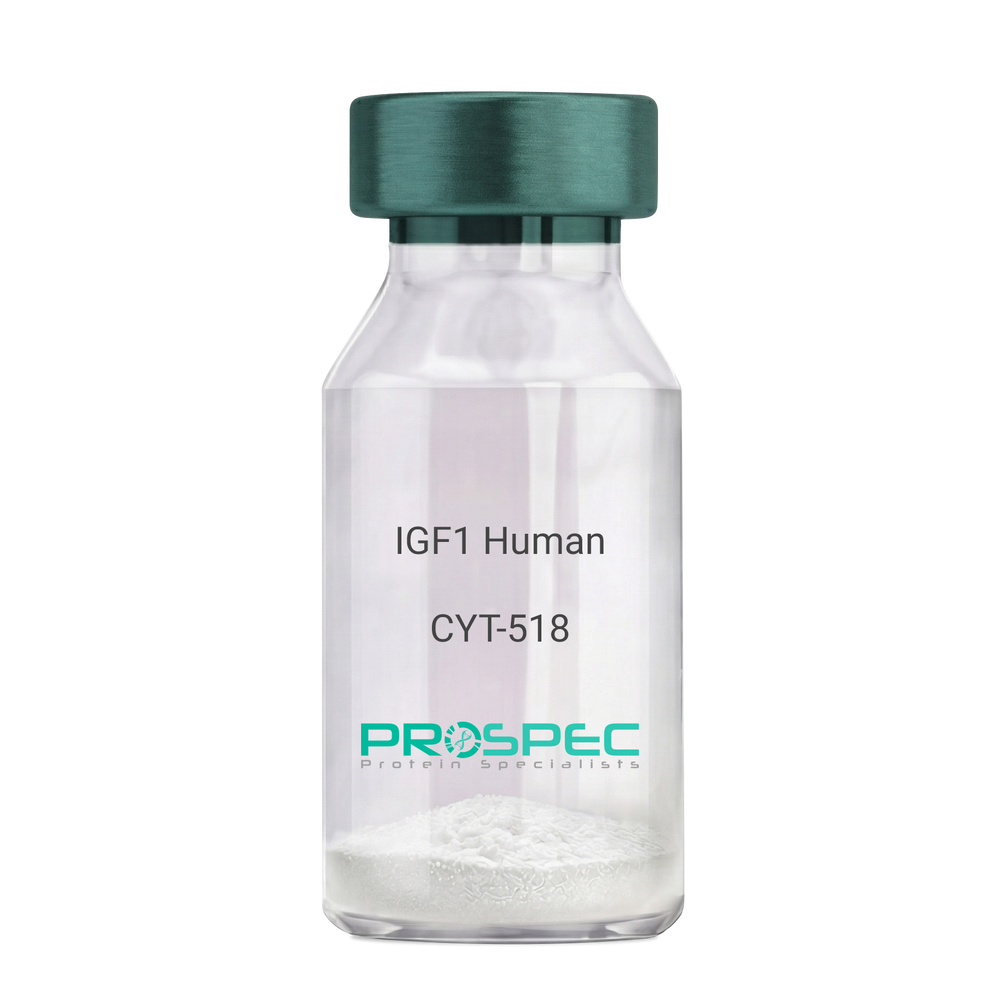
    IGF1 Human Des1-3

    Description:

    Insulin-Like Growth Factor 1 Des (1-3) Human Recombinant

    Somatomedin C, IGF-I, IGFI, IGF1, IGF-IA, Mechano growth factor, MGF, Des(1-3), Des1-3, Des 1-3, Des (1-3), IGF-1 (4-70).

    Product # :

    CYT-518

    Price :

    Quantity :

    Shipping Method :

    Room Temp Icon

    Shipped at Room temp

    Add To Cart

    More Info

    • description
    • source
    • formulation
    • purity
    • biological activity
    • More Info

    Description

    IGF-I Des(1-3) Human Recombinant produced in E.Coli is a single, non-glycosylated, polypeptide chain containing 67 amino acids (aa 4-70) and having a molecular mass of 7368.5 Dalton. IGF-1 Des1-3 is purified by proprietary chromatographic techniques.

    Source

    Escherichia Coli.

    Formulation

    The protein (1mg/ml) was lyophilized was lyophilized from a 0.2µm filtered concentrated solution in 20mM PBS, pH 7.0.

    Purity

    Greater than 97% as determined by:
    (a) Analysis by RP-HPLC.
    (b) Analysis by SDS-PAGE.

    Biological Activity

    The ED50 as determined by a cell proliferation assay using FDC-P1 cells is less than 2.0 ng/ml, corresponding to a specific activity of > 5×10⁵ units/mg.

    More Info

    • Introduction

      The somatomedins, or insulin-like growth factors (IGFs), comprise a family of peptides that play important roles in mammalian growth and development. IGF1 mediates many of the growth-promoting effects of growth hormone (GH; MIM 139250). Early studies showed that growth hormone did not directly stimulate the incorporation of sulfate into cartilage, but rather acted through a serum factor, termed 'sulfation factor,' which later became known as 'somatomedin' (Daughaday et al., 1972). Three main somatomedins have been characterized: somatomedin C (IGF1), somatomedin A (IGF2; MIM 147470), and somatomedin B (MIM 193190) (Rotwein, 1986; Rosenfeld, 2003).

    • Synonyms

      Somatomedin C, IGF-I, IGFI, IGF1, IGF-IA, Mechano growth factor, MGF, Des(1-3), Des1-3, Des 1-3, Des (1-3), IGF-1 (4-70).

    • Physical Appearance

      Sterile Filtered White lyophilized (freeze-dried) powder.

    • Stability

      Lyophilized IGF-I des(1-3) although stable at room temperature for 3 weeks, should be stored desiccated below -18°C. Upon reconstitution IGF1 des-1-3 should be stored at 4°C between 2-7 days and for future use below -18°C.For long term storage it is recommended to add a carrier protein (0.1% HSA or BSA).Please prevent freeze-thaw cycles.

    • Solubility

      It is recommended to reconstitute the IGF-I des(1-3) in sterile 18M-cm H2O not less than 100µg/ml, which can then be further diluted to other aqueous solutions.

    • Amino Acid Sequence

      TLCGAELVDA LQFVCGDRGF YFNKPTGYGS SSRRAPQTGI VDECCFRSCD LRRLEMYCAP LKPAKSA.

    • Background

      What is the molecular weight/Mw of IGF1 HUMAN DES1-3 Protein?
      IGF1 HUMAN DES1-3 Protein has a total Mw of 7.3kDa.

      What is the source or expression system of IGF1 HUMAN DES1-3 Protein?
      Escherichia Coli.

      What is the Purity of IGF1 HUMAN DES1-3 Protein?
      IGF1 HUMAN DES1-3 Protein is >97% pure as determined by SDS-PAGE.

      What is the Biological Activity of IGF1 HUMAN DES1-3 Protein?
      The ED50 as determined by a cell proliferation assay using FDC-P1 cells is less than 2.0 ng/ml, corresponding to a specific activity of > 5×10⁵ units/mg.

      What is the amino acid sequence of IGF1 HUMAN DES1-3 Protein?
      TLCGAELVDA LQFVCGDRGF YFNKPTGYGS SSRRAPQTGI VDECCFRSCD LRRLEMYCAP LKPAKSA.

      What applications can IGF1 HUMAN DES1-3 Protein be used in?
      IGF1 HUMAN DES1-3 Protein can probably be used in western blot, ELISA and Lateral Flow.

      What is the endotoxin level for IGF1 HUMAN DES1-3 Protein?
      The endotoxin level is minimal, IGF1 HUMAN DES1-3 Protein was purified using conventional chromatography techniques.


    ProSpec's products are furnished for LABORATORY RESEARCH USE ONLY. The product may not be used as drugs, agricultural or pesticidal products, food additives or household chemicals.

    Igf I Des1 3 Human
  • View Data Sheet

    Name :

    GH Porcine

    Description:

    Growth Hormone Porcine Recombinant

    GH1, GH, GHN, GH-N, hGH-N,Pituitary growth hormone, Growth hormone 1, Somatotropin, pST.

    Product # :

    CYT-519

    Price :

    Quantity :

    Shipping Method :

    Room Temp Icon

    Shipped at Room temp

    Add To Cart

    More Info

    • description
    • source
    • formulation
    • purity
    • biological activity
    • More Info

    Description

    Porcine-Somatotropin Recombinant produced in E.Coli is a single, non-glycosylated, polypeptide chain containing 190 amino acids and having a molecular mass of 21730 Dalton. Growth Hormone is purified by proprietary chromatographic techniques.

    Source

    Escherichia Coli.

    Formulation

    The Growth-hormone (1 mg/ml) was lyophilized after extensive dialyses against 0.34 mg sodium phosphate buffer (0.02 mg sodium phosphate monobasic & 0.32 mg sodium phosphate dibasic).

    Purity

    Greater than 98.0% as determined by:
    (a) Analysis by RP-HPLC.
    (b) Analysis by SDS-PAGE.

    Biological Activity

    Somatotropin contains 3 units/mg.

    More Info

    • Introduction

      GH is a member of the somatotropin/prolactin family of hormones which play an important role in growth control. The gene, along with four other related genes, is located at the growth hormone locus on chromosome 17 where they are interspersed in the same transcriptional orientation; an arrangement which is thought to have evolved by a series of gene duplications. The five genes share a remarkably high degree of sequence identity. Alternative splicing generates additional isoforms of each of the five growth hormones, leading to further diversity and potential for specialization. This particular family member is expressed in the pituitary but not in placental tissue as is the case for the other four genes in the growth hormone locus. Mutations in or deletions of the gene lead to growth hormone deficiency and short stature.

    • Synonyms

      GH1, GH, GHN, GH-N, hGH-N,Pituitary growth hormone, Growth hormone 1, Somatotropin, pST.

    • Physical Appearance

      Sterile Filtered White lyophilized (freeze-dried) powder.

    • Stability

      Lyophilized GH although stable at room temperature for 3 weeks, should be stored desiccated below -18°C. Upon reconstitution Somatotropin should be stored at 4°C between 2-7 days and for future use below -18°C.For long term storage it is recommended to add a carrier protein (0.1% HSA or BSA).Please prevent freeze-thaw cycles.

    • Solubility

      It is recommended to reconstitute the lyophilized pST in sterile 18MΩ-cm H2O not less than 100µg/ml, which can then be further diluted to other aqueous solutions.

    • Amino Acid Sequence

      The sequence of the first five N-terminal amino acids was determined and was found to be Phe-Pro-Ala-Met-Pro.

    ProSpec's products are furnished for LABORATORY RESEARCH USE ONLY. The product may not be used as drugs, agricultural or pesticidal products, food additives or household chemicals.

    Growth Hormone Porcine
  • View Data Sheet

    Name :

    Noggin Human, HEK

    Description:

    Noggin Human Recombinant, HEK

    Noggin, Symphalangism 1 (Proximal), Synostoses (Multiple) Syndrome 1, SYNS1A, SYNS1, SYM1.

    Product # :

    CYT-977

    Price :

    Quantity :

    Shipping Method :

    Ice Icon

    Shipped with Ice Packs

    Add To Cart

    More Info

    • description
    • source
    • formulation
    • purity
    • More Info

    Description

    Noggin produced in HEK293 cells is a polypeptide chain containing 211 amino acids (28-232a.a.) and having a molecular mass of 23.8kDa. (Molecular size on SDS-PAGE will appear at approximately 28-40kDa).Noggin is expressed with a 6 amino acid His tag at C-Terminus and purified by proprietary chromatographic techniques.

    Source

    HEK293 Cells.

    Formulation

    Recombinant Human Noggin hek293 derived protein is provided as a solution (0.25mg/ml) containing 50mM MES (pH 6.5) and 30% glycerol.

    Purity

    Greater than 90.0% as determined by SDS-PAGE.

    More Info

    • Introduction

      The secreted polypeptide noggin, encoded by the NOG gene, binds and inactivates members of the transforming growth factor-beta (TGF-beta) superfamily signaling proteins, such as bone morphogenetic protein-4 (BMP4). By diffusing through extracellular matrices more efficiently than members of the TGF-beta superfamily, noggin may have a principal role in creating morphogenic gradients. Noggin appears to have pleiotropic effect, both early in development as well as in later stages. It was originally isolated from Xenopus based on its ability to restore normal dorsal-ventral body axis in embryos that had been artificially ventralized by UV treatment. The results of the mouse knockout of noggin suggest that it is involved in numerous developmental processes, such as neural tube fusion and joint formation. Recently, several dominant human NOG mutations in unrelated families with proximal symphalangism (SYM1) and multiple synostoses syndrome (SYNS1) were identified; both SYM1 and SYNS1 have multiple joint fusion as their principal feature, and map to the same region (17q22) as NOG. All NOG mutations altered evolutionarily conserved amino acid residues. The amino acid sequence of human noggin is highly homologous to that of Xenopus, rat and mouse.

    • Synonyms

      Noggin, Symphalangism 1 (Proximal), Synostoses (Multiple) Syndrome 1, SYNS1A, SYNS1, SYM1.

    • Physical Appearance

      Sterile filtered colorless solution.

    • Stability

      Store at 4°C if entire vial will be used within 2-4 weeks.Store, frozen at -20°C for longer periods of time. For long term storage it is recommended to add a carrier protein (0.1% HSA or BSA).Avoid multiple freeze-thaw cycles.

    • Amino Acid Sequence

      QHYLHIRPAP SDNLPLVDLI EHPDPIFDPK EKDLNETLLR SLLGGHYDPG FMATSPPEDR PGGGGGAAGG AEDLAELDQL LRQRPSGAMP SEIKGLEFSE GLAQGKKQRL SKKLRRKLQM WLWSQTFCPV LYAWNDLGSR FWPRYVKVGS CFSKRSCSVP EGMVCKPSKS VHLTVLRWRC QRRGGQRCGW IPIQYPIISE CKCSCHHHHH H.

    ProSpec's products are furnished for LABORATORY RESEARCH USE ONLY. The product may not be used as drugs, agricultural or pesticidal products, food additives or household chemicals.

    Noggin Human Sf9
  • View Data Sheet

    Name :

    CNPY4 Human

    Description:

    Canopy FGF Signaling Regulator 4 Human Recombinant

    PRAT4B, Protein canopy homolog 4, CNPY4.

    Product # :

    PRO-1976

    Price :

    Quantity :

    Shipping Method :

    Ice Icon

    Shipped with Ice Packs

    Add To Cart

    More Info

    • description
    • source
    • formulation
    • purity
    • More Info

    Description

    CNPY4 Human Recombinant produced in E.Coli is a single, non-glycosylated polypeptide chain containing 252 amino acids (22-248 a.a) and having a molecular mass of 28.6kDa. CNPY4 is fused to a 25 amino acid His-tag at N-terminus & purified by proprietary chromatographic techniques..

    Source

    Escherichia Coli.

    Formulation

    CNPY4 protein solution (0.25mg/ml) containing 20mM Tris-HCl buffer (pH 8.0), 0.2M NaCl, 50% glycerol, 5mM DTT and 2mM EDTA.

    Purity

    Greater than 85.0% as determined by SDS-PAGE.

    More Info

    • Introduction

      Canopy FGF Signaling Regulator 4 (CNPY4) is a part of the canopy family which owns one saposin B-type domain. CNPY4 takes part in the regulation process of the cell surface expression of TLR4.

    • Synonyms

      PRAT4B, Protein canopy homolog 4, CNPY4.

    • Physical Appearance

      Sterile Filtered colorless solution.

    • Stability

      Store at 4°C if entire vial will be used within 2-4 weeks. Store, frozen at -20°C for longer periods of time. For long term storage it is recommended to add a carrier protein (0.1% HSA or BSA).Avoid multiple freeze-thaw cycles.

    • Amino Acid Sequence

      MGSSHHHHHH SSGLVPRGSH MGSEFGMLKE EDDDTERLPS KCEVCKLLST ELQAELSRTG RSREVLELGQ VLDTGKRKRH VPYSVSETRL EEALENLCER ILDYSVHAER KGSLRYAKGQ SQTMATLKGL VQKGVKVDLG IPLELWDEPS VEVTYLKKQC ETMLEEFEDI VGDWYFHHQE QPLQNFLCEG HVLPAAETAC LQETWTGKEI TDGEEKTEGE EEQEEEEEEE EEEGGDKMTK TGSHPKLDRE DL.

    ProSpec's products are furnished for LABORATORY RESEARCH USE ONLY. The product may not be used as drugs, agricultural or pesticidal products, food additives or household chemicals.

    Cnpy4 Human
  • View Data Sheet

    Name :

    CTGF Human (183-255)

    Description:

    Connective Tissue Growth Factor (183-255 a.a.) Human Recombinant

    CCN2, NOV2, HCS24, IGFBP8, MGC102839, CTGF, Connective Tissue Growth Factor.

    Product # :

    CYT-1174

    Price :

    Quantity :

    Shipping Method :

    Room Temp Icon

    Shipped at Room temp

    Add To Cart

    More Info

    • description
    • source
    • formulation
    • purity
    • More Info

    Description

    CTGF Human Recombinant is a single, glycosylated polypeptide chain containing 80 amino acids (183-255a.a) and having a molecular mass of 9.1kDa (calculated). CTGF is fused to a 7 a.a His tag at N-terminal.

    Source

    HEK293 cells.

    Formulation

    CTGF filtered (0.4 µm) and lyophilized from 0.5mg/ml in 20 mM Tris buffer and 50 mM NaCl, pH 7.5.

    Purity

    Greater than 95.0% as determined by SDS-PAGE.

    More Info

    • Introduction

      Connective Tissue Growth Factor is a part of the CCN family of proteins. The CCN family presently consists of six members in human also known as: Cyr61 (Cystein rich 61), CTGF, Nov (Nephroblastoma Overexpressed gene), WISP-1, 2 and 3 (Wnt-1 Induced Secreted Proteins). CCN proteins are matricellular proteins which are involved in the regulation of various cellular functions including: proliferation, differentiation, survival, adhesion and migration. They are expressed in derivatives of the three embryonic sheets and are implicated in the development of kidney, nervous system, muscle, bone marrow, cartilage and bone. During adulthood, they are implicated in wound healing, bone fracture repair, and pathologies such as: tumorigenesis,fibrosis and vascular ailments. Full length secreted CCN proteins can show an antiproliferative activity, whereas truncated isoforms are likely to stimulate proliferation and behave as oncogenes.
      The full length protein consists of 4 modules: Module I shares partial identity with the N-terminal part of the Insulin-like Growth Factor Binding Proteins (IGFBPs).
      Module II includes a stretch of 70amino acid residues – which shares sequence identity with the Von Willebrand Factor Type C repeat (VWC).
      Module III contains sequences sharing identity with the Thrombospondin type 1 repeat (TSP1) (WSXCSXXCG), which is thought to be implicated in the binding of sulfated glycoconjugates and to be important for cell adhesion.
      Module IV, also designated CT, is encoded by exon5. It is the leasts conserved one of the four domains at the level of nucleotide sequence, but it appears to be critical for several of the biological functions attributed to the CCN proteins.
      Proteolysis of the secreted full-length CCN proteins that has been reported in the case of CCN2 and CCN3 might result in the production of CCN-derived peptides with high affinity for ligands that full-length CNN proteins bind only poorly. Amino-truncated CCN2 isoforms were biologically active whereas no specific biological activity has been attributed to the truncated CCN3. Although the molecular processes underlying the production of these secreted isoforms is presently unknown, it is important to note that proteolysis occur at the same amino acid residues in both CCN2 and CCN3. An elevated expression of CCN2 has also been detected by Northern blotting in human invasive mammary ductal carcinomas, dermatofibromas, pyogenic granuloma, endothelial cells of angiolipomas and angioleiomyomas, and in pancreatic tumors. A study performed with chondrosarcomas representative of various histological grades established that CCN2 expression was closely correlated with increasing levels of malignancy.
      In agreement with CCN2 playing a role in brain tumor angiogenesis, immunocytochemistry studies indicated that both glioblastoma tumor cells and proliferating endothelial cells stained positive for CCN2. In astrocytomas, CCN2 expression was particularly elevated in high grade tumors, with a marked effect of CCN2 on cell proliferation. Downregulation of CCN2 expression in these cells was associated with a growth arrest at the G1/S transition while over-expression of CCN2 induced a two-fold increase of the number of cells in the G1 phase. Gene profiling analysis allowed to identify a set of about 50 genes whose expression might account for the proliferative activity of CCN2 in these cells.
      CCN2 was seen in a higher proportion of mononuclear cells of patients with acute lymphoblastic leukemia.

    • Synonyms

      CCN2, NOV2, HCS24, IGFBP8, MGC102839, CTGF, Connective Tissue Growth Factor.

    • Physical Appearance

      Filtered White lyophilized (freeze-dried) powder.

    • Stability

      Store lyophilized protein at -20°C. Aliquot the product after reconstitution to avoid repeated freezing/thawing cycles. Reconstituted protein can be stored at 4°C for a limited period of time; it does not show any change after two weeks at 4°C.

    • Solubility

      It is recommended to add deionized water to prepare a working stock solution of approximately 0.5mg/ml and let the lyophilized pellet dissolve completely.

    • Amino Acid Sequence

      MHHHHHHRLE DTFGPDPTMI RANCLVQTTE WSACSKTCGM GISTRVTNDN ASCRLEKQSR LCMVRPCEAD LEENIKKGKK.

    • Background

      What is the molecular weight/Mw of CTGF Protein?
      CTGF Protein has a total Mw of 9.1kDa.

      What is the source or expression system of CTGF Protein?
      HEK293 cells.

      What is the Purity of CTGF Protein?
      CTGF Protein is >95% pure as determined by SDS-PAGE.

      What is the Biological Activity of CTGF Protein?
      The biological functionality of CTGF Protein will be determined in the future.

      What is the amino acid sequence of CTGF Protein?
      MHHHHHHRLE DTFGPDPTMI RANCLVQTTE WSACSKTCGM GISTRVTNDN ASCRLEKQSR LCMVRPCEAD LEENIKKGKK.

      What applications can CTGF Protein be used in?
      CTGF Protein can probably be used in western blot, ELISA and Lateral Flow.

      What is the endotoxin level for CTGF Protein?
      The endotoxin level is minimal, CTGF Protein was purified using conventional chromatography techniques.

    ProSpec's products are furnished for LABORATORY RESEARCH USE ONLY. The product may not be used as drugs, agricultural or pesticidal products, food additives or household chemicals.

    Ctgf Protein
  • View Data Sheet

    Name :

    Hepatocyte Growth Factor Human, CHO

    Description:

    Hepatocyte Growth Factor Human Recombinant, CHO

    Scatter Factor (SF), Hepatopoietin (HPTA), HGF.

    Product # :

    CYT-251

    Price :

    Quantity :

    Shipping Method :

    Room Temp Icon

    Shipped at Room temp

    Add To Cart

    More Info

    • description
    • source
    • formulation
    • purity
    • biological activity
    • More Info

    Description

    Hepatocyte Growth Factor Human Recombinant produced in CHO is a heterodimer, non-glycosylated, polypeptide chain consisting an a-chain of 463 amino acids and b-chain of 234 having a total molecular mass of approximately 75kDa. The HGF is purified by proprietary chromatographic techniques.

    Source

    Chinese Hamster Ovarian Cells.

    Formulation

    The protein was lyophilized from a concentrated (1.4mg/ml) solution containing Phosphate-Buffered Saline with 0.02% Tween 80, pH 7.4.

    Purity

    Greater than 97.0% as determined by SDS-PAGE.

    Biological Activity

    The ED50, calculated by the dose-dependant proliferation of monkey 4MBr-5 indicator cells was found to be 20-40 ng/ml.

    More Info

    • Introduction

      Hepatocyte Growth Factor (HGF) is a multifunctional growth factor which regulates both cell growth and cell motility. It exerts a strong mitogenic effect on hepatocytes and primary epithelial cells. HGF synergizes with Interleukin-3 and GM-CSF to stimulate colony formation of hematopoietic progenitor cells in vitro and may, therefore, also modulate hematopoiesis.

    • Synonyms

      Scatter Factor (SF), Hepatopoietin (HPTA), HGF.

    • Physical Appearance

      Sterile Filtered White lyophilized (freeze-dried) powder.

    • Stability

      Lyophilized Hepatocyte Growth Factor although stable at room temperature for 3 weeks, should be stored desiccated below -18°C. Upon reconstitution HGF should be stored at 4°C between 2-7 days and for future use below -18°C.For long term storage it is recommended to add a carrier protein (0.1% HSA or BSA).Please prevent freeze-thaw cycles.

    • Solubility

      It is recommended to reconstitute the lyophilized Hepatocyte Growth Factor in sterile 18MΩ-cm H2O not less than 100µg/ml, which can then be further diluted to other aqueous solutions.

    • Amino Acid Sequence

      Agrees with the sequence of native human HGF.

    • Background

      What is the molecular weight/Mw of HEPATOCYTE GROWTH FACTOR HUMAN, CHO Protein?
      HEPATOCYTE GROWTH FACTOR HUMAN, CHO Protein has a total Mw of 75kDa.

      What is the source or expression system of HEPATOCYTE GROWTH FACTOR HUMAN, CHO Protein?
      Chinese Hamster Ovarian Cells.

      What is the Purity of HEPATOCYTE GROWTH FACTOR HUMAN, CHO Protein?
      HEPATOCYTE GROWTH FACTOR HUMAN, CHO Protein is >97% pure as determined by SDS-PAGE.

      What is the Biological Activity of HEPATOCYTE GROWTH FACTOR HUMAN, CHO Protein?
      The ED50, calculated by the dose-dependant proliferation of monkey 4MBr-5 indicator cells was found to be 20-40 ng/ml.

      What is the amino acid sequence of HEPATOCYTE GROWTH FACTOR HUMAN, CHO Protein?
      Agrees with the sequence of native human HGF.

      What applications can HEPATOCYTE GROWTH FACTOR HUMAN, CHO Protein be used in?
      HEPATOCYTE GROWTH FACTOR HUMAN, CHO Protein can probably be used in western blot, ELISA and Lateral Flow.

      What is the endotoxin level for HEPATOCYTE GROWTH FACTOR HUMAN, CHO Protein?
      The endotoxin level is minimal, HEPATOCYTE GROWTH FACTOR HUMAN, CHO Protein was purified using conventional chromatography techniques.

    ProSpec's products are furnished for LABORATORY RESEARCH USE ONLY. The product may not be used as drugs, agricultural or pesticidal products, food additives or household chemicals.

    Hgf Human Cho
  • View Data Sheet

    Name :

    HPGDS Human

    Description:

    Hematopoietic Prostaglandin D Synthase Human Recombinant

    Hematopoietic prostaglandin D synthase, H-PGDS, GST class-sigma, Glutathione S-transferase, Glutathione-dependent PGD synthase, Glutathione-requiring prostaglandin D synthase, Prostaglandin-H2 D-isomerase, HPGDS, GSTS, PGDS, PTGDS2GSTS, PGD2, GSTS1-1.

    Product # :

    ENZ-616

    Price :

    Quantity :

    Shipping Method :

    Ice Icon

    Shipped with Ice Packs

    Add To Cart

    More Info

    • description
    • source
    • formulation
    • purity
    • More Info

    Description

    HPGDS Human Recombinant produced in E.Coli is a single, non-glycosylated polypeptide chain containing 223 amino acids (1-199 a.a.) and having a molecular mass of 25.9kDa.HPGDS is fused to a 24 amino acid His-tag at N-terminus & purified by proprietary chromatographic techniques.

    Source

    Escherichia Coli.

    Formulation

    HPGDS protein solution (1mg/ml) containing 20mM Tris-HCl buffer (pH8.0), 10% glycerol, 0.15M NaCl and 1mM DTT.

    Purity

    Greater than 95.0% as determined by SDS-PAGE.

    More Info

    • Introduction

      Hematopoietic Prostaglandin D Synthase (HPGDS) belongs to the sigma class glutathione-S-transferase family. The HPGDS enzyme catalyzes the conversion of PGH2 to PGD2 and has a role in the production of prostanoids in the immune system and mast cells. The presence of the HPGDS enzyme can be utilized to identify the differentiation stage of human megakaryocytes. Furthermore, HPGDS is a prostaglandin involved in smooth muscle contraction/relaxation and an effective inhibitor of platelet aggregation, and the conjugation of glutathione with a extensive range of aryl halides and organic isothiocyanates. In addition, HPGDS displays low glutathione-peroxidase activity towards cumene hydroperoxide. HPGDS is expressed in a number of megakaryocytic cell lines but not in platelets. HPGDS is highly expressed in the adipose tissue, macrophages and placenta; however it is expressed at lower levels in the lung, heart, lymph nodes, appendix, bone marrow and fetal liver.

    • Synonyms

      Hematopoietic prostaglandin D synthase, H-PGDS, GST class-sigma, Glutathione S-transferase, Glutathione-dependent PGD synthase, Glutathione-requiring prostaglandin D synthase, Prostaglandin-H2 D-isomerase, HPGDS, GSTS, PGDS, PTGDS2GSTS, PGD2, GSTS1-1.

    • Physical Appearance

      Sterile Filtered colorless solution.

    • Stability

      Store at 4°C if entire vial will be used within 2-4 weeks. Store, frozen at -20°C for longer periods of time. For long term storage it is recommended to add a carrier protein (0.1% HSA or BSA).Avoid multiple freeze-thaw cycles.

    • Amino Acid Sequence

      MGSSHHHHHH SSGLVPRGSH MGSHMPNYKL TYFNMRGRAE IIRYIFAYLD IQYEDHRIEQ ADWPEIKSTL PFGKIPILEV DGLTLHQSLA IARYLTKNTD LAGNTEMEQC HVDAIVDTLD DFMSCFPWAE KKQDVKEQMF NELLTYNAPH LMQDLDTYLG GREWLIGNSV TWADFYWEIC
      STTLLVFKPD LLDNHPRLVT LRKKVQAIPA VANWIKRRPQ TKL.

    ProSpec's products are furnished for LABORATORY RESEARCH USE ONLY. The product may not be used as drugs, agricultural or pesticidal products, food additives or household chemicals.

    Hpgds Human
  • View Data Sheet

    Name :

    ARHGDIA Human

    Description:

    Rho GDP dissociation inhibitor (GDI) alpha Human Recombinant

    Rho GDP-dissociation inhibitor 1, Rho GDI 1, Rho-GDI alpha, ARHGDIA, GDIA1, RHOGDI, RHOGDI-1, MGC117248.

    Product # :

    PRO-002

    Price :

    Quantity :

    Shipping Method :

    Ice Icon

    Shipped with Ice Packs

    Add To Cart

    More Info

    • description
    • source
    • formulation
    • purity
    • More Info

    Description

    ARHGDIA Human Recombinant fused with a 21 amino acid His tag at N-terminus produced in E.Coli is a single, non-glycosylated, polypeptide chain containing 202 amino acids (24-204 a.a.) and having a molecular mass of 22.9kDa. The ARHGDIA is purified by proprietary chromatographic techniques.

    Source

    Escherichia Coli.

    Formulation

    The ARHGDIA solution (1 mg/ml) contains 20mM Tris-HCl buffer (pH 8.0), 1mM DTT and 10% glycerol.

    Purity

    Greater than 95.0% as determined by SDS-PAGE.

    More Info

    • Introduction

      Rho GDP-dissociation inhibitor 1 (ARHGDIA) is a member of the RAS gene superfamily, which encodes small guanine nucleotide exchange (GTP/GDP) factors. ARHGDIA, which is localized to the cytoplasm, inhibits the dissociation of GDP from Rho proteins, thus preventing GTP from binding to and consequently activating Rho proteins. In humans, the ARHGDIA can be phosphorylated at Ser 101 by p21-activated kinase, an event that inhibits its activity and may result in positive feedback regulation of several ARHGDIA target proteins.

    • Synonyms

      Rho GDP-dissociation inhibitor 1, Rho GDI 1, Rho-GDI alpha, ARHGDIA, GDIA1, RHOGDI, RHOGDI-1, MGC117248.

    • Physical Appearance

      Sterile Filtered colorless solution.

    • Stability

      Store at 4°C if entire vial will be used within 2-4 weeks. Store, frozen at -20°C for longer periods of time. For long term storage it is recommended to add a carrier protein (0.1% HSA or BSA).Avoid multiple freeze-thaw cycles.

    • Amino Acid Sequence

      MGSSHHHHHH SSGLVPRGSH MSVNYKPPAQ KSIQEIQELD KDDESLRKYK EALLGRVAVS ADPNVPNVVV TGLTLVCSSA PGPLELDLTG DLESFKKQSF VLKEGVEYRI KISFRVNREI VSGMKYIQHT YRKGVKIDKT DYMVGSYGPR AEEYEFLTPV EEAPKGMLAR GSYSIKSRFT DDDKTDHLSW EWNLTIKKDW KD.

    ProSpec's products are furnished for LABORATORY RESEARCH USE ONLY. The product may not be used as drugs, agricultural or pesticidal products, food additives or household chemicals.

    Arhgdia Human
  • View Data Sheet

    Name :

    FGF 8 Human

    Description:

    Fibroblast Growth Factor-8 Human Recombinant

    FGF8B, FGF-8B, FGF8-B, KAL6, HBGF-8, HBGF8, AIGF, HBGF-8, MGC149376, fibroblast growth factor 8.

    Product # :

    CYT-839

    Price :

    Quantity :

    Shipping Method :

    Room Temp Icon

    Shipped at Room temp

    Add To Cart

    More Info

    • description
    • source
    • formulation
    • purity
    • biological activity
    • More Info

    Description

    FGF 8 Human Recombinant produced in E.Coli is a non-glycosylated polypeptide chain containing 194 amino acids and having a total molecular mass of 22.5kDa.

    Source

    Escherichia Coli.

    Formulation

    Lyophilized from a sterile 0.2 micron filtered aqueous solution containing 0.1% TFA.

    Purity

    Greater than 95.0% as determined by analysis by SDS-PAGE.

    Biological Activity

    The ED50, as determined by its ability to induce proliferation of NR6-R 3T3, is 0.915ng/ml, corresponding to a specific activity of 1.1x10⁶units/mg.

    More Info

    • Introduction

      FGF8 is part of the fibroblast growth factor family. FGF family members have wide mitogenic and cell survival activities, and participate in a variety of biological processes, including embryonic development, cell growth, morphogenesis, tissue repair, tumor growth and invasion. FGF8 supports androgen and anchorage independent growth of mammary tumor cells. FGF8 over expression increases tumor growth and angiogensis. The adult expression of FGF-8 gene is restricted to testes and ovaries. FGF8 functions as an embryonic epithelial factor. FGF8 takes part in midbrain and limb development, organogenesis, embryo gastrulation and left-right axis determination.

    • Synonyms

      FGF8B, FGF-8B, FGF8-B, KAL6, HBGF-8, HBGF8, AIGF, HBGF-8, MGC149376, fibroblast growth factor 8.

    • Physical Appearance

      Sterile Filtered White lyophilized (freeze-dried) powder.

    • Stability

      Lyophilized FGF-8 although stable at room temperature for 3 weeks, should be stored desiccated below -18°C. Upon reconstitution FGF-8 should be stored at 4°C between 2-7 days and for future use below -18°C. For long term storage it is recommended to add a carrier protein (0.1% HSA or BSA). Please prevent freeze-thaw cycles.

    • Solubility

      It is recommended to reconstitute the lyophilized FGF-8 in sterile 18MΩ-cm H2O not less than 100µg/ml, which can then be further diluted to other aqueous solutions.

    • Amino Acid Sequence

      MQVTVQSSPN FTQHVREQSL VTDQLSRRLI RTYQLYSRTS GKHVQVLANK RINAMAEDGDPFAKLIVETD TFGSRVRVRG AETGLYICMN KKGKLIAKSN GKGKDCVFTE IVLENNYTAL QNAKYEGWYM AFTRKGRPRK GSKTRQHQRE VHFMKRLPRG HHTTEQSLRF EFLNYPPFTR SLRGSQRTWA PEPR.

    • Background

      What is the molecular weight/Mw of FGF8 Protein?
      FGF8 Protein has a total Mw of 22.5kDa.

      What is the source or expression system of FGF8 Protein?
      Escherichia Coli.

      What is the Purity of FGF8 Protein?
      FGF8 Protein is >95% pure as determined by SDS-PAGE.

      What is the Biological Activity of FGF8 Protein?
      The ED50, as determined by its ability to induce proliferation of NR6-R 3T3, is 0.915ng/ml, corresponding to a specific activity of 1.1x10⁶units/mg.

      What is the amino acid sequence of FGF8 Protein?
      MQVTVQSSPN FTQHVREQSL VTDQLSRRLI RTYQLYSRTS GKHVQVLANK RINAMAEDGDPFAKLIVETD TFGSRVRVRG AETGLYICMN KKGKLIAKSN GKGKDCVFTE IVLENNYTAL QNAKYEGWYM AFTRKGRPRK GSKTRQHQRE VHFMKRLPRG HHTTEQSLRF EFLNYPPFTR SLRGSQRTWA PEPR.

      What applications can FGF8 Protein be used in?
      FGF8 Protein can probably be used in western blot, ELISA and Lateral Flow.

      What is the endotoxin level for FGF8 Protein?
      The endotoxin level is minimal, FGF8 Protein was purified using conventional chromatography techniques.

    ProSpec's products are furnished for LABORATORY RESEARCH USE ONLY. The product may not be used as drugs, agricultural or pesticidal products, food additives or household chemicals.

    Fgf 8 Human
  • View Data Sheet

    Name :

    FGFR4 Human

    Description:

    Fibroblast Growth Factor Receptor 4 Fc Chimera Human Recombinant

    Fibroblast Growth Factor Receptor 4, EC 2.7.10.1, JTK2, TKF, Tyrosine Kinase Related To Fibroblast Growth Factor Receptor, Hydroxyaryl-Protein Kinase, Protein-Tyrosine Kinase, Tyrosylprotein Kinase, CD334 Antigen, EC 2.7.10, FGFR-4, CD334, FGFR4.

    Product # :

    PKA-233

    Price :

    Quantity :

    Shipping Method :

    Room Temp Icon

    Shipped at Room temp

    Add To Cart

    More Info

    • description
    • source
    • formulation
    • purity
    • biological activity
    • More Info

    Description

    Soluble FGFR-4a (IIIc) Fc Chimera Human Recombinant fused with Xa cleavage site with the Fc part of human IgG1 produced in baculovirus is a heterodimeric, glycosylated, Polypeptide chain and having a molecular mass of 170 kDa. The FGFR4 is purified by proprietary chromatographic techniques.

    Source

    Insect Cells.

    Formulation

    CD334 was lyophilized from a concentrated (1mg/ml) sterile solution containing no additives.

    Purity

    Greater than 90.0% as determined by:
    (a) Analysis by RP-HPLC.
    (b) Analysis by SDS-PAGE.

    Biological Activity

    Determined by its ability to inhibit human FGF acidic-dependent proliferation on R1 cells. The ED50 for this effect is typically at 15.0-30.0 ng/ml.

    More Info

    • Introduction

      Fibroblast growth factors (FGFs) comprise a family of at least eighteen structurally related proteins that are involved in a multitude of physiological and pathological cellular processes, including cell growth, differentiation, angiogenesis, wound healing and tumorgenesis. The biological activities of the FGFs are mediated by a family of type I transmembrane tyrosine kinases which undergo dimerization and autophosphorylation after ligand binding. Four distinct genes encoding closely related FGF receptors, FGF R1 - 4, are known. All four genes for FGF Rs encode proteins with an N-terminal signal peptide, three immunoglobulin (Ig)-like domains, an acid-box region containing a run of acidic residues between the IgI and IgII domains, a transmembrane domain and the split tyrosine-kinase domain. Multiple forms of FGF R1 - 3 are generated by alternative splicing of the mRNAs. A frequent splicing event involving FGF R1 and 2 results in receptors containing all three Ig domains, referred to as the a isoform, or only IgII and IgIII, referred to as the b isoform. Only the a isoform has been identified for FGF R3 and FGF R4. Additional splicing events for FGF R1 - 3, involving the C-terminal half of the IgIII domain encoded by two mutually exclusive alternative exons, generate FGF receptors with alternative IgIII domains (IIIb and IIIc). A IIIa isoform which is a secreted FGF binding protein containing only the N-terminal half of the IgIII domain plus some intron sequences has also been reported for FGF R1. Mutations in FGF R1 - 3 have been found in patients with birth defects involving craniosynostosis. The complex patterns of expression of these receptors as well as the specificity of their interactions with the various FGF ligand family members are under investigation.

    • Synonyms

      Fibroblast Growth Factor Receptor 4, EC 2.7.10.1, JTK2, TKF, Tyrosine Kinase Related To Fibroblast Growth Factor Receptor, Hydroxyaryl-Protein Kinase, Protein-Tyrosine Kinase, Tyrosylprotein Kinase, CD334 Antigen, EC 2.7.10, FGFR-4, CD334, FGFR4.

    • Physical Appearance

      Sterile Filtered White lyophilized (freeze-dried) powder.

    • Stability

      Lyophilized FGFR4 although stable at room temperature for 3 weeks, should be stored desiccated below -18°C. Upon reconstitution FGFR4 should be stored at 4°C between 2-7 days and for future use below -18°C.For long term storage it is recommended to add a carrier protein (0.1% HSA or BSA).Please prevent freeze-thaw cycles.

    • Solubility

      It is recommended to reconstitute the lyophilized FGFR-4 in sterile PBS not less than 100 µg/ml, which can then be further diluted to other aqueous solutions.

    ProSpec's products are furnished for LABORATORY RESEARCH USE ONLY. The product may not be used as drugs, agricultural or pesticidal products, food additives or household chemicals.

    Fgfr4 Human
  • View Data Sheet

    Name :

    CDNF Mouse

    Description:

    Cerebral Dopamine Neurotrophic Factor Mouse Recombinant

    Cerebral dopamine neurotrophic factor, ARMET-like protein 1, Conserved dopamine neurotrophic factor, Cdnf, Armetl1, 9330140G23.

    Product # :

    CYT-729

    Price :

    Quantity :

    Shipping Method :

    Room Temp Icon

    Shipped at Room temp

    Add To Cart

    More Info

    • description
    • source
    • formulation
    • purity
    • biological activity
    • More Info

    Description

    CDNF Mouse Recombinant produced in E.coli is a single, non-glycosylated polypeptide chain containing 163 amino acids and having a molecular mass of 18.5kDa.The CDNF is purified by proprietary chromatographic techniques.

    Source

    Escherichia Coli.

    Formulation

    CDNF protein was lyophilized from a 0.2µm filtered concentrated solution in 1xPBS, pH 7.4.

    Purity

    Greater than 97.0% as determined by:
    (a) Analysis by RP-HPLC.
    (b) Analysis by SDS-PAGE.

    Biological Activity

    CDNF Mouse is able to enhance neurite outgrowth of E16-E18 rat embryonic cortical neurons when immobilized at 5-30 µg/mL on a nitrocellulose-coated microplate.

    More Info

    • Introduction

      CDNF is a member of the ARMET family and acts as a trophic factor for dopamine neurons. CDNF inhibits the 6-hydroxydopamine (6-OHDA)-induced degeneration of dopaminergic neurons. When CDNF controlled after 6-OHDA-lesioning, it reestablishes the dopaminergic function and inhibits the degeneration of dopaminergic neurons in substantia nigra. CDNF is universally expressed in neuronal and non-neuronal tissues. The highest levels in the brain are found in the optic nerve and corpus callosum.

    • Synonyms

      Cerebral dopamine neurotrophic factor, ARMET-like protein 1, Conserved dopamine neurotrophic factor, Cdnf, Armetl1, 9330140G23.

    • Physical Appearance

      Sterile Filtered White lyophilized (freeze-dried) powder.

    • Stability

      Lyophilized CDNF although stable at room temperature for 3 weeks, should be stored desiccated below -18°C. Upon reconstitution CDNF should be stored at 4°C between 2-7 days and for future use below -18°C. For long term storage it is recommended to add a carrier protein (0.1% HSA or BSA). Please prevent freeze-thaw cycles.

    • Solubility

      It is recommended to reconstitute the lyophilized CDNF in sterile 18M-cm H2O not less than 100µg/ml, which can then be further diluted to other aqueous solutions.

    • Amino Acid Sequence

      QGLEAGVGPR ADCEVCKEFL DRFYNSLLSR GIDFSADTIE KELLNFCSDA KGKENRLCYY LGATTDAATK ILGEVTRPMS VHIPAVKICE KLKKMDSQIC ELKYGKKLDL ASVDLWKMRV AELKQILQRW GEECRACAEK SDYVNLIREL APKYVEIYPQ TEL.

    • Background

      What is the molecular weight/Mw of CDNF Protein?
      CDNF Protein has a total Mw of 18.5kDa.

      What is the source or expression system of CDNF Protein?
      Escherichia Coli.

      What is the Purity of CDNF Protein?
      CDNF Protein is >97% pure as determined by SDS-PAGE.

      What is the Biological Activity of CDNF Protein?
      CDNF Mouse is able to enhance neurite outgrowth of E16-E18 rat embryonic cortical neurons when immobilized at 5-30 µg/mL on a nitrocellulose-coated microplate.

      What is the amino acid sequence of CDNF Protein?
      QGLEAGVGPR ADCEVCKEFL DRFYNSLLSR GIDFSADTIE KELLNFCSDA KGKENRLCYY LGATTDAATK ILGEVTRPMS VHIPAVKICE KLKKMDSQIC ELKYGKKLDL ASVDLWKMRV AELKQILQRW GEECRACAEK SDYVNLIREL APKYVEIYPQ TEL.

      What applications can CDNF Protein be used in?
      CDNF Protein can probably be used in western blot, ELISA and Lateral Flow.

      What is the endotoxin level for CDNF Protein?
      The endotoxin level is minimal, CDNF Protein was purified using conventional chromatography techniques.

    ProSpec's products are furnished for LABORATORY RESEARCH USE ONLY. The product may not be used as drugs, agricultural or pesticidal products, food additives or household chemicals.

    Cdnf Mouse
  • View Data Sheet

    Name :

    proBDNF Human

    Description:

    Precursor Brain-Derived Neurotrophic Factor Human Recombinant

    proBDNF, Precursor Form Brain-derived Neurotrophic Factor.

    Product # :

    CYT-014

    Price :

    Quantity :

    Shipping Method :

    Room Temp Icon

    Shipped at Room temp

    Add To Cart

    More Info

    • description
    • source
    • formulation
    • purity
    • More Info

    Description

    proBDNF Human Recombinant produced in E.Coli is a single, non-glycosylated, non-covalently linked homodimer with each polypeptide chain containing 229 amino acids and having a molecular mass of 52kDa. The proBDNF is purified by proprietary chromatographic techniques.

    Source

    Escherichia Coli.

    Formulation

    proBDNF was lyophilized from a concentrated (0.5mg/ml) solution in 20mM PB, pH 8.0 and 500mM NaCl.

    Purity

    Greater than 95.0% as determined by:
    (a) Analysis by RP-HPLC.
    (b) Analysis by SDS-PAGE.

    More Info

    • Introduction

      proBDNF (the precursor form of Brain-derived neurotrophic factor) interacts preferentially with p75NTR (the pan-neurotrophin receptor p75) and vps10p domain-containing receptor sortilin and induces neuronal apoptosis, while the mature BDNF selectively binds with great affinity to the TrkB kinase receptor and promotes the survival, growth and differentiation of neurons. Since proneurotrophins and mature neurotrophins bring forth opposite biological effects, proBDNF cleavage in the neuronal system is regulated in a specific and cell-context dependent manner. proBDNF has an important role in negative regulation of neurotrophic actions in the brain.

    • Synonyms

      proBDNF, Precursor Form Brain-derived Neurotrophic Factor.

    • Physical Appearance

      Sterile Filtered White lyophilized (freeze-dried) powder.

    • Stability

      Lyophilized proBDNF although stable at room temperature for 3 weeks, should be stored desiccated below -18°C. Upon reconstitution proBDNF should be stored at 4°C between 2-7 days and for future use below -18°C.Please prevent freeze-thaw cycles.

    • Solubility

      It is recommended to reconstitute the lyophilized proBDNF in sterile 18M-cm H2O not less than 100µg/ml, which can then be further diluted to other aqueous solutions.

    • Amino Acid Sequence

      The sequence of the first five N-terminal amino acids was determined and was found to be Met-Ala-Pro-Met-Lys.

    • Background

      Precursor Brain-Derived Neurotrophic Factor Human Recombinant: Unveiling the Potential of a Key Neurotrophic Factor

      Abstract:

      Precursor Brain-Derived Neurotrophic Factor (proBDNF) human recombinant is a pivotal neurotrophic factor that plays a critical role in neuronal development, survival, and synaptic plasticity. This research paper provides a comprehensive overview of proBDNF, including its characteristics, processing mechanisms, and potential therapeutic applications. Furthermore, innovative methodologies for the production and optimization of proBDNF human recombinant are proposed, highlighting its future implications in the field of neuroregenerative medicine.

      Introduction:

      Understanding the intricate processes underlying neuronal development and function is crucial for advancing neuroregenerative strategies. Neurotrophic factors, such as proBDNF, have garnered significant attention due to their pivotal roles in supporting neuronal growth and survival. This paper delves into the unique features of proBDNF and presents novel approaches for its production and optimization.

      Characteristics and Processing Mechanisms:

      proBDNF is a precursor protein consisting of 247 amino acids and is processed into mature brain-derived neurotrophic factor (mBDNF) through proteolytic cleavage. The ratio between proBDNF and mBDNF is tightly regulated and determines the balance between neuronal survival and apoptosis. Additionally, proBDNF exerts distinct biological functions through its receptor interactions, modulating synaptic plasticity and neuronal activity.

      Production of proBDNF Human Recombinant:

      Efficient production methodologies are essential to harness the therapeutic potential of proBDNF human recombinant. Various expression systems, including bacterial, yeast, and mammalian cell-based platforms, have been explored. Each system presents unique advantages and challenges, necessitating careful selection to achieve high yields and protein quality. Optimization strategies, such as codon optimization, fusion protein tags, and growth conditions, have been employed to enhance production efficiency. Purification techniques, such as affinity chromatography and size exclusion chromatography, have been optimized to isolate high-quality proBDNF recombinant.

      Potential Therapeutic Applications:

      proBDNF human recombinant holds immense promise for neuroregenerative medicine. Its role in promoting neuronal survival, axonal growth, and synaptic plasticity positions it as a valuable therapeutic agent for neurodegenerative disorders, spinal cord injuries, and stroke. Additionally, the balance between proBDNF and mBDNF presents a potential therapeutic target for fine-tuning neuronal processes and restoring proper brain function.

      Conclusion:

      proBDNF human recombinant represents a crucial neurotrophic factor with diverse therapeutic applications in neuroregenerative medicine. Optimizing production methodologies and further understanding its processing mechanisms will enhance its clinical utility. With its potential implications in neurodegenerative disorders and neuronal repair, proBDNF human recombinant holds immense promise as a transformative tool for promoting neural health and regeneration.

      What is the molecular weight/Mw of BDNF Protein?
      BDNF Protein has a total Mw of 52kDa.

      What is the source or expression system of BDNF Protein?
      Escherichia Coli.

      What is the Purity of BDNF Protein?
      BDNF Protein is >95% pure as determined by SDS-PAGE.

      What is the Biological Activity of BDNF Protein?
      The biological functionality of BDNF Protein will be determined in the future.

      What is the amino acid sequence of BDNF Protein?
      The sequence of the first five N-terminal amino acids was determined and was found to be Met-Ala-Pro-Met-Lys.

      What applications can BDNF Protein be used in?
      BDNF Protein can probably be used in western blot, ELISA and Lateral Flow.

      What is the endotoxin level for BDNF Protein?
      The endotoxin level is minimal, BDNF Protein was purified using conventional chromatography techniques.

    ProSpec's products are furnished for LABORATORY RESEARCH USE ONLY. The product may not be used as drugs, agricultural or pesticidal products, food additives or household chemicals.

    Probdnf Human
  • View Data Sheet

    Name :

    NDUFAF1 Human

    Description:

    NADH Dehydrogenase 1 Alpha Subcomplex, Assembly Factor 1 Human Recombinant

    Complex I intermediate-associated protein 30, mitochondrial, NADH dehydrogenase [ubiquinone] 1 alpha subcomplex assembly factor 1, NDUFAF1, CIA30, CGI-65, CGI65.

    Product # :

    ENZ-661

    Price :

    Quantity :

    Shipping Method :

    Ice Icon

    Shipped with Ice Packs

    Add To Cart

    More Info

    • description
    • source
    • formulation
    • purity
    • More Info

    Description

    NDUFAF1 Human Recombinant produced in E.coli is a single, non-glycosylated polypeptide chain containing 326 amino acids (25-327) and having a molecular mass of 37kDa.NDUFAF1 is fused to a 23 amino acid His-tag at N-terminus & purified by proprietary chromatographic techniques.

    Source

    Escherichia Coli.

    Formulation

    The NDUFAF1 solution (0.5mg/ml) contains 20mM Tris-HCl buffer (pH 8.0), 0.15M NaCl, 10% glycerol and 1mM DTT.

    Purity

    Greater than 90.0% as determined by SDS-PAGE.

    More Info

    • Introduction

      NADH dehydrogenase [ubiquinone] 1 alpha subcomplex assembly factor 4 (NDUFAF4) is involved in the compilation of mitochondrial NADH: ubiquinone oxidoreductase complex (complex I). In addition, NDUFAF4 is involved in cell proliferation and survival of hormone-dependent tumor cells. NDUFAF4 may also be a regulator of breast tumor cell invasion. NDUFAF4 gene mutations cause the mitochondrial complex I deficiency.

    • Synonyms

      Complex I intermediate-associated protein 30, mitochondrial, NADH dehydrogenase [ubiquinone] 1 alpha subcomplex assembly factor 1, NDUFAF1, CIA30, CGI-65, CGI65.

    • Physical Appearance

      Sterile Filtered colorless solution.

    • Stability

      Store at 4°C if entire vial will be used within 2-4 weeks.Store, frozen at -20°C for longer periods of time. For long term storage it is recommended to add a carrier protein (0.1% HSA or BSA).Avoid multiple freeze-thaw cycles.

    • Amino Acid Sequence

      MGSSHHHHHH SSGLVPRGSH MGSYPFLGIR FAEYSSSLQK PVASPGKASS QRKTEGDLQG DHQKEVALDI TSSEEKPDVS FDKAIRDEAI YHFRLLKDEI VDHWRGPEGH PLHEVLLEQA KVVWQFRGKE DLDKWTVTSD KTIGGRSEVF LKMGKNNQSA LLYGTLSSEA PQDGESTRSG YCAMISRIPR GAFERKMSYD WSQFNTLYLR VRGDGRPWMV NIKEDTDFFQ RTNQMYSYFM FTRGGPYWQE VKIPFSKFFF SNRGRIRDVQ HELPLDKISS IGFTLADKVD GPFFLEIDFI GVFTDPAHTE EFAYENSPEL NPRLFK.

    ProSpec's products are furnished for LABORATORY RESEARCH USE ONLY. The product may not be used as drugs, agricultural or pesticidal products, food additives or household chemicals.

    Ndufaf1 Human
  • View Data Sheet

    Name :

    TDG Human

    Description:

    Thymine-DNA Glycosylase Human Recombinant

    Thymine-DNA Glycosylase, G/T Mismatch-Specific Thymine DNA Glycosylase, EC 3.2.2.29.

    Product # :

    ENZ-649

    Price :

    Quantity :

    Shipping Method :

    Ice Icon

    Shipped with Ice Packs

    Add To Cart

    More Info

    • description
    • source
    • formulation
    • purity
    • More Info

    Description

    TDG Human Recombinant produced in E. coli is a single polypeptide chain containing 433 amino acids (1-410) and having a molecular mass of 48.4 kDa.TDG is fused to a 23 amino acid His-tag at N-terminus & purified by proprietary chromatographic techniques.

    Source

    E.coli.

    Formulation

    The TDG solution (0.5mg/1ml) contains 20mM Tris-HCl buffer (pH 8.0), 0.1M NaCl, 0.4M Urea and 10% glycerol.

    Purity

    Greater than 85% as determined by SDS-PAGE.

    More Info

    • Introduction

      Thymine-DNA glycosylase (TDG) is a member of the TDG/mug DNA glycosylase family.
      TDG is a nuclear protein that fixes G/T mismatches to G/C pairs by hydrolyzing the carbon-nitrogen bond between the sugar-phosphate backbone of the DNA and the mispaired thymin. In addition, TDG removes uracil and 5-bromouracil from mispairings with guanine. The TDG enzyme has an essential role in cellular defense against genetic mutation triggered by the spontaneous deamination of 5-methylcytosine and cytosine.

    • Synonyms

      Thymine-DNA Glycosylase, G/T Mismatch-Specific Thymine DNA Glycosylase, EC 3.2.2.29.

    • Physical Appearance

      Sterile Filtered colorless solution.

    • Stability

      Store at 4°C if entire vial will be used within 2-4 weeks. Store, frozen at -20°C for longer periods of time. For long term storage it is recommended to add a carrier protein (0.1% HSA or BSA).Avoid multiple freeze-thaw cycles.

    • Amino Acid Sequence

      MGSSHHHHHH SSGLVPRGSH MGSMEAENAG SYSLQQAQAF YTFPFQQLMA EAPNMAVVNE QQMPEEVPAP APAQEPVQEA PKGRKRKPRT TEPKQPVEPK KPVESKKSGK SAKSKEKQEK ITDTFKVKRK VDRFNGVSEA ELLTKTLPDI LTFNLDIVII GINPGLMAAY KGHHYPGPGN HFWKCLFMSG LSEVQLNHMD DHTLPGKYGI GFTNMVERTT PGSKDLSSKE FREGGRILVQ KLQKYQPRIA VFNGKCIYEI FSKEVFGVKV KNLEFGLQPH KIPDTETLCY GMPSSSARCA QFPRAQDKVH YYIKLKDLRD QLKGIERNMD VQEVQYTFDL QLAQEDAKKM AVKEEKYDPG YEAAYGGAYG ENPCSSEPCG FSSNGLIESV ELRGESAFSG IPNGQWMTQS FTDQIPSFSN HCGTQEQEEE SHA.

    ProSpec's products are furnished for LABORATORY RESEARCH USE ONLY. The product may not be used as drugs, agricultural or pesticidal products, food additives or household chemicals.

    Tdg Human
  • View Data Sheet

    Name :

    VEGF Human

    Description:

    Vascular Endothelial Growth Factor Human Recombinant

    Vascular endothelial growth factor A, VEGF-A, Vascular permeability factor, VPF, VEGF, MGC70609.

    Product # :

    CYT-241

    Price :

    Quantity :

    Shipping Method :

    Room Temp Icon

    Shipped at Room temp

    Add To Cart

    More Info

    • description
    • source
    • formulation
    • purity
    • biological activity
    • More Info

    Description

    Vascular Endothelial Growth Factor Human Recombinant produced in E.Coli is a double, non-glycosylated, polypeptide chain containing 165 amino acids and having a molecular mass of 38.2kDa.The VEGF is purified by proprietary chromatographic techniques.

    Source

    Escherichia Coli.

    Formulation

    The VEGF protein was lyophilized from a concentrated (1mg/ml) solution with no additives.

    Purity

    Greater than 95.0% as determined by:
    (a) Analysis by RP-HPLC.
    (b) Analysis by SDS-PAGE.

    Biological Activity

    Determined by the dose-dependent stimulation of the proliferation of human umbilical vein endothelial cells (HUVEC) using a concentration range of 3.7-5.6 ng/ml, corresponding to a Specific Activity of 178,570-270,270IU/mg.

    More Info

    • Introduction

      Vascular endothelial growth factor (VEGF) is an important signaling protein involved in vessel formation As its name implies, VEGF activity has been mostly studied on cells of the vascular endothelium, although it does have effects on a number of other cell types (e.g. stimulation monocyte/macrophage migration, neurons, cancer cells, kidney epithelial cells ). VEGF mediates increased vascular permeability, induces vasculogenesis and endothelial cell production, promotes cell migration, and inhibits apoptosis. In vitro, VEGF has been shown to stimulate endothelial cell mitogenesis and cell migration. VEGF is also a vasodilator and increases microvascular permeability and was originally referred to as vascular permeability factor. VEGF is located in normal cartilage though only osteoarthritic cartilage expresses the VEGF receptors, NP1, VEGFR1 and VEGFR2. The VEGF level in the culture media from OA chondrocytes was more than 3 folds higher than in media from normal chondrocytes

    • Synonyms

      Vascular endothelial growth factor A, VEGF-A, Vascular permeability factor, VPF, VEGF, MGC70609.

    • Physical Appearance

      Sterile Filtered White lyophilized (freeze-dried) powder.

    • Stability

      Lyophilized VEGF although stable at room temperature for 3 weeks, should be stored desiccated below -18°C. Upon reconstitution VEGF should be stored at 4°C between 2-7 days and for future use below -18°C.For long term storage it is recommended to add a carrier protein (0.1% HSA or BSA).Please prevent freeze-thaw cycles.

    • Solubility

      It is recommended to reconstitute the lyophilized VEGF in sterile 18M-cm H2O not less than 100µg/ml, which can then be further diluted to other aqueous solutions.

    • Amino Acid Sequence

      APMAEGGGQN HHEVVKFMDV YQRSYCHPIE TLVDIFQEYP DEIEYIFKPS CVPLMRCGGC CNDEGLECVP TEESNITMQI MRIKPHQGQH IGEMSFLQHN KCECRPKKDR ARQENPCGPC SERRKHLFVQ DPQTCKCSCK NTDSRCKARQ LELNERTCRC DKPRR

    • Protein content

      VEGF protein quantitation was carried out by two independent methods:1. UV spectroscopy at 280 nm using the absorbency value of 0.2875 as the extinction coefficient for a 0.1% (1mg/ml) solution. This value is calculated by the PC GENE computer analysis program of protein sequences (IntelliGenetics). 2. Analysis by RP-HPLC, using a calibrated solution of VEGF as a Reference Standard.

    ProSpec's products are furnished for LABORATORY RESEARCH USE ONLY. The product may not be used as drugs, agricultural or pesticidal products, food additives or household chemicals.

    Vegf Human
  • View Data Sheet

    Name :

    DHH (C23II) His Human

    Description:

    Desert HedgeHog (C23II) Human Recombinant, His Tag

    HHG-3, Desert Hedgehog homolog, MGC35145, Desert hedgehog protein, DHH.

    Product # :

    CYT-763

    Price :

    Quantity :

    Shipping Method :

    Ice Icon

    Shipped with Ice Packs

    Add To Cart

    More Info

    • description
    • source
    • formulation
    • purity
    • More Info

    Description

    DHH (C23II) His Human Recombinant produced in E.coli is a single, non-glycosylated polypeptide chain containing 201 amino acids (23-198) and having a molecular mass of 22.4kDa.DHH (C23II) His is fused to a 24 amino acid His-tag at N-terminus & purified by proprietary chromatographic techniques.

    Source

    Escherichia Coli.

    Formulation

    The DHH (C23II) His solution (0.25mg/ml) contains 20mM Tris-HCl buffer (pH 7.5), 0.15M NaCl, 1mM DTT and 10% glycerol.

    Purity

    Greater than 90% as determined by SDS-PAGE.

    More Info

    • Introduction

      DHH is part of the Hedgehog family which encodes signaling molecules that are involved in regulating morphogenesis. DHH protein is a precursor that is autocatalytically cleaved, the N-terminal portion is soluble and contains the signalling activity while the C-terminal portion is involved in precursor processing. Additionally, the C-terminal product covalently attaches a cholesterol moiety to the N-terminal product, restricting the N-terminal product to the cell surface and preventing it from freely diffusing throughout the organism. Defects in DHH protein have been associated with partial gonadal dysgenesis (PGD) accompanied by minifascicular polyneuropathy. DHH plays a role both male gonadal differentiation and perineurial development.
      DHH plays a role in intercellular signaling which is essential for a variety of patterning events during development. DHH functions as a spermatocyte survival factor in the testes & is essential for testes development.

    • Synonyms

      HHG-3, Desert Hedgehog homolog, MGC35145, Desert hedgehog protein, DHH.

    • Physical Appearance

      Sterile Filtered clear solution.

    • Stability

      Store at 4°C if entire vial will be used within 2-4 weeks. Store, frozen at -20°C for longer periods of time. For long term storage it is recommended to add a carrier protein (0.1% HSA or BSA).Avoid multiple freeze-thaw cycles.

    • Amino Acid Sequence

      MGSSHHHHHH SSGLVPRGSH MGSMIIGPGR GPVGRRRYAR KQLVPLLYKQ FVPGVPERTL GASGPAEGRV ARGSERFRDL VPNYNPDIIF KDEENSGADR LMTERCKERV NALAIAVMNM WPGVRLRVTE GWDEDGHHAQ DSLHYEGRAL DITTSDRDRN KYGLLARLAV EAGFDWVYYE SRNHVHVSVK ADNSLAVRAG G

    ProSpec's products are furnished for LABORATORY RESEARCH USE ONLY. The product may not be used as drugs, agricultural or pesticidal products, food additives or household chemicals.

    Dhh C23Ii Human His
  • View Data Sheet

    Name :

    FGF 21 Human, His

    Description:

    Fibroblast Growth Factor-21 Human Recombinant, His Tag

    Fibroblast growth factor 21, FGF-21.

    Product # :

    CYT-281

    Price :

    Quantity :

    Shipping Method :

    Ice Icon

    Shipped with Ice Packs

    Add To Cart

    More Info

    • description
    • source
    • formulation
    • purity
    • More Info

    Description

    Fibroblast Growth Factor -21 Human Recombinant produced in E.Coli is a single, non-glycosylated, polypeptide chain containing 202 amino acids (29-209) and having a molecular mass of 21.6 kDa (molecular weight on SDS-PAGE will appear higher). The FGF-21 is fused to a 20 amino acid His Tag at N-terminus and purified by proprietary chromatographic techniques.

    Source

    Escherichia Coli.

    Formulation

    The FGF-21 His tag protein (1mg/ml) solution in 20mM Tris-HCl buffer pH-8 and 10% glycerol.

    Purity

    Greater than 90.0% as determined by SDS-PAGE.

    More Info

    • Introduction

      The FGFs are a family of more than 20 small (~17–26 kDa) secreted peptides. The initial characterization of these proteins focused on their ability to stimulate fibroblast proliferation. This mitogenic activity was mediated through FGF receptors (FGFRs) 1, 2, or 3. A fourth closely related tyrosine kinase receptor (FGFR4) was able to bind the FGFs but did not lead to a mitogenic response.
      FGFs modulate cellular activity via at least 5 distinct subfamilies of high-affinity FGF receptors (FGFRs): FGFR-1, -2, -3, and -4, all with intrinsic tyrosine kinase activity and, except for FGFR-4, multiple splice isoforms, and FGFR-5, which lacks an intracellular kinase domain. There is growing evidence that FGFRs can be important for regulation of glucose and lipid homeostasis. The overexpression of a dominant negative form of FGFR-1 in ? cells leads to diabetes in mice, which thus implies that proper FGF signaling is required for normal ? cell function and glycemia maintenance. FGFR-2 appears to be a key molecule during pancreatic development. Moreover, FGFR-4 has been implicated in cholesterol metabolism and bile acid synthesis.
      FGF-19, has been shown to cause resistance to diet-induced obesity and insulin desensitization and to improve insulin, glucose, and lipid profiles in diabetic rodents. Since these effects, at least in part, are mediated through the observed changes in metabolic rates, FGF-19 can be considered as a regulator of energy expenditure.
      FGF-21 is preferentially expressed in liver, but an exact knowledge of FGF-21 bioactivity and its mode of action have been lacking to date. FGF-21 is a potent activator of glucose uptake on adipocytes, protects animals from diet-induced obesity when overexpressed in transgenic mice, and lowers blood glucose and triglyceride levels when therapeutically administered to diabetic rodents.

    • Synonyms

      Fibroblast growth factor 21, FGF-21.

    • Physical Appearance

      Sterile Filtered colorless clear solution.

    • Stability

      Store at 4°C if entire vial will be used within 2-4 weeks. Store, frozen at -20°C for longer periods of time. For long term storage it is recommended to add a carrier protein (0.1% HSA or BSA).Please avoid freeze thaw cycles.

    • Amino Acid Sequence

      MGSSHHHHHH SSGLVPRGSH MHPIPDSSPL LQFGGQVRQR YLYTDDAQQT EAHLEIREDG TVGGAADQSP ESLLQLKALK PGVIQILGVKTSRFLCQRPD GALYGSLHFD PEACSFRELL LEDGYNVYQS EAHGLPLHLP GNKSPHRDPA PRGPARFLPL PGLPPAPPEP PGILAPQPPD VGSSDPLSMV GPSQGRSPSY AS.

    • Background

      What is the molecular weight/Mw of FGF21,HIS Protein?
      FGF21,HIS Protein has a total Mw of 21.6kDa.

      What is the source or expression system of FGF21,HIS Protein?
      Escherichia Coli.

      What is the Purity of FGF21,HIS Protein?
      FGF21,HIS Protein is >90% pure as determined by SDS-PAGE.

      What is the Biological Activity of FGF21,HIS Protein?
      The biological functionality of FGF21,HIS Protein will be determined in the future.

      What is the amino acid sequence of FGF21,HIS Protein?
      MGSSHHHHHH SSGLVPRGSH MHPIPDSSPL LQFGGQVRQR YLYTDDAQQT EAHLEIREDG TVGGAADQSP ESLLQLKALK PGVIQILGVKTSRFLCQRPD GALYGSLHFD PEACSFRELL LEDGYNVYQS EAHGLPLHLP GNKSPHRDPA PRGPARFLPL PGLPPAPPEP PGILAPQPPD VGSSDPLSMV GPSQGRSPSY AS.

      What applications can FGF21,HIS Protein be used in?
      FGF21,HIS Protein can probably be used in western blot, ELISA and Lateral Flow.

      What is the endotoxin level for FGF21,HIS Protein?
      The endotoxin level is minimal, FGF21,HIS Protein was purified using conventional chromatography techniques.

    ProSpec's products are furnished for LABORATORY RESEARCH USE ONLY. The product may not be used as drugs, agricultural or pesticidal products, food additives or household chemicals.

    Fgf21 Human His
  • View Data Sheet

    Name :

    FGF23 Human, Sf9

    Description:

    Fibroblast Growth Factor-23 Human Recombinant, Sf9

    Fibroblast growth factor 23, FGF-23, Phosphatonin, Tumor-derived hypophosphatemia-inducing factor, HYPF.

    Product # :

    CYT-1102

    Price :

    Quantity :

    Shipping Method :

    Ice Icon

    Shipped with Ice Packs

    Add To Cart

    More Info

    • description
    • source
    • formulation
    • purity
    • More Info
    • sds-page

    Description

    FGF23 produced in Sf9 Insect cells is a single, glycosylated polypeptide chain containing 236 amino acids (25-251a.a.) and having a molecular mass of 26.4kDa (Molecular size on SDS-PAGE will appear at approximately 13.5-18kDa).FGF23 is expressed with an 9 amino acid His tag at C-Terminus and purified by proprietary chromatographic techniques.

    Source

    Sf9, Insect cells.

    Formulation

    FGF23 protein solution (0.25mg/ml) containsPhosphate Buffered Saline (pH 7.4), 2mM DTT, 1mM EDTA and 10% glycerol.

    Purity

    Greater than 90.0% as determined by SDS-PAGE.

    sds-page

    FGF23 Human, Sf9 - Product image 1

    More Info

    • Introduction

      FGF-23 is a member of the fibroblast growth factor (FGF) family. FGF family members possess broad mitogenic and cell survival activities and are involved in a variety of biological processes including embryonic development, cell growth, tissue repair, morphogenesis, tumor growth and invasion. FGF-23 inhibits renal tubular phosphate transport. This gene was identified by its mutations associated with autosomal dominant hypophosphatemic rickets (ADHR), an inherited phosphate wasting disorder. a high level expression of FGF23 was found in oncogenic hypophosphatemic osteomalacia (OHO), a phenotypically similar disease caused by abnormal phosphate metabolism.

    • Synonyms

      Fibroblast growth factor 23, FGF-23, Phosphatonin, Tumor-derived hypophosphatemia-inducing factor, HYPF.

    • Physical Appearance

      Sterile filtered colorless solution.

    • Stability

      Store at 4°C if entire vial will be used within 2-4 weeks. Store, frozen at -20°C for longer periods of time. For long term storage it is recommended to add a carrier protein (0.1% HSA or BSA).Avoid multiple freeze-thaw cycles.

    • Amino Acid Sequence

      ADPYPNASPL LGSSWGGLIH LYTATARNSY HLQIHKNGHV DGAPHQTIYS ALMIRSEDAG
      FVVITGVMSR RYLCMDFRGN IFGSHYFDPE NCRFQHQTLE NGYDVYHSPQ YHFLVSLGRA
      KRAFLPGMNP PPYSQFLSRR NEIPLIHFNT PIPRRHTRSA EDDSERDPLN VLKPRARMTP
      APASCSQELP SAEDNSPMAS DPLGVVRGGR VNTHAGGTGP EGCRPFAKFI HHHHHH.

    • Background

      What is the molecular weight/Mw of FGF23 HUMAN, SF9 Protein?
      FGF23 HUMAN, SF9 Protein has a total Mw of 26.4kDa.

      What is the source or expression system of FGF23 HUMAN, SF9 Protein?
      Sf9, Insect cells.
      What is the Purity of FGF23 HUMAN, SF9 Protein?
      FGF23 HUMAN, SF9 Protein is >90% pure as determined by SDS-PAGE.

      What is the Biological Activity of FGF23 HUMAN, SF9 Protein?
      The biological functionality of FGF23 HUMAN, SF9 Protein will be determined in the future.

      What is the amino acid sequence of FGF23 HUMAN, SF9 Protein?
      ADPYPNASPL LGSSWGGLIH LYTATARNSY HLQIHKNGHV DGAPHQTIYS ALMIRSEDAG
      FVVITGVMSR RYLCMDFRGN IFGSHYFDPE NCRFQHQTLE NGYDVYHSPQ YHFLVSLGRA
      KRAFLPGMNP PPYSQFLSRR NEIPLIHFNT PIPRRHTRSA EDDSERDPLN VLKPRARMTP
      APASCSQELP SAEDNSPMAS DPLGVVRGGR VNTHAGGTGP EGCRPFAKFI HHHHHH.
      What applications can FGF23 HUMAN, SF9 Protein be used in?
      FGF23 HUMAN, SF9 Protein can probably be used in western blot, ELISA and Lateral Flow.

      What is the endotoxin level for FGF23 HUMAN, SF9 Protein?
      The endotoxin level is minimal, FGF23 HUMAN, SF9 Protein was purified using conventional chromatography techniques.

    ProSpec's products are furnished for LABORATORY RESEARCH USE ONLY. The product may not be used as drugs, agricultural or pesticidal products, food additives or household chemicals.

    Fgf 23 Protein
  • View Data Sheet

    Name :

    GAGE12F Human

    Description:

    G Antigen 12F Human Recombinant

    G Antigen 12F, GAGE-12F, G Antigen 12F/G/I.

    Product # :

    PRO-1736

    Price :

    Quantity :

    Shipping Method :

    Ice Icon

    Shipped with Ice Packs

    Add To Cart

    More Info

    • description
    • source
    • formulation
    • purity
    • More Info

    Description

    GAGE12F Human Recombinant produced in E.Coli is a single, non-glycosylated polypeptide chain containing 140 amino acids (1-117aa) and having a molecular mass of 15.4kDa.GAGE12F is fused to a 23 amino acid His-tag at N-terminus & purified by proprietary chromatographic techniques.

    Source

    Escherichia Coli.

    Formulation

    GAGE12F protein solution (0.25mg/ml) containing 20mM Tris-HCl buffer (pH 8.0), 0.15M NaCl and 10% glycerol.

    Purity

    Greater than 85.0% as determined by SDS-PAGE.

    More Info

    • Introduction

      GAGE12F is a member of the GAGE multigene family expressed in a large range of tumors whereas in normal tissues, his expression is restricted to germ cells. These genes are organized in clustered repeats, and have a high degree of forecasted sequence identity, however differ by scattered single nucleotide substitution. Their sequences contain either the antigenic peptide YYWPRPRRY or YRPRPRRY which is recognized by cytotoxic T-cells.

    • Synonyms

      G Antigen 12F, GAGE-12F, G Antigen 12F/G/I.

    • Physical Appearance

      Sterile Filtered clear solution.

    • Stability

      Store at 4°C if entire vial will be used within 2-4 weeks. Store, frozen at -20°C for longer periods of time. For long term storage it is recommended to add a carrier protein (0.1% HSA or BSA).Avoid multiple freeze-thaw cycles.

    • Amino Acid Sequence

      MGSSHHHHHH SSGLVPRGSH MGSMSWRGRS TYYWPRPRRY VQPPEMIGPM RPEQFSDEVE PATPEEGEPA TQRQDPAAAQ EGEDEGASAG QGPKPEAHSQ EQGHPQTGCE CEDGPDGQEM DPPNPEEVKT PEEGEKQSQC

    ProSpec's products are furnished for LABORATORY RESEARCH USE ONLY. The product may not be used as drugs, agricultural or pesticidal products, food additives or household chemicals.

    Gage12F Human
  • View Data Sheet

    Name :

    HMGN1 Human

    Description:

    High-Mobility Group Nucleosome Binding Domain 1 Human Recombinant

    HMG14, GC104230, High-Mobility Group Nucleosome Binding Domain 1.

    Product # :

    PRO-821

    Price :

    Quantity :

    Shipping Method :

    Ice Icon

    Shipped with Ice Packs

    Add To Cart

    More Info

    • description
    • source
    • formulation
    • purity
    • More Info

    Description

    HMGN1 Human Recombinant produced in E.Coli is a single, non-glycosylated, polypeptide chain containing 108 amino acids (1-100 a.a.) and having a molecular mass of 11.7 kDa. HMGN1 protein is fused to an 8 amino acid His-Tag at C-terminus and purified by standard chromatography.

    Source

    Escherichia Coli.

    Formulation

    HMGN1 protein solution (0.5mg/ml) containing 20mM Tris-HCl pH-8, 1mM DTT, 0.1M NaCl, 0.1mM PMSF & 20% glycerol.

    Purity

    Greater than 95% as determined by SDS-PAGE.

    More Info

    • Introduction

      HMGN1 binds to the inner side of the nucleosomal DNA therefore changing the interaction between the DNA and the histone octamer. HMGN1 participates in the development which maintains transcribable genes in an exceptional chromatin conformation. HMGN1 inhibits the phosphorylation of nucleosomal histones H3 and H2A by RPS6KA5/MSK1 and RPS6KA3/RSK2.

    • Synonyms

      HMG14, GC104230, High-Mobility Group Nucleosome Binding Domain 1.

    • Physical Appearance

      Sterile filtered colorless solution.

    • Stability

      Store at 4°C if entire vial will be used within 2-4 weeks. Store, frozen at -20°C for longer periods of time. For long term storage it is recommended to add a carrier protein (0.1% HSA or BSA).Avoid multiple freeze-thaw cycles.

    • Amino Acid Sequence

      MPKRKVSSAE GAAKEEPKRR SARLSAKPPA KVEAKPKKAA AKDKSSDKKV QTKGKRGAKG KQAEVANQET KEDLPAENGE TKTEESPASD EAGEKEAKSD LEHHHHHH.

    ProSpec's products are furnished for LABORATORY RESEARCH USE ONLY. The product may not be used as drugs, agricultural or pesticidal products, food additives or household chemicals.

    Hmgn1 Human
  • 1
  • …
  • 9
  • 10
  • 11
  • 12
  • 13
  • …
  • 42
Your browser does not support the video tag.

Products

  • Cytokines
  • Growth Factors
  • Chemokines
  • CD Antigens
  • Neurotrophins
  • Hormones
  • Enzymes
  • Viral Antigens
  • Recombinant Proteins
  • Natural Proteins
  • Monoclonal Antibodies
  • Polyclonal Antibodies
  • Thermal Packaging

About

  • Company
  • Founder
  • Contribution
  • Contact Us
  • My Account

Ordering

  • Ordering Method
  • Ordering - Credit Card
  • Ordering PO
  • Shipping Fees
  • FAQ's

Legal

  • Terms & Conditions
  • Privacy
  • Site Map
  • info@prospecbio.com
  • Facebook
  • Instagram
  • Linkedin Profile

© 2026 ProSpec-Tany TechnoGene Ltd. All Rights Reserved.

  • Choosing a selection results in a full page refresh.
  • Opens in a new window.