Skip to content

High-quality research proteins.

  • 1-800-805-6531

  • Mon - Sat 8.00-18.00, Sun - Closed

  • info@prospecbio.com

  • PO Box 6591 East Brunswick NJ 08816

  • Products
    • Cytokines
    • Growth factors
    • Chemokines
    • Cd antigens
    • Neurotrophins
    • Hormones
    • Enzymes
    • Viral antigens
    • Recombinant proteins
    • Natural proteins
    • Monoclonal antibodies
    • Polyclonal antibodies
    • Thermal Packaging
  • About
    • Company
    • Founder
    • Contribution
  • Customers
    • Eastern Asia
    • Eastern Europe
    • North America
    • South America
    • South East Asia
    • Southern Asia
    • Western Europe
  • Ordering
    • Ordering Method
    • Ordering - Credit Card
    • Ordering - PO
    • Shipping Fees
    • FAQs
  • Services
    • DNA Cloning
    • Protein Expression
    • Monoclonal Antibody
    • Fermentation
    • Technology License
  • Contact us
Log in

Country/region

  • USD $ | Albania
  • USD $ | Andorra
  • USD $ | Argentina
  • USD $ | Armenia
  • USD $ | Australia
  • USD $ | Austria
  • USD $ | Azerbaijan
  • USD $ | Belarus
  • USD $ | Belgium
  • USD $ | Bolivia
  • USD $ | Brazil
  • USD $ | Bulgaria
  • USD $ | Cambodia
  • USD $ | Canada
  • USD $ | Chile
  • USD $ | China
  • USD $ | Colombia
  • USD $ | Costa Rica
  • USD $ | Croatia
  • USD $ | Cyprus
  • USD $ | Czechia
  • USD $ | Denmark
  • USD $ | Estonia
  • USD $ | Finland
  • USD $ | France
  • USD $ | Georgia
  • USD $ | Germany
  • USD $ | Greece
  • USD $ | Hong Kong SAR
  • USD $ | Hungary
  • USD $ | Iceland
  • USD $ | India
  • USD $ | Ireland
  • USD $ | Israel
  • USD $ | Italy
  • USD $ | Japan
  • USD $ | Kazakhstan
  • USD $ | Latvia
  • USD $ | Liechtenstein
  • USD $ | Lithuania
  • USD $ | Madagascar
  • USD $ | Malta
  • USD $ | Mexico
  • USD $ | Moldova
  • USD $ | Monaco
  • USD $ | Netherlands
  • USD $ | New Zealand
  • USD $ | North Macedonia
  • USD $ | Norway
  • USD $ | Panama
  • USD $ | Paraguay
  • USD $ | Peru
  • USD $ | Philippines
  • USD $ | Poland
  • USD $ | Portugal
  • USD $ | Romania
  • USD $ | Singapore
  • USD $ | Slovakia
  • USD $ | Slovenia
  • USD $ | South Africa
  • USD $ | South Korea
  • USD $ | Spain
  • USD $ | Sri Lanka
  • USD $ | Sweden
  • USD $ | Switzerland
  • USD $ | Taiwan
  • USD $ | Thailand
  • USD $ | Türkiye
  • USD $ | Ukraine
  • USD $ | United Kingdom
  • USD $ | United States
  • USD $ | Uruguay
  • USD $ | Vatican City
  • USD $ | Venezuela
  • USD $ | Vietnam
  • Facebook
  • Instagram
logoProSpec - Recombinant Protein Manufacturer for academic and R&D industry
Become a distributor
Account Log in
Wishlist
Cart Cart(0)
  • Products
    +
    • Cytokines
    • Growth factors
    • Chemokines
    • Cd antigens
    • Neurotrophins
    • Hormones
    • Enzymes
    • Viral antigens
    • Recombinant proteins
    • Natural proteins
    • Monoclonal antibodies
    • Polyclonal antibodies
    • Thermal Packaging
  • About
    +
    • Company
    • Founder
    • Contribution
  • Customers
    +
    • Eastern Asia
    • Eastern Europe
    • North America
    • South America
    • South East Asia
    • Southern Asia
    • Western Europe
  • Ordering
    +
    • Ordering Method
    • Ordering - Credit Card
    • Ordering - PO
    • Shipping Fees
    • FAQs
  • Services
    +
    • DNA Cloning
    • Protein Expression
    • Monoclonal Antibody
    • Fermentation
    • Technology License
  • Contact us

Item added to your cart

View cart
View All
  • Cytokines
  • Growth factors
  • Chemokines
  • Cd antigens
  • Neurotrophins
  • Hormones
  • Enzymes
  • Viral antigens
  • Recombinant proteins
  • Natural proteins
  • Monoclonal antibodies
  • Polyclonal antibodies
  • Thermal Packaging
  • Tumor Necrosis Factor

    Tumor Necrosis Factor

    View All
  • 4-1BB

    4-1BB

    View All
  • Adiponectin

    Adiponectin

    View All
  • AIF1

    AIF1

    View All
  • Other Cytokines

    Other Cytokines

    View All
  • AITRL

    AITRL

    View All
  • Angiopoietin

    Angiopoietin

    View All
  • Apolipoprotein

    Apolipoprotein

    View All
  • B-Cell Activating Factor

    B-Cell Activating Factor

    View All
  • Beta Defensin

    Beta Defensin

    View All
  • Bone Morphogenetic Protein

    Bone Morphogenetic Protein

    View All
  • B type Natriuretic Peptide

    B type Natriuretic Peptide

    View All
  • BST

    BST

    View All
  • Betacellulin

    Betacellulin

    View All
  • Cardiotrophin

    Cardiotrophin

    View All
  • Activin

    Activin

    View All
  • Fibroblast Growth Factor

    Fibroblast Growth Factor

    View All
  • Other Growth Factors

    Other Growth Factors

    View All
  • CSF

    CSF

    View All
  • CTGF

    CTGF

    View All
  • IGFBP

    IGFBP

    View All
  • VEGF Protein

    VEGF Protein

    View All
  • EGF

    EGF

    View All
  • Epigen

    Epigen

    View All
  • Erythropoietin

    Erythropoietin

    View All
  • Insulin-Like Growth Factor

    Insulin-Like Growth Factor

    View All
  • Growth Hormone

    Growth Hormone

    View All
  • HDGF

    HDGF

    View All
  • Hepatocyte Growth Factor

    Hepatocyte Growth Factor

    View All
  • Insulin

    Insulin

    View All
  • BCA-1/ BLC (CXCL13)

    BCA-1/ BLC (CXCL13)

    View All
  • BRAK (CXCL14)

    BRAK (CXCL14)

    View All
  • C-10 (CCL6)

    C-10 (CCL6)

    View All
  • Other Chemokines

    Other Chemokines

    View All
  • MEC (CCL28)

    MEC (CCL28)

    View All
  • LD78-beta (CCL3L1)

    LD78-beta (CCL3L1)

    View All
  • CTACK (CCL27)

    CTACK (CCL27)

    View All
  • CXCL16

    CXCL16

    View All
  • CXCL17

    CXCL17

    View All
  • Platelet Factor-4 (CXCL4)

    Platelet Factor-4 (CXCL4)

    View All
  • ENA-78 (CXCL5)

    ENA-78 (CXCL5)

    View All
  • Eotaxin (CCL11,24,26)

    Eotaxin (CCL11,24,26)

    View All
  • Exodus-2 (CCL21)

    Exodus-2 (CCL21)

    View All
  • Fractalkine (CX3CL1)

    Fractalkine (CX3CL1)

    View All
  • CXCL6

    CXCL6

    View All
  • Other CD Antigens

    Other CD Antigens

    View All
  • CD14

    CD14

    View All
  • CD164

    CD164

    View All
  • CD1

    CD1

    View All
  • CD2

    CD2

    View All
  • CD200

    CD200

    View All
  • CD207

    CD207

    View All
  • CD226

    CD226

    View All
  • CD23

    CD23

    View All
  • CD244

    CD244

    View All
  • CD247

    CD247

    View All
  • CD27

    CD27

    View All
  • CD274

    CD274

    View All
  • CD300

    CD300

    View All
  • CD33

    CD33

    View All
  • Other Neurotrophins

    Other Neurotrophins

    View All
  • Beta-NGF

    Beta-NGF

    View All
  • BDNF

    BDNF

    View All
  • CDNF

    CDNF

    View All
  • CNTF

    CNTF

    View All
  • GDNF

    GDNF

    View All
  • Glia Maturation Factor

    Glia Maturation Factor

    View All
  • MANF

    MANF

    View All
  • Midkine

    Midkine

    View All
  • Neuroglobin

    Neuroglobin

    View All
  • Neurotrophic factors

    Neurotrophic factors

    View All
  • Neuregulin

    Neuregulin

    View All
  • Neuropilin

    Neuropilin

    View All
  • Pigment Epithelium-Derived Factor

    Pigment Epithelium-Derived Factor

    View All
  • Pleiotrophin

    Pleiotrophin

    View All
  • Peptide Hormones

    Peptide Hormones

    View All
  • Other Hormones

    Other Hormones

    View All
  • HCG

    HCG

    View All
  • Endothelin

    Endothelin

    View All
  • Exendin

    Exendin

    View All
  • FSH

    FSH

    View All
  • Glucagon

    Glucagon

    View All
  • GHRP

    GHRP

    View All
  • GLP

    GLP

    View All
  • Thyrostimulin

    Thyrostimulin

    View All
  • Inhibin A

    Inhibin A

    View All
  • LHRH

    LHRH

    View All
  • Melanotan

    Melanotan

    View All
  • Procalcitonin

    Procalcitonin

    View All
  • PTH

    PTH

    View All
  • Peroxiredoxin

    Peroxiredoxin

    View All
  • Peptidase

    Peptidase

    View All
  • Synthetase

    Synthetase

    View All
  • Transferase

    Transferase

    View All
  • Hydrolase

    Hydrolase

    View All
  • Dehydrogenase

    Dehydrogenase

    View All
  • ACE2

    ACE2

    View All
  • Esterase

    Esterase

    View All
  • Protein Kinases

    Protein Kinases

    View All
  • Other Enzymes

    Other Enzymes

    View All
  • Phosphatase

    Phosphatase

    View All
  • Deaminase

    Deaminase

    View All
  • Oxygenase

    Oxygenase

    View All
  • Adenylate Kinase

    Adenylate Kinase

    View All
  • Lyase

    Lyase

    View All
  • Chagas

    Chagas

    View All
  • SARS

    SARS

    View All
  • Influenza

    Influenza

    View All
  • ASFV

    ASFV

    View All
  • Astrovirus

    Astrovirus

    View All
  • Borrelia

    Borrelia

    View All
  • Helicobacter Pylori

    Helicobacter Pylori

    View All
  • Chikungunya

    Chikungunya

    View All
  • Chlamydia

    Chlamydia

    View All
  • Cytomegalo

    Cytomegalo

    View All
  • Dengue

    Dengue

    View All
  • EBV

    EBV

    View All
  • Ebola

    Ebola

    View All
  • Feline Leukemia Virus

    Feline Leukemia Virus

    View All
  • Hepatitis A

    Hepatitis A

    View All
  • Other

    Other

    View All
  • Actin

    Actin

    View All
  • ADAM

    ADAM

    View All
  • Complement Component

    Complement Component

    View All
  • Ag85

    Ag85

    View All
  • Eukaryotic Translation Initiation Factor

    Eukaryotic Translation Initiation Factor

    View All
  • Anterior Gradient Protein

    Anterior Gradient Protein

    View All
  • Heat Shock Protein

    Heat Shock Protein

    View All
  • Alpha-2-HS-Glycoprotein

    Alpha-2-HS-Glycoprotein

    View All
  • Hemoglobin

    Hemoglobin

    View All
  • Allergy

    Allergy

    View All
  • Anaplasma

    Anaplasma

    View All
  • Angiogenin

    Angiogenin

    View All
  • Ankyrin Repeat Domain

    Ankyrin Repeat Domain

    View All
  • Annexin

    Annexin

    View All
  • Other Natural Proteins

    Other Natural Proteins

    View All
  • Aprotinin

    Aprotinin

    View All
  • Transferrin

    Transferrin

    View All
  • Avidin

    Avidin

    View All
  • Anti Coagulation Factors

    Anti Coagulation Factors

    View All
  • Natural Albumin

    Natural Albumin

    View All
  • Natural Coagulation Factors

    Natural Coagulation Factors

    View All
  • Fibronectin

    Fibronectin

    View All
  • Thrombin

    Thrombin

    View All
  • Anti Human Enzyme

    Anti Human Enzyme

    View All
  • Other Monoclonal Antibodies

    Other Monoclonal Antibodies

    View All
  • Anti Human Cytokine

    Anti Human Cytokine

    View All
  • Anti Human Heat Shock Protein

    Anti Human Heat Shock Protein

    View All
  • Anti Mouse Lymphocyte

    Anti Mouse Lymphocyte

    View All
  • Anti Human Chemokine

    Anti Human Chemokine

    View All
  • Anti Human Lymphocyte

    Anti Human Lymphocyte

    View All
  • Anti Viral Monoclonal

    Anti Viral Monoclonal

    View All
  • Anti Mouse Cytokine

    Anti Mouse Cytokine

    View All
  • Anti-GST Monoclonal

    Anti-GST Monoclonal

    View All
  • Other Polyclonal Antibodies

    Other Polyclonal Antibodies

    View All
  • Anti Viral

    Anti Viral

    View All
  • Anti-GST Monoclonal

    Anti-GST Monoclonal

    View All
Back

Search results

257 results found for “TCL”

Name

Description

Product #

Price

Quantity

Shipping Method

  • View Data Sheet

    Name :

    TNFRSF14 Mouse

    Description:

    HVEM Mouse Recombinant

    Tumor Necrosis Factor Receptor Superfamily Member 14, HVEM, TR2, Herpes Virus Entry Mediator A, Tumor Necrosis Factor Receptor-Like 2, Herpesvirus Entry Mediator, HVEA, ATAR, CD270, LIGHTR, CD40-Like Protein, Tumor Necrosis Factor Receptor-Like Gene2.

    Product # :

    CYT-1145

    Price :

    Quantity :

    Shipping Method :

    Ice Icon

    Shipped with Ice Packs

    Add To Cart

    More Info

    • description
    • source
    • formulation
    • purity
    • More Info

    Description

    TNFRSF14 Mouse produced in Sf9 Baculovirus cells is a single, glycosylated polypeptide chain containing 407 amino acids (39-206 aa) and having a molecular mass of 45.3kDa.TNFRSF14 is fused to a 239 amino acid hIgG-His-Tag at C-terminus and purified by proprietary chromatographic techniques.

    Source

    Sf9, Baculovirus cells.

    Formulation

    The TNFRSF14 solution (0.25mg/ml) contains 10% glycerol and Phosphate-Buffered Saline (pH 7.4).

    Purity

    Greater than 90.0% as determined by SDS-PAGE.

    More Info

    • Introduction

      Herpesvirus entry mediator or HVEM or tumour necrosis factor receptor superfamily member 14 or TNFRSF14, is part of the TNF receptors family that is a receptor located on the cell surface. The cytoplasmic area of this receptor can bind all sorts of TNF receptor associated factor (TRAF) protein. Those proteins can mediate pathways activating an immune response. The MITF is regulating TNFRSF14 gene expression.

    • Synonyms

      Tumor Necrosis Factor Receptor Superfamily Member 14, HVEM, TR2, Herpes Virus Entry Mediator A, Tumor Necrosis Factor Receptor-Like 2, Herpesvirus Entry Mediator, HVEA, ATAR, CD270, LIGHTR, CD40-Like Protein, Tumor Necrosis Factor Receptor-Like Gene2.

    • Physical Appearance

      Sterile Filtered colorless solution.

    • Stability

      Store at 4°C if entire vial will be used within 2-4 weeks. Store, frozen at -20°C for longer periods of time. For long term storage it is recommended to add a carrier protein (0.1% HSA or BSA).Avoid multiple freeze-thaw cycles.

    • Amino Acid Sequence

      QPSCRQEEFL VGDECCPMCN PGYHVKQVCS EHTGTVCAPC PPQTYTAHAN GLSKCLPCGV
      CDPDMGLLTW QECSSWKDTV CRCIPGYFCE NQDGSHCSTC LQHTTCPPGQ RVEKRGTHDQ
      DTVCADCLTG TFSLGGTQEE CLPWTNCSAF QQEVRRGTNS TDTTCSSQLE PKSCDKTHTC
      PPCPAPELLG GPSVFLFPPK PKDTLMISRT PEVTCVVVDV SHEDPEVKFN WYVDGVEVHN
      AKTKPREEQY NSTYRVVSVL TVLHQDWLNG KEYKCKVSNK ALPAPIEKTI SKAKGQPREP
      QVYTLPPSRD ELTKNQVSLT CLVKGFYPSD IAVEWESNGQ PENNYKTTPP VLDSDGSFFL
      YSKLTVDKSR WQQGNVFSCS VMHEALHNHY TQKSLSLSPG KHHHHHH

    ProSpec's products are furnished for LABORATORY RESEARCH USE ONLY. The product may not be used as drugs, agricultural or pesticidal products, food additives or household chemicals.

    Tnfrsf14 Mouse
  • View Data Sheet

    Name :

    Thymopentin

    Description:

    Thymopentin

    Product # :

    HOR-241

    Price :

    Quantity :

    Shipping Method :

    Room Temp Icon

    Shipped at Room temp

    Add To Cart

    More Info

    • description
    • formulation
    • purity
    • biological activity
    • More Info

    Description

    Thymopentin has a molecular formula of C30H49N9O9, Arg-Lys-Asp-Val-Tyr-OH having an Mw of 679.8 Dalton.

    Formulation

    The protein (1mg/ml) was lyophilized with no additives.

    Purity

    Greater than 99.0% as determined by:
    (a) Analysis by RP-HPLC.
    (b) Analysis by SDS-PAGE.

    Biological Activity

    What is the molecular weight/Mw of THYMOPENTIN Protein? THYMOPENTIN Protein has a total Mw of 0.67kDa. What is the Purity of THYMOPENTIN Protein? THYMOPENTIN Protein is >99% pure as determined by SDS-PAGE. What is the Biological Activity of THYMOPENTIN Protein? The biological functionality of THYMOPENTIN Protein will be determined in the future. What applications can THYMOPENTIN Protein be used in? THYMOPENTIN Protein can probably be used in western blot, ELISA and Lateral Flow. What is the endotoxin level for THYMOPENTIN Protein? The endotoxin level is minimal, THYMOPENTIN Protein was purified using conventional chromatography techniques.

    More Info

    • Introduction

      Thymopentin, also known as TP-5, is a synthetic pentapeptide which is the active site of the naturally occurring hormone thymopoietin with immunomodulating properties (corresponding to the amino acids 32-36 of thymopoietin). Thymopentin enhances the production of thymic T cells and may help restore immunocompetence in immunosuppressed subjects. This agent also augments the effects of ionizing radiation by arresting cancer cells in the G2/M phase of the cell cycle.

    • Physical Appearance

      Sterile Filtered White lyophilized (freeze-dried) powder.

    • Stability

      Lyophilized Thymopentin although stable at room temperature for 3 weeks, should be stored desiccated below -18°C. Upon reconstitution TP-5 should be stored at 4°C between 2-7 days and for future use below -18°C.For long term storage it is recommended to add a carrier protein (0.1% HSA or BSA).Please prevent freeze-thaw cycles.

    • Solubility

      It is recommended to reconstitute the lyophilized Thymopentin in sterile 18MΩ-cm H2O not less than 100 µg/ml, which can then be further diluted to other aqueous solutions.

    ProSpec's products are furnished for LABORATORY RESEARCH USE ONLY. The product may not be used as drugs, agricultural or pesticidal products, food additives or household chemicals.

    Thymopentin
  • View Data Sheet

    Name :

    KIR2DL3 Antibody

    Description:

    Killer Cell Immunoglobulin-Like Receptor 2 Domains Long Cytoplasmic Tail 3, Mouse Anti Human

    Killer cell immunoglobulin-like receptor 2DL3, MHC class I NK cell receptor, Natural killer-associated transcript 2, NKAT-2, NKAT2a, NKAT2b, p58 natural killer cell receptor clone CL-6, p58 NK receptor, p58.2 MHC class-I-specific NK receptor, Killer inhibitory receptor cl 2-3, KIR-023GB, CD158 antigen-like family member B2, CD158b2 antigen, KIR2DL3, CD158B2, KIRCL23, NKAT2, p58, NKAT, GL183, CD158b, KIR-K7b, KIR-K7c, MGC129943.

    Product # :

    ANT-300

    Price :

    Quantity :

    Shipping Method :

    Ice Icon

    Shipped with Ice Packs

    Add To Cart

    More Info

    • formulation
    • More Info

    Formulation

    1mg/ml containing PBS, pH-7.4, & 0.1% Sodium Azide.

    More Info

    • Introduction

      Killer-cell immunoglobulin-like receptors (KIRs), are a family of cell surface glycoproteins found on Natural Killer (NK) Cells, which are important cells of the immune system. They control the killing function of these cells by interacting with MHC class I molecules, which are expressed on all cell types. This interaction allows them to identify virally infected cells or tumor cells that have a distinctive low level of Class I MHC on their surface. The majority of KIRs are inhibitory, which means that their recognition of MHC suppresses the cytotoxic activity of their NK cell. Only a limited number of KIRs have the capacity to activate cells. The KIR genes are found in a cluster on chromosome 19q13.4 within the 1 Mb leukocyte receptor complex (LRC). KIR molecules are extremely polymorphic, meaning their gene sequences differ significantly between individuals, so that different individuals have different arrays/repertoires of KIR genes. The KIR proteins are categorized by the number of extracellular immunoglobulin domains (2D or 3D) and by whether they have a long (L) or short (S) cytoplasmic domain. KIR proteins with the long cytoplasmic domain transduce inhibitory signals upon ligand binding via an immune tyrosine-based inhibitory motif (ITIM). Whereas KIR proteins with the short cytoplasmic domain lack the ITIM motif and instead associate with the TYRO protein tyrosine kinase binding protein to transduce activating signals. KIR2DL3 is an inhibitory Killer Cell Ig-like Receptor (KIR, previously called p58 KIR, cl-6, NKAT2 or KIR-K7), which recognizes class I MHC molecules (HLA-Cw1, -Cw3, -Cw7, and Cw8). KIR2DL3 inhibits the activity of NK cells thus preventing cell lysis.

    • Synonyms

      Killer cell immunoglobulin-like receptor 2DL3, MHC class I NK cell receptor, Natural killer-associated transcript 2, NKAT-2, NKAT2a, NKAT2b, p58 natural killer cell receptor clone CL-6, p58 NK receptor, p58.2 MHC class-I-specific NK receptor, Killer inhibitory receptor cl 2-3, KIR-023GB, CD158 antigen-like family member B2, CD158b2 antigen, KIR2DL3, CD158B2, KIRCL23, NKAT2, p58, NKAT, GL183, CD158b, KIR-K7b, KIR-K7c, MGC129943.

    • Physical Appearance

      Sterile Filtered colorless solution.

    • Immunogen

      Anti-human KIR2DL3 mAb, is derived from hybridization of mouse P3-x63-Ag8.653 myeloma cells with spleen cells from BALB/c mice immunized with recombinant human KIR2DL3 amino acids 19-161 purified from E. coli.

    • Ig Subclass

      Mouse IgG2a heavy chains and κ light chain.

    • Clone

      P190IIC311AT.

    • Applications

      KIR2DL3 antibody has been tested by ELISA and Western blot immunofluorescent staining with flow cytometric analysis to assure specificity. Since application varies, however, each investigation should be titrated by the reagent to obtain optimal results. Applications include flow cytometry (5-10g/1×1000000), ELISA (1:1,000 when tested against the immunized protein) and western blot analysis (1μg/ml).

    • Type

      Mouse Anti Human Monoclonal.

    • Storage Procedures

      For periods up to 1 month store at 4°C, for longer periods of time, store at -20°C. Prevent freeze thaw cycles.

    • Purification Method

      KIR2DL3 antibody was purified from mouse ascitic fluids by protein-G affinity chromatography.

    ProSpec's products are furnished for LABORATORY RESEARCH USE ONLY. The product may not be used as drugs, agricultural or pesticidal products, food additives or household chemicals.

    Kir2Dl3 Antibody
  • View Data Sheet

    Name :

    KRT8 Antibody

    Description:

    Cytokeratin 8, Mouse Anti Human

    Keratin type II cytoskeletal 8, Cytokeratin-8, CK-8, Keratin-8, K8, KRT8, CYK8, KO, CK8, K2C8, CARD2.

    Product # :

    ANT-470

    Price :

    Quantity :

    Shipping Method :

    Ice Icon

    Shipped with Ice Packs

    Add To Cart

    More Info

    • formulation
    • More Info

    Formulation

    1mg/ml containing PBS, pH-7.4, 10% Glycerol and 0.02% Sodium Azide.

    More Info

    • Introduction

      Cytokeratin 8 (KRT8) belongs to the type II keratin family clustered on the long arm of chromosome 12. Type I and type II keratins heteropolymerize to form intermediate-sized filaments in the cytoplasm of epithelial cells. KRT8 typically dimerizes with keratin 18 to form an intermediate filament in simple single-layered epithelial cells. KRT8 has a role in retaining cellular structural integrity and also functions in signal transduction and cellular differentiation. KRT8 gene mutations cause cryptogenic cirrhosis.

    • Synonyms

      Keratin type II cytoskeletal 8, Cytokeratin-8, CK-8, Keratin-8, K8, KRT8, CYK8, KO, CK8, K2C8, CARD2.

    • Physical Appearance

      Sterile filtered colorless solution.

    • Immunogen

      Anti-human KRT8 mAb, clone PAT3D11A, is derived from hybridization of mouse F0 myeloma cells with spleen cells from BALB/c mice immunized with a recombinant human KRT8 protein purified from E. coli.

    • Ig Subclass

      Mouse IgG3 heavy chain and Kappa light chain.

    • Clone

      PAT3D11A.

    • Applications

      The antibody has been tested by ELISA, Western blot analysis to assure specificity and reactivity. Since application varies, however, each investigation should be titrated by the reagent to obtain optimal results. Recommended starting dilution is 1:1000.

    • Type

      Mouse Anti Human Monoclonal.

    • Storage Procedures

      For periods up to 1 month store at 4°C, for longer periods of time, store at -20°C. Prevent freeze thaw cycles.

    ProSpec's products are furnished for LABORATORY RESEARCH USE ONLY. The product may not be used as drugs, agricultural or pesticidal products, food additives or household chemicals.

    Krt8 Antibody
  • View Data Sheet

    Name :

    TNFR Mouse

    Description:

    Tumor Necrosis Factor Receptor Mouse Recombinant

    Tumor necrosis factor receptor superfamily member 1A, Tumor necrosis factor receptor 1, TNF-R1, Tumor necrosis factor receptor type I, TNF-RI, TNFR-I, p55, p60, CD120a, Tnfrsf1a, Tnfr-1, Tnfr1, FPF, TNF-R, TNFAR, TNFRI, p55-R, TNFR60, Tnfr-2, TNF-R-I, TNF-R55, TNFRp55, TNF-alphaR1, TNFalpha-R1.

    Product # :

    CYT-774

    Price :

    Quantity :

    Shipping Method :

    Room Temp Icon

    Shipped at Room temp

    Add To Cart

    More Info

    • description
    • source
    • formulation
    • purity
    • biological activity
    • More Info

    Description

    TNFR Mouse Recombinant produced in E.coli is a single, non-glycosylated polypeptide chain containing 191 amino acids and having a molecular mass of 21.1kDa.The TNFR is purified by proprietary chromatographic techniques.

    Source

    Escherichia Coli.

    Formulation

    TNFR protein was lyophilized from a 0.2µm filtered concentrated solution in PBS, pH 7.4.

    Purity

    Greater than 97.0% as determined by SDS-PAGE.

    Biological Activity

    The ED50 as determined by its ability to inhibit the TNF-α mediated cytotoxicity in the L-929 cells is less than 1.0 µg/ml, corresponding to a specific activity of > 1000 IU/mg in the presence of 0.1 ng/mL of rMuTNF-a.

    More Info

    • Introduction

      TNFR1 belongs to the TNF-receptor superfamily. TNFR1 is a receptor for TNFSF2/TNF-alpha and homotrimeric TNFSF1/lymphotoxin-alpha.
      There are 2 types of soluble TNF receptors: sTNFR-I and sTNFR-II, which act to neutralize the biological activities of TNF alpha and TNF beta. The levels of these soluble receptors seem to increase as a result of shedding of the extracellular domains of the membrane bound receptors. TNF-a, TNFR1 and TNFR2 have roles in cellular differentiation. TNFR1 and TNFR2 function in cell type-specific renal injury.
      TNFR1 is capable of signaling both cell survival and apoptosis. TNFR1-induced apoptosis requires 2 sequential signaling complexes. TNFR1 is capable of activating NF-kappaB, mediate apoptosis, and function as a regulator of inflammation. Oxidative stress promotes TNFR1 and TNFR2 self-interaction, ligand-independent and enhanced ligand-dependent TNF signaling. TNFR1 contributes to the induction of non-cytocidal TNF effects including anti-viral state and activation of the acid sphingomyelinase. Human TNFR1 has a major region which controls cell surface expression. High levels of soluble TNF receptors are found in the amniotic fluid of pregnant women.
      Germline mutations of the extracellular domains of TNFR1 are linked to the autosomal dominant periodic fever syndrome. The impaired receptor clearance is believed to be a mechanism of the disease. Familial hibernian fever (FHF) is caused by defects in TNFRSF1A gene.

    • Synonyms

      Tumor necrosis factor receptor superfamily member 1A, Tumor necrosis factor receptor 1, TNF-R1, Tumor necrosis factor receptor type I, TNF-RI, TNFR-I, p55, p60, CD120a, Tnfrsf1a, Tnfr-1, Tnfr1, FPF, TNF-R, TNFAR, TNFRI, p55-R, TNFR60, Tnfr-2, TNF-R-I, TNF-R55, TNFRp55, TNF-alphaR1, TNFalpha-R1.

    • Physical Appearance

      Sterile Filtered White lyophilized (freeze-dried) powder.

    • Stability

      Lyophilized TNFR although stable at room temperature for 3 weeks, should be stored desiccated below -18C. Upon reconstitution TNFR should be stored at 4C between 2-7 days and for future use below -18C. For long term storage it is recommended to add a carrier protein (0.1% HSA or BSA). Please prevent freeze-thaw cycles.

    • Solubility

      It is recommended to reconstitute the lyophilized TNFR in sterile 18M-cm H2O not less than 100µg/ml, which can then be further diluted to other aqueous solutions.

    • Amino Acid Sequence

      IHPSGVTGLV PSLGDREKRD SLCPQGKYVH SKNNSICCTK CHKGTYLVSD CPSPGRDTVC RECEKGTFTA SQNYLRQCLS CKTCRKEMSQ VEISPCQADK DTVCGCKENQ FQRYLSETHF QCVDCSPCFN GTVTIPCKET QNTVCNCHAG FFLRESECVP CSHCKKNEEC MKLCLPPPLA NVTNPQDSGT A.

    ProSpec's products are furnished for LABORATORY RESEARCH USE ONLY. The product may not be used as drugs, agricultural or pesticidal products, food additives or household chemicals.

    Tnfr Mouse
  • View Data Sheet

    Name :

    TaqDNA

    Description:

    Taq DNA Polymerase Recombinant

    DNA polymerase I thermostable, EC 2.7.7.7, Taq polymerase 1.

    Product # :

    ENZ-308

    Price :

    Quantity :

    Shipping Method :

    Ice Icon

    Shipped with Ice Packs

    Add To Cart

    More Info

    • description
    • source
    • formulation
    • purity
    • More Info

    Description

    Taq DNA Polymerase(a) is a thermostable enzyme of approximately 95 kDa isolated from Thermus aquaticus. This unmodified enzyme replicates DNA at 74°C and exhibits a half-life of 40 minutes at 95°C. The enzyme catalyzes the polymerization of nucleotides into duplex DNA in the 5´~3´ direction in the presence of magnesium and also possesses a 5´~3´ exonuclease activity. Taq DNA Polymerase is recommended for use in PCR but is not recommended for use in DNA sequencing reactions.

    Source

    Recombinant e.coli contains Thermus aquaticus polymerase gene.

    Formulation

    Taq DNA Polymerase solution in 20mM Tris-HCl, pH 8.0, 100mM KCl, 0.1mM EDTA, 1mM DTT, 50% Glycerol, 0.5% NP40, 0.5% Tween 20.

    Purity

    Greater than 95.0% as determined by SDS-PAGE.

    More Info

    • Synonyms

      DNA polymerase I thermostable, EC 2.7.7.7, Taq polymerase 1.

    • Stability

      Stable for 5 days at 10°C, for longer period of time store at -20°C.

    • Specify Your Own Reaction Conditions

      Choose either Taq with Mg-free 10X Reaction Buffer and separate 25mM MgCl2 or Taq with 10X Reaction Buffer containing 15mM MgCl2.

    • Storage Buffer

      Compatibility with Reaction Buffers: Taq DNA Polymerase in Storage Buffer. Use of other reaction buffers that do not contain Triton X-100 (final concentration of 0.1%) will result in inactivation of the enzyme. 50mM Tris-HCl (pH 8.0), 100mM NaCl, 0.1mM EDTA, 1mM DTT, 50% glycerol and 1% Triton X-100.

    • Unit Definition

      One unit is defined as the amount of enzyme required to catalyze the incorporation of 10nmol of dNTP into acid-insoluble material in 30 minutes at 74°C. The reaction conditions are: 50mM Tris-HCl (pH 9.0 at 25°C), 50mM NaCl, 5mM MgCl2, 200µm each of dATP, dCTP, dGTP, dTTP (a mix of unlabeled and [3H]dTTP), 10µg activated calf thymus DNA and 0.1mg/ml BSA in a final volume of 50ul.

    ProSpec's products are furnished for LABORATORY RESEARCH USE ONLY. The product may not be used as drugs, agricultural or pesticidal products, food additives or household chemicals.

    Taq Dna Polymerase
  • View Data Sheet

    Name :

    TGFB2 Human

    Description:

    Transforming Growth Factor Beta 2 Human Recombinant

    Transforming growth factor, beta 2, cetermin, Glioblastoma-derived T-cell suppressor factor, polyergin, G-TSF, TGF-beta2, TGF-beta-2, transforming growth factor beta-2, BSC-1 cell growth inhibitor, TGFB-2.

    Product # :

    CYT-441

    Price :

    Quantity :

    Shipping Method :

    Room Temp Icon

    Shipped at Room temp

    Add To Cart

    More Info

    • description
    • source
    • formulation
    • purity
    • biological activity
    • More Info

    Description

    TGFB2 Human Recombinant produced in plants is a homodimeric polypeptide chain containing 2 x 118 amino acids and having a total molecular mass of 27.08kDa. The TGFB2 is fused to 6xHis Tag at N-terminus and purified by proprietary chromatographic techniques.

    Source

    Nicotiana benthamiana.

    Formulation

    Lyophilized from a concentrated (1mg/ml) solution containing 50mM Tris-HCl pH-7.4.

    Purity

    Greater than 97.0% as determined by SDS-PAGE.

    Biological Activity

    The biological activity of TGFB2 is measured in culture by its ability to inhibit the mink lung epithelial (Mv1Lu) cells proliferation. ED50 < 40ng/ml, corresponding to a specific activity of 25,000 units/mg.

    More Info

    • Introduction

      TGFB2 is a 27.08 kDa protein having two identical 118 amino acid peptide chains linked by a single disulfide bond. TGFB2 is part of a family of five related cytokines that have an extensive variation of normal and neoplastic cells, indicating the importance of these homo-dimmer proteins as multi-functional regulators of cellular activity. The three mammalian isoforms of TGF-β (TGFb1, TGFb2 and TGFb3) signal through the same receptor and stimulate similar biological responses. They are involved in physiological processes as embryogenesis, tissue remodelling and wound healing.

    • Synonyms

      Transforming growth factor, beta 2, cetermin, Glioblastoma-derived T-cell suppressor factor, polyergin, G-TSF, TGF-beta2, TGF-beta-2, transforming growth factor beta-2, BSC-1 cell growth inhibitor, TGFB-2.

    • Physical Appearance

      Sterile Filtered White lyophilized (freeze-dried) powder.

    • Stability

      Lyophilized TGFB2 although stable at room temperature for 3 weeks, should be stored desiccated below -18°C. Upon reconstitution TGFB2 Human should be stored at 4°C between 2-7 days and for future use below -18°C. For long term storage it is recommended to add a carrier protein (0.1% HSA or BSA). Please prevent freeze-thaw cycles.

    • Solubility

      It is recommended to reconstitute the lyophilized TGFB2 in sterile 18M-cm H2O not less than 1µg/40µl, which can then be further diluted to other aqueous solutions.

    • Amino Acid Sequence

      HHHHHHALDAAYCFRNVQDNCCLRPLYIDFKRDLGWKWIH
      EPKGYNANFCAGACPYLWSSDTQHSRVLSLYNTINPEASAS
      PCCVSQDLEPLTI LYYIGKTPKIEQLSNMIVKSCKCS.

    ProSpec's products are furnished for LABORATORY RESEARCH USE ONLY. The product may not be used as drugs, agricultural or pesticidal products, food additives or household chemicals.

    Tgfb2 Human
  • View Data Sheet

    Name :

    KRT19 Antibody

    Description:

    Cytokeratin 19, Mouse Anti Human

    Keratin type I cytoskeletal 19, Cytokeratin-19, CK-19, Keratin-19, K19, KRT19, CK19, K1CS, MGC15366.

    Product # :

    ANT-472

    Price :

    Quantity :

    Shipping Method :

    Ice Icon

    Shipped with Ice Packs

    Add To Cart

    More Info

    • formulation
    • More Info

    Formulation

    1mg/ml containing PBS, pH-7.4, 10% Glycerol and 0.02% Sodium Azide.

    More Info

    • Introduction

      CTK-19 is a member of the keratin family. The keratins are intermediate filament proteins responsible for the structural integrity of epithelial cells and are subdivided into cytokeratins and hair keratins. The type I cytokeratins consist of acidic proteins which are arranged in pairs of heterotypic keratin chains. Unlike its related family members, this smallest known acidic cytokeratin is not paired with a basic cytokeratin in epithelial cells. It is specifically expressed in the periderm, the transiently superficial layer that envelopes the developing epidermis. The type I cytokeratins are clustered in a region of chromosome 17q12-q21.

    • Synonyms

      Keratin type I cytoskeletal 19, Cytokeratin-19, CK-19, Keratin-19, K19, KRT19, CK19, K1CS, MGC15366.

    • Physical Appearance

      Sterile filtered colorless solution.

    • Immunogen

      Anti-human KRT19 mAb, clone PAT13D10A, is derived from hybridization of mouse F0 myeloma cells with spleen cells from BALB/c mice immunized with a recombinant human KRT19 protein purified from E. coli.

    • Ig Subclass

      Mouse IgG2b heavy chain and Kappa light chain.

    • Clone

      PAT13D10A.

    • Applications

      The antibody has been tested by ELISA, Western blot analysis to assure specificity and reactivity. Since application varies, however, each investigation should be titrated by the reagent to obtain optimal results. Recommended starting dilution is 1:1000.

    • Type

      Mouse Anti Human Monoclonal.

    • Storage Procedures

      For periods up to 1 month store at 4°C, for longer periods of time, store at -20°C. Prevent freeze thaw cycles.

    ProSpec's products are furnished for LABORATORY RESEARCH USE ONLY. The product may not be used as drugs, agricultural or pesticidal products, food additives or household chemicals.

    Krt19 Antibody
  • View Data Sheet

    Name :

    TNFRSF8 igG-His Human

    Description:

    CD30 Ligand Receptor, IgG-His Tag Human Recombinant

    Tumor Necrosis Factor Receptor Superfamily Member 8, Tumor Necrosis Factor Receptor Superfamily, Member 8, Lymphocyte Activation Antigen CD30, CD30L Receptor, Ki-1 Antigen, D1S166E, CD30, Cytokine Receptor CD30, CD30 Antigen, Ki-1.

    Product # :

    CYT-983

    Price :

    Quantity :

    Shipping Method :

    Ice Icon

    Shipped with Ice Packs

    Add To Cart

    More Info

    • description
    • source
    • formulation
    • purity
    • More Info

    Description

    TNFRSF8 produced in Sf9 Baculovirus cells is a single, glycosylated polypeptide chain containing 613 amino acids (19-379 a.a.) and having a molecular mass of 66.7kDa (Molecular size on SDS-PAGE will appear at approximately 25-100kDa). TNFRSF8 is expressed with a 252 amino acid hIgG-His-tag at C-Terminus and purified by proprietary chromatographic techniques.

    Source

    Sf9, Baculovirus cells.

    Formulation

    TNFRSF8 protein solution (0.5mg/ml) contains Phosphate Buffered Saline (pH 7.4) and 10% glycerol.

    Purity

    Greater than 85.0% as determined by SDS-PAGE.

    More Info

    • Introduction

      Tumor necrosis factor receptor superfamily member 8 (TNFRSF8) is a receptor for TNFSF8/CD30L. TNFRSF8 has a role in the regulation of cellular growth and transformation of activated lymphoblasts. In addition, the TNFRSF8 protein regulates gene expression via activation of NF-kappa-B. TNFRSF8 being a regulator of apoptosis, induces cell death or proliferation, depending on the cell type.

    • Synonyms

      Tumor Necrosis Factor Receptor Superfamily Member 8, Tumor Necrosis Factor Receptor Superfamily, Member 8, Lymphocyte Activation Antigen CD30, CD30L Receptor, Ki-1 Antigen, D1S166E, CD30, Cytokine Receptor CD30, CD30 Antigen, Ki-1.

    • Physical Appearance

      Sterile Filtered colorless solution.

    • Stability

      Store at 4°C if entire vial will be used within 2-4 weeks. Store, frozen at -20°C for longer periods of time. For long term storage it is recommended to add a carrier protein (0.1% HSA or BSA). Avoid multiple freeze-thaw cycles.

    • Amino Acid Sequence

      ADPFPQDRPF EDTCHGNPSH YYDKAVRRCC YRCPMGLFPT QQCPQRPTDC RKQCEPDYYL DEADRCTACV TCSRDDLVEK TPCAWNSSRV CECRPGMFCS TSAVNSCARC FFHSVCPAGM IVKFPGTAQK NTVCEPASPG VSPACASPEN CKEPSSGTIP QAKPTPVSPA TSSASTMPVR GGTRLAQEAA SKLTRAPDSP SSVGRPSSDP GLSPTQPCPE GSGDCRKQCE PDYYLDEAGR CTACVSCSRD DLVEKTPCAW NSSRTCECRP GMICATSATN SCARCVPYPI CAAETVTKPQ DMAEKDTTFE APPLGTQPDC NPTPENGEAP ASTSPTQSLL VDSQASKTLP IPTSAPVALS STGKAAAFES RACSLEPKSC DKTHTCPPCP APELLGGPSV FLFPPKPKDT LMISRTPEVT CVVVDVSHED PEVKFNWYVD GVEVHNAKTK PREEQYNSTY RVVSVLTVLH QDWLNGKEYK CKVSNKALPA PIEKTISKAK GQPREPQVYT LPPSRDELTK NQVSLTCLVK GFYPSDIAVE WESNGQPENN YKTTPPVLDS DGSFFLYSKL TVDKSRWQQG NVFSCSVMHE ALHNHYTQKS LSLSPGKHHH HHH.

    ProSpec's products are furnished for LABORATORY RESEARCH USE ONLY. The product may not be used as drugs, agricultural or pesticidal products, food additives or household chemicals.

    Tnfrsf8 Igg His Human
  • View Data Sheet

    Name :

    TNFR2 Human

    Description:

    Tumor Necrosis Factor Receptor Type 2 Human Recombinant

    Tumor necrosis factor receptor superfamily member 1B, Tumor necrosis factor receptor 2, TNF-R2, Tumor necrosis factor receptor type II, TNF-RII, TNFR-II, p75, p80 TNF-alpha receptor, TNFRSF1B, TNFBR, TNFR2.

    Product # :

    CYT-769

    Price :

    Quantity :

    Shipping Method :

    Room Temp Icon

    Shipped at Room temp

    Add To Cart

    More Info

    • description
    • source
    • formulation
    • purity
    • biological activity
    • More Info

    Description

    TNFR2 Human produced in E.Coli is a single, non-glycosylated polypeptide chain containing 184 amino acids and having a molecular mass of 20kDa. The TNFR2 is purified by proprietary chromatographic techniques.

    Source

    Escherichia Coli.

    Formulation

    TNFR2 was Lyophilized from a 0.2µm filtered concentrated solution in PBS, pH7.4.

    Purity

    Greater than 97.0% as determined by SDS-PAGE.

    Biological Activity

    The ED50 as determined by its ability to inhibit the TNF-a mediated cytotoxicity in the L-929 cells is less than 0.2µg/ml, corresponding to a specific activity of > 5000IU/mg in the presence of 0.25ng/mL of rHuTNF-a.

    More Info

    • Introduction

      TNFR2 belongs to the TNF-receptor superfamily. TNFR2 is receptor with high affinity for TNFSF2/TNF-alpha and approximately 5-fold lower affinity for homotrimeric TNFSF1/lymphotoxin-alpha. TNFR2 mediates the majority of the metabolic effects of TNF-alpha. In addition, knockout studies in mice propose a role for TNFR2 in protecting neurons from apoptosis by stimulating antioxidative pathways. TNFR2 expression might have a significant role in the angiogenesis, tumor cell proliferation and metastasis of Invasive micropapillary carcinoma of the breast.
      There are 2 types of soluble TNF receptors: sTNFR-I and sTNFR-II, which act to neutralize the biological activities of TNF alpha and TNF beta. The levels of these soluble receptors seem to increase as a result of shedding of the extracellular domains of the membrane bound receptors. High levels of soluble TNF receptors are found in the amniotic fluid of pregnant women. TNFR2 and TNFR1 form a heterocomplex which mediates the recruitment of 2 anti-apoptotic proteins, c-IAP1 and c-IAP2, which possess E3 ubiquitin ligase activity. IAPs’ function in TNF-receptor signaling is unknown; nevertheless, c-IAP1 is believed to potentiate TNF-induced apoptosis by the ubiquitination and degradation of TNF-receptor-associated factor 2, which mediates anti-apoptotic signals. Oxidative stress promotes TNFR1 and TNFR2 self-interaction, ligand-independent and enhanced ligand-dependent TNF signaling. TNF-a, TNFR1 and TNFR2 have roles in cellular differentiation. TNFR1 and TNFR2 function in cell type-specific renal injury.

    • Synonyms

      Tumor necrosis factor receptor superfamily member 1B, Tumor necrosis factor receptor 2, TNF-R2, Tumor necrosis factor receptor type II, TNF-RII, TNFR-II, p75, p80 TNF-alpha receptor, TNFRSF1B, TNFBR, TNFR2.

    • Physical Appearance

      Sterile Filtered White lyophilized (freeze-dried) powder.

    • Stability

      Lyophilized TNFR2 although stable at room temperature for 3 weeks, should be stored desiccated below -18C. Upon reconstitution TNFR2 should be stored at 4C between 2-7 days and for future use below -18C. For long term storage it is recommended to add a carrier protein (0.1% HSA or BSA). Please prevent freeze-thaw cycles.

    • Solubility

      It is recommended to reconstitute the lyophilized TNFR2 in sterile 18M-cm H2O not less than 100µg/ml, which can then be further diluted to other aqueous solutions.

    • Amino Acid Sequence

      MPAQVAFTPY APEPGSTCRL REYYDQTAQM CCSKCSPGQH AKVFCTKTSD TVCDSCEDST YTQLWNWVPE CLSCGSRCSS DQVETQACTR EQNRICTCRP GWYCALSKQE GCRLCAPLRK CRPGFGVARP GTETSDVVCK PCAPGTFSNT TSSTDICRPH QICNVVAIPG NASMDAVCTS TSPT.

    ProSpec's products are furnished for LABORATORY RESEARCH USE ONLY. The product may not be used as drugs, agricultural or pesticidal products, food additives or household chemicals.

    Human Tnfr2
  • View Data Sheet

    Name :

    TNFRSF8 Mouse

    Description:

    CD30 Ligand Receptor Mouse Recombinant

    Tumor Necrosis Factor Receptor Superfamily, Member 8, Lymphocyte Activation Antigen CD30, CD30L Receptor, Ki-1 Antigen, D1S166E, CD30, Cytokine Receptor CD30, CD30 Antigen, Ki-1

    Product # :

    CYT-1165

    Price :

    Quantity :

    Shipping Method :

    Ice Icon

    Shipped with Ice Packs

    Add To Cart

    More Info

    • description
    • source
    • formulation
    • purity
    • More Info

    Description

    TNFRSF8 Mouse Recombinant produced in Baculovirus is a single glycosylated polypeptide chain containing 479 amino acids (19-258 aa) and having a molecular mass of 52.2kDa.TNFRSF8 is fused to a 239 amino acid hIgG-His tag at C-terminus and purified by proprietary chromatographic techniques.

    Source

    Sf9, Baculovirus cells.

    Formulation

    TNFRSF8 protein (1mg/ml) contains 10% glycerol and Phosphate-Buffered Saline (pH 7.4).

    Purity

    Greater than 90.0% as determined by SDS-PAGE.

    More Info

    • Introduction

      Tumor necrosis factor receptor superfamily member 8 (TNFRSF8) is a receptor for TNFSF8/CD30L. TNFRSF8 has a role in the regulation of cellular growth and transformation of activated lymphoblasts. In addition, the TNFRSF8 protein regulates gene expression via activation of NF-kappa-B. TNFRSF8 being a regulator of apoptosis, induces cell death or proliferation, depending on the cell type.

    • Synonyms

      Tumor Necrosis Factor Receptor Superfamily, Member 8, Lymphocyte Activation Antigen CD30, CD30L Receptor, Ki-1 Antigen, D1S166E, CD30, Cytokine Receptor CD30, CD30 Antigen, Ki-1

    • Physical Appearance

      Sterile Filtered colorless solution.

    • Stability

      Store at 4°C if entire vial will be used within 2-4 weeks. Store, frozen at -20°C for longer periods of time. For long term storage it is recommended to add a carrier protein (0.1% HSA or BSA).Avoid multiple freeze-thaw cycles.

    • Amino Acid Sequence

      FPTDRPLKTT CAGDLSHYPG EAARNCCYQC PSGLSPTQPC PRGPAHCRKQ CAPDYYVNED GKCTACVTCL PGLVEKAPCS GNSPRICECQ PGMHCCTPAV NSCARCKLHC SGEEVVKSPG TAKKDTICEL PSSGSGPNCS NPGDRKTLTS HATPQAMPTL ESPANDSARS LLPMRVTNLV QEDATELVKV PESSSSKARE PSPDPGNAEK NMTLELPSPG TLPDISTSEN SKEPASTAST LEPKSCDKTH TCPPCPAPEL LGGPSVFLFP PKPKDTLMIS RTPEVTCVVV DVSHEDPEVK FNWYVDGVEV HNAKTKPREE QYNSTYRVVS VLTVLHQDWL NGKEYKCKVS NKALPAPIEK TISKAKGQPR EPQVYTLPPS RDELTKNQVS LTCLVKGFYP SDIAVEWESN GQPENNYKTT PPVLDSDGSF FLYSKLTVDK SRWQQGNVFS CSVMHEALHN HYTQKSLSLS PGKHHHHHH

    ProSpec's products are furnished for LABORATORY RESEARCH USE ONLY. The product may not be used as drugs, agricultural or pesticidal products, food additives or household chemicals.

    Cd30 Mouse
  • View Data Sheet

    Name :

    CTSL Mouse

    Description:

    Cathepsin-L Mouse Recombinant

    Cathepsin L1, Cathepsin L, Major excreted protein, MEP, p39 cysteine proteinase.

    Product # :

    ENZ-944

    Price :

    Quantity :

    Shipping Method :

    Ice Icon

    Shipped with Ice Packs

    Add To Cart

    More Info

    • description
    • source
    • formulation
    • purity
    • More Info

    Description

    CTSL Mouse Recombinant produced in Sf9 Baculovirus cells is a single, glycosylated polypeptide chain containing 325 amino acids (18-334a.a.) and having a molecular mass of 36.8kDa (Molecular size on SDS-PAGE will appear at approximately 40-57kDa). CTSL is expressed with an 8 amino acid His tag at C-Terminus and purified by proprietary chromatographic techniques.

    Source

    Sf9, Baculovirus cells.

    Formulation

    CTSL protein solution (0.25mg/ml) containing Phosphate Buffered Saline (pH 7.4) and 10% glycerol.

    Purity

    Greater than 90.0% as determined by SDS-PAGE.

    More Info

    • Introduction

      Cathepsin-L also known as CTSL is a member of the peptidase C1 family. CTSL, is a dimer composed of disulfide-linked heavy and light chains, both formed from a single protein precursor. Furthermore, CTSL is a lysosomal cysteine proteinase which takes a main part in intracellular protein catabolism. CTSL substrates include collagen and elastin, as well as alpha-1 protease inhibitor, which is the most important controlling element of neutrophil elastase activity. CTSL has been implicated in a number of pathologic processes, including myofibril necrosis in myopathies and in myocardial ischemia, and in the renal tubular response to proteinuria. Multiple alternatively spliced transcript variants have been found for CTSL.

    • Synonyms

      Cathepsin L1, Cathepsin L, Major excreted protein, MEP, p39 cysteine proteinase.

    • Physical Appearance

      Sterile filtered colorless solution.

    • Stability

      Store at 4°C if entire vial will be used within 2-4 weeks. Store, frozen at -20°C for longer periods of time. For long term storage it is recommended to add a carrier protein (0.1% HSA or BSA).Avoid multiple freeze-thaw cycles.

    • Amino Acid Sequence

      TPKFDQTFSA EWHQWKSTHR RLYGTNEEEW RRAIWEKNMR MIQLHNGEYS NGQHGFSMEM NAFGDMTNEE FRQVVNGYRH QKHKKGRLFQ EPLMLKIPKS VDWREKGCVT PVKNQGQCGS CWAFSASGCL EGQMFLKTGK LISLSEQNLV DCSHAQGNQG CNGGLMDFAF QYIKENGGLD SEESYPYEAK DGSCKYRAEF AVANDTGFVD IPQQEKALMK AVATVGPISV AMDASHPSLQ FYSSGIYYEP NCSSKNLDHG VLLVGYGYEG TDSNKNKYWL VKNSWGSEWG MEGYIKIAKD RDNHCGLATA ASYPVVNLEH HHHHH.

    ProSpec's products are furnished for LABORATORY RESEARCH USE ONLY. The product may not be used as drugs, agricultural or pesticidal products, food additives or household chemicals.

    Ctsl Mouse
  • View Data Sheet

    Name :

    TGFB3 Antibody

    Description:

    Transforming Growth Factor-beta 3 Polyclonal Rabbit Anti Human Antibody

    Transforming Growth Factor-beta3, TGFB3, ARVD, FLJ16571, TGF-beta3.

    Product # :

    ANT-040

    Price :

    Quantity :

    Shipping Method :

    Ice Icon

    Shipped with Ice Packs

    Add To Cart

    More Info

    • formulation
    • More Info

    Formulation

    lyophilized from 1mg/ml solution in 0.2µm sterile filtered solution in phosphate buffered saline.

    More Info

    • Introduction

      Transforming growth factor betas (TGF Betas) mediate many cell-cell interactions that occur during embryonic development. Three TGF Betas have been identified in mammals. TGF Beta 1, TGF Beta 2 and TGF Beta 3 are each synthesized as precursor proteins that are very similar in that each is cleaved to yield a 112 amino acid polypeptide that remains associated with the latent portion of the molecule.

    • Synonyms

      Transforming Growth Factor-beta3, TGFB3, ARVD, FLJ16571, TGF-beta3.

    • Stability

      Store at 4°C. For long term storage freezes in working aliquots at -20°C. Repeated freezing and thawing is not recommended.

    • Solubility

      Reconstitute with H20. Mix gently, wash the sides of the vial and wait 30-60 seconds before use.

    • Immunogen

      IgG Anti Human TGFb-3 is developed in rabbit using recombinant Human TGFb-3 produced in plants.

    • Applications

      To detect Human TGFb-3 by WB analysis this IgG can be used in a dilution of 1/500-1/1000.

    • Antigen Amino Acid Sequence

      ALDTNYCFRNLEENCCVRPLYIDFRQDLGWKWVHEPKGYYANFCSGPCPYLRSADTTHSTVLGLYNTLNPEASASPCCVPQDLEPLTILYYVGRTPKVEQLSNMVVKSCKCS

    • Type

      Polyclonal Rabbit Antibody.

    • Purification Method

      Purified IgG prepared by affinity chromatography on protein G.

    ProSpec's products are furnished for LABORATORY RESEARCH USE ONLY. The product may not be used as drugs, agricultural or pesticidal products, food additives or household chemicals.

    Tgfb3 Antibody
  • View Data Sheet

    Name :

    CJC-1295

    Description:

    CJC-1295

    Product # :

    HOR-066

    Price :

    Quantity :

    Shipping Method :

    Room Temp Icon

    Shipped at Room temp

    Add To Cart

    More Info

    • description
    • formulation
    • purity
    • More Info

    Description

    CJC-1295 is a synthetic single, non-glycosylated polypeptide chain containing 29 amino acids, having a molecular mass of 3367.89 Dalton and a Molecular formula of C152H252N44O42.

    Formulation

    The protein was lyophilized with no additives.

    Purity

    Greater than 97.0% as determined by analysis by RP-HPLC.

    More Info

    • Physical Appearance

      Sterile Filtered White lyophilized (freeze-dried) powder.

    • Stability

      Lyophilized CJC-1295 although stable at room temperature for 3 weeks, should be stored desiccated below -18°C. Upon reconstitution CJC-1295 should be stored at 4°C between 2-7 days and for future use below -18°C.
      For long term storage it is recommended to add a carrier protein (0.1% HSA or BSA).
      Please prevent freeze-thaw cycles.

    • Solubility

      It is recommended to reconstitute the lyophilized CJC-1295 in sterile 18MΩ-cm H2O not less than 100 µg/ml, which can then be further diluted to other aqueous solutions.

    • Amino Acid Sequence

      H-Tyr-D-Ala-Asp-Ala-IlePhe-Thr-Gln-Ser-Tyr-Arg-Lys-Val-Leu-Ala-Gln-Leu-Ser-Ala-Arg-LysLeu-Leu-Gln-Asp-Ile-Leu-Ser-Arg-NH2.

    • Background

      CJC-1295 is a synthetic growth hormone-releasing hormone (GHRH) analog which regulates the GH–IGF-1 axis, aging biology, metabolism and peptide pharmacology. CJC-1295 identifies serum protein biomarkers downstream of GH/IGF-1 activation. CJC-1295 plays a role as a bridge compound between modified peptide therapeutics, native hypothalamic peptides and long-acting biologic hormone regulators.

    ProSpec's products are furnished for LABORATORY RESEARCH USE ONLY. The product may not be used as drugs, agricultural or pesticidal products, food additives or household chemicals.

    CJC-1295
  • View Data Sheet

    Name :

    קרחום

    Description:

    קרחום / שקית קרח אנטיבקטריאלי

    Product # :

    ICE-001

    Price :

    Quantity :

    Shipping Method :

    Room Temp Icon

    Shipped at Room temp

    Add To Cart

    More Info

    • description
    • More Info
    • about applications

    Description

    שקית קרח ג'ל אנטיבקטריאלית
    מותאם ל:
    • מדעי החיים
    • תרופות
    • אבחון
    • דגימות מעבדה
    • הובלה אווירית
    • לוגיסטיקת מזון
    • חקלאות
    • שירותי בריאות
    • הובלה רפואית

    מידות: 20/15 ס"מ
    נפח: ~500 מ"ל
    משקל יבש: 12 גרם

    למידע נוסף ואופן שימוש

    about applications

    קרחום שקית קרח - Product image 1
    קרחום שקית הקפאה - Product image 2
    קרחומים שקיות הקפאה - Product image 3

    More Info

    • Introduction

      אנו חוסכים לכם עלויות הובלה
      חבילות הקרח מסופקות בצורה יבשה/אבקתית
      כל חבילת קרח שוקלת רק 12 גרם
      לאחר מילוי במים, השקית יכולה להכיל עד 500 מ"ל מים

      :מאפיינים ייחודיים
      ויניל דק בשתי שכבות
      שסתום חד כיווני
      הקפאה חוזרת: עמידות להפשרה והקפאה חוזרת לאמינות שרשרת קירור מקצועית
      ללא דליפות
      עמיד בפני ניקובים
      שכבה חיצונית גמישה להובלה בטוחה

    • Background

      ? איך אפשר לשמור על דגימות מעבדה בטמפרטורה קרה בזמן השילוח
      הקרחום של חברת ProSpec מיועד לספק מקור קירור אמין ויציב במהלך ההובלה של דגימות: מעבדה, ביולוגיות, ריאגנטים, חלבונים, נוגדנים וחומרים רגישים לטמפרטורה. בשילוב אריזה מבודדת / קופסה תרמית של חברת פרוספק הדגימה שלכם תשאר קרה.

      ? איזה קרחום מתאים למשלוח דגימות מעבדה, חלבונים, נוגדנים וריאגנטים
      הקרחום של חברת ProSpec משמש את החברה מזה כ20 שנה למשלוחי דגימות מעבדה לכל העולם. החברה מציעה את הקרחומים לחברות שרוצות שילוח מבוקר המתאים למגוון רחב של מוצרים למחקר כגון:
      נוגדים
      חלבונים
      קיטים אלייזה
      אנזימים
      ריאגנטים
      תרביות תאים

      ? לכמה זמן הקרחומים שומרים על הקור בזמן השילוח
      משך הקירור תלוי במספר פרמטרים כגון:
      כמות הקרחומים
      סוג האריזה המבודדת, עדיפות לפנלים מבודדים בוואקום
      טמפרטורת הסביבה
      משקל המשלוח
      אנחנו ב ProSpec נתאים לכם אריזה / קופסה תאמית עם קרחומים ובשילוב הנכון של נאריך לכם משמעותית את זמן שמירת הקור בזמן השילוח.

      ? האם הקרחומים ניתנים לשימוש חוזר
      בהחלט כן. הקרחום של ProSpec מיועד לשימוש חוזר / רב-פעמי. לאחר השימוש ניתן כמובן להחזיר ולהפקיא ולהשתמש בהם שוב, דבר המפחית עלויות ומקטין פסולת.

      ? מה ההבדל בין קרחום ג'ל לקרחום קרח
      לקרחום ג'ל יש # יתרונות ברורים על גבי קרחום קרח
      אינם נוזלים כמו קרח רגיל
      מפחיתים סכנת הרטבת המוצרים
      קלים לאחסון
      נוחים לשימוש
      שימוש חוזר
      אנטיבקטריאלי
      קירור אחיד לאורך זמן
      הקרחום של פרוספק מגיע כאבקה, ממלאים, מקפיאים ומשתמשים

      ? אילו מוצרים דורשים שילוח עם קרחומים
      קרחומים מומלצים עבור
      חלבונים רקומביננטיים
      ציטוקינים
      פקטורי גדילה
      נוגדנים
      אנזימים
      ערכות ELISA
      דגימות קליניות
      דגימות מחקר
      תרופות וחומרים ביולוגיים רגישי טמפרטורה

      ? איך מחשבים כמה קרחומים צריך לשילוח
      החישוב תלוי בנפח הקופסה/אריזה, זמן המשלוח ובטמפרטורה החיצונית.
      כלל אצבע הוא מילוי כ-30%-40% מנפח הקופסה בקרחומים.

      ? האם הקרחומים מתאימים למשלוחים בינלאומיים
      בהחלט כן. הקרחום של ProSpec מתאים למשלוחים פנים ארציים ובינלאומיים כאשר הם משולבים עם אריזה תרמית מתאימה הכוללת פנלים מבודדים בוואקום המסייעים בשמירה על שרשרת הקירור לאורך מסלול ההובלה.

      ? האם הקרחומים בטוחים לשימוש עם מוצרי מעבדה
      בהחלט כן. הקרחומים מיועדים לשימוש חיצוני באריזות משלוח ואינם באים במגע ישיר עם המוצר כאשר האריזה מתוכננת כראוי. הם מהווים פתרון נקי, אנטיבקריאלי ונוח לשילוח מוצרים רגישים.

      ? למה לבחור בקרחום של ProSpec
      פותח כדי לתת מענה לצורכי מחקר, ביוטכנולוגיה ומעבדות
      שמירה יעילה על הקור במשלוח
      שימוש רב-פעמי
      מתאימים למשלוח מוצרים ביולוגיים רגישים
      משתלבים עם אריזות מבודדות
      פתרון אמין למשלוחים בארץ ובעולם.

    ProSpec's products are furnished for LABORATORY RESEARCH USE ONLY. The product may not be used as drugs, agricultural or pesticidal products, food additives or household chemicals.

    Ice Pack ProSpecBio
  • View Data Sheet

    Name :

    MG Human

    Description:

    Menopausal Gonadotropin Human

    Product # :

    HOR-251

    Price :

    Quantity :

    Shipping Method :

    Room Temp Icon

    Shipped at Room temp

    Add To Cart

    More Info

    • description
    • source
    • formulation
    • biological activity
    • More Info

    Description

    Menopausal Gonadotropin Human is produced from a sterile preparation of placental glucoprotein urine of post-menopausal women.The MG is purified by proprietary chromatographic techniques.

    Source

    Urine of post-menopausal women.

    Formulation

    The Human MG was lyophilized from a concentrated (1mg/ml) solution with no additives.

    Biological Activity

    100 IU/mg of FSH and 100 IU/mg LH.

    More Info

    • Physical Appearance

      Sterile Filtered White lyophilized (freeze-dried) powder.

    • Stability

      Lyophilized Menopausal Gonadotropin Human although stable at room temperature for 3 weeks, should be stored desiccated below -18°C. Upon reconstitution MG should be stored at 4°C between 2-7 days and for future use below -18°C.For long term storage it is recommended to add a carrier protein (0.1% HSA or BSA).Please prevent freeze-thaw cycles.

    • Solubility

      It is recommended to reconstitute the lyophilized MG in sterile 18MΩ-cm H2O not less than 100 µg/ml, which can then be further diluted to other aqueous solutions.

    • Contaminants

      Free of: HbsAg, Hepatitis B surface antigen and antibodies to HIV, Hepatitis C and HIV.

    ProSpec's products are furnished for LABORATORY RESEARCH USE ONLY. The product may not be used as drugs, agricultural or pesticidal products, food additives or household chemicals.

    Menopausal Gonadotropin Human
  • View Data Sheet

    Name :

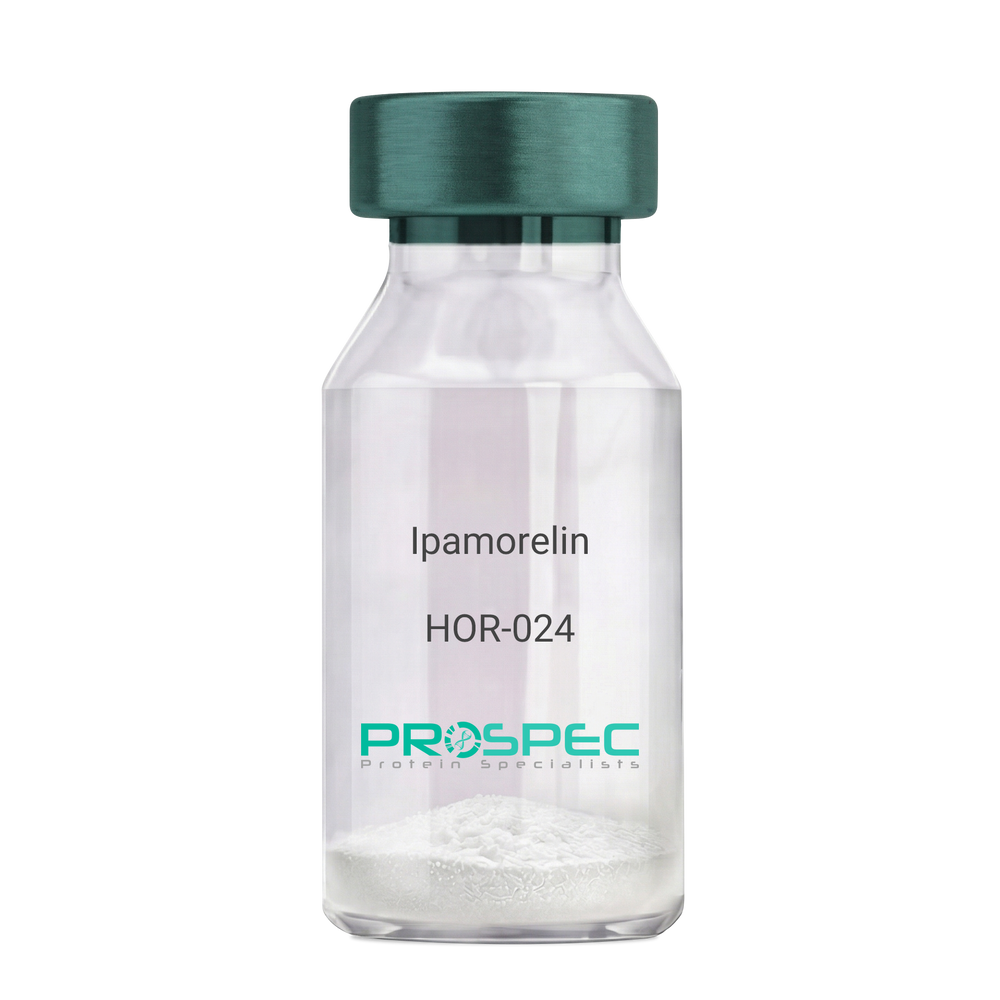
    Ipamorelin

    Description:

    Ipamorelin

    Ipamorelin

    Product # :

    HOR-024

    Price :

    Quantity :

    Shipping Method :

    Room Temp Icon

    Shipped at Room temp

    Add To Cart

    More Info

    • description
    • formulation
    • purity
    • More Info

    Description

    Ipamorelin Synthetic is a single, non-glycosylated polypeptide chain containing 4 amino acids, having a molecular mass of 711.85 Dalton and a Molecular formula of C38H49N9O5.

    Formulation

    The protein was lyophilized with no additives.

    Purity

    Greater than 97.0% as determined by analysis by RP-HPLC.

    More Info

    • Introduction

      Ipamorelin is a peptide selective agonist of the ghrelin/growth hormone secretagogue receptor and a growth hormone secretagogue. Ipamorelin is a pentapeptide that was derived from GHRP1. Ipamorelin significantly increases plasma growth hormone levels in both animals and humans. Like pralmorelin and GHRP-6, ipamorelin does not affect prolactin, FSH, LH or TSH levels. However, unlike GHRP2 and GHRP6, but as growth hormone-releasing hormone (GHRH), ipamorelin does not stimulate the secretion of adrenocorticotropic hormone (ACTH) or cortisol, and is highly selective for inducing the secretion only of GH.

    • Synonyms

      Ipamorelin

    • Physical Appearance

      Sterile Filtered White lyophilized (freeze-dried) powder.

    • Stability

      Lyophilized Ipamorelin although stable at room temperature for 3 weeks, should be stored desiccated below -18°C. Upon reconstitution Ipamorelin should be stored at 4°C between 2-7 days and for future use below -18°C. For long term storage it is recommended to add a carrier protein (0.1% HSA or BSA). Please prevent freeze-thaw cycles.

    • Solubility

      It is recommended to reconstitute the lyophilized Ipamorelin in sterile 18MΩ-cm H2O not less than 100 µg/ml, which can then be further diluted to other aqueous solutions.

    • Amino Acid Sequence

      Aib-His-D-2-Nal-D-Phe-Lys-NH2.

    ProSpec's products are furnished for LABORATORY RESEARCH USE ONLY. The product may not be used as drugs, agricultural or pesticidal products, food additives or household chemicals.

    Ipamorelin
  • 1
  • …
  • 9
  • 10
  • 11
Your browser does not support the video tag.

Products

  • Cytokines
  • Growth Factors
  • Chemokines
  • CD Antigens
  • Neurotrophins
  • Hormones
  • Enzymes
  • Viral Antigens
  • Recombinant Proteins
  • Natural Proteins
  • Monoclonal Antibodies
  • Polyclonal Antibodies
  • Thermal Packaging

About

  • Company
  • Founder
  • Contribution
  • Contact Us
  • My Account

Ordering

  • Ordering Method
  • Ordering - Credit Card
  • Ordering PO
  • Shipping Fees
  • FAQ's

Legal

  • Terms & Conditions
  • Privacy
  • Site Map
  • info@prospecbio.com
  • Facebook
  • Instagram
  • Linkedin Profile

© 2026 ProSpec-Tany TechnoGene Ltd. All Rights Reserved.

  • Choosing a selection results in a full page refresh.
  • Opens in a new window.