Skip to content

High-quality research proteins.

  • 1-800-805-6531

  • Mon - Sat 8.00-18.00, Sun - Closed

  • info@prospecbio.com

  • PO Box 6591 East Brunswick NJ 08816

  • Products
    • Cytokines
    • Growth factors
    • Chemokines
    • Cd antigens
    • Neurotrophins
    • Hormones
    • Enzymes
    • Viral antigens
    • Recombinant proteins
    • Natural proteins
    • Monoclonal antibodies
    • Polyclonal antibodies
    • Thermal Packaging
  • About
    • Company
    • Founder
    • Contribution
  • Customers
    • Eastern Asia
    • Eastern Europe
    • North America
    • South America
    • South East Asia
    • Southern Asia
    • Western Europe
  • Ordering
    • Ordering Method
    • Ordering - Credit Card
    • Ordering - PO
    • Shipping Fees
    • FAQs
  • Services
    • DNA Cloning
    • Protein Expression
    • Monoclonal Antibody
    • Fermentation
    • Technology License
  • Contact us
Log in

Country/region

  • USD $ | Albania
  • USD $ | Andorra
  • USD $ | Argentina
  • USD $ | Armenia
  • USD $ | Australia
  • USD $ | Austria
  • USD $ | Azerbaijan
  • USD $ | Belarus
  • USD $ | Belgium
  • USD $ | Bolivia
  • USD $ | Brazil
  • USD $ | Bulgaria
  • USD $ | Cambodia
  • USD $ | Canada
  • USD $ | Chile
  • USD $ | China
  • USD $ | Colombia
  • USD $ | Costa Rica
  • USD $ | Croatia
  • USD $ | Cyprus
  • USD $ | Czechia
  • USD $ | Denmark
  • USD $ | Estonia
  • USD $ | Finland
  • USD $ | France
  • USD $ | Georgia
  • USD $ | Germany
  • USD $ | Greece
  • USD $ | Hong Kong SAR
  • USD $ | Hungary
  • USD $ | Iceland
  • USD $ | India
  • USD $ | Ireland
  • USD $ | Israel
  • USD $ | Italy
  • USD $ | Japan
  • USD $ | Kazakhstan
  • USD $ | Latvia
  • USD $ | Liechtenstein
  • USD $ | Lithuania
  • USD $ | Madagascar
  • USD $ | Malta
  • USD $ | Mexico
  • USD $ | Moldova
  • USD $ | Monaco
  • USD $ | Netherlands
  • USD $ | New Zealand
  • USD $ | North Macedonia
  • USD $ | Norway
  • USD $ | Panama
  • USD $ | Paraguay
  • USD $ | Peru
  • USD $ | Philippines
  • USD $ | Poland
  • USD $ | Portugal
  • USD $ | Romania
  • USD $ | Singapore
  • USD $ | Slovakia
  • USD $ | Slovenia
  • USD $ | South Africa
  • USD $ | South Korea
  • USD $ | Spain
  • USD $ | Sri Lanka
  • USD $ | Sweden
  • USD $ | Switzerland
  • USD $ | Taiwan
  • USD $ | Thailand
  • USD $ | Türkiye
  • USD $ | Ukraine
  • USD $ | United Kingdom
  • USD $ | United States
  • USD $ | Uruguay
  • USD $ | Vatican City
  • USD $ | Venezuela
  • USD $ | Vietnam
  • Facebook
  • Instagram
logoProSpec - Recombinant Protein Manufacturer for academic and R&D industry
Become a distributor
Account Log in
Wishlist
Cart Cart(0)
  • Products
    +
    • Cytokines
    • Growth factors
    • Chemokines
    • Cd antigens
    • Neurotrophins
    • Hormones
    • Enzymes
    • Viral antigens
    • Recombinant proteins
    • Natural proteins
    • Monoclonal antibodies
    • Polyclonal antibodies
    • Thermal Packaging
  • About
    +
    • Company
    • Founder
    • Contribution
  • Customers
    +
    • Eastern Asia
    • Eastern Europe
    • North America
    • South America
    • South East Asia
    • Southern Asia
    • Western Europe
  • Ordering
    +
    • Ordering Method
    • Ordering - Credit Card
    • Ordering - PO
    • Shipping Fees
    • FAQs
  • Services
    +
    • DNA Cloning
    • Protein Expression
    • Monoclonal Antibody
    • Fermentation
    • Technology License
  • Contact us

Item added to your cart

View cart
View All
  • Cytokines
  • Growth factors
  • Chemokines
  • Cd antigens
  • Neurotrophins
  • Hormones
  • Enzymes
  • Viral antigens
  • Recombinant proteins
  • Natural proteins
  • Monoclonal antibodies
  • Polyclonal antibodies
  • Thermal Packaging
  • Tumor Necrosis Factor

    Tumor Necrosis Factor

    View All
  • 4-1BB

    4-1BB

    View All
  • Adiponectin

    Adiponectin

    View All
  • AIF1

    AIF1

    View All
  • Other Cytokines

    Other Cytokines

    View All
  • AITRL

    AITRL

    View All
  • Angiopoietin

    Angiopoietin

    View All
  • Apolipoprotein

    Apolipoprotein

    View All
  • B-Cell Activating Factor

    B-Cell Activating Factor

    View All
  • Beta Defensin

    Beta Defensin

    View All
  • Bone Morphogenetic Protein

    Bone Morphogenetic Protein

    View All
  • B type Natriuretic Peptide

    B type Natriuretic Peptide

    View All
  • BST

    BST

    View All
  • Betacellulin

    Betacellulin

    View All
  • Cardiotrophin

    Cardiotrophin

    View All
  • Activin

    Activin

    View All
  • Fibroblast Growth Factor

    Fibroblast Growth Factor

    View All
  • Other Growth Factors

    Other Growth Factors

    View All
  • CSF

    CSF

    View All
  • CTGF

    CTGF

    View All
  • IGFBP

    IGFBP

    View All
  • VEGF Protein

    VEGF Protein

    View All
  • EGF

    EGF

    View All
  • Epigen

    Epigen

    View All
  • Erythropoietin

    Erythropoietin

    View All
  • Insulin-Like Growth Factor

    Insulin-Like Growth Factor

    View All
  • Growth Hormone

    Growth Hormone

    View All
  • HDGF

    HDGF

    View All
  • Hepatocyte Growth Factor

    Hepatocyte Growth Factor

    View All
  • Insulin

    Insulin

    View All
  • BCA-1/ BLC (CXCL13)

    BCA-1/ BLC (CXCL13)

    View All
  • BRAK (CXCL14)

    BRAK (CXCL14)

    View All
  • C-10 (CCL6)

    C-10 (CCL6)

    View All
  • Other Chemokines

    Other Chemokines

    View All
  • MEC (CCL28)

    MEC (CCL28)

    View All
  • LD78-beta (CCL3L1)

    LD78-beta (CCL3L1)

    View All
  • CTACK (CCL27)

    CTACK (CCL27)

    View All
  • CXCL16

    CXCL16

    View All
  • CXCL17

    CXCL17

    View All
  • Platelet Factor-4 (CXCL4)

    Platelet Factor-4 (CXCL4)

    View All
  • ENA-78 (CXCL5)

    ENA-78 (CXCL5)

    View All
  • Eotaxin (CCL11,24,26)

    Eotaxin (CCL11,24,26)

    View All
  • Exodus-2 (CCL21)

    Exodus-2 (CCL21)

    View All
  • Fractalkine (CX3CL1)

    Fractalkine (CX3CL1)

    View All
  • CXCL6

    CXCL6

    View All
  • Other CD Antigens

    Other CD Antigens

    View All
  • CD14

    CD14

    View All
  • CD164

    CD164

    View All
  • CD1

    CD1

    View All
  • CD2

    CD2

    View All
  • CD200

    CD200

    View All
  • CD207

    CD207

    View All
  • CD226

    CD226

    View All
  • CD23

    CD23

    View All
  • CD244

    CD244

    View All
  • CD247

    CD247

    View All
  • CD27

    CD27

    View All
  • CD274

    CD274

    View All
  • CD300

    CD300

    View All
  • CD33

    CD33

    View All
  • Other Neurotrophins

    Other Neurotrophins

    View All
  • Beta-NGF

    Beta-NGF

    View All
  • BDNF

    BDNF

    View All
  • CDNF

    CDNF

    View All
  • CNTF

    CNTF

    View All
  • GDNF

    GDNF

    View All
  • Glia Maturation Factor

    Glia Maturation Factor

    View All
  • MANF

    MANF

    View All
  • Midkine

    Midkine

    View All
  • Neuroglobin

    Neuroglobin

    View All
  • Neurotrophic factors

    Neurotrophic factors

    View All
  • Neuregulin

    Neuregulin

    View All
  • Neuropilin

    Neuropilin

    View All
  • Pigment Epithelium-Derived Factor

    Pigment Epithelium-Derived Factor

    View All
  • Pleiotrophin

    Pleiotrophin

    View All
  • Peptide Hormones

    Peptide Hormones

    View All
  • Other Hormones

    Other Hormones

    View All
  • HCG

    HCG

    View All
  • Endothelin

    Endothelin

    View All
  • Exendin

    Exendin

    View All
  • FSH

    FSH

    View All
  • Glucagon

    Glucagon

    View All
  • GHRP

    GHRP

    View All
  • GLP

    GLP

    View All
  • Thyrostimulin

    Thyrostimulin

    View All
  • Inhibin A

    Inhibin A

    View All
  • LHRH

    LHRH

    View All
  • Melanotan

    Melanotan

    View All
  • Procalcitonin

    Procalcitonin

    View All
  • PTH

    PTH

    View All
  • Peroxiredoxin

    Peroxiredoxin

    View All
  • Peptidase

    Peptidase

    View All
  • Synthetase

    Synthetase

    View All
  • Transferase

    Transferase

    View All
  • Hydrolase

    Hydrolase

    View All
  • Dehydrogenase

    Dehydrogenase

    View All
  • ACE2

    ACE2

    View All
  • Esterase

    Esterase

    View All
  • Protein Kinases

    Protein Kinases

    View All
  • Other Enzymes

    Other Enzymes

    View All
  • Phosphatase

    Phosphatase

    View All
  • Deaminase

    Deaminase

    View All
  • Oxygenase

    Oxygenase

    View All
  • Adenylate Kinase

    Adenylate Kinase

    View All
  • Lyase

    Lyase

    View All
  • Chagas

    Chagas

    View All
  • SARS

    SARS

    View All
  • Influenza

    Influenza

    View All
  • ASFV

    ASFV

    View All
  • Astrovirus

    Astrovirus

    View All
  • Borrelia

    Borrelia

    View All
  • Helicobacter Pylori

    Helicobacter Pylori

    View All
  • Chikungunya

    Chikungunya

    View All
  • Chlamydia

    Chlamydia

    View All
  • Cytomegalo

    Cytomegalo

    View All
  • Dengue

    Dengue

    View All
  • EBV

    EBV

    View All
  • Ebola

    Ebola

    View All
  • Feline Leukemia Virus

    Feline Leukemia Virus

    View All
  • Hepatitis A

    Hepatitis A

    View All
  • Other

    Other

    View All
  • Actin

    Actin

    View All
  • ADAM

    ADAM

    View All
  • Complement Component

    Complement Component

    View All
  • Ag85

    Ag85

    View All
  • Eukaryotic Translation Initiation Factor

    Eukaryotic Translation Initiation Factor

    View All
  • Anterior Gradient Protein

    Anterior Gradient Protein

    View All
  • Heat Shock Protein

    Heat Shock Protein

    View All
  • Alpha-2-HS-Glycoprotein

    Alpha-2-HS-Glycoprotein

    View All
  • Hemoglobin

    Hemoglobin

    View All
  • Allergy

    Allergy

    View All
  • Anaplasma

    Anaplasma

    View All
  • Angiogenin

    Angiogenin

    View All
  • Ankyrin Repeat Domain

    Ankyrin Repeat Domain

    View All
  • Annexin

    Annexin

    View All
  • Other Natural Proteins

    Other Natural Proteins

    View All
  • Aprotinin

    Aprotinin

    View All
  • Transferrin

    Transferrin

    View All
  • Avidin

    Avidin

    View All
  • Anti Coagulation Factors

    Anti Coagulation Factors

    View All
  • Natural Albumin

    Natural Albumin

    View All
  • Natural Coagulation Factors

    Natural Coagulation Factors

    View All
  • Fibronectin

    Fibronectin

    View All
  • Thrombin

    Thrombin

    View All
  • Anti Human Enzyme

    Anti Human Enzyme

    View All
  • Other Monoclonal Antibodies

    Other Monoclonal Antibodies

    View All
  • Anti Human Cytokine

    Anti Human Cytokine

    View All
  • Anti Human Heat Shock Protein

    Anti Human Heat Shock Protein

    View All
  • Anti Mouse Lymphocyte

    Anti Mouse Lymphocyte

    View All
  • Anti Human Chemokine

    Anti Human Chemokine

    View All
  • Anti Human Lymphocyte

    Anti Human Lymphocyte

    View All
  • Anti Viral Monoclonal

    Anti Viral Monoclonal

    View All
  • Anti Mouse Cytokine

    Anti Mouse Cytokine

    View All
  • Anti-GST Monoclonal

    Anti-GST Monoclonal

    View All
  • Other Polyclonal Antibodies

    Other Polyclonal Antibodies

    View All
  • Anti Viral

    Anti Viral

    View All
  • Anti-GST Monoclonal

    Anti-GST Monoclonal

    View All
Back

Search results

595 results found for “Regulator of G-Protein Signaling”

Name

Description

Product #

Price

Quantity

Shipping Method

  • View Data Sheet

    Name :

    BMPR1A Human

    Description:

    Bone Morphogenetic Protein Receptor Type IA Human Recombinant

    BMPR-1A, BMP-R1A, BMPR1A, BMR1A, CD292, CD-292, Serine/threonine-protein kinase receptor R5, SKR5, ALK-3, ACVRLK3, EC 2.7.11.30, CD292 antigen.

    Product # :

    CYT-380

    Price :

    Quantity :

    Shipping Method :

    Room Temp Icon

    Shipped at Room temp

    Add To Cart

    More Info

    • description
    • source
    • formulation
    • purity
    • biological activity
    • More Info

    Description

    BMPR1A Human Recombinant extracellular domain produced in baculovirus is a monomeric, glycosylated, Polypeptide chain fused with 6xHis tag at C-terminus and having a molecular mass of 23 kDa. The BMR1A is purified by proprietary chromatographic techniques.

    Source

    Insect Cells.

    Formulation

    CD292 was lyophilized from a concentrated (1mg/ml) sterile solution containing 1X PBS.

    Purity

    Greater than 90.0% as determined by
    (a) Analysis by RP-HPLC.
    (b) Analysis by SDS-PAGE.

    Biological Activity

    Measured by its ability to inhibit recombinant human BMP-2 induced alkaline phosphatase production by C2C12 myogenic cells. The ED50 for this effect is typically 1-3 µg/ml in the presence of 500 ng/ml of recombinant human BMP-2 corresponding to a Specific Activity of 2,000 units/mg.

    More Info

    • Introduction

      The bone morphogenetic protein (BMP) receptors are a family of transmembrane serine/threonine kinases that include the type I receptors BMPR1A and BMPR1B and the type II receptor BMPR2. These receptors are also closely related to the receptors, ACVR1 and ACVR2. The ligands of these receptors are members of the TGF-beta superfamily. TGF-betas transduce their signals through the formation of heteromeric complexes with 2 different types of serine (threonine) kinase receptors: type I receptors of about 50-55 kD and type II receptors of about 70-80 kD. Type II receptors bind ligands in the absence of type I receptors, but they require their respective type I receptors for signaling, whereas type I receptors require their respective type II receptors for ligand binding.

    • Synonyms

      BMPR-1A, BMP-R1A, BMPR1A, BMR1A, CD292, CD-292, Serine/threonine-protein kinase receptor R5, SKR5, ALK-3, ACVRLK3, EC 2.7.11.30, CD292 antigen.

    • Physical Appearance

      Sterile Filtered White lyophilized (freeze-dried) powder.

    • Stability

      Lyophilized Bone Morphogenetic Protein Receptor 1A although stable at room temperature for 3 weeks, should be stored desiccated below -18°C. Upon reconstitution BMPR1A should be stored at 4°C between 2-7 days and for future use below -18°C.For long term storage it is recommended to add a carrier protein (0.1% HSA or BSA).Please prevent freeze-thaw cycles.

    • Solubility

      It is recommended to reconstitute the lyophilized ALK-3 in sterile PBS not less than 100 µg/ml, which can then be further diluted to other aqueous solutions.

    • Background

      Bone Morphogenetic Protein Receptor Type IA Human Recombinant: Exploring the Potential of a Key Regulator in Bone Development

      Abstract:

      Bone Morphogenetic Protein Receptor Type IA (BMPR1A) human recombinant is a crucial regulator in bone development and homeostasis. This research paper provides a comprehensive analysis of BMPR1A, including its characteristics, signaling pathways, and potential therapeutic applications. Additionally, innovative methodologies for the production and optimization of BMPR1A human recombinant are proposed, shedding light on its future implications in the field of regenerative medicine.

      Introduction:

      Bone development and maintenance rely on intricate signaling pathways, with BMPR1A playing a pivotal role in bone morphogenesis. This paper explores the unique features of BMPR1A and presents novel approaches for its production and optimization, aiming to uncover its therapeutic potential in bone-related disorders.

      Characteristics and Signaling Pathways:

      BMPR1A belongs to the serine/threonine kinase receptor family and is expressed predominantly in skeletal tissues. It binds bone morphogenetic proteins (BMPs), initiating intracellular signaling cascades that regulate osteoblast differentiation and bone formation. BMPR1A activates the Smad-dependent and Smad-independent pathways, leading to the activation of transcription factors involved in bone-specific gene expression.

      Production of BMPR1A Human Recombinant:

      Efficient production methodologies are critical for harnessing the therapeutic potential of BMPR1A human recombinant. Mammalian cell-based expression systems, such as Chinese hamster ovary (CHO) cells, have been utilized to ensure proper folding and post-translational modifications. Optimization strategies, including codon optimization and vector engineering, have been employed to enhance production efficiency. Purification techniques, such as affinity chromatography and size exclusion chromatography, have been optimized to obtain high-quality BMPR1A recombinant protein.

      Potential Therapeutic Applications:

      BMPR1A human recombinant holds significant promise in regenerative medicine. Disruption of BMP signaling has been implicated in skeletal disorders, including bone fractures, osteoporosis, and skeletal dysplasias. Modulating BMPR1A activity using BMPR1A human recombinant may provide a targeted therapeutic approach for promoting bone regeneration, fracture healing, and bone tissue engineering. Furthermore, BMPR1A signaling plays a role in other tissues, such as the cardiovascular system and nervous system, suggesting broader therapeutic applications.

      Conclusion:

      BMPR1A human recombinant represents a crucial regulator in bone development and holds immense potential in regenerative medicine. Optimizing production methodologies and further understanding its signaling pathways will enhance its clinical utility. With its implications in skeletal disorders and potential applications in other tissues, BMPR1A human recombinant stands as a promising tool for promoting bone regeneration and tissue engineering.

      What is the molecular weight/Mw of BMPR1A Protein?
      BMPR1A Protein has a total Mw of 23kDa.

      What is the source or expression system of BMPR1A Protein?
      Insect Cells.

      What is the Purity of BMPR1A Protein?
      BMPR1A Protein is >90% pure as determined by SDS-PAGE.

      What is the Biological Activity of BMPR1A Protein?
      Measured by its ability to inhibit recombinant human BMP-2 induced alkaline phosphatase production by C2C12 myogenic cells. The ED50 for this effect is typically 1-3 µg/ml in the presence of 500 ng/ml of recombinant human BMP-2 corresponding to a Specific Activity of 2,000 units/mg.

      What applications can BMPR1A Protein be used in?
      BMPR1A Protein can probably be used in western blot, ELISA and Lateral Flow.

      What is the endotoxin level for BMPR1A Protein?
      The endotoxin level is minimal, BMPR1A Protein was purified using conventional chromatography techniques.

    ProSpec's products are furnished for LABORATORY RESEARCH USE ONLY. The product may not be used as drugs, agricultural or pesticidal products, food additives or household chemicals.

    Bmpr1A Human
  • View Data Sheet

    Name :

    DHH (C23II) Mouse

    Description:

    Desert Hedgehog (C23II) Mouse Recombinant

    Desert hedgehog protein, DHH, HHG-3, C78960.

    Product # :

    CYT-773

    Price :

    Quantity :

    Shipping Method :

    Room Temp Icon

    Shipped at Room temp

    Add To Cart

    More Info

    • description
    • source
    • formulation
    • purity
    • biological activity
    • More Info

    Description

    DHH (C23II) Mouse Recombinant produced in E.Coli is a single, non-glycosylated polypeptide chain containing 177 amino acids and having a molecular mass of 20kDa. The DHH (C23II) is purified by proprietary chromatographic techniques.

    Source

    Escherichia Coli.

    Formulation

    Lyophilized from a 0.2µm filtered concentrated solution in PBS, pH7.4, 1mM DTT and 0.05% Tween-80.

    Purity

    Greater than 97.0% as determined by:
    (a) Analysis by RP-HPLC.
    (b) Analysis by SDS-PAGE.

    Biological Activity

    The ED50 as determined by its ability to induce alkaline phosphatase production by murine MC3T3-E1 cells is 5-20 µg/ml.

    More Info

    • Introduction

      DHH is part of the Hedgehog family which encodes signaling molecules that are involved in regulating morphogenesis. DHH protein is a precursor that is autocatalytically cleaved, the N-terminal portion is soluble and contains the signalling activity while the C-terminal portion is involved in precursor processing. Additionally, the C-terminal product covalently attaches a cholesterol moiety to the N-terminal product, restricting the N-terminal product to the cell surface and preventing it from freely diffusing throughout the organism. Defects in DHH protein have been associated with partial gonadal dysgenesis (PGD) accompanied by minifascicular polyneuropathy. DHH plays a role both male gonadal differentiation and perineurial development.
      DHH plays a role in intercellular signaling which is essential for a variety of patterning events during development. DHH functions as a spermatocyte survival factor in the testes & is essential for testes development.

    • Synonyms

      Desert hedgehog protein, DHH, HHG-3, C78960.

    • Physical Appearance

      Sterile Filtered White lyophilized (freeze-dried) powder.

    • Stability

      Lyophilized DHH (C23II) although stable at room temperature for 3 weeks, should be stored desiccated below -18°C. Upon reconstitution DHH (C23II) should be stored at 4°C between 2-7 days and for future use below -18°C. For long term storage it is recommended to add a carrier protein (0.1% HSA or BSA).Please prevent freeze-thaw cycles.

    • Solubility

      It is recommended to reconstitute the lyophilized DHH (C23II) in sterile 18M-cm H2O not less than 100µg/ml, which can then be further diluted to other aqueous solutions.

    • Amino Acid Sequence

      IIGPGRGPVG RRRYVRKQLV PLLYKQFVPS MPERTLGASG PAEGRVTRGS ERFRDLVPNY NPDIIFKDEE NSGADRLMTE RCKERVNALA IAVMNMWPGV RLRVTEGWDE DGHHAQDSLH YEGRALDITT SDRDRNKYGL LARLAVEAGF DWVYYESRNH IHVSVKADNS LAVRAGG.

    ProSpec's products are furnished for LABORATORY RESEARCH USE ONLY. The product may not be used as drugs, agricultural or pesticidal products, food additives or household chemicals.

    Dhh C23Ii Mouse
  • View Data Sheet

    Name :

    Inhibin alpha A Chain Human

    Description:

    Inhibin-Alpha A Chain Human Recombinant

    Inhibin-Alpha, A-Inhibin Subunit, Inhibin Alpha Chain, INHA.

    Product # :

    HOR-293

    Price :

    Quantity :

    Shipping Method :

    Ice Icon

    Shipped with Ice Packs

    Add To Cart

    More Info

    • description
    • source
    • formulation
    • purity
    • More Info

    Description

    Inhibin-Alpha A chain Human Recombinant produced in E.Coli is a single, non-glycosylated, polypeptide chain containing 134 amino acids fragment (233-366) and having an amino-terminal hexahistidine tag, having a total molecular weight of 19.2 kDa. The Inhibin-Alpha A chain is purified by standard chromatographic techniques.

    Source

    Escherichia Coli.

    Formulation

    Inhibin-A alpha chain is supplied in 20mM Tris HCl (pH-8), 5mM EDTA and 50% glycerol.

    Purity

    Greater than 95.0% as determined by SDS-PAGE.

    More Info

    • Introduction

      Inhibins are dimeric peptide hormones produced by female ovarian granulose cells and male Sertoli cells as well as a variety of other tissues. Inhibins have two isoforms, A and B, with the same alpha subunit but different beta subunits. Inhibin A is a dimer of alpha and beta A subunits, inhibin B is a dimer of alpha and beta B subunits.
      Inhibins are thought to inhibit the production of follicle-stimulating hormone (FSH) by the pituitary gland. In addition, Inhibins are also thought to play a role in the control of gametogenesis, and embryonic and fetal development.

    • Synonyms

      Inhibin-Alpha, A-Inhibin Subunit, Inhibin Alpha Chain, INHA.

    • Physical Appearance

      Sterile Filtered clear solution.

    • Stability

      Store at 4°C if entire vial will be used within 2-4 weeks. Store, frozen at -20°C for longer periods of time. Please avoid freeze thaw cycles.

    ProSpec's products are furnished for LABORATORY RESEARCH USE ONLY. The product may not be used as drugs, agricultural or pesticidal products, food additives or household chemicals.

    Inhibin A Alpha Chain Human
  • View Data Sheet

    Name :

    MOB3B Human

    Description:

    MOB Kinase Activator 3B Human Recombinant

    MOB Kinase Activator 3B, Chromosome 9 Open Reading Frame 35, Monopolar Spindle 1 Binding, MOB1, Domain Containing, MOB1 Mps One Binder Kinase Activator-Like 2B, Mps One Binder Kinase Activator-Like 2B, Monopolar Spindle 1 Binding, Mob1 Homolog 2b, MOBKL2B, Domain Containing, C9orf35, MOB1D, MOB1.

    Product # :

    PKA-319

    Price :

    Quantity :

    Shipping Method :

    Ice Icon

    Shipped with Ice Packs

    Add To Cart

    More Info

    • description
    • source
    • formulation
    • purity
    • More Info

    Description

    MOB3B Human Recombinant produced in E.coli is a single, non-glycosylated polypeptide chain containing 239 amino acids (1-216) and having a molecular mass of 27.9 kDa. MOB3B is fused to a 23 amino acid His-tag at N-terminus.

    Source

    Escherichia Coli.

    Formulation

    The MOB3B solution (0.5mg/ml) contains 20mM Tris-HCl buffer (pH 8.0), 0.15M NaCl, 1mM DTT and 20% glycerol.

    Purity

    Greater than 90% as determined by SDS-PAGE.

    More Info

    • Introduction

      MOB3B is similar to yeast Mob1 protein which binds Mps1p, a protein kinase vital for spindle pole body duplication and mitotic checkpoint regulation. MOB3B is situated on the opposite strand as the INF kappa precursor (IFNK) gene.

    • Synonyms

      MOB Kinase Activator 3B, Chromosome 9 Open Reading Frame 35, Monopolar Spindle 1 Binding, MOB1, Domain Containing, MOB1 Mps One Binder Kinase Activator-Like 2B, Mps One Binder Kinase Activator-Like 2B, Monopolar Spindle 1 Binding, Mob1 Homolog 2b, MOBKL2B, Domain Containing, C9orf35, MOB1D, MOB1.

    • Physical Appearance

      Sterile Filtered clear solution.

    • Stability

      Store at 4°C if entire vial will be used within 2-4 weeks. Store, frozen at -20°C for longer periods of time. For long term storage it is recommended to add a carrier protein (0.1% HSA or BSA).Avoid multiple freeze-thaw cycles.

    • Amino Acid Sequence

      MGSSHHHHHH SSGLVPRGSH MGSMSIALKQ VFNKDKTFRP KRKFEPGTQR FELHKRAQAS LNSGVDLKAA VQLPSGEDQN DWVAVHVVDF FNRINLIYGT ICEFCTERTC PVMSGGPKYE YRWQDDLKYK KPTALPAPQY MNLLMDWIEV QINNEEIFPT CVGVPFPKNF LQICKKILCR LFRVFVHVYI HHFDRVIVMG AEAHVNTCYK HFYYFVTEMN LIDRKELEPL KEMTSRMCH

    ProSpec's products are furnished for LABORATORY RESEARCH USE ONLY. The product may not be used as drugs, agricultural or pesticidal products, food additives or household chemicals.

    Mob3B Human
  • View Data Sheet

    Name :

    PFN1 Rat

    Description:

    Profilin-1 Rat Recombinant

    Profilin-1, Profilin I.

    Product # :

    PRO-2231

    Price :

    Quantity :

    Shipping Method :

    Ice Icon

    Shipped with Ice Packs

    Add To Cart

    More Info

    • description
    • source
    • formulation
    • purity
    • More Info

    Description

    PFN1 Rat Recombinant produced in E.Coli is a single, non-glycosylated polypeptide chain containing 164 amino acids (1-140 a.a) and having a molecular mass of 17.5kDa. PFN1 is fused to a 24 amino acid His-tag at N-terminus & purified by proprietary chromatographic techniques.

    Source

    Escherichia Coli.

    Formulation

    PFN1 protein solution (1mg/ml) containing Phosphate Buffered Saline (pH 7.4) and 10% glycerol 1mM DTT.

    Purity

    Greater than 95.0% as determined by SDS-PAGE.

    More Info

    • Introduction

      Profilin-1 also known as Pfn1 is a ubiquitous actin monomer-binding protein which is a member of the profilin family. Pfn1 significantly enhances skin wound healing in-vitro as well as in-vivo which is mediated by purinergic receptors. Furthermore, Pfn1 is also active in endothelial cell migration and vessel sprouting. Pfn1 is considered to regulate actin polymerization in response to extracellular signals.

    • Synonyms

      Profilin-1, Profilin I.

    • Physical Appearance

      Sterile Filtered colorless solution.

    • Stability

      Store at 4°C if entire vial will be used within 2-4 weeks. Store, frozen at -20°C for longer periods of time. For long term storage it is recommended to add a carrier protein (0.1% HSA or BSA).Avoid multiple freeze-thaw cycles.

    • Amino Acid Sequence

      MGSSHHHHHH SSGLVPRGSH MGSHMAGWNA YIDSLMADGT CQDAAIVGYK DSPSVWAAVP GKTFVSITPA EVGVLVGKDR SSFFVNGLTL GGQKCSVIRD SLLQDGEFTM DLRTKSTGGA PTFNVTVTMT AKTLVLLMGK EGVHGGLINK KCYEMASHLR RSQY.

    ProSpec's products are furnished for LABORATORY RESEARCH USE ONLY. The product may not be used as drugs, agricultural or pesticidal products, food additives or household chemicals.

    Pfn1 Rat
  • View Data Sheet

    Name :

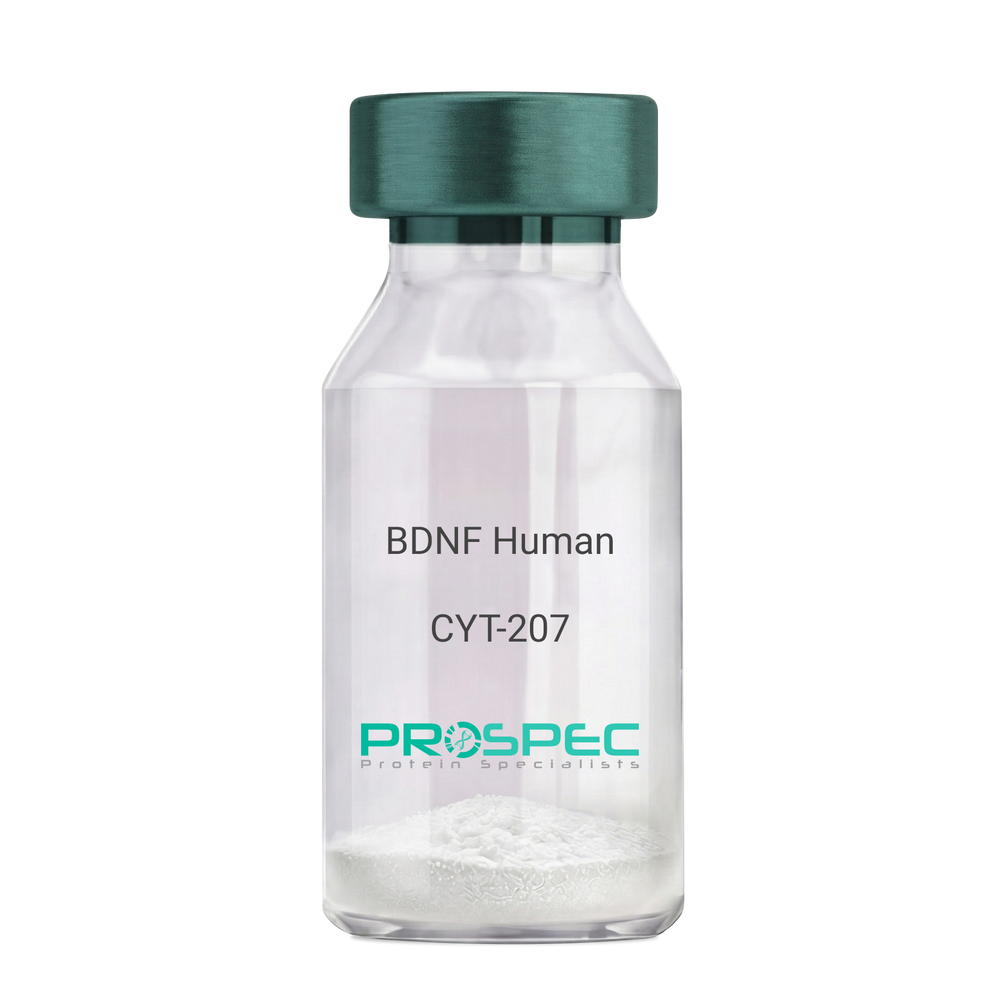
    BDNF Human

    Description:

    Brain-Derived Neurotrophic Factor Human Recombinant

    Brain-Derived Neurotrophic Factor, BDNF, MGC34632.

    Product # :

    CYT-207

    Price :

    Quantity :

    Shipping Method :

    Room Temp Icon

    Shipped at Room temp

    Add To Cart

    More Info

    • description
    • source
    • formulation
    • purity
    • biological activity
    • More Info
    • Activity

    Description

    BDNF Human Recombinant produced in E.Coli is a homodimer, non-glycosylated, polypeptide chain containing 2 x 119 amino acids (and an N-terminal Met) and having a total molecular mass of 28kDa. BDNF Human Recombinant is purified by proprietary chromatographic techniques.

    Source

    Escherichia Coli.

    Formulation

    The protein was lyophilized with 20mM PB and 400mM NaCl, pH 7.2.

    Purity

    BDNF is greater than 950% as determined SDS-PAGE.

    Biological Activity

    The activity was determined using Immobilized Human TrkB-His tag protein 2ug/ml (100 μl/well) for its binding to NHS-Biotin BDNF. The ED50 of was found to be ≤20ng/mL

    Activity

    bdnf activity - Product image 1

    More Info

    • Introduction

      BDNF promotes the survival of neuronal populations that are all located either in the central nervous system or directly connected to it. BDNF is a major regulator of synaptic transmission and plasticity at adult synapses in many regions of the cns. The versatility of BDNF is emphasized by its contribution to a range of adaptive neuronal responses including long-term potentiation (ltp), long-term depression (ltd), certain forms of short-term synaptic plasticity, as well as homeostatic regulation of intrinsic neuronal excitability.

    • Synonyms

      Brain-Derived Neurotrophic Factor, BDNF, MGC34632.

    • Physical Appearance

      Sterile Filtered White lyophilized (freeze-dried) powder.

    • Stability

      Lyophilized BDNF although stable at room temperature for 3 weeks, should be stored desiccated below -18°C. Upon reconstitution BDNF should be stored at 4°C between 2-7 days and for future use below -18°C.For long term storage it is recommended to add a carrier protein (0.1% HSA or BSA).Please prevent freeze-thaw cycles.

    • Solubility

      It is recommended to reconstitute the lyophilized BDNF in sterile 18M-cm H2O not less than 100µg/ml, which can then be further diluted to other aqueous solutions.

    • Amino Acid Sequence

      HSDPARRGE LSVCDSISEW VTAADKKTAV DMSGGTVTVL EKVPVSKGQL KQYFYETKCN PMGYTKEGCR GIDKRHWNSQ CRTTQSYVRA LTMDSKKRIG WRFIRIDTSC VCTLTIKRGR.

    • Background

      Final Thoughts

      Although more research is needed on the safety and effectiveness of BDNF human recombinant, trials suggest that this laboratory-produced protein may be effective in managing and treating several neurological and psychiatric disorders. It's important for experts to stay up to date on the latest developments and research to learn more about potential risks and benefits.

      What is the molecular weight/Mw of BDNF Protein?
      BDNF Protein has a total Mw of 27kDa.

      What is the source or expression system of BDNF Protein?
      Escherichia Coli.

      What is the Purity of BDNF Protein?
      BDNF Protein is >97% pure as determined by SDS-PAGE.

      What is the Biological Activity of BDNF Protein?
      The ED50, as determined by the dose-dependent induction of C6 cells proliferation, is 1.3-2µg/ml.

      What is the amino acid sequence of BDNF Protein?
      MHSDPARRGE LSVCDSISEW VTAADKKTAV DMSGGTVTVL EKVPVSKGQL KQYFYETKCN PMGYTKEGCR GIDKRHWNSQ CRTTQSYVRA LTMDSKKRIG WRFIRIDTSC VCTLTIKRGR.

      What applications can BDNF Protein be used in?
      BDNF Protein can probably be used in western blot, ELISA and Lateral Flow.

      What is the endotoxin level for BDNF Protein?
      The endotoxin level is minimal, BDNF Protein was purified using conventional chromatography techniques.

    • Protein content

      BDNF quantitation was carried out by two independent methods:1. UV spectroscopy at 280 nm using the absorbency value of 1.6 as the extinction coefficient for a 0.1% (1mg/ml) solution. This value is calculated by the PC GENE computer analysis program of protein sequences (IntelliGenetics). 2. Analysis by RP-HPLC, using a standard solution of Brain-derived Neurotrophic Factor as a Reference Standard.

    ProSpec's products are furnished for LABORATORY RESEARCH USE ONLY. The product may not be used as drugs, agricultural or pesticidal products, food additives or household chemicals.

    Bdnf Human
  • View Data Sheet

    Name :

    SORBS3 Human

    Description:

    Sorbin And SH3 Domain Containing 3 Human Recombinant

    Sorbin And SH3 Domain Containing 3, SCAM1, Vinexin Beta (SH3-Containing Adaptor Molecule-1), vinexin, SH3-Containing Adapter Molecule 1.

    Product # :

    PRO-1829

    Price :

    Quantity :

    Shipping Method :

    Ice Icon

    Shipped with Ice Packs

    Add To Cart

    More Info

    • description
    • source
    • formulation
    • purity
    • More Info

    Description

    SORBS3 Human Recombinant produced in E.coli is a single, non-glycosylated polypeptide chain containing 352 amino acids (1-329) and having a molecular mass of 39.1 kDa. SORBS3 is fused to a 23 amino acid His-tag at N-terminus.

    Source

    Escherichia Coli.

    Formulation

    The SORBS3 solution (0.25mg/ml) contains 20mM Tris-HCl buffer (pH 8.0), 1mM DTT and 20% glycerol.

    Purity

    Greater than 90% as determined by SDS-PAGE.

    More Info

    • Introduction

      SORBS3 is an SH3 domain-containing adaptor protein. The existence of SH3 domains in the SORBS3 protein have a role in its capability to attach to other cytoplasmic molecules and contribute to cystoskeletal organization, cell adhesion and migration, signaling, and gene expression. Various transcript variants encoding different isoforms are known for this gene.

    • Synonyms

      Sorbin And SH3 Domain Containing 3, SCAM1, Vinexin Beta (SH3-Containing Adaptor Molecule-1), vinexin, SH3-Containing Adapter Molecule 1.

    • Physical Appearance

      Sterile Filtered clear solution.

    • Stability

      Store at 4°C if entire vial will be used within 2-4 weeks. Store, frozen at -20°C for longer periods of time. For long term storage it is recommended to add a carrier protein (0.1% HSA or BSA).Avoid multiple freeze-thaw cycles.

    • Amino Acid Sequence

      MGSSHHHHHH SSGLVPRGSH MGSMADGGSP FLGRRDFVYP SSTRDPSASN GGGSPARREE KKRKAARLKF DFQAQSPKEL TLQKGDIVYI HKEVDKNWLE GEHHGRLGIF PANYVEVLPA DEIPKPIKPP TYQVLEYGEA VAQYTFKGDL EVELSFRKGE HICLIRKVNE NWYEGRITGT GRQGIFPASY VQVSREPRLR LCDDGPQLPT SPRLTAAARS ARHPSSPSAL RSPADPIDLG GQTSPRRTGF SFPTQEPRPQ TQNLGTPGPA LSHSRGPSHP LDLGTSSPNT SQIHWTPYRA MYQYRPQNED ELELREGDRV DVMQQCDDGW FVGVSRRTQK FGTFPGNYVA PV

    ProSpec's products are furnished for LABORATORY RESEARCH USE ONLY. The product may not be used as drugs, agricultural or pesticidal products, food additives or household chemicals.

    Sorbs3 Human
  • View Data Sheet

    Name :

    SERF2 Human

    Description:

    Small EDRK-Rich Factor 2 Human Recombinant

    Small EDRK-rich factor 2, Gastric cancer-related protein VRG107, Protein 4F5-related, 4F5re, h4F5rel, FAM2C, HsT17089.

    Product # :

    PRO-1730

    Price :

    Quantity :

    Shipping Method :

    Ice Icon

    Shipped with Ice Packs

    Add To Cart

    More Info

    • description
    • source
    • formulation
    • purity
    • More Info

    Description

    SERF2 Human Recombinant produced in E.Coli is a single, non-glycosylated polypeptide chain containing 82 amino acids (1-59 a.a) and having a molecular mass of 9.3kDa.SERF2 is fused to a 23 amino acid His-tag at N-terminus & purified by proprietary chromatographic techniques.

    Source

    Escherichia Coli.

    Formulation

    SERF2 protein solution (0.25mg/ml) containing 20mM Tris-HCl buffer (pH 8.0), 0.15M NaCl and 30% glycerol.

    Purity

    Greater than 85.0% as determined by SDS-PAGE.

    More Info

    • Introduction

      SERF2 (small EDRK-rich factor 2) is a member of the SERF family. SERF2 is a protein-coding gene. Among the diseases associated with SERF2 are spinal muscular atrophy, and muscular atrophy.

    • Synonyms

      Small EDRK-rich factor 2, Gastric cancer-related protein VRG107, Protein 4F5-related, 4F5re, h4F5rel, FAM2C, HsT17089.

    • Physical Appearance

      Sterile Filtered clear solution.

    • Stability

      Store at 4°C if entire vial will be used within 2-4 weeks. Store, frozen at -20°C for longer periods of time. For long term storage it is recommended to add a carrier protein (0.1% HSA or BSA).Avoid multiple freeze-thaw cycles.

    • Amino Acid Sequence

      MGSSHHHHHH SSGLVPRGSH MGSMTRGNQR ELARQKNMKK QSDSVKGKRR DDGLSAAARK QRDSEIMQQK QKKANEKKEE PK

    ProSpec's products are furnished for LABORATORY RESEARCH USE ONLY. The product may not be used as drugs, agricultural or pesticidal products, food additives or household chemicals.

    Serf2 Human
  • View Data Sheet

    Name :

    SNCG Human

    Description:

    Gamma-Synuclein Human Recombinant

    Gamma-synuclein, Persyn, Breast cancer-specific gene 1 protein, Synoretin, SR, SNCG, BCSG1, PERSYN, PRSN, g-Synuclein.

    Product # :

    PRO-395

    Price :

    Quantity :

    Shipping Method :

    Ice Icon

    Shipped with Ice Packs

    Add To Cart

    More Info

    • description
    • source
    • formulation
    • purity
    • More Info

    Description

    g-Synuclein Human Recombinant produced in E.Coli is a single,non-glycosylated polypeptide chain containing 127 amino acids and having a molecular mass of 13,300 Dalton. The protein coding region of g-synuclein was amplified by RT-PCR and cloned into an E.coli expression vector. g-synuclein was overexpressed in E. coli and purified to apparent homogeneity by taking advantage of the thermosolubility of the protein and by using conventional column chromatography techniques.

    Source

    Escherichia Coli.

    Formulation

    The protein (1mg/ml) contains 20mM Tris-HCl buffer (pH 7.5) and 0.1M NaCl.

    Purity

    Greater than 90.0% as determined by SDS-PAGE.

    More Info

    • Introduction

      g-synuclein(Originally known as a breast cancer specific gene product, BCSG1) is an acidic neuronal protein of 127 amino acids. Gamma-Synuclein is a member of the Synuclein protein family, which is believed to be involved in the pathogenesis of neurodegenerative diseases. High levels of Gamma-Synuclein have been found in advanced breast carcinomas suggesting a correlation between overexpression of SNCG and breast tumor development. Synuclein-Gamma is found mostly in the peripheral nervous system (in primary sensory neurons, sympathetic neurons, and motor neurons) and retina. SNCG is also identified in the brain, ovarian tumors, and in the olfactory epithelium. SNCG expression in breast tumors is a marker for tumor progression. A modification in the expression of gamma-synuclein has been detected in the retina of Alzheimer's patients.

    • Synonyms

      Gamma-synuclein, Persyn, Breast cancer-specific gene 1 protein, Synoretin, SR, SNCG, BCSG1, PERSYN, PRSN, g-Synuclein.

    • Physical Appearance

      Sterile filtered colorless solution.

    • Stability

      Store at 4°C if entire vial will be used within 2-4 weeks. Store, frozen at -20°C for longer periods of time. For long term storage it is recommended to add a carrier protein (0.1% HSA or BSA). Avoid multiple freeze-thaw cycles.

    • Amino Acid Sequence

      MDVFKKGFSI AKEGVVGAVE KTKQGVTEAA EKTKEGVMYV GAKTKENVVQSVTSVAEKTK EQANAVSEAV VSSVNTVATK TVEEAENIAV TSGVVRKEDL RPSAPQQEGV ASKEKEEVAE EAQSGGD.

    ProSpec's products are furnished for LABORATORY RESEARCH USE ONLY. The product may not be used as drugs, agricultural or pesticidal products, food additives or household chemicals.

    Sncg Human
  • View Data Sheet

    Name :

    GRB2 Human

    Description:

    Growth Factor Receptor-Bound Protein 2 Human Recombinant

    ASH, Grb3-3, MST084, MSTP084, EGFRBP-GRB2, GRB2, Growth factor receptor-bound protein 2, Adapter protein GRB2, SH2/SH3 adapter GRB2, Protein Ash.

    Product # :

    PRO-678

    Price :

    Quantity :

    Shipping Method :

    Ice Icon

    Shipped with Ice Packs

    Add To Cart

    More Info

    • description
    • source
    • formulation
    • purity
    • More Info

    Description

    GRB2 produced in E.Coli is a single, non-glycosylated polypeptide chain containing 237 amino acids (1-217 a.a.) and having a molecular mass of 27 kDa.GRB2 is expressed with a 20 amino acid His tag at N-Terminus and purified by proprietary chromatographic techniques.

    Source

    Escherichia Coli.

    Formulation

    The GRB2 protein solution contains 20mM Tris-HCl, pH-8 and 30% glycerol.

    Purity

    Greater than 95.0% as determined by SDS-PAGE.

    More Info

    • Introduction

      GRB2 is widely expressed and binds the EGFR and contains one SH2 domain and two SH3 domains which form a complex formation with proline-rich regions of other proteins, and its SH2 domain binds tyrosine phosphorylated sequences. GRB2 is related to the Sem5 gene of C.elegans, which is takes part in the signal transduction pathway. GRB2 is an adaptor protein that provides an important link between cell surface growth factor receptors and the Ras signaling pathway. Inhibition of GRB2 activity damages developmental processes in a variety of organisms and blocks transformation and proliferation of different cell types.

    • Synonyms

      ASH, Grb3-3, MST084, MSTP084, EGFRBP-GRB2, GRB2, Growth factor receptor-bound protein 2, Adapter protein GRB2, SH2/SH3 adapter GRB2, Protein Ash.

    • Physical Appearance

      Sterile filtered colorless solution.

    • Stability

      Store at 4°C if entire vial will be used within 2-4 weeks. Store, frozen at -20°C for longer periods of time. For long term storage it is recommended to add a carrier protein (0.1% HSA or BSA). Avoid multiple freeze-thaw cycles.

    • Amino Acid Sequence

      MGSSHHHHHH SSGLVPRGSH MEAIAKYDFK ATADDELSFK RGDILKVLNE ECDQNWYKAE LNGKDGFIPK NYIEMKPHPW FFGKIPRAKA EEMLSKQRHD GAFLIRESES APGDFSLSVK FGNDVQHFKV LRDGAGKYFL WVVKFNSLNE LVDYHRSTSV SRNQQIFLRD IEQVPQQPTY VQALFDFDPQ EDGELGFRRG DFIHVMDNSD PNWWKGACHG QTGMFPRNYV TPVNRNV.

    ProSpec's products are furnished for LABORATORY RESEARCH USE ONLY. The product may not be used as drugs, agricultural or pesticidal products, food additives or household chemicals.

    Grb2 Human
  • View Data Sheet

    Name :

    PI3KγD946GST Human

    Description:

    Phosphoinositide 3-kinase p110γ inactive mutant Human Recombinant

    Phosphoinositide 3-kinase p110?, PI3K?D946.

    Product # :

    PKA-331

    Price :

    Quantity :

    Shipping Method :

    Ice Icon

    Shipped with Ice Packs

    Add To Cart

    More Info

    • description
    • source
    • formulation
    • purity
    • More Info

    Description

    The PI3KγD946GST protein is a catalytically inactive mutant of PI3Kγ with a D946A mutation in the ATP binding site. This recombinant catalytically inactive protein can be used as a negative control in any kind of PI3Kγ kinase activity studies. Recombinant full length PI3KgDA mutant (126.3 kDa without Tag) carries an N-terminal GST-Tag which facilitates the protein’s application in typical GST pull-down assays.

    Source

    Sf9 insect cells.

    Formulation

    0.4mg/ml solution in 25mM Tris-HCl, pH 8.0, 50mM NaCl, 0.5mM MgCl2, and 50% glycerol.

    Purity

    Greater than 95.0% as determined by SDS Page.

    More Info

    • Synonyms

      Phosphoinositide 3-kinase p110?, PI3K?D946.

    • Physical Appearance

      Sterile filtered liquid formualtion.

    • Stability

      Store at 4°C if entire vial will be used within 2-4 weeks. Store, frozen at -20°C for longer periods of time. For long term storage it is recommended to add a carrier protein (0.1% HSA or BSA).Please prevent freeze-thaw cycles.

    ProSpec's products are furnished for LABORATORY RESEARCH USE ONLY. The product may not be used as drugs, agricultural or pesticidal products, food additives or household chemicals.

    Pi3Kg Human Gst
  • View Data Sheet

    Name :

    MECP2 Human

    Description:

    Methyl CpG Binding Protein 2 Human Recombinant

    Methyl CpG binding protein 2 (Rett syndrome), MeCp-2 protein, AUTSX3, MRX16, MRX79, MRXS13, MRXSL, PPMX, RTT, Mental retardation, X-linked 16, DKFZp686A24160.

    Product # :

    PRO-212

    Price :

    Quantity :

    Shipping Method :

    Ice Icon

    Shipped with Ice Packs

    Add To Cart

    More Info

    • description
    • source
    • formulation
    • purity
    • More Info

    Description

    MECP2 Human Recombinant is expressed in 293 cells. The protein contains 486 amino acids (1-486a.a.) and fused to an N-terminal Flag tag, having an Mw of 53.56kDa.

    Source

    Mammalian system, 293 cells.

    Formulation

    The MECP2 solution (0.45mg/ml) contains 50mM Tris, 135mM NaCl, 20% Glycerol, pH 7.5 and 200µg/ml FLAG peptide.

    Purity

    Greater than 80% as determined by SDS-PAGE.

    More Info

    • Introduction

      MECP2 is the key modificator of eukaryotic genomes and has a crucial part in mammalian development.
      Human proteins MECP2, MBD1, MBD2, MBD3, and MBD4 form a family of nuclear proteins linked by the existence in each of a methyl-CpG binding domain (MBD). Each one of these proteins, with the exception of MBD3, can bind specifically to methylated DNA. In addition, MECP2, MBD1 and MBD2 can inhibit transcription from methylated gene promoters. Unlike other MBD family members, MECP2 is X-linked and subject to X inactivation. MECP2 is expendable in stem cells, but is vital for embryonic development. MECP2 gene mutations are the cause of most cases of Rett syndrome, a progressive neurologic developmental disorder and one of the most common reasons of mental retardation in females.

    • Synonyms

      Methyl CpG binding protein 2 (Rett syndrome), MeCp-2 protein, AUTSX3, MRX16, MRX79, MRXS13, MRXSL, PPMX, RTT, Mental retardation, X-linked 16, DKFZp686A24160.

    • Physical Appearance

      Sterile Filtered colorless solution.

    • Stability

      MECP2 although stable 4°C for 4 weeks, should be stored below -18°C. For long term storage it is recommended to add a carrier protein (0.1% HSA or BSA).Please prevent freeze-thaw cycles.

    • Amino Acid Sequence

      MDYKDDDDKMVAGMLGLREEKSEDQDLQGLKDKPLKFKKVKKDKKEEKEGKHEPVQPSAHHSA
      EPAEAGKAETSEGSGSAPAVPEASASPKQRRSIIRDRGPMYDDPTLPEGWTRKLKQRKSGRSAG
      KYDVYLINPQGKAFRSKVELIAYFEKVGDTSLDPNDFDFTVTGRGSPSRREQKPPKKPKSPKAPGT
      GRGRGRPKGSGTTRPKAATSEGVQVKRVLEKSPGKLLVKMPFQTSPGGKAEGGGATTSTQVMV
      IKRPGRKRKAEADPQAIPKKRGRKPGSVVAAAAAEAKKKAVKESSIRSVQETVLPIKKRKTRETVSIE
      VKEVVKPLLVSTLGEKSGKGLKTCKSPGRKSKESSPKGRSSSASSPPKKEHHHHHHHSESPKAPVP
      LLPPLPPPPPEPESSEDPTSPPEPQDLSSSVCKEEKMPRGGSLESDGCPKEPAKTQPAVATAATAA
      EKYKHRGEGERKDIVSSSMPRPNREEPVDSRTPVTERVS.

    ProSpec's products are furnished for LABORATORY RESEARCH USE ONLY. The product may not be used as drugs, agricultural or pesticidal products, food additives or household chemicals.

    Mecp2 Human
  • View Data Sheet

    Name :

    CST3 Mouse, Active

    Description:

    Cystatin-C Mouse Recombinant, Active

    Cystatin-C, Cystatin-3,  Cst3,  CST3    

    Product # :

    PRO-2433

    Price :

    Quantity :

    Shipping Method :

    Ice Icon

    Shipped with Ice Packs

    Add To Cart

    More Info

    • description
    • source
    • formulation
    • purity
    • biological activity
    • More Info

    Description

    CST3 Mouse produced in Sf9 Insect cells is a single, glycosylated polypeptide chain containing 126 amino acids (21-140 a.a.) and having a molecular mass of 14.2kDa (Molecular size on SDS-PAGE will appear at approximately 13.5-18kDa).CST3 is expressed with a 6 amino acid His tag at C-Terminus and purified by proprietary chromatographic techniques.

    Source

    Sf9, Baculovirus cells.

    Formulation

    CST3 protein solution (1mg/ml) contains Phosphate Buffered Saline (pH 7.4) and 10% glycerol.

    Purity

    Greater than 95% as determined by SDS-PAGE.

    Biological Activity

    The IC50 value is < 1.0nM. The inhibitory function of Cystatin 3 on protease activity of papain was measured by a fluorometric assay using Z-FR-AMC at pH 7.5 at 25°C.

    More Info

    • Introduction

      Cystatins are a superfamily of cysteine proteinase inhibitors found in both plants and animals. They comprise a group of proteinase inhibitors, widely distributed in tissues and body fluids, and form tight complexes with cysteine proteases such as cathepsin B, H, L and S. Cystatin C, a secreted molecule of this family, is of interest from biochemical, medicine and evolutionary points of view. Cystatin C, with molecular weight of 13260 Da, is composed of 120 amino acids, lacks carbohydrate and has two disulfide bridges located near the carboxyl terminus. Cystatin C is increased in patients with malignant diseases, and is related to the insufficiency of renal function and appears to be a better marker than creatinine. On the other hand, low levels of cystatin C involve cause the breakdown of the elastic laminae and, subsequently, the atherosclerosis and abdominal aortic aneurysm.

    • Synonyms

      Cystatin-C, Cystatin-3, Cst3, CST3

    • Physical Appearance

      Sterile Filtered colorless solution.

    • Stability

      Store at 4°C if entire vial will be used within 2-4 weeks. Store, frozen at -20°C for longer periods of time. For long term storage it is recommended to add a carrier protein (0.1% HSA or BSA). Avoid multiple freeze-thaw cycles.

    • Amino Acid Sequence

      ATPKQGPRML GAPEEADANE EGVRRALDFA VSEYNKGSND AYHSRAIQVV RARKQLVAGV NYFLDVEMGR TTCTKSQTNL TDCPFHDQPH LMRKALCSFQ IYSVPWKGTH SLTKFSCKNA HHHHHH

    ProSpec's products are furnished for LABORATORY RESEARCH USE ONLY. The product may not be used as drugs, agricultural or pesticidal products, food additives or household chemicals.

    Cst3 Mouse Active
  • View Data Sheet

    Name :

    GKN1 Human

    Description:

    Gastrokine 1 Human Recombinant

    BRICHOS domain containing 1, 18 kDa antrum mucosa protein, gastrokine 1, Protein CA11, AMP-18, BRICD1, foveolin, FOV.

    Product # :

    PRO-1206

    Price :

    Quantity :

    Shipping Method :

    Ice Icon

    Shipped with Ice Packs

    Add To Cart

    More Info

    • description
    • source
    • formulation
    • purity
    • More Info

    Description

    GKN1 Human Recombinant produced in E. coli is a single polypeptide chain containing 223 amino acids (1-199) and having a molecular mass of 24.5 kDa.GKN1 is fused to a 24 amino acid His-tag at N-terminus & purified by proprietary chromatographic techniques.

    Source

    E.coli.

    Formulation

    The GKN1 solution (0.25mg/1ml) contains 20mM Tris-HCl buffer (pH 8.0), 0.1M NaCl, 1mM DTT and 10% glycerol.

    Purity

    Greater than 85% as determined by SDS-PAGE.

    More Info

    • Introduction

      Gastrokine-1 (GKN1) is a member of the gastrokine family. GKN1 has mitogenic activity and is involved in preserving the integrity of the gastric mucosal epithelium. GKN1 is down-regulated in human gastric cancer tissue in comparison to normal gastric mucosa. GKN1 is expressed in the stomach; however no expression is detected in cancer tissue or gastric cancer cell lines.

    • Synonyms

      BRICHOS domain containing 1, 18 kDa antrum mucosa protein, gastrokine 1, Protein CA11, AMP-18, BRICD1, foveolin, FOV.

    • Physical Appearance

      Sterile Filtered colorless solution.

    • Stability

      Store at 4°C if entire vial will be used within 2-4 weeks. Store, frozen at -20°C for longer periods of time. For long term storage it is recommended to add a carrier protein (0.1% HSA or BSA).Avoid multiple freeze-thaw cycles.

    • Amino Acid Sequence

      MGSSHHHHHH SSGLVPRGSH MGSH MLAYSS VHCFREDKMK FTIVFAGLLG VFLAPALANY NINVNDDNNN AGSGQQSVSV NNEHNVANVD NNNGWDSWNS IWDYGNGFAA TRLFQKKTCI VHKMNKEVMP SIQSLDALVK EKKLQGKGPG GPPPKGLMYS VNPNKVDDLS KFGKNIANMC RGIPTYMAEE MQEASLFFYS GTCYTTSVLW IVDISFCGDT VEN.

    ProSpec's products are furnished for LABORATORY RESEARCH USE ONLY. The product may not be used as drugs, agricultural or pesticidal products, food additives or household chemicals.

    Gkn1 Human
  • View Data Sheet

    Name :

    PPP1R8 Human

    Description:

    Protein Phosphatase 1, Regulatory Subunit 8 Human Recombinant

    Protein phosphatase 1 regulatory subunit 8, nuclear inhibitor of protein phosphatase-1 alpha, Protein phosphatase 1 regulatory inhibitor subunit 8, ARD1, NIPP1, PRO2047, ARD-1, activator of RNA decay, nuclear subunit of PP-1, RNase E.

    Product # :

    ENZ-648

    Price :

    Quantity :

    Shipping Method :

    Ice Icon

    Shipped with Ice Packs

    Add To Cart

    More Info

    • description
    • source
    • formulation
    • purity
    • More Info

    Description

    PPP1R8 Human Recombinant produced in E. coli is a single polypeptide chain containing 359 amino acids (1-351) and having a molecular mass of 39.5 kDa.PPP1R8 is fused to a 8 amino acid His-tag at C-terminus & purified by proprietary chromatographic techniques.

    Source

    E.coli.

    Formulation

    The PPP1R8 solution (0.5mg/1ml) contains 20mM Tris-HCl buffer (pH 8.0), 0.2M NaCl, 2mM DTT and 20% glycerol.

    Purity

    Greater than 90% as determined by SDS-PAGE.

    More Info

    • Introduction

      Protein Phosphatase 1, Regulatory Subunit 8 (PPP1R8) is the RNA-binding subunit of a key species of protein phosphatase-1 in the nucleus. The PPP1R8 enzyme is an inhibitor subunit of the main nuclear protein phosphatase-1 (PP-1). PPP1R8 has RNA-binding activity however it doesn’t cleave RNA and may target PP-1 to RNA-associated substrates. Two isoforms of the PPP1R8 protein are specific inhibitors of type 1 serine/threonine protein phosphatases which can bind but not cleave RNA. The third isoform of the PPP1R8 protein is deficient in of the phosphatase inhibitory activity nonetheless it is a single-strand endoribonuclease comparable to RNase E of E. coli.

    • Synonyms

      Protein phosphatase 1 regulatory subunit 8, nuclear inhibitor of protein phosphatase-1 alpha, Protein phosphatase 1 regulatory inhibitor subunit 8, ARD1, NIPP1, PRO2047, ARD-1, activator of RNA decay, nuclear subunit of PP-1, RNase E.

    • Physical Appearance

      Sterile Filtered colorless solution.

    • Stability

      Store at 4°C if entire vial will be used within 2-4 weeks. Store, frozen at -20°C for longer periods of time. For long term storage it is recommended to add a carrier protein (0.1% HSA or BSA).Avoid multiple freeze-thaw cycles.

    • Amino Acid Sequence

      MAAAANSGSS LPLFDCPTWA GKPPPGLHLD VVKGDKLIEK LIIDEKKYYL FGRNPDLCDF TIDHQSCSRV HAALVYHKHL KRVFLIDLNS THGTFLGHIR LEPHKPQQIP IDSTVSFGAS TRAYTLREKP QTLPSAVKGD EKMGGEDDEL KGLLGLPEEE TELDNLTEFN TAHNKRISTL TIEEGNLDIQ RPKRKRKNSR VTFSEDDEII NPEDVDPSVG RFRNMVQTAV VPVKKKRVEG PGSLGLEESG SRRMQNFAFS GGLYGGLPPT HSEAGSQPHG IHGTALIGGL PMPYPNLAPD VDLTPVVPSA VNMNPAPNPA VYNPEAVNEP KKKKYAKEAW PGKKPTPSLL IVEHHHHHH

    ProSpec's products are furnished for LABORATORY RESEARCH USE ONLY. The product may not be used as drugs, agricultural or pesticidal products, food additives or household chemicals.

    Ppp1R8 Human
  • View Data Sheet

    Name :

    MAPK1 Antibody

    Description:

    Mitogen-Activated Protein Kinase 1, Mouse Anti Human

    Mitogen-activated protein kinase 1, EC 2.7.11.24, Extracellular signal-regulated kinase 2, ERK-2, Mitogen-activated protein kinase 2, MAP kinase 2, MAPK 2, p42-MAPK, ERT1, ERK, p38, p40, p41, ERK2, MAPK2, PRKM1, PRKM2, P42MAPK, p41mapk.

    Product # :

    ANT-006

    Price :

    Quantity :

    Shipping Method :

    Ice Icon

    Shipped with Ice Packs

    Add To Cart

    More Info

    • formulation
    • More Info

    Formulation

    1mg/ml containing PBS, pH-7.4, & 0.1% Sodium Azide.

    More Info

    • Introduction

      Mitogen-activated protein kinase 1 (MAPK1) is also known as "extracellular signal-regulated kinase 2" (ERK2). Two similar (85% sequence identity) protein kinases were originally called ERK1 and ERK2. They were found during a search for protein kinases that are rapidly phosphorylated after activation of cell surface tyrosine kinasessuch as the epidermal growth factor receptor. Phosphorylation of ERKs leads to the activation of their kinase activity. The molecular events linking cell surface receptors to activation of ERKs are complex. It was found that RasGTP-binding proteins are involved in the activation of ERKs. Another protein kinase, Raf-1, was shown to phosphorylate a "MAPK kinase", thus qualifying as a "MAPK kinase kinase". The MAPK kinase was named "MAPK/ERK kinase" (MEK). Receptor-linked tyrosine kinases, Ras, Raf, MEK and MAPK could be fitted into a signaling cascade linking an extracellular signal to MAPK activation. Transgenic gene knockoutmice lacking MAPK1 have major defects in early development.

    • Synonyms

      Mitogen-activated protein kinase 1, EC 2.7.11.24, Extracellular signal-regulated kinase 2, ERK-2, Mitogen-activated protein kinase 2, MAP kinase 2, MAPK 2, p42-MAPK, ERT1, ERK, p38, p40, p41, ERK2, MAPK2, PRKM1, PRKM2, P42MAPK, p41mapk.

    • Immunogen

      Anti-human MAPK1 mAb, is derived from hybridization of mouse F0 myeloma cells with spleen cells from BALB/c mice immunized with recombinant human MAPK1 amino acids 1-360 purified from E. coli.

    • Ig Subclass

      Mouse IgG2b heavy chain and κ light chain.

    • Clone

      PAT1A4AT.

    • Applications

      MAPK1 antibody has been tested by ELISA, Western blot and Immunofluorescence analysis to assure specificity and reactivity. Since application varies, however, each investigation should be titrated by the reagent to obtain optimal results. Recommended dilution range for Western blot analysis and Immunofluorescence is 1:500 ~ 3000.
      Recommended starting dilution is 1:500.

    • Type

      Mouse Anti Human Monoclonal.

    • Storage Procedures

      For periods up to 1 month store at 4°C, for longer periods of time, store at -20°C. Prevent freeze thaw cycles.

    • Purification Method

      MAPK1 antibody was purified from mouse ascitic fluids by protein-G affinity chromatography.

    ProSpec's products are furnished for LABORATORY RESEARCH USE ONLY. The product may not be used as drugs, agricultural or pesticidal products, food additives or household chemicals.

    Mapk1 Antibody
  • View Data Sheet

    Name :

    Cyclophilin G Human

    Description:

    Cyclophilin-G Human Recombinant

    Peptidyl-prolyl cis-trans isomerase G, PPIase G, Rotamase G, PPIG, peptidylprolyl isomerase G, Cyclophilin G, Peptidyl-prolyl isomerase G, Rotamase G, Clk-associating RS-cyclophilin, CARS-cyclophilin, CARS-Cyp, SR-cyclophilin, SR-cyp, SRcyp, CASP10, CYP, MGC133241.

    Product # :

    ENZ-463

    Price :

    Quantity :

    Shipping Method :

    Ice Icon

    Shipped with Ice Packs

    Add To Cart

    More Info

    • description
    • source
    • formulation
    • purity
    • biological activity
    • More Info

    Description

    Cyclophilin-G Human Recombinant produced in E.Coli is a single, non-glycosylated, polypeptide chain containing 195 amino acids (1-175 a.a.) and having a molecular mass of 21.6 kDa. Cyclophilin-G is fused to a 20 amino acid His Tag at N-terminus and is purified by proprietary chromatographic techniques.

    Source

    Escherichia Coli.

    Formulation

    Cyclophilin-G solution containing 20mM Tris-HCl pH-8, 1mM DTT and 10% glycerol.

    Purity

    Greater than 95.0% as determined by SDS-PAGE.

    Biological Activity

    Specific activity is > 200 nmoles/min/mg, and is defined as the amount of enzyme that cleaves 1umole of suc-AAFP-pNA per minute at 25C in Tris-Hcl pH8.0 using chymotrypsin.

    More Info

    • Introduction

      Cyclophilin-G is a member of the peptidyl-prolyl cis-trans isomerase (PPIase) family. PPIases catalyze the cis-trans isomerization of proline imidic peptide bonds in oligopeptides and speeds up the protein folding. PPIG catalyzes the cis-trans isomerization of proline imidic peptide bonds in oligopeptides and is involved in the folding, transport, and assembly of proteins. PPIG is localized to the nuclear speckles, a nuclear compartment rich in splicing factors, and cooperates with the splicing factors SC35 and pinin. Cyclophilin-G also takes part in the regulation of pre-mRNA splicing.

    • Synonyms

      Peptidyl-prolyl cis-trans isomerase G, PPIase G, Rotamase G, PPIG, peptidylprolyl isomerase G, Cyclophilin G, Peptidyl-prolyl isomerase G, Rotamase G, Clk-associating RS-cyclophilin, CARS-cyclophilin, CARS-Cyp, SR-cyclophilin, SR-cyp, SRcyp, CASP10, CYP, MGC133241.

    • Physical Appearance

      Sterile filtered colorless solution.

    • Stability

      Store at 4°C if entire vial will be used within 2-4 weeks. Store, frozen at -20°C for longer periods of time. For long term storage it is recommended to add a carrier protein (0.1% HSA or BSA).Avoid multiple freeze-thaw cycles.

    • Amino Acid Sequence

      MGSSHHHHHH SSGLVPRGSH MGIKVQRPRC FFDIAINNQP AGRVVFELFS DVCPKTCENF RCLCTGEKGT GKSTQKPLHY KSCLFHRVVK DFMVQGGDFS EGNGRGGESI YGGFFEDESF AVKHNKEFLL SMANRGKDTN GSQFFITTKP TPHLDGHHVV FGQVISGQEV VREIENQKTD AASKPFAEVR ILSCG.

    ProSpec's products are furnished for LABORATORY RESEARCH USE ONLY. The product may not be used as drugs, agricultural or pesticidal products, food additives or household chemicals.

    Cyclophilin G Human
  • View Data Sheet

    Name :

    EFNA1 Human, HEK

    Description:

    Ephrin A1 Human Recombinant, HEK

    Ephrin-A1, EPLG1, TNFAIP4, LERK1, EFL1, ECKLG, EPH-related receptor tyrosine kinase ligand 1, Immediate early response protein B61, Tumor necrosis factor alpha-induced protein 4, TNF alpha-induced protein 4, ligand of eph-related kinase 1, tumor necrosis factor, alpha-induced protein 4.

    Product # :

    PRO-2477

    Price :

    Quantity :

    Shipping Method :

    Room Temp Icon

    Shipped at Room temp

    Add To Cart

    More Info

    • description
    • source
    • formulation
    • purity
    • More Info

    Description

    EFNA1 Human Recombinant produced in HEK293 cells is a single, glycosylated polypeptide chain (a.a 19-182) containing 170 amino acids including a 6 a.a C-terminal His tag. The total molecular mass is 20.2kDa (calculated).

    Source

    HEK293 cells.

    Formulation

    EFNA1 filtered (0.4 µm) and lyophilized from 0.5mg/ml in phosphate buffered saline, pH 7.5 containing 5 % (w/v) trehalose.

    Purity

    Greater than 95.0% as determined by SDS-PAGE.

    More Info

    • Introduction

      EFNA1 belongs to the ephrin (EPH) family. The EPH subfamily is the biggest group of receptor protein kinases and they take part in vital nervous system function and development.

    • Synonyms

      Ephrin-A1, EPLG1, TNFAIP4, LERK1, EFL1, ECKLG, EPH-related receptor tyrosine kinase ligand 1, Immediate early response protein B61, Tumor necrosis factor alpha-induced protein 4, TNF alpha-induced protein 4, ligand of eph-related kinase 1, tumor necrosis factor, alpha-induced protein 4.

    • Physical Appearance

      Filtered White lyophilized (freeze-dried) powder.

    • Stability

      Store lyophilized protein at -20°C. Aliquot the product after reconstitution to avoid repeated freezing/thawing cycles. Reconstituted protein can be stored at 4°C for a limited period of time; it does not show any change after one week at 4°C.

    • Solubility

      It is recommended to add deionized water to prepare a working stock solution of approximately 0.5mg/ml and let the lyophilized pellet dissolve completely. EFNA1 is not sterile! Please filter the product by an appropriate sterile filter before using it in the cell culture.

    • Amino Acid Sequence

      DRHTVFWNSS NPKFRNEDYT IHVQLNDYVD IICPHYEDHS VADAAMEQYI LYLVEHEEYQ LCQPQSKDQV RWQCNRPSAK HGPEKLSEKF QRFTPFTLGK EFKEGHSYYY ISKPIHQHED RCLRLKVTVS GKITHSPQAH DNPQEKRLAA DDPEVRVLHS IGHS HHHHHH.

    ProSpec's products are furnished for LABORATORY RESEARCH USE ONLY. The product may not be used as drugs, agricultural or pesticidal products, food additives or household chemicals.

    Efna1 Protein
  • View Data Sheet

    Name :

    Activin-A Human Plant-Active

    Description:

    Activin-A Human Recombinant, Plant-Active

    Inhba, Inhibin beta A, FSH releasing protein.

    Product # :

    CYT-414

    Price :

    Quantity :

    Shipping Method :

    Room Temp Icon

    Shipped at Room temp

    Add To Cart

    More Info

    • description
    • source
    • formulation
    • purity
    • biological activity
    • More Info

    Description

    Active form Activin-A Human Recombinant produced in Plant is a homodimeric, glycosylated, polypeptide chain containing 2 x 116 amino acids and having a molecular weight of 27.4kDa.The Active form Activin-A is fused to a 6-His tag at N-terminus and purified by standard chromatographic techniques.

    Source

    Nicotiana benthamiana.

    Formulation

    Active form Activin-A was lyophilized from a concentrated 1mg/ml protein solution containing 50mM Tris-HCl pH-7.4

    Purity

    Greater than 98% as obsereved by SDS-PAGE.

    Biological Activity

    The biological activity of INHBA is measured by its ability to inhibit mouse plasmacytoma cell line (MPC-11) cells proliferation ([3H]thymidine incorporation). ED50<5ng/ml.

    More Info

    • Introduction

      Activins are homodimers or heterodimers of the different β subunit isoforms, part of the TGFβ family. Mature Activin A has two 116 amino acids residues βA subunits (βA-βA). Activin displays an extensive variety of biological activities, including mesoderm induction, neural cell differentiation, bone remodelling, haematopoiesis, and reproductive physiology. Activins takes part in the production and regulation of hormones such as FSH, LH, GnRH and ACTH. Cells that are identified to express Activin A include fibroblasts, endothelial cells, hepatocytes, vascular smooth muscle cells, macrophages, keratinocytes, osteoclasts, bone marrow monocytes, prostatic epithelium, neurons, chondrocytes, osteoblasts, Leydig cells, Sertoli cells, and ovarian granulosa cells.

    • Synonyms

      Inhba, Inhibin beta A, FSH releasing protein.

    • Physical Appearance

      Lyophilized freeze dried powder.

    • Stability

      For long term storage it is recommended to add a carrier protein (0.1% HSA or BSA). Repeated freezing and thawing is not recommended.

    • Solubility

      INHBA protein should be reconstituted in distilled water to a concentration of 50 ug /ml. Due to the protein nature, dimmers and multimers may be observed.

    • Amino Acid Sequence

      HHHHHHGLECDGKVNICCKKQFFVSFKDIGWNDWIIAPSG
      YHANYCEGECPSHIAGTSGSSLSFHSTVINHYRMRGHSPFA
      NLKSCCVPTKLRPMSMLYYDDGQNIIKKDIQNMIVEECGCS.

    • Background

      What is the molecular weight / Mw of Activin A Protein?
      Activin A Protein has a total Mw of 27.4 kDa.

      What is the source or expression system of Activin A Protein?
      Nicotiana benthamiana.

      What is the Purity of Activin A Protein?
      Activin A Protein is >98% pure as determined by SDS-PAGE.

      What is the Biological Activity of Activin A Protein?
      The biological activity of INHBA is measured by its ability to inhibit mouse plasmacytoma cell line (MPC-11) cells proliferation ([3H]thymidine incorporation). ED50<5ng/ml.

      What is the endotoxin level for Activin A Protein?
      The endotoxin level is minimal, ACTIVIN A Protein was purified using conventional chromatography techniques.

      What is the amino acid sequence of ACTIVIN A Protein?HHHHHHGLECDGKVNICCKKQFFVSFKDIGWNDWIIAPSGYHANYCEGECPSHIAGTSGSSLSFHSTVINHYRMRGHSPFANLKSCCVPTKLRPMSMLYYDDGQNIIKKDIQNMIVEECGCS

      What applications can ACTIVIN-A Protein be used in?

      ACTIVIN A Protein can probably be used in western blot, ELISA and Lateral Flow.


    ProSpec's products are furnished for LABORATORY RESEARCH USE ONLY. The product may not be used as drugs, agricultural or pesticidal products, food additives or household chemicals.

    Activin A Active
  • View Data Sheet

    Name :

    PDIA3 Antibody

    Description:

    Protein Disulfide Isomerase A3, Mouse Anti Human

    ERp57, ERp60, ERp61, GRP57, GRP58, HsT17083, P58, PI-PLC, ER60, Protein disulfide-isomerase A3, Disulfide isomerase ER-60, Endoplasmic reticulum resident protein 60, ER protein 60, 58 kDa microsomal protein, Endoplasmic reticulum resident protein 57, ER protein 57, 58 kDa glucose-regulated protein, PDIA3.

    Product # :

    ANT-633

    Price :

    Quantity :

    Shipping Method :

    Ice Icon

    Shipped with Ice Packs

    Add To Cart

    More Info

    • formulation
    • More Info

    Formulation

    1mg/ml containing PBS, pH-7.4, 10% Glycerol and 0.02% Sodium Azide.

    More Info

    • Introduction

      PDIA3 is an enzyme that belongs to the endoplasmic reticulum and interacts with lectin chaperones calreticulin and calnexin to modulate folding of newly synthesized glycoproteins. PDIA3 has protein disulfide isomerase activity. Complexes of lectins and PDIA3 mediate protein folding by promoting formation of disulfide bonds in their glycoprotein substrates. PDIA3 is expressed in the lumbar spinal cord from rats submitted to peripheral lesion during neonatal period. PDIA3 interacts with thiazide-sensitive sodium-chloride cotransporter in the kidney and is induced by glucose deprivation. PDIA3 is part of the major histocompatibility complex (MHC) class I peptide-loading complex (TAP1), which is important for formation of the final antigen conformation and export from the endoplasmic reticulum to the cell surface.

    • Synonyms

      ERp57, ERp60, ERp61, GRP57, GRP58, HsT17083, P58, PI-PLC, ER60, Protein disulfide-isomerase A3, Disulfide isomerase ER-60, Endoplasmic reticulum resident protein 60, ER protein 60, 58 kDa microsomal protein, Endoplasmic reticulum resident protein 57, ER protein 57, 58 kDa glucose-regulated protein, PDIA3.

    • Physical Appearance

      Sterile filtered colorless solution.

    • Immunogen

      Anti-human PDIA3 mAb, is derived from hybridization of mouse F0 myeloma cells with spleen cells from BALB/c mice immunized with a recombinant human PDIA3 protein 25-505 amino acids purified from E. coli.

    • Ig Subclass

      Mouse IgG2a heavy chain and k light chain.

    • Clone

      PAT9E9AT.

    • Applications

      The antibody has been tested by ELISA, Western blot analysis, Flow cytometry and ICC/IF to assure specificity and reactivity. Since application varies, however, each investigation should be titrated by the reagent to obtain optimal results.

    • Type

      Mouse Anti Human Monoclonal.

    • Storage Procedures

      For periods up to 1 month store at 4°C, for longer periods of time, store at -20°C. Prevent freeze thaw cycles.

    • Purification Method

      PDIA3 antibody was purified from mouse ascitic fluids by protein-A affinity chromatography.

    ProSpec's products are furnished for LABORATORY RESEARCH USE ONLY. The product may not be used as drugs, agricultural or pesticidal products, food additives or household chemicals.

    Pdia3 Antibody
  • View Data Sheet

    Name :

    RAP1A Human

    Description:

    RAP1A, Member RAS Oncogene Family Human Recombinant

    KREV1, G-22K, C21KG, RAP1A, RAP1, Ras-related protein Rap-1A, GTP-binding protein smg p21A, Ras-related protein Krev-1.

    Product # :

    PRO-848

    Price :

    Quantity :

    Shipping Method :

    Ice Icon

    Shipped with Ice Packs

    Add To Cart

    More Info

    • description
    • source
    • formulation
    • purity
    • More Info

    Description

    RAP1A Recombinant E.coli produced in E.Coli is a single, non-glycosylated polypeptide chain containing 201 amino acids (1-181 a.a.) and having a molecular mass of 22.8 kDa. The RAP1A is fused to 20 amino acid His-Tag at N-terminus and purified by conventional chromatography.

    Source

    Escherichia Coli.

    Formulation

    0.25mg/ml solution containing 20mM Tris HCL pH-8.0, 5mM DTT, 0.2M NaCl & 40% glycerol.

    Purity

    Greater than 85.0% as determined by SDS-PAGE.

    More Info

    • Introduction

      RAP1A is part of the family of RAS-related proteins which possess 50% amino acid identity with the classical RAS proteins and have various structural characteristics in common. RAP proteins differ from RAS proteins in their 61st amino acid, glutamine in RAS is replaced by threonine in RAP proteins. RAP1A induces morphological reversion of a cell line transformed by a Ras oncogene and counteracts the mitogenic function of Ras, since it can interact with Ras GAPs and RAF in a competitive manner.

    • Synonyms

      KREV1, G-22K, C21KG, RAP1A, RAP1, Ras-related protein Rap-1A, GTP-binding protein smg p21A, Ras-related protein Krev-1.

    • Physical Appearance

      Sterile filtered colorless solution.

    • Stability

      Store at 4°C if entire vial will be used within 2-4 weeks. Store, frozen at -20°C for longer periods of time. For long term storage it is recommended to add a carrier protein (0.1% HSA or BSA).Avoid multiple freeze-thaw cycles.

    • Amino Acid Sequence

      MGSSHHHHHH SSGLVPRGSH MREYKLVVLG SGGVGKSALT VQFVQGIFVE KYDPTIEDSY RKQVEVDCQQ CMLEILDTAG TEQFTAMRDL YMKNGQGFAL VYSITAQSTF NDLQDLREQI LRVKDTEDVP MILVGNKCDL EDERVVGKEQ GQNLARQWCN CAFLESSAKS KINVNEIFYD LVRQINRKTP VEKKKPKKKS C.

    ProSpec's products are furnished for LABORATORY RESEARCH USE ONLY. The product may not be used as drugs, agricultural or pesticidal products, food additives or household chemicals.

    Rap1A Human
  • View Data Sheet

    Name :

    CXCL17 Human, His

    Description:

    VEGF Co-regulated Chemokine 1, His Tag Human Recombinant

    Dcip1, DMC, MGC138300, UNQ473, VCC-1, VCC1, VEGF coregulated chemokine 1, C-X-C motif chemokine 17, Dendritic cell and monocyte chemokine-like protein.

    Product # :

    CHM-024

    Price :

    Quantity :

    Shipping Method :

    Ice Icon

    Shipped with Ice Packs

    Add To Cart

    More Info

    • description
    • source
    • formulation
    • purity
    • More Info
    • SDS-PAGE

    Description

    CXCL17 Human Recombinant produced in E.Coli is a single, non-glycosylated polypeptide chain containing 119 amino acids (22-119 a.a) and having a molecular mass of 13.7kDa.CXCL17 is fused to a 21 amino acid His-tag at N-terminus & purified by proprietary chromatographic techniques.

    Source

    Escherichia Coli.

    Formulation

    CXCL17 protein solution (0.5mg/ml) contains 20mM Tris-HCl buffer (pH 8.0), 0.4M Urea and 10% glycerol.

    Purity

    Greater than 85.0% as determined by SDS-PAGE.

    SDS-PAGE

    CXCL17 Human, His-SDS-PAGE - Product image 1

    More Info

    • Introduction

      Dendritic cell and monocyte chemokinelike protein (DMC/CXCL17/VEGF-correlated chemokine 1/VCC1), is a secreted molecule with a size and predicted 3-dimensional folding pattern similar to that of chemokines CXCL8/IL8 and CXCL14/BRAK. CXCL17 is constitutively generated by airway and intestinal epithelium. CXCL17 induces the chemotaxis of quiescent, but not LPS-activated peripheral blood monocytes and dendritic cells, and it also binds these cells specifically. The expression of CXCL17 is increased in endothelial cells when they are induced to form tubes in vitro. CXCL17, CXCL1/GRO and CXCL8/IL8 which have roles in angiogenesis, show significantly correlated expression with that of VEGF in primary lung, breast and esophageal tumors. Therefore, CXCL17 is suggested to have a role in tumor angiogenesis. The mature Rat CXCL17 shares 82%, 71% amino acid sequence identity with mouse, human CXCL17, respectively.

    • Synonyms

      Dcip1, DMC, MGC138300, UNQ473, VCC-1, VCC1, VEGF coregulated chemokine 1, C-X-C motif chemokine 17, Dendritic cell and monocyte chemokine-like protein.

    • Physical Appearance

      Sterile Filtered clear solution.

    • Stability

      Store at 4°C if entire vial will be used within 2-4 weeks. Store, frozen at -20°C for longer periods of time. For long term storage it is recommended to add a carrier protein (0.1% HSA or BSA).Avoid multiple freeze-thaw cycles.

    • Amino Acid Sequence

      MGSSHHHHHH SSGLVPRGSH MSSLNPGVAR GHRDRGQASR RWLQEGGQEC ECKDWFLRAP RRKFMTVSGL PKKQCPCDHF KGNVKKTRHQ RHHRKPNKHS RACQQFLKQC QLRSFALPL.

    • Background

      What is the molecular weight/Mw of CXCL17 HUMAN, HIS Protein?
      CXCL17 HUMAN, HIS Protein has a total Mw of 13.7kDa.

      What is the source or expression system of CXCL17 HUMAN, HIS Protein?
      Escherichia Coli.

      What is the Purity of CXCL17 HUMAN, HIS Protein?
      CXCL17 HUMAN, HIS Protein is >85% pure as determined by SDS-PAGE.

      What is the Biological Activity of CXCL17 HUMAN, HIS Protein?
      The biological functionality of CXCL17 HUMAN, HIS Protein will be determined in the future.

      What is the amino acid sequence of CXCL17 HUMAN, HIS Protein?
      MGSSHHHHHH SSGLVPRGSH MSSLNPGVAR GHRDRGQASR RWLQEGGQEC ECKDWFLRAP RRKFMTVSGL PKKQCPCDHF KGNVKKTRHQ RHHRKPNKHS RACQQFLKQC QLRSFALPL.

      What applications can CXCL17 HUMAN, HIS Protein be used in?
      CXCL17 HUMAN, HIS Protein can probably be used in western blot, ELISA and Lateral Flow.

      What is the endotoxin level for CXCL17 HUMAN, HIS Protein?
      The endotoxin level is minimal, CXCL17 HUMAN, HIS Protein was purified using conventional chromatography techniques.


    ProSpec's products are furnished for LABORATORY RESEARCH USE ONLY. The product may not be used as drugs, agricultural or pesticidal products, food additives or household chemicals.

    Cxcl17 Human His
  • View Data Sheet

    Name :

    GH Antagonist Ovine

    Description:

    Growth Hormone Antagonist Ovine Recombinant

    GH1, GH, GHN, GH-N, hGH-N, Pituitary growth hormone, Growth hormone 1, Somatotropin.

    Product # :

    CYT-215

    Price :

    Quantity :

    Shipping Method :

    Room Temp Icon

    Shipped at Room temp

    Add To Cart

    More Info

    • description
    • source
    • formulation
    • purity
    • biological activity
    • More Info

    Description

    Somatotropin Ovine Antagonist Recombinant G119R produced in E.Coli is a single, non-glycosylated polypeptide chain containing 191 amino acids and having a molecular mass of 22 kDa. The Somatotropin Ovine Antagonist Recombinant is purified by proprietary chromatographic techniques.

    Source

    Escherichia Coli.

    Formulation

    The protein was lyophilized from a concentrated (1mg/ml) solution with 0.0045M NaHCO3, pH 9.

    Purity

    Greater than 98.0% as determined by:
    (a) Analysis by RP-HPLC
    (b) Analysis by Gel Filtration. (c) Analysis by SDS-PAGE.

    Biological Activity

    GH G119R acts as antagonist using an in vitro bioassay in PDF-P1 3B9 cells stably transfected with rabbit GH receptors. It is capable of forming a 1:1 complex with the recombinant ovine growth hormone receptor extracellular domain (ECD) and binds to this ECD with affinity similar the the wild type oGH.

    More Info

    • Introduction

      GH is a member of the somatotropin/prolactin family of hormones which play an important role in growth control. The gene, along with four other related genes, is located at the growth hormone locus on chromosome 17 where they are interspersed in the same transcriptional orientation; an arrangement which is thought to have evolved by a series of gene duplications. The five genes share a remarkably high degree of sequence identity. Alternative splicing generates additional isoforms of each of the five growth hormones, leading to further diversity and potential for specialization. This particular family member is expressed in the pituitary but not in placental tissue as is the case for the other four genes in the growth hormone locus. Mutations in or deletions of the gene lead to growth hormone deficiency and short stature.

    • Synonyms

      GH1, GH, GHN, GH-N, hGH-N, Pituitary growth hormone, Growth hormone 1, Somatotropin.

    • Physical Appearance

      Sterile Filtered White lyophilized (freeze-dried) powder.

    • Stability

      Lyophilized GH G119R although stable at room temperature for at least two weeks, should be stored desiccated below -18°C. Upon reconstitution and filter sterilization GH can be stored at 4°C, pH 9 for up to 4 weeks. For long term storage and more diluted solutions it is recommended to add a carrier protein (0.1% HSA or BSA). Please prevent freeze-thaw cycles.

    • Solubility

      It is recommended to reconstitute the lyophilized GH G119R in 0.4% NaHCO3 or water adjusted to pH 9, not less than 100µg/ml, which can then be further diluted to other aqueous solutions, preferably in a presence of a carrier protein such as BSA or similar.

    • Amino Acid Sequence

      The sequence of the first five N-terminal amino acids was determined and was found to be Ala-Thr-Phe-Pro-Ala.

    • Protein content

      Protein quantitation was carried out by UV spectroscopy at 280 nm using the absorbency value of 0.63 as the extinction coefficient for a 0.1% (1mg/ml) solution. This value is calculated by the DNAman computer analysis program of protein sequences.

    ProSpec's products are furnished for LABORATORY RESEARCH USE ONLY. The product may not be used as drugs, agricultural or pesticidal products, food additives or household chemicals.

    Gh Antagonist Ovine
  • View Data Sheet

    Name :

    CXCL2 Human

    Description:

    GRO-Beta Human Recombinant (CXCL2)

    Macrophage inflammatory protein 2-alpha, MIP2-alpha, CXCL2, Growth- regulated protein beta, Gro-beta, chemokine (C-X-C motif) ligand 2, GRO2, GROb, MIP2, MIP2A, SCYB2, MGSA-b, MIP-2a, CINC-2a, MGSA beta.

    Product # :

    CHM-309

    Price :

    Quantity :

    Shipping Method :

    Room Temp Icon

    Shipped at Room temp

    Add To Cart

    More Info

    • description
    • source
    • formulation
    • purity
    • biological activity
    • More Info

    Description

    GRO-Beta Human Recombinant produced in E.Coli is a single,non-glycosylated, polypeptide chain containing 73 amino acids and having a molecular mass of 7908 Dalton. The CXCL2 is purified by proprietary chromatographic techniques.

    Source

    Escherichia Coli.

    Formulation

    The protein was lyophilized with no additives.

    Purity

    Greater than 98.0% as determined by:
    (a) Analysis by RP-HPLC.
    (b) Analysis by SDS-PAGE.

    Biological Activity

    The Biological activity is calculated by its ability to chemoattract CXCR2 transfected 293 cells using 10-100ng/ml corresponding to a Specific Activity of 10,000-100,000IU/mg.

    More Info

    • Introduction

      Chemokine (C-X-C motif) ligand 2 (CXCL2) is a small cytokine belonging to the CXC chemokine family that is also called macrophage inflammatory protein 2-alpha (MIP2-alpha), Growth-regulated protein beta (Gro-beta) and Gro oncogene-2 (Gro-2). CXCL2 is 90% identical in amino acid sequence as a related chemokine, CXCL1. This chemokine is secreted by monocytes and macrophages and is chemotactic for polymorphonuclear leukocytes and hematopoietic stem cells. The gene for CXCL2 is located on human chromosome 4 in a cluster of other CXC chemokines. CXCL2 mobilizes cells by interacting with a cell surface chemokine receptor called CXCR2.

    • Synonyms

      Macrophage inflammatory protein 2-alpha, MIP2-alpha, CXCL2, Growth- regulated protein beta, Gro-beta, chemokine (C-X-C motif) ligand 2, GRO2, GROb, MIP2, MIP2A, SCYB2, MGSA-b, MIP-2a, CINC-2a, MGSA beta.

    • Physical Appearance

      Sterile Filtered White lyophilized (freeze-dried) powder.

    • Stability

      Lyophilized CXCL2 although stable at room temperature for 3 weeks, should be stored desiccated below -18°C. Upon reconstitution CXCL2 should be stored at 4°C between 2-7 days and for future use below -18°C. For long term storage it is recommended to add a carrier protein (0.1% HSA or BSA).Please prevent freeze-thaw cycles.

    • Solubility

      It is recommended to reconstitute the lyophilized GRO-beta Human in sterile 18MΩ-cm H2O not less than 100µg/ml, which can then be further diluted to other aqueous solutions.

    • Amino Acid Sequence

      The sequence of the first five N-terminal amino acids was determined and was found to be Ala-Pro-Leu-Ala-Thr.

    • Background

      What is the molecular weight/Mw of CXCL2 HUMAN Protein?
      CXCL2 HUMAN Protein has a total Mw of 7.9kDa.

      What is the source or expression system of CXCL2 HUMAN Protein?
      Escherichia Coli.

      What is the Purity of CXCL2 HUMAN Protein?
      CXCL2 HUMAN Protein is >98% pure as determined by SDS-PAGE.

      What is the Biological Activity of CXCL2 HUMAN Protein?
      The Biological activity is calculated by its ability to chemoattract CXCR2 transfected 293 cells using 10-100ng/ml corresponding to a Specific Activity of 10,000-100,000IU/mg.

      What is the amino acid sequence of CXCL2 HUMAN Protein?
      The sequence of the first five N-terminal amino acids was determined and was found to be Ala-Pro-Leu-Ala-Thr.

      What applications can CXCL2 HUMAN Protein be used in?
      CXCL2 HUMAN Protein can probably be used in western blot, ELISA and Lateral Flow.

      What is the endotoxin level for CXCL2 HUMAN Protein?
      The endotoxin level is minimal, CXCL2 HUMAN Protein was purified using conventional chromatography techniques.


    ProSpec's products are furnished for LABORATORY RESEARCH USE ONLY. The product may not be used as drugs, agricultural or pesticidal products, food additives or household chemicals.

    Gro Beta Human
  • 1
  • …
  • 9
  • 10
  • 11
  • 12
  • 13
  • …
  • 25
Your browser does not support the video tag.

Products

  • Cytokines
  • Growth Factors
  • Chemokines
  • CD Antigens
  • Neurotrophins
  • Hormones
  • Enzymes
  • Viral Antigens
  • Recombinant Proteins
  • Natural Proteins
  • Monoclonal Antibodies
  • Polyclonal Antibodies
  • Thermal Packaging

About

  • Company
  • Founder
  • Contribution
  • Contact Us
  • My Account

Ordering

  • Ordering Method
  • Ordering - Credit Card
  • Ordering PO
  • Shipping Fees
  • FAQ's

Legal

  • Terms & Conditions
  • Privacy
  • Site Map
  • info@prospecbio.com
  • Facebook
  • Instagram
  • Linkedin Profile

© 2026 ProSpec-Tany TechnoGene Ltd. All Rights Reserved.

  • Choosing a selection results in a full page refresh.
  • Opens in a new window.