Search results
1000 results found for “Pleiotrophin”
Name
Description
Product #
Price
Quantity
Shipping Method
- View Data Sheet
Name :
VEGF D HumanDescription:
Vascular Endothelial Growth Factor D Human Recombinant
c-fos induced growth factor (vascular endothelial growth factor D), FIGF, VEGFD.
Product # :
CYT-045Price :
Quantity :
Shipping Method :
Shipped at Room temp
More Info
- description
- source
- formulation
- purity
- biological activity
- More Info
Description
VEGFD Human Recombinant produced in HEK-293 cells is a secreted protein (amino acids Phe93-Ser201) fused to a polyhistidine tag at the C-terminus.
Source
HEK293.
Formulation
The recombinant VEGF-D was lyophilized after extensive dialysis against PBS.
Purity
Greater than 95.0% as determined by SDS-PAGE.
Biological Activity
The ED50 of 3-4ng/ml is measured by its ability to stimulate the proliferation of human microvascular endothelial cells (HMVECs).More Info
-
Introduction
VEGF-D belongs to the VEGF/PDGF family of proteins. VEGF-D promotes lymphangiogesis, endothelial cell growth, and regulates vascular permeability. In addition, VEGF-D has an important part in the creation of the venous and lymphatic vascular systems and in the growth and maintenance of differentiated lymphatic endothelium Mature VEGF-D forms a noncovalently linked homodimer, and binds to and activate both VEGFR-2 (flk1) and VEGFR-3 (flt4).
-
Synonyms
c-fos induced growth factor (vascular endothelial growth factor D), FIGF, VEGFD.
-
Physical Appearance
Sterile Filtered White lyophilized (freeze-dried) powder.
-
Stability
Lyophilized VEGF-D although stable at room temperature for 3 weeks, should be stored desiccated below -18°C. Upon reconstitution VEGF-D should be stored at 4°C between 2-7 days and for future use below -18°C.For long term storage it is recommended to add a carrier protein (0.1% HSA or BSA).Please prevent freeze-thaw cycles.
-
Solubility
It is recommended to reconstitute the Vascular Endothelial Growth Factor D in sterile 18M-cm H2O not less than 100 µg/ml, which can then be further diluted to other aqueous solutions.
ProSpec's products are furnished for LABORATORY RESEARCH USE ONLY. The product may not be used as drugs, agricultural or pesticidal products, food additives or household chemicals.
- View Data Sheet
Name :
CGREF1 HumanDescription:
Cell Growth Regulator With EF-Hand Domain 1 Human Recombinant
Cell Growth Regulator With EF-Hand Domain 1, Cell Growth Regulatory Gene 11 Protein, Hydrophobestin, CGR11, Cell Growth Regulator With EF Hand Domain Protein 1, Cell Growth Regulator With EF Hand Domain 1, Cell growth regulator with EF hand domain protein 1.
Product # :
PRO-2154Price :
Quantity :
Shipping Method :
Shipped with Ice Packs
More Info
- description
- source
- formulation
- purity
- More Info
Description
CGREF1 Human Recombinant produced in E.Coli is a single, non-glycosylated polypeptide chain containing 305 amino acids (20-301 a.a) and having a molecular mass of 32.3kDa. CGREF1 is fused to a 23 amino acid His-tag at N-terminus & purified by proprietary chromatographic techniques.
Source
Escherichia Coli.
Formulation
CGREF1 protein solution (0.5mg/ml) containing Phosphate Buffered Saline (pH7.4).
Purity
Greater than 85% as determined by SDS-PAGE.
More Info
-
Introduction
Cell Growth Regulator with EF-Hand Domain 1, also known as CGREF1 is a secreted calcium ion binding protein. CGREF1 includes two EF-hand domains & both EF-hands are essential for function. CGREF1 is most likely digested extracellularly by an unfamiliar serine protease generating extremely hydrophobic bioactive peptides. CGREF1 mediates cell-cell adhesion in a calcium-dependent manner. In addition, CGREF1 is capable to inhibit growth in more than a few cell lines.
-
Synonyms
Cell Growth Regulator With EF-Hand Domain 1, Cell Growth Regulatory Gene 11 Protein, Hydrophobestin, CGR11, Cell Growth Regulator With EF Hand Domain Protein 1, Cell Growth Regulator With EF Hand Domain 1, Cell growth regulator with EF hand domain protein 1.
-
Physical Appearance
Sterile filtered colorless solution.
-
Stability
Store at 4°C if entire vial will be used within 2-4 weeks. Store, frozen at -20°C for longer periods of time. For long term storage it is recommended to add a carrier protein (0.1% HSA or BSA).Avoid multiple freeze-thaw cycles.
-
Amino Acid Sequence
MGSSHHHHHH SSGLVPRGSH MGSAPKDGVT RPDSEVQHQL LPNPFQPGQE QLGLLQSYLK GLGRTEVQLE HLSREQVLLY LFALHDYDQS GQLDGLELLS MLTAALAPGA ANSPTTNPVI LIVDKVLETQ DLNGDGLMTP AELINFPGVA LRHVEPGEPL APSPQEPQAV GRQSLLAKSP LRQETQEAPG PREEAKGQVE ARRESLDPVQ EPGGQAEADG DVPGPRGEAE GQAEAKGDAP GPRGEAGGQA EAEGDAPGPR GEAGGQAEAR ENGEEAKELP GETLESKNTQ NDFEVHIVQV ENDEI.
ProSpec's products are furnished for LABORATORY RESEARCH USE ONLY. The product may not be used as drugs, agricultural or pesticidal products, food additives or household chemicals.
- View Data Sheet
Name :
VEGFC Human HEKDescription:
Vascular Endothelial Growth Factor C Human Recombinant HEK
VEGF-C, Vascular endothelial growth factor C, VRP, Flt4 ligand, Flt4-L, Vascular endothelial growth factor-related protein, VEGFC.
Product # :
CYT-784Price :
Quantity :
Shipping Method :
Shipped at Room temp
More Info
- description
- source
- formulation
- purity
- More Info
Description
VEGFC Human Recombinant produced by transfected human cells is a single polypeptide chain containing 204 amino acids (32-227). VEGFC is fused to an 8 amino acid His-tag at C-terminus & purified by proprietary chromatographic techniques.
Source
HEK293 cells.
Formulation
VEGFC was lyophilized from a 0.2 µM filtered solution of 20mM Tris-HCl and 150mM NaCl, pH 7.2.
Purity
Greater than 95% as determined by SDS-PAGE.
More Info
-
Introduction
VEGF-C, also known as Vascular Endothelial Growth Factor Related Protein (VRP), is a recently discovered VEGF growth factor family member that is most closely related to VEGF-D. Human VEGF-C cDNA encodes a pre-pro-protein of 416 amino acids residues. It is almost identical to the mouse VEGF-C protein. Similar to VEGF-D, VEGF-C has a VEGF homology domain spanning the middle third of the precursor molecule and long N- and C-terminal extensions. In adults, VEGF-C is highly expressed in heart, placenta, ovary and small intestine. Recombinant human VEGF-C, lacking the N- and C-terminal extensions and containing only the middle VEGF homology domain, forms primarily non-covalently linked dimers. This protein is a ligand for both VEGFR-2/KDR and VEGFR-3/FLT-4. Since VEGFR-3 is strongly expressed in lymphatic endothelial cells, it has been postulated that VEGF-C is involved in the regulation of the growth and/or differentiation of lymphatic endothelium. Although recombinant human VEGF-C is also a mitogen for vascular endothelial cells, it is much less potent than VEGF-A.
-
Synonyms
VEGF-C, Vascular endothelial growth factor C, VRP, Flt4 ligand, Flt4-L, Vascular endothelial growth factor-related protein, VEGFC.
-
Physical Appearance
Sterile Filtered White lyophilized (freeze-dried) powder.
-
Stability
Lyophilized VEGFC although stable at room temperature for 3 weeks, should be stored desiccated below -18°C. Upon reconstitution VEGFC should be stored at 4°C between 2-7 days and for future use below -18°C. Please prevent freeze-thaw cycles.
-
Solubility
It is recommended to reconstitute the lyophilized VEGFC in 1xPBS to a concentration no less than 100 µg/ml, which can then be further diluted to other aqueous solutions.
-
Amino Acid Sequence
FESGLDLSDAEPDAGEATAYASKDLEEQLRSVSSVDELMTVLYPEYWKMYK
CQLRKGGWQHNREQANLNSRTEETIKFAAAHYNTEILKSIDNEWRKTQCMP
REVCIDVGKEFGVATNTFFKPPCVSVYRCGGCCNSEGQCMNTSTSYLSKTLF
EITVPLSQGPKPVTISFANHTSCRCMSKLDVYRQVHSIIRRVDHHHHHH.
ProSpec's products are furnished for LABORATORY RESEARCH USE ONLY. The product may not be used as drugs, agricultural or pesticidal products, food additives or household chemicals.
- View Data Sheet
Name :
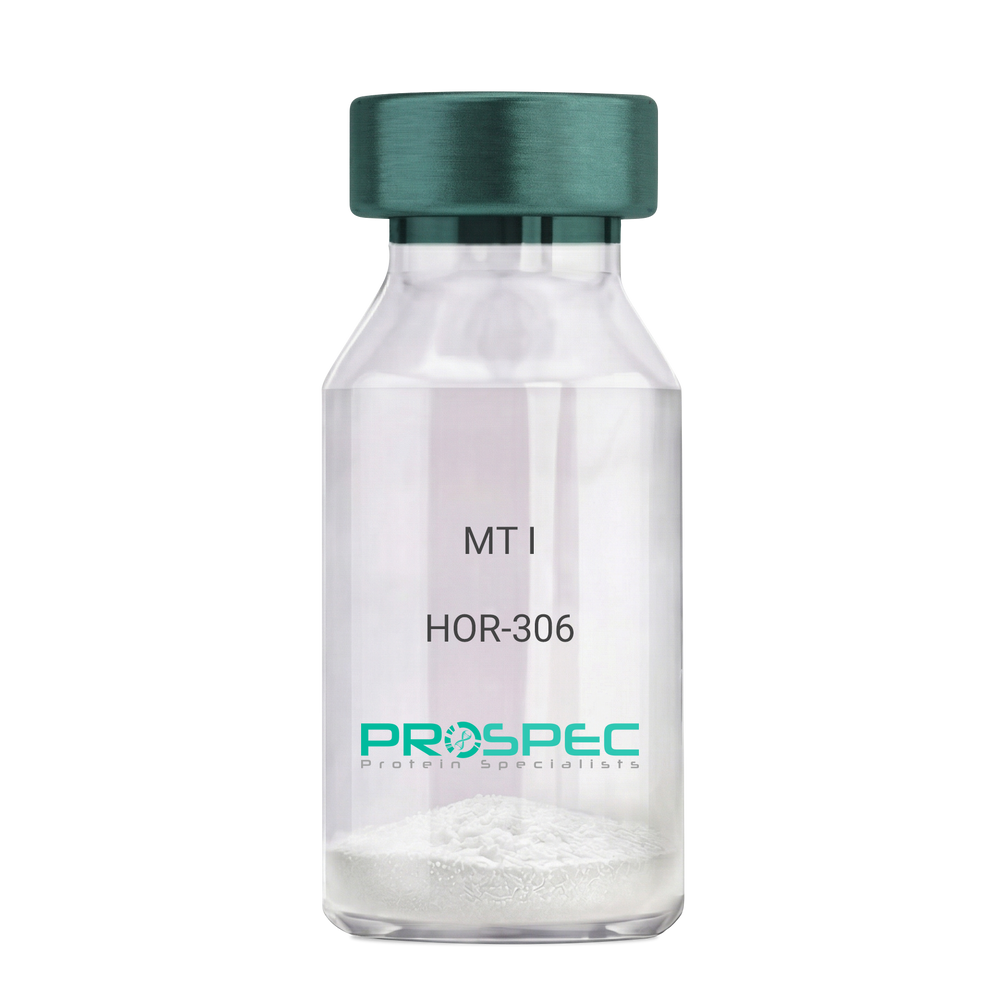
MT IDescription:
Melanotan-I
Melanotan-I, MT-I, Melanotan-1.
Product # :
HOR-306Price :
Quantity :
Shipping Method :
Shipped at Room temp
More Info
- description
- formulation
- purity
- More Info
Description
Melanotan-I has the amino acid sequence of Ser-Tyr-Ser-Nle-Glu-His-D-Phe-Arg-Trp-Gly-Lys-Pro-Val and a molecular weight of 1647.4 Dalton.
Formulation
The protein (1mg/ml) was lyophilized with no additives.
Purity
Greater than 98.0% as determined by RP-HPLC.
More Info
-
Synonyms
Melanotan-I, MT-I, Melanotan-1.
-
Physical Appearance
Sterile Filtered off-White lyophilized (freeze-dried) powder.
-
Stability
Lyophilized Melanotan-I although stable at room temperature for 3 weeks, should be stored desiccated below -18°C. Upon reconstitution MT-I should be stored at 4°C between 2-7 days and for future use below -18°C.For long term storage it is recommended to add a carrier protein (0.1% HSA or BSA).Please prevent freeze-thaw cycles.
-
Solubility
It is recommended to reconstitute the lyophilized Melanotan-I in sterile 1% acetic acid not less than 100 µg/ml, which can then be further diluted to other aqueous solutions.
ProSpec's products are furnished for LABORATORY RESEARCH USE ONLY. The product may not be used as drugs, agricultural or pesticidal products, food additives or household chemicals.
- View Data Sheet
Name :
TGFB1 Human RecombinantDescription:
Transforming Growth Factor-Beta 1 Human Recombinant
Transforming growth factor beta-1, TGF-beta-1, CED, DPD1, TGFB, TGF-b 1, LAP, TGFB1.
Product # :
CYT-716Price :
Quantity :
Shipping Method :
Shipped at Room temp
More Info
- description
- source
- formulation
- purity
- biological activity
- More Info
Description
TGFB1 Human Recombinant produced in CHO cells is a glycosylated homodimeric polypeptide chain containing 2 x 112 amino acids and having a total molecular mass of 25.6kDa. The TGFB1 is purified by proprietary chromatographic techniques.
Source
CHO cells.
Formulation
Lyophilized from a sterile filtered solution containing 0.1 % trifluoroacetic acid (TFA) And trehalose (1:20 protein to Trehalose ratio).
Purity
Greater than 95.0% as determined by SDS-PAGE.
Biological Activity
The ED50 as determined by the dose-dependent inhibition of IL-4-induced proliferation of HT-2 cells is 0.142ng/ml, corresponding to a specific activity of 7.4x10⁶units/mg.
More Info
-
Introduction
Transforming growth factor betas (TGFBetas) mediate many cell-cell interactions that occur during embryonic development. Three TGFBetas have been identified in mammals. TGFBeta1, TGFBeta2 and TGFBeta3 are each synthesized as precursor proteins that are very similar in that each is cleaved to yield a 112 amino acid polypeptide that remains associated with the latent portion of the molecule.
-
Synonyms
Transforming growth factor beta-1, TGF-beta-1, CED, DPD1, TGFB, TGF-b 1, LAP, TGFB1.
-
Physical Appearance
Sterile Filtered White lyophilized (freeze-dried) powder.
-
Stability
Lyophilized TGFB1 although stable at room temperature for 3 weeks, should be stored desiccated below -18°C. Upon reconstitution TGFB1 Human should be stored at 4°C between 2-7 days and for future use below -18°C. For long term storage it is recommended to add a carrier protein (0.1% HSA or BSA). Please prevent freeze-thaw cycles.
-
Solubility
It is recommended to reconstitute the lyophilized TGFB1 in sterile 10mM HCl at a concentration of 0.1 mg/ml, which can then be further diluted to other aqueous solutions.
-
Amino Acid Sequence
ALDTNYCFSS TEKNCCVRQL YIDFRKDLGW KWIHEPKGYH ANFCLGPCPY IWSLDTQYSK VLALYNQHNP GASAAPCCVP QALEPLPIVY YVGRKPKVEQ LSNMIVRSCK CS.
-
Background
Title: Transforming Growth Factor-Beta 1 Human Recombinant: A Promising Tool for Biomedical Research
Abstract:
Transforming Growth Factor-Beta 1 (TGF-β1) is a crucial cytokine involved in diverse cellular processes. This research paper provides an in-depth analysis of human recombinant TGF-β1, focusing on its production, purification, and applications in biomedical research. The paper discusses the significance of TGF-β1 in tissue engineering, regenerative medicine, and immunology. Furthermore, it elucidates the potential therapeutic implications of recombinant TGF-β1 in various diseases and highlights ongoing research in the field. The information presented in this paper aims to enhance the understanding of TGF-β1 and its utility as a research tool in biomedical sciences.Introduction:
Transforming Growth Factor-Beta 1 (TGF-β1) is a multifunctional cytokine that regulates cellular processes such as cell growth, differentiation, and immune modulation. Human recombinant TGF-β1 is synthesized using genetic engineering techniques, enabling the production of large quantities of biologically active protein for research purposes.Production and Purification:
Recombinant TGF-β1 is typically produced in expression systems such as bacteria, yeast, or mammalian cells. The protein is then purified using various chromatographic techniques to obtain a highly pure and active form. Quality control measures ensure the biological activity and integrity of the recombinant protein.Biomedical Applications:
Human recombinant TGF-β1 has found broad applications in biomedical research. In tissue engineering and regenerative medicine, it plays a critical role in promoting cell proliferation, extracellular matrix production, and tissue repair. TGF-β1 is also involved in immune modulation, influencing immune cell differentiation and function. Recombinant TGF-β1 is a valuable tool for studying these processes and developing therapeutic interventions.Therapeutic Implications:
The dysregulation of TGF-β1 signaling is associated with various diseases, including fibrosis, cancer, and autoimmune disorders. Recombinant TGF-β1 offers potential therapeutic applications through its ability to modulate cellular responses. Ongoing research aims to develop targeted therapies that specifically regulate TGF-β1 signaling for the treatment of these conditions.Conclusion:
Human recombinant TGF-β1 holds immense potential as a research tool in biomedical sciences. Its production, purification, and applications in tissue engineering, regenerative medicine, and immunology contribute to advancing our understanding of cellular processes and disease mechanisms. With ongoing research, recombinant TGF-β1 may pave the way for novel therapeutic strategies in various medical fields.
ProSpec's products are furnished for LABORATORY RESEARCH USE ONLY. The product may not be used as drugs, agricultural or pesticidal products, food additives or household chemicals.
- View Data Sheet
Name :
FGF 18 HumanDescription:
Fibroblast Growth Factor-18 Human Recombinant
Fibroblast growth factor 18, FGF-18, zFGF5, FGF18.
Product # :
CYT-120Price :
Quantity :
Shipping Method :
Shipped at Room temp
More Info
- description
- source
- formulation
- purity
- biological activity
- More Info
Description
FGF-18 Human Recombinant produced in E.coli is a single, non-glycosylated polypeptide chain containing 181 amino acids and having a molecular mass of 21.1kDa. The FGF-18 is purified by proprietary chromatographic techniques.
Source
Escherichia Coli.
Formulation
FGF-18 protein was lyophilized from a 0.2µm filtered concentrated solution in PBS, pH 7.4.
Purity
Greater than 95.0% as determined by:
(a) Analysis by RP-HPLC.
(b) Analysis by SDS-PAGE.Biological Activity
The ED50 as determined by the dose-dependent stimulation of thymidine uptake by BaF3 cells expressing FGF-receptors is < 0.5ng/ml, corresponding to a specific activity of > 2.0×10⁶ units/mg.More Info
-
Introduction
Fibroblast growth factor 18 (FGF18) is a member of the large FGF family which has at least 23 members. FGF18 is a binding growth factor with a core 120 amino acid FGF domain which allows for a common tertiary structure. FGFs are expressed in the course of the embryonic development and in restricted adult tissues. FGF-18 is an indispensable regulator of long bone and calvarial development. FGF-18 signals via FGFR 1c, 2c, 3c, and 4.
-
Synonyms
Fibroblast growth factor 18, FGF-18, zFGF5, FGF18.
-
Physical Appearance
Sterile Filtered White lyophilized (freeze-dried) powder.
-
Stability
Lyophilized FGF-18 although stable at room temperature for 3 weeks, should be stored desiccated below -18°C. Upon reconstitution FGF-18 should be stored at 4°C between 2-7 days and for future use below -18°C. For long term storage it is recommended to add a carrier protein (0.1% HSA or BSA). Please prevent freeze-thaw cycles.
-
Solubility
It is recommended to reconstitute the lyophilized FGF-18 in sterile 18MΩ-cm H2O not less than 100µg/ml, which can then be further diluted to other aqueous solutions.
-
Amino Acid Sequence
AEENVDFRIH VENQTRARDD VSRKQLRLYQ LYSRTSGKHI QVLGRRISAR GEDGDKYAQL LVETDTFGSQ VRIKGKETEF YLCMNRKGKL VGKPDGTSKE CVFIEKVLEN NYTALMSAKY SGWYVGFTKK GRPRKGPKTR ENQQDVHFMK RYPKGQPELQ KPFKYTTVTK RSRRIRPTHP A.
-
Background
What is the molecular weight/Mw of FGF18 Protein?
FGF18 Protein has a total Mw of 21.1kDa.
What is the source or expression system of FGF18 Protein?
Escherichia Coli.
What is the Purity of FGF18 Protein?
FGF18 Protein is >95% pure as determined by SDS-PAGE.
What is the Biological Activity of FGF18 Protein?
The ED50 as determined by the dose-dependent stimulation of thymidine uptake by BaF3 cells expressing FGF-receptors is < 0.5ng/ml, corresponding to a specific activity of > 2.0×10⁶ units/mg.
What is the amino acid sequence of FGF18 Protein?
AEENVDFRIH VENQTRARDD VSRKQLRLYQ LYSRTSGKHI QVLGRRISAR GEDGDKYAQL LVETDTFGSQ VRIKGKETEF YLCMNRKGKL VGKPDGTSKE CVFIEKVLEN NYTALMSAKY SGWYVGFTKK GRPRKGPKTR ENQQDVHFMK RYPKGQPELQ KPFKYTTVTK RSRRIRPTHP A.
What applications can FGF18 Protein be used in?
FGF18 Protein can probably be used in western blot, ELISA and Lateral Flow.
What is the endotoxin level for FGF18 Protein?
The endotoxin level is minimal, FGF18 Protein was purified using conventional chromatography tech
ProSpec's products are furnished for LABORATORY RESEARCH USE ONLY. The product may not be used as drugs, agricultural or pesticidal products, food additives or household chemicals.
- View Data Sheet
Name :
PAFAH1B3 HumanDescription:
Platelet-activating Factor Acetylhydrolase 1b, Catalytic Subunit 3 Human Recombinant
Platelet-activating factor acetylhydrolase 1b catalytic subunit 3 (29kDa), PAF acetylhydrolase 29 kDa subunit, platelet-activating factor acetylhydrolase, isoform Ib gamma subunit (29kD), PAF-AH1b alpha 1 subunit, PAF-AH 29 kDa subunit, PAFAHG, PAFAH subunit gamma, EC 3.1.1.47.
Product # :
ENZ-641Price :
Quantity :
Shipping Method :
Shipped with Ice Packs
More Info
- description
- source
- formulation
- purity
- More Info
Description
PAFAH1B3 Human Recombinant produced in E. coli is a single polypeptide chain containing 254 amino acids (1-231) and having a molecular mass of 28.2 kDa.PAFAH1B3 is fused to a 23 amino acid His-tag at N-terminus & purified by proprietary chromatographic techniques.
Source
E.coli.
Formulation
The PAFAH1B3 solution (1mg/1ml) contains 20mM Tris-HCl buffer (pH 8.0), 100mM NaCl and 10% glycerol.
Purity
Greater than 95% as determined by SDS-PAGE.
More Info
-
Introduction
Platelet-activating Factor Acetylhydrolase 1b Catalytic Subunit 3 (PAFAH1B3) is a member of the 'GDSL' lipolytic enzyme family. Acetylhydrolase catalyzes the elimination of an acetyl group from the glycerol backbone of platelet-activating factor. PAFAH1B3, which is a subunit of the platelet-activating factor cetylhydrolase isoform 1B complex, is comprised of the catalytic beta and gamma subunits and the regulatory alpha subunit. The PAFAH1B3 complex has an imperative role during the development of brain.
-
Synonyms
Platelet-activating factor acetylhydrolase 1b catalytic subunit 3 (29kDa), PAF acetylhydrolase 29 kDa subunit, platelet-activating factor acetylhydrolase, isoform Ib gamma subunit (29kD), PAF-AH1b alpha 1 subunit, PAF-AH 29 kDa subunit, PAFAHG, PAFAH subunit gamma, EC 3.1.1.47.
-
Physical Appearance
Sterile Filtered colorless solution.
-
Stability
Store at 4°C if entire vial will be used within 2-4 weeks. Store, frozen at -20°C for longer periods of time. For long term storage it is recommended to add a carrier protein (0.1% HSA or BSA).Avoid multiple freeze-thaw cycles.
-
Amino Acid Sequence
MGSSHHHHHH SSGLVPRGSH MGSMSGEENP ASKPTPVQDV QGDGRWMSLH HRFVADSKDK EPEVVFIGDS LVQLMHQCEI WRELFSPLHA LNFGIGGDGT QHVLWRLENG ELEHIRPKIV VVWVGTNNHG HTAEQVTGGI KAIVQLVNER QPQARVVVLG LLPRGQHPNP LREKNRQVNE LVRAALAGHP RAHFLDADPG FVHSDGTISH HDMYDYLHLS RLGYTPVCRA LHSLLLRLLA QDQGQGAPLL EPAP
ProSpec's products are furnished for LABORATORY RESEARCH USE ONLY. The product may not be used as drugs, agricultural or pesticidal products, food additives or household chemicals.
- View Data Sheet
Name :
BAFFR Human, HEKDescription:
BAFF (BLyS) Receptor Human Recombinant, HEK
TNFRSF13C, CD268, BAFF-R, MGC138235, B cell-activating factor receptor.
Product # :
CYT-1224Price :
Quantity :
Shipping Method :
Shipped with Ice Packs
More Info
- description
- source
- formulation
- purity
- biological activity
- More Info
Description
BAFFR Human Recombinant is a single, glycosylated, polypeptide chain (1-78 a.a) containing a total of 314 amino acids and having a molecular mass of 34.4 kDa. BAFFR is fused to 233 a.a hIgG-Tag at C-terminus and is purified by proprietary chromatographic techniques.
Source
HEK293 Cells.
Formulation
The BAFFR solution (1mg/ml) contains 10% Glycerol and Phosphate-Buffered Saline (pH 7.4).
Purity
Greater than 95.0% as determined by SDS-PAGE.
Biological Activity
The ED50 is ≤0.7 ug/ml, measured by its ability in a functional ELISA with BAFF Human.
More Info
-
Synonyms
TNFRSF13C, CD268, BAFF-R, MGC138235, B cell-activating factor receptor.
-
Physical Appearance
Sterile Filtered colorless solution.
-
Stability
Store at 4°C if entire vial will be used within 2-4 weeks. Store, frozen at -20°C for longer periods of time. For long term storage it is recommended to add a carrier protein (0.1% HSA or BSA).Avoid multiple freeze-thaw cycles.
-
Amino Acid Sequence
DGSMRRGPRS LRGRDAPAPT PCVPAECFDL LVRHCVACGL LRTPRPKPAG ASSPAPRTAL QPQESVGAGA GEAALPLPGL LLEPKSCDKT HTCPPCPAPE LLGGPSVFLF PPKPKDTLMI SRTPEVTCVV VDVSHEDPEV KFNWYVDGVE VHNAKTKPRE EQYNSTYRVV SVLTVLHQDW LNGKEYKCKV SNKALPAPIE KTISKAKGQP REPQVYTLPP SRDELTKNQV SLTCLVKGFY PSDIAVEWES NGQPENNYKT TPPVLDSDGS FFLYSKLTVD KSRWQQGNVF SCSVMHEALH NHYTQKSLSL SPGK.
-
Background
B-cell Activating Factor (BAFF) and its corresponding receptor, BAFF-R, are integral components of the immune system, orchestrating crucial processes in B-cell survival, maturation, and differentiation. As we delve into the intricate world of immunology, the study of BAFF and its receptor has unveiled essential pathways that govern the immune responses in health and disease. This research investigates the multifaceted role of BAFF Receptor Protein, shedding light on its structural complexities, signaling mechanisms, and its pivotal contributions to immune regulation. By exploring the interactions between BAFF and its receptor, scientists aim to decipher the delicate balance that underlies immune homeostasis and explore potential therapeutic avenues.
Structural Architecture of BAFF Receptor Protein:
BAFF Receptor, a transmembrane protein predominantly expressed on B cells, belongs to the tumor necrosis factor receptor (TNFR) superfamily. Its intricate structure involves various domains, each playing a unique role in ligand binding, receptor activation, and downstream signaling. Understanding the structural intricacies of BAFF Receptor is paramount to unraveling the molecular events that govern B-cell fate decisions and immune responses.
Physiological Significance in B-Cell Biology:
BAFF Receptor, upon binding with its ligand BAFF, initiates a cascade of events critical for B-cell survival and function. This interaction promotes B-cell maturation, prevents premature apoptosis, and influences the formation of immune synapses. Additionally, BAFF Receptor signaling is tightly regulated to prevent excessive B-cell activation, ensuring immune tolerance and preventing autoimmune responses. Disruptions in these pathways can lead to autoimmune disorders, underscoring the crucial role of BAFF Receptor in maintaining immune equilibrium.
Regulation of Immune Responses:
BAFF Receptor signaling not only affects B-cell development but also has broader implications for immune responses. By modulating antibody production, B-cell activation, and immune memory, BAFF Receptor plays a vital role in shaping adaptive immunity. Its dysregulation has been implicated in various autoimmune conditions, making it an attractive target for therapeutic interventions aimed at restoring immune balance.
BAFF Receptor as a Therapeutic Target:
The intricate involvement of BAFF Receptor in autoimmune diseases, such as rheumatoid arthritis and systemic lupus erythematosus, has positioned it as a promising therapeutic target. Researchers are exploring monoclonal antibodies and other targeted therapies that aim to modulate BAFF Receptor signaling, providing a new frontier in autoimmune disease management. Additionally, understanding the BAFF-BAFF Receptor axis offers potential insights into the development of vaccines and immunotherapies, fostering innovative approaches in the fight against infectious diseases and malignancies.
BAFF Receptor Protein, as a key player in immune regulation, embodies the complexities of immunology. Its interactions with BAFF orchestrate fundamental processes in B-cell biology and adaptive immunity. As scientists unravel the intricate signaling pathways and structural nuances of BAFF Receptor, they pave the way for novel therapeutic strategies and innovative treatments for autoimmune disorders and beyond. This research not only deepens our understanding of immune regulation but also holds the promise of transformative advancements in immunotherapy, ultimately shaping the future of immune-related healthcare.
What is the molecular weight/Mw of BAFF-R Protein?
BAFF-R Protein has a total Mw of 34.4kDa.
What is the source or expression system of BAFF-R Protein?
HEK293 Cells.
What is the Purity of BAFF-R Protein?
BAFF-R Protein is >95% pure as determined by SDS-PAGE.
What is the Biological Activity of BAFF-R Protein?
The ED50 is ≤0.7 ug/ml, measured by its ability in a functional ELISA with BAFF Human.
What is the amino acid sequence of BAFF-R Protein?
DGSMRRGPRS LRGRDAPAPT PCVPAECFDL LVRHCVACGL LRTPRPKPAG ASSPAPRTAL QPQESVGAGA GEAALPLPGL LLEPKSCDKT HTCPPCPAPE LLGGPSVFLF PPKPKDTLMI SRTPEVTCVV VDVSHEDPEV KFNWYVDGVE VHNAKTKPRE EQYNSTYRVV SVLTVLHQDW LNGKEYKCKV SNKALPAPIE KTISKAKGQP REPQVYTLPP SRDELTKNQV SLTCLVKGFY PSDIAVEWES NGQPENNYKT TPPVLDSDGS FFLYSKLTVD KSRWQQGNVF SCSVMHEALH NHYTQKSLSL SPGK.
What applications can BAFF-R Protein be used in?
BAFF-R Protein can probably be used in western blot, ELISA and Lateral Flow.
What is the endotoxin level for BAFF-R Protein?
The endotoxin level is minimal, BAFF-R Protein was purified using conventional chromatography techniques.
ProSpec's products are furnished for LABORATORY RESEARCH USE ONLY. The product may not be used as drugs, agricultural or pesticidal products, food additives or household chemicals.
- View Data Sheet
Name :
GHRL HumanDescription:
Ghrelin Human Recombinant
Appetite-regulating hormone precursor, Growth hormone secretagogue, Growth hormone-releasing peptide, GHRP, Motilin-related peptide, M46 protein, Ghrelin, Obestatin, MTLRP.
Product # :
HOR-294Price :
Quantity :
Shipping Method :
Shipped with Ice Packs
More Info
- description
- source
- formulation
- purity
- More Info
Description
Ghrelin Human Recombinant contains 115 amino acids (24-117 a.a.) and a total molecular mass of 12.8 kDa. The GHRL is fused to a 20 amino acid His Tag at N-terminus and purified by proprietary chromatographic techniques.
Source
Escherichia Coli.
Formulation
The Ghrelin protein solution contains 20mM Tris-HCl, pH-8 & 10% glycerol.
Purity
Greater than 90.0% as determined by SDS-PAGE.
More Info
-
Introduction
Obestatin is a hormone that is produced in the cells lining the stomach and small intestine of several mammals including humans; it drastically reduces appetite in mice and is expected to do the same in humans. Obestatin is a peptide hormone - a relatively small protein. It is encoded by the same gene that also encodes ghrelin, a peptide hormone that increases appetite. The protein produced by that gene breaks into two smaller peptides, ghrelin and obestatin. Ghrelin is an endogenous ligand for the growth hormone secretagogue receptor and is involved in regulating growth hormone release. Ghrelin is derived from a preprohormone called preproghrelin, which also generates a second peptide called obestatin. Ghrelin is an endogenous ligand for the orphan G protein-coupled receptor GPR39 and is involved in satiety and decreased food intake.
-
Synonyms
Appetite-regulating hormone precursor, Growth hormone secretagogue, Growth hormone-releasing peptide, GHRP, Motilin-related peptide, M46 protein, Ghrelin, Obestatin, MTLRP.
-
Physical Appearance
Sterile filtered colorless solution.
-
Stability
Store at 4°C if entire vial will be used within 2-4 weeks. Store, frozen at -20°C for longer periods of time. For long term storage it is recommended to add a carrier protein (0.1% HSA or BSA). Avoid multiple freeze-thaw cycles.
-
Amino Acid Sequence
MGSSHHHHHH SSGLVPRGSH MGSSFLSPEH QRVQQRKESK KPPAKLQPRA LAGWLRPEDG GQAEGAEDEM EVRFNAPFDV GIKLSGVQYQ QHSQALGKFL QDILWEEAKE APADK.
-
Background
What is the molecular weight/Mw of GHRELIN HUMAN Protein?
GHRELIN HUMAN Protein has a total Mw of 12.8kDa.
What is the source or expression system of GHRELIN HUMAN Protein?
Escherichia Coli.
What is the Purity of GHRELIN HUMAN Protein?
GHRELIN HUMAN Protein is >90% pure as determined by SDS-PAGE.
What is the Biological Activity of GHRELIN HUMAN Protein?
The biological functionality of GHRELIN HUMAN Protein will be determined in the future.
What is the amino acid sequence of GHRELIN HUMAN Protein?
MGSSHHHHHH SSGLVPRGSH MGSSFLSPEH QRVQQRKESK KPPAKLQPRA LAGWLRPEDG GQAEGAEDEM EVRFNAPFDV GIKLSGVQYQ QHSQALGKFL QDILWEEAKE APADK.
What applications can GHRELIN HUMAN Protein be used in?
GHRELIN HUMAN Protein can probably be used in western blot, ELISA and Lateral Flow.
What is the endotoxin level for GHRELIN HUMAN Protein?
The endotoxin level is minimal, GHRELIN HUMAN Protein was purified using conventional chromatography techniques.
ProSpec's products are furnished for LABORATORY RESEARCH USE ONLY. The product may not be used as drugs, agricultural or pesticidal products, food additives or household chemicals.
- View Data Sheet
Name :
EGF Mouse ProteinDescription:
Epidermal Growth Factor Mouse Recombinant
Urogastrone, URG, EGF.
Product # :
CYT-326Price :
Quantity :
Shipping Method :
Shipped at Room temp
More Info
- description
- source
- formulation
- purity
- biological activity
- More Info
Description
Epidermal Growth Factor Mouse Recombinant produced in E.Coli is a single, non-glycosylated, polypeptide chain containing 53 amino acids including 3 intramolecular disulfide-bonds and having a molecular mass of 6 kDa.The EGF is purified by proprietary chromatographic techniques.
Source
Escherichia Coli.
Formulation
The protein was lyophilized with no additives.
Purity
Greater than 98.0% as determined by:
(a) Analysis by RP-HPLC.
(b) Analysis by SDS-PAGE.Biological Activity
The activity is determined by the dose-dependent proliferation of mouse BALB/c 3T3 cells and is typically less than 0.1ng/ml.More Info
-
Introduction
Epidermal growth factor has a profound effect on the differentiation of specific cells in vivo and is a potent mitogenic factor for a variety of cultured cells of both ectodermal and mesodermal origin. The EGF precursor is believed to exist as a membrane-bound molecule which is proteolytically cleaved to generate the 53-amino acid peptide hormone that stimulates cells to divide. EGF stimulates the growth of various epidermal and epithelial tissues in vivo and in vitro and of some fibroblasts in cell culture.
-
Synonyms
Urogastrone, URG, EGF.
-
Physical Appearance
Sterile Filtered White lyophilized (freeze-dried) powder.
-
Stability
Lyophilized Epidermal Growth Factor Recombinant although stable at room temperature for 3 weeks, should be stored desiccated below -18°C. Upon reconstitution EGF should be stored at 4°C between 2-7 days and for future use below -18°C.For long term storage it is recommended to add a carrier protein (0.1% HSA or BSA).Please prevent freeze-thaw cycles.
-
Solubility
It is recommended to reconstitute the lyophilized Epidermal Growth Factor in sterile 18MΩ-cm H2O not less than 100µg/ml, which can then be further diluted to other aqueous solutions.
-
Amino Acid Sequence
NSYPGCPSSY DGYCLNGGVC MHIESLDSYT CNCVIGYSGD RCQTRDLRWW ELR.
-
Background
Exploring Novel Frontiers: Epidermal Growth Factor Mouse Recombinant and its Potential Therapeutic Implications
Abstract:
This research paper delves into the uncharted realm of Epidermal Growth Factor Mouse Recombinant (EGF-MR), unraveling its intricate molecular attributes, cellular signaling, and therapeutic prospects. Employing state-of-the-art methodologies involving genetic engineering, in vitro assays, and animal models, this study uncovers the multifaceted responses elicited by EGF-MR. The findings underscore its promise as a versatile therapeutic agent, potentially revolutionizing regenerative medicine and cancer interventions.
Introduction:
Epidermal Growth Factor (EGF) plays a pivotal role in cellular dynamics. This paper ventures into the nuanced landscape of Epidermal Growth Factor Mouse Recombinant (EGF-MR), delving into its unique molecular characteristics and exploring the therapeutic horizons it presents.
Molecular Insights and Receptor Binding:
EGF-MR's interaction with the epidermal growth factor receptor (EGFR) sets the stage for intricate intracellular events. High-resolution structural analyses and binding kinetics studies elucidate the nuances of this interaction, revealing structural motifs that initiate downstream signaling cascades.
Cellular Signaling and Functional Responses:
EGF-MR initiates canonical and non-canonical signaling pathways, including the mitogen-activated protein kinase (MAPK) and phosphoinositide 3-kinase (PI3K)/Akt pathways. Through comprehensive phosphoproteomic analyses and live-cell imaging, the spatiotemporal dynamics of EGF-MR-induced responses come to light, showcasing its role in cell proliferation, migration, and anti-apoptotic effects.
Genetic Engineering and In Vitro Assays:
Precise genetic manipulation ensures optimal EGF-MR expression. Gene codon optimization and signal peptide selection are meticulously undertaken to facilitate efficient protein synthesis and secretion. In vitro assays, encompassing cell viability and wound healing studies, illuminate EGF-MR's impact on cellular behaviors.
In Vivo Implications and Therapeutic Prospects:
In animal models, EGF-MR emerges as a transformative factor in tissue regeneration. Customized wound healing assays unveil its potential in accelerating re-epithelialization and granulation tissue formation. Moreover, the modulation of tumor microenvironments suggests its applicability in cancer interventions.
Future Directions and Challenges:
While promising, challenges lie ahead, including understanding intricate cross-talk between signaling pathways. Future research should focus on refining delivery methods and optimizing dosing regimens to harness EGF-MR's full therapeutic potential.
Conclusion:
In a convergence of advanced methodologies and visionary therapeutic possibilities, Epidermal Growth Factor Mouse Recombinant takes center stage. Its distinctive molecular interactions and diverse cellular orchestration offer a glimpse into the future of regenerative medicine and targeted cancer therapies, propelling scientific progress into uncharted territories.
What is the molecular weight/Mw of EGF Protein?
EGF Protein has a total Mw of 6 kDa.
What is the source or expression system of EGF Protein?
Escherichia Coli.
What is the Purity of EGF Protein?
EGF Protein is >98% pure as determined by SDS-PAGE.
What is the Biological Activity of EGF Protein?
The activity is determined by the dose-dependent proliferation of mouse BALB/c 3T3 cells and is typically less than 0.1ng/ml.
What is the amino acid sequence of EGF Protein?
NSYPGCPSSY DGYCLNGGVC MHIESLDSYT CNCVIGYSGD RCQTRDLRWW ELR.
What applications can EGF Protein be used in?
EGF Protein can probably be used in western blot, ELISA and Lateral Flow.
What is the endotoxin level for EGF Protein?
The endotoxin level is minimal, EGF Protein was purified using conventional chromatography techniques.
ProSpec's products are furnished for LABORATORY RESEARCH USE ONLY. The product may not be used as drugs, agricultural or pesticidal products, food additives or household chemicals.
- View Data Sheet
Name :
EIF4H HumanDescription:
Eukaryotic Translation Initiation Factor 4H Human Recombinant
Eukaryotic translation initiation factor 4H, eIF-4H, Williams-Beuren syndrome chromosomal region 1 protein, EIF4H, KIAA0038, WBSCR1, WSCR1.
Product # :
PRO-1114Price :
Quantity :
Shipping Method :
Shipped with Ice Packs
More Info
- description
- source
- formulation
- purity
- More Info
Description
EIF4H Human Recombinant produced in E.Coli is a single, non-glycosylated polypeptide chain containing 272 amino acids (1-248 a.a) and having a molecular mass of 29.9kDa.EIF4H is fused to a 24 amino acid His-tag at N-terminus & purified by proprietary chromatographic techniques.
Source
Escherichia Coli.
Formulation
EIF4H protein solution (0.5mg/ml) containing 20mM Tris-HCl buffer (pH 8.0), 0.2M NaCl, 50% glycerol and 2mM DTT.
Purity
Greater than 90.0% as determined by SDS-PAGE.
More Info
-
Introduction
Eukaryotic translation initiation factor 4H (EIF4H) is a 248 amino acid protein which localizes to the perinuclear region of the cytoplasm and is expressed as 2 isoforms, termed short and long. EIF4H functions to stimulate the initiation of protein synthesis at the level of mRNA employment. EIF4H stimulates the RNA-dependent ATP hydrolysis catalyzed by EIF4A and EIF4B. EIF4H gene defects linked to Williams- Beuren syndrome (WBS), a rare developmental disorder characterized by cardiovascular and musculo-skeletal abnormalities and caused by the deletion of contiguous genes at 7q11.23.
-
Synonyms
Eukaryotic translation initiation factor 4H, eIF-4H, Williams-Beuren syndrome chromosomal region 1 protein, EIF4H, KIAA0038, WBSCR1, WSCR1.
-
Physical Appearance
Sterile Filtered colorless solution.
-
Stability
Store at 4°C if entire vial will be used within 2-4 weeks. Store, frozen at -20°C for longer periods of time. For long term storage it is recommended to add a carrier protein (0.1% HSA or BSA).Avoid multiple freeze-thaw cycles.
-
Amino Acid Sequence
MGSSHHHHHH SSGLVPRGSH MGSHMADFDT YDDRAYSSFG GGRGSRGSAG GHGSRSQKEL PTEPPYTAYV GNLPFNTVQG DIDAIFKDLS IRSVRLVRDK DTDKFKGFCY VEFDEVDSLK EALTYDGALL GDRSLRVDIA EGRKQDKGGF GFRKGGPDDR GMGSSRESRG GWDSRDDFNS
GFRDDFLGGR GGSRPGDRRT GPPMGSRFRD GPPLRGSNMD FREPTEEERA QRPRLQLKPR TVATPLNQVA NPNSAIFGGA RPREEVVQKE QE.
ProSpec's products are furnished for LABORATORY RESEARCH USE ONLY. The product may not be used as drugs, agricultural or pesticidal products, food additives or household chemicals.
- View Data Sheet
Name :
FGF 21 MouseDescription:
Fibroblast Growth Factor-21 Mouse Recombinant
Fibroblast growth factor 21, FGF-21.
Product # :
CYT-339Price :
Quantity :
Shipping Method :
Shipped at Room temp
More Info
- description
- source
- formulation
- purity
- More Info
Description
Fibroblast Growth Factor -21 Mouse Recombinant produced in E.Coli is a single, non-glycosylated, polypeptide chain containing 183 amino acids including N-terminal Methionin and having a molecular mass of 20.1 kDa. The FGF-21 is purified by proprietary chromatographic techniques.
Source
Escherichia Coli.
Formulation
Filtered (0.4µm) and lyophilized from 0.5mg/ml in 20mM TRIS, 20mM NaCl, pH 7.5.
Purity
Greater than 95.0% as determined by SDS-PAGE.
More Info
-
Introduction
The FGFs are a family of more than 20 small (~17–26 kDa) secreted peptides. The initial characterization of these proteins focused on their ability to stimulate fibroblast proliferation. This mitogenic activity was mediated through FGF receptors (FGFRs) 1, 2, or 3. A fourth closely related tyrosine kinase receptor (FGFR4) was able to bind the FGFs but did not lead to a mitogenic response.
FGFs modulate cellular activity via at least 5 distinct subfamilies of high-affinity FGF receptors (FGFRs): FGFR-1, -2, -3, and -4, all with intrinsic tyrosine kinase activity and, except for FGFR-4, multiple splice isoforms, and FGFR-5, which lacks an intracellular kinase domain. There is growing evidence that FGFRs can be important for regulation of glucose and lipid homeostasis. The overexpression of a dominant negative form of FGFR-1 in ? cells leads to diabetes in mice, which thus implies that proper FGF signaling is required for normal ? cell function and glycemia maintenance. FGFR-2 appears to be a key molecule during pancreatic development. Moreover, FGFR-4 has been implicated in cholesterol metabolism and bile acid synthesis.
FGF-19, has been shown to cause resistance to diet-induced obesity desensitization and to improve glucose, and lipid profiles in diabetic rodents. Since these effects, at least in part, are mediated through the observed changes in metabolic rates, FGF-19 can be considered as a regulator of energy expenditure.
FGF-21 is preferentially expressed in liver, but an exact knowledge of FGF-21 bioactivity and its mode of action have been lacking to date. FGF-21 is a potent activator of glucose uptake on adipocytes, protects animals from diet-induced obesity when overexpressed in transgenic mice, and lowers blood glucose and triglyceride levels when therapeutically administered to diabetic rodents. -
Synonyms
Fibroblast growth factor 21, FGF-21.
-
Physical Appearance
Filtered white lyophilized powder.
-
Stability
Lyophilized FGF-21 Mouse Recombinant although stable at room temperature for 3 weeks, should be stored desiccated below -18°C. Upon reconstitution Fibroblast Growth Factor 21 should be stored at 4°C between 2-7 days and for future use below -18°C.For long term storage it is recommended to add a carrier protein (0.1% HSA or BSA).Please prevent freeze-thaw cycles.
-
Solubility
It is recommended to add deionized water to prepare a working stock solution of approximately 0.5mg/ml and let the lyophilized pellet dissolve completely. Product is not sterile! Please filter the product by an appropriate sterile filter before using it in the cell culture. Add DTT (0.2mM) and NaCl (0.1-0.15M) before freezing to prevent potential aggregation.
-
Amino Acid Sequence
MAY PIPDSSPLLQ FGGQVRQRYL YTDDDQDTEA HLEIREDGTV VGAAHRSPES LLELKALKPG VIQILGVKAS RFLCQQPDGA LYGSPHFDPE ACSFRELLLE DGYNVYQSEA HGLPLRLPQK DSPNQDATSW GPVRFLPMPG LLHEPQDQAG FLPPEPPDVG SSDPLSMVEP LQGRSPSYAS.
-
Background
What is the molecular weight/Mw of FGF21 MOUSE Protein?
FGF21 MOUSE Protein has a total Mw of 20.1kDa.
What is the source or expression system of FGF21 MOUSE Protein?
Escherichia Coli.
What is the Purity of FGF21 MOUSE Protein?
FGF21 MOUSE Protein is >95% pure as determined by SDS-PAGE.
What is the Biological Activity of FGF21 MOUSE Protein?
The biological functionality of FGF21 MOUSE Protein will be determined in the future.
What is the amino acid sequence of FGF21 MOUSE Protein?
MAY PIPDSSPLLQ FGGQVRQRYL YTDDDQDTEA HLEIREDGTV VGAAHRSPES LLELKALKPG VIQILGVKAS RFLCQQPDGA LYGSPHFDPE ACSFRELLLE DGYNVYQSEA HGLPLRLPQK DSPNQDATSW GPVRFLPMPG LLHEPQDQAG FLPPEPPDVG SSDPLSMVEP LQGRSPSYAS.
What applications can FGF21 MOUSE Protein be used in?
FGF21 MOUSE Protein can probably be used in western blot, ELISA and Lateral Flow.
What is the endotoxin level for FGF21 MOUSE Protein?
The endotoxin level is minimal, FGF21 MOUSE Protein was purified using conventional chromatography techniques.
ProSpec's products are furnished for LABORATORY RESEARCH USE ONLY. The product may not be used as drugs, agricultural or pesticidal products, food additives or household chemicals.
- View Data Sheet
Name :
FGF 1 Human, Sf9Description:
Fibroblast Growth Factor-Acidic Human Recombinant, Sf9
HBGF-1, ECGF-beta, FIBP, FGFIBP, FIBP-1, ECGF, ECGFA, GLIO703, FGF1, FGF-a.
Product # :
CYT-364Price :
Quantity :
Shipping Method :
Shipped with Ice Packs
More Info
- description
- source
- formulation
- purity
- biological activity
- More Info
Description
Fibroblast Growth Factor-1 Human Recombinant (FGF-1) produced in Sf9 insect cells is a single, glycosylated, polypeptide chain containing 140 amino acids and having a molecular mass of 15803 Dalton. The FGF-a is purified by proprietary chromatographic techniques.
Source
Baculovirus.
Formulation
The sterile protein solution (1.8mg/ml) contains 20mM Tris HCl pH=7.9, 100mM KCl, 0.2mM DTT and 20% glycerol.
Purity
Greater than 95.0% as determined by(a) Analysis by RP-HPLC.
(b) Analysis by SDS-PAGE.Biological Activity
The ED50, calculated by the dose-dependant proliferation of BAF3 cells expressing FGF receptors (measured by 3H-thymidine uptake) is <10 ng/ml, corresponding to a specific activity of 100,000IU/mg.More Info
-
Introduction
Acidic fibroblast growth factor is a member of the fibroblast growth factor (FGF) family. FGF family members possess broad mitogenic and cell survival activities, and are involved in a variety of biological processes, including embryonic development, cell growth, morphogenesis, tissue repair, tumor growth and invasion. This protein functions as a modifier of endothelial cell migration and proliferation, as well as an angiogenic factor. It acts as a mitogen for a variety of mesoderm- and neuroectoderm-derived cells in vitro, thus is thought to be involved in organogenesis. Three alternatively spliced variants encoding different isoforms have been described. The heparin-binding growth factors are angiogenic agents in vivo and are potent mitogens for a variety of cell types in vitro. There are differences in the tissue distribution and concentration of these 2 growth factors.
-
Synonyms
HBGF-1, ECGF-beta, FIBP, FGFIBP, FIBP-1, ECGF, ECGFA, GLIO703, FGF1, FGF-a.
-
Physical Appearance
Sterile Filtered liquid formulation.
-
Stability
Store at 4°C if entire vial will be used within 2-4 weeks. Store, frozen at -20°C for longer periods of time. For long term storage it is recommended to add a carrier protein (0.1% HSA or BSA).Avoid multiple freeze-thaw cycles.
-
Amino Acid Sequence
The sequence of the first five N-terminal amino acids as determined and was found to be Met-Phe-Asn-Leu-Pro.
-
Background
What is the molecular weight/Mw of FGF 1 Protein?
FGF 1 Protein has a total Mw of 15.8kDa.
What is the source or expression system of FGF 1 Protein?
Baculovirus.
What is the Purity of FGF 1 Protein?
FGF 1 Protein is >95% pure as determined by SDS-PAGE.
What is the Biological Activity of FGF 1 Protein?
The ED50, calculated by the dose-dependant proliferation of BAF3 cells expressing FGF receptors (measured by 3H-thymidine uptake) is <10 ng/ml, corresponding to a specific activity of 100,000IU/mg.
What is the amino acid sequence of FGF 1 Protein?
FGF 1 Protein is composed from 140 amino acids.
What applications can FGF 1 Protein be used in?
FGF 1 Protein can probably be used in western blot, ELISA and Lateral Flow.
What is the endotoxin level for FGF 1 Protein?
The endotoxin level is minimal, FGF 1 Protein was purified using conventional chromatography techniques.
ProSpec's products are furnished for LABORATORY RESEARCH USE ONLY. The product may not be used as drugs, agricultural or pesticidal products, food additives or household chemicals.
- View Data Sheet
Name :
KGF HumanDescription:
Keratinocyte Growth Factor Human Recombinant
HBGF-7, FGF7, FGF-7, KGF.
Product # :
CYT-219Price :
Quantity :
Shipping Method :
Shipped at Room temp
More Info
- description
- source
- formulation
- purity
- biological activity
- More Info
Description
Keratinocyte Growth Factor-1 Human Recombinant produced in E.Coli is a single, non-glycosylated, polypeptide chain containing 164 amino acids and having a molecular mass of 18995 Dalton.The FGF-7 is purified by proprietary chromatographic techniques.
Source
Escherichia Coli.
Formulation
Lyophilized from a 0.2µm filtered solution in 20mM PB, pH 8.0, 1M NaCl.
Purity
Greater than 96.0% as determined by:
(a) Analysis by RP-HPLC.
(b) Analysis by SDS-PAGE.Biological Activity
The biological activity was determined by the dose-dependent stimulation of thymidine uptake by BaF3 cells expressing KGF receptors yielding an ED50 <10ng/ml, corresponding to a Specific Activity of 1.0×10⁵ IU/mg.More Info
-
Introduction
KGF is a member of the fibroblast growth factor (FGF) family. FGF family members possess broad mitogenic and cell survival activities, and are involved in a variety of biological processes, including embryonic development, cell growth, morphogenesis, tissue repair, tumor growth and invasion. FGF7 is a potent epithelial cell-specific growth factor, whose mitogenic activity is predominantly exhibited in keratinocytes but not in fibroblasts and endothelial cells. Studies of mouse and rat homologs of this gene implicated roles in morphogenesis of epithelium, reepithelialization of wounds, hair development and early lung organogenesis.
-
Synonyms
HBGF-7, FGF7, FGF-7, KGF.
-
Physical Appearance
Sterile Filtered White lyophilized (freeze-dried) powder.
-
Stability
Lyophilized Keratinocyte Growth Factor1 although stable at room temperature for 3 weeks, should be stored desiccated below -18°C. Upon reconstitution FGF7 should be stored at 4°C between 2-7 days and for future use below -18°C.For long term storage it is recommended to add a carrier protein (0.1% HSA or BSA).Please prevent freeze-thaw cycles.
-
Solubility
It is recommended to reconstitute the lyophilized Keratinocyte Growth Factor in sterile 18MΩ-cm H2O not less than 100µg/ml, which can then be further diluted to other aqueous solutions.
-
Amino Acid Sequence
MCNDMTPEQM ATNVNCSSPE RHTRSYDYME GGDIRVRRLF CRTQWYLRID KRGKVKGTQE MKNNYNIMEI RTVAVGIVAI KGVESEFYLA MNKEGKLYAK KECNEDCNFK ELILENHYNT YASAKWTHNG GEMFVALNQK GIPVRGKKTK KEQKTAHFLP MAIT.
-
Background
FGF stands for fibroblast growth factor that have proteins encoded inside them. The FGF family possess broad mitogenetic activities and are involved in a lot of processes in the body. Some of the biological processes that they are included in are embryonic development, cell growth, tumor growth and tissue repair. FGF-7 is often also commonly referred to as keratinocyte growth factor or KGF and studies have focused on the link between the protein and certain tumor growth.
Structure
Studies have found that the crystal structure of FGF7 is comparatively similar to that of FGF10. For instance, FGF7 does interact with D2, linker as well as D3 of the receptor. Similar to other FGFs much of interaction to do with D2 is confined to conserved residues as well as the residue Arg 251 in the linker domain and the hydrophobic surface of D2. That said there are notable differences and some models predict that FGF7 actually interacts with three loops in D3.Mechanism
A member of the FGF family, this factor acts completely exclusively through a subset of FGF receptor isoforms. These are mainly expressed by epithelial cells. Indeed, studies suggest that the factor specifically acts on epithelial cells. This in turn causes increased proliferation differentiation and migrations of the aforementioned cells.Interactions
FGF7 and FGF10 can interact with one of the FGF receptors that is expressed by the epithelial cells. As such, it could be the case that this interaction could cause a protective factor for these epithelial tissues. The protein has also been shown to interact with Perlecan. Also referred to as basement membrane specific heparan sulfate proteoglycan core protein, this is encoded by the HSPG2 gene. A large multi domain this cross-links and binds to various extracellular matrix components as well as self surface molecules. Since FGF7 binds specifically with the perlecan protein, research suggests that i should be considered a novel biological ligand for FGF-7. This could mean that interaction has an influence on both tissue remodeling and cancer growth.Function
Studies have shown that FGF-7 expression is completely unregulated during minor or even chronic injury. This has lead researchers to believe that the protein is used to heal or repair epithelial cells. Furthermore, FGF-1 also triggers the formation of apical ectodermal ridge throughout the development of limbs in the body.
Recently, it has seemed to be the case that FGF-7 has been linked to skin injury repair, and has also been found to play some sort of role in breast cancer. As well as this, it is a vital regulator of HPC’s. It is vital because it can induce de novo activation of these HPCs.Further research has shown that FGF6 is a niche signal that is required for the stimulation of adult liver progenitor cells and this can support liver regeneration. This research has lead to the suggestion that FGF7 could be a possibility therapeutic target for those suffering from liver diseases.
Studies like this are just one of the reasons why researchers continue to explore fgf-7, it’s functions and interactions. -
Protein content
Protein quantitation was carried out by two independent methods: 1. UV spectroscopy at 280 nm using the absorbency value of 0.9 as the extinction coefficient for a 0.1% (1mg/ml) solution. This value is calculated by the PC GENE computer analysis program of protein sequences (IntelliGenetics). 2. Analysis by RP-HPLC, using a calibrated solution of KGF as a Reference Standard.
ProSpec's products are furnished for LABORATORY RESEARCH USE ONLY. The product may not be used as drugs, agricultural or pesticidal products, food additives or household chemicals.
- View Data Sheet
Name :
FGF 1 MouseDescription:
Fibroblast Growth Factor-Acidic Mouse Recombinant
HBGF-1, ECGF-beta, FIBP, FGFIBP, FIBP-1, ECGF, ECGFA, GLIO703, FGF1, FGF-a.
Product # :
CYT-528Price :
Quantity :
Shipping Method :
Shipped at Room temp
More Info
- description
- source
- formulation
- purity
- biological activity
- More Info
Description
Fibroblast Growth Factor-acidic Mouse Recombinant (FGF-1) produced in E.Coli is a single, non-glycosylated, polypeptide chain containing 141 amino acids and having a molecular mass of 15.9kDa. The FGF acidic is purified by proprietary chromatographic techniques.
Source
Escherichia Coli.
Formulation
Lyophilized from a 0.2μm filtered concentrated solution in PBS, pH 7.0, 5% Trehalose, 0.02% Tween-80, 0.5mM DTT and 0.5mM EDTA.
Purity
Greater than 96.0% as determined by SDS-PAGE and HPLC analyses.
Biological Activity
The ED50 as determined by the dose-dependent proliferation of mouse BALB/c 3T3 cells, is less than 0.2ng/ml corresponding to a Specific Activity of 5x10⁶IU/mg.
More Info
-
Introduction
Acidic fibroblast growth factor is a member of the fibroblast growth factor (FGF) family. FGF family members possess broad mitogenic and cell survival activities, and are involved in a variety of biological processes, including embryonic development, cell growth, morphogenesis, tissue repair, tumor growth and invasion. This protein functions as a modifier of endothelial cell migration and proliferation, as well as an angiogenic factor. It acts as a mitogen for a variety of mesoderm- and neuroectoderm-derived cells in vitro, thus is thought to be involved in organogenesis. Three alternatively spliced variants encoding different isoforms have been described. The binding growth factors are angiogenic agents in vivo and are potent mitogens for a variety of cell types in vitro. There are differences in the tissue distribution and concentration of these 2 growth factors.
-
Synonyms
HBGF-1, ECGF-beta, FIBP, FGFIBP, FIBP-1, ECGF, ECGFA, GLIO703, FGF1, FGF-a.
-
Physical Appearance
Sterile Filtered White lyophilized (freeze-dried) powder.
-
Stability
Lyophilized Fibroblast Growth Factor-1 although stable at room temperature for 3 weeks, should be stored desiccated below -18°C. Upon reconstitution FGF-a should be stored at 4°C between 2-7 days and for future use below -18°C.Please prevent freeze-thaw cycles.
-
Solubility
It is recommended to reconstitute the lyophilized Fibroblast Growth Factor-acidic in sterile 18MΩ-cm H2O not less than 100µg/ml, which can then be further diluted to other aqueous solutions.
-
Amino Acid Sequence
MFNLPLGNYK KPKLLYCSNG GHFLRILPDG TVDGTRDRSD QHIQLQLSAE SAGEVYIKGT ETGQYLAMDT EGLLYGSQTP NEECLFLERL EENHYNTYTS KKHAEKNWFV GLKKNGSCKR GPRTHYGQKA ILFLPLPVSS D.
-
Background
What is the molecular weight/Mw of FGF 1 Protein?
FGF 1 Protein has a total Mw of 15.9kDa.
What is the source or expression system of FGF 1 Protein?
Escherichia Coli.
What is the Purity of FGF 1 Protein?
FGF 1 Protein is >96% pure as determined by SDS-PAGE.
What is the Biological Activity of FGF 1 Protein?
The ED50 as determined by the dose-dependent proliferation of mouse BALB/c 3T3 cells, is less than 0.2ng/ml corresponding to a Specific Activity of 5x10⁶IU/mg.
What is the amino acid sequence of FGF 1 Protein?
MFNLPLGNYK KPKLLYCSNG GHFLRILPDG TVDGTRDRSD QHIQLQLSAE SAGEVYIKGT ETGQYLAMDT EGLLYGSQTP NEECLFLERL EENHYNTYTS KKHAEKNWFV GLKKNGSCKR GPRTHYGQKA ILFLPLPVSS D.
What applications can FGF 1 Protein be used in?
FGF 1 Protein can probably be used in western blot, ELISA and Lateral Flow.
What is the endotoxin level for FGF 1 Protein?
The endotoxin level is minimal, FGF 1 Protein was purified using conventional chromatography techniques.
ProSpec's products are furnished for LABORATORY RESEARCH USE ONLY. The product may not be used as drugs, agricultural or pesticidal products, food additives or household chemicals.
- View Data Sheet
Name :
IGF1 RatDescription:
IGF-1 Rat Recombinant
Somatomedin C, IGF-I, IGFIA, IGF1.
Product # :
CYT-289Price :
Quantity :
Shipping Method :
Shipped at Room temp
More Info
- description
- source
- formulation
- purity
- biological activity
- More Info
Description
IGF-1 Rat Recombinant produced in E.Coli is a single, non-glycosylated, polypeptide chain containing 70 amino acids and having a molecular mass of 7.7kDa. IGF-I is purified by proprietary chromatographic techniques.
Source
Escherichia Coli.
Formulation
The protein was lyophilized with a 0.2µm filtered concentrated solution in 20mM PBS, pH 7.0.
Purity
Greater than 98.0% as determined by SDS-PAGE.
Biological Activity
The ED50 as determined by a cell proliferation assay using FDC-P1 cells is less than 2.0ng/ml, corresponding to a specific activity of >500,000units/mg.More Info
-
Introduction
The somatomedins, or IGFs, comprise a family of peptides that play important roles in mammalian growth and development. IGF1 mediates many of the growth-promoting effects of GH. Early studies showed that GH did not directly stimulate the incorporation of sulfate into cartilage, but rather acted through a serum factor, termed 'sulfation factor,' which later became known as 'somatomedin' (Daughaday et al., 1972). Three main somatomedins have been characterized: somatomedin C (IGF1), somatomedin A (IGF2; MIM 147470), and somatomedin B (MIM 193190) (Rotwein, 1986; Rosenfeld, 2003).
-
Synonyms
Somatomedin C, IGF-I, IGFIA, IGF1.
-
Physical Appearance
Sterile Filtered White lyophilized (freeze-dried) powder.
-
Stability
Lyophilized IGF-1 although stable at room temperature for 3 weeks, should be stored desiccated below -18°C. Upon reconstitution IGFI should be stored at 4°C between 2-7 days and for future use below -18°C.For long term storage it is recommended to add a carrier protein (0.1% HSA or BSA).Please prevent freeze-thaw cycles.
-
Solubility
It is recommended to reconstitute the lyophilized IGF1 in sterile 18MΩ-cm H2O not less than 100µg/ml, which can then be further diluted to other aqueous solutions.
-
Amino Acid Sequence
GPETLCGAEL VDALQFVCGP RGFYFNKPTG YGSSIRRAPQ TGIVDECCFR SCDLRRLEMY CAPLKPTKSA.
ProSpec's products are furnished for LABORATORY RESEARCH USE ONLY. The product may not be used as drugs, agricultural or pesticidal products, food additives or household chemicals.
- View Data Sheet
Name :
EPO MouseDescription:
Erythropoietin Mouse Recombinant
Erythropoietin, erythropoietin isoform 1 precursor, Epo.
Product # :
CYT-1171Price :
Quantity :
Shipping Method :
Shipped with Ice Packs
More Info
- description
- source
- formulation
- purity
- biological activity
- More Info
- sds-page
Description
EPO Mouse Recombinant produced in Baculovirus is a single glycosylated polypeptide chain containing 176 amino acids (27-192 aa) and having a molecular mass of 19.8kDa.EPO is fused to a 9 amino acid His tag at C-terminus and purified by proprietary chromatographic techniques.
Source
Sf9, Baculovirus cells.
Formulation
EPO Mouse protein (0.25mg/ml) contains 10% glycerol and Phosphate-Buffered Saline (pH 7.4).
Purity
Greater than 95.0% as determined by SDS-PAGE.
Biological Activity
Measured in a cell proliferation assay using TF-1 human erythroleukemic cells. The ED50 range ≤ 2ng/ml.
sds-page
More Info
-
Introduction
Erythropoietin or EPO is a hormone (glycoprotein), part of the type I cytokine group of proteins. EPO is found mainly in the kidney tissue, produced from fibroblast-like cortical interstitial cells near the proximal tubules. EPO is also present in the blood, where it acts as red cell production regulator, by the promotion of differentiation of erythroid and thereby starts hemoglobin synthesis. Furthermore, EPO has neuroprotective activity towards brain injuries & anti-apoptotic activity in different tissues.
-
Synonyms
Erythropoietin, erythropoietin isoform 1 precursor, Epo.
-
Physical Appearance
Sterile Filtered colorless solution.
-
Stability
Store at 4°C if entire vial will be used within 2-4 weeks. Store, frozen at -20°C for longer periods of time. For long term storage it is recommended to add a carrier protein (0.1% HSA or BSA).Avoid multiple freeze-thaw cycles.
-
Amino Acid Sequence
ADPMAPPRLI CDSRVLERYI LEAKEAENVT MGCAEGPRLS ENITVPDTKV NFYAWKRMEV EEQAIEVWQG LSLLSEAILQ AQALLANSSQ PPETLQLHID KAISGLRSLT SLLRVLGAQK ELMSPPDTTP PAPLRTLTVD TFCKLFRVYA NFLRGKLKLY TGEVCRRGDR HHHHHH.
-
Background
What is the molecular weight/Mw of EPO Protein?
EPO Protein has a total Mw of 19.8kDa.
What is the source or expression system of EPO Protein?
Sf9, Baculovirus cells.
What is the Purity of EPO Protein?
EPO Protein is >95% pure as determined by SDS-PAGE.
What is the Biological Activity of EPO Protein?
Measured in a cell proliferation assay using TF-1 human erythroleukemic cells. The ED50 range ≤ 2ng/ml.
What is the amino acid sequence of EPO Protein?
ADPMAPPRLI CDSRVLERYI LEAKEAENVT MGCAEGPRLS ENITVPDTKV NFYAWKRMEV EEQAIEVWQG LSLLSEAILQ AQALLANSSQ PPETLQLHID KAISGLRSLT SLLRVLGAQK ELMSPPDTTP PAPLRTLTVD TFCKLFRVYA NFLRGKLKLY TGEVCRRGDR HHHHHH.
What applications can EPO Protein be used in?
EPO Protein can probably be used in western blot, ELISA and Lateral Flow.
What is the endotoxin level for EPO Protein?
The endotoxin level is minimal, EPO Protein was purified using conventional chromatography techniques.
ProSpec's products are furnished for LABORATORY RESEARCH USE ONLY. The product may not be used as drugs, agricultural or pesticidal products, food additives or household chemicals.
- View Data Sheet
Name :
LTF Human S.PlasmaDescription:
Lactoferrin Human (Seminal Plasma)
Lactotransferrin, Lactoferrin, Growth-inhibiting protein 12, Talalactoferrin, LTF, GIG12, LF, HLF2, Neutrophil Lactoferrin.
Product # :
PRO-1591Price :
Quantity :
Shipping Method :
Shipped at Room temp
More Info
- description
- source
- formulation
- purity
- More Info
Description
The Human Lactoferrin produced from pooled Human seminal plasma has a molecular mass of 76.165kDa (calculated without glycosylation) containing 691 amino acid residues.
Source
Human seminal plasma.
Formulation
LTF protein filtered (0.4µm) and lyophilized in 0.5 mg/ml in 0.05M phosphate buffer and 0.075M NaCl, pH 7.4.
Purity
Purity greater than 90% as determined by SDS-PAGE.
More Info
-
Introduction
Lactoferrin is a glycoprotein that belongs to the transferrin family of iron binding proteins. It is found in human breast milk as well as most epithelial surface secretions including tears, nasogastric, saliva, and bronchial. Lactoferrin binds 2 molecules of iron with very high affinity. Lactoferrin inhibits bacterial growth by withholding iron, its N-terminal region is an antimicrobial peptide. Lactotransferrin acts synergistically with lysozyme to potentiate the activity of both proteins. The multifunctional protein lactoferrin has many physiological possible roles. It is often referred to as an innate defense protein and frequently serves as the first line of defense in protection against pathogens. It has been shown to have the ability to bind iron, it is a natural anti-bacterial, anti-fungal and anti-viral, it is an antioxidant and it also has immunomodulatory properties. It has many beneficial properties, which make it a good candidate for a number of product applications. Considerable research is currently going on to explain the various suggested biological functions of lactoferrin.
-
Synonyms
Lactotransferrin, Lactoferrin, Growth-inhibiting protein 12, Talalactoferrin, LTF, GIG12, LF, HLF2, Neutrophil Lactoferrin.
-
Physical Appearance
Filtered White lyophilized (freeze-dried) powder.
-
Stability
Store lyophilized protein at -20°C. Aliquot the product after reconstitution to avoid repeated freezing/thawing cycles. Reconstituted protein can be stored at 4°C for a limited period of time; it does not show any change after two weeks at 4°C.
-
Solubility
It is recommended to add deionized water to prepare a working stock solution of approximately 0.5 mg/ml and let the lyophilized pellet dissolve completely. Product is not sterile! Please filter the product by an appropriate sterile filter before using it in the cell culture.
-
Amino Acid Sequence
GRRRSVQWCA VSQPEATKCF QWQRNMRKVR GPPVSCIKRD SPIQCIQAIA ENRADAVTLD GGFIYEAGLA PYKLRPVAAE VYGTERQPRT HYYAVAVVKK GGSFQLNELQ GLKSCHTGLR RTAGWNVPIG TLRPFLNWTG PPEPIEAAVA RFFSASCVPG ADKGQFPNLC RLCAGTGENK CAFSSQEPYF SYSGAFKCLR DGAGDVAFIR ESTVFEDLSD EAERDEYELL CPDNTRKPVD KFKDCHLARV PSHAVVARSV NGKEDAIWNL LRQAQEKFGK DKSPKFQLFG SPSGQKDLLF KDSAIGFSRV PPRIDSGLYL GSGYFTAIQN LRKSEEEVAA RRARVVWCAV GEQELRKCNQ WSGLSEGSVT CSSASTTEDC IALVLKGEAD AMSLDGGYVY TAGKCGLVPV LAENYKSQQS SDPDPNCVDR PVEGYLAVAV VRRSDTSLTW NSVKGKKSCH TAVDRTAGWN IPMGLLFNQT GSCKFDEYFS QSCAPGSDPR SNLCALCIGD EQGENKCVPN SNERYYGYTG AFRCLAENAG DVAFVKDVTV LQNTDGNNNE AWAKDLKLAD FALLCLDGKR KPVTEARSCH LAMAPNHAVV SRMDKVERLK QVLLHQQAKF GRNGSDCPDK FCLFQSETKN LLFNDNTECL ARLHGKTTYE KYLGPQYVAG ITNLKKCSTS PLLEACEFLR K.
-
Human Virus Test
Samples from each donor have been tested and found negative for HBsAg, HIV-1+2, HCV, syphilis, aHBc, RRR.
ProSpec's products are furnished for LABORATORY RESEARCH USE ONLY. The product may not be used as drugs, agricultural or pesticidal products, food additives or household chemicals.
- View Data Sheet
Name :
PTX3 Human, HEKDescription:
Pentraxin-3 Human Recombinant, HEK
TSG-14, TNFAIP5, PTX3, Pentraxin-related protein PTX3, Pentaxin-related protein PTX3, Tumor necrosis factor-inducible gene 14 protein, TSG14, pentraxin-related gene rapidly induced by IL-1 beta.
Product # :
PRO-2041Price :
Quantity :
Shipping Method :
Shipped at Room temp
More Info
- description
- source
- formulation
- purity
- More Info
Description
Pentraxin-3 Human Recombinant produced in HEK cells is a single, glycosylated, polypeptide chain (Glu18-Ser381) containing a total of 370 amino acids, having a calculated molecular mass of 41kDa and fused to a 6 aa His tag at C-Terminus.
Source
HEK 293.
Formulation
PTX3 was filtered (0.4 µm) and lyophilized from 0.5mg/ml solution in phosphate buffered saline.
Purity
Greater than 95.0% as determined by SDS-PAGE.
More Info
-
Introduction
PTX3 is part of the pentraxin family sharing the C-terminal domain with short pentraxins and containing a unique N-terminal domain. PTX3 is produced and released at inflammatory sites by various cell types including monocytes/macrophages, endothelial cells, vascular smooth muscle cells, fibroblasts, and adipocytes. PTX3 is involved in the regulation of innate resistance to pathogens, inflammatory reactions, possibly clearance of self-components and female fertility. PTX3 is used as a marker for disease activity of psoriasis. High serum PTX3 levels are associated with the disease severity of systemic sclerosis. Elevated serum PTX3 is associated with pulmonary fungal infections.
-
Synonyms
TSG-14, TNFAIP5, PTX3, Pentraxin-related protein PTX3, Pentaxin-related protein PTX3, Tumor necrosis factor-inducible gene 14 protein, TSG14, pentraxin-related gene rapidly induced by IL-1 beta.
-
Physical Appearance
Filtered White lyophilized (freeze-dried) powder.
-
Stability
Store lyophilized protein at -20°C. Aliquot the product after reconstitution to avoid repeated freezing/thawing cycles. Reconstituted protein can be stored at 4°C for a limited period of time; it does not show any change after two weeks at 4°C.
-
Solubility
It is recommended to add deionized water to prepare a working stock solution of approximately 0.5 mg/ml and let the lyophilized pellet dissolve completely. PTX3 is not sterile! Please filter the product by an appropriate sterile filter before using it in the cell culture.
-
Amino Acid Sequence
ENSDDYDLMY VNLDNEIDNG LHPTEDPTPC DCGQEHSEWD KLFIMLENSQ MRERMLLQAT DDVLRGELQR LREELGRLAE SLARPCAPGA PAEARLTSAL DELLQATRDA GRRLARMEGA EAQRPEEAGR ALAAVLEELR QTRADLHAVQ GWAARSWLPA GCETAILFPM RSKKIFGSVH PVRPMRLESF SACIWVKATD VLNKTILFSY GTKRNPYEIQ LYLSYQSIVF VVGGEENKLV AEAMVSLGRW THLCGTWNSE EGLTSLWVNG ELAATTVEMA TGHIVPEGGI LQIGQEKNGC CVGGGFDETL AFSGRLTGFN IWDSVLSNEE IRETGGAESC HIRGNIVGWG VTEIQPHGGA QYVSHHHHHH.
ProSpec's products are furnished for LABORATORY RESEARCH USE ONLY. The product may not be used as drugs, agricultural or pesticidal products, food additives or household chemicals.
- View Data Sheet
Name :
PGRN HumanDescription:
Progranulin Human Recombinant
GRN, PGRN, granulin, Acrogranin, propithelin, PC cell derived growth Factor, GEP, GP88, PEPI, PCDGF.
Product # :
CYT-524Price :
Quantity :
Shipping Method :
Shipped at Room temp
More Info
- description
- source
- formulation
- purity
- biological activity
- More Info
Description
Progranulin Human Recombinant produced in HEK is a single, glycosylated, polypeptide chain containing 1-593 amino acids and having a molecular mass of 74kDa. The Progranulin is purified by standard chromatographic techniques.
Source
HEK 293 cells.
Formulation
The protein contains 1xPBS.
Purity
Greater than 98.0% as determined by SDS-PAGE.
Biological Activity
Activates phospho-ERK1/2 in neuronal mouse P19 cells and regulates food intake and body weight.
More Info
-
Introduction
A 88-kDa progranulin, also called proepithelin and PC cell-derived growth factor, is a single precursor protein of granulins which are a family of secreted, glycosylated peptides that are cleaved from a single precursor protein with 7.5 repeats of a highly conserved 12-cysteine granulin/epithelin motif. Granulins are a variety of active, 6 kDa peptides and named granulin A (epithelin 1), granulin B (epithelin 2), granulin C, etc. Both the peptides and intact progranulin protein regulate cell growth. However, different members of the granulin protein family may act as inhibitors, stimulators, or have dual actions on cell growth. Granulin family members are important in normal development, wound healing, and tumorigenesis.
-
Synonyms
GRN, PGRN, granulin, Acrogranin, propithelin, PC cell derived growth Factor, GEP, GP88, PEPI, PCDGF.
-
Physical Appearance
Sterile Filtered White lyophilized (freeze-dried) powder.
-
Stability
Lyophilized Progranulin although stable at room temperature for 3 weeks, should be stored desiccated below -18C. Upon reconstitution PGRN should be stored at 4C between 2-7 days and for future use below -18C. For long term storage it is recommended to add a carrier protein (0.1% HSA or BSA). Please prevent freeze-thaw cycles.
-
Solubility
It is recommended to reconstitute the lyophilized Progranulin in sterile 18MΩ-cm H2O not less than 100µg/ml, which can then be further diluted to other aqueous solutions.
ProSpec's products are furnished for LABORATORY RESEARCH USE ONLY. The product may not be used as drugs, agricultural or pesticidal products, food additives or household chemicals.
- View Data Sheet
Name :
GHRL ProteinDescription:
Ghrelin Human
Appetite-regulating hormone precursor, Growth hormone secretagogue, Growth hormone-releasing peptide, GHRP, Motilin-related peptide, M46 protein, Ghrelin, Obestatin, MTLRP.
Product # :
HOR-297Price :
Quantity :
Shipping Method :
Shipped at Room temp
More Info
- description
- formulation
- purity
- More Info
Description
Ghrelin Human contains 28 amino acids and a total molecular mass of 3370.9 Dalton and a molecular formula of C149H249N47O42.The GHRL is purified by proprietary chromatographic techniques.
Formulation
GHRL was lyophilized without additives.
Purity
Greater than 97% as determined by:
(a) Analysis by RP-HPLC.
(b) Analysis by SDS-PAGE.More Info
-
Introduction
Obestatin is a hormone that is produced in the cells lining the stomach and small intestine of several mammals including humans; it drastically reduces appetite in mice and is expected to do the same in humans. Obestatin is a peptide hormone - a relatively small protein. It is encoded by the same gene that also encodes ghrelin, a peptide hormone that increases appetite. The protein produced by that gene breaks into two smaller peptides, ghrelin and obestatin. Ghrelin is an endogenous ligand for the growth hormone secretagogue receptor and is involved in regulating growth hormone release. Ghrelin is derived from a preprohormone called preproghrelin, which also generates a second peptide called obestatin. Ghrelin is an endogenous ligand for the orphan G protein-coupled receptor GPR39 and is involved in satiety and decreased food intake.
-
Synonyms
Appetite-regulating hormone precursor, Growth hormone secretagogue, Growth hormone-releasing peptide, GHRP, Motilin-related peptide, M46 protein, Ghrelin, Obestatin, MTLRP.
-
Physical Appearance
Sterile Filtered Yellowish lyophilized (freeze-dried) powder that may appear as a gel form.
-
Stability
Store the lyophilized Ghrelin at -20°C. Aliquot the product after reconstitution to avoid repeated freezing/thawing cycles. Reconstituted GHRL can be stored at 4°C for a limited period of time; it does not show any change after two weeks at 4°C.
-
Solubility
Add deionized water to a working concentration approximately 0.5mg/1ml and let the lyophilized pellet dissolve completely.
-
Amino Acid Sequence
Gly-Ser-Ser(n-octanoyl)-Phe-Leu-Ser-Pro-Glu-His-Gln-Arg-Val-Gln-Gln-Arg-Lys-Glu-Ser-Lys-Lys-Pro-Pro-Ala-Lys-Leu-Gln-Pro-Arg-OH.
ProSpec's products are furnished for LABORATORY RESEARCH USE ONLY. The product may not be used as drugs, agricultural or pesticidal products, food additives or household chemicals.
- View Data Sheet
Name :
FGF2 (147), BovineDescription:
Fibroblast Growth Factor-basic (147 a.a.) Bovine Recombinant
HBGH-2, HBGF-2, Prostatropin, FGF-2, FGB-b.
Product # :
CYT-1130Price :
Quantity :
Shipping Method :
Shipped at Room temp
More Info
- description
- source
- formulation
- purity
- biological activity
- More Info
Description
Fibroblast Growth Factor-basic (147 a.a.) Bovine Recombinant produced in E.Coli is a non-glycosylated polypeptide chain containing 147 amino acid and having a molecular mass of approximately 16.5kDa.FGF2 (147) is purified by proprietary chromatographic techniques.
Source
Escherichia Coli.
Formulation
Lyophilized from a 0.2μm filtered concentrated solution in PBS, pH 7.4.
Purity
Greater than 97.0% as determined by:
(a) Analysis by RP-HPLC.
(b) Analysis by SDS-PAGE.Biological Activity
The ED50 as determined by a cell proliferation assay using murine balb/c 3T3 cells is < 0.1 ng/ml, corresponding to a specific activity of > 1.0 ×10⁷IU/mg.
More Info
-
Introduction
FGF-basic is a member of the fibroblast growth factor (FGF) family. FGF family members bind heparin and possess broad mitogenic and angiogenic activities. This protein has been implicated in diverse biological processes, such as limb and nervous system development, wound healing, and tumor growth. The mRNA for this gene contains multiple polyadenylation sites, and is alternatively translated from AUG and non-AUG (CUG) initiation codons resulting in 5 different isoforms with distinct properties. The CUG-initiated isoforms are localized in the nucleus and are responsible for the intracrine effect, whereas, the AUG-initiated form is mostly cytosolic and is responsible for the paracrine and autocrine effects of this FGF.
The heparin-binding growth factors are angiogenic agents in vivo and are potent mitogens for a variety of cell types in vitro. there are differences in the tissue distribution and concentration of these 2 growth factors. -
Synonyms
HBGH-2, HBGF-2, Prostatropin, FGF-2, FGB-b.
-
Physical Appearance
Sterile Filtered White lyophilized (freeze-dried) powder.
-
Stability
Lyophilized FGF2 although stable at room temperature for 3 weeks, should be stored desiccated below -18°C. Upon reconstitution Fibroblast Growth Factor-basic (147 a.a.) should be stored at 4°C between 2-7 days and for future use below -18°C. Please prevent freeze-thaw cycles.
-
Solubility
It is recommended to reconstitute the lyophilized Fibroblast Growth Factor-basic (147 a.a.) in sterile PBS not less than 100µg/ml, which can then be further diluted to other aqueous solutions.
-
Amino Acid Sequence
MPALPEDGGS GAFPPGHFKD PKRLYCKNGG FFLRIHPDGR VDGVREKSDP HIKLQLQAEE RGVVSIKGVC ANRYLAMKED GRLLASKCVT DECFFFERLE SNNYNTYRSR KYSSWYVALK RTGQYKLGPK TGPGQKAILF LPMSAKS.
-
Background
What is the molecular weight/Mw of FGF2 (147), BOVINE Protein?
FGF2 (147), BOVINE Protein has a total Mw of 16.5kDa.
What is the source or expression system of FGF2 (147), BOVINE Protein?
Escherichia Coli.
What is the Purity of FGF2 (147), BOVINE Protein?
FGF2 (147), BOVINE Protein is >97% pure as determined by SDS-PAGE.
What is the Biological Activity of FGF2 (147), BOVINE Protein?
The ED50 as determined by a cell proliferation assay using murine balb/c 3T3 cells is < 0.1 ng/ml, corresponding to a specific activity of > 1.0 ×10⁷IU/mg.
What is the amino acid sequence of FGF2 (147), BOVINE Protein?
MPALPEDGGS GAFPPGHFKD PKRLYCKNGG FFLRIHPDGR VDGVREKSDP HIKLQLQAEE RGVVSIKGVC ANRYLAMKED GRLLASKCVT DECFFFERLE SNNYNTYRSR KYSSWYVALK RTGQYKLGPK TGPGQKAILF LPMSAKS.
What applications can FGF2 (147), BOVINE Protein be used in?
FGF2 (147), BOVINE Protein can probably be used in western blot, ELISA and Lateral Flow.
What is the endotoxin level for FGF2 (147), BOVINE Protein?
The endotoxin level is minimal, FGF2 (147), BOVINE Protein was purified using conventional chromatography techniques.
ProSpec's products are furnished for LABORATORY RESEARCH USE ONLY. The product may not be used as drugs, agricultural or pesticidal products, food additives or household chemicals.
- View Data Sheet
Name :
PFN1 RatDescription:
Profilin-1 Rat Recombinant
Profilin-1, Profilin I.
Product # :
PRO-2231Price :
Quantity :
Shipping Method :
Shipped with Ice Packs
More Info
- description
- source
- formulation
- purity
- More Info
Description
PFN1 Rat Recombinant produced in E.Coli is a single, non-glycosylated polypeptide chain containing 164 amino acids (1-140 a.a) and having a molecular mass of 17.5kDa. PFN1 is fused to a 24 amino acid His-tag at N-terminus & purified by proprietary chromatographic techniques.
Source
Escherichia Coli.
Formulation
PFN1 protein solution (1mg/ml) containing Phosphate Buffered Saline (pH 7.4) and 10% glycerol 1mM DTT.
Purity
Greater than 95.0% as determined by SDS-PAGE.
More Info
-
Introduction
Profilin-1 also known as Pfn1 is a ubiquitous actin monomer-binding protein which is a member of the profilin family. Pfn1 significantly enhances skin wound healing in-vitro as well as in-vivo which is mediated by purinergic receptors. Furthermore, Pfn1 is also active in endothelial cell migration and vessel sprouting. Pfn1 is considered to regulate actin polymerization in response to extracellular signals.
-
Synonyms
Profilin-1, Profilin I.
-
Physical Appearance
Sterile Filtered colorless solution.
-
Stability
Store at 4°C if entire vial will be used within 2-4 weeks. Store, frozen at -20°C for longer periods of time. For long term storage it is recommended to add a carrier protein (0.1% HSA or BSA).Avoid multiple freeze-thaw cycles.
-
Amino Acid Sequence
MGSSHHHHHH SSGLVPRGSH MGSHMAGWNA YIDSLMADGT CQDAAIVGYK DSPSVWAAVP GKTFVSITPA EVGVLVGKDR SSFFVNGLTL GGQKCSVIRD SLLQDGEFTM DLRTKSTGGA PTFNVTVTMT AKTLVLLMGK EGVHGGLINK KCYEMASHLR RSQY.
ProSpec's products are furnished for LABORATORY RESEARCH USE ONLY. The product may not be used as drugs, agricultural or pesticidal products, food additives or household chemicals.
- View Data Sheet
Name :
Noggin Human, HEKDescription:
Noggin Human Recombinant, HEK
Noggin, Symphalangism 1 (Proximal), Synostoses (Multiple) Syndrome 1, SYNS1A, SYNS1, SYM1.
Product # :
CYT-977Price :
Quantity :
Shipping Method :
Shipped with Ice Packs
More Info
- description
- source
- formulation
- purity
- More Info
Description
Noggin produced in HEK293 cells is a polypeptide chain containing 211 amino acids (28-232a.a.) and having a molecular mass of 23.8kDa. (Molecular size on SDS-PAGE will appear at approximately 28-40kDa).Noggin is expressed with a 6 amino acid His tag at C-Terminus and purified by proprietary chromatographic techniques.
Source
HEK293 Cells.
Formulation
Recombinant Human Noggin hek293 derived protein is provided as a solution (0.25mg/ml) containing 50mM MES (pH 6.5) and 30% glycerol.
Purity
Greater than 90.0% as determined by SDS-PAGE.
More Info
-
Introduction
The secreted polypeptide noggin, encoded by the NOG gene, binds and inactivates members of the transforming growth factor-beta (TGF-beta) superfamily signaling proteins, such as bone morphogenetic protein-4 (BMP4). By diffusing through extracellular matrices more efficiently than members of the TGF-beta superfamily, noggin may have a principal role in creating morphogenic gradients. Noggin appears to have pleiotropic effect, both early in development as well as in later stages. It was originally isolated from Xenopus based on its ability to restore normal dorsal-ventral body axis in embryos that had been artificially ventralized by UV treatment. The results of the mouse knockout of noggin suggest that it is involved in numerous developmental processes, such as neural tube fusion and joint formation. Recently, several dominant human NOG mutations in unrelated families with proximal symphalangism (SYM1) and multiple synostoses syndrome (SYNS1) were identified; both SYM1 and SYNS1 have multiple joint fusion as their principal feature, and map to the same region (17q22) as NOG. All NOG mutations altered evolutionarily conserved amino acid residues. The amino acid sequence of human noggin is highly homologous to that of Xenopus, rat and mouse.
-
Synonyms
Noggin, Symphalangism 1 (Proximal), Synostoses (Multiple) Syndrome 1, SYNS1A, SYNS1, SYM1.
-
Physical Appearance
Sterile filtered colorless solution.
-
Stability
Store at 4°C if entire vial will be used within 2-4 weeks.Store, frozen at -20°C for longer periods of time. For long term storage it is recommended to add a carrier protein (0.1% HSA or BSA).Avoid multiple freeze-thaw cycles.
-
Amino Acid Sequence
QHYLHIRPAP SDNLPLVDLI EHPDPIFDPK EKDLNETLLR SLLGGHYDPG FMATSPPEDR PGGGGGAAGG AEDLAELDQL LRQRPSGAMP SEIKGLEFSE GLAQGKKQRL SKKLRRKLQM WLWSQTFCPV LYAWNDLGSR FWPRYVKVGS CFSKRSCSVP EGMVCKPSKS VHLTVLRWRC QRRGGQRCGW IPIQYPIISE CKCSCHHHHH H.
ProSpec's products are furnished for LABORATORY RESEARCH USE ONLY. The product may not be used as drugs, agricultural or pesticidal products, food additives or household chemicals.