Skip to content

High-quality research proteins.

  • 1-800-805-6531

  • Mon - Sat 8.00-18.00, Sun - Closed

  • info@prospecbio.com

  • PO Box 6591 East Brunswick NJ 08816

  • Products
    • Cytokines
    • Growth factors
    • Chemokines
    • Cd antigens
    • Neurotrophins
    • Hormones
    • Enzymes
    • Viral antigens
    • Recombinant proteins
    • Natural proteins
    • Monoclonal antibodies
    • Polyclonal antibodies
    • Thermal Packaging
  • About
    • Company
    • Founder
    • Contribution
  • Customers
    • Eastern Asia
    • Eastern Europe
    • North America
    • South America
    • South East Asia
    • Southern Asia
    • Western Europe
  • Ordering
    • Ordering Method
    • Ordering - Credit Card
    • Ordering - PO
    • Shipping Fees
    • FAQs
  • Services
    • DNA Cloning
    • Protein Expression
    • Monoclonal Antibody
    • Fermentation
    • Technology License
  • Contact us
Log in

Country/region

  • USD $ | Albania
  • USD $ | Andorra
  • USD $ | Argentina
  • USD $ | Armenia
  • USD $ | Australia
  • USD $ | Austria
  • USD $ | Azerbaijan
  • USD $ | Belarus
  • USD $ | Belgium
  • USD $ | Bolivia
  • USD $ | Brazil
  • USD $ | Bulgaria
  • USD $ | Cambodia
  • USD $ | Canada
  • USD $ | Chile
  • USD $ | China
  • USD $ | Colombia
  • USD $ | Costa Rica
  • USD $ | Croatia
  • USD $ | Cyprus
  • USD $ | Czechia
  • USD $ | Denmark
  • USD $ | Estonia
  • USD $ | Finland
  • USD $ | France
  • USD $ | Georgia
  • USD $ | Germany
  • USD $ | Greece
  • USD $ | Hong Kong SAR
  • USD $ | Hungary
  • USD $ | Iceland
  • USD $ | India
  • USD $ | Ireland
  • USD $ | Israel
  • USD $ | Italy
  • USD $ | Japan
  • USD $ | Kazakhstan
  • USD $ | Latvia
  • USD $ | Liechtenstein
  • USD $ | Lithuania
  • USD $ | Madagascar
  • USD $ | Malta
  • USD $ | Mexico
  • USD $ | Moldova
  • USD $ | Monaco
  • USD $ | Netherlands
  • USD $ | New Zealand
  • USD $ | North Macedonia
  • USD $ | Norway
  • USD $ | Panama
  • USD $ | Paraguay
  • USD $ | Peru
  • USD $ | Philippines
  • USD $ | Poland
  • USD $ | Portugal
  • USD $ | Romania
  • USD $ | Singapore
  • USD $ | Slovakia
  • USD $ | Slovenia
  • USD $ | South Africa
  • USD $ | South Korea
  • USD $ | Spain
  • USD $ | Sri Lanka
  • USD $ | Sweden
  • USD $ | Switzerland
  • USD $ | Taiwan
  • USD $ | Thailand
  • USD $ | Türkiye
  • USD $ | Ukraine
  • USD $ | United Kingdom
  • USD $ | United States
  • USD $ | Uruguay
  • USD $ | Vatican City
  • USD $ | Venezuela
  • USD $ | Vietnam
  • Facebook
  • Instagram
logoProSpec - Recombinant Protein Manufacturer for academic and R&D industry
Become a distributor
Account Log in
Wishlist
Cart Cart(0)
  • Products
    +
    • Cytokines
    • Growth factors
    • Chemokines
    • Cd antigens
    • Neurotrophins
    • Hormones
    • Enzymes
    • Viral antigens
    • Recombinant proteins
    • Natural proteins
    • Monoclonal antibodies
    • Polyclonal antibodies
    • Thermal Packaging
  • About
    +
    • Company
    • Founder
    • Contribution
  • Customers
    +
    • Eastern Asia
    • Eastern Europe
    • North America
    • South America
    • South East Asia
    • Southern Asia
    • Western Europe
  • Ordering
    +
    • Ordering Method
    • Ordering - Credit Card
    • Ordering - PO
    • Shipping Fees
    • FAQs
  • Services
    +
    • DNA Cloning
    • Protein Expression
    • Monoclonal Antibody
    • Fermentation
    • Technology License
  • Contact us

Item added to your cart

View cart
View All
  • Cytokines
  • Growth factors
  • Chemokines
  • Cd antigens
  • Neurotrophins
  • Hormones
  • Enzymes
  • Viral antigens
  • Recombinant proteins
  • Natural proteins
  • Monoclonal antibodies
  • Polyclonal antibodies
  • Thermal Packaging
  • Tumor Necrosis Factor

    Tumor Necrosis Factor

    View All
  • 4-1BB

    4-1BB

    View All
  • Adiponectin

    Adiponectin

    View All
  • AIF1

    AIF1

    View All
  • Other Cytokines

    Other Cytokines

    View All
  • AITRL

    AITRL

    View All
  • Angiopoietin

    Angiopoietin

    View All
  • Apolipoprotein

    Apolipoprotein

    View All
  • B-Cell Activating Factor

    B-Cell Activating Factor

    View All
  • Beta Defensin

    Beta Defensin

    View All
  • Bone Morphogenetic Protein

    Bone Morphogenetic Protein

    View All
  • B type Natriuretic Peptide

    B type Natriuretic Peptide

    View All
  • BST

    BST

    View All
  • Betacellulin

    Betacellulin

    View All
  • Cardiotrophin

    Cardiotrophin

    View All
  • Activin

    Activin

    View All
  • Fibroblast Growth Factor

    Fibroblast Growth Factor

    View All
  • Other Growth Factors

    Other Growth Factors

    View All
  • CSF

    CSF

    View All
  • CTGF

    CTGF

    View All
  • IGFBP

    IGFBP

    View All
  • VEGF Protein

    VEGF Protein

    View All
  • EGF

    EGF

    View All
  • Epigen

    Epigen

    View All
  • Erythropoietin

    Erythropoietin

    View All
  • Insulin-Like Growth Factor

    Insulin-Like Growth Factor

    View All
  • Growth Hormone

    Growth Hormone

    View All
  • HDGF

    HDGF

    View All
  • Hepatocyte Growth Factor

    Hepatocyte Growth Factor

    View All
  • Insulin

    Insulin

    View All
  • BCA-1/ BLC (CXCL13)

    BCA-1/ BLC (CXCL13)

    View All
  • BRAK (CXCL14)

    BRAK (CXCL14)

    View All
  • C-10 (CCL6)

    C-10 (CCL6)

    View All
  • Other Chemokines

    Other Chemokines

    View All
  • MEC (CCL28)

    MEC (CCL28)

    View All
  • LD78-beta (CCL3L1)

    LD78-beta (CCL3L1)

    View All
  • CTACK (CCL27)

    CTACK (CCL27)

    View All
  • CXCL16

    CXCL16

    View All
  • CXCL17

    CXCL17

    View All
  • Platelet Factor-4 (CXCL4)

    Platelet Factor-4 (CXCL4)

    View All
  • ENA-78 (CXCL5)

    ENA-78 (CXCL5)

    View All
  • Eotaxin (CCL11,24,26)

    Eotaxin (CCL11,24,26)

    View All
  • Exodus-2 (CCL21)

    Exodus-2 (CCL21)

    View All
  • Fractalkine (CX3CL1)

    Fractalkine (CX3CL1)

    View All
  • CXCL6

    CXCL6

    View All
  • Other CD Antigens

    Other CD Antigens

    View All
  • CD14

    CD14

    View All
  • CD164

    CD164

    View All
  • CD1

    CD1

    View All
  • CD2

    CD2

    View All
  • CD200

    CD200

    View All
  • CD207

    CD207

    View All
  • CD226

    CD226

    View All
  • CD23

    CD23

    View All
  • CD244

    CD244

    View All
  • CD247

    CD247

    View All
  • CD27

    CD27

    View All
  • CD274

    CD274

    View All
  • CD300

    CD300

    View All
  • CD33

    CD33

    View All
  • Other Neurotrophins

    Other Neurotrophins

    View All
  • Beta-NGF

    Beta-NGF

    View All
  • BDNF

    BDNF

    View All
  • CDNF

    CDNF

    View All
  • CNTF

    CNTF

    View All
  • GDNF

    GDNF

    View All
  • Glia Maturation Factor

    Glia Maturation Factor

    View All
  • MANF

    MANF

    View All
  • Midkine

    Midkine

    View All
  • Neuroglobin

    Neuroglobin

    View All
  • Neurotrophic factors

    Neurotrophic factors

    View All
  • Neuregulin

    Neuregulin

    View All
  • Neuropilin

    Neuropilin

    View All
  • Pigment Epithelium-Derived Factor

    Pigment Epithelium-Derived Factor

    View All
  • Pleiotrophin

    Pleiotrophin

    View All
  • Peptide Hormones

    Peptide Hormones

    View All
  • Other Hormones

    Other Hormones

    View All
  • HCG

    HCG

    View All
  • Endothelin

    Endothelin

    View All
  • Exendin

    Exendin

    View All
  • FSH

    FSH

    View All
  • Glucagon

    Glucagon

    View All
  • GHRP

    GHRP

    View All
  • GLP

    GLP

    View All
  • Thyrostimulin

    Thyrostimulin

    View All
  • Inhibin A

    Inhibin A

    View All
  • LHRH

    LHRH

    View All
  • Melanotan

    Melanotan

    View All
  • Procalcitonin

    Procalcitonin

    View All
  • PTH

    PTH

    View All
  • Peroxiredoxin

    Peroxiredoxin

    View All
  • Peptidase

    Peptidase

    View All
  • Synthetase

    Synthetase

    View All
  • Transferase

    Transferase

    View All
  • Hydrolase

    Hydrolase

    View All
  • Dehydrogenase

    Dehydrogenase

    View All
  • ACE2

    ACE2

    View All
  • Esterase

    Esterase

    View All
  • Protein Kinases

    Protein Kinases

    View All
  • Other Enzymes

    Other Enzymes

    View All
  • Phosphatase

    Phosphatase

    View All
  • Deaminase

    Deaminase

    View All
  • Oxygenase

    Oxygenase

    View All
  • Adenylate Kinase

    Adenylate Kinase

    View All
  • Lyase

    Lyase

    View All
  • Chagas

    Chagas

    View All
  • SARS

    SARS

    View All
  • Influenza

    Influenza

    View All
  • ASFV

    ASFV

    View All
  • Astrovirus

    Astrovirus

    View All
  • Borrelia

    Borrelia

    View All
  • Helicobacter Pylori

    Helicobacter Pylori

    View All
  • Chikungunya

    Chikungunya

    View All
  • Chlamydia

    Chlamydia

    View All
  • Cytomegalo

    Cytomegalo

    View All
  • Dengue

    Dengue

    View All
  • EBV

    EBV

    View All
  • Ebola

    Ebola

    View All
  • Feline Leukemia Virus

    Feline Leukemia Virus

    View All
  • Hepatitis A

    Hepatitis A

    View All
  • Other

    Other

    View All
  • Actin

    Actin

    View All
  • ADAM

    ADAM

    View All
  • Complement Component

    Complement Component

    View All
  • Ag85

    Ag85

    View All
  • Eukaryotic Translation Initiation Factor

    Eukaryotic Translation Initiation Factor

    View All
  • Anterior Gradient Protein

    Anterior Gradient Protein

    View All
  • Heat Shock Protein

    Heat Shock Protein

    View All
  • Alpha-2-HS-Glycoprotein

    Alpha-2-HS-Glycoprotein

    View All
  • Hemoglobin

    Hemoglobin

    View All
  • Allergy

    Allergy

    View All
  • Anaplasma

    Anaplasma

    View All
  • Angiogenin

    Angiogenin

    View All
  • Ankyrin Repeat Domain

    Ankyrin Repeat Domain

    View All
  • Annexin

    Annexin

    View All
  • Other Natural Proteins

    Other Natural Proteins

    View All
  • Aprotinin

    Aprotinin

    View All
  • Transferrin

    Transferrin

    View All
  • Avidin

    Avidin

    View All
  • Anti Coagulation Factors

    Anti Coagulation Factors

    View All
  • Natural Albumin

    Natural Albumin

    View All
  • Natural Coagulation Factors

    Natural Coagulation Factors

    View All
  • Fibronectin

    Fibronectin

    View All
  • Thrombin

    Thrombin

    View All
  • Anti Human Enzyme

    Anti Human Enzyme

    View All
  • Other Monoclonal Antibodies

    Other Monoclonal Antibodies

    View All
  • Anti Human Cytokine

    Anti Human Cytokine

    View All
  • Anti Human Heat Shock Protein

    Anti Human Heat Shock Protein

    View All
  • Anti Mouse Lymphocyte

    Anti Mouse Lymphocyte

    View All
  • Anti Human Chemokine

    Anti Human Chemokine

    View All
  • Anti Human Lymphocyte

    Anti Human Lymphocyte

    View All
  • Anti Viral Monoclonal

    Anti Viral Monoclonal

    View All
  • Anti Mouse Cytokine

    Anti Mouse Cytokine

    View All
  • Anti-GST Monoclonal

    Anti-GST Monoclonal

    View All
  • Other Polyclonal Antibodies

    Other Polyclonal Antibodies

    View All
  • Anti Viral

    Anti Viral

    View All
  • Anti-GST Monoclonal

    Anti-GST Monoclonal

    View All
Back

Search results

1000 results found for “Peroxisomal Biogenesis ”

Name

Description

Product #

Price

Quantity

Shipping Method

  • View Data Sheet

    Name :

    phrB E.Coli

    Description:

    Deoxyribodipyrimidine photo-lyase E.Coli Recombinant

    800x600 ECK0697, JW0698, phrB, phr, Deoxyribodipyrimidine photo-lyase, DNA photolyase, Photoreactivating enzyme, EC=4.1.99.3, b0708. Normal 0 false false false EN-US X-NONE HE MicrosoftInternetExplorer4 /* Style Definitions */ table.MsoNormalTable {mso-style-name:"Table Normal"; mso-tstyle-rowband-size:0; mso-tstyle-colband-size:0; mso-style-noshow:yes; mso-style-priority:99; mso-style-parent:""; mso-padding-alt:0cm 5.4pt 0cm 5.4pt; mso-para-margin:0cm; mso-para-margin-bottom:.0001pt; mso-pagination:widow-orphan; font-size:10.0pt; font-family:"Calibri","sans-serif";}

    Product # :

    ENZ-362

    Price :

    Quantity :

    Shipping Method :

    Ice Icon

    Shipped with Ice Packs

    Add To Cart

    More Info

    • description
    • source
    • formulation
    • purity
    • More Info

    Description

    800x600 800x600 phrB E.Coli Recombinant produced in E.coli is a single, non-glycosylated polypeptide chain containing 495 amino acids (1-472) and having a molecular mass of 56.1kDa.phrB is fused to a 23 amino acid His-tag at N-terminus & purified by proprietary chromatographic techniques.

    Source

    Escherichia Coli.

    Formulation

    The phrB solution (0.25mg/ml) contains 20mM Tris-HCl buffer (pH 8.0), 0.2M NaCl, 50% glycerol and 1mM DTT.

    Purity

    Greater than 90% as determined by SDS-PAGE.

    More Info

    • Introduction

      Deoxyribodipyrimidine photo-lyase (phrB) is a member of the DNA photolyase class-1 family. phrB takes part in repair of UV radiation-inducedDNA damage. phrB catalyzes the light-dependent monomerization (300-600 nm) of cyclobutyl pyrimidinedimers (in cis-syn configuration), which are formed between closest bases on the same DNA strand uponexposure to ultraviolet radiation.

    • Synonyms

      ECK0697, JW0698, phrB, phr, Deoxyribodipyrimidine photo-lyase, DNA photolyase, Photoreactivating enzyme, EC=4.1.99.3, b0708.

    • Physical Appearance

      Sterile Filtered clear solution.

    • Stability

      Store at 4°C if entire vial will be used within 2-4 weeks. Store, frozen at -20°C for longer periods of time.For long term storage it is recommended to add a carrier protein (0.1% HSA or BSA).Please avoid freeze thaw cycles.

    • Amino Acid Sequence

      MGSSHHHHHH SSGLVPRGSH MGSMTTHLVW FRQDLRLHDN LALAAACRNS SARVLALYIA TPRQWATHNM SPRQAELINA QLNGLQIALA EKGIPLLFRE VDDFVASVEI VKQVCAENSV THLFYNYQYE VNERARDVEV ERALRNVVCE GFDDSVILPP GAVMTGNHEM YKVFTPFKNA WLKRLREGMP ECVAAPKVRS SGSIEPSPSI TLNYPRQSFD TAHFPVEEKA AIAQLRQFCQ NGAGEYEQQR DFPAVEGTSR LSASLATGGL SPRQCLHRLL AEQPQALDGG AGSVWLNELI WREFYRHLIT YHPSLCKHRP FIAWTDRVQW QSNPAHLQAW QEGKTGYPIV DAAMRQLNST GWMHNRLRMI TASFLVKDLL IDWREGERYF MSQLIDGDLA ANNGGWQWAA STGTDAAPYF RIFNPTTQGE KFDHEGEFIR QWLPELRDVP GKVVHEPWKW AQKAGVTLDY PQPIVEHKEA RVQTLAAYEA ARKGK.

    ProSpec's products are furnished for LABORATORY RESEARCH USE ONLY. The product may not be used as drugs, agricultural or pesticidal products, food additives or household chemicals.

    Phrb Ecoli
  • View Data Sheet

    Name :

    UBA2 Human

    Description:

    Ubiquitin-Like Modifier Activating Enzyme 2 Human Recombinant

    SAE2, UBA-2, SAE-2, SUMO-1 Activating Enzyme Subunit 2.

    Product # :

    ENZ-959

    Price :

    Quantity :

    Shipping Method :

    Ice Icon

    Shipped with Ice Packs

    Add To Cart

    More Info

    • description
    • source
    • formulation
    • purity
    • More Info

    Description

    UBA2 Human Recombinant produced in in Sf9 Baculovirus cells is a single, glycosylated polypeptide chain containing 649 amino acids (1-640a.a) and having a molecular mass of 72.3kDa. UBA2 is fused to a 6 amino acid His-tag at C-Terminus and purified by proprietary chromatographic techniques.

    Source

    Sf9, Baculovirus cells.

    Formulation

    UBA2 protein solution (0.5mg/ml) containing Phosphate Buffered Saline (pH 7.4) and 10% glycerol.

    Purity

    Greater than 85.0% as determined by SDS-PAGE.

    More Info

    • Introduction

      SUMO-activating enzyme subunit 2 (UBA2) belongs to a family of small and related proteins which can be enzymatically attached to a target protein by a post-translational modification process termed sumoylation. UBA2 is conjugated to various molecules in the presence of the SAE1/UBA2 SUMO-activating(E1) enzyme and the UBE2I/Ubc9 SUMO-conjugating(E2) enzyme. UBA2 represents a vital mechanism to protect neurons during episodes of cerebral ischemia.

    • Synonyms

      SAE2, UBA-2, SAE-2, SUMO-1 Activating Enzyme Subunit 2.

    • Physical Appearance

      Sterile Filtered colorless solution.

    • Stability

      Store at 4°C if entire vial will be used within 2-4 weeks. Store, frozen at -20°C for longer periods of time. For long term storage it is recommended to add a carrier protein (0.1% HSA or BSA).Avoid multiple freeze-thaw cycles.

    • Amino Acid Sequence

      ADLMALSRGL PRELAEAVAG GRVLVVGAGG IGCELLKNLV LTGFSHIDLI DLDTIDVSNL NRQFLFQKKH VGRSKAQVAK ESVLQFYPKA NIVAYHDSIM NPDYNVEFFR QFILVMNALD NRAARNHVNR MCLAADVPLI ESGTAGYLGQ VTTIKKGVTE CYECHPKPTQ RTFPGCTIRN TPSEPIHCIV WAKYLFNQLF GEEDADQEVS PDRADPEAAW EPTEAEARAR ASNEDGDIKR ISTKEWAKST GYDPVKLFTK LFKDDIRYLL TMDKLWRKRK PPVPLDWAEV QSQGEETNAS DQQNEPQLGL KDQQVLDVKS YARLFSKSIE TLRVHLAEKG DGAELIWDKD DPSAMDFVTS AANLRMHIFS MNMKSRFDIK SMAGNIIPAI ATTNAVIAGL IVLEGLKILS GKIDQCRTIF LNKQPNPRKK LLVPCALDPP NPNCYVCASK PEVTVRLNVH KVTVLTLQDK IVKEKFAMVA PDVQIEDGKG TILISSEEGE TEANNHKKLS EFGIRNGSRL QADDFLQDYT LLINILHSED LGKDVEFEVV GDAPEKVGPK QAEDAAKSIT NGSDDGAQPS TSTAQEQDDV LIVDSDEEDS SNNADVSEEE RSRKRKLDEK ENLSAKRSRI EQKEELDDVI ALDHHHHHH

    ProSpec's products are furnished for LABORATORY RESEARCH USE ONLY. The product may not be used as drugs, agricultural or pesticidal products, food additives or household chemicals.

    Uba2 Human
  • View Data Sheet

    Name :

    Borrelia Spielmanii OspC

    Description:

    Borrelia Spielmanii Outer Surface Protein C Recombinant

    Product # :

    BOR-009

    Price :

    Quantity :

    Shipping Method :

    Ice Icon

    Shipped with Ice Packs

    Add To Cart

    More Info

    • description
    • source
    • formulation
    • purity
    • More Info

    Description

    Recombinant Borrelia Spielmanii Outer Surface Protein C produced in E.coli is a non-glycosylated, polypeptide chain having a calculated molecular mass of 24kDa. Borrelia Spielmanii OspC is expressed with a -6x His tag at N-terminus and purified by proprietary chromatographic techniques.

    Source

    Escherichia Coli.

    Formulation

    Borrelia Spielmanii OspC is supplied in 20mM HEPES buffer pH-8, 200mM NaCl and 20% glycerol.

    Purity

    Greater than 95.0% as determined by SDS-PAGE.

    More Info

    • Introduction

      Borrelia belongs to a genus of bacteria of the spirochete phylum. Borrelia causes borreliosis, which is a zoonotic, vector-borne disease transmitted mainly by ticks and some by lice, depending on the species. Of the 36 known species of Borrelia, 12 are distinguished to cause Lyme disease or borreliosis and are transmitted by ticks. The main Borrelia species causing Lyme disease are Borrelia burgdorferi, Borrelia afzelii, and Borrelia garinii. The Borrelia genus members have a linear chromosome which is about 900 kbp in length as well as an excess of both linear and circular plasmids in the 5-220 kbp size range. The plasmids are atypical, as compared to most bacterial plasmids, since they contain many paralogous sequences, a large number of pseudogenes and, in some cases, essential genes. Moreover, a number of the plasmids have features suggesting that they are prophages.

    • Physical Appearance

      Sterile Filtered clear solution.

    • Stability

      Store at 4°C if entire vial will be used within 2-4 weeks. Store, frozen at -20°C for longer periods of time. Avoid multiple freeze-thaw cycles.

    • Immunological Functions

      1. Binds IgG- and IgM-type human antibodies.2. Immunodot test with Lyme disease positive/negative plasma; suitable for LTT (lymphocyte transformation test).

    • Applications

      Western blot with patient sample.

    ProSpec's products are furnished for LABORATORY RESEARCH USE ONLY. The product may not be used as drugs, agricultural or pesticidal products, food additives or household chemicals.

    Borrelia Spielmanii Ospc
  • View Data Sheet

    Name :

    PMSG

    Description:

    Pregnant Mare Serum Gonadotropin

    Product # :

    HOR-272

    Price :

    Quantity :

    Shipping Method :

    Room Temp Icon

    Shipped at Room temp

    Add To Cart

    More Info

    • description
    • source
    • formulation
    • More Info

    Description

    PMSG is a complex glycoprotein obtained from the serum of pregnant mares. This 43-63 kda protein is capable of supplementing and being substituted for the follicle stimulating and interstitial cell-stimulating hormone of the anterior pituitary gland in both the male and female. Thus PMSG-Intervet stimulates development of the ovarian follicle in the female.

    Source

    Serum of pregnant mares.

    Formulation

    The PMSG was lyophilized with no additives.

    More Info

    • Introduction

      PMSG Hormone is a well know used hormone together with progestogen to increase ovulation just before to artificial insemination. PMSG hormone is a placental glycoprotein produced from the serum of pregnant mares. PMSG comprises of an alfa subunit and a beta subunit. PMSG hormone is secreted from endometrial cups within the pregnant mare uterus aging from 40 to 130 days into their maturation, and once extracted, it can been used to promote artificially estrus in female animals. These assemblies produce PMSG hormone to induce mare's ovarian and repsouctive structures. PMSG can induce the growth of follicles by ovaries and results in ovulatation. PMSG hormone has an about a 4 day half-life of bioactivity in species other than horses. The extended biological activity can cause ovarian stimulation and ovulation. However, PMSG use alone often causes cystic ovarian disease because of the unrestrained ovarian stimulation and due to the sugar molecules which decrease clearance of the hormone. PMSG is more likely to be used than other pituitary hormones due to the extended circulatory half-life. PMSG solely exhibits luteinizing hormone like activity, however in other animal classes it has FSH & LH like activity.

    • Physical Appearance

      Sterile Filtered White lyophilized (freeze-dried) powder.

    • Stability

      Lyophilized PMSG although stable at room temperature for 3 weeks, should be stored between 2-8°C.

    • Solubility

      It is recommended to reconstitute the lyophilized PMSG in sterile 18M-cm H2O at a concentration of 1000 IU/ml, which can then be further diluted to other aqueous solutions.

    ProSpec's products are furnished for LABORATORY RESEARCH USE ONLY. The product may not be used as drugs, agricultural or pesticidal products, food additives or household chemicals.

    Pmsg
  • View Data Sheet

    Name :

    UBE2I Human

    Description:

    Ubiquitin-Conjugating Enzyme E2I Human Recombinant

    SUMO-conjugating enzyme UBC9, EC 6.3.2.-, SUMO-protein ligase, Ubiquitin-conjugating enzyme E2 I, Ubiquitin-protein ligase I, Ubiquitin carrier protein I, Ubiquitin carrier protein 9, p18, UBC9, C358B7.1.

    Product # :

    ENZ-341

    Price :

    Quantity :

    Shipping Method :

    Ice Icon

    Shipped with Ice Packs

    Add To Cart

    More Info

    • description
    • source
    • formulation
    • purity
    • More Info

    Description

    UBE2I Human Recombinant produced in E.Coli is a single, non-glycosylated polypeptide chain containing 158 amino acids (1-158 aa) & having a molecular mass of 18.0 kDa. UBE2I is purified by proprietary chromatographic techniques.

    Source

    Escherichia Coli.

    Formulation

    UBE2I (1mg/ml) contains 50mM HEPES (pH7.4) 150mM NaCl, 1mM DTT and 10% glycerol.

    Purity

    Greater than 95.0% as determined by Analysis by SDS-PAGE.

    More Info

    • Introduction

      Human Ubc9 is homologous to ubiquitin-conjugating enzymes (E2s). However, instead of conjugating ubiquitin, it conjugates a ubiquitin homologue, small ubiquitin-like modifier 1(SUMO-1). And hUbc9 retains striking structural and functional conservation with yeast Ubc9. The ubiquitin-dependent protein degradation system has been recognized as a complete enzymatic pathway that is responsible for the selective degradation of abnormal and short-lived proteins. The conjugation of ubiquitin requires the activities of ubiquitin-activating (E1) and –conjugating (E2) enzymes.

    • Synonyms

      SUMO-conjugating enzyme UBC9, EC 6.3.2.-, SUMO-protein ligase, Ubiquitin-conjugating enzyme E2 I, Ubiquitin-protein ligase I, Ubiquitin carrier protein I, Ubiquitin carrier protein 9, p18, UBC9, C358B7.1.

    • Physical Appearance

      Sterile filtered colorless solution.

    • Stability

      Store at 4°C if entire vial will be used within 2-4 weeks. Store, frozen at -20°C for longer periods of time. For long term storage it is recommended to add a carrier protein (0.1% HSA or BSA).Avoid multiple freeze-thaw cycles.

    • Amino Acid Sequence

      MSGIALSRLA QERKAWRKDH PFGFVAVPTK NPDGTMNLMN WECAIPGKKG TPWEGGLFKL RMLFKDDYPS SPPKCKFEPP LFHPNVYPSG TVCLSILEED KDWRPAITIK QILLGIQELL NEPNIQDPAQ AEAYTIYCQN RVEYEKRVRA QAKKFAPS.

    ProSpec's products are furnished for LABORATORY RESEARCH USE ONLY. The product may not be used as drugs, agricultural or pesticidal products, food additives or household chemicals.

    Ube2I Human
  • View Data Sheet

    Name :

    UBE2S Human

    Description:

    Ubiquitin Conjugating Enzyme E2S Human Recombinant

    Ubiquitin-conjugating enzyme E2 S, Ubiquitin-protein ligase S, Ubiquitin carrier protein S, Ubiquitin-conjugating enzyme E2-24 kDa, E2-EPF5, E2-EPF, UBE2S, E2EPF, EPF5.

    Product # :

    ENZ-444

    Price :

    Quantity :

    Shipping Method :

    Ice Icon

    Shipped with Ice Packs

    Add To Cart

    More Info

    • description
    • source
    • formulation
    • purity
    • More Info

    Description

    UBE2S Human Recombinant fused with a 36 amino acids His tag at N-terminus produced in E.Coli is a single, non-glycosylated, polypeptide chain containing 258 amino acids (1-222 a.a.) and having a molecular mass of 27.9kDa.The UBE2S is purified by proprietary chromatographic techniques.

    Source

    Escherichia Coli.

    Formulation

    The UBE2S solution (1mg/ml) contains 20mM Tris-HCl buffer (pH8.0), 1mM DTT and 20% glycerol.

    Purity

    Greater than 90.0% as determined by SDS-PAGE.

    More Info

    • Introduction

      Ubiquitin-conjugating enzyme E2S (UBE2S) belongs to the ubiquitin-conjugating enzyme family. UBE2S is able to form a thiol ester linkage with ubiquitin in a ubiquitin activating enzyme-dependent manner, a typical property of ubiquitin carrier proteins. UBE2S catalyzes the covalent attachment of ubiquitin to other proteins. UBE2S acts as a crucial factor of the anaphase promoting complex/cyclosome (APC/C), which is a cell cycle-regulated ubiquitin ligase that controls progression through mitosis. UBE2S acts by purposely elongating 'Lys-11'-linked polyubiquitin chains initiated by the E2 enzyme UBE2C/UBCH10 on APC/C substrates, augmenting the degradation of APC/C substrates by the proteasome and promoting mitotic exit. UBE2S also acts by elongating ubiquitin chains initiated by the E2 enzyme UBE2D1/UBCH5 in vitro; it is nevertheless uncertain whether UBE2D1/UBCH5 acts as an E2 enzyme for the APC/C in vivo. UBE2S is also involved in ubiquitination and consequent degradation of VHL, resulting in an accumulation of HIF1A.

    • Synonyms

      Ubiquitin-conjugating enzyme E2 S, Ubiquitin-protein ligase S, Ubiquitin carrier protein S, Ubiquitin-conjugating enzyme E2-24 kDa, E2-EPF5, E2-EPF, UBE2S, E2EPF, EPF5.

    • Physical Appearance

      Sterile Filtered colorless solution.

    • Stability

      Store at 4°C if entire vial will be used within 2-4 weeks. Store, frozen at -20°C for longer periods of time. For long term storage it is recommended to add a carrier protein (0.1% HSA or BSA).Avoid multiple freeze-thaw cycles.

    • Amino Acid Sequence

      MRGSHHHHHH GMASMTGGQQ MGRDLYDDDD KDRWGSMNSN VENLPPHIIR LVYKEVTTLT ADPPDGIKVF PNEEDLTDLQ VTIEGPEGTP YAGGLFRMKL LLGKDFPASP PKGYFLTKIF HPNVGANGEI CVNVLKRDWT AELGIRHVLL TIKCLLIHPN PESALNEEAG RLLLENYEEY AARARLLTEI HGGAGGPSGR AEAGRALASG TEASSTDPGA PGGPGGAEGP MAKKHAGERD KKLAAKKKTD KKRALRRL.

    ProSpec's products are furnished for LABORATORY RESEARCH USE ONLY. The product may not be used as drugs, agricultural or pesticidal products, food additives or household chemicals.

    Ube2S Human
  • View Data Sheet

    Name :

    GAD2 Human

    Description:

    Glutamate Decarboxylase 2 Human Recombinant

    Glutamate Decarboxylase 2 (Pancreatic Islets And Brain, 65kDa), Glutamate Decarboxylase 65 KDa Isoform, 65 KDa Glutamic Acid Decarboxylase, EC 4.1.1.15, GAD-65, GAD65, Glutamate Decarboxylase 2 (Pancreatic Islets And Brain, 65kD), Glutamate Decarboxylase-2 (Pancreas), EC 4.1.1, GAD2.

    Product # :

    ENZ-937

    Price :

    Quantity :

    Shipping Method :

    Ice Icon

    Shipped with Ice Packs

    Add To Cart

    More Info

    • description
    • source
    • formulation
    • purity
    • More Info

    Description

    Recombinant Human GAD2 produced in SF9 is a glycosylated, polypeptide chain having a calculated molecular mass of 61 kDa. GAD2 is expressed with a 6xHis tag at N-terminus and purified by proprietary chromatographic techniques.

    Source

    Sf9 insect cells.

    Formulation

    GAD2 protein solution is supplied in 20mM Sodium phosphate pH-7.4, 150mM NaCl, 0.016mM Pyridoxal-5’-Phosphate, 0.05% Tergitol 15-S-9 and 20% glycerol.

    Purity

    Greater than 95.0% as determined by SDS-PAGE.

    More Info

    • Introduction

      Glutamate Decarboxylase 2 (GAD2) is one of several forms of glutamic acid decarboxylase, identified as a main autoantigen in type II diabetes. The GAD2 enzyme is responsible for catalyzing the production of gamma-aminobutyric acid from L-glutamic acid. A pathogenic role for the GAD2 enzyme has been characterized in the human pancreas since it has been identified as an autoantibody and an autoreactive T cell target in type II diabetes. GAD2 gene may also have a role in the stiff man syndrome. In addition, GAD2 catalyzes the production of GABA.

    • Synonyms

      Glutamate Decarboxylase 2 (Pancreatic Islets And Brain, 65kDa), Glutamate Decarboxylase 65 KDa Isoform, 65 KDa Glutamic Acid Decarboxylase, EC 4.1.1.15, GAD-65, GAD65, Glutamate Decarboxylase 2 (Pancreatic Islets And Brain, 65kD), Glutamate Decarboxylase-2 (Pancreas), EC 4.1.1, GAD2.

    • Physical Appearance

      Sterile Filtered clear solution.

    • Stability

      Store at 4°C if entire vial will be used within 2-4 weeks. Store, frozen at -20°C for longer periods of time. Avoid multiple freeze-thaw cycles.

    ProSpec's products are furnished for LABORATORY RESEARCH USE ONLY. The product may not be used as drugs, agricultural or pesticidal products, food additives or household chemicals.

    Gad2 Human
  • View Data Sheet

    Name :

    CPA4 Human

    Description:

    Carboxypeptidase A4 Human Recombinant

    Carboxypeptidase A4, Carboxypeptidase A3, CPA3, EC 3.4.17.1, EC 3.4.17.-, EC 3.4.17, Carboxypeptidase A4, Carboxypeptidase A3.

    Product # :

    ENZ-942

    Price :

    Quantity :

    Shipping Method :

    Ice Icon

    Shipped with Ice Packs

    Add To Cart

    More Info

    • description
    • source
    • formulation
    • purity
    • More Info

    Description

    CPA4 produced in Sf9 Baculovirus cells is a single, glycosylated polypeptide chain containing 413 amino acids (17-421a.a.) and having a molecular mass of 46.6kDa.CPA4 is expressed with an 8 amino acid His tag at C-Terminus and purified by proprietary chromatographic techniques.

    Source

    Sf9, Baculovirus cells.

    Formulation

    CPA4 protein solution (1mg/ml) contains Phosphate Buffered Saline (pH 7.4) and 10% glycerol.

    Purity

    Greater than 95.0% as determined by SDS-PAGE.

    More Info

    • Introduction

      Carboxypeptidase A4 (CPA4) belongs to the carboxypeptidase A/B subfamily, and it is located in a cluster with 3 other family members on chromosome 7. CPA4 is a secreted, zinc-dependent metallocarboxypeptidase, which removes the C-terminal amino acid from peptides having a free C-terminal carboxyl group. CPA4 is a metalloprotease which may be involved in the histone hyperacetylation pathway. CPA4 are synthesized as zymogens which are activated by proteolytic cleavage.

    • Synonyms

      Carboxypeptidase A4, Carboxypeptidase A3, CPA3, EC 3.4.17.1, EC 3.4.17.-, EC 3.4.17, Carboxypeptidase A4, Carboxypeptidase A3.

    • Physical Appearance

      Sterile Filtered colorless solution.

    • Stability

      Store at 4°C if entire vial will be used within 2-4 weeks. Store, frozen at -20°C for longer periods of time. For long term storage it is recommended to add a carrier protein (0.1% HSA or BSA).Avoid multiple freeze-thaw cycles.

    • Amino Acid Sequence

      GQEKFFGDQV LRINVRNGDE ISKLSQLVNS NNLKLNFWKS PSSFNRPVDV LVPSVSLQAF KSFLRSQGLE YAVTIEDLQA LLDNEDDEMQ HNEGQERSSN NFNYGAYHSL EAIYHEMDNI AADFPDLARR VKIGHSFENR PMYVLKFSTG KGVRRPAVWL NAGIHSREWI SQATAIWTAR KIVSDYQRDP AITSILEKMD IFLLPVANPD GYVYTQTQNR LWRKTRSRNP GSSCIGADPN RNWNASFAGK GASDNPCSEV YHGPHANSEV EVKSVVDFIQ KHGNFKGFID LHSYSQLLMY PYGYSVKKAP DAEELDKVAR LAAKALASVS GTEYQVGPTC TTVYPASGSS IDWAYDNGIK FAFTFELRDT GTYGFLLPAN QIIPTAEETW LGLKTIMEHV RDNLYLEHHH HHH.

    ProSpec's products are furnished for LABORATORY RESEARCH USE ONLY. The product may not be used as drugs, agricultural or pesticidal products, food additives or household chemicals.

    Cpa4 Human
  • View Data Sheet

    Name :

    PDXP Human

    Description:

    Pyridoxal Phosphatase Human Recombinant

    CIN, PLP, PLPP, EC 3.1.3.74.

    Product # :

    ENZ-551

    Price :

    Quantity :

    Shipping Method :

    Ice Icon

    Shipped with Ice Packs

    Add To Cart

    More Info

    • description
    • source
    • formulation
    • purity
    • More Info

    Description

    PDXP Recombinant Human produced in E.Coli is a single, non-glycosylated polypeptide chain containing 316 amino acids (1-296 a.a.) and having a molecular mass of 33.8 kDa. The PDXP is fused to 20 amino acid His-Tag at N-terminus and purified by proprietary chromatographic techniques.

    Source

    Escherichia Coli.

    Formulation

    1mg/ml solution containing 20mM Tris pH-8, 1mM DTT, 0.1M NaCl & 20% glycerol.

    Purity

    Greater than 95.0% as determined by SDS-PAGE.

    More Info

    • Introduction

      PDXP is the active form of vitamin B6 that functions as a coenzyme in preserving biochemical homeostasis. The desired degradation route from PLP to 4-pyridoxic acid involves the dephosphorylation of PLP by PDXP. PDXP shows activity to pyridoxal 5''-phosphate (PLP), pyridoxine 5''-phosphate (PMP) and Pyridoxine 5''-phosphate (PNP), with a highest activity with PLP followed by PNP.

    • Synonyms

      CIN, PLP, PLPP, EC 3.1.3.74.

    • Physical Appearance

      Sterile filtered colorless solution.

    • Stability

      Store at 4°C if entire vial will be used within 2-4 weeks. Store, frozen at -20°C for longer periods of time. For long term storage it is recommended to add a carrier protein (0.1% HSA or BSA).Avoid multiple freeze-thaw cycles.

    • Amino Acid Sequence

      MGSSHHHHHH SSGLVPRGSH MARCERLRGA ALRDVLGRAQ GVLFDCDGVL WNGERAVPGA PELLERLARA GKAALFVSNN SRRARPELAL RFARLGFGGL RAEQLFSSAL CAARLLRQRL PGPPDAPGAV FVLGGEGLRA ELRAAGLRLA GDPSAGDGAA PRVRAVLVGY DEHFSFAKLR EACAHLRDPE CLLVATDRDP WHPLSDGSRT PGTGSLAAAV ETASGRQALV VGKPSPYMFE CITENFSIDP ARTLMVGDRL ETDILFGHRC GMTTVLTLTG VSRLEEAQAY LAAGQHDLVP HYYVESIADL TEGLED.

    ProSpec's products are furnished for LABORATORY RESEARCH USE ONLY. The product may not be used as drugs, agricultural or pesticidal products, food additives or household chemicals.

    Pdxp Human
  • View Data Sheet

    Name :

    SPARCL1 Mouse

    Description:

    SPARC Like 1 Mouse Recombinant

    Sparcl1, Ecm2, hevin, mast9, Sc1, SPARC-like protein 1, Extracellular matrix protein 2, Matrix glycoprotein Sc1.

    Product # :

    PRO-2617

    Price :

    Quantity :

    Shipping Method :

    Ice Icon

    Shipped with Ice Packs

    Add To Cart

    More Info

    • description
    • source
    • formulation
    • purity
    • More Info

    Description

    SPARCL1 Mouse Recombinant produced in Sf9 Baculovirus cells is a single, glycosylated polypeptide chain containing 642 amino acids (17-650 a.a) and having a molecular mass of 71.7kDa.SPARCL1 is fused to an 8 amino acid His-tag at C-terminus & purified by proprietary chromatographic techniques.

    Source

    Sf9, Baculovirus cells.

    Formulation

    SPARCL1 protein solution (0.25mg/ml) containing Phosphate Buffered Saline (pH 7.4) and 10% glycerol.

    Purity

    Greater than 90.0% as determined by SDS-PAGE.

    More Info

    • Introduction

      SPARC-like protein 1 or SPARC1 is an anti-adhesive protein with a similarity to the SPARC protein’s structure. SPARC1 is highly expressed in several tissues such as brain, lungs, kidney, heart, although it is not found in the liver tissue. The protein inhibits spreading or adhesion of many substrates and is considered to lead to antiadhesive signaling that stops neuronal migration, that occurs during development or as a trauma response, consistent with production by glial and neuronal cells.

    • Synonyms

      Sparcl1, Ecm2, hevin, mast9, Sc1, SPARC-like protein 1, Extracellular matrix protein 2, Matrix glycoprotein Sc1.

    • Physical Appearance

      Sterile Filtered colorless solution.

    • Stability

      Store at 4°C if entire vial will be used within 2-4 weeks. Store, frozen at -20°C for longer periods of time. For long term storage it is recommended to add a carrier protein (0.1% HSA or BSA).Avoid multiple freeze-thaw cycles.

    • Amino Acid Sequence

      IPTSTRFLSD HSNPTTATLV TPEDATVPIA GVEATADIEN HPSDKAEKPS ALNSEEETHE
      QSTEQDKTYS FEVDLKDEED GDGDLSVDPT EGTLTLDLQE GTSEPQQKSL PENGDFPATV
      STSYVDPNQR ANITKGKESQ EQPVSDSHQQ PNESSKQTQD LKAEESQTQD PDIPNEEEEE
      EEDEEEEEEE EPEDIGAPSD NQEEGKEPLE EQPTSKWEGN REQSDDTLEE SSQPTQISKT
      EKHQSEQGNQ GQESDSEAEG EDKAAGSKEH IPHTEQQDQE GKAGLEAIGN QKDTDEKAVS
      TEPTDAAVVP RSHGGAGDNG GGDDSKHGAG DDYFIPSQEF LEAERMHSLS YYLKYGGGEE
      TTTGESENRR EAADNQEAKK AESSPNAEPS DEGNSREHSA GSCTNFQCKR GHICKTDPQG
      KPHCVCQDPE TCPPAKILDQ ACGTDNQTYA SSCHLFATKC RLEGTKKGHQ LQLDYFGACK
      SIPACTDFEV AQFPLRMRDW LKNILMQLYE PNPKHGGYLN EKQRSKVKKI YLDEKRLLAG
      HPIELLLRD FKKNYHMYVY PVHWQFNELD QHPADRILTH SELAPLRASL VPMEHCITRF
      FEECDPNKDK HITLKEWGHC FGIKEEDIDE NLLFLEHHHH HH

    ProSpec's products are furnished for LABORATORY RESEARCH USE ONLY. The product may not be used as drugs, agricultural or pesticidal products, food additives or household chemicals.

    Sparcl1 Mouse
  • View Data Sheet

    Name :

    PA2G4 Human

    Description:

    Proliferation-associated protein 2G4 Human Recombinant

    Proliferation-associated protein 2G4, Cell cycle protein p38-2G4 homolog, hG4-1, ErbB3-binding protein 1, PA2G4, EBP1, p38-2G4.

    Product # :

    PRO-782

    Price :

    Quantity :

    Shipping Method :

    Ice Icon

    Shipped with Ice Packs

    Add To Cart

    More Info

    • description
    • source
    • formulation
    • purity
    • More Info

    Description

    PA2G4 produced in E.Coli is a single, non-glycosylated polypeptide chain containing 402 amino acids (1-394 a.a.) and having a molecular mass of 44.8kDa. PA2G4 is fused to 8 amino acids His Tag at C-terminus and purified by proprietary chromatographic techniques.

    Source

    Escherichia Coli.

    Formulation

    The PA2G4 protein solution contains 20mM Tris-HCl buffer (pH8.0) and 10% glycerol.

    Purity

    Greater than 95.0% as determined by SDS-PAGE.

    More Info

    • Introduction

      PA2G4 belongs to the peptidase M24C family and functions as an RNA-binding protein involved in cellular proliferation and differentiation processes. PA2G4 is a component of pre-ribosomal ribonucleoprotein complexes, participating in ribosome assembly and regulating the later steps of rRNA processing. Also, PA2G4 interacts with ErbB-3 and may function as a modulator of the ErbB-3 mediated signal transduction pathway by regulating the effects of Neuregulin-1. Furthermore, PA2G4 is a transcriptional co-repressor of androgen receptor-regulated genes and other cell cycle regulatory genes through its interactions with histone deacetylases. PA2G4 is implicated in growth inhibition and the induction of differentiation of human cancer cells. In addition, PA2G4 mediates cap-independent translation of specific viral IRESs (internal ribosomal entry site). PA2G4 associates with 28S, 18S and 5.8S mature rRNAs, several rRNA precursors and probably U3 small nucleolar RNA.

    • Synonyms

      Proliferation-associated protein 2G4, Cell cycle protein p38-2G4 homolog, hG4-1, ErbB3-binding protein 1, PA2G4, EBP1, p38-2G4.

    • Physical Appearance

      Sterile filtered colorless solution.

    • Stability

      Store at 4°C if entire vial will be used within 2-4 weeks. Store, frozen at -20°C for longer periods of time. For long term storage it is recommended to add a carrier protein (0.1% HSA or BSA). Avoid multiple freeze-thaw cycles.

    • Amino Acid Sequence

      MSGEDEQQEQ TIAEDLVVTK YKMGGDIANR VLRSLVEASS SGVSVLSLCE KGDAMIMEET GKIFKKEKEM KKGIAFPTSI SVNNCVCHFS PLKSDQDYIL KEGDLVKIDL GVHVDGFIAN VAHTFVVDVA QGTQVTGRKA DVIKAAHLCA EAALRLVKPG NQNTQVTEAW NKVAHSFNCT PIEGMLSHQL KQHVIDGEKT IIQNPTDQQK KDHEKAEFEV HEVYAVDVLV SSGEGKAKDA GQRTTIYKRD PSKQYGLKMK TSRAFFSEVE RRFDAMPFTL RAFEDEKKAR MGVVECAKHE LLQPFNVLYE KEGEFVAQFK FTVLLMPNGP MRITSGPFEP DLYKSEMEVQ DAELKALLQS SASRKTQKKK KKKASKTAEN ATSGETLEEN EAGDLEHHHH HH.

    ProSpec's products are furnished for LABORATORY RESEARCH USE ONLY. The product may not be used as drugs, agricultural or pesticidal products, food additives or household chemicals.

    Pa2G4 Human
  • View Data Sheet

    Name :

    CBR1 Human

    Description:

    Carbonyl Reductase-1 Human Recombinant

    CBR, hCBR1, SDR21C1, CBR1, Carbonyl reductase [NADPH] 1, NADPH-dependent carbonyl reductase 1, Prostaglandin-E(2) 9-reductase, Prostaglandin 9-ketoreductase, 15-hydroxyprostaglandin dehydrogenase [NADP+], CRN.

    Product # :

    ENZ-415

    Price :

    Quantity :

    Shipping Method :

    Ice Icon

    Shipped with Ice Packs

    Add To Cart

    More Info

    • description
    • source
    • formulation
    • purity
    • More Info

    Description

    Recombinant Human CBR1 produced in E.Coli is a single, non-glycosylated polypeptide chain containing 277 amino acids (1-277 a.a) and having a molecular mass of 30 kDa. CBR1 is purified by proprietary chromatographic techniques.

    Source

    Escherichia Coli.

    Formulation

    The CBR1 protein contains 20mM Tris-HCl buffer pH-8.5, and 10% glycerol.

    Purity

    Greater than 95.0% as determined by analysis by SDS-PAGE.

    More Info

    • Introduction

      CBR1 is one of numerous monomeric, NADPH-dependent oxidoreductases having ubiquistly specificity for carbonyl compounds. CBR1 is broadly distributed in human tissues. CBR1 metabolizes toxic environmental quinones and pharmacological relevant substrates. CBR1 converts prostaglandin E2 to prostaglandin F2-alpha.

    • Synonyms

      CBR, hCBR1, SDR21C1, CBR1, Carbonyl reductase [NADPH] 1, NADPH-dependent carbonyl reductase 1, Prostaglandin-E(2) 9-reductase, Prostaglandin 9-ketoreductase, 15-hydroxyprostaglandin dehydrogenase [NADP+], CRN.

    • Physical Appearance

      Sterile filtered colorless solution.

    • Stability

      Store at 4°C if entire vial will be used within 2-4 weeks. Store, frozen at -20°C for longer periods of time. For long term storage it is recommended to add a carrier protein (0.1% HSA or BSA). Avoid multiple freeze-thaw cycles.

    • Amino Acid Sequence

      MSSGIHVALV TGGNKGIGLA IVRDLCRLFS GDVVLTARDV TRGQAAVQQL QAEGLSPRFH QLDIDDLQSI RALRDFLRKE YGGLDVLVNN AGIAFKVADP TPFHIQAEVT MKTNFFGTRD VCTELLPLIK PQGRVVNVSS IMSVRALKSC SPELQQKFRS ETITEEELVG LMNKFVEDTK KGVHQKEGWP SSAYGVTKIG VTVLSRIHAR KLSEQRKGDK ILLNACCPGW VRTDMAGPKA TKSPEEGAET PVYLALLPPD AEGPHGQFVS EKRVEQW.

    ProSpec's products are furnished for LABORATORY RESEARCH USE ONLY. The product may not be used as drugs, agricultural or pesticidal products, food additives or household chemicals.

    Cbr1 Human
  • View Data Sheet

    Name :

    FTCD Human

    Description:

    Formiminotransferase Cyclodeaminase Human Recombinant

    Formiminotransferase-cyclodeaminase, FTCD, LCHC1, LC-1.

    Product # :

    ENZ-302

    Price :

    Quantity :

    Shipping Method :

    Ice Icon

    Shipped with Ice Packs

    Add To Cart

    More Info

    • description
    • source
    • formulation
    • purity
    • More Info

    Description

    Formiminotransferase Cyclodeaminase Human Recombinant (also called liver cytosol type 1) produced in SF9, is a glycosylated, polypeptide chain having a molecular mass of 59,749 Dalton.The FTCD is expressed with a -6xHis tag and purified by proprietary chromatographic techniques.

    Source

    Sf9 insect cells.

    Formulation

    FTCD is supplied in 16mM HEPES buffer pH-7.6, 240mM sodium chloride, and 20% glycerol.

    Purity

    Greater than 95% as determined by SDS-PAGE.

    More Info

    • Introduction

      Formiminotransferase cyclodeaminase is an enzyme which catalyzes the conversion of formiminoglutamateand tetrahydrofolateinto formiminotetrahydrofolateand glutamate.
      Formiminotransferase cyclodeaminase, a bifunctional enzyme of tetrahydrofolate synthesis, is the target antigen of anti-LC1 (liver cytosol antigen type 1) autoantibodies. Presence of LC1 autoantibodies is a marker for type 2 autoimmune hepatitis (for which anti-LKM 1/cytochrome P450 2D6 autoantibodies are a further marker).
      Serum LC1 autoantibody concentrations appear to fluctuate in parallel with aminotransferase levels, a particularly intriguing observation that suggests a possible role of LC1 autoreactivity in the pathogenic mechanism leading to hepatocyte injury.

    • Synonyms

      Formiminotransferase-cyclodeaminase, FTCD, LCHC1, LC-1.

    • Stability

      Store at 4°C if entire vial will be used within 2-4 weeks. Store, frozen at -20°Cfor longer periods of time. Avoid multiple freeze-thaw cycles.

    • Immunological Functions

      1. Binds IgG-type human auto-antibodies.2. Standard ELISA test (checker-board analysis of positive/negative sera panels, immuno-dot test).

    • coating concentration

      0.35-0.7 µg/ml (depending on the type of ELISA plate and coating buffer).Suitable for biotinylation and iodination.

    ProSpec's products are furnished for LABORATORY RESEARCH USE ONLY. The product may not be used as drugs, agricultural or pesticidal products, food additives or household chemicals.

    Ftcd Hunan
  • View Data Sheet

    Name :

    BACE2 Mouse, HEK

    Description:

    Beta-Secretase 2 Mouse Recombinant, HEK

    BAE2, CDA13, CEAP1, DRAP, ARP1, ASP1, ASP21, 1110059C24Rik, AEPLC, AI850424, ALP56, beta-site APPcleaving enzyme 2, beta-secretase 2, Aspartyl protease 1, Asp 1, Beta-site amyloid precursor protein cleaving enzyme 2, Memapsin-1, Membrane-associated aspartic protease 1, Theta-secretase.

    Product # :

    ENZ-1188

    Price :

    Quantity :

    Shipping Method :

    Ice Icon

    Shipped with Ice Packs

    Add To Cart

    More Info

    • description
    • source
    • formulation
    • purity
    • biological activity
    • More Info

    Description

    BACE2 Mouse Recombinant produced in HEK293 Cells is a single, glycosylated, polypeptide chain (20-462 a.a) containing a total of 449 amino acids, having a molecular mass of 48.6 kDa. BACE2 Mouse is fused to a 6 amino acid His-tag at C-terminus and is purified by proprietary chromatographic techniques.

    Source

    HEK293 Cells.

    Formulation

    BACE2 (0.25mg/ml) is filtered in 10% (w/v) glycerol and Phosphate-Buffered Saline pH 7.4.

    Purity

    Greater than 95.0% as determined by SDS-PAGE.

    Biological Activity

    Specific activity is > 20 pmol/min/ug in which one unit will convert 1.0pmole of Mca-SEVNLDAEFRK(Dnp)RR-NH2 to Mca- Pro-Leu-OH per minute at pH 3.5 at 25C.

    More Info

    • Synonyms

      BAE2, CDA13, CEAP1, DRAP, ARP1, ASP1, ASP21, 1110059C24Rik, AEPLC, AI850424, ALP56, beta-site APPcleaving enzyme 2, beta-secretase 2, Aspartyl protease 1, Asp 1, Beta-site amyloid precursor protein cleaving enzyme 2, Memapsin-1, Membrane-associated aspartic protease 1, Theta-secretase.

    • Physical Appearance

      Filtered clear solution.

    • Stability

      Store at 4°C if entire vial will be used within 2-4 weeks. Store, frozen at -20°C for longer periods of time. For long term storage it is recommended to add a carrier protein (0.1% HSA or BSA). Avoid multiple freeze-thaw cycles.

    • Amino Acid Sequence

      AVPALAPAPF TLPLQVARAT NHRASAVPGL GTPELPRADG LALALEPVRA TANFLAMVDN LQGDSGRGYY LEMLIGTPPQ KVQILVDTGS SNFAVAGAPH SYIDTYFDSE SSSTYHSKGF DVTVKYTQGS WTGFVGEDLV TIPKGFNSSF LVNIATIFES ENFFLPGIKW NGILGLAYAA LAKPSSSLET FFDSLVAQAK IPDIFSMQMC GAGLPVAGSG TNGGSLVLGG IEPSLYKGDI

      WYTPIKEEWY YQIEILKLEI GGQNLNLDCR EYNADKAIVD SGTTLLRLPQ KVFDAVVEAV ARTSLIPEFS DGFWTGAQLA CWTNSETPWA YFPKISIYLR DENASRSFRI TILPQLYIQP MMGAGFNYEC YRFGISSSTN ALVIGATVME GFYVVFDRAQ RRVGFAVSPC AEIEGTTVSE ISGPFSTEDI ASNCVPAQAL NEP HHHHHH.

    • Background

      BACE2 protein, a member of the beta-secretase family, has gained attention as a key player in the pathogenesis of neurological disorders, particularly Alzheimer's disease. This research aims to explore the function and potential therapeutic implications of BACE2 protein in neurodegenerative conditions. Understanding the role of BACE2 protein can provide valuable insights into its significance as a therapeutic target for the development of novel treatment strategies.

      Function of BACE2 Protein:

      BACE2 is a transmembrane aspartic protease predominantly expressed in the central nervous system. It exhibits distinct cleavage activity on various protein substrates, including neuregulins, APP-like proteins, and TGF-β. Unlike its close homolog BACE1, BACE2 has been proposed to have non-amyloidogenic processing capabilities and has shown potential neuroprotective effects.

      Implications of BACE2 Protein in Alzheimer's Disease:

      Alzheimer's disease is characterized by the accumulation of amyloid-beta (Aβ) peptides in the brain, which are generated through the sequential cleavage of amyloid precursor protein (APP). BACE1 is primarily responsible for the cleavage of APP, leading to the production of toxic Aβ peptides. In contrast, BACE2 has been suggested to compete with BACE1, thereby reducing the levels of Aβ generation. This has led to speculation about the neuroprotective role of BACE2 and its potential as a therapeutic target for Alzheimer's disease.

      BACE2 Protein and Neuronal Survival:

      Emerging evidence suggests that BACE2 may play a role in promoting neuronal survival and function. Studies have shown that BACE2 deficiency leads to impaired synaptic plasticity, reduced dendritic branching, and altered neurotransmitter release. BACE2 has also been implicated in the regulation of axonal growth and guidance during development. These findings highlight the potential importance of BACE2 in maintaining neuronal integrity.

      Association of BACE2 Protein with Other Neurological Disorders:

      Apart from Alzheimer's disease, BACE2 has been implicated in other neurological conditions as well. Genetic studies have identified BACE2 gene variants associated with an increased risk of Parkinson's disease, suggesting its involvement in the pathogenesis of this disorder. Furthermore, BACE2 has been linked to the regulation of insulin signaling and glucose homeostasis, making it a potential target for diabetes-associated cognitive decline.

      Therapeutic Implications of BACE2 Protein:

      Given its potential neuroprotective effects and modulatory role in amyloid processing, BACE2 protein has emerged as a promising therapeutic target for neurodegenerative disorders. Strategies aimed at enhancing BACE2 activity or selectively activating BACE2-mediated non-amyloidogenic processing pathways hold promise for reducing amyloid pathology and preserving neuronal function. However, further research is needed to better understand the complex mechanisms underlying BACE2 function and to develop safe and effective therapeutic interventions.

      Conclusion:

      The investigation of BACE2 protein has provided valuable insights into its role in neurodegenerative diseases, particularly Alzheimer's disease. The potential neuroprotective effects and modulation of amyloid processing pathways by BACE2 make it an intriguing therapeutic target. Future studies should focus on unraveling the precise mechanisms by which BACE2 influences disease pathogenesis and developing strategies to harness its therapeutic potential. The exploration of BACE2 protein opens new avenues for the development of innovative treatment approaches for neurodegenerative disorders.

    ProSpec's products are furnished for LABORATORY RESEARCH USE ONLY. The product may not be used as drugs, agricultural or pesticidal products, food additives or household chemicals.

    Bace2 Mouse Hek
  • View Data Sheet

    Name :

    SYT11 Human

    Description:

    Synaptotagmin XI Human Recombinant

    Synaptotagmin XI, SytXI, Synaptotagmin 12, KIAA0080, SYT12, Synaptotagmin-11.

    Product # :

    PRO-2301

    Price :

    Quantity :

    Shipping Method :

    Ice Icon

    Shipped with Ice Packs

    Add To Cart

    More Info

    • description
    • source
    • formulation
    • purity
    • More Info

    Description

    SYT11 Human Recombinant produced in E.Coli is a single, non-glycosylated polypeptide chain containing 418 amino acids (37-431 a.a) and having a molecular mass of 47kDa. SYT11 is fused to a 23 amino acid His-tag at N-terminus & purified by proprietary chromatographic techniques.

    Source

    E.coli.

    Formulation

    SYT11 protein solution (0.25mg/ml) containing Phosphate Buffered Saline (pH7.4) and 50% glycerol.

    Purity

    Greater than 80% as determined by SDS-PAGE.

    More Info

    • Introduction

      Synaptotagmin-11 (SYT11) protein may be involved in Ca2+-dependent exocytosis of secretory vesicles through Ca2+ and phospholipid binding to the C2 domain or may function as Ca2+ sensors in the process of vesicular trafficking and exocytosis.

    • Synonyms

      Synaptotagmin XI, SytXI, Synaptotagmin 12, KIAA0080, SYT12, Synaptotagmin-11.

    • Physical Appearance

      Sterile Filtered colorless solution.

    • Stability

      Store at 4°C if entire vial will be used within 2-4 weeks. Store, frozen at -20°C for longer periods of time. For long term storage it is recommended to add a carrier protein (0.1% HSA or BSA).Avoid multiple freeze-thaw cycles.

    • Amino Acid Sequence

      MGSSHHHHHH SSGLVPRGSH MGSWSCCHQQ AEKKQKNPPY KFIHMLKGIS IYPETLSNKK KIIKVRRDKD GPGREGGRRN LLVDAAEAGL LSRDKDPRGP SSGSCIDQLP IKMDYGEELR SPITSLTPGE SKTTSPSSPE EDVMLGSLTF SVDYNFPKKA LVVTIQEAHG LPVMDDQTQG SDPYIKMTIL PDKRHRVKTR VLRKTLDPVF DETFTFYGIP YSQLQDLVLH FLVLSFDRFS RDDVIGEVMV PLAGVDPSTG KVQLTRDIIK RNIQKCISRG ELQVSLSYQP VAQRMTVVVL KARHLPKMDI TGLSGNPYVK VNVYYGRKRI AKKKTHVKKC TLNPIFNESF IYDIPTDLLP DISIEFLVID FDRTTKNEVV GRLILGAHSV TASGAEHWRE VCESPRKPVA KWHSLSEY.

    ProSpec's products are furnished for LABORATORY RESEARCH USE ONLY. The product may not be used as drugs, agricultural or pesticidal products, food additives or household chemicals.

    Syt11 Human
  • View Data Sheet

    Name :

    TSG Human

    Description:

    Twisted Gastrulation Protein Human Recombinant

    Twisted Gastrulation BMP Signaling Modulator 1, TSG, Twisted Gastrulation Homolog 1 (Drosophila), Twisted Gastrulation Protein Homolog 1, Twisted Gastrulation Homolog 1, TWSG1.

    Product # :

    CYT-873

    Price :

    Quantity :

    Shipping Method :

    Room Temp Icon

    Shipped at Room temp

    Add To Cart

    More Info

    • description
    • source
    • formulation
    • purity
    • biological activity
    • More Info

    Description

    TWSG1 Human Recombinant (26-223) produced in CHO is a single, glycosylated, polypeptide chain containing 198 amino acids and having a molecular mass ranging from 35-43kDa on SDS-PAGE due to glycosylation.The TWSG1 is purified by proprietary chromatographic techniques.

    Source

    CHO.

    Formulation

    Lyophilized from a 0.2µm filtered solution in PBS.

    Purity

    Greater than 95.0% as determined by SDS-PAGE.

    Biological Activity

    The ED50, as measured by its ability to inhibit alkaline phosphatase production induced by rHuBMP-6 in mouse ATDC5 cells, is less than 16µg/ml.

    More Info

    • Introduction

      Twisted gastrulation Protein (TSG) is a secreted, cysteine-rich protein which has a role in dorsal/ventral patterning in Drosophila and Xenopus by regulating BMP signaling. TSG functions as an agonist for BMP signaling by controlling the inhibitory actions of the BMP antagonist, Chordin/Sog, and the cleavage properties of the metalloprotease, xolloid/tolloid. TSG N-terminal domain binds BMP protein directly and displays BMP antagonist activity.

    • Synonyms

      Twisted Gastrulation BMP Signaling Modulator 1, TSG, Twisted Gastrulation Homolog 1 (Drosophila), Twisted Gastrulation Protein Homolog 1, Twisted Gastrulation Homolog 1, TWSG1.

    • Physical Appearance

      Sterile Filtered White lyophilized (freeze-dried) powder.

    • Stability

      Lyophilized TSG although stable at room temperature for 3 weeks, should be stored desiccated below -18°C. Upon reconstitution TSG should be stored at 4°C between 2-7 days and for future use below -18°C.For long term storage it is recommended to add a carrier protein (0.1% HSA or BSA).Please prevent freeze-thaw cycles.

    • Solubility

      It is recommended to reconstitute the lyophilized TSG in sterile 18M-cm H2O not less than 100µg/ml, which can then be further diluted to other aqueous solutions.

    • Amino Acid Sequence

      CNKALCASDV SKCLIQELCQ CRPGEGNCSC CKECMLCLGA LWDECCDCVG MCNPRNYSDT PPTSKSTVEE LHEPIPSLFR ALTEGDTQLN WNIVSFPVAE ELSHHENLVS FLETVNQPHH QNVSVPSNNV HAPYSSDKEH MCTVVYFDDC MSIHQCKISC ESMGASKYRW FHNACCECIG PECIDYGSKT VKCMN CMF.

    ProSpec's products are furnished for LABORATORY RESEARCH USE ONLY. The product may not be used as drugs, agricultural or pesticidal products, food additives or household chemicals.

    Tsg Human
  • View Data Sheet

    Name :

    PI3Ka Bovine

    Description:

    Phosphoinositide 3-kinase alpha p110a/p85a Bovine Recombinant

    Phosphoinositide 3-kinase alpha p110a/p85a, PI3Ka, 2.7.1.137, Phosphatidylinositol 3-kinase, 1-phosphatidylinositol 3-kinase, PI3-kinase, PtdIns-3-kinase, Type I phosphatidylinositol kinase, Type III phosphoinositide 3-kinase.

    Product # :

    PKA-327

    Price :

    Quantity :

    Shipping Method :

    Ice Icon

    Shipped with Ice Packs

    Add To Cart

    More Info

    • description
    • source
    • formulation
    • purity
    • More Info

    Description

    The PI3Ka catalytic and regulatory subunits are coexpressed in Sf9 insect cells. Phosphoinositide 3-kinase alpha Bovine Recombinant is a glycosilated protein having a molecular weight as follows: p85a chain 83.5 kDa, p110 chain 124.3 kDa.

    Source

    Sf9 insect cells.

    Formulation

    PI3Ka solution in 25mM HEPES, pH 8.0, 25mM NaCl, 2.5mM MgCl2 and 50% glycerol.

    Purity

    Greater than 90.0% as determined by SDS-PAGE.

    More Info

    • Introduction

      PI3Ka plays a specific role in apoptosis in human colon cancer cells. Injection of neutralizing antibodies specific to PI3Ka into adenocarcinoma cells induced apoptosis, a response that was reverted by treating cells with caspase inhibitor. It was also shown that PI3Ka mediated phosphorylation of the p85a adapter reduces the lipid kinase activity of the heterodimer and this gives hints for PI3K-dependent signaling events not requiring production of 3’-phosphorylated phosphoinositides.
      PI3Ka is a key regulator of the initiation of keratinocyte differentiation. A decrease in PI3Ka activity results in a loss of keratinocyte adhesion to the extracellular membrane and the initiation of early phase differentiation.

    • Synonyms

      Phosphoinositide 3-kinase alpha p110a/p85a, PI3Ka, 2.7.1.137, Phosphatidylinositol 3-kinase, 1-phosphatidylinositol 3-kinase, PI3-kinase, PtdIns-3-kinase, Type I phosphatidylinositol kinase, Type III phosphoinositide 3-kinase.

    • Physical Appearance

      Sterile filtered liquid formualtion.

    • Stability

      Store at 4°C if entire vial will be used within 2-4 weeks. Store, frozen at -20°C for longer periods of time. For long term storage it is recommended to add a carrier protein (0.1% HSA or BSA).Avoid multiple freeze-thaw cycles.

    • Unit Definition

      1 unit is defined as 1 picomole phosphate transferred to PIP2 per minute.

    • Specific Activity

      1,000 U/mg.

    ProSpec's products are furnished for LABORATORY RESEARCH USE ONLY. The product may not be used as drugs, agricultural or pesticidal products, food additives or household chemicals.

    Pi3Ka Bovine
  • View Data Sheet

    Name :

    NDUFS3 Human

    Description:

    Histidine NADH Dehydrogenase Fe-S Protein 3 Human Recombinant

    CI-30, NADH dehydrogenase [ubiquinone] iron-sulfur protein 3, mitochondria, Complex I-30kD, CI-30kD, NADH-ubiquinone oxidoreductase 30 kDa subunit.

    Product # :

    ENZ-662

    Price :

    Quantity :

    Shipping Method :

    Ice Icon

    Shipped with Ice Packs

    Add To Cart

    More Info

    • description
    • source
    • formulation
    • purity
    • More Info

    Description

    Recombinant Human NDUFS3 produced in E.Coli is a single, non-glycosylated polypeptide chain containing 249amino acids (37-264 a.a.) and having a molecular mass of 28.7 kDa. NDUFS3 is fused to a 21 amino acid His Tag at N-terminus and purified by conventional chromatography techniques.

    Source

    Escherichia Coli.

    Formulation

    The NDUFS3 protein solution (0.25mg/ml) contains 20mM Tris-HCl buffer (pH 8.0), 0.15M NaCl, 10% glycerol and 1mM DTT.

    Purity

    Greater than 85.0% as determined by SDS-PAGE.

    More Info

    • Introduction

      NADH dehydrogenase [ubiquinone] iron-sulfur protein 3 (NDUFS3) is a member of the complex I 30 kDa subunit family. NDUFS3 is one of the iron-sulfur protein (IP) components of mitochondrial NADH:ubiquinone oxidoreductase (complex I). This complex is the first enzyme complex in the electron transport chain of mitochondria. The iron-sulfur protein (IP) fraction of complex I consists of seven subunits. NDUFS3 gene mutations are linked with Leigh syndrome resulting from mitochondrial complex indefficiency.

    • Synonyms

      CI-30, NADH dehydrogenase [ubiquinone] iron-sulfur protein 3, mitochondria, Complex I-30kD, CI-30kD, NADH-ubiquinone oxidoreductase 30 kDa subunit.

    • Physical Appearance

      Sterile Filtered colorless solution.

    • Stability

      Store at 4°C if entire vial will be used within 2-4 weeks.Store, frozen at -20°C for longer periods of time. For long term storage it is recommended to add a carrier protein (0.1% HSA or BSA).Avoid multiple freeze-thaw cycles.

    • Amino Acid Sequence

      MGSSHHHHHH SSGLVPRGSH MESAGADTRP TVRPRNDVAH KQLSAFGEYV AEILPKYVQQ VQVSCFNELE VCIHPDGVIP VLTFLRDHTN AQFKSLVDLT AVDVPTRQNR FEIVYNLLSL RFNSRIRVKT YTDELTPIES AVSVFKAANW YEREIWDMFG VFFANHPDLR RILTDYGFEG HPFRKDFPLS GYVELRYDDE VKRVVAEPVE LAQEFRKFDL NSPWEAFPVY RQPPESLKLE AGDKKPDAK

    ProSpec's products are furnished for LABORATORY RESEARCH USE ONLY. The product may not be used as drugs, agricultural or pesticidal products, food additives or household chemicals.

    Ndufs3 Human
  • View Data Sheet

    Name :

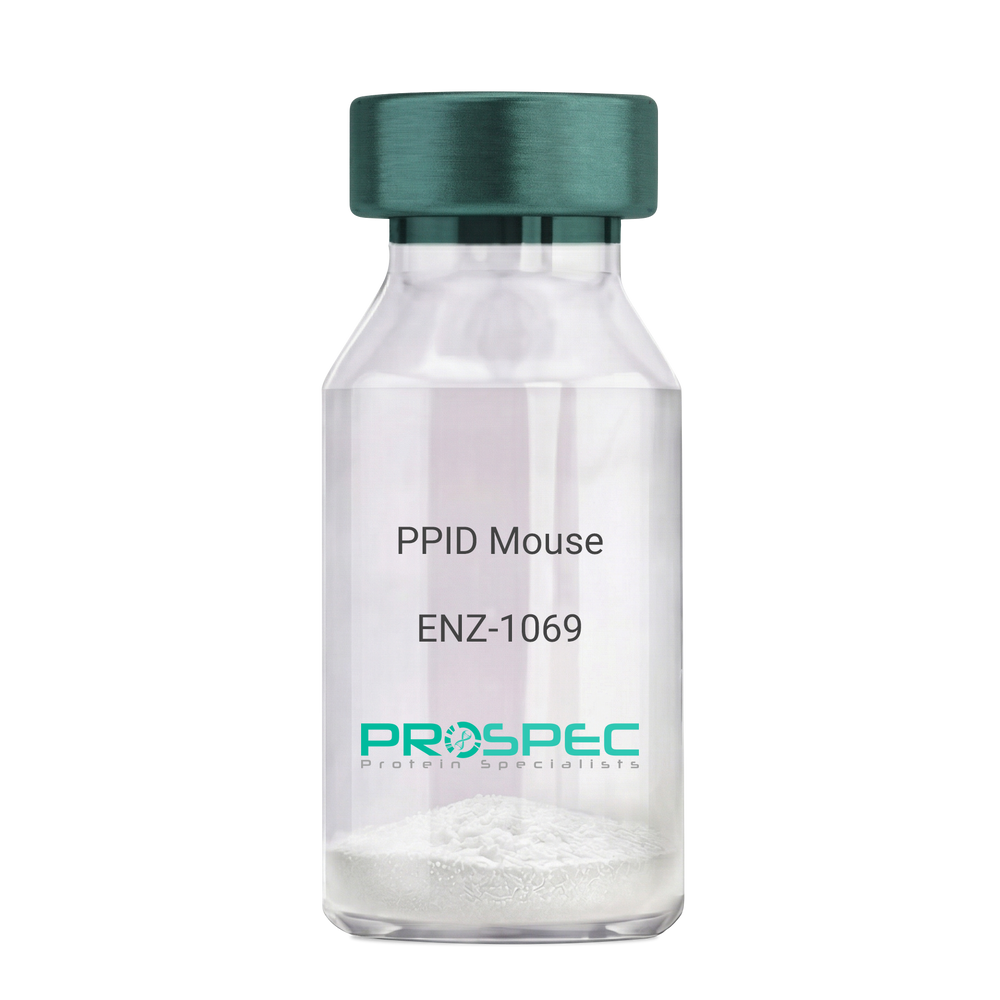
    PPID Mouse

    Description:

    Peptidylprolyl Isomerase D Mouse Recombinant

    Peptidyl-prolyl cis-trans isomerase D, PPIase D, 40 kDa peptidyl-prolyl cis-trans isomerase, Cyclophilin-40, CYP-40, Cyclophilin-related protein, CYP40, CYPD, PPID, Peptidylprolyl Isomerase D.

    Product # :

    ENZ-1069

    Price :

    Quantity :

    Shipping Method :

    Ice Icon

    Shipped with Ice Packs

    Add To Cart

    More Info

    • description
    • source
    • formulation
    • purity
    • biological activity
    • More Info

    Description

    PPID Mouse Recombinant produced in E.Coli is a single, non-glycosylated polypeptide chain containing 395 amino acids (1-370a.a.) and having a molecular mass of 43.4kDa. PPID is fused to a 25 amino acid His-tag at N-terminus & purified by proprietary chromatographic techniques.

    Source

    Escherichia Coli.

    Formulation

    PPID protein solution (1mg/ml) containing 20mM Tris-Hcl buffer (pH8.0), 10% glycerol and 1mM DTT.

    Purity

    Greater than 90.0% as determined by SDS-PAGE.

    Biological Activity

    Specific activity is > 700nmol/min/mg, and is defined as the amount of enzyme that cleaves 1umole of suc-AAFP-PNA per minute at 37°C in Tris–HCl pH 8.0 using chymotrypsin.

    More Info

    • Introduction

      Cyclophilin-D is a member of the peptidyl-prolyl cis-trans isomerase (PPIase) family. PPIases catalyze the cis-trans isomerization of proline imidic peptide bonds in oligopeptides and speeds up the protein folding. Cyclophilin-D possess PPIase activity and binds to the immunosuppressant cyclosporin-A. Cyclophilin-D is very well known that its overexpression suppresses the apoptosis in cancer cell. Cyclophilin-D suppresses apoptotic cell death by the use of mitochondrial hexokinase-2 dependent mechanism in cancer cells.

    • Synonyms

      Peptidyl-prolyl cis-trans isomerase D, PPIase D, 40 kDa peptidyl-prolyl cis-trans isomerase, Cyclophilin-40, CYP-40, Cyclophilin-related protein, CYP40, CYPD, PPID, Peptidylprolyl Isomerase D.

    • Physical Appearance

      Sterile Filtered colorless solution.

    • Stability

      Store at 4°C if entire vial will be used within 2-4 weeks. Store, frozen at -20°C for longer periods of time. For long term storage it is recommended to add a carrier protein (0.1% HSA or BSA). Please prevent freeze-thaw cycles.

    • Amino Acid Sequence

      MGSSHHHHHH SSGLVPRGSH MGSEFMSHAS PAAKPSNSKN PRVFFDVDIG GERVGRIVLE LFADIVPKTA ENFRALCTGE KGTGSTTGKP LHFKGCPFHR IIKKFMIQGG DFSNQNGTGG ESIYGEKFED ENFHYKHDRE GLLSMANAGP NTNGSQFFIT TVPTPHLDGK HVVFGQVIKG LGVARTLENV EVNGEKPAKL CVIAECGELK EGDDWGIFPK DGSGDSHPDF PEDADIDLKD VDKILLISED LKNIGNTFFK SQNWEMAIKK YAKVLRYVDS SKAVIEKADR SRLQPIALSC VLNIGACKLK MSNWQGAIDS CLEALEMDPS NTKALYRKAQ GWQGLKEYDQ ALADLKKAQE IAPGDKAIQA ELLKVKQMIK AQKDKEKAVY AKMFA.

    ProSpec's products are furnished for LABORATORY RESEARCH USE ONLY. The product may not be used as drugs, agricultural or pesticidal products, food additives or household chemicals.

    Ppid Mouse
  • View Data Sheet

    Name :

    TOMM20 Antibody

    Description:

    Mouse Anti Human Translocase Of Outer Mitochondrial Membrane 20

    Mmitochondrial import receptor subunit TOM20 homolog, TOMM20, MAS20, MOM19, KIAA0016, Outer mitochondrial membrane receptor Tom20, Mitochondrial 20 kDa outer membrane protein.

    Product # :

    ANT-712

    Price :

    Quantity :

    Shipping Method :

    Ice Icon

    Shipped with Ice Packs

    Add To Cart

    More Info

    • formulation
    • More Info

    Formulation

    1mg/ml containing PBS, pH-7.4, 10% Glycerol and 0.02% Sodium Azide.

    More Info

    • Introduction

      Mmitochondrial import receptor subunit TOMM20 homolog (TOMM20) is a member of the Tom20 family. The Tom machinery consists of import receptors for the initial binding of cytosolically synthesized preproteins and a general import pore (GIP) for the membrane translocation of various preproteins into the mitochondria. TOMM20 acts as the transit peptide receptor at the surface of the mitochondrion outer membrane and facilitates the movement of preproteins into the TOM40 translocation pore.

    • Synonyms

      Mmitochondrial import receptor subunit TOM20 homolog, TOMM20, MAS20, MOM19, KIAA0016, Outer mitochondrial membrane receptor Tom20, Mitochondrial 20 kDa outer membrane protein.

    • Physical Appearance

      Sterile filtered colorless solution.

    • Immunogen

      Anti-human TOMM20 mAb, is derived from hybridization of mouse F0 myeloma cells with spleen cells from BALB/c mice immunized with a recombinant human TOMM20 protein 25-145 amino acids purified from E. coli.

    • Ig Subclass

      Mouse IgG1 heavy chain and k light chain.

    • Clone

      PAT1B2AT.

    • Applications

      TOMM20 antibody has been tested by ELISA and Western blot analysis to assure specificity and reactivity. Since application varies, however, each investigation should be titrated by the reagent to obtain optimal results.

    • Type

      Mouse Anti Human Monoclonal.

    • Storage Procedures

      For periods up to 1 month store at 4°C, for longer periods of time, store at -20°C. Prevent freeze thaw cycles.

    • Purification Method

      TOMM20 antibody was purified from mouse ascitic fluids by protein-A affinity chromatography.

    ProSpec's products are furnished for LABORATORY RESEARCH USE ONLY. The product may not be used as drugs, agricultural or pesticidal products, food additives or household chemicals.

    Tomm20 Antibody
  • View Data Sheet

    Name :

    ABO Human

    Description:

    ABO Blood Group Human Recombinant

    Histo-blood group ABO system transferase, Fucosylglycoprotein 3-alpha-galactosyltransferase, Fucosylglycoprotein alpha-N-acetylgalactosaminyltransferase, Glycoprotein-fucosylgalactoside alpha-N-acetylgalactosaminyltransferase, Glycoprotein-fucosylgalactoside alpha-galactosyltransferase, Histo-blood group A transferase, A transferase, Histo-blood group B transferase, B transferase, NAGAT, ABO, GTB, A3GALNT, A3GALT1.

    Product # :

    ENZ-167

    Price :

    Quantity :

    Shipping Method :

    Ice Icon

    Shipped with Ice Packs

    Add To Cart

    More Info

    • description
    • source
    • formulation
    • purity
    • More Info

    Description

    ABO Human Recombinant produced in E.Coli is a single, non-glycosylated polypeptide chain containing 322 amino acids (54-354 a.a) and having a molecular mass of 37.4kDa.ABO is fused to a 21 amino acid His-tag at N-terminus & purified by proprietary chromatographic techniques.

    Source

    Escherichia Coli.

    Formulation

    ABO protein solution (0.5mg/ml) containing 20mM Tris-HCl buffer (pH 8.0), 2mM DTT, 20% glycerol and 200mM NaCl.

    Purity

    Greater than 85.0% as determined by SDS-PAGE.

    More Info

    • Introduction

      NAGAT (ABO) is a member of the glycosyltransferase 6 family. The ABO protein is the basis of the ABO blood group system and related to the first discovered blood group system, ABO. The allele that is present in an individual determines the blood group. The histo-blood group ABO is comprised of 3 carbohydrate antigens: A, B, and H. A, B, and AB individuals express a glycosyltransferase activity which converts the H antigen to the A antigen (by addition of UDP-GalNAc) or to the B antigen (by addition of UDP-Gal), whereas O individuals are deficient of such activity.

    • Synonyms

      Histo-blood group ABO system transferase, Fucosylglycoprotein 3-alpha-galactosyltransferase, Fucosylglycoprotein alpha-N-acetylgalactosaminyltransferase, Glycoprotein-fucosylgalactoside alpha-N-acetylgalactosaminyltransferase, Glycoprotein-fucosylgalactoside alpha-galactosyltransferase, Histo-blood group A transferase, A transferase, Histo-blood group B transferase, B transferase, NAGAT, ABO, GTB, A3GALNT, A3GALT1.

    • Physical Appearance

      Sterile Filtered colorless solution.

    • Stability

      Store at 4°C if entire vial will be used within 2-4 weeks. Store, frozen at -20°C for longer periods of time. For long term storage it is recommended to add a carrier protein (0.1% HSA or BSA).Avoid multiple freeze-thaw cycles.

    • Amino Acid Sequence

      MGSSHHHHHH SSGLVPRGSH MAVREPDHLQ RVSLPRMVYP QPKVLTPCRK DVLVVTPWLA PIVWEGTFNI DILNEQFRLQ NTTIGLTVFA IKKYVAFLKL FLETAEKHFM VGHRVHYYVF TDQPAAVPRV TLGTGRQLSV LEVRAYKRWQ DVSMRRMEMI SDFCERRFLS EVDYLVCVDV DMEFRDHVGV EILTPLFGTL HPGFYGSSRE AFTYERRPQS QAYIPKDEGD FYYLGGFFGG SVQEVQRLTR ACHQAMMVDQ ANGIEAVWHD ESHLNKYLLR HKPTKVLSPE YLWDQQLLGW PAVLRKLRFT AVPKNHQAVR NP.

    ProSpec's products are furnished for LABORATORY RESEARCH USE ONLY. The product may not be used as drugs, agricultural or pesticidal products, food additives or household chemicals.

    Abo Human
  • View Data Sheet

    Name :

    DCXR Human, Bioactive

    Description:

    Dicarbonyl/L-Xylulose Reductase Human Recombinant, Bioactive

    DCR, HCR2, HCRII, KIDCR, P34H, SDR20C1, Dicarbonyl/L-Xylulose Reductase, EC=1.1.1.10, Carbonyl reductase II, Kidney dicarbonyl reductase, Sperm surface protein P34H.

    Product # :

    ENZ-1029

    Price :

    Quantity :

    Shipping Method :

    Ice Icon

    Shipped with Ice Packs

    Add To Cart

    More Info

    • description
    • source
    • formulation
    • purity
    • biological activity
    • More Info

    Description

    DCXR Recombinant Human produced in E.Coli is a single, non-glycosylated polypeptide chain containing 264 amino acids (1-244 a.a.) and having a molecular mass of 28 kDa. The DCXR is fused to a 20 amino acids His-Tag at N-terminus and purified by proprietary chromatographic techniques.

    Source

    Escherichia Coli.

    Formulation

    The DCXR (0.5mg/ml) solution containing 20mM Tris-HCl buffer (pH 8.0), 1mM DTT, 20% glycerol and 50mM NaCl.

    Purity

    Greater than 95.0% as determined by SDS-PAGE.

    Biological Activity

    Specific activity is > 1,800 pmol/min/ug and is defined as the amount of enzyme that oxidize 1pmole of xylitol to L-xylulose per minute at pH 10.0 at 37C.

    More Info

    • Introduction

      DCXR catalyzes the NADPH-dependent reduction of numerous pentoses, tetroses, trioses, alpha-dicarbonyl molecules and L-xylulose. DCXR takes part in the uronate cycle of glucose metabolism. DCXR participates in the water absorption and cellular osmoregulation in the proximal renal tubules by producing xylitol, an osmolyte, thus preventing osmolytic stress from occurring in the renal tubules.

    • Synonyms

      DCR, HCR2, HCRII, KIDCR, P34H, SDR20C1, Dicarbonyl/L-Xylulose Reductase, EC=1.1.1.10, Carbonyl reductase II, Kidney dicarbonyl reductase, Sperm surface protein P34H.

    • Physical Appearance

      Sterile filtered colorless solution.

    • Stability

      Store at 4°C if entire vial will be used within 2-4 weeks. Store, frozen at -20°C for longer periods of time. For long term storage it is recommended to add a carrier protein (0.1% HSA or BSA).Avoid multiple freeze-thaw cycles.

    • Amino Acid Sequence

      MGSSHHHHHH SSGLVPRGSH MELFLAGRRV LVTGAGKGIG RGTVQALHAT GARVVAVSRT QADLDSLVRE CPGIEPVCVD LGDWEATERA LGSVGPVDLL VNNAAVALLQ PFLEVTKEAF DRSFEVNLRA VIQVSQIVAR GLIARGVPGA IVNVSSQCSQ RAVTNHSVYC STKGALDMLT KVMALELGPH KIRVNAVNPT VVMTSMGQAT WSDPHKAKTM LNRIPLGKFA EVEHVVNAIL FLLSDRSGMT TGSTLPVEGG FWAC.

    ProSpec's products are furnished for LABORATORY RESEARCH USE ONLY. The product may not be used as drugs, agricultural or pesticidal products, food additives or household chemicals.

    Dcxr Human Bioactive
  • View Data Sheet

    Name :

    BAT1 Human

    Description:

    HLA-B Associated Transcript 1 Human Recombinant

    HLA-B associated transcript 1, UAP56, D6S81E, DDX39B, ATP-dependent RNA helicase p47, DEAD-box protein UAP56

    Product # :

    ENZ-563

    Price :

    Quantity :

    Shipping Method :

    Ice Icon

    Shipped with Ice Packs

    Add To Cart

    More Info

    • description
    • source
    • formulation
    • purity
    • More Info

    Description

    BAT1 Human Recombinant protein produced in E.Coli is a single, non-glycosylated, polypeptide chain containing 448 amino acids (1-428) and having a molecular mass of 51.1kDa. BAT1 is fused to 20 amino acid His Tag at N-terminus and is purified by proprietary chromatographic techniques.

    Source

    Escherichia Coli.

    Formulation

    BAT1 protein (0.5mg/ml) solution contains 20mM Tris-HCl buffer (pH8.0) 0.1M NaCl,1mM DTT and 20% glycerol.

    Purity

    Greater than 90.0% as determined by SDS-PAGE.

    More Info

    • Introduction

      BAT1 belongs to the DEAD box family of RNA-dependent ATPases that mediate ATP hydrolysis during pre-mRNA splicing. UAP56 protein is a vital splicing factor which is needed for connecting U2 small nuclear ribonucleoprotein with pre-mRNA, as well as takes a key part in mRNA export from the nucleus to the cytoplasm. Mutations in this protein may be connected to rheumatoid arthritis.

    • Synonyms

      HLA-B associated transcript 1, UAP56, D6S81E, DDX39B, ATP-dependent RNA helicase p47, DEAD-box protein UAP56

    • Physical Appearance

      Sterile filtered colorless solution.

    • Stability

      Store at 4°C if entire vial will be used within 2-4 weeks. Store, frozen at -20°C for longer periods of time. For long term storage it is recommended to add a carrier protein (0.1% HSA or BSA).Avoid multiple freeze-thaw cycles.

    • Amino Acid Sequence

      MGSSHHHHHH SSGLVPRGSH MAENDVDNEL LDYEDDEVET AAGGDGAEAP AKKDVKGSYV SIHSSGFRDF LLKPELLRAI VDCGFEHPSE VQHECIPQAI LGMDVLCQAK SGMGKTAVFV LATLQQLEPV TGQVSVLVMC HTRELAFQIS KEYERFSKYM PNVKVAVFFG GLSIKKDEEV LKKNCPHIVV GTPGRILALA RNKSLNLKHI KHFILDECDK MLEQLDMRRD VQEIFRMTPH EKQVMMFSAT LSKEIRPVCR KFMQDPMEIF VDDETKLTLH GLQQYYVKLK DNEKNRKLFD LLDVLEFNQV VIFVKSVQRC IALAQLLVEQ NFPAIAIHRG MPQEERLSRY QQFKDFQRRI LVATNLFGRG MDIERVNIAF NYDMPEDSDT YLHRVARAGR FGTKGLAITF VSDENDAKIL NDVQDRFEVN ISELPDEIDI SSYIEQTR

    ProSpec's products are furnished for LABORATORY RESEARCH USE ONLY. The product may not be used as drugs, agricultural or pesticidal products, food additives or household chemicals.

    Bat1 Human
  • View Data Sheet

    Name :

    PELI2 Human

    Description:

    Pellino E3 Ubiquitin Protein Ligase Family Member 2 Human Recombinant

    Pellino E3 Ubiquitin Protein Ligase Family Member 2, Pellino-2, E3 Ubiquitin-Protein Ligase Pellino Homolog 2, Pellino (Drosophila) Homolog 2, Pellino Homolog 2 (Drosophila), Protein Pellino Homolog 2, Pellino Homolog 2, EC 6.3.2, PELI2.

    Product # :

    PRO-2066

    Price :

    Quantity :

    Shipping Method :

    Ice Icon

    Shipped with Ice Packs

    Add To Cart

    More Info

    • description
    • source
    • formulation
    • purity
    • More Info

    Description

    PELI2 Human Recombinant produced in E.Coli is a single, non-glycosylated polypeptide chain containing 443 amino acids (1-420 a.a) and having a molecular mass of 48.8kDa. PELI2 is fused to a 23 amino acid His-tag at N-terminus & purified by proprietary chromatographic techniques.

    Source

    Escherichia Coli.

    Formulation

    PELI2 protein solution (0.5mg/ml) containing 20mM Tris-HCl buffer (pH 8.0), 0.15M NaCl, 20% glycerol and 1mM DTT.

    Purity

    Greater than 80.0% as determined by SDS-PAGE.

    More Info

    • Introduction

      Pellino E3 Ubiquitin Protein Ligase Family Member 2, also known as PELI2 is an E3 ubiquitin ligase which catalyzes the covalent attachment of ubiquitin moieties onto substrate proteins. PELI2 is implicated in the TLR and IL-1 signaling pathways through interaction with the complex which contain IRAK kinases and TRAF6. PELI2 also mediates IL1B-induced IRAK1 'Lys-63'-linked polyubiquitination and possibly 'Lys-48'-linked ubiquitination. PELI2 is significant for LPS- and IL1B-induced MAP3K7-dependent, however not for MAP3K3-dependent, NF-kappa-B activation. Moreover, PELI2 can activate the MAP (mitogen activated protein) kinase pathway directing to activation of ELK1.

    • Synonyms

      Pellino E3 Ubiquitin Protein Ligase Family Member 2, Pellino-2, E3 Ubiquitin-Protein Ligase Pellino Homolog 2, Pellino (Drosophila) Homolog 2, Pellino Homolog 2 (Drosophila), Protein Pellino Homolog 2, Pellino Homolog 2, EC 6.3.2, PELI2.

    • Physical Appearance

      Sterile Filtered colorless solution.

    • Stability

      Store at 4°C if entire vial will be used within 2-4 weeks. Store, frozen at -20°C for longer periods of time. For long term storage it is recommended to add a carrier protein (0.1% HSA or BSA).Avoid multiple freeze-thaw cycles.

    • Amino Acid Sequence

      MGSSHHHHHH SSGLVPRGSH MGSMFSPGQE EHCAPNKEPV KYGELVVLGY NGALPNGDRG RRKSRFALYK RPKANGVKPS TVHVISTPQA SKAISCKGQH SISYTLSRNQ TVVVEYTHDK DTDMFQVGRS TESPIDFVVT DTISGSQNTD EAQITQSTIS RFACRIVCDR NEPYTARIFA AGFDSSKNIF LGEKAAKWKN PDGHMDGLTT NGVLVMHPRG GFTEESQPGV WREISVCGDV YTLRETRSAQ QRGKLVESET NVLQDGSLID LCGATLLWRT ADGLFHTPTQ KHIEALRQEI NAARPQCPVG LNTLAFPSIN RKEVVEEKQP WAYLSCGHVH GYHNWGHRSD TEANERECPM CRTVGPYVPL WLGCEAGFYV DAGPPTHAFT PCGHVCSEKS AKYWSQIPLP HGTHAFHAAC PFCATQLVGE QNCIKLIFQG PID.

    ProSpec's products are furnished for LABORATORY RESEARCH USE ONLY. The product may not be used as drugs, agricultural or pesticidal products, food additives or household chemicals.

    Peli2 Human
  • 1
  • …
  • 9
  • 10
  • 11
  • 12
  • 13
  • …
  • 42
Your browser does not support the video tag.

Products

  • Cytokines
  • Growth Factors
  • Chemokines
  • CD Antigens
  • Neurotrophins
  • Hormones
  • Enzymes
  • Viral Antigens
  • Recombinant Proteins
  • Natural Proteins
  • Monoclonal Antibodies
  • Polyclonal Antibodies
  • Thermal Packaging

About

  • Company
  • Founder
  • Contribution
  • Contact Us
  • My Account

Ordering

  • Ordering Method
  • Ordering - Credit Card
  • Ordering PO
  • Shipping Fees
  • FAQ's

Legal

  • Terms & Conditions
  • Privacy
  • Site Map
  • info@prospecbio.com
  • Facebook
  • Instagram
  • Linkedin Profile

© 2026 ProSpec-Tany TechnoGene Ltd. All Rights Reserved.

  • Choosing a selection results in a full page refresh.
  • Opens in a new window.