Skip to content

High-quality research proteins.

  • 1-800-805-6531

  • Mon - Sat 8.00-18.00, Sun - Closed

  • info@prospecbio.com

  • PO Box 6591 East Brunswick NJ 08816

  • Products
    • Cytokines
    • Growth factors
    • Chemokines
    • Cd antigens
    • Neurotrophins
    • Hormones
    • Enzymes
    • Viral antigens
    • Recombinant proteins
    • Natural proteins
    • Monoclonal antibodies
    • Polyclonal antibodies
    • Thermal Packaging
  • About
    • Company
    • Founder
    • Contribution
  • Customers
    • Eastern Asia
    • Eastern Europe
    • North America
    • South America
    • South East Asia
    • Southern Asia
    • Western Europe
  • Ordering
    • Ordering Method
    • Ordering - Credit Card
    • Ordering - PO
    • Shipping Fees
    • FAQs
  • Services
    • DNA Cloning
    • Protein Expression
    • Monoclonal Antibody
    • Fermentation
    • Technology License
  • Contact us
Log in

Country/region

  • USD $ | Albania
  • USD $ | Andorra
  • USD $ | Argentina
  • USD $ | Armenia
  • USD $ | Australia
  • USD $ | Austria
  • USD $ | Azerbaijan
  • USD $ | Belarus
  • USD $ | Belgium
  • USD $ | Bolivia
  • USD $ | Brazil
  • USD $ | Bulgaria
  • USD $ | Cambodia
  • USD $ | Canada
  • USD $ | Chile
  • USD $ | China
  • USD $ | Colombia
  • USD $ | Costa Rica
  • USD $ | Croatia
  • USD $ | Cyprus
  • USD $ | Czechia
  • USD $ | Denmark
  • USD $ | Estonia
  • USD $ | Finland
  • USD $ | France
  • USD $ | Georgia
  • USD $ | Germany
  • USD $ | Greece
  • USD $ | Hong Kong SAR
  • USD $ | Hungary
  • USD $ | Iceland
  • USD $ | India
  • USD $ | Ireland
  • USD $ | Israel
  • USD $ | Italy
  • USD $ | Japan
  • USD $ | Kazakhstan
  • USD $ | Latvia
  • USD $ | Liechtenstein
  • USD $ | Lithuania
  • USD $ | Madagascar
  • USD $ | Malta
  • USD $ | Mexico
  • USD $ | Moldova
  • USD $ | Monaco
  • USD $ | Netherlands
  • USD $ | New Zealand
  • USD $ | North Macedonia
  • USD $ | Norway
  • USD $ | Panama
  • USD $ | Paraguay
  • USD $ | Peru
  • USD $ | Philippines
  • USD $ | Poland
  • USD $ | Portugal
  • USD $ | Romania
  • USD $ | Singapore
  • USD $ | Slovakia
  • USD $ | Slovenia
  • USD $ | South Africa
  • USD $ | South Korea
  • USD $ | Spain
  • USD $ | Sri Lanka
  • USD $ | Sweden
  • USD $ | Switzerland
  • USD $ | Taiwan
  • USD $ | Thailand
  • USD $ | Türkiye
  • USD $ | Ukraine
  • USD $ | United Kingdom
  • USD $ | United States
  • USD $ | Uruguay
  • USD $ | Vatican City
  • USD $ | Venezuela
  • USD $ | Vietnam
  • Facebook
  • Instagram
logoProSpec - Recombinant Protein Manufacturer for academic and R&D industry
Become a distributor
Account Log in
Wishlist
Cart Cart(0)
  • Products
    +
    • Cytokines
    • Growth factors
    • Chemokines
    • Cd antigens
    • Neurotrophins
    • Hormones
    • Enzymes
    • Viral antigens
    • Recombinant proteins
    • Natural proteins
    • Monoclonal antibodies
    • Polyclonal antibodies
    • Thermal Packaging
  • About
    +
    • Company
    • Founder
    • Contribution
  • Customers
    +
    • Eastern Asia
    • Eastern Europe
    • North America
    • South America
    • South East Asia
    • Southern Asia
    • Western Europe
  • Ordering
    +
    • Ordering Method
    • Ordering - Credit Card
    • Ordering - PO
    • Shipping Fees
    • FAQs
  • Services
    +
    • DNA Cloning
    • Protein Expression
    • Monoclonal Antibody
    • Fermentation
    • Technology License
  • Contact us

Item added to your cart

View cart
View All
  • Cytokines
  • Growth factors
  • Chemokines
  • Cd antigens
  • Neurotrophins
  • Hormones
  • Enzymes
  • Viral antigens
  • Recombinant proteins
  • Natural proteins
  • Monoclonal antibodies
  • Polyclonal antibodies
  • Thermal Packaging
  • Tumor Necrosis Factor

    Tumor Necrosis Factor

    View All
  • 4-1BB

    4-1BB

    View All
  • Adiponectin

    Adiponectin

    View All
  • AIF1

    AIF1

    View All
  • Other Cytokines

    Other Cytokines

    View All
  • AITRL

    AITRL

    View All
  • Angiopoietin

    Angiopoietin

    View All
  • Apolipoprotein

    Apolipoprotein

    View All
  • B-Cell Activating Factor

    B-Cell Activating Factor

    View All
  • Beta Defensin

    Beta Defensin

    View All
  • Bone Morphogenetic Protein

    Bone Morphogenetic Protein

    View All
  • B type Natriuretic Peptide

    B type Natriuretic Peptide

    View All
  • BST

    BST

    View All
  • Betacellulin

    Betacellulin

    View All
  • Cardiotrophin

    Cardiotrophin

    View All
  • Activin

    Activin

    View All
  • Fibroblast Growth Factor

    Fibroblast Growth Factor

    View All
  • Other Growth Factors

    Other Growth Factors

    View All
  • CSF

    CSF

    View All
  • CTGF

    CTGF

    View All
  • IGFBP

    IGFBP

    View All
  • VEGF Protein

    VEGF Protein

    View All
  • EGF

    EGF

    View All
  • Epigen

    Epigen

    View All
  • Erythropoietin

    Erythropoietin

    View All
  • Insulin-Like Growth Factor

    Insulin-Like Growth Factor

    View All
  • Growth Hormone

    Growth Hormone

    View All
  • HDGF

    HDGF

    View All
  • Hepatocyte Growth Factor

    Hepatocyte Growth Factor

    View All
  • Insulin

    Insulin

    View All
  • BCA-1/ BLC (CXCL13)

    BCA-1/ BLC (CXCL13)

    View All
  • BRAK (CXCL14)

    BRAK (CXCL14)

    View All
  • C-10 (CCL6)

    C-10 (CCL6)

    View All
  • Other Chemokines

    Other Chemokines

    View All
  • MEC (CCL28)

    MEC (CCL28)

    View All
  • LD78-beta (CCL3L1)

    LD78-beta (CCL3L1)

    View All
  • CTACK (CCL27)

    CTACK (CCL27)

    View All
  • CXCL16

    CXCL16

    View All
  • CXCL17

    CXCL17

    View All
  • Platelet Factor-4 (CXCL4)

    Platelet Factor-4 (CXCL4)

    View All
  • ENA-78 (CXCL5)

    ENA-78 (CXCL5)

    View All
  • Eotaxin (CCL11,24,26)

    Eotaxin (CCL11,24,26)

    View All
  • Exodus-2 (CCL21)

    Exodus-2 (CCL21)

    View All
  • Fractalkine (CX3CL1)

    Fractalkine (CX3CL1)

    View All
  • CXCL6

    CXCL6

    View All
  • Other CD Antigens

    Other CD Antigens

    View All
  • CD14

    CD14

    View All
  • CD164

    CD164

    View All
  • CD1

    CD1

    View All
  • CD2

    CD2

    View All
  • CD200

    CD200

    View All
  • CD207

    CD207

    View All
  • CD226

    CD226

    View All
  • CD23

    CD23

    View All
  • CD244

    CD244

    View All
  • CD247

    CD247

    View All
  • CD27

    CD27

    View All
  • CD274

    CD274

    View All
  • CD300

    CD300

    View All
  • CD33

    CD33

    View All
  • Other Neurotrophins

    Other Neurotrophins

    View All
  • Beta-NGF

    Beta-NGF

    View All
  • BDNF

    BDNF

    View All
  • CDNF

    CDNF

    View All
  • CNTF

    CNTF

    View All
  • GDNF

    GDNF

    View All
  • Glia Maturation Factor

    Glia Maturation Factor

    View All
  • MANF

    MANF

    View All
  • Midkine

    Midkine

    View All
  • Neuroglobin

    Neuroglobin

    View All
  • Neurotrophic factors

    Neurotrophic factors

    View All
  • Neuregulin

    Neuregulin

    View All
  • Neuropilin

    Neuropilin

    View All
  • Pigment Epithelium-Derived Factor

    Pigment Epithelium-Derived Factor

    View All
  • Pleiotrophin

    Pleiotrophin

    View All
  • Peptide Hormones

    Peptide Hormones

    View All
  • Other Hormones

    Other Hormones

    View All
  • HCG

    HCG

    View All
  • Endothelin

    Endothelin

    View All
  • Exendin

    Exendin

    View All
  • FSH

    FSH

    View All
  • Glucagon

    Glucagon

    View All
  • GHRP

    GHRP

    View All
  • GLP

    GLP

    View All
  • Thyrostimulin

    Thyrostimulin

    View All
  • Inhibin A

    Inhibin A

    View All
  • LHRH

    LHRH

    View All
  • Melanotan

    Melanotan

    View All
  • Procalcitonin

    Procalcitonin

    View All
  • PTH

    PTH

    View All
  • Peroxiredoxin

    Peroxiredoxin

    View All
  • Peptidase

    Peptidase

    View All
  • Synthetase

    Synthetase

    View All
  • Transferase

    Transferase

    View All
  • Hydrolase

    Hydrolase

    View All
  • Dehydrogenase

    Dehydrogenase

    View All
  • ACE2

    ACE2

    View All
  • Esterase

    Esterase

    View All
  • Protein Kinases

    Protein Kinases

    View All
  • Other Enzymes

    Other Enzymes

    View All
  • Phosphatase

    Phosphatase

    View All
  • Deaminase

    Deaminase

    View All
  • Oxygenase

    Oxygenase

    View All
  • Adenylate Kinase

    Adenylate Kinase

    View All
  • Lyase

    Lyase

    View All
  • Chagas

    Chagas

    View All
  • SARS

    SARS

    View All
  • Influenza

    Influenza

    View All
  • ASFV

    ASFV

    View All
  • Astrovirus

    Astrovirus

    View All
  • Borrelia

    Borrelia

    View All
  • Helicobacter Pylori

    Helicobacter Pylori

    View All
  • Chikungunya

    Chikungunya

    View All
  • Chlamydia

    Chlamydia

    View All
  • Cytomegalo

    Cytomegalo

    View All
  • Dengue

    Dengue

    View All
  • EBV

    EBV

    View All
  • Ebola

    Ebola

    View All
  • Feline Leukemia Virus

    Feline Leukemia Virus

    View All
  • Hepatitis A

    Hepatitis A

    View All
  • Other

    Other

    View All
  • Actin

    Actin

    View All
  • ADAM

    ADAM

    View All
  • Complement Component

    Complement Component

    View All
  • Ag85

    Ag85

    View All
  • Eukaryotic Translation Initiation Factor

    Eukaryotic Translation Initiation Factor

    View All
  • Anterior Gradient Protein

    Anterior Gradient Protein

    View All
  • Heat Shock Protein

    Heat Shock Protein

    View All
  • Alpha-2-HS-Glycoprotein

    Alpha-2-HS-Glycoprotein

    View All
  • Hemoglobin

    Hemoglobin

    View All
  • Allergy

    Allergy

    View All
  • Anaplasma

    Anaplasma

    View All
  • Angiogenin

    Angiogenin

    View All
  • Ankyrin Repeat Domain

    Ankyrin Repeat Domain

    View All
  • Annexin

    Annexin

    View All
  • Other Natural Proteins

    Other Natural Proteins

    View All
  • Aprotinin

    Aprotinin

    View All
  • Transferrin

    Transferrin

    View All
  • Avidin

    Avidin

    View All
  • Anti Coagulation Factors

    Anti Coagulation Factors

    View All
  • Natural Albumin

    Natural Albumin

    View All
  • Natural Coagulation Factors

    Natural Coagulation Factors

    View All
  • Fibronectin

    Fibronectin

    View All
  • Thrombin

    Thrombin

    View All
  • Anti Human Enzyme

    Anti Human Enzyme

    View All
  • Other Monoclonal Antibodies

    Other Monoclonal Antibodies

    View All
  • Anti Human Cytokine

    Anti Human Cytokine

    View All
  • Anti Human Heat Shock Protein

    Anti Human Heat Shock Protein

    View All
  • Anti Mouse Lymphocyte

    Anti Mouse Lymphocyte

    View All
  • Anti Human Chemokine

    Anti Human Chemokine

    View All
  • Anti Human Lymphocyte

    Anti Human Lymphocyte

    View All
  • Anti Viral Monoclonal

    Anti Viral Monoclonal

    View All
  • Anti Mouse Cytokine

    Anti Mouse Cytokine

    View All
  • Anti-GST Monoclonal

    Anti-GST Monoclonal

    View All
  • Other Polyclonal Antibodies

    Other Polyclonal Antibodies

    View All
  • Anti Viral

    Anti Viral

    View All
  • Anti-GST Monoclonal

    Anti-GST Monoclonal

    View All
Back

Search results

1000 results found for “HCG”

Name

Description

Product #

Price

Quantity

Shipping Method

  • View Data Sheet

    Name :

    LGALS2 Human

    Description:

    Galectin-2 Human Recombinant

    HL14, Gal-2, Beta-galactoside-binding lectin L-14-II, Lactose-binding lectin 2, S-Lac lectin 2.

    Product # :

    CYT-725

    Price :

    Quantity :

    Shipping Method :

    Ice Icon

    Shipped with Ice Packs

    Add To Cart

    More Info

    • description
    • source
    • formulation
    • purity
    • More Info
    • SDS-PAGE
    • Citations

    Description

    LGALS2 Human Recombinant produced in E.Coli is a single, non-glycosylated, polypeptide chain containing 152 amino acids (1-132 a.a.) and having a molecular mass of 16.8 kDa. The LGALS2 is fused to a 20 amino acid His-Tag at N-terminus and purified by proprietary chromatographic techniques.

    Source

    Escherichia Coli.

    Formulation

    The Galectin-2 His tag 0.5mg/ml protein solution contains 20mM Tris-HCl pH-8, 0.2M NaCl, 10% glycerol & 1mM DTT.

    Purity

    Greater than 95.0% as determined by SDS-PAGE.

    SDS-PAGE

    LGALS2 Human-SDS-PAGE - Product image 1

    Citations

    More Info

    • Introduction

      LGALS2 is a soluble beta-galactoside binding lectin that controls cell-to-cell adhesion and cell-to-extracellular matrix interactions and takes part in tumor progression, pre-mRNA splicing and apoptosis. LGALS2 induces apoptosis in activated T cells and binds to the cytokine lymphotoxin-alpha (LTA) with threat of myocardial infarction.

    • Synonyms

      HL14, Gal-2, Beta-galactoside-binding lectin L-14-II, Lactose-binding lectin 2, S-Lac lectin 2.

    • Physical Appearance

      Sterile Filtered colorless solution.

    • Stability

      Store at 4°C if entire vial will be used within 2-4 weeks. Store, frozen at -20°C for longer periods of time. For long term storage it is recommended to add a carrier protein (0.1% HSA or BSA).Avoid multiple freeze-thaw cycles.

    • Amino Acid Sequence

      MGSSHHHHHH SSGLVPRGSH MTGELEVKNM DMKPGSTLKI TGSIADGTDG FVINLGQGTD KLNLHFNPRF SESTIVCNSL DGSNWGQEQR
      EDHLCFSPGS EVKFTVTFES DKFKVKLPDG HELTFPNRLG HSHLSYLSVR GGFNMSSFKL KE.

    • Background

      What is the molecular weight/Mw of LGALS2 HUMAN Protein?
      LGALS2 HUMAN Protein has a total Mw of 17kDa.

      What is the source or expression system of LGALS2 HUMAN Protein?
      Escherichia Coli.

      What is the Purity of LGALS2 HUMAN Protein?
      LGALS2 HUMAN Protein is >95% pure as determined by SDS-PAGE.

      What is the Biological Activity of LGALS2 HUMAN Protein?
      The biological functionality of LGALS2 HUMAN Protein will be determined in the future.

      What is the amino acid sequence of LGALS2 HUMAN Protein?
      MGSSHHHHHH SSGLVPRGSH MGSHMACGLV ASNLNLKPGE CLKVRGEVAS DAKSFVLNLG KDSNNLCLHF NPRFNAHGDA NTIVCNTKED GTWGTEHREP AFPFQPGSIT EVCITFDQAD LTIKLPDGHE FKFPNRLNME AINYMAADGD FKIKCVAFE.
      What applications can LGALS2 HUMAN Protein be used in?
      LGALS2 HUMAN Protein can probably be used in western blot, ELISA and Lateral Flow.

      What is the endotoxin level for LGALS2 HUMAN Protein?
      The endotoxin level is minimal, LGALS2 HUMAN Protein was purified using conventional chromatography techniques.


    ProSpec's products are furnished for LABORATORY RESEARCH USE ONLY. The product may not be used as drugs, agricultural or pesticidal products, food additives or household chemicals.

    Lgals2 Human
  • View Data Sheet

    Name :

    OPG Human, Hi-5

    Description:

    Osteoprotegerin Human Recombinant, Hi-5

    TNFRSF11B, OPG, OCIF, Osteoclastogenesis inhibitory factor, Osteoprotegerin, TR1, MGC29565.

    Product # :

    CYT-633

    Price :

    Quantity :

    Shipping Method :

    Ice Icon

    Shipped with Ice Packs

    Add To Cart

    More Info

    • description
    • source
    • formulation
    • purity
    • biological activity
    • More Info
    • Citations

    Description

    Recombinant Osteoprotegerin produced in baculovirus is a signle, glycosylated polypeptide chain containing 389 amino acid residues (22-401 a.a.), having a calculated molecular mass of 44.7 kDa. The Osteoprotegerin is fused to a 6 amino acid His tag at C-terminus and purified by proprietary chromatographic techniques.

    Source

    Hi-5.

    Formulation

    Osteoprotegerin protein contains PBS pH-7.4 and 10% glycerol.

    Purity

    Greater than 90.0% as determined by SDS-PAGE.

    Biological Activity

    The ED50 range ≤ 8 ng/ml and is measured by its ability to inhibit cytotoxicity using Jurkat human acute T cell leukemia cells in the presence of 2ng/ml of human TRAIL (CAT# cyt-1014).

    Citations

    More Info

    • Introduction

      Osteoprotegerin acts as decoy receptor for rankl and thereby neutralizes its function in osteoclastogenesis. OPG inhibits the activation of osteoclasts and promotes osteoclast apoptosis in vitro. Bone homeostasis seems to depend on the local rankl/opg ratio. Osteoprotegerin may also play a role in preventing arterial calcification. May act as decoy receptor for trail and protect against apoptosis. Trail binding blocks the inhibition of osteoclastogenesis.

    • Synonyms

      TNFRSF11B, OPG, OCIF, Osteoclastogenesis inhibitory factor, Osteoprotegerin, TR1, MGC29565.

    • Physical Appearance

      Sterile Filtered colorless clear solution.

    • Stability

      Store at 4°C if entire vial will be used within 2-4 weeks. Store, frozen at -20°C for longer periods of time. Please avoid freeze thaw cycles.

    • Amino Acid Sequence

      ADPETFPPKY LHYDEETSHQ LLCDKCPPGT YLKQHCTAKW KTVCAPCPDH YYTDSWHTSD ECLYCSPVCK ELQYVKQECN RTHNRVCECK EGRYLEIEFC LKHRSCPPGF GVVQAGTPER NTVCKRCPDG FFSNETSSKA PCRKHTNCSV FGLLLTQKGN ATHDNICSGN SESTQKCGID VTLCEEAFFR FAVPTKFTPN WLSVLVDNLP GTKVNAESVE RIKRQHSSQE QTFQLLKLWK HQNKDQDIVK KIIQDIDLCE NSVQRHIGHA NLTFEQLRSL MESLPGKKVG AEDIEKTIKA CKPSDQILKL LSLWRIKNGD QDTLKGLMHA LKHSKTYHFP KTVTQSLKKT IRFLHSFTMY KLYQKLFLEM IGNQVQSVKI SCLSHHHHHH.

    ProSpec's products are furnished for LABORATORY RESEARCH USE ONLY. The product may not be used as drugs, agricultural or pesticidal products, food additives or household chemicals.

    Osteoprotegerin Human Hi 5
  • View Data Sheet

    Name :

    FGG Human

    Description:

    Fibrinogen Gamma Chain Human Recombinant

    Fibrinogen gamma chain isoform gamma-A, Fibrinogen gamma chain, PRO2061.

    Product # :

    PRO-2168

    Price :

    Quantity :

    Shipping Method :

    Ice Icon

    Shipped with Ice Packs

    Add To Cart

    More Info

    • description
    • source
    • formulation
    • purity
    • More Info
    • Citations

    Description

    FGG Human Recombinant produced in E.Coli is a single, non-glycosylated polypeptide chain containing 434 amino acids (27-437 a.a) and having a molecular mass of 48.9kDa.FGG is fused to a 23 amino acid His-tag at N-terminus & purified by proprietary chromatographic techniques.

    Source

    Escherichia Coli.

    Formulation

    FGG protein solution (0.5mg/ml) containing Phosphate buffered saline (pH7.4), 10% glycerol and 1mM DTT.

    Purity

    Greater than 90.0% as determined by SDS-PAGE.

    Citations

    More Info

    • Introduction

      Fibrinogen gamma chain isoform gamma-A (FGG) is the gamma component of fibrinogen, which is a blood-borne glycoprotein, comprised of 3 pairs of nonidentical polypeptide chains. FGG along with fibrinogen alpha (FGA) and fibrinogen beta (FGB) polymerizes to form an insoluble fibrin matrix. Following vascular injury, FGG is cleaved by thrombin to create fibrin, which is the most abundant component of blood clots. FGG functions during the early stages of wound repair to stabilize the lesion and guide cell migration during re-epithelialization. Moreover, different cleavage products of fibrinogen and fibrin regulate cell adhesion and spreading, exhibit vasoconstrictor and chemotactic activities, and are mitogens for a number of cell types. Maternal fibrinogen is vital for successful pregnancy. FGG gene mutations lead to some disorders, including dysfibrinogenemia, hypofibrinogenemia and thrombophilia. Fibrin accumulation is also linked with infection, where it protects against IFNG-mediated hemorrhage.

    • Synonyms

      Fibrinogen gamma chain isoform gamma-A, Fibrinogen gamma chain, PRO2061.

    • Physical Appearance

      Sterile Filtered clear solution.

    • Stability

      Store at 4°C if entire vial will be used within 2-4 weeks. Store, frozen at -20°C for longer periods of time. For long term storage it is recommended to add a carrier protein (0.1% HSA or BSA).Avoid multiple freeze-thaw cycles.

    • Amino Acid Sequence

      MGSSHHHHHH SSGLVPRGSH MGSYVATRDN CCILDERFGS YCPTTCGIAD FLSTYQTKVD KDLQSLEDIL HQVENKTSEV KQLIKAIQLT YNPDESSKPN MIDAATLKSR KMLEEIMKYE ASILTHDSSI RYLQEIYNSN NQKIVNLKEK VAQLEAQCQE PCKDTVQIHD ITGKDCQDIA NKGAKQSGLY FIKPLKANQQ FLVYCEIDGS GNGWTVFQKR LDGSVDFKKN WIQYKEGFGH LSPTGTTEFW LGNEKIHLIS TQSAIPYALR VELEDWNGRT STADYAMFKV GPEADKYRLT YAYFAGGDAG DAFDGFDFGD DPSDKFFTSH NGMQFSTWDN DNDKFEGNCA EQDGSGWWMN KCHAGHLNGV YYQGGTYSKA STPNGYDNGI IWATWKTRWY SMKKTTMKII PFNRLTIGEG QQHHLGGAKQ AGDV.

    ProSpec's products are furnished for LABORATORY RESEARCH USE ONLY. The product may not be used as drugs, agricultural or pesticidal products, food additives or household chemicals.

    Fgg Human
  • View Data Sheet

    Name :

    LGALS16 Human

    Description:

    Galectin-16 Human Recombinant

    Lectin Galactoside Binding Soluble 16, Galectin16, Galectin-16, LGALS-16, LGALS16.

    Product # :

    CYT-993

    Price :

    Quantity :

    Shipping Method :

    Ice Icon

    Shipped with Ice Packs

    Add To Cart

    More Info

    • description
    • source
    • formulation
    • purity
    • More Info
    • Citations

    Description

    LGALS16 Human Recombinant produced in E.Coli is a non-glycosylated polypeptide chain having a molecular mass of 16kDa.The LGALS16 also appears as a homodimer and therefore a 32kDa band is observed as well. LGALS16 is fused to a 6xHis tag at n-terminal and purified using standard chromatography techniques.

    Source

    Escherichia Coli.

    Formulation

    1x PBS and 25mM arginine.

    Purity

    Greater than 95.0% as determined by SDS-PAGE.

    Citations

    More Info

    • Introduction

      Galectin-16 (LGALS16) binds lactose with high affinity. LGALS16 is a strong inducer of T-cell apoptosis.

    • Synonyms

      Lectin Galactoside Binding Soluble 16, Galectin16, Galectin-16, LGALS-16, LGALS16.

    • Physical Appearance

      Sterile Filtered colorless solution.

    • Stability

      The Recombinant LGALS16 protein although stable at 4°C for 1 week, should be stored below -18°C. For long term storage it is recommended to add a carrier protein (0.1% HSA or BSA). Please prevent freeze-thaw cycles.

    • Background

      What is the molecular weight/Mw of LGALS16 HUMAN Protein?
      LGALS16 HUMAN Protein has a total Mw of 16kDa.

      What is the source or expression system of LGALS16 HUMAN Protein?
      Escherichia Coli.

      What is the Purity of LGALS16 HUMAN Protein?
      LGALS16 HUMAN Protein is >95% pure as determined by SDS-PAGE.

      What is the Biological Activity of LGALS16 HUMAN Protein?
      The biological functionality of LGALS16 HUMAN Protein will be determined in the future.


      What applications can LGALS16 HUMAN Protein be used in?
      LGALS16 HUMAN Protein can probably be used in western blot, ELISA and Lateral Flow.

      What is the endotoxin level for LGALS16 HUMAN Protein?
      The endotoxin level is minimal, LGALS16 HUMAN Protein was purified using conventional chromatography techniques.

    ProSpec's products are furnished for LABORATORY RESEARCH USE ONLY. The product may not be used as drugs, agricultural or pesticidal products, food additives or household chemicals.

    Lgals16 Human
  • View Data Sheet

    Name :

    HPGD Human

    Description:

    Hydroxyprostaglandin Dehydrogenase 15-(NAD) Human Recombinant

    GDH1, SDR36C1, 15-PGDH, PGDH, Prostaglandin dehydrogenase 1, hydroxyprostaglandin dehydrogenase 15-(NAD)

    Product # :

    ENZ-564

    Price :

    Quantity :

    Shipping Method :

    Ice Icon

    Shipped with Ice Packs

    Add To Cart

    More Info

    • description
    • source
    • formulation
    • purity
    • More Info
    • Citations

    Description

    HPGD Recombinant E.coli produced in E.Coli is a single, non-glycosylated polypeptide chain containing 286 amino acids (1-266a.a.) and having a molecular mass of 31.1 kDa. HPGD is fused to a 20 amino acids His-Tag at N-terminus and purified by proprietary chromatographic techniques.

    Source

    Escherichia Coli.

    Formulation

    The HPGD protein solution (0.5mg/1ml) is formulated in 20mM Tris-HCl buffer (pH8.0) 0.1M NaCl,1mM DTT and 20% glycerol.

    Purity

    Greater than 95% as determined by SDS-PAGE.

    Citations

    More Info

    • Introduction

      HPGD is the essential enzyme of prostaglandin degradation. 15-PGDH protein strongly decreases the biologic activity of these molecules by catalyzing the oxidation of the 15-hydroxyl group of prostaglandins to a keto group. GDH1 is involved in numerous physiologic and cellular processes, for instance inflammation.

    • Synonyms

      GDH1, SDR36C1, 15-PGDH, PGDH, Prostaglandin dehydrogenase 1, hydroxyprostaglandin dehydrogenase 15-(NAD)

    • Physical Appearance

      Sterile filtered colorless solution.

    • Stability

      Store at 4°C if entire vial will be used within 2-4 weeks. Store, frozen at -20°C for longer periods of time.For long term storage it is recommended to add a carrier protein (0.1% HSA or BSA).Please avoid freeze thaw cycles.

    • Amino Acid Sequence

      MGSSHHHHHH SSGLVPRGSH MHVNGKVALV TGAAQGIGRA FAEALLLKGA KVALVDWNLE AGVQCKAALD EQFEPQKTLF IQCDVADQQQ LRDTFRKVVD HFGRLDILVN NAGVNNEKNW EKTLQINLVS VISGTYLGLD YMSKQNGGEG GIIINMSSLA GLMPVAQQPV YCASKHGIVG FTRSAALAAN LMNSGVRLNA ICPGFVNTAI LESIEKEENM GQYIEYKDHI KDMIKYYGIL DPPLIANGLI TLIEDDALNG AIMKITTSKG IHFQDYDTTP FQAKTQ.

    ProSpec's products are furnished for LABORATORY RESEARCH USE ONLY. The product may not be used as drugs, agricultural or pesticidal products, food additives or household chemicals.

    Hpgd Human
  • View Data Sheet

    Name :

    HPR Human

    Description:

    Haptoglobin-Related Protein Human Recombinant

    Haptoglobin-Related Protein, A-259H10.2, Haptoglobin-Related Locus, HP.

    Product # :

    PRO-1884

    Price :

    Quantity :

    Shipping Method :

    Ice Icon

    Shipped with Ice Packs

    Add To Cart

    More Info

    • description
    • source
    • formulation
    • purity
    • More Info
    • Citations

    Description

    HPR Human Recombinant produced in E.Coli is a single, non-glycosylated polypeptide chain containing 352 amino acids (20-348 a.a) and having a molecular mass of 39.3kDa.HPR is fused to a 23 amino acid His-tag at N-terminus & purified by proprietary chromatographic techniques.

    Source

    Escherichia Coli.

    Formulation

    HPR protein solution (0.5mg/ml) containing 20mM Tris-HCl buffer (pH8.5), 20% glycerol 1mM DTT and 0.15M NaCl.

    Purity

    Greater than 85% as determined by SDS-PAGE.

    Citations

    More Info
    • Introduction

      Haptoglobin-Related Protein also known as HPR, is a primate-specific plasma protein related with apolipoprotein L-I (apoL-I)-containing high-density lipoprotein (HDL) particles which shown to be a part of the innate immune defense. HPR-bound hemoglobin might contribute to the biologic activity of the circulating apoL-I/Hprcontaining HDL particles. HPR is a clinically significant forecaster of recurrence of breast cancer.

    • Synonyms

      Haptoglobin-Related Protein, A-259H10.2, Haptoglobin-Related Locus, HP.

    • Physical Appearance

      Sterile Filtered clear solution.

    • Stability

      Store at 4°C if entire vial will be used within 2-4 weeks. Store, frozen at -20°C for longer periods of time.For long term storage it is recommended to add a carrier protein (0.1% HSA or BSA).Please avoid freeze thaw cycles.

    • Amino Acid Sequence

      MGSSHHHHHH SSGLVPRGSH MGSLYSGNDV TDISDDRFPK PPEIANGYVE HLFRYQCKNY YRLRTEGDGV YTLNDKKQWI NKAVGDKLPE CEAVCGKPKN PANPVQRILG GHLDAKGSFP WQAKMVSHHN LTTGATLINE QWLLTTAKNL FLNHSENATA KDIAPTLTLY VGKKQLVEIE KVVLHPNYHQ VDIGLIKLKQ KVLVNERVMP ICLPSKNYAE VGRVGYVSGW GQSDNFKLTD HLKYVMLPVA DQYDCITHYE GSTCPKWKAP KSPVGVQPIL NEHTFCVGMS KYQEDTCYGD AGSAFAVHDL EEDTWYAAGI LSFDKSCAVA EYGVYVKVTS IQHWVQKTIA EN

    ProSpec's products are furnished for LABORATORY RESEARCH USE ONLY. The product may not be used as drugs, agricultural or pesticidal products, food additives or household chemicals.

    Hpr Human
  • View Data Sheet

    Name :

    SHH (C24II) Human

    Description:

    Sonic HedgeHog (C24II) Human Recombinant

    Sonic Hedgehog, MCOPCB5, SMMCI, HLP3, HPE3, Sonic Hedgehog (Drosophila) Homolog, Sonic Hedgehog Homolog (Drosophila), Sonic Hedgehog Homolog, Sonic Hedgehog Protein, TPTPS, HHG-1, HHG1, TPT, SHH (C24II).

    Product # :

    CYT-888

    Price :

    Quantity :

    Shipping Method :

    Ice Icon

    Shipped with Ice Packs

    Add To Cart

    More Info

    • description
    • source
    • formulation
    • purity
    • More Info
    • Citations

    Description

    SHH Human Recombinant produced in E.Coli is a single, non-glycosylated, polypeptide chain containing 176 amino acids (24-197 a.a.) and having a molecular mass of 19.8kDa (The Cys at position 24 has been replaced with 2 Ile).The SHH is purified by proprietary chromatographic techniques.

    Source

    Escherichia Coli.

    Formulation

    The SHH protein solution (1mg/ml) containing Phosphate buffered saline (pH7.4).

    Purity

    Greater than 95% as determined by SDS-PAGE.

    Citations

    More Info
    • Introduction

      Sonic Hedgehog is part of a small group of secreted proteins which are vital for development in both vertebrates and invertebrates. 3 mammalian hedgehog genes (sonic, desert, Indian) share about 60% homology. The Human Sonic Hedgehog is 99% homologous to the mouse gene. Sonic HedgeHog is a protein that is vital in guding the early embryo. It has been associated as the major inductive signal in patterning of the ventral neural tube, the anterior-posterior limb axis, and the ventral somites. Sonic HedgeHog binds to the patched receptor, which functions in association with smoothened, to activate the transcription of target genes. In the absence of sonic HedgeHog, patched receptor represses the constitutive signaling activity of smoothened. Sonic HedgeHog also regulates another factor, the gli oncogene. Sonic HedgeHog intercellular signal is essential for a various patterning events during development: signal produced by the notochord that induces ventral cell fate in the neural tube and somites, and the polarizing signal for patterning of the anterior-posterior axis of the developing limb bud. Sonic HedgeHog exhibits both floor plate- and motor neuron-inducing activity. Mutations in a long-range Sonic HedgeHog enhancer located in an intron of the limb region 1 gene result in preaxial polydactyly.

    • Synonyms

      Sonic Hedgehog, MCOPCB5, SMMCI, HLP3, HPE3, Sonic Hedgehog (Drosophila) Homolog, Sonic Hedgehog Homolog (Drosophila), Sonic Hedgehog Homolog, Sonic Hedgehog Protein, TPTPS, HHG-1, HHG1, TPT, SHH (C24II).

    • Physical Appearance

      Sterile filtered colorless solution.

    • Stability

      Store at 4°C if entire vial will be used within 2-4 weeks. Store, frozen at -20°C for longer periods of time. For long term storage it is recommended to add a carrier protein (0.1% HSA or BSA).Avoid multiple freeze-thaw cycles.

    • Amino Acid Sequence

      MIIGPGRGFG KRRHPKKLTP LAYKQFIPNV AEKTLGASGR YEGKISRNSE RFKELTPNYN PDIIFKDEEN TGADRLMTQR CKDKLNALAI SVMNQWPGVK LRVTEGWDED GHHSEESLHY EGRAVDITTS DRDRSKYGML ARLAVEAGFD WVYYESKAHI HCSVKAENSV AAKSGG

    ProSpec's products are furnished for LABORATORY RESEARCH USE ONLY. The product may not be used as drugs, agricultural or pesticidal products, food additives or household chemicals.

    Shh C24Ii Human
  • View Data Sheet

    Name :

    GPHA2 Human

    Description:

    Thyrostimulin Alpha Human Recombinant

    GPA2, GPHA2, ZSIG51, Glycoprotein hormone alpha-2, MGC126572.

    Product # :

    HOR-258

    Price :

    Quantity :

    Shipping Method :

    Room Temp Icon

    Shipped at Room temp

    Add To Cart

    More Info

    • description
    • source
    • formulation
    • purity
    • More Info
    • Citations

    Description

    GPHA2 Human Recombinant produced in E.Coli is a single, non-glycosylated, polypeptide chain containing 120 amino acids and having a total molecular mass of 13.28 kDa. The Thyrostimulin contains His tag which consists of 14 additional amino acids.The amino acid sequence of the recombinant human Thyrostimulin beta subunit is 100% homologous to the amino acid sequence of the human Thyrostimulin beta subunit without signal sequence. (N-terminal 24AA).Thyrostimulin is purified by proprietary chromatographic techniques.

    Source

    Escherichia Coli.

    Formulation

    GPHA2 filtered (0.4µm) and lyophilized from 0.5mg/ml in 0.05M Acetate buffer pH 4.

    Purity

    Greater than 95.0% as determined by:
    (a) Analysis by RP-HPLC.
    (b) Analysis by SDS-PAGE.

    Citations

    More Info

    • Introduction

      Human thyrostimulin ranks among the glycoprotein hormone family. These hormones consist of two subunits, the common alpha- and specific beta-subunits, which associate noncovalently to form a heterodimer. The alpha-subunit combines with four distinct beta-subunits giving rise to four biologically active hormones in human: FSH, LH, TSH, and CG. FSH, LH, and TSH, mainly expressed in the anterior pituitary, are essential for coordinated endocrine regulation in the hypothalamus- pituitary axis and show to activate specific G protein–coupled receptors in the thyroid (TSH receptor) and gonads (LH and FSH receptors), respectively.
      The heterodimeric glycoprotein hormones have only been identified in vertebrates and are highly conserved in organisms from primitive rayfin fish (Chondrostei) to human in both primary sequences and functional characteristics.
      Corticotroph-derived glycoprotein hormone (CGH), also referred to as thyrostimulin, is a noncovalent heterodimer of glycoprotein hormone alpha 2 (GPHA2) and glycoprotein hormone beta 5 (GPHB5).
      Recombinant A2/B5 heterodimeric glycoproteins activates human TSH receptors, but not LH and FSH receptors, and shows high affinity to TSH receptors in a radioligand receptor assay. The heterodimer also stimulates cAMP production and thymidine incorporation by cultured thyroid cells and increases serum thyroxine levels in TSH-suppressed rats in vivo. This new heterodimeric glycoprotein hormone was named as thyrostimulin based on its thyroid-stimulating activity. The expression of thyrostimulin in the anterior pituitary known to express TSH receptors suggested a paracrine mechanism.

    • Synonyms

      GPA2, GPHA2, ZSIG51, Glycoprotein hormone alpha-2, MGC126572.

    • Physical Appearance

      Filtered White lyophilized (freeze-dried) powder.

    • Stability

      Lyophilized Thyrostimulin although stable at room temperature for 3 weeks, should be stored desiccated below -18°C. Upon reconstitution GPHA2 should be stored at 4°C between 2-7 days and for future use below -18°C. For long term storage it is recommended to add a carrier protein (0.1% HSA or BSA).Please prevent freeze-thaw cycles.

    • Solubility

      It is recommended to add 0.1M Acetate buffer pH4 to prepare a working stock solution of ~ 0.5 mg/ml and let the lyophilized pellet dissolve completely. For conversion into higher pH value, we recommend intensive dilution by relevant buffer to a concentration of 10μg/ml. In higher concentrations the solubility of this protein is limited. Product is not sterile! Please filter the product by an appropriate sterile filter before using it in the cell culture.

    • Amino Acid Sequence

      MRGSHHHHHH GMAS QEAVIPG CHLHPFNVTV RSDRQGTCQG SHVAQACVGH CESSAFPSRY SVLVASGYRH NITSVSQCCT ISGLKKVKVQ LQCVGSRREE LEIFTARACQCDMCRLSRY.

    ProSpec's products are furnished for LABORATORY RESEARCH USE ONLY. The product may not be used as drugs, agricultural or pesticidal products, food additives or household chemicals.

    Gpa2 Human
  • View Data Sheet

    Name :

    PTH Human

    Description:

    Parathyroid Hormone (1-34) Human Recombinant

    Parathyrin, PTH, Parathormone.

    Product # :

    HOR-247

    Price :

    Quantity :

    Shipping Method :

    Room Temp Icon

    Shipped at Room temp

    Add To Cart

    More Info

    • description
    • source
    • formulation
    • purity
    • biological activity
    • More Info
    • Citations

    Description

    Parathyroid Hormone Human Recombinant (C181H290N55O51S2) produced in E.Coli is a single, non-glycosylated, polypeptide chain containing 34 amino acids and having a molecular mass of 4117.8 Dalton. The PTH is purified by proprietary chromatographic techniques.

    Source

    Escherichia Coli.

    Formulation

    The protein (1 mg/ml) was lyophilized after extensive dialyses against 1.15 mg sodium citrate, sodium chloride 7.31 mg, 0.21 mg citric acid, 0.1117 EDTA-Na2, 0.2 mg Tween 80 and 50 mg Mannitol.

    Purity

    Greater than 98.0% as determined by:
    (a) Analysis by RP-HPLC.
    (b) Analysis by SDS-PAGE.

    Biological Activity

    The activity calculated by UMR106 cell/cAMP method corresponding to a specific activity of 10,000 Units/mg.

    Citations

    More Info

    • Introduction

      Parathyroid hormone (PTH), or parathormone, is secreted by the parathyroid glands as a polypeptide containing 84 amino acids. It acts to increase the concentration of calciumin the blood, whereas calcitonin (a hormone produced by the parafollicular cells of the thyroid gland) acts to decrease calcium concentration. PTH acts to increase the concentration of calcium in the blood by acting upon parathyroid hormone receptorin three parts of the body: In the bones- It enhances the release of calcium from the large reservoir contained in the bones. Bone resorption is the normal destruction of bone by osteoclasts, which are indirectly stimulated by PTH. Stimulation is indirect since osteoclasts do not have a receptor for PTH; rather, PTH binds to osteoblasts, the cells responsible for creating bone. Binding stimulates osteoblasts to increase their expression of RANKL, which can bind to osteoclast precursors containing RANK, a receptor for RANKL. The binding of RANKL to RANK stimulates these precursors to fuse, forming new osteoclasts which ultimately enhances the resorption of bone.
      In the kidney- It enhances active reabsorption of calcium from distal tubules and the thick ascending limb.
      In the intestine- It enhances the absorption of calcium in the intestine by increasing the production of vitamin D and upregulating the enzyme responsible for 1-alpha hydroxylationof 25-hydroxy vitamin D, converting vitamin D to its active form (1,25-dihydroxy vitamin D) which effects the actual absorption of calcium (as Ca2+ ions) by the intestine via calbindin.
      Recombinant Human full length PTH 1-84 has potential as an anti-osteoporotic agent, due to its properties as a bone formation stimulant, it increases bone turnover, stimulating osteoblasts and reducing both vertebral and non vertebral fractures.

    • Synonyms

      Parathyrin, PTH, Parathormone.

    • Physical Appearance

      Sterile Filtered White lyophilized (freeze-dried) powder.

    • Stability

      Lyophilized Parathyrin although stable at room temperature for 3 weeks, should be stored desiccated below -18°C. Upon reconstitution PTH should be stored at 4°C between 2-7 days and for future use below -18°C.For long term storage it is recommended to add a carrier protein (0.1% HSA or BSA).Please prevent freeze-thaw cycles.

    • Solubility

      It is recommended to reconstitute the lyophilized Parathormone in sterile 18MΩ-cm H2O not less than 100 µg/ml, which can then be further diluted to other aqueous solutions.

    • Amino Acid Sequence

      Ser-Val-Ser-Glu-Ile-Gln-Leu-Met-His-Asn-Leu-Gly-Lys-His-Leu-Asn-Ser-Met-Glu-Arg-Val-Glu-Trp-Leu-Arg-Lys-Lys-Leu-Gln-Asp-Val-His-Asn-Phe.

    ProSpec's products are furnished for LABORATORY RESEARCH USE ONLY. The product may not be used as drugs, agricultural or pesticidal products, food additives or household chemicals.

    Pth 1 34 Human Recombinant
  • View Data Sheet

    Name :

    ARHGDIA Human

    Description:

    Rho GDP dissociation inhibitor (GDI) alpha Human Recombinant

    Rho GDP-dissociation inhibitor 1, Rho GDI 1, Rho-GDI alpha, ARHGDIA, GDIA1, RHOGDI, RHOGDI-1, MGC117248.

    Product # :

    PRO-002

    Price :

    Quantity :

    Shipping Method :

    Ice Icon

    Shipped with Ice Packs

    Add To Cart

    More Info

    • description
    • source
    • formulation
    • purity
    • More Info
    • Citations

    Description

    ARHGDIA Human Recombinant fused with a 21 amino acid His tag at N-terminus produced in E.Coli is a single, non-glycosylated, polypeptide chain containing 202 amino acids (24-204 a.a.) and having a molecular mass of 22.9kDa. The ARHGDIA is purified by proprietary chromatographic techniques.

    Source

    Escherichia Coli.

    Formulation

    The ARHGDIA solution (1 mg/ml) contains 20mM Tris-HCl buffer (pH 8.0), 1mM DTT and 10% glycerol.

    Purity

    Greater than 95.0% as determined by SDS-PAGE.

    Citations

    More Info

    • Introduction

      Rho GDP-dissociation inhibitor 1 (ARHGDIA) is a member of the RAS gene superfamily, which encodes small guanine nucleotide exchange (GTP/GDP) factors. ARHGDIA, which is localized to the cytoplasm, inhibits the dissociation of GDP from Rho proteins, thus preventing GTP from binding to and consequently activating Rho proteins. In humans, the ARHGDIA can be phosphorylated at Ser 101 by p21-activated kinase, an event that inhibits its activity and may result in positive feedback regulation of several ARHGDIA target proteins.

    • Synonyms

      Rho GDP-dissociation inhibitor 1, Rho GDI 1, Rho-GDI alpha, ARHGDIA, GDIA1, RHOGDI, RHOGDI-1, MGC117248.

    • Physical Appearance

      Sterile Filtered colorless solution.

    • Stability

      Store at 4°C if entire vial will be used within 2-4 weeks. Store, frozen at -20°C for longer periods of time. For long term storage it is recommended to add a carrier protein (0.1% HSA or BSA).Avoid multiple freeze-thaw cycles.

    • Amino Acid Sequence

      MGSSHHHHHH SSGLVPRGSH MSVNYKPPAQ KSIQEIQELD KDDESLRKYK EALLGRVAVS ADPNVPNVVV TGLTLVCSSA PGPLELDLTG DLESFKKQSF VLKEGVEYRI KISFRVNREI VSGMKYIQHT YRKGVKIDKT DYMVGSYGPR AEEYEFLTPV EEAPKGMLAR GSYSIKSRFT DDDKTDHLSW EWNLTIKKDW KD.

    ProSpec's products are furnished for LABORATORY RESEARCH USE ONLY. The product may not be used as drugs, agricultural or pesticidal products, food additives or household chemicals.

    Arhgdia Human
  • View Data Sheet

    Name :

    CBX3 Human

    Description:

    Chromobox Homolog 3 Human Recombinant

    Chromobox homolog 3 (Drosophila HP1 gamma), Heterochromatin protein 1 homolog gamma, Modifier 2 protein, HP1 gamma homolog, HECH, HP1Hs-gamma.

    Product # :

    PRO-1057

    Price :

    Quantity :

    Shipping Method :

    Ice Icon

    Shipped with Ice Packs

    Add To Cart

    More Info

    • description
    • source
    • formulation
    • purity
    • More Info
    • Citations

    Description

    CBX3 Human Recombinant produced in E. coli is a single polypeptide chain containing 207 amino acids (1-183) and having a molecular mass of 23.4kDa.CBX3 is fused to a 24 amino acid His-tag at N-terminus & purified by proprietary chromatographic techniques.

    Source

    E.coli.

    Formulation

    The CBX3 solution (1mg/ml) contains 20mM Tris-HCl buffer (pH 8.0), 100mM Nacl, 1mM DTT and 20% glycerol.

    Purity

    Greater than 90% as determined by SDS-PAGE.

    Citations

    More Info

    • Introduction

      CBX3 takes part in transcriptional silencing in heterochromatin-like complexes. CBX3 identifies and binds histone H3 tails methylated at 'Lys-9', thereby create an epigenetic repression. Additionally, CBX3 takes part in the formation of functional kinetochore by interacting with MIS12 complex proteins.

    • Synonyms

      Chromobox homolog 3 (Drosophila HP1 gamma), Heterochromatin protein 1 homolog gamma, Modifier 2 protein, HP1 gamma homolog, HECH, HP1Hs-gamma.

    • Physical Appearance

      Sterile Filtered colorless solution.

    • Stability

      Store at 4°C if entire vial will be used within 2-4 weeks. Store, frozen at -20°C for longer periods of time. For long term storage it is recommended to add a carrier protein (0.1% HSA or BSA).Avoid multiple freeze-thaw cycles.

    • Amino Acid Sequence

      MGSSHHHHHH SSGLVPRGSH MGSHMASNKT TLQKMGKKQN GKSKKVEEAE PEEFVVEKVL DRRVVNGKVE YFLKWKGFTD ADNTWEPEEN LDCPELIEAF LNSQKAGKEK DGTKRKSLSD SESDDSKSKK KRDAADKPRG FARGLDPERI IGATDSSGEL MFLMKWKDSD EADLVLAKEA NMKCPQIVIA FYEERLTWHS CPEDEAQ.

    ProSpec's products are furnished for LABORATORY RESEARCH USE ONLY. The product may not be used as drugs, agricultural or pesticidal products, food additives or household chemicals.

    Cbx3 Human
  • View Data Sheet

    Name :

    pHGF Porcine

    Description:

    Hepatocyte promoting Growth Factor Porcine

    Scatter Factor (SF), Hepatopoietin (HPTA), HGF, HGFB, F-TCF, pHGF.

    Product # :

    CYT-522

    Price :

    Quantity :

    Shipping Method :

    Room Temp Icon

    Shipped at Room temp

    Add To Cart

    More Info

    • description
    • source
    • formulation
    • purity
    • More Info
    • Citations

    Description

    Hepatocyte Growth Factor porcine is extracted from pig liver.The HGF is purified by proprietary chromatographic techniques.

    Source

    Pig Liver.

    Formulation

    The sterile protein powder is lyophilized with no additives.

    Purity

    Greater than 98.0% as determined by:
    (a) Analysis by RP-HPLC.
    (b) Analysis by SDS-PAGE.

    Citations

    More Info

    • Introduction

      Hepatocyte Growth Factor (HGF) is a multifunctional growth factor which regulates both cell growth and cell motility. It exerts a strong mitogenic effect on hepatocytes and primary epithelial cells. HGF synergizes with Interleukin-3and GM-CSFto stimulate colony formation of hematopoietic progenitor cells in vitro and may, therefore, also modulate hematopoiesis.

    • Synonyms

      Scatter Factor (SF), Hepatopoietin (HPTA), HGF, HGFB, F-TCF, pHGF.

    • Physical Appearance

      Sterile Filtered White lyophilized (freeze-dried) powder.

    • Stability

      Lyophilized pHGF although stable at room temperature for 3 weeks, should be stored desiccated below -18°C. Upon reconstitution pHGF should be stored at 4°C between 2-7 days and for future use below -18°C. For long term storage it is recommended to add a carrier protein (0.1% HSA or BSA).Please prevent freeze-thaw cycles.

    • Solubility

      It is recommended to reconstitute the lyophilized pHGF in sterile 18MΩ-cm H2O not less than 100µg/ml, which can then be further diluted to other aqueous solutions.

    • Background

      What is the source or expression system of PHGF PORCINE Protein?
      Pig Liver.

      What is the Purity of PHGF PORCINE Protein?
      PHGF PORCINE Protein is >98% pure as determined by SDS-PAGE.

      What is the Biological Activity of PHGF PORCINE Protein?
      The biological functionality of PHGF PORCINE Protein will be determined in the future.

      What applications can PHGF PORCINE Protein be used in?
      PHGF PORCINE Protein can probably be used in western blot, ELISA and Lateral Flow.

      What is the endotoxin level for PHGF PORCINE Protein?
      The endotoxin level is minimal, PHGF PORCINE Protein was purified using conventional chromatography techniques.


    ProSpec's products are furnished for LABORATORY RESEARCH USE ONLY. The product may not be used as drugs, agricultural or pesticidal products, food additives or household chemicals.

    Hgf Porcine
  • View Data Sheet

    Name :

    HBsAgA Antibody

    Description:

    Hepatitis B surface Antigen A, Polyclonal Goat Antibody

    Product # :

    ANT-163

    Price :

    Quantity :

    Shipping Method :

    Ice Icon

    Shipped with Ice Packs

    Add To Cart

    More Info

    • description
    • formulation
    • More Info
    • Citations

    Description

    Affinity-purified Goat antibodies against the Native Ad/AyHBsAg antigens.1mg/ml in PBS, was passed through a 0.2um Filter into a 50ml sterile conic Tube.

    Formulation

    (1ml) PBS.

    Citations

    More Info

    • Introduction

      Hepatitis B is one of a few known non-retroviralviruses which employ reverse transcriptionas a part of its replication process. (HIV, a completely unrelated virus, also uses reverse transcription, but it is a retrovirus.) HBV invades the cell by binding to surface receptor and become internalized. The viral core particles then migrate to the hepatocyte nucleus and the partially double-stranded, relaxed circular genomes (RC-DNA) are repaired to form a covalently closed circular DNA (cccDNA), which is the template for viral genomic and sub-genomic RNAs by cellular RNA polymerase II. Of these, the pregenomic RNA (pgRNA is selectively packaged into progeny capsids and is then reverse-transcribed into new RC-DNA. The core can either bud into the endoplasmic reticulum to be enveloped or exported from the cell or recycled back into the genome for conversion to cccDNA.

    • Physical Appearance

      Sterile Filtered solution.

    • Host

      Rabbit.

    • Specificity

      Immunoreactive with all HBsAg A antigens. Direct ELISA shows signal above cut-off at antibody levels of 100ng/test and above.

    • Type

      Polyclonal Goat Antibody.

    • Storage Procedures

      Store at -20°C.

    ProSpec's products are furnished for LABORATORY RESEARCH USE ONLY. The product may not be used as drugs, agricultural or pesticidal products, food additives or household chemicals.

    HBsAgA Antibody
  • View Data Sheet

    Name :

    Adiponectin Human, HEK

    Description:

    Adiponectin Human Recombinant, HEK

    Acrp30, AdipoQ, GBP-28, APM-1, ACDC.

    Product # :

    CYT-434

    Price :

    Quantity :

    Shipping Method :

    Room Temp Icon

    Shipped at Room temp

    Add To Cart

    More Info

    • description
    • source
    • formulation
    • purity
    • biological activity
    • More Info
    • sds-page
    • Citations

    Description

    Acrp30 Human Recombinant produced in HEK cells is a glycosylated polypeptide chain containing 234 amino acids (19-244a.a.) and having a molecular mass of 25.5kDa. Acrp30 is expressed with a FLAG tag at C-Terminus and purified by proprietary chromatographic techniques.

    Source

    HEK293 (Human Embryonic Kidney cell line).

    Formulation

    Filtered (0.4µm) and lyophilized from 0.5mg/ml in 50mM phosphate Buffer, 75mM NaCl, pH 7.4.

    Purity

    Greater than 98% as determined by HPLC and SDS PAGE.

    Biological Activity

    In vitro gluconeogenesis assay in primary hepatocytes was performed, showing the Adiponectin human derived from mammalian cells can inhibit glucose production. The ED50 was ~6 µg/ml.

    sds-page

    adiponectin human HEK sds-page - Product image 1

    Citations

    More Info

    • Introduction

      Adiponectin is a recently discovered 244 amino acid protein, the product of the apM1 gene, which is physiologically active and specifically and highly expressed in adipose cells (Adipokine). The protein belongs to the soluble defense collagen super family; it has a collagen-like domain structurally homologous with collagen VIII and X and complement factor C1q-like globular domain. APM-1 forms homotrimers, which are the building blocks for higher order complexes found circulating in serum.

    • Synonyms

      Acrp30, AdipoQ, GBP-28, APM-1, ACDC.

    • Physical Appearance

      White lyophilized (freeze-dried) powder.

    • Stability

      For long term, store lyophilized AdipoQ at -20°C. Aliquot the product after reconstitution to avoid repeated freezing/thawing cycles. Reconstituted protein can be stored at 4°C for a limited period of time; it does not show any change after two weeks at 4°C. The lyophilized protein remains stable for 24 months when stored at -20°C.

    • Solubility

      Add deionized water to prepare a working stock solution of approximately 0.5mg/ml and let the lyophilized pellet dissolve completely. Product not sterile! Please filter the product by an appropriate sterile filter before using it in cell culture.

    • Amino Acid Sequence

      ETTTQGPGVL LPLPKGACTG WMAGIPGHPG HNGAPGRDGR DGTPGEKGEK GDPGLIGPKG DIGETGVPGA EGPRGFPGIQ GRKGEPGEGA YVYRSAFSVG LETYVTIPNM PIRFTKIFYN QQNHYDGSTG KFHCNIPGLY YFAYHIVYMK DVKVSLFKKD KAMLFTYDQY QENNVDQASG SVLLHLEVGD QVWLQVYGEG ERNGLYADND NDSTFTGFLL YHDTNDYKDDDDK.

    • Background

      What is the molecular weight/Mw of adiponectin Protein?
      Adiponectin Protein has a total Mw of 25.5kDa.

      What is the source or expression system of adiponectin Protein?
      HEK293.

      What is the Purity of adiponectin Protein?
      adiponectin Protein is >98% pure as determined by SDS-PAGE.

      What is the Biological Activity of adiponectin Protein?
      In vitro gluconeogenesis assay in primary hepatocytes was performed, showing the Adiponectin human derived from mammalian cells can inhibit glucose production. The ED50 was ~6 µg/ml.

      What is the amino acid sequence of adiponectin Protein?
      ETTTQGPGVL LPLPKGACTG WMAGIPGHPG HNGAPGRDGR DGTPGEKGEK GDPGLIGPKG DIGETGVPGA EGPRGFPGIQ GRKGEPGEGA YVYRSAFSVG LETYVTIPNM PIRFTKIFYN QQNHYDGSTG KFHCNIPGLY YFAYHIVYMK DVKVSLFKKD KAMLFTYDQY QENNVDQASG SVLLHLEVGD QVWLQVYGEG ERNGLYADND NDSTFTGFLL YHDTNDYKDDDDK.

      What applications can adiponectin Protein be used in?
      adiponectin Protein can probably be used in western blot, ELISA and Lateral Flow.

      What is the endotoxin level for adiponectin Protein?
      The endotoxin level is minimal, adiponectin Protein was purified using conventional chromatography techniques.

    ProSpec's products are furnished for LABORATORY RESEARCH USE ONLY. The product may not be used as drugs, agricultural or pesticidal products, food additives or household chemicals.

    Adiponectin Human Hek
  • View Data Sheet

    Name :

    RGS4 Human

    Description:

    Regulator of G-Protein Signaling 4 Human Recombinant

    Regulator of G-protein signaling 4, RGP4, RGS4, SCZD9.

    Product # :

    PRO-900

    Price :

    Quantity :

    Shipping Method :

    Ice Icon

    Shipped with Ice Packs

    Add To Cart

    More Info

    • description
    • source
    • formulation
    • purity
    • More Info
    • Citations

    Description

    RGS4 Human Recombinant produced in E.Coli is a single, non-glycosylated polypeptide chain containing 225 amino acids (1-205 a.a.) and having a molecular mass of 25.4kDa.RGS4 is fused to a 20 amino acid His-tag at N-terminus & purified by proprietary chromatographic techniques.

    Source

    Escherichia Coli.

    Formulation

    RGS4 protein solution (1mg/ml) containing 20mM Tris-HCl buffer (pH 8.0), 5mM DTT, 10% glycerol and 200mM NaCl.

    Purity

    Greater than 90% as determined by SDS-PAGE.

    Citations

    More Info

    • Introduction

      Regulator of G protein signaling 4 (RGS4) is a protein which regulates G protein signaling. Regulator of G protein signaling (RGS) family members are regulatory molecules which act as GTPase activating proteins (GAPs) for G alpha subunits of heterotrimeric G proteins. Heterotrimeric G proteins serve to convey information from cell surface receptors to intracellular effectors.

    • Synonyms

      Regulator of G-protein signaling 4, RGP4, RGS4, SCZD9.

    • Physical Appearance

      Sterile Filtered colorless solution.

    • Stability

      Store at 4°C if entire vial will be used within 2-4 weeks. Store, frozen at -20°C for longer periods of time. For long term storage it is recommended to add a carrier protein (0.1% HSA or BSA).Avoid multiple freeze-thaw cycles.

    • Amino Acid Sequence

      MGSSHHHHHH SSGLVPRGSH MCKGLAGLPA SCLRSAKDMK HRLGFLLQKS DSCEHNSSHN KKDKVVICQR VSQEEVKKWA ESLENLISHE CGLAAFKAFL KSEYSEENID FWISCEEYKK IKSPSKLSPK AKKIYNEFIS VQATKEVNLD SCTREETSRN MLEPTITCFD EAQKKIFNLM EKDSYRRFLK SRFYLDLVNP SSCGAEKQKG AKSSADCASL VPQCA.

    ProSpec's products are furnished for LABORATORY RESEARCH USE ONLY. The product may not be used as drugs, agricultural or pesticidal products, food additives or household chemicals.

    Rgs4 Human
  • View Data Sheet

    Name :

    CRYGN Human

    Description:

    Crystallin, Gamma N Human Recombinant

    Gamma-crystallin N, Gamma-N-crystallin, CRYGN.

    Product # :

    PRO-1152

    Price :

    Quantity :

    Shipping Method :

    Ice Icon

    Shipped with Ice Packs

    Add To Cart

    More Info

    • description
    • source
    • formulation
    • purity
    • More Info
    • Citations

    Description

    CRYGN Human Recombinant produced in E.Coli is a single, non-glycosylated polypeptide chain containing 206 amino acids (1-182 a.a) and having a molecular mass of 23.1kDa.CRYGN is fused to a 24 amino acid His-tag at N-terminus & purified by proprietary chromatographic techniques.

    Source

    E.coli.

    Formulation

    CRYGN protein solution (1mg/ml) containing 20mM Tris-HCl buffer (pH 8.0), 0.4M Urea and 10% glycerol.

    Purity

    Greater than 90% as determined by SDS-PAGE.

    Citations

    More Info

    • Introduction

      Crystallin gamma N (CRYGN) is a member of the Crystallins family. Crystallins are the main proteins of the vertebrate eye lens, where they preserve the transparency and refractive index of the lens. CRYGN is unique in the way that it has both beta and gamma crystallin protein motifs. The CRYGN is differentially controlled after early development, and is involved in cataract creation due to either age-related protein degradation or genetic mutation.

    • Synonyms

      Gamma-crystallin N, Gamma-N-crystallin, CRYGN.

    • Physical Appearance

      Sterile Filtered colorless solution.

    • Stability

      Store at 4°C if entire vial will be used within 2-4 weeks. Store, frozen at -20°C for longer periods of time. For long term storage it is recommended to add a carrier protein (0.1% HSA or BSA).Avoid multiple freeze-thaw cycles.

    • Amino Acid Sequence

      MGSSHHHHHH SSGLVPRGSH MGSHMAQRSG KITLYEGKHF TGQKLEVFGD CDNFQDRGFM NRVNSIHVES GAWVCFNHPD FRGQQFILEH GDYPDFFRWN SHSDHMGSCR PVGMHGEHFR LEIFEGCNFT GQCLEFLEDS PFLQSRGWVK NCVNTIKVYG DGAAWSPRSF GAEDFQLSSS LQSDQGPEEA TTKPATTQPP FLTANL.

    ProSpec's products are furnished for LABORATORY RESEARCH USE ONLY. The product may not be used as drugs, agricultural or pesticidal products, food additives or household chemicals.

    Crygn Human
  • View Data Sheet

    Name :

    RGS10 Human

    Description:

    Regulator of G-Protein Signaling 10 Human Recombinant

    Regulator Of G-Protein Signaling 10, RGS10.

    Product # :

    PRO-890

    Price :

    Quantity :

    Shipping Method :

    Ice Icon

    Shipped with Ice Packs

    Add To Cart

    More Info

    • description
    • source
    • formulation
    • purity
    • More Info
    • Citations

    Description

    RGS10 Human Recombinant produced in E.coli is a single, non-glycosylated polypeptide chain containing 205 amino acids (1-181) and having a molecular mass of 23.7 kDa.The RGS10 is fused to a 24 amino acid His-Tag at N-terminus and purified by proprietary chromatographic techniques.

    Source

    E.coli.

    Formulation

    The RGS10 solution (1mg/ml) contains 20mM Tris-HCl buffer (pH 8.0), 1mM DTT, 0.1M NaCl and 10% glycerol.

    Purity

    Greater than 90% as determined by SDS-PAGE.

    Citations

    More Info

    • Introduction

      RGS10 is a member of the RGS family that regulate molecules which perform as GTPase activating proteins (GAPs) for G alpha subunits of heterotrimeric G proteins. RGS proteins can disengage G protein subunits of the Gi alpha, Go alpha and Gq alpha subtypes. They drive G proteins into their inactive GDP-bound forms. All RGS proteins share a conserved 120-amino acid sequence termed the RGS domain. The nucleus localized RGS10 is associates specifically with the activated forms of the two related G-protein subunits, G-alphai3 and G-alphaz but is unable to cooperate with the structurally and functionally distinct G-alpha subunits.

    • Synonyms

      Regulator Of G-Protein Signaling 10, RGS10.

    • Physical Appearance

      Sterile Filtered colorless solution.

    • Stability

      Store at 4°C if entire vial will be used within 2-4 weeks. Store, frozen at -20°C for longer periods of time. For long term storage it is recommended to add a carrier protein (0.1% HSA or BSA).Avoid multiple freeze-thaw cycles.

    • Amino Acid Sequence

      MGSSHHHHHH SSGLVPRGSH MGSHMFNRAV SRLSRKRPPS DIHDSDGSSS SSHQSLKSTA KWAASLENLL EDPEGVKRFR EFLKKEFSEE NVLFWLACED FKKMQDKTQM QEKAKEIYMT FLSSKASSQV NVEGQSRLNE KILEEPHPLM FQKLQDQIFN LMKYDSYSRF LKSDLFLKHK RTEEEEEDLP DAQTAAKRAS RIYNT

    ProSpec's products are furnished for LABORATORY RESEARCH USE ONLY. The product may not be used as drugs, agricultural or pesticidal products, food additives or household chemicals.

    Rgs10 Human
  • View Data Sheet

    Name :

    NRG1 B1 Human

    Description:

    Neuregulin-1/Heregulin-b1 Human Recombinant

    Neuregulin-1, Heregulin-b1, NRG1-B1, NRG1 B1.

    Product # :

    CYT-733

    Price :

    Quantity :

    Shipping Method :

    Room Temp Icon

    Shipped at Room temp

    Add To Cart

    More Info

    • description
    • source
    • formulation
    • purity
    • biological activity
    • More Info
    • Citations

    Description

    Recombinant Human Neuregulin-1/Heregulin-b1 produced in E.Coli is a single, non-glycosylated, polypeptide chain (a.a 177-241) containing 65 amino acids and having a total molecular mass of 7.5kDa. NRG1-B1 is purified by proprietary chromatographic techniques.

    Source

    Escherichia Coli.

    Formulation

    Lyophilized from a 0.2µm filtered solution in 1×PBS, pH 7.4 and 5% trehalose.

    Purity

    Greater than 97.0% as determined by:
    (a) Analysis by RP-HPLC.
    (b) Analysis by SDS-PAGE.

    Biological Activity

    The ED50 was determined by the dose-dependent stimulation of the proliferation of human MCF-7 cells is less than 0.5ng/ml, corresponding to a specific activity of >2.0×10⁶ units/mg.

    Citations

    More Info

    • Introduction

      Neuregulin/Heregulin is a family of structurally related polypeptide growth factors which are stemmed from alternatively spliced genes (NRG1, NRG2, NRG3 and NRG4). Thus far, there are more than 14 soluble and transmembrane proteins derived from the NRG1 gene. Proteolytic processing of the extracellular domain of the transmembrane NRG1 isoforms release soluble growth factors. HRG1-b1 is comprised of an Ig domain and an EGF-like domain which is necessary for direct binding to receptor tyrosine kinases erb3 and erb4. This binding stimulates erb3 and erb4 heterodimerization with erb2, promoting intrinsic kinase activity, which results in tyrosine phosphorylation. Even though HRG1-b1 biological effects are still unclear, it has been discovered to advance motility and invasiveness of breast cancer cells which in addition might entail up-regulation of expression and function of the autocrine motility-promoting factor (AMF).

    • Synonyms

      Neuregulin-1, Heregulin-b1, NRG1-B1, NRG1 B1.

    • Physical Appearance

      Sterile Filtered White lyophilized (freeze-dried) powder.

    • Stability

      Lyophilized NRG1-B1 although stable at room temperature for 3 weeks, should be stored desiccated below -18°C. Upon reconstitution NRG1-B1 should be stored at 4°C between 2-7 days and for future use below -18°C. Please prevent freeze-thaw cycles.

    • Solubility

      It is recommended to reconstitute the lyophilized NRG1-B1 in sterile 18M-cm H2O not less than 100µg/ml, which can then be further diluted to other aqueous solutions.

    • Amino Acid Sequence

      SHLVKCAEKE KTFCVNGGEC FMVKDLSNPS RYLCKCPNEF TGDRCQNYVM ASFYKHLGIE FMEAE.

    ProSpec's products are furnished for LABORATORY RESEARCH USE ONLY. The product may not be used as drugs, agricultural or pesticidal products, food additives or household chemicals.

    Nrg1 B1 Human
  • View Data Sheet

    Name :

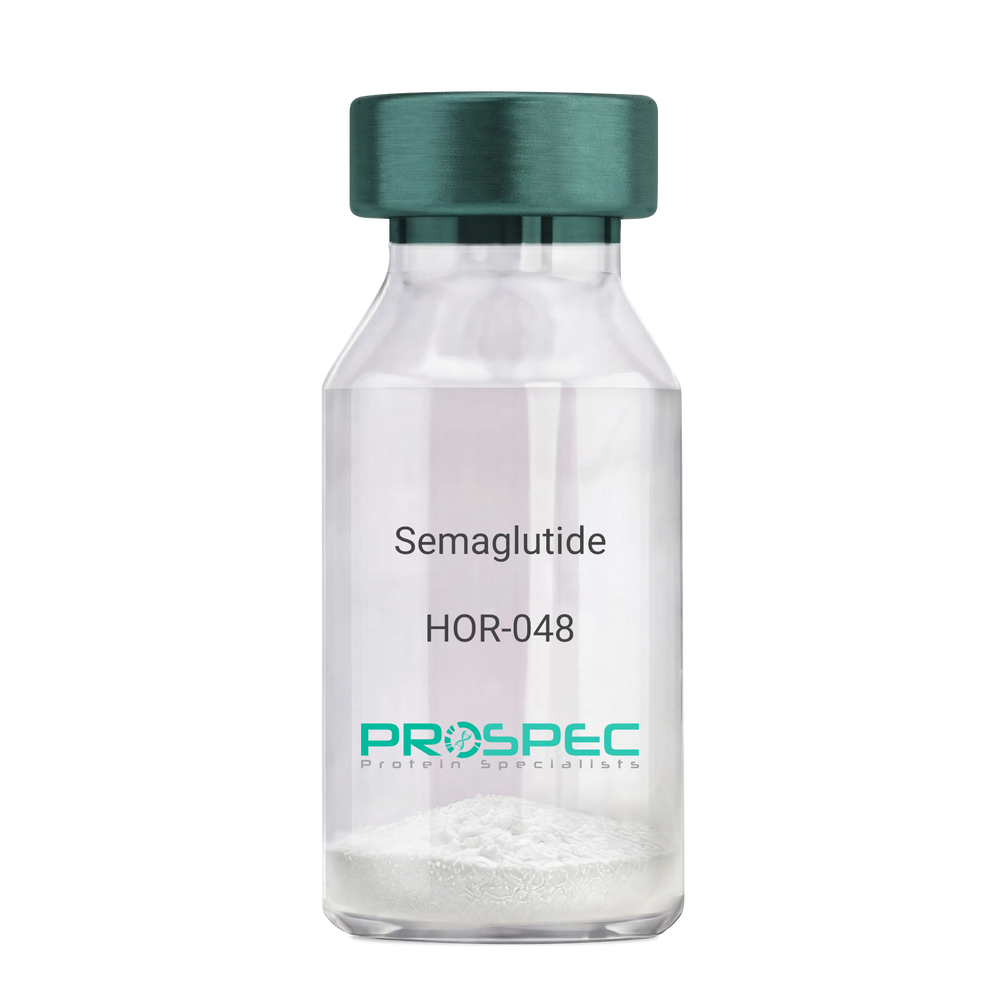
    Semaglutide

    Description:

    Semaglutide

    Product # :

    HOR-048

    Price :

    Quantity :

    Shipping Method :

    Room Temp Icon

    Shipped at Room temp

    Add To Cart

    More Info

    • description
    • formulation
    • purity
    • More Info
    • HPLC, MS
    • Citations

    Description

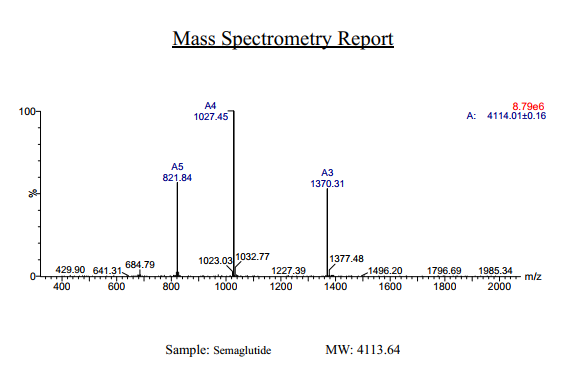
    Semaglutide Synthetic is a single, non-glycosylated polypeptide chain containing 31 amino acids, having a molecular mass of 4113 Dalton and a Molecular formula of C187H291N45O59.

    Formulation

    The protein was lyophilized with no additives.

    Purity

    Greater than 97.0% as determined by analysis by RP-HPLC.

    HPLC, MS

    Semaglutide hplc - Product image 1
    semaglutide mass spec - Product image 2

    Citations

    More Info

    • Physical Appearance

      Sterile Filtered White lyophilized (freeze-dried) powder.

    • Stability

      Lyophilized Semaglutide although stable at room temperature for 3 weeks, should be stored desiccated below -18°C. Upon reconstitution Semaglutide should be stored at 4°C between 2-7 days and for future use below -18°C. For long term storage it is recommended to add a carrier protein (0.1% HSA or BSA). Please prevent freeze-thaw cycles.

    • Solubility

      It is recommended to reconstitute the lyophilized Semaglutide in sterile 18MΩ-cm H2O not less than 100 µg/ml, which can then be further diluted to other aqueous solutions.

    • Amino Acid Sequence

      H-His-Aib-Glu-Gly-Thr-Phe-Thr-Ser-Asp-Val-Ser-Ser-Tyr-Leu-Glu-Gly-Gln-Ala-Ala-Lys(AEEAc-AEEAc-γ-Glu-17-carboxyheptadecanoyl)-Glu-Phe-Ile-Ala-Trp-Leu-Val-Arg-Gly-Arg-Gly-OH.

    • Background

      Semaglutide, a glucagon-like peptide-1 receptor agonist (GLP-1 RA), has emerged as a breakthrough in the field of diabetes management and metabolic disorders. It is recognized for its potent glucose-lowering effects, weight management properties, and cardiovascular benefits. Beyond diabetes, semaglutide is under investigation for its potential applications in obesity treatment and other related conditions. This research aims to comprehensively explore semaglutide, shedding light on its multifaceted mechanisms of action and its broader therapeutic implications.

      The primary objective of this research is to elucidate the mechanisms underlying the glucose-lowering and metabolic effects of semaglutide. In vitro and in vivo experiments will be conducted to investigate how semaglutide interacts with GLP-1 receptors, influences insulin secretion, and modulates glucose homeostasis. Understanding these mechanisms is crucial for harnessing the full therapeutic potential of semaglutide.

      The second objective is to assess the clinical relevance of semaglutide in diabetes management. Clinical trials involving individuals with type 2 diabetes will be conducted to evaluate the efficacy, safety, and long-term outcomes of semaglutide treatment. These investigations may provide valuable insights into its use as a monotherapy or adjunct therapy in diabetes care.

      The third objective is to explore the potential applications of semaglutide beyond diabetes. Research will investigate its role in obesity treatment, cardiovascular risk reduction, and non-alcoholic fatty liver disease (NAFLD) management. Understanding the multifaceted properties of semaglutide may open new avenues for therapeutic interventions in various metabolic and cardiovascular conditions.

      By delving into the diverse functions of semaglutide, this research aims to expand our understanding of its therapeutic potential and clinical applications. The findings may contribute to improved treatment strategies for individuals affected by diabetes, obesity, and related metabolic disorders.

    ProSpec's products are furnished for LABORATORY RESEARCH USE ONLY. The product may not be used as drugs, agricultural or pesticidal products, food additives or household chemicals.

    Semaglutide
  • View Data Sheet

    Name :

    FCGR2A Human, HEK

    Description:

    CD32a Human Recombinant, HEK

    CD32, CD32A, CDw32, FcGR, IGFR2, MGC23887, MGC30032, Low affinity immunoglobulin gamma Fc region receptor II-a, IgG Fc receptor II-a, Fc-gamma-RIIa, FcRII-a, FCG2, FCGR2A1.

    Product # :

    PRO-2775

    Price :

    Quantity :

    Shipping Method :

    Ice Icon

    Shipped with Ice Packs

    Add To Cart

    More Info

    • description
    • source
    • formulation
    • purity
    • biological activity
    • More Info
    • Citations

    Description

    FCGR2A Human Recombinant is a single, glycosylated, polypeptide chain (30-218 a.a) containing a total of 195 amino acids, having a molecular mass of 21.6kDa. FCGR2A is fused to a 6 amino acid His-tag at C-terminus and is purified by proprietary chromatographic techniques.

    Source

    HEK293 Cells.

    Formulation

    FCGR2A protein solution (1mg/ml) containing 10% Glycerol and Phosphate-Buffered Saline (pH 7.4).

    Purity

    Greater than 95.0% as determined by SDS-PAGE.

    Biological Activity

    The ED50 range ≤5 ug/ml. and is measured by its binding ability in a functional ELISA with Human IgG1 Fc (CAT# pro-2763). 

    Citations

    More Info

    • Synonyms

      CD32, CD32A, CDw32, FcGR, IGFR2, MGC23887, MGC30032, Low affinity immunoglobulin gamma Fc region receptor II-a, IgG Fc receptor II-a, Fc-gamma-RIIa, FcRII-a, FCG2, FCGR2A1.

    • Physical Appearance

      Sterile Filtered colorless solution.

    • Stability

      Store at 4°C if entire vial will be used within 2-4 weeks. Store, frozen at -20°C for longer periods of time. For long term storage it is recommended to add a carrier protein (0.1% HSA or BSA). Avoid multiple freeze-thaw cycles.

    • Amino Acid Sequence

      SADSQAAAPP KAVLKLEPPW INVLQEDSVT LTCQGARSPE SDSIQWFHNG NLIPTHTQPS YRFKANNNDS GEYTCQTGQT SLSDPVHLTV LSEWLVLQTP HLEFQEGETI MLRCHSWKDK PLVKVTFFQN GKSQKFSHLD PTFSIPQANH SHSGDYHCTG NIGYTLFSSK PVTITVQVPS MGSSSPMGIH HHHHH.

    • Background

      The immune system is a complex network of cells and molecules that play a crucial role in protecting the body against pathogens and maintaining homeostasis. Fc gamma receptors (FcγRs) are a family of cell surface receptors that mediate the effector functions of antibodies, particularly immunoglobulin G (IgG). Among these receptors, FCGR2A, also known as CD32a, is a prominent member expressed on the surface of various immune cells. This research aims to investigate the structure, function, and implications of FCGR2A protein in immune responses, with a focus on its relevance to human health and therapeutic applications.

      Structure and Expression of FCGR2A:

      FCGR2A is a transmembrane glycoprotein composed of two extracellular immunoglobulin-like domains, a transmembrane domain, and a cytoplasmic tail. It is primarily expressed on immune cells such as macrophages, monocytes, and dendritic cells. The unique structure of FCGR2A allows it to bind to the Fc portion of IgG antibodies, initiating immune effector functions.

      Role of FCGR2A in Immune Responses:

      FCGR2A plays a crucial role in modulating immune responses through its involvement in antibody-dependent cellular cytotoxicity (ADCC) and phagocytosis. Upon binding to IgG antibodies, FCGR2A triggers intracellular signaling cascades that activate immune effector cells, leading to the elimination of antibody-bound pathogens or targeted cells. Furthermore, FCGR2A is involved in immune complex clearance, regulation of cytokine production, and modulation of cellular activation, thus contributing to the overall immune response.

      Implications of FCGR2A in Human Health:

      The dysregulation of FCGR2A has been implicated in various immune-related diseases. Genetic variations in FCGR2A have been associated with increased susceptibility to autoimmune disorders, such as systemic lupus erythematosus and rheumatoid arthritis. Altered FCGR2A expression or function has also been observed in infectious diseases, including HIV and malaria, affecting disease progression and immune control. Understanding the role of FCGR2A in these conditions is crucial for developing targeted therapeutic strategies.

      Therapeutic Potential of FCGR2A:

      The unique properties of FCGR2A make it an attractive target for therapeutic interventions. Modulating FCGR2A activity and function can potentially enhance immune responses against pathogens or tumor cells. For example, monoclonal antibodies that target FCGR2A have shown promising results in cancer immunotherapy by promoting ADCC and phagocytosis of tumor cells. Furthermore, strategies aimed at selectively activating or inhibiting FCGR2A signaling could lead to the development of novel immunotherapeutic approaches.

      Challenges and Future Perspectives:

      While the study of FCGR2A holds great promise, several challenges need to be addressed. Further research is required to unravel the intricate interplay between FCGR2A and other immune receptors and signaling molecules. Additionally, the development of therapeutic agents that selectively target FCGR2A without compromising normal immune functions remains a challenge.

      Conclusion:

      The investigation of FCGR2A protein provides insights into its pivotal role in immune responses and its implications for human health and therapeutics. Understanding the structure, function, and dysregulation of FCGR2A in immune-related diseases opens avenues for the development of targeted therapies. Continued research on FCGR2A and its interactions within the immune system will contribute to advancements in immunotherapy and personalized medicine.

    ProSpec's products are furnished for LABORATORY RESEARCH USE ONLY. The product may not be used as drugs, agricultural or pesticidal products, food additives or household chemicals.

    Fcgr2A Human Hek
  • View Data Sheet

    Name :

    CCNB1 Human

    Description:

    Cyclin-B1 Human Recombinant

    G2/mitotic-specific cyclin-B1, cyclin B1, CCNB.

    Product # :

    PKA-037

    Price :

    Quantity :

    Shipping Method :

    Ice Icon

    Shipped with Ice Packs

    Add To Cart

    More Info

    • description
    • source
    • formulation
    • purity
    • More Info
    • Citations

    Description

    CCNB1 Human Recombinant produced in E. coli is a single polypeptide chain containing 457 amino acids (1-433) and having a molecular mass of 50.9 kDa.CCNB1 is fused to a 24 amino acid His-tag at N-terminus & purified by proprietary chromatographic techniques.

    Source

    E.coli.

    Formulation

    The CCNB1 solution (0.25mg/1ml) contains 20mM Tris-HCl buffer (pH 8.0), 150mM NaCl and 20% glycerol.

    Purity

    Greater than 85% as determined by SDS-PAGE.

    Citations

    More Info

    • Introduction

      Cyclin B1 (CCNB1) is a regulatory protein involved in mitosis. CCNB1 creates a complex with p34(cdc2) to form the maturation-promoting factor (MPF). CCNB1 is vital for the control of the cell cycle at the G2/M (mitosis) transition. CCNB1 builds up steadily during the G2 and is immediately destroyed at mitosis. The 2 alternative transcripts produce a constitutively expressed transcript and a cell cycle-regulated transcript which is expressed predominantly during G2/M phase. These transcripts are a result of alternate transcription initiation sites.

    • Synonyms

      G2/mitotic-specific cyclin-B1, cyclin B1, CCNB.

    • Physical Appearance

      Sterile Filtered colorless solution.

    • Stability

      Store at 4°C if entire vial will be used within 2-4 weeks. Store, frozen at -20°C for longer periods of time. For long term storage it is recommended to add a carrier protein (0.1% HSA or BSA).Avoid multiple freeze-thaw cycles.

    • Amino Acid Sequence

      MGSSHHHHHH SSGLVPRGSH MGSHMALRVT RNSKINAENK AKINMAGAKR VPTAPAATSK PGLRPRTALG DIGNKVSEQL QAKMPMKKEA KPSATGKVID KKLPKPLEKV PMLVPVPVSE PVPEPEPEPE PEPVKEEKLS PEPILVDTAS PSPMETSGCA PAEEDLCQAF SDVILAVNDV DAEDGADPNL CSEYVKDIYA YLRQLEEEQA VRPKYLLGRE VTGNMRAILI DWLVQVQMKF RLLQETMYMT VSIIDRFMQN NCVPKKMLQL VGVTAMFIAS KYEEMYPPEI GDFAFVTDNT YTKHQIRQME MKILRALNFG LGRPLPLHFL RRASKIGEVD VEQHTLAKYL MELTMLDYDM VHFPPSQIAA GAFCLALKIL DNGEWTPTLQ HYLSYTEESL LPVMQHLAKN VVMVNQGLTK HMTVKNKYAT SKHAKISTLP QLNSALVQDL AKAVAKV.

    ProSpec's products are furnished for LABORATORY RESEARCH USE ONLY. The product may not be used as drugs, agricultural or pesticidal products, food additives or household chemicals.

    Ccnb1 Human
  • View Data Sheet

    Name :

    HCV NS4 a+b, Biotin

    Description:

    Hepatitis C Virus NS4 a+b, Biotin Recombinant

    Product # :

    HCV-200

    Price :

    Quantity :

    Shipping Method :

    Ice Icon

    Shipped with Ice Packs

    Add To Cart

    More Info

    • description
    • formulation
    • purity
    • More Info
    • Citations

    Description

    The E.coli derived 19 kDa recombinant protein Biotin labeled contains the HCV NS4 Genotype 1b immunodominant regions, amino acids 1658-1863. The protein is fused with b-galactosidase (114 kDa) at N-terminus.

    Formulation

    (1mg/ml) 20mM Tris-HCl pH 8 and 8M urea.

    Purity

    HCV NS4 a+b Biotin protein is >95% pure as determined by 10% PAGE (coomassie staining).

    Citations

    More Info

    • Introduction

      HCV is a small 50nm, enveloped, single-stranded, positive sense RNAvirus in the family Flaviviridae. HCV has a high rate of replication with approximately one trillion particles produced each day in an infected individual. Due to lack of proofreading by the HCV RNA polymerase, the HCV has an exceptionally high mutation rate, a factor that may help it elude the host's immune response. Hepatitis C virus is classified into six genotypes(1-6) with several subtypes within each genotype. The preponderance and distribution of HCV genotypes varies globally. Genotype is clinically important in determining potential response to interferon-based therapy and the required duration of such therapy. Genotypes 1 and 4 are less responsive to interferon-based treatment than are the other genotypes (2, 3, 5 and 6).

    • Stability

      HCV NS4 a+b Biotin although stable at 4°C for 1 week, should be stored below -18°C. Please prevent freeze thaw cycles.

    • Applications

      HCV NS4 a+b Biotin antigen in ELISA and Western blots, excellent antigen for detection of HCV with minimal specificity problems.

    • Specificity

      Immunoreactive with sera of HCV-infected individuals.

    • Purification Method

      Purified by proprietary chromatographic technique.

    ProSpec's products are furnished for LABORATORY RESEARCH USE ONLY. The product may not be used as drugs, agricultural or pesticidal products, food additives or household chemicals.

    Hcv Ns4 Ab Biotin
  • View Data Sheet

    Name :

    Prolactin Human, PEG

    Description:

    Prolactin Pegylated Human Recombinant

    Mammotropin, Luteotropic hormone, Luteotropin, PRL.

    Product # :

    CYT-1063

    Price :

    Quantity :

    Shipping Method :

    Room Temp Icon

    Shipped at Room temp

    Add To Cart

    More Info

    • description
    • source
    • formulation
    • purity
    • biological activity
    • More Info
    • Citations

    Description

    Prolactin Human Recombinant Pegylated produced in E.Coli is a single, non-glycosylated polypeptide chain containing 199 amino acids + an additional Ala at n-terminal. Pegylated Prolactin is mono-pegylated having a molecular mass of ~ 39 kDa, however under non-denaturing conditions it behaves as 220 kDa protein due to its increased hydrodynamic volume. The Pegylated Prolactin protein is purified by proprietary chromatographic techniques.

    Source

    Escherichia Coli.

    Formulation

    The protein was lyophilized from a concentrated (1mg/ml) solution with 0.02-0.03% NaHCO3

    Purity

    Greater than 99.0% as determined by:
    (a) Analysis by Gel filtration.
    (b) Analysis by SDS-PAGE.

    Biological Activity

    Pegylated Human Prolactin was tested for its biological functionality in-vitro by inducing proliferation of Nb2 cells or Baf/3 cells that were stably transfected with Human Prolactin receptors, though its activity is lower than human Prolactin. However, it is anticipated that its biological activity in vivo will be higher than human Prolactin due to prolonged persistence in circulation.

    Citations

    More Info

    • Introduction

      Prolactin is a neuroendocrine hormone synthesized primarily by the pituitary gland but also a variety of other cell types including the placenta, brain and uterus. Prolactin is secreted when eating, nursing, mating, estrogen treatment and during ovulation. Prolactin's primary role is to promote and maintain lactation but also plays a role in breast cancer development, regulation of reproductive function and immunoregulation.

    • Synonyms

      Mammotropin, Luteotropic hormone, Luteotropin, PRL.

    • Physical Appearance

      Sterile Filtered White lyophilized (freeze-dried) powder.

    • Stability

      Lyophilized Prolactin although stable at room temperature for 3 weeks, should be stored desiccated below -18°C. Upon reconstitution Prolactin should be stored at 4°C between 2-7 days and for future use below -18°C. For long term storage it is recommended to add a carrier protein (0.1% HSA or BSA). Please prevent freeze-thaw cycles.

    • Solubility

      It is recommended to reconstitute the lyophilized Prolactin in sterile 0.4% NaHCO3 pH-8-9, not less than 100µg/ml, which can then be further diluted to other aqueous solutions.

    ProSpec's products are furnished for LABORATORY RESEARCH USE ONLY. The product may not be used as drugs, agricultural or pesticidal products, food additives or household chemicals.

    Prolactin Pegylated
  • View Data Sheet

    Name :

    RERG Human

    Description:

    RAS-like, Estrogen-Regulated, Growth Inhibitor Human Recombinant

    Ras-related and estrogen-regulated growth inhibitor, RERG, MGC15754.

    Product # :

    PRO-106

    Price :

    Quantity :

    Shipping Method :

    Ice Icon

    Shipped with Ice Packs

    Add To Cart

    More Info

    • description
    • source
    • formulation
    • purity
    • More Info
    • Citations

    Description

    RERG Human Recombinant fused with a 20 amino acid His tag at N-terminus produced in E.Coli is a single, non-glycosylated, polypeptide chain containing 219 amino acids (1-199 a.a.) and having a molecular mass of 24.7kDa (Molecular size on SDS-PAGE will appear higher). The RERG is purified by proprietary chromatographic techniques.

    Source

    Escherichia Coli.

    Formulation

    The RERG solution (0.25 mg/ml) contains 20mM Tris-HCl buffer (pH8.0), 0.2M NaCl, 5mM DTT and 50% glycerol.

    Purity

    Greater than 85.0% as determined by SDS-PAGE.

    Citations

    More Info

    • Introduction

      RERG is a 199 amino acid protein which localizes in the cytoplasm and is a member of the Ras subfamily of small GTPases. RERG is expressed in the pancreas, liver, skin, lung, brain, kidney and heart tissue. RERG is a vital mediator of diverse cell signaling pathways, including those leading to cell proliferation, cytoskeletal organization and secretion.

    • Synonyms

      Ras-related and estrogen-regulated growth inhibitor, RERG, MGC15754.

    • Physical Appearance

      Sterile Filtered colorless solution.

    • Stability

      Store at 4°C if entire vial will be used within 2-4 weeks. Store, frozen at -20°C for longer periods of time. For long term storage it is recommended to add a carrier protein (0.1% HSA or BSA). Avoid multiple freeze-thaw cycles.

    • Amino Acid Sequence

      MGSSHHHHHH SSGLVPRGSH MAKSAEVKLA IFGRAGVGKS ALVVRFLTKR FIWEYDPTLE STYRHQATID DEVVSMEILD TAGQEDTIQR EGHMRWGEGF VLVYDITDRG SFEEVLPLKN ILDEIKKPKN VTLILVGNKA DLDHSRQVST EEGEKLATEL ACAFYECSAC TGEGNITEIF YELCREVRRR RMVQGKTRRR SSTTHVKQAI NKMLTKISS.

    ProSpec's products are furnished for LABORATORY RESEARCH USE ONLY. The product may not be used as drugs, agricultural or pesticidal products, food additives or household chemicals.

    Rerg Human
  • 1
  • …
  • 9
  • 10
  • 11
  • 12
  • 13
  • …
  • 42
Your browser does not support the video tag.

Products

  • Cytokines
  • Growth Factors
  • Chemokines
  • CD Antigens
  • Neurotrophins
  • Hormones
  • Enzymes
  • Viral Antigens
  • Recombinant Proteins
  • Natural Proteins
  • Monoclonal Antibodies
  • Polyclonal Antibodies
  • Thermal Packaging

About

  • Company
  • Founder
  • Contribution
  • Contact Us
  • My Account

Ordering

  • Ordering Method
  • Ordering - Credit Card
  • Ordering PO
  • Shipping Fees
  • FAQ's

Legal

  • Terms & Conditions
  • Privacy
  • Site Map
  • info@prospecbio.com
  • Facebook
  • Instagram
  • Linkedin Profile

© 2026 ProSpec-Tany TechnoGene Ltd. All Rights Reserved.

  • Choosing a selection results in a full page refresh.
  • Opens in a new window.