Skip to content

High-quality research proteins.

  • 1-800-805-6531

  • Mon - Sat 8.00-18.00, Sun - Closed

  • info@prospecbio.com

  • PO Box 6591 East Brunswick NJ 08816

  • Products
    • Cytokines
    • Growth factors
    • Chemokines
    • Cd antigens
    • Neurotrophins
    • Hormones
    • Enzymes
    • Viral antigens
    • Recombinant proteins
    • Natural proteins
    • Monoclonal antibodies
    • Polyclonal antibodies
    • Thermal Packaging
  • About
    • Company
    • Founder
    • Contribution
  • Customers
    • Eastern Asia
    • Eastern Europe
    • North America
    • South America
    • South East Asia
    • Southern Asia
    • Western Europe
  • Ordering
    • Ordering Method
    • Ordering - Credit Card
    • Ordering - PO
    • Shipping Fees
    • FAQs
  • Services
    • DNA Cloning
    • Protein Expression
    • Monoclonal Antibody
    • Fermentation
    • Technology License
  • Contact us
Log in

Country/region

  • USD $ | Albania
  • USD $ | Andorra
  • USD $ | Argentina
  • USD $ | Armenia
  • USD $ | Australia
  • USD $ | Austria
  • USD $ | Azerbaijan
  • USD $ | Belarus
  • USD $ | Belgium
  • USD $ | Bolivia
  • USD $ | Brazil
  • USD $ | Bulgaria
  • USD $ | Cambodia
  • USD $ | Canada
  • USD $ | Chile
  • USD $ | China
  • USD $ | Colombia
  • USD $ | Costa Rica
  • USD $ | Croatia
  • USD $ | Cyprus
  • USD $ | Czechia
  • USD $ | Denmark
  • USD $ | Estonia
  • USD $ | Finland
  • USD $ | France
  • USD $ | Georgia
  • USD $ | Germany
  • USD $ | Greece
  • USD $ | Hong Kong SAR
  • USD $ | Hungary
  • USD $ | Iceland
  • USD $ | India
  • USD $ | Ireland
  • USD $ | Israel
  • USD $ | Italy
  • USD $ | Japan
  • USD $ | Kazakhstan
  • USD $ | Latvia
  • USD $ | Liechtenstein
  • USD $ | Lithuania
  • USD $ | Madagascar
  • USD $ | Malta
  • USD $ | Mexico
  • USD $ | Moldova
  • USD $ | Monaco
  • USD $ | Netherlands
  • USD $ | New Zealand
  • USD $ | North Macedonia
  • USD $ | Norway
  • USD $ | Panama
  • USD $ | Paraguay
  • USD $ | Peru
  • USD $ | Philippines
  • USD $ | Poland
  • USD $ | Portugal
  • USD $ | Romania
  • USD $ | Singapore
  • USD $ | Slovakia
  • USD $ | Slovenia
  • USD $ | South Africa
  • USD $ | South Korea
  • USD $ | Spain
  • USD $ | Sri Lanka
  • USD $ | Sweden
  • USD $ | Switzerland
  • USD $ | Taiwan
  • USD $ | Thailand
  • USD $ | Türkiye
  • USD $ | Ukraine
  • USD $ | United Kingdom
  • USD $ | United States
  • USD $ | Uruguay
  • USD $ | Vatican City
  • USD $ | Venezuela
  • USD $ | Vietnam
  • Facebook
  • Instagram
logoProSpec - Recombinant Protein Manufacturer for academic and R&D industry
Become a distributor
Account Log in
Wishlist
Cart Cart(0)
  • Products
    +
    • Cytokines
    • Growth factors
    • Chemokines
    • Cd antigens
    • Neurotrophins
    • Hormones
    • Enzymes
    • Viral antigens
    • Recombinant proteins
    • Natural proteins
    • Monoclonal antibodies
    • Polyclonal antibodies
    • Thermal Packaging
  • About
    +
    • Company
    • Founder
    • Contribution
  • Customers
    +
    • Eastern Asia
    • Eastern Europe
    • North America
    • South America
    • South East Asia
    • Southern Asia
    • Western Europe
  • Ordering
    +
    • Ordering Method
    • Ordering - Credit Card
    • Ordering - PO
    • Shipping Fees
    • FAQs
  • Services
    +
    • DNA Cloning
    • Protein Expression
    • Monoclonal Antibody
    • Fermentation
    • Technology License
  • Contact us

Item added to your cart

View cart
View All
  • Cytokines
  • Growth factors
  • Chemokines
  • Cd antigens
  • Neurotrophins
  • Hormones
  • Enzymes
  • Viral antigens
  • Recombinant proteins
  • Natural proteins
  • Monoclonal antibodies
  • Polyclonal antibodies
  • Thermal Packaging
  • Tumor Necrosis Factor

    Tumor Necrosis Factor

    View All
  • 4-1BB

    4-1BB

    View All
  • Adiponectin

    Adiponectin

    View All
  • AIF1

    AIF1

    View All
  • Other Cytokines

    Other Cytokines

    View All
  • AITRL

    AITRL

    View All
  • Angiopoietin

    Angiopoietin

    View All
  • Apolipoprotein

    Apolipoprotein

    View All
  • B-Cell Activating Factor

    B-Cell Activating Factor

    View All
  • Beta Defensin

    Beta Defensin

    View All
  • Bone Morphogenetic Protein

    Bone Morphogenetic Protein

    View All
  • B type Natriuretic Peptide

    B type Natriuretic Peptide

    View All
  • BST

    BST

    View All
  • Betacellulin

    Betacellulin

    View All
  • Cardiotrophin

    Cardiotrophin

    View All
  • Activin

    Activin

    View All
  • Fibroblast Growth Factor

    Fibroblast Growth Factor

    View All
  • Other Growth Factors

    Other Growth Factors

    View All
  • CSF

    CSF

    View All
  • CTGF

    CTGF

    View All
  • IGFBP

    IGFBP

    View All
  • VEGF Protein

    VEGF Protein

    View All
  • EGF

    EGF

    View All
  • Epigen

    Epigen

    View All
  • Erythropoietin

    Erythropoietin

    View All
  • Insulin-Like Growth Factor

    Insulin-Like Growth Factor

    View All
  • Growth Hormone

    Growth Hormone

    View All
  • HDGF

    HDGF

    View All
  • Hepatocyte Growth Factor

    Hepatocyte Growth Factor

    View All
  • Insulin

    Insulin

    View All
  • BCA-1/ BLC (CXCL13)

    BCA-1/ BLC (CXCL13)

    View All
  • BRAK (CXCL14)

    BRAK (CXCL14)

    View All
  • C-10 (CCL6)

    C-10 (CCL6)

    View All
  • Other Chemokines

    Other Chemokines

    View All
  • MEC (CCL28)

    MEC (CCL28)

    View All
  • LD78-beta (CCL3L1)

    LD78-beta (CCL3L1)

    View All
  • CTACK (CCL27)

    CTACK (CCL27)

    View All
  • CXCL16

    CXCL16

    View All
  • CXCL17

    CXCL17

    View All
  • Platelet Factor-4 (CXCL4)

    Platelet Factor-4 (CXCL4)

    View All
  • ENA-78 (CXCL5)

    ENA-78 (CXCL5)

    View All
  • Eotaxin (CCL11,24,26)

    Eotaxin (CCL11,24,26)

    View All
  • Exodus-2 (CCL21)

    Exodus-2 (CCL21)

    View All
  • Fractalkine (CX3CL1)

    Fractalkine (CX3CL1)

    View All
  • CXCL6

    CXCL6

    View All
  • Other CD Antigens

    Other CD Antigens

    View All
  • CD14

    CD14

    View All
  • CD164

    CD164

    View All
  • CD1

    CD1

    View All
  • CD2

    CD2

    View All
  • CD200

    CD200

    View All
  • CD207

    CD207

    View All
  • CD226

    CD226

    View All
  • CD23

    CD23

    View All
  • CD244

    CD244

    View All
  • CD247

    CD247

    View All
  • CD27

    CD27

    View All
  • CD274

    CD274

    View All
  • CD300

    CD300

    View All
  • CD33

    CD33

    View All
  • Other Neurotrophins

    Other Neurotrophins

    View All
  • Beta-NGF

    Beta-NGF

    View All
  • BDNF

    BDNF

    View All
  • CDNF

    CDNF

    View All
  • CNTF

    CNTF

    View All
  • GDNF

    GDNF

    View All
  • Glia Maturation Factor

    Glia Maturation Factor

    View All
  • MANF

    MANF

    View All
  • Midkine

    Midkine

    View All
  • Neuroglobin

    Neuroglobin

    View All
  • Neurotrophic factors

    Neurotrophic factors

    View All
  • Neuregulin

    Neuregulin

    View All
  • Neuropilin

    Neuropilin

    View All
  • Pigment Epithelium-Derived Factor

    Pigment Epithelium-Derived Factor

    View All
  • Pleiotrophin

    Pleiotrophin

    View All
  • Peptide Hormones

    Peptide Hormones

    View All
  • Other Hormones

    Other Hormones

    View All
  • HCG

    HCG

    View All
  • Endothelin

    Endothelin

    View All
  • Exendin

    Exendin

    View All
  • FSH

    FSH

    View All
  • Glucagon

    Glucagon

    View All
  • GHRP

    GHRP

    View All
  • GLP

    GLP

    View All
  • Thyrostimulin

    Thyrostimulin

    View All
  • Inhibin A

    Inhibin A

    View All
  • LHRH

    LHRH

    View All
  • Melanotan

    Melanotan

    View All
  • Procalcitonin

    Procalcitonin

    View All
  • PTH

    PTH

    View All
  • Peroxiredoxin

    Peroxiredoxin

    View All
  • Peptidase

    Peptidase

    View All
  • Synthetase

    Synthetase

    View All
  • Transferase

    Transferase

    View All
  • Hydrolase

    Hydrolase

    View All
  • Dehydrogenase

    Dehydrogenase

    View All
  • ACE2

    ACE2

    View All
  • Esterase

    Esterase

    View All
  • Protein Kinases

    Protein Kinases

    View All
  • Other Enzymes

    Other Enzymes

    View All
  • Phosphatase

    Phosphatase

    View All
  • Deaminase

    Deaminase

    View All
  • Oxygenase

    Oxygenase

    View All
  • Adenylate Kinase

    Adenylate Kinase

    View All
  • Lyase

    Lyase

    View All
  • Chagas

    Chagas

    View All
  • SARS

    SARS

    View All
  • Influenza

    Influenza

    View All
  • ASFV

    ASFV

    View All
  • Astrovirus

    Astrovirus

    View All
  • Borrelia

    Borrelia

    View All
  • Helicobacter Pylori

    Helicobacter Pylori

    View All
  • Chikungunya

    Chikungunya

    View All
  • Chlamydia

    Chlamydia

    View All
  • Cytomegalo

    Cytomegalo

    View All
  • Dengue

    Dengue

    View All
  • EBV

    EBV

    View All
  • Ebola

    Ebola

    View All
  • Feline Leukemia Virus

    Feline Leukemia Virus

    View All
  • Hepatitis A

    Hepatitis A

    View All
  • Other

    Other

    View All
  • Actin

    Actin

    View All
  • ADAM

    ADAM

    View All
  • Complement Component

    Complement Component

    View All
  • Ag85

    Ag85

    View All
  • Eukaryotic Translation Initiation Factor

    Eukaryotic Translation Initiation Factor

    View All
  • Anterior Gradient Protein

    Anterior Gradient Protein

    View All
  • Heat Shock Protein

    Heat Shock Protein

    View All
  • Alpha-2-HS-Glycoprotein

    Alpha-2-HS-Glycoprotein

    View All
  • Hemoglobin

    Hemoglobin

    View All
  • Allergy

    Allergy

    View All
  • Anaplasma

    Anaplasma

    View All
  • Angiogenin

    Angiogenin

    View All
  • Ankyrin Repeat Domain

    Ankyrin Repeat Domain

    View All
  • Annexin

    Annexin

    View All
  • Other Natural Proteins

    Other Natural Proteins

    View All
  • Aprotinin

    Aprotinin

    View All
  • Transferrin

    Transferrin

    View All
  • Avidin

    Avidin

    View All
  • Anti Coagulation Factors

    Anti Coagulation Factors

    View All
  • Natural Albumin

    Natural Albumin

    View All
  • Natural Coagulation Factors

    Natural Coagulation Factors

    View All
  • Fibronectin

    Fibronectin

    View All
  • Thrombin

    Thrombin

    View All
  • Anti Human Enzyme

    Anti Human Enzyme

    View All
  • Other Monoclonal Antibodies

    Other Monoclonal Antibodies

    View All
  • Anti Human Cytokine

    Anti Human Cytokine

    View All
  • Anti Human Heat Shock Protein

    Anti Human Heat Shock Protein

    View All
  • Anti Mouse Lymphocyte

    Anti Mouse Lymphocyte

    View All
  • Anti Human Chemokine

    Anti Human Chemokine

    View All
  • Anti Human Lymphocyte

    Anti Human Lymphocyte

    View All
  • Anti Viral Monoclonal

    Anti Viral Monoclonal

    View All
  • Anti Mouse Cytokine

    Anti Mouse Cytokine

    View All
  • Anti-GST Monoclonal

    Anti-GST Monoclonal

    View All
  • Other Polyclonal Antibodies

    Other Polyclonal Antibodies

    View All
  • Anti Viral

    Anti Viral

    View All
  • Anti-GST Monoclonal

    Anti-GST Monoclonal

    View All
Back

Search results

1000 results found for “cytochrome”

Name

Description

Product #

Price

Quantity

Shipping Method

  • View Data Sheet

    Name :

    TXN1 E.Coli

    Description:

    Thioredoxin E.Coli Recombinant

    Thioredoxin-1, Trx-1, trxA, fipA, tsnC, b3781, JW5856.

    Product # :

    PRO-334

    Price :

    Quantity :

    Shipping Method :

    Room Temp Icon

    Shipped at Room temp

    Add To Cart

    More Info

    • description
    • source
    • formulation
    • purity
    • biological activity
    • More Info

    Description

    Recombinant Thioredoxin was purified from E. coli harboring its gene.

    Source

    Escherichia Coli.

    Formulation

    Each mg of protein contains 20mM phosphate buffer pH 7.4.

    Purity

    Greater than 90.0% as determined by:
    (a) Analysis by RP-HPLC.
    (b) Analysis by SDS-PAGE.

    Biological Activity

    TRX activity is assayed by measuring the change in absorbance at 650 nm at 25°C using 0.13µM bovine insulin containing 0.33mM DTT (pH 6.5).
    The specific activity was found to be 3IU/mg.

    More Info

    • Introduction

      Thioredoxins are small disulphide-containing redox proteins (within the conserved Cys-Gly-Pro-Cys active site) that have been found in all the kingdoms of living organisms. Thioredoxin contains a single disulfide active site and serves as a general protein disulphide oxidoreductase. Thioredoxins are involved in the first unique step in DNA synthesis. It interacts with a broad range of proteins by a redox mechanism based on reversible oxidation of two cysteine thiol groups to a disulphide, accompanied by the transfer of two electrons and two protons. The net result is the covalent interconversion of a disulphide and a dithiol. Trx also provides control over a number of transcription factors affecting cell proliferation and death through a mechanism referred to as redox regulation. It has been suggested that thioredoxin may catalyze the formation of correct disulfides during protein folding because of its ability to act as an efficient oxidoreductant. This could be especially useful in refolding proteins expressed in E. coli. To this end, thioredoxin has been shown to act as a protein disulfide isomerase.Its Molecular Weight is 11.9kDa. and the pI is 4.67.

    • Synonyms

      Thioredoxin-1, Trx-1, trxA, fipA, tsnC, b3781, JW5856.

    • Physical Appearance

      Sterile Lyophilized Powder.

    • Stability

      TRX although stable at 4°C for 3 weeks, should be stored desiccated below -18°C. Please prevent freeze thaw cycles.

    • Solubility

      It is recommended to reconstitute the lyophilized TRX in sterile 18MΩ-cm H2O.

    • Amino Acid Sequence

      HMSDKIIHL TDDSFDTDVLKADGAIL VDFW AEWCGPCKMIAPILDEI GKLTVAKLNIDQNPGTAPKYGIRGIPTLLLFKNGEVAATKVGAL DANLA.

    ProSpec's products are furnished for LABORATORY RESEARCH USE ONLY. The product may not be used as drugs, agricultural or pesticidal products, food additives or household chemicals.

    Thioredoxin 1
  • View Data Sheet

    Name :

    PPIL3 Human

    Description:

    Cyclophilin-J Human Recombinant

    Peptidyl-prolyl cis-trans isomerase-like 3, PPIase, Cyclophilin J, CyPJ, Cyclophilin-like protein PPIL3, Rotamase PPIL3, PPIL3.

    Product # :

    ENZ-174

    Price :

    Quantity :

    Shipping Method :

    Ice Icon

    Shipped with Ice Packs

    Add To Cart

    More Info

    • description
    • source
    • formulation
    • purity
    • biological activity
    • More Info

    Description

    PPIL3 Human Recombinant produced in E.Coli is a single, non-glycosylated polypeptide chain containing 181 amino acids (1-161 a.a.) and having a molecular mass of 20.3kDa.PPIL3 is fused to a 20 amino acid His-tag at N-terminus & purified by proprietary chromatographic techniques.

    Source

    Escherichia Coli.

    Formulation

    PPIL3 protein solution (1mg/ml) containing 20mM Tris-HCl buffer (pH8.0), 20% glycerol, 0.1M NaCl and 1mM DTT.

    Purity

    Greater than 90.0% as determined by SDS-PAGE.

    Biological Activity

    Specific activity is > 280 nmoles/min/mg, and is defined as the amount of enzyme that cleaves 1umole of suc-AAFP-pNA per minute at 25C in Tris-Hcl pH8.0 using chymotrypsin.

    More Info

    • Introduction

      Peptidyl-prolyl cis-trans isomerase-like 3 (PPIL3) belongs to the cyclophilin family which catalyzes the cis-trans isomerization of peptidylprolyl imide bonds in oligopeptides. PPIL3 acts either as catalyst or as molecular chaperone in protein-folding events.

    • Synonyms

      Peptidyl-prolyl cis-trans isomerase-like 3, PPIase, Cyclophilin J, CyPJ, Cyclophilin-like protein PPIL3, Rotamase PPIL3, PPIL3.

    • Physical Appearance

      Sterile Filtered colorless solution.

    • Stability

      Store at 4°C if entire vial will be used within 2-4 weeks.Store, frozen at -20°C for longer periods of time. For long term storage it is recommended to add a carrier protein (0.1% HSA or BSA).Avoid multiple freeze-thaw cycles.

    • Amino Acid Sequence

      MGSSHHHHHH SSGLVPRGSH MSVTLHTDVG DIKIEVFCER TPKTCENFLA LCASNYYNGC IFHRNIKGFM VQTGDPTGTG RGGNSIWGKK FEDEYSEYLK HNVRGVVSMA NNGPNTNGSQ FFITYGKQPH LDMKYTVFGK VIDGLETLDE LEKLPVNEKT YRPLNDVHIK DITIHANPFA Q.

    ProSpec's products are furnished for LABORATORY RESEARCH USE ONLY. The product may not be used as drugs, agricultural or pesticidal products, food additives or household chemicals.

    Ppil3 Human
  • View Data Sheet

    Name :

    PRDX2 Human

    Description:

    Peroxiredoxin-2 Human Recombinant

    PRP, TSA, PRX2, NKEFB, PRXII, TDPX1, MGC4104, PRDX2, Peroxiredoxin-2, Thioredoxin peroxidase 1, Thioredoxin-dependent peroxide reductase 1, Thiol-specific antioxidant protein, Natural killer cell-enhancing factor B, NKEF-B.

    Product # :

    ENZ-414

    Price :

    Quantity :

    Shipping Method :

    Ice Icon

    Shipped with Ice Packs

    Add To Cart

    More Info

    • description
    • source
    • formulation
    • purity
    • biological activity
    • More Info

    Description

    PRDX2 Human Recombinant produced in E.Coli is a single, non-glycosylated, polypeptide chain containing 198 amino acids and having a molecular mass of 21.8 kDa.The PRDX2 is purified by proprietary chromatographic techniques.

    Source

    Escherichia Coli.

    Formulation

    The Peroxiredoxin solution contains 20mM Tris-HCl pH-8, & 10% glycerol.

    Purity

    Greater than 90.0% as determined by SDS-PAGE.

    Biological Activity

    The specific activity is > 2000 pmole/min/µg. Enzymatic activity is defined as the amount of hydroperoxide that 1ug of enzyme can reduce at 25°C for 1 minute.

    More Info

    • Introduction

      PRDX2 is part of the peroxiredoxin family of antioxidant enzymes, which reduce hydrogen peroxide and alkyl hydroperoxides. PRDX2 takes part as an antioxidant protective role in cells, and contributes to the antiviral activity of CD8(+) T-cells. PRDX2 has proliferative effect in cancer development or progression.
      If PRDX2 protection is insufficient against peroxidases, the DNA damage results in neurological disease such as Alzheimer's or DNA damage leading to cancer.

    • Synonyms

      PRP, TSA, PRX2, NKEFB, PRXII, TDPX1, MGC4104, PRDX2, Peroxiredoxin-2, Thioredoxin peroxidase 1, Thioredoxin-dependent peroxide reductase 1, Thiol-specific antioxidant protein, Natural killer cell-enhancing factor B, NKEF-B.

    • Physical Appearance

      Sterile Filtered colorless solution.

    • Stability

      Store at 4°C if entire vial will be used within 2-4 weeks. Store, frozen at -20°C for longer periods of time. For long term storage it is recommended to add a carrier protein (0.1% HSA or BSA).Avoid multiple freeze-thaw cycles.

    • Amino Acid Sequence

      MASGNARIGK PAPDFKATAV VDGAFKEVKL SDYKGKYVVL FFYPLDFTFV CPTEIIAFSN RAEDFRKLGC EVLGVSVDSQ FTHLAWINTP RKEGGLGPLN IPLLADVTRR LSEDYGVLKT DEGIAYRGLF IIDGKGVLRQ ITVNDLPVGR SVDEALRLVQ AFQYTDEHGE VCPAGWKPGS DTIKPNVDDS KEYFSKHN.

    ProSpec's products are furnished for LABORATORY RESEARCH USE ONLY. The product may not be used as drugs, agricultural or pesticidal products, food additives or household chemicals.

    Prdx2 Human
  • View Data Sheet

    Name :

    Chitinase Protein

    Description:

    Chitinase Clostridium Paraputrificum Recombinant

    Product # :

    ENZ-031

    Price :

    Quantity :

    Shipping Method :

    Room Temp Icon

    Shipped at Room temp

    Add To Cart

    More Info

    • description
    • source
    • formulation
    • purity
    • More Info

    Description

    Chitinase Clostridium Paraputrificum Recombinant fused with a His tag at N-terminus produced in E.Coli is a single, non-glycosylated, polypeptide chain containing 582 amino acids and having a molecular mass of 64.2kDa. The Chitinase is purified by proprietary chromatographic techniques.

    Source

    Escherichia Coli.

    Formulation

    Chitinase lyophilized from a 0.2µm filtered concentrated solution in PBS.

    Purity

    Greater than 95.0% as determined by SDS-PAGE.

    More Info

    • Introduction

      Chitinase is a digestive enzyme which breaks down glycosidic bonds in chitin. Due to chitin being a component of the cell walls of fungi and exoskeletal elements of some animals (including worms and arthropods), chitinases are usually found in organisms that either need to remake their own chitin or to dissolve and digest the chitin of fungi or animals. Chitinivorous organisms include many bacteria genuses such as Aeromonas, Bacillus, Vibrio, among others, which may be pathogenic or detritivorous. Chitinase expression is mediated by the NPR1 gene and the salicylic acid pathway, both of which are involved in resisting fungal and insect attack. Human chitinases appear in gastric juices. They are likely to be digestive chitinases, for catabolic activity. Chitinase activity is identified systemically in humans, in the blood, and possibly cartilage. Chitinase has been related to allergies, asthma in particular has been linked to enhanced chitinase expression levels, also dust mites and mold spores which are both chitin covered.

    • Physical Appearance

      Sterile Filtered White lyophilized (freeze-dried) powder.

    • Stability

      Lyophilized Chitinase although stable at room temperature for 3 weeks, should be stored desiccated below -18°C. Upon reconstitution Chitinase should be stored at 4°C between 2-7 days and for future use below -18°C.For long term storage it is recommended to add a carrier protein (0.1% HSA or BSA).Please prevent freeze-thaw cycles.

    • Solubility

      It is recommended to reconstitute the lyophilized Chitinase in sterile 18MΩ-cm H2O not less than 100µg/ml, which can then be further diluted to other aqueous solutions.

    • Amino Acid Sequence

      MRGSGSHHHH HHMYYGDWSI WGGQGNFYPK DIPADKLTHL NFAFMDFNSS GELIYCDKDA AIGHPLGNLG VTYGDVNGGI LNAFQVLKSE NPNLKIGVSL GGWSKSGDFS TIAATPSIRA KFVENVMKFI KYTNMDFVDI DWEYPGDYRE PDKTDNINDE GTPNASAGDK ENYILLLQDL KEALNKQGKE LGKVYELSVA LPAGVSKIEK GIDVDKLFNI VDFANIMTYD MAGAWSTTSG HQTALYTNPN APEEYKGLSV DESVKYYISQ GAEREKIVVG AAYYTRGWEQ VSDKGTDPNN PGLFGEAAVV NKDADLSPTP GALNEAPMKN GEGGRAGGVW GYNALDKLKS KYTGLKEYWD DSAKAPYLYN SETGAFFTYD NIRSIQEKAK YVKENNLGGI IGWMASQDAT TNSTKRDELT TATKESLFGK EDLPKYEIKY TENDITCTVT PVKQSWGSGG VLKMSITNNE KLDESGEVLS TVETSAKTVK NMKVYIKTDG IAITGSQYPA GPVTKEGDYY VIDFGKISDG KLMKAGITFT FDLNLDKAIE DTNNIISIEV SQRMYQTSPE FNRQTIWENT NS.

    ProSpec's products are furnished for LABORATORY RESEARCH USE ONLY. The product may not be used as drugs, agricultural or pesticidal products, food additives or household chemicals.

    Chitinase
  • View Data Sheet

    Name :

    CKMT1A Antibody

    Description:

    Creatine Kinase, Mitochondrial 1A, Mouse Anti Human

    Creatine kinase mitochondrial 1A, creatine kinase mitochondrial 1 (ubiquitous), creatine kinase U-type mitochondrial, Acidic-type mitochondrial creatine kinase, Ubiquitous mitochondrial creatine kinase, CKMT1, U-MtCK, mia-CK, EC 2.7.3, EC 2.7.3.2.

    Product # :

    ANT-519

    Price :

    Quantity :

    Shipping Method :

    Ice Icon

    Shipped with Ice Packs

    Add To Cart

    More Info

    • formulation
    • More Info

    Formulation

    1mg/ml containing PBS, pH-7.4, 10% Glycerol and 0.02% Sodium Azide.

    More Info

    • Introduction

      CKMT1A is in charge of the transfer of high energy phosphate from mitochondria to the cytosolic carrier, creatine. CKMT1A is a member of the creatine kinase isoenzyme family and exists as two isoenzymes, sarcomeric MtCK and ubiquitous MtCK, encoded by separate genes. Mitochondrial creatine kinase arises in two different oligomeric forms: dimers and octamers, unlike the exclusively dimeric cytosolic creatine kinase isoenzymes. Numerous malignant cancers with poor prognosis have displayed overexpression of ubiquitous mitochondrial creatine kinase which is linked to high energy turnover and inability to remove cancer cells through apoptosis.

    • Synonyms

      Creatine kinase mitochondrial 1A, creatine kinase mitochondrial 1 (ubiquitous), creatine kinase U-type mitochondrial, Acidic-type mitochondrial creatine kinase, Ubiquitous mitochondrial creatine kinase, CKMT1, U-MtCK, mia-CK, EC 2.7.3, EC 2.7.3.2.

    • Physical Appearance

      Sterile filtered colorless solution.

    • Immunogen

      Anti-human CKMT1A mAb, clone PAT17A2AT, is derived from hybridization of mouse F0 myeloma cells with spleen cells from BALB/c mice immunized with a recombinant human CKMT1A protein 40-417 amino acids purified from E. coli.

    • Ig Subclass

      Mouse IgG2b heavy chain and k light chain.

    • Clone

      PAT17A2AT.

    • Applications

      The antibody has been tested by ELISA, Western blot analysis to assure specificity and reactivity. Since application varies, however, each investigation should be titrated by the reagent to obtain optimal results. Recommended starting dilution is 1:1000.

    • Type

      Mouse Anti Human Monoclonal.

    • Storage Procedures

      For periods up to 1 month store at 4°C, for longer periods of time, store at -20°C. Prevent freeze thaw cycles.

    • Purification Method

      CKMT1A antibody was purified from mouse ascitic fluids by protein-A affinity chromatography.

    ProSpec's products are furnished for LABORATORY RESEARCH USE ONLY. The product may not be used as drugs, agricultural or pesticidal products, food additives or household chemicals.

    Ckmt1A Antibody
  • View Data Sheet

    Name :

    CECR1 Human

    Description:

    Cat Eye Syndrome Chromosome Region Candidate 1 Human Recombinant

    Cat Eye Syndrome Chromosome Region, Candidate 1, Cat Eye Syndrome Critical Region Protein 1, IDGFL, ADA2, ADGF, Adenosine Deaminase 2, EC 3.5.4.4, SNEDS, PAN, CECR1.

    Product # :

    PRO-2323

    Price :

    Quantity :

    Shipping Method :

    Ice Icon

    Shipped with Ice Packs

    Add To Cart

    More Info

    • description
    • source
    • formulation
    • purity
    • More Info

    Description

    CECR1 Human Recombinant produced in Sf9 Baculovirus cells is a single, glycosylated polypeptide chain containing 490 amino acids (30-511a.a.) and having a molecular mass of 56.9kDa (Molecular size on SDS-PAGE will appear at approximately 50-70kDa).CECR1 is expressed with an 8 amino acid His tag at C-Terminus and purified by proprietary chromatographic techniques.

    Source

    Insect Cell.

    Formulation

    CECR1 protein solution (0.5mg/ml) containing Phosphate Buffered Saline (pH 7.4) and 10% glycerol.

    Purity

    Greater than 90.0% as determined by SDS-PAGE.

    More Info

    • Introduction

      Adenosine deaminase CECR1 isoform (CECR1) belongs to a family of adenosine deaminase-related growth factors. Adenosine deaminase is a key enzyme of purine nucleotide metabolism. CECR1 is a secreted protein, which is expressed in various tissues, with the highest expression in the lymphoblasts, heart, lung, and the placenta.

    • Synonyms

      Cat Eye Syndrome Chromosome Region, Candidate 1, Cat Eye Syndrome Critical Region Protein 1, IDGFL, ADA2, ADGF, Adenosine Deaminase 2, EC 3.5.4.4, SNEDS, PAN, CECR1.

    • Physical Appearance

      Sterile filtered colorless solution.

    • Stability

      Store at 4°C if entire vial will be used within 2-4 weeks.Store, frozen at -20°C for longer periods of time. For long term storage it is recommended to add a carrier protein (0.1% HSA or BSA).Avoid multiple freeze-thaw cycles.

    • Amino Acid Sequence

      IDETRAHLLL KEKMMRLGGR LVLNTKEELA NERLMTLKIA EMKEAMRTLI FPPSMHFFQA KHLIERSQVF NILRMMPKGA ALHLHDIGIV TMDWLVRNVT YRPHCHICFT PRGIMQFRFA HPTPRPSEKC SKWILLEDYR KRVQNVTEFD DSLLRNFTLV TQHPEVIYTN QNVVWSKFET IFFTISGLIH YAPVFRDYVF RSMQEFYEDN VLYMEIRARL LPVYELSGEH HDEEWSVKTY QEVAQKFVET HPEFIGIKII YSDHRSKDVA VIAESIRMAM GLRIKFPTVV AGFDLVGHED TGHSLHDYKE ALMIPAKDGV KLPYFFHAGE TDWQGTSIDR NILDALMLNT TRIGHGFALS KHPAVRTYSW KKDIPIEVCP ISNQVLKLVS DLRNHPVATL MATGHPMVIS SDDPAMFGAK GLSYDFYEVF MGIGGMKADL RTLKQLAMNS IKYSTLLESE KNTFMEIWKK RWDKFIADVA TKLEHHHHHH

    ProSpec's products are furnished for LABORATORY RESEARCH USE ONLY. The product may not be used as drugs, agricultural or pesticidal products, food additives or household chemicals.

    Cecr1 Human
  • View Data Sheet

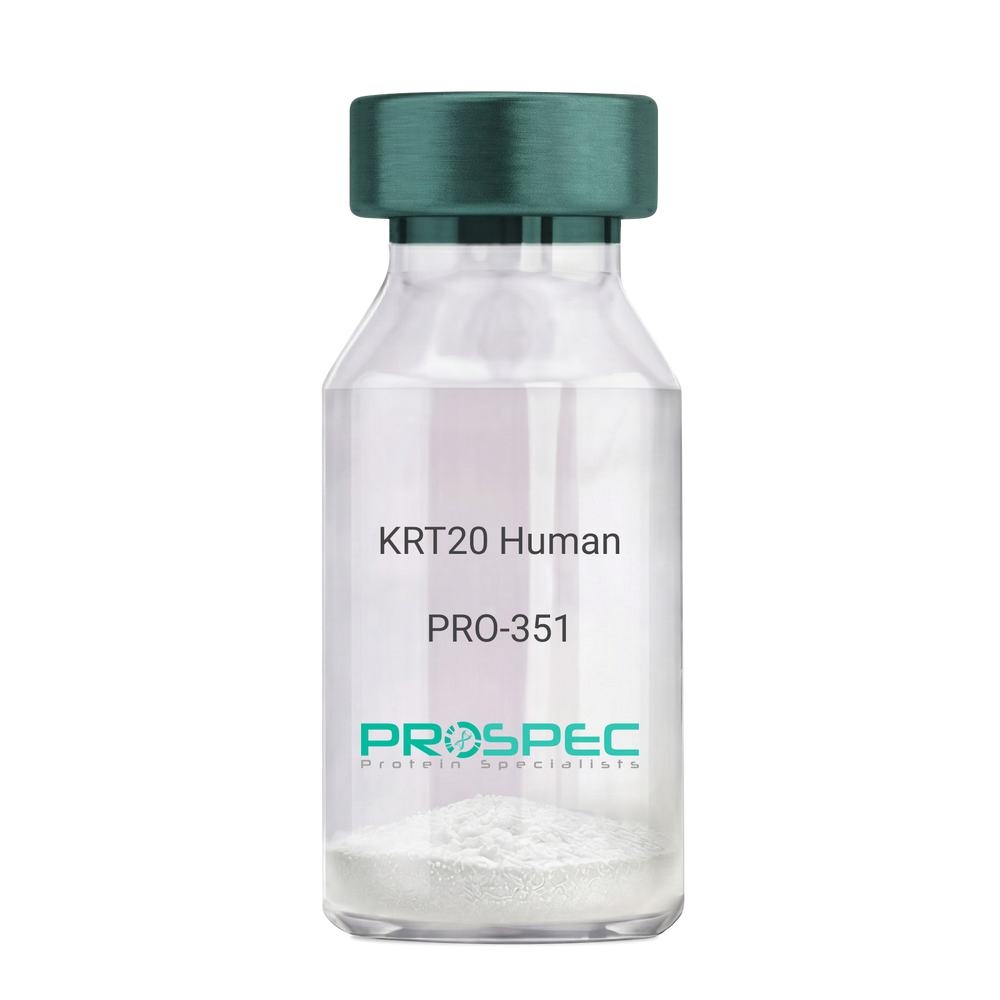
    Name :

    KRT20 Human

    Description:

    Cytokeratin 20 Human Recombinant

    Keratin type I cytoskeletal 20, Cytokeratin-20, CK-20, Keratin-20, K20, Protein IT, KRT20, CD20, CK20, KRT21, MGC35423.

    Product # :

    PRO-351

    Price :

    Quantity :

    Shipping Method :

    Room Temp Icon

    Shipped at Room temp

    Add To Cart

    More Info

    • description
    • source
    • formulation
    • purity
    • More Info

    Description

    Cytokeratin 20 Human Recombinant produced in E.Coli is a single,non-glycosylated polypeptide chain having a molecular mass of 48,553 Dalton. The KRT20 is purified by proprietary chromatographic techniques.

    Source

    Escherichia Coli.

    Formulation

    The protein (1mg/1ml) was lyophilized after from a sterile solution containing 30mM Tris-HCL pH-8, 9.5M urea, 2mM DDT, 2mM EDTA and 10mM methylammonium chloride.

    Purity

    Greater than 95.0% as determined by SDS-PAGE.

    More Info

    • Introduction

      KRT20 is a member of the keratin family. The keratins are intermediate filament proteins responsible for the structural integrity of epithelial cells and are subdivided into cytokeratins and hair keratins. The type I cytokeratins consist of acidic proteins which are arranged in pairs of heterotypic keratin chains. This cytokeratin is a major cellular protein of mature enterocytes and goblet cells and is specifically expressed in the gastric and intestinal mucosa. The type I cytokeratin genes are clustered in a region of chromosome 17q12-q21.

    • Synonyms

      Keratin type I cytoskeletal 20, Cytokeratin-20, CK-20, Keratin-20, K20, Protein IT, KRT20, CD20, CK20, KRT21, MGC35423.

    • Physical Appearance

      Sterile Filtered White lyophilized (freeze-dried) powder.

    • Stability

      Lyophilized KRT20 although stable at room temperature for 3 weeks, should be stored desiccated below -18°C. Upon reconstitution KRT20 should be stored at 4°C between 2-7 days and for future use below -18°C.For long term storage it is recommended to add a carrier protein (0.1% HSA or BSA).Please prevent freeze-thaw cycles.

    • Solubility

      It is recommended to reconstitute the lyophilized KRT20 in sterile 18MΩ-cm H2O not less than 100µg/ml, which can then be further diluted to other aqueous solutions.

    • Reconstitution to filaments

      Performed by mixing equimolar amounts of cytokeratins of type I and type II at concentrations of approx. 0.5 mg/ml, both dissolved in 9.5 M urea buffer (see above). Protofilaments and filament complexes are obtained by dialyzing the resulting polypeptide solution stepwise to a concentration of 4 M urea and then to low salt condition (50 mM NaCI, 2 mM dithiothreitol, 10 mM Tris-HCI, pH 7.4). For immunization purposes, the solution can be further dialyzed against PBS (phosphate buffered saline, e.g. Dulbecco's PBS).

    ProSpec's products are furnished for LABORATORY RESEARCH USE ONLY. The product may not be used as drugs, agricultural or pesticidal products, food additives or household chemicals.

    Krt20 Human
  • View Data Sheet

    Name :

    hchA E.Coli

    Description:

    Chaperone Protein hchA E.Coli Recombinant

    Chaperone protein hchA, EcHsp31, Hsp31, hchA, yedU, yzzC, b1967, JW1950.

    Product # :

    HSP-043

    Price :

    Quantity :

    Shipping Method :

    Ice Icon

    Shipped with Ice Packs

    Add To Cart

    More Info

    • description
    • source
    • formulation
    • purity
    • More Info

    Description

    hchA produced in E.Coli is a single, non-glycosylated polypeptide chain containing 303 amino acids (1-283 a.a.) and having a molecular mass of 33.3kDa.hchA is fused to a 20 amino acid His-tag at N-terminus & purified by proprietary chromatographic techniques.

    Source

    Escherichia Coli.

    Formulation

    The hchA contains (1mg/ml) 20mM Tris-HCl buffer (pH8.0), 20% glycerol 0.1M NaCl and 1mM DTT.

    Purity

    Greater than 95.0% as determined by SDS-PAGE.

    More Info

    • Introduction

      Escherichia coli Hsp31 (HchA) is a homodimeric member of the ThiI/DJ-1/PfpI superfamily which combines molecular chaperone and aminopeptidase activities. HchA uses temperature-induced exposure of structured hydrophobic domains to capture and stabilize early unfolding protein intermediates under severe thermal stress.

    • Synonyms

      Chaperone protein hchA, EcHsp31, Hsp31, hchA, yedU, yzzC, b1967, JW1950.

    • Physical Appearance

      Sterile filtered colorless solution.

    • Stability

      hchA E.Coli Recombinant although stable at 4°C for 1 week, should be stored below -18°C. Please prevent freeze thaw cycles.

    • Amino Acid Sequence

      MGSSHHHHHH SSGLVPRGSH MTVQTSKNPQ VDIAEDNAFF PSEYSLSQYT SPVSDLDGVD YPKPYRGKHK ILVIAADERY LPTDNGKLFS TGNHPIETLL PLYHLHAAGF EFEVATISGL MTKFEYWAMP HKDEKVMPFF EQHKSLFRNP KKLADVVASL NADSEYAAIF VPGGHGALIG LPESQDVAAA LQWAIKNDRF VISLCHGPAA FLALRHGDNP LNGYSICAFP DAADKQTPEI GYMPGHLTWY FGEELKKMGM NIINDDITGR VHKDRKLLTG DSPFAANALG KLAAQEMLAA YAG.

    ProSpec's products are furnished for LABORATORY RESEARCH USE ONLY. The product may not be used as drugs, agricultural or pesticidal products, food additives or household chemicals.

    Hcha Ecoli
  • View Data Sheet

    Name :

    HMOX2 Human

    Description:

    Heme Oxygenase-2 Human Recombinant

    EC 1.14.99.3, HO2, Heme oxygenase 2, HO-2, HMOX2.

    Product # :

    ENZ-478

    Price :

    Quantity :

    Shipping Method :

    Ice Icon

    Shipped with Ice Packs

    Add To Cart

    More Info

    • description
    • source
    • formulation
    • purity
    • More Info

    Description

    HMOX2 Human Recombinant produced in E.Coli is a single, non-glycosylated, polypeptide chain containing 264 amino acids (1-264 a.a.) and having a molecular mass of 30.5 kDa. HMOX2 is purified by proprietary chromatographic techniques.

    Source

    Escherichia Coli.

    Formulation

    HMOX2 solution containing 20mM Tris pH-8, 1mM DTT and 10% glycerol.

    Purity

    Greater than 90% as determined by SDS-PAGE.

    More Info

    • Introduction

      HMOX2 cleaves the heme ring at the alpha methene bridge to form biliverdin. Biliverdin is subsequently transferred to bilirubin by biliverdin reductase. Under physiological conditions, the activity of HMOX2 is highest in the spleen, where senescent erythrocytes are sequestrated and destroyed. HMOX2 participates in the production of carbon monoxide in the brain where it operates as a neurotransmitter. HMOX2 is an essential enzyme in heme catabolism and is involved in cellular response to oxidative stress.

    • Synonyms

      EC 1.14.99.3, HO2, Heme oxygenase 2, HO-2, HMOX2.

    • Physical Appearance

      Sterile filtered colorless solution.

    • Stability

      HMOX2 Human Recombinant although stable at 4°C for 1 week, should be stored below -18°C. Please prevent freeze thaw cycles.

    • Amino Acid Sequence

      SAEVETSEG VDESEKKNSG ALEKENQMRM ADLSELLKEG TKEAHDRAEN TQFVKDFLKG NIKKELFKLA TTALYFTYSA LEEEMERNKD HPAFAPLYFP MELHRKEALT KDMEYFFGEN WEEQVQCPKA AQKYVERIHY IGQNEPELLV AHAYTRYMGD LSGGQVLKKV AQRALKLPST GEGTQFYLFE NVDNAQQFKQ LYRARMNALD LNMKTKERIV EEANKAFEYN MQIFNELDQA GSTLARETLE DGFPVHDGKG DMRK.

    ProSpec's products are furnished for LABORATORY RESEARCH USE ONLY. The product may not be used as drugs, agricultural or pesticidal products, food additives or household chemicals.

    Hmox2 Human
  • View Data Sheet

    Name :

    NDUFS5 Human

    Description:

    Histidine NADH Dehydrogenase Fe-S Protein 5 Human Recombinant

    CI-15k, CI15K, NADH dehydrogenase [ubiquinone] iron-sulfur protein 5, Complex I-15 kDa, NADH-ubiquinone oxidoreductase 15 kDa subunit, CI-15 kDa, NDUFS5.

    Product # :

    ENZ-771

    Price :

    Quantity :

    Shipping Method :

    Ice Icon

    Shipped with Ice Packs

    Add To Cart

    More Info

    • description
    • source
    • formulation
    • purity
    • More Info

    Description

    NDUFS5 Human Recombinant produced in E.coli is a single, non-glycosylated polypeptide chain containing 129 amino acids (1-106a.a) and having a molecular mass of 14.9kDa. NDUFS5 is fused to a 23 amino acid His-tag at N-terminus & purified by proprietary chromatographic techniques.

    Source

    Escherichia Coli.

    Formulation

    The NDUFS5 solution (1mg/ml) contains 20mM Tris-HCl buffer (pH8.0), 10% glycerol and 0.4M Urea.

    Purity

    Greater than 85% as determined by SDS-PAGE.

    More Info

    • Introduction

      Histidine NADH Dehydrogenase Fe-S Protein 5 (NDUFS5) belongs to the NADH dehydrogenase (ubiquinone) iron-sulfur protein family. NDUFS5 is a subunit of the mitochondrial membrane respiratory chain NADH dehydrogenase (Complex I), which doesn’t take part in catalysis. Complex I is transferring the electrons from NADH to the respiratory chain.

    • Synonyms

      CI-15k, CI15K, NADH dehydrogenase [ubiquinone] iron-sulfur protein 5, Complex I-15 kDa, NADH-ubiquinone oxidoreductase 15 kDa subunit, CI-15 kDa, NDUFS5.

    • Physical Appearance

      Sterile Filtered colorless solution.

    • Stability

      Store at 4°C if entire vial will be used within 2-4 weeks. Store, frozen at -20°C for longer periods of time. For long term storage it is recommended to add a carrier protein (0.1% HSA or BSA). Avoid multiple freeze-thaw cycles.

    • Amino Acid Sequence

      MGSSHHHHHH SSGLVPRGSH MGSMPFLDIQ KRFGLNIDRW LTIQSGEQPY KMAGRCHAFE KEWIECAHGI GYTRAEKECK IEYDDFVECL LRQKTMRRAG TIRKQRDKLI KEGKYTPPPH HIGKGEPRP.

    ProSpec's products are furnished for LABORATORY RESEARCH USE ONLY. The product may not be used as drugs, agricultural or pesticidal products, food additives or household chemicals.

    Ndufs5 Human
  • View Data Sheet

    Name :

    ATP5F1 Human

    Description:

    Synthase Transporting Mitochondrial Fo Complex B1 Human Recombinant

    ATP Synthase Proton-Transporting Mitochondrial F(0) Complex Subunit B1, ATP Synthase H+ Transporting, Mitochondrial Fo Complex Subunit B Isoform 1, ATPase Subunit B, ATP Synthase B Chain Mitochondrial, Cell Proliferation-Inducing Protein 47, PIG47.

    Product # :

    PRO-1839

    Price :

    Quantity :

    Shipping Method :

    Ice Icon

    Shipped with Ice Packs

    Add To Cart

    More Info

    • description
    • source
    • formulation
    • purity
    • More Info

    Description

    ATP5F1 Human Recombinant produced in E.coli is a single, non-glycosylated polypeptide chain containing 197 amino acids (83-256) and having a molecular mass of 22.6 kDa. ATP5F1 is fused to a 23 amino acid His-tag at N-terminus & purified by proprietary chromatographic techniques.

    Source

    Escherichia Coli.

    Formulation

    The ATP5F1 solution (0.5mg/ml) contains 20mM Tris-HCl buffer (pH 8.0), 0.4M Urea and 10% glycerol.

    Purity

    Greater than 80% as determined by SDS-PAGE.

    More Info

    • Introduction

      ATP5F1 is a mitochondrial ATP synthase subunit catalyzes ATP synthesis, using an electrochemical gradient of protons all through the inner membrane for the duration of the oxidative phosphorylation. ATP synthase is comprised of two linked multi-subunit complexes: the soluble catalytic core, F1, and the membrane-spanning component, Fo, including the proton channel. The catalytic segment of mitochondrial ATP synthase contains 9 subunits: 3 alpha, 3 beta, and one unit of gamma, delta, and epsilon. The proton route is known to have 9 subunits (a, b, c, d, e, f, g, F6 and 8).

    • Synonyms

      ATP Synthase Proton-Transporting Mitochondrial F(0) Complex Subunit B1, ATP Synthase H+ Transporting, Mitochondrial Fo Complex Subunit B Isoform 1, ATPase Subunit B, ATP Synthase B Chain Mitochondrial, Cell Proliferation-Inducing Protein 47, PIG47.

    • Physical Appearance

      Sterile Filtered clear solution.

    • Stability

      Store at 4°C if entire vial will be used within 2-4 weeks. Store, frozen at -20°C for longer periods of time. For long term storage it is recommended to add a carrier protein (0.1% HSA or BSA).Avoid multiple freeze-thaw cycles.

    • Amino Acid Sequence

      MGSSHHHHHH SSGLVPRGSH MGSLILYALS KEIYVISAET FTALSVLGVM VYGIKKYGPF VADFADKLNE QKLAQLEEAK QASIQHIQNA IDTEKSQQAL VQKRHYLFDV QRNNIAMALE VTYRERLYRV YKEVKNRLDY HISVQNMMRR KEQEHMINWV EKHVVQSIST QQEKETIAKC IADLKLLAKK AQAQPVM

    ProSpec's products are furnished for LABORATORY RESEARCH USE ONLY. The product may not be used as drugs, agricultural or pesticidal products, food additives or household chemicals.

    Atp5F1 Human
  • View Data Sheet

    Name :

    UCP3 Human

    Description:

    Uncoupling protein 3 Human Recombinant

    Product # :

    PRO-2821

    Price :

    Quantity :

    Shipping Method :

    Room Temp Icon

    Shipped at Room temp

    Add To Cart

    More Info

    • description
    • source
    • formulation
    • purity
    • More Info

    Description

    The UCP3 Human is created as a recombinant protein with a 4kda N-terminal fusion of His Tag. The UCP3 His-Tagged Fusion Protein, produced in E. coli, is a 10kDa protein containing 34 amino acid residues of the Resistin Human, 181-214 amino acids.

    Source

    Escherichia Coli.

    Formulation

    Each mg was lyophilized with 1xPBS, 0.4% SDS and 4mM DTT.

    Purity

    Greater than 90% as determined by SDS-PAGE.

    More Info

    • Physical Appearance

      Sterile Filtered White lyophilized (freeze-dried) powder.

    • Stability

      Store lyophilized UCP3 at -20°C. Aliquot the product after reconstitution to avoid repeated freezing/thawing cycles. Reconstituted protein can be stored at 4°C for a limited period of time; it does not show any change after two weeks at 4°C.

    • Solubility

      It is recommended to add deionized water to prepare a working stock solution of approximately 0.5mg/ml and let the lyophilized pellet dissolve completely. Product is not sterile! Please filter the product by an appropriate sterile filter before using it on cell culture.

    • Background

      Uncoupling protein 3 (UCP3) is a mitochondrial protein which takes part in energy metabolism and thermoregulation.

      UCP3 Function

      Proton Uncoupling - UCP3 helps dissipate the proton gradient across the inner mitochondrial membrane. This uncoupling leads to the production of heat instead of ATP, a necessary process for thermogenesis.

      Energy Regulation - UCP3 takes part in the regulation of energy expenditure and can influence metabolic efficiency.

      UCP3 Location

      UCP3 is predominantly expressed in skeletal muscle and brown adipose tissue, where its activity is critical for energy metabolism.

      UCP3 Role in Metabolism

      according to some studies, UCP3 may improve insulin sensitivity and help manage body weight. In addition, UCP3 participates in the metabolism of fatty acids and may help reduce the accumulation of reactive oxygen species (ROS) by decreasing oxidative stress.

      UCP3 Regulation

      UCP3 expression can raise in response to physical activity, emphasising its role in adapting to varius energy demands during exercise.

      Changes in UCP3 levels have been associated with diabetes, obesity and other metabolic disorders.

      Clinical Relevance

      UCP3 is being investigated as a potential target for obesity and metabolic disease treatments because of its role in energy balance

      UCP3 is a central player in energy metabolism and thermogenesis, with implications for metabolic health and the body's response to exercise and diet.

    ProSpec's products are furnished for LABORATORY RESEARCH USE ONLY. The product may not be used as drugs, agricultural or pesticidal products, food additives or household chemicals.

    Ucp3 Human
  • View Data Sheet

    Name :

    SOD Human

    Description:

    Superoxide Dismutase Human Recombinant

    Superoxide dismutase [Cu-Zn], EC 1.15.1.1, SOD1, SOD, ALS, ALS1, IPOA.

    Product # :

    PRO-286

    Price :

    Quantity :

    Shipping Method :

    Room Temp Icon

    Shipped at Room temp

    Add To Cart

    More Info

    • description
    • source
    • formulation
    • purity
    • biological activity
    • More Info

    Description

    Recombinant Human Cu/Zn Superoxide Dismutase produced in E.Coli is a non-glycosylated homodimeric polypeptide chain containing 2 x 153 amino acids and having a total molecular mass of 31.6kDa.

    Source

    Escherichia Coli.

    Formulation

    Lyophilized from a 0.2μm filtered concentrated (1mg/ml) solution in PBS, pH 7.4.

    Purity

    Greater than 95.0% as determined by: (a) Analysis by RP-HPLC.
    (b) Analysis by SDS-PAGE.

    Biological Activity

    The potency per mg was tested by Pyrogallic Acid method and was found to be more than 3,000 Units/mg.

    More Info

    • Introduction

      Human Cu/Zn Superoxide Dismutase (SOD1) catalyzes the reaction between superoxide anions and hydrogen to yield molecular oxygen and hydrogen peroxide. The enzyme protects the cell against dangerous levels of superoxide. SOD1 binds copper and zinc ions and is 1 of 3 isozymes accountable for destroying free superoxide radicals in the body. The encoded protein neutralizes supercharged oxygen molecules, which can damage cells if their levels are not controlled. Mutations in SOD1 cause a form of familial amyotrophic lateral sclerosis.

    • Synonyms

      Superoxide dismutase [Cu-Zn], EC 1.15.1.1, SOD1, SOD, ALS, ALS1, IPOA.

    • Physical Appearance

      Sterile Filtered White lyophilized (freeze-dried) powder.

    • Stability

      Lyophilized SOD although stable at room temperature for 3 weeks, should be stored desiccated below -18°C. Upon reconstitution SOD should be stored at 4°C between 2-7 days and for future use below -18°C.For long term storage it is recommended to add a carrier protein (0.1% HSA or BSA).Please prevent freeze-thaw cycles.

    • Solubility

      It is recommended to reconstitute the lyophilized SOD in sterile 18MΩ-cm H2O not less than 100µg/ml, which can then be further diluted to other aqueous solutions.

    • Amino Acid Sequence

      ATKAVCVLKG DGPVQGIINF EQKESNGPVK VWGSIKGLTE GLHGFHVHEF GDNTAGCTSA GPHFNPLSRK HGGPKDEERH VGDLGNVTAD KDGVADVSIE DSVISLSGDH CIIGRTLVVH EKADDLGKGG NEESTKTGNA GSRLACGVIG IAQ.

    ProSpec's products are furnished for LABORATORY RESEARCH USE ONLY. The product may not be used as drugs, agricultural or pesticidal products, food additives or household chemicals.

    Sod Human
  • View Data Sheet

    Name :

    MDH1 Chicken

    Description:

    Malate Dehydrogenase Chicken Recombinant

    Malate dehydrogenase cytoplasmic, EC 1.1.1.37, Cytosolic malate dehydrogenase, MDHA, MOR2, MDH-s, MGC:1375, MDH1.

    Product # :

    ENZ-273

    Price :

    Quantity :

    Shipping Method :

    Room Temp Icon

    Shipped at Room temp

    Add To Cart

    More Info

    • description
    • source
    • formulation
    • purity
    • More Info

    Description

    The DNA encoding Malate (Malic) Dehydrogenase is cloned from cDNA library of chicken heart.The MDH1 is purified by proprietary chromatographic techniques.

    Source

    Escherichia Coli.

    Formulation

    Each mg of protein contains 0.59mg NaPO4.

    Purity

    Greater than 95.0% as determined by(a) Analysis by RP-HPLC.
    (b) Analysis by SDS-PAGE.

    More Info

    • Introduction

      Malate dehydrogenase (EC1.1.1.37) is an enzyme in the citric acid cycle that catalyzes the conversion of malate into oxaloacetate (using NAD+) and vice versa (this is a reversible reaction). Malate dehydrogenase is not to be confused with malic enzyme, which catalyzes the conversion of pyruvate using NADPH.
      Malate dehydrogenase is also involved in gluconeogenesis, the synthesis of glucose from smaller molecules. Pyruvate in the mitochondria is acted upon by pyruvate carboxylase to form oxaloacetate, a citric acid cycle intermediate. In order to get the oxaloacetate out of the mitochondria, malate dehydrogenase reduces it to malate, and it then traverses the inner mitochondrial membrane. Once in the cytosol, the malate is oxidized back to oxaloacetate by cytosolic malate dehydrogenase. Finally, phosphoenol-pyruvate carboxy kinase (PEPCK) converts oxaloacetate to phosphoenol pyruvate.

    • Synonyms

      Malate dehydrogenase cytoplasmic, EC 1.1.1.37, Cytosolic malate dehydrogenase, MDHA, MOR2, MDH-s, MGC:1375, MDH1.

    • Physical Appearance

      Sterile lyophilized powder.

    • Stability

      Lyophilized Malate dehydrogenase although stable at room temperature for 3 weeks, should be stored desiccated below -18°C. Upon reconstitution MDH1 should be stored at 4°C between 2-7 days and for future use below -18°C.Please prevent freeze-thaw cycles.

    • Solubility

      It is recommended to reconstitute the lyophilized Malate dehydrogenase in sterile 18MΩ-cm H2O.

    • Unit Definition

      One unit is defined as 1 umol of NAD+ production per minute under the assay conditions (25°C, pH 7.5).

    • Specific Activity

      Specific Activity Greater than 710U/mg protein.

    ProSpec's products are furnished for LABORATORY RESEARCH USE ONLY. The product may not be used as drugs, agricultural or pesticidal products, food additives or household chemicals.

    Mdh1
  • View Data Sheet

    Name :

    Transferrin Human, CHO

    Description:

    Transferrin Human Recombinant, CHO

    Serotransferrin, Transferrin, Siderophilin, Beta-1-metal-binding globulin, TF, PRO1557, PRO2086, DKFZp781D0156, HTF.

    Product # :

    PRO-2782

    Price :

    Quantity :

    Shipping Method :

    Room Temp Icon

    Shipped at Room temp

    Add To Cart

    More Info

    • description
    • source
    • formulation
    • purity
    • More Info

    Description

    Recombinant Human Transferrin produced in CHO cells is a glycosylated, polypeptide chain containing having a molecular mass of 76 kDa. Human Transferrin has homologous C and N-terminal domains, each of which binds one ion of ferric iron.

    Source

    Chinese Hamster Ovary cells.

    Formulation

    Transferrin solution contains 0.05% NaN3 and PBS.

    Purity

    Protein is >95% pure as determined by 10% PAGE (coomassie staining).

    More Info

    • Synonyms

      Serotransferrin, Transferrin, Siderophilin, Beta-1-metal-binding globulin, TF, PRO1557, PRO2086, DKFZp781D0156, HTF.

    • Physical Appearance

      Sterile Filtered clear solution.

    • Stability

      Store at 4°C if entire vial will be used within 2-4 weeks. Store, frozen at -20°C for longer periods of time. For long term storage it is recommended to add a carrier protein (0.1% HSA or BSA). Avoid multiple freeze-thaw cycles.

    • Applications

      Immunoassay, cell culture.

    • Background

      Human recombinant transferrin, a glycoprotein responsible for iron transport in the body, has gained increasing attention in the fields of biomedicine and health sciences. This multifaceted protein serves as an essential carrier of iron and is crucial for cellular growth, immunity, and various physiological processes. Its recombinant form, produced through advanced biotechnological methods, offers several advantages for therapeutic and research purposes. This study aims to provide a comprehensive exploration of human recombinant transferrin, shedding light on its various functions and potential applications in health and biomedicine.

      The primary objective of this research is to elucidate the essential role of transferrin in iron homeostasis and its significance for human health. In vitro and in vivo experiments will be conducted to investigate how recombinant transferrin interacts with cellular receptors, regulates iron uptake, and influences cellular proliferation. Understanding these mechanisms is fundamental for deciphering the complexities of iron metabolism and its impact on health and disease.

      The second objective is to assess the clinical relevance of human recombinant transferrin in medical interventions. Clinical trials and studies involving individuals with iron-related disorders, such as iron-deficiency anemia, will be conducted to evaluate the efficacy and safety of recombinant transferrin supplementation. These investigations may provide insights into the use of recombinant transferrin as a therapeutic agent in various clinical settings.

      The third objective is to explore the broader implications of human recombinant transferrin in biomedicine and research. Research will investigate its potential roles in areas beyond iron transport, such as drug delivery, tissue engineering, and cell culture. Understanding the multifaceted properties of recombinant transferrin may open new avenues for innovative approaches in various medical specialties and scientific research.

      By delving into the diverse functions of human recombinant transferrin, this research aims to expand our understanding of its physiological roles and clinical applications. The findings may contribute to the development of innovative strategies for the treatment of iron-related disorders and the advancement of biomedicine and scientific research.

    ProSpec's products are furnished for LABORATORY RESEARCH USE ONLY. The product may not be used as drugs, agricultural or pesticidal products, food additives or household chemicals.

    Transferrin Protein
  • View Data Sheet

    Name :

    NOV Human, HEK

    Description:

    Nephroblastoma Overexpressed Human Recombinant, HEK

    Protein NOV homolog, NovH, CCN family member 3, nsulin-like growth factor-binding protein 9, IBP-9, IGF-binding protein 9, IGFBP-9, Nephroblastoma-overexpressed gene protein homolog, NOV, CCN3, IGFBP9, NOVH.

    Product # :

    CYT-1032

    Price :

    Quantity :

    Shipping Method :

    Room Temp Icon

    Shipped at Room temp

    Add To Cart

    More Info

    • description
    • source
    • formulation
    • purity
    • More Info

    Description

    NOV Human Recombinant produced in HEK293 cells is a single, glycosylated polypeptide chain (a.a 33-357) containing 331 amino acids including a 6 a.a C-terminal His tag. The total molecular mass is 36.5kDa (calculated).

    Source

    HEK293 cells.

    Formulation

    NOV filtered (0.4 µm) and lyophilized from 0.5mg/ml in PBS and 5 % (w/v) trehalose.

    Purity

    Greater than 90.0% as determined by SDS-PAGE.

    More Info

    • Introduction

      Nephroblastoma Overexpressed (NOV) which is encoded by the NOV gene is a part of the CCN (CTGF/CYR61/NOV) family. NOV takes part in reducing tumorgenicity and proliferation of certain cancer cell lines. NOV interacts with numerous proteins and is involved in both internal and external cell signaling. NOV is expressed in particular tumors, including Wilm’s tumor and most nephroblastomas and is also exerts proangiogenic activities.

    • Synonyms

      Protein NOV homolog, NovH, CCN family member 3, nsulin-like growth factor-binding protein 9, IBP-9, IGF-binding protein 9, IGFBP-9, Nephroblastoma-overexpressed gene protein homolog, NOV, CCN3, IGFBP9, NOVH.

    • Physical Appearance

      Filtered White lyophilized (freeze-dried) powder.

    • Stability

      Store lyophilized protein at -20°C. Aliquot the product after reconstitution to avoid repeated freezing/thawing cycles. Reconstituted protein can be stored at 4°C for a limited period of time; it does not show any change after one week at 4°C.

    • Solubility

      It is recommended to add deionized water to prepare a working stock solution of approximately 0.5mg/ml and let the lyophilized pellet dissolve completely. NOV is not sterile! Please filter the product by an appropriate sterile filter before using it in the cell culture.

    • Amino Acid Sequence

      QRCPPQCPGR CPATPPTCAP GVRAVLDGCS CCLVCARQRG ESCSDLEPCD ESSGLYCDRS ADPSNQTGIC TAVEGDNCVF DGVIYRSGEK FQPSCKFQCT CRDGQIGCVP RCQLDVLLPE PNCPAPRKVE VPGECCEKWI CGPDEEDSLG GLTLAAYRPE ATLGVEVSDS SVNCIEQTTE WTACSKSCGM GFSTRVTNRN RQCEMLKQTR LCMVRPCEQE PEQPTDKKGK KCLRTKKSLK AIHLQFKNCT SLHTYKPRFC GVCSDGRCCT PHNTKTIQAE FQCSPGQIVK KPVMVIGTCT CHTNCPKNNE AFLQELELKT TRGKMHHHHH H.

    ProSpec's products are furnished for LABORATORY RESEARCH USE ONLY. The product may not be used as drugs, agricultural or pesticidal products, food additives or household chemicals.

    Nov Protein
  • View Data Sheet

    Name :

    BCL2L11 Human

    Description:

    BCL2 Like 11 Human Recombinant

    Bcl-2-like protein 11, Bcl2-L-11, Bcl2-interacting mediator of cell death, BCL2L11, BIM, BAM, BOD.

    Product # :

    PRO-1171

    Price :

    Quantity :

    Shipping Method :

    Ice Icon

    Shipped with Ice Packs

    Add To Cart

    More Info

    • description
    • source
    • formulation
    • purity
    • More Info

    Description

    BCL2L11 Human Recombinant produced in E.Coli is a single, non-glycosylated polypeptide chain containing 162 amino acids (1-138 a.a) and having a molecular mass of 18.5kDa.BCL2L11 is fused to a 24 amino acid His-tag at N-terminus & purified by proprietary chromatographic techniques.

    Source

    E.coli.

    Formulation

    BCL2L11 protein solution (0.5mg/ml) containing 20mM Tris-HCl buffer, pH8.0, 2M Urea, 20% glycerol, 5mM DTT and 300mM NaCl.

    Purity

    Greater than 80% as determined by SDS-PAGE.

    More Info

    • Introduction

      Bcl-2-like protein 11 (BCL2L11) is a member of the Bcl-2 family and contains a Bcl-2 homology domain 3 (BH3). BCL2L11 expression can be stimulated by nerve growth factor (NGF), in addition to the forkhead transcription factor (FKHR-L1) which proposes a role of the BCL2L11 gene in neuronal and lymphocyte apoptosis. BCL2L11 interacts with other members of the BCL-2 protein family, including BCL2, BCL2L1/BCL-X(L), and MCL1, and acts as an apoptotic activator. BimEL, BimL and BimS are the main isoforms which are ubiquitously expressed with a tissue-specific variation. The Isoform Bim-gamma, on the other hand, is most abundantly expressed in the small intestine and colon, and in lower levels in spleen, prostate, testis, heart, liver and kidney.

    • Synonyms

      Bcl-2-like protein 11, Bcl2-L-11, Bcl2-interacting mediator of cell death, BCL2L11, BIM, BAM, BOD.

    • Physical Appearance

      Sterile Filtered colorless solution.

    • Stability

      Store at 4°C if entire vial will be used within 2-4 weeks. Store, frozen at -20°C for longer periods of time. For long term storage it is recommended to add a carrier protein (0.1% HSA or BSA).Avoid multiple freeze-thaw cycles.

    • Amino Acid Sequence

      MGSSHHHHHH SSGLVPRGSH MGSHMAKQPS DVSSECDREG RQLQPAERPP QLRPGAPTSL QTEPQDRSPA PMSCDKSTQT PSPPCQAFNH YLSAMASMRQ AEPADMRPEI WIAQELRRIG DEFNAYYARR VFLNNYQAAE DHPRMVILRL LRYIVRLVWR MH.

    ProSpec's products are furnished for LABORATORY RESEARCH USE ONLY. The product may not be used as drugs, agricultural or pesticidal products, food additives or household chemicals.

    Bcl2L11 Human
  • View Data Sheet

    Name :

    CCDC101 Human

    Description:

    Coiled-Coil Domain Containing 101 Human Recombinant

    coiled-coil domain containing protein 101, SAGA-associated factor 29 homolog, SGF29, STAF36, FLJ32446.

    Product # :

    PRO-1063

    Price :

    Quantity :

    Shipping Method :

    Ice Icon

    Shipped with Ice Packs

    Add To Cart

    More Info

    • description
    • source
    • formulation
    • purity
    • More Info

    Description

    CCDC101 Human Recombinant produced in E. coli is a single polypeptide chain containing 313 amino acids (1-293) and having a molecular mass of 35.4kDa.CCDC101 is fused to a 20 amino acid His-tag at N-terminus & purified by proprietary chromatographic techniques.

    Source

    E.coli.

    Formulation

    The CCDC101 solution (0.5mg/1ml) contains 20mM Tris-HCl buffer (pH 8.0), 100mM Nacl, 1mM DTT and 10% glycerol.

    Purity

    Greater than 90% as determined by SDS-PAGE.

    More Info

    • Introduction

      CCDC101 is known as a subunit of the SAGA (Spt-Ada-Gcn5 acetyltransferase) histone acetyltransferase complex in Saccharomyces cerevisiae. CCDC101 is conserved from yeast to humans.

    • Synonyms

      coiled-coil domain containing protein 101, SAGA-associated factor 29 homolog, SGF29, STAF36, FLJ32446.

    • Physical Appearance

      Sterile Filtered colorless solution.

    • Stability

      Store at 4°C if entire vial will be used within 2-4 weeks. Store, frozen at -20°C for longer periods of time. For long term storage it is recommended to add a carrier protein (0.1% HSA or BSA).Avoid multiple freeze-thaw cycles.

    • Amino Acid Sequence

      MGSSHHHHHH SSGLVPRGSH MALVSADSRI AELLTELHQL IKQTQEERSR SEHNLVNIQK THERMQTENK ISPYYRTKLR GLYTTAKADA EAECNILRKA LDKIAEIKSL LEERRIAAKI AGLYNDSEPP RKTMRRGVLM TLLQQSAMTL PLWIGKPGDK PPPLCGAIPA SGDYVARPGD KVAARVKAVD GDEQWILAEV VSYSHATNKY EVDDIDEEGK ERHTLSRRRV IPLPQWKANP ETDPEALFQK EQLVLALYPQ TTCFYRALIH APPQRPQDDY SVLFEDTSYA DGYSPPLNVA QRYVVACKEP KKK

    ProSpec's products are furnished for LABORATORY RESEARCH USE ONLY. The product may not be used as drugs, agricultural or pesticidal products, food additives or household chemicals.

    Ccdc101 Human
  • View Data Sheet

    Name :

    TOP1 Human

    Description:

    DNA Topoisomerase-I Human Recombinant

    DNA topoisomerase 1, EC 5.99.1.2, DNA topoisomerase I, TOP1, Scl-70.

    Product # :

    ENZ-306

    Price :

    Quantity :

    Shipping Method :

    Ice Icon

    Shipped with Ice Packs

    Add To Cart

    More Info

    • description
    • source
    • formulation
    • purity
    • More Info

    Description

    DNA Topoisomerase-I Human Recombinant produced in SF9 is a glycosylated, polypeptide chain having a molecular mass of 102 kDa. The TOP1 is expressed with a -6xHis tag and purified by proprietary chromatographic techniques.

    Source

    Sf9 insect cells.

    Formulation

    TOP1 is supplied in 16mM HEPES buffer pH-7.5, 400mM sodium chloride, and 20% glycerol.

    Purity

    Greater than 95% as determined by SDS-PAGE.

    More Info

    • Introduction

      DNA toposisomerase I is a key nuclear enzyme that interconverts supercoiled DNA to the required topological conformations for normal DNA replication and transcription. This enzyme is the target antigen for the so-called Scl-70 autoantibodies. Scl-70 antibodies are a specific marker in Scleroderma patients (specificity 98-100%) and are associated with the presence of diffuse skin involvement and pulmonary fibrosis.
      In human tissues the DNA topoisomerase I is initially synthesized as a protein with 100 kDa molecular weight. Most of this precursor is then proteolytically processed to a species with 70 kDa molecular weight from which the Scl-70 antigen has derived its name.

    • Synonyms

      DNA topoisomerase 1, EC 5.99.1.2, DNA topoisomerase I, TOP1, Scl-70.

    • Physical Appearance

      Sterile Filtered clear solution.

    • Stability

      Store at 4°C if entire vial will be used within 2-4 weeks. Store, frozen at -20°C for longer periods of time. Avoid multiple freeze-thaw cycles.

    ProSpec's products are furnished for LABORATORY RESEARCH USE ONLY. The product may not be used as drugs, agricultural or pesticidal products, food additives or household chemicals.

    Top1 Human
  • View Data Sheet

    Name :

    CDK2 Human

    Description:

    Cyclin-Dependent Kinase 2 Human Recombinant

    Cyclin-dependent kinase 2, Cell division protein kinase 2, p33 protein kinase, CDK2, CDKN2, p33(CDK2).

    Product # :

    PKA-008

    Price :

    Quantity :

    Shipping Method :

    Ice Icon

    Shipped with Ice Packs

    Add To Cart

    More Info

    • description
    • source
    • formulation
    • purity
    • More Info

    Description

    CDK2 Human Recombinant produced in E.Coli is a single, non-glycosylated polypeptide chain containing 306 amino acids (1-298 a.a.) and having a molecular mass of 35kDa.CDK2 is fused to an 8 amino acid His-tag at C-terminus & purified by proprietary chromatographic techniques.

    Source

    Escherichia Coli.

    Formulation

    CDK2 protein solution (0.5mg/ml) containing 20mM Tris-HCl buffer (pH8.0), 20% glycerol and 1mM DTT.

    Purity

    Greater than 95.0% as determined by SDS-PAGE.

    More Info

    • Introduction

      Cyclin-dependent kinase 2 (CDK2) belongs the Ser/Thr protein kinase family. CDK2 is highly parallel to the gene products of S. cerevisiae cdc28, and S. pombe cdc2. CDK2 is a catalytic subunit of the cyclin-dependent protein kinase complex, whose activity is limited to the G1-S phase, and is vital for cell cycle G1/S phase transition. The CDK2 protein associates with and is regulated by the regulatory subunits of the complex including cyclin A or E, CDK inhibitor p21Cip1 (CDKN1A) and p27Kip1 (CDKN1B). CDK2 activity is also regulated by protein phosphorylation.

    • Synonyms

      Cyclin-dependent kinase 2, Cell division protein kinase 2, p33 protein kinase, CDK2, CDKN2, p33(CDK2).

    • Physical Appearance

      Sterile filtered colorless solution.

    • Stability

      Store at 4°C if entire vial will be used within 2-4 weeks. Store, frozen at -20°C for longer periods of time. For long term storage it is recommended to add a carrier protein (0.1% HSA or BSA).Avoid multiple freeze-thaw cycles.

    • Amino Acid Sequence

      MENFQKVEKI GEGTYGVVYK ARNKLTGEVV ALKKIRLDTE TEGVPSTAIR EISLLKELNH PNIVKLLDVI HTENKLYLVF EFLHQDLKKF MDASALTGIP LPLIKSYLFQ LLQGLAFCHS HRVLHRDLKP QNLLINTEGA IKLADFGLAR AFGVPVRTYT HEVVTLWYRA PEILLGCKYY STAVDIWSLG CIFAEMVTRR ALFPGDSEID QLFRIFRTLG TPDEVVWPGV TSMPDYKPSF PKWARQDFSK VVPPLDEDGR SLLSQMLHYD PNKRISAKAA LAHPFFQDVT KPVPHLRLLE HHHHHH.

    ProSpec's products are furnished for LABORATORY RESEARCH USE ONLY. The product may not be used as drugs, agricultural or pesticidal products, food additives or household chemicals.

    Cdk2 Human
  • View Data Sheet

    Name :

    GLO1 Human, Active

    Description:

    Glyoxalase-I Human Recombinant, Active

    GLYI, GLOD1, GLO1, Glyoxalase-1, Lactoylglutathione lyase, Methylglyoxalase, Aldoketomutase, Ketone-aldehyde mutase, Glyoxalase I, S-D-lactoylglutathione methylglyoxal lyase, Glx I.

    Product # :

    ENZ-999

    Price :

    Quantity :

    Shipping Method :

    Ice Icon

    Shipped with Ice Packs

    Add To Cart

    More Info

    • description
    • source
    • formulation
    • purity
    • biological activity
    • More Info

    Description

    Glyoxalase-I Human Recombinant produced in E.Coli is a single, non-glycosylated, polypeptide chain containing 184 amino acids and having a molecular mass of 20.7 kDa. Glyoxalase-1 is purified by proprietary chromatographic techniques.

    Source

    Escherichia Coli.

    Formulation

    Glyoxalase-1 solution containing 20mM Tris-HCl pH-8, 1mM DTT and 10% glycerol.

    Purity

    Greater than 90.0% as determined by SDS-PAGE.

    Biological Activity

    Specific activity: > 400 units/mg. One unit will form 1.0umol of S-lactoylgutathione from methylglyoxal and reduced glutathione per minute at pH6.5 at 25C

    More Info

    • Introduction

      GLO1 is involved in the catalysis and formation of S-lactoyl-glutathione from methylglyoxal condensation and reduced glutatione. GLO1 is linked to HLA and is localized to 6p21.3-p21.1, between HLA and the centromere. GLO1 enzyme is ubundantly expressed and present in numerous tumor cell lines, in which its concentration is often upregulated ubiquitisly. GLO1 is a major susceptible gene for autism in an ethnic Chinese population from Taiwan. GLO1 might be involved in the pathophysiology of mood disorders. GLO1 plays a role in the pathophysiology of mood disorders. Overexpression of GLO1 is associated with kidney tumor.

    • Synonyms

      GLYI, GLOD1, GLO1, Glyoxalase-1, Lactoylglutathione lyase, Methylglyoxalase, Aldoketomutase, Ketone-aldehyde mutase, Glyoxalase I, S-D-lactoylglutathione methylglyoxal lyase, Glx I.

    • Physical Appearance

      Sterile filtered colorless solution.

    • Stability

      Store at 4°C if entire vial will be used within 2-4 weeks. Store, frozen at -20°C for longer periods of time. For long term storage it is recommended to add a carrier protein (0.1% HSA or BSA).Avoid multiple freeze-thaw cycles.

    • Amino Acid Sequence

      MAEPQPPSGG LTDEAALSCC SDADPSTKDF LLQQTMLRVK DPKKSLDFYT RVLGMTLIQK CDFPIMKFSL YFLAYEDKND IPKEKDEKIAWALSRKATLE LTHNWGTEDD ETQSYHNGNS DPRGFGHIGI AVPDVYSACK RFEELGVKFV KKPDDGKMKG LAFIQDPDGY WIEILNPNKM ATLM.

    ProSpec's products are furnished for LABORATORY RESEARCH USE ONLY. The product may not be used as drugs, agricultural or pesticidal products, food additives or household chemicals.

    Glo1 Human Active
  • View Data Sheet

    Name :

    UCHL1 Mouse, Active

    Description:

    Ubiquitin Carboxyl-Terminal Esterase L1 Mouse Recombinant, Active

    Ubiquitin carboxyl-terminal hydrolase isozyme L1, UCH-L1, Neuron cytoplasmic protein 9.5, PGP 9.5, PGP9.5, Ubiquitin thioesterase L1.

    Product # :

    PRO-2424

    Price :

    Quantity :

    Shipping Method :

    Ice Icon

    Shipped with Ice Packs

    Add To Cart

    More Info

    • description
    • source
    • formulation
    • purity
    • biological activity
    • More Info

    Description

    UCHL1 Mouse Recombinant produced in E.Coli is a single, non-glycosylated polypeptide chain containing 246 amino acids (1-223 a.a) and having a molecular mass of 27.2kDa. UCHL1 is fused to a 23 amino acid His-tag at N-terminus & purified by proprietary chromatographic techniques.

    Source

    Escherichia Coli.

    Formulation

    UCHL1 protein solution (1mg/ml) containing Phosphate buffered saline (pH7.4), 10% glycerol and 1mM DTT.

    Purity

    Greater than 90.0% as determined by SDS-PAGE.

    Biological Activity

    Specific activity is > 70 pmol/min/ug, and is defined as the amount of enzyme that hydrolysis 1.0 pmole of ubiquitin-AMC per minute at pH 7.5, at 37°C.

    More Info

    • Introduction

      Ubiquitin Carboxyl-Terminal Esterase L1 (UCHL1) is a part of a family whose products hydrolyze small C-terminal adducts of ubiquitin to create the ubiquitin monomer. UCHL1 is a part of the ubiquitin system, which regulates many biological activities. UCHL1 is a thiol protease that distinguishes and hydrolyzes a peptide bond at the C-terminal glycine of ubiquitin. UCHL1 binds to free monoubiquitin and avoids its degradation in lysosomes.

    • Synonyms

      Ubiquitin carboxyl-terminal hydrolase isozyme L1, UCH-L1, Neuron cytoplasmic protein 9.5, PGP 9.5, PGP9.5, Ubiquitin thioesterase L1.

    • Physical Appearance

      Sterile Filtered colorless solution.

    • Stability

      Store at 4°C if entire vial will be used within 2-4 weeks. Store, frozen at -20°C for longer periods of time. For long term storage it is recommended to add a carrier protein (0.1% HSA or BSA).Avoid multiple freeze-thaw cycles.

    • Amino Acid Sequence

      MGSSHHHHHH SSGLVPRGSH MGSMQLKPME INPEMLNKVL AKLGVAGQWR FADVLGLEEE TLGSVPSPAC ALLLLFPLTA QHENFRKKQI EELKGQEVSP KVYFMKQTIG NSCGTIGLIH AVANNQDKLE FEDGSVLKQF LSETEKLSPE DRAKCFEKNE AIQAAHDSVA QEGQCRVDDK VNFHFILFNN VDGHLYELDG RMPFPVNHGA SSEDSLLQDA AKVCREFTER EQGEVRFSAV ALCKAA.

    ProSpec's products are furnished for LABORATORY RESEARCH USE ONLY. The product may not be used as drugs, agricultural or pesticidal products, food additives or household chemicals.

    Uchl 1 Mouse
  • View Data Sheet

    Name :

    COMT Human

    Description:

    Catechol-O-Methyltransferase Human Recombinant

    COMT, EC 2.1.1.6, Catechol O-methyltransferase.

    Product # :

    ENZ-400

    Price :

    Quantity :

    Shipping Method :

    Ice Icon

    Shipped with Ice Packs

    Add To Cart

    More Info

    • description
    • source
    • formulation
    • purity
    • More Info

    Description

    COMT Human Recombinant produced in E.Coli is a single, non-glycosylated polypeptide chain containing 221 amino acids (51-271 a.a.) & having a molecular mass of 24.4 kDa. The COMT is purified by proprietary chromatographic techniques.

    Source

    Escherichia Coli.

    Formulation

    COMT protein in 20mM Tris-HCl buffer, pH-8, 1mM MgCl2 and 10% Glycerol.

    Purity

    Greater than 95.0% as determined by SDS-PAGE.

    More Info

    • Introduction

      COMT catalyzes the transfer of a methyl group from S-adenosylmethionine (SAM) to catechol substrates such as the neurotransmitters. This O-methylation results in one of the main degradative pathways of the catecholamine transmitters. COMT COMT is located in the postsynaptic neuron and is involved in the metabolism of catechol estrogen drugs used in the treatment of hypertension, asthma, Parkinson disease and the inactivation of catecholamine neurotransmitters though enzymatic degradation. COMT appears in tissues in 2 forms, a soluble form and a membrane-bound form which differ in their N-termini. COMT inhibitors increase its availability and are used in the treatment of patients with Parkinson's disease.

    • Synonyms

      COMT, EC 2.1.1.6, Catechol O-methyltransferase.

    • Physical Appearance

      Sterile Filtered clear solution.

    • Stability

      Store at 4°C if entire vial will be used within 2-4 weeks. Store, frozen at -20°C for longer periods of time. For long term storage it is recommended to add a carrier protein (0.1% HSA or BSA).Avoid multiple freeze-thaw cycles.

    • Amino Acid Sequence

      MGDTKEQRIL NHVLQHAEPG NAQSVLEAID TYCEQKEWAM NVGDKKGKIV DAVIQEHQPS VLLELGAYCG YSAVRMARLL SPGARLITIE INPDCAAITQ RMVDFAGVKD KVTLVVGASQ DIIPQLKKKY DVDTLDMVFL DHWKDRYLPD TLLLEECGLL RKGTVLLADN VICPGAPDFL AHVRGSSCFE CTHYQSFLEY REVVDGLEKA IYKGPGSEAG P.

    ProSpec's products are furnished for LABORATORY RESEARCH USE ONLY. The product may not be used as drugs, agricultural or pesticidal products, food additives or household chemicals.

    Comt Human
  • View Data Sheet

    Name :

    CRYM Human

    Description:

    Crystallin, Mu Human Recombinant

    Crystallin Mu, Thiomorpholine-Carboxylate Dehydrogenase, THBP, NADP-Regulated Thyroid-Hormone Binding Protein, NADP-Regulated Thyroid-Hormone-Binding Protein, Mu-Crystallin Homolog, EC 1.5.1.25, DFNA40, CRYM.

    Product # :

    PRO-2291

    Price :

    Quantity :

    Shipping Method :

    Ice Icon

    Shipped with Ice Packs

    Add To Cart

    More Info

    • description
    • source
    • formulation
    • purity
    • More Info

    Description

    CRYM Human Recombinant produced in E.Coli is a single, non-glycosylated, polypeptide chain containing 334 amino acids (1-314) and having a molecular mass of 35.9kDa. CRYM is fused to 20 a.a. His-Tag at N-terminus and purified by proprietary chromatographic techniques.

    Source

    Escherichia Coli.

    Formulation

    The CYRM 1mg/ml solution containing 20mM Tris-HCl buffer (pH8.0), 1mM DTT, and 10% glycerol.

    Purity

    Greater than 95.0% as determined by SDS-PAGE.

    More Info

    • Introduction

      Crystallin, Mu (CRYM) is a taxon-specific crystallin protein which binds NADPH and has sequence similarity to bacterial ornithine cyclodeaminases. CRYM doesn’t perform a structural role in lens tissue; instead CRYM binds thyroid hormone for possible regulatory or developmental roles. CRYM gene mutations are linked with autosomal dominant non-syndromic deafness. CRYM specifically catalyzes the reduction of imine bonds in brain substrates which may include cystathionine ketamine and lanthionine ketamine.

    • Synonyms

      Crystallin Mu, Thiomorpholine-Carboxylate Dehydrogenase, THBP, NADP-Regulated Thyroid-Hormone Binding Protein, NADP-Regulated Thyroid-Hormone-Binding Protein, Mu-Crystallin Homolog, EC 1.5.1.25, DFNA40, CRYM.

    • Physical Appearance

      Sterile filtered colorless solution.

    • Stability

      CRYM although stable at 4°C for 1 week, should be stored below -18°C. For long term storage it is recommended to add a carrier protein (0.1% HSA or BSA).Please prevent freeze thaw cycles.

    • Amino Acid Sequence

      MGSSHHHHHH SSGLVPRGSH MSRVPAFLSA AEVEEHLRSS SLLIPPLETA LANFSSGPEG GVMQPVRTVV PVTKHRGYLG VMPAYSAAED ALTTKLVTFY EDRGITSVVP SHQATVLLFE PSNGTLLAVM DGNVITAKRT AAVSAIATKF LKPPSSEVLC ILGAGVQAYS HYEIFTEQFS FKEVRIWNRT KENAEKFADT VQGEVRVCSS VQEAVAGADV IITVTLATEP ILFGEWVKPG AHINAVGASR PDWRELDDEL MKEAVLYVDS QEAALKESGD VLLSGAEIFA ELGEVIKGVK PAHCEKTTVF KSLGMAVEDT VAAKLIYDSW SSGK

    ProSpec's products are furnished for LABORATORY RESEARCH USE ONLY. The product may not be used as drugs, agricultural or pesticidal products, food additives or household chemicals.

    Crym Human
  • 1
  • …
  • 8
  • 9
  • 10
  • 11
  • 12
  • …
  • 42
Your browser does not support the video tag.

Products

  • Cytokines
  • Growth Factors
  • Chemokines
  • CD Antigens
  • Neurotrophins
  • Hormones
  • Enzymes
  • Viral Antigens
  • Recombinant Proteins
  • Natural Proteins
  • Monoclonal Antibodies
  • Polyclonal Antibodies
  • Thermal Packaging

About

  • Company
  • Founder
  • Contribution
  • Contact Us
  • My Account

Ordering

  • Ordering Method
  • Ordering - Credit Card
  • Ordering PO
  • Shipping Fees
  • FAQ's

Legal

  • Terms & Conditions
  • Privacy
  • Site Map
  • info@prospecbio.com
  • Facebook
  • Instagram
  • Linkedin Profile

© 2026 ProSpec-Tany TechnoGene Ltd. All Rights Reserved.

  • Choosing a selection results in a full page refresh.
  • Opens in a new window.