Skip to content

High-quality research proteins.

  • 1-800-805-6531

  • Mon - Sat 8.00-18.00, Sun - Closed

  • info@prospecbio.com

  • PO Box 6591 East Brunswick NJ 08816

  • Products
    • Cytokines
    • Growth factors
    • Chemokines
    • Cd antigens
    • Neurotrophins
    • Hormones
    • Enzymes
    • Viral antigens
    • Recombinant proteins
    • Natural proteins
    • Monoclonal antibodies
    • Polyclonal antibodies
    • Thermal Packaging
  • About
    • Company
    • Founder
    • Contribution
  • Customers
    • Eastern Asia
    • Eastern Europe
    • North America
    • South America
    • South East Asia
    • Southern Asia
    • Western Europe
  • Ordering
    • Ordering Method
    • Ordering - Credit Card
    • Ordering - PO
    • Shipping Fees
    • FAQs
  • Services
    • DNA Cloning
    • Protein Expression
    • Monoclonal Antibody
    • Fermentation
    • Technology License
  • Contact us
Log in

Country/region

  • USD $ | Albania
  • USD $ | Andorra
  • USD $ | Argentina
  • USD $ | Armenia
  • USD $ | Australia
  • USD $ | Austria
  • USD $ | Azerbaijan
  • USD $ | Belarus
  • USD $ | Belgium
  • USD $ | Bolivia
  • USD $ | Brazil
  • USD $ | Bulgaria
  • USD $ | Cambodia
  • USD $ | Canada
  • USD $ | Chile
  • USD $ | China
  • USD $ | Colombia
  • USD $ | Costa Rica
  • USD $ | Croatia
  • USD $ | Cyprus
  • USD $ | Czechia
  • USD $ | Denmark
  • USD $ | Estonia
  • USD $ | Finland
  • USD $ | France
  • USD $ | Georgia
  • USD $ | Germany
  • USD $ | Greece
  • USD $ | Hong Kong SAR
  • USD $ | Hungary
  • USD $ | Iceland
  • USD $ | India
  • USD $ | Ireland
  • USD $ | Israel
  • USD $ | Italy
  • USD $ | Japan
  • USD $ | Kazakhstan
  • USD $ | Latvia
  • USD $ | Liechtenstein
  • USD $ | Lithuania
  • USD $ | Madagascar
  • USD $ | Malta
  • USD $ | Mexico
  • USD $ | Moldova
  • USD $ | Monaco
  • USD $ | Netherlands
  • USD $ | New Zealand
  • USD $ | North Macedonia
  • USD $ | Norway
  • USD $ | Panama
  • USD $ | Paraguay
  • USD $ | Peru
  • USD $ | Philippines
  • USD $ | Poland
  • USD $ | Portugal
  • USD $ | Romania
  • USD $ | Singapore
  • USD $ | Slovakia
  • USD $ | Slovenia
  • USD $ | South Africa
  • USD $ | South Korea
  • USD $ | Spain
  • USD $ | Sri Lanka
  • USD $ | Sweden
  • USD $ | Switzerland
  • USD $ | Taiwan
  • USD $ | Thailand
  • USD $ | Türkiye
  • USD $ | Ukraine
  • USD $ | United Kingdom
  • USD $ | United States
  • USD $ | Uruguay
  • USD $ | Vatican City
  • USD $ | Venezuela
  • USD $ | Vietnam
  • Facebook
  • Instagram
logoProSpec - Recombinant Protein Manufacturer for academic and R&D industry
Become a distributor
Account Log in
Wishlist
Cart Cart(0)
  • Products
    +
    • Cytokines
    • Growth factors
    • Chemokines
    • Cd antigens
    • Neurotrophins
    • Hormones
    • Enzymes
    • Viral antigens
    • Recombinant proteins
    • Natural proteins
    • Monoclonal antibodies
    • Polyclonal antibodies
    • Thermal Packaging
  • About
    +
    • Company
    • Founder
    • Contribution
  • Customers
    +
    • Eastern Asia
    • Eastern Europe
    • North America
    • South America
    • South East Asia
    • Southern Asia
    • Western Europe
  • Ordering
    +
    • Ordering Method
    • Ordering - Credit Card
    • Ordering - PO
    • Shipping Fees
    • FAQs
  • Services
    +
    • DNA Cloning
    • Protein Expression
    • Monoclonal Antibody
    • Fermentation
    • Technology License
  • Contact us

Item added to your cart

View cart
View All
  • Cytokines
  • Growth factors
  • Chemokines
  • Cd antigens
  • Neurotrophins
  • Hormones
  • Enzymes
  • Viral antigens
  • Recombinant proteins
  • Natural proteins
  • Monoclonal antibodies
  • Polyclonal antibodies
  • Thermal Packaging
  • Tumor Necrosis Factor

    Tumor Necrosis Factor

    View All
  • 4-1BB

    4-1BB

    View All
  • Adiponectin

    Adiponectin

    View All
  • AIF1

    AIF1

    View All
  • Other Cytokines

    Other Cytokines

    View All
  • AITRL

    AITRL

    View All
  • Angiopoietin

    Angiopoietin

    View All
  • Apolipoprotein

    Apolipoprotein

    View All
  • B-Cell Activating Factor

    B-Cell Activating Factor

    View All
  • Beta Defensin

    Beta Defensin

    View All
  • Bone Morphogenetic Protein

    Bone Morphogenetic Protein

    View All
  • B type Natriuretic Peptide

    B type Natriuretic Peptide

    View All
  • BST

    BST

    View All
  • Betacellulin

    Betacellulin

    View All
  • Cardiotrophin

    Cardiotrophin

    View All
  • Activin

    Activin

    View All
  • Fibroblast Growth Factor

    Fibroblast Growth Factor

    View All
  • Other Growth Factors

    Other Growth Factors

    View All
  • CSF

    CSF

    View All
  • CTGF

    CTGF

    View All
  • IGFBP

    IGFBP

    View All
  • VEGF Protein

    VEGF Protein

    View All
  • EGF

    EGF

    View All
  • Epigen

    Epigen

    View All
  • Erythropoietin

    Erythropoietin

    View All
  • Insulin-Like Growth Factor

    Insulin-Like Growth Factor

    View All
  • Growth Hormone

    Growth Hormone

    View All
  • HDGF

    HDGF

    View All
  • Hepatocyte Growth Factor

    Hepatocyte Growth Factor

    View All
  • Insulin

    Insulin

    View All
  • BCA-1/ BLC (CXCL13)

    BCA-1/ BLC (CXCL13)

    View All
  • BRAK (CXCL14)

    BRAK (CXCL14)

    View All
  • C-10 (CCL6)

    C-10 (CCL6)

    View All
  • Other Chemokines

    Other Chemokines

    View All
  • MEC (CCL28)

    MEC (CCL28)

    View All
  • LD78-beta (CCL3L1)

    LD78-beta (CCL3L1)

    View All
  • CTACK (CCL27)

    CTACK (CCL27)

    View All
  • CXCL16

    CXCL16

    View All
  • CXCL17

    CXCL17

    View All
  • Platelet Factor-4 (CXCL4)

    Platelet Factor-4 (CXCL4)

    View All
  • ENA-78 (CXCL5)

    ENA-78 (CXCL5)

    View All
  • Eotaxin (CCL11,24,26)

    Eotaxin (CCL11,24,26)

    View All
  • Exodus-2 (CCL21)

    Exodus-2 (CCL21)

    View All
  • Fractalkine (CX3CL1)

    Fractalkine (CX3CL1)

    View All
  • CXCL6

    CXCL6

    View All
  • Other CD Antigens

    Other CD Antigens

    View All
  • CD14

    CD14

    View All
  • CD164

    CD164

    View All
  • CD1

    CD1

    View All
  • CD2

    CD2

    View All
  • CD200

    CD200

    View All
  • CD207

    CD207

    View All
  • CD226

    CD226

    View All
  • CD23

    CD23

    View All
  • CD244

    CD244

    View All
  • CD247

    CD247

    View All
  • CD27

    CD27

    View All
  • CD274

    CD274

    View All
  • CD300

    CD300

    View All
  • CD33

    CD33

    View All
  • Other Neurotrophins

    Other Neurotrophins

    View All
  • Beta-NGF

    Beta-NGF

    View All
  • BDNF

    BDNF

    View All
  • CDNF

    CDNF

    View All
  • CNTF

    CNTF

    View All
  • GDNF

    GDNF

    View All
  • Glia Maturation Factor

    Glia Maturation Factor

    View All
  • MANF

    MANF

    View All
  • Midkine

    Midkine

    View All
  • Neuroglobin

    Neuroglobin

    View All
  • Neurotrophic factors

    Neurotrophic factors

    View All
  • Neuregulin

    Neuregulin

    View All
  • Neuropilin

    Neuropilin

    View All
  • Pigment Epithelium-Derived Factor

    Pigment Epithelium-Derived Factor

    View All
  • Pleiotrophin

    Pleiotrophin

    View All
  • Peptide Hormones

    Peptide Hormones

    View All
  • Other Hormones

    Other Hormones

    View All
  • HCG

    HCG

    View All
  • Endothelin

    Endothelin

    View All
  • Exendin

    Exendin

    View All
  • FSH

    FSH

    View All
  • Glucagon

    Glucagon

    View All
  • GHRP

    GHRP

    View All
  • GLP

    GLP

    View All
  • Thyrostimulin

    Thyrostimulin

    View All
  • Inhibin A

    Inhibin A

    View All
  • LHRH

    LHRH

    View All
  • Melanotan

    Melanotan

    View All
  • Procalcitonin

    Procalcitonin

    View All
  • PTH

    PTH

    View All
  • Peroxiredoxin

    Peroxiredoxin

    View All
  • Peptidase

    Peptidase

    View All
  • Synthetase

    Synthetase

    View All
  • Transferase

    Transferase

    View All
  • Hydrolase

    Hydrolase

    View All
  • Dehydrogenase

    Dehydrogenase

    View All
  • ACE2

    ACE2

    View All
  • Esterase

    Esterase

    View All
  • Protein Kinases

    Protein Kinases

    View All
  • Other Enzymes

    Other Enzymes

    View All
  • Phosphatase

    Phosphatase

    View All
  • Deaminase

    Deaminase

    View All
  • Oxygenase

    Oxygenase

    View All
  • Adenylate Kinase

    Adenylate Kinase

    View All
  • Lyase

    Lyase

    View All
  • Chagas

    Chagas

    View All
  • SARS

    SARS

    View All
  • Influenza

    Influenza

    View All
  • ASFV

    ASFV

    View All
  • Astrovirus

    Astrovirus

    View All
  • Borrelia

    Borrelia

    View All
  • Helicobacter Pylori

    Helicobacter Pylori

    View All
  • Chikungunya

    Chikungunya

    View All
  • Chlamydia

    Chlamydia

    View All
  • Cytomegalo

    Cytomegalo

    View All
  • Dengue

    Dengue

    View All
  • EBV

    EBV

    View All
  • Ebola

    Ebola

    View All
  • Feline Leukemia Virus

    Feline Leukemia Virus

    View All
  • Hepatitis A

    Hepatitis A

    View All
  • Other

    Other

    View All
  • Actin

    Actin

    View All
  • ADAM

    ADAM

    View All
  • Complement Component

    Complement Component

    View All
  • Ag85

    Ag85

    View All
  • Eukaryotic Translation Initiation Factor

    Eukaryotic Translation Initiation Factor

    View All
  • Anterior Gradient Protein

    Anterior Gradient Protein

    View All
  • Heat Shock Protein

    Heat Shock Protein

    View All
  • Alpha-2-HS-Glycoprotein

    Alpha-2-HS-Glycoprotein

    View All
  • Hemoglobin

    Hemoglobin

    View All
  • Allergy

    Allergy

    View All
  • Anaplasma

    Anaplasma

    View All
  • Angiogenin

    Angiogenin

    View All
  • Ankyrin Repeat Domain

    Ankyrin Repeat Domain

    View All
  • Annexin

    Annexin

    View All
  • Other Natural Proteins

    Other Natural Proteins

    View All
  • Aprotinin

    Aprotinin

    View All
  • Transferrin

    Transferrin

    View All
  • Avidin

    Avidin

    View All
  • Anti Coagulation Factors

    Anti Coagulation Factors

    View All
  • Natural Albumin

    Natural Albumin

    View All
  • Natural Coagulation Factors

    Natural Coagulation Factors

    View All
  • Fibronectin

    Fibronectin

    View All
  • Thrombin

    Thrombin

    View All
  • Anti Human Enzyme

    Anti Human Enzyme

    View All
  • Other Monoclonal Antibodies

    Other Monoclonal Antibodies

    View All
  • Anti Human Cytokine

    Anti Human Cytokine

    View All
  • Anti Human Heat Shock Protein

    Anti Human Heat Shock Protein

    View All
  • Anti Mouse Lymphocyte

    Anti Mouse Lymphocyte

    View All
  • Anti Human Chemokine

    Anti Human Chemokine

    View All
  • Anti Human Lymphocyte

    Anti Human Lymphocyte

    View All
  • Anti Viral Monoclonal

    Anti Viral Monoclonal

    View All
  • Anti Mouse Cytokine

    Anti Mouse Cytokine

    View All
  • Anti-GST Monoclonal

    Anti-GST Monoclonal

    View All
  • Other Polyclonal Antibodies

    Other Polyclonal Antibodies

    View All
  • Anti Viral

    Anti Viral

    View All
  • Anti-GST Monoclonal

    Anti-GST Monoclonal

    View All
Back

Search results

1000 results found for “beta lactamase”

Name

Description

Product #

Price

Quantity

Shipping Method

  • View Data Sheet

    Name :

    KAT2A Human

    Description:

    K (lysine) Acetyltransferase 2A Human Recombinant

    Histone acetyltransferase KAT2A, General control of amino acid synthesis protein 5-like 2, Histone acetyltransferase GCN5, HsGCN5, Lysine acetyltransferase 2A, STAF97, KAT2A, GCN5, GCN5L2, HGCN5, PCAF-b.

    Product # :

    ENZ-166

    Price :

    Quantity :

    Shipping Method :

    Ice Icon

    Shipped with Ice Packs

    Add To Cart

    More Info

    • description
    • source
    • formulation
    • purity
    • More Info
    • Citations

    Description

    KAT2A Human Recombinant produced in E.Coli is a single, non-glycosylated polypeptide chain containing 447 amino acids (411-837 a.a) and having a molecular mass of 51.1kDa.KAT2A is fused to a 20 amino acid His-tag at N-terminus & purified by proprietary chromatographic techniques.

    Source

    Escherichia Coli.

    Formulation

    KAT2A protein solution (0.25mg/ml) containing 20mM Tris-HCl buffer (pH 8.0), 5mM DTT, 40% glycerol, 200mM NaCl and 1mM EDTA.

    Purity

    Greater than 90.0% as determined by SDS-PAGE.

    Citations

    More Info

    • Introduction

      General control of amino acid synthesis protein 5 like 2 (KAT2A) is a member of the GCN5 family. KAT2A functions as a histone acetyltransferase (HAT) to promote transcriptional activation. Acetylation of histones gives a specific tag for epigenetic transcription activation. KAT2A interacts with Ku70, TAF9, transcription initiation protein SPT3 homolog, TADA2L, Ku80 and DDB1.

    • Synonyms

      Histone acetyltransferase KAT2A, General control of amino acid synthesis protein 5-like 2, Histone acetyltransferase GCN5, HsGCN5, Lysine acetyltransferase 2A, STAF97, KAT2A, GCN5, GCN5L2, HGCN5, PCAF-b.

    • Physical Appearance

      Sterile Filtered colorless solution.

    • Stability

      Store at 4°C if entire vial will be used within 2-4 weeks. Store, frozen at -20°C for longer periods of time. For long term storage it is recommended to add a carrier protein (0.1% HSA or BSA).Avoid multiple freeze-thaw cycles.

    • Amino Acid Sequence

      MGSSHHHHHH SSGLVPRGSH MGGGSNSSLS LDSAGAEPMP GEKRTLPENL TLEDAKRLRV MGDIPMELVN EVMLTITDPA AMLGPETSLL SANAARDETA RLEERRGIIE FHVIGNSLTP KANRRVLLWL VGLQNVFSHQ LPRMPKEYIA RLVFDPKHKT LALIKDGRVI GGICFRMFPT QGFTEIVFCA VTSNEQVKGY GTHLMNHLKE YHIKHNILYF LTYADEYAIG YFKKQGFSKD IKVPKSRYLG YIKDYEGATL MECELNPRIP YTELSHIIKK QKEIIKKLIE RKQAQIRKVY PGLSCFKEGV RQIPVESVPG IRETGWKPLG KEKGKELKDP DQLYTTLKNL LAQIKSHPSA WPFMEPVKKS EAPDYYEVIR FPIDLKTMTE RLRSRYYVTR KLFVADLQRV IANCREYNPP DSEYCRCASA LEKFFYFKLK EGGLIDK.

    ProSpec's products are furnished for LABORATORY RESEARCH USE ONLY. The product may not be used as drugs, agricultural or pesticidal products, food additives or household chemicals.

    Kat2A Human
  • View Data Sheet

    Name :

    PRSS7 Human

    Description:

    Protease Serine 7 Human Recombinant

    PRSS7,ENTK,Protease, Serine, 7 (Enterokinase), Transmembrane Protease, Serine 15, Serine Protease 7, Enteropeptidase, EC 3.4.21.9, Transmembrane Protease Serine 15,Enterokinase Catalytic Subunit, Proenterokinase, Enterokinase, EC 3.4.21.

    Product # :

    ENZ-850

    Price :

    Quantity :

    Shipping Method :

    Ice Icon

    Shipped with Ice Packs

    Add To Cart

    More Info

    • description
    • source
    • formulation
    • purity
    • More Info
    • Citations

    Description

    PRSS7 Human Recombinant produced in E.Coli is a single, non-glycosylated, polypeptide chain containing 237 amino acids (785-1019 a.a.) and having a molecular mass of 26.4kDa. The PRSS7 is purified by proprietary chromatographic techniques.

    Source

    Escherichia Coli.

    Formulation

    The PRSS7 protein solution (1mg/ml) contains 20mM Tris-HCl buffer (pH8.0) and 10% glycerol.

    Purity

    Greater than 85% as determined by SDS-PAGE.

    Citations

    More Info

    • Introduction

      Protease Serine 7, also known as PRSS7, is in charge of initiating the activation of pancreatic proteolytic proenzymes such as trypsin, chymotrypsin and carboxypeptidase A. PRSS7 catalyzes the conversion of trypsinogen to trypsin which in turn activates other proenzymes including chymotrypsinogen, procarboxypeptidases, as well as proelastases.

    • Synonyms

      PRSS7,ENTK,Protease, Serine, 7 (Enterokinase), Transmembrane Protease, Serine 15, Serine Protease 7, Enteropeptidase, EC 3.4.21.9, Transmembrane Protease Serine 15,Enterokinase Catalytic Subunit, Proenterokinase, Enterokinase, EC 3.4.21.

    • Physical Appearance

      Sterile filtered colorless solution.

    • Stability

      Store at 4°C if entire vial will be used within 2-4 weeks. Store, frozen at -20°C for longer periods of time. For long term storage it is recommended to add a carrier protein (0.1% HSA or BSA). Avoid multiple freeze-thaw cycles.

    • Amino Acid Sequence

      MAIVGGSNAK EGAWPWVVGL YYGGRLLCGA SLVSSDWLVS AAHCVYGRNL EPSKWTAILG LHMKSNLTSP QTVPRLIDEI VINPHYNRRR KDNDIAMMHL EFKVNYTDYI QPICLPEENQ VFPPGRNCSI AGWGTVVYQG TTANILQEAD VPLLSNERCQ QQMPEYNITE NMICAGYEEG GIDSCQGDSG GPLMCQENNR WFLAGVTSFG YKCALPNRPG VYARVSRFTE WIQSFLH

    ProSpec's products are furnished for LABORATORY RESEARCH USE ONLY. The product may not be used as drugs, agricultural or pesticidal products, food additives or household chemicals.

    Prss7 Human
  • View Data Sheet

    Name :

    IL1B Rat

    Description:

    Interleukin-1 beta Rat Recombinant

    Catabolin, Lymphocyte-activating factor (LAF), Endogenous Pyrogen (EP), Leukocyte Endogenous Mediator (LEM), Mononuclear Cell Factor (MCF), IL1F2, IL-1 beta.

    Product # :

    CYT-394

    Price :

    Quantity :

    Shipping Method :

    Room Temp Icon

    Shipped at Room temp

    Add To Cart

    More Info

    • description
    • source
    • formulation
    • purity
    • biological activity
    • More Info
    • Citations

    Description

    Interleukin-1b Rat Recombinant produced in E.Coli is a non-glycosylated, Polypeptide chain containing 153 amino acids and having a molecular mass of 17.3 kDa.The IL-1b is purified by proprietary chromatographic techniques.

    Source

    Escherichia Coli.

    Formulation

    The protein was lyophilized from 0.2um filtered concentrated solution in PBS, pH 7.4, 5% trehalose and 0.02 % Tween-20.

    Purity

    Greater than 96.0% as determined by:

    (a) Analysis by RP-HPLC.

    (b) Analysis by SDS-PAGE.

    Biological Activity

    The ED50 was found to be less than 0.1ng/ml, determined by the dose dependent proliferation of mouse D10S cells, corresponding to a specific activity of 10,000,000 units/mg.

    Citations

    More Info

    • Introduction

      Interleukin-1b is produced by activated macrophages, IL-1B stimulates thymocyte proliferation by inducing il-2 release, b-cell maturation and proliferation, and fibroblast growth factor activity. IL1B proteins are involved in the inflammatory response, being identified as endogenous pyrogens, and are reported to stimulate the release of prostaglandin from synovial cells.

    • Synonyms

      Catabolin, Lymphocyte-activating factor (LAF), Endogenous Pyrogen (EP), Leukocyte Endogenous Mediator (LEM), Mononuclear Cell Factor (MCF), IL1F2, IL-1 beta.

    • Physical Appearance

      Sterile Filtered White lyophilized (freeze-dried) powder.

    • Stability

      Lyophilized Interleukin-1b although stable at room temperature for 3 weeks, should be stored desiccated below -18°C. Upon reconstitution IL1b should be stored at 4°C between 2-7 days and for future use below -18°C.For long term storage it is recommended to add a carrier protein (0.1% HSA or BSA).Please prevent freeze-thaw cycles.

    • Solubility

      It is recommended to reconstitute the lyophilized Interleukin 1b in sterile 18MΩ-cm H2O not less than 100µg/ml, which can then be further diluted to other aqueous solutions.

    • Amino Acid Sequence

      MVPIRQLHCRLRDEQQKCLVLSDPCELKALHLNGQNISQQVVFSMSF
      VQGETSNDKIPVALGLKGLNLYLSCVMKDGTPTLQLESVDPKQYPKK
      KMEKRFVFNKIEVKTKVEFESAQFPNWYISTSQAEHRPVFLGNSNGRD
      IVDFTMEPVSS.

    • Background

      What is the molecular weight/Mw of IL1B RAT Protein?
      IL1B RAT Protein has a total Mw of 17.3kDa.

      What is the source or expression system of IL1B RAT Protein?
      Escherichia Coli.

      What is the Purity of IL1B RAT Protein?
      IL1B RAT Protein is >96% pure as determined by SDS-PAGE.

      What is the Biological Activity of IL1B RAT Protein?
      The ED50 was found to be less than 0.1ng/ml, determined by the dose dependent proliferation of mouse D10S cells, corresponding to a specific activity of 10,000,000 units/mg.

      What is the amino acid sequence of IL1B RAT Protein?
      MVPIRQLHCRLRDEQQKCLVLSDPCELKALHLNGQNISQQVVFSMSF
      VQGETSNDKIPVALGLKGLNLYLSCVMKDGTPTLQLESVDPKQYPKK
      KMEKRFVFNKIEVKTKVEFESAQFPNWYISTSQAEHRPVFLGNSNGRD
      IVDFTMEPVSS.

      What applications can IL1B RAT Protein be used in?
      IL1B RAT Protein can probably be used in western blot, ELISA and Lateral Flow.

      What is the endotoxin level for IL1B RAT Protein?
      The endotoxin level is minimal, IL1B RAT Protein was purified using conventional chromatography techniques.

    ProSpec's products are furnished for LABORATORY RESEARCH USE ONLY. The product may not be used as drugs, agricultural or pesticidal products, food additives or household chemicals.

    Il 1 Beta Rat
  • View Data Sheet

    Name :

    PRSS28 Mouse

    Description:

    Protease Serine 28 Mouse Recombinant

    Serine protease 28, Implantation serine proteinase 1, ISP-1, Strypsin, Tryptase-like proteinase.

    Product # :

    ENZ-987

    Price :

    Quantity :

    Shipping Method :

    Ice Icon

    Shipped with Ice Packs

    Add To Cart

    More Info

    • description
    • source
    • formulation
    • purity
    • More Info
    • Citations

    Description

    PRSS28 Mouse Recombinant produced in Sf9 Baculovirus cells is a single, glycosylated polypeptide chain containing 256 amino acids (27-274a.a.) and having a molecular mass of 28.7kDa (Molecular size on SDS-PAGE will appear at approximately 28-40kDa). PRSS28 is expressed with an 8 amino acid His tag at C-Terminus and purified by proprietary chromatographic techniques.

    Source

    Sf9, Baculovirus cells.

    Formulation

    PRSS28 protein solution (0.25mg/ml) containing Phosphate Buffered Saline (pH 7.4) and 10% glycerol.

    Purity

    Greater than 90.0% as determined by SDS-PAGE.

    Citations

    More Info

    • Introduction

      Serine protease 28, also known as Prss28, is a member of the S1 serine proteinase family with a conserved Histidine-Aspartic Acid-Serine catalytic triad. Prss28 shows mixed substrate specificity which silences signaling through proteinase-activated receptors. Furthermore, Prss28 is involved with embryo hatching and its activity is vital for successful implantation.

    • Synonyms

      Serine protease 28, Implantation serine proteinase 1, ISP-1, Strypsin, Tryptase-like proteinase.

    • Physical Appearance

      Sterile filtered colorless solution.

    • Stability

      Store at 4°C if entire vial will be used within 2-4 weeks.Store, frozen at -20°C for longer periods of time. For long term storage it is recommended to add a carrier protein (0.1% HSA or BSA).Avoid multiple freeze-thaw cycles.

    • Amino Acid Sequence

      KPVGIVGGQC TPPGKWPWQV SLRMYSYEVN SWVHICGGSI IHPQWILTAA HCIQSQDADP AVYRVQVGEV YLYKEQELLN ISRIIIHPDY NDVSKRFDLA LMQLTALLVT STNVSPVSLP KDSSTFDSTD QCWLVGWGNL LQRVPLQPPY QLHEVKIPIQ DNKSCKRAYR KKSSDEHKAV AIFDDMLCAG TSGRGPCFGD SGGPLVCWKS NKWIQVGVVS KGIDCSNNLP SIFSRVQSSL AWIHQHIQLE HHHHHH.

    ProSpec's products are furnished for LABORATORY RESEARCH USE ONLY. The product may not be used as drugs, agricultural or pesticidal products, food additives or household chemicals.

    Prss28 Mouse
  • View Data Sheet

    Name :

    B2M Human Recombinant

    Description:

    Beta 2 Microglobulin Human Recombinant

    Beta-2-microglobulin, B2M.

    Product # :

    PRO-337

    Price :

    Quantity :

    Shipping Method :

    Room Temp Icon

    Shipped at Room temp

    Add To Cart

    More Info

    • description
    • source
    • formulation
    • purity
    • More Info
    • Citations

    Description

    B2 Microglobulin Human Recombinant produced in E.Coli is a non-glycosylated polypeptide chain having a molecular mass of 12 kDa.
    The B2M is purified by proprietary chromatographic techniques.

    Source

    Escherichia Coli.

    Formulation

    The protein was lyophilized from a concentrated solution (1mg/ml) containing Citrate-Na, PH 6.9.

    Purity

    Greater than 95.0% as determined by HPLC.

    Citations

    More Info

    • Introduction

      B2 microglobulin is an 11 kDa protein associated with the outer membrane of many cells including lymphocytes. It is the small subunit of the MHC class I molecule. Association with beta 2-microglobulin is generally required for the transport of class I heavy chains from the endoplasmic reticulum to the cell surface. ?2 microglobulin associates with class I-like molecules such as CD1 and Qa as well as with the alpha chain of MHC class I molecules. Very limited amounts of MHC class I molecules can be found on the surface in the absence of ?2 microglobulin. CD8 T cells cannot develop in the absence of MHC class I.
      Beta 2-microglobulin is present in small amounts in serum, csf, and urine of normal people, and to a much greater degree in the urine and plasma of patients with tubular proteinaemia, renal failure, or kidney transplants. Human Beta 2 microglobulin levels can rise either because its rate of synthesis has increased (e.g. in AIDS, malignant monoclonal plasma cell dyscrasia, solid tumors and autoimmune disease) or because of impaired renal filtration (e.g. due to renal insufficiency, graft rejection or nephrotoxicity induced by post-transplantation immunosuppressive therapy). Beta-2 microglobulin levels might also be elevated in multiple myeloma and lymphoma cases. Dialysis-related amyloidosis develops after a long-term hemodialysis, it can aggregate into amyloid fibers that deposit in joint spaces.

    • Synonyms

      Beta-2-microglobulin, B2M.

    • Physical Appearance

      Sterile Filtered White lyophilized (freeze-dried) powder.

    • Stability

      Lyophilized B2M although stable at room temperature for 3 weeks, should be stored desiccated below -18°C. Upon reconstitution B2M should be stored at 4°C between 2-7 days and for future use below -18°C.For long term storage it is recommended to add a carrier protein (0.1% HSA or BSA).Please prevent freeze-thaw cycles.

    • Solubility

      It is recommended to reconstitute the lyophilized B2M in sterile 18MΩ-cm H2O not less than 100µg/ml, which can then be further diluted to other aqueous solutions.

    ProSpec's products are furnished for LABORATORY RESEARCH USE ONLY. The product may not be used as drugs, agricultural or pesticidal products, food additives or household chemicals.

    B2M Human Recombinant
  • View Data Sheet

    Name :

    IL1B Mouse, His

    Description:

    Interleukin-1 beta Mouse Recombinant, His Tag

    Catabolin, Lymphocyte-activating factor (LAF), Endogenous Pyrogen (EP), Leukocyte Endogenous Mediator (LEM), Mononuclear Cell Factor (MCF), IL1F2, IL-1 beta, Interleukin-1 beta.

    Product # :

    CYT-578

    Price :

    Quantity :

    Shipping Method :

    Ice Icon

    Shipped with Ice Packs

    Add To Cart

    More Info

    • description
    • source
    • formulation
    • purity
    • More Info
    • Citations

    Description

    Interleukin-1 beta Mouse Recombinant produced in E.Coli is a non-glycosylated, Polypeptide chain containing 189 amino acids and having a molecular mass of 21 kDa. The IL-1b is fused to His-Tag and purified by proprietary chromatographic techniques.

    Source

    Escherichia Coli.

    Formulation

    The IL-1B protein contains 20mM Tris pH-8 and 10% glycerol.

    Purity

    Greater than 90.0% as determined by SDS-PAGE.

    Citations

    More Info

    • Introduction

      Interleukin-1b is produced by activated macrophages, IL-1B stimulates thymocyte proliferation by inducing il-2 release, b-cell maturation and proliferation, and fibroblast growth factor activity. IL1B proteins are involved in the inflammatory response, being identified as endogenous pyrogens, and are reported to stimulate the release of prostaglandin and collagenase from synovial cells. IL-1b is an inflammatory cytokine which modulates angiogenesis by interacting directly with vascular endothelial cells & increasing the production of proangiogenic factors through paracrine control. IL-1 beta stimulates endothelial cell migration and proliferation, adhesion-molecule expression, inflammatory mediator production, and leukocyte recruitment. IL1B is essential for tumor growth, metastasis, and angiogenesis in quite a few animal models.

    • Synonyms

      Catabolin, Lymphocyte-activating factor (LAF), Endogenous Pyrogen (EP), Leukocyte Endogenous Mediator (LEM), Mononuclear Cell Factor (MCF), IL1F2, IL-1 beta, Interleukin-1 beta.

    • Physical Appearance

      Sterile Filtered colorless solution.

    • Stability

      Store at 4°C if entire vial will be used within 2-4 weeks. Store, frozen at -20°C for longer periods of time. For long term storage it is recommended to add a carrier protein (0.1% HSA or BSA).Avoid multiple freeze-thaw cycles.

    • Amino Acid Sequence

      MRGSHHHHHH GMASMTGGQQ MGRDLYDDDD KDRWGSMVPI RQLHYRLRDE QQKSLVLSDP YELKALHLNG QNINQQVIFS MSFVQGEPSN DKIPVALGLK GKNLYLSCVM KDGTPTLQLE SVDPKQYPKK KMEKRFVFNK IEVKSKVEFE SAEFPNWYIS TSQAEHKPVF LGNNSGQDII DFTMESVSS.

    • Background

      What is the molecular weight/Mw of IL1B MOUSE, HIS Protein?
      IL1B MOUSE, HIS Protein has a total Mw of 21kDa.

      What is the source or expression system of IL1B MOUSE, HIS Protein?
      Escherichia Coli.

      What is the Purity of IL1B MOUSE, HIS Protein?
      IL1B MOUSE, HIS Protein is >90% pure as determined by SDS-PAGE.

      What is the Biological Activity of IL1B MOUSE, HIS Protein?
      The biological functionality of IL1B MOUSE, HIS Protein will be determined in the future.

      What is the amino acid sequence of IL1B MOUSE, HIS Protein?
      MRGSHHHHHH GMASMTGGQQ MGRDLYDDDD KDRWGSMVPI RQLHYRLRDE QQKSLVLSDP YELKALHLNG QNINQQVIFS MSFVQGEPSN DKIPVALGLK GKNLYLSCVM KDGTPTLQLE SVDPKQYPKK KMEKRFVFNK IEVKSKVEFE SAEFPNWYIS TSQAEHKPVF LGNNSGQDII DFTMESVSS.

      What applications can IL1B MOUSE, HIS Protein be used in?
      IL1B MOUSE, HIS Protein can probably be used in western blot, ELISA and Lateral Flow.

      What is the endotoxin level for IL1B MOUSE, HIS Protein?
      The endotoxin level is minimal, IL1B MOUSE, HIS Protein was purified using conventional chromatography techniques.


    ProSpec's products are furnished for LABORATORY RESEARCH USE ONLY. The product may not be used as drugs, agricultural or pesticidal products, food additives or household chemicals.

    Il 1 Beta Mouse His
  • View Data Sheet

    Name :

    BHMT Antibody

    Description:

    Betaine Homocysteine S-Methyltransferase, Mouse Anti Human

    BHMT, Betaine Homocysteine S-Methyltransferase 1, BHMT1.

    Product # :

    ANT-373

    Price :

    Quantity :

    Shipping Method :

    Ice Icon

    Shipped with Ice Packs

    Add To Cart

    More Info

    • formulation
    • More Info
    • Citations

    Formulation

    1mg/ml containing PBS, pH-7.4, & 0.1% Sodium Azide.

    Citations

    More Info

    • Introduction

      Betaine-homocysteine methyltransferase (BHMT) is a cytosolic enzyme that catalyzes the conversion of betaine and homocysteine to dimethylglycine and methionine, respectively. BHMT displays differential expression in a model of liver cirrhosis.

    • Synonyms

      BHMT, Betaine Homocysteine S-Methyltransferase 1, BHMT1.

    • Physical Appearance

      Sterile filtered colorless solution.

    • Immunogen

      Anti-human BHMT mAb is derived from hybridization of mouse SP2/O myeloma cells with spleen cells from BALB/c mice immunized with recombinant human BHMT amino acids 1-406 purified from E. coli.

    • Ig Subclass

      Mouse IgG2a heavy chain and κ light chain.

    • Clone

      P3D6AT.

    • Applications

      BHMT antibody has been tested by ELISA and Western blot analysis to assure specificity and reactivity. Since application varies, however, each investigation should be titrated by the reagent to obtain optimal results. Recommended dilution range for Western blot analysis is 1:1,000 ~ 2,000. Recommended starting dilution is 1:1,000.

    • Type

      Mouse Anti Human Monoclonal.

    • Storage Procedures

      For periods up to 1 month store at 4°C, for longer periods of time, store at -20°C. Prevent freeze thaw cycles.

    • Purification Method

      BHMT antibody was purified from mouse ascitic fluids by protein-G affinity chromatography.

    ProSpec's products are furnished for LABORATORY RESEARCH USE ONLY. The product may not be used as drugs, agricultural or pesticidal products, food additives or household chemicals.

    Bhmt Antibody
  • View Data Sheet

    Name :

    B2M Human

    Description:

    Beta-2 Microglobulin Human

    Beta-2-microglobulin, B2M.

    Product # :

    PRO-553

    Price :

    Quantity :

    Shipping Method :

    Room Temp Icon

    Shipped at Room temp

    Add To Cart

    More Info

    • description
    • source
    • formulation
    • purity
    • More Info
    • Citations

    Description

    Human Beta-2 Microglobulin produced in Human urine from patients with tubular proteinuria having a molecular mass of 12KDa.

    Source

    Human urine from patients with tubular proteinuria.

    Formulation

    Lyophilized from 0.02M NH4HCO3 pH-7.2, 0.15M NaCl, 1mM EDTA, 2% mannitol and 0.09% NaN3.

    Purity

    Greater than 95%.

    Citations

    More Info

    • Introduction

      Beta 2 microglobulin is an 11 kDa protein associated with the outer membrane of many cells including lymphocytes. It is the small subunit of the MHC class I molecule. Association with beta 2-microglobulin is generally required for the transport of class I heavy chains from the endoplasmic reticulum to the cell surface. Beta 2 microglobulin associates with class I-like molecules such as CD1 and Qa as well as with the alpha chain of MHC class I molecules. Very limited amounts of MHC class I molecules can be found on the surface in the absence of Beta 2 microglobulin. CD8 T cells cannot develop in the absence of MHC class I.
      Beta 2-microglobulin is present in small amounts in serum, csf, and urine of normal people, and to a much greater degree in the urine and plasma of patients with tubular proteinaemia, renal failure, or kidney transplants. Human Beta 2 microglobulin levels can rise either because its rate of synthesis has increased (e.g. in AIDS, malignant monoclonal plasma cell dyscrasia, solid tumors and autoimmune disease) or because of impaired renal filtration (e.g. due to renal insufficiency, graft rejection or nephrotoxicity induced by post-transplantation immunosuppressive therapy). Beta-2 microglobulin levels might also be elevated in multiple myeloma and lymphoma cases. Dialysis-related amyloidosis develops after a long-term hemodialysis, it can aggregate into amyloid fibers that deposit in joint spaces.

    • Synonyms

      Beta-2-microglobulin, B2M.

    • Physical Appearance

      Sterile Filtered White lyophilized (freeze-dried) powder.

    • Stability

      Human B2M although stable at room temperature for 3 weeks, should be stored between 2-8°C.

    • Solubility

      It is recommended to reconstitute the lyophilized HuB2M in water at 1mg/ml.

    • Human Virus Test

      Starting material tested and found negative for HIV I & II antibodies, Hepatitis B surface antigen and Hepatitis C antibodies.

    ProSpec's products are furnished for LABORATORY RESEARCH USE ONLY. The product may not be used as drugs, agricultural or pesticidal products, food additives or household chemicals.

    B2M Human
  • View Data Sheet

    Name :

    MMP9 Human, HEK

    Description:

    Matrix Metalloproteinase-9 Human Recombinant, HEK

    Matrix metalloproteinase-9, MMP-9, 92 kDa gelatinase, Gelatinase B, GELB, MMP9, CLG4B.

    Product # :

    ENZ-1084

    Price :

    Quantity :

    Shipping Method :

    Room Temp Icon

    Shipped at Room temp

    Add To Cart

    More Info

    • description
    • source
    • formulation
    • purity
    • More Info
    • Citations

    Description

    MMP9 Human Recombinant is a single, glycosylated polypeptide chain containing 694 amino acids (20-707a.a) and having a molecular mass of 77.2kDa (calculated). MMP9 is fused to a 6 a.a His tag at C-terminal.

    Source

    HEK293 Cells.

    Formulation

    MMP9 filtered (0.4 µm) and lyophilized from 0.5mg/ml solution in PBS, pH7.5 and 5% (w/v) Threalose.

    Purity

    Greater than 95.0% as determined by SDS-PAGE.

    Citations

    More Info

    • Introduction

      Matrix metalloproteinases are a family of zinc and calcium-dependent endopeptidases that break down extracellular matrix proteins. The MMP9 is secreted as a 92kDa zymogen. Cleavage of ProMMP-9 results in the active enzyme, having a molecular weight of approximately 82kDa. MMP9 is composed of the following domains: a gelatin-binding domain consisting of three fibronectin type II units, a catalytic domain containing the zinc-binding site, a proline-rich type V collagen-homologous domain and a hemopexin-like domain. MMP9 is produced by the several cell types: monocytes, macrophages, neutrophils, keratinocytes, fibroblasts, osteoclasts and endothelial cells. MMP9 is involved in inflammatory responses, tissue remodeling, wound healing, tumor growth and metastasis. MMP9 may also play an important part in local proteolysis of the extracellular matrix and in leukocyte migration, as well as in bone osteoclastic resorption. MMP9 cleaves type IV and type V collagens into large C-terminal three quarter fragments and shorter N-terminal one quarter fragments. MMP9 can also degrade fibronectin but not laminin or Pz-peptide.
      MMP9 defects may be a cause of susceptibility to intervertebral disc disease (IDD), also known as lumbar disk herniation (LDH).

    • Synonyms

      Matrix metalloproteinase-9, MMP-9, 92 kDa gelatinase, Gelatinase B, GELB, MMP9, CLG4B.

    • Physical Appearance

      Filtered White lyophilized (freeze-dried) powder.

    • Stability

      Store lyophilized protein at -20°C. Aliquot the product after reconstitution to avoid repeated freezing/thawing cycles. Reconstituted protein can be stored at 4°C for a limited period of time; it does not show any change after two weeks at 4°C.

    • Solubility

      It is recommended to add deionized water to prepare a working stock solution of approximately 0.5mg/ml and let the lyophilized pellet dissolve completely.

    • Amino Acid Sequence

      APRQRQSTLVLFPGDLRTNLTDRQLAEEYLYRYGYTRVAEMRGESKSLGPALLLLQKQLSLPET

      GELDSATLKAMRTPRCGVPDLGRFQTFEGDLKWHHHNITYWIQNYSEDLPRAVIDDAFARAF

      ALWSAVTPLTFTRVYSRDADIVIQFGVAEHGDGYPFDGKDGLLAHAFPPGPGIQGDAHFDDD

      ELWSLGKGVVVPTRFGNADGAACHFPFIFEGRSYSACTTDGRSDGLPWCSTTANYDTDDRFG

      FCPSERLYTRDGNADGKPCQFPFIFQGQSYSACTTDGRSDGYRWCATTANYDRDKLFGFCPTR

      ADSTVMGGNSAGELCVFPFTFLGKEYSTCTSEGRGDGRLWCATTSNFDSDKKWGFCPDQ

      GYSLFLVAAHEFGHALGLDHSSVPEALMYPMYRFTEGPPLHKDDVNGIRHLYGPRPEPEPRPPTTTT

      PQPTAPPTVCPTGPPTVHPSERPTAGPTGPPSAGPTGPPTAGPSTATTVPLSPVDDACNVNIFDAIAE

      IGNQLYLFKDGKYWRFSEGRGSRPQGPFLIADKWPALPRKLDSVFEERLSKKLFFFSGRQVWVYTGAS

      VLGPRRLDKLGLGADVAQVTGALRSGRGKMLLFSGRRLWRFDVKAQMVDPRSASEVDRMFPGVPLD

      THDVFQYREKAYFCQDRFYWRVSSRSELNQVDQVGYVTYDILQCPEDHHHHHH.

    ProSpec's products are furnished for LABORATORY RESEARCH USE ONLY. The product may not be used as drugs, agricultural or pesticidal products, food additives or household chemicals.

    Mmp9 Protein
  • View Data Sheet

    Name :

    LCAT Human, HEK

    Description:

    Lecithin-Cholesterol Acyltransferase Human Recombinant, HEK

    Phosphatidylcholine-sterol acyltransferase, Lecithin-cholesterol acyltransferase, Phospholipid-cholesterol acyltransferase, LCAT.

    Product # :

    ENZ-254

    Price :

    Quantity :

    Shipping Method :

    Room Temp Icon

    Shipped at Room temp

    Add To Cart

    More Info

    • description
    • source
    • formulation
    • purity
    • More Info
    • Citations

    Description

    LCAT Human Recombinant produced in HEK is a single, glycosylated, polypeptide chain containing 429 amino acids (25-440) which includes a 13 amino acid Flag Tag fused at N-terminus and having a total molecular mass of 48.5 kDa. LCAT Human Recombinant is purified by proprietary chromatographic techniques.

    Source

    Human Embryonic Kidney 293 cells

    Formulation

    The LCAT protein was lyophilized from 0.4um filtered solution at a concentration of 0.5mg/ml containing 20mM Tris buffer, and 50mM NaCl, pH 7.5.

    Purity

    Greater than 95.0% as determined by SDS-PAGE.

    Citations

    More Info

    • Introduction

      LCAT is an extracellular cholesterol esterifying enzyme, lecithin-cholesterol acyltransferase. The esterification of cholesterol is required for cholesterol transport. LCAT is a essential enzyme in the extracellular metabolism of plasma lipoproteins.

    • Synonyms

      Phosphatidylcholine-sterol acyltransferase, Lecithin-cholesterol acyltransferase, Phospholipid-cholesterol acyltransferase, LCAT.

    • Physical Appearance

      Filtered White lyophilized (freeze-dried) powder.

    • Stability

      Lyophilized LCAT although stable at room temperature for 3 weeks, should be stored desiccated below -18°C. Upon reconstitution LCAT should be stored at 4°C between 2-7 days and for future use below -18°C.For long term storage it is recommended to add a carrier protein (0.1% HSA or BSA).Please prevent freeze-thaw cycles.

    • Solubility

      Add deionized water to prepare a working stock solution of approximately 0.5 mg/mL and let the lyophilized pellet dissolve completely. LCAT HEK is not sterile! Please filter the product by an appropriate sterile filter before using it in the cell culture.

    • Amino Acid Sequence

      HVDYKDDDDK PAGFWLLNVL FPPHTTPKAE LSNHTRPVIL VPGCLGNQLE AKLDKPDVVN WMCYRKTEDF FTIWLDLNMF LPLGVDCWID NTRVVYNRSS GLVSNAPGVQ IRVPGFGKTY SVEYLDSSKL AGYLHTLVQN LVNNGYVRDE TVRAAPYDWR LEPGQQEEYY RKLAGLVEEM HAAYGKPVFL IGHSLGCLHL LYFLLRQPQA WKDRFIDGFI SLGAPWGGSI KPMLVLASGD NQGIPIMSSI KLKEEQRITT TSPWMFPSRM AWPEDHVFIS TPSFNYTGRD FQRFFADLHF EEGWYMWLQS RDLLAGLPAP GVEVYCLYGV GLPTPRTYIY DHGFPYTDPV GVLYEDGDDT VATRSTELCG LWQGRQPQPV HLLPLHGIQH LNMVFSNLTL EHINAILLGA YRQGPPASPT ASPEPPPPE

    ProSpec's products are furnished for LABORATORY RESEARCH USE ONLY. The product may not be used as drugs, agricultural or pesticidal products, food additives or household chemicals.

    Lcat Human Hek
  • View Data Sheet

    Name :

    Staphylokinase

    Description:

    Staphylokinase Recombinant

    Staphylokinase, SakSTAR, Neutral proteinase, Protease III, SAK.

    Product # :

    ENZ-288

    Price :

    Quantity :

    Shipping Method :

    Room Temp Icon

    Shipped at Room temp

    Add To Cart

    More Info

    • description
    • source
    • formulation
    • purity
    • biological activity
    • More Info
    • sds-page
    • Citations

    Description

    Staphylokinase Recombinant produced in E.Coli is a non-glycosylated polypeptide chain containing 136 amino acids and having a molecular weight of 16kDa.The Staphylokinase is purified by proprietary chromatographic techniques.

    Source

    Escherichia Coli.

    Formulation

    Lyophilized from a 0.2µm filtered concentrated solution in PBS, pH 7.4.

    Purity

    Greater than 95.0% as determined by:
    (a) Analysis by RP-HPLC.
    (b) Analysis by SDS-PAGE.

    Biological Activity

    The biological activity measured by the ability of fibrin lysis in agarose plate was found to be 50,000IU/mg.

    sds-page

    Staphylokinase sds-page - Product image 1

    Citations

    More Info

    • Introduction

      Staphylokinase (SAK) is a 136-amino acidenzymefrom Staphylococcus aureus. It is positively regulated by the "agr" gene regulator. It activates plasminogen, which in turn can degrade various host proteins during infection.

    • Synonyms

      Staphylokinase, SakSTAR, Neutral proteinase, Protease III, SAK.

    • Physical Appearance

      Sterile Filtered White lyophilized (freeze-dried) powder.

    • Stability

      Lyophilized SAK although stable at room temperature for 3 weeks, should be stored desiccated below -18°C. Upon reconstitution SAK should be stored at 4°C between 2-7 days and for future use below -18°C.Please prevent freeze-thaw cycles.

    • Solubility

      It is recommended to reconstitute the lyophilized SAKin sterile 18MΩ-cm H2O not less than 100µg/ml, which can then be further diluted to other aqueous solutions.

    ProSpec's products are furnished for LABORATORY RESEARCH USE ONLY. The product may not be used as drugs, agricultural or pesticidal products, food additives or household chemicals.

    Staphylokinase
  • View Data Sheet

    Name :

    Y.Enterocolitica (O:9) YopH

    Description:

    Yersinia Enterocolitica (O:9) YopH Recombinant

    Product # :

    PRO-2275

    Price :

    Quantity :

    Shipping Method :

    Ice Icon

    Shipped with Ice Packs

    Add To Cart

    More Info

    • description
    • source
    • formulation
    • purity
    • More Info
    • Citations

    Description

    Recombinant Yersinia Enterocolitica (O:9) YopH produced in E.coli is a non-glycosylated, polypeptide chain having a calculated molecular mass of 52,311 Dalton. Y.Enterocolitica (O:9) YopH is expressed with a 10xHis tag at N-terminus and purified by proprietary chromatographic techniques.

    Source

    Escherichia Coli.

    Formulation

    Y.Enterocolitica (O:9) YopH is supplied in 20mM HEPES buffer pH-7.6, 250mM NaCl and 20% glycerol.

    Purity

    Greater than 80.0% as determined by SDS-PAGE.

    Citations

    More Info

    • Introduction

      Yersinia enterocolitica is a Gram-negative bacillus-shaped bacterium, which is a member of the Enterobacteriaceae family. Y.Enterocolitica is motile at temperatures between 22-29°C, however becomes non-motile at normal human body temperature. Y. Enterocolitica infection causes the yersiniosis disease, which is an animal-borne disease occurring in humans, as well as in a various groups of animals such as cattle, deer, pigs, and birds. Yersinia enterocolitica is a heterogeneous group of strains, which are conventionally classified by bio-typing into six bio-groups on the basis of phenotypic characteristics, and by serotyping into more than 57 “O” serogroups, on the basis of their O (lipopolysaccharide or LPS) surface antigen. Five of the six biogroups (1B and 2–5) are considered as pathogens. Nevertheless, only a few of these serogroups have been linked with disease in either humans or animals. Strains which belong to serogroups O:3 (biogroup 4), O:5,27 (biogroups 2 and 3), O:8 (biogroup 1B), and O:9 (biogroup 2) are most frequently isolated worldwide from human samples. Still, the main Y. enterocolitica serogroup in many European countries is serogroup O:3 followed by O:9, whereas the serogroup O:8 is mostly detected in the United States.

    • Physical Appearance

      Sterile Filtered clear solution.

    • Stability

      Store at 4°C if entire vial will be used within 2-4 weeks. Store, frozen at -20°C for longer periods of time. Avoid multiple freeze-thaw cycles.

    • Immunological Functions

      1. Binds IgG- and IgM- and IgA-type human antibodies.2. Immunodot test with positive/negative sera panels.

    ProSpec's products are furnished for LABORATORY RESEARCH USE ONLY. The product may not be used as drugs, agricultural or pesticidal products, food additives or household chemicals.

    Yenterocolitica O 9 Yoph
  • View Data Sheet

    Name :

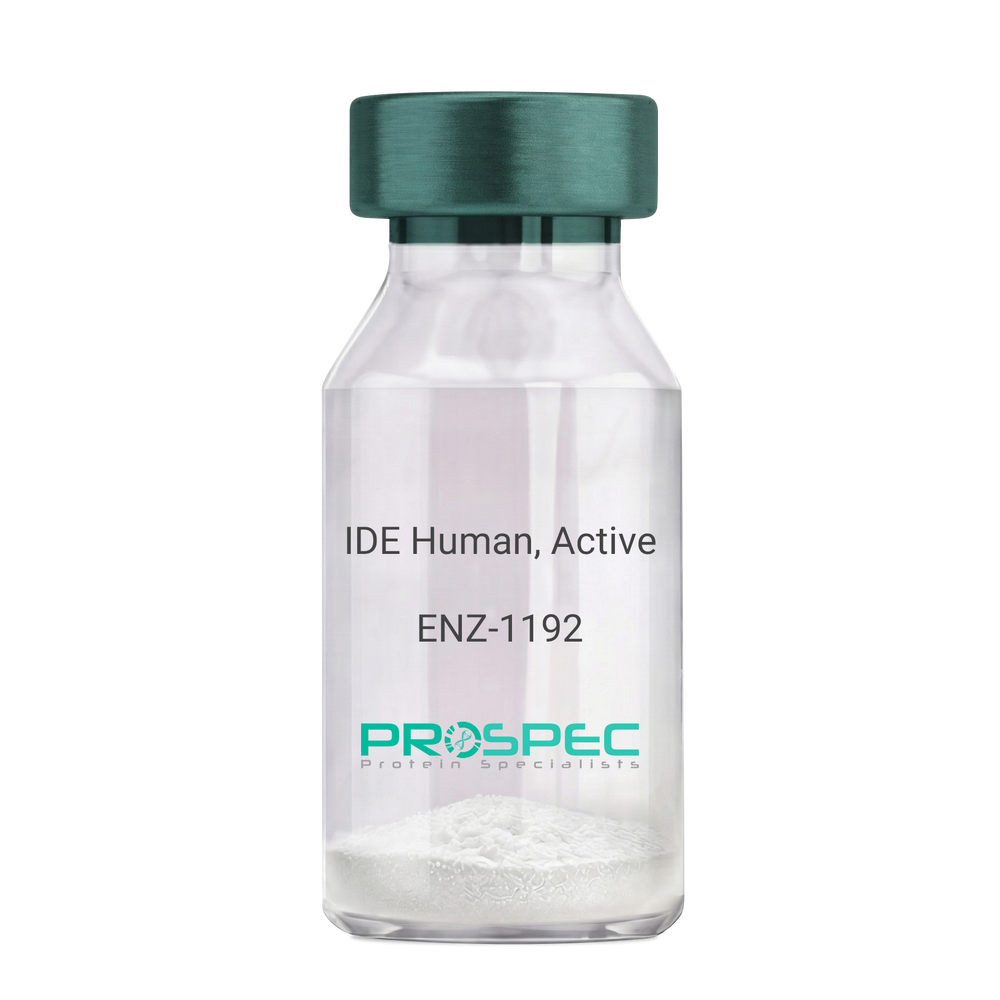
    IDE Human, Active

    Description:

    Insulin-Degrading Enzyme Human Recombinant

    Insulin-Degrading Enzyme, Abeta-Degrading Protease, Insulysin, EC 3.4.24.56, Insulinase, Insulin Protease, INSULYSIN, EC 3.4.24, IDE, insulin-degrading enzyme isoform 1. 

    Product # :

    ENZ-1192

    Price :

    Quantity :

    Shipping Method :

    Ice Icon

    Shipped with Ice Packs

    Add To Cart

    More Info

    • description
    • source
    • formulation
    • purity
    • biological activity
    • More Info
    • Citations

    Description

    IDE Human, Active Human Recombinant produced in E.Coli is a single, non-glycosylated, polypeptide chain (42-1019 a.a) containing a total of 984 amino acids, having a molecular mass of 114 kDa. IDE is fused to a 6 amino acid His-tag at C-terminus and is purified by proprietary chromatographic techniques.

    Source

    Escherichia Coli.

    Formulation

    The IDE solution (0.5mg/ml) contains 10% Glycerol, 100mM NaCl, 0.05% Brij35 and 20mM Tris-HCl buffer (pH 7.5).

    Purity

    Greater than 90.0% as determined by SDS-PAGE.

    Biological Activity

    Specific activity is greater than 3,000 pmol/min/ug in which 1 unit will convert 1.0 pmole of Mca-RPPGFSAFK(Dnp)-OH to MCA-Pro-Leu-OH per minute at pH 7.5 at 25°C.

    Citations

    More Info

    • Synonyms

      Insulin-Degrading Enzyme, Abeta-Degrading Protease, Insulysin, EC 3.4.24.56, Insulinase, Insulin Protease, INSULYSIN, EC 3.4.24, IDE, insulin-degrading enzyme isoform 1.

    • Physical Appearance

      Filtered colorless solution.

    • Stability

      Store at 4°C if entire vial will be used within 2-4 weeks. Store, frozen at -20°C for longer periods of time. For long term storage it is recommended to add a carrier protein (0.1% HSA or BSA). Avoid multiple freeze-thaw cycles.

    • Amino Acid Sequence

      MNNPAIKRIG NHITKSPEDK REYRGLELAN GIKVLLISDP TTDKSSAALD VHIGSLSDPP NIAGLSHFCE HMLFLGTKKY PKENEYSQFL SEHAGSSNAF TSGEHTNYYF DVSHEHLEGA LDRFAQFFLC PLFDESCKDR EVNAVDSEHE KNVMNDAWRL FQLEKATGNP KHPFSKFGTG NKYTLETRPN QEGIDVRQEL LKFHSAYYSS NLMAVCVLGR ESLDDLTNLV VKLFSEVENK NVPLPEFPEH PFQEEHLKQL YKIVPIKDIR NLYVTFPIPD LQKYYKSNPG HYLGHLIGHE GPGSLLSELK SKGWVNTLVG GQKEGARGFM FFIINVDLTE EGLLHVEDII LHMFQYIQKL RAEGPQEWVF QECKDLNAVA FRFKDKERPR GYTSKIAGIL HYYPLEEVLT AEYLLEEFRP DLIEMVLDKL RPENVRVAIV SKSFEGKTDR TEEWYGTQYK QEAIPDEVIK KWQNADLNGK FKLPTKNEFI PTNFEILPLE KEATPYPALI KDTAMSKLWF KQDDKFFLPK ACLNFEFFSP FAYVDPLHCN MAYLYLELLK DSLNEYAYAA ELAGLSYDLQ NTIYGMYLSV KGYNDKQPIL LKKIIEKMAT FEIDEKRFEI IKEAYMRSLN NFRAEQPHQH AMYYLRLLMT EVAWTKDELK EALDDVTLPR LKAFIPQLLS RLHIEALLHG NITKQAALGI MQMVEDTLIE HAHTKPLLPS
      QLVRYREVQL PDRGWFVYQQ RNEVHNNCGI EIYYQTDMQS TSENMFLELF CQIISEPCFN TLRTKEQLGY IVFSGPRRAN GIQGLRFIIQ SEKPPHYLES RVEAFLITME KSIEDMTEEA FQKHIQALAI RRLDKPKKLS AECAKYWGEI ISQQYNFDRD NTEVAYLKTL TKEDIIKFYK EMLAVDAPRR HKVSVHVLAR EMDSCPVVGE FPCQNDINLS QAPALPQPEV IQNMTEFKRG LPLFPLVKPH INFMAAKLHH HHHH.

    • Background

      Insulin-degrading enzyme (IDE) is a crucial protease that plays a significant role in maintaining glucose homeostasis by degrading insulin and other bioactive peptides. Dysregulation of IDE has been implicated in various metabolic disorders, particularly type 2 diabetes mellitus. IDE is also associated with the clearance of amyloid-beta peptides in the brain, making it relevant to Alzheimer's disease pathology. Studying the recombinant form of IDE is fundamental to understanding its functional mechanisms and exploring potential avenues for therapeutic interventions.

      The primary goal of this research is to express and purify recombinant IDE using diverse expression systems. Recombinant DNA techniques will be employed to construct expression vectors containing the IDE gene, followed by expression in bacterial, yeast, or mammalian cell-based systems. The recombinant IDE will be purified using affinity chromatography or other appropriate methods, facilitating subsequent biochemical and biophysical characterization.

      The second objective is to investigate the substrate specificity and catalytic activity of the purified IDE. In vitro enzymatic assays will be conducted to analyse the ability of the recombinant IDE to degrade insulin and other potential substrates. The effects of various factors, such as pH, temperature, and potential modulators, on IDE activity will be evaluated. Additionally, the interactions between IDE and its substrates will be explored using binding assays.

      The third objective is to elucidate the three-dimensional structure of the IDE recombinant using techniques like X-ray crystallography or nuclear magnetic resonance (NMR) spectroscopy. Structural insights into the active site and binding pockets of IDE will provide valuable information for understanding its substrate recognition and catalytic mechanisms. This knowledge could be instrumental in designing targeted therapeutic compounds.

      By characterizing the IDE recombinant, this research aims to contribute to our understanding of its role in insulin metabolism, glucose regulation, and potential therapeutic applications. The findings from this study may have implications for the development of novel treatments for diabetes and other related disorders.

    ProSpec's products are furnished for LABORATORY RESEARCH USE ONLY. The product may not be used as drugs, agricultural or pesticidal products, food additives or household chemicals.

    Ide Human Active
  • View Data Sheet

    Name :

    Streptolysin-O

    Description:

    Streptolysin-O Streptococcus Pyogenes Recombinant

    Streptolysin O, Thiol-activated cytolysin, slo.

    Product # :

    PRO-2302

    Price :

    Quantity :

    Shipping Method :

    Room Temp Icon

    Shipped at Room temp

    Add To Cart

    More Info

    • description
    • source
    • formulation
    • purity
    • More Info
    • Citations

    Description

    Recombinant Streptococcus Pyogenes Streptolysin-O produced in E.coli is a single, non-glycosylated, polypeptide chain containing 538 amino acids and having a molecular mass of 60.1kDa.The Streptolysin-O is purified by proprietary chromatographic techniques.

    Source

    Escherichia Coli.

    Formulation

    Streptolysin-O protein was lyophilized from a 0.2µm filtered concentrated solution in PBS, pH 7.4.

    Purity

    Greater than 97.0% as determined by
    (a) Analysis by RP-HPLC.
    (b) Analysis by SDS-PAGE.

    Citations

    More Info

    • Introduction

      Streptolysin-O is a sulfhydryl-activated toxin which causes cytolysis by forming pores in cholesterol containing host membranes. After binding to target membranes, the Streptolysin-O protein undergoes a major conformation change, leading to its insertion in the host membrane and creation of an oligomeric pore complex. Cholesterol may be needed for binding to host membranes, membrane insertion and pore formation. Streptolysin-O can be reversibly inactivated by oxidation.

    • Synonyms

      Streptolysin O, Thiol-activated cytolysin, slo.

    • Physical Appearance

      Sterile Filtered white lyophilized powder.

    • Stability

      Lyophilized Streptolysin-O although stable at room temperature for 3 weeks, should be stored desiccated below -18°C. Upon reconstitution Streptolysin-O should be stored at 4°C between 2-7 days and for future use below -18°C. For long term storage it is recommended to add a carrier protein (0.1% HSA or BSA). Please prevent freeze-thaw cycles.

    • Solubility

      It is recommended to reconstitute the lyophilized Streptolysin-O in sterile 18M-cm H2O not less than 100µg/ml, which can then be further diluted to other aqueous solutions.

    • Amino Acid Sequence

      NKQNTASTET TTTNEQPKPE SSELTTEKAG QKTDDMLNSN DMIKLAPKEM PLESAEKEEK KSEDKKKSEE DHTEEINDKI YSLNYNELEV LAKNGETIEN FVPKEGVKKA DKFIVIERKK KNINTTPVDI SIIDSVTDRT YPAALQLANK GFTENKPDAV VTKRNPQKIH IDLPGMGDKA TVEVNDPTYA NVSTAIDNLV NQWHDNYSGG NTLPARTQYT ESMVYSKSQI EAALNVNSKI LDGTLGIDFK SISKGEKKVM IAAYKQIFYT VSANLPNNPA DVFDKSVTFK ELQRKGVSNE APPLFVSNVA YGRTVFVKLE TSSKSNDVEA AFSAALKGTD VKTNGKYSDI LENSSFTAVV LGGDAAEHNK VVTKDFDVIR NVIKDNATFS RKNPAYPISY TSVFLKNNKI AGVNNRTEYV ETTSTEYTSG KINLSHQGAY VAQYEILWDE INYDDKGKEV ITKRRWDNNW YSKTSPFSTV IPLGANSRNI RIMARECTGL AWEWWRKVID ERDVKLSKEI NVNISGSTLS PYGSITYK.

    ProSpec's products are furnished for LABORATORY RESEARCH USE ONLY. The product may not be used as drugs, agricultural or pesticidal products, food additives or household chemicals.

    Streptolysin O
  • View Data Sheet

    Name :

    Prolactin Mouse

    Description:

    Prolactin Mouse Recombinant

    Mammotropin, Luterotropic hormone, Lutetropin, PRL.

    Product # :

    CYT-321

    Price :

    Quantity :

    Shipping Method :

    Room Temp Icon

    Shipped at Room temp

    Add To Cart

    More Info

    • description
    • source
    • formulation
    • purity
    • biological activity
    • More Info
    • Citations

    Description

    Prolactin Mouse Recombinant produced in E.Coli is a single, non-glycosylated polypeptide chain containing 198 amino acids and having a molecular mass of 22.5 kDa. The Prolactin is purified by proprietary chromatographic techniques.

    Source

    Escherichia Coli.

    Formulation

    The protein was lyophilized from a concentrated (1mg/ml) solution with 10mM sodium Phosphate buffer pH=8 and 50mM Nacl.

    Purity

    Greater than 95.0% as determined by:
    (a) Analysis by RP-HPLC.
    (b) Analysis by SDS-PAGE.

    Biological Activity

    The sequence of the first five N-terminal amino acids was determined and was found to be Ala-Leu-Pro-Ile-Cys-Ser.

    Citations

    More Info

    • Introduction

      Prolactin is a neuroendocrine hormone synthesized primarily by the pituitary gland but also a variety of other cell types including the placenta, brain and uterus. Its primary function is to promote and maintain lactation but has also been shown to have a role in breast cancer development, regulation of reproductive function and immunoregulation.

    • Synonyms

      Mammotropin, Luterotropic hormone, Lutetropin, PRL.

    • Physical Appearance

      Sterile Filtered White lyophilized (freeze-dried) powder.

    • Stability

      Lyophilized Prolactin although stable at room temperature for 3 weeks, should be stored desiccated below -18°C. Upon reconstitution Prolactin should be stored at 4°C between 2-7 days and for future use below -18°C.For long term storage it is recommended to add a carrier protein (0.1% HSA or BSA).Please prevent freeze-thaw cycles.

    • Solubility

      It is recommended to reconstitute the lyophilized Prolactin in sterile 18MΩ-cm H2O not less than 100µg/ml, which can then be further diluted to other aqueous solutions.

    • Amino Acid Sequence

      The sequence of the first five N-terminal amino acids was determined and was found to be Met-Leu-Pro-Ile-Cys.

    ProSpec's products are furnished for LABORATORY RESEARCH USE ONLY. The product may not be used as drugs, agricultural or pesticidal products, food additives or household chemicals.

    Prolactin Mouse
  • View Data Sheet

    Name :

    NARS Human, Sf9

    Description:

    Asparaginyl-TRNA Synthetase Human Recombinant, Sf9

    Asparagine--tRNA ligase, cytoplasmic, EC 6.1.1.22, Asparaginyl-tRNA synthetase, AsnRS, NARS, NARS1.

    Product # :

    ENZ-716

    Price :

    Quantity :

    Shipping Method :

    Ice Icon

    Shipped with Ice Packs

    Add To Cart

    More Info

    • description
    • source
    • formulation
    • purity
    • More Info
    • Citations

    Description

    NARS Human Recombinant produced in SF9 is a glycosylated, polypeptide chain having a calculated molecular mass of 63,853 Dalton. NARS is expressed with a -6xHis tag at N-terminus and purified by proprietary chromatographic techniques.

    Source

    Sf9 Insect Cells.

    Formulation

    NARS is supplied in 20mM HEPES buffer pH-7.6, 250mM NaCl and 20% glycerol.

    Purity

    Greater than 80.0% as determined by SDS-PAGE.

    Citations

    More Info

    • Introduction

      Aminoacyl-tRNA synthetases are a class of enzymes which charge tRNAs with their cognate amino acids. Asparaginyl-tRNA synthetase (NARS) is localized to the cytoplasm and is a member of the class II family of tRNA synthetases. The N-terminal domain characterizes the signature sequence for the eukaryotic asparaginyl-tRNA synthetases.

    • Synonyms

      Asparagine--tRNA ligase, cytoplasmic, EC 6.1.1.22, Asparaginyl-tRNA synthetase, AsnRS, NARS, NARS1.

    • Physical Appearance

      Sterile Filtered clear solution.

    • Stability

      Store at 4°C if entire vial will be used within 2-4 weeks. Store, frozen at -20°C for longer periods of time. Avoid multiple freeze-thaw cycles.

    ProSpec's products are furnished for LABORATORY RESEARCH USE ONLY. The product may not be used as drugs, agricultural or pesticidal products, food additives or household chemicals.

    Nars Human
  • View Data Sheet

    Name :

    BCL2L11 Human

    Description:

    BCL2 Like 11 Human Recombinant

    Bcl-2-like protein 11, Bcl2-L-11, Bcl2-interacting mediator of cell death, BCL2L11, BIM, BAM, BOD.

    Product # :

    PRO-1171

    Price :

    Quantity :

    Shipping Method :

    Ice Icon

    Shipped with Ice Packs

    Add To Cart

    More Info

    • description
    • source
    • formulation
    • purity
    • More Info
    • Citations

    Description

    BCL2L11 Human Recombinant produced in E.Coli is a single, non-glycosylated polypeptide chain containing 162 amino acids (1-138 a.a) and having a molecular mass of 18.5kDa.BCL2L11 is fused to a 24 amino acid His-tag at N-terminus & purified by proprietary chromatographic techniques.

    Source

    E.coli.

    Formulation

    BCL2L11 protein solution (0.5mg/ml) containing 20mM Tris-HCl buffer, pH8.0, 2M Urea, 20% glycerol, 5mM DTT and 300mM NaCl.

    Purity

    Greater than 80% as determined by SDS-PAGE.

    Citations

    More Info

    • Introduction

      Bcl-2-like protein 11 (BCL2L11) is a member of the Bcl-2 family and contains a Bcl-2 homology domain 3 (BH3). BCL2L11 expression can be stimulated by nerve growth factor (NGF), in addition to the forkhead transcription factor (FKHR-L1) which proposes a role of the BCL2L11 gene in neuronal and lymphocyte apoptosis. BCL2L11 interacts with other members of the BCL-2 protein family, including BCL2, BCL2L1/BCL-X(L), and MCL1, and acts as an apoptotic activator. BimEL, BimL and BimS are the main isoforms which are ubiquitously expressed with a tissue-specific variation. The Isoform Bim-gamma, on the other hand, is most abundantly expressed in the small intestine and colon, and in lower levels in spleen, prostate, testis, heart, liver and kidney.

    • Synonyms

      Bcl-2-like protein 11, Bcl2-L-11, Bcl2-interacting mediator of cell death, BCL2L11, BIM, BAM, BOD.

    • Physical Appearance

      Sterile Filtered colorless solution.

    • Stability

      Store at 4°C if entire vial will be used within 2-4 weeks. Store, frozen at -20°C for longer periods of time. For long term storage it is recommended to add a carrier protein (0.1% HSA or BSA).Avoid multiple freeze-thaw cycles.

    • Amino Acid Sequence

      MGSSHHHHHH SSGLVPRGSH MGSHMAKQPS DVSSECDREG RQLQPAERPP QLRPGAPTSL QTEPQDRSPA PMSCDKSTQT PSPPCQAFNH YLSAMASMRQ AEPADMRPEI WIAQELRRIG DEFNAYYARR VFLNNYQAAE DHPRMVILRL LRYIVRLVWR MH.

    ProSpec's products are furnished for LABORATORY RESEARCH USE ONLY. The product may not be used as drugs, agricultural or pesticidal products, food additives or household chemicals.

    Bcl2L11 Human
  • View Data Sheet

    Name :

    BHMT2 Human

    Description:

    Betaine-Homocysteine Methyltransferase 2 Human Recombinant

    BHMT2, Betaine--Homocysteine S-Methyltransferase 2, SMM-Hcy Methyltransferase, Betaine-Homocysteine Methyltransferase 2, S-Methylmethionine--Homocysteine S-Methyltransferase BHMT2, EC 2.1.1.10, EC 2.1.1.5.

    Product # :

    ENZ-798

    Price :

    Quantity :

    Shipping Method :

    Ice Icon

    Shipped with Ice Packs

    Add To Cart

    More Info

    • description
    • source
    • formulation
    • purity
    • More Info
    • Citations

    Description

    BHMT2 Human Recombinant produced in E.Coli is a single, non-glycosylated polypeptide chain containing 386 amino acids (1-363 a.a.) and having a molecular mass of 42.7kDa. BHMT2 is fused to a 23 amino acid His-tag at N-terminus.

    Source

    Escherichia Coli.

    Formulation

    BHMT2 protein solution (0.5mg/ml) contains 20mM Tris-HCl buffer (pH 8.0), 0.4M Urea and 10% glycerol.

    Purity

    Greater than 90.0% as determined by SDS-PAGE.

    Citations

    More Info

    • Introduction

      Betaine-Homocysteine Methyltransferase 2 (BHMT2) is involved in the regulation of homocysteine metabolism. Homocysteine is a sulfur-containing amino acid which has a key role in methylation reactions. Transfer of the methyl group from betaine to homocysteine generates methionine, which donates the methyl group to methylate DNA, proteins, lipids, and other intracellular metabolites. BHMT2 is one of two methyl transferases which can catalyze the transfer of the methyl group from betaine to homocysteine. BHMT2 converts homocysteine to methionine using S-methylmethionine (SMM) as a methyl donor. Homocysteine metabolism anomalies are implicated in disorders varying from vascular disease to neural tube birth defects such as spina bifida.

    • Synonyms

      BHMT2, Betaine--Homocysteine S-Methyltransferase 2, SMM-Hcy Methyltransferase, Betaine-Homocysteine Methyltransferase 2, S-Methylmethionine--Homocysteine S-Methyltransferase BHMT2, EC 2.1.1.10, EC 2.1.1.5.

    • Physical Appearance

      Sterile Filtered colorless solution.

    • Stability

      Store at 4°C if entire vial will be used within 2-4 weeks. Store, frozen at -20°C for longer periods of time. For long term storage it is recommended to add a carrier protein (0.1% HSA or BSA).Avoid multiple freeze-thaw cycles.

    • Amino Acid Sequence

      MGSSHHHHHH SSGLVPRGSH MGSMAPAGRP GAKKGILERL ESGEVVIGDG SFLITLEKRG YVKAGLWTPE AVIEHPDAVR QLHMEFLRAG SNVMQTFTFS ASEDNMESKW EDVNAAACDL AREVAGKGDA LVAGGICQTS IYKYQKDEAR IKKLFRQQLE VFAWKNVDFL IAEYFEHVEE AVWAVEVLKE SDRPVAVTMC IGPEGDMHDI TPGECAVRLV KAGASIVGVN CRFGPDTSLK TMELMKEGLE WAGLKAHLMV QPLGFHAPDC GKEGFVDLPE YPFGLESRVA TRWDIQKYAR EAYNLGVRYI GGCCGFEPYH IRAIAEELAP ERGFLPPASE KHGSWGSGLD MHTKPWIRAR ARREYWENLL PASGRPFCPS LSKPDF.

    ProSpec's products are furnished for LABORATORY RESEARCH USE ONLY. The product may not be used as drugs, agricultural or pesticidal products, food additives or household chemicals.

    Bhmt2 Human
  • View Data Sheet

    Name :

    CES2E Mouse

    Description:

    Carboxylesterase 2E Mouse Recombinant

    9030624L02Rik, Ces5, Ces2e.

    Product # :

    ENZ-1141

    Price :

    Quantity :

    Shipping Method :

    Ice Icon

    Shipped with Ice Packs

    Add To Cart

    More Info

    • description
    • source
    • formulation
    • purity
    • biological activity
    • More Info
    • Citations

    Description

    CES2E Mouse produced in Sf9 Baculovirus cells is a single, glycosylated polypeptide chain containing 541 amino acids ( 27-559 aa) and having a molecular mass of 60.5kDa.CES2E is fused to a 8 amino acid His tag at C-terminus and purified by proprietary chromatographic techniques.

    Source

    Sf9, Baculovirus cells.

    Formulation

    The CES2E solution (0.25 mg/ml) contains 10% Glycerol and Phosphate-Buffered Saline (pH 7.4).

    Purity

    Greater than 95.0% as determined by SDS-PAGE.

    Biological Activity

    Specific activity is > 30unit/mg, and is defined as the amount of enzyme that hydrolyze 1.0 umole of pnitrophenyl acetate to p-nitrophenol per minute at pH 7.5 at 25C˚.

    Citations

    More Info

    • Introduction

      Carboxylesterase 2E or CES2E is an enzyme that hydrolyzes various carboxylic acid esters. This enzyme can be found mainly in mammalian liver cells. CES2E is taking part in chemical reactions, especially in carboxylic ester and water catalyzation to alcohol & carboxylate.

    • Synonyms

      9030624L02Rik, Ces5, Ces2e.

    • Physical Appearance

      Sterile Filtered colorless solution.

    • Stability

      Store at 4°C if entire vial will be used within 2-4 weeks. Store, frozen at -20°C for longer periods of time. For long term storage it is recommended to add a carrier protein (0.1% HSA or BSA).Avoid multiple freeze-thaw cycles.

    • Amino Acid Sequence

      QDSASPIRNT HTGQVRGSLV HVKDTDIAVH TFLGIPFAKP PVGPLRFAPP EAPEPWSGVR DGTSHPNMCL QNDNLMGSED LKMMNLILPP ISMSEDCLYL NIYVPAHAHE GSNLPVMVWI HGGALTVGMA SMYDGSMLAA TEDVVVVAIQ YRLGVLGFFS TGDQHAKGNW GYLDQVAALR WVQQNIVHFG GNPDRVTIFG ESAGGTSVSS HVVSPMSQGL FHGAIMESGV AVLPDLISSS
      SEMVHRIVAN LSGCAAVNSE TLMCCLRGKN EAEMLAINKV FKIIPGVVDG EFLPKHPQEL MASKDFHPVP SIIGINNDEY GWILPTIMDP AQKIEEITRK TLPAVLKSTA LKMMLPPECG DLLMEEYMGD TEDPETLQAQ FREMKGDFMF VIPALQVAHF QRSHAPVYFY EFQHRPSFFK DFRPPYVKAD HGDEIFLVFG YQFGNIKLPY TEEEEQLSRR IMKYWANFAR HGNPNSEGLP YWPVMDHDEQ YLQLDIQPSV GRALKARRLQ FWTKTLPQKI QELKGSQERH KELLEHHHHH H

    ProSpec's products are furnished for LABORATORY RESEARCH USE ONLY. The product may not be used as drugs, agricultural or pesticidal products, food additives or household chemicals.

    Ces2E Mouse
  • View Data Sheet

    Name :

    LTF Human S.Plasma

    Description:

    Lactoferrin Human (Seminal Plasma)

    Lactotransferrin, Lactoferrin, Growth-inhibiting protein 12, Talalactoferrin, LTF, GIG12, LF, HLF2, Neutrophil Lactoferrin.

    Product # :

    PRO-1591

    Price :

    Quantity :

    Shipping Method :

    Room Temp Icon

    Shipped at Room temp

    Add To Cart

    More Info

    • description
    • source
    • formulation
    • purity
    • More Info
    • Citations

    Description

    The Human Lactoferrin produced from pooled Human seminal plasma has a molecular mass of 76.165kDa (calculated without glycosylation) containing 691 amino acid residues.

    Source

    Human seminal plasma.

    Formulation

    LTF protein filtered (0.4µm) and lyophilized in 0.5 mg/ml in 0.05M phosphate buffer and 0.075M NaCl, pH 7.4.

    Purity

    Purity greater than 90% as determined by SDS-PAGE.

    Citations

    More Info

    • Introduction

      Lactoferrin is a glycoprotein that belongs to the transferrin family of iron binding proteins. It is found in human breast milk as well as most epithelial surface secretions including tears, nasogastric, saliva, and bronchial. Lactoferrin binds 2 molecules of iron with very high affinity. Lactoferrin inhibits bacterial growth by withholding iron, its N-terminal region is an antimicrobial peptide. Lactotransferrin acts synergistically with lysozyme to potentiate the activity of both proteins. The multifunctional protein lactoferrin has many physiological possible roles. It is often referred to as an innate defense protein and frequently serves as the first line of defense in protection against pathogens. It has been shown to have the ability to bind iron, it is a natural anti-bacterial, anti-fungal and anti-viral, it is an antioxidant and it also has immunomodulatory properties. It has many beneficial properties, which make it a good candidate for a number of product applications. Considerable research is currently going on to explain the various suggested biological functions of lactoferrin.

    • Synonyms

      Lactotransferrin, Lactoferrin, Growth-inhibiting protein 12, Talalactoferrin, LTF, GIG12, LF, HLF2, Neutrophil Lactoferrin.

    • Physical Appearance

      Filtered White lyophilized (freeze-dried) powder.

    • Stability

      Store lyophilized protein at -20°C. Aliquot the product after reconstitution to avoid repeated freezing/thawing cycles. Reconstituted protein can be stored at 4°C for a limited period of time; it does not show any change after two weeks at 4°C.

    • Solubility

      It is recommended to add deionized water to prepare a working stock solution of approximately 0.5 mg/ml and let the lyophilized pellet dissolve completely. Product is not sterile! Please filter the product by an appropriate sterile filter before using it in the cell culture.

    • Amino Acid Sequence

      GRRRSVQWCA VSQPEATKCF QWQRNMRKVR GPPVSCIKRD SPIQCIQAIA ENRADAVTLD GGFIYEAGLA PYKLRPVAAE VYGTERQPRT HYYAVAVVKK GGSFQLNELQ GLKSCHTGLR RTAGWNVPIG TLRPFLNWTG PPEPIEAAVA RFFSASCVPG ADKGQFPNLC RLCAGTGENK CAFSSQEPYF SYSGAFKCLR DGAGDVAFIR ESTVFEDLSD EAERDEYELL CPDNTRKPVD KFKDCHLARV PSHAVVARSV NGKEDAIWNL LRQAQEKFGK DKSPKFQLFG SPSGQKDLLF KDSAIGFSRV PPRIDSGLYL GSGYFTAIQN LRKSEEEVAA RRARVVWCAV GEQELRKCNQ WSGLSEGSVT CSSASTTEDC IALVLKGEAD AMSLDGGYVY TAGKCGLVPV LAENYKSQQS SDPDPNCVDR PVEGYLAVAV VRRSDTSLTW NSVKGKKSCH TAVDRTAGWN IPMGLLFNQT GSCKFDEYFS QSCAPGSDPR SNLCALCIGD EQGENKCVPN SNERYYGYTG AFRCLAENAG DVAFVKDVTV LQNTDGNNNE AWAKDLKLAD FALLCLDGKR KPVTEARSCH LAMAPNHAVV SRMDKVERLK QVLLHQQAKF GRNGSDCPDK FCLFQSETKN LLFNDNTECL ARLHGKTTYE KYLGPQYVAG ITNLKKCSTS PLLEACEFLR K.

    • Human Virus Test

      Samples from each donor have been tested and found negative for HBsAg, HIV-1+2, HCV, syphilis, aHBc, RRR.

    ProSpec's products are furnished for LABORATORY RESEARCH USE ONLY. The product may not be used as drugs, agricultural or pesticidal products, food additives or household chemicals.

    Ltf Human Seminal Plasma
  • View Data Sheet

    Name :

    RNASE7 Human

    Description:

    Ribonuclease 7 Human Recombinant

    Ribonuclease, RNase A Family, 7, Skin-Derived Antimicrobial Protein 2, RNase 7, SAP-2, EC 3.1.27.5, EC 3.1.27., EC 3.1.27, Ribonuclease 7.

    Product # :

    ENZ-704

    Price :

    Quantity :

    Shipping Method :

    Ice Icon

    Shipped with Ice Packs

    Add To Cart

    More Info

    • description
    • source
    • formulation
    • purity
    • More Info
    • Citations

    Description

    RNASE7 Human Recombinant produced in E.Coli is a single, non-glycosylated polypeptide chain containing 151 amino acids (29-156 a.a) and having a molecular mass of 16.9kDa. RNASE7 is fused to a 23 amino acid His-tag at N-terminus & purified by proprietary chromatographic techniques.

    Source

    Escherichia Coli.

    Formulation

    RNASE7 protein solution (0.5mg/ml) containing 20mM Tris-HCl buffer (pH8.0) and 10% glycerol 1mM DTT.

    Purity

    Greater than 90% as determined by SDS-PAGE.

    Citations

    More Info

    • Introduction

      Ribonuclease 7 (RNASE7) is one of the final RNase A superfamily ribonucleases. RNASE7 was isolated from skin-derived stratum corneum. RNASE7 protein demonstrated potent ribonuclease activity and hence may contribute to the well-known ribonuclease activity of human skin. RNASE7 has revealed a broad spectrum antimicrobial activity against many pathogenic microorganisms and extraordinarily potent activity.

    • Synonyms

      Ribonuclease, RNase A Family, 7, Skin-Derived Antimicrobial Protein 2, RNase 7, SAP-2, EC 3.1.27.5, EC 3.1.27., EC 3.1.27, Ribonuclease 7.

    • Physical Appearance

      Sterile Filtered colorless solution.

    • Stability

      Store at 4°C if entire vial will be used within 2-4 weeks. Store, frozen at -20°C for longer periods of time. For long term storage it is recommended to add a carrier protein (0.1% HSA or BSA). Avoid multiple freeze-thaw cycles.

    • Amino Acid Sequence

      MGSSHHHHHH SSGLVPRGSH MGSKPKGMTS SQWFKIQHMQ PSPQACNSAM KNINKHTKRC KDLNTFLHEP FSSVAATCQT PKIACKNGDK NCHQSHGPVS LTMCKLTSGK YPNCRYKEKR QNKSYVVACK PPQKKDSQQF HLVPVHLDRV L.

    ProSpec's products are furnished for LABORATORY RESEARCH USE ONLY. The product may not be used as drugs, agricultural or pesticidal products, food additives or household chemicals.

    Rnase7 Human
  • View Data Sheet

    Name :

    CoV-2-S1 (319-541), Biotin

    Description:

    Coronavirus 2019 Spike Glycoprotein-S1 Receptor Binding Domain (319-541 a.a), Biotinylated Recombinant

    Product # :

    SARS-030

    Price :

    Quantity :

    Shipping Method :

    Room Temp Icon

    Shipped at Room temp

    Add To Cart

    More Info

    • description
    • source
    • formulation
    • purity
    • More Info
    • Citations

    Description

    The HEK293 derived Biotinylated recombinant protein contains the Coronavirus 2019 Spike Glycoprotein S1 Receptor Binding Domain [ RBD ], Wuhan-Hu-1 strain, amino acids 319-541 fused to His tag & AVI tag at C-terminal and having a molecular mass of 28.7kDa.

    Source

    HEK293 Cells.

    Formulation

    CoV-2 S1 RBD protein is lyophilized from 1x PBS pH-7.4 + 10% trehalose.

    Purity

    Protein is >90% pure as determined SDS-PAGE.

    Citations

    More Info

    • Introduction

      A human infecting coronavirus (viral pneumonia) called 2019 novel coronavirus, 2019-nCoV was found in the fish market at the city of Wuhan, Hubei province of China on December 2019.

      The 2019-nCoV shares an 87% identity to the 2 bat-derived severe acute respiratory syndrome 2018 SARS-CoV-2 located in Zhoushan of eastern China. 2019-nCoV has an analogous receptor-BD-structure to that of 2018 SARS-CoV, even though there is a.a. diversity so thus the 2019-nCoV might bind to ACE2 receptor protein (angiotensin-converting enzyme 2) in humans.

      While bats are possibly the host of 2019-nCoV, researchers suspect that animal from the ocean sold at the seafood market was an intermediate host. RSCU analysis proposes that the 2019-nCoV is a recombinant within the viral spike glycoprotein between the bat coronavirus and an unknown coronavirus.

    • Physical Appearance

      Lyophilized freezed dried powder.

    • Stability

      Lyophilized Cov-2 S1 Glycoprotein RBD although stable at room temperature for 3 weeks, should be stored desiccated below -18°C. Upon reconstitution CoV2 Spike protein should be stored at 4°C between 2-7 days and for future use below -18°C.For long term storage it is recommended to add a carrier protein (0.1% HSA or BSA).Please prevent freeze-thaw cycles.

    • Solubility

      It is recommended to reconstitute the lyophilized CoV-2 S1 protein in sterile 18M-cm H2O at aconcentration of 0.2mg/ml and not less than 0.1mg/ml, which can then be further diluted to other aqueous solutions.

    • Purification Method

      Purified by Metal-Afinity chromatographic technique.

    ProSpec's products are furnished for LABORATORY RESEARCH USE ONLY. The product may not be used as drugs, agricultural or pesticidal products, food additives or household chemicals.

    product_image.jpg
  • View Data Sheet

    Name :

    HERC5 Human

    Description:

    HECT and RLD Domain Containing E3 Ubiquitin Protein Ligase 5 Human Recombinant

    HERC5, HECT and RLD Domain Containing E3 Ubiquitin Protein Ligase 5, CEB1, Hect Domain and RLD 5, Cyclin-E-Binding Protein 1, CEBP1, HECT Domain and RCC1-Like Domain-Containing Protein 5, E3 ISG15--Protein Ligase HERC5, Probable E3 Ubiquitin-Protein Ligase HERC5, EC 6.3.2.- , EC 6.3.2.

    Product # :

    ENZ-797

    Price :

    Quantity :

    Shipping Method :

    Ice Icon

    Shipped with Ice Packs

    Add To Cart

    More Info

    • description
    • source
    • formulation
    • purity
    • More Info
    • Citations

    Description

    HERC5 Human Recombinant produced in E.Coli is a single, non-glycosylated polypeptide chain containing 367 amino acids (681-1024 a.a.) and having a molecular mass of 43kDa. HERC5 is fused to a 23 amino acid His-tag at N-terminus.

    Source

    Escherichia Coli.

    Formulation

    HERC5 protein solution (1mg/ml) contains 20mM Tris-HCl buffer (pH 8.0), 0.4M Urea and 10% glycerol.

    Purity

    Greater than 90.0% as determined by SDS-PAGE.

    Citations

    More Info

    • Introduction

      HECT and RLD Domain Containing E3 Ubiquitin Protein Ligase 5 (HERC5) is a member of the HERC family of ubiquitin ligases, found in a cluster of HERC family genes on chromosome 4. HERC5 is a protein with a HECT domain and 5 RCC1 repeats. The HERC5 protein localizes to the cytoplasm and perinuclear region and serves as an INF-induced E3 protein ligase that mediates ISGylation of protein targets. HERC5 exhibits antiviral activity towards HIV-1, influenza A virus and human papillomavirus. HERC5 is a major E3 ligase for ISG15 conjugation. HERC5 also serves as a positive regulator of innate antiviral response in cells induced by INF. Pro-inflammatory cytokines upregulate HERC5 in endothelial cells. HERC5 is physically connected with polyribosomes, broadly modifies recently synthesized proteins in a cotranslational fashion.

    • Synonyms

      HERC5, HECT and RLD Domain Containing E3 Ubiquitin Protein Ligase 5, CEB1, Hect Domain and RLD 5, Cyclin-E-Binding Protein 1, CEBP1, HECT Domain and RCC1-Like Domain-Containing Protein 5, E3 ISG15--Protein Ligase HERC5, Probable E3 Ubiquitin-Protein Ligase HERC5, EC 6.3.2.- , EC 6.3.2.

    • Physical Appearance

      Sterile Filtered colorless solution.

    • Stability

      Store at 4°C if entire vial will be used within 2-4 weeks. Store, frozen at -20°C for longer periods of time. For long term storage it is recommended to add a carrier protein (0.1% HSA or BSA).Avoid multiple freeze-thaw cycles.

    • Amino Acid Sequence

      MGSSHHHHHH SSGLVPRGSH MGSFDLTVRR NHLIEDVLNQ LSQFENEDLR KELWVSFSGE IGYDLGGVKK EFFYCLFAEM IQPEYGMFMY PEGASCMWFP VKPKFEKKRY FFFGVLCGLS LFNCNVANLP FPLALFKKLL DQMPSLEDLK ELSPDLGKNL QTLLDDEGDN FEEVFYIHFN VHWDRNDTNL IPNGSSITVN QTNKRDYVSK YINYIFNDSV KAVYEEFRRG FYKMCDEDII KLFHPEELKD VIVGNTDYDW KTFEKNARYE PGYNSSHPTI VMFWKAFHKL TLEEKKKFLV FLTGTDRLQM KDLNNMKITF CCPESWNERD PIRALTCFSV LFLPKYSTME TVEEALQEAI NNNRGFG.

    ProSpec's products are furnished for LABORATORY RESEARCH USE ONLY. The product may not be used as drugs, agricultural or pesticidal products, food additives or household chemicals.

    Herc5 Human
  • View Data Sheet

    Name :

    ALDOC Mouse

    Description:

    Aldolase C Fructose-Bisphosphate Mouse Recombinant

    Aldolase 3, Brain-type aldolase, Scrapie-responsive protein 2, Zebrin II, Aldo3, Scrg2, Fructose-bisphosphate aldolase C, ALDOC.

    Product # :

    ENZ-868

    Price :

    Quantity :

    Shipping Method :

    Ice Icon

    Shipped with Ice Packs

    Add To Cart

    More Info

    • description
    • source
    • formulation
    • purity
    • More Info
    • Citations

    Description

    ALDOC Mouse Recombinant produced in E.Coli is a single, non-glycosylated polypeptide chain containing 387 amino acids (1-363 a.a) and having a molecular mass of 41.9kDa.ALDOC is fused to a 24 amino acid His-tag at N-terminus & purified by proprietary chromatographic techniques.

    Source

    Escherichia Coli.

    Formulation

    The ALDOC solution (1mg/ml) containing Phosphate buffered saline (pH7.4), 20% glycerol and 1mM DTT.

    Purity

    Greater than 95.0% as determined by SDS-PAGE.

    Citations

    More Info

    • Introduction

      Aldolase C Fructose-Bisphosphate (ALDOC) belongs to the class I fructose-bisphosphate aldolase family. ALDOC is a glycolytic enzyme which catalyzes the reversible aldol cleavage of fructose-1,6-biphosphate and fructose 1-phosphate to dihydroxyacetone phosphate and either glyceraldehyde-3-phosphate or glyceraldehydes respectively. ALDOC is expressed exclusively in the hippocampus and Purkinje cells of the brain.

    • Synonyms

      Aldolase 3, Brain-type aldolase, Scrapie-responsive protein 2, Zebrin II, Aldo3, Scrg2, Fructose-bisphosphate aldolase C, ALDOC.

    • Physical Appearance

      Sterile Filtered clear colorless solution.

    • Stability

      Store at 4°C if entire vial will be used within 2-4 weeks.Store, frozen at -20°C for longer periods of time. For long term storage it is recommended to add a carrier protein (0.1% HSA or BSA).Avoid multiple freeze-thaw cycles.

    • Amino Acid Sequence

      MGSSHHHHHH SSGLVPRGSH MGSHMPHSYP ALSAEQKKEL SDIALRIVTP GKGILAADES VGSMAKRLSQ IGVENTEENR RLYRQVLFSA DDRVKKCIGG VIFFHETLYQ KDDNGVPFVR TIQDKGILVG IKVDKGVVPL AGTDGETTTQ GLDGLLERCA QYKKDGADFA KWRCVLKISD RTPSALAILE NANVLARYAS ICQQNGIVPI VEPEILPDGD HDLKRCQYVT EKVLAAVYKA LSDHHVYLEG TLLKPNMVTP GHACPIKYSP EEIAMATVTA LRRTVPPAVP GVTFLSGGQS EEEASLNLNA INRCPLPRPW ALTFSYGRAL QASALNAWRG QRDNAGAATE EFIKRAEMNG LAAQGRYEGS GDGGAAAQSL YIANHAY

    ProSpec's products are furnished for LABORATORY RESEARCH USE ONLY. The product may not be used as drugs, agricultural or pesticidal products, food additives or household chemicals.

    Aldoc Mouse
  • 1
  • …
  • 8
  • 9
  • 10
  • 11
  • 12
  • …
  • 42
Your browser does not support the video tag.

Products

  • Cytokines
  • Growth Factors
  • Chemokines
  • CD Antigens
  • Neurotrophins
  • Hormones
  • Enzymes
  • Viral Antigens
  • Recombinant Proteins
  • Natural Proteins
  • Monoclonal Antibodies
  • Polyclonal Antibodies
  • Thermal Packaging

About

  • Company
  • Founder
  • Contribution
  • Contact Us
  • My Account

Ordering

  • Ordering Method
  • Ordering - Credit Card
  • Ordering PO
  • Shipping Fees
  • FAQ's

Legal

  • Terms & Conditions
  • Privacy
  • Site Map
  • info@prospecbio.com
  • Facebook
  • Instagram
  • Linkedin Profile

© 2026 ProSpec-Tany TechnoGene Ltd. All Rights Reserved.

  • Choosing a selection results in a full page refresh.
  • Opens in a new window.