Search results
1000 results found for “Prohibitin”
Name
Description
Product #
Price
Quantity
Shipping Method
- View Data Sheet
Name :
HCV Core Genotype-1b BiotinDescription:
Hepatitis C Virus Core, Biotin Recombinant
Product # :
HCV-242Price :
Quantity :
Shipping Method :
Shipped with Ice Packs
More Info
- description
- formulation
- purity
- More Info
Description
The E.coli derived recombinant Biotin Labeled protein contains the HCV core nucleocapsid immunodominant regions, amino acids 2-119, having an MW of 22kDa. The protein is fused to a beta-galactosidase (114 kDa) at the N-terminus.
Formulation
20mM Tris-HCl pH 8 and 8M urea.
Purity
Protein is >95% pure as determined by SDS-PAGE.
More Info
-
Introduction
HCV is a small 50nm, enveloped, single-stranded, positive sense RNAvirus in the family Flaviviridae.
HCV has a high rate of replication with approximately one trillion particles produced each day in an infected individual. Due to lack of proofreading by the HCV RNA polymerase, the HCV has an exceptionally high mutation rate, a factor that may help it elude the host's immune response. Hepatitis C virus is classified into six genotypes(1-6) with several subtypes within each genotype. The preponderance and distribution of HCV genotypes varies globally. Genotype is clinically important in determining potential response to interferon-based therapy and the required duration of such therapy. Genotypes 1 and 4 are less responsive to interferon-based treatment than are the other genotypes (2, 3, 5 and 6). -
Stability
HCV Core although stable at 4°C for 1 week, should be stored below -18°C. Please prevent freeze thaw cycles.
-
Applications
Antigen in ELISA and Western blots, excellent antigen for detection of HCV with minimal specificity problems.
-
Specificity
Immunoreactive with sera of HCV-infected individuals.
-
Purification Method
HCV Core protein was purified by proprietary chromatographic technique.
ProSpec's products are furnished for LABORATORY RESEARCH USE ONLY. The product may not be used as drugs, agricultural or pesticidal products, food additives or household chemicals.
- View Data Sheet
Name :
DBI MouseDescription:
Diazepam Binding Inhibitor Mouse Recombinant
Acyl-CoA-binding protein, ACBP, Diazepam-binding inhibitor, DBI, Endozepine, EP, Dbi.
Product # :
PRO-2527Price :
Quantity :
Shipping Method :
Shipped with Ice Packs
More Info
- description
- source
- formulation
- purity
- More Info
Description
DBI Mouse Recombinant produced in E.Coli is a single, non-glycosylated polypeptide chain containing 110 amino acids (1-87 a.a) and having a molecular mass of 12.4kDa. DBI is fused to a 23 amino acid His-tag at N-terminus & purified by proprietary chromatographic techniques.
Source
Escherichia Coli.
Formulation
DBI protein solution (1mg/ml) contains Phosphate buffer saline (pH7.4).
Purity
Greater than 95.0% as determined by SDS-PAGE.
More Info
-
Introduction
DBI, also known as Acyl-CoA-binding protein isoform 2, is a diazepam binding inhibitor, which is regulated by hormones. DBI participates in lipid metabolism and in the displacement of beta-carbolines & benzodiazepines, which modulate signal transduction at type A gamma-aminobutyric acid receptors located in brain synapses. Moreover, during adipocyte differentiation the expression of DBI is significantly induced. DBI preforms as an acyl-CoA pool former and regulates LCFA (long-chain fatty acids) metabolism in peripheral tissues.
-
Synonyms
Acyl-CoA-binding protein, ACBP, Diazepam-binding inhibitor, DBI, Endozepine, EP, Dbi.
-
Physical Appearance
Sterile Filtered clear solution.
-
Stability
Store at 4°C if entire vial will be used within 2-4 weeks. Store, frozen at -20°C for longer periods of time. For long term storage it is recommended to add a carrier protein (0.1% HSA or BSA).Avoid multiple freeze-thaw cycles.
-
Amino Acid Sequence
MGSSHHHHHH SSGLVPRGSH MGSMSQAEFD KAAEEVKRLK TQPTDEEMLF IYSHFKQATV GDVNTDRPGL LDLKGKAKWD SWNKLKGTSK ESAMKTYVEK VDELKKKYGI
ProSpec's products are furnished for LABORATORY RESEARCH USE ONLY. The product may not be used as drugs, agricultural or pesticidal products, food additives or household chemicals.
- View Data Sheet
Name :
BD 3 RatDescription:
Beta Defensin-3 Rat Recombinant
Beta-defensin 3, BD-3, Defensin beta 3, Defb3.
Product # :
CYT-063Price :
Quantity :
Shipping Method :
Shipped at Room temp
More Info
- description
- source
- formulation
- purity
- biological activity
- More Info
Description
BD-3 Rat Recombinant produced in E.coli is a single, non-glycosylated polypeptide chain containing 41 amino acids and having a molecular mass of 4.5kDa.The BD-3 is purified by proprietary chromatographic techniques.
Source
Escherichia Coli.
Formulation
BD-3 protein was lyophilized from a 0.2µm filtered concentrated solution in PBS, pH 7.4.
Purity
Greater than 98.0% as determined by:
(a) Analysis by RP-HPLC.
(b) Analysis by SDS-PAGE.Biological Activity
Measured by its antimicrobial activity against E. coli. The ED50 for this effect is typically 4-20µg/ml, corresponding to a specific activity of 50,000-250,000units/mg.More Info
-
Introduction
Defensins form a family of microbicidal and cytotoxic peptides made by neutrophils. Members of the defensin family are highly similar in protein sequence. This gene encodes defensin, beta 103A, which has broad spectrum antimicrobial activity and may play an important role in innate epithelial defense.
-
Synonyms
Beta-defensin 3, BD-3, Defensin beta 3, Defb3.
-
Physical Appearance
Sterile Filtered White lyophilized (freeze-dried) powder.
-
Stability
Lyophilized BD-3 although stable at room temperature for 3 weeks, should be stored desiccated below -18°C. Upon reconstitution BD-3 should be stored at 4°C between 2-7 days and for future use below -18°C. For long term storage it is recommended to add a carrier protein (0.1% HSA or BSA). Please prevent freeze-thaw cycles.
-
Solubility
It is recommended to reconstitute the lyophilized BD-3 in sterile 18M-cm H2O not less than 100µg/ml, which can then be further diluted to other aqueous solutions.
-
Amino Acid Sequence
KKVYNAVSCM TNGGICWLKC SGTFREIGSC GTRQLKCCKK K.
-
Background
What is the molecular weight/Mw of BD3 Protein?
BD3 Protein has a total Mw of 4.5kDa.
What is the source or expression system of BD3 Protein?
Escherichia Coli.
What is the Purity of BD3 Protein?
BD3 Protein is >98% pure as determined by SDS-PAGE.
What is the Biological Activity of BD3 Protein?
Measured by its antimicrobial activity against E. coli. The ED50 for this effect is typically 4-20µg/ml, corresponding to a specific activity of 50,000-250,000units/mg.
What is the amino acid sequence of BD3 Protein?
KKVYNAVSCM TNGGICWLKC SGTFREIGSC GTRQLKCCKK K.
What applications can BD3 Protein be used in?
BD3 Protein can probably be used in western blot, ELISA and Lateral Flow.
What is the endotoxin level for BD3 Protein?
The endotoxin level is minimal, BD3 Protein was purified using conventional chromatography techniques.
ProSpec's products are furnished for LABORATORY RESEARCH USE ONLY. The product may not be used as drugs, agricultural or pesticidal products, food additives or household chemicals.
- View Data Sheet
Name :
Adiponectin ProteinDescription:
Adiponectin Human Recombinant
Acrp30, AdipoQ, GBP-28, APM-1, ACDC.
Product # :
CYT-280Price :
Quantity :
Shipping Method :
Shipped with Ice Packs
More Info
- description
- source
- formulation
- purity
- More Info
- sds-page
Description
The Adiponectin Human recombinant protein is a single, non-glycosilated polypeptide chain produced in E. coli, having a molecular weight of 25.1 kDa and containing 231 amino acids (15-244).
Source
Escherichia Coli.
Formulation
Acrp30 protein solution contains Phosphate buffered saline pH 7.4 and 1mM DTT.
Purity
Acrp30 purity is greater than 90% as determined by SDS-PAGE.
sds-page
More Info
-
Introduction
The adipose tissue exclusively expresses and secretes Adiponectin (Acrp30). Acrp30 is involved in various physiological processes such as energy homeostasis, insulin sensitivity, hormonal processes, fatty acid metabolism and obesity.
Adiponectin circulates in the plasma. Decreased levels of Adiponectin are associated with insulin resistance and hyperinsulinemia, as seen in people with obesity insulin resistance, and diabetes type 2, whose plasma levels of adiponectin are reduced.
The modular structure of Acrp30 is comprised of N-terminal collagenous domain followed by a C-terminal globular domain.
Acrp30 also acts as a significant negative regulator in hematopoiesis and immune systems; it may be involved in ending inflammatory responses through its inhibitory functions. Adiponectin inhibits endothelial NF-kappa-b signaling through a cAMP-dependent pathway, it also inhibits TNF-alpha- induced expression of endothelial adhesion molecules. -
Synonyms
Acrp30, AdipoQ, GBP-28, APM-1, ACDC.
-
Physical Appearance
Sterile Filtered clear solution.
-
Stability
Store at 4°C if entire vial will be used within 2-4 weeks. Store, frozen at -20°C for longer periods of time. For long term storage it is recommended to add a carrier protein (0.1% HSA or BSA).Avoid multiple freeze-thaw cycles.
-
Amino Acid Sequence
MGHDQETTTQGPGVLLPLPKGACTGWMAGIPGHPGHNGAPGRDGRDGTPGE
KGEKGDPGLIGPKGDIGETGVPGAEGPRGFPGIQGRKGEPGEGAYVYRSAFSV
GLETYVTIPNMPIRFTKIFYNQQNHYDGSTGKFHCNIPGLYYFAYHITVYMKD
VKVSLFKKDKAMLFTYDQYQENNVDQASGSVLLHLEVGDQVWLQVYGEGE
RNGLYADNDNDSTFTGFLLYHDTN. -
Background
Adiponectin Human Recombinant: Unraveling its Potential in Therapeutic Applications
1. Abstract
This paper aims to deliver an extensive exploration into Adiponectin Human Recombinant, a vital adipokine implicated in a multitude of metabolic processes. By delving into the structure, biological roles, and signaling pathways of adiponectin, we elucidate its contribution to pathophysiological conditions. Moreover, we examine the potential therapeutic application of adiponectin in metabolic and cardiovascular diseases.
2. Introduction
Adiponectin, a protein predominantly secreted by adipose tissue, plays an integral part in regulating metabolic processes such as glucose regulation and fatty acid oxidation. Understanding the intricacies of adiponectin's actions could pave the way for innovative therapeutic interventions in diseases like obesity, diabetes, and cardiovascular disease.
3. Structure and Signaling of Adiponectin
Adiponectin is a 30kDa protein consisting of a collagen-like domain and a C-terminal globular domain. It signals through adiponectin receptors AdipoR1 and AdipoR2, which then activate several intracellular signaling pathways, including AMP-activated protein kinase (AMPK) and peroxisome proliferator-activated receptor-alpha (PPAR-α), regulating various metabolic processes.
4. Biological Functions of Adiponectin
Adiponectin has been shown to enhance insulin sensitivity, stimulate fatty acid oxidation, and exert anti-inflammatory effects. Additionally, it is involved in regulating energy homeostasis and has been linked to the regulation of food intake and body weight.
5. Adiponectin in Disease Pathology
Reduced levels of adiponectin have been associated with obesity, insulin resistance, type 2 diabetes, and cardiovascular disease. Moreover, adiponectin deficiency has been observed in metabolic syndrome, emphasizing the adipokine's crucial role in metabolic health.
6. Therapeutic Potential of Adiponectin
Given adiponectin's role in metabolic regulation, its potential as a therapeutic target is of considerable interest. Approaches to increase circulating adiponectin levels or enhance adiponectin signaling could offer potential therapeutic strategies for managing metabolic diseases and cardiovascular conditions.
7. Conclusion and Future Perspectives
While our understanding of adiponectin and its role in health and disease has greatly advanced in recent years, there is still much to uncover. Further research on the precise molecular mechanisms of adiponectin could pave the way for novel therapeutic approaches.
What is the molecular weight / Mw of ADIPONECTIN Protein?
ADIPONECTIN Protein has a total Mw of 25.1kDa.
What is the source or expression system of ADIPONECTIN Protein?
Escherichia Coli.
What is the Purity of ADIPONECTIN Protein?
ADIPONECTIN Protein is >90% pure as determined by SDS-PAGE.
What is the Biological Activity of ADIPONECTIN Protein?
The biological functionality of ADIPONECTIN Protein will be determined in the future.
What is the amino acid sequence of ADIPONECTIN Protein?
MGHDQETTTQGPGVLLPLPKGACTGWMAGIPGHPGHNGAPGRDGRDGTPGE
KGEKGDPGLIGPKGDIGETGVPGAEGPRGFPGIQGRKGEPGEGAYVYRSAFSV
GLETYVTIPNMPIRFTKIFYNQQNHYDGSTGKFHCNIPGLYYFAYHITVYMKD
VKVSLFKKDKAMLFTYDQYQENNVDQASGSVLLHLEVGDQVWLQVYGEGE
RNGLYADNDNDSTFTGFLLYHDTN..
What applications can ADIPONECTIN Protein be used in?
ADIPONECTIN Protein can probably be used in western blot, ELISA and Lateral Flow.
What is the endotoxin level for ADIPONECTIN Protein?
The endotoxin level is minimal, ADIPONECTIN Protein was purified using conventional chromatography techniques
ProSpec's products are furnished for LABORATORY RESEARCH USE ONLY. The product may not be used as drugs, agricultural or pesticidal products, food additives or household chemicals.
- View Data Sheet
Name :
Procalcitonin MouseDescription:
Procalcitonin Mouse Recombinant
Calcitonin, Calca, Calc.
Product # :
HOR-014Price :
Quantity :
Shipping Method :
Shipped at Room temp
More Info
- description
- source
- formulation
- purity
- More Info
Description
Procalcitonin Mouse Recombinant produced in E.Coli is a single, non-glycosylated, polypeptide chain (Val26-Ser136) containing 121 amino acids including a 10 aa His tag at N-terminus. The total calculated molecular mass is 13.6kDa.
Source
Escherichia Coli.
Formulation
Procalcitonin was filtered (0.4 µm) and lyophilized in 20mM Tris buffer and 50mM NaCl, pH 7.5.
Purity
Greater than 94.0% as determined by SDS-PAGE.
More Info
-
Introduction
Procalcitonin is a peptide hormone mainly produced by the C cells of the thyroid and certain endocrine cells of the lung. Under normal expression conditions, procalcitonin is immediately cleaved into three specific fragments, an N terminal residue, calcitonin and katacalcin. Levels of unprocessed procalcitonin rise significantly after bacterial infection, trauma or shock.
-
Synonyms
Calcitonin, Calca, Calc.
-
Physical Appearance
Filtered White lyophilized (freeze-dried) powder.
-
Stability
Store lyophilized protein at -20°C. Aliquot the product after reconstitution to avoid repeated freezing/thawing cycles. Reconstituted protein can be stored at 4°C for a limited period of time; it does not show any change after two weeks at 4°C.
-
Solubility
It is recommended to add deionized water to prepare a working stock solution of approximately 0.5 mg/ml and let the lyophilized pellet dissolve completely. Procalcitonin is not sterile! Please filter the product by an appropriate sterile filter before using it in the cell culture.
-
Amino Acid Sequence
MKHHHHHHASVPLRSILESS PGMATLSEEE VRLLAALVQD YMQMKARELE QEEEQEAEGS SLDSPRSKRC GNLSTCMLGT YTQDLNKFHT FPQTSIGVEA PGKKRDVAKD LETNHQSHFG N.
ProSpec's products are furnished for LABORATORY RESEARCH USE ONLY. The product may not be used as drugs, agricultural or pesticidal products, food additives or household chemicals.
- View Data Sheet
Name :
HIV-2 gp32, BiotinDescription:
HIV-2 gp32 Recombinant, Biotin Labeled
Product # :
HIV-135Price :
Quantity :
Shipping Method :
Shipped with Ice Packs
More Info
- description
- source
- formulation
- purity
- More Info
Description
HIV-2 gp32 Biotin Labeled recombinant- contains the full-length sequence of HIV-2 envelope immunodominant regions gp32 having a Mw of 32kDa and fused to a beta-galactosidase at N-terminus.
Source
Escherichia Coli.
Formulation
0.01M Na2CO3, 10mM EDTA, 14mM beta-ME and 0.02% Sarcosyl.
Purity
Greater than 95.0% as determined by SDS-PAGE.
More Info
-
Introduction
HIV-1 and HIV-2 appear to package their RNA differently. HIV-1 binds to any appropriate RNA whereas HIV-2 preferentially binds to mRNA which creates the Gag protein itself. This means that HIV-1 is better able to mutate. HIV-2 is transmitted in the same ways as HIV-1: Through exposure to bodily fluids such as blood, semen, tears and vaginal fluids.
Immunodeficiency develops more slowly with HIV-2.
HIV-2 is less infectious in the early stages of the virus than with HIV-1.
The infectiousness of HIV-2 increases as the virus progresses.
Major differences include reduced pathogenicity of HIV-2 relative to HIV-1, enhanced immune control of HIV-2 infection and often some degree of CD4-independence. Despite considerable sequence and phenotypic differences between HIV-1 and 2 envelopes, structurally they are quite similar. Both membrane-anchored proteins eventually form the 6-helix bundles from the N-terminal and C-terminal regions of the ectodomain, which is common to many viral and cellular fusion proteins and which seems to drive fusion.
HIV-1 gp41 helical regions can form more stable 6-helix bundles than HIV-2 gp41 helical regions however HIV-2 fusion occurs at a lower threshold temperature (25°C), does not require Ca2+ in the medium, is insensitive to treatment of target cells with cytochalasin B, and is not affected by target membrane glycosphingolipid composition. -
Physical Appearance
Sterile filtered colorless clear solution.
-
Stability
HIV-2 gp-32 although stable at room temperature for 3 weeks, should be stored at 4°C.
ProSpec's products are furnished for LABORATORY RESEARCH USE ONLY. The product may not be used as drugs, agricultural or pesticidal products, food additives or household chemicals.
- View Data Sheet
Name :
Leptin Human, MutantDescription:
Leptin Mutant D23L Human Recombinant
OB Protein, Obesity Protein, OBS, Obesity factor.
Product # :
CYT-1243Price :
Quantity :
Shipping Method :
Shipped at Room temp
More Info
- description
- source
- formulation
- purity
- biological activity
- More Info
Description
Human Leptin Mutant D23L is a single non-glycosilated polypeptide chain containing 146 amino and additional Ala at N-terminus and having a molecular mass of ~ 16 kDa. Leptin Mutant was purified by proprietary chromatographic techniques.
Source
Escherichia coli.
Formulation
Leptin Mutant was lyophilized from a concentrated (1mg/ml) solution with 0.0045mM NaHCO3.
Purity
Greater than 95.0% as determined by:
(a) Gel filtration analysis.
(b) Analysis by SDS-PAGE.
Biological Activity
Human Leptin Mutant D23L is fully biologically active as evidenced by inducing proliferation of BAF/3 cells stably transfected with the long form of human leptin receptor.
More Info
-
Synonyms
OB Protein, Obesity Protein, OBS, Obesity factor.
-
Physical Appearance
White lyophilized (freeze-dried) powder.
-
Stability
Lyophilized Human Leptin Mutant D23L although stable at room temperature for several weeks, should be stored desiccated below -18°C. Upon reconstitution at > 0.1 Leptin mutant mg/ml and up to 2mM and filter sterilization LEP mutant can be stored at 4°C or even room temperature for several weeks making it suitable for long term infusion studies using osmotic pumps. At lower concentration addition of a carrier protein (0.1% HSA or BSA) is suggested. Please prevent freeze-thaw cycles.
-
Solubility
It is recommended to reconstitute the lyophilized Leptin Mutant in sterile water or sterile 0.4% NaHCO3adjusted to pH 8-9, not less than 100µg/ml, which can then be further diluted with other aqueous solutions.
-
Amino Acid Sequence
The sequence of the first five N-terminal amino acids of recombinant human leptin was determined and was found to be Ala-Val-Pro-Ile-Gln.
-
Background
Leptin’s main part is to regulate long-term energy balance. Leptin is a hormone which mainly produced by adipocytes and is encoded by the LEP gene. Leptin effects mainly on leptin receptors in the cell mambrane of various cells in the human body. The leptin receptor is found on a wide range of cell types. The leptin receptor is a single-transmembrane-domain type 1 cytokine receptor. leptin levels influence satiety, appetite and triggers behaviors which lead to energy savings High leptin levels are interpreted by the brain that energy reserves are high, whereas low leptin levels means that energy reserves are low, in the process adapting the organism to starvation through a variety of metabolic, neurobiochemical, endocrine and behavioral change.
ProSpec's products are furnished for LABORATORY RESEARCH USE ONLY. The product may not be used as drugs, agricultural or pesticidal products, food additives or household chemicals.
- View Data Sheet
Name :
TerlipressinDescription:
Terlipressin
Product # :
HOR-287Price :
Quantity :
Shipping Method :
Shipped at Room temp
More Info
- description
- formulation
- purity
- More Info
Description
Terlipressin contains 12 amino acids Gly-Gly-Gly-c[Cys-Tyr-Phe-Gln-Asn-Cys]-Pro-Lys-Gly-NH2 and having a molecular weight of 1227.37 Dalton.
Formulation
The protein (1 mg/ml) was lyophilized with no additives.
Purity
Greater than 98.0% as determined by:
(a) Analysis by RP-HPLC.
(b) Analysis by SDS-PAGE.More Info
-
Introduction
Terlipressin is similar to a naturally occurring hormone present in the body, known as antidiuretic hormone (ADH) or vasopressin. ADH has two main effects in the body. Firstly, it causes narrowing of blood vessels (vasoconstriction), thereby limiting blood flow to a particular area of the body. It also acts on receptors in the kidney to retain water in the body, which helps to prevent excessive loss of water in the urine. Terlipressin is commonly used to stop bleeding of varices in the food pipe (oesophagus). Varices are fragile distended veins that can occur in various parts of the body such as the oesophagus. This is caused by an increase in blood pressure in certain diseases such as severe liver disease. These fragile varices can rupture and lead to life threatening bleeding. Terlipressin is therefore given to narrow blood vessels, and so restricting blood flow to the varices and stopping the bleeding.
-
Physical Appearance
Sterile Filtered White lyophilized (freeze-dried) powder.
-
Stability
Lyophilized Terlipressin although stable at room temperature for 3 weeks, should be stored desiccated below -18°C. Upon reconstitution Terlipressin should be stored at 4°C between 2-7 days and for future use below -18°C.For long term storage it is recommended to add a carrier protein (0.1% HSA or BSA).Please prevent freeze-thaw cycles.
-
Solubility
It is recommended to reconstitute the lyophilized Terlipressin18MΩ-cm H2O not less than 100 µg/ml, which can then be further diluted to other aqueous solutions.
ProSpec's products are furnished for LABORATORY RESEARCH USE ONLY. The product may not be used as drugs, agricultural or pesticidal products, food additives or household chemicals.
- View Data Sheet
Name :
BuserelinDescription:
Buserelin
Product # :
HOR-255Price :
Quantity :
Shipping Method :
Shipped at Room temp
More Info
- description
- formulation
- purity
- More Info
Description
Buserelin contains 9 amino acids Glu-His-Trp-Ser-Tyr-D-Ser(tBu)-Leu-Arg-Pro-NHEt and having a molecular weight of 1239.44 Dalton.
Formulation
The Buserelin peptide was lyophilized with no additives.
Purity
Greater than 98.0% as determined by:
(a) Analysis by RP-HPLC.
(b) Analysis by SDS-PAGE.More Info
-
Introduction
Buserelin belongs to the group of gonadotrophin releasing hormone (gonadorelin) analogues (LHRH agonist). It acts on the pituitary gland which controls the amount of many different types of hormones (chemical messengers). It alters the amount of hormones, particularly the oestrogens androgens. This alteration of hormone levels can be exploited to treat cancers of the prostate gland, which are stimulated to grow by testosterone. Buserelin lowers the levels of testosterone, which starves the tumour of testosterone and causes it to shrink.
-
Physical Appearance
Sterile Filtered White lyophilized (freeze-dried) powder.
-
Stability
Lyophilized Buserelin although stable at room temperature for 3 weeks, should be stored desiccated below -18°C. Upon reconstitution Buserelin should be stored at 4°C between 2-7 days and for future use below -18°C. For long term storage it is recommended to add a carrier protein (0.1% HSA or BSA).Please prevent freeze-thaw cycles.
-
Solubility
It is recommended to reconstitute the lyophilized Buserelin in sterile 18MΩ-cm H2O not less than 100 µg/ml, which can then be further diluted to other aqueous solutions.
ProSpec's products are furnished for LABORATORY RESEARCH USE ONLY. The product may not be used as drugs, agricultural or pesticidal products, food additives or household chemicals.
- View Data Sheet
Name :
SYNJ2BP HumanDescription:
Synaptojanin 2 Binding Protein Human Recombinant
Synaptojanin 2 binding protein, ARIP2, OMP25, Synaptojanin-2-binding protein, Mitochondrial outer membrane protein 25, SYNJ2BP.
Product # :
PRO-1876Price :
Quantity :
Shipping Method :
Shipped with Ice Packs
More Info
- description
- source
- formulation
- purity
- More Info
Description
SYNJ2BP Human Recombinant produced in E.Coli is a single, non-glycosylated polypeptide chain containing 140 amino acids (1-117 a.a) and having a molecular mass of 15.0kDa. SYNJ2BP is fused to a 23 amino acid His-tag at N-terminus & purified by proprietary chromatographic techniques.
Source
Escherichia Coli.
Formulation
SYNJ2BP protein solution (1mg/ml) containing 20mM Tris-HCl buffer (pH 8.0), 0.15M NaCl, 20% glycerol and 1mM DTT.
Purity
Greater than 95.0% as determined by SDS-PAGE.
More Info
-
Introduction
Synaptojanin 2 Binding Protein (SYNJ2BP) contains 1 PDZ (DHR) domain which binds to isoform 2A of SYNJ2 (through the unique motif in the C-terminus) and interacts with MAPK12.
-
Synonyms
Synaptojanin 2 binding protein, ARIP2, OMP25, Synaptojanin-2-binding protein, Mitochondrial outer membrane protein 25, SYNJ2BP.
-
Physical Appearance
Sterile Filtered colorless solution.
-
Stability
Store at 4°C if entire vial will be used within 2-4 weeks. Store, frozen at -20°C for longer periods of time. For long term storage it is recommended to add a carrier protein (0.1% HSA or BSA).Avoid multiple freeze-thaw cycles.
-
Amino Acid Sequence
MGSSHHHHHH SSGLVPRGSH MGSMNGRVDY LVTEEEINLT RGPSGLGFNI VGGTDQQYVS NDSGIYVSRI KENGAAALDG RLQEGDKILS VNGQDLKNLL HQDAVDLFRN AGYAVSLRVQ HRLQVQNGPI GHRGEGDPSG.
ProSpec's products are furnished for LABORATORY RESEARCH USE ONLY. The product may not be used as drugs, agricultural or pesticidal products, food additives or household chemicals.
- View Data Sheet
Name :
PURB HumanDescription:
Purine-Rich Element Binding Protein B Human Recombinant
Transcriptional activator protein Pur-beta, Purine-rich element-binding protein B, PURB, PURBETA.
Product # :
PRO-1969Price :
Quantity :
Shipping Method :
Shipped with Ice Packs
More Info
- description
- source
- formulation
- purity
- More Info
Description
PURB Human Recombinant produced in E.coli is a single, non-glycosylated polypeptide chain containing 335 amino acids (1-312) and having a molecular mass of 35.6 kDa.PURB is fused to a 23 amino acid His-Tag at N-terminus and purified by proprietary chromatographic techniques.
Source
E.coli.
Formulation
The PURB solution (0.5mg/ml) contains 20mM Tris-HCl buffer (pH 8.0), 0.15M NaCl, 20% glycerol and 1mM DTT.
Purity
Greater than 95% as determined by SDS-PAGE.
More Info
-
Introduction
Purine-Rich Element Binding Protein B (PURB) is a single-stranded DNA-binding protein which takes part in the dendritic transport of a subset of mRNAs. PURB operates as repressor in myoblasts and fibroblasts in the control of vascular smooth muscle alpha-actin gene transcription. PURB binds preferentially to the single strand of the purine-rich element termed PUR, which is present at origins of replication and in gene flanking regions in various eukaryotes from yeasts through humans.
-
Synonyms
Transcriptional activator protein Pur-beta, Purine-rich element-binding protein B, PURB, PURBETA.
-
Physical Appearance
Sterile Filtered colorless solution.
-
Stability
Store at 4°C if entire vial will be used within 2-4 weeks. Store, frozen at -20°C for longer periods of time. For long term storage it is recommended to add a carrier protein (0.1% HSA or BSA).Avoid multiple freeze-thaw cycles.
-
Amino Acid Sequence
MGSSHHHHHH SSGLVPRGSH MGSMADGDSG SERGGGGGPC GFQPASRGGG EQETQELASK RLDIQNKRFY LDVKQNAKGR FLKIAEVGAG GSKSRLTLSM AVAAEFRDSL GDFIEHYAQL GPSSPEQLAA GAEEGGGPRR ALKSEFLVRE NRKYYLDLKE NQRGRFLRIR QTVNRGGGGF GAGPGPGGLQ SGQTIALPAQ GLIEFRDALA KLIDDYGGED DELAGGPGGG AGGPGGGLYG ELPEGTSITV DSKRFFFDVG CNKYGVFLRV SEVKPSYRNA ITVPFKAWGK FGGAFCRYAD EMKEIQERQR DKLYERRGGG SGGGEESEGE EVDED.
ProSpec's products are furnished for LABORATORY RESEARCH USE ONLY. The product may not be used as drugs, agricultural or pesticidal products, food additives or household chemicals.
- View Data Sheet
Name :
CKMBITII HumanDescription:
Creatine Kinase MB Isoenzyme Type-II Human Recombinant
Creatine Kinase MB Isoenzyme Type-II, CKMBITII, CKMBI, CKMB.
Product # :
CKI-270Price :
Quantity :
Shipping Method :
Shipped with Ice Packs
More Info
- description
- source
- formulation
- biological activity
- More Info
Description
CKMBITII Human Recombinant produced in Pichia Pastoris reacts with polyclonal antibodies to MB Isoenzyme in ELISA.
Source
Pichia Pastoris.
Formulation
Each mg of protein contains 10mM Tris-HCl, pH-6.8, 0.5mM EDTA and 0.5mM DTT, 50% (v/v) glycerol.
Biological Activity
The enzyme activity measured by kinetic assay at 340nm was 650 IU/mg at 37 degrees.
More Info
-
Introduction
CK-MB Type II possesses the naturally occurring carboxy-terminal amino acid lysine.
This occurs during a myocardial infarct (MI or heart attack) when CK-MB Type II is released from damaged heart muscle, and the C-terminal lysine is cleaved in the blood stream, thus creating CK-MB Type I. This difference can be exploited in diagnosis of an MI. -
Synonyms
Creatine Kinase MB Isoenzyme Type-II, CKMBITII, CKMBI, CKMB.
-
Physical Appearance
Sterile Filtered colourless liquid formulation.
-
Stability
CKMBITII although stable at 15°C for 7 days, should be stored below -18°C. Please prevent freeze-thaw cycles.
ProSpec's products are furnished for LABORATORY RESEARCH USE ONLY. The product may not be used as drugs, agricultural or pesticidal products, food additives or household chemicals.
- View Data Sheet
Name :
Myostatin Human, HisDescription:
Myostatin Human Recombinant, His Tag
GDF-8, MSTN, Growth/Differentiation Factor 8,MSTN Muscle Hypertrophy.
Product # :
CYT-445Price :
Quantity :
Shipping Method :
Shipped at Room temp
More Info
- description
- source
- formulation
- purity
- More Info
Description
Total 152AA. M.W. 16.7kDa (calculated). N-terminal His-tag and spacer (43AA – highlighted). The AA sequence of the human myostatin part of the fusion protein is corresponding to the UniProtKB/Swiss-Prot entry O14793.
Source
Escherichia Coli.
Formulation
Filtered (0.4µm) and lyophilized from 0.5mg/ml in 0.05M acetate buffer, pH 4.5.
Purity
Greater than 95% as determined by SDS-PAGE.
More Info
-
Introduction
Myostatin (GDF-8) is expressed uniquely in human skeletal muscle as a 12 kDa mature glycoprotein consisting of 113 amino acid residues and secreted into plasma. Myostatin is a member of the transforming growth factor ? superfamily of secreted growth and differentiation factors that is essential for proper regulation of skeletal muscle mass. Studies have shown that myostatin could play an important role in cardiac development and physiology.
-
Synonyms
GDF-8, MSTN, Growth/Differentiation Factor 8,MSTN Muscle Hypertrophy.
-
Physical Appearance
Filtered white lyophilized (freeze-dried) powder.
-
Stability
Store lyophilized protein at -20°C. Aliquot the product after reconstitution to avoid repeated freezing/thawing cycles. Reconstituted protein can be stored at 4°C for a limited period of time; it does not show any change after two weeks at 4°C.
-
Solubility
Add 0.1M Acetate buffer pH-4 to prepare a working stock solution of approximately 0.5 mg/mL and let the lyophilized pellet dissolve completely. For conversion into higher pH value, we recommend intensive dilution by relevant buffer to a concentration of 10μg/ml. In higher concentrations the solubility of this antigen is limited.
-
Amino Acid Sequence
MRGSHHHHHH GMASMTGGQQ MGRDLYDDDD KDPSSRSAVR SRRDFGLDCD EHSTESRCCR YPLTVDFEAFGWDWIIAPKR YKANYCSGEC EFVFLQKYPH THLVHQANPR GSAGPCCTPT KMSPINMLYF NGKEQIIYGKIPAMVVDRCG CS.
ProSpec's products are furnished for LABORATORY RESEARCH USE ONLY. The product may not be used as drugs, agricultural or pesticidal products, food additives or household chemicals.
- View Data Sheet
Name :
Avidin RecombinantDescription:
Avidin Recombinant
Avidin, AVD, AVID.
Product # :
PRO-2597Price :
Quantity :
Shipping Method :
Shipped at Room temp
More Info
- description
- source
- purity
- biological activity
- More Info
Description
Recombinant Avidin produced in Plants is a polypeptide chain having a molecular mass of 66kDa and 16kda per subunit. The Recombinant Avidin is purified by affinity chromatographic techniques.
Source
Corn (Zea Mays).
Purity
Greater than 90% as visualized by SDS-PAGE.
Biological Activity
13.5 units/mg protein, 1 unit binds 1µg biotin.
More Info
-
Introduction
Avidin is a tetrameric protein of 4 identical subunits (homotetramer) which can bind to biotin with a high degree of affinity and specificity. The estimated molecular weight of Avidin in its tetrameric form is between 66-69 kDa. Avidin is produced in the oviducts of birds, reptiles and amphibians and is subsequently deposited in the whites of their eggs. In the chicken egg white, avidin makes up roughly 0.05% of total protein (approximately 1.8 mg per egg). 10% of Avidin’s molecular weight is ascribed to carbohydrate content which is composed of 4-5 mannose and 3 N-acetylglucosamine residues. Avidin has at least three distinctive oligosaccharide structural type which are similar in structure and composition. The dissociation constant (KD) of avidin is approximately 10-15M, making it one of the strongest known non-covalent bonds.
-
Synonyms
Avidin, AVD, AVID.
-
Physical Appearance
Sterile Filtered white lyophilized powder.
-
Stability
Lyophilized Recombinant Avidin although stable at room temperature for 3 weeks, should be stored desiccated below -18°C. Upon reconstitution Recombinant Avidin should be stored at 4°C between 2-7 days and for future use below -18°C. For long term storage it is recommended to add a carrier protein (0.1% HSA or BSA). Please prevent freeze-thaw cycles.
-
Solubility
It is recommended to reconstitute the lyophilized Recombinant Avidin in sterile 18MΩ-cm H2O not less than 100µg/ml or more than 10mg/ml solutions.
ProSpec's products are furnished for LABORATORY RESEARCH USE ONLY. The product may not be used as drugs, agricultural or pesticidal products, food additives or household chemicals.
- View Data Sheet
Name :
FSTL1 HumanDescription:
Follistatin Like 1 Human Recombinant
Follistatin-related protein 1, Follistatin-like protein 1, FSTL1, FRP, Follistatin Like 1, FSL1.
Product # :
CYT-792Price :
Quantity :
Shipping Method :
Shipped with Ice Packs
More Info
- description
- source
- formulation
- purity
- More Info
- sds-page
Description
FSTL1 Human Recombinant produced in E. coli is a single polypeptide chain containing 309 amino acids (21-308) and having a molecular mass of 34.9 kDa.FSTL1 is fused to a 21 amino acid His-tag at N-terminus & purified by proprietary chromatographic techniques.
Source
E.coli.
Formulation
The FSTL1 solution (0.5mg/1ml) contains 20mM Tris-HCl buffer (pH 8.0), 0.15M NaCl, 20% glycerol and 1mM DTT.
Purity
Greater than 90% as determined by SDS-PAGE.
sds-page
More Info
-
Introduction
FSTL1 protein resembles follistatin, an ACTV-binding protein. FSTL1 is an autoantigen associated with rheumatoid arthritis and it holds an FS section, a follistatin-like sequence having 10 conserved cysteine residues.
-
Synonyms
Follistatin-related protein 1, Follistatin-like protein 1, FSTL1, FRP, Follistatin Like 1, FSL1.
-
Physical Appearance
Sterile Filtered colorless solution.
-
Stability
Store at 4°C if entire vial will be used within 2-4 weeks. Store, frozen at -20°C for longer periods of time. For long term storage it is recommended to add a carrier protein (0.1% HSA or BSA).Avoid multiple freeze-thaw cycles.
-
Amino Acid Sequence
MGSSHHHHHH SSGLVPRGSH MEEELRSKSK ICANVFCGAG RECAVTEKGE PTCLCIEQCK PHKRPVCGSN GKTYLNHCEL HRDACLTGSK IQVDYDGHCK EKKSVSPSAS PVVCYQSNRD ELRRRIIQWL EAEIIPDGWF SKGSNYSEIL DKYFKNFDNG DSRLDSSEFL KFVEQNETAI NITTYPDQEN NKLLRGLCVD ALIELSDENA DWKLSFQEFL KCLNPSFNPP EKKCALEDET YADGAETEVD CNRCVCACGN WVCTAMTCDG KNQKGAQTQT EEEMTRYVQE LQKHQETAEK TKRVSTKEI.
-
Background
What is the molecular weight/Mw of FSTL1 HUMAN Protein?
FSTL1 HUMAN Protein has a total Mw of 34.9kDa.
What is the source or expression system of FSTL1 HUMAN Protein?
Escherichia Coli.
What is the Purity of FSTL1 HUMAN Protein?
FSTL1 HUMAN Protein is >90% pure as determined by SDS-PAGE.
What is the Biological Activity of FSTL1 HUMAN Protein?
The biological functionality of FSTL1 HUMAN Protein will be determined in the future.
What is the amino acid sequence of FSTL1 HUMAN Protein?
MGSSHHHHHH SSGLVPRGSH MEEELRSKSK ICANVFCGAG RECAVTEKGE PTCLCIEQCK PHKRPVCGSN GKTYLNHCEL HRDACLTGSK IQVDYDGHCK EKKSVSPSAS PVVCYQSNRD ELRRRIIQWL EAEIIPDGWF SKGSNYSEIL DKYFKNFDNG DSRLDSSEFL KFVEQNETAI NITTYPDQEN NKLLRGLCVD ALIELSDENA DWKLSFQEFL KCLNPSFNPP EKKCALEDET YADGAETEVD CNRCVCACGN WVCTAMTCDG KNQKGAQTQT EEEMTRYVQE LQKHQETAEK TKRVSTKEI.
What applications can FSTL1 HUMAN Protein be used in?
FSTL1 HUMAN Protein can probably be used in western blot, ELISA and Lateral Flow.
What is the endotoxin level for FSTL1 HUMAN Protein?
The endotoxin level is minimal, FSTL1 HUMAN Protein was purified using conventional chromatography techniques.
ProSpec's products are furnished for LABORATORY RESEARCH USE ONLY. The product may not be used as drugs, agricultural or pesticidal products, food additives or household chemicals.
- View Data Sheet
Name :
Prolactin OvineDescription:
Prolactin Ovine Recombinant
Mammotropin, Luteotropic hormone, Luteotropin, PRL.
Product # :
CYT-240Price :
Quantity :
Shipping Method :
Shipped at Room temp
More Info
- description
- source
- formulation
- purity
- biological activity
- More Info
Description
Prolactin Ovine Recombinant produced in E.Coli is a single, non-glycosylated polypeptide chain containing 199 amino acids and having a molecular mass of 23 kDa. The Prolactin n is purified by proprietary chromatographic techniques.
Source
Escherichia Coli.
Formulation
The protein was lyophilized from a concentrated (1mg/ml) solution with 0.02-0.03% NaHCO3.
Purity
Greater than 99.0% as determined by:
(a) Gel filtration analysis.
(b) Analysis by SDS-PAGE.Biological Activity
Is fully biologically active as evidenced by inducing proliferation of Nb2 cells.More Info
-
Introduction
Prolactin is a neuroendocrine hormone synthesized primarily by the pituitary gland but also a variety of other cell types including the placenta, brain and uterus. Its primary function is to promote and maintain lactation but has also been shown to have a role in breast cancer development, regulation of reproductive function and immunoregulation.
-
Synonyms
Mammotropin, Luteotropic hormone, Luteotropin, PRL.
-
Physical Appearance
Sterile Filtered White lyophilized (freeze-dried) powder.
-
Stability
Lyophilized Prolactin although stable at room temperature for 3 weeks, should be stored desiccated below -18°C. Upon reconstitution Prl should be stored at 4°C between 2-7 days and for future use below -18°C.For long term storage it is recommended to add a carrier protein (0.1% HSA or BSA).Please prevent freeze-thaw cycles.
-
Solubility
It is recommended to reconstitute the lyophilized Prolactin in sterile 18MΩ-cm H2O or 0.4% NaHCO3 adjusted to pH 8-9, not less than 100µg/ml, which can then be further diluted to other aqueous solutions.
-
Amino Acid Sequence
The sequence of the first six N-terminal amino acids was determined and was found to be Ala-Thr-Pro-Val-Cys-Pro.
-
Protein content
Protein quantitation was carried out by UV spectroscopy at 280 nm using the absorbency value of 0.93 as the extinction coefficient for a 0.1% (1mg/ml) solution. This value is calculated by the PC DNAman computer analysis program of protein sequences.
ProSpec's products are furnished for LABORATORY RESEARCH USE ONLY. The product may not be used as drugs, agricultural or pesticidal products, food additives or household chemicals.
- View Data Sheet
Name :
KRT18 BovineDescription:
Cytokeratin-18 Bovine
Keratin type I cytoskeletal 18, Cytokeratin-18, CK-18, Keratin-18, K18, KRT18,CYK18,Cell proliferation-inducing gene 46 protein.
Product # :
PRO-2785Price :
Quantity :
Shipping Method :
Shipped at Room temp
More Info
- description
- source
- formulation
- purity
- More Info
Description
KRT18 Bovine having a calculated molecular mass of 45 kDa, pI-5.4.
Source
Bovine liver.
Formulation
KRT18 was lyophilized from a 1mg/ml solution containing 30mM Tris/HCI pH 8, 9M urea, 2mM EDTA, 2mM DTT and 10mM methylammonium chloride.
Purity
Greater than 95.0% as determined by SDS-PAGE.
More Info
-
Synonyms
Keratin type I cytoskeletal 18, Cytokeratin-18, CK-18, Keratin-18, K18, KRT18,CYK18,Cell proliferation-inducing gene 46 protein.
-
Physical Appearance
Sterile Filtered White lyophilized (freeze-dried) powder.
-
Stability
Store the lyophilized KRT18 between 2-8°C, do not freeze. Upon reconstitution KRT18 should be stored at -20°C.Please prevent freeze-thaw cycles.
-
Solubility
It is recommended to reconstitute the lyophilized KRT18 in sterile 18MΩ-cm H2O not less than 100µg/ml, which can then be further diluted to other aqueous solutions.
-
Background
Keratin-18 (K18) is an intermediate filament protein that plays a vital role in maintaining the structural integrity of epithelial cells. Extensive research has been conducted on K18 in human and murine models, shedding light on its functions and implications for various epithelial tissues.
However, the study of K18 in bovine tissues is an emerging area with potential for advancing our understanding of epithelial cell biology and its applications in veterinary medicine and biotechnology. Bovine tissues, such as the liver and gastrointestinal tract, are of particular interest due to their relevance in cattle production and food safety.
This research aims to provide a comprehensive exploration of K18 in bovine tissues, elucidating its functions, structural significance, and potential applications.
The primary objective of this research is to elucidate the role of K18 in bovine tissues, particularly in maintaining the structural integrity of epithelial cells.In vitro and ex vivo experiments, utilizing bovine epithelial cell cultures and tissue specimens, will be conducted to investigate how K18 contributes to cellular morphology, cytoskeletal organization, and tissue resilience. Understanding these mechanisms is fundamental for deciphering the complexities of epithelial cell biology in bovine species.
The second objective is to assess the relevance of bovine K18 in veterinary medicine and cattle production. Studies involving bovine models will be conducted to evaluate the impact of K18 mutations or variations on tissue health, disease susceptibility, and meat quality. These investigations may provide valuable insights into potential applications in cattle breeding and food safety.
The third objective is to explore the potential biotechnological applications of bovine K18. Research will investigate the use of K18-expressing bovine cells as models for studying epithelial-related diseases and for developing tissue engineering approaches for veterinary medicine and biotechnology.
By delving into the functions and roles of K18 in bovine tissues, this research aims to expand our knowledge of epithelial cell biology, its implications for veterinary medicine, and its potential applications in biotechnology and cattle production.
ProSpec's products are furnished for LABORATORY RESEARCH USE ONLY. The product may not be used as drugs, agricultural or pesticidal products, food additives or household chemicals.
- View Data Sheet
Name :
PFDN6 HumanDescription:
Prefoldin Subunit 6 Human Recombinant
Prefoldin Subunit 6, PFD6, H2-KE2, KE-2, HKE2, HLA class II region expressed gene KE2, MGC70744.
Product # :
PRO-178Price :
Quantity :
Shipping Method :
Shipped with Ice Packs
More Info
- description
- source
- formulation
- purity
- More Info
Description
PFDN6 produced in E.Coli is a single, non-glycosylated polypeptide chain containing 149 amino acids (1-129a.a.) and having a molecular mass of 16.7 kDa. PFDN6 is fused to a 20 amino acid His-tag at N-terminus & purified by proprietary chromatographic techniques.
Source
Escherichia Coli.
Formulation
The PFDN6 protein solution (0.5mg/1ml) is formulated in 20 mM Tris-HCl buffer (pH8.0), 100mM NaCl, 1mM DTT and 10% glycerol.
Purity
Greater than 95% as determined by SDS-PAGE.
More Info
-
Introduction
PFDN6 is a subunit of the heteromeric prefoldin complex that chaperones developing actin and alpha- and beta-tubulin chains until they are transferred to the cytosolic chaperonin containing TCP1 (CCT) complex. PFDN6 binds specifically to cytosolic chaperonin (c-CPN), transfers target proteins to it and bind to developing polypeptide chain to promote folding in a setting where there are many competing pathways for nonnative proteins.
-
Synonyms
Prefoldin Subunit 6, PFD6, H2-KE2, KE-2, HKE2, HLA class II region expressed gene KE2, MGC70744.
-
Physical Appearance
Sterile Filtered clear solution.
-
Stability
Store at 4°C if entire vial will be used within 2-4 weeks. Store, frozen at -20°C for longer periods of time. For long term storage it is recommended to add a carrier protein (0.1% HSA or BSA).Avoid multiple freeze-thaw cycles.
-
Amino Acid Sequence
MGSSHHHHHH SSGLVPRGSH MAELIQKKLQ GEVEKYQQLQ KDLSKSMSGR QKLEAQLTEN NIVKEELALL DGSNVVFKLL GPVLVKQELG EARATVGKRL DYITAEIKRY ESQLRDLERQ SEQQRETLAQ LQQEFQRAQA AKAGAPGKA
ProSpec's products are furnished for LABORATORY RESEARCH USE ONLY. The product may not be used as drugs, agricultural or pesticidal products, food additives or household chemicals.
- View Data Sheet
Name :
Leptin qA Mouse, AntagonistDescription:
Leptin Quadruple Antagonist Mouse Recombinant
OB Protein, Obesity Protein, OBS, Obesity factor.
Product # :
CYT-1257Price :
Quantity :
Shipping Method :
Shipped at Room temp
More Info
- description
- source
- formulation
- purity
- biological activity
- More Info
Description
Leptin Quadruple Antagonist Mouse Recombinant is a single non-glycosilated polypeptide chain containing 146 amino, an additional Ala at N-terminus and having a molecular mass of ~ 16 kDa. The Leptin antagonist was mutated, resulting in D23L/L39A/D40A/F41A mutant. Leptin Quadruple Antagonist Mouse Recombinant was purified by proprietary chromatographic techniques.
Source
Escherichia coli.
Formulation
The Mouse Leptin Quadruple anatagonist was lyophilized from a concentrated (1mg/ml) solution with 0.003mM NaHCO3.
Purity
Greater than 98.0% as determined by:
(a) Gel filtration analysis.
(b) Analysis by SDS-PAGE.
Biological Activity
Leptin Quadruple Antagonist Mouse Recombinant is capable of inhibiting leptin-induced proliferation of BAF/3 cells stably transfected with the long form of human leptin receptor. Mouse Leptin Quadruple Antagonist also inhibits various leptin effects in several in vitro bioassays. The inhibitory activity of Mouse Leptin Quadruple Antagonist was increased 14 to 60 fold as measured by various criteria such as binding properties to human leptin binding domain and in vitro and in vivo bioassays as compared to mouse leptin antagonist.
More Info
-
Synonyms
OB Protein, Obesity Protein, OBS, Obesity factor.
-
Physical Appearance
White lyophilized (freeze-dried) powder.
-
Stability
Lyophilized Leptin Antagonist Quadruple Mouse Recombinant although stable at room temperature for several weeks, should be stored desiccated below -18°C. Upon reconstitution at > 0.1mg/ml and up to 2mM and filter sterilization LEP Antagonist can be stored at 4°C or even room temperature for several weeks making it suitable for long term infusion studies using osmotic pumps. At lower concentration addition of a carrier protein (0.1% HSA or BSA) is suggested. Please prevent freeze-thaw cycles.
-
Solubility
It is recommended to reconstitute the lyophilized Leptin Antagonist Quadruple Mouse Recombinant in sterile water or sterile 0.4% NaHCO3 adjusted to pH 8-9, not less than 100µg/ml, which can then be further diluted with other aqueous solutions.
-
Amino Acid Sequence
The sequence of the first five N-terminal amino acids of mouse super-active leptin antagonist was determined and was found to be Ala-Val-Pro-Ile-Gln.
-
Background
Leptin is produced by adipocytes and its main part is to regulate long-term energy balance. Leptin is encoded by the LEP gene and effects mainly on leptin receptors in the cell mambrane of various cells in the human body. The leptin receptor is found on a wide range of cell types. The leptin receptor is a single-transmembrane-domain type 1 cytokine receptor. leptin levels influence satiety, appetite and triggers behaviours which lead to energy savings High leptin levels are interpreted by the brain that energy reserves are high, whereas low leptin levels means that energy reserves are low, in the process adapting the organism to starvation through a variety of metabolic, neurobiochemical, endocrine and behavioral change.
-
Protein content
Protein quantization was carried out by UV spectroscopy at 280 nm using the absorbency value of 0.2 as the extinction coefficient for a 0.1% (1mg/ml) solution at pH 8.0. This value is calculated by the PC GENE computer analysis program of protein sequences (IntelliGenetics).
ProSpec's products are furnished for LABORATORY RESEARCH USE ONLY. The product may not be used as drugs, agricultural or pesticidal products, food additives or household chemicals.
- View Data Sheet
Name :
PCT Paired AntibodyDescription:
Anti Human Procalcitonin Paired Antibody Mouse
Product # :
ANT-784Price :
Quantity :
Shipping Method :
Shipped with Ice Packs
More Info
- description
- formulation
- purity
- More Info
Description
Procalcitonin Paired monoclonal antibodies are used to develop rapid test for PCT rapid test. Please note that when ordering for example: 100µg paired antibody, you receive 50µg from each antibody (100µg in total).
Formulation
*PCT conjugation antibody in PBS, NaCl and 0.095% NaN3.
* PCT coating antibody in PBS, NaCl and 0.095% NaN3.
Purity
Greater than 95%.
More Info
-
Physical Appearance
2 vials of sterile Filtered clear colorless solution.
-
Stability
For periods up to 1 month PCT Paired Antibody should be stored at 4°C, for longer periods of time, store at -20°C. Prevent freeze thaw cycles.
-
Applications
Lateral flow immunoassay.
-
Background
Procalcitonin is a hormone mostly produced by the C cells of the thyroid and specific endocrine cells of the lung. Under normal expression conditions, procalcitonin is immediately cleaved into 3 specific fragments, an N terminal residue, katacalcin and calcitonin. Levels of unprocessed procalcitonin rise drastically after bacterial infection or shock.
-
Type
Mouse antibody Monoclonal.
-
Purification Method
Purified monoclonal IgG1 by protein A chromatography.
ProSpec's products are furnished for LABORATORY RESEARCH USE ONLY. The product may not be used as drugs, agricultural or pesticidal products, food additives or household chemicals.
- View Data Sheet
Name :
DEFB118 HumanDescription:
Beta Defensin 118 Human Recombinant
Beta Defensin 118, Beta-defensin 18, DEFB-18, Defensin, beta 118, Epididymal secretory protein 13.6, ESP13.6, DEFB118, C20orf63, DEFB18, ESC42, Beta-defensin 118 precursor.
Product # :
CYT-714Price :
Quantity :
Shipping Method :
Shipped with Ice Packs
More Info
- description
- source
- formulation
- purity
- More Info
- sds-page
Description
DEFB118 Human Recombinant produced in E.Coli is a single, non-glycosylated polypeptide chain containing 126 amino acids (21-123 a.a) and having a molecular mass of 13.8kDa.DEFB118 is fused to a 23 amino acid His-tag at N-terminus & purified by proprietary chromatographic techniques.
Source
Escherichia Coli.
Formulation
DEFB118 protein solution (0.5mg/ml) containing 20mM Tris-HCl buffer (pH8.0), 0.15M NaCl, 20% glycerol and 1mM DTT.
Purity
Greater than 90.0% as determined by SDS-PAGE.
sds-page
More Info
-
Introduction
Beta Defensin 118 (DEFB118) which is a member of the beta subfamily of defensins, is found in a cluster with other beta-defensin genes on the long arm of chromosome 20. Beta-defensins are antimicrobial peptides which provide protection for tissues and organs from infection by a diversity of microorganisms. DEFB118 protein’s expression is regulated by androgen, and the encoded protein binds to sperm and exhibits antibacterial activity.
-
Synonyms
Beta Defensin 118, Beta-defensin 18, DEFB-18, Defensin, beta 118, Epididymal secretory protein 13.6, ESP13.6, DEFB118, C20orf63, DEFB18, ESC42, Beta-defensin 118 precursor.
-
Physical Appearance
Sterile Filtered clear solution.
-
Stability
Store at 4°C if entire vial will be used within 2-4 weeks. Store, frozen at -20°C for longer periods of time. For long term storage it is recommended to add a carrier protein (0.1% HSA or BSA).Avoid multiple freeze-thaw cycles.
-
Amino Acid Sequence
MGSSHHHHHH SSGLVPRGSH MGSYSGEKKC WNRSGHCRKQ CKDGEAVKDT CKNLRACCIP SNEDHRRVPA TSPTPLSDST PGIIDDILTV RFTTDYFEVS SKKDMVEESE AGRGTETSLP NVHHSS.
-
Background
Title: Beta Defensin 118 Human Recombinant: Exploring its Role in Innate Immunity and Potential Therapeutic Applications
Abstract:
Beta defensin 118 (BD118) is a member of the beta defensin family, known for its antimicrobial properties and immune-modulatory functions. This research paper provides a comprehensive analysis of human recombinant BD118, focusing on its production, characterization, and potential applications in immune modulation and therapeutic interventions. The paper highlights the significance of BD118 in innate immunity and its role in host defense against microbial pathogens. Furthermore, it explores ongoing research and clinical trials investigating the therapeutic potential of recombinant BD118 in various inflammatory and infectious diseases. The information presented in this paper aims to enhance our understanding of human recombinant BD118 and its utility as a research tool and a potential immunotherapeutic agent.Introduction:
Beta defensin 118 (BD118) is a small cationic peptide that plays a critical role in the innate immune response against microbial pathogens. Human recombinant BD118, generated through genetic engineering techniques, offers a valuable tool for studying its immune-modulatory properties and exploring its therapeutic potential.Production and Characterization:
Recombinant BD118 is typically produced using expression systems such as bacteria or yeast. The protein is then purified and characterized to ensure its structural integrity and functional activity. Rigorous quality control measures are implemented to confirm the specificity and potency of the recombinant BD118.Role in Innate Immunity:
BD118 exhibits antimicrobial activity against a wide range of pathogens, including bacteria, fungi, and viruses. Additionally, it possesses immune-modulatory functions, such as the regulation of pro-inflammatory responses and the promotion of wound healing. Recombinant BD118 serves as a valuable tool for investigating the mechanisms underlying its immune-modulatory actions and exploring its potential as an immunotherapeutic agent.Therapeutic Implications:
Dysregulation of the immune system is associated with various inflammatory and infectious diseases. Recombinant BD118 holds promise as a potential therapeutic agent due to its antimicrobial properties and immune-modulatory functions. Ongoing research and clinical trials are investigating the therapeutic applications of recombinant BD118 in conditions such as skin infections, respiratory diseases, and inflammatory bowel disease.Conclusion:
Human recombinant BD118 represents a valuable research tool and a potential immunotherapeutic agent. Its production, characterization, and applications in immune modulation contribute to our understanding of innate immunity and the development of targeted therapeutic interventions. Continued research and clinical trials exploring the therapeutic potential of recombinant BD118 offer promising avenues for improving outcomes in inflammatory and infectious diseases.What is the molecular weight/Mw of DEFB118 Protein?
DEFB118 Protein has a total Mw of 13.8kDa.
What is the source or expression system of DEFB118 Protein?
Escherichia Coli.
What is the Purity of DEFB118 Protein?
DEFB118 Protein is >90% pure as determined by SDS-PAGE.
What is the Biological Activity of DEFB118 Protein?
The biological functionality of DEFB118 Protein will be determined in the future.
What is the amino acid sequence of DEFB118 Protein?
MGSSHHHHHH SSGLVPRGSH MGSYSGEKKC WNRSGHCRKQ CKDGEAVKDT CKNLRACCIP SNEDHRRVPA TSPTPLSDST PGIIDDILTV RFTTDYFEVS SKKDMVEESE AGRGTETSLP NVHHSS.
What applications can DEFB118 Protein be used in?
DEFB118 Protein can probably be used in western blot, ELISA and Lateral Flow.
What is the endotoxin level for DEFB118 Protein?
The endotoxin level is minimal, DEFB118 Protein was purified using conventional chromatography techniques.
ProSpec's products are furnished for LABORATORY RESEARCH USE ONLY. The product may not be used as drugs, agricultural or pesticidal products, food additives or household chemicals.
- View Data Sheet
Name :
SERPIND1 HumanDescription:
Serpin Peptidase Inhibitor, Clade D Member 1 Human Recombinant
Serpin Family D Member 1, Cysteine Proteinase Inhibitor Clade D Member 1, Serpin Peptidase Inhibitor Clade D Member 1, Protease Inhibitor Leuserpin-2, Serpin D1, HCF2, HLS2, Leuserpin 2, D22S673, THPH10, HC-II, HCII, HC2, LS2.
Product # :
PRO-2050Price :
Quantity :
Shipping Method :
Shipped with Ice Packs
More Info
- description
- source
- formulation
- purity
- More Info
Description
SERPIND1 Human Recombinant produced in E.coli is a single, non-glycosylated polypeptide chain containing 465 amino acids (58-499) and having a molecular mass of 53.3kDa.SERPIND1 is fused to a 23 amino acid His-Tag at N-terminus and purified by proprietary chromatographic techniques.
Source
Escherichia Coli.
Formulation
The SERPIND1 solution (1mg/ml) contains 20mM Tris-HCl buffer (pH 8.0), 10% glycerol and 0.4M Urea.
Purity
Greater than 85% as determined by SDS-PAGE.
More Info
-
Introduction
Serpin Peptidase Inhibitor, Clade D Member 1 (SERPIND1) is a serine proteinase inhibitor which rapidly inhibits thrombin in the presence of dermatan sulfate. SERPIND1 gene is a member of the serpin gene superfamily. SERPIND1 protein contains 5 exons and 4 introns. SERPIND1 shares homology with antithrombin III and other members of the alpha 1-antitrypsin superfamily. SERPIND1 gene mutations are linked with cofactor II deficiency. SERPIND1 protein is activated by dermatan sulfate, and glycosaminoglycans. Allelic variations in the SERPIND1 gene are linked with cofactor II deficiency.
-
Synonyms
Serpin Family D Member 1, Cysteine Proteinase Inhibitor Clade D Member 1, Serpin Peptidase Inhibitor Clade D Member 1, Protease Inhibitor Leuserpin-2, Serpin D1, HCF2, HLS2, Leuserpin 2, D22S673, THPH10, HC-II, HCII, HC2, LS2.
-
Physical Appearance
Sterile Filtered colorless solution.
-
Stability
Store at 4°C if entire vial will be used within 2-4 weeks. Store, frozen at -20°C for longer periods of time. For long term storage it is recommended to add a carrier protein (0.1% HSA or BSA).Avoid multiple freeze-thaw cycles.
-
Amino Acid Sequence
MGSSHHHHHH SSGLVPRGSH MGSDFHKENT VTNDWIPEGE EDDDYLDLEK IFSEDDDYID IVDSLSVSPT DSDVSAGNIL QLFHGKSRIQ RLNILNAKFA FNLYRVLKDQ VNTFDNIFIA PVGISTAMGM ISLGLKGETH EQVHSILHFK DFVNASSKYE ITTIHNLFRK LTHRLFRRNF GYTLRSVNDL YIQKQFPILL DFKTKVREYY FAEAQIADFS DPAFISKTNN HIMKLTKGLI KDALENIDPA TQMMILNCIY FKGSWVNKFP VEMTHNHNFR LNEREVVKVS MMQTKGNFLA ANDQELDCDI LQLEYVGGIS MLIVVPHKMS GMKTLEAQLT PRVVERWQKS MTNRTREVLL PKFKLEKNYN LVESLKLMGI RMLFDKNGNM AGISDQRIAI DLFKHQGTIT VNEEGTQATT VTTVGFMPLS TQVRFTVDRP FLFLIYEHRT SCLLFMGRVA NPSRS.
ProSpec's products are furnished for LABORATORY RESEARCH USE ONLY. The product may not be used as drugs, agricultural or pesticidal products, food additives or household chemicals.
- View Data Sheet
Name :
ANXA5 HumanDescription:
Annexin A5 Human Recombinant
PP4, ANX5, ENX2, ANXA5, Annexin A5, Annexin-5, Annexin V, Lipocortin V, Endonexin II, Calphobindin I, CBP-I, Placental anticoagulant protein I, PAP-I, Placental anticoagulant protein 4, Thromboplastin inhibitor, Vascular anticoagulant-alpha, VAC-alpha, Anchorin CII.
Product # :
PRO-732Price :
Quantity :
Shipping Method :
Shipped with Ice Packs
More Info
- description
- source
- formulation
- purity
- More Info
Description
ANXA5 produced in E.Coli is a single, non-glycosylated polypeptide chain containing 320 amino acids (1-320 a.a.) and having a molecular mass of 35.9 kDa.ANXA5 is purified by proprietary chromatographic techniques.
Source
Escherichia Coli.
Formulation
The ANXA5 protein solution contains 20mM Tris-HCl, pH-8, 1mM DTT and 10% glycerol.
Purity
Greater than 95.0% as determined by SDS-PAGE.
More Info
-
Introduction
ANXA5 is a member of the annexin family of calcium-dependent phospholipid binding proteins which are involved in membrane-related activity along exocytotic and endocytotic pathways. ANXA5 is a phospholipase A2 and protein kinase C inhibitory protein with calcium channel properties and takes part in cellular signal transduction, inflammation, growth and differentiation. ANXA5 is an anticoagulant protein that acts as an indirect inhibitor of the thromboplastin-specific complex, which is involved in the blood coagulation cascade. ANXA5 regulates coagulability in the blood stream by binding to phosphatidylserine and sulfatide. ANXA5 protects sinsuoidal endothelial cells from ischemia reperfusion damage. ANXA5 is necessary for normal CFTR chloride channel activity.
-
Synonyms
PP4, ANX5, ENX2, ANXA5, Annexin A5, Annexin-5, Annexin V, Lipocortin V, Endonexin II, Calphobindin I, CBP-I, Placental anticoagulant protein I, PAP-I, Placental anticoagulant protein 4, Thromboplastin inhibitor, Vascular anticoagulant-alpha, VAC-alpha, Anchorin CII.
-
Physical Appearance
Sterile filtered colorless solution.
-
Stability
Store at 4°C if entire vial will be used within 2-4 weeks. Store, frozen at -20°C for longer periods of time. For long term storage it is recommended to add a carrier protein (0.1% HSA or BSA).Avoid multiple freeze-thaw cycles.
-
Amino Acid Sequence
MAQVLRGTVT DFPGFDERAD AETLRKAMKG LGTDEESILT LLTSRSNAQR QEISAAFKTL FGRDLLDDLK SELTGKFEKL IVALMKPSRL YDAYELKHAL KGAGTNEKVL TEIIASRTPE ELRAIKQVYE EEYGSSLEDD VVGDTSGYYQ RMLVVLLQAN RDPDAGIDEA QVEQDAQALF QAGELKWGTD EEKFITIFGT RSVSHLRKVF DKYMTISGFQ IEETIDRETS GNLEQLLLAV VKSIRSIPAY LAETLYYAMK GAGTDDHTLI RVMVSRSEID LFNIRKEFRK NFATSLYSMI KGDTSGDYKK ALLLLCGEDD.
ProSpec's products are furnished for LABORATORY RESEARCH USE ONLY. The product may not be used as drugs, agricultural or pesticidal products, food additives or household chemicals.
- View Data Sheet
Name :
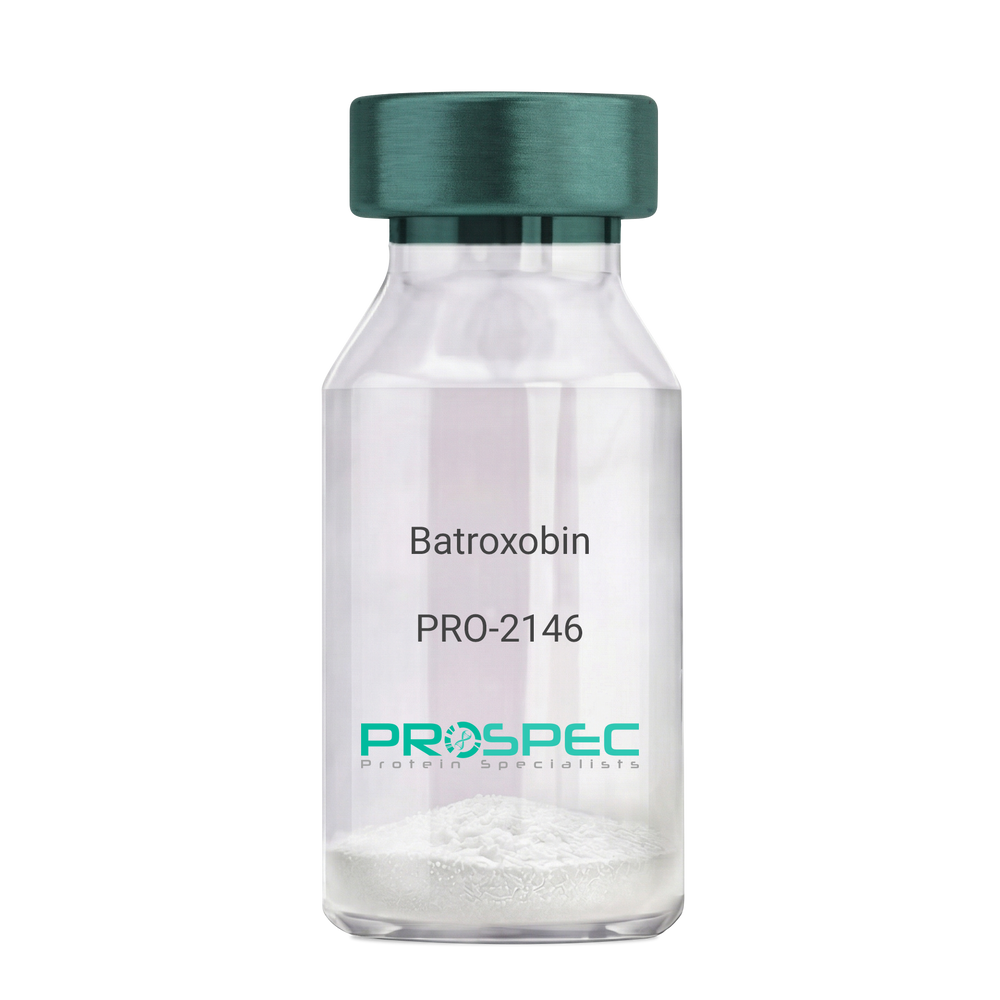
BatroxobinDescription:
Batroxobin
Thrombin-like enzyme batroxobin, EC 3.4.21.74, BX, Bothrops atrox serine proteinase, Venombin-A, Batroxobin.
Product # :
PRO-2146Price :
Quantity :
Shipping Method :
Shipped at Room temp
More Info
- description
- formulation
- More Info
Description
Batroxobin, isolated from Bothrops atrox snake venom, has an Mw of approximately 43kDa.
Formulation
The Batroxobin protein was lyophilized from a concentrated (1mg/ml) solution with no additives.
More Info
-
Introduction
Batroxobin is a serin protease that reduces fibronogen levels and is originally extracted from snake venom of Bothrops Atrox. Batroxobin is used in defibrinogenation and thrombolysis and also has an effect on c-fos gene and growth factor.
Batroxobin can efficiently restrain proliferation of VSMCs, by blocking the release and uptake of Ca2+, thus influencing [Ca2+]i.
Batroxobin converts fibrinogen to fibrin through the restricted release of fibrinopeptide-A from fibrinogen to promote blood to clot. Unlike thrombin, it is not affected by heparin and hirudin. -
Synonyms
Thrombin-like enzyme batroxobin, EC 3.4.21.74, BX, Bothrops atrox serine proteinase, Venombin-A, Batroxobin.
-
Physical Appearance
Sterile Filtered white lyophilized powder.
-
Stability
Store the lyophilized Batroxobin between 2-8°C. Do not freeze!
-
Solubility
It is recommended to reconstitute the lyophilized Batroxobin in sterile 18MΩ-cm H2O not less than 100µg/ml or more than 10mg/ml solutions.
-
Unit Definition
100BU [Batroxobin Units]=1mg.
ProSpec's products are furnished for LABORATORY RESEARCH USE ONLY. The product may not be used as drugs, agricultural or pesticidal products, food additives or household chemicals.