Search results
1000 results found for “Mortality Factor”
Name
Description
Product #
Price
Quantity
Shipping Method
- View Data Sheet
Name :
bNGF Human, CHODescription:
Beta-Nerve Growth Factor Human Recombinant, CHO
Beta Polypeptide, NGF, NGFB, HSAN5, Beta-NGF, MGC161426, MGC161428.
Product # :
CYT-246Price :
Quantity :
Shipping Method :
Shipped at Room temp
More Info
- description
- source
- formulation
- purity
- biological activity
- More Info
Description
Nerve Growth Factor-beta Human Recombinant produced in CHO is a noncovalently disulfide linked homodimer, glycosylated, polypeptide chain (Ser122-Arg239) containing 2 identical 118 amino acids and having a molecular mass of 26.5 kDa.The NGF-b is purified by proprietary chromatographic techniques.
Source
Chinese Hamster Ovary Cells.
Formulation
The protein was lyophilized from a 0.2µm filtered solution in 20mM PB and 250mM NaCl, pH 7.0.
Purity
Greater than 95.0% as determined by:
(a) Analysis by RP-HPLC.
(b) Analysis by SDS-PAGE.Biological Activity
The ED50, calculated by its ability to stimulate chick E9 DRG neurite outgrowth was found to be < 1.0 ng/ml, corresponding to a specific activity of > 1 x 10⁶ units/mg.More Info
-
Introduction
NGF-beta has nerve growth stimulating activity and the complex is involved in the regulation of growth and the differentiation of sympathetic and certain sensory neurons. Mutations in this gene have been associated with hereditary sensory and autonomic neuropathy, type 5 (HSAN5), and dysregulation of this gene's expression is associated with allergic rhinitis.
-
Synonyms
Beta Polypeptide, NGF, NGFB, HSAN5, Beta-NGF, MGC161426, MGC161428.
-
Physical Appearance
Sterile Filtered White lyophilized (freeze-dried) powder.
-
Stability
Lyophilized Nerve Growth Factor b although stable at room temperature for 3 weeks, should be stored desiccated below -18°C. Upon reconstitution Nerve Growth Factor-beta should be stored at 4°C between 2-7 days and for future use below -18°C. For long-term storage it is recommended to add a carrier protein (0.1% HSA or BSA).Please prevent freeze-thaw cycles.
-
Solubility
It is recommended to reconstitute the lyophilized NGF-b in sterile 18MΩ-cm H2O not less than 100µg/ml, which can then be further diluted to other aqueous solutions.
-
Amino Acid Sequence
Was analyzed by Mass spectrometry.
-
Background
What is the molecular weight/Mw of B NGF Protein?
B NGF Protein has a total Mw of 26.5kDa.
What is the source or expression system of B NGF Protein?
Chinese Hamster Ovary Cells.
What is the Purity of B NGF Protein?
B NGF Protein is >95% pure as determined by SDS-PAGE.
What is the Biological Activity of B NGF Protein?
The ED50, calculated by its ability to stimulate chick E9 DRG neurite outgrowth was found to be < 1.0 ng/ml, corresponding to a specific activity of > 1 x 10⁶ units/mg.
What is the amino acid sequence of B NGF Protein?
B NGF Protein is composed from 118 amino acids.
What applications can B NGF Protein be used in?
B NGF Protein can probably be used in western blot, ELISA and Lateral Flow.
What is the endotoxin level for B NGF Protein?
The endotoxin level is minimal, B NGF Protein was purified using conventional chromatography techniques.
ProSpec's products are furnished for LABORATORY RESEARCH USE ONLY. The product may not be used as drugs, agricultural or pesticidal products, food additives or household chemicals.
- View Data Sheet
Name :
GCSF MonkeyDescription:
Granulocyte Colony Stimulating Factor Recombinant Rhesus Macaque
CSF3, MGI-1G, GM-CSF beta, Pluripoietin, G-CSF, GCSF.
Product # :
CYT-1121Price :
Quantity :
Shipping Method :
Shipped at Room temp
More Info
- description
- source
- formulation
- purity
- biological activity
- More Info
Description
Granulocyte Colony Stimulating Rhesus Macaque Recombinant produced in E.Coli is a non-glycosylated polypeptide chain containing 174 amino acids and having a molecular mass of approximately 18.9kDa.GCSF is purified by proprietary chromatographic techniques.
Source
Escherichia Coli.
Formulation
Lyophilized from a 0.2μm filtered concentrated solution in PBS, pH7.4.
Purity
Greater than 98.0% as determined by:
(a) Analysis by RP-HPLC.
(b) Analysis by SDS-PAGE.Biological Activity
The ED50 as determined by a cell proliferation assay using murine NFS-60 cells is < 0.05 ng/ml, corresponding to a specific activity of > 2.0 × 10⁷ IU/mg.
More Info
-
Introduction
GCSF is a cytokine that controls the production, differentiation, and function of granulocytes. The active protein is found extracellularly. 3 transcript variants encoding 3 different isoforms have been found for the GCSF gene. Granulocyte/macrophage colony-stimulating factors are cytokines that take part in hematopoiesis by controlling the production, differentiation, and function of 2 related white cell populations of the blood, the granulocytes and the monocytes-macrophages. This csf induces granulocytes.
-
Synonyms
CSF3, MGI-1G, GM-CSF beta, Pluripoietin, G-CSF, GCSF.
-
Physical Appearance
Sterile Filtered White lyophilized (freeze-dried) powder.
-
Stability
Lyophilized GCSF although stable at room temperature for 3 weeks, should be stored desiccated below -18°C. Upon reconstitution Granulocyte Colony Stimulating Rhesus Macaque should be stored at 4°C between 2-7 days and for future use below -18°C.Please prevent freeze-thaw cycles.
-
Solubility
It is recommended to reconstitute the lyophilized Granulocyte Colony Stimulating Rhesus Macaque in sterile 18MΩ-cm H2O not less than 100µg/ml, which can then be further diluted to other aqueous solutions.
-
Amino Acid Sequence
TPLGPASSLP QSFLLKCLEQ VRKIQGDGAA LQEKLCATYK LCHPEELVLL RHSLGIPWAP LSSCPSQALQ LTGCLSQLHS SLFLYQGLLQ ALEGISPELS PTLDTLQLDI ADFATTIWQQ MEDLGMAPAL QPTQGAMPAF TSAFQRRAGG VLVASHLQRF LELAYRVLRH LAQS.
-
Background
What is the molecular weight/Mw of GCSF MONKEY Protein?
GCSF MONKEY Protein has a total Mw of 18.9kDa.
What is the source or expression system of GCSF MONKEY Protein?
Escherichia Coli.
What is the Purity of GCSF MONKEY Protein?
GCSF MONKEY Protein is >98% pure as determined by SDS-PAGE.
What is the Biological Activity of GCSF MONKEY Protein?
The ED50 as determined by a cell proliferation assay using murine NFS-60 cells is < 0.05 ng/ml, corresponding to a specific activity of > 2.0 × 10⁷ IU/mg.
What is the amino acid sequence of GCSF MONKEY Protein?
TPLGPASSLP QSFLLKCLEQ VRKIQGDGAA LQEKLCATYK LCHPEELVLL RHSLGIPWAP LSSCPSQALQ LTGCLSQLHS SLFLYQGLLQ ALEGISPELS PTLDTLQLDI ADFATTIWQQ MEDLGMAPAL QPTQGAMPAF TSAFQRRAGG VLVASHLQRF LELAYRVLRH LAQS.
What applications can GCSF MONKEY Protein be used in?
GCSF MONKEY Protein can probably be used in western blot, ELISA and Lateral Flow.
What is the endotoxin level for GCSF MONKEY Protein?
The endotoxin level is minimal, GCSF MONKEY Protein was purified using conventional chromatography techniques.
ProSpec's products are furnished for LABORATORY RESEARCH USE ONLY. The product may not be used as drugs, agricultural or pesticidal products, food additives or household chemicals.
- View Data Sheet
Name :
VEGF C RatDescription:
Vascular Endothelial Growth Factor Related Protein Rat Recombinant
VEGF-C, Vascular endothelial growth factor C, VRP, Flt4 ligand, Flt4-L.
Product # :
CYT-262Price :
Quantity :
Shipping Method :
Shipped at Room temp
More Info
- description
- source
- formulation
- purity
- biological activity
- More Info
Description
Vascular Endothelial Growth Factor C Rat Recombinant contains 127 amino acids residues and was fused to a His- tag (6x His) at the C-terminal end. As a result of glycosylation VEGF-C migrates as an 15-20 kDa protein in SDS-PAGE under reducing conditions.
Source
Sf9, Insect Cells.
Formulation
Each mg of VEGF-C Rat contains 50mg BSA and PBS as buffer.
Purity
Greater than 90.0% as determined by SDS-PAGE.
Biological Activity
Measured by its ability to stimulate phosphorylation of the VEGFR-3/FLT-4 receptor in porcine aortic endothelial cells. The ED50 for this effect is typically 200-300ng/ml corresponding to a Specific Activity of 3,334-5,000IU/mg.More Info
-
Introduction
VEGF-C, also known as Vascular Endothelial Growth Factor Related Protein (VRP), is a recently discovered VEGF growth factor family member that is most closely related to VEGF-D. The rat VEGFC cDNA encodes a pre-pro-protein of 416 amino acids residues.
It is almost identical to the mouse VEGF-C protein. Similar to VEGF-D, VEGF-C has a VEGF homology domain spanning the middle third of the precursor molecule and long N- and C-terminal extensions. In adults, VEGF-C is highly expressed in heart, placenta, ovary and small intestine. Recombinant rat VEGF-C, lacking the N- and C-terminal extensions and containing only the middle VEGF homology domain, forms primarily non-covalently linked dimers. This protein is a ligand for both VEGFR-2/KDR and VEGFR-3/FLT -4. Since VEGFR-3 is strongly expressed in lymphatic endothelial cells, it has been postulated that VEGF-C is involved in the regulation of the growth and/or differentiation of lymphatic endothelium. Although recombinant rat VEGF-C is also a mitogen for vascular endothelial cells, it is much less potent than VEGF-A. -
Synonyms
VEGF-C, Vascular endothelial growth factor C, VRP, Flt4 ligand, Flt4-L.
-
Physical Appearance
Sterile Filtered White lyophilized (freeze-dried) powder.
-
Stability
Lyophilized Vascular Endothelial Growth Factor-C although stable at room temperature for 3 weeks, should be stored desiccated below -18°C. Upon reconstitution VEGF-C should be stored at 4°C between 2-7 days and for future use below -18°C.Please prevent freeze-thaw cycles.
-
Solubility
It is recommended to reconstitute the lyophilized Vascular Endothelial Growth Factor C in sterile 18MΩ-cm H2O not less than 100µg/ml, which can then be further diluted to other aqueous solutions.
-
Amino Acid Sequence
DTVKLAAAHYNTEILKSIDNEWRKTQCMPREVCIDVGKEFGAATNTFFKP PCVSVYRCGGCCNSEGLQCMNTSTGYLSKTLFEITVPLSQGPKPVTISFA NHTSCRCMSKLDVYRQVHSIIHHHHHH.
ProSpec's products are furnished for LABORATORY RESEARCH USE ONLY. The product may not be used as drugs, agricultural or pesticidal products, food additives or household chemicals.
- View Data Sheet
Name :
TGFB1 MouseDescription:
Transforming Growth Factor-Beta 1 Mouse Recombinant
Transforming growth factor beta-1, TGF-beta-1, Tgfb, Tgfb-1, TGFbeta1.
Product # :
CYT-858Price :
Quantity :
Shipping Method :
Shipped with Ice Packs
More Info
- description
- source
- formulation
- purity
- More Info
Description
TGFB1 Mouse Recombinant produced in E.Coli is a single, non-glycosylated polypeptide chain containing 135 amino acids (279-390 a.a) and having a molecular mass of 15.2kDa. TGFB1 is fused to a 23 amino acid His-tag at N-terminus & purified by proprietary chromatographic techniques.
Source
Escherichia Coli.
Formulation
TGFB1 protein solution (0.25mg/ml) containing 20mM Tris-HCl (pH 8.0) and 10% glycerol.
Purity
Greater than 85.0% as determined by SDS-PAGE.
More Info
-
Introduction
Transforming growth factor betas (TGFBetas) mediate many cell-cell interactions which occur during embryonic development. Three TGFBetas have been identified in mammals. TGFBeta1, TGFBeta2 and TGFBeta3 are each synthesized as precursor proteins which are very similar in that each is cleaved to yield a 112 amino acid polypeptide which remains associated with the latent portion of the molecule.
-
Synonyms
Transforming growth factor beta-1, TGF-beta-1, Tgfb, Tgfb-1, TGFbeta1.
-
Physical Appearance
Sterile Filtered colorless solution.
-
Stability
Store at 4°C if entire vial will be used within 2-4 weeks. Store, frozen at -20°C for longer periods of time. For long term storage it is recommended to add a carrier protein (0.1% HSA or BSA).Avoid multiple freeze-thaw cycles.
-
Amino Acid Sequence
MGSSHHHHHH SSGLVPRGSH MGSALDTNYC FSSTEKNCCV RQLYIDFRKD LGWKWIHEPK GYHANFCLGP CPYIWSLDTQ YSKVLALYNQ HNPGASASPC CVPQALEPLP IVYYVGRKPK VEQLSNMIVR SCKCS.
ProSpec's products are furnished for LABORATORY RESEARCH USE ONLY. The product may not be used as drugs, agricultural or pesticidal products, food additives or household chemicals.
- View Data Sheet
Name :
VEGF (121 a.a.) MouseDescription:
Vascular Endothelial Growth Factor (121 a.a.) Mouse Recombinant
Vascular endothelial growth factor A, VEGF-A, Vascular permeability factor, VPF, VEGF, MGC70609.
Product # :
CYT-574Price :
Quantity :
Shipping Method :
Shipped at Room temp
More Info
- description
- source
- formulation
- purity
- More Info
Description
Vascular Endothelial Growth Factor-121 Mouse Recombinant produced in E.Coli is a homodimer, non-glycosylated, polypeptide chain containing 121 amino acids and having a molecular mass of 28.4 kDa.Recombinant Mouse VEGF-121 is a truncated version of Murine VEGF-165.The VEGF-121 is purified by proprietary chromatographic techniques.
Source
Escherichia Coli.
Formulation
The protein was lyophilized from a concentrated (1mg/ml) solution with no additives.
Purity
Greater than 97.0% as determined by:
(a) Analysis by RP-HPLC.
(b) Analysis by SDS-PAGE.More Info
-
Introduction
Vascular endothelial growth factor is an important signaling protein involved in both vasculogenesis and angiogenesis. As its name implies, VEGF activity has been mostly studied on cells of the vascular endothelium, although it does have effects on a number of other cell types (e.g. stimulation monocyte/macrophage migration, neurons, cancer cells, kidney epithelial cells ).VEGF mediates increased vascular permeability, induces angiogenesis, vasculogenesis and endothelial cell growth, promotes cell migration, and inhibits apoptosis. In vitro, VEGF has been shown to stimulate endothelial cell mitogenesis and cell migration. VEGF is also a vasodilator and increases microvascular permeability and was originally referred to as vascular permeability factor.
Elevated levels of this protein is linked to POEMS syndrome, also known as Crow-Fukase syndrome. Mutations in this gene have been associated with proliferative and nonproliferative diabetic retinopathy. -
Synonyms
Vascular endothelial growth factor A, VEGF-A, Vascular permeability factor, VPF, VEGF, MGC70609.
-
Physical Appearance
Sterile Filtered White lyophilized (freeze-dried) powder.
-
Stability
Lyophilized VEGF-121 although stable at room temperature for 3 weeks, should be stored desiccated below -18°C. Upon reconstitution VEGF-121 should be stored at 4°C between 2-7 days and for future use below -18°C.For long term storage it is recommended to add a carrier protein (0.1% HSA or BSA).Please prevent freeze-thaw cycles.
-
Solubility
It is recommended to reconstitute the lyophilized VEGF-121 in sterile 18MΩ-cm H2O not less than 100µg/ml, which can then be further diluted to other aqueous solutions.
-
Amino Acid Sequence
MAPTTEGEQK SHEVIKFMDV YQRSYCRPIE TLVDIFQEYP DEIEYIFKPS CVPLMRCAGC CNDEALECVP TSESNITMQI MRIKPHQSQH IGEMSFLQHS RCECRPKKDR TKPEKCDKRPR R.
ProSpec's products are furnished for LABORATORY RESEARCH USE ONLY. The product may not be used as drugs, agricultural or pesticidal products, food additives or household chemicals.
- View Data Sheet
Name :
GMFG HumanDescription:
Glia Maturation Factor Gamma Human Recombinant
Glia maturation factor gamma, GMF-gamma, GMFG, MGC126867.
Product # :
CYT-632Price :
Quantity :
Shipping Method :
Shipped with Ice Packs
More Info
- description
- source
- formulation
- purity
- More Info
- SDS-PAGE
Description
Glia Maturation Factor-Gamma (GMF-Gamma) Human Recombinant produced in E.Coli is a signle, non-glycosylated, polypeptide chain containing 142 amino acids and having a total molecular mass of 16.8 kDa. Glia Maturation Factor-Gamma, GMF-Gamma, Human Recombinant is purified by proprietary chromatographic techniques.
Source
Escherichia Coli.
Formulation
The GMF-gamma protein contains 20mM Tris-HCl pH-8, 1mM DTT, 1mM EDTA and 10% Glycerol.
Purity
Greater than 90.0% as determined by SDS-PAGE.
SDS-PAGE
More Info
-
Introduction
GMFG is a hematopoietic-specific protein that mediates the pluripotentiality and lineage commitment of human hematopoietic stem cells. Glia maturation factor gamma is a cytokine-responsive protein in EPO-induced and G-CSF-induced hematopoietic lineage development. Glia maturation factor also acts as a Nerve Growth Factor in nervous system development, angiogenesis and immune function. GMFG possesses hematopoietic tissue-specific gene expression, a promoter concentrated with high-score hematopoiesis-specific transcription factors, and molecular coevolution with a rudimentary blood/immune system.
-
Synonyms
Glia maturation factor gamma, GMF-gamma, GMFG, MGC126867.
-
Physical Appearance
Sterile Filtered colorless clear solution.
-
Stability
Store at 4°C if entire vial will be used within 2-4 weeks. Store, frozen at -20°C for longer periods of time. Please avoid freeze thaw cycles.
-
Amino Acid Sequence
MSDSLVVCEV DPELTEKLRK FRFRKETDNA AIIMKVDKDR QMVVLEEEFQ NISPEELKME LPERQPRFVV YSYKYVHDDG RVSYPLCFIF SSPVGCKPEQ
QMMYAGSKNR LVQTAELTKV FEIRTTDDLT EAWLQEKLSF FR. -
Background
What is the molecular weight/Mw of GMFG HUMAN Protein?
GMFG HUMAN Protein has a total Mw of 16.8kDa.
What is the source or expression system of GMFG HUMAN Protein?
Escherichia Coli.
What is the Purity of GMFG HUMAN Protein?
GMFG HUMAN Protein is >90% pure as determined by SDS-PAGE.
What is the Biological Activity of GMFG HUMAN Protein?
The biological functionality of GMFG HUMAN Protein will be determined in the future.
What is the amino acid sequence of GMFG HUMAN Protein?
MSDSLVVCEV DPELTEKLRK FRFRKETDNA AIIMKVDKDR QMVVLEEEFQ NISPEELKME LPERQPRFVV YSYKYVHDDG RVSYPLCFIF SSPVGCKPEQ
QMMYAGSKNR LVQTAELTKV FEIRTTDDLT EAWLQEKLSF FR.
What applications can GMFG HUMAN Protein be used in?
GMFG HUMAN Protein can probably be used in western blot, ELISA and Lateral Flow.
What is the endotoxin level for GMFG HUMAN Protein?
The endotoxin level is minimal, GMFG HUMAN Protein was purified using conventional chromatography techniques.
ProSpec's products are furnished for LABORATORY RESEARCH USE ONLY. The product may not be used as drugs, agricultural or pesticidal products, food additives or household chemicals.
- View Data Sheet
Name :
F3 MouseDescription:
Coagulation Factor III Mouse Recombinant
Tissue factor, TF, Coagulation factor III, CD142.
Product # :
PRO-2316Price :
Quantity :
Shipping Method :
Shipped with Ice Packs
More Info
- description
- source
- formulation
- purity
- More Info
Description
F3 produced in Sf9 Baculovirus cells is a single, glycosylated polypeptide chain containing 232 amino acids (29-251 a.a.) and having a molecular mass of 26.4kDa (Migrates at 28-40kDa on SDS-PAGE under reducing conditions). F3 is expressed with a 6 amino acid His tag at C-Terminus and purified by proprietary chromatographic techniques.
Source
Sf9, Baculovirus cells.
Formulation
F3 protein solution (0.5mg/ml) contains Phosphate Buffered Saline (pH 7.4) and 10% glycerol.
Purity
Greater than 95.0% as determined by SDS-PAGE.
More Info
-
Introduction
Tissue factor is well-known as the main cellular initiator of blood coagulation. The Tissue factor gene encodes coagulation factor III which is a cell surface glycoprotein that enables cells to initiate the blood coagulation cascades, and functions as the high-affinity receptor for the coagulation factor VII. Following vessel injury, the Tissue Factor and Factor VIIa complex activates the coagulation protease cascade, which leads to fibrin deposition and activation of platelets. The ensuing complex presents a catalytic event, which is responsible for initiation of the coagulation protease cascades by specific limited proteolysis. Therefore, Tissue factor has a role in normal hemostasis by initiating the cell-surface assembly and propagation of the coagulation protease cascade. Tissue Factor can also be stimulated by the inflammatory mediators interleukin 1 and TNF, as well as by endotoxin, to appear on monocytes and vascular endothelial cells as a component of cellular immune response.
Tissue factor is the only one in the coagulation pathway for which a congenital deficiency has not been described. Certain levels of Tissue Factor are essential for the maintained viability and growth of endothelium and Tissue Factor-expressing tumor cells. Additionally, abnormal Tissue Factor expression inside the vasculature initiates life threatening thrombosis in various diseases, for example sepsis, atherosclerosis, and cancer. Alternative spliced Tissue Factor expression advances tumor growth, and is linked to increased tumor cell proliferation and angiogenesis in pancreatic cancer. -
Synonyms
Tissue factor, TF, Coagulation factor III, CD142.
-
Physical Appearance
Sterile Filtered colorless solution.
-
Stability
Store at 4°C if entire vial will be used within 2-4 weeks. Store, frozen at -20°C for longer periods of time. For long term storage it is recommended to add a carrier protein (0.1% HSA or BSA). Avoid multiple freeze-thaw cycles.
-
Amino Acid Sequence
ADPAGIPEKA FNLTWISTDF KTILEWQPKP TNYTYTVQIS DRSRNWKNKC FSTTDTECDL TDEIVKDVTW AYEAKVLSVP RRNSVHGDGD QLVIHGEEPP FTNAPKFLPY RDTNLGQPVI QQFEQDGRKL NVVVKDSLTL VRKNGTFLTL RQVFGKDLGY IITYRKGSST GKKTNITNTN EFSIDVEEGV SYCFFVQAMI FSRKTNQNSP GSSTVCTEQW KSFLGEHHHH HH.
ProSpec's products are furnished for LABORATORY RESEARCH USE ONLY. The product may not be used as drugs, agricultural or pesticidal products, food additives or household chemicals.
- View Data Sheet
Name :
C1QTNF1 HumanDescription:
Complement C1q Tumor Necrosis Factor-Related Protein 1 Human Recombinant
GIP, CTRP1, ZSIG37, FLJ90694, C1QTNF1, Complement C1q Tumor Necrosis Factor-Related Protein 1, G protein-coupled receptor-interacting protein.
Product # :
PRO-654Price :
Quantity :
Shipping Method :
Shipped at Room temp
More Info
- description
- source
- formulation
- purity
- More Info
Description
C1QTNF1 Human Recombinant produced in E.Coli is a single, non-glycosylated, Polypeptide chain containing 266 amino acids and having a molecular mass of 30.45 kDa. The protein contains an extra His tag at N-terminus. The C1QTNF1 amino acid sequence is identical to UniProtKB/Swiss-Prot entry Q9BXJ1 amino acids 26–281.The C1QTNF1 is purified by proprietary chromatographic techniques.
Source
Escherichia Coli.
Formulation
Human C1QTNF1 was lyophilized from 50mM Acetate Buffer pH-4.
Purity
Greater than 95% as determined by SDS PAGE.
More Info
-
Introduction
C1QTNF1 is a novel adipokine, providing a significant framework to further address the physiological functions and mechanisms of the action of this family of secreted glycoproteins in normal and disease states. C1QTNF1 increases the production of aldosterone. C1QTNF1 is vastly expressed in obese subjects as well as up-regulated in hypertensive patients, C1QTNF1 is identified molecular link between obesity and hypertension. C1QTNF1 expression may be associated with a low-grade chronic inflammation status in adipose tissues.
-
Synonyms
GIP, CTRP1, ZSIG37, FLJ90694, C1QTNF1, Complement C1q Tumor Necrosis Factor-Related Protein 1, G protein-coupled receptor-interacting protein.
-
Stability
Store lyophilized protein at -20°C. Aliquot the product after reconstitution to avoid repeated freezing/thawing cycles. Reconstituted protein can be stored at 4°C for a limited period of time; it does not show any change after two weeks at 4°C.
-
Solubility
Add 0.1M Acetate buffer pH4 to prepare a working stock solution of approximately 0.5mg/mL and let the lyophilized pellet dissolve completely. For conversion into higher pH value, we recommend intensive dilution by relevant buffer to a concentration of 10μg/ml. In higher concentrations the solubility of this antigen is limited. Product is not sterile! Please filter the product by an appropriate sterile filter before using it in the cell culture.
-
Amino Acid Sequence
MKHHHHHHAS RVPHVQGEQQ EWEGTEELPS PPDHAERAEE QHEKYRPSQD QGLPASRCLR CCDPGTSMYP ATAVPQINIT ILKGEKGDRG DRGLQGKYGK TGSAGARGHT GPKGQKGSMG APGERCKSHY AAFSVGRKKP MHSNHYYQTV IFDTEFVNLY DHFNMFTGKF YCYVPGLYFF SLNVHTWNQK ETYLHIMKNE EEVVILFAQV GDRSIMQSQS LMLELREQDQ VWVRLYKGER ENAIFSEELD TYITFSGYLVKHATEP.
ProSpec's products are furnished for LABORATORY RESEARCH USE ONLY. The product may not be used as drugs, agricultural or pesticidal products, food additives or household chemicals.
- View Data Sheet
Name :
GM-CSF PorcineDescription:
Granulocyte Macrophage-Colony Stimulating Factor Porcine Recombinant
CSF-2, MGI-1GM, GM-CSF, Pluripoietin-alpha, Molgramostin, Sargramostim.
Product # :
CYT-1095Price :
Quantity :
Shipping Method :
Shipped at Room temp
More Info
- description
- source
- formulation
- purity
- biological activity
- More Info
Description
Granulocyte Macrophage-Colony Stimulating Factor Porcine Recombinant produced in E. coli is a non-glycosylated monomer chain containing 128 amino acids and having a molecular mass of 14.5kDa. GMCSF is purified by proprietary chromatographic techniques.
Source
Escherichia Coli.
Formulation
The protein was lyophilized from a sterile (0.2µm) filtered solution containing 10mM sodium phosphate, pH 7.5.
Purity
Greater than 95.0% as determined by SDS-PAGE.
Biological Activity
The ED50, as determined by TF-1 cell proliferation is 4.52ng/ml corresponding to a specific activity which is 2.2 x 10^5 units/mg.
More Info
-
Introduction
GMCSF is a cytokine that controls the production, differentiation, and function of granulocytes and macrophages. The active form of GMCSF is found extracellularly as a homodimer. GMCSF has been localized to a cluster of related genes at chromosome region 5q31, which is known to be associated with interstitial deletions in the 5q- syndrome and acute myelogenous leukemia. Other genes in the cluster include those encoding interleukins 4, 5, and 13.
GM-CSF stimulates the growth and differentiation of hematopoietic precursor cells from various lineages, including granulocytes, macrophages, eosinophils and erythrocytes. -
Synonyms
CSF-2, MGI-1GM, GM-CSF, Pluripoietin-alpha, Molgramostin, Sargramostim.
-
Physical Appearance
Sterile Filtered White lyophilized (freeze-dried) powder.
-
Stability
Lyophilized GMCSF although stable at room temperature for 3 weeks, should be stored desiccated below -18°C. Upon reconstitution GMCSF should be stored at 4°C between 2-7 days and for future use below -18°C. Please prevent freeze-thaw cycles.
-
Solubility
It is recommended to reconstitute the lyophilized GMCSF in sterile 18MΩ-cm H2O not less than 100µg/ml, which can then be further diluted to other aqueous solutions.
-
Amino Acid Sequence
MAPTRPPSPV TRPWQHVDAI KEALSLLNNS NDTAAVMNET VDVVCEMFDP QEPTCVQTRL NLYKQGLRGS LTRLKSPLTL LAKHYEQHCP LTEETSCETQ SITFKSFKDS LNKFLFTIPF DCWGPVKK.
-
Background
What is the molecular weight/Mw of GM-CSF PORCINE Protein?
GM-CSF PORCINE Protein has a total Mw of 14.5kDa.
What is the source or expression system of GM-CSF PORCINE Protein?
Escherichia Coli.
What is the Purity of GM-CSF PORCINE Protein?
GM-CSF PORCINE Protein is >95% pure as determined by SDS-PAGE.
What is the Biological Activity of GM-CSF PORCINE Protein?
The ED50, as determined by TF-1 cell proliferation is 4.52ng/ml corresponding to a specific activity which is 2.2 x 10^5 units/mg.
What is the amino acid sequence of GM-CSF PORCINE Protein?
MAPTRPPSPV TRPWQHVDAI KEALSLLNNS NDTAAVMNET VDVVCEMFDP QEPTCVQTRL NLYKQGLRGS LTRLKSPLTL LAKHYEQHCP LTEETSCETQ SITFKSFKDS LNKFLFTIPF DCWGPVKK.
What applications can GM-CSF PORCINE Protein be used in?
GM-CSF PORCINE Protein can probably be used in western blot, ELISA and Lateral Flow.
What is the endotoxin level for GM-CSF PORCINE Protein?
The endotoxin level is minimal, GM-CSF PORCINE Protein was purified using conventional chromatography techniques.
ProSpec's products are furnished for LABORATORY RESEARCH USE ONLY. The product may not be used as drugs, agricultural or pesticidal products, food additives or household chemicals.
- View Data Sheet
Name :
G CSF Human, CHODescription:
Granulocyte-Colony Stimulating Factor Human Recombinant, CHO
CSF-3, MGI-1G, GM-CSF beta, Pluripoietin, Filgrastim, Lenograstim, G-CSF, MGC45931, GCSF.
Product # :
CYT-329Price :
Quantity :
Shipping Method :
Shipped at Room temp
More Info
- description
- source
- formulation
- purity
- biological activity
- More Info
Description
Granulocyte Colony Stimulating Factor Human Recombinant produced in CHO cells is a single, glycosylated, polypeptide chain containing 174 amino acids and having a molecular mass of approximately 18 kDa.G-CSF is purified by proprietary chromatographic techniques.
Source
Chinese Hamster Ovary Cells (CHO).
Formulation
G-CSF was lyophilized from a concentrated (1mg/ml) solution containing 10mM Hydrochloric Acid pH=6.5, 0.4mg tween 20, 100mg mannitol, 160mg L-arginine, 40mg phenylalanine and 4mg methionine.
Purity
Greater than 97.0% as determined by SDS-PAGE.
Biological Activity
The ED50, calculated by the dose-dependant proliferation of murine NFS-60 indicator cells (measured by 3H-thymidine uptake) is < 0.07 ng/ml, corresponding to a Specific Activity of 1.27 x 10⁸ IU/mg.More Info
-
Introduction
Granulocyte Colony Stimulating Factor is a growth factor and/or cytokine produced by the endothelium, macrophages and a number of other immune cells. GCSF stimulates the bone marrow to produce granulocytes and also to stimulate the survival, proliferation, differentiation and function of neutrophil granulocyte progenator cells and mature neutrophils.
-
Synonyms
CSF-3, MGI-1G, GM-CSF beta, Pluripoietin, Filgrastim, Lenograstim, G-CSF, MGC45931, GCSF.
-
Physical Appearance
Sterile Filtered White lyophilized (freeze-dried) powder.
-
Stability
Lyophilized Granulocyte Colony Stimulating Factor although stable at room temperature for 3 weeks, should be stored desiccated below -18°C. Upon reconstitution G-CSF should be stored at 4°C between 2-7 days and for future use below -18°C.For long term storage it is recommended to add a carrier protein (0.1% HSA or BSA).Please prevent freeze-thaw cycles.
-
Solubility
It is recommended to reconstitute the lyophilized Granulocyte Colony Stimulating Factor in sterile 18MΩ-cm H2O not less than 100µg/ml, which can then be further diluted to other aqueous solutions.
-
Amino Acid Sequence
TPLGPASSLP QSFLLKCLEQ VRKIQGDGAA LQEKLCATYK LCHPEELVLL GHSLGIPWAP LSSCPSQALQ LAGCLSQLHS GLFLYQGLLQ ALEGISPELG PTLDTLQLDV ADFATTIWQQ MEELGMAPAL QPTQGAMPAF ASAFQRRAGG VLVASHLQSF LEVSYRVLRH LAQP.
-
Background
What is the molecular weight/Mw of G CSF Protein?
G CSF Protein has a total Mw of 18kDa.
What is the source or expression system of G CSF Protein?
Chinese Hamster Ovary Cells (CHO).
What is the Purity of G CSF Protein?
G CSF Protein is >97% pure as determined by SDS-PAGE.
What is the Biological Activity of G CSF Protein?
The ED50, calculated by the dose-dependant proliferation of murine NFS-60 indicator cells (measured by 3H-thymidine uptake) is < 0.07 ng/ml, corresponding to a Specific Activity of 1.27 x 10⁸ IU/mg.
What is the amino acid sequence of G CSF Protein?
TPLGPASSLP QSFLLKCLEQ VRKIQGDGAA LQEKLCATYK LCHPEELVLL GHSLGIPWAP LSSCPSQALQ LAGCLSQLHS GLFLYQGLLQ ALEGISPELG PTLDTLQLDV ADFATTIWQQ MEELGMAPAL QPTQGAMPAF ASAFQRRAGG VLVASHLQSF LEVSYRVLRH LAQP.
What applications can G CSF Protein be used in?
G CSF Protein can probably be used in western blot, ELISA and Lateral Flow.
What is the endotoxin level for G CSF Protein?
The endotoxin level is minimal, G CSF Protein was purified using conventional chromatography techniques.
ProSpec's products are furnished for LABORATORY RESEARCH USE ONLY. The product may not be used as drugs, agricultural or pesticidal products, food additives or household chemicals.
- View Data Sheet
Name :
C1QTNF8 HumanDescription:
Complement C1q Tumor Necrosis Factor-Related Protein 8 Human Recombinant
CTRP8, UNQ5829, C1q/TNF-related protein 8, Complement C1q tumor necrosis factor-related protein 8.
Product # :
PRO-134Price :
Quantity :
Shipping Method :
Shipped with Ice Packs
More Info
- description
- source
- formulation
- purity
- More Info
Description
C1QTNF8 Human Recombinant produced in E.Coli is a single, non-glycosylated, polypeptide chain containing 255 amino acids including a 10 a.a N-terminal His tag. The total molecular mass is 28.4kDa (calculated).
Source
Escherichia Coli.
Formulation
C1QTNF8 filtered (0.4 µm) solution in 0.03M Acetate buffer pH-4.0.
Purity
Greater than 95.0% as determined by SDS-PAGE.
More Info
-
Synonyms
CTRP8, UNQ5829, C1q/TNF-related protein 8, Complement C1q tumor necrosis factor-related protein 8.
-
Physical Appearance
Filtered colorless solution.
-
Stability
Store at 4°C if entire vial will be used within 2-4 weeks. Store, frozen at -20°C for longer periods of time. For long term storage it is recommended to add a carrier protein (0.1% HSA or BSA).Avoid multiple freeze-thaw cycles.
-
Amino Acid Sequence
MKHHHHHHAS WPGLPRRPCV HCCRPAWPPG PYARVSDRDL WRGDLWRGLP RVRPTIDIEI LKGEKGEAGV RGRAGRSGKE GPPGARGLQG RRGQKGQVGP PGAACRRAYA AFSVGRRAYA AFSVGRREGL HSSDHFQAVP FDTELVNLDG AFDLAAGRFL CTVPGVYFLS LNVHTWNYKE TYLHIMLNRR PAAVLYAQPS ERSVMQAQSL MLLLAAGDAV WVRMFQRDRD NAIYGEHGDL YITFSGHLVK PAAEL.
ProSpec's products are furnished for LABORATORY RESEARCH USE ONLY. The product may not be used as drugs, agricultural or pesticidal products, food additives or household chemicals.
- View Data Sheet
Name :
PLGF1 Human, Sf9Description:
Placental Growth Factor-1 Human Recombinant, Sf9
PIGF, PGF, PLGF-1.
Product # :
CYT-419Price :
Quantity :
Shipping Method :
Shipped at Room temp
More Info
- description
- source
- formulation
- purity
- biological activity
- More Info
Description
Placenta Growth Factor-1 Human Recombinant produced in insect cells is a homodimer, glycosylated polypeptide chain containing 2 x 131 amino acids and having a total molecular mass of approximately 34 kDa. The PLGF-1 is purified by proprietary chromatographic techniques.
Source
Insect Cells.
Formulation
Lyophilized from a concentrated (1mg/ml) solution containing 50mM acetic acid.
Purity
Greater than 95.0% as determined by SDS-PAGE.
Biological Activity
The ED50 as determined by its ability to bind to immobilized rh-sFlt-1 in a functional ELISA. PlGF-1 human Recombinant can bind to immobilized rh-sFlt-1 (100ng/well) with a linear range at 0.5-10ng/ml, corresponding to a Specific Activity of 1x10⁵-2x10⁶units/mg.More Info
-
Introduction
PLGF is a growth factor active in angiogenesis, and endothelial cell growth, stimulating their proliferation and migration. It binds to receptor vegfr-1/flt1.
-
Synonyms
PIGF, PGF, PLGF-1.
-
Physical Appearance
Sterile Filtered White lyophilized (freeze-dried) powder.
-
Stability
Lyophilized Placenta Growth Factor 1 although stable at room temperature for 3 weeks, should be stored desiccated below -18°C. Upon reconstitution PLGF1 should be stored at 4°C between 2-7 days and for future use below -18°C.Please prevent freeze-thaw cycles.
-
Solubility
It is recommended to reconstitute the lyophilized Placenta Growth Factor 1 in sterile 0.1M acetic acid not less than 100µg/ml, which can then be further diluted to other aqueous solutions.
-
Amino Acid Sequence
The sequence of the first five N-terminal amino acids was determined and was found to be Met-Leu-Pro-Ala-Val.
ProSpec's products are furnished for LABORATORY RESEARCH USE ONLY. The product may not be used as drugs, agricultural or pesticidal products, food additives or household chemicals.
- View Data Sheet
Name :
PLGF Human, HisDescription:
Placental Growth Factor Human Recombinant, His Tag
PIGF, PGF, PLGF-1.
Product # :
CYT-1031Price :
Quantity :
Shipping Method :
Shipped at Room temp
More Info
- description
- source
- formulation
- purity
- More Info
Description
PLGF1 Human Recombinant produced in E.Coli is a single, non-glycosylated, polypeptide chain (a.a 19-131) containing 123 amino acids including a 10 a.a N-terminal His tag. The total molecular mass is 13.8kDa (calculated).
Source
Escherichia Coli.
Formulation
PLGF1 filtered (0.4 µm) and lyophilized from 0.5mg/ml in PBS and 5% w/v trehalose, pH 7.4.
Purity
Greater than 95.0% as determined by SDS-PAGE.
More Info
-
Introduction
PLGF is a growth factor active in angiogenesis, and endothelial cell growth, stimulating their proliferation and migration. It binds to receptor vegfr-1/flt1.
-
Synonyms
PIGF, PGF, PLGF-1.
-
Physical Appearance
Filtered White lyophilized (freeze-dried) powder.
-
Stability
Store lyophilized protein at -20°C. Aliquot the product after reconstitution to avoid repeated freezing/thawing cycles. Reconstituted protein can be stored at 4°C for a limited period of time; it does not show any change after two weeks at 4°C.
-
Solubility
It is recommended to add deionized water to prepare a working stock solution of approximately 0.5mg/ml and let the lyophilized pellet dissolve completely. PLGF1 is not sterile! Please filter the product by an appropriate sterile filter before using it in the cell culture.
-
Amino Acid Sequence
MKHHHHHHAS LPAVPPQQWA LSAGNGSSEV EVVPFQEVWG RSYCRALERL VDVVSEYPSE VEHMFSPSCV SLLRCTGCCG DENLHCVPVE TANVTMQLLK IRSGDRPSYV ELTFSQHVRC ECR.
ProSpec's products are furnished for LABORATORY RESEARCH USE ONLY. The product may not be used as drugs, agricultural or pesticidal products, food additives or household chemicals.
- View Data Sheet
Name :
FAS Blocking AntibodyDescription:
FAS Blocking Antibody (CD95), Mouse anti Human
FASLG receptor, Apoptosis-mediating surface antigen FAS, Apo-1 antigen, CD95, Tumor necrosis factor receptor superfamily member 6 TNR6, APT1, FAS1, TNFRSF6.
Product # :
ANT-205Price :
Quantity :
Shipping Method :
Shipped at Room temp
More Info
- More Info
More Info
-
Introduction
The Fas receptor (CD95) mediates apoptotic signaling by Fas-ligand expressed on the surface of other cells. The Fas-FasL interaction plays an important role in the immune system and lack of this system leads to autoimmunity, indicating that Fas-mediated apoptosis removes self-reactive lymphocytes. Fas signaling is also involved in immune surveillance to remove transformed cells and virus infected cells. Binding of FAS to oligimerized FasL on another cell activates apoptotic signaling through a cytoplasmic domain termed the death domain that interacts with signaling adaptors including FAF, FADD and DAX to activate the caspase proteolytic cascade. Caspase-8 and caspase-10 are first activated, to then cleave and activate downstream caspases, and a variety of cellular substrates that lead to cell death. Caspases cleave nuclear lamins, causing the nucleus to break down and lose its normal structure and another caspase substrate is DFF, inducing cleavage and degradation of the genome. Other caspase substrates are involved in cytoskeletal structure, cell cycle regulation and signaling pathways. Activation of JNK kinase, activation of Jun, and production of ceramide may also play roles in Fas-mediated apoptosis. Activation of fas-mediated apoptosis is opposed by I-FLICE and FAP. Viruses and tumors may escape immune surveillance in part through suppression of fas-mediated apoptosis using similar mechanisms.
-
Synonyms
FASLG receptor, Apoptosis-mediating surface antigen FAS, Apo-1 antigen, CD95, Tumor necrosis factor receptor superfamily member 6 TNR6, APT1, FAS1, TNFRSF6.
-
Solubility
Reconstitute with H20. Mix gently, wash the sides of the vial and wait 30-60 seconds before use.
-
Immunogen
Recombinant Human FAS.
-
Ig Subclass
mouse IgG1.
-
Clone
NYRhFAS.
-
Note
This is a BLOCKING antibody and will block FAS-mediated apoptosis.
-
Titer
By direct ELISA, 1:10,000 dilution will yield 0.5 O.D using alkaline phosphatase conjugated rabbit anti-mouse Ig (Jackson Laboratories).
-
Shipping Conditions
Antibody is shipped lyophilized at ambient temperature.
-
Type
Mouse Anti Human Monoclonal.
-
Storage Procedures
In lyophilized form, for long periods, store at 4°C in a dry environment. After reconstitution, if not intended for use within a month, aliquot and store at -20°C.
-
Purification Method
Ion exchange column Protein concentration1 mg/ml in PBS (after reconstitution).
ProSpec's products are furnished for LABORATORY RESEARCH USE ONLY. The product may not be used as drugs, agricultural or pesticidal products, food additives or household chemicals.
- View Data Sheet
Name :
TGFB3 MouseDescription:
Transforming Growth Factor-Beta 3 Mouse Recombinant
Transforming Growth Factor-beta3, TGFB3, ARVD, FLJ16571, TGF-beta3.
Product # :
CYT-143Price :
Quantity :
Shipping Method :
Shipped with Ice Packs
More Info
- description
- source
- formulation
- purity
- biological activity
- More Info
Description
TGF-β 3 Mouse Recombinant produced in E.Coli is a disulfide-linked homodimeric, non-glycosylated, polypeptide chain containing two 113 amino acid chains and having a total molecular mass of 25.7kDa. The TGF-β 3 is purified by standard chromatographic techniques.
Source
Escherichia Coli.
Formulation
The Mouse TGFB3 protein solution contains 20% Ethanol and 10mM Acetic acid.
Purity
Greater than 95.0% as determined by SDS-PAGE.
Biological Activity
The activity is determined by the ability to induce chondrogenic differentiation.More Info
-
Introduction
Transforming growth factor betas (TGF Betas) mediate many cell-cell interactions that occur during embryonic development. Three TGF Betas have been identified in mammals. TGF Beta 1, TGF Beta 2 and TGF Beta 3 are each synthesized as precursor proteins that are very similar in that each is cleaved to yield a 112 amino acid polypeptide that remains associated with the latent portion of the molecule.
-
Synonyms
Transforming Growth Factor-beta3, TGFB3, ARVD, FLJ16571, TGF-beta3.
-
Physical Appearance
Sterile Filtered clear solution.
-
Stability
Mouse TGF-beta 3 although stable at room temperature for 3 weeks, should be stored at 4°C.For long term storage it is recommended to add a carrier protein (0.1% HSA or BSA).
-
Amino Acid Sequence
MALDTNYCFRN LEENCCVRPL YIDFRQDLGW KWVHEPKGYY ANFCSGPCPY LRSADTTHST VLGLYNTLNP EASASPCCVP QDLEPLTILY YVGRTPKVEQ LSNMVVKSCK CS.
-
Protein content
Protein quantitation was carried out by two independent methods:1. UV spectroscopy at 280 nm using the absorbency value of 1.718 as the extinction coefficient for a 0.1% (1mg/ml) solution. This value is calculated by the PC GENE computer analysis program of protein sequences (IntelliGenetics). 2. Analysis by RP-HPLC, using a calibrated solution of TGF-b 3 as a Reference Standard.
ProSpec's products are furnished for LABORATORY RESEARCH USE ONLY. The product may not be used as drugs, agricultural or pesticidal products, food additives or household chemicals.
- View Data Sheet
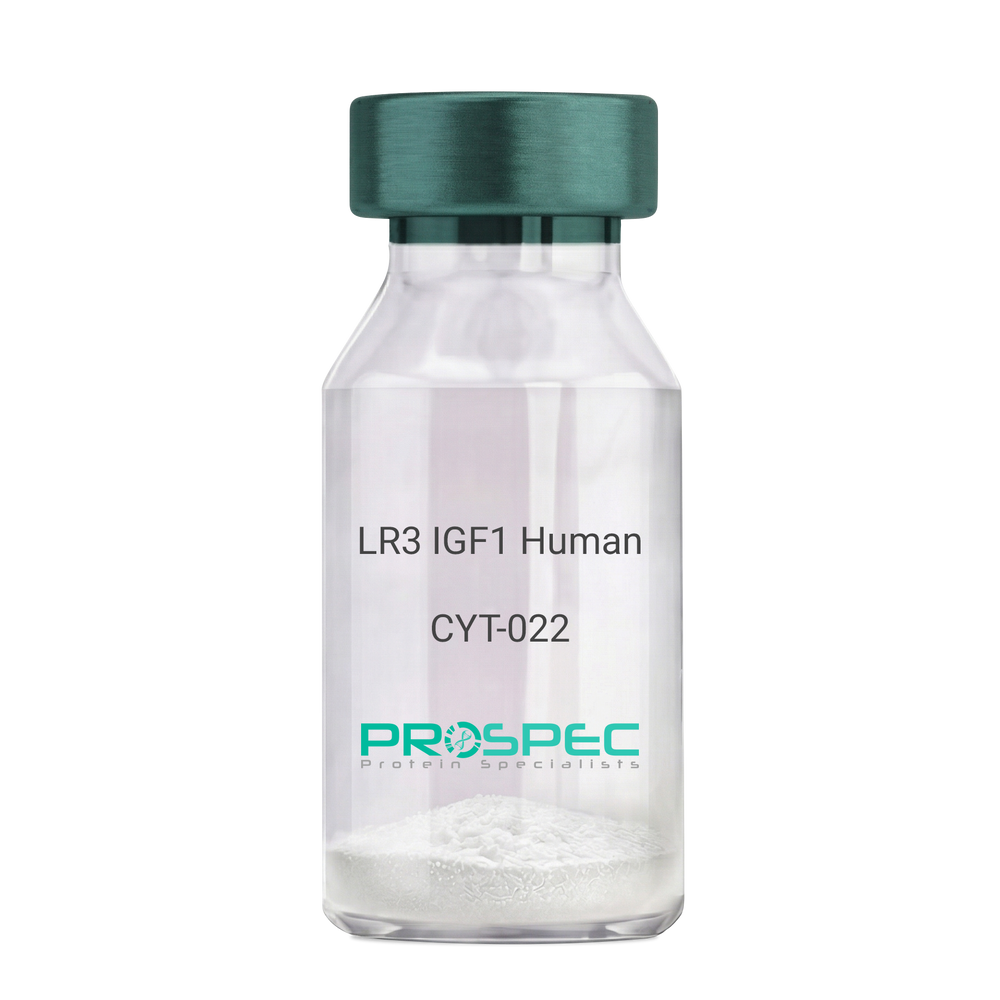
Name :
IGF1 LR3 HumanDescription:
LR3 Insulin Like Growth Factor-1 Human Recombinant
R3 IGF1, R3 IGF-1, R3IGF1, R3IGF-1, LONG IGF1, LONG IGF-1, LONG R3 IGF1, LONG R3IGF1, LONG R3 IGF-1, LONG R3IGF-1.
Product # :
CYT-022Price :
Quantity :
Shipping Method :
Shipped at Room temp
More Info
- description
- source
- formulation
- purity
- biological activity
- More Info
- sds-page
Description
The LR3 is a long-term analog of human IGF-1, specifically designed and manufactured for mammalian cell culture to support large-scale manufacturing of recombinant biopharmaceuticals. Recombinant Human LR3 Insulin Like Growth Factor-1 produced in E.Coli is a single, non-glycosylated, polypeptide chain containing 83 amino acids and having a molecular mass of 9.1kDa.
Source
Escherichia Coli.
Formulation
Lyophilized from a 0.2µm filtered concentrated solution in 20mM PB, pH 7.2.
Purity
Greater than 97.0% as determined by SDS-PAGE.
Biological Activity
The ED50 as determined by the stimulation of protein synthesis in L6 myoblasts is less than 10ng/ml, corresponding to a specific activity of 100,000units/mg.sds-page
More Info
-
Introduction
IGF-1 (Insulin-like growth factor-1) is a major hormonal mediator of statural growth. Under regular circumstances, GH (growth hormone) binds to its receptor in the liver, and other tissues, and stimulates the synthesis/secretion of IGF-1. In target tissues, the Type 1 IGF receptor, that is homologous to the insulin receptor, is activated by IGF-1, leading to intracellular signaling which stimulates multiple processes leading to statural growth. IGF-1 metabolic actions are partly directed at stimulating the uptake of glucose, fatty acids, and amino acids so that metabolism supports growing tissues.
-
Synonyms
R3 IGF1, R3 IGF-1, R3IGF1, R3IGF-1, LONG IGF1, LONG IGF-1, LONG R3 IGF1, LONG R3IGF1, LONG R3 IGF-1, LONG R3IGF-1.
-
Physical Appearance
Sterile Filtered White lyophilized (freeze-dried) powder.
-
Stability
Lyophilized LR3 IGF1 although stable at room temperature for 3 weeks, should be stored desiccated below -18°C. Upon reconstitution the LR3 IGF1 should be stored at 4°C between 2-7 days and for future use below -18°C.For long term storage it is recommended to add a carrier protein (0.1% HSA or BSA).Please prevent freeze-thaw cycles.
-
Solubility
It is recommended to reconstitute the lyophilized LR3 IGF1 in sterile 18M-cm H2O at a concentration of 100µg/ml, which can then be further diluted to other aqueous solutions.
-
Amino Acid Sequence
MFPAMPLSSLFVNGPRTLCGAELVDALQFVCGDRGFYFNKPTGYGSSSRRAPQTGIV DECCFRSCDLRRLEMYCAPLKPAKSA.
-
Background
What is the molecular weight/Mw of IGF1 LR3 HUMAN Protein?
IGF1 LR3 HUMAN Protein has a total Mw of 9.1kDa.
What is the source or expression system of IGF1 LR3 HUMAN Protein?
Escherichia Coli.
What is the Purity of IGF1 LR3 HUMAN Protein?
IGF1 LR3 HUMAN Protein is >98% pure as determined by SDS-PAGE.
What is the Biological Activity of IGF1 LR3 HUMAN Protein?
The ED50 as determined by the stimulation of protein synthesis in L6 myoblasts is less than 10ng/ml, corresponding to a specific activity of 100,000units/mg.
What is the amino acid sequence of IGF1 LR3 HUMAN Protein?
MFPAMPLSSLFVNGPRTLCGAELVDALQFVCGDRGFYFNKPTGYGSSSRRAPQTGIV DECCFRSCDLRRLEMYCAPLKPAKSA.
What applications can IGF1 LR3 HUMAN Protein be used in?
IGF1 LR3 HUMAN Protein can probably be used in western blot, ELISA and Lateral Flow.
What is the endotoxin level for IGF1 LR3 HUMAN Protein?
The endotoxin level is minimal, IGF1 LR3 HUMAN Protein was purified using conventional chromatography techniques.
ProSpec's products are furnished for LABORATORY RESEARCH USE ONLY. The product may not be used as drugs, agricultural or pesticidal products, food additives or household chemicals.
- View Data Sheet
Name :
PDGF AB HumanDescription:
Platelet-Derived Growth Factor AB Human Recombinant
Glioma-derived growth factor, GDGF, Osteosarcoma-derived Growth Factor, ODGF, PDGF-AB.
Product # :
CYT-342Price :
Quantity :
Shipping Method :
Shipped at Room temp
More Info
- description
- source
- formulation
- purity
- biological activity
- More Info
Description
Platelet-derived Growth Factor AB Human Recombinant is a heterodimeric, non-glycosylated, polypeptide chain containing 234 amino acids (and an N-terminal Met) consisting of 14.3kDa alpha-chain and 12.1 beta-chain having a total molecular mass of 26.4kDa. PDGF-AB is purified by proprietary chromatographic techniques.
Source
Escherichia Coli.
Formulation
Lyophilized from 10mM AcOH (Acetic Acid).
Purity
Greater than 95.0% as determined by SDS-PAGE analysis.
Biological Activity
The ED50 as determined by the dose-dependent proliferation of mouse 3T3 indicator cells, is 1.4-2.1 ng/ml. This corresponds to a specific activity of 7.1x 10⁵ units/mg.More Info
-
Introduction
The term ‘PDGF’ refers to a family of disulphide bond-linked dimeric isoforms that act as autocrine and paracrine growth factors and are produced by a variety of cell types other than platelets.They act as potent mitogens for almost all mesenchymally-derived cells. Aberrant expression is involved in certain cancers, fibroproliferative disorders and atherosclerosis. The protein also contributes to wound healing and neural regeneration. There are four members of the PDGF family – PDGF A, PDGF B, PDGF C and PDGF D. Two distinct types of PDGF-A exist – a short form that is soluble and a long form that is retained by the extracellular matrix.
-
Synonyms
Glioma-derived growth factor, GDGF, Osteosarcoma-derived Growth Factor, ODGF, PDGF-AB.
-
Physical Appearance
Sterile Filtered White lyophilized (freeze-dried) powder.
-
Stability
Lyophilized Platelet-derived Growth Factor AB although stable at room temperature for 3 weeks, should be stored desiccated below -18°C. Upon reconstitution PDGF-AB should be stored at 4°C between 2-7 days and for future use below -18°C.For long term storage it is recommended to add a carrier protein (0.1% HSA or BSA).Please prevent freeze-thaw cycles.
-
Solubility
It is recommended to reconstitute the lyophilized Platelet-derived Growth Factor-AB in sterile 18MΩ-cm H2O not less than 100µg/ml, which can then be further diluted to other aqueous solutions.
-
Amino Acid Sequence
Alpha chain: MSIEEAVPAV CKTRTVIYEI PRSQVDPTSA NFLIWPPCVE VKRCTGCCNT SSVKCQPSRV HHRSVKVAKV EYVRKKPKLK EVQVRLEEHL ECACATTSLN PDYREEDTGR PRESGKKRKR KRLKPT.
Beta chain: SLGSLTIAEP AMIAECKTRT EVFEISRRLI DRTNANFLVW PPCVEVQRCS GCCNNRNVQC RPTQVQLRPV QVRKIGIVRK KPIFKKATVT LGDHLACKCE TVAAARPVT.
ProSpec's products are furnished for LABORATORY RESEARCH USE ONLY. The product may not be used as drugs, agricultural or pesticidal products, food additives or household chemicals.
- View Data Sheet
Name :
EGF (Leu 21) HumanDescription:
Epidermal Growth Factor (Leu-21) Human Recombinant
Urogastrone, URG, EGF.
Product # :
CYT-466Price :
Quantity :
Shipping Method :
Shipped at Room temp
More Info
- description
- source
- formulation
- purity
- biological activity
- More Info
Description
EGF 21-Leu Human Recombinant produced in E.Coli is a single, non-glycosylated, polypeptide chain containing 53 amino acids and having a molecular mass of 6205 Dalton.The EGF 21-Leu is purified by proprietary chromatographic techniques.
Source
Escherichia Coli.
Formulation
The protein was lyophilized from a concentrated (1mg/ml) solution with no additives.
Purity
Greater than 98.0% as determined by(a) Analysis by RP-HPLC.
(b) Analysis by SDS-PAGE.Biological Activity
The ED50, calculated by the dose-dependant proliferation of MDCK cells is < 10ng/ml concentration corresponding to a Specific Activity of 100,000IU/mg.More Info
-
Introduction
Epidermal growth factor has a profound effect on the differentiation of specific cells in vivo and is a potent mitogenic factor for a variety of cultured cells of both ectodermal and mesodermal origin. The EGF precursor is believed to exist as a membrane-bound molecule which is proteolytically cleaved to generate the 53-amino acid peptide hormone that stimulates cells to divide. EGF stimulates the growth of various epidermal and epithelial tissues in vivo and in vitro and of some fibroblasts in cell culture.
-
Synonyms
Urogastrone, URG, EGF.
-
Physical Appearance
Sterile Filtered White lyophilized (freeze-dried) powder.
-
Stability
Lyophilized Epidermal Growth Factor 21 Leu although stable at room temperature for 3 weeks, should be stored desiccated below -18°C. Upon reconstitution EGF 21-Leu should be stored at 4°C between 2-7 days and for future use below -18°C.For long term storage it is recommended to add a carrier protein (0.1% HSA or BSA).Please prevent freeze-thaw cycles.
-
Solubility
It is recommended to reconstitute the lyophilized Epidermal Growth Factor 21-Leu in sterile 18MΩ-cm H2O not less than 100µg/ml, which can then be further diluted to other aqueous solutions.
-
Amino Acid Sequence
The sequence of the first five N-terminal amino acids was determined and was found to be Asn-Ser-Asp-Ser-Glu.
-
Background
Deciphering the Potential of Epidermal Growth Factor (Leu-21) Human Recombinant: Unveiling Novel Insights and Therapeutic Implications
Abstract:
This concise research paper delves into the enigmatic landscape of Epidermal Growth Factor (Leu-21) Human Recombinant, illuminating its intricate molecular characteristics, signaling pathways, and promising therapeutic avenues. Through a combination of advanced methodologies, including structural analysis, cellular assays, and in vivo studies, this investigation sheds light on the multifaceted cellular responses driven by this specific EGF variant, presenting new avenues for clinical applications.
Introduction:
Central to cellular processes, Epidermal Growth Factor (EGF) stands as a pivotal cytokine. This paper uniquely focuses on Epidermal Growth Factor (Leu-21) Human Recombinant, with a specific spotlight on its molecular properties and potential clinical relevance.
Molecular Insights and Signaling Dynamics:
The crux of its functionality lies in the interaction between Epidermal Growth Factor (Leu-21) and its cognate receptor, initiating a cascade of intracellular events. Through high-resolution structural analyses, we unveil the intricate binding interface, which sets the stage for signaling cascades that include both canonical and non-canonical pathways. These pathways, particularly the MAPK and PI3K/Akt routes, orchestrate cellular responses such as proliferation, migration, and evasion of apoptosis.
Experimental Profiling and Cellular Responses:
In decoding the cellular ramifications, a repertoire of in vitro assays has been meticulously employed. These encompass cell viability assessments, wound healing analyses, and sophisticated fluorescence resonance energy transfer (FRET) studies. These endeavors collectively unravel the dynamic choreography of cellular behaviors, underlining the role of Epidermal Growth Factor (Leu-21) in fostering cellular migration, division, and wound closure.
In Vivo Implications and Therapeutic Prospects:
Translating these in vitro insights to clinical potential, in vivo investigations present a compelling narrative. Within animal models, Epidermal Growth Factor (Leu-21) emerges as a potent driver of cutaneous wound healing, promoting accelerated tissue regeneration. Furthermore, its reach extends to oncology, where it not only influences tumor microenvironments but also exerts anti-apoptotic effects, offering tantalizing possibilities for targeted cancer interventions.
Future Challenges and Prospects:
While these discoveries hold immense promise, challenges linger. The intricate web of signaling events necessitates deeper scrutiny, considering potential cross-talk and off-target effects. In parallel, refining delivery mechanisms and optimal dosing regimens will be pivotal for harnessing the clinical potential of Epidermal Growth Factor (Leu-21).
Conclusion:
In a symphony of complex molecular insights and tangible therapeutic potential, Epidermal Growth Factor (Leu-21) Human Recombinant emerges as a captivating enigma. Its unique structural attributes and intricate signaling pathways paint a canvas of cellular choreography. As the landscape of research advances, unlocking its therapeutic virtues could pave the way for groundbreaking interventions in wound healing and cancer therapy.
What is the molecular weight/Mw of EGF Protein?
EGF Protein has a total Mw of 6.2kDa.
What is the source or expression system of EGF Protein?
Escherichia Coli.
What is the Purity of EGF Protein?
EGF Protein is >98% pure as determined by SDS-PAGE.
What is the Biological Activity of EGF Protein?
The ED50, calculated by the dose-dependant proliferation of MDCK cells is < 10ng/ml concentration corresponding to a Specific Activity of 100,000IU/mg.
What is the amino acid sequence of EGF Protein?
EGF Protein is composed from 53 amino acids.
What applications can EGF Protein be used in?
EGF Protein can probably be used in western blot, ELISA and Lateral Flow.
What is the endotoxin level for EGF Protein?
The endotoxin level is minimal, EGF Protein was purified using conventional chromatography techniques.
ProSpec's products are furnished for LABORATORY RESEARCH USE ONLY. The product may not be used as drugs, agricultural or pesticidal products, food additives or household chemicals.
- View Data Sheet
Name :
EGF Rat ProteinDescription:
Epidermal Growth Factor Rat
Urogastrone, URG, EGF.
Product # :
CYT-556Price :
Quantity :
Shipping Method :
Shipped at Room temp
More Info
- description
- source
- formulation
- purity
- More Info
Description
Epidermal Growth Factor Rat purified from submandibular gland is a single, glycosylated, polypeptide chain having a molecular mass of 6.15 kDa.The EGF is purified by proprietary chromatographic techniques.
Source
Adult Male Rat Submandibular Glands.
Formulation
The protein was lyophilized from a concentrated (1mg/ml) solution containing 0.01M sodium acetate buffer.
Purity
Greater than 99.0% as determined by(a) Analysis by RP-HPLC.
(b) Analysis by SDS-PAGE.More Info
-
Introduction
Epidermal growth factor has a profound effect on the differentiation of specific cells in vivo and is a potent mitogenic factor for a variety of cultured cells of both ectodermal and mesodermal origin. The EGF precursor is believed to exist as a membrane-bound molecule which is proteolytically cleaved to generate the 53-amino acid peptide hormone that stimulates cells to divide.
EGF stimulates the growth of various epidermal and epithelial tissues in vivo and in vitro and of some fibroblasts in cell culture. -
Synonyms
Urogastrone, URG, EGF.
-
Physical Appearance
Sterile Filtered White lyophilized (freeze-dried) powder.
-
Stability
Lyophilized Epidermal Growth Factor Recombinant although stable at room temperature for 3 weeks, should be stored desiccated below -18°C. Upon reconstitution EGF should be stored at 4°C between 2-7 days and for future use below -18°C.For long term storage it is recommended to add a carrier protein (0.1% HSA or BSA).Please prevent freeze-thaw cycles.
-
Solubility
It is recommended to reconstitute the lyophilized Epidermal Growth Factor in sterile 18MΩ-cm H2O not less than 100µg/ml, which can then be further diluted to other aqueous solutions.
-
Background
Illuminating Epidermal Growth Factor Rat Recombinant: Deciphering Cellular Signaling and Therapeutic Potential
Abstract:
This research paper delves into the enigmatic realm of Epidermal Growth Factor Rat Recombinant (EGF-RR), unraveling its intricate molecular attributes, signaling cascades, and therapeutic prospects. By employing cutting-edge methodologies encompassing protein expression, receptor binding assays, and bioinformatics analyses, this study sheds light on the multifaceted interplay between EGF-RR and cellular responses, offering novel avenues for therapeutic interventions.
Introduction:
Epidermal Growth Factor (EGF) is pivotal in cellular regulation. This paper navigates the complexities of Epidermal Growth Factor Rat Recombinant (EGF-RR), focusing on its unique molecular properties and potential therapeutic applications.
Protein Expression and Purification:
The study embarks on precise gene optimization to enhance EGF-RR expression. Purification techniques like affinity chromatography yield purified EGF-RR, primed for subsequent analyses.
Receptor Binding Assays and Ligand Interaction:
Employing advanced receptor binding assays, the paper deciphers EGF-RR's engagement with its cognate receptor. Quantitative assessments uncover binding kinetics, shedding light on the intricacies of EGF-RR's molecular interaction.
Cellular Signaling Pathways and Responses:
In vitro cellular assays unveil the signaling cascades ignited by EGF-RR. Through quantitative phosphoproteomic profiling, the study unravels phosphorylation events triggered by EGF-RR, delineating its role in cellular proliferation, migration, and differentiation.
Bioinformatics Insights and Structural Modeling:
Bioinformatics tools facilitate molecular dynamics simulations, offering insights into EGF-RR's receptor interactions and downstream signaling pathways. Structural modeling captures EGF-RR's conformational changes during signaling cascades.
Therapeutic Implications and Future Prospects:
EGF-RR's intricate signaling dynamics open avenues for therapeutic exploration. Harnessing its potential in wound healing, tissue regeneration, and cancer modulation emerges as a promising avenue for precision medicine.
Challenges and Future Directions:
Challenges, including context-specific responses, beckon further investigation. Future research should delve into cross-talk between signaling pathways and EGF-RR's contributions to diverse disease contexts.
Conclusion:
A fusion of advanced methodologies and visionary insights unveils Epidermal Growth Factor Rat Recombinant as an intriguing subject. Its molecular intricacies and complex cellular interplay ignite prospects for therapeutic breakthroughs, ushering in a new era of precision medicine.
What is the molecular weight/Mw of EGF RAT Protein?
EGF RAT Protein has a total Mw of 6.15kDa.
What is the source or expression system of EGF RAT Protein?
Adult Male Rat Submandibular Glands.
What is the Purity of EGF RAT Protein?
EGF RAT Protein is >99% pure as determined by SDS-PAGE.
What is the Biological Activity of EGF RAT Protein?
The biological functionality of EGF RAT Protein will be determined in the future.
What is the amino acid sequence of EGF RAT Protein?
EGF RAT Protein is composed from 53 amino acids.
What applications can EGF RAT Protein be used in?
EGF RAT Protein can probably be used in western blot, ELISA and Lateral Flow.
What is the endotoxin level for EGF RAT Protein?
The endotoxin level is minimal, EGF RAT Protein was purified using conventional chromatography techniques.
ProSpec's products are furnished for LABORATORY RESEARCH USE ONLY. The product may not be used as drugs, agricultural or pesticidal products, food additives or household chemicals.
- View Data Sheet
Name :
VEGF EquineDescription:
Vascular Endothelial Growth Factor Equine Recombinant
VEGF-A, VPF, glioma-derived endothelial cell mitogen.
Product # :
CYT-1200Price :
Quantity :
Shipping Method :
Shipped at Room temp
More Info
- description
- source
- formulation
- purity
- biological activity
- More Info
Description
VEGF Equine Recombinant produced in E.Coli is a single, non-glycosylated, polypeptide chain containing 2 x 165 amino acids and having a total molecular mass of 38.6 kDa.The VEGF is purified by proprietary chromatographic techniques.
Source
Escherichia Coli.
Formulation
Lyophilized from a sterile (0.2 micron) filtered aqueous solution containing 10 mM Sodium Phosphate, pH 7.5.
Purity
Greater than 95.0% as determined by SDS-PAGE.
Biological Activity
The ED50 as determined by HUVEC Proliferation is ≤ 10 ng/mL, corresponding to a specific activity of ≥ 1.0 x 10^5 units/mg.
More Info
-
Introduction
Vascular endothelial growth factor is an important signaling protein involved in both vasculogenesis and angiogenesis. As its name implies, VEGF activity has been mostly studied on cells of the vascular endothelium, although it does have effects on a number of other cell types (e.g. stimulation monocyte/macrophage migration, neurons, cancer cells, kidney epithelial cells ).VEGF mediates increased vascular permeability, induces angiogenesis, vasculogenesis and endothelial cell growth, promotes cell migration, and inhibits apoptosis. In vitro, VEGF has been shown to stimulate endothelial cell mitogenesis and cell migration. VEGF is also a vasodilator and increases microvascular permeability and was originally referred to as vascular permeability factor. Elevated levels of this protein is linked to POEMS syndrome, also known as Crow-Fukase syndrome. Mutations in this gene have been associated with proliferative and nonproliferative diabetic retinopathy.
-
Synonyms
VEGF-A, VPF, glioma-derived endothelial cell mitogen.
-
Physical Appearance
Sterile Filtered White lyophilized (freeze-dried) powder.
-
Stability
Lyophilized VEGF although stable at room temperature for 3 weeks, should be stored desiccated below -18°C. Upon reconstitution VEGF Human should be stored at 4°C between 2-7 days and for future use below -18°C.For long term storage it is recommended to add a carrier protein (0.1% HSA or BSA).Please prevent freeze-thaw cycles.
-
Solubility
It is recommended to reconstitute the lyophilized VEGF in sterile water at a concentration of 0.1 mg/ml, which can then be further diluted to other aqueous solutions.
-
Amino Acid Sequence
MAPMAEGEHK THEVVKFMDV YQRSYCRPIE TLVDIFQEYP DEIEYIFKPS CVPLMRCGGC CNDEGLECVP TAEFNITMQI MRIKPHQSQH IGEMSFLQHS KCECRPKKDK ARQENPCGPC SERRKHLFVQ DPQTCKCSCK NTDSRCKARQ LELNERTCRC DKPRR
ProSpec's products are furnished for LABORATORY RESEARCH USE ONLY. The product may not be used as drugs, agricultural or pesticidal products, food additives or household chemicals.
- View Data Sheet
Name :
SUMF1 Human, Sf9Description:
Sulfatase Modifying Factor 1 Human Recombinant, Sf9
SUMF1, AAPA3037, FGE, UNQ3037, Formylglycine-generating enzyme, C-alpha-formylglycine-generating enzyme 1, Sulfatase-modifying factor 1.
Product # :
PRO-2619Price :
Quantity :
Shipping Method :
Shipped with Ice Packs
More Info
- description
- source
- formulation
- purity
- More Info
Description
SUMF1 produced in Sf9 Insect cells is a single, glycosylated polypeptide chain containing 347 amino acids (34-374.a.) and having a molecular mass of 38.1kDa (Molecular size on SDS-PAGE will appear at approximately 40-57kDa). SUMF1 is expressed with a 6 amino acid His tag at C-Terminus and purified by proprietary chromatographic techniques.
Source
Sf9, Insect cells.
Formulation
SUMF1 protein solution (0.25mg/ml) contains Phosphate Buffered Saline (pH 7.4) and 10% glycerol.
Purity
Greater than 85.0% as determined by SDS-PAGE.
More Info
-
Introduction
SUMF1 is a part of the SUMF protein family. SUMF1 catalyzes the hydrolysis of sulfate esters by oxidizing a cysteine residue in the substrate sulfatase to an active site 3-oxoalanine residue called C-alpha-formylglycine. Mutations in this gene will cause multiple sulfatase deficiency meaning a lysosomal storage disorder.
-
Synonyms
SUMF1, AAPA3037, FGE, UNQ3037, Formylglycine-generating enzyme, C-alpha-formylglycine-generating enzyme 1, Sulfatase-modifying factor 1.
-
Physical Appearance
Sterile Filtered colorless solution.
-
Stability
Store at 4°C if entire vial will be used within 2-4 weeks. Store, frozen at -20°C for longer periods of time. For long term storage it is recommended to add a carrier protein (0.1% HSA or BSA). Avoid multiple freeze-thaw cycles.
-
Amino Acid Sequence
SQEAGTGAGA GSLAGSCGCG TPQRPGAHGS SAAAHRYSRE ANAPGPVPGE RQLAHSKMVP IPAGVFTMGT DDPQIKQDGE APARRVTIDA FYMDAYEVSN TEFEKFVNST GYLTEAEKFG DSFVFEGMLS EQVKTNIQQA VAAAPWWLPV KGANWRHPEG PDSTILHRPD HPVLHVSWND AVAYCTWAGK RLPTEAEWEY SCRGGLHNRL FPWGNKLQPK GQHYANIWQG EFPVTNTGED GFQGTAPVDA FPPNGYGLYN IVGNAWEWTS DWWTVHHSVE ETLNPKGPPS GKDRVKKGGS YMCHRSYCYR YRCAARSQNT PDSSASNLGF RCAADRLPTM DHHHHHH.
ProSpec's products are furnished for LABORATORY RESEARCH USE ONLY. The product may not be used as drugs, agricultural or pesticidal products, food additives or household chemicals.
- View Data Sheet
Name :
TGFB3 Human, HEKDescription:
Transforming Growth Factor-Beta 3 Human Recombinant, HEK
Transforming Growth Factor-beta3, TGFB3, ARVD, FLJ16571, TGF-beta3.
Product # :
CYT-113Price :
Quantity :
Shipping Method :
Shipped at Room temp
More Info
- description
- source
- formulation
- purity
- biological activity
- More Info
Description
TGF-beta 3 Human Recombinant produced in HEK cells is a homodimer containing 2 x 112 amino acids linked by a disulfide bond having a total molecular weight of 25kDa. The TGF-b 3 is purified by proprietary chromatographic techniques.
Source
HEK.
Formulation
The TGF-b 3 was lyophilized from 1mg/ml in 1xPBS.
Purity
Greater than 95% as obsereved by SDS-PAGE.
Biological Activity
The specific activity was determined by the dose-dependent inhibition of IL-4 induced proliferation of mouse HT-2 cells (BALB/c spleen activated by sheep erythrocytes in the presence of IL-2) and is typically 0.05 ng/ml corresponding to a specific activity of ≥ 20,000,000 units/mg.More Info
-
Introduction
Transforming growth factor betas (TGF Betas) mediate many cell-cell interactions that occur during embryonic development. Three TGF Betas have been identified in mammals. TGF Beta 1, TGF Beta 2 and TGF Beta 3 are each synthesized as precursor proteins that are very similar in that each is cleaved to yield a 112 amino acid polypeptide that remains associated with the latent portion of the molecule.
-
Synonyms
Transforming Growth Factor-beta3, TGFB3, ARVD, FLJ16571, TGF-beta3.
-
Physical Appearance
Sterile Filtered White lyophilized (freeze-dried) powder.
-
Stability
Lyophilized TGF-b 3 although stable at room temperature for 3 weeks, should be stored desiccated below -18°C. Upon reconstitution TGF-b 3 should be stored at 4°C between 2-7 days and for future use below -18°C.For long term storage it is recommended to add a carrier protein (0.1% HSA or BSA).Please prevent freeze-thaw cycles.
-
Solubility
It is recommended to reconstitute the lyophilized TGF-b 3 in sterile 4mM HCl containing 0.1% endotoxin-free recombinant HSA.
-
Amino Acid Sequence
MALDTNYCFR NLEENCCVRP LYIDFRQDLG WKWVHEPKGY YANFCSGPCP YLRSADTTHS TVLGLYNTLN PEASASPCCV PQDLEPLTIL YYVGRTPKVE QLSNMVVKSC KCS
ProSpec's products are furnished for LABORATORY RESEARCH USE ONLY. The product may not be used as drugs, agricultural or pesticidal products, food additives or household chemicals.
- View Data Sheet
Name :
SDF2 HumanDescription:
Stromal Cell-Derived Factor 2 Human Recombinant
Stromal cell-derived factor 2, SDF-2.
Product # :
CHM-028Price :
Quantity :
Shipping Method :
Shipped with Ice Packs
More Info
- description
- source
- formulation
- purity
- More Info
Description
SDF2 Human Recombinant produced in E.Coli is a single, non-glycosylated polypeptide chain containing 216 amino acids (19-211 a.a) and having a molecular mass of 23.7kDa. SDF2 is fused to a 23 amino acid His-tag at N-terminus & purified by proprietary chromatographic techniques.
Source
Escherichia Coli.
Formulation
SDF2 protein solution (1mg/ml) containing 20mM Tris-HCl buffer (pH 8.0), 10% glycerol and 0.4M Urea.
Purity
Greater than 85.0% as determined by SDS-PAGE.
More Info
-
Introduction
Stromal Cell-Derived Factor 2 (SDF2) is a secretory protein which is partly similar to the hydrophilic segments of yeast mannosyltransferases. SDF2 protein’s expression is ubiquitous and the gene is rather conserved among mammals. SDF2is a protein-coding gene whose alternative splicing results in coding and non-coding variants.
-
Synonyms
Stromal cell-derived factor 2, SDF-2.
-
Physical Appearance
Sterile Filtered colorless solution.
-
Stability
Store at 4°C if entire vial will be used within 2-4 weeks. Store, frozen at -20°C for longer periods of time. For long term storage it is recommended to add a carrier protein (0.1% HSA or BSA).Avoid multiple freeze-thaw cycles.
-
Amino Acid Sequence
MGSSHHHHHH SSGLVPRGSH MGSSSLGVVT CGSVVKLLNT RHNVRLHSHD VRYGSGSGQQ SVTGVTSVDD SNSYWRIRGK SATVCERGTP IKCGQPIRLT HVNTGRNLHS HHFTSPLSGN QEVSAFGEEG EGDYLDDWTV LCNGPYWVRD GEVRFKHSST EVLLSVTGEQ YGRPISGQKE VHGMAQPSQN NYWKAMEGIF MKPSELLKAE AHHAEL.
ProSpec's products are furnished for LABORATORY RESEARCH USE ONLY. The product may not be used as drugs, agricultural or pesticidal products, food additives or household chemicals.
- View Data Sheet
Name :
KGF 2 HumanDescription:
Keratinocyte Growth Factor-2 Human Recombinant
FGFA, FGF10, FGF-10, KGF-2, Fibroblast growth factor 10.
Product # :
CYT-303Price :
Quantity :
Shipping Method :
Shipped at Room temp
More Info
- description
- source
- formulation
- purity
- biological activity
- More Info
Description
Keratinocyte Growth Factor-2 Human Recombinant produced in E.Coli is a single, non-glycosylated polypeptide chain containing 170 amino acids (40-208) and having a molecular mass of 19300 Dalton. Keratinocyte Growth Factor 2 is highly related to KGF-1(FGF-7), it binds to the same receptor as KGF-1 and shares 57% sequence homology. The FGF10 is purified by proprietary chromatographic techniques.
Source
Escherichia Coli.
Formulation
Lyophilized from a 0.2um filtered concentrated (1mg/ml) solution in PBS, pH 7.4.
Purity
Greater than 96.0% as determined by:
(a) Analysis by RP-HPLC.
(b) Analysis by SDS-PAGE.Biological Activity
The ED50, calculated by the dose-dependant stimulation of FGF receptors by BaF3 indicator cells (measured by 3H-thymidine uptake) is < 0.5 ng/ml, corresponding to a specific activity of 2x10⁶units/mg.More Info
-
Introduction
KGF-2 is a member of the fibroblast growth factor (FGF) family. FGF family members possess broad mitogenic and cell survival activities, and are involved in a variety of biological processes, including embryonic development, cell growth, morphogenesis, tissue repair, tumor growth and invasion. FGF-10 exhibits mitogenic activity for keratinizing epidermal cells, but essentially no activity for fibroblasts, which is similar to the biological activity of FGF7. Studies of the mouse homolog of suggested that this gene is required for embryonic epidermal morphogenesis including brain development, lung morphogenesis, and initiation of lim bud formation. This gene is also implicated to be a primary factor in the process of wound healing.
-
Synonyms
FGFA, FGF10, FGF-10, KGF-2, Fibroblast growth factor 10.
-
Physical Appearance
Sterile Filtered White lyophilized (freeze-dried) powder.
-
Stability
Lyophilized Keratinocyte Growth Factor-2 although stable at room temperature for 3 weeks, should be stored desiccated below -18°C. Upon reconstitution FGF10 should be stored at 4°C between 2-7 days and for future use below -18°C.For long term storage it is recommended to add a carrier protein (0.1% HSA or BSA).Please prevent freeze-thaw cycles.
-
Solubility
It is recommended to reconstitute the lyophilized FGF-10 in sterile 18MΩ-cm H2O not less than 100µg/ml, which can then be further diluted to other aqueous solutions.
-
Amino Acid Sequence
MLGQDMVSPE ATNSSSSSFS SPSSAGRHVR SYNHLQGDVR WRKLFSFTKY FLKIEKNGKV SGTKKENCPY SILEITSVEI GVVAVKAINS NYYLAMNKKG KLYGSKEFNN DCKLKERIEE NGYNTYASFN WQHNGRQMYV ALNGKGAPRR GQKTRRKNTS AHFLPMVVHS.
-
Protein content
Protein quantitation was carried out by two independent methods:1. UV spectroscopy at 280 nm using the absorbency value of 1.79 as the extinction coefficient for a 0.1% (1mg/ml) solution. This value is calculated by the PC GENE computer analysis program of protein sequences (IntelliGenetics). 2. Analysis by RP-HPLC, using a standard solution of FGF-10 as a Reference Standard.
ProSpec's products are furnished for LABORATORY RESEARCH USE ONLY. The product may not be used as drugs, agricultural or pesticidal products, food additives or household chemicals.