Skip to content

High-quality research proteins.

  • 1-800-805-6531

  • Mon - Sat 8.00-18.00, Sun - Closed

  • info@prospecbio.com

  • PO Box 6591 East Brunswick NJ 08816

  • Products
    • Cytokines
    • Growth factors
    • Chemokines
    • Cd antigens
    • Neurotrophins
    • Hormones
    • Enzymes
    • Viral antigens
    • Recombinant proteins
    • Natural proteins
    • Monoclonal antibodies
    • Polyclonal antibodies
    • Thermal Packaging
  • About
    • Company
    • Founder
    • Contribution
  • Customers
    • Eastern Asia
    • Eastern Europe
    • North America
    • South America
    • South East Asia
    • Southern Asia
    • Western Europe
  • Ordering
    • Ordering Method
    • Ordering - Credit Card
    • Ordering - PO
    • Shipping Fees
    • FAQs
  • Services
    • DNA Cloning
    • Protein Expression
    • Monoclonal Antibody
    • Fermentation
    • Technology License
  • Contact us
Log in

Country/region

  • USD $ | Albania
  • USD $ | Andorra
  • USD $ | Argentina
  • USD $ | Armenia
  • USD $ | Australia
  • USD $ | Austria
  • USD $ | Azerbaijan
  • USD $ | Belarus
  • USD $ | Belgium
  • USD $ | Bolivia
  • USD $ | Brazil
  • USD $ | Bulgaria
  • USD $ | Cambodia
  • USD $ | Canada
  • USD $ | Chile
  • USD $ | China
  • USD $ | Colombia
  • USD $ | Costa Rica
  • USD $ | Croatia
  • USD $ | Cyprus
  • USD $ | Czechia
  • USD $ | Denmark
  • USD $ | Estonia
  • USD $ | Finland
  • USD $ | France
  • USD $ | Georgia
  • USD $ | Germany
  • USD $ | Greece
  • USD $ | Hong Kong SAR
  • USD $ | Hungary
  • USD $ | Iceland
  • USD $ | India
  • USD $ | Ireland
  • USD $ | Israel
  • USD $ | Italy
  • USD $ | Japan
  • USD $ | Kazakhstan
  • USD $ | Latvia
  • USD $ | Liechtenstein
  • USD $ | Lithuania
  • USD $ | Madagascar
  • USD $ | Malta
  • USD $ | Mexico
  • USD $ | Moldova
  • USD $ | Monaco
  • USD $ | Netherlands
  • USD $ | New Zealand
  • USD $ | North Macedonia
  • USD $ | Norway
  • USD $ | Panama
  • USD $ | Paraguay
  • USD $ | Peru
  • USD $ | Philippines
  • USD $ | Poland
  • USD $ | Portugal
  • USD $ | Romania
  • USD $ | Singapore
  • USD $ | Slovakia
  • USD $ | Slovenia
  • USD $ | South Africa
  • USD $ | South Korea
  • USD $ | Spain
  • USD $ | Sri Lanka
  • USD $ | Sweden
  • USD $ | Switzerland
  • USD $ | Taiwan
  • USD $ | Thailand
  • USD $ | Türkiye
  • USD $ | Ukraine
  • USD $ | United Kingdom
  • USD $ | United States
  • USD $ | Uruguay
  • USD $ | Vatican City
  • USD $ | Venezuela
  • USD $ | Vietnam
  • Facebook
  • Instagram
logoProSpec - Recombinant Protein Manufacturer for academic and R&D industry
Become a distributor
Account Log in
Wishlist
Cart Cart(0)
  • Products
    +
    • Cytokines
    • Growth factors
    • Chemokines
    • Cd antigens
    • Neurotrophins
    • Hormones
    • Enzymes
    • Viral antigens
    • Recombinant proteins
    • Natural proteins
    • Monoclonal antibodies
    • Polyclonal antibodies
    • Thermal Packaging
  • About
    +
    • Company
    • Founder
    • Contribution
  • Customers
    +
    • Eastern Asia
    • Eastern Europe
    • North America
    • South America
    • South East Asia
    • Southern Asia
    • Western Europe
  • Ordering
    +
    • Ordering Method
    • Ordering - Credit Card
    • Ordering - PO
    • Shipping Fees
    • FAQs
  • Services
    +
    • DNA Cloning
    • Protein Expression
    • Monoclonal Antibody
    • Fermentation
    • Technology License
  • Contact us

Item added to your cart

View cart
View All
  • Cytokines
  • Growth factors
  • Chemokines
  • Cd antigens
  • Neurotrophins
  • Hormones
  • Enzymes
  • Viral antigens
  • Recombinant proteins
  • Natural proteins
  • Monoclonal antibodies
  • Polyclonal antibodies
  • Thermal Packaging
  • Tumor Necrosis Factor

    Tumor Necrosis Factor

    View All
  • 4-1BB

    4-1BB

    View All
  • Adiponectin

    Adiponectin

    View All
  • AIF1

    AIF1

    View All
  • Other Cytokines

    Other Cytokines

    View All
  • AITRL

    AITRL

    View All
  • Angiopoietin

    Angiopoietin

    View All
  • Apolipoprotein

    Apolipoprotein

    View All
  • B-Cell Activating Factor

    B-Cell Activating Factor

    View All
  • Beta Defensin

    Beta Defensin

    View All
  • Bone Morphogenetic Protein

    Bone Morphogenetic Protein

    View All
  • B type Natriuretic Peptide

    B type Natriuretic Peptide

    View All
  • BST

    BST

    View All
  • Betacellulin

    Betacellulin

    View All
  • Cardiotrophin

    Cardiotrophin

    View All
  • Activin

    Activin

    View All
  • Fibroblast Growth Factor

    Fibroblast Growth Factor

    View All
  • Other Growth Factors

    Other Growth Factors

    View All
  • CSF

    CSF

    View All
  • CTGF

    CTGF

    View All
  • IGFBP

    IGFBP

    View All
  • VEGF Protein

    VEGF Protein

    View All
  • EGF

    EGF

    View All
  • Epigen

    Epigen

    View All
  • Erythropoietin

    Erythropoietin

    View All
  • Insulin-Like Growth Factor

    Insulin-Like Growth Factor

    View All
  • Growth Hormone

    Growth Hormone

    View All
  • HDGF

    HDGF

    View All
  • Hepatocyte Growth Factor

    Hepatocyte Growth Factor

    View All
  • Insulin

    Insulin

    View All
  • BCA-1/ BLC (CXCL13)

    BCA-1/ BLC (CXCL13)

    View All
  • BRAK (CXCL14)

    BRAK (CXCL14)

    View All
  • C-10 (CCL6)

    C-10 (CCL6)

    View All
  • Other Chemokines

    Other Chemokines

    View All
  • MEC (CCL28)

    MEC (CCL28)

    View All
  • LD78-beta (CCL3L1)

    LD78-beta (CCL3L1)

    View All
  • CTACK (CCL27)

    CTACK (CCL27)

    View All
  • CXCL16

    CXCL16

    View All
  • CXCL17

    CXCL17

    View All
  • Platelet Factor-4 (CXCL4)

    Platelet Factor-4 (CXCL4)

    View All
  • ENA-78 (CXCL5)

    ENA-78 (CXCL5)

    View All
  • Eotaxin (CCL11,24,26)

    Eotaxin (CCL11,24,26)

    View All
  • Exodus-2 (CCL21)

    Exodus-2 (CCL21)

    View All
  • Fractalkine (CX3CL1)

    Fractalkine (CX3CL1)

    View All
  • CXCL6

    CXCL6

    View All
  • Other CD Antigens

    Other CD Antigens

    View All
  • CD14

    CD14

    View All
  • CD164

    CD164

    View All
  • CD1

    CD1

    View All
  • CD2

    CD2

    View All
  • CD200

    CD200

    View All
  • CD207

    CD207

    View All
  • CD226

    CD226

    View All
  • CD23

    CD23

    View All
  • CD244

    CD244

    View All
  • CD247

    CD247

    View All
  • CD27

    CD27

    View All
  • CD274

    CD274

    View All
  • CD300

    CD300

    View All
  • CD33

    CD33

    View All
  • Other Neurotrophins

    Other Neurotrophins

    View All
  • Beta-NGF

    Beta-NGF

    View All
  • BDNF

    BDNF

    View All
  • CDNF

    CDNF

    View All
  • CNTF

    CNTF

    View All
  • GDNF

    GDNF

    View All
  • Glia Maturation Factor

    Glia Maturation Factor

    View All
  • MANF

    MANF

    View All
  • Midkine

    Midkine

    View All
  • Neuroglobin

    Neuroglobin

    View All
  • Neurotrophic factors

    Neurotrophic factors

    View All
  • Neuregulin

    Neuregulin

    View All
  • Neuropilin

    Neuropilin

    View All
  • Pigment Epithelium-Derived Factor

    Pigment Epithelium-Derived Factor

    View All
  • Pleiotrophin

    Pleiotrophin

    View All
  • Peptide Hormones

    Peptide Hormones

    View All
  • Other Hormones

    Other Hormones

    View All
  • HCG

    HCG

    View All
  • Endothelin

    Endothelin

    View All
  • Exendin

    Exendin

    View All
  • FSH

    FSH

    View All
  • Glucagon

    Glucagon

    View All
  • GHRP

    GHRP

    View All
  • GLP

    GLP

    View All
  • Thyrostimulin

    Thyrostimulin

    View All
  • Inhibin A

    Inhibin A

    View All
  • LHRH

    LHRH

    View All
  • Melanotan

    Melanotan

    View All
  • Procalcitonin

    Procalcitonin

    View All
  • PTH

    PTH

    View All
  • Peroxiredoxin

    Peroxiredoxin

    View All
  • Peptidase

    Peptidase

    View All
  • Synthetase

    Synthetase

    View All
  • Transferase

    Transferase

    View All
  • Hydrolase

    Hydrolase

    View All
  • Dehydrogenase

    Dehydrogenase

    View All
  • ACE2

    ACE2

    View All
  • Esterase

    Esterase

    View All
  • Protein Kinases

    Protein Kinases

    View All
  • Other Enzymes

    Other Enzymes

    View All
  • Phosphatase

    Phosphatase

    View All
  • Deaminase

    Deaminase

    View All
  • Oxygenase

    Oxygenase

    View All
  • Adenylate Kinase

    Adenylate Kinase

    View All
  • Lyase

    Lyase

    View All
  • Chagas

    Chagas

    View All
  • SARS

    SARS

    View All
  • Influenza

    Influenza

    View All
  • ASFV

    ASFV

    View All
  • Astrovirus

    Astrovirus

    View All
  • Borrelia

    Borrelia

    View All
  • Helicobacter Pylori

    Helicobacter Pylori

    View All
  • Chikungunya

    Chikungunya

    View All
  • Chlamydia

    Chlamydia

    View All
  • Cytomegalo

    Cytomegalo

    View All
  • Dengue

    Dengue

    View All
  • EBV

    EBV

    View All
  • Ebola

    Ebola

    View All
  • Feline Leukemia Virus

    Feline Leukemia Virus

    View All
  • Hepatitis A

    Hepatitis A

    View All
  • Other

    Other

    View All
  • Actin

    Actin

    View All
  • ADAM

    ADAM

    View All
  • Complement Component

    Complement Component

    View All
  • Ag85

    Ag85

    View All
  • Eukaryotic Translation Initiation Factor

    Eukaryotic Translation Initiation Factor

    View All
  • Anterior Gradient Protein

    Anterior Gradient Protein

    View All
  • Heat Shock Protein

    Heat Shock Protein

    View All
  • Alpha-2-HS-Glycoprotein

    Alpha-2-HS-Glycoprotein

    View All
  • Hemoglobin

    Hemoglobin

    View All
  • Allergy

    Allergy

    View All
  • Anaplasma

    Anaplasma

    View All
  • Angiogenin

    Angiogenin

    View All
  • Ankyrin Repeat Domain

    Ankyrin Repeat Domain

    View All
  • Annexin

    Annexin

    View All
  • Other Natural Proteins

    Other Natural Proteins

    View All
  • Aprotinin

    Aprotinin

    View All
  • Transferrin

    Transferrin

    View All
  • Avidin

    Avidin

    View All
  • Anti Coagulation Factors

    Anti Coagulation Factors

    View All
  • Natural Albumin

    Natural Albumin

    View All
  • Natural Coagulation Factors

    Natural Coagulation Factors

    View All
  • Fibronectin

    Fibronectin

    View All
  • Thrombin

    Thrombin

    View All
  • Anti Human Enzyme

    Anti Human Enzyme

    View All
  • Other Monoclonal Antibodies

    Other Monoclonal Antibodies

    View All
  • Anti Human Cytokine

    Anti Human Cytokine

    View All
  • Anti Human Heat Shock Protein

    Anti Human Heat Shock Protein

    View All
  • Anti Mouse Lymphocyte

    Anti Mouse Lymphocyte

    View All
  • Anti Human Chemokine

    Anti Human Chemokine

    View All
  • Anti Human Lymphocyte

    Anti Human Lymphocyte

    View All
  • Anti Viral Monoclonal

    Anti Viral Monoclonal

    View All
  • Anti Mouse Cytokine

    Anti Mouse Cytokine

    View All
  • Anti-GST Monoclonal

    Anti-GST Monoclonal

    View All
  • Other Polyclonal Antibodies

    Other Polyclonal Antibodies

    View All
  • Anti Viral

    Anti Viral

    View All
  • Anti-GST Monoclonal

    Anti-GST Monoclonal

    View All
Back

Search results

1000 results found for “Secretoglobin”

Name

Description

Product #

Price

Quantity

Shipping Method

  • View Data Sheet

    Name :

    SCGB1D1 Human

    Description:

    Secretoglobin Family 1D, Member 1 Human Recombinant

    Secretoglobin family 1D member 1, Lipophilin-A, SCGB1D1, LIPHA, LPNA, LIPA, LPHA.

    Product # :

    PRO-1602

    Price :

    Quantity :

    Shipping Method :

    Room Temp Icon

    Shipped at Room temp

    Add To Cart

    More Info

    • description
    • source
    • formulation
    • purity
    • More Info

    Description

    SCGB1D1 Human Recombinant produced in E.Coli is a single, non-glycosylated, polypeptide chain (a.a 22-90) containing 79 amino acids including a 10 a.a N-terminal His tag. The total molecular mass is 8.8kDa (calculated).

    Source

    Escherichia Coli.

    Formulation

    SCGB1D1 filtered (0.4 µm) and lyophilized from 0.5mg/ml in 20mM Tris buffer and 50mM NaCl, pH 7.5.

    Purity

    Greater than 95.0% as determined by SDS-PAGE.

    More Info

    • Introduction

      Secretoglobin Family 1D, Member 1 (SCGB1D1) belongs to the lipophilin subfamily, part of the uteroglobin superfamily, and is an ortholog of prostatein (which is the major secretory glycoprotein of the rat ventral prostate gland). SCGB1D1 binds androgens and other steroids. In addition SCGB1D1 binds chemotherapeutic drugs during the prostate cancer treatment. Steroid hormones regulate the SCGB1D1 transcription. SCGB1D1 is secreted into extracellular space. SCGB1D1 gene product represents one component of a heterodimeric molecule found in human tears whose elution profile is consistent with prostatein (which is a tetrameric molecule comprised of 3 peptide components in heterodimers).

    • Synonyms

      Secretoglobin family 1D member 1, Lipophilin-A, SCGB1D1, LIPHA, LPNA, LIPA, LPHA.

    • Physical Appearance

      Filtered White lyophilized (freeze-dried) powder.

    • Stability

      Store lyophilized protein at -20°C. Aliquot the product after reconstitution to avoid repeated freezing/thawing cycles. Reconstituted protein can be stored at 4°C for a limited period of time; it does not show any change after two weeks at 4°C.

    • Solubility

      It is recommended to add deionized water to prepare a working stock solution of approximately 0.5mg/ml and let the lyophilized pellet dissolve completely. SCGB1D1 is not sterile! Please filter the product by an appropriate sterile filter before using it in the cell culture.

    • Amino Acid Sequence

      MKHHHHHHAS VVCQALGSEI TGFLLAGKPV FKFQLAKFKA PLEAVAAKME VKKCVDTMAY EKRVLITKTL GKIAEKCDR.

    ProSpec's products are furnished for LABORATORY RESEARCH USE ONLY. The product may not be used as drugs, agricultural or pesticidal products, food additives or household chemicals.

    Scgb1D1 Human
  • View Data Sheet

    Name :

    SCGB2A2 Human, HEK

    Description:

    Mammaglobin-A Human Recombinant, HEK

    Mammaglobin-A, Mammaglobin-1, Secretoglobin family 2A member 2, SCGB2A2, MGB1, UGB2, MGC71974.

    Product # :

    PRO-2038

    Price :

    Quantity :

    Shipping Method :

    Room Temp Icon

    Shipped at Room temp

    Add To Cart

    More Info

    • description
    • source
    • formulation
    • purity
    • More Info

    Description

    Mammaglobin-A Human Recombinant (Fc Chimera) produced in HEK cells is a single, glycosylated, polypeptide chain (Gly19-Phe93) containing a total of 321 amino acids, having a calculated molecular mass of 36.3kDa. The SCGB2A2 protein is fused to a 2 aa C-terminal linker, a 6 aa C-terminal His tag, a 7 aa TEV site and a 231 aa Human IgG1 fragment (Pro100-Lys330).

    Source

    HEK 293.

    Formulation

    SCGB2A2 was filtered (0,4µm) and lyophilized from 0.5mg/ml in PBS buffer and 5% (w/v) Threalose pH 7.4

    Purity

    Greater than 95.0% as determined by SDS-PAGE.

    More Info

    • Introduction

      The mammaglobin gene was first identified using a differential screening approach directed at the isolation of novel, human breast cancer-associated genes. Mammaglobin encodes a 10 kDa glycoprotein and is distantly relaetd to a family of epithelial secretory proteins that includes rat estramustine-binding protein/prostatein and human Clara cell 10 kDa protein (CC10)/uteroglobin. Mammaglobin, a mammary-specific member of the uterglobin family, is known to be overexpressed in human breast cancer. Studies suggest that mammaglobin is one of the first relatively mammary-specific and mammary-sensitive markers (85%). Mammaglobin may be valuable used in a panel with BRST-2 (GCDFP-15) and ER in evaluating tumors of unknown primary sites.
      SCGB2A2 (the mammaglobin gene) is located on chromosome 11, at locus 11q13. SCGB2A2 is member of the secretoglobin superfamily of which is a group of small dimeric secreted and sometimes glycosylated proteins. Expressed mainly in mucosa, secretoglobins appear to be involved in cell signalling, immune response, chemotaxis, and might also serve as transporters for steroid hormones in humans.

    • Synonyms

      Mammaglobin-A, Mammaglobin-1, Secretoglobin family 2A member 2, SCGB2A2, MGB1, UGB2, MGC71974.

    • Physical Appearance

      Sterile filtered lyophilized powder.

    • Stability

      Store lyophilized protein at -20°C. Aliquot the product after reconstitution to avoid repeated freezing/thawing cycles. Reconstituted protein can be stored at 4°C for 5 days.

    • Solubility

      It is recommended to add deionized water to prepare a working stock solution of approximately 0.5mg/ml and let the lyophilized pellet dissolve completely. Product is not sterile! Please filter the product by an appropriate sterile filter before using it on cell culture.

    • Amino Acid Sequence

      GSGCPLLENV ISKTINPQVS KTEYKELLQE FIDDNATTNA IDELKECFLN QTDETLSNVE VFMQLIYDSS LCDLF KLENL YFQGPKSCDK THTCPPCPAP ELLGGPSVFL FPPKPKDTLM ISRTPEVTCV VVDVSHEDPE VKFNWYVDGV EVHNAKTKPR EEQYNSTYRV VSVLTVLHQD WLNGKEYKCK VSNKALPAPI EKTISKAKGQ PREPQVYTLP PSRDELTKNQ VSLTCLVKGF YPSDIAVEWE SNGQPENNYK TTPPVLDSDG SFFLYSKLTV DKSRWQQGNV FSCSVMHEAL HNHYTQKSLS LSPGKHHHHH H.

    ProSpec's products are furnished for LABORATORY RESEARCH USE ONLY. The product may not be used as drugs, agricultural or pesticidal products, food additives or household chemicals.

    Scgb2A2 Human Hek
  • View Data Sheet

    Name :

    SCGB1A1 Human, His

    Description:

    Uteroglobin Human Recombinant, His Tag

    Uteroglobin, Clara cell phospholipid-binding protein, CCPBP, Clara cells 10 kDa secretory protein, CC10, Secretoglobin family 1A member 1, Urinary protein 1, UP-1, UP1, Urine protein 1, SCGB1A1, CCSP, UGB, CC16.

    Product # :

    CYT-752

    Price :

    Quantity :

    Shipping Method :

    Room Temp Icon

    Shipped at Room temp

    Add To Cart

    More Info

    • description
    • source
    • formulation
    • purity
    • More Info

    Description

    Uteroglobin Human Recombinant produced in E.Coli is a single, non-glycosylated, polypeptide chain containing 80 amino acids and including a 10 a.a N-terminal His tag. The total molecular mass is 9.2kDa (calculated).

    Source

    Escherichia Coli.

    Formulation

    Filtered (0.4 µm) and lyophilized from 0.5 mg/ml in 0.05M phosphate buffer and 0.075M NaCl, pH 7.4.

    Purity

    Greater than 90.0% as determined by SDS-PAGE.

    More Info

    • Introduction

      Uteroglobin (SCGB1A1) which belongs to the Secretoglobin (SCGBs) superfamily, is a multifunctional protein that exerts anti-inflammatory and anti-tumorigenic effects by binding small hydrophobic molecules such as phospholipids and prostaglandins. Uteroglobin is involved in numerous functions including anti-inflammation, inhibition of phospholipase A2 and the sequestering of hydrophobic ligands. SCGB1A1 is expressed by Clara cells, the non-ciliated, non-mucous secretory cells predominant in lung bronchioles, and by other epithelia which communicate with the external environment. On top of sequestering pro-inflammatory mediators and carcinogens, Uteroglobin is implicated in the inhibition of cell migration and invasion, platelet aggregation, and T cell differentiation. SCGB1A1 gene defects are associated with a susceptibility to asthma.

    • Synonyms

      Uteroglobin, Clara cell phospholipid-binding protein, CCPBP, Clara cells 10 kDa secretory protein, CC10, Secretoglobin family 1A member 1, Urinary protein 1, UP-1, UP1, Urine protein 1, SCGB1A1, CCSP, UGB, CC16.

    • Physical Appearance

      Filtered White lyophilized (freeze-dried) powder.

    • Stability

      Store lyophilized protein at -20°C. Aliquot the product after reconstitution to avoid repeated freezing/thawing cycles. Reconstituted protein can be stored at 4°C for a limited period of time; it does not show any change after two weeks at 4°C.

    • Solubility

      It is recommended to add deionized water to prepare a working stock solution of approximately 0.5mg/ml and let the lyophilized pellet dissolve completely. SCGB1A1 is not sterile! Please filter the product by an appropriate sterile filter before using it in the cell culture.

    • Amino Acid Sequence

      MKHHHHHHASEICPSFQRVI ETLLMDTPSS YEAAMELFSP DQDMREAGAQ LKKLVDTLPQ KPRESIIKLM EKIAQSSLCN.

    ProSpec's products are furnished for LABORATORY RESEARCH USE ONLY. The product may not be used as drugs, agricultural or pesticidal products, food additives or household chemicals.

    Scgb1A1 Human His
  • View Data Sheet

    Name :

    SCGB1A1 Human

    Description:

    Uteroglobin Human Recombinant

    Uteroglobin, Clara cell phospholipid-binding protein, CCPBP, Clara cells 10 kDa secretory protein, CC10, Secretoglobin family 1A member 1, Urinary protein 1, UP-1, UP1, Urine protein 1, SCGB1A1, CCSP, UGB, CC16.

    Product # :

    CYT-743

    Price :

    Quantity :

    Shipping Method :

    Room Temp Icon

    Shipped at Room temp

    Add To Cart

    More Info

    • description
    • source
    • formulation
    • purity
    • biological activity
    • More Info

    Description

    Uteroglobin Human Recombinant produced in E.coli is a single, non-glycosylated polypeptide chain containing 70 amino acids and having a molecular mass of 15.8kDa.The SCGB1A1 is purified by proprietary chromatographic techniques.

    Source

    Escherichia Coli.

    Formulation

    The Uteroglobin protein was lyophilized from a 0.2µm filtered concentrated solution in PBS, pH 7.4.

    Purity

    Greater than 98.0% as determined by:
    (a) Analysis by RP-HPLC.
    (b) Analysis by SDS-PAGE.

    Biological Activity

    The ED50 as determined by the ability of the immobilized protein to support the adhesion of the A549 human lung carcinoma cells is less than 5.0µg/ml, corresponding to a specific activity of > 200 IU/mg.

    More Info

    • Introduction

      Uteroglobin (SCGB1A1) which belongs to the Secretoglobin (SCGBs) superfamily, is a multifunctional protein that exerts anti-inflammatory and anti-tumorigenic effects by binding small hydrophobic molecules such as phospholipids and prostaglandins. Uteroglobin is involved in numerous functions including anti-inflammation, inhibition of phospholipase A2 and the sequestering of hydrophobic ligands. SCGB1A1 is expressed by Clara cells, the non-ciliated, non-mucous secretory cells predominant in lung bronchioles, and by other epithelia which communicate with the external environment. On top of sequestering pro-inflammatory mediators and carcinogens, Uteroglobin is implicated in the inhibition of cell migration and invasion, platelet aggregation, and T cell differentiation. SCGB1A1 gene defects are associated with a susceptibility to asthma.

    • Synonyms

      Uteroglobin, Clara cell phospholipid-binding protein, CCPBP, Clara cells 10 kDa secretory protein, CC10, Secretoglobin family 1A member 1, Urinary protein 1, UP-1, UP1, Urine protein 1, SCGB1A1, CCSP, UGB, CC16.

    • Physical Appearance

      Sterile Filtered White lyophilized (freeze-dried) powder.

    • Stability

      Lyophilized Uteroglobin although stable at room temperature for 3 weeks, should be stored desiccated below -18°C. Upon reconstitution SCGB1A1 should be stored at 4°C between 2-7 days and for future use below -18°C. For long term storage it is recommended to add a carrier protein (0.1% HSA or BSA). Please prevent freeze-thaw cycles.

    • Solubility

      It is recommended to reconstitute the lyophilized SCGB1A1 in sterile 18M-cm H2O not less than 100µg/ml, which can then be further diluted to other aqueous solutions.

    • Amino Acid Sequence

      EICPSFQRVI ETLLMDTPSS YEAAMELFSP DQDMREAGAQ LKKLVDTLPQ KPRESIIKLM EKIAQSSLCN.

    ProSpec's products are furnished for LABORATORY RESEARCH USE ONLY. The product may not be used as drugs, agricultural or pesticidal products, food additives or household chemicals.

    Scgb1A1 Human
  • View Data Sheet

    Name :

    SCGB1A1 Mouse

    Description:

    Uteroglobin Mouse Recombinant

    Uteroglobin, Clara cell 17 kDa protein, Clara cell phospholipid-binding protein, CCPBP, Clara cells 10 kDa secretory protein, CC10, PCB-binding protein, Secretoglobin family 1A member 1, Scgb1a1, Ugb, Utg, UG, CC16, CCSP, PCB-BP.

    Product # :

    CYT-746

    Price :

    Quantity :

    Shipping Method :

    Room Temp Icon

    Shipped at Room temp

    Add To Cart

    More Info

    • description
    • source
    • formulation
    • purity
    • biological activity
    • More Info

    Description

    Uteroglobin Mouse Recombinant produced in E.coli is a non-glycosylated disulfide-linked homodimeric protein containing 2x75 amino acids chains and having a molecular mass of 16.7kDa.The SCGB1A1 is purified by proprietary chromatographic techniques.

    Source

    Escherichia Coli.

    Formulation

    The Uteroglobin protein was lyophilized from a 0.2µm filtered concentrated solution in PBS, pH 7.4.

    Purity

    Greater than 98.0% as determined by:
    (a) Analysis by RP-HPLC.
    (b) Analysis by SDS-PAGE.

    Biological Activity

    The ED50 as determined by the ability of the immobilized protein to support the adhesion of the A549 human lung carcinoma cells is less than 5.0µg/ml, corresponding to a specific activity of > 200 IU/mg.

    More Info

    • Introduction

      Uteroglobin (SCGB1A1) which belongs to the Secretoglobin (SCGBs) superfamily, is a multifunctional protein that exerts anti-inflammatory and anti-tumorigenic effects by binding small hydrophobic molecules such as phospholipids and prostaglandins. Uteroglobin is involved in numerous functions including anti-inflammation, inhibition of phospholipase A2 and the sequestering of hydrophobic ligands. SCGB1A1 is expressed by Clara cells, the non-ciliated, non-mucous secretory cells predominant in lung bronchioles, and by other epithelia which communicate with the external environment. On top of sequestering pro-inflammatory mediators and carcinogens, Uteroglobin is implicated in the inhibition of cell migration and invasion, platelet aggregation, and T cell differentiation. SCGB1A1 gene defects are associated with a susceptibility to asthma.

    • Synonyms

      Uteroglobin, Clara cell 17 kDa protein, Clara cell phospholipid-binding protein, CCPBP, Clara cells 10 kDa secretory protein, CC10, PCB-binding protein, Secretoglobin family 1A member 1, Scgb1a1, Ugb, Utg, UG, CC16, CCSP, PCB-BP.

    • Physical Appearance

      Sterile Filtered White lyophilized (freeze-dried) powder.

    • Stability

      Lyophilized Uteroglobin although stable at room temperature for 3 weeks, should be stored desiccated below -18°C. Upon reconstitution SCGB1A1 should be stored at 4°C between 2-7 days and for future use below -18°C. For long term storage it is recommended to add a carrier protein (0.1% HSA or BSA). Please prevent freeze-thaw cycles.

    • Solubility

      It is recommended to reconstitute the lyophilized SCGB1A1 in sterile 18M-cm H2O not less than 100µg/ml, which can then be further diluted to other aqueous solutions.

    • Amino Acid Sequence

      DICPGFLQVL EALLMESESG YVASLKPFNP GSDLQNAGTQ LKRLVDTLPQ ETRINIMKLT EKILTSPLCK QDLRF.

    ProSpec's products are furnished for LABORATORY RESEARCH USE ONLY. The product may not be used as drugs, agricultural or pesticidal products, food additives or household chemicals.

    Scgb1A1 Mouse
  • View Data Sheet

    Name :

    SCGB1A1 Rat

    Description:

    Uteroglobin Rat Recombinant

    Uteroglobin, Clara cell 17 kDa protein, Clara cell phospholipid-binding protein, CCPBP, Clara cells 10 kDa secretory protein, CC10, PCB-binding protein, Secretoglobin family 1A member 1, Scgb1a1, Ugb, Utg, UG, CC16, CCSP, PCB-BP.

    Product # :

    CYT-820

    Price :

    Quantity :

    Shipping Method :

    Room Temp Icon

    Shipped at Room temp

    Add To Cart

    More Info

    • description
    • source
    • formulation
    • purity
    • biological activity
    • More Info

    Description

    SCGB1A1 Rat Recombinant produced in E.Coli is a homodimeric non-glycosylated polypeptide chains consisting of two 77 amino acids and having a molecular mass of 17.0kDa.

    Source

    Escherichia Coli.

    Formulation

    SCGB1A1 protein was lyophilized from a 0.2 µm filtered concentrated solution in PBS, pH 7.4.

    Purity

    Greater than 97.0% as determined by:
    (a) Analysis by RP-HPLC.
    (b) Analysis by SDS-PAGE.

    Biological Activity

    Fully biologically active when compared to standard. The ED50 as determined by the ability of the immobilized protein to support the adhesion of the A549 human lung carcinoma cells is less than 5.0 ?g/ml, corresponding to a specific activity of >200IU/mg.

    More Info

    • Introduction

      Uteroglobin (SCGB1A1) which belongs to the Secretoglobin (SCGBs) superfamily, is a multifunctional protein that exerts anti-inflammatory and anti-tumorigenic effects by binding small hydrophobic molecules such as phospholipids and prostaglandins. Uteroglobin is involved in numerous functions including anti-inflammation, inhibition of phospholipase A2 and the sequestering of hydrophobic ligands. SCGB1A1 is expressed by Clara cells, the non-ciliated, non-mucous secretory cells predominant in lung bronchioles, and by other epithelia which communicate with the external environment. On top of sequestering pro-inflammatory mediators and carcinogens, Uteroglobin is implicated in the inhibition of cell migration and invasion, platelet aggregation, and T cell differentiation. SCGB1A1 gene defects are associated with a susceptibility to asthma.

    • Synonyms

      Uteroglobin, Clara cell 17 kDa protein, Clara cell phospholipid-binding protein, CCPBP, Clara cells 10 kDa secretory protein, CC10, PCB-binding protein, Secretoglobin family 1A member 1, Scgb1a1, Ugb, Utg, UG, CC16, CCSP, PCB-BP.

    • Physical Appearance

      Sterile Filtered White lyophilized (freeze-dried) powder.

    • Stability

      Lyophilized SCGB1A1 although stable at room temperature for 3 weeks, should be stored desiccated below -18°C. Upon reconstitution SCGB1A1 should be stored at 4°C between 2-7 days and for future use below -18°C. For long term storage it is recommended to add a carrier protein (0.1% HSA or BSA). Please prevent freeze-thaw cycles.

    • Solubility

      It is recommended to reconstitute the lyophilized SCGB1A1 in sterile 18MΩ-cm H2O not less than 100µg/ml, which can then be further diluted to other aqueous solutions.

    • Amino Acid Sequence

      SSDICPGFLQ VLEALLLGSE SNYEAALKPF NPASDLQNAG TQLKRLVDTL PQETRINIVK LTEKILTSPL CEQDLRV

    ProSpec's products are furnished for LABORATORY RESEARCH USE ONLY. The product may not be used as drugs, agricultural or pesticidal products, food additives or household chemicals.

    Scgb1A1 Rat
  • View Data Sheet

    Name :

    SCGN Rat

    Description:

    Secretagogin Rat Recombinant

    SCGN, EF-hand calcium binding protein, Setagin, SEGN, CALBL, Secretagogin.

    Product # :

    PRO-657

    Price :

    Quantity :

    Shipping Method :

    Room Temp Icon

    Shipped at Room temp

    Add To Cart

    More Info

    • description
    • source
    • formulation
    • purity
    • More Info

    Description

    Secretagogin Rat Recombinant produced in E.Coli is a single, non-glycosylated, polypeptide chain containing 286 amino acids and having a molecular mass of 33.3 kDa. The Rat SCGN is fused to a 10 a.a. His tag at N-Terminus.The protein’s amino acids sequence is identical to UniProtKB/Swiss-Prot entry Q6R556.The Rat SCGN is purified by proprietary chromatographic techniques.

    Source

    Escherichia Coli.

    Formulation

    The sterile filtered concentrated protein solution was lyophilized with 20mM Tris & 50mM NaCl pH-7.5.

    Purity

    Greater than 95% as determined by SDS-PAGE.

    More Info

    • Introduction

      SCGN is a secreted calcium-binding protein which is found in the cytoplasm. It is related to calbindin D-28K and calretinin. Secretagogin is involved in KCL-stimulated calcium flux and cell proliferation.
      Secretagogin plays a role in human non-functional pituitary adenomas.

    • Synonyms

      SCGN, EF-hand calcium binding protein, Setagin, SEGN, CALBL, Secretagogin.

    • Physical Appearance

      Sterile Filtered White lyophilized (freeze-dried) powder.

    • Stability

      Store lyophilized protein at -20°C. Aliquot the product after reconstitution to avoid repeated freezing/thawing cycles. Reconstituted protein can be stored at 4°C for a limited period of time.

    • Solubility

      Add deionized water to a working concentration of 0.5mg/ml and let the lyophilized pellet dissolve completely.

    • Amino Acid Sequence

      MKHHHHHHAS MDNAHRQTQA HLDAACFWQI WQRFDKDEKG YIKETELDAF FDDLLAKFGI EDTLMEENVQ KMKEQLMVGH DISKEGRILM KELASMFLSE DENFLLFFRL ETPLDNSVEF MQIWRKYDAD SSGFISAAEL SNFLRDLFLH HKKVISEAEL EEYTSTMMKI FDRNKDGRLD LNDLARILAL QENFLLQFKM DASSTEERKR DFEKIFAHYD VSKTGALEGP EVDGFVKDMM ELVQPSISGV DLDKFREILL RHCDVNKDGK IQKSELALCLGLKINP.

    ProSpec's products are furnished for LABORATORY RESEARCH USE ONLY. The product may not be used as drugs, agricultural or pesticidal products, food additives or household chemicals.

    Scgn Rat
  • View Data Sheet

    Name :

    SCGN Human

    Description:

    Secretagogin Human Recombinant

    SCGN, EF-hand calcium binding protein, Setagin, SEGN, CALBL, SECRET, DJ501N12.8, Secretagogin.

    Product # :

    PRO-599

    Price :

    Quantity :

    Shipping Method :

    Ice Icon

    Shipped with Ice Packs

    Add To Cart

    More Info

    • description
    • source
    • formulation
    • purity
    • More Info

    Description

    SCGN Human Recombinant produced in E.Coli is a single, non-glycosylated polypeptide chain containing 296 amino acids (1-276 a.a.) and having a molecular mass of 34.2kDa. SCGN is fused to a 20 amino acid His tag at N-terminus and purified by standard chromatography techniques.

    Source

    Escherichia Coli.

    Formulation

    SCGN His-Tag (1mg/ml) protein is supplied in 20mM Tris HCl pH-8, 1mM DTT, 0.1M NaCl and 10% glycerol.

    Purity

    Greater than 90% as determined by SDS-PAGE.

    More Info

    • Introduction

      SCGN is a secreted calcium-binding protein which is found in the cytoplasm. It is related to calbindin D-28K and calretinin. Secretagogin is involved in KCL-stimulated calcium flux and cell proliferation.
      Secretagogin plays a role in human non-functional pituitary adenomas.

    • Synonyms

      SCGN, EF-hand calcium binding protein, Setagin, SEGN, CALBL, SECRET, DJ501N12.8, Secretagogin.

    • Physical Appearance

      Sterile Filtered colorless liquid formulation.

    • Stability

      Store at 4°C if entire vial will be used within 2-4 weeks. Store, frozen at -20°C for longer periods of time.For long term storage it is recommended to add a carrier protein (0.1% HSA or BSA).Please avoid freeze thaw cycles.

    • Amino Acid Sequence

      MGSSHHHHHH SSGLVPRGSH MDSSREPTLG RLDAAGFWQV WQRFDADEKG YIEEKELDAF FLHMLMKLGT DDTVMKANLH KVKQQFMTTQ DASKDGRIRM KELAGMFLSE DENFLLLFRR ENPLDSSVEF MQIWRKYDAD SSGFISAAEL RNFLRDLFLH HKKAISEAKL EEYTGTMMKI FDRNKDGRLD LNDLARILAL QENFLLQFKM DACSTEERKR DFEKIFAYYD VSKTGALEGP EVDGFVKDMM ELVQPSISGV DLDKFREILL RHCDVNKDGK IQKSELALCL GLKINP.

    ProSpec's products are furnished for LABORATORY RESEARCH USE ONLY. The product may not be used as drugs, agricultural or pesticidal products, food additives or household chemicals.

    Scgn Human
  • View Data Sheet

    Name :

    Protein-A/G Cys

    Description:

    Protein A/G Cys Recombinant

    Product # :

    PRO-1928

    Price :

    Quantity :

    Shipping Method :

    Room Temp Icon

    Shipped at Room temp

    Add To Cart

    More Info

    • description
    • source
    • formulation
    • purity
    • More Info
    • sds-page, HPLC

    Description

    Protein-A/G Recombinant produced in E.Coli is a single non-glycosylated polypeptide chain fused with a Cys at C-terminus. Protein-A/G is comprised of 5 IgG-binding regions of protein A (E-D-A-B-C) and 2 of protein G (C1-C3) containing 430 amino acids in total and having a molecular mass of 47.8kDa. Cell wall binding region, cell membrane binding region and albumin binding region have been eliminated from the recombinant Protein A/G to guarantee the maximum specific IgG binding.

    Source

    Escherichia Coli.

    Formulation

    Protein-A/G was lyophilized without any additives.

    Purity

    Greater than 96.0% as determined by:
    (a) Analysis by HPLC.
    (b) Analysis by SDS-PAGE.

    sds-page, HPLC

    protein a/g cys hplc - Product image 1
    protein a/g cys sds-page - Product image 2

    More Info

    • Introduction

      The recombinant Protein A/G is a genetically engineered protein comprised of 7 IgG-binding domains EDABC-C1C3, corresponding to the Protein A and G domains which are included in the recombinant sequence. The Protein A part is from Staphylococcus aureus segments E, D, A, B and C. The Protein G part is from Streptococcus segments C1 and C3. The recombinant Protein A/G has a broader binding capacity than either Protein A or Protein G alone. The recombinant Protein A/G is ideal for purification of monoclonal or polyclonal IgG antibodies. Protein A/G binds to various human, mouse and rat IgG subclasses such as the human IgG1, IgG2, IgG3, IgG4; mouse IgG2a, IgG2b, IgG3 and rat IgG2a, IgG2c. In addition, Protein A/G binds to total IgG from cow, goat, sheep, horse, rabbit, guinea pig, pig, dog and cat.

    • Physical Appearance

      Sterile Filtered White lyophilized (freeze-dried) powder.

    • Stability

      Lyophilized Protein-A/G although stable at room temperature for 3 weeks, should be stored desiccated below -18°C. Upon reconstitution Protein-A/G should be stored at 4°C between 2-7 days and for future use below -18°C. For long term storage it is recommended to add a carrier protein (0.1% HSA or BSA). Please prevent freeze-thaw cycles.

    • Solubility

      It is recommended to reconstitute the lyophilized Protein-A/G in sterile 18M-cm H2O not less than 0.1mg/ml, which can then be further diluted to other aqueous solutions.

    • Amino Acid Sequence

      NAAQHDEAQQ NAFYQVLNMP NLNADQRNGF IQSLKDDPSQ SANVLGEAQK LNDSQAPKAD AQQNNFNKDQ QSAFYEILNM PNLNEAQRNG FIQSLKDDPS QSTNVLGEAK KLNESQAPKA DNNFNKEQQN AFYEILNMPN LNEEQRNGFI QSLKDDPSQS ANLLSEAKKL NESQAPKADN KFNKEQQNAF YEILHLPNLN EEQRNGFIQS LKDDPSQSAN LLAEAKKLND AQAPKADNKF NKEQQNAFYE ILHLPNLTEE QRNGFIQSLK DDPSVSKEIL AEAKKLNDAQ APKEEDSLEG SGSGTYKLIL NGKTLKGETT TEAVDAATAE KVFKQYANDN GVDGEWTYDD ATKTFTVTEK PEVIDASELT PAVTTYKLVI NGKTLKGETT TKAVDAETAE KAFKQYANDN GVDGVWTYDD ATKTFTVTEC.

    ProSpec's products are furnished for LABORATORY RESEARCH USE ONLY. The product may not be used as drugs, agricultural or pesticidal products, food additives or household chemicals.

    Protein A G Cys
  • View Data Sheet

    Name :

    SCG5 Human

    Description:

    Secretogranin-V Human Recombinant

    7B2, SgV, P7B2, SGNE1, Secretogranin-5, Secretory granule endocrine protein I.

    Product # :

    PRO-467

    Price :

    Quantity :

    Shipping Method :

    Ice Icon

    Shipped with Ice Packs

    Add To Cart

    More Info

    • description
    • source
    • formulation
    • purity
    • More Info

    Description

    SCG5 Human Recombinant produced in E.Coli is a single, non-glycosylated polypeptide chain containing 195 amino acids (27-212 a.a.) and having a molecular mass of 22 kDa. SCG5 is fused to a 8 amino acid His tag at C-terminus and purified by standard chromatography techniques.

    Source

    Escherichia Coli.

    Formulation

    SCG5 solution (0.5mg/ml) containing 20mM Tris-HCl pH-8, 0.1mM PMSF, 1mM DTT, 0.1M NaCl and 20% glycerol.

    Purity

    Greater than 85% as determined by SDS-PAGE.

    More Info

    • Introduction

      SCG5 also called 7B2 protein is localized in neuroendocrine tissues. SCG5 functions as a chaperone protein for the proprotein convertase PC2 and is essential for the production of an active PC2 enzyme.

    • Synonyms

      7B2, SgV, P7B2, SGNE1, Secretogranin-5, Secretory granule endocrine protein I.

    • Physical Appearance

      Sterile Filtered colorless liquid formulation.

    • Stability

      Store at 4°C if entire vial will be used within 2-4 weeks. Store, frozen at -20°C for longer periods of time.Please avoid freeze thaw cycles.

    • Amino Acid Sequence

      MYSPRTPDRV SEADIQRLLH GVMEQLGIAR PRVEYPAHQA MNLVGPQSIE GGAHEGLQHL GPFGNIPNIV AELTGDNIPK DFSEDQGYPD
      PPNPCPVGKT ADDGCLENTP DTAEFSREFQ LHQHLSDPEH DYPGLGKWNK KLLYEKMKGG ERRKRRSVNP YLQGQRLDNV VAKKSVPHFS
      DEDKDPELEH HHHHH.

    ProSpec's products are furnished for LABORATORY RESEARCH USE ONLY. The product may not be used as drugs, agricultural or pesticidal products, food additives or household chemicals.

    Scg5 Human
  • View Data Sheet

    Name :

    SCG3 Human

    Description:

    Secretogranin III Human Recombinant

    Secretogranin III, secretogranin-3, SGIII.

    Product # :

    PRO-1556

    Price :

    Quantity :

    Shipping Method :

    Ice Icon

    Shipped with Ice Packs

    Add To Cart

    More Info

    • description
    • source
    • formulation
    • purity
    • More Info

    Description

    SCG3 Human Recombinant produced in E.coli is a single, non-glycosylated polypeptide chain containing 472 amino acids (20-468) and having a molecular mass of 53.0kDa.SCG3 is fused to a 23 amino acid His-tag at N-terminus & purified by proprietary chromatographic techniques.

    Source

    Escherichia Coli.

    Formulation

    The SCG3 solution (0.5mg/ml) contains 20mM Tris-HCl buffer (pH 8.0), 0.15M NaCl, 1mM DTT and 20% glycerol.

    Purity

    Greater than 85% as determined by SDS-PAGE.

    More Info

    • Introduction

      SCG3 belongs to the chromogranin/secretogranin family of neuroendocrine secretory proteins. Though, the function of SCG3 is unknown, Granins operate as precursors for biologically active peptides. Several granins are known to serve as helper proteins in sorting and proteolytic processing of prohormones.

    • Synonyms

      Secretogranin III, secretogranin-3, SGIII.

    • Physical Appearance

      Sterile Filtered clear solution.

    • Stability

      Store at 4°C if entire vial will be used within 2-4 weeks. Store, frozen at -20°C for longer periods of time. For long term storage it is recommended to add a carrier protein (0.1% HSA or BSA).Avoid multiple freeze-thaw cycles.

    • Amino Acid Sequence

      MGSSHHHHHH SSGLVPRGSH MGSFPKPGGS QDKSLHNREL SAERPLNEQI AEAEEDKIKK TYPPENKPGQ SNYSFVDNLN LLKAITEKEK IEKERQSIRS SPLDNKLNVE DVDSTKNRKL IDDYDSTKSG LDHKFQDDPD GLHQLDGTPL TAEDIVHKIA ARIYEENDRA VFDKIVSKLL NLGLITESQA HTLEDEVAEV LQKLISKEAN NYEEDPNKPT SWTENQAGKI PEKVTPMAAI QDGLAKGEND ETVSNTLTLT NGLERRTKTY SEDNFEELQY FPNFYALLKS IDSEKEAKEK ETLITIMKTL IDFVKMMVKY GTISPEEGVS YLENLDEMIA LQTKNKLEKN ATDNISKLFP APSEKSHEET DSTKEEAAKM EKEYGSLKDS TKDDNSNPGG KTDEPKGKTE AYLEAIRKNI EWLKKHDKKG NKEDYDLSKM RDFINKQADA YVEKGILDKE EAEAIKRIYS SL.

    ProSpec's products are furnished for LABORATORY RESEARCH USE ONLY. The product may not be used as drugs, agricultural or pesticidal products, food additives or household chemicals.

    Scg3 Human
  • View Data Sheet

    Name :

    Haptoglobin

    Description:

    Haptoglobin Human Recombinant

    Haptoglobin, HP, BP, HPA1S, MGC111141, HP2-ALPHA-2.

    Product # :

    PRO-567

    Price :

    Quantity :

    Shipping Method :

    Room Temp Icon

    Shipped at Room temp

    Add To Cart

    More Info

    • description
    • source
    • formulation
    • purity
    • More Info

    Description

    Haptoglobin Human Recombinant produced in E.Coli is a single, non-glycosylated, polypeptide chain containing fusion protein with His tag and having a total Mw of 33 kDa (4 kDa His-tag).

    Source

    Escherichia Coli.

    Formulation

    Each mg was lyophilized with 1xPBS, 0.4% SDS and 4mM DTT.

    Purity

    Greater than 90.0% as determined by SDS-PAGE.

    More Info

    • Introduction

      Haptoglobin is a glycoprotein which is synthesized in the liver and circulates in the blood. Haptoglobin is produced typically by hepatocytes but also by other tissues: e.g. skin, lung, and kidney. It is a positive acute phase protein that binds free hemoglobin and removes it from the circulation to prevent kidney injury, and iron loss following hemolysis. The haptoglobin-hemoglobin complex is subsequently removed by the reticuloendothelial system (generally the spleen). As the reticuloendothelial system removes the haptoglobin-hemoglobin complex from the body, haptoglobin levels are reduced in hemolytic anaemias. In the course of binding hemoglobin, haptoglobin sequesters the iron inside hemoglobin, preventing iron-utilizing bacteria from benefitting from hemolysis.
      Haptoglobin consists of two A- and two B-chains, connected by disulfide bonds. Three major haptoglobin phenotypes are known to exist (Hp 1-1, Hp 2-1, and Hp 2-2). Hp 1-1 is biologically the most effective in binding free hemoglobin and suppressing inflammatory responses associated with free hemoglobin. Hp 2-2 is biologically the least active, and Hp 2-1 is moderately active. Haptoglobin’s molecular mass ranges from 8-200 kDa.
      Reduced levels can be seen in haemolysis and impaired liver function. High levels are a marker for acute or chronic inflammation. Ahaptoglobinemia or hypohaptoglobinemia are caused by mutations in the haptoglobin gene and/or its regulatory regions. Haptoglobin is also linked to diabetic nephropathy, the incidence of coronary artery disease in type 1 diabetes, Crohn's disease, inflammatory disease behavior, primary sclerosing cholangitis, susceptibility to idiopathic Parkinson's disease, and a reduced incidence of Plasmodium falciparum malaria.

    • Synonyms

      Haptoglobin, HP, BP, HPA1S, MGC111141, HP2-ALPHA-2.

    • Physical Appearance

      Sterile Filtered White lyophilized (freeze-dried) powder.

    • Stability

      Lyophilized Haptoglobin although stable at room temperature for 3 weeks, should be stored desiccated below -18°C. Upon reconstitution Haptoglobin should be stored at 4°C between 2-7 days and for future use below -18°C.For long term storage it is recommended to add a carrier protein (0.1% HSA or BSA).Please prevent freeze-thaw cycles.

    • Solubility

      It is recommended to reconstitute the lyophilized Haptoglobin in sterile 18MΩ-cm H2O not less than 100µg/ml, which can then be further diluted to other aqueous solutions.

    • Amino Acid Sequence

      L ILGGHLDAKG SFPWQAKMVS HHNLTTGATL INEQWLLTTA KNLFLNHSEN ATAKDIAPTL TLYVGKKQLV EIEKVVLHPN YSQVDIGLIK LKQKVSVNER VMPICLPSKD YAEVGRVGYV SGWGRNANFK FTDHLKYVML PVADQDQCIR HYEGSTVPEK KTPKSPVGVQ PILNEHTFCA GMSKYQEDTC YGDAGSAFAV HDLEEDTWYA TGILSFDKSC AVAEYGVYVK VTSIQDWVQK TIAEN

    ProSpec's products are furnished for LABORATORY RESEARCH USE ONLY. The product may not be used as drugs, agricultural or pesticidal products, food additives or household chemicals.

    Haptoglobin Human Recombinant
  • View Data Sheet

    Name :

    Haptoglobin Human, Sf9

    Description:

    Haptoglobin Human Recombinant, Sf9

    Haptoglobin isoform 2, HP, BP, HP2ALPHA2, HPA1S.

    Product # :

    PRO-2586

    Price :

    Quantity :

    Shipping Method :

    Ice Icon

    Shipped with Ice Packs

    Add To Cart

    More Info

    • description
    • source
    • formulation
    • purity
    • More Info

    Description

    Haptoglobin produced in Sf9 Baculovirus cells is a single, glycosylated polypeptide chain (19-347 a.a.) and fused to a 6 aa His Tag at C-terminus containing a total of 338 amino acids and having a molecular mass of 37.7kDa. Haptoglobin shows multiple bands between 40-57kDa on SDS-PAGE, reducing conditions and purified by proprietary chromatographic techniques.

    Source

    Sf9, Baculovirus cells.

    Formulation

    Haptoglobin protein solution (0.25mg/ml) contains Phosphate Buffered Saline (pH 7.4) & 10% glycerol.

    Purity

    Greater than 90.0% as determined by SDS-PAGE.

    More Info

    • Introduction

      Haptoglobin or HP is encoded by the HP gene in humans. Haptoglobin binds free hemoglobin (which is released from erythrocytes) in the blood plasma, therefore inhibits the Hb oxidative activity. The complex that contains Haptoglobin and hemoglobin will then be eliminated mostly through the spleen.

    • Synonyms

      Haptoglobin isoform 2, HP, BP, HP2ALPHA2, HPA1S.

    • Physical Appearance

      Sterile Filtered colorless solution.

    • Stability

      Store at 4°C if entire vial will be used within 2-4 weeks. Store, frozen at -20°C for longer periods of time. For long term storage it is recommended to add a carrier protein (0.1% HSA or BSA). Avoid multiple freeze-thaw cycles.

    • Amino Acid Sequence

      ADLVDSGNDV TDIADDGCPK PPEIAHGYVE HSVRYQCKNY YKLRTEGDGV YTLNNEKQWI NKAVGDKLPE CEAVCGKPKN PANPVQRILG GHLDAKGSFP WQAKMVSHHN LTTGATLINE QWLLTTAKNL FLNHSENATA KDIAPTLTLY VGKKQLVEIE KVVLHPNYSQ VDIGLIKLKQ KVSVNERVMP ICLPSKDYAE VGRVGYVSGW GRNANFKFTD HLKYVMLPVA DQDQCIRHYE GSTVPEKKTP KSPVGVQPIL NEHTFCAGMS KYQEDTCYGD AGSAFAVHDL EEDTWYATGI LSFDKSCAVA EYGVYVKVTS IQDWVQKTIA ENHHHHHH.

    ProSpec's products are furnished for LABORATORY RESEARCH USE ONLY. The product may not be used as drugs, agricultural or pesticidal products, food additives or household chemicals.

    Haptoglobin Protein
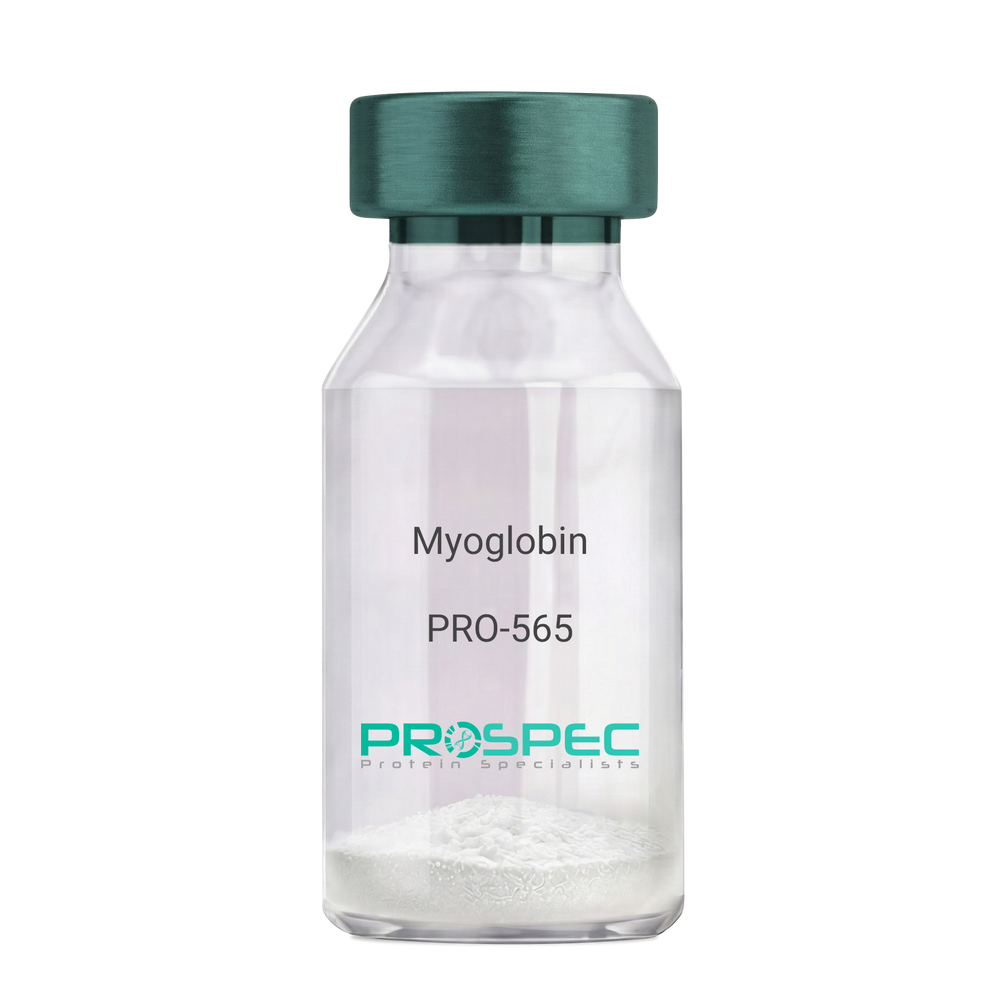
  • View Data Sheet

    Name :

    Myoglobin

    Description:

    Myoglobin Human

    Myoglobin, MB, PVALB, MGC13548.

    Product # :

    PRO-565

    Price :

    Quantity :

    Shipping Method :

    Ice Icon

    Shipped with Ice Packs

    Add To Cart

    More Info

    • description
    • source
    • formulation
    • purity
    • More Info

    Description

    Human Myoglobin produced in Human Cardiac Tissues having a molecular mass of 17.5kDa. Myoglobin is released from recently injured myocardial cells within a few hours of Infarction. Peak levels are reached more quickly than CK-MB or Troponin complex.

    Source

    Human Cardiac Tissues.

    Formulation

    The protein solution is in 0.05M phosphate buffer pH 7.5 containing 0.15M NaCl and 0.09% NaN3. Filtered through a 0.2µM membrane.

    Purity

    Greater than 96.0%.

    More Info

    • Introduction

      Myoglobin is a member of the globin superfamily and can be found in skeletal and cardiac muscles. It is a haemoprotein that contributs to intracellular oxygen storage and transcellular facilitated diffusion of oxygen. Myoglobin has a single-chain globular structure of 153 amino acids, containing a heme prosthetic group (iron-containing porphyrin) in the core around which the remaining apoprotein folds. Myoglobin has 8 alpha helices and a hydrophobic core. Myoglobin’s molecular weight is 16.7 kDa, and it is the primary oxygen-carrying pigment of muscle tissues. The binding of oxygen in myoglobin is different from the cooperative oxygen binding in hemoglobin, since positive collaboration is a property of multimeric/oligomeric proteins only. Instead, the binding of oxygen by myoglobin is uninfluenced by the oxygen pressure in the surrounding tissue. Myoglobin is frequently referred to as having an "instant binding tenacity" to oxygen given its hyperbolic oxygen dissociation curve. Different organisms are able to hold their breaths longer due to high concentrations of myoglobin in their muscle cells. Myoglobin is responsible for the pigments that make meat red. The color of the meat is partly determined by the charge of the iron atom in myoglobin and the oxygen attached to it. Myoglobin is found in Type I muscle, Type II A and Type II B, but it is mostly deemed that myoglobin is not found in smooth muscle. Myoglobin is discharged from damaged muscle tissue (rhabdomyolysis), which contains very high concentrations of myoglobin. Even though the released myoglobin is filtered by the kidneys, it is toxic to the renal tubular epithelium and thus may cause acute renal failure.

    • Synonyms

      Myoglobin, MB, PVALB, MGC13548.

    • Physical Appearance

      Sterile Filtered red solution.

    • Stability

      Human Myoglobin should be stored at 2-8°C.

    • Human Virus Test

      Starting material donor tested and certified negative for HIV I & II antibodies, Hepatitis B surface antigen, and Hepatitis C antibodies.

    ProSpec's products are furnished for LABORATORY RESEARCH USE ONLY. The product may not be used as drugs, agricultural or pesticidal products, food additives or household chemicals.

    Myoglobin Human
  • View Data Sheet

    Name :

    SFRP4 Human, sf9

    Description:

    Secreted Frizzled-Related Protein 4 Human Recombinant, sf9

    Secreted Frizzled Related Protein 4, Secreted Frizzled-Related Protein 4, Frizzled Protein, Human Endometrium, SFRP-4, FRPHE Secreted Frizzled-Related Protein 4; Secreted Frizzled-Related Protein 4, FRP-4, PYL, SFRP4, FRPHE.

    Product # :

    PRO-2368

    Price :

    Quantity :

    Shipping Method :

    Ice Icon

    Shipped with Ice Packs

    Add To Cart

    More Info

    • description
    • source
    • formulation
    • purity
    • More Info

    Description

    SFRP4 produced in Sf9 Baculovirus cells is a single, glycosylated polypeptide chain containing 337 amino acids (19-346 a.a.) and having a molecular mass of 38.9kDa (Molecular size on SDS-PAGE will appear at approximately 40-57kDa). SFRP4 is expressed with a 9 amino acid His tag at C-Terminus and purified by proprietary chromatographic techniques.

    Source

    Sf9, Baculovirus cells.

    Formulation

    SFRP4 protein solution (0.5mg/ml) contains Phosphate Buffered Saline (pH 7.4) and 10% glycerol.

    Purity

    Greater than 90.0% as determined by SDS-PAGE.

    More Info

    • Introduction

      Secreted frizzled-related protein 4 (SFRP4) belongs to the SFRP family which contains a cysteine-rich domain homologous to the putative Wnt-binding site of Frizzled proteins. SFRPs serve as soluble modulators of Wnt signaling. SFRP4 may serve as a regulator of adult uterine morphology and function. SFRP4 increases apoptosis during ovulation possibly via modulation of FZ1/FZ4/WNT4 signaling. SFRP4 also has phosphaturic effects by specifically inhibiting sodium-dependent phosphate uptake. SFRP4 is expressed in proliferative endometrium and several types of ovarian, endometrial and Brest tumors. SFRP4 is expressed in mesenchymal cells and in cardiomyocytes. SFRP4 expression in ventricular myocardium correlates with apoptosis related gene expression. SFRP4 is up-regulated in failing myocardium.

    • Synonyms

      Secreted Frizzled Related Protein 4, Secreted Frizzled-Related Protein 4, Frizzled Protein, Human Endometrium, SFRP-4, FRPHE Secreted Frizzled-Related Protein 4; Secreted Frizzled-Related Protein 4, FRP-4, PYL, SFRP4, FRPHE.

    • Physical Appearance

      Sterile Filtered colorless solution.

    • Stability

      Store at 4°C if entire vial will be used within 2-4 weeks. Store, frozen at -20°C for longer periods of time. For long term storage it is recommended to add a carrier protein (0.1% HSA or BSA). Avoid multiple freeze-thaw cycles.

    • Amino Acid Sequence

      ADPVRGAPCE AVRIPMCRHM PWNITRMPNH LHHSTQENAI LAIEQYEELV DVNCSAVLRF FLCAMYAPIC TLEFLHDPIK PCKSVCQRAR DDCEPLMKMY NHSWPESLAC DELPVYDRGV CISPEAIVTD LPEDVKWIDI TPDMMVQERP LDVDCKRLSP DRCKCKKVKP TLATYLSKNY SYVIHAKIKA VQRSGCNEVT TVVDVKEIFK SSSPIPRTQV PLITNSSCQC PHILPHQDVL IMCYEWRSRM MLLENCLVEK WRDQLSKRSI QWEERLQEQR RTVQDKKKTA GRTSRSNPPK PKGKPPAPKP ASPKKNIKTR SAQKRTNPKR VHHHHHH

    ProSpec's products are furnished for LABORATORY RESEARCH USE ONLY. The product may not be used as drugs, agricultural or pesticidal products, food additives or household chemicals.

    Sfrp4 Human Sf9
  • View Data Sheet

    Name :

    Myoglobin Human

    Description:

    Myoglobin Human Recombinant

    Myoglobin, MB, PVALB, MGC13548.

    Product # :

    PRO-336

    Price :

    Quantity :

    Shipping Method :

    Ice Icon

    Shipped with Ice Packs

    Add To Cart

    More Info

    • description
    • source
    • formulation
    • purity
    • More Info

    Description

    Myoglobin Human Recombinant produced in E.Coli is a non-glycosylated polypeptide chain having a molecular mass of 17.67 kDa. The Myoglobin is purified by proprietary chromatographic techniques.

    Source

    Escherichia Coli.

    Formulation

    The sterile solution contains phosphate-buffered saline (pH 7.4) and 0.05% NaN3.

    Purity

    Greater than 95.0% as determined by SDS-PAGE.

    More Info

    • Introduction

      Myoglobin is a member of the globin superfamily and can be found in skeletal and cardiac muscles. It is a haemoprotein that contributs to intracellular oxygen storage and transcellular facilitated diffusion of oxygen. Myoglobin has a single-chain globular structure of 153 amino acids, containing a heme prosthetic group (iron-containing porphyrin) in the core around which the remaining apoprotein folds. Myoglobin has 8 alpha helices and a hydrophobic core. Myoglobin’s molecular weight is 16.7 kDa, and it is the primary oxygen-carrying pigment of muscle tissues. The binding of oxygen in myoglobin is different from the cooperative oxygen binding in hemoglobin, since positive collaboration is a property of multimeric/oligomeric proteins only. Instead, the binding of oxygen by myoglobin is uninfluenced by the oxygen pressure in the surrounding tissue. Myoglobin is frequently referred to as having an "instant binding tenacity" to oxygen given its hyperbolic oxygen dissociation curve. Different organisms are able to hold their breaths longer due to high concentrations of myoglobin in their muscle cells. Myoglobin is responsible for the pigments that make meat red. The color of the meat is partly determined by the charge of the iron atom in myoglobin and the oxygen attached to it. Myoglobin is found in Type I muscle, Type II A and Type II B, but it is mostly deemed that myoglobin is not found in smooth muscle. Myoglobin is discharged from damaged muscle tissue (rhabdomyolysis), which contains very high concentrations of myoglobin. Even though the released myoglobin is filtered by the kidneys, it is toxic to the renal tubular epithelium and thus may cause acute renal failure.

    • Synonyms

      Myoglobin, MB, PVALB, MGC13548.

    • Physical Appearance

      Sterile Filtered brownish solution.

    • Stability

      Myoglobin should be stored at 4°C. For long term storage it is recommended to add a carrier protein (0.1% HSA or BSA).Please do not freeze.

    ProSpec's products are furnished for LABORATORY RESEARCH USE ONLY. The product may not be used as drugs, agricultural or pesticidal products, food additives or household chemicals.

    Myoglobin Human Recombinant
  • View Data Sheet

    Name :

    HbA1c Human

    Description:

    Human Hemoglobin A1c

    Product # :

    PRO-299

    Price :

    Quantity :

    Shipping Method :

    Ice Icon

    Shipped with Ice Packs

    Add To Cart

    More Info

    • description
    • source
    • formulation
    • purity
    • More Info

    Description

    The Human Hemoglobin A1c was purified from Human Erythrocytes.

    Source

    Human Erythrocytes.

    Formulation

    The HbA1c is supplied in a proprietary buffer formulation having pH-8.0. The HbA1c was dispensed on the basis of HbA1c not total hemoglobin.

    Purity

    Greater than 96.0%.

    More Info

    • Introduction

      The HbA1c shows the average amount of glucose in the blood over a period of 3 months. Sugar in the bloodstream can become attached to the hemoglobin in red blood cells (glycosylation). Once the sugar is attached, it stays there for the life of the red blood cell, which is about 120 days. The higher the level of blood sugar, the more sugar attaches to red blood cells. The HbA1c is formed in a non-enzymatic pathway by hemoglobin's standard exposure to elevated plasma levels of glucose. HbA1c is tested to monitor nephropathy and retinopathy in diabetes mellitus.

    • Physical Appearance

      Clear red frozen solution.

    • Stability

      Human HbA1c although stable at 4°C for 1 week, should be stored at -20°C.

    • Human Virus Test

      Tissue sample tested and found negative for HIV-1 & 2 antibodies, HBsAg, and Hepatitis-C antibodies.

    ProSpec's products are furnished for LABORATORY RESEARCH USE ONLY. The product may not be used as drugs, agricultural or pesticidal products, food additives or household chemicals.

    Hba1C Human
  • View Data Sheet

    Name :

    Myoglobin His Human

    Description:

    Myoglobin His Human Recombinant

    PVALB, MGC13548.

    Product # :

    PRO-071

    Price :

    Quantity :

    Shipping Method :

    Ice Icon

    Shipped with Ice Packs

    Add To Cart

    More Info

    • description
    • source
    • formulation
    • purity
    • More Info

    Description

    MB produced in E.Coli is a single, non-glycosylated polypeptide chain containing 174 amino acids (1-154a.a.) and having a molecular mass of 19.3kDa.MB is fused to a 20 amino acid His-tag at N-terminus & purified by proprietary chromatographic techniques.

    Source

    Escherichia Coli.

    Formulation

    The MB protein solution (1mg/1ml) is formulated in 20mM Tris-HCl buffer (pH8.0)
    1mM DTT, 100mM NaCl and 20% glycerol.

    Purity

    Greater than 90% as determined by SDS-PAGE.

    More Info

    • Introduction

      Myoglobin, mitochondrial precursor is a cytosolic oxygen-binding protein in charge of the storage and diffusion of oxygen within myocytes. The largest expression of MB is in the skeletal and cardiac muscle. MB operates in various functions in muscular oxygen supply, such as oxygen storage, facilitated diffusion, and myoglobin-mediated oxidative phosphorylation.

    • Synonyms

      PVALB, MGC13548.

    • Physical Appearance

      Sterile Filtered clear solution.

    • Stability

      Store at 4°C if entire vial will be used within 2-4 weeks. Store, frozen at -20°C for longer periods of time.Please avoid freeze thaw cycles.

    • Amino Acid Sequence

      MGSSHHHHHH SSGLVPRGSH MGLSDGEWQL VLNVWGKVEA DIPGHGQEVL IRLFKGHPET LEKFDKFKHL KSEDEMKASE DLKKHGATVL TALGGILKKK GHHEAEIKPL AQSHATKHKI PVKYLEFISE CIIQVLQSKH PGDFGADAQG AMNKALELFR KDMASNYKEL GFQG

    ProSpec's products are furnished for LABORATORY RESEARCH USE ONLY. The product may not be used as drugs, agricultural or pesticidal products, food additives or household chemicals.

    Myoglobin His Human
  • View Data Sheet

    Name :

    Protein A

    Description:

    Staphylococcal Protein A Recombinant

    Immunoglobulin G-binding protein A, IgG-binding protein A, Staphylococcal protein A, SPA.

    Product # :

    PRO-356

    Price :

    Quantity :

    Shipping Method :

    Ice Icon

    Shipped with Ice Packs

    Add To Cart

    More Info

    • description
    • source
    • formulation
    • purity
    • biological activity
    • More Info

    Description

    Recombinant Staphylococcal Protein A produced in E.Coli is a non-glycosylated, Polypeptide chain having a molecular mass of 46.7 kDa.Recombinant Staphylococcal Protein A is purified by proprietary chromatographic techniques.

    Source

    Escherichia Coli.

    Formulation

    The protein solution contains no additives.

    Purity

    Greater than 95.0% as determined by RP-HPLC.

    Biological Activity

    Greater than 95.0% binding activity to human IgG.

    More Info

    • Introduction

      Protein A is a cell wall protein deriving from Staphylococcus aureus which exhibits unique binding properties for IgG from a variety of mammalian species and for some IgM and IgA as well. It binds with the Fc region of immunoglobulins through interaction with the heavy chain. It couples to a wide variety of reporter molecules including fluorescent dyes, enzyme markers, biotin, colloidal gold and radioactive iodine without affecting the antibody binding site. Recombinant Protein A was developed to increase the specificity of the molecule for IgG and is widely used both in research and bioprocessing. The recombinant protein A is produced by expressing a modified protein A gene in E.coli. A specific purification process with strict quality control was taken to get the recombinant protein A with the purity of more than 98% , no human IgG affinity step is used during validated fermentation and purification and devoid of bacterial contaminant found normally in native Protein A. (Free of Staphylococcus endotoxins and hemolysin).

    • Synonyms

      Immunoglobulin G-binding protein A, IgG-binding protein A, Staphylococcal protein A, SPA.

    • Physical Appearance

      Sterile Filtered clear colorless solution.

    • Stability

      SPA should be stored at -20°C.

    ProSpec's products are furnished for LABORATORY RESEARCH USE ONLY. The product may not be used as drugs, agricultural or pesticidal products, food additives or household chemicals.

    Protein A
  • View Data Sheet

    Name :

    HBQ1 Human

    Description:

    Hemoglobin Theta 1 Human Recombinant

    Hemoglobin Theta 1, Hemoglobin Theta-1 Chain, Hemoglobin Subunit Theta-1, Theta-1-globin.

    Product # :

    PRO-1616

    Price :

    Quantity :

    Shipping Method :

    Ice Icon

    Shipped with Ice Packs

    Add To Cart

    More Info

    • description
    • source
    • formulation
    • purity
    • More Info

    Description

    HBQ1 Human Recombinant produced in E.coli is a single, non-glycosylated polypeptide chain containing 165 amino acids (1-142) and having a molecular mass of 17.9kDa.HBQ1 is fused to a 23 amino acid His-tag at N-terminus & purified by proprietary chromatographic techniques.

    Source

    Escherichia Coli.

    Formulation

    The HBQ1 solution contains 20mM Tris-HCl buffer (pH 8.0), 0.15M NaCl, 1mM DTT and 10% glycerol.

    Purity

    Greater than 90% as determined by SDS-PAGE.

    More Info

    • Introduction

      HBQ1 is a member of the Hemoglobin family. Hemoglobin is a 66.7 kDa protein attached to four iron-binding, methenelinked tetrapyrrole rings (heme). The globin part of Hemoglobin contains 2 alpha chains and 2 beta chains organized as couples creating a tetramer. Every one of the 4 globin chains covalently connects with a heme group. The bonds between alpha and beta chains are frailer than between parallel globin chains, thus creating a cleavage plane which is vital for oxygen binding and release. Relaxation of the alpha1-beta2 cleavage plane results in high affinity for oxygen.

    • Synonyms

      Hemoglobin Theta 1, Hemoglobin Theta-1 Chain, Hemoglobin Subunit Theta-1, Theta-1-globin.

    • Physical Appearance

      Sterile filtered colorless solution.

    • Stability

      Store at 4°C if entire vial will be used within 2-4 weeks. Store, frozen at -20°C for longer periods of time. For long term storage it is recommended to add a carrier protein (0.1% HSA or BSA).Avoid multiple freeze-thaw cycles.

    • Amino Acid Sequence

      MGSSHHHHHH SSGLVPRGSH MGSMALSAED RALVRALWKK LGSNVGVYTT EALERTFLAF PATKTYFSHL DLSPGSSQVR AHGQKVADAL SLAVERLDDL PHALSALSHL HACQLRVDPA SFQLLGHCLL VTLARHYPGD FSPALQASLD KFLSHVISAL VSEYR

    ProSpec's products are furnished for LABORATORY RESEARCH USE ONLY. The product may not be used as drugs, agricultural or pesticidal products, food additives or household chemicals.

    Hbq1 Human
  • View Data Sheet

    Name :

    Protein A/G

    Description:

    Protein A/G Recombinant

    Product # :

    PRO-646

    Price :

    Quantity :

    Shipping Method :

    Room Temp Icon

    Shipped at Room temp

    Add To Cart

    More Info

    • description
    • source
    • formulation
    • purity
    • More Info

    Description

    The recombinant Protein A/G consists of 5 IgG-binding regions of protein A and 2 of protein G, which corresponds to the Protein A and G domains that are included in the recombinant sequence. Cell wall binding region, cell membrane binding region and albumin binding region have been removed from the recombinant Protein A/G to ensure the maximum specific IgG binding. The Protein A portion is from Staphylococcus aureus segments E, D, A, B and C. The Protein G portion is from Streptococcus segments C1 and C3. The fusion protein has a predicted molecular mass of 47.7kDa and containing 429 amino acids.

    Source

    Escherichia coli.

    Formulation

    Lyophilized white Powder containing no additives.

    Purity

    >97% as determined by SDS-PAGE and RP-HPLC.

    More Info

    • Introduction

      Recombinant Protein A/G fusion protein joins IgG binding domains of both Protein A and Protein G.
      Protein A/G includes four Fc binding domains from Protein A and two from Protein G, yielding a final mass of 50.4 kDa. The binding dependency to pH of Protein A/G lower than Protein A, but has the additive properties of Protein A and G together. Protein A/G binds to all subclasses of human IgG, making it helpful for purifying polyclonal or monoclonal IgG antibodies whose subclasses have not been identifieed. Protein A/G binds to IgA, IgE, IgM and IgD. Protein A/G binds to all subclasses of mouse IgG excluding mouse IgA, IgM or serum albumin. This permits Protein A/G to be used in purification and detection of mouse monoclonal IgG antibodies, with no interference from IgA, IgM and serum albumin. Mouse monoclonal antibodies normally have a stronger affinity to the chimeric Protein A/G than to either Protein A or Protein G. Protein A/G also has been used for purification of macaque IgG.

    • Stability

      After reconstitution, aliquot and store at -20°C. Avoid repeated freeze/thaw cycles.

    • Solubility

      It is recommended to reconstitute the lyophilized Protein-A/G in sterile 18M-cm H2O not less than 0.1mg/ml, which can then be further diluted to other aqueous solutions.

    • Amino Acid Sequence

      NAAQHDEAQQ NAFYQVLNMP NLNADQRNGF IQSLKDDPSQ SANVLGEAQK LNDSQAPKAD AQQNNFNKDQ QSAFYEILNM PNLNEAQRNG FIQSLKDDPS QSTNVLGEAK KLNESQAPKA DNNFNKEQQN AFYEILNMPN LNEEQRNGFI QSLKDDPSQS ANLLSEAKKL NESQAPKADN KFNKEQQNAF YEILHLPNLN EEQRNGFIQS LKDDPSQSAN LLAEAKKLND AQAPKADNKF NKEQQNAFYE ILHLPNLTEE QRNGFIQSLK DDPSVSKEIL AEAKKLNDAQ APKEEDSLEG SGSGTYKLIL NGKTLKGETT TEAVDAATAE KVFKQYANDN GVDGEWTYDD ATKTFTVTEK PEVIDASELT PAVTTYKLVI NGKTLKGETT TKAVDAETAE KAFKQYANDN GVDGVWTYDD ATKTFTVTE.

    ProSpec's products are furnished for LABORATORY RESEARCH USE ONLY. The product may not be used as drugs, agricultural or pesticidal products, food additives or household chemicals.

    Protein A G
  • View Data Sheet

    Name :

    Haptoglobin (19-347) Human

    Description:

    Haptoglobin (19-347 a.a) Human Recombinant

    Haptoglobin, Zonulin, Haptoglobin alpha chain, Haptoglobin beta chain, Haptoglobin isoform 2 preproprotein, BP, HP2ALPHA2, HPA1S.

    Product # :

    PRO-1897

    Price :

    Quantity :

    Shipping Method :

    Ice Icon

    Shipped with Ice Packs

    Add To Cart

    More Info

    • description
    • source
    • formulation
    • purity
    • More Info

    Description

    Haptoglobin Human Recombinant produced in E. coli is a single polypeptide chain containing 352 amino acids (19-347) and having a molecular mass of 39.0 kDa. Haptoglobin is fused to a 23 amino acid His-tag at N-terminus & purified by proprietary chromatographic techniques.

    Source

    Escherichia Coli.

    Formulation

    The Haptoglobin solution (0.5mg/1ml) contains 20mM Tris-HCl buffer (pH 8.0), 10% glycerol and 0.4M Urea.

    Purity

    Greater than 80.0% as determined by SDS-PAGE.

    More Info

    • Introduction

      Haptoglogin participates in intestinal permeability, permitting intercellular tight junction disassembly, and controlling the equilibrium among tolerance and immunity to non-self antigens. Haptoglobin has antibacterial activity and takes part in modulating many aspects of the acute phase response. Haptoglobin is processed to yield both alpha and beta chains, which later unite as a tetramer to produce haptoglobin. Haptoglobin binds free hemoglobin (Hb) secreted from erythrocytes In blood plasma with high affinity and thus inhibits its oxidative activity. Further, the haptoglobin-hemoglobin complex is being removed by the reticuloendothelial system.

    • Synonyms

      Haptoglobin, Zonulin, Haptoglobin alpha chain, Haptoglobin beta chain, Haptoglobin isoform 2 preproprotein, BP, HP2ALPHA2, HPA1S.

    • Physical Appearance

      Sterile Filtered colorless solution.

    • Stability

      Store at 4°C if entire vial will be used within 2-4 weeks. Store, frozen at -20°C for longer periods of time. For long term storage it is recommended to add a carrier protein (0.1% HSA or BSA).Avoid multiple freeze-thaw cycles.

    • Amino Acid Sequence

      MGSSHHHHHH SSGLVPRGSH MGSVDSGNDV TDIADDGCPK PPEIAHGYVE HSVRYQCKNY YKLRTEGDGV YTLNNEKQWI NKAVGDKLPE CEAVCGKPKN PANPVQRILG GHLDAKGSFP WQAKMVSHHN LTTGATLINE QWLLTTAKNL FLNHSENATA KDIAPTLTLY VGKKQLVEIE KVVLHPNYSQ VDIGLIKLKQ KVSVNERVMP ICLPSKDYAE VGRVGYVSGW GRNANFKFTD HLKYVMLPVA DQDQCIRHYE GSTVPEKKTP KSPVGVQPIL NEHTFCAGMS KYQEDTCYGD AGSAFAVHDL EEDTWYATGI LSFDKSCAVA EYGVYVKVTS IQDWVQKTIA EN.

    ProSpec's products are furnished for LABORATORY RESEARCH USE ONLY. The product may not be used as drugs, agricultural or pesticidal products, food additives or household chemicals.

    Haptoglobin 19 347 Human
  • View Data Sheet

    Name :

    SFRP5 Human

    Description:

    Secreted Frizzled-Related Protein 5 Human Recombinant

    Secreted Frizzled-Related Protein 5, SARP3, Secreted Apoptosis Related Protein 3, Secreted Apoptosis-Related Protein 3, Frizzled-Related Protein 1b, FRP-1b, SARP-3, SFRP-5, FRP1B, SFRP5.

    Product # :

    PRO-2171

    Price :

    Quantity :

    Shipping Method :

    Ice Icon

    Shipped with Ice Packs

    Add To Cart

    More Info

    • description
    • source
    • formulation
    • purity
    • More Info

    Description

    SFRP5 Human Recombinant produced in E.Coli is a single, non-glycosylated polypeptide chain containing 311 amino acids (30-317 a.a) and having a molecular mass of 35kDa.SFRP5 is fused to a 23 amino acid His-tag at N-terminus & purified by proprietary chromatographic techniques.

    Source

    Escherichia Coli.

    Formulation

    SFRP5 protein solution (1mg/ml) containing 20mM Tris-HCl (pH 8.0) and 10% glycerol.

    Purity

    Greater than 85.0% as determined by SDS-PAGE.

    More Info

    • Introduction

      Secreted Frizzled-Related Protein 5, also known as SFRP5, belongs to the SFRP family which includes a cysteine-rich domain homologous to the putative Wnt-binding site of Frizzled proteins. SFRPs perform like soluble modulators of Wnt signaling. SFRP5 & SFRP1 are implicated in determining the polarity of photoreceptor cells in the retina. SFRP5 is highly expressed in the retinal pigment epithelium, as well as moderately expressed in the pancreas.

    • Synonyms

      Secreted Frizzled-Related Protein 5, SARP3, Secreted Apoptosis Related Protein 3, Secreted Apoptosis-Related Protein 3, Frizzled-Related Protein 1b, FRP-1b, SARP-3, SFRP-5, FRP1B, SFRP5.

    • Physical Appearance

      Sterile Filtered clear solution.

    • Stability

      Store at 4°C if entire vial will be used within 2-4 weeks. Store, frozen at -20°C for longer periods of time. For long term storage it is recommended to add a carrier protein (0.1% HSA or BSA).Avoid multiple freeze-thaw cycles.

    • Amino Acid Sequence

      MGSSHHHHHH SSGLVPRGSH MGSEEYDYYG WQAEPLHGRS YSKPPQCLDI PADLPLCHTV GYKRMRLPNL LEHESLAEVK QQASSWLPLL AKRCHSDTQV FLCSLFAPVC LDRPIYPCRS LCEAVRAGCA PLMEAYGFPW PEMLHCHKFP LDNDLCIAVQ FGHLPATAPP VTKICAQCEM EHSADGLMEQ MCSSDFVVKM RIKEIKIENG DRKLIGAQKK KKLLKPGPLK RKDTKRLVLH MKNGAGCPCP QLDSLAGSFL VMGRKVDGQL LLMAVYRWDK KNKEMKFAVK FMFSYPCSLY YPFFYGAAEP H.

    ProSpec's products are furnished for LABORATORY RESEARCH USE ONLY. The product may not be used as drugs, agricultural or pesticidal products, food additives or household chemicals.

    Sfrp5 Human
  • View Data Sheet

    Name :

    SPARC Human, His

    Description:

    Secreted Protein acidic & Rich in Cysteine Human Recombinant, His Tag

    Osteonectin, ON, Basement-membrane protein 40, BM-40, SPARC, Secreted Protein acidic and Rich in Cysteine.

    Product # :

    PRO-582

    Price :

    Quantity :

    Shipping Method :

    Room Temp Icon

    Shipped at Room temp

    Add To Cart

    More Info

    • description
    • source
    • formulation
    • purity
    • More Info

    Description

    Osteonectin Human Recombinant fused with 6X His tag produced in E.Coli is a single, non-glycosylated, polypeptide chain containing 295 amino acids and having a molecular mass of 34 kDa.SPARC is expressed with a 6 amino acid His tag at N-Terminus and purified by proprietary chromatographic techniques.

    Source

    Escherichia Coli.

    Formulation

    The SPARC (1 mg/ml) was lyophilized after extensive dialyses against 20mM PBS pH-7.4.

    Purity

    Greater than 95.0% as determined by:
    (a) Analysis by RP-HPLC.
    (b) Analysis by SDS-PAGE.

    More Info

    • Introduction

      SPARC, an acronym for “secreted protein, acidic and rich in cysteine”, is also known as osteonectin or BM-40. It is the founding member of a family of secreted matricellular proteins with similar domain structure. The 303 amino acid, 43 kDa protein contains a 17 aa signal sequence, an N-terminal acidic region that binds calcium, a follistatin domain containing Kazal-like sequences, and a C-terminal extracellular calcium (EC) binding domain with two EF-hand motifs. SPARC is produced by fibroblasts, capillary endothelial cells, platelets and macrophages, especially in areas of tissue morphogenesis and remodeling. SPARC shows context-specific effects, but generally inhibits adhesion, spreading and proliferation, and promotes collagen matrix formation. For endothelial cells, SPARC disrupts focal adhesions and binds and sequesters PDGF and VEGF. SPARC is abundantly expressed in bone, where it promotes osteoblast differentiation and inhibits adipogenesis.

    • Synonyms

      Osteonectin, ON, Basement-membrane protein 40, BM-40, SPARC, Secreted Protein acidic and Rich in Cysteine.

    • Physical Appearance

      Sterile Filtered White lyophilized (freeze-dried) powder.

    • Stability

      Lyophilized Osteonectin although stable at room temperature for 3 weeks, should be stored desiccated below -18°C. Upon reconstitution BM-40 should be stored at 4°C between 2-7 days and for future use below -18°C.For long term storage it is recommended to add a carrier protein (0.1% HSA or BSA).Please prevent freeze-thaw cycles.

    • Solubility

      It is recommended to reconstitute the lyophilized SPARC in sterile 18MΩ-cm H2O not less than 100 µg/ml, which can then be further diluted to other aqueous solutions.

    • Amino Acid Sequence

      MSYYHHHHHHPQQEALPDETEVVEETVAEVTEVSVGANPVQVEVGEFD
      DGAEETEEEVVAENPCQNHHCKHGKVCELDENNTPMCVCQDPTSCP
      APIGEFEKVCSNDNKTFDSSCHFFATKCTLEGTKKGHKLHLDYIGPCK
      YIPPCLDSELTEFPLRMRDWLKNVLVTLYERDEDNNLLTKQKLRVKKI
      HENEKRLEAGDHPVELLARDFEKNYNMYIFPVHWQFGQLDQHPIDGY
      LSHTELAPLRAPLIPMEHCTTRFFETCDLDNDKYIALDEWAGCFGIKQK
      DIDKDLVI.

    ProSpec's products are furnished for LABORATORY RESEARCH USE ONLY. The product may not be used as drugs, agricultural or pesticidal products, food additives or household chemicals.

    Osteonectin Human
  • 1
  • 2
  • 3
  • …
  • 42
Your browser does not support the video tag.

Products

  • Cytokines
  • Growth Factors
  • Chemokines
  • CD Antigens
  • Neurotrophins
  • Hormones
  • Enzymes
  • Viral Antigens
  • Recombinant Proteins
  • Natural Proteins
  • Monoclonal Antibodies
  • Polyclonal Antibodies
  • Thermal Packaging

About

  • Company
  • Founder
  • Contribution
  • Contact Us
  • My Account

Ordering

  • Ordering Method
  • Ordering - Credit Card
  • Ordering PO
  • Shipping Fees
  • FAQ's

Legal

  • Terms & Conditions
  • Privacy
  • Site Map
  • info@prospecbio.com
  • Facebook
  • Instagram
  • Linkedin Profile

© 2026 ProSpec-Tany TechnoGene Ltd. All Rights Reserved.

  • Choosing a selection results in a full page refresh.
  • Opens in a new window.